Category: Culture

This day a year ago.

What was posted exactly one year ago?

I was working outside all day yesterday and only sat down to think about today’s post after 5pm. Plus our evening meal was going to be served at 6pm.

So as I have previously done in these situations I decided to repost what was published here on Learning from Dogs one year ago to the day.

ooOOoo

Part One of a stunningly interesting essay from Professor Marc Bekoff.

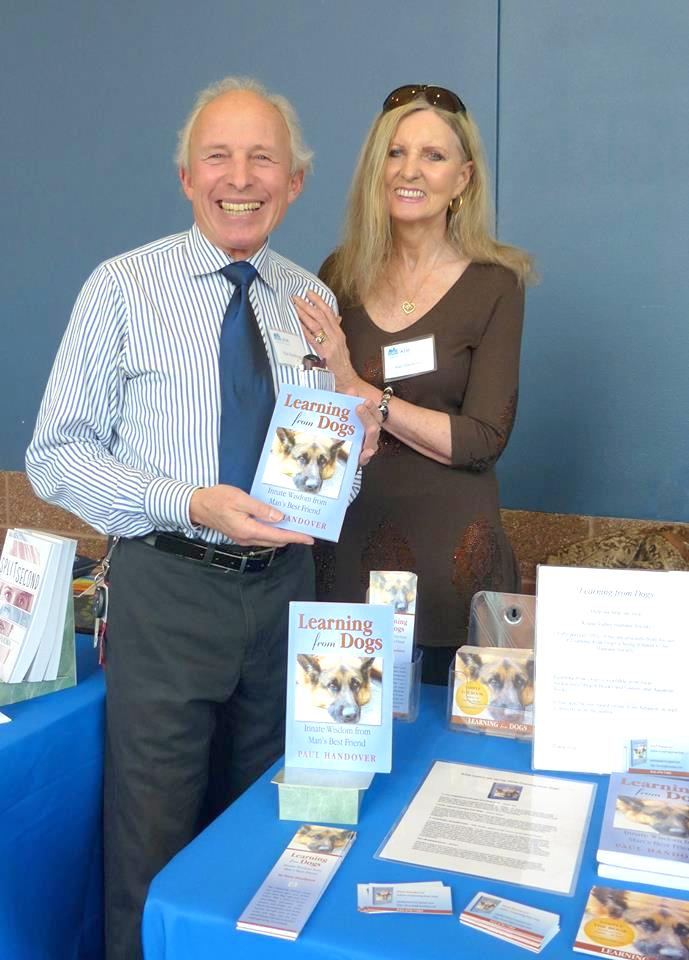
As a newbie yet-to-be published author I am technically at the stage of having a completed draft that Jeannie and a close friend are proof-reading. Then after corrections, it is going to be released to some ‘beta’ readers who will give me some early feedback. (Too scary to even think of just now!)

OK, with that admission out of the way, let me move on to my ‘draft’ chapter on play; in Part Four of the book. In researching what is known about the way that dogs play and what lessons there are for us humans, I came across an essay by Marc Bekoff, Ph.D. Marc is Professor Emeritus of Ecology and Evolutionary Biology at the University of Colorado, Boulder. His essay had been published in May on the website of Psychology Today. It was incredibly interesting and full of material for the book!

Within a few minutes of me sending Professor Bekoff an email requesting permission to include quotations in my ‘draft’ chapter, he had responded in the affirmative. I had also sought his permission to publish the essay here on Learning from Dogs. Again, a very quick, positive reply.

Thus with Marc Bekoff’s generous permission, here is his essay in full. (I’ve taken the decision to split this long essay into two parts.)

Finally, Professor Bekoff includes numerous ‘html’ links within his essay to other materials. I’ve cheated by saving quite some time adding those links but have underlined the linked phrase in question, apart from the very early chapters that do have ‘html’ links. Please go to the site of the original essay to explore further those links.
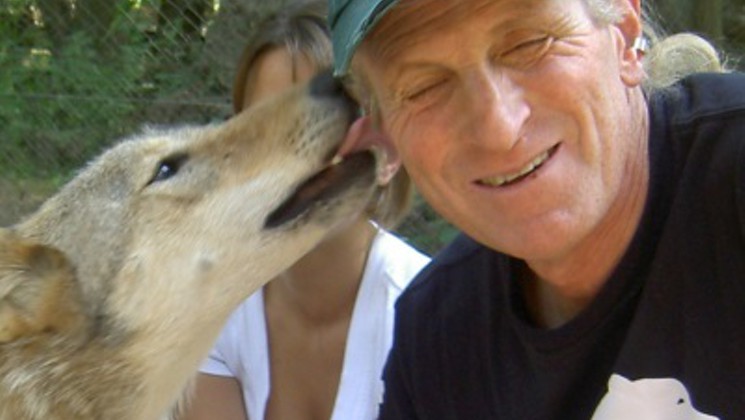
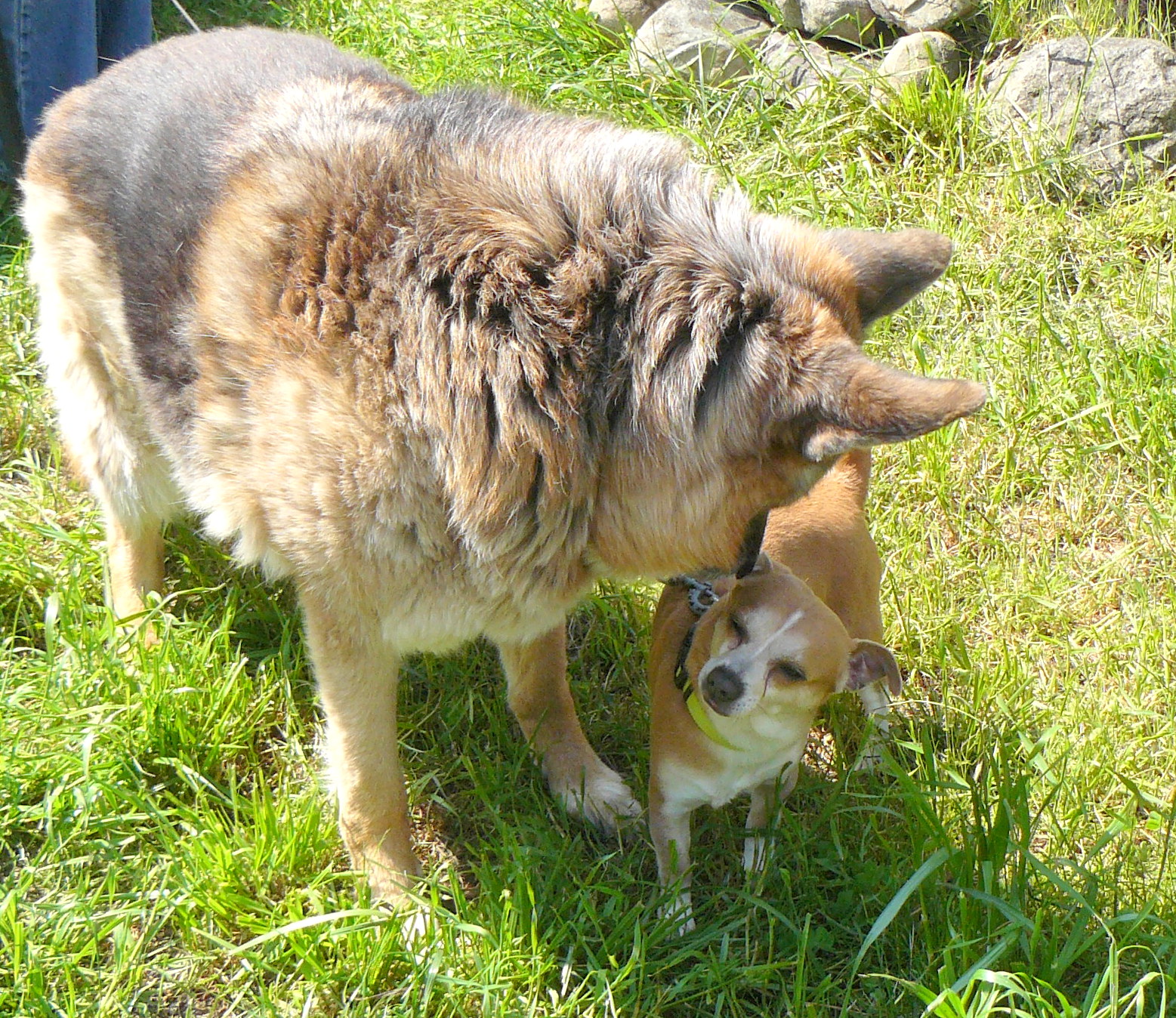
Marc Bekoff and friend.

ooOOoo

Butts and Noses: Secrets and Lessons from Dog Parks (Part One)

Dog parks are gold mines of information about the behavior of dogs and humans

Post published by Marc Bekoff Ph.D. on May 16, 2015 in Animal Emotions

I love going to dog parks. So, too, do dogs and their people. Dog parks are a fascinating recent and growing cultural phenomenon. Indeed, I go rather often to what I call my field sites, for that’s what they are, to study play behavior and other aspects of dog behavior including urination and marking patterns, greeting patterns, social interactions including how and why dogs enter, become part of, and leave short-term and long-term groups, and social relationships. I also study human-dog interactions and when I study how humans and dogs interact I also learn a lot about the humans. For example, I often hear how happy people are that their dogs are free to run here and there or free to be dogs when they’re at the dog park. Often, they say this while they’re constantly calling them back to them even when the dog is simply sniffing here or there or looking for a friend. They also call them to break up play when they think it’s gotten out of hand. You call this free?

Two works to which I often go when thinking about social dynamics at dog parks are Matthew Gilbert’s book titled Off the Leash: A Year at the Dog Park and Sonoma State University’s Patrick Jackson‘s essay called “Situated Activities in a Dog Park: Identity and Conflict in Human-Animal Space.” Linda Case writes about Dr. Jackson’s study and she is not a fan of dog parks because she feels they’re not safe and because “Dog park people frequently behave badly by not being responsible dog owners and by being inconsiderate and uncaring towards other people and their dogs.” We really need empirical studies on the safety issue. After having spent countless hours at dog parks I’ve never entertained drawing this conclusion, but there aren’t any detailed data on this topic of which I’m aware. However, on occasion, but hardly regularly, I’ve marveled at just how inconsiderate a very few people can be. But, as part of the gossip network among the other people, I often hear that a given person behaves like this even in non-dog park situations. On a few ocassions I’ve had a rather inconsiderate person ask me why their dog has bad manners and rather than get involved I call attention to some interesting dog-dog interactions.

Most people realize that “dogs are in” and countless scientific and popular essays (see also New Directions in Canine Behavior, Julie Hecht’s “Dog Spies,” and essays written for Psychology Today by writers including Mark Derr, Stanley Coren, Jessica Pierce, and yours truly) and books have been published in the past decade or so about these fascinating mammals. The bottom line is that a plethora of detailed data — and the database is rapidly increasing — clearly show that dogs are thinking, clever, and feeling sentient beings, and viewing them as sort of robotic machines is incredibly misleading and academically corrupt (please see this essay). This does not mean that they are “doggy Einsteins,” however, ample data from numerous different research groups around the world clearly show that dogs are rather complex and incredibly interesting mammals who deserve a good deal of further study. Perhaps even René Descartes would consider changing his views on nonhuman animals (animals) as unfeeling machines given the enormous amount of empirical evidence on sentience in animals.

Why do dogs do this and that? Canine confidential

“Why do dogs do this and that?” The purpose of this short essay, that can be conceived as a field guide to the extremely interesting and largely unknown world of the fascinating dogs with whom we share our lives, is to provide some lessons in dog behavior from observations and questions arising from visits to various dog parks, especially around Boulder, Colorado where I live. I see myself as “a naturalist in a dog park” and aim to show here, via a series of questions, what we know and don’t know about many different aspects of dog behavior. Dogs are often called social catalysts – icebreakers or lubricants — for social interactions with other dogs and they often open the door for pretty frank and wide-ranging conversations among familiar and unfamiliar humans. It always amazes me how dogs free up humans to talk about things they might be more reluctant to share in other venues including what they really think about their human “BFF’s — best friends forever” — and the infamous “3 p’s,” namely, pee, poop, and puke. Often when I get home and look at my notes I view them as “canine confidential.” So, what follows is a sampler of many “why” questions, including why dogs hump, why they sniff butts, genitals, and ears, why they play, and why they organize themselves the ways they do. There are also many “what” questions such as “What do they know?”, “What are they thinking?”, and “What are they feeling?” in different contexts. The list of questions is endless and I’m sure those that follow can easily mutate in many, many more.

People who are lucky enough to share their world with a dog often think they know it all. And, while they do know a good deal about what their canine buddy is thinking and feeling and what they want and need, there really are large gaps in the scientific database. As I mentioned above, there are numerous anecdotes about why dogs do this or that, and, taken together, they form their own pool of data. However, while the claim that “the plural of anecdote is data” applies in some cases, many mysteries still loom in what we actually know about the world of dogs.

Furthermore, often there is no single “right” answer to a question — even some of the most commonly asked queries — and that’s just fine. Dogs compose a highly variable group of mammals — I often say “the dog” doesn’t really exist — so it’s not surprising that just when we think we have a solid handle on what they’re thinking and feeling and why they do what they’re doing an exception or three arises. Surely, the early experience of individual dogs influences their later behavior. So, while we know a lot, people are often amazed by how little we know and that hard and fast answers can’t be given to some common questions.

Visiting dog parks can be wonderful educational experiences. Visits, some lasting hours on end each and every day, can be myth breakers and icebreakers, and also provide information about why dogs are doing this or that. People are always asking questions about why their dog is doing something and really want to know what we know. They also freely offer advice to other people about why their dog is doing something and how they can treat various problems such as shyness, aggressiveness, and why dogs ignore what their human is asking them to do. And, as I wrote above, dogs also are icebreakers – “social catalysts” the academics call them — and get people to talk with one another and to talk about things.

The questions below range from interests about basic dog behavior such as why do dogs stick their noses where they do, and why they play, bark, pee, eat turds, and roll on their back, to more lofty questions about whether dogs have a theory of mind and whether they know what they look like and if they know who they are. A good number of questions deal with dogs’ butts and noses, hence the title of this brief essay (motivated, of course, by the famous rock group, Guns N’ Roses). Butts and noses — including other “private parts” – figure into a number of the questions below. We all know dogs put their noses in places where we couldn’t imagine there would be anything of interest, and also place their active snouts, often on their first introduction, to other dogs and humans, in places that make us rather uneasy. We don’t greet friends or strangers by immediately licking their mouth or with a genital sniff or slurp. There also are many general questions that don’t center on anatomical features that figure largely in the world of the dog. I’ll answer each question briefly with what we know from various types of research, with some stories where they’re available, and note where we really need more information. It’s entirely possible that I have missed a given study (or studies) and I apologize for the oversights and look forward to hearing from readers.

While we know a lot about dogs, there are holes in the database, so the future is chock full of exciting research. Readers will discover that what we often take to be the gospel about dog behavior frequently isn’t all that well supported by published empirical research or even detailed observations. While good stories are interesting and can serve to stimulate more “controlled” research, in and of themselves they don’t constitute “data” as do detailed and more focused studies (I’ll suggest below that studies in dog parks may be more “ecologically relevant” than studies in laboratories and help to settle on-going debates among different research groups). In some ways, then, this essay is sort of a myth-buster and a fun way not only to learn about dogs but also to stimulate further research about dogs and dogs and humans. So, here we go.

(See the concluding part tomorrow.)

ooOOoo

Clearly in this last year the book was published!

For readers who haven’t read Mark Bekoff’s essay before I will repost the concluding part tomorrow.

Treasures Within and Without.

We must never let go of admiring beauty.

It’s Sunday lunchtime and I have come in from outside to check my emails and to put together the post for today. For reasons I can’t exactly put my finger on I’m feeling a little distracted. I sense a yearning for being transported away from the ‘outside world’ and turning inwards: Even giving blogging a rest for a couple of weeks (but I won’t).

So thank goodness for the blogging contacts we make all around the world. Just last Saturday Sue, of Sue Dreamwalker’s blog, published an exquisitely beautiful poem. Sue very promptly gave me permission to republish it in full. Sue’s poem speaks to me just now; speaks to me in this rather introspective place. I hope her wonderful words speak to you as well.

Here it is.

ooOOoo

Mother Gaia ~ The Blue Dot.

11 Jun 2016 .

dsc02478
Three Sisters Glen Coe Scotland.

How many times have you gazed at the stars?

To ask the question of whom we are

This Blue Dot in the vastness of space

Have you questioned the existence of the Human Race?

~~

Did we really evolve from Neanderthal Man?

From Ape to Human imagine if you can

Woolly Mammoths along with Sabre Tooth Tigers

Ice Ages and Floods, Volcanoes and Fires

~~

Mountains crashing, rising from ocean floors

Fossils created into stony forms

Petrified wood in glaciers saved

While Crystals grow beneath deep dark cave

~~

How many times have you asked ‘Who am I?’

As you gaze longingly at the starlit sky

So many treasures now upon this Blue Dot

So sad that we’ve evolved, but we also forgot

~~

That we Humans just like the Dinosaur race

Could soon disappear without a trace

As our superior brains seemed to have lost the plot

Of our coexistence within this amazing Blue Dot

~~

As we pollute our Mother who brings such life

While we rage in greed creating more strife

We poison our land modifying crops

Caring less and less until the last Bee drops

~~

Long after we’re gone as the planets realign

A new dawn will break over the memory of mankind

His legacy I’m sure one day will be discovered

As some future traveller his fossils will uncover.

~~

But it’s never too late to alter our future

When we live in harmony and learn to nurture

Holding onto LOVE and Letting go of Hate

We can all help our Blue Planet Regenerate.

Copyright Sue Dreamwalker 2016.

show
This is just one of the beautiful slides from Sue’s slide show. As she writes, “The above slide show are the photo’s I took that inspired the poem above. They were taken in Scotland where I visited a crystal and mineral centre near Fort William. It was a delightful find holding a wealth of Treasures of The Earth which can be found here. “

ooOOoo

 (Please view the full slide show here.)

Sue then completes her beautiful post; as follows:

There is so much more that lays hidden beneath our Earth Mother, as well as within ourselves.

If only we dig deep enough to find the Treasures Within.  

Love and Blessings

~Sue~

I am still digging Deep How about You?

Life is an endless dig to find treasures within.

Beautiful, Sue!

Picture parade one hundred and fifty-one.

The final pictures from the PetSmart Pet Adoption Event.

Back on the 29th May when I published the first set of pictures from this event I wrote in that post:

I wrote about this last Tuesday under the heading of Helping Hands and warned you that today and next Sunday would be picture parades of that event.

At that time I had not cottoned on to the fact that the next Sunday, i.e. a week ago, the picture parade would be devoted to Pharaoh’s birthday.

So here we are with that next set of pictures from the PetSmart Adoption Event. Again, I wrote first about this under the heading of Helping Hands. For those that didn’t read that post here is how it opened:

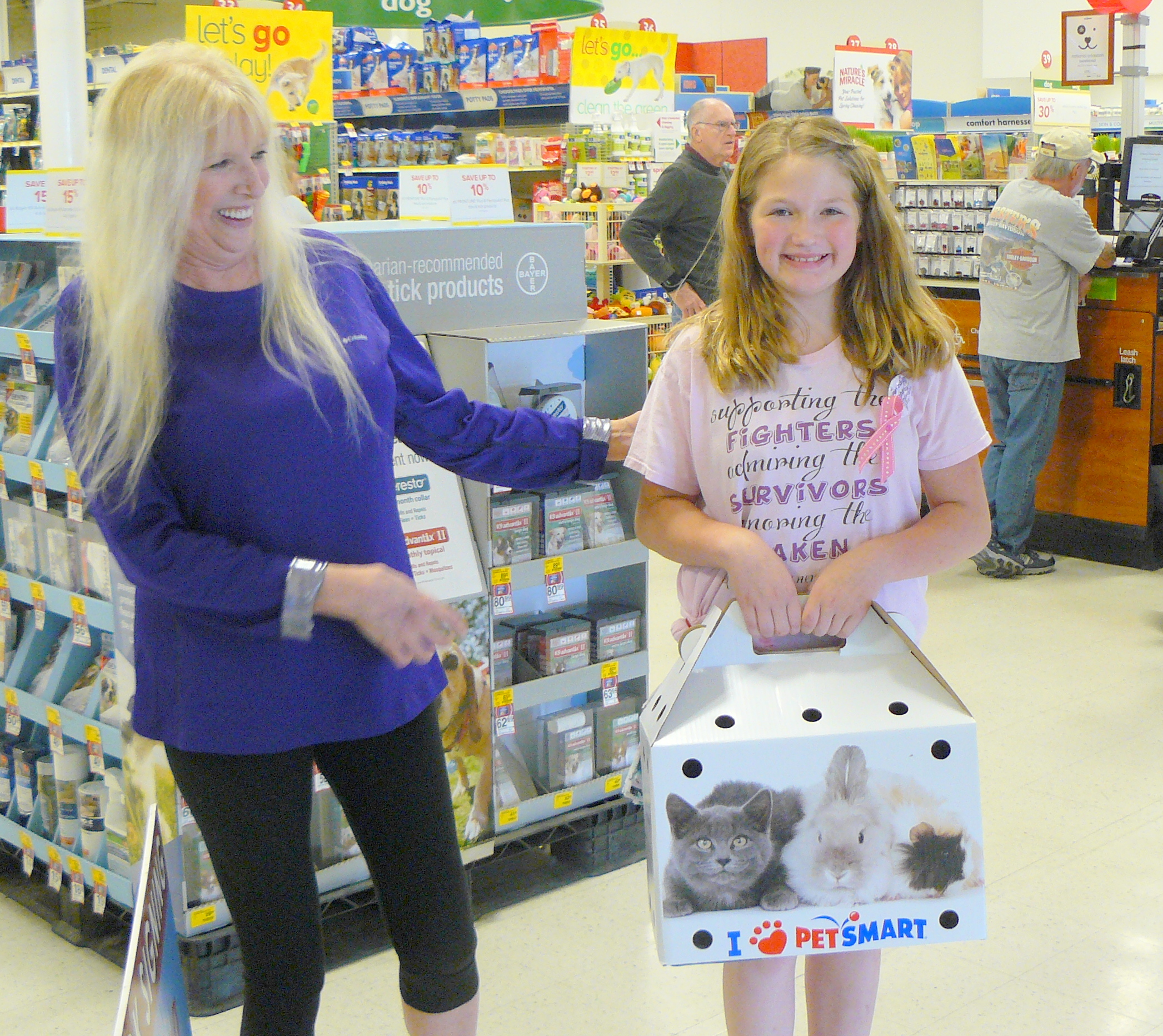
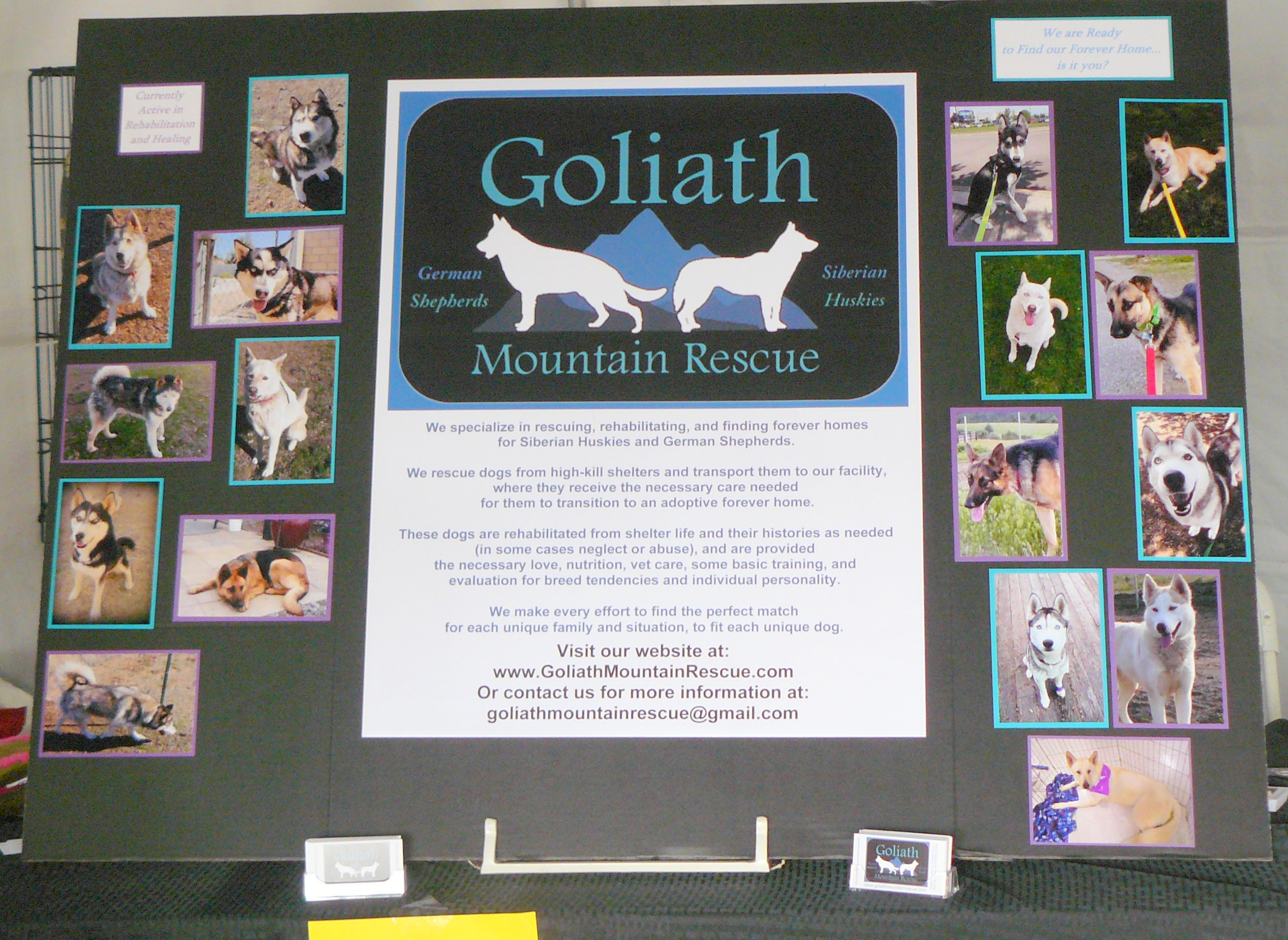
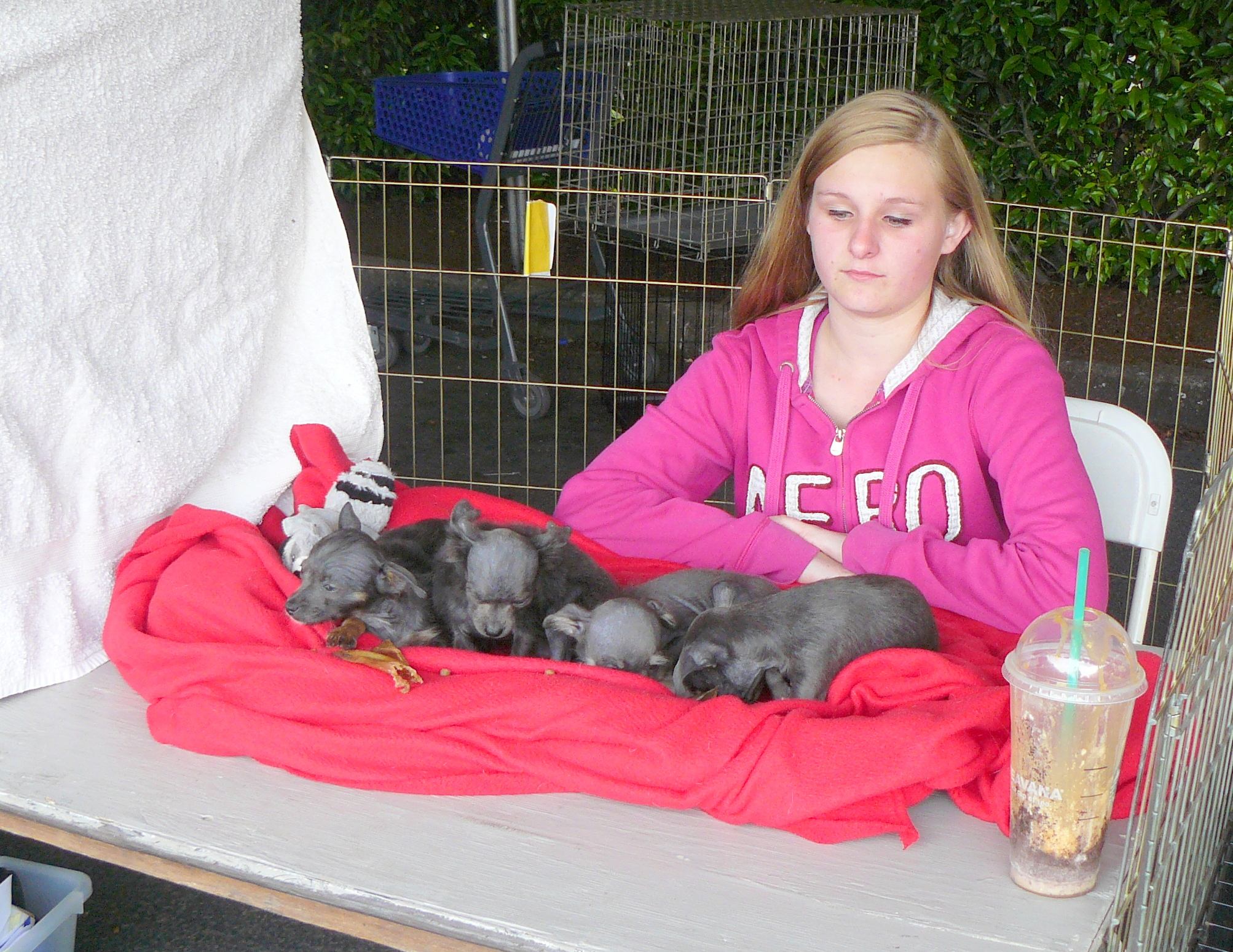
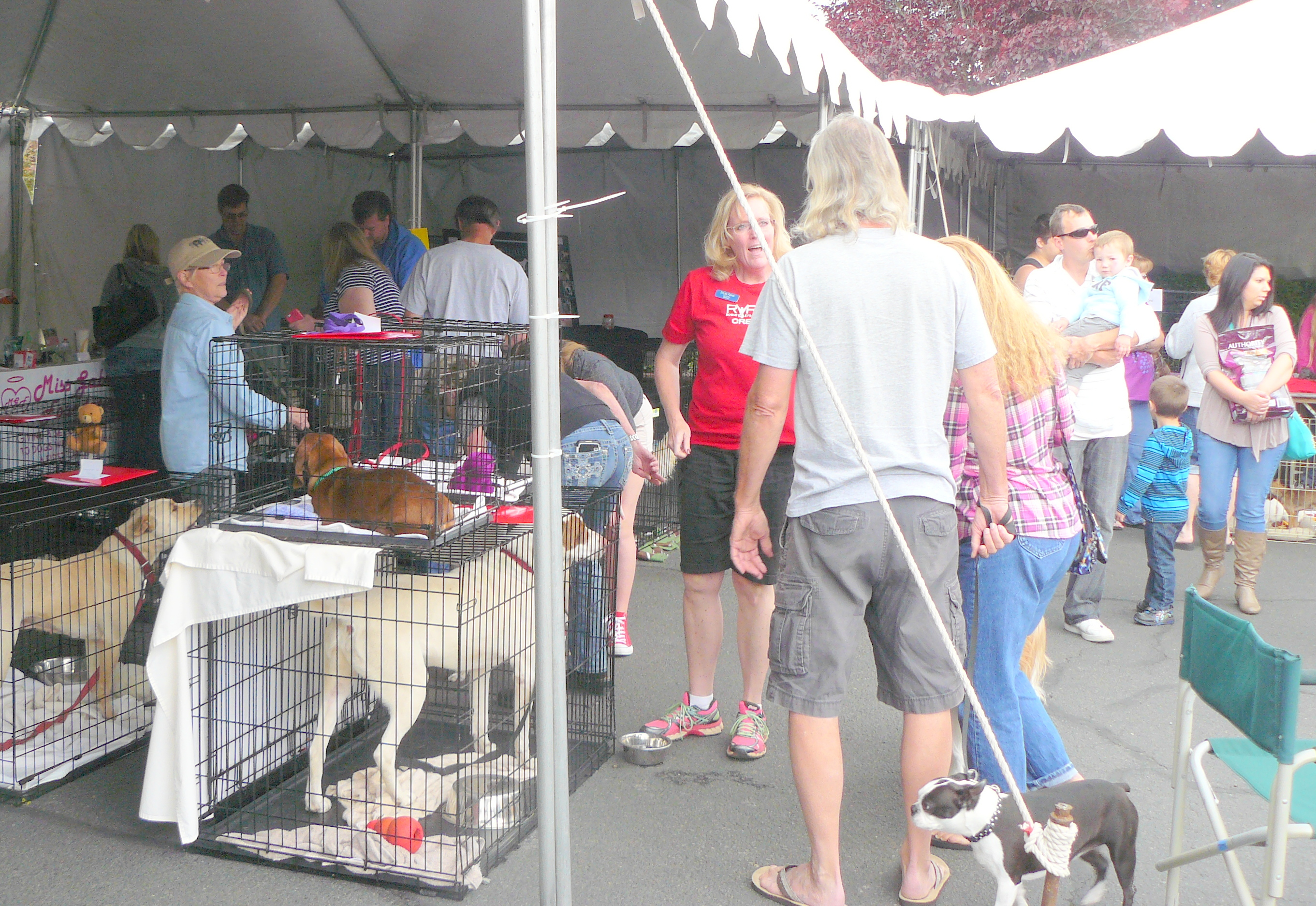
The PetSmart Pet Adoption Event.

Over the days of the 13th to 15th May, in other words roughly a week-and-a-half ago, a number of pet adoption charities in Northern California and Southern Oregon came together courtesy of PetSmart in Medford, Oregon to find new homes for unadopted dogs and cats.

P1160114I came to hear about this from an email sent to me by Tammy Moore of the organisation Shelter Friends. Tammy also c.c.’d her email to Tana Mason who is Fundraising Coordinator for the charity. Tammy’s email was an invite for me, and Jean, to attend the event on the Saturday as the author of my book.

The first Picture Parade of these photographs was presented here.

Here is that final set of photographs.

P1160144oooo

P1160143oooo

P1160141oooo

P1160140oooo

P1160142oooo

P1160139oooo

P1160137… and closing the set with the evidence that new homes were found for many dogs and cats.

P1160136Well done to one and all!

Into the Future.

These are deeply interesting times.

Among the many impressive qualities of the dog is one that we humans must envy so much at times.

I’m not speaking of a dog’s ability to seek out food or, at the other end of things, the dog’s way of keeping it’s backside clean! 😉 No, I’m referring to the way a dog lives in the present. Presumably unworried as to what the future might mean.

We humans, however, as hard as we try to be rooted in the ‘here and now’ also depend on assessing the future and determining the best way to respond to that uncertainty. I’m sure that assessing and managing risk is one of the ways that have made us such a successful species.

In terms of voicing these uncertain times I really was drawn to a comment from ‘John D’ over on Richard Murphy’s Tax Research UK blogsite. I’m going to republish that comment in full before moving on to the central theme of today’s post: Into the Future.

John D says:
June 10 2016 at 4:58 pm
Paul, I share your apprehension. I believe ‘the world’ has entered a cycle of almost unprecedented uncertainty. So many issues. So few solutions being articulated in the mainstream. However, shift happens and Richard is right to say that there is always opportunity for change. Gramsci, an underrated theorist, summed it up in his ‘Prison Notebooks'(1929-35) writing: “The crisis consists precisely in the fact that the old is dying and the new cannot be born; in this interregnum a great variety of morbid symptoms appear.”

The stranglehold Neo-liberalism has exercised on orthodox economics for the past 40 years is difficult to understand but, given that its major protoganists have held all the aces, it’s not really surprising. Under Reagan there was a major ‘re-education’ programme in the Universities where any heterodox economic teaching was eliminated from the ‘Economics 101’ curriculum. Acording to Richard Wolff an entire generation of students graduated from the major universities without ever having studied Marx in any context.

(For anyone interested here’s a succinct history of Neo-liberalism – http://www.newleftproject.org/index.php/site/article_comments/a_short_history_of_neoliberalism_and_how_we_can_fix_it).

The good news is nothing lasts forever. The seeds of change have already been sown and will eventually blossom, possibly in unexpected locations. Sadly, as Ivan says, there has been irretrievable damage to lives and livelihoods in the US, UK and many EU countries. Michael Hudson recently spelled out its negative effects – http://www.counterpunch.org/2016/06/07/the-wages-of-neoliberalism-poverty-exile-and-early-death.

Like many, I don’t think radical change will come about until enough people are hurting enough. Maybe a real property crash will be a wake-up call. However, in or out of the EU isn’t going to trigger a change in the economic agenda any time soon. Personally I believe that a vote for Brexit (ominously a possibilty) will set-back any fundamental reforms, especially in the UK. But I don’t want to open up that can of worms again here!

The perennial question is ‘what to do?’. And the answer is always the same: ‘do something, anything, to nurture the seeds into saplings’. Every little helps! It’s going to be a rough ride, not without some collateral damage in terms of still more unnecessary deaths. Usually I’m not as optimistic as Richard but because it’s Friday afternoon and the sun is shining I feel the beginning of the end is within our grasp. I so hope so. Back to Gramsci – the immediate worry is what will fill the intervening vacuum. Happy weekend!

The seeds of change have already been sown and will eventually blossom, possibly in unexpected locations.

The perfect introduction to an email that Dan Gomez sent me on Thursday.

ooOOoo

Below  is a summary by Udo Gollub of the findings at a recent futurist conference in Germany. This’s  – they predict – is how the world will operate in 10 to 20 years time.

For those of us who are about to amble into the sunset on our Zimmer frames, this is simply interesting. We inhabited a world where people used cosy concepts like pension, nest egg, job security, promotion in the work place and other reassuring socio economic terms.

For those who are in mid career or are only entering the world of (non) work now, this makes for scary/exciting reading – depending on how ready you are to change in mid air  — if it is at all possible.

And for the generation still in their nappies … well, it is a matter of how parents prepare them for an unimaginable world when they enter the world of ‘work’ in 20 years time.

GERT CLAASSEN
Hermanus
Into the future
By Udo Gollub at Messe Berlin, Germany

I just went to the Singularity University summit. Here are the key points I gathered.

Rise and Fall. In 1998, Kodak had 170,000 employees and sold 85% of all photo paper worldwide. Within just a few years, their business model disappeared and they were bankrupt. What happened to Kodak will happen in a lot of industries in the next 10 years – and most people don’t see it coming. Did you think in 1998 that 3 years later you would never take pictures on paper film again?

Yet digital cameras were invented in 1975. The first ones only had 10,000 pixels, but followed Moore’s law. So as with all exponential technologies, it was a disappointment for a long time, before it became superior and mainstream in only a few short years. This will now happen with Artificial Intelligence, health, self-driving and electric cars, education, 3D printing, agriculture and jobs.
Welcome to the 4th Industrial Revolution.  Welcome to the Exponential Age. Software and operating platforms will disrupt most traditional industries in the next 5-10 years.

Uber is just a software tool. They don’t own any cars, but they are now the biggest taxi company in the world. Airbnb is the biggest hotel company in the world, although they don’t own any properties.

Artificial Intelligence: Computers become exponentially better in understanding the world. This year, a computer beat the best Go player in the world, 10 years earlier than expected. In the US, young lawyers already don’t get jobs. Because of IBM Watson, you can get legal advice, (so far for more or less basic stuff), within seconds. With 90% accuracy, compared with 70% accuracy when done by humans. So if you are studying law, stop immediately. There will be 90% fewer generalist lawyers in the future; only specialists will be needed. ‘Watson’ already helps nurses diagnose cancer, four times more accurately than doctors. Facebook now has pattern recognition software that can recognize faces better than humans. By 2030, computers will have become ‘more intelligent’ than humans.

Cars: In 2018 the first self driving cars will be offered to the public. Around 2020, the complete industry will start to be disrupted. You don’t want to own a car anymore. You will call a car on your phone; it will show up at your location and drive you to your destination. You will not need to park it, you only pay for the driven distance and you can be productive whilst driving. Our kids will never get a driver’s licence and will never own a car. It will change the cities, because we will need 90-95% fewer cars for our future needs. We can transform former parking spaces into parks. At present,1.2 million people die each year in car accidents worldwide. We now have one accident every 100,000 kms. With autonomous driving, that will drop to one accident in 10 million km. That will save a million lives each year.

Electric cars will become mainstream around and after 2020. Cities will be cleaner and much less noisy because all cars will run on electricity, which will become much cheaper.

Most traditional car companies may become bankrupt by tacking the evolutionary approach and just building better cars; while tech companies (Tesla, Apple, Google) will take the revolutionary approach and build a computer on wheels. I spoke to a lot of engineers from Volkswagen and Audi. They are terrified of Tesla.

Insurance companies will have massive trouble, because without accidents, the insurance will become 100 times cheaper. Their car insurance business model will disappear.

Real estate values based on proximities to work-places, schools, etc. will change, because if you can work effectively from anywhere or be productive while you commute, people will move out of cities to live in a more rural surroundings.

Solar energy production has been on an exponential curve for 30 years, but only now is having a big impact. Last year, more solar energy was installed worldwide than fossil. The price for solar will drop so much that almost all coal mining companies will be out of business by 2025.

Water for all: With cheap electricity comes cheap and abundant water. Desalination now only needs 2kWh per cubic meter. We don’t have scarce water in most places; we only have scarce drinking water. Imagine what will be possible if everyone can have as much clean water as they want, for virtually no cost.

Health: The Tricorder X price will be announced this year – a medical device (called the “Tricorder” from Star Trek) that works with your phone, which takes your retina scan, your blood sample and your breath. It then analyses 54 biomarkers that will identify nearly any diseases. It will be cheap, so in a few years, everyone on this planet will have access to world class, low cost, medicine.
3D printing: The price of the cheapest 3D printer came down from 18,000$ to 400$ within 10 years. In the same time, it became 100 times faster. All major shoe companies started printing 3D shoes. Spare airplane parts are already 3D-printed in remote airports. The space station now has a printer that eliminates the need for the large amount of spare parts they used to need in the past.
At the end of this year, new smart phones will have 3D scanning possibilities. You can then 3D scan your feet and print your perfect shoe at home. In China, they have already 3D-printed a complete 6-storey office building. By 2027, 10% of everything that’s being produced will be 3D-printed.

Business opportunities: If you think of a niche you want to enter, ask yourself: “in the future, do you think we will have that?” And if the answer is yes, then work on how you can make that happen sooner. If it doesn’t work via your phone, forget the idea. And any idea that was designed for success in the 20th century is probably doomed to fail in the 21st century.

Work: 70-80% of jobs will disappear in the next 20 years. There will be a lot of new jobs, but it is not clear that there will be enough new jobs in such a short time.

Agriculture: There will be a 100$ agricultural robot in the future. Farmers in 3rd world countries can then become managers of their fields instead of working in them all day. Aeroponics will need much less water. The first veal produced in a petri dish is now available. It will be cheaper than cow-produced veal in 2018. Right now, 30% of all agricultural surfaces are used for rearing cattle. Imagine if we don’t need that space anymore. There are several start-ups which will bring insect protein to the market shortly. It contains more protein than meat. It will be labelled as “alternative protein source” (because most people still reject the idea of eating insects).

Apps: There is already an app called “moodies” which can tell the mood you are in. By 2020 there will be apps that can tell by your facial expressions if you are lying. Imagine a political debate where we know whether the participants are telling the truth and when not!

Currencies: Many currencies will be abandoned. Bitcoin will become mainstream this year and might even become the future default reserve currency.

Longevity: Right now, the average life span increases by 3 months per year. Four years ago, the life span was 79 years, now it is 80 years. The increase itself is increasing and by 2036, there will be more than a one-year increase per year. So we all might live for a long, long time, probably way beyond 100.

Education: The cheapest smartphones already sell at 10$ in Africa and Asia. By 2020, 70% of all humans will own a smartphone. That means everyone will have much the same access to world class education. Every child can use Khan Academy for everything he needs to learn at schools in First World countries. Further afield, the software has been launched in Indonesia and will be released in Arabic, Swahili and Chinese this summer. The English app will be offered free, so that children in Africa can become fluent in English within half-a-year.

ooOOoo

Interesting times, indeed!

You all have a very good weekend!

In praise of wolves

Three stunning photographs of wolves.

In my post yesterday, A Eulogy for OR-4, I republished a passionate and moving account by Rob Klavins of the killing of a magnificent wolf. It included these words:

He escaped kill orders and poachers. He endured at least 4 collarings and he beat the odds. There aren’t many ten year old wolves out there. Today there is one less.

OR4 was shot and killed today. And it hurts. Anyone celebrating his death, the killing of his likely pregnant partner, and two of his pups, must have a hardened heart indeed.

All I am offering for you today is the contents of a recent email that I received from the Endangered Species Coalition.

ooOOoo

Paul,

We are excited to announce the winning entries in our first-ever Wolves in the Wild photo contest! While we received many beautiful photos of gray wolves, the difficult task of choosing winning submissions was carried out with much deliberation by our panel of judges.

The Grand Prize winner is:

url
Dan Ritzman

Runner ups are:

John Long
John Long
Brenna Burke
Brenna Burke

We are enormously grateful to everyone who participated! Your photos were all amazing and I assure you that choosing a winner was a difficult task for the judges. While the contest was fun, we hope the photos will serve a very serious purpose in helping to show decision makers in the Pacific Northwest that wolves are important not only for their role in a healthy ecosystem, but as a driver of tourism and associated economic benefits.

Thank you for your commitment to disappearing wildlife and wild places.

Sincerely,

Danielle Moser
Pacific Northwest Wolf Organizer
Endangered Species Coalition

ooOOoo

Let me just repeat that key sentence from Danielle, “While the contest was fun, we hope the photos will serve a very serious purpose in helping to show decision makers in the Pacific Northwest that wolves are important not only for their role in a healthy ecosystem, but as a driver of tourism and associated economic benefits.”

Exactly!

A Eulogy for OR-4

Wolves in the wild.

Humanity has such a strange view of its earliest beginnings.

In the last few weeks there has been much publicity surrounding the science about the earliest domestication of dogs. I’m sure you have seen this but if not then read it over on the Science Mag website; an article that opens:

Asian dogs like this Tibetan mastiff have been separated from European breeds such as Labradors for more than 6000 years. Darko Vrcan/Alamy Stock Photo

Dogs may have been domesticated more than once

For years, scientists have debated where dogs came from. Did wolves first forge their special relationship with humans in Europe, or in Asia? The answer, according to a new study, is yes. This week in Science, researchers report that genetic analysis of hundreds of canines reveals that dogs may have been domesticated twice, once in Asia and once in Europe or the Near East, although European ancestry has mostly vanished from today’s dogs. The findings could resolve a rift that has roiled the canine origins community—but the case isn’t 
closed yet.

Read the full article here.

David Grimm‘s words in that second sentence points to the fact that, irrespective of where on this Planet, wolves forged a “special relationship with humans”. In my book I offer evidence that this special relationship may have been crucial in our, as in humanity’s, ability to evolve from hunting and gathering to farming and thence the long journey to modern times.

Ergo, across the world we should recognise the wonders of that relationship and the magical qualities of the wolf.

Yesterday, I mentioned that Jean and I are supporters of Oregon Wild and that in the current newsletter author Rob Klavins had written a eulogy for an Oregon wolf and given me permission to republish it.

ooOOoo

A Eulogy for OR-4

Rob Klavins Mar 31, 2016

or4We met three times, but I imagine that I barely registered in his life.

To him I was no more than an occasional scent on his trail or the source of a tortured imitation of a howl.

But to me, no nonhuman animal ever has been or likely ever will be as important or consequential in my life as OR4.

He escaped kill orders and poachers. He endured at least 4 collarings and he beat the odds. There aren’t many ten year old wolves out there. Today there is one less.

OR4 was shot and killed today. And it hurts. Anyone celebrating his death, the killing of his likely pregnant partner, and two of his pups, must have a hardened heart indeed.

He became a symbol for those who revere wolves as well as for those who hate them and hate the wild. Even some of the most cynical wolf haters paid him begrudging respect.

He was imperfect. He challenged us. He was loud. But he was tough and he was tenacious. He was resilient, and he was a good father.

OR4 and his partners OR2 and a wolf known as “Limpy” leave behind an unparalleled legacy. His offspring include OR7, the first pups in California in nearly a century, OR3, and wolves both known and unknown quietly living their lives and retaking their rightful place on the Oregon landscape.

He never set paw in Salem or DC, but for better and worse, he had more impact on policy and politics than any animal I know of other than Cecil the Lion.
He also leaves behind questions. Lots of questions. Questions about our future – the future of his offspring…and ours.

Above all, as I heard the helicopter take off near my home this morning, I wondered if our society will leave room for the wild on the landscape…and in our hearts.

Despite his collars and dayglo ear tags, OR4 was wild. alpha2

OR4 is dead, and we killed him.

But we’ll keep fighting for his legacy as imperfectly and tenaciously as he did.

The story of Oregon’s biggest and baddest wolf didn’t end in “happily ever after”. But the story for wolves and those of us who value the wild is still not fully written. It’s a new chapter. I’m no starry-eyed optimist. So I’ll stubbornly cling to hope and tenacity.

The alternative is surrender. OR4 was no quitter. And we shouldn’t be either.

He was loud.

And he was annoying to those who hate the wild. We should be too.

ooOOoo

Enough said!

Picture parade one hundred and fifty.

My second day of celebrating thirteen years of Pharaoh’s life.

The first day’s worth of pictures was yesterday. (And so many Happy Birthday greetings from you! Thanks everyone.)

Pharaoh demonstrating his benevolent status with puppy Cleo. April 2012.
P1110452
Pharaoh and Cleo getting a sense of each other a little later on in 2012 before they moved to their new home in Oregon.
P1150402
Revelling in what, in September 2012, brought us to Oregon: Water! Picture taken in February, 2015.
A'hhh! This feels so much better. Taken in February, 2015.
A’hhh! This feels so much better. Taken in February, 2015.
P1150567
Birthday photograph of Pharaoh with Pedy. Taken last Friday.
Very much looking like the wise old man that he is. Another photo taken last Friday.
Outdoor environment fit for a doggy king! Photo taken last Friday.
Pharaoh will always be with us in our hearts every time I look at the book! Such inspiration from him.
The wise one!
Impossible not to close today’s Picture Parade without this classic of classic photographs of Pharaoh. Taken in Devon, South-West England in June 2007.

Happy Birthday beloved companion!

Pitchforks or Pens.

The extreme importance of engaging in the fight for better societies.

I must warn you that today’s post is nothing about dogs. Unless, as with me, you see dogs as well as being the most gorgeous of creatures as being critically important metaphors for what societies need now! Or as I present elsewhere in this place:

Because of this closeness between dogs and man, we (as in man!) have the ability to observe the way they live.  Now I’m sure that scientists would cringe with the idea that the way that a dog lives his life sets an example for us humans, well cringe in the scientific sense.  But man seems to be at one of those defining stages in mankind’s evolution where the forces bearing down on the species homo sapiens have the potential to cause very great harm.  If the example of dogs can provide a beacon of hope, an incentive to change at a deep cultural level, then the quicker we ‘get the message’, the better it will be.

Dogs:

  • are integrous ( a score of 210) according to Dr David Hawkins
  • don’t cheat or lie
  • don’t have hidden agendas
  • are loyal and faithful
  • forgive
  • love unconditionally
  • value and cherish the ‘present’ in a way that humans can only dream of achieving
  • are, by eons of time, a more successful species than man.

richard-murphySo what’s this all leading up to!

Regular followers of this place (and you are always appreciated – never forget that) will know that previously I have mentioned Professor Richard Murphy. I have been following and reading his blog Tax Research UK for some time.

Many of the good Professor’s posts are specific to what is going on in the UK and, inevitably, Europe and the EU referendum.

But on the wider horizon these seem to be such terrible times. Here’s a comment I left to another of Richard’s posts that opened with the sentence, I am so bored by the EU referendum campaign.

My comment being:

It’s coming up to 5:30 am here in Southern Oregon and, as per usual, I have dipped into the latest postings from Tax Research. Part of me, a large part of me, is sickened by what seems to be going on in this world with the EU referendum and the US Presidential election being the two most glaringly terrible examples. But this old Brit (London-born in 1944) has this sense that the way that Richard and so many of his supporters can now ‘shout’ out the truth will, in the end, deliver a better future. Indeed, my own blog post today is called The Power of Open Opinions.

So keep on banging your truthful drum, Richard!

However, last Tuesday Richard published a post that seemed to speak to me, and presumably countless others, about the dilemma as to whether to be active in speaking up about what is right or wrong, or to just huddle up with one of your dogs on a nice (oversized) dog bed!

In my estimation that post from Richard should be widely circulated and it is republished in full now with Richard’s kind permission.

ooOOoo

To engage or not; that is the question

Posted on7:57 am May 31 2016

It would seem I have touched a raw nerve for some regular commentators by suggesting that I welcome the IMF article, recently published, that appeared to recognise the failure of neoliberalism to tackle inequality and the inappropriateness of much of the austerity agenda.

It now seems that this article has attracted a vicious backlash from the FT, which clearly sees it as touching on neoliberal heresy. In that case to suggest, as some do, that this article is inconsequential is, in my opinion, wrong.  If nothing else, it has revealed the true opinion of the FT, and the sharp divide between its editorial stance and the opinion of its lead economic  columnist, Martin Wolf.

It is also safe to assume that if this has been the response outside the organisation then the debate within it has been at least as heated,  and all this on an article which says it can find merit in some parts of the neoliberal agenda.

Why come back to the issue then?  I think there are three good reasons for doing so.

First, how to respond to such an article from such an organisation opens up one of the more difficult questions in campaigning, which is whether to engage or not with those organisations that you criticise?  It is not possible to be a tax justice campaigner and to not have been critical of the IMF and its approach over the last few decades.  I have been of the IMF, the World Bank and, of course, of the Washington Consensus  that they have promoted.  But, a long time ago I decided that the only viable way  in which I could help deliver tax justice was by engaging with those people and organisations whose opinions I wished to change.

Over the years I’ve been criticised for this, and  been told that the policy would undermine my chances of success.  So, variously,  I was told that it was a mistake to serve on George Osborne’s General Anti-Abuse Rule  committee.  Likewise, engaging with the  OECD BEPS  process was described as a mistake by some because the terms of engagement were clearly biased against developing countries.  Others have also suggested that it was a mistake not to object to Jeremy Corbyn  using some of my policy ideas.   I suspect some would also criticise the fact that I went to the World Bank last week  and there were definitely those who suggested that I should not accept an appointment at City University, precisely because it has got links to the City of London. As for the Fair Tax Mark; some say that is a sell out.

In all cases I disagree.  It is my job to  create ideas  that might effect change.  My purpose for doing so is, I hope clear:  my aim is to create a more  genuinely prosperous, more equal, more democratic, more accountable, more sustainable,  more tolerant  and so more enjoyable world in which we might live.  More is an important word in that sentence:  it could be prefaced with ‘much’  in many cases but I do not think we will ever create  utopia.  I want better because I doubt that the best I believe possible is actually achievable within the necessary compromises that human society requires, not just now but ever.

That, then, brings me to my second point.  I am not seeking a revolution, but an evolution.  I respect those who wish to be perpetual outsiders because they believe that the only way forward is to sweep away all that is in their path to create an entirely new society, but their’s is not a path I would ever choose.  There is good reason for that: I believe that the cost of such change is too high, and the uncertainty of the outcome too great for any such risk to be taken.  The chance  that what we have will be replaced by tyranny is also too significant to justify this approach, in my opinion.

But, perhaps, most of all,  and thirdly, I believe that the power of an idea at the right time is sufficiently strong to ensure that such a revolutionary approach is wholly unnecessary.  I stress, I am not claiming that my ideas are in this category;  I am suggesting that ideas can be.  Neoliberalism arose because it was an idea in the right place at the right time, even if I fundamentally disagree with the prescription that it offered.  The post-war consensus was similarly created in this way.

I regret that as yet we have not reached a point where a similar replacement idea has been sufficiently developed to capture, unambiguously, the common political narrative.  Discussion of sustainability is become mainstream, but not in reality commonplace.  Disquiet with austerity is deep-rooted, but has not yet displaced the obsession with balanced budgets.  Debate on inequality  in its many egregious forms is taking place, but is not yet reversing trends. Some  political developments  now arising are deeply  antagonistic to democracy. But, and I stress the point,  the fact that all these things are happening is, in itself, indication that something really important is going on and that we may, in my opinion, be reaching a point where real change is possible.

I stress, in the context the IMF article is, in my opinion  important even though it is not  as radical as that  which many people would wish to read.  But that is how change takes place: very few of us are really capable of embracing giant leaps. Most of us have to, inevitably, partake in incremental steps on the way to a bigger goal.

I accept, and embrace that fact,  which I perceive to be a reality.  That is not to say there is no place for the campaigner who demands, with reason, more radical change.  Whilst I see many of the attractions of being a ‘no compromiser’  that is not the path I have chosen to follow, even with tax havens (as my Plan B for Jersey made clear).  If the choice is between a pitchfork and a pen, then I choose the pen,  believing that at the end of the day this is the way to  create real change. But as a result I also choose to engage, without apology.

ooOOoo

We must never forget that the pen is mightier than the sword! And we must never stop engaging!

The power of open opinions

We can never turn aside from cruelty, in all its forms.

The rather rosy mood engendered by my post about the relationship between a Brazilian fisherman and a penguin published on the 31st May and the saving of a dog from a culvert by a serving police officer in Rhode Island was bound not to last. But I didn’t anticipate that it would turn so bleak by the following petition that was highlighted to me and everyone by a recent comment to a post by John Zande.

This was the petition.

ooOOoo

497417-1434490365-wideDemanding Justice for Dog Crushed to Death by a Garbage Man

BY: June Haggar

TARGET: Cidade de Presidente Figueiredo Mayor Neilson da Cruz, Brazil

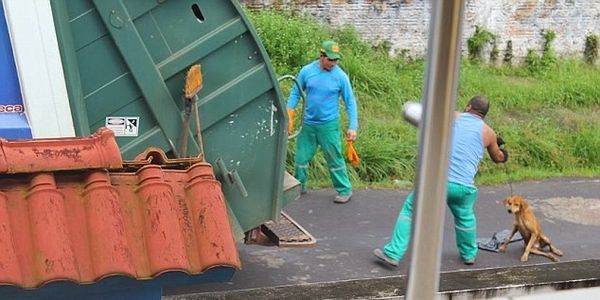
A garbage man can be seen in pictures, attached, as he deliberately went on to the sidewalk to hit a dog and then stopped the truck to put a chain around his neck and drag and throw him into the truck’s compactor to be crushed to death.
Although the article claims that the man was fired, we hereby implore the Mayor Neilson da Cruz to prosecute Jadson James Franca to the fullest extent of the law with jail time and fines. We also want the garbage company ViaLimpa to fire the 2 co-workers in the photos laughing and allowing this madman to crush the dog.
Mr. Mayor: If you do not prosecute this man with jail time, you are sending a message to the youth of Brazil that this is acceptable conduct to innocent animals that have done nothing wrong other than to walk on the sidewalk. This Jadson James Franca is clearly a sociopath who enjoys the torture and murder of animals. He is a danger to the people of Brazil, while he is still walking free. It is a known fact that sociopaths begin to torture and murder animals and then move on to people. ALL serial killers started out with torturing and murdering animals and Jadson Franca is no different. What will you do if he kills his wife, child, neighbor or an innocent person on the street and you could have done something to stop it by prosecuting him now?

I ask all to sign this petition to stop this murdering rampage that is happening on the streets of Brazil and send a message that this blatant murder of an innocent dog will not be tolerated by the citizens of the world.

ooOOoo

I can do no better in terms of my own feelings than to highlight what June wrote, “This Jadson James Franca is clearly a sociopath who enjoys the torture and murder of animals. He is a danger to the people of Brazil, while he is still walking free.”

Well over 30,000 people signed that petition including John and myself. In doing further research, however, it became clear that this group anger and disgust worked, assuming the British Daily Mail newspaper is reporting the story accurately.

For in their online edition of May 31st, their online reporter, Matt Roper published this:

A binman has been sacked after he was caught dragging an injured dog across a road before throwing the terrified animal in the back of his rubbish truck to be crushed alive.

Jadson James Franca, 35, mounted the pavement of the street in Presidente Figueiredo, northern Brazil and hit the stray dog, according to shocked residents.

The council binman then stopped the garbage truck and tied a chain around the neck of the whimpering animal, which had had both of its legs broken.

As his colleagues looked on, Franca then dragged the frightened dog along the pavement before tossing it into the compacting mechanism of the collection vehicle.

Later on in that same article Matt Roper reported:

Brazilian TV presenter Xuxa, who once dated football legend Pele, also posted the shocking photos to her 4.4million Facebook followers.

She wrote: ‘This little dog, who wasn’t bothering anyone, had its legs broken, and in agony was tied up and dragged by the neck, before being brutally murdered by this individual, being thrown and crushed alive in the back of the garbage truck.’

This monster can still appeal against a fine and will still be walking the streets in freedom! Are we going to let that happen?? Let’s do something?? Together we can.’

Yesterday Presidente Figueiredo’s mayor, Neilson da Cruz, told Brazil’s A Critica newspaper that the binman had been sacked and the refuse collection company, ViaLimpa, would face an unspecified fine.

That Daily Mail article also has more photographs but without permission to republish them here all I can do is give you the links included in my ‘copy and paste’ of those two extracts above.

Read more: http://www.dailymail.co.uk/news/article-3105342/Brazilian-binman-sacked-pictured-dragging-injured-dog-road-throwing-animal-rubbish-truck.html#ixzz4AMsr2xRG
Follow us: @MailOnline on Twitter | DailyMail on Facebook

Thank goodness for the power of mass opinions now offered to us by this online world of ours.

And speaking of Brazil!

What a wonderful coincidence! From the country to the surname!

As many of you will know yesterday I published a delightful story of how fisherman Joao Pereira de Souza, 71, who lives in an island village just outside Rio de Janeiro, Brazil [my italics] saved a penguin that then bonded with Joao.

So imagine my surprise when yesterday morning I read over on the Care2 website a story of a policeman, Officer Joe Brazil [my italics] who rescued a dog. I was compelled to republish that in full for your pleasure.

ooOOoo

Barefoot Policeman Saves Pup From Watery Danger

By: Laura S. May 30, 2016

About Laura

13087551_10206497645741920_394354682604112285_n-11Every so often a photo shines light on a moment of heroism more than words ever could. This amazing image comes from Rhode Island resident Peggy Edwards who stayed on scene as a 911 call summoned help for a puppy trapped in a culvert.

The dog, now known to be Cece, had escaped from her Woonsocket home one day after arriving. Without her litter mates for the first time and unfamiliar with her new surroundings, Cece became frightened after slipping through a back door and being confronted by the great outdoors.

Cece ran all night and wasn’t spotted until the next afternoon. She was wandering down Alice Avenue when a passing car startled her further and she took refuge in a culvert. To further complicate the situation, Cece went quite far into the tunnel and soon found herself trying to cling to the edge as water flowing from a nearby brook lapped her body.

“She was stuck about 20-25 feet in and was clinging to the side,” Peggy Edwards explained. “We tried to help but were afraid of scaring her further in”

But when Officer Joe Brazil arrived on scene, he calmly took off his shoes and rolled up his pants. If Cece couldn’t come to him, he’d simply go to her.

“As I got closer, I could see Cece just clinging to the side and just shaking,” Brazil told NBC 10 News. “(The dog was) very, very frightened.”

Cece sniffed Brazil’s hand briefly and then allowed him to pick her up.

“It just seemed like she was almost saying thank you. Like she knew I was there to help,” Brazil said.

Cece’s owner, Michelle Perez, was deeply relieved to be reunited with her new family member.

“She’s only 5 months old. I wasn’t able to sleep,” Perez said. “All I kept doing was just driving around, calling her.”

And as for Officer Brazil, well, he is reportedly looking to adopt a dog of his own very soon.

ooOOoo

 I shall be going nuts over the next few hours trying to think of a follow-on third story about Brazil! (Apologies: just could resist that!)