Category: Culture

2020 vision

A moving, sensitive video about the Arctic.

I won’t let on why I called this post ‘2020 vision’ but if you watch the video below to just before the 7-minute mark the use of the number 2020 will become clear.

This video came to my attention from a recent post on Climate Crocks.  It’s a strongly powerful message about the changes going on in Arctic region and the profound effect those changes will have on the rest of the planet.  Indeed, many experiencing the recent weather in North-West Europe will amend the future tense of my sentence to present tense!

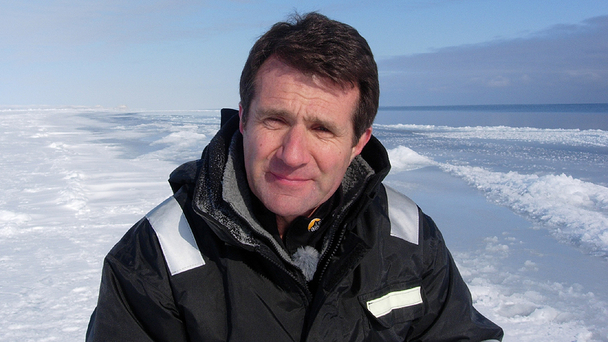
You can read more here about Professor Ken Dunton at the University of Texas where he is Professor, Department of Marine Science.

Professor Dunton
Professor Dunton


He is the sort of person that we should be listening to very carefully as the world changes in ways not seen for tens of thousands of years.

Lust, laughter and loyalty!


Something else we really can learn from dogs.

I’m not sure that I should admit that my dearest Jeannie is my 4th wife!  Long story that goes back to when I had just turned 12 years-old, back in 1956. I suffered an event that I interpreted as emotional rejection and promptly buried that deep into my subconscious where it stayed for over 50 years.

Then brought to the surface in 2007 (thanks Jon) after the failure of marriage number 3.  I met Jean some 6 months later, in December 2007, and we were married in Payson, AZ in November, 2010.  Being with Jean has been the happiest days of my life!

Jean, Father Dan and yours truly. St Paul's Episcopal Church, Payson, AZ. November 20th, 2010.
Jean, Father Dan and yours truly. St Paul’s Episcopal Church, Payson, AZ. November 20th, 2010.

Inevitably, while being married to Jean seems such a natural relationship, one is curious about what makes for a happy, lifelong relationship. Let’s face it, divorce is not uncommon.  In fact, the Divorce Rate website reveals that in 2012, the divorce rate was 3.4 couples per 1,000 population in the USA; the sixth highest in the world.

So it was fascinating to listen to a recent radio programme broadcast under the BBC’s Point of View series.  Just 10 minutes long, this particular programme was a talk by Adam Gopnik: The secret of a happy marriage 29th March 2013.  (Adam Gopnik is an American commentator and writes for The New Yorker.)

You should be able to listen to the programme by going here.  Or you can download the programme by going here, and following the instructions.  (Not sure how long the programme will be available to listen/download, so don’t delay.)

The programme was also featured on the BBC News Magazine Website. From which I quote:

A Point of View: Is there a secret to a happy marriage?

Nobody can explain the secret to a happy marriage, says Adam Gopnik, but it doesn’t stop people trying.

Anyone who tells you their rules for a happy marriage doesn’t have one. There’s a truth universally acknowledged, or one that ought to be anyway.

Just as the people who write books about good sex are never people you would want to sleep with, and the academics who write articles about the disappearance of civility always sound ferociously angry, the people who write about the way to sustain a good marriage are usually on their third.

Nonetheless (you knew there was a nonetheless on its way) although I don’t have rules, I do have an observation after many years of marriage (I’ve promised not to say exactly how many, though the name “Jimmy Carter” might hold a clue).

Later, Adam Gopnik speaks about Charles Darwin whose marriage to Emma he describes “as something close to an ideal marriage.

So what is it we learn from dogs?

So, marriages are made of lust, laughter and loyalty – but the three have to be kept in constant passage, transitively, back and forth, so that as one subsides for a time, the others rise.

Now Adam writes about the special form of loyalty that dogs offer us:

Be lit by lust, enlightened by laughter, settle into loyalty, and if loyalty seems too mired, return to lust by way of laughter.

I have had this formula worked out – and repeated it, waggishly, to friends, producing for some reason an ever more one-sided smile on the face of my beautiful wife.

Until, not long ago, I realised that there was a flaw in this idea. And that was that I had underestimated the reason that loyalty had such magnetic power, drawing all else towards it.

For I had been describing loyalty in marriage as though it were a neutral passive state – a kind of rest state, a final, fixed state at the end of the road of life.

And then, against our better wishes, and our own inner version of our marriage vows, at our daughter’s insistence we got a dog. And this is what changed my view.

“The expense and anxiety of children” indeed. Our daughter’s small Havanese dog, Butterscotch, has instructed us on many things, but above all on the energy that being loyal really implies.

Dogs teach us many things – but above all they teach us how frisky a state loyalty can be.

Dogs, after all – particularly spayed city dogs that have been denied their lusts – have loyalty as an overriding emotion. Ours will wait for hours for one of its family, and then patiently sit right alongside while there is work to be done.

Loyalty is what a dog provides. The ancient joke-name for a dog, Fido, is in truth the most perfect of all dog names – I am faithful. I am loyal. I remain.

Dogs are there to remind us that loyalty is a jumpy, fizzy emotion. Loyalty leaps up at the door and barks with joy at your return – and then immediately goes to sleep at your side. Simple fidelity is the youngest emotion we possess.

The loyalty of a dog. No more to be said.

The love and loyalty of Hazel.

Golden moments!

A beautiful photograph found on Facebook

Very grateful to Chris Snuggs for forwarding this to me.

dog reading

As Chris pointed out in his email, “I have to say that the dog doesn’t look too excited, but is nonetheless paying polite attention ….

May all our days have golden moments of peace and love.

It really is a very simple message!

Repeat after me: We are of this planet!  It’s really very simple!

There are times when I look back at my writings on Learning from Dogs, now well over 1,500 posts (1,633 as of today, to be anal about it!) and ponder if the fundamental message behind the name of the blog often gets overlooked.  The Welcome page states:

As man’s companion, protector and helper, history suggests that dogs were critically important in man achieving success as a hunter-gatherer. Dogs ‘teaching’ man to be so successful a hunter enabled evolution, some 20,000 years later, to farming, thence the long journey to modern man. But in the last, say 100 years, that farming spirit has become corrupted to the point where we see the planet’s plant and mineral resources as infinite. Mankind is close to the edge of extinction, literally and spiritually.

Dogs know better, much better! Time again for man to learn from dogs!

Elsewhere on the blog, I underpin that proposition by listing the attributes of dogs:

Dogs:

  • are integrous ( a score of 210) according to Dr David Hawkins
  • don’t cheat or lie
  • don’t have hidden agendas
  • are loyal and faithful
  • forgive
  • love unconditionally
  • value and cherish the ‘present’ in a way that humans can only dream of achieving
  • are, by eons of time, a more successful species than man.

Now this is all fine and dandy but of what relevance is this to the mess that homo sapiens now finds itself in? Two parts to that answer come to mind.

The first part is that watching a dog out in the open countryside quickly brings home the fact that these animals are part of nature and, if push comes to shove, can live in the wild and fend for themselves.  Not saying that a domestic dog would enjoy the experience but that their wild dog and grey wolf roots still rest somewhere in a dog’s consciousness.

The second part of the answer is that all animals instinctively live in harmony, in balance, with their surroundings; with their environment.

For the incredibly obvious reason that dogs, as with all other animal species, are an evolutionary consequence of the natural history of Planet Earth.  That evolutionary journey from the Grey Wolf (Canis lupus) part of the Canidae family, a family including wolves, coyotes and foxes, thought to have evolved 60 million years ago.  That journey all the way to the domestic dog (Canis lupus familiaris).

That ancient journey where the African wild dog (Lycaon pictuspainted dog) came together with early man. No one knows when but the African wild dog was certainly around when man developed speech and set out from Africa, about 50,000 years ago!

Two vastly different natural species, dog and man, evolving compatibly with each other for so many thousands of years.

Back to the attributes of dogs, in particular a dog’s ability to cherish the present.  Earlier this week I was chatting with Kevin Dick, friend from Payson, AZ days, about the ‘interesting’ times we are living in.  Kevin thought there was a significant difference between the generations born in the 1940’s and 1950’s and those born in later times.  Most people over the age of, say 55, were brought up to save for ‘a rainy day’ and, possibly, be able to leave a legacy to their offspring.  Kevin then went on to reflect that more recent generations exhibit a ‘buy today, don’t delay’ mentality.

A by-product of this materialistic instant gratification approach is that the whole damn consumer machine has created a total disconnect with the fact that we humans are of this planet.

The earth is the mother of all people..

(Chief Joseph 1840 – 1904, leader of the Wallowa band, a Native American tribe

indigenous to the Wallowa Valley in northeastern Oregon)

Humans today fail to comprehend this fundamental fact: Our ability to harm the planet and think that it won’t affect our species is complete madness!  If only we could learn how to cherish the present in the way that our dogs do!

I’m now going to offer an essay from John Hurlburt.  I knew John had written this essay but didn’t get round to reading it properly until I had finished the introduction above.  I’m blown away by the resonance between the two but, as always, John’s words are so much more eloquent.

Inside Out

Climate change, religion, economics, government, politics and social issues are topics which create strong personal opinions and cultural divisions. We have difficulty accepting ideas which may conflict with our personal understandings. As usual, it’s an ego thing. The arrogance of our species is inclusive. We all suffer the consequences.

To counter our ego, we know that everything fits together. We exist in a unified cosmos with fluctuations and diversities that emerge around and through us.

Our present transformative state is as a biological form of energy and matter which possesses a conscious awareness of the natural order. We choose to ignore or deny the essential nature of our being at our own peril. Do we live only for the moment or do we live to insure our species future? That’s our fundamental choice.

Seek the truth and identify the common good.” Zoroaster [also known as Zarathustra, Ed.]

We are a consciously aware component of a living world in an isolated corner of a remote galaxy. Everything within and on the earth has an extraterrestrial origin. We live on an incubator we call the earth. We rarely truly communicate with or fully understand the energy of nature in our lives. Our critical thinking ability has become enveloped by an electronic cloud.

We generally agree that the actions of many religions and most politics are based upon short term human interests rather than upon the long term well being of our planet and its disappearing life forms. The fact is that we only began to emerge as a species about 100,000 years ago. Hubble telescope observations have dated our universal origin to roughly 13,002,000,000 years ago.

Could it be that we only imagine ourselves as independent beings? Could it be that beyond the mind games we play there is a vast reality greater that we can understand with our limited sensory apparatus and our finite minds?

Life is a transformative experience. All species, tribes, races and genders are united by the nature of life. We pass through a period of being selfish and ambitious during our journey. Many of us choose to move into these familiar ruts and furnish them. We do not always walk the way we talk.

Nature favors species which adapt to constant change in an emerging universe.

If we agree that our intelligence is judged by choices we make, there is some question about intelligent human life on earth. A recent Harvard University study of species in relation to change estimates that the life span of the human species is approximately 100,000 years. Sound familiar?

The wisdom of our brief human history tells us that we are on a careless and needless path to self destruction. All that’s necessary to verify this assertion is to turn on the news of the day. The systemic paradigm that has been imprinted on our psyches is in constant flux. As we live and learn, we realize that our purpose is to leave life better than we found it.

A delicate balance is necessary to maintain an even strain of faith in the natural process rather than dwelling upon our self centered fears of losing something we imagine we own or not attaining something we believe we want. The earth heals itself from the inside out. We can do the same as a species. Today is the tomorrow we dreamed of yesterday. What have we done to fulfill the true purpose of our lives?

an old lamplighter

So, yes, we have much to learn from dogs.

I will close as I started. We are of this planet!  It’s really very simple!

Just another very special dog.

Trip back memory lane to the days of Zanjeer.

I had completely forgotten about the story of Zanjeer.  But thanks to a recent email from John Lewis, friend from previous Devon days, it seemed fitting for today’s post.

Zanjeer was a Labrador Retriever who served as a detection dog with the Mumbai Police. During the time of the 1993 Mumbai bombings, Zanjeer detected arms and ammunition, including 3,329 kg of RDX explosives.

Here’s how Zanjeer’s death was reported back in November, 2000.

Police dog Zanjeer dead

Date:  2000-11-17

Police sniffer dog Zanjeer, who detected arms and ammunition used in 1993 serial explosions, died at a veterinary hospital at Parel last night, Bomb Detection and Disposal Squad sources said.

The nine-year-old Labrador was admitted to the hospital last month after it developed swellings in the lungs and paws.

Among the eight dogs with the squad, Zanjeer was regarded as a hero. It had two handlers, Ganesh Andale and V G Rajput. Zanjeer had detected 3,329 kgs of RDX, nine sticks of gelatine, five kg of other explosives, 18 AK-56 rounds, five pistol rounds and 6,406 other rounds during the blast investigations.

Zanjeer was born on January 7, 1992, and was inducted into the squad on December 29, 1992. It was trained at the Dog Training Centre of the Criminal Investigation Department at Shivaji Nagar in Pune.

WikiPedia has an entry that opens thus:

Zanjeer (7 January 1992 – 16 November 2000) was a Labrador Retriever who served as a detection dog with the Mumbai Police. During the time of the 1993 Mumbai bombings, Zanjeer detected arms and ammunition, including 3,329 kg of RDX explosives.

Zanjeer was trained at the Dog Training Centre of the Criminal Investigation Department at Shivaji Nagar in Pune, India. He joined the Mumbai Police Bomb Detection and Disposal Squad on 29 December 1992 and was handled by Ganesh Andale and V G Rajput.

The name Zanjeer comes from the 1973 Hindi film Zanjeer but he was also called “Ginger” because of his coat colour.

Not including his contributions during the 1993 attacks, Zanjeer helped to recover 11 military bombs, 57 country-made bombs, 175 petrol bombs, and 600 detonators.

Some special dog!

Finally, from the First Post website comes this:

zanjeer

Zanjeer, the labrador: Unlikely hero of 1993 Mumbai blasts

A senior police officer lays a floral wreath on Mumbai’s most famous dog Zanjeer, who worked with the Bomb Squad, following his death from bone cancer in the city, November 17, 2000.Zanjeer, a golden labrador, saved thousands of lives during the serial bomb blasts in the city in March 1993 by detecting more than 3,329 kgs of the explosive RDX, 600 detonators, 249 hand grenades and 6406 rounds of live ammunition. He was buried with full honours during a ceremony attended by senior police officials. Reuters

Twenty years ago!  My, how the years slip by!. Thanks John.

More new tomorrows.

New world order goes to ramming speed!

We spent some enjoyable time with neighbours Dordie and Bill yesterday afternoon from where my sub-heading quote comes.  Perhaps, a tad tongue-in-cheek, but only a tad!

Yesterday, the bulk of my post The new tomorrows consisted of a powerful essay from William deBuys ‘Phoenix in the Climate Crosshairs‘, courtesy of TomDispatch.  It painted in very stark terms the impact of climate change on the metropolitan city of Phoenix in Arizona; a city of over 4 million people, indeed home to more than two-thirds of Arizona’s population.

So, today, I wanted to wander through some other aspects of this new world order.

Here’s a recent item on Climate Crocks examining the changes in March’s weather, 2013 vs 2012.  From which I quote:

Much Different March. Same Reason?

Dittohead reasoning: “So when it’s warm, you blame it on climate change. When its cold, you blame it on climate change. It can’t be both.”

Well, yeah, it can, kinda.

Meteo people weigh in.

7Weather Blog WHDH-TV:

I think we’ve passed the point of tolerance with these ceaseless storms. Gone are the days when viewers would flood our inboxes with pretty pictures of their pets and kids frolicing in the snow. Constant cleanup has made us snippy and short – even a few plow guys have hoisted the white flag. The holidays are long past, the winter is stale, and the people just want spring…

…and accountability.  Instead of pictures, I get questions in my inbox. “Why are we getting so much snow? Why did it turn on a dime? And when will it stop?”

Those are fair questions. But with the limits of the long range (10-14 day) forecasts, I’m not ready to answer the last question. We may sail out of this in April, but so far the first week of the month isn’t looking much different from the first week in March. The ultimate question is why.

The jetstream has taken on an odd path. [my emphasis]

Now just look at this:

Forecast sea level pressure departures from average from the GFS computer model. This shows the large area of unusually high atmospheric pressure over Greenland.Image from Weatherbell
Forecast sea level pressure departures from average from the GFS computer model. This shows the large area of unusually high atmospheric pressure over Greenland.
Image from Weatherbell

Later on that article says:

Recent research suggests that rapid Arctic climate change, namely the loss of sea ice cover, may be contributing to blocking patterns like we’re seeing right now. That rapid decline in Arctic sea ice since the beginning of the satellite record in 1979 may be altering weather patterns both in the Far North and across the U.S.. Some studies have shown that sea ice loss favors atmospheric blocking patterns such as the pattern currently in place, while others have not shown statistically significant changes in blocking patterns across the Northern Hemisphere, at least not yet. Arctic sea ice extent declined to a record low during the 2012 melt season.

The last Winter in North-West Europe has been ‘interesting’, to say the least!  A follow-up to that Climate Crock’s essay reports:

study published in 2012 showed that by changing the temperature balance between the Arctic and mid-latitudes, rapid Arctic warming is altering the course of the jet stream, which steers weather systems from west to east around the northern hemisphere. The Arctic has been warming about twice as fast as the rest of the Northern Hemisphere, due to a combination of human emissions of greenhouse gases and unique feedbacks built into the Arctic climate system. The jet stream, the study said, is becoming “wavier,” with steeper troughs and higher ridges.

A new study published in the journal Environmental Research Letters shows that reduced sea ice cover can favor colder and stormier winters in the northern midlatitudes

Did you fully take in that paragraph?  The one about “The Arctic has been warming about twice as fast as the rest of the Northern Hemisphere …“?

The other great ‘river’ in the North Atlantic is the thermohaline circulation or to put it in more familiar terms: The Gulf Stream.  Has that been changing?  You bet! In more ways than one might expect.

Here’s a snippet from an item from last October’s issue of Nature journal:

Recent changes to the Gulf Stream causing widespread gas hydrate destabilization

The Gulf Stream is an ocean current that modulates climate in the Northern Hemisphere by transporting warm waters from the Gulf of Mexico into the North Atlantic and Arctic oceans. A changing Gulf Stream has the potential to thaw and convert hundreds of gigatonnes of frozen methane hydrate trapped below the sea floor into methane gas, increasing the risk of slope failure and methane release.

How the Gulf Stream changes with time and what effect these changes have on methane hydrate stability is unclear. Here, using seismic data combined with thermal models, we show that recent changes in intermediate-depth ocean temperature associated with the Gulf Stream are rapidly destabilizing methane hydrate along a broad swathe of the North American margin.

As the diagram below shows all too clearly, the cold waters from above the Arctic circle directly affect the Gulf Stream.

gulfstream

From the website of the National Snow & Ice Data Center:

Average sea ice extent for February 2013 was 14.66 million square kilometers (5.66 million square miles). This is 980,000 square kilometers (378,000 square miles) below the 1979 to 2000 average for the month, and is the seventh-lowest February extent in the satellite record.

Less ice means more cold water. QED!

OK, moving on.

We met recently with Wayne over at Rogue Valley Firewood here in Merlin.  Not to buy more firewood but because Wayne has started into hugelkultur.  Jean and I hadn’t heard of the term before.  Come back to that in a moment.

In musing with Wayne about how rapidly life is changing for us all, he spoke of the consequence of rising fuel prices and the rising costs of putting petrol (OK, he used the word ‘gas’!) in one’s car.  Wayne pointed out the obvious.  That the inevitable effect of those rising costs would be to steadily reduce one’s range for ‘affordable’ car journeys.  Many people will no longer be able to afford to drive longer distances.

In other words, local will increasingly become more relevant to daily life.  Or to use a better word than local, community will return to the centre stage of our world.  And of all the things important to a community, none is more so than access to food.

Back to Hugelkultur. Watch this video:

Wayne is committed to seeing just what can be grown for the local community of Merlin using this form of raised garden bed.  You can read more here.

Is this just a piece of fun?  Most definitely not!

Here’s a recent item from Grist.

This sobering map shows you all of America’s food deserts

By Sarah Laskow

The USDA’s new Food Access Research Atlas is a map of all the places in the country where people live in food deserts — places where it’s difficult to access fresh food.

food-deserts1

More details here.

The message that hits me from that map is the consequence for millions of people, especially those in rural areas or unable to afford a car, when it comes to getting hold of fresh food.  Another reason why community food programs are going to be a feature of the new tomorrows.

Finally, take a look at a recent item on Paul Gilding’s blogsite.

paulgildingportrait
Paul Gilding

Paul is an independent writer, advisor and advocate for action on climate change and sustainability. He recently published Victory at Hand for the Climate Movement? From which I offer:

There are signs the climate movement could be on the verge of a remarkable and surprising victory. If we read the current context correctly, and if the movement can adjust its strategy to capture the opportunity presented, it could usher in the fastest and most dramatic economic transformation in history. This would include the removal of the oil, coal and gas industries from the economy in just a few decades and their replacement with new industries and, for the most part, entirely new companies. It would be the greatest transfer of wealth and power between industries and countries the world has ever seen.

To understand this incredible potential we first have to step back and understand the unique structure of this social change movement, which may rank among the most influential in history. It is simplistic to characterise it as an alliance of grass roots organisations and activists pitched against a rich and well connected adversary. While that is part of the story, it is more accurately understood as an idea whose tentacles reach into every tier of government, the world’s largest companies and financial institutions, and throughout the academic and science communities.

Because of this, it is winning the battle from within: Its core arguments and ideas are clearly right; being endorsed by the world’s top science bodies and any significant organisation that has examined them.

Read the full article here.

Strikes me that in one very important way, we will be reverting to how our ancient hunter-gatherer ancestors lived.  I mean reverting to living our lives as relatively small interdependent communities almost exclusively at the local level.

Guess what!  Yet another aspect of learning from dogs.  In the wild, dogs live in groups of about 50 animals with clear boundaries to their territory.  Just like the ancestors of the domesticated dog and the wild dog: The grey wolf Canis Lupus.

Grey wolf Canis Lupus

See you all tomorrow!

The new tomorrows.

When we are no longer able to change a situation – we are challenged to change ourselves.”  Viktor Frankl.

Like many bloggers I enjoy using a quotation to set the theme for a post.  Found this on the web; it seemed appropriate.

Over the next two days, I want to range across a number of ideas that, together, point to changes that are underway in every conceivable manner for the vast majority of the inhabitants of this planet.

My musings were prompted by a recent essay on Tom Dispatch.  Regulars will know that Tom Engelhardt generously granted me permission to republish essays that appear on his very widely-read blogsite.  This particular essay is about Phoenix in Arizona.

But first indulge me as I recount something rather personal, possibly silly but also mysteriously beautiful.

Many will know that Jean and I moved from San Carlos in Mexico to Payson, Arizona early on in 2010.  (My long comment to yesterday’s post about poor Lupe explains the background.)  Payson is 80 miles North-East of Phoenix and despite being up at 5,000 feet is very much in the same broad weather systems as Phoenix.

With our 14 dogs and 7 cats we quickly settled down and were made to feel very welcome by one and all.  Jean and I were married in Payson in November of 2010.  We were happy and contented.

One night in June last year, I had this vivid dream about going to the bathroom and finding that no water came from the tap.  Where we were living was out of town and our water supplies came from our own well (borehole in English speak!).  While the water level in the well was down by about 50 feet there was no question of the well failing; it was drilled to over 180 feet and flow tests were positive.

When I awoke the dream was still very much in the forefront of my mind.  I talked about it over breakfast with Jeannie.  By chance, we had a guest staying with us and when she heard the tale she said, “If you’re worried about water, you should go to Oregon.

Again, by chance, a couple of weeks later we had someone offer to house-sit.  With our menagerie of animals that was no casual offer!

We accepted, came up to Oregon and found this most beautiful home in Merlin, Southern Oregon complete with 13 acres and Bummer Creek running across the width of the property, a creek that flows for most of the year.

Pharaoh checking out our creek.
Pharaoh checking out Bummer Creek.

We quickly did the deal, sold the house in Payson and moved in on October 25th 2012, less than 5 months ago.

Keep all of that in mind as you read this TomDispatch essay.

oooOOOooo

Tomgram: William deBuys, Exodus from Phoenix

Posted by William deBuys at 7:58am, March 14, 2013.

We’re not the first people on the planet ever to experience climate stress.  In the overheating, increasingly parched American Southwest, which has been experiencing rising temperatures, spreading drought conditions, and record wildfires, there is an ancient history of staggering mega-droughts, events far worse than the infamous “dust bowl” of the 1930s, the seven-year drought that devastated America’s prairie lands.  That may have been “the worst prolonged environmental disaster recorded for the country,” but historically speaking it was a “mere dry spell” compared to some past mega-droughts that lasted “centuries to millennia.”

Such events even happened in human history, including an almost century-long southwestern dry spell in the second century AD and a drought that was at least decades long in the twelfth century.  These were all events driven by natural climate variation.  Climate change adds a human factor to the equation in a region already naturally dry and short on water.  It ups the odds of bad events happening.  In the coming century, how habitable will parts of the bustling desert Southwest turn out to be?  Already, in the face of heat and drought, small numbers of people from small towns in the region are leaving.  And this, too, has happened before.  There are sobering previous examples of what it means when extreme climate stress hits this area.

Chaco Canyon was abandoned by its native population during that twelfth-century drought, and 150 years later, the Hohokam native culture of what is now central Arizona, whose waterworks in the dry lands of that area were major and impressive, also abandoned its lands, possibly due to drought, as TomDispatch regular William deBuys recounts in his recent book A Great Aridness: Climate Change and the Future of the American Southwest.  “At some point,” he writes, “Hohokam society passed a threshold: the number of able-bodied workers it could muster was no longer sufficient to meet the challenge of rebuilding dams when they washed out and cleaning canals as they inevitably silted up. Eventually the hydraulic system collapsed, and the society that depended on it could no longer exist. The survivors turned their backs on their cities and scattered into the vastness of the land, doing what they could to survive.”

As you read deBuys’s latest post, it’s worth remembering that even the greatest hydraulic engineers have their limits when the water dries up.  When the Anglo farmers of the Phoenix Basin first started using the local rivers, they found themselves “reopening the canals the Hohokam had left behind.”  Who knows what monumental works we, too, might someday abandon? Phoenix, anyone? Tom

Phoenix in the Climate Crosshairs 
We Are Long Past Coal Mine Canaries 
By William deBuys

If cities were stocks, you’d want to short Phoenix.

Of course, it’s an easy city to pick on. The nation’s 13th largest metropolitan area (nudging out Detroit) crams 4.3 million people into a low bowl in a hot desert, where horrific heat waves and windstorms visit it regularly. It snuggles next to the nation’s largest nuclear plant and, having exhausted local sources, it depends on an improbable infrastructure to suck water from the distant (and dwindling) Colorado River.

In Phoenix, you don’t ask: What could go wrong? You ask: What couldn’t?

And that’s the point, really. Phoenix’s multiple vulnerabilities, which are plenty daunting taken one by one, have the capacity to magnify one another, like compounding illnesses. In this regard, it’s a quintessentially modern city, a pyramid of complexities requiring large energy inputs to keep the whole apparatus humming. The urban disasters of our time — New Orleans hit by Katrina, New York City swamped by Sandy — may arise from single storms, but the damage they do is the result of a chain reaction of failures — grids going down, levees failing, back-up systems not backing up. As you might expect, academics have come up with a name for such breakdowns: infrastructure failure interdependencies. You wouldn’t want to use it in a poem, but it does catch an emerging theme of our time.

Phoenix’s pyramid of complexities looks shakier than most because it stands squarely in the crosshairs of climate change. The area, like much of the rest of the American Southwest, is already hot and dry; it’s getting ever hotter and drier, and is increasingly battered by powerful storms. Sandy and Katrina previewed how coastal cities can expect to fare as seas rise and storms strengthen. Phoenix pulls back the curtain on the future of inland empires. If you want a taste of the brutal new climate to come, the place to look is where that climate is already harsh, and growing more so — the aptly named Valley of the Sun.

In Phoenix, it’s the convergence of heat, drought, and violent winds, interacting and amplifying each other that you worry about. Generally speaking, in contemporary society, nothing that matters happens for just one reason, and in Phoenix there are all too many “reasons” primed to collaborate and produce big problems, with climate change foremost among them, juicing up the heat, the drought, and the wind to ever greater extremes, like so many sluggers on steroids. Notably, each of these nemeses, in its own way, has the potential to undermine the sine qua non of modern urban life, the electrical grid, which in Phoenix merits special attention.

If, in summer, the grid there fails on a large scale and for a significant period of time, the fallout will make the consequences of Superstorm Sandy look mild. Sure, people will hunt madly for power outlets to charge their cellphones and struggle to keep their milk fresh, but communications and food refrigeration will not top their list of priorities. Phoenix is an air-conditioned city. If the power goes out, people fry.

In the summer of 2003, a heat wave swept Europe and killed 70,000 people. The temperature in London touched 100 degrees Fahrenheit for the first time since records had been kept, and in portions of France the mercury climbed as high as 104°F. Those temperatures, however, are child’s play in Phoenix, where readings commonly exceed 100°F for more than 100 days a year. In 2011, the city set a new record for days over 110°F: there were 33 of them, more than a month of spectacularly superheated days ushering in a new era.

In Flight From the Sun

It goes without saying that Phoenix’s desert setting is hot by nature, but we’ve made it hotter. The city is a masonry world, with asphalt and concrete everywhere. The hard, heavy materials of its buildings and roads absorb heat efficiently and give it back more slowly than the naked land. In a sense, the whole city is really a thermal battery, soaking up energy by day and releasing it at night. The result is an “urban heat island,” which, in turn, prevents the cool of the desert night from providing much relief.

Sixty years ago, when Phoenix was just embarking on its career of manic growth, nighttime lows never crept above 90°F. Today such temperatures are a commonplace, and the vigil has begun for the first night that doesn’t dip below 100°F. Studies indicate that Phoenix’s urban-heat-island effect may boost nighttime temperatures by as much as 10°F. It’s as though the city has doubled down on climate change, finding a way to magnify its most unwanted effects even before it hits the rest of us full blast.

Predictably, the poor suffer most from the heat.  They live in the hottest neighborhoods with the least greenery to mitigate the heat-island effect, and they possess the least resources for combatting high temperatures.  For most Phoenicians, however, none of this is more than an inconvenience as long as the AC keeps humming and the utility bill gets paid. When the heat intensifies, they learn to scurry from building to car and into the next building, essentially holding their breaths. In those cars, the second thing they touch after the ignition is the fan control for the AC. The steering wheel comes later.

In the blazing brilliance of July and August, you venture out undefended to walk or run only in the half-light of dawn or dusk. The idea for residents of the Valley of the Sun is to learn to dodge the heat, not challenge it.

Heat, however, is a tricky adversary. It stresses everything, including electrical equipment. Transformers, when they get too hot, can fail. Likewise, thermoelectric generating stations, whether fired by coal, gas, or neutrons, become less efficient as the mercury soars.  And the great hydroelectric dams of the Colorado River, including Glen Canyon, which serves greater Phoenix, won’t be able to supply the “peaking power” they do now if the reservoirs behind them are fatally shrunken by drought, as multiple studies forecast they will be. Much of this can be mitigated with upgraded equipment, smart grid technologies, and redundant systems.  But then along comes the haboob.

haboob is a dust/sand/windstorm, usually caused by the collapse of a thunderstorm cell. The plunging air hits the ground and roils outward, picking up debris across the open desert. As the Arabic name suggests, such storms are native to arid regions, but — although Phoenix is no stranger to storm-driven dust — the term haboob has only lately entered the local lexicon. It seems to have been imported to describe a new class of storms, spectacular in their vehemence, which bring visibility to zero and life to a standstill. They sandblast cars, close the airport, and occasionally cause the lights — and AC — to go out. Not to worry, say the two major utilities serving the Phoenix metroplex, Arizona Public Service and the Salt River Project. And the outages have indeed been brief.  So far.

Before Katrina hit, the Army Corps of Engineers was similarly reassuring to the people of New Orleans. And until Superstorm Sandy landed, almost no one worried about storm surges filling the subway tunnels of New York.

Every system, like every city, has its vulnerabilities. Climate change, in almost every instance, will worsen them. The beefed-up, juiced-up, greenhouse-gassed, overheated weather of the future will give us haboobs of a sort we can’t yet imagine, packed with ever greater amounts of energy. In all likelihood, the emergence of such storms as a feature of Phoenix life results from an overheating environment, abetted by the loose sand and dust of abandoned farmland (which dried up when water was diverted to the city’s growing subdivisions).

Water, Water, Everywhere (But Not for Long)

In dystopic portraits of Phoenix’s unsustainable future, water — or rather the lack of it — is usually painted as the agent of collapse. Indeed, the metropolitan area, a jumble of jurisdictions that includes Scottsdale, Glendale, Tempe, Mesa, Sun City, Chandler, and 15 other municipalities, long ago made full use of such local rivers as the Salt, Verde, and Gila. Next, people sank wells and mined enough groundwater to lower the water table by 400 feet.

Sometimes the land sank, too.  Near some wells it subsided by 10 feet or more. All along, everyone knew that the furious extraction of groundwater couldn’t last, so they fixed their hopes on a new bonanza called the Central Arizona Project (CAP), a river-sized, open-air canal supported by an elaborate array of pumps, siphons, and tunnels that would bring Colorado River water across the breadth of Arizona to Phoenix and Tucson.

The CAP came on line in the early 1990s and today is the engine of Arizona’s growth. Unfortunately, in order to win authorization and funding to build it, state officials had to make a bargain with the devil, which in this case turned out to be California. Arizona’s delegation in the House of Representatives was tiny, California’s was huge, and its representatives jealously protected their longstanding stranglehold on the Colorado River. The concession California forced on Arizona was simple: it had to agree that its CAP water rights would take second place to California’s claims.

This means one thing: once the inevitable day comes when there isn’t enough water to go around, the CAP will absorb the shortage down to the last drop before California even begins to turn off its faucets.

A raw deal for Arizona? You bet, but not exactly the end of the line. Arizona has other “more senior” rights to the Colorado, and when the CAP begins to run dry, you may be sure that the masters of the CAP will pay whatever is necessary to lease those older rights and keep the 330-mile canal flowing. Among their targets will be water rights belonging to Indian tribes at the western edge of the state along the lower reaches of the river. The cost of buying tribal water will drive the rates consumers pay for water in Phoenix sky-high, but they’ll pay it because they’ll have to.

Longer term, the Colorado River poses issues that no amount of tribal water can resolve. Beset by climate change, overuse, and drought, the river and its reservoirs, according to various researchers, may decline to the point that water fails to pass Hoover Dam. In that case, the CAP would dry up, but so would the Colorado Aqueduct which serves greater Los Angeles and San Diego, as well as the All-American Canal, on which the factory farms of California’s Imperial and Coachella valleys depend. Irrigators and municipalities downstream in Mexico would also go dry. If nothing changes in the current order of things, it is expected that the possibility of such a debacle could loom in little more than a decade.

The preferred solution to this crisis among the water mavens of the lower Colorado is augmentation, which means importing more water into the Colorado system to boost native supplies. A recently discussed grandiose scheme to bail out the Colorado’s users with a pipeline from the Mississippi River failed to pass the straight-face test and was shot down by then-Secretary of the Interior Ken Salazar.

Meanwhile, the obvious expedient of cutting back on water consumption finds little support in thirsty California, which will watch the CAP go dry before it gets serious about meaningful system-wide conservation.

Burning Uplands

Phoenicians who want to escape water worries, heat waves, and haboobs have traditionally sought refuge in the cool green forests of Arizona’s uplands, or at least they did until recently. In 2002, the Rodeo-Chediski fire consumed 469,000 acres of pine and mixed conifer on the Mogollon Rim, not far from Phoenix. It was an ecological holocaust that no one expected to see surpassed. Only nine years later, in 2011, the Wallow fire picked up the torch, so to speak, and burned across the Rim all the way to the New Mexico border and beyond, topping out at 538,000 charred acres.

Now, nobody thinks such fires are one-off flukes. Diligent modeling of forest response to rising temperatures and increased moisture stress suggests, in fact, that these two fires were harbingers of worse to come. By mid-century, according to a paper by an A-team of Southwestern forest ecologists, the “normal” stress on trees will equal that of the worst megadroughts in the region’s distant paleo-history, when most of the trees in the area simply died.

Compared to Phoenix’s other heat and water woes, the demise of Arizona’s forests may seem like a side issue, whose effects would be noticeable mainly in the siltation of reservoirs and the destabilization of the watersheds on which the city depends. But it could well prove a regional disaster.  Consider, then, heat, drought, windstorms, and fire as the four horsemen of Phoenix’s Apocalypse. As it happens, though, this potential apocalypse has a fifth horseman as well.

Rebecca Solnit has written eloquently of the way a sudden catastrophe — an earthquake, hurricane, or tornado — can dissolve social divisions and cause a community to cohere, bringing out the best in its citizenry. Drought and heat waves are different. You don’t know that they have taken hold until you are already in them, and you never know when they will end. The unpleasantness eats away at you.  It corrodes your state of mind. You have lots of time to meditate on the deficiencies of your neighbors, which loom larger the longer the crisis goes on.

Drought divides people, and Phoenix is already a divided place — notoriously so, thanks to the brutal antics of Maricopa County Sheriff Joe Arpaio. In Bird on Fire: Lessons from the World’s Least Sustainable City, Andrew Ross offers a dismal portrait of contemporary Phoenix — of a city threatened by its particular brand of local politics and economic domination, shaped by more than the usual quotient of prejudice, greed, class insularity, and devotion to raw power.

It is a truism that communities that do not pull together fail to surmount their challenges. Phoenix’s are as daunting as any faced by an American city in the new age of climate change, but its winner-take-all politics (out of which has come Arizona’s flagrantly repressive anti-immigration law), combined with the fragmentation of the metro-area into nearly two dozen competing jurisdictions, essentially guarantee that, when the worst of times hit, common action and shared sacrifice will remain as insubstantial as a desert mirage. When one day the U-Haul vans all point away from town and the people of the Valley of the Sun clog the interstates heading for greener, wetter pastures, more than the brutal heat of a new climate paradigm will be driving them away. The breakdown of cooperation and connectedness will spur them along, too.

One day, some of them may look back and think of the real estate crash of 2007-2008 and the recession that followed with fond nostalgia. The city’s economy was in the tank, growth had stalled, and for a while business-as-usual had nothing usual about it. But there was a rare kind of potential. That recession might have been the last best chance for Phoenix and other go-go Sunbelt cities to reassess their lamentably unsustainable habits and re-organize themselves, politically and economically, to get ready for life on the front burner of climate change. Land use, transportation, water policies, building codes, growth management — you name it — might all have experienced a healthy overhaul. It was a chance no one took. Instead, one or several decades from now, people will bet on a surer thing: they’ll take the road out of town.

William deBuys, a TomDispatch regular, is the author of seven books, most recently A Great Aridness: Climate Change and the Future of the American Southwest. He has long been involved in environmental affairs in the Southwest, including service as founding chairman of the Valles Caldera Trust, which administers the 87,000-acre Valles Caldera National Preserve in New Mexico.

Follow TomDispatch on Twitter and join us on Facebook. Check out the newest Dispatch book, Nick Turse’s The Changing Face of Empire: Special Ops, Drones, Proxy Fighters, Secret Bases, and Cyberwarfare.

Copyright 2013 William deBuys

oooOOOooo

Just to reinforce the magic of my dream and how Jean and I feel so blessed by our life changes, the photo below was taken on our property the day we arrived in Merlin.

Within arm's reach of the beauty of nature.
Within arm’s reach of the beauty of nature.

Musings continued tomorrow.  Hope you stayed with it so far.

A mathematical approach to the demise of the Neanderthals.

Pure mathematics is, in its way, the poetry of logical ideas. Albert Einstein.

I have never been proficient at mathematics. But that doesn’t mean that I am not fascinated by the field of maths.

Hold that in your thoughts as I mention the name of blogger: Patrice Ayme.  It’s a non-de-plume but so what!  What blows me away, to use the vernacular, is the depth of thought expressed through the keyboard of Mr. Ayme (even the gender is an assumption).  The sub-heading on the home page of his blog is “Intelligence at the core of humanism“.  Just run your eye down the list of Recent Posts to the right-hand side of the home page to get a feel for the topics covered in the last few months.  Impressive is an understatement!

Anyway, five days ago Patrice published a post proposing how the Neanderthals were outbred, under the title of Math Extinguished Neanderthals.  It fascinated me and Patrice was gracious in allowing me permission to republish it on Learning from Dogs.

oooOOOooo

Math Extinguished Neanderthals

HOW NEANDERTHALS WERE OUTBRED:

Zillions of theories about the “disappearance” of Neanderthals. The latest one, from Oxford University, claims that Neanderthals’ big, beautiful eyes, and their big muscles caused their demise. They were too busy looking at things, and flexing their muscles. The idea is that significantly larger eyes would have crowded the Neanderthal brain out, making them relatively stupid. In particular it made them incapable of having social groups as large as those of Homo Sapiens Sapiens.

Big Eyes Do Not Kill

Big Eyes Do Not Kill

Sapiens girl on the left, Neanderthal girl on the right (reconstitution published in Science Magazine a few years ago).

I have long argued that the strength of democracy came from having many brains working in parallel. There is little doubt that larger social groups bring a higher cultural intelligence, hence higher individual intelligence. So I agree about that bit of logic. Yet, ironically, to reach the conclusion that Neanderthals’ social group were less numerous, the simple fact that Neanderthals were bigger, is enough. There is no need for hazardous demeaning allegations about Neanderthals’ brains.

That big eyes made Neanderthals stupid contradicts some facts that were thought to be established:

1) Sapiens Neanderthalis’ brains were significantly larger to start with. See Wikipedia.

2) Many very clever Homo Sapiens Sapiens have small brains. Famously Anatole France, an intellectual, had only a 1,000 cubic centimeters brain. Homo Floresiensis, the “hobbit” species living on the island of Flores, Indonesia, until it was wiped out recently, was extremely intellectually capable, although it had really small (and completely different) brains.

3) In the Middle East, Neanderthals and Sapiens went back and forth through the same large caves over 50,000 years. So whatever happened, it was not in evidence for 50,000 years.

So, of course, I have my own theory. That’s what philosophy is all about: trying to guess what really matters most, and how that most significant data logically articulate. Then scientists, politicians and writers can swoop, figure out the details, and attribute themselves the glory.

What could have happened by around 28,000 years ago that caused the demise of Neanderthals? At the time, the last fierce glaciation was gaining ground. (It reached its maximum 25,000 years ago.) Some have argued, absurdly, that the Neanderthals could not take it. That’s beyond silly, as Neanderthals had evolved, from half a million years ago, precisely to handle extreme cold.

Neanderthals were stocky, powerful, and they had thrived through hundreds thousands years of glaciation, mostly on a meat diet, hunting big game. But they also knew how to cook plants, and eat them.

50,000 years ago, Neanderthals exterminated Cave Bears, a huge animal who lived in caves, prime real estate Neanderthals craved for. Could the disappearance of Cave Bears be logically linked to the disappearance of Neanderthals? Yes. That’s a consequence of my theory. More advanced technology played a direct role.

How did Neanderthals kill Cave Bears? With technology. We do not know exactly what weapons Neanderthals had at their disposal. However, technology had improved, and kept improving. Recently it was found that Sapiens Sapiens (Homo SS; I hope one gets the joke) in Africa had invented bows and arrows 80,000 Before Present (BP).  (About 60,000 years earlier than previously thought!) Before bows and arrows, the propeller had been invented, and was used in Europe. The propeller took advantage of angular momentum to send a sort of mini lance further and stronger than by hand.

Why did the Neanderthals and Denisovans (another human species from Central Eurasia) lose their edge? Advancing technology is the obvious answer. When technology of clothing and weapons was sufficiently advanced, the physiological advantage that the Neanderthals genetically had, disappeared. Homo Sapiens Sapiens could thrive just as well through winter.

At that point, Homo Sapiens Sapiens from Africa could be as successful as the Neanderthals through the freezing wastelands of Europe. OK.

But the Homo SS outbred the Neanderthals, so they became genetically more successful. How do I explain that?

Simple. However, the explanation involves the exponential function, the same function found all over, and that the mathematician Rudin called “the most important function in mathematics”. The exponential also explains the plutocratic phenomenon, and that is why it’s so dangerous. The exponential always rules extinction events, that’s why one day a species is all over, like the American Pigeon, or the Tasmanian Tiger, and the next day, it’s gone.

So visualize this. Neanderthals were bigger than Homo SS, just like the Polar Bear is bigger than the Black Bear. Bigness is an adaptation to cold. Southern Europe’s Brown Bears are smaller than those found in Kamchatka, or Alaska (also known as Grizzlies: the Grizzly is an emigrated European Brown Bear!) Bigger makes warmer inside. That’s why the most massive animal that ever was, the Blue Rorqual, at up to 180 tons, is nearly twice the mass of the largest dinosaur (it’s not just that it’s floating, but also that water is cooler than Jurassic air, I hold).

To simplify, let’s use a bit of exaggeration (that’s reasoning by exaggeration, one of my preferred tactic of thought; the one humor exploits, and why joking helps thinking). Let’s assume Neanderthals were twice more massive than Homo SS.

Now let’s consider an habitat where Homo SS and Neanderthal bands roamed. They will tend not to mix, for obvious racist reasons. The racial hatred between Neanderthals and Homo SS has got to have been colossal. People who look too different are not even sexually attracted to each other (and where Neanderthals and Homo SS were in contact in the Middle East, for 50,000 years, there is no evolution of an interbred species, an indirect proof that there was no love lost there!)

The density of human mass is going to be roughly the same all over, because that density depends only upon the resources available (mostly meat on the hoof, and fur in burrows in glaciating conditions).

Thus, there would have been apartheid. But the Homo SS would have been twice more numerous, where they reigned (from my assumption of twice the mass). So now graft on this a catastrophe; a drought, a flood, a very tough winter, a volcanic super disaster, whatever. The climate was highly variable, starting about 40,000 years ago, just when Homo SS appeared. Some have stupidly argued that Neanderthals were too stupid to adapt to this changing circumstances. Like this paralyzing stupidity struck them just when Homo SS were around. My explanation is more subtle.

After a catastrophe in said habitat, say one of these numerous habitat in Europe isolated by glacial mountain ranges, or seas and lakes, most of the human population would be wiped out, Homo SS, just as Neanderthals. There would tend to be always a small remaining population, because the greatest limit on man is man himself: as a population gets wiped out, resources rebound, and life of the survivors tend to get much easier (that’s what happened in Europe after the Black Death of 1348 CE; if nothing else, survivors could ask for higher salaries from their plutocratic masters, and they did).

So say 90% of the population of the habitat was wiped out. As suddenly resources are now not limited, the human population will rebound exponentially. The equation is: N(t) = N(0) exp(Rt). “R” is the “Malthusian” parameter, the rate of growth. Now it’s going to require twice the resources to feed a Neanderthal to sexual maturation (under our outrageously simplifying assumption that Neanderthals are twice the mass). Thus one may assume that R(Homo SS)/R(Neanderthal) is 2. The end result is that the quotient:

Number Homo SS/ Number Neanderthal = A exp(2t). (Where A is the ratio of the populations H SS/Neanderthal after the catastrophe.)

Thus the population of H SS would exponentially grow relative to that of the Neanderthals, resulting in a quick extinction. And in no way this is happening because Homo SS were superior. Just because they were more gracile.

Hence the mystery of the evolution of contemporary man is smoothly explained. Just a bit of math. QED.

Europeans & Asians: Not Just African

Europeans & Asians: Not Just African

***

Patrice Ayme

***

Note 1: what of the mentally deliquescent and racist article in the Proceedings of the Royal Society? First, they sank so low as tousing orbit size as a proxy, that Neanderthals had larger visual systems than contemporary AMH [Anatomically Modern Humans]. That’s about as intelligent as saying that, because special forces use night vision goggles, they have got to have bigger visual systems.

The main woman author also found the same physiological feature, bigger eyes, in the past, about people presently living at high latitude. She contentedly asserted that, because light levels are lower in the north, people living in the north (40,000 years at least for Homo SS) have bigger eyes. Amusingly, she did not draw, in that case the conclusion that Norwegians and the English are therefore more stupid. Somehow, though, in her lack of smarts, she applies that controversial reasoning to Neanderthals. Does she have giant eyes?

Seriously the Oxford study rests on a central fact that contradicts one of established facts about Neanderthals. Indeed it claims Neanderthals’ brains were not any larger than Homo SS.

***

Note 2; what catastrophes am I talking about? Well the climate fluctuated wildly, to start with. Second, A Campanian ignimbritevolcanic super-eruption around 40,000 years ago, followed by a second one a few thousand years later, certainly crashed Neanderthal populations (based on logic, and evidence fromMezmaiskaya cave in the Caucasus. Mitochondrial DNA analysis of a specimen there is C14 dated 29,000 years BP, one of the latest living pure Neanderthals). After such a catastrophe, the exponential rebounds of populations would have advantaged Homo SS, as explained above.

***

Note 3: OK, I exaggerated with the mass ratio. (Mathematicians often do this, considering an exaggerated case to understand the mean, through the tails.) But the real mass ratio would be aggravated because, Neanderthal was built in such a way, relative to gracile Homo SS, that they consumed more calories per day (some paleontologists have come up with 300). So there is no doubt that the effect above will play a role, even if the mass ratios were not as bad. Notice the mechanism above would tend to extinguish the Neanderthal traits that were most characteristic of the subspecies.

***

Note 4: A preferred trick of Neanderthals’ haters is to exhibitArchaic Neanderthals‘skulls, and compare them to those of modern men. The skull of an Archaic Neanderthal of 400,000 years ago should not be compared to a modern human, less than 40,000 year old! All the more since Neanderthals’ brain size augmented faster than the brain size of Homo Sapiens Sapiens.

***

Note 5: Part of the mechanism above generalizes for other species in competition. It provides with a disappearance mechanism after ecological turbulence, according to species’ ecological footprint.

oooOOOooo

So hope that others shared my pleasure at reading the essay.

Going to close with another quotation from Mr. Albert Einstein: “As far as the laws of mathematics refer to reality, they are not certain, and as far as they are certain, they do not refer to reality.”

I’m a man – can fix anything!

Second set of wonderful pictures, courtesy of Bob Derham.

(In case you missed the first set, here’s the link: Trust me, I’m an engineer.)

oooOOOooo

Don’t have a spoon?

I can fix that!

rd1

Seat belt broken?
I can fix that! (Is that a neck brace you have on?)

rd2

New TV too big for the old cabinet?
I can fix that!

rd3

No bottle opener?
I can fix that!

rd4

Room too dark using compact fluorescent?
I can fix that!

rd5

Electrical problem?
I can fix that!

rd6

Car stereo stolen?
I can fix that!

rd7

Bookshelf cracking under the weight?
I can fix that!

rd8

No ice chest?
I can fix that!

rd9

Can’t read the ATM screen?
I can fix that!

rd10

Car imported from the wrong country?
I can fix that!

rd11

Satellite signal goes out when it rains?
I can fix that!

rd12

Electric stove broken & can’t heat coffee?
I fixed that.

rd13

Wiper motor burned out?
I can fix that!

rd14

What the HECK!!!

rd15

Display rack falling over?
I can fix that!

rd16

Desk overloaded?
I can fix that!

rd17

Car can’t be ordered with the ‘Wood Trim’ option?
I can fix that!

rd18

Exhaust pipe dragging?
I can fix that!

rd19

Need to feed the baby AND do the laundry?
I can fix that!

rd20

Cables falling behind the desk? (Now this is a Good One!)
I can fix that!

rd21

No skate park in town?
I can fix that!

rd22

And – last but not least – – – –
Out of diapers? I can fix that!

rd23


oooOOOooo

Wonderful, aren’t they!  Mind you, please understand I am not encouraging anyone to copy these ideas!

Trust me, I’m an engineer!

Wonderful set of pictures, courtesy of Bob Derham.

oooOOOooo

eng1

eng2

eng3'

eng4

eng5

eng6

eng7

eng8

eng9

eng10

eng11

oooOOOooo