Yesterday morning Jean and I travelled the short distance into Grants Pass to visit Margaret and the rest of the team at Rogue Valley Humane Society, RVHS. As their website proclaims: Helping Our Community, Four Paws at a Time.
Here’s why we went to meet the team.
If you drop across to my page where I offer my book for sale you will read that:
Please do find your way to supporting our pets in need. For 50% of the net proceeds from the sale of my book are being donated to our local Rogue Valley Humane Society. Every cent makes a positive difference!
Well many of you, dear people, have made a positive difference, as the following pictures illustrate.
Yours truly passing a cheque to the value of $750 to Margaret Varner, Director of Facility Operations at RVHS.
oooo
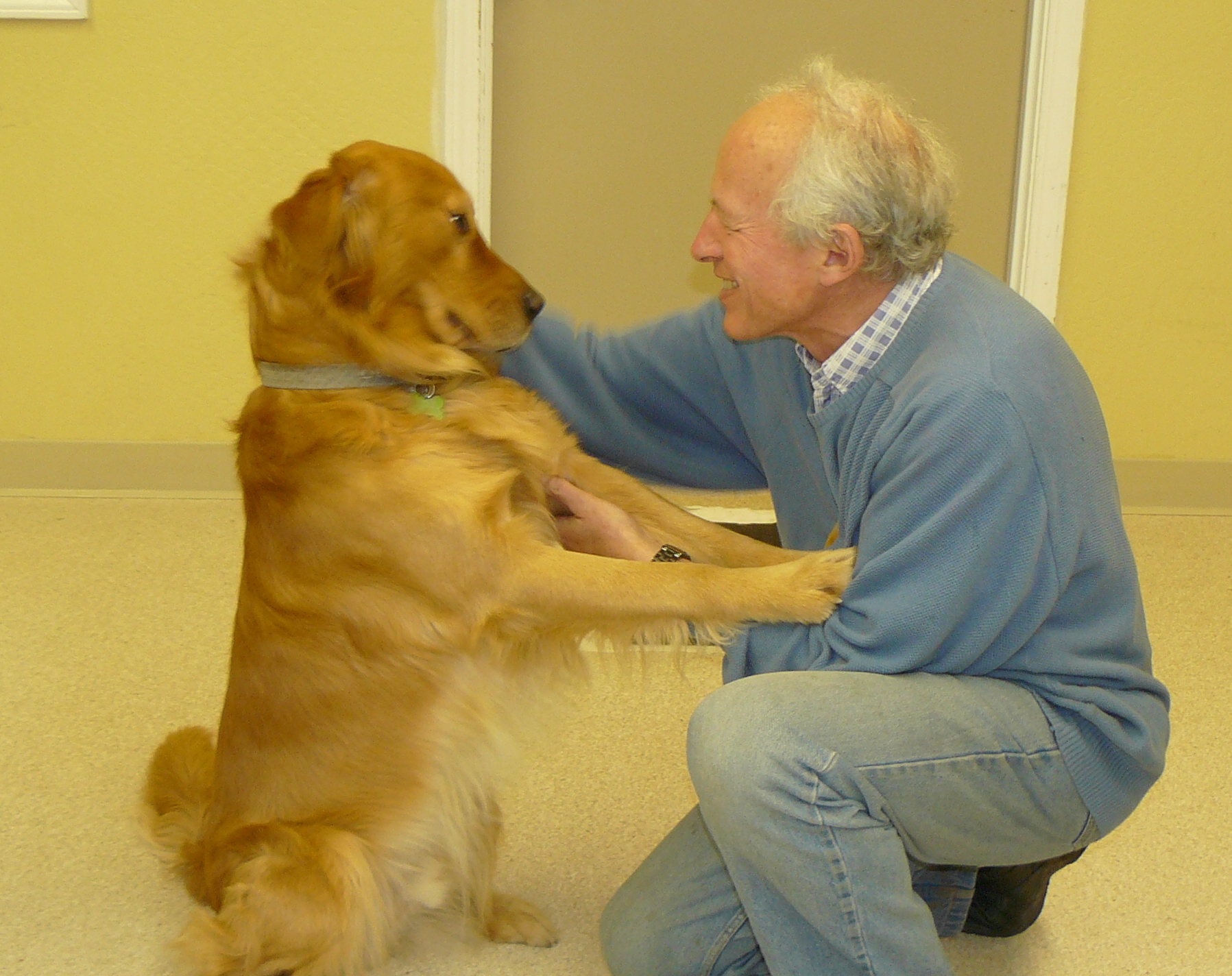
Explaining to Authentic the dog in the office of RVHS what has just been donated.Being thanked in the only way that dogs can properly thank someone!
oooo
Gorgeous shot of Jeannie and Authentic.
So a tremendous vote of thanks to everyone that has purchased my book for this is what your generosity delivers!
Going to write a little more about the Humane Society tomorrow.
Happy Birthday to grandson Morten who is five today!
Indirectly there is a connection between my sub-title, above, and today’s post about squeezing cute creatures. For Morten will already have enjoyed many hugs and, hopefully, will grow up feeling very comfortable at giving and receiving hugs.
Thankfully, Jean is a great hugger and has opened my eyes to the power of giving in to a hug. Not suprising when one thinks of Jean’s years of hugging dogs way before she and I met back in 2007.
Dear old Pharaoh, as he has aged, (he will be 13 this coming June) clearly enjoys more hugs than when he was a more active, fitter German Shepherd and always on the go.
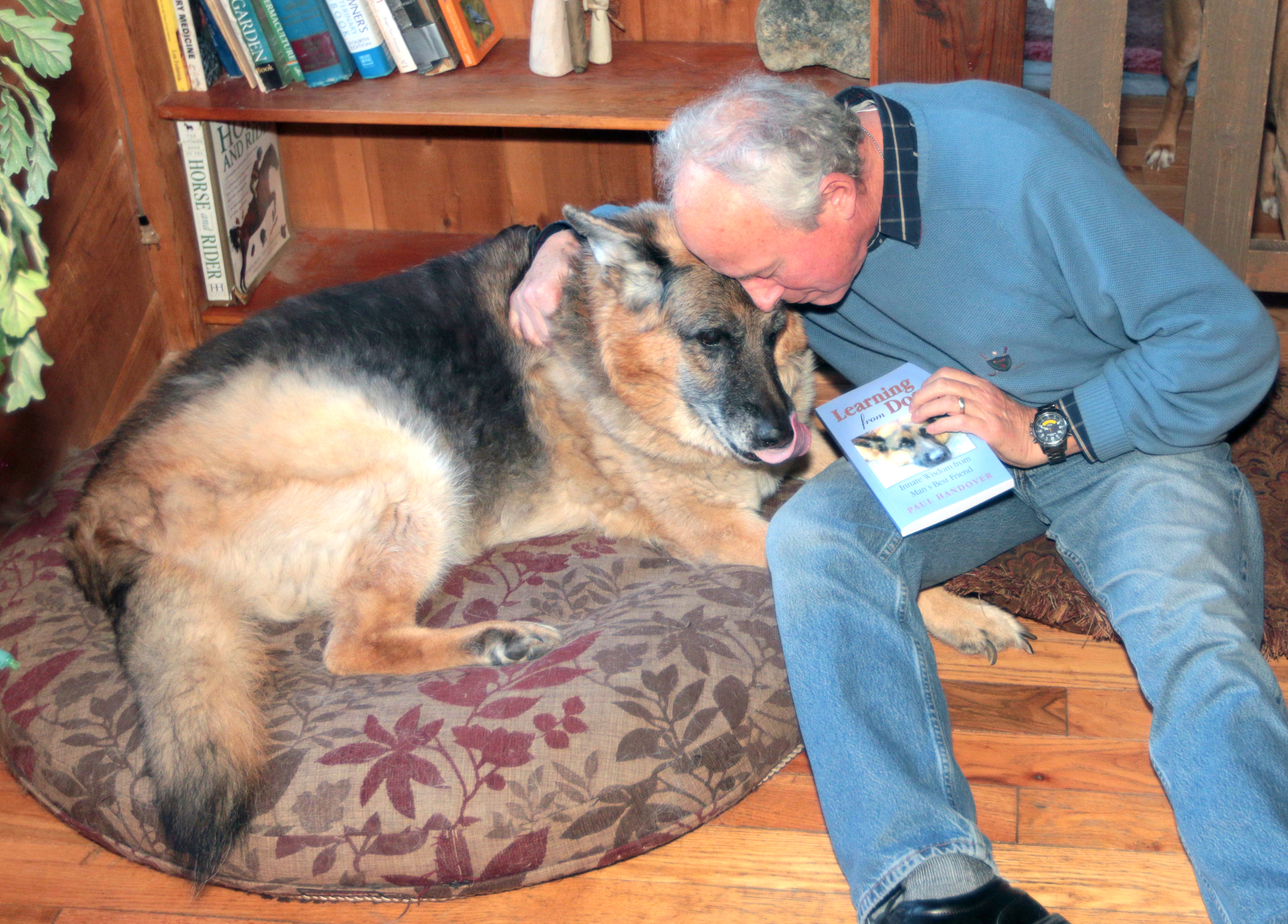
When The Daily Courier, our local newspaper, came to the house last December Timothy Bullard, the paper’s photographer, took the following photograph of Pharaoh and me having a ‘love in’.
TIMOTHY BULLARD/Daily Courier – Paul Handover with Pharaoh, a 12year-old German Shepard that he uses on the cover of his new book about man’s best friend.
So this recent article from the Care2 website seems an appropriate follow-on to my introductory remarks.
If any of the collected photographs you see here cause you to emit high-pitched noises or ache to cradle the pictured animal tight in your arms, you might be experiencing a bout of “cute aggression.”
The phrase refers to a phenomenon during which we catch sight of a living thing deemed “cute,” usually a baby or an animal or — double-whammy — a baby animal, and feel an overwhelming desire to play with the subject’s features; a compulsion to tickle its feet; the need to tease its rumples or bulges of fat; the want to bury our faces into its belly.
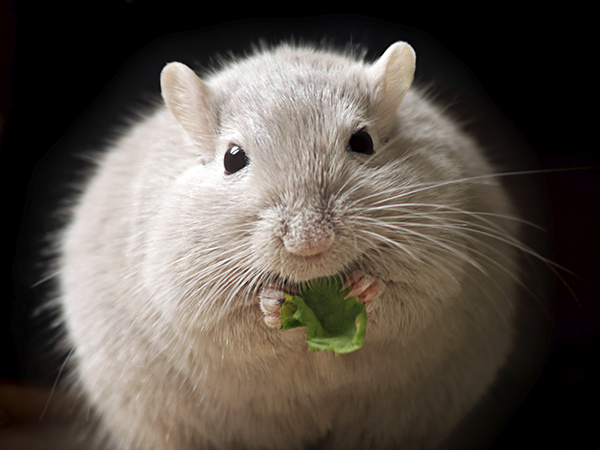
fluffy mouse ball
Granted, not all voiceless lifeforms enjoy being tugged at or played with in an intrusive manner, which is why this behavior is referred to, in part, as “aggressive.” While we might mean absolutely no harm to the creature we long to hold and hug, our near-hyperactive responses to its presence often seem beyond our control, what some have called the “squee” effect.
Yale researchers studied this “dimorphous expression” — the need to manhandle living creatures for which we feel only positive emotions — in 2014. Part of the experimental regimen involved asking some participants to pop bubble wrap while viewing images of “cute baby animals;” others did the same while looking at images of adult species. The results: Those who viewed the infants popped more bubbles by far.
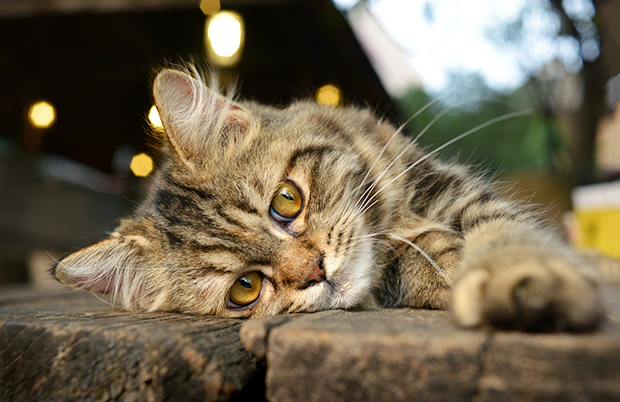
baby maine coon cat feeling
One of the researchers, psychologist Oriana Aragón, said that participants would have likely squeezed whatever they had in their hands or arms while viewing images of the “cute” animals, be it a purse or a pillow. Had something alive, however, actually been in those arms, the strength with which the participants freed their fuzzy feelings might have been worrisome to the researchers.
But Aragón says that strong human emotions are often balanced by “an expression of what one would think is an opposing feeling.” This is similar to what happens when we cry while angry or laugh while nervous. Our actual expressions “scramble and temper” whatever feeling got us into such a tizzy in the first place, helping to restore our emotional equilibrium, “tamping down or venting” feelings that cause us to become too excited.
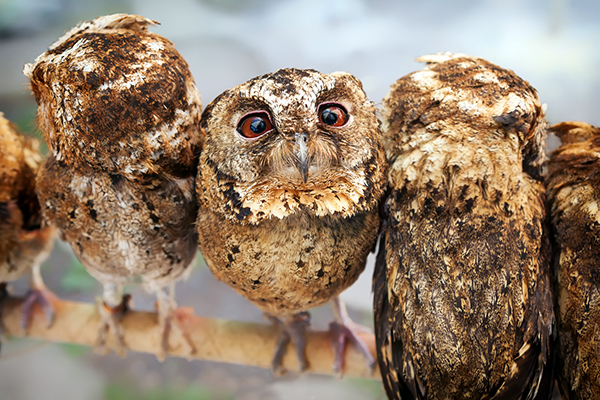
Funny portrait of curious baby owl
While wanting to squish what could be one’s own offspring might seem an evolutionary misfire, a 2012 study in the journal PLOS ONE indicates that cuteness creates a powerful “approach motivation,” the very thing that drives us to scoop up puppies and kittens in adoption kennels and squeeze them close to our chests and nuzzle them against our faces. It seems the need to be touchy-feely toward cuteness provokes precisely the kind of nurturing that keeps helpless creatures alive.
As for animals, those worthy of this treatment, appealing to us as “cute,” mimic physical characteristics of human babies — “a large head; rounded, soft, and elastic features; big eyes relative to the face; protruding cheeks and forehead; and fuzziness.” The same, in fact, seems to be true for Great Apes, as has been documented with Koko the gorilla and an Internet celebrity orangutan shown interacting with tiger cubs, though the scene remains controversial.
And so it seems the power of cuteness is made all the more apparent when humans (or elevated primates) respond to a rabbit or a duckling the way they might respond to their own kin. Our desire to squeeze is so powerful, in fact, that it “spills over” into interactions with other species. Thus, we have Web sites like Cute Overload that exist only for the compelling pull to exercise that need to feed our “cute aggression,” be the temptation a pleasure or a pain.
ooOOoo
Demonstrating that cuteness can come in all sizes, let me close today’s post with this photograph.
Ben and Jeannie having a quiet one-to-one moment.
Don’t go too long without giving or receiving a hug!
Luna likely survived on dead fish and mice, as well as fresh water that was shipped in for Navy employees. (Photo: U.S. Navy – Naval Base Coronado)
When Nick Haworth’s dog, Luna, fell off his fishing boat a couple miles off the shore of San Clemente Island in the Pacific Ocean, he thought there was a good chance she’d swim for land.
“Nick was pretty certain she would make for shore because she was a very strong swimmer,” says Sandy DeMunnik, public affairs officer for the U.S. Navy’s Naval Base Coronado, which includes the island. “He asked if he could have permission to come ashore to get her.”
San Clemente Island is a weapons training facility where they work with bombs and offshore bombardment, so they had to shut off one of the artillery ranges to look for the 1 1/2-year-old German shepherd/Husky mix. The staff helped Haworth search for her to no avail. He stayed in the area for two more days and couldn’t find her.
“After about a week, it was presumed she had never even made it to shore because they hadn’t seen a sign of her,” says DeMunnik. “They presumed she was lost at sea.”
Fast forward five weeks to March 15 when Navy staff arrived on the island for work.
“She was sitting on the side of the road just wagging her tail,” says DeMunnik. The staff members knew immediately that this was the dog they had been searching for. They opened their door, whistled and Luna jumped right in the truck.
After more than a month of being gone, Luna takes a well-deserved nap. (Photo: U.S. Navy – Naval Base Coronado)
They immediately called Haworth and let him know the happy news. Luna was examined by the island’s wildlife biologist, who said she likely wasn’t seen for five weeks because her tan-and-black coloring let her blend in with the island’s landscape. Miraculously, except for having lost a little weight, she was OK.
“Amazingly for being lost for five weeks in a very dangerous and treacherous environment, she was fine,” says DeMunnik. “During that time, there was bombardment training, weapons training … there was a lot of very loud, very dangerous training going on, and we had some very severe El Nino storms.”
Those storms probably helped keep the dog alive because fresh water was brought to the island by barge for the staff during the storm. They determined that Luna had survived by eating dead fish and rodents.
Because her owner, a commercial fisherman and student at San Diego State University, was away on a fishing trip, he sent his best friend, Conner Lamb, to meet Luna’s plane. When the plane doors opened, she leapt into Lamb’s arms and he fought back tears. On her first night home, he made her a steak for dinner.
The commanding officer of the base sent Luna home with a keepsake of her time spent on the island: her own set of military dog tags. They are engraved with her name, the dates she was missing, and “Keep the faith.”
Luna is greeting by paparazzi — but it’s clear that’s she’s had enough media coverage for the day. (Photo: U.S. Navy – Naval Base Coronado)
ooOOoo
Two more pictures to reinforce this wonderful story.
Recently, she posted a beautiful poem to commemorate the nine years of having Susami in their lives. It is republished here with Bela’s kind permission.
ooOOoo
There is a presence, here
and now; the bellows of breath,
warmth of blood, the feeling,
even if imagined,
that we are connected, one
to the other.
We each have our memories,
after all.
Your passing removes that utterly,
and somehow the same hand
lying on the same fur and flesh
will sense void, not even spirit,
not even that.
One can forgive the athiest,
or even theist their doubts,
props, religions. For this
at least is real:
This. Here. Now.
Tomorrow it will be gone.
And no matter in visions I linger
in the numinous; despite
in the garden I witness the alchemy
of decay transforming
into green and vibrant,
the loss of a loving companion
is egregious, indeed.
ooOOoo
Bela explained how Susami came to them:
This sweet being has been with us only nine years, since she was about 10-12 weeks old. Her previous steward, a multiply-pierced and -tattooed young woman, had to find a home for her. We were on our way to the east coast to deal with some business, and I had taken our good friend Kevin with me to the local feed store to get the horse stocked up on alfalfa pellets (it was during a long drought). I saw the pup with a bandage on her leg before, and asked the gal what was wrong with her. I later learned from the store owner (who thanked me many, many times for giving Susami a good home) that the dog had been severely abused. (She never did tell me specifics, so I was left to wonder.) The young woman tried her best, but there were forces beyond her control in her environment. When I saw Susami again, we had to take her, but how? I asked Kev if he would watch yet one more animal for us while we were gone, and he happily agreed! So she joined our chocolate Lab who we brought with us to Hawaii from northern Maine (a Non-rescue). He was Thrilled to have that little creature’s companionship.
Going to close with the exquisite words from Suzanne Clothier that Dr. Jim Goodbrod used in the foreword to my book:
There is a cycle of love and death that shapes the lives of those who choose to travel in the company of animals. It is a cycle unlike any other. To those who have never lived through its turnings or walked its rocky path, our willingness to give our hearts with full knowledge that they will be broken seems incomprehensible. Only we know how small a price we pay for what we receive. Our grief, no matter how powerful it may be, is an insufficient measure of the joy we have been given.
(Suzanne Clothier: Bones Would Rain from the Sky: Deepening Our Relationships with Dogs.)
Suzanne’s words cannot be bettered when it comes to the death of a beloved dog.
“All that evil needs to succeed is for good people to do nothing.”
You will recall that on the 8th March I published a post called Anger Alert. It was about raising awareness for “Stella has spent the last two years locked in a 3-by-9 foot cage in a kennel in Devon, England. She has never been let out to exercise or play.”
I included a link to a Care2 Petition that as of now has been signed by nearly 38,000 persons including many who read this blog. Thank you. Keep Stella in your thoughts.
Regretably, Stella’s imprisonment has not yet come to an end but here is a good news story that underlines why we must always keep fighting for the things we believe need to be changed.
ooOOoo
Over 61,000 Care2 Activists Want To Save These Dogs From Euthanasia
When Kirstyn Smith heard that 31 pit bulls had been rescued from a dog-fighting ring in her native Ontario, Canada, she was thrilled, but then she learned there was a catch: Officials had plans to euthanize the dogs, rather than free them. That’s when she jumped into action and decided to create a Care2 petition.
That petition now has over 61,000 signatures, as people around the world react to the horrifying and deeply unfair death sentence.
Here’s what Smith wrote in her petition:
“My name is Kirstyn Smith and I have been following a very heart-breaking story since October 2015. The town of Chatham-Kent, ON fell victim to a horrible and cruel act where 31 pitbull-type dogs were seized from an alleged dog fighting-ring.
These animals need our help.
Please sign and share this petition to demand that these dogs are treated humanely, medically taken care of and rehabilitated in order to live out their lives away from torture and neglect.”
Close To Victory
On March 10, she issued this update to her petition:
“We are so close! The accused have agreed to hand over ownership to Dog Tales Sanctuary in King City, ON. This is incredible news, but we still need the Ministry of Community Safety & Correctional Services to give proper designation which will allow the dogs to legally reside in Ontario. Thank you to each and every one of you for your support on this long journey!!”
Smith is referring to the fact that pit bulls are banned in the province of Ontario, and only a pound can take in pit bull-type dogs. However, Dog Tales is not a pound, so the sanctuary must make a special application in an effort to get the designation that will allow them to take in the pit bulls.
This of course is not unique to Ontario. Pit bulls are banned or restricted in most Canadian provinces; in the U.S., over 700 cities have enacted breed-specific legislationwhich is any ordinance, or dog law, that relates to specific dog breeds but does not affect any others.
The next court date will be March 18, and there will likely be another one after that, but things are moving forward in a positive way, thanks largely to Smith’s persistence and the awesome support of those 61,000 Care2 activists.
An Awesome Sanctuary
If justice prevails, these dogs will move to their new home, which CTV News London describes as an “opulent sanctuary in King City, Ontario, which is owned by one of Canada’s richest families.”
“The issues present are nothing that we haven’t seen before, and nothing that we feel cannot be changed with time, patience, and the proper technique,” says Clare Forndran, a spokesperson at Dog Tales Rescue and Sanctuary.
“At Dog Tales we are fortunate enough to have the facilities and the resources to provide for our dogs in ways that many other shelters cannot,” owner Danielle Eden said in an email.
While this story has come a long way and is very close to a happy ending, it’s not quite there yet.
You can help rescue these dogs from a death sentence by signing Smith’s petition, asking the authorities to treat these animals humanely, and take care of them so that they can live out their lives away from torture and neglect.
And if you have a cause that you care deeply about, and want to make a difference in the world, you can create your own petition, just as Kirstyn Smith did. You’ll soon find the Care2 community of activists ready to join you in your cause. And if you’d like to read more about petitions, you can check out this handy guide.
ooOOoo
So, please, if you are not one of those 61,000 who have already signed this petition then, without delay, go here and add your support to this wonderful cause.
Huge thank you to Producer John Letz and the whole crew.
A week ago last Saturday Jean and I travelled down to Ashland and to the studios of Rogue Valley Community Television (RVTV). This is how RVTV describe themselves:
Based at the Southern Oregon Digital Media Center, RVTV provides access television and streaming media services for the citizens and local governments of Jackson and Josephine Counties. Please visit rvtv.sou.edu for more information.
John Letz, the Producer for Adventures in Education and Ramping Up your English, had read my book and thought it might make a good programme.
I’m both delighted and flattered to say that the programme is now available and published under a Commons Creative Licence. Here it is!
What is deeply fascinating, at a number of levels, is how time only goes one way. At every single level of our experience, from the scale of the universe down to the tiniest particle known to science, it all flows forward. The arrow of time!
I was reminded of this interesting question of time in a book that has been published by a local Oregon author, John Taylor Our Curious UNIVERSE (the book is not available online otherwise I would have linked to it.)
It got me thinking of age. How we are all aging. How there is nothing that we can do to stop it. How the only thing we can do is to change our relationship with age. That then reminded me of an item that was published on The Conversation site a week ago that I wanted to share with you – share within the terms provided by The Conversation. The article was called It’s time to measure 21st century aging with 21st century tools.
ooOOoo
It’s time to measure 21st century aging with 21st century tools
These stories are dire, in part because the most widely used measure of aging – the old-age dependency ratio, which measures the number of older dependents relative to working-age people – was developed a century ago and implies the consequences of aging will be much worse than they are likely to be. On top of that, this ratio is used in political and economic discussions of topics such as health care costs and the pension burden – things it was not designed to address.
Turning 65 in 2016 doesn’t mean the same thing as hitting 65 in 1916. So instead of relying on the old-age dependency ratio to figure out the impact of aging, we propose using a series of new measures that take changes in life expectancy, labor participation and health spending into account. When you take these new realities into account, the picture looks a lot brighter.
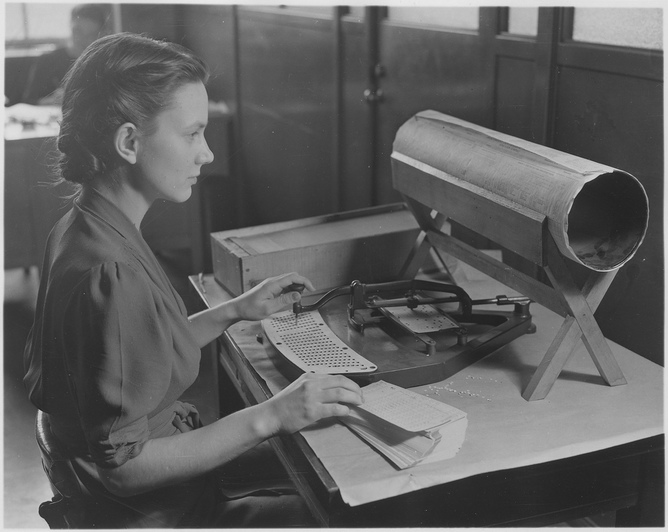
How facts from the census questionnaire were tabulated into statistics in 1950. The U.S. National Archives/Flickr
Our tools to measure aging have aged
The most commonly used measure of population aging is the “old-age dependency ratio,” which is the ratio of the number of people 65 years or older to those 20 to 64.
But, since the old-age dependency ratio was introduced in the early 1900s, most countries have experienced a century of rising life expectancy, and further increases are anticipated.
For instance, in 1914, life expectancy at birth in Sweden was 58.2 years (average for both sexes). By 2014, it had risen to 82.2 years. In 1935, when the U.S Social Security Act was signed into law, 65-year-olds were expected to live 12.7 more years, on average. In 2013, 65 year-olds may expect to live 19.5 years more.
But these changes aren’t reflected in the conventional statistics on aging. Nor is the fact that many people don’t just stop working when they turn 65, and that people are staying healthier for longer.
To get a better sense of what population aging really means today, we decided to develop a new set of measures that take these new realities into account to replace the old-age dependency ratio. And instead of one ratio, we created several ratios to evaluate health care costs, labor force participation and pensions.
Who retires at 65 anymore?
One of these new realities is that the number of people working into their late 60’s and beyond is going up. In 1994, 26.8 percent of American men aged 65-69 participated in the labor force. That figure climbed to 36.1 percent in 2014 and is forecast to reach 40 percent by 2024. And the trend is similar for even older men, with 17 percent of those aged 75-79 expected to still be working in a decade, up from just 10 percent in 1994.
Clearly, these older people did not get the message that they were supposed to become old-age dependents when they turned 65.
Depot Supervisor Eric Headley, 74, takes a call on his mobile phone while at work for Pimlico Plumbers in London July 29, 2010. Britain announced plans to scrap the fixed retirement age next year, saying it wanted to give people the chance to work beyond 65, but business leaders warned the move would create serious problems. REUTERS/Suzanne Plunkett.
This isn’t unique to the U.S. Rates like these in many countries have been rising. In the U.K., for instance, the labor force participation rate of 65- to 69-year-old men was 24.2 percent in 2014, and in Israel it was 50.2 percent, up from 14.8 percent and 27.4 percent, respectively, in 2000. In part this is because older people now often have better cognitive functioning than their counterparts who were born a decade earlier.
So, instead of assuming that people work only from ages 20 to 64 and become old-age dependents when they hit 65, we have computed “economic dependency ratios” that take into account observations and forecasts of labor force participation rates. This tells us how many adults not in the labor force there are for every adult in the labor force, giving us a more accurate picture than using 65 as a cutoff point. We used forecasts produced by the International Labour Organization to figure this out.
The old-age dependency ratio in the U.S. is forecast to increase by 61 percent from 2013 to 2030. But using our economic dependency ratio, the ratio of adults in the labor force to adults not in the labor force increases by just 3 percent over that period.
Clearly, doom and gloom stories about U.S. workers having to support so many more nonworkers in the future may need to be reconsidered.
Is the health care burden going to be so high?
Another reality is that while health care costs will go up with an older population, they won’t rise as much as traditional forecasts estimate.
Instead of assuming that health care costs rise dramatically on people’s 65th birthdays, as the old-age dependency ratio implicitly does, we have produced an indicator that takes into account the fact that most of the health care costs of the elderly are incurred in their last few years of life. Increasing life expectancy means those final few years happen at ever later ages.
In Japan, for example, when the burden of the health care costs of people aged 65 and up on those 20-64 years old is assessed using only the conventional old-age dependency ratio, that burden is forecast to increase 32 percent from 2013 to 2030. When we compute health care costs based on whether people are in the last few years of their lives, the burden increases only 14 percent.
Pension ages are going up
The last reality we considered concerns pensions.
In most OECD countries, the age at which someone can begin collecting a full public pension is rising. In a number of countries, such as Sweden, Norway and Italy, pension payouts are now explicitly linked to life expectancy.
In Germany, the full pension age will rise from 65 to 67 in 2029. In the U.S., it used to be 65, is now 66 and will soon rise to 67.
Instead of assuming that everyone receives a full public pension at age 65, which is what the old-age dependency ratio implicitly does, we have computed a more realistic ratio, called the pension cost dependency ratio, that incorporates a general relationship between increases in life expectancy and the pension age. The pension cost dependency ratio shows how fast the burden of paying public pensions is likely to grow.
For instance, in Germany, the old-age dependency ratio is forecast to rise by 49 percent from 2013 to 2030, but 65-year-old Germans will not be eligible for a full pension in 2030. Our pension cost dependency ratio increases by 26 percent over the same period. Instead of indicating that younger Germans will have to pay 49 percent more to support pensioners in 2030 compared to what they paid in 2013, taking planned increases in the full pension age into account, we see that the increase is 26 percent.
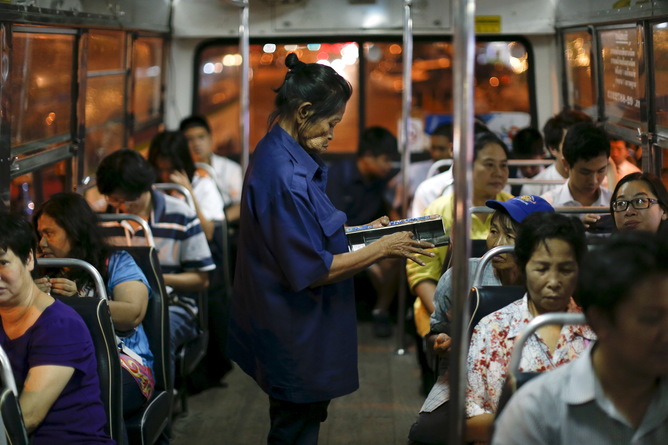
Pranom Chartyothin, a 72-year-old bus conductor, sells and collects bus tickets in downtown Bangkok, Thailand, February 3, 2016. Such scenes will only become more common in Thailand as its population rapidly ages, unlike its neighbours with more youthful populations. The World Bank estimates the working-age population will shrink by 11 percent by 2040, the fastest contraction among Southeast Asia’s developing countries. Thailand’s stage of economic development, the rising cost of living and education, and a population waiting longer to get married are among the reasons it is ageing more quickly than its neighbours. An effective contraception programme in the 1970s also played a part, said Sutayut Osornprasop, a human development specialist at the World Bank in Thailand. Picture taken February 3, 2016. REUTERS/Jorge Silva.
Sixty-five just isn’t that old anymore
In addition to this suite of measures focused on particular aspects of population aging, it is also useful to have a general measure of population aging. We call our general measure of population aging the prospective old-age dependency ratio.
People do not suddenly become old-age dependents on their 65th birthdays. From a population perspective, it makes more sense to classify people as being old when they are getting near the end of their lives. Failing to adjust who is categorized as old based on the changing characteristics of people and their longevity can make aging seem faster than it will be.
In our prospective old-age dependency ratio, we define people as old when they are in age groups where the remaining life expectancy is 15 years or less. As life expectancy increases, this threshold of old age increases.
In the U.K., for instance, the conventional old-age dependency ratio is forecast to increase by 33 percent by 2030. But when we allow the old-age threshold to change with increasing life expectancy, the resulting ratio increases by just 13 percent.
Populations are aging in many countries, but the conventional old-age dependency ratio makes the impact seem worse than it will be. Fortunately, better measures that do not exaggerate the effects of aging are now just a click away.
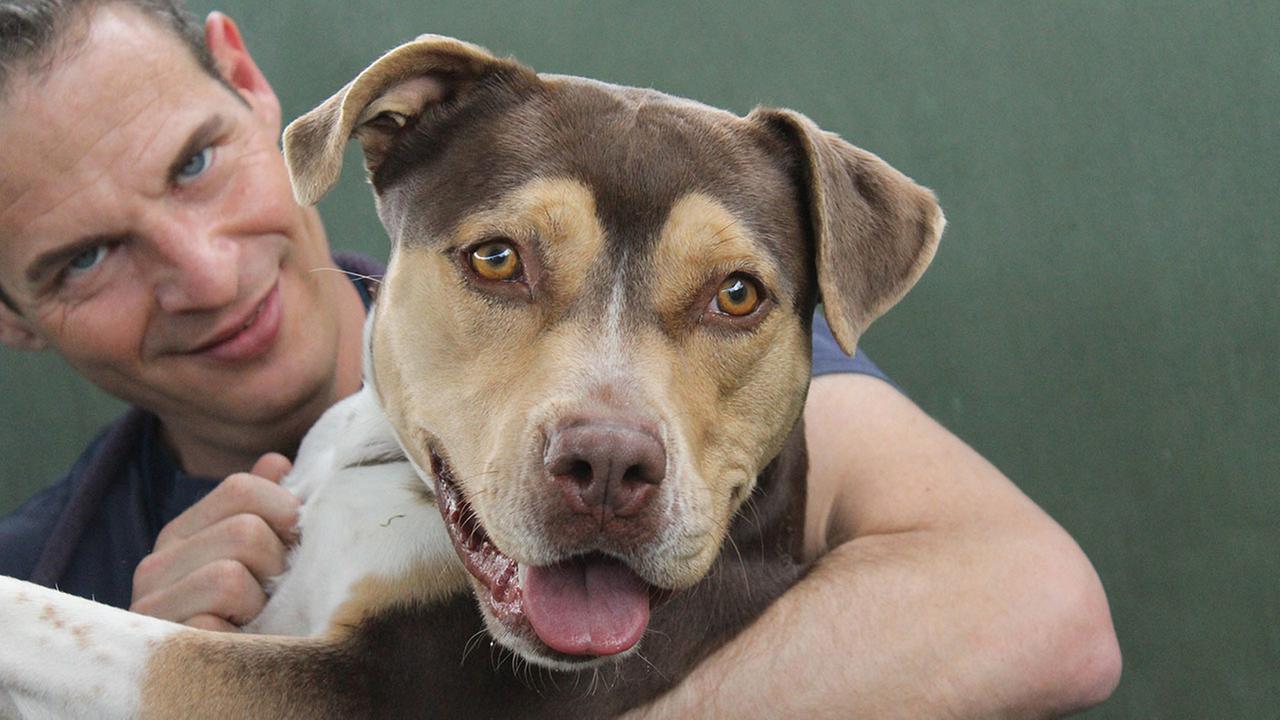
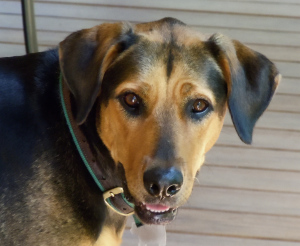
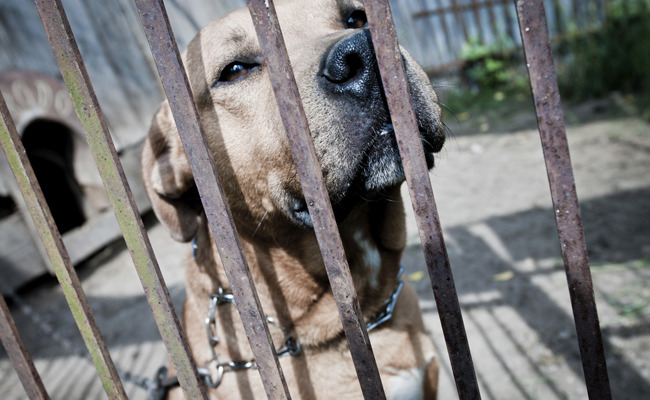
Let’s embrace those who seek out and love our lost dogs!
Just going to include today two videos from the Hope for Paws charity both of them about rescuing and restoring love to Pit Bulls.
Pit Bull rescue on the beach
Mountain rescue of an abandoned injured Pit Bull
I can’t close this post without thinking of the amazing quality of forgiveness that our dogs demonstrate. It would be a rare person who suffered this pain and rejection and wasn’t scarred for the rest of their days.











 Learning from Dogs