Category: Core thought

Climate Change and Humanity: Postscript.

A personal viewpoint after reading Tom’s essay Is Climate Change a Crime Against Humanity?

Last Thursday, July 3rd, I republished a post, what Tom calls a Tomgram, from TomDispatch comparing the USA’s attitude to the very small risk of a country exploding a weapon of mass destruction, WMD, over American soil to the 95% risk of the USA being harmed from the effects of climate change.  Here’s an extract from the central part of Tom’s essay:

So here’s a question I’d like any of you living in or visiting Wyoming to ask the former vice president, should you run into him in a state that’s notoriously thin on population: How would he feel about acting preventively, if instead of a 1% chance that some country with weapons of mass destruction might use them against us, there was at least a 95% — and likely as not a 100% — chance of them being set off on our soil? Let’s be conservative, since the question is being posed to a well-known neoconservative. Ask him whether he would be in favor of pursuing the 95% doctrine the way he was the 1% version.

After all, thanks to a grim report in 2013 from the Intergovernmental Panel on Climate Change, we know that there is now a 95% -100% likelihood that “human influence has been the dominant cause of the observed warming [of the planet] since the mid-20th century.” We know as well that the warming of the planet — thanks to the fossil fuel system we live by and the greenhouse gases it deposits in the atmosphere — is already doing real damage to our world and specifically to the United States, as a recent scientific report released by the White House made clear. We also know, with grimly reasonable certainty, what kinds of damage those 95% -100% odds are likely to translate into in the decades, and even centuries, to come if nothing changes radically: a temperature rise by century’s end that could exceed 10 degrees Fahrenheit, cascading species extinctions, staggeringly severe droughts across larger parts of the planet (as in the present long-term drought in the American West and Southwest), far more severe rainfall across other areas, more intense storms causing far greater damage, devastating heat waves on a scale no one in human history has ever experienced, masses of refugees, rising global food prices, and among other catastrophes on the human agenda, rising sea levels that will drown coastal areas of the planet.
Tom’s essays had many great links to background research papers and other supporting material.  The penultimate link was embedded (my italics) in this sentence: “In the case of a major exchange of such weapons, we would be talking about “the sixth extinction” of planetary history.”  That linked to the Amazon page describing the book, released earlier this year, of the same name written by Elizabeth Kolbert, as follows:

A major book about the future of the world, blending intellectual and natural history and field reporting into a powerful account of the mass extinction unfolding before our eyes

Over the last half a billion years, there have been five mass extinctions, when the diversity of life on earth suddenly and dramatically contracted. Scientists around the world are currently monitoring the sixth extinction, predicted to be the most devastating extinction event since the asteroid impact that wiped out the dinosaurs. This time around, the cataclysm is us. In The Sixth Extinction, two-time winner of the National Magazine Award and New Yorker writer Elizabeth Kolbert draws on the work of scores of researchers in half a dozen disciplines, accompanying many of them into the field: geologists who study deep ocean cores, botanists who follow the tree line as it climbs up the Andes, marine biologists who dive off the Great Barrier Reef. She introduces us to a dozen species, some already gone, others facing extinction, including the Panamian golden frog, staghorn coral, the great auk, and the Sumatran rhino. Through these stories, Kolbert provides a moving account of the disappearances occurring all around us and traces the evolution of extinction as concept, from its first articulation by Georges Cuvier in revolutionary Paris up through the present day. The sixth extinction is likely to be mankind’s most lasting legacy; as Kolbert observes, it compels us to rethink the fundamental question of what it means to be human.

Here’s an interview of Elizabeth Kolbert taken from the Democracy Now programme. It’s a tad under 20 minutes so easy to put aside a little of your time to watch it.

PLEASE DO!

http://www.youtube.com/watch?v=prxeJmjxEA4

Published on Feb 11, 2014
February 2014 on Democracy Now!

In the history of the planet, there have been five known mass extinction events. The last came 65 million years ago, when an asteroid about half the size of Manhattan collided with the Earth, wiping out the dinosaurs and bringing the Cretaceous period to an end. Scientists say we are now experiencing the sixth extinction, with up to 50 percent of all living species in danger of disappearing by the end of the century. But unlike previous extinctions, the direct cause this time is us — human-driven climate change. In “The Sixth Extinction: An Unnatural History,” journalist Elizabeth Kolbert visits four continents to document the massive “die-offs” that came millions of years ago and those now unfolding before our eyes. Kolbert explores how human activity — fossil fuel consumption, ocean acidification, pollution, deforestation, forced migration — threatens life forms of all kinds. “It is estimated that one-third of all reef-building corals, a third of all fresh-water mollusks, a third of sharks and rays, a quarter of all mammals, a fifth of all reptiles, and a sixth of all birds are headed toward oblivion,” Kolbert writes. “The losses are occurring all over: in the South Pacific and in the North Atlantic, in the Arctic and the Sahel, in lakes and on islands, on mountaintops and in valleys.”

Elizabeth Kolbert, is well known for her reporting on global warming as a staff writer at The New Yorker magazine, which led her to investigate climate species extinction. Her new book is The Sixth Extinction: An Unnatural History. In 2006, she wrote Field Notes from a Catastrophe: Man, Nature, and Climate Change.

Make no mistake, that short video interview doesn’t pull any punches.  Just as Kolbert’s book.  It is very tempting to want to hide, to close one’s ears and eyes and pretend it’s all a bad dream and, soon, we will awaken to a bright, new dawn.

(Now for something really lovely! It’s 1:40pm on Sunday, 6th)

I took a quick break to think about my next sentence.  I was looking for some words that would encourage us all to do something!  Because as John Hurlburt recently wrote: “Failure to act condemns us to death as a species of fools.

In that short break I saw that someone else had signed up to follow Learning from Dogs.  That person describes herself as Elsie Bowen-Dodoo.  Her blog is called BowenDiaries. On her About page, Elsie writes:

Elsie Bowen-Dodoo. Living life with a purpose. Persevering to inspire all races.

I write to inspire people hoping that they reading my articles and stuff will be touched to do something positive in their lives.

We really can all make this world a better place to live in.

Talent should not be wasted.

This is the picture on Elsie’s home page.

Positive inspiration!

So here’s my take on where we, as in all mankind, are at.

  • We have to turn our backs on growth, greed and materialism.
  • Each of us must place caring for our planet our highest priority in life.
  • Each of us must be alive to making a positive difference.
  • Being true to what we know is right will set us free.
  • This will also create ripples of positive energy that will set others free.
  • That is the only sustainable way to go.

Let me close by returning to dogs.  After all this blog is called Learning from Dogs! By recognising, of course, that these are challenging times. As we are incessantly reminded by the drumbeat of the doom-and-gloom news industry every hour, frequently every half-hour, throughout the day. A symphony of negative energy.

Yet right next to us is a world of positive energy. The world of dogs. A canine world full of love and trust, playfulness and relaxation. A way of living that is both clear and straightforward; albeit far from being simple. As anyone will know who has seen the way dogs interact with each other and with us humans.

In other words, dogs offer endless examples of positive behaviours. The wonderful power of compassion for self, and others, and of loving joy. The way to live that we humans crave for. A life full of hope and positive energy that keeps the power of negativity at bay.

That is the only way forward!

Oliver, Cleo and Hazel playing together.
Oliver, Cleo and Hazel joyfully playing together.

Birds, castles and time immemorial.

A wonderful reminder of a very ancient custom.

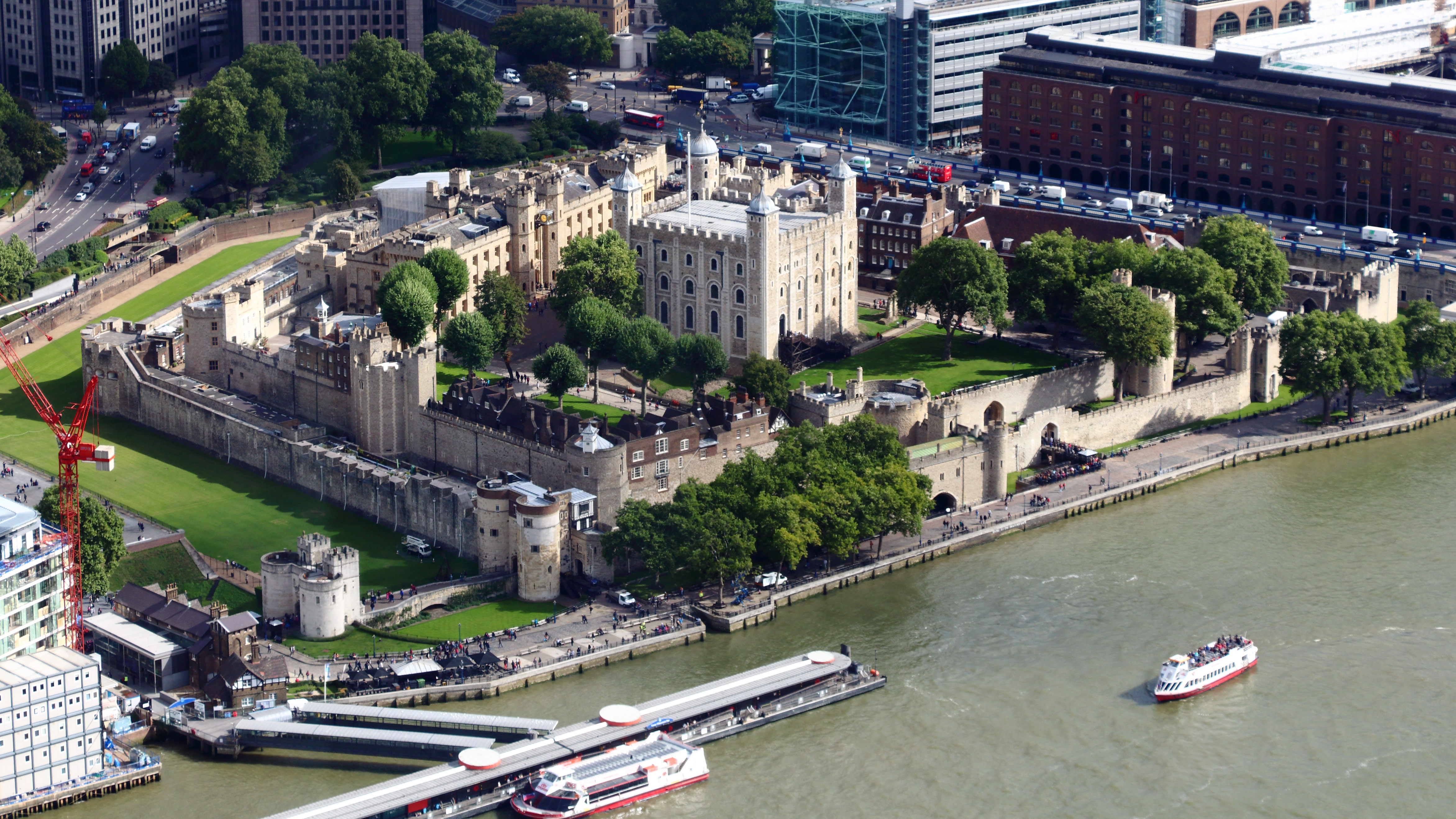
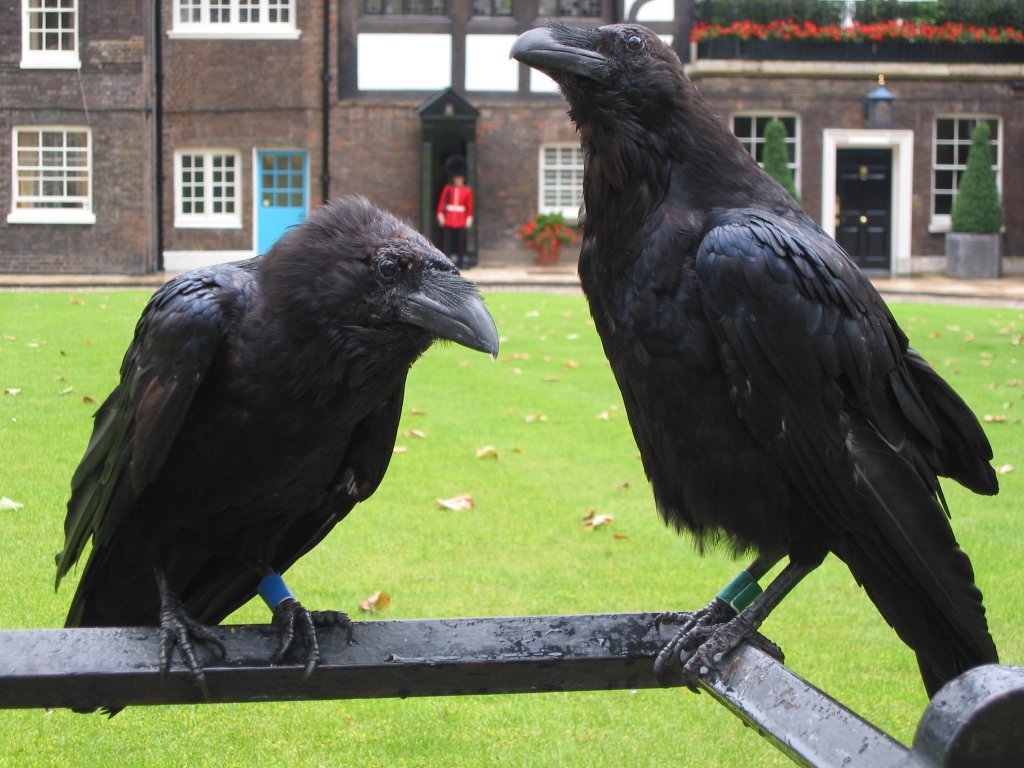
We recently watched a programme about Britain’s Castles and Palaces.  Part of the programme focussed on the long (and I mean ‘long’!) history of the Tower of London and the black ravens who watch over it.

The Tower of London is old! Very old.

An aerial view of the Tower of London

As the website Britain Express explains:

Founded nearly a millennium ago, the Tower of London has been expanded upon over the centuries by many a king and queen. The first foundations were laid in 1078 and the castle has been constantly improved and extended.

The Tower of London is the oldest palace, fortress and prison in Europe. History has it that King Edward of England backed down on his promise to give the throne to William, Duke of Normandy and ended up giving the throne to Harold Godwinson, his English brother-in-law.

Foundations laid in 1078! 936 years ago!

Almost beyond imagination is the story, according to this BBC programme, that the ravens were known to be inhabiting this part of London even before those foundations were laid!

Defenders of the Realm!

I’m delighted to see that a segment of that programme has found its way onto YouTube.

Legend says that the kingdom and the Tower will fall if the six resident ravens ever leave the fortress…

There are nine ravens at the Tower today (the required six plus a few spare!). Their lodgings are to be found next to the Wakefield Tower. These magnificent birds, large members of the genus Corvus, the crow family, respond only to the Ravenmaster and should not be approached too closely by anyone else!

Rather puts all the craziness of present times into perspective!

Climate Change and Humanity

A powerful essay by Tom Engelhardt from his blogsite TomDispatch.

Regular readers of Learning from Dogs know that essays from TomDispatch often find their way onto these pages.  They are republished with the generous permission of Tom and I endeavour to select those essays that shine a new light on a current issue.   No less so than with today’s essay, first published over on TomDispatch on May 22nd, 2014.

Just a note before you start reading Tom’s very important essay.  That there are many links to papers, articles and other references throughout the essay.  (I know, they took me a couple of hours to set up!)  Could I recommend strongly that you ‘click’ on each link and make a note of the references you wish to read at a later time.  I shall be referring to some of them next week when I comment more generally on this fabulous essay.

ooOOoo

Tomgram: Engelhardt, Is Climate Change a Crime Against Humanity?

The 95% Doctrine

Climate Change as a Weapon of Mass Destruction 

By Tom Engelhardt

Who could forget? At the time, in the fall of 2002, there was such a drumbeat of “information” from top figures in the Bush administration about the secret Iraqi program to develop weapons of mass destruction (WMD) and so endanger the United States. And who — other than a few suckers — could have doubted that Saddam Hussein was eventually going to get a nuclear weapon? The only question, as our vice president suggested on “Meet the Press,” was: Would it take one year or five? And he wasn’t alone in his fears, since there was plenty of proof of what was going on. For starters, there were those “specially designed aluminum tubes” that the Iraqi autocrat had ordered as components for centrifuges to enrich uranium in his thriving nuclear weapons program. Reporters Judith Miller and Michael Gordon hit the front page of the New York Times with that story on September 8, 2002.

Then there were those “mushroom clouds” that Condoleezza Rice, our national security advisor, was so publicly worried about — the ones destined to rise over American cities if we didn’t do something to stop Saddam. As she fretted in a CNN interview with Wolf Blitzer on that same September 8th, “[W]e don’t want the smoking gun to be a mushroom cloud.” No, indeed, and nor, it turned out, did Congress!

And just in case you weren’t anxious enough about the looming Iraqi threat, there were those unmanned aerial vehicles — Saddam’s drones! — that could be armed with chemical or biological WMD from his arsenal and flown over America’s East Coast cities with unimaginable results. President George W. Bush went on TV to talk about them and congressional votes were changed in favor of war thanks to hair-raising secret administration briefings about them on Capitol Hill.

In the end, it turned out that Saddam had no weapons program, no nuclear bomb in the offing, no centrifuges for those aluminum pipes, no biological or chemical weapons caches, and no drone aircraft to deliver his nonexistent weapons of mass destruction (nor any ships capable of putting those nonexistent robotic planes in the vicinity of the U.S. coast). But what if he had? Who wanted to take that chance? Not Vice President Dick Cheney, certainly. Inside the Bush administration he propounded something that journalist Ron Suskind later dubbed the “one percent doctrine.” Its essence was this: if there was even a 1% chance of an attack on the United States, especially involving weapons of mass destruction, it must be dealt with as if it were a 95%-100% certainty.

Here’s the curious thing: if you look back on America’s apocalyptic fears of destruction during the first 14 years of this century, they largely involved three city-busting weapons that were fantasies of Washington’s fertile imperial imagination. There was that “bomb” of Saddam’s, which provided part of the pretext for a much-desired invasion of Iraq. There was the “bomb” of the mullahs, the Iranian fundamentalist regime that we’ve just loved to hate ever since they repaid us, in 1979, for the CIA’s overthrow of an elected government in 1953 and the installation of the Shah by taking the staff of the U.S. embassy in Tehran hostage. If you believed the news from Washington and Tel Aviv, the Iranians, too, were perilously close to producing a nuclear weapon or at least repeatedly on the verge of the verge of doing so. The production of that “Iranian bomb” has, for years, been a focus of American policy in the Middle East, the “brink” beyond which war has endlessly loomed. And yet there was and is no Iranian bomb, nor evidence that the Iranians were or are on the verge of producing one.

Finally, of course, there was al-Qaeda’s bomb, the “dirty bomb” that organization might somehow assemble, transport to the U.S., and set off in an American city, or the “loose nuke,” maybe from the Pakistani arsenal, with which it might do the same. This is the third fantasy bomb that has riveted American attention in these last years, even though there is less evidence for or likelihood of its imminent existence than of the Iraqi and Iranian ones.

To sum up, the strange thing about end-of-the-world-as-we’ve-known-it scenarios from Washington, post-9/11, is this: with a single exception, they involved only non-existent weapons of mass destruction. A fourth weapon — one that existed but played a more modest role in Washington’s fantasies — was North Korea’s perfectly real bomb, which in these years the North Koreans were incapable of delivering to American shores.

The “Good News” About Climate Change

In a world in which nuclear weapons remain a crucial coin of the realm when it comes to global power, none of these examples could quite be classified as 0% dangers. Saddam had once had a nuclear program, just not in 2002-2003, and also chemical weapons, which he used against Iranian troops in his 1980s war with their country (with the help of targeting information from the U.S. military) and against his own Kurdish population. The Iranians might (or might not) have been preparing their nuclear program for a possible weapons breakout capability, and al-Qaeda certainly would not have rejected a loose nuke, if one were available (though that organization’s ability to use it would still have been questionable).

In the meantime, the giant arsenals of WMD in existence, the American, Russian, Chinese, Israeli, Pakistani, and Indian ones that might actually have left a crippled or devastated planet behind, remained largely off the American radar screen. In the case of the Indian arsenal, the Bush administration actually lent an indirect hand to its expansion. So it was twenty-first-century typical when President Obama, trying to put Russia’s recent actions in the Ukraine in perspective, said, “Russia is a regional power that is threatening some of its immediate neighbors. I continue to be much more concerned when it comes to our security with the prospect of a nuclear weapon going off in Manhattan.”

Once again, an American president was focused on a bomb that would raise a mushroom cloud over Manhattan. And which bomb, exactly, was that, Mr. President?

Of course, there was a weapon of mass destruction that could indeed do staggering damage to or someday simply drown New York City, Washington D.C., Miami, and other East coast cities. It had its own efficient delivery systems — no nonexistent drones or Islamic fanatics needed. And unlike the Iraqi, Iranian, or al-Qaeda bombs, it was guaranteed to be delivered to our shores unless preventive action was taken soon. No one needed to hunt for its secret facilities. It was a weapons system whose production plants sat in full view right here in the United States, as well as in Europe, China, and India, as well as in Russia, Saudi Arabia, Iran, Venezuela, and other energy states.

So here’s a question I’d like any of you living in or visiting Wyoming to ask the former vice president, should you run into him in a state that’s notoriously thin on population: How would he feel about acting preventively, if instead of a 1% chance that some country with weapons of mass destruction might use them against us, there was at least a 95% — and likely as not a 100% — chance of them being set off on our soil? Let’s be conservative, since the question is being posed to a well-known neoconservative. Ask him whether he would be in favor of pursuing the 95% doctrine the way he was the 1% version.

After all, thanks to a grim report in 2013 from the Intergovernmental Panel on Climate Change, we know that there is now a 95%-100% likelihood that “human influence has been the dominant cause of the observed warming [of the planet] since the mid-20th century.” We know as well that the warming of the planet — thanks to the fossil fuel system we live by and the greenhouse gases it deposits in the atmosphere — is already doing real damage to our world and specifically to the United States, as a recent scientific report released by the White House made clear. We also know, with grimly reasonable certainty, what kinds of damage those 95%-100% odds are likely to translate into in the decades, and even centuries, to come if nothing changes radically: a temperature rise by century’s end that could exceed 10 degrees Fahrenheit, cascading species extinctions, staggeringly severe droughts across larger parts of the planet (as in the present long-term drought in the American West and Southwest), far more severe rainfall across other areas, more intense storms causing far greater damage, devastating heat waves on a scale no one in human history has ever experienced, masses of refugees, rising global food prices, and among other catastrophes on the human agenda, rising sea levels that will drown coastal areas of the planet.

Buy the Book

From two scientific studies just released, for example, comes the news that the West Antarctic ice sheet, one of the great ice accumulations on the planet, has now begun a process of melting and collapse that could, centuries from now, raise world sea levels by a nightmarish 10 to 13 feet. That mass of ice is, according to the lead authors of one of the studies, already in “irreversible retreat,” which means — no matter what acts are taken from now on — a future death sentence for some of the world’s great cities. (And that’s without even the melting of the Greenland ice shield, not to speak of the rest of the ice in Antarctica.)

All of this, of course, will happen mainly because we humans continue to burn fossil fuels at an unprecedented rate and so annually deposit carbon dioxide in the atmosphere at record levels. In other words, we’re talking about weapons of mass destruction of a new kind. While some of their effects are already in play, the planetary destruction that nuclear weapons could cause almost instantaneously, or at least (given “nuclear winter” scenarios) within months, will, with climate change, take decades, if not centuries, to deliver its full, devastating planetary impact.

When we speak of WMD, we usually think of weapons — nuclear, biological, or chemical — that are delivered in a measurable moment in time. Consider climate change, then, a WMD on a particularly long fuse, already lit and there for any of us to see. Unlike the feared Iranian bomb or the Pakistani arsenal, you don’t need the CIA or the NSA to ferret such “weaponry” out. From oil wells to fracking structures, deep sea drilling rigs to platforms in the Gulf of Mexico, the machinery that produces this kind of WMD and ensures that it is continuously delivered to its planetary targets is in plain sight. Powerful as it may be, destructive as it will be, those who control it have faith that, being so long developing, it can remain in the open without panicking populations or calling any kind of destruction down on them.

The companies and energy states that produce such WMD remain remarkably open about what they’re doing. Generally speaking, they don’t hesitate to make public, or even boast about, their plans for the wholesale destruction of the planet, though of course they are never described that way. Nonetheless, if an Iraqi autocrat or Iranian mullahs spoke in similar fashion about producing nuclear weapons and how they were to be used, they would be toast.

Take ExxonMobil, one of the most profitable corporations in history. In early April, it released two reports that focused on how the company, as Bill McKibben has written, “planned to deal with the fact that [it] and other oil giants have many times more carbon in their collective reserves than scientists say we can safely burn.” He went on:

The company said that government restrictions that would force it to keep its [fossil fuel] reserves in the ground were ‘highly unlikely,’ and that they would not only dig them all up and burn them, but would continue to search for more gas and oil — a search that currently consumes about $100 million of its investors’ money every single day. ‘Based on this analysis, we are confident that none of our hydrocarbon reserves are now or will become “stranded.”‘

In other words, Exxon plans to exploit whatever fossil fuel reserves it possesses to their fullest extent. Government leaders involved in supporting the production of such weapons of mass destruction and their use are often similarly open about it, even while also discussing steps to mitigate their destructive effects. Take the White House, for instance. Here was a statement President Obama proudly made in Oklahoma in March 2012 on his energy policy:

Now, under my administration, America is producing more oil today than at any time in the last eight years. That’s important to know. Over the last three years, I’ve directed my administration to open up millions of acres for gas and oil exploration across 23 different states. We’re opening up more than 75% of our potential oil resources offshore. We’ve quadrupled the number of operating rigs to a record high. We’ve added enough new oil and gas pipeline to encircle the Earth and then some.

Similarly, on May 5th, just before the White House was to reveal that grim report on climate change in America, and with a Congress incapable of passing even the most rudimentary climate legislation aimed at making the country modestly more energy efficient, senior Obama adviser John Podesta appeared in the White House briefing room to brag about the administration’s “green” energy policy. “The United States,” he said, “is now the largest producer of natural gas in the world and the largest producer of gas and oil in the world. It’s projected that the United States will continue to be the largest producer of natural gas through 2030. For six straight months now, we’ve produced more oil here at home than we’ve imported from overseas. So that’s all a good-news story.”

Good news indeed, and from Vladmir Putin’s Russia, which just expanded its vast oil and gas holdings by a Maine-sized chunk of the Black Sea off Crimea, to Chinese “carbon bombs,” to Saudi Arabian production guarantees, similar “good-news stories” are similarly promoted. In essence, the creation of ever more greenhouse gases — of, that is, the engine of our future destruction — remains a “good news” story for ruling elites on planet Earth.

Weapons of Planetary Destruction

We know exactly what Dick Cheney — ready to go to war on a 1% possibility that some country might mean us harm — would answer, if asked about acting on the 95% doctrine. Who can doubt that his response would be similar to those of the giant energy companies, which have funded so much climate-change denialism and false science over the years? He would claim that the science simply isn’t “certain” enough (though “uncertainty” can, in fact, cut two ways), that before we commit vast sums to taking on the phenomenon, we need to know far more, and that, in any case, climate-change science is driven by a political agenda.

For Cheney & Co., it seemed obvious that acting on a 1% possibility was a sensible way to go in America’s “defense” and it’s no less gospel for them that acting on at least a 95% possibility isn’t. For the Republican Party as a whole, climate-change denial is by now nothing less than a litmus test of loyalty, and so even a 101% doctrine wouldn’t do when it comes to fossil fuels and this planet.

No point, of course, in blaming this on fossil fuels or even the carbon dioxide they give off when burned. These are no more weapons of mass destruction than are uranium-235 and plutonium-239. In this case, the weaponry is the production system that’s been set up to find, extract, sell at staggering profits, and burn those fossil fuels, and so create a greenhouse-gas planet. With climate change, there is no “Little Boy” or “Fat Man” equivalent, no simple weapon to focus on. In this sense, fracking is the weapons system, as is deep-sea drilling, as are those pipelines, and the gas stations, and the coal-fueled power plants, and the millions of cars filling global roads, and the accountants of the most profitable corporations in history.

All of it — everything that brings endless fossil fuels to market, makes those fuels eminently burnable, and helps suppress the development of non-fossil fuel alternatives — is the WMD. The CEOs of the planet’s giant energy corporations are the dangerous mullahs, the true fundamentalists, of planet Earth, since they are promoting a faith in fossil fuels which is guaranteed to lead us to some version of End Times.

Perhaps we need a new category of weapons with a new acronym to focus us on the nature of our present 95%-100% circumstances. Call them weapons of planetary destruction (WPD) or weapons of planetary harm (WPH). Only two weapons systems would clearly fit such categories. One would be nuclear weapons which, even in a localized war between Pakistan and India, could create some version of “nuclear winter” in which the planet was cut off from the sun by so much smoke and soot that it would grow colder fast, experience a massive loss of crops, of growing seasons, and of life. In the case of a major exchange of such weapons, we would be talking about “the sixth extinction” of planetary history.

Though on a different and harder to grasp time-scale, the burning of fossil fuels could end in a similar fashion — with a series of “irreversible” disasters that could essentially burn us and much other life off the Earth. This system of destruction on a planetary scale, facilitated by most of the ruling and corporate elites on the planet, is becoming (to bring into play another category not usually used in connection with climate change) the ultimate “crime against humanity” and, in fact, against most living things. It is becoming a “terracide.

Tom Engelhardt is a co-founder of the American Empire Project and author of The United States of Fear as well as a history of the Cold War, The End of Victory Culture (from which some of this essay has been adapted). He runs the Nation Institute’s TomDispatch.com. His latest book, co-authored with Nick Turse, is Terminator Planet: The First History of Drone Warfare, 2001-2050.

Copyright 2014 Tom Engelhardt

ooOOoo

There are so many strong and fundamental points raised in this essay from Tom that I am going to return to them next week.  (Will give it a rest for July 4th!)

Self compassion.

A placeholder just for today.

Yesterday morning I had a lovely long chat with Jon Lavin in the UK.  We chit-chatted for a long time, covering such matters as caring for ourselves, about being compassionate towards the self, and much more besides.

Then in stark contrast, around noon Jean and I went over to “Runaway Tractors” to collect our tractor that had been in for a service.

The afternoon brought along another great conversation with John Hurlburt, he of the highly-appreciated Human arrogance essay last Thursday.  That brought forth a whole bundle of ideas to write about.

The talks with Jon and John inspired a wonderful set of essays in my mind – BUT!

But by the time I sat down in front of the PC to write today’s post, I had simply run out of time to write something of value.  So I’m cheating, well sort of, by reposting something from a little over a year ago. Hope it’s fresh to your eyes and that you enjoy it.

ooOOoo

Returning to Nature

The power of serendipity!

Why the choice of this sub-heading?  Well, just because a number of quite separate articles and essays have come together to offer a powerful, cohesive argument for reconsidering the role of Nature in the future of mankind.

Of course, my use of words in that preceding sentence is completely ludicrous; the suggestion that ‘Nature’ is disconnected from ‘mankind’.  Yet millions of us, to a greater or lesser degree, do behave as if we are the masters of the world.

So let me dip into what has been ‘crossing my desk’ in recent times.

On May 28th, George Monbiot published in The Guardian newspaper an essay entitled A Manifesto for Rewilding the World.  (The link takes you to the article on the Monbiot blogsite.)  Here’s how that essay opened,

Until modern humans arrived, every continent except Antarctica possessed a megafauna. In the Americas, alongside mastodons, mammoths, four-tusked and spiral-tusked elephants, there was a beaver the size of a black bear: eight feet from nose to tail(1). There were giant bison weighing two tonnes, which carried horns seven feet across(2).

The short-faced bear stood thirteen feet in its hind socks(3). One hypothesis maintains that its astonishing size and shocking armoury of teeth and claws are the hallmarks of a specialist scavenger: it specialised in driving giant lions and sabretooth cats off their prey(4). The Argentine roc (Argentavis magnificens) had a wingspan of 26 feet(5). Sabretooth salmon nine feet long migrated up Pacific coast rivers(6).

During the previous interglacial period, Britain and Europe contained much of the megafauna we now associate with the tropics: forest elephants, rhinos, hippos, lions and hyaenas. The elephants, rhinos and hippos were driven into southern Europe by the ice, then exterminated around 40,000 years ago when modern humans arrived(7,8,9). Lions and hyaenas persisted: lions hunted reindeer across the frozen wastes of Britain until 11,000 years ago(10, 11). The distribution of these animals has little to do with temperature: only where they co-evolved with humans and learnt to fear them did they survive.

I’m not going to reproduce the bulk of the article; just hoped that I have tickled your curiousity sufficient for you to read it in full here. But will just show you how it closed:

Despite the best efforts of governments, farmers and conservationists, nature is already beginning to return. One estimate suggests that two thirds of the previously-forested parts of the US have reforested, as farming and logging have retreated, especially from the eastern half of the country(23). Another proposes that by 2030 farmers on the European Continent (though not in Britain, where no major shift is expected) will vacate around 30 million hectares (75 million acres), roughly the size of Poland(24). While the mesofauna is already beginning to spread back across Europe, land areas of this size could perhaps permit the reintroduction of some of our lost megafauna. Why should Europe not have a Serengeti or two?

Above all, rewilding offers a positive environmentalism. Environmentalists have long known what they are against; now we can explain what we are for. It introduces hope where hope seemed absent. It offers us a chance to replace our silent spring with a raucous summer.

Then further research for this post brought to light an interview with David Suzuki in February.  Widely reported, I picked the version published on Straight.com, from which comes:

In December, Canadian specialty TV channel Business News Network interviewed me about the climate summit in Copenhagen. My six-minute interview followed a five-minute live report from Copenhagen, about poor countries demanding more money to address climate change and rich countries pleading a lack of resources. Before and after those spots were all kinds of reports on the Dow Jones Industrial Average, the price of gold and the loonie, and the implications of some new phone technology.

For me, this brought into sharp focus the inevitable failure of our negotiating efforts on climate change. BNN, like the New York-based Bloomberg channel, is a 24-hour-a-day network focused completely on business. These networks indicate that the economy is our top priority. And at Copenhagen, money dominated the discussions and the outcome.

But where is the 24-hour network dealing with the biosphere? As biological creatures, we depend on clean air, clean water, clean soil, clean energy, and biodiversity for our well-being and survival. Surely protecting those fundamental needs should be our top priority and should dominate our thinking and the way we live. After all, we are animals and our biological dependence on the biosphere for our most basic needs should be obvious.

The economy is a human construct, not a force of nature like entropy, gravity, or the speed of light or our biological makeup. It makes no sense to elevate the economy above the things that keep us alive. But that’s what our prime minister does when he claims we can’t even try to meet the Kyoto targets because that might have a detrimental effect on the economy.

This economic system is built on exploiting raw materials from the biosphere and dumping the waste back into the biosphere. And conventional economics dismisses all the “services” that nature performs to keep the planet habitable for animals like us as “externalities”. As long as economic considerations trump all other factors in our decisions, we will never work our way out of the problems we’ve created.

Concluding:

Nature is our home. Nature provides our most fundamental needs. Nature dictates limits. If we are striving for a truly sustainable future, we have to subordinate our activities to the limits that come from nature. We know how much carbon dioxide can be reabsorbed by all the green things in the oceans and on land, and we know we are exceeding those limits. That’s why carbon is building up in the atmosphere. So our goal is clear. All of humanity must find a way to keep emissions below the limits imposed by the biosphere.

The only equitable course is to determine the acceptable level of emissions on a global per capita basis. Those who fall below the line should be compensated for their small carbon footprint while those who are far above should be assessed accordingly. But the economy must be aligned with the limits imposed by the biosphere, not above them.

Quite clearly, if we continue to turn our backs on Nature, the consequences won’t be long in tapping us on the shoulder.

So, going to close it today with this, seen nearly a month ago on the PRI website:

oooo

Plant a Tree

Trees — by Kristof Nordin May 27, 2013

angel-tree

Imagine the type of world we could see
If instead of saying ‘pray,’ we said, ‘plant a tree’.
With this one little change so much more could be done
To protect all living things found under the sun.

We could ‘plant a tree’ for our troops sent away into war
So when they return they’d come home to find more.
We could ‘plant a tree’ at our churches with our husband or wife
To praise the Creator through a celebration of life.

We could ‘plant a tree’ for the needy and for those with no food
We could even plant in public without seeming rude.
The government would not have to introduce rules,
And most likely we could ‘plant a tree’ at our schools.

If we took it to task to ‘plant trees’ for the poorest,
We would all soon be reaping the wealth of a forest.
We could plant freely with those of all religions and creeds,
The improvement of earth would be based on these deeds.

We could plant with our neighbours, our family, and friends,
And ‘plant a tree’ with our enemies to help make amends.
If we ‘plant a tree’ for the sick to show them we care,
We would also be healing the soil, water, and air.

We could ‘plant a tree’ to observe when two people wed,
And plant one with our kids each night before bed.
Throughout the history of the whole human race
We find respect for the ‘tree’ has always had a place.

The great Ash of the Norse was their tree of the World,
And on a tree in the Garden is where the serpent once curled.
It was in groves of Oaks that the Druid priests wandered,
And under the Bodhi where the great Buddha pondered.

In the Bible it’s clear that we have all that we need:
‘All the trees with their fruits and plants yielding seed’.
Despite all these lessons that the past has taught
Now days, it seems, we cut our trees without thought.

This is confirmed by the Koran, for in it we read:
‘Many are the marvels of earth, yet we pay them no heed’.
We all have a duty, no matter what nation
To perform our part in protecting Creation.

Just think what we’d have if we had picked up a spade
Every time each one of us bowed our heads and prayed.

Further Reading:

ooOOOoo

See you all tomorrow.

Where water runs through rock!

A delightful coincidence to last Saturday’s post.

Last Saturday, I published a post under the title of Slotting right in!  It was an introduction to ten of the most beautiful slot canyons featured on Mother Nature Network.

Then less than a day later, Rob from Transition Town Payson, sent me a link to the following essay.  Regulars will recall that Jean and I lived in Payson for a while before moving to Oregon; indeed were married in Payson.

ooOOoo

The Place Where Water Runs Through Rock

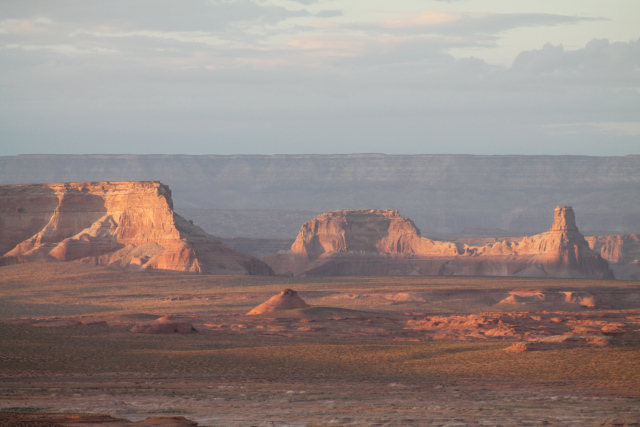
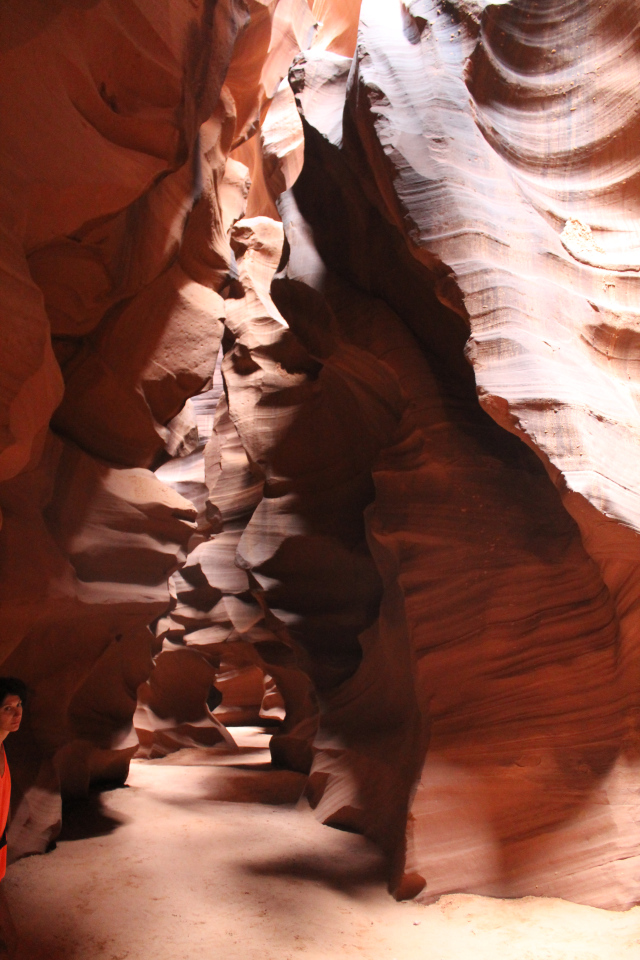
Antelope Canyon located in Northern Arizona is well known around the world!

Antelope Canyon lies just outside of Page, Arizona.

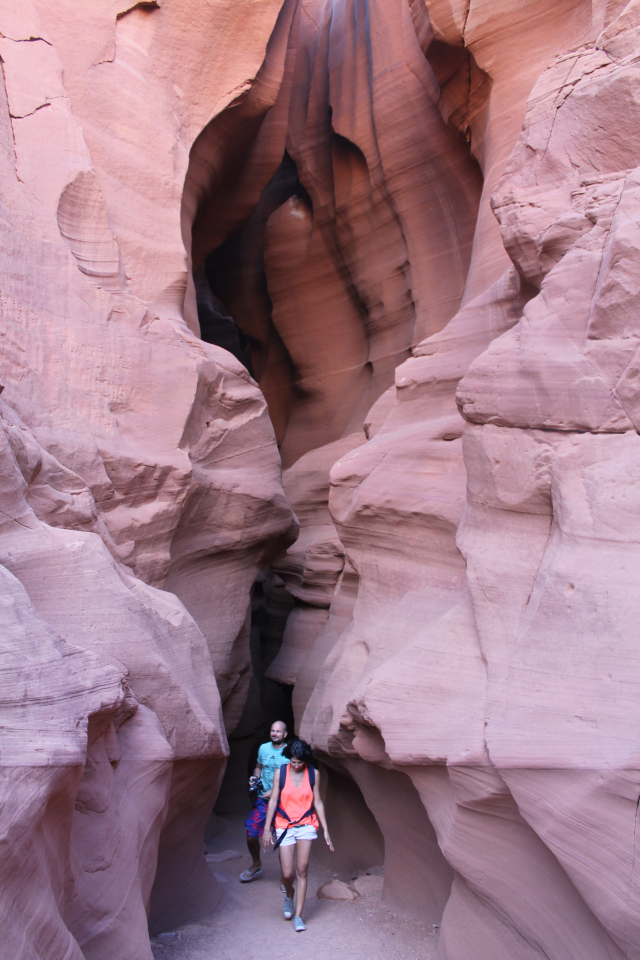
Just outside of Page, Arizona lies Antelope Canyon. Located on the Navajo Indian Reservation. The Dine (The People as the Navajos call themselves), manage the use of the canyon as a Navajo Nation National Park. Antelope Canyon is broken into two sections, Upper Antelope is known as Tse bighanilini which means “The place where water runs through rocks” (aka The Crack), and lower Antelope Canyon is Hasdestwazi or “spiral rock arches” (aka The Corkscrew). Both of these canyons are an awesome display of natural forces at work. Carved by flash floods that are common to the area, this Navajo National Park has been accessible only by Navajo Permits since 1997. The permit system came after 11 tourists from around the world were killed by a flash flood in Lower Antelope Canyon!

For more information on these Canyons go to the following links;

http://navajonationparks.org/

http://en.wikipedia.org/wiki/Antelope_Canyon

Navajo is a Descriptive Language

The Navajo language is very descriptive and their words often describe things that they see in the natural world. Hence the name for Upper Antelope Canyon “The Place Where Water Runs Through Rocks”. The language was one that was used by a few heroic Navajo veterans to help win World War II. For example, a Battleship was translated into the Navajo word Lo-Tso which means “Whale”, while a Cruiser was Lo-Tso-Yazzie which meant “Small Whale”.

See the following link for the dictionary they used;

http://www.history.navy.mil/faqs/faq61-4.htm

The use of Code Talkers was kept secret for many years!

The Code Talkers were kept secret for 23 years after the end of WWII. President Ronald Reagan gave them a Certificate of Recognition and made August 14, 1982, National Code Talkers Day. On December 21, 2000, President Bill Clinton awarded the surviving Code Talkers Congressional Gold Medals and Silver Medals to the approximate 329 surviving heroes.

http://www.navajocodetalkers.org/

Where Water Enters Upper Antelope Canyon.

oooo

The Canyon is 140 feet deep at it’s deepest point!

oooo

The Sandstone Walls are Cut into Mysterious Shapes.

oooo

The Canyon is so Narrow in places only two people can walk side by side.

oooo

The Heart of the Canyon.

oooo

The Sands of Time.
The Sands of Time.

oooo

Sunlight lights the exit.

ooOOoo

Just a magnificent set of pictures.  If you ever find yourself in Northern Arizona then don’t hesitate to visit the canyon.  The address is: Antelope Canyon, 5975 Hwy 98, Page, AZ 86040.

Thanks Rob!

Picture parade fifty.

Some fabulous pictures sent in by Amanda Smith from Australia.

Dogs of Shame

Amanda1

oooo

Amanda2

oooo

Amanda3

oooo

Amanda4

oooo

Amanda5

oooo

Amanda6

oooo

Amanda7

oooo

Amanda8

oooo

Aren’t they wonderful!

Another set coming along in a week’s time!

More down to earth!

Further information on the subject of being grounded.

Just to set the scene, so to speak, last Saturday week I published a post on our reaction to the book called Earthing authored by Ober, Sinatra and Zucker. I said that we had been sufficiently convinced to order the half-sheet kit.  Then on the 23rd., I wrote of our experiences after having spent 5 nights on the earthing sheet.

The half-sheet kit.
The half-sheet kit.

I promised to provide more information today. We have now been sleeping on the earthing sheet for eight nights.  All the positive effects written about on Monday continue and, frankly, strengthen.

The website GoingBarefoot.org has much information, including real-life experiences from customers.  That website suggests it is the work of Martin Zucker, one of the authors of the book.  It also offers this testimonial video:

There is another website Earthing.com that offers much the same information as the GoingBarefoot site.  (Indeed, I just called the Earthing company and they confirmed that there was no difference in service between the two websites.)

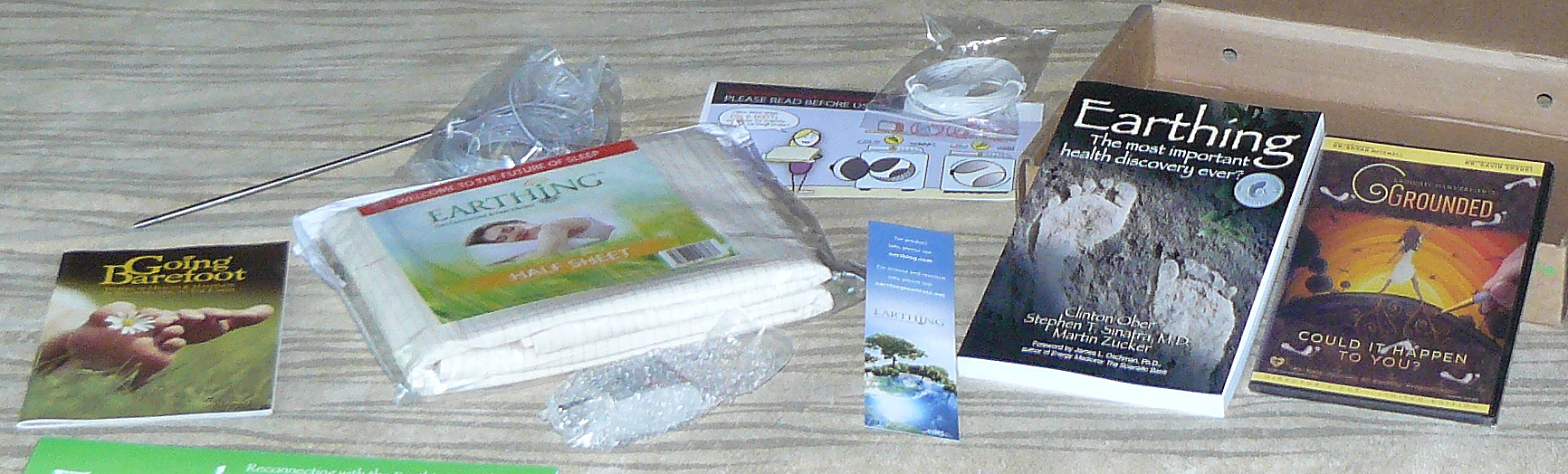
One of the items in the kit, as shown in the photograph, was a 74-minute, professionally-made film that was fascinating.  Guess what!  That film is available as a YouTube video.

http://www.youtube.com/watch?v=yoXRAqsXCmQ

The film was the product of Kroschel Films and their website is wonderful.  You must go there. These two pictures came from there.

Isis, January 2013 - Photo courtesy Dr.Vic Walker
Isis, January 2013 – Photo courtesy Dr.Vic Walker

oooo

Steve Kroschel spends some quality time with Lennox the Lynx, Nov.3, 2013

Then a web search brought to light a company with the name of Mercola.  Their website has a page with earthing products even including, towards the end of the webpage, instructions on making your own earthing mat.  The following video comes from that website.

https://www.youtube.com/watch?v=1xxP1e4zQ7c

So I do hope this is of interest and, please, if you have any thoughts or experiences, do please offer them as comments to the post.

(Oh, I guess I should mention that I am not affiliated with any of these companies and stand to gain no advantage if you choose to purchase a product mentioned on Learning from Dogs. Please verify for yourself the potential advantages in using any earthing product.)

How to close?

This seems as good a way as any.

Standing Bear.
Standing Bear.

There is a road in the hearts of all of us, hidden and seldom traveled, which leads to an unknown, secret place.

The old people came literally to love the soil, and they sat or reclined on the ground with a feeling of being close to a mothering power. Their teepees were built upon the earth and their altars were made of earth. The soul was soothing, strengthening, cleansing, and healing.

That is why the old Indian still sits upon the earth instead of propping himself up and away from its life giving forces. For him, to sit or lie upon the ground is to be able to think more deeply and to feel more keenly.

He can see more clearly into the mysteries of life and come closer in kinship to other lives about him.

Our Earthing experiences.

This is really starting to open our eyes!

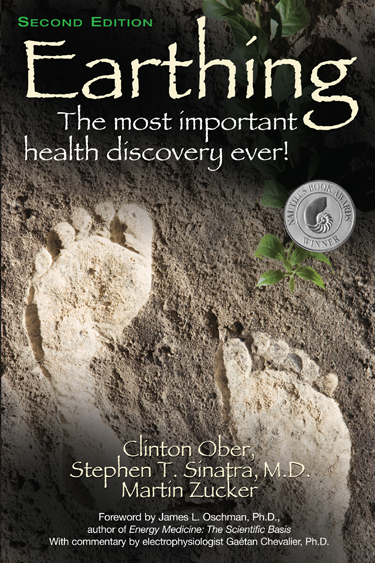
On Saturday, the 14th June, I published a post Are you grounded?  That post was a reaction to this book that Jean and I had recently read.

english2ndbkcover
I also explained that we had ordered an earthing sheet for the bed and that I would report further upon our findings.

Today’s post is that further report.

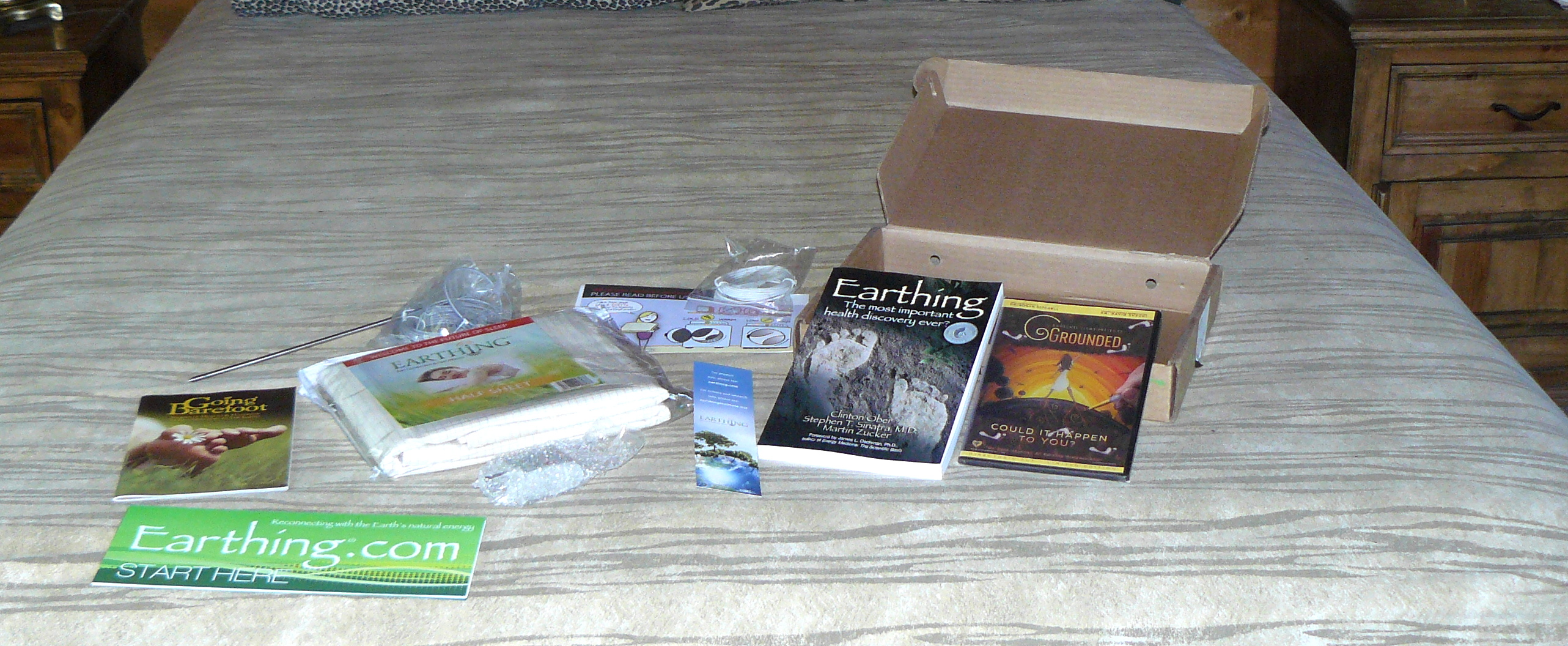
The slim box containing the half-sheet kit was delivered on the 18th June, five days ago at the time of writing this.

P1140851

The next photograph shows more clearly what was included in the kit.

P1140853

From left to right: Case histories from users, an earthing rod above, the earthing half-sheet, and below the sheet, an outlet ground checker, the earthing connection cord, the book, and a full-length DVD of a film on the subject of grounding.

It was then a case of laying the sheet on the bed as recommended in the instruction guide.

P1140854

Then upon testing that we had a safe earthing connection via the ground pin on our nearby outlet, it was a case of connecting the earthing sheet to ground, as may be observed in the next photograph.

P1140855

I’m writing this yesterday.  We have both slept on the earthing sheet for four nights now.

So what are the results so far?

Jean

Jean has had leg muscle cramps each night for months and months.  Often just enough to waken her but frequently sufficiently severe to require her getting out of bed and walking around the room.  I can vouch for the latter!

Jean has had those four nights totally free from cramps!

Plus Jean has reported sleeping more soundly.

Me – Prostate

In recent months my bladder has been showing ‘old man’s bladder control’!  Certainly, over the last year I have been getting up for a pee two times, frequently three times, during the night.

During the day, I could hardly take a hot drink without the need to pee within minutes.  It had got to the stage where I would avoid having a drink before Jean and I went out unless I was certain that there would be public restrooms available.  I was taking a natural prostate medicine, morning and evening, but still starting to think that it wouldn’t be long before I would need to see a medical specialist.

Since sleeping on the earthing sheet, I have gone down to getting up just once during the night.  But it’s better than that!

I have stopped the prostate tablets.  During the day, my bladder control is hugely improved.  I hold my breath that this is going to continue.

Me – Memory

Like many of my age (I’m 70 in November), my short-term memory is not what it used to be.  I have not noticed any improvements in this area.

But I am sleeping much more soundly, which is never a bad thing.

But get this!

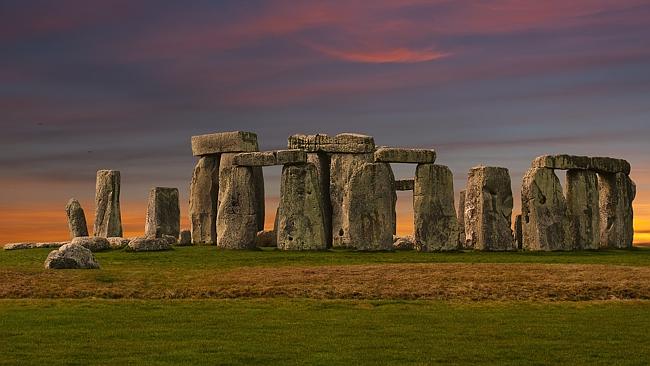
Being an old Englishman with a sense of connection to the ancient customs of Stonehenge, especially observing the sun’s dawn on the morning of Mid-Summer’s Day, I had looked up the exact local time equivalent of the moment of the Solstice here in Oregon.

Stonehenge at Dawn.  On the morning of Mid-Summer's Day the sun rises exactly over the heel stone.
Stonehenge at Dawn. On the morning of Mid-Summer’s Day the sun rises exactly over the heel stone.

Early in the hours of the morning of June 21st, ergo Mid-Summer’s Day, I woke unexpectedly.  I lay there wondering what had awoken me.  It wasn’t to jump out of bed and have a pee.  How strange!

I lay there for what felt like ten minutes and then curious as to the hour reached across and pressed the illuminate button on my bedside clock.  It read 3:48 am.

3:48 am!! How could that be! I could hardly believe it!

Let me explain.

The previous afternoon, I had been curious as to the exact time of the 2014 Summer Solstice.  Had looked it up online.  In the United Kingdom that precise moment was 10:41 am.  The equivalent time of the Summer Solstice in Oregon’s local Pacific Daylight Time (PDT) was 3:41 am.

I knew that was when I had woken up.

Now that’s what I call being grounded to the Planet!

OK, that’s enough for today but there is much more information about the whole business of being grounded to the planet. I shall return to the subject in Wednesday’s post.

Way to go!
Way to go!

Picture parade forty-nine.

Devoted to one cute little fella’.

Just last Tuesday, I posted the news that we had welcomed young puppy Ollie. (It was later that day that we decided on the renaming from ‘Smokey’ to ‘Ollie’.)

Anyway, at the end of that post I said that Sunday’s picture parade would be devoted to some further pictures of the young man.  So here they are!

First, a further couple of pictures from that same day that Ollie arrived; the 16th.

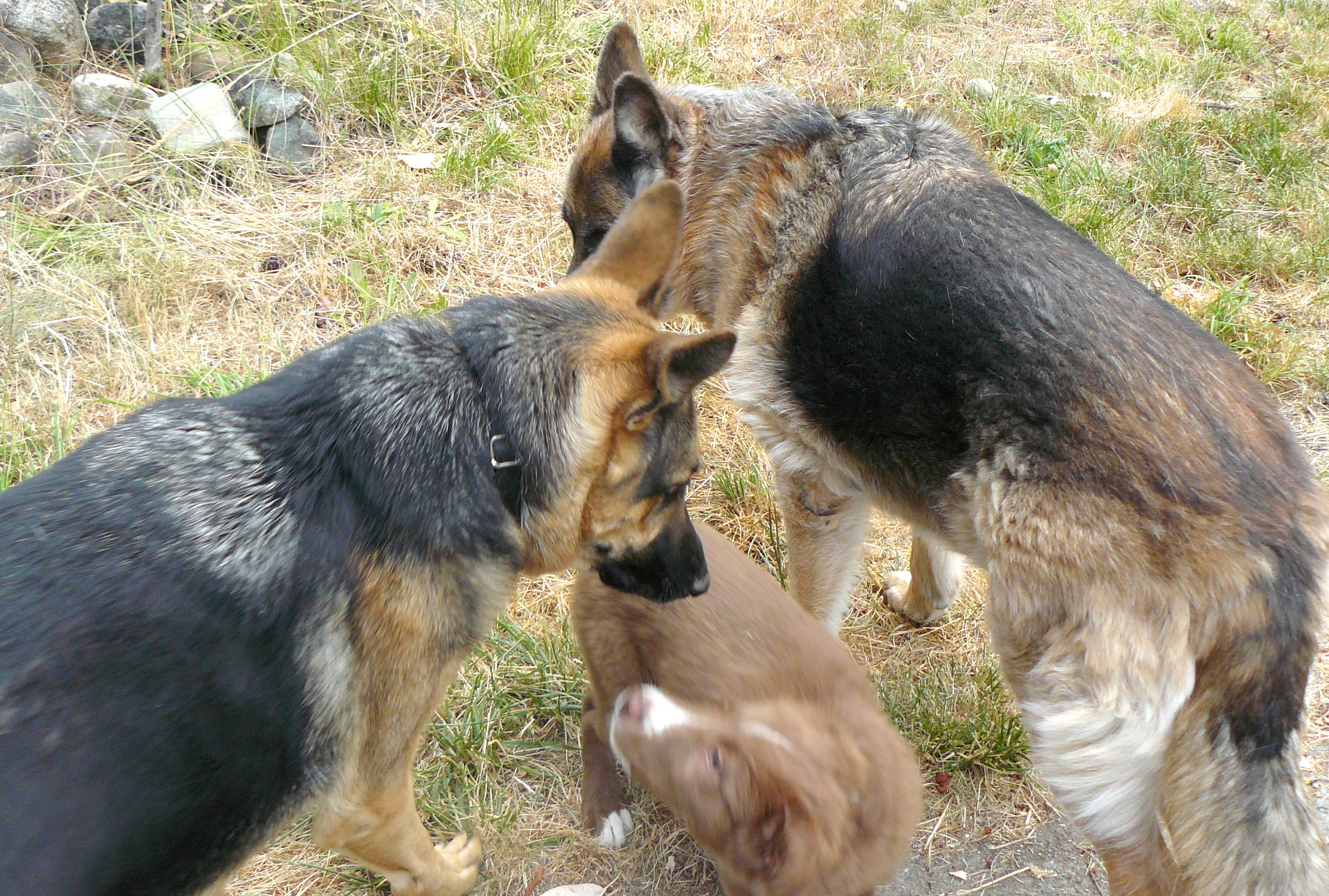
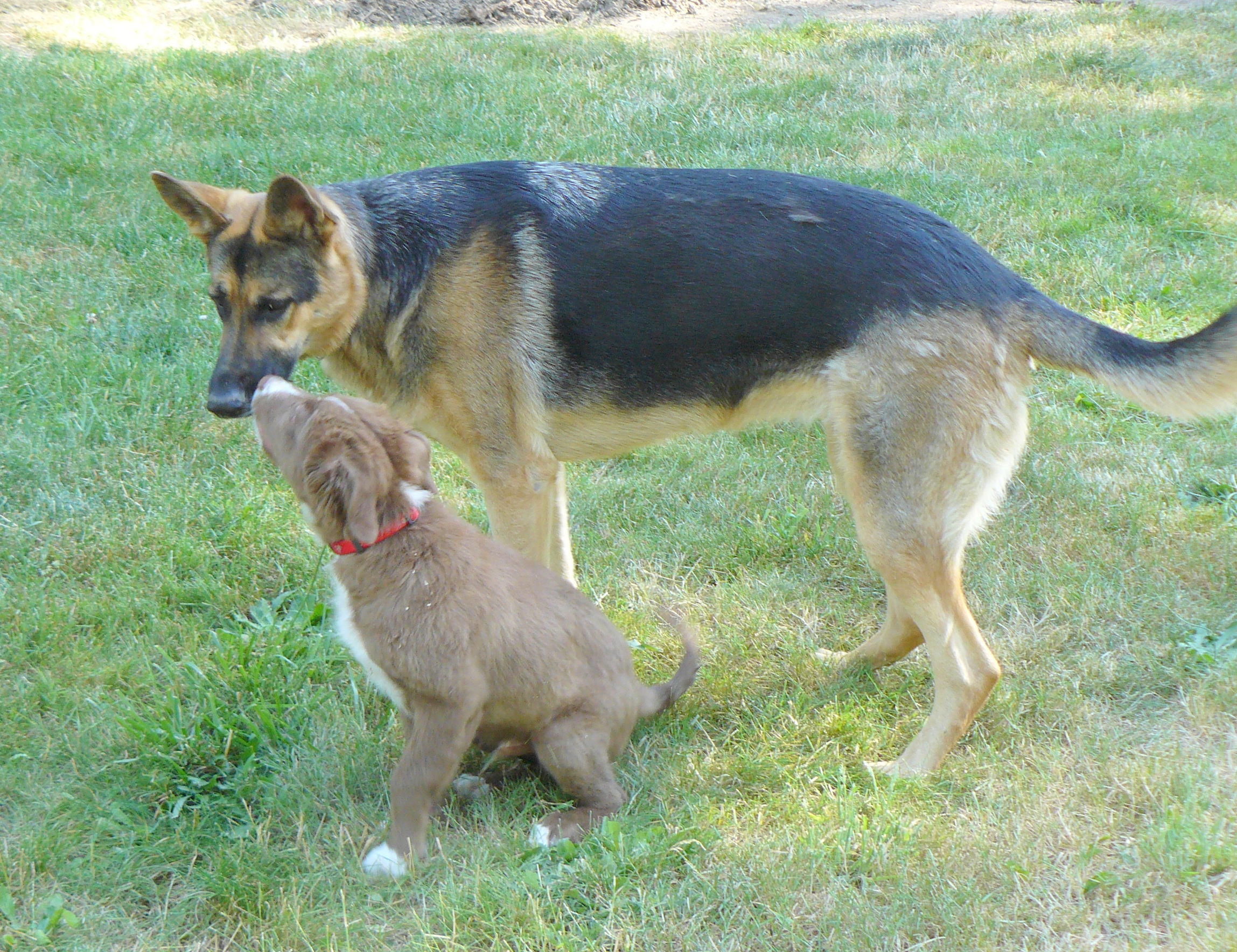
As may be seen, Pharaoh (RHS) and Cleo accepted this young puppy in moments.  A real delight to see how smoothly it went.

A Shepherd Sandwich!

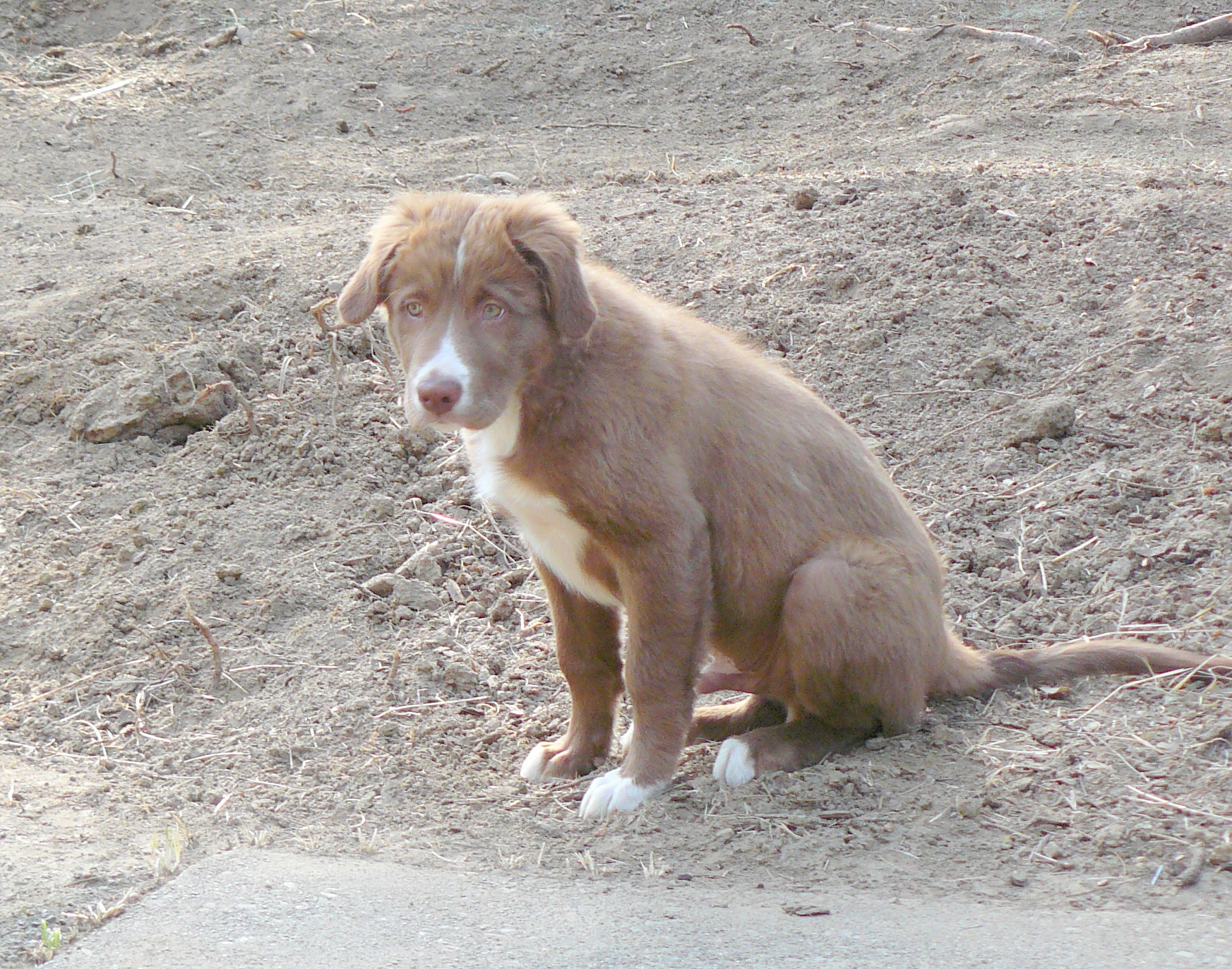
Then during the afternoon of the 16th, I grabbed this lovely study of Ollie looking out over new pastures; so to speak!

P1140806
Just a gorgeous picture of the young lad!

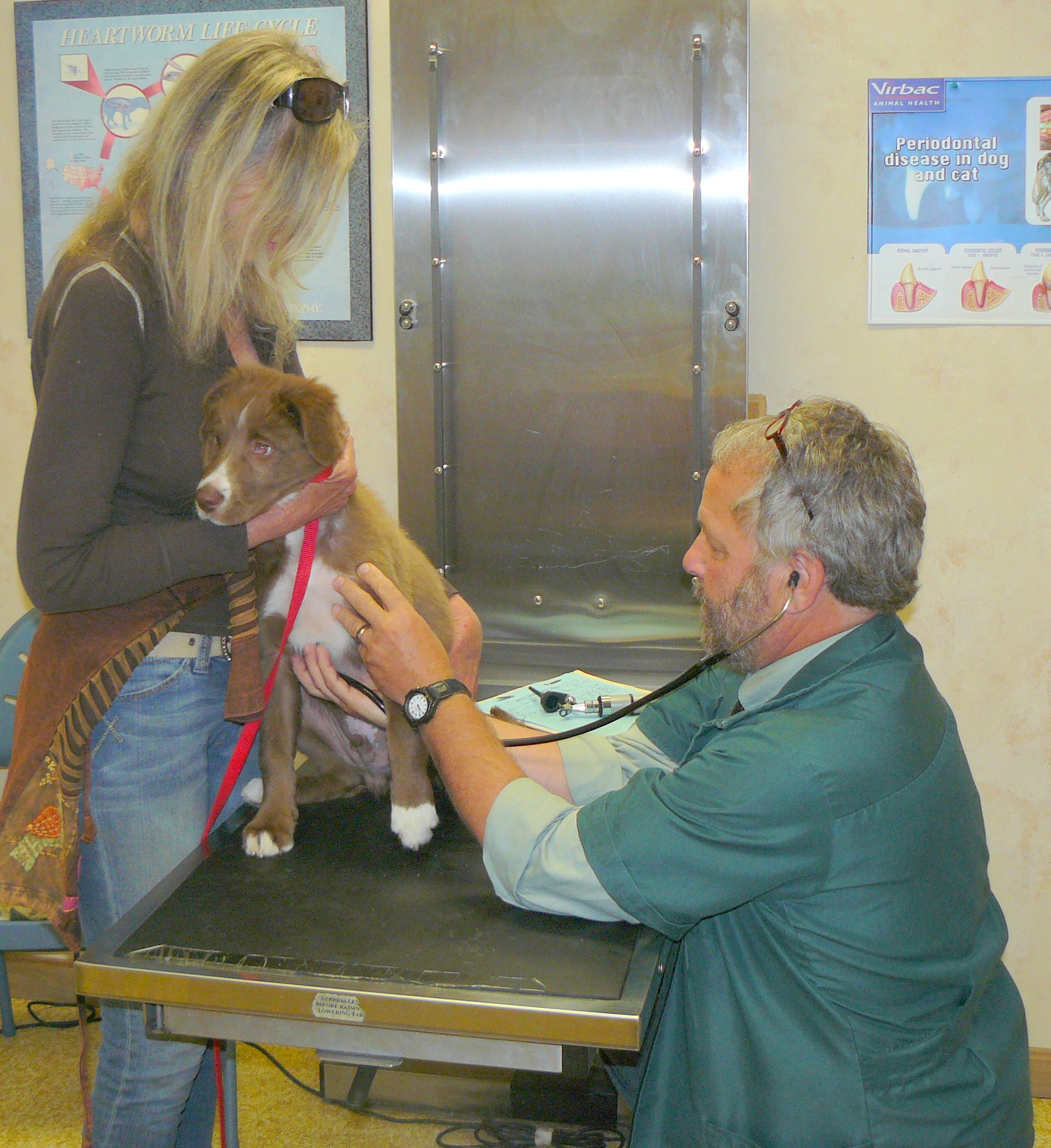
Ollie was due a couple of injections so on the 19th he was taken to our local veterinarian establishment.

P1140865
Mummy, I feel a bit uncertain of all this!

(Aren’t those eyes of his just beautiful!)
Before Ollie could say ‘bone’ it was all done and time to go home!

The good Doctor Goodbrod!

But not before Ollie was given his puppy kit by Jasmine!  (Who is a bit of an animal person as well!)
Jasmine and NutNut.
Jasmine and NutNut.

The day after the visit to the Vet’s office, I chose the following shot from number of photographs taken on the 20th.  It just seemed to convey the friendship and trust that had so quickly developed between Ollie and Cleo.

P1140876
Ollie and Cleo!

The final photograph for today was taken early in the morning on Mid-Summer’s Day.

A contemplative moment!

Make no mistake, Ollie is full of all the wonderful ‘charms’ of a young puppy dog but he is a very smart, sensitive individual and a wonderful addition to our home.  Very difficult to believe that today, this Sunday, we haven’t even had him for one week.

Morality, intelligence and humanism.

An open letter reply to Patrice Ayme.

Two days ago I published a rather introspective post called The temptation to turn ever inwards. It was the result of reading three disturbing essays about the ‘affairs of man’; essays by Tom Engelhardt, Jim Wright and George Monbiot.  Frankly, I wasn’t expecting a great response either in the form of ‘Likes’ or written replies.  However, the first reply, a long reply, came in from Patrice Ayme.  I made the decision to reply to Patrice via a new post; ergo today’s post. Since making that decision a further comment came in from Sue Dreamwalker, also republished today.

What I am going to do is to reproduce Patrice’s comment but interspersed with my replies.

oooo

The biosphere evolved over billions of years. Now it is taken over by critters who live for just a few years. Solution? Make it so that said critters live longer, thus attaching a greater value upon survival.

I presume that the ‘said critters’ refer to humans? The average lifespan of humans has increased hugely. From a life expectancy of 30 years [1] at birth in Medieval Britain, back in the 13th Century, to an average of 67.2 years for humans worldwide in 2010. [2]

That’s an increase of 124% in a little over 700 years.  Yet despite that incredible increase in lifespan, humans have shown no interest in attaching a greater value to their survival: far from it!  One might even muse that humans have attached a greater value to those things that actively harm our survival.

For all the (over-) elaborate set-up of dear Monbiot, it’s simpler than that. Instead of going back to Baby Thatcher, Baroness god save the queen knows what, let’s grab a clear and present example.

I’m unclear as to what is meant by “the over-elaborate set-up” but as a long-time reader of Mr. Monbiot‘s essays I applaud both his commitment to the highest standards of journalism and to the UK’s Guardian newspaper for publishing so many of them over the years.  I would invite Patrice to give an example of over-elaboration coming from the pen of George Monbiot.

Britain, and many of the Brits, say our dear friend Chris Snuggs, a participant to your, and my, site, have said that they hated Europe, because Europe was not democratic enough. However, one of the latest improvement of the European Constitution is now effective: the head of the EC, the European Commission, is now to be elected by the just elected European PARLIAMENT. Guess what?

Chris Snuggs is more than a participant to Learning from Dogs, he is a close friend of many years.  Yes, he has strong views about Europe but those views are expressed in a declared, personal manner.

Chameleon Cameron, came out of the woodworks to bark, in the clearest way, that it was out of the question to do things differently from before, and now dare to have the European Parliament to elect (what is basically) the European Prime Minister.

Never mind that Britain voted for that European Constitutional change.

Never mind that in representative democracies, the leaders of the executive are elected by Parliament.

So what do we see here?

Contradiction within moods and thoughts systems (Britain agreed to the democratic change, and now does not). We also see erroneous ideas imposed (leaders of the executive says Cameron should be nominated undemocratically, that’s erroneous).

The same sort of things is also perking up in Iraq: the USA caused the mess there, committing several major war crimes in the process. Precisely because those war crimes were not prosecuted, a strong push has been exerted on Obama to duplicate Bush, and go back to attack Iraq some more.

Thus, it is simple: there bad ideas out there, and they need to be destroyed. And bad moods too (an example of bad moods is the enormity that the American population was made, by Bush, Cheney, Rumsfeld, etc., into an accomplice of the most major war crime there is, war of aggression. Now that this war is in the process of being lost, some clamor to have the war pursued with renewed vigor.

We are now the stewards of the biosphere, whether we like it, or not. We can’t just sit on our rumps, strokes dogs, and whine we will attend to our garden (Voltaire style). By doing nothing, we leave criminals such as Bush, or their spirit, or their mood, in power. And thus we become accomplices.

There is total agreement for the idea that humans are the stewards of the biosphere.  But if the “sit on our rumps, strokes dogs and whine we will attend to our garden” is aimed at me, as it appears to be, then I strongly disagree.  Living as simple a life as we can is a long way from “doing nothing”.

So go out there, and engage in combat, bad moods, and bad ideas. That’s what even very old alpha monkeys, covered with age spots, do. We don’t want to let very old monkeys be examples of moral rectitude we cannot emulate.

A last point: Monbiot does not realize the contradiction he engages in. In the guise of criticising the opposition, he puts it on a pedestal, and engages in its very propaganda. Monbiot, and many like him, bemoan a “shift towards conservatism”. Nothing could be more false. People who destroy the biosphere are NOT conservatives. They play conservatives on TV. In truth, they are just the opposite. They are destructionists.

I am of the opinion, totally so, that George Monbiot is not playing at conservatism.

oooo

So, dear reader, there is little in the comment from Patrice that has me nodding my head.  Don’t get me wrong! Patrice Ayme is an individual of extreme intellect as even a dip into his blog will confirm. I am a regular reader of the writings over at that place.

However, there is one major stumbling block for me, one that I have communicated privately to the said Patrice, and that is the issue of anonymity. Because Patrice Ayme is a nom-de-plume.  Despite following ‘his’ writings for some time and sharing the occasional private email, I have almost no idea about who the person is. Yes, ‘his’ writings are often very strong and highly critical of many aspects of modern life, especially the American political system.  But that is not unique.  There is a long line-up of writers doing the same, and doing the same over their signatures: Tom Engelhardt, Jim Wright and George Monbiot and many, many others

For me, hiding one’s identity so securely behind a ‘virtual’ mask yet writing so passionately about many of the issues critically affecting the future of mankind, doesn’t work.  If one can’t or won’t be honest about who they are, then better, perhaps, that they keep their thoughts and ideas close to them.  There is no shortage of people openly being critical about the American Government and much else across the world, and being critical openly.

Later, Sue of Sue Dreamwalker added a comment.  That resonated perfectly with me and it, too, is reproduced in full.

Paul sometimes I despair at how Mankind plays out his life in the world Paul… We bemoan lots as we sit in our homes as the virus of hate, greed, and disaster pours into our living rooms via the BLACK BOX of FEAR tricks… Which helps depress, make us anxious, fearful,…. It insights anger, aggression and the spiral of thought escalates out via the Web… Internet at our fingertips- instant reactions…

Some times I wonder as I ponder… at the soup being remixed… as only this week we hear of ISIS another branch of the terrorists we are now supposed to fear… As the UK now makes friends with its long time enemy Iran.. reinstating diplomatic relationships again.. The Saga runs on an on… With Oil as the major players .

That’s why turning inward is sometimes Paul the only thing we can do… As we can only live our lives… While I so want to save the world.. The world has also got to want to save itself…

I can only live my own life and stop the petty squabbles, the judgements, the criticisms as I mend my own world to live at peace within it…
Once we all realise its our thoughts which in fact we send out, in fear, in anger, as we judge and condemn that are reflected back …

WE create the world.. We consume its products, We want to live in the lifestyles that demand this World to exploit others for riches.. And yet condemn the conditions of the haves and have nots…

We have lost sight of our basic values in life Paul…

So yes I often retreat inwards… I have too.. Because I worry too much about the kind of Earth we are leaving our Grandchildren to grow up in…
~Sue

In final reply to Patrice, I shall reproduce this well-known quotation [3]:

I disapprove of what you say, but I will defend to the death your right to say it.

References:

1. “A millennium of health improvement“. BBC News. 1998-12-27.

2. CIA Factbook.

3.This saying is widely attributed to Voltaire, but cannot be found in his writings. With good reason. The phrase was invented by a later author as an epitome of his attitude. It appeared in The Friends of Voltaire (1906), written by Evelyn Beatrice Hall under the pseudonym Stephen G. Tallentyre.