It seemed very appropriate to republish this post that first appeared in March, 2014.
Hazel – our dog number six.
Last week Jean wrote about Casey. Slight difference this week in the sense that both Jean and I equally know the story of how Hazel came into our lives. So you are stuck with me today for the story of Hazel.
ooOOoo
Hazel
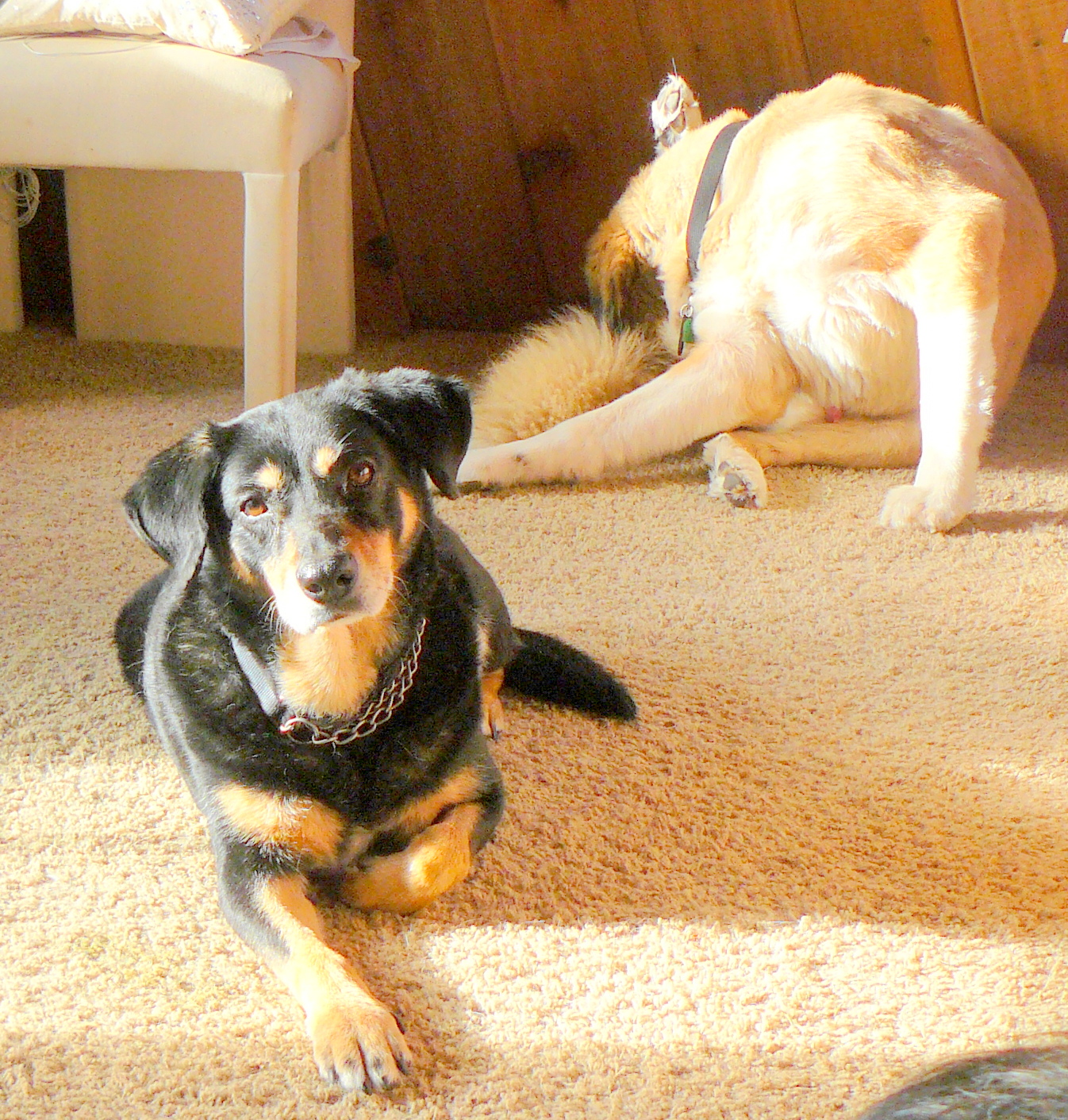
Picture of Hazel taken in the last twenty-four hours.
I first met Jean in Mexico; namely, in San Carlos, Sonora, Mexico to be precise. Just a few days before Christmas, 2007. At that time, Jean had 16 dogs, all of them rescues off the streets in and around San Carlos. Jean was well-known for rescuing Mexican feral dogs.
In September, 2008 I travelled out to Mexico, via London-Los Angeles, with my Pharaoh. Jean and I have been together ever since. In February, 2010, because we wanted to be married and to be married in the USA, we moved from San Carlos to Payson, in Arizona; some 80 miles North-East of Phoenix.
One morning, just a few days before we were due permanently to leave San Carlos and move our animals and belongings the 513 miles (827 km) to Payson, AZ, Jean went outside the front of the San Carlos house to find a very lost and disorientated black dog alone on the dusty street. The dog was a female who in the last few weeks had given birth to puppies that had been weaned. Obvious to Jean because the dog’s teats were still somewhat extended.
The dog had been abandoned outside in the street. A not uncommon happening because many of the local Mexicans knew of Jean’s rescues over many years and when they wanted to abandon a dog it was done outside Jean’s house. The poor people of San Carlos sometimes resorted to selling the puppies for a few Pesos and casting the mother dog adrift.
Of course the dog was taken in and we named her Hazel. Right from Day One Hazel was the most delightful, loving dog and quickly attached herself to me.
The truest of love between a man and a dog!
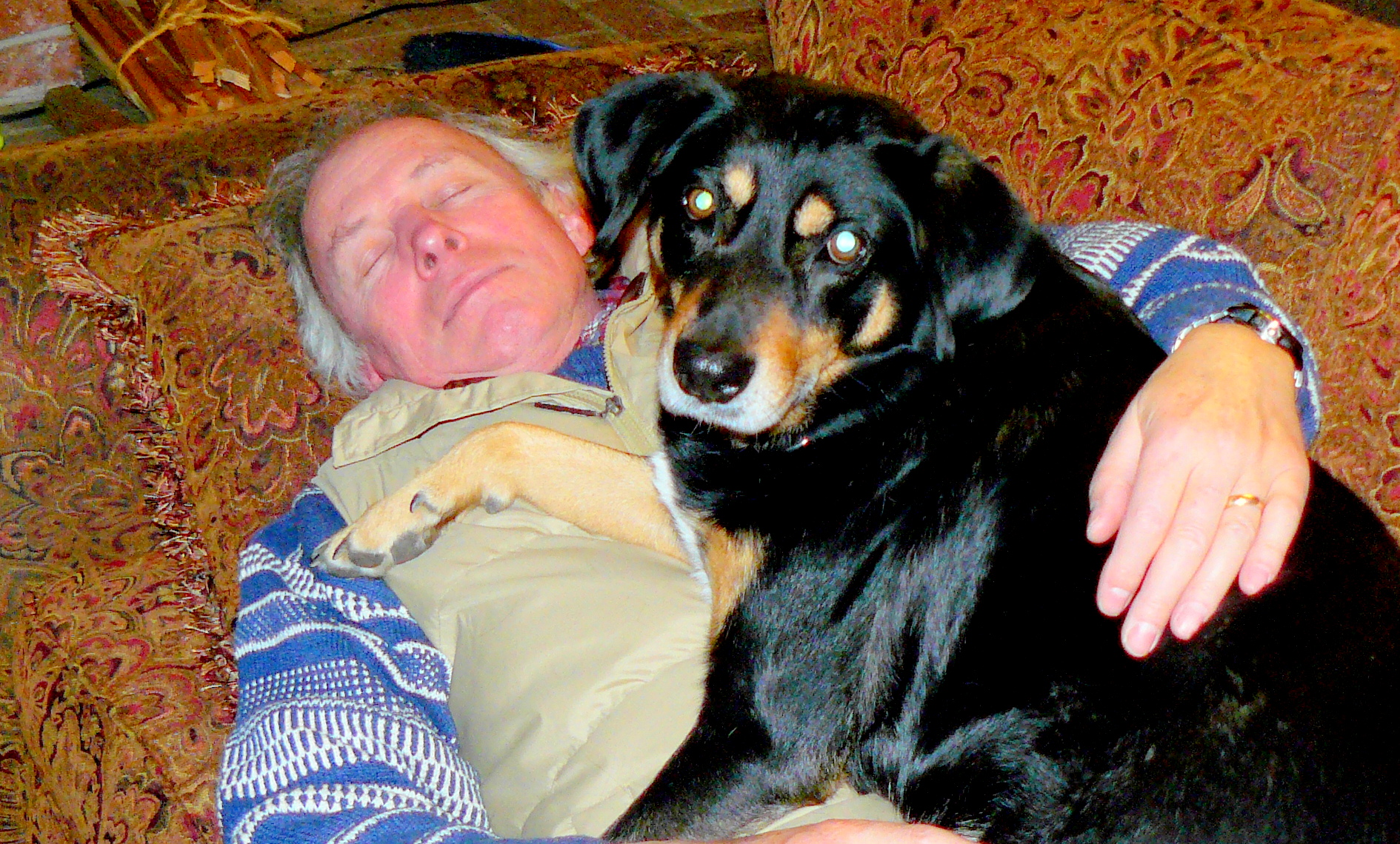
Of all the dogs that we have here at home, and, trust me, many are extremely loving, my relationship with Hazel is precious beyond description. She is in Pharaoh’s ‘group’ (Pharaoh, Hazel, Cleo, Sweeny and Dhalia) [NB: Dhalia died in April, 2014] so sleeps in our bedroom at night. Most nights Hazel is tucked up against me.
Plus frequently during the day Hazel will take an interest in what I am doing, as the next photograph illustrates.
Hazel taking an interest in my potterings.
Very little more that can be said without the risk of repeating myself.
If ever one wanted an example of the unconditional love that a dog can offer a human, then Hazel is that example.
Dear people, again I must say this: CAUTION: The following is offered by way of information reaching out to other loving dog owners. Please do not assume I have any specialist veterinarian knowledge and please do not take the following as a replacement for seeing your own vet.
Back on the 4th May I posted the results of Hazel being scanned ultrasonically in a post Hazel’s Sonogram. Here’s a tiny extract:
Dr. Parker, who is a board-certified veterinarian doctor, came to the conclusion that the most likely cause of Hazel’s illness was the fungal lung infection, as Dr. Codd and the radiologist supposed.
But still Hazel showed too many signs that there was no improvement. Her eating was pitiful and the application of the Fluconazole (anti-fungal) medicine was not helping, bearing in mind that she was first seen by Dr. Codd over a month ago.
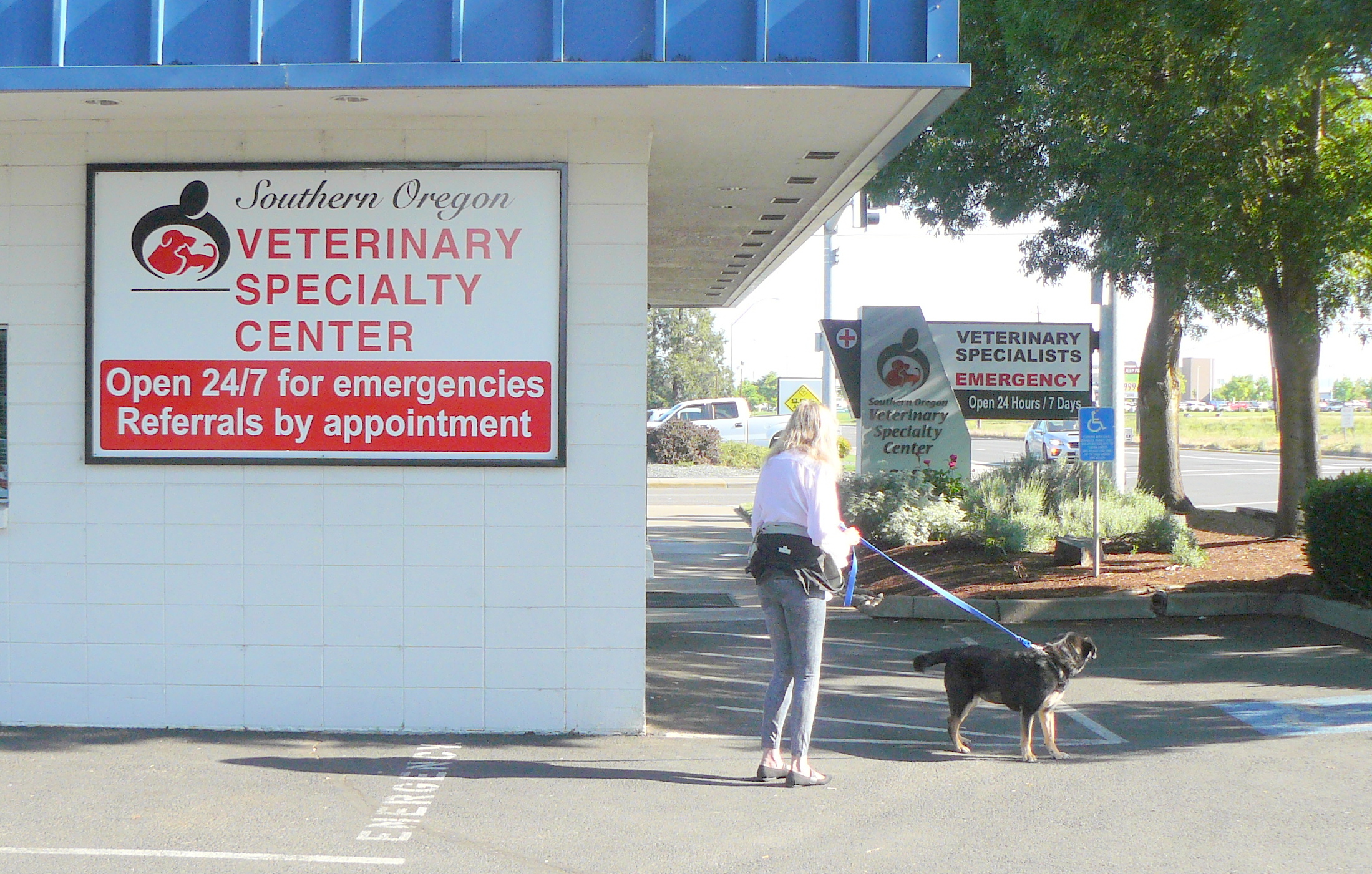
Dr. Codd’s advice was that we seek specialist help and yesterday morning Hazel was seen by Dr. Kimberly Winters, DVM, of Southern Oregon Veterinary Specialty Center (SOVSC) who, in addition, has a further qualification (Diplomate AVCIM) in Internal Medicine.
Based in Medford, about a 40-minute drive South from home.
oooo
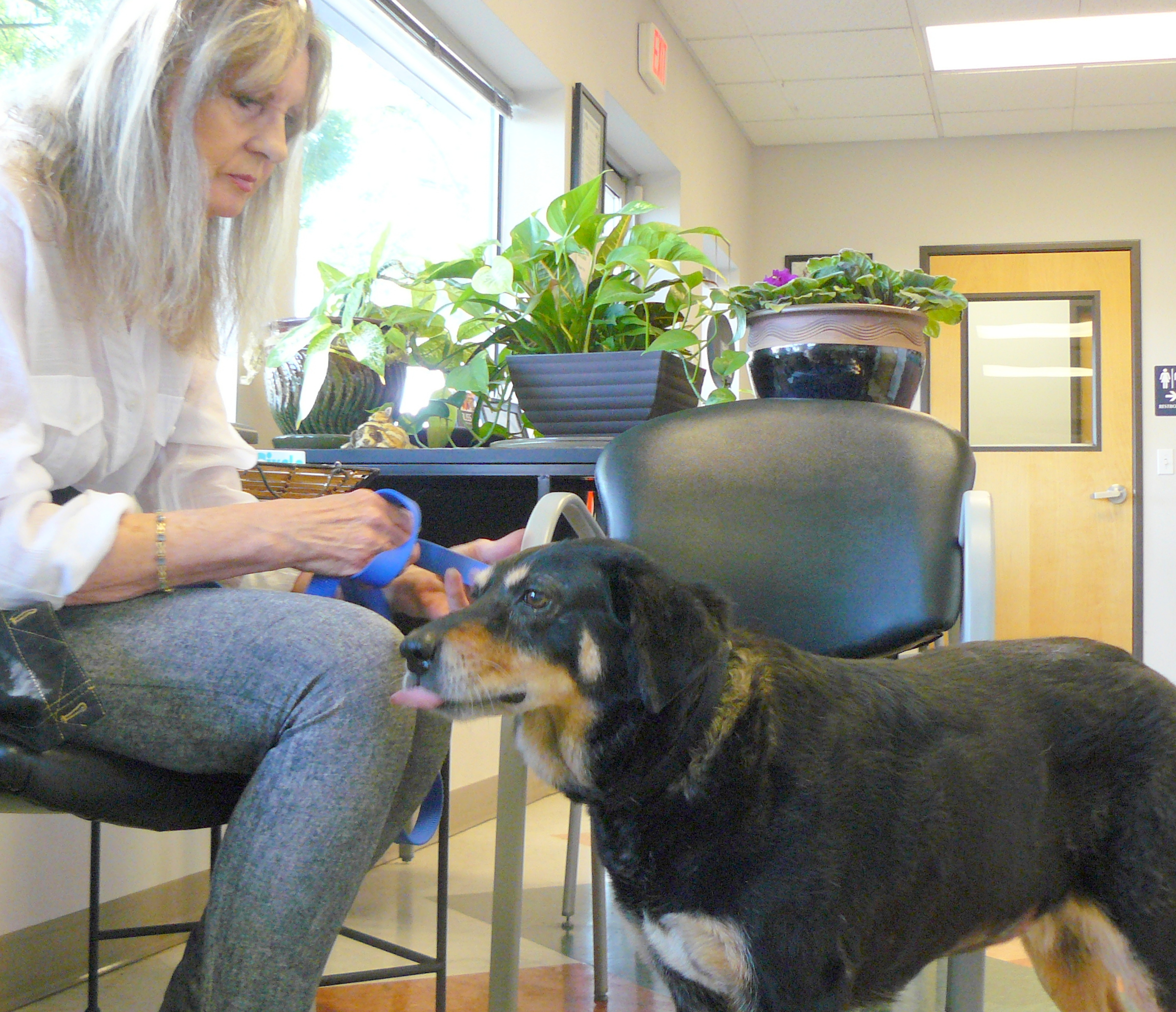
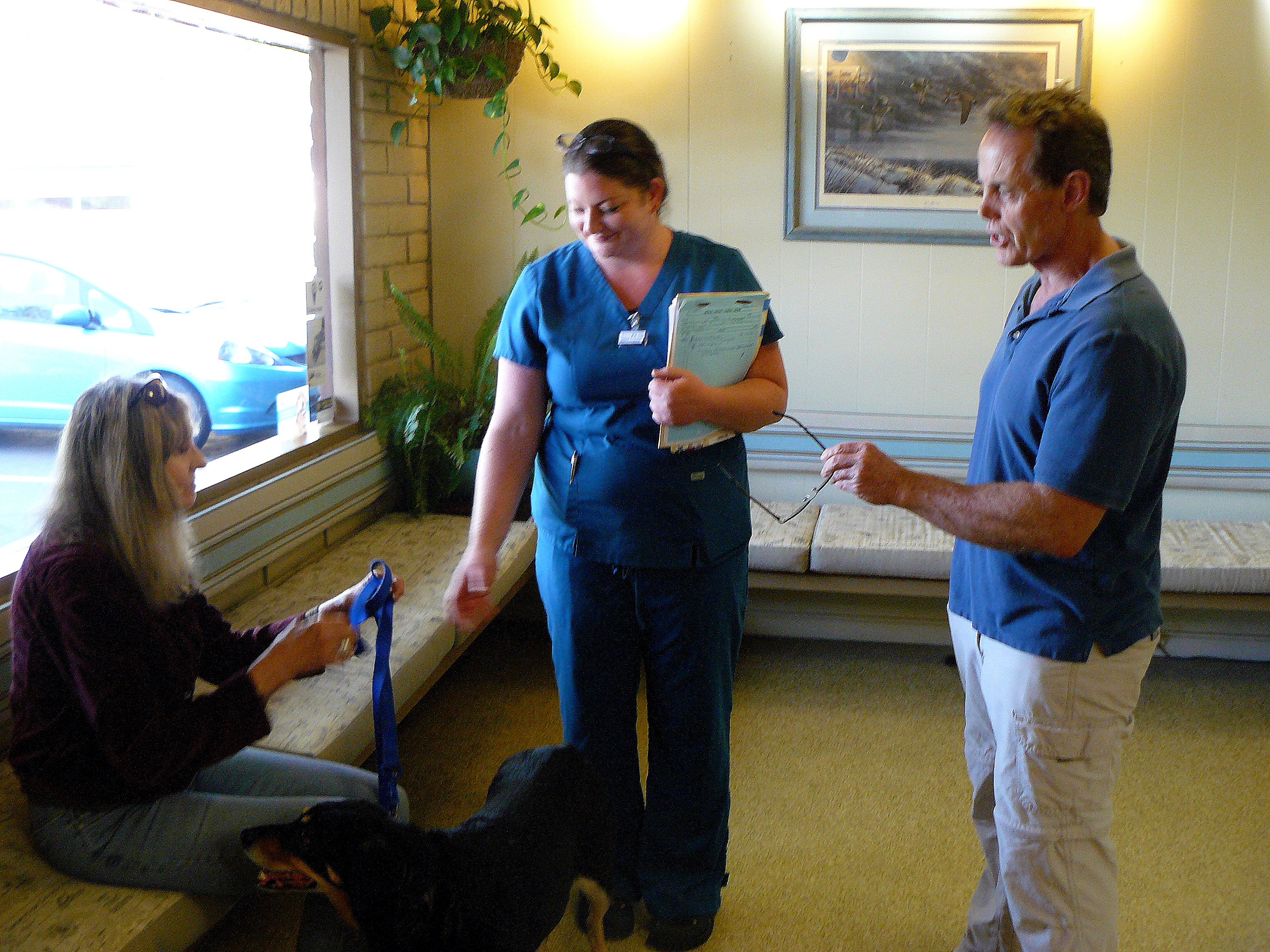
Waiting to be seen by Dr. Winters.
Jean and I were impressed by the way we were received and noted that the clinic, Southern Oregon Veterinary Specialty Center, offered a 24-hour emergency service. Here’s a piece from their home page:
At Southern Oregon Veterinary Specialty Center, we understand the special bond between a pet and their human family. Our team of highly trained doctors, certified technicians and support staff partner with your family veterinarian to provide specialized diagnostics, surgery and emergency care for your pet upon a referral or emergency basis. Our clinic is staffed 24 hours-a-day, 7 days a week, to receive emergency cases and to monitor our critical care patients. The clinic’s board-certified veterinary specialists and staff are committed to providing exceptional compassionate care utilizing state-of-the-art technology and treatments.
Then we were called in and first seen by one of the technicians to record all the details.
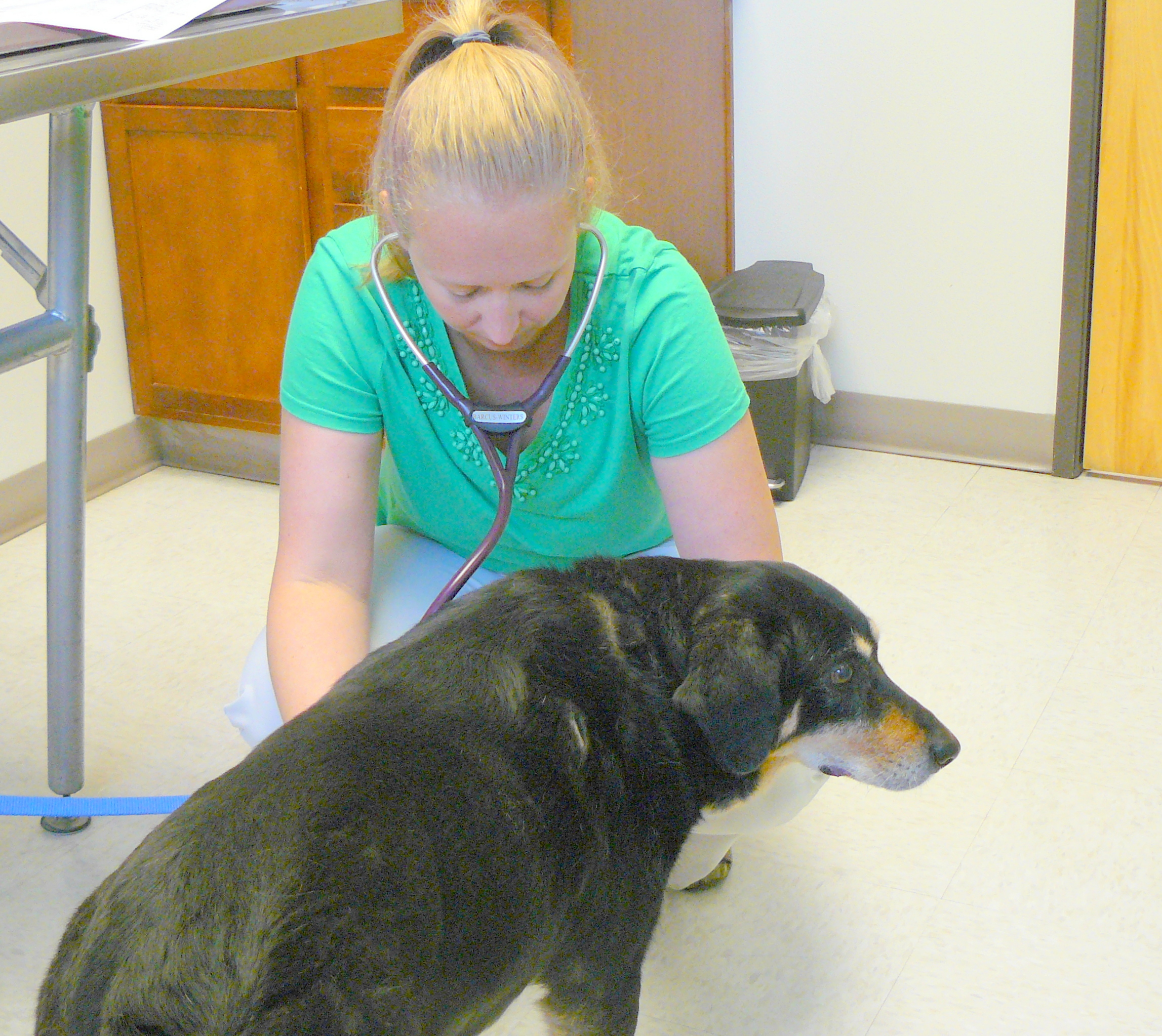
Pulse and body temperature normal.
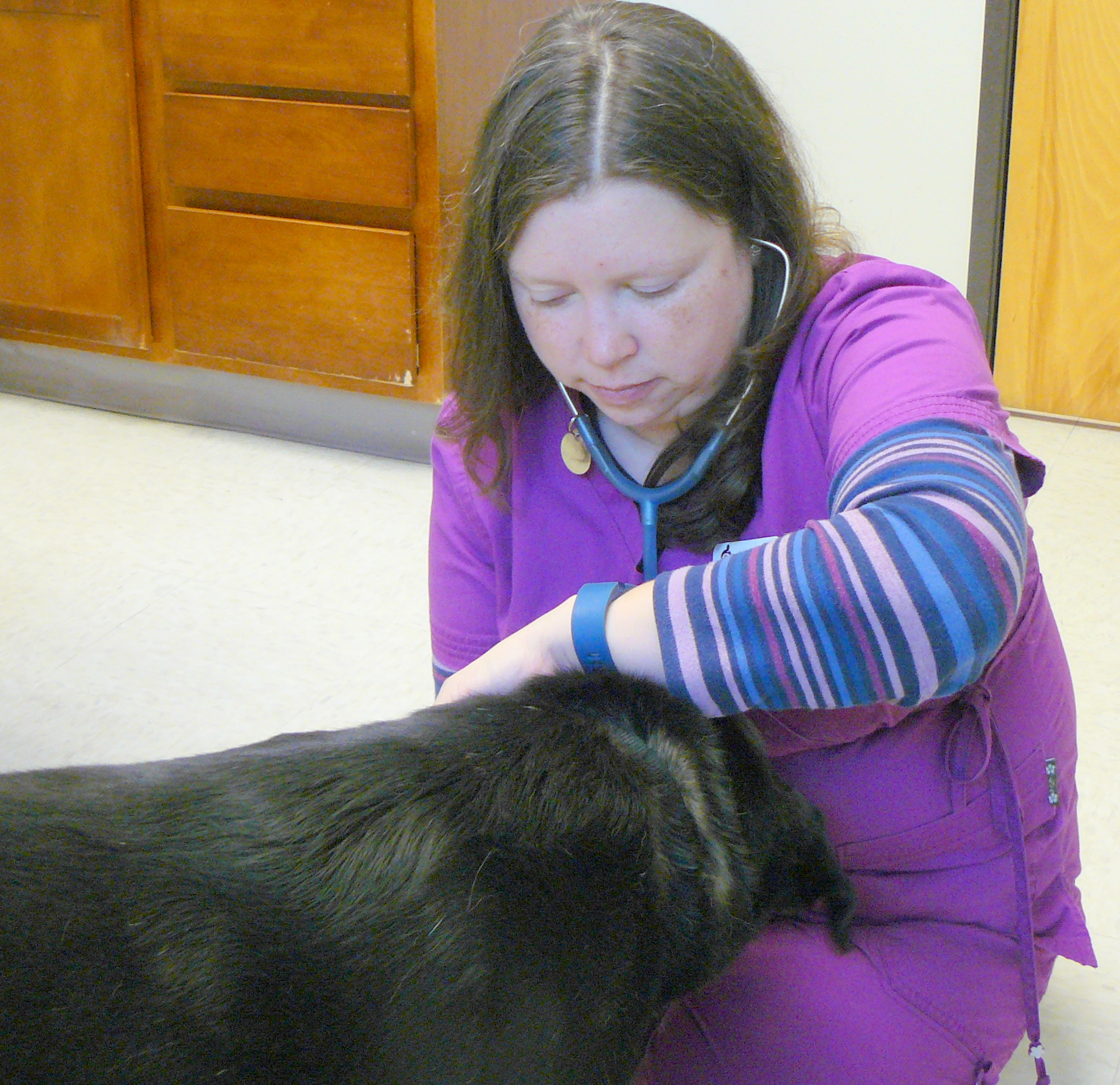
Then a short while later in came Dr. Winters.
Dr. Winters listening to Hazel’s rather laboured breathing.
Dr. Winters recommended a further xray of Hazel’s lungs and some blood work.
An hour later we had her analysis.
Dr. Winters said that while the condition of Hazel’s lungs could be an indication of a fungal infection she had her doubts. Or, in the words of her subsequent report:
There are several things that are not consistent with fungal infection – no high globulin level, no elevation in white blood cell count, no fever, negative titers, progression despite fluconazole treatment.
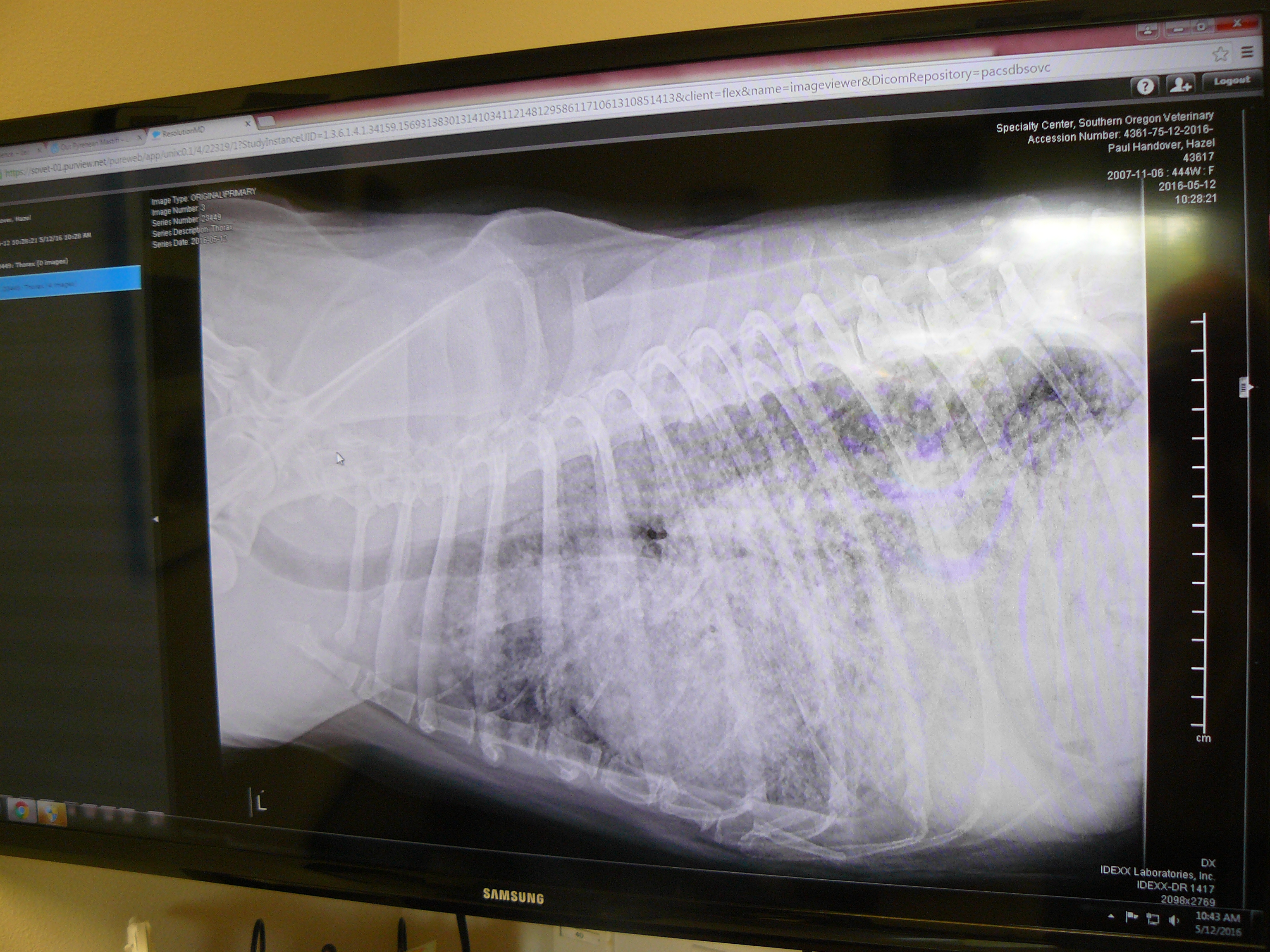
But the most important indicator of it being something other than a fungal infection was that the xray showed Hazel’s lungs to be worse.
My photograph of the clinic’s screen display.
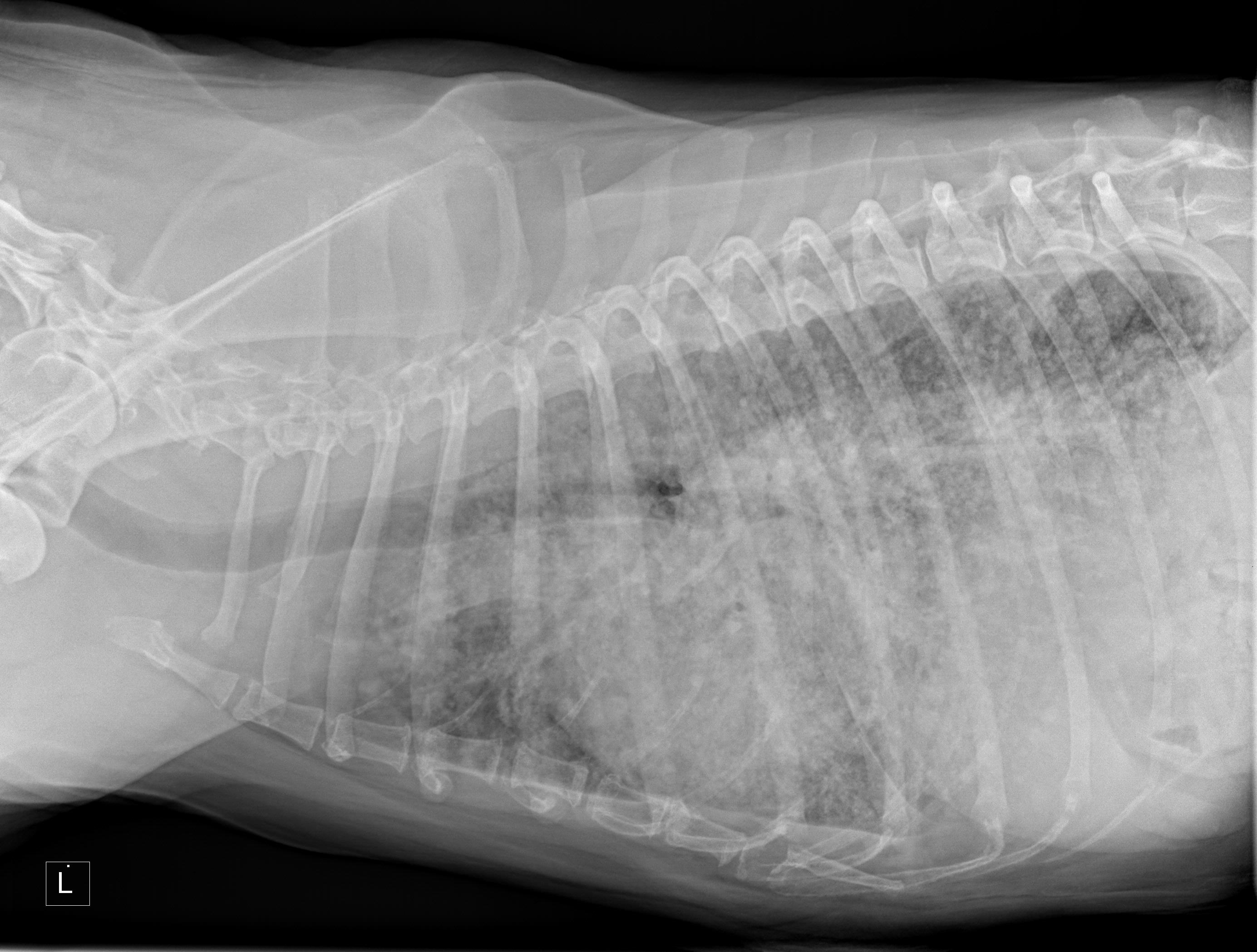
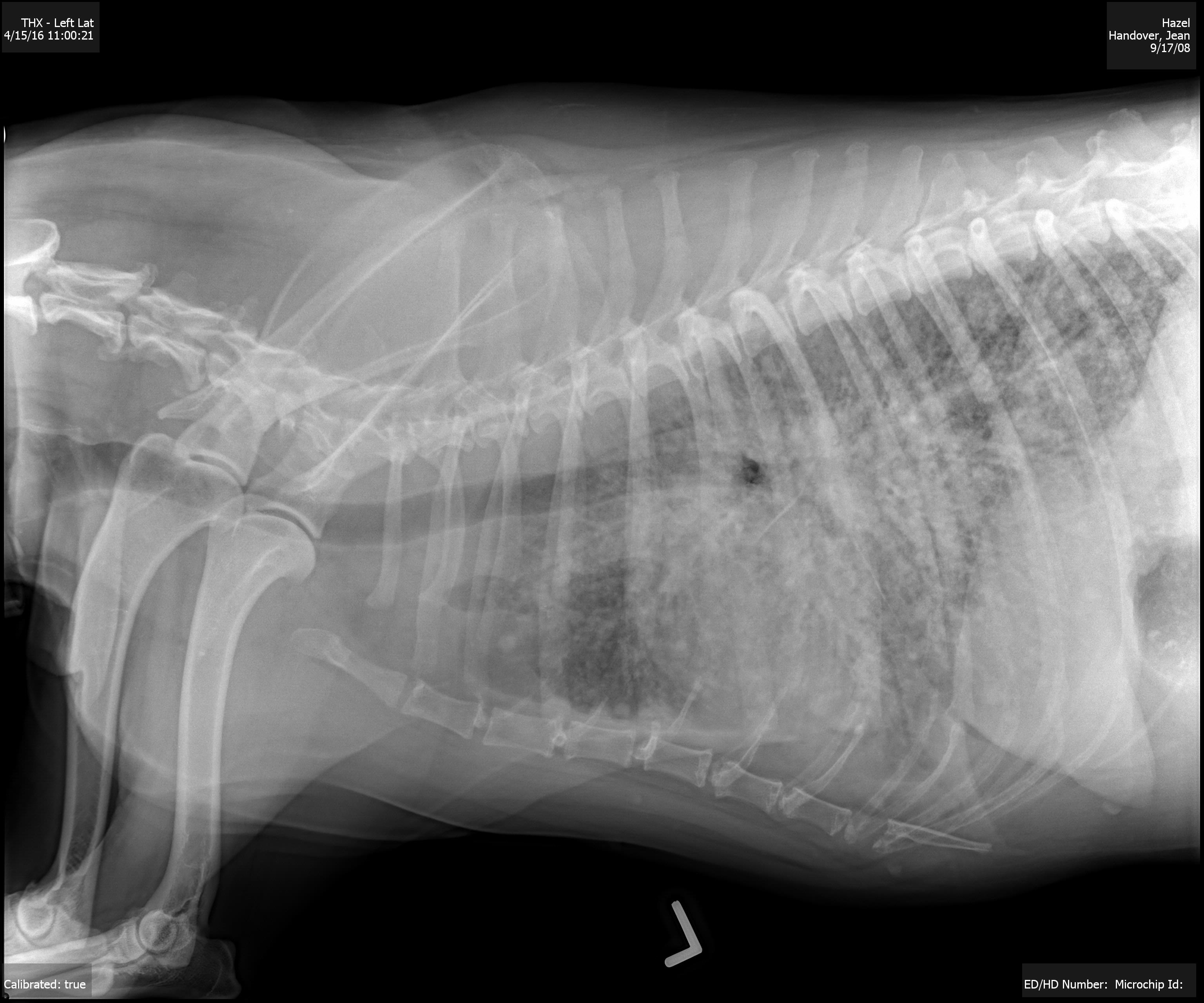
This can be more readily seen if I publish the xray image of yesterday and the image taken on the 15th April; see below.
Xray image as of the morning of May 12th, 2016.One of the radiographs taken of Hazel 15th April, 2016.
Despite not truly understanding these images both Jean and I quickly thought the top one, taken yesterday, showed a decline in Hazel’s lungs compared to the lower one, taken on the 15th April.
It was then time to seek Dr. Winters’ opinion.
Essentially, she said that she doubted the diagnosis of it being a fungal infection especially as lung fungal infections were very rare in Oregon. When I queried the fact that it might have been dormant for some time Dr. Winters thought that doubtful because the lungs, even a month ago, were displaying advanced disease.
Dr. Winters couldn’t be sure without a physical examination of the lung tissue but on the balance of probability she believed Hazel was at an advanced stage of cancer with the tumor somewhere in the body and that her lungs were showing that the cancer had metastasized!
A later discussion with Dr. Russ Codd and Jim Goodbrod confirmed this analysis with Russ thinking that the primary tumor might be in Hazel’s arteries. To a very great extent, it has become academic as Russ believes that Hazel will not have that much longer to go and that our main focus should be on keeping her quality of life as high as we can, for as long as we can.
Jean and I are devastated as you can imagine and later on when writing this post my thoughts were on some of the words added to the post Embracing Those Senior Years just last Wednesday. These words:
Hariod, your comments to Paul about your GSD really touched me because I myself am in that same space now with my almost 17 year old shih-tzu. We have always had a special connection but in the last year, as her age has progressed with it’s usual complications, our relationship has moved to another level – becoming even deeper than anything I have ever experienced; so powerfully in tune with each other, it’s incredible.
As I write this, every day she is with us is a precious bonus.
Our aging pets can be very troubling. I ‘ve been there and done that many times in about 60 years and even in my years before I left the farm to attend school. It doesn’t get easy and I always hate watching my pets age. It is devastating to lose them.
Then my words:
There are no favorites in our ten dogs but there are some that are more open in expressing and returning affection. It seems those dogs in particular tear us apart when they die.
Whether we like it or not, time flows in one direction.
I find it almost as difficult to know that I shall be 72 years old in November as I know that dear Pharaoh will be 13 on June 3rd., a little over three weeks from today. Both of us most firmly now in our senior years.
Knowing that dozens of you dear readers will have dogs that are also in their senior years was the motivation for me republishing the article; as follows:
ooOOoo
7 Steps to Help Your Senior Dog Be Happy and Fulfilled
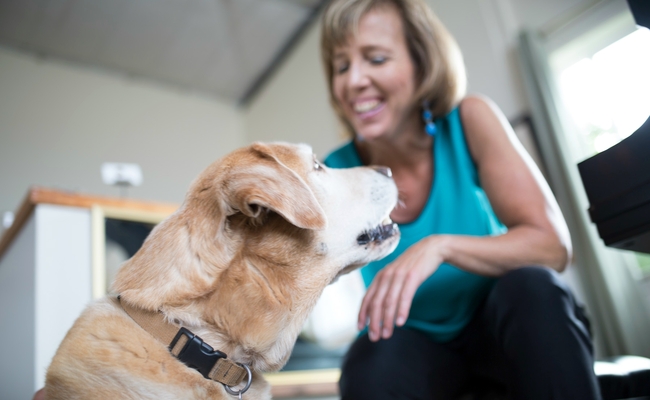
I can hardly believe that my yellow Labrador, Sanchez, is turning 13 next week. I count my blessings that he is in good health and still enjoys our twice daily walks. But, I’m also aware that he can’t keep up to his activity level from even a year ago, let alone in his prime. I’m always looking for ways to provide mental stimulation to his environment without physically taxing his body.
1. Alone Time Together Daily It’s not always easy having a multi-dog household. But, it’s important to make a priority of having time alone with your pets daily. Since Sanchez was an only dog for the first seven years of his life, he particularly appreciates this. It means walks take longer (walking Gina separately), but it’s well worth the time when I see Sanchez’s smile of contentment.
2. Keep Training Dogs love to learn, no matter their age. I still spend time training every night with Sanchez. If it gets late, he starts whining and begging for his training time with me. The bonding time is precious and it stimulates him to keep learning and being challenged. He has no complaints about his yummy rewards either.
3. Give Him Attention in Creative Ways Gina is a high-drive dog. We spend a lot of time retrieving and tugging. While it helps alleviate her pent up energy, Sanchez used to look neglected when she was getting the extra attention. So, I started sneaking him small treats while tugging with her. At night time, I often play ball with her inside, having her run down and up the stairs, chasing and retrieving the ball. I include Sanchez in the game by discreetly tossing him small treats while she’s running back up to me to deliver the ball. It not only makes him feel included, but it also engages his senses as his nose has to search for the tossed treat.
4. Reward. Reward. Reward. In the video above, I am training both of my dogs together. Even though Gina is doing all of the physical activity, Sanchez is getting equally paid for staying calm and still while she jumps over and goes under him. Good Boy, Sanchez!
5. Pay Attention to New Behaviors It’s not unusual for senior dogs to develop anxiety issues later in life that seemingly come out of nowhere. They can include sound phobias, separation anxiety or resource guarding. There are some that I just accept, such as tearing tissue out of the bathroom waste basket. I call it his puppy behavior returned. I just make sure that I don’t put anything in the trash that could be harmful when chewed. Other behaviors will only get worse if ignored, such as separation anxiety or food resource guarding. Tips for Separation Anxiety are here. For all anxiety issues, consult with your veterinarian and/or a positive reinforcement dog trainer. Ignored, they will only escalate.
6. Keep The Safe Physical Activity Sanchez and I used to enjoy musical freestyle classes. He would weave between my legs, spin and jump on my arm on cue. While that would be too taxing on his body now, we have kept in what is safe for him. He still loves to “go back,” lift his left and right paw on cue, and show off his “downward dog.” Of course, he is well paid for his behavior.
7. Engage The Senses
National Association of Canine Scent Work (NACSW™) is the official sanctioning and organizing body for the sport of K9 Nose Work. It is a growing popular sport, and it’s great for dogs of all ages. K9 Nose Work is built on scent work where dogs use their nose to search for their prize. Sanchez loved his K9 Nose Work class. Now, at home, I put pieces of liver into a mixed variety of cardboard boxes. He is told to “find” the liver. Boy, does his tail ever wag when he is searching!
Dog training should always be fun for both 4- and 2-leggeds. Get creative with your senior pup. Because you can teach an old dog new tricks.
Mark Holtuhusen
ooOOoo
This strikes me as very sound advice.
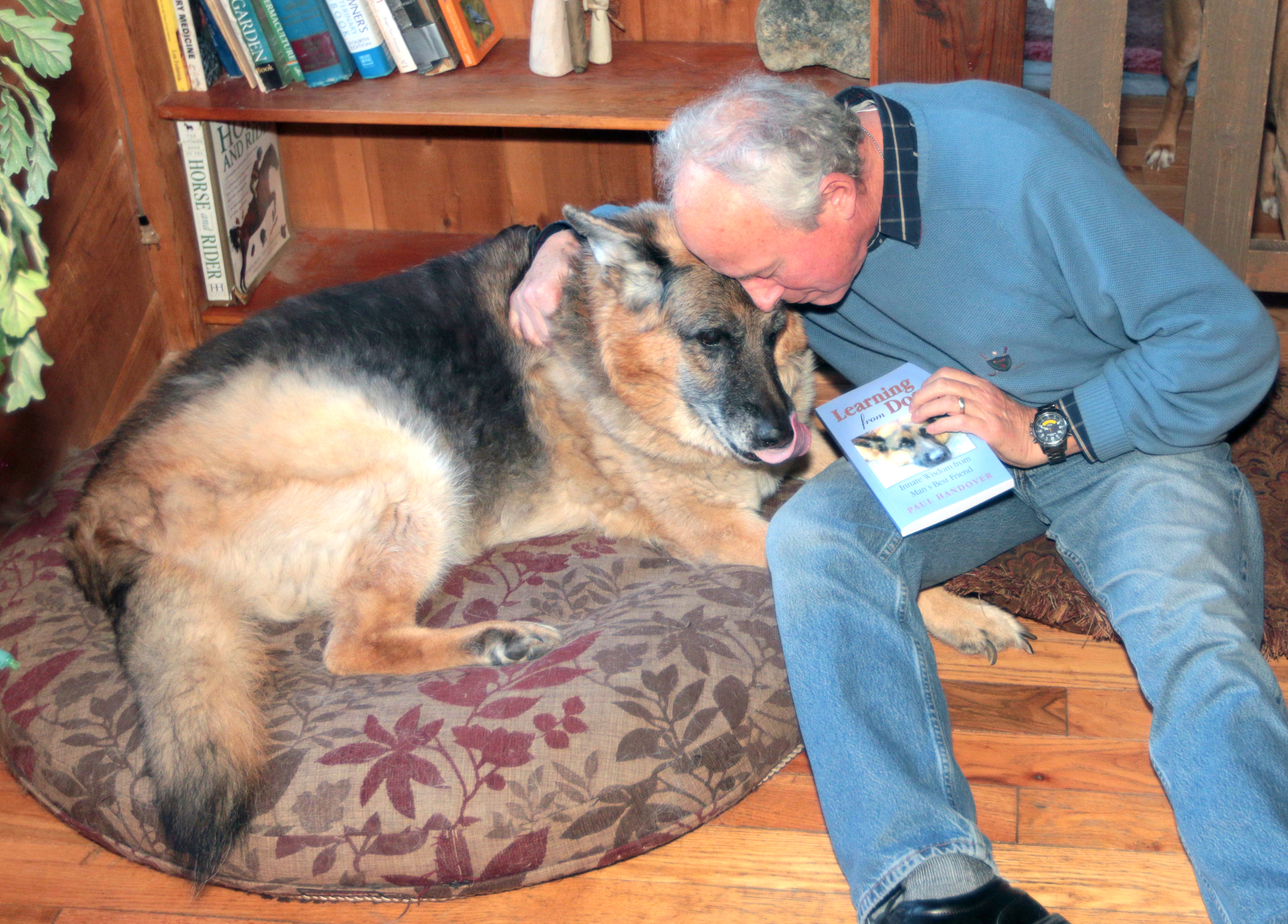
I will close today’s post with a photograph of dear Pharoah and me, both well into our senior years, taken just a few weeks ago demonstrating that both of us are old dogs learning new tricks!
TIMOTHY BULLARD/Daily CourierPaul Handover with Pharaoh, a 12year-old German Shepard that he uses on the cover of his new book about man’s best friend.
On second thoughts there’s a much better way to close this post that reflects on those precious years before the end of our days. That is by offering you the poem by John Oldham, A Quiet Soul.
A Quiet Soul
Thy soul within such silent pomp did keep,
As if humanity were lull’d asleep;
So gentle was thy pilgrimage beneath,
Time’s unheard feet scarce make less noise,
Or the soft journey which a planet goes:
Life seem’d all calm as its last breath.
A still tranquillity so hush’d thy breast,
As if some Halcyon were its guest,
And there had built her nest;
It hardly now enjoys a greater rest.
When it comes to animals it’s practically impossible to have one without the other.
Today’s post was inspired by a comment left on yesterday’s post The most beautiful bond of all by MargfromTassie. This is what she wrote (my emphasis):
Yes, these people are inspirational as are all the people who voluntarily give their time and efforts to animal welfare work, sometimes for years. For many, it can be emotionally traumatising as well as rewarding.
It didn’t take me long to agree that for most it will be emotionally traumatising. In fact, one of the great lessons that we learn from our dogs, and all the other animals that we love, is that unconditional love brings with it emotional trauma.
So much better expressed by Suzanne Clothier in her book Bones Would Rain from the Sky: Deepening Our Relationships with Dogs
There is a cycle of love and death that shapes the lives of those who choose to travel in the company of animals. It is a cycle unlike any other. To those who have never lived through its turnings or walked its rocky path, our willingness to give our hearts with full knowledge that they will be broken seems incomprehensible. Only we know how small a price we pay for what we receive; our grief, no matter how powerful it may be, is an insufficient measure of the joy we have been given.
Our grief is always an insufficient measure of the joy we receive!
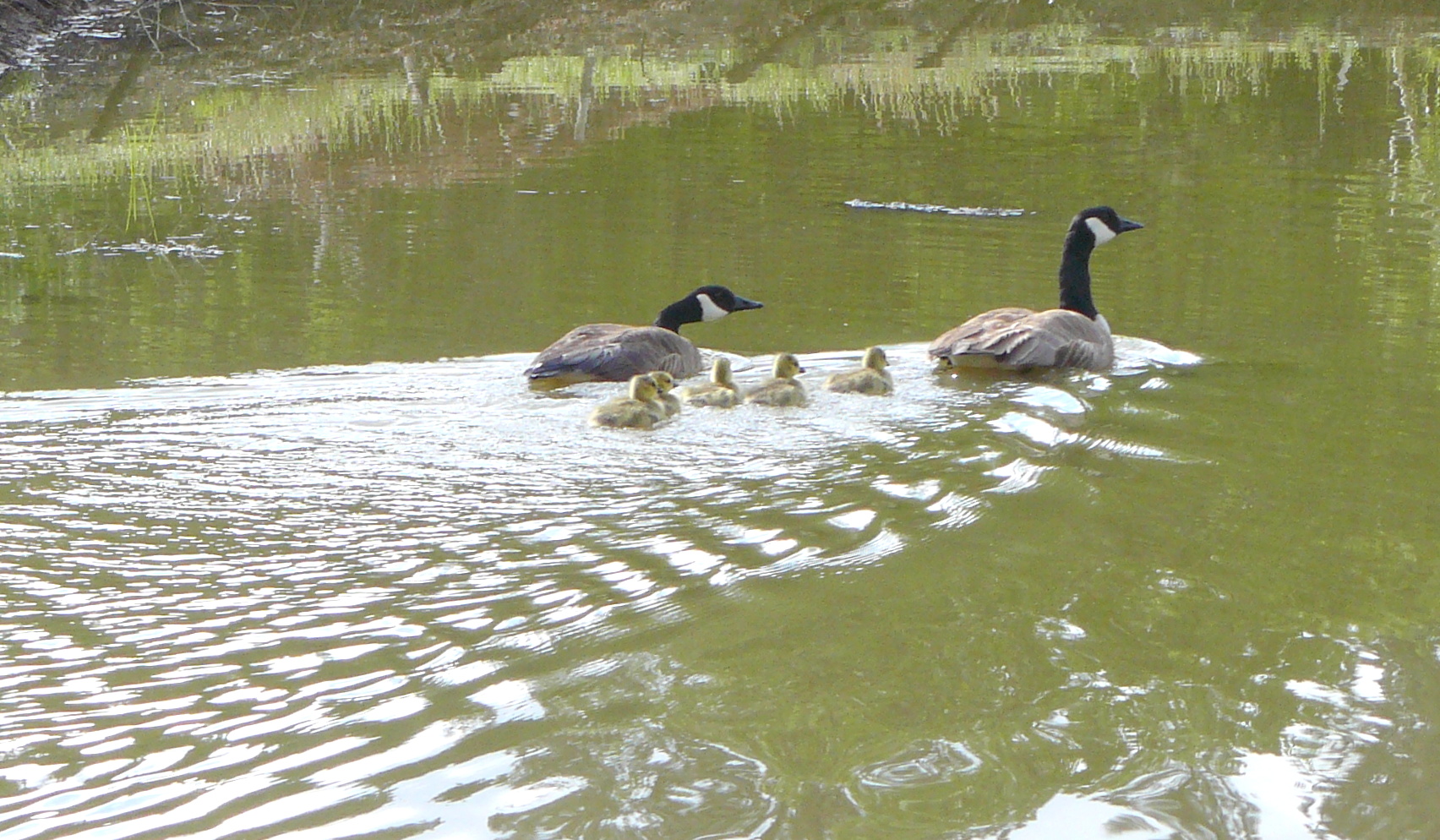
Speaking of joy, when we pulled back the bedroom curtains this morning (Thursday) the nest was empty!
For the last too many weeks to remember a mother Canadian Goose has been sitting on her nest of eggs with Father Goose staying close. We like to think that the mother returned to this place after having been born here a year ago.
Overnight five young healthy goslings were born! 🙂
May their little lives be full of love with a total absence of trauma!
The powerful combination of good medicine and unconditional love.
In the last post on Hazel’s condition, back last Thursday, I passed on Dr. Codd’s observation, “… that by not having Hazel on her meds we were, of course, letting the fungal infection continue its damage.”
Dr. Codd also recommended reducing the dosage of the Fluconazole to lower its side effect of suppressing appetite.
So since then, with outstanding care and patience, Jean has been coaxing Hazel to eat just sufficient food for Hazel to be able to take the Fluconazole, for her fungal infection in her lungs, and Doxycycline, for her tick infection. (Mind you, Hazel is still a long way from eating reliably.)
Yesterday, (Saturday) Hazel was showing clear signs of feeling better but still having to be hand-fed by Jean.
Then this morning (Sunday) she really was perky and readily came out for a walk with the other dogs.
First time in recent days when Hazel has shown an interest in the world around her.
oooo
A return of a head gesture unique to Hazel that we haven’t seen in ages! 🙂
More generally, Dr. Jim was trying to track down supporting details to the observation made by Dr. Russ:
Namely, that there was evidence that fungal infections can lay dormat for quite long periods of time.
Jim sent me the following email:
Paul …
The following article is the one and only reference I have found so far that refers to the possible dormancy of this fungal infection. In paragraph 2 (Clinical Disease) I have highlighted it in red. I have to admit, I was skeptical.
Jim
The article was:
Coccidioidomycosis (Zoonotic) Last updated on 2/4/2011.
Contributors:
Rhea V. Morgan DVM, DACVIM, DACVO
Synonyms:
San Joaquin Valley Fever
Valley Fever
This is that domancy aspect from that paper that Jim highlighted (in red):
The incubation period in the dog is 1 to 3 weeks.1,2The organism can remain dormant, with exposure preceding the onset of clinical signs by 3 years or more.1,3 Although people may acquire the disease from the same sources as domestic animals and the mycelial forms are highly infectious, with one exception the disease has not been transmitted from animals to people. One published report exists of transmission to a veterinary assistant via the bite of an infected cat.15
Meanwhile, over in Brandy’s corner, he has very quickly healed after his neutering operation last Thursday. It was fair to say that he was not a happy chappy when he arrived home that day.
Didn’t like that!
oooo
And I can’t even lick my balls!
But his cone was off by Saturday and he is back to the wonderful, bouncing dog we all love so much. (Can’t believe that last Saturday was only the second week that Brandy had been with us; he has so quickly woven his way into all our hearts.)
Checking out the stables yesterday (Sunday) morning.
oooo
Behind that placid expression is the most docile, loving brain and heart one could ever wish for!
Returning to Hazel we are still some way from knowing that she has returned to a fully fit dog but the love and caring sent her way by all of you out there has been precious beyond imagination.
A second and supporting post for today: Earth Day 2016.
Eight days ago I received an email from Jordan Jaeger that included a link to a video that was just perfect for this Earth Day.
I so much wanted it to be shared with you today but at the same time I didn’t want to create a shadow over the lovely guest post from Mike Shannon that I published at midnight. Yet, at the same time, it so beautifully complemented Mike’s infographic.
Thus my solution was to offer you both Mike’s guest post and Jordan’s video this same day. You will love the video!
Published on Apr 6, 2016
This video was created as a Senior Civics class project. Enjoy!
Special thanks to the talented artists that made the music used in the video. -“Something Good Can Work” by The Two Door Cinema Club, and “Back to the Earth” by Jason Mraz.
Professional Hand Modeling By: Nicole & Ruby Mahr
So said Sophocles. But too slow a decision, or no decision is, of course, a decision in its own right.
Last Tuesday in my update on Hazel Of art, and science I wrote:
It seemed to make sense that until we had confirmation of whether or not Hazel had a lung fungal infection, for which taking Fluconazole would be an excellent course of action, we should pause in her dose until the results were in.
At 08:45 this morning we had to take Brandy in to Lincoln Road Clinic for his neutering operation (that we heard a short time ago has gone well with no complications – he will be collected in about an hour). Dr. Codd asked after Hazel and we said that she was brighter but still not eating sufficient for her to be taking her medications.
Dr. Codd then made the eminently sensible observation that by not having Hazel on her meds we were, of course, letting the fungal infection continue its damage.
In response to the query as to why a fungal infection from either Mexico or Arizona had taken so long to appear, Dr. Codd added more sense to the situation. Namely, that there was evidence that fungal infections can lay dormat for quite long periods of time. Possibly in Hazel’s case the trigger for the infection becoming active was the additional stress on Hazel’s body systems from her recently contracting an Ehrlichia Infection from a local tick.
The final element for the argument of not delaying any longer Hazel’s healing medications was that the titre results would only be a result of one particular ‘brand’ of fungal infection. Dr. Codd said that it may well have been one of many other fungal infections that took hold of Hazel’s lungs.
So the decision was made to try Hazel on an oral anti-nausea med that would be much easier to administer. It is Ondansetron Orally. Also to cut down the dosage of the Fluconazole so that it doesn’t dampen Hazel’s appetite for food, a known side effect of Fluconazole, in quite such a dramatic fashion. (Note: Fluconazole is the least appetite suppressant compared to alternatives.)
So there we are.
We hang on to the fact that Hazel is still with us and coping with what is ailing her, albeit with a heightened stomach sensitivity that is complicating eating. Time is on our side.
A thousand thanks to all of you that have shown so much love and concern for our dear hazel.
Dear people, I must add this: CAUTION: The following is offered by way of information reaching out to other loving dog owners. Please do not assume I have any specialist veterinarian knowledge and please do not take the following as a replacement for seeing your own vet.
Finally, Mike Shannon is my guest blogger with a lovely post for Earth Day 2016 that will be published in a little under 10 hours time. That is why this post has been published now.
Today’s post was inspired by something yesterday I read, not for the first time, over on The People Workshop site. (As an aside, I know that many regulars of this place are familiar with the history of my friendship with Jon.) On the page that explains more of Jon Lavin’s approach to his work with clients, he writes:
“We can’t solve problems by using the same kind of thinking we used when we created them.”
Thus said Albert Einstein (1879-1955).
Intuitively, it strikes one as correct. However, reflect for a few moments on how you think and very quickly it becomes clear that how you think is based on deep-seated experiences and the learnings that flow from those experiences.
As it is for all of us.
Just as relevantly, perhaps more so, is that how we behave is based on those same deep-seated experiences and subsequent learnings. This offers a clue as to why bringing about lasting, behavioural change can often feel like pushing water uphill!
That prompted me to look up a previous time when I had written a post about feelings. It was last December when in a post called Feelings – Of Both Humans and Animals, I wrote this:
There couldn’t have been a better answer to that ponder than a recent video that was presented by TED Talks. It was a talk by Carl Safina about what is going on inside the brains of animals: What are animals thinking and feeling? Or in the fuller words of that TED Talk page:
What’s going on inside the brains of animals? Can we know what, or if, they’re thinking and feeling? Carl Safina thinks we can. Using discoveries and anecdotes that span ecology, biology and behavioral science, he weaves together stories of whales, wolves, elephants and albatrosses to argue that just as we think, feel, use tools and express emotions, so too do the other creatures – and minds – that share the Earth with us.
So back to what inspired today’s post. It was the challenge of really knowing why we behave the way we do, both humans and dogs. With dogs, however, we accept they cannot speak to us clearly. Or as Esme put it in a recent reply to an update on Hazel: “Well you’re getting there, half the battle is diagnosis with dogs because they can’t actually tell us how they feel.” (My emphasis.)
Back to humans. When Jon wrote on his site, “…. how you think …… is based on deep-seated experiences ….”, what I heard is that for us humans there are many times when we cannot actually tell ourselves what we are feeling. That is why we need the counselling of someone who has the professional training and experience to expose those deep emotional and psychological drivers within us; those drivers that are normally out of sight from us.
In my own case, how my father’s death was managed by my mother back in December, 1956 left an emotional wound that was totally out of sight from my conscious mind for 50 years. The emotional crisis that I went through back then was discovered by Jon to have its roots back in December, 1956. By a massive stroke of fortune Jon gave me the insight into that mental place of old and a year later I met Jean down in Mexico.
In other words, to return to Albert Einstein:
“We can’t solve problems by using the same kind of thinking we used when we created them.”
The challenge is having sufficient self-awareness to know when an aspect of our behaviour requires the support of the Jon Lavins of this world.
So what would we require from a counsellor, from a therapist, who was working with us to uncover those hidden aspects? In other words, in terms of assessing that therapist what’s the difference that would make the difference?
Naturally, I don’t have the skills to answer that question in any direct, professional manner. But if I look down at our dogs then a form of answer does ‘speak’ to me. Dogs are creatures of integrity, openness and trust. They relate to us humans and other known dogs around them through friendship and love; frequently unconditional love.
A therapist who embraces those values; nay, lives those values, would display that very quickly after meeting with the ‘client’. Any person seeing that in a therapist would be seeing the difference that makes the difference.
Good people, I’m not asking any of you who read this to divulge any personal stuff but, nonetheless, I would love to hear your thoughts on what I have written today!
The learning and healing journey continues with Hazel.
The title to today’s post came from Dr. Jim Goodbrod, DVM. When he and I were taking a walk yesterday Jim mentioned that diagnosing exactly what an animal is suffering from is as much an art as it is a science.
Jim and Janet are close friends and neighbours who live a couple of roads away. Jim also attends the Lincoln Road Vet Clinic on a part-time basis. Off his own volition he has been speaking with Dr. Codd (Russ) about the situation with Hazel and the pair of them are showing incredible devotion to getting to the bottom of what is happening.
So, like yesterday’s post, today is being offered to you in the spirit of information. Forgive me if I repeat the caution from yesterday. (This is being written at 4pm on April 19th, 2016.)
CAUTION: The following is offered by way of information reaching out to other loving dog owners. Please do not assume I have any specialist veterinarian knowledge and please do not take the following as a replacement for seeing your own vet.
Late on Sunday afternoon Hazel was becoming so weak and lethargic that Jean and I feared that she wouldn’t make it through the night. So it was wonderful to see that she was alive and still connected to the world at 6am yesterday; Monday. Nonetheless, Hazel had not eaten since Saturday afternoon and was only drinking very small amounts of water. We made the decision to ring the Clinic as soon as they opened on Monday at 8am. They recommended that Hazel be brought in to go on to an IV drip to boost her anti-fungal intake and also to receive an anti-nausea intake to help her regain an appetite. But there was the question hanging over everyone that if this was a fungal infection, as in Coccidioidomycosis, that is not present in the Oregonian soil but is found in the drier parts of the USA and Mexico then why had it been such a long time before it brought Hazel down?
Jean also had this suspicion that Hazel might be suffering from a form of ‘Tick Fever’ that is very common in Mexico.
So off we went to the Clinic again. There were discussions about the whole situation.
Dr. Codd (RHS) speaking with Jean at the Clinic.
Dr. Codd took a quick blood test and, bingo, it revealed that Hazel was showing that she had, or had had in the past, an Ehrlichia Infection; a tick-borne infection.
The lower of the left-hand spots is the indicator of a past or present Ehrlichia Infection.
The cure for that was a course of Doxycycline.
So now we are looking at battling two separate diseases.
The blood that was taken from Hazel last Friday, when she also had radiographs taken of her lungs, had been sent for a ‘titre’ that would confirm one way or another if her lungs were suffering from a fungal infection. Those results will be available on Wednesday or Thursday of this week.
One of the radiographs taken of Hazel.
Back to Hazel’s lack of appetite. One of the side-effects of Fluconazole is that it depresses appetite. Getting Hazel eating again was becoming a priority. It seemed to make sense that until we had confirmation of whether or not Hazel had a lung fungal infection, for which taking Fluconazole would be an excellent course of action, we should pause in her dose until the results were in. To speed up the return of an appetite Dr. Jim prescribed a short course of Mirtazipine.
So that’s about it for the time being. Except for Jean and me to say how much we appreciate the art and the science that is being so skillfully offered by the Clinic. (As of 19:00 PDT yesterday Hazel was eating again! 🙂 )
Great team effort!
Their “Special Love of Animals” comes over in spades!
Yesterday, my good friend of over 40 years, Dan Gomez, left a reply to our introductory post for Brandy. Despite how long I have been blogging it’s rare for Dan to drop in. Indeed, yesterday may well have been his first comment in this place: “Beautiful animal, Paul and Jean! He’s going to have a wonderful country home too!”
Well it wasn’t that long ago that Dan’s previous dog, Bella, died tragically and about a month ago Dan sent me a couple of pictures and a short video of their new dog: Lexi.
So staying with the theme of new members of our respective families, here are a few glimpses of Lexi.
Lexi at Rancho Mirage.
oooo
oooo
Lexi at two months old – 26th March, 2016.
As Dan said in his covering email:
What a fine animal! Sweet, adventurous, obedient, beautiful and loves the wet!
Saved our life and Bella would be proud.
May all those across the world that welcome and treasure their dogs live happy, safe and peaceful lives.









 Learning from Dogs