The two previous sets may be linked to via here. Bob D., who sent them to me, will be delighted with the number of comments and ‘Likes’. Fittingly, it’s dear Capt. Bob’s birthday today!
oooo
oooo
oooo
oooo
oooo
oooo
oooo
oooo
ooOOoo
Going to close today’s picture parade by adding a couple of pictures recently seen on Naked Capitalism. Each day Yves inserts an ‘antidote du jour’ and in the last week two of them were so wonderful that they just had to be shared with you.
Regular readers of Learning from Dogs will remember a post just over a month ago The lone Ranger. Essentially, that explained that we had visited Strawberry Mountain Mustangs in Roseburg, Oregon and, subject to their approval, had decided to adopt Ranger, a 15-year-old gelding.
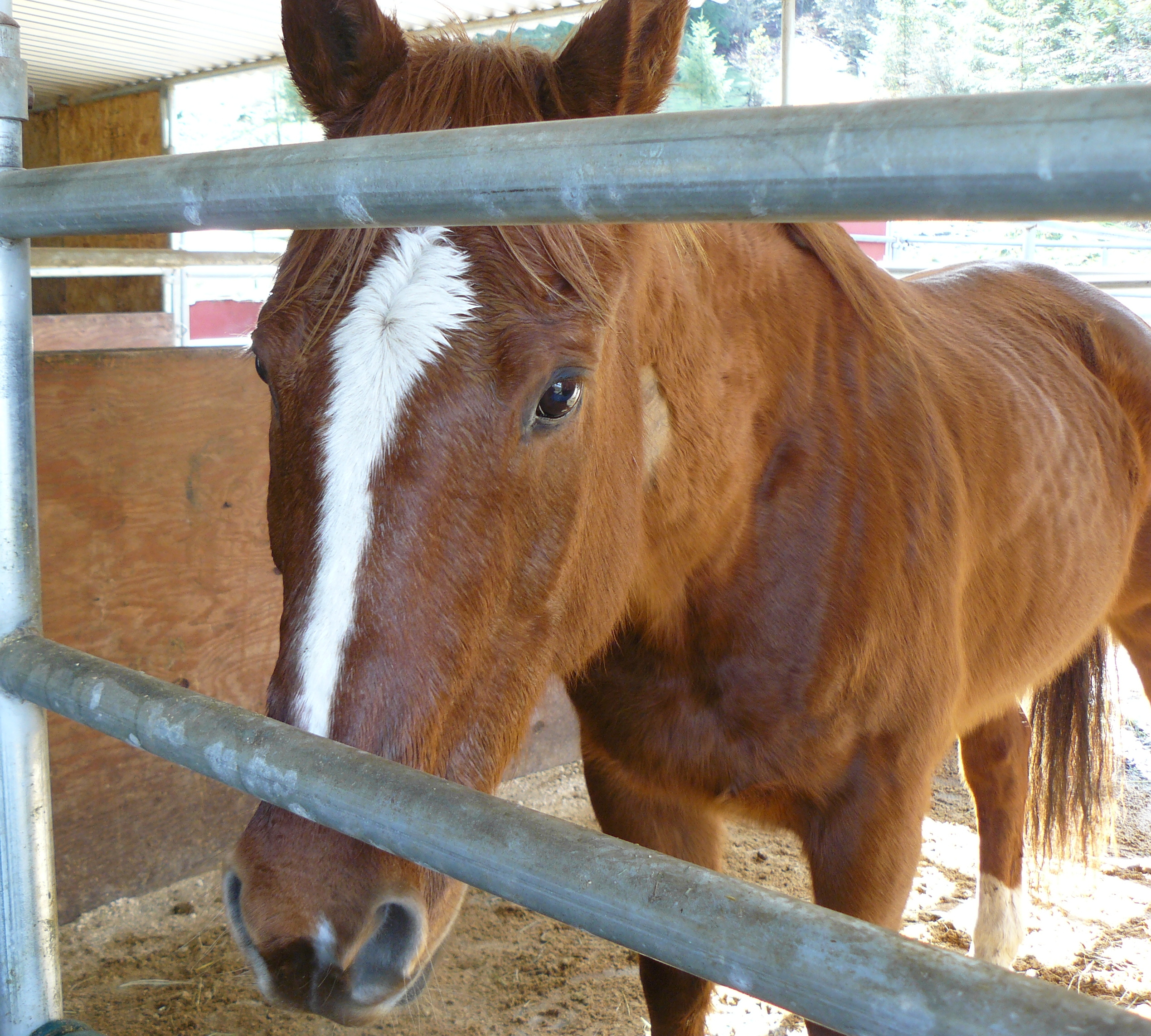
Ranger, when first seen in February.
Thus it proceeded to the point where two-days ago Darla, of Strawberry Mountain, ably assisted by Cody, brought Ranger and Ben to us here in Merlin. It’s been a wonderful twenty-four hours (at the time of writing this). Why Ben? Please read on.
Destination!
Darla and Cody making a safe and timely arrival a little before 10am last Tuesday.
Ben, our new foster, being coaxed out by Darla on the lead-line and Cody behind him.
Why did we take the two? Last October, Ben had been found starved and showing the signs of a great lack of confidence. He was ‘rescued’ on orders of Darla’s local sheriff because of Ben’s condition despite being in private ownership. Darla was certain that Ben had been physically beaten in recent times, hence him being very wary of strangers. Thus his relationship with Ranger was part of his journey of returning to a healthy, confident horse. Darla offered us the opportunity of fostering Ben because Ranger had become a good companion for him. Darla explained that Ben was a very wary horse, especially of sudden movements from men.
Jean leading Ranger; Darla leading Ben.
Another 100 yards and the start of a new life for these two gorgeous animals.
Hey Ranger, is this for real!!
In the those first few minutes after Jean and Darla led the horses to the grass paddock, Ben seemed to have an expression on his face that suggested it was all too difficult to believe! Ranger just got stuck into munching! But not to the extent of not enjoying a back-rub!
“I think I’m going to like this, Ben!”
In the afternoon, it was time to bring Ben and Ranger for an overnight in the top area where the stables, food and water were. Ben was very nervous at coming through the open gate and for a while there seemed to be a complication in that Ranger kept thrusting at Ben as if to keep him away from the fence line separating the horses from Allegra and Dancer, our miniature horses.
But in the morning, yesterday, things seemed much more relaxed. To the point that when Ben and Ranger went back out to the grass, Ben was much more relaxed towards Jean and me, as the following pictures reveal.
Jean offering Ben some treats.
oooo
Yours truly doing likewise.
OK, want to turn back to Darla.
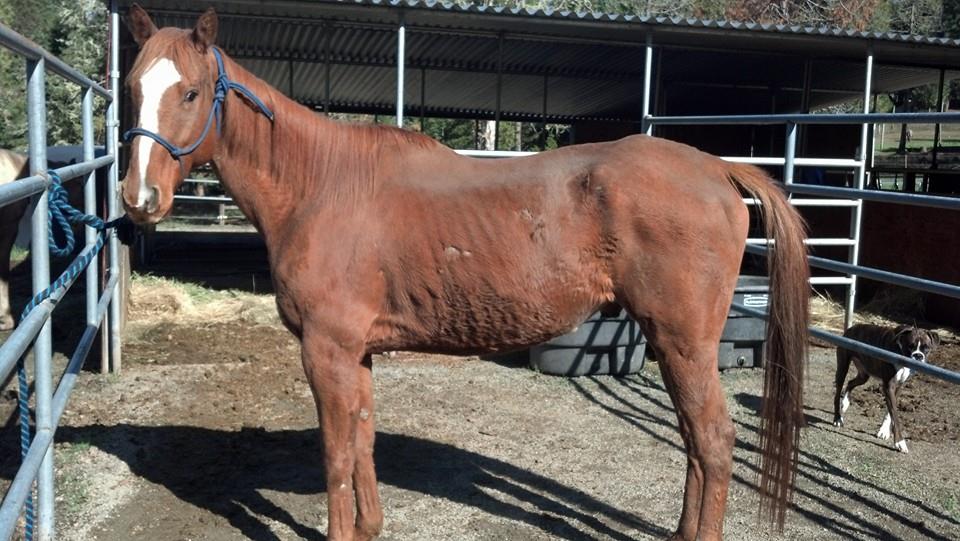
To give an insight into the awe-inspiring work of Darla and her team (and many others across the Nation) and to recognise the need of the authorities to have such outlets as Strawberry Mountain, here are two photographs of Ben shortly after he was removed from the people who had stopped loving and caring for him.
Ben as seen last October.
oooo
Ben close to starving.
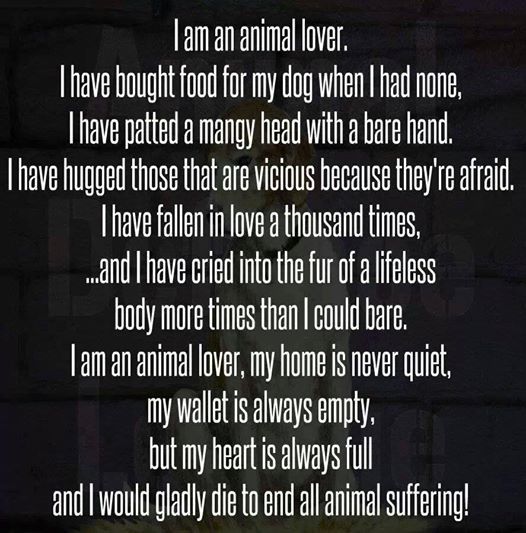
Strikes me as only one way to end this post is with the following as seen on Darla’s Facebook page.
Author unknown.
Thus this post is offered in dedication to the good people all over the world who know the value of the unconditional love we receive from animals and do not hesitate to return the same.
Darla, Cleo and Cody setting a wonderful example of unconditional love.
How about giving the nearest animal, or human, a big hug telling them at the same time how much you love them!
So today, I write about Cleo and then next week it will be the final ‘meet the dogs’, the dog that started this blog: Pharaoh.
ooOOoo
Cleo
Cleo between guests Darla and Cody- picture taken yesterday.
(Come back tomorrow to learn why Darla and Cody were with us yesterday!)
Where to start? I guess by going back to the days I was living in Devon, England. That means going back to 2003, the year when it seemed the right time for me to get a dog. There was always only one breed to be considered; the German Shepherd dog. Thus that desire for a German Shepherd led me to Sandra Tucker not too many miles away who owned the GSD breeders Jutone. It was at Jutone’s where I saw the wonderful puppy dog who became my Pharaoh.
But Sandra did better than breed the dog that has meant more to me than words can ever describe, she gave me some fantastic advice. That being that when Pharaoh was getting on in life, then bring in a German Shepherd puppy. There were two solid reasons why this made sense. The first was that Pharaoh would teach the new puppy many of the skills and disciplines that Pharaoh had learnt as a young dog and, secondly, the puppy would keep Pharaoh active.
That puppy was Cleo.
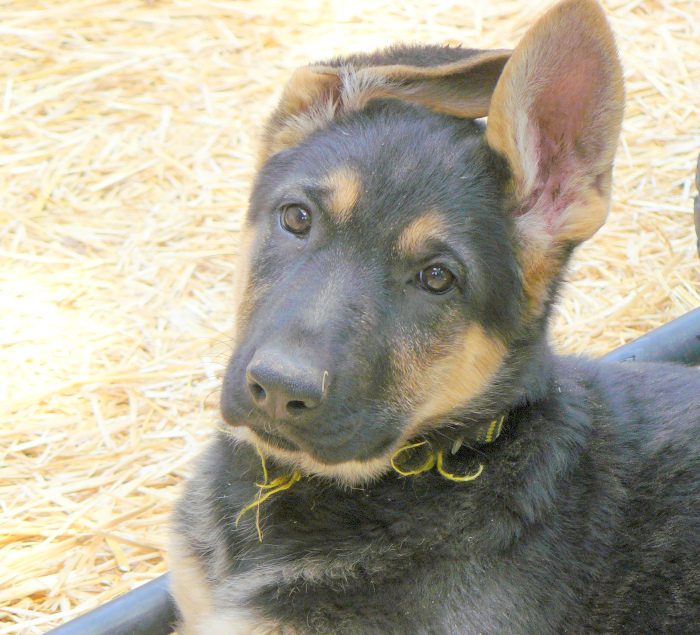
First picture of what was to be our puppy – 4th April, 2012, just two days before we brought her home.
oooo
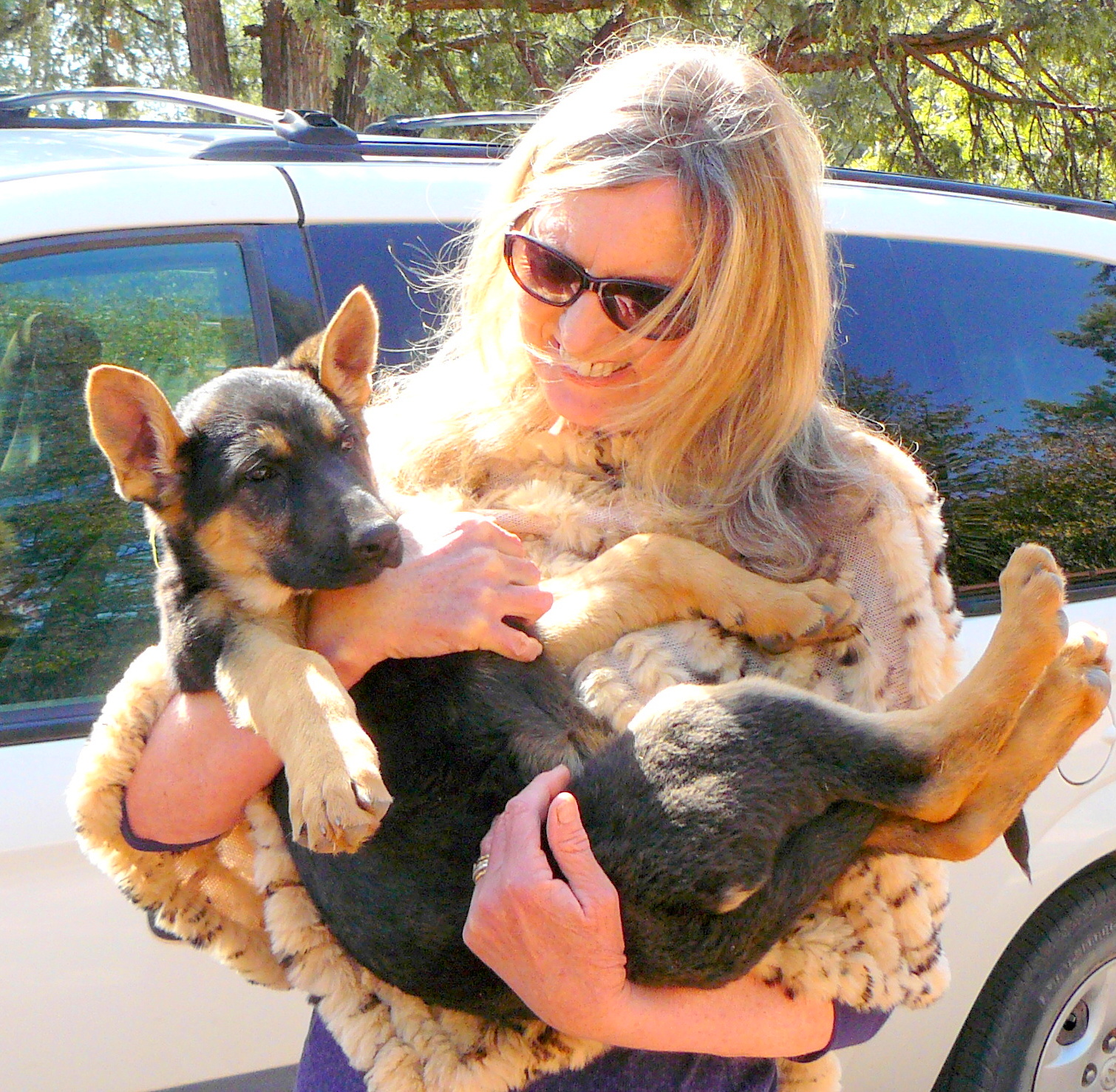
Puppy Cleo coming home – April 6th, 2012
Cleo was born on the 23rd January, 2012. At that time we were still living down in Payson, Arizona. Right from the start she was, and still is, the most joyful, loving dog one could imagine. That top photograph shows in her eyes the openness of her heart and soul.
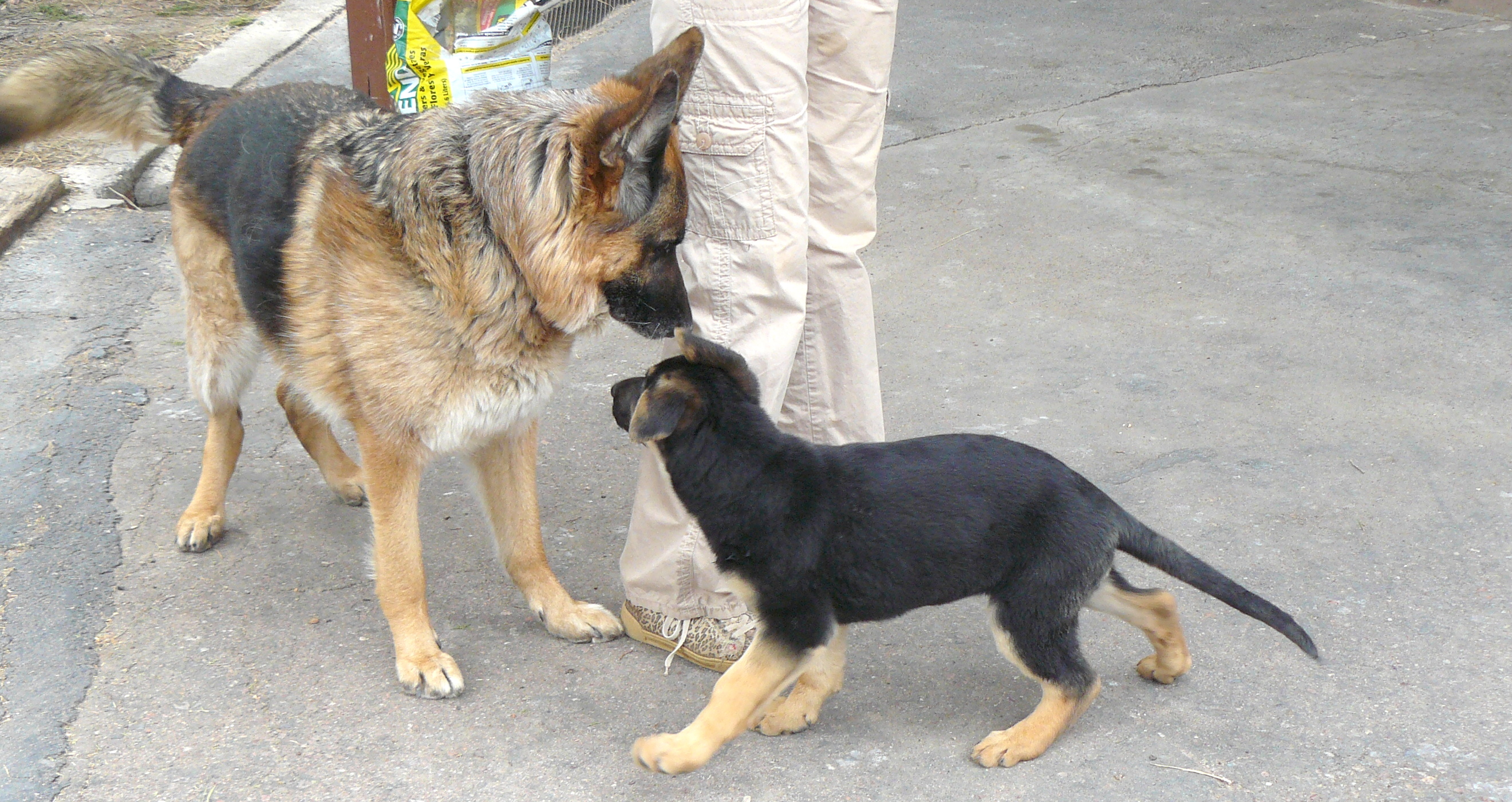
First meeting between Pharaoh and Cleo; April 7th, 2012.
So here we are coming rapidly up to the two-year anniversary of when Cleo entered our lives.
Cleo continues to be the most loving, gentle, sweet German Shepherd. As Sandra so correctly predicted, Pharaoh has ‘taught’ Cleo a number of commands such as Sit, Stay, Lie Down, Come, and more. Not a minute’s training of Cleo has come from Jean and me. Cleo is very fond of Pharaoh and it’s obvious that Pharaoh gets a huge amount from having Cleo around him.
Regular followers know that many of the items that get published here on Learning from Dogs are as a result of followers sending me stuff.
No less so than a recent item from Suzann where in a short email she included the link to a video.
Watch the video first.
I’m sure, like me, you were intrigued to find the background story. The YouTube page offers that background.
Elk vs. Photographer | Great Smoky Mountains National Park
Published on Nov 12, 2013
Update: I’ve been in contact with the photographer in the above video and we would both like to issue a statement regarding the news of the National Park Service’s decision to put the elk down. Vince M Camilo.
My statement:
I am deeply saddened by the fate of the elk. It has certainly pulled a black cloud over this whirlwind “viral video” experience.
I spoke to the reporter who broke the story and she assured me the decision was based on a pattern of aggressive behavior that began prior to the incident documented in this video. The behavior was the result of visitors feeding the elk and conditioning them to seek food from humans. This video only serves as an example of the elk’s dangerous behavior, not an impetus to it.
Again, it brings me great sadness to learn of this beautiful animal’s demise and the unfortunate circumstances surrounding it. I’m looking into a destination for proceeds from this video to help the NPS educate visitors on the dangers and consequences of feeding wildlife.
I also want to be clear that James, the photographer, was not complicit in a behavior that led to the elk’s demise, but rather was made an example of the result of such behaviors. The elk approached him from behind, likely looking for food as he was conditioned to do.
Statement from James (the photographer):
I love and respect animals and that’s why I photograph them and don’t hunt them. I am deeply hurt by the loss of such a beautiful creature that in its own way bonded with me. I looked forward to watching him grow to a mature bull as the years passed.
I’m truly heartbroken to know he is gone.
Original video description:
While photographing elk at sunrise in the Cataloochee Valley of Great Smoky Mountains National Park I turned around to see what appeared to be just a curious young bull sniffing a photographer’s camera. I snapped a few frames of the apparent harmless encounter.
But the elk became more interested in making trouble than simply the scent of a camera. He started physically harassing the photographer, escallating to full on head-butts.
I quickly switched the camera to video and let it roll (much of the time wondering when I should seriously consider intervening).
Most people who see this ask why the photographer seems to just take the abuse. I asked him in an email what was going through his head. This is his response:
“My first thoughts were “wow, he’s getting pretty damn close here.” But I’ve been up close before without incident. I hoped being still and passive would see him pass on. When he lowered his antlers to me, I wanted to keep my vitals protected and my head down. I felt that standing up would provoke him more and leave me more vulnerable to goring. I think that while protecting myself with my head down, having my head down was a signal that I was rutting with him. I was concerned at first, but when he started rearing back and lunging at me later on, I got scared and pissed off. That’s when I wagged my finger at him to cut that shit out. I was relieved to see the Ranger coming.
So I guess at some point if the Ranger hadn’t of pulled up, I would have had to disengage the best I could. I’ve joked with my friends that at least he took me for a buck and not a cow!”
This video is managed by Newsflare. To use this video for broadcast or in a commercial player email newsdesk@newsflare.com or call +44 (0)843 2895191.
“That’s why I photograph them and don’t hunt them.” Clearly, if I was to be objective in this post I would have to seek a explanation from the National Parks Service as to why the Ranger thought it necessary subsequently to kill the elk. You can tell that I am more than saddened by the outcome.
“Study nature, love nature, stay close to nature. It will never fail you.”Frank Lloyd Wright.
Until we learn that we are part of the natural order, that we don’t stand above it, then there is little hope for humanity.
Reason I state that is, as of yesterday morning, some 19,070,066 viewings of the following video had taken place.
But so what!
That number shows that despite the advertising insertions, despite the video promoting a commercial concern at the close, there are plenty of us who want to be reminded of the power of words.
Whatever words we utter should be chosen with care
for people will hear them and be influenced by them
for good or ill.
Buddha.
Footnote:
Jean and I were pottering around yesterday afternoon getting everything ready for Ranger’s arrival planned for Tuesday. In the back of my mind was some self-criticism for just sticking today’s post up in front of you, in the sense that it was just too easy. Not that the message isn’t powerful but does it relate to the essence of this blog – exploring what we can learn from dogs?
Then it struck me as blindingly obvious! Of all the things that dogs offer us humans, the one key aspect of their integrity is their unconditional love. The way that dogs love us acknowledges our existence at a ‘being-to-being’ level.
That’s the power of that short video. That the passing lady stopped and acknowledged the existence of the blind beggar-man.
Last week, I wrote about Hazel. The week before Jean wrote about Casey. This week it’s back to Jean writing about the one little dog we have here at home: Sweeny.
ooOOoo
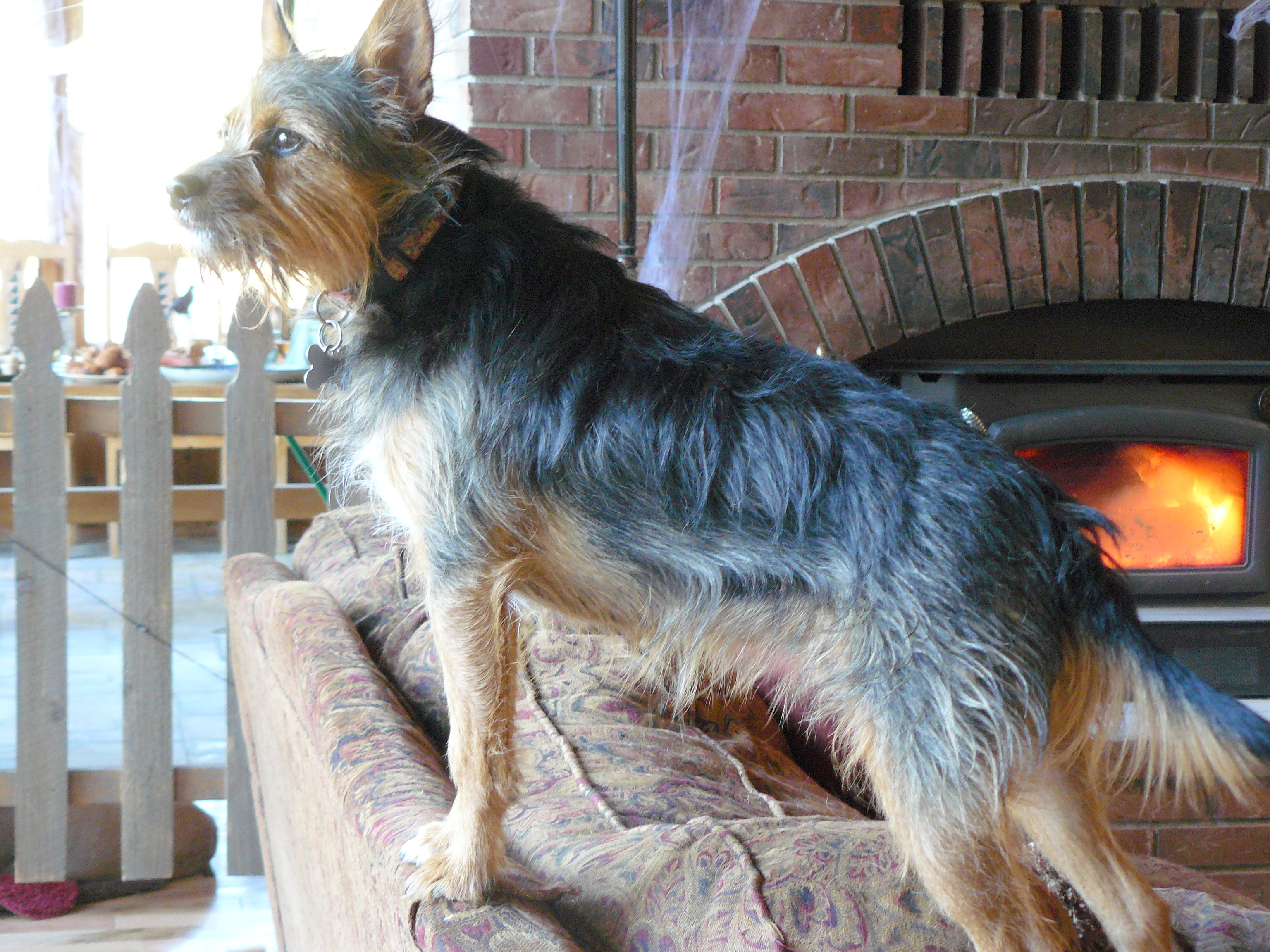
Sweeny
Sweeny – taken at the end of October, 2013, here in Oregon.
On that day we lost Poppy back in February, 2011, when we were still living in Payson, Arizona, it was as though she had been vaporised! Dear, sweet little Poppy. A ten-pound Poodle mix I had rescued in Mexico. She had been living in and around a Mexican construction site and when I rescued her she was very scrawny and without hair. But Poppy, as I named her, soon blossomed into a little, blonde, beauty and I grew to love her very much. Prior to Poppy, I had always liked the bigger dog but Poppy taught me the pleasures of a ‘lap’ dog that also happily slept under the covers at night with Paul and me.
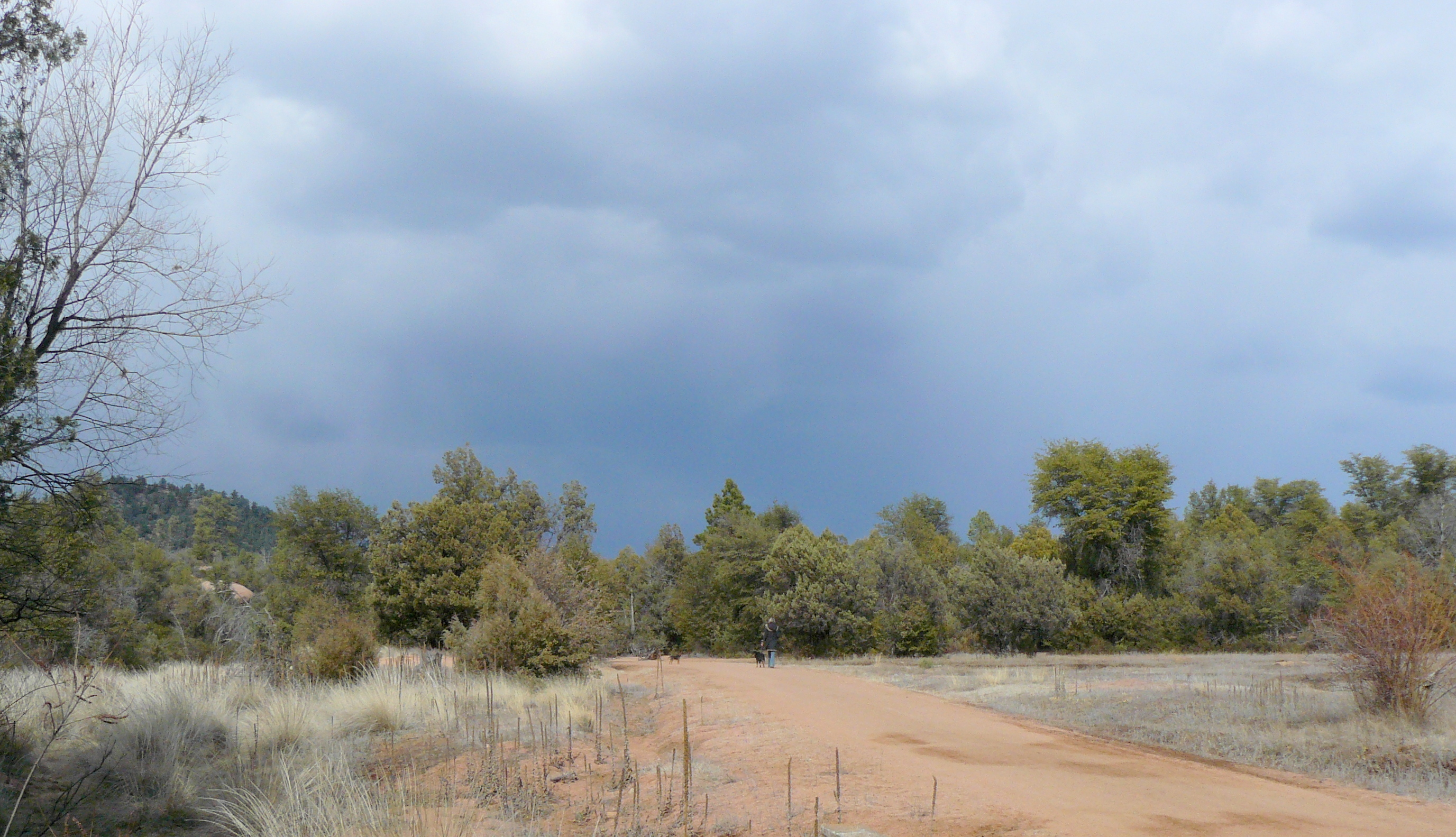
The Granite Dells, near Payson, AZ. Picture taken February, 2012.
Most afternoons in Payson, we took some of the dogs for a walk along a trail hike of about 2 miles. The dogs were allowed to be off-leash and loved it. Poppy always came and stayed with me, never leaving the trail as did the other, bigger dogs. That February, it was a chilly Winter’s day (Payson and area were at 5,000 feet above sea-level) and we were all dropping down into a dry wash when I glanced behind to check that Poppy was handling the slope. To my total horror, she wasn’t in sight. Indeed, Poppy was never seen again.
Despite days spent scouring the terrain, notices in Payson shops, radio announcements on the local radio station; it all came to nought. Poppy was gone! Locals that we spoke with and who knew the area of desert where the trails were, the Granite Dells, were all of the opinion that Poppy had been stalked by a coyote that would most likely have grabbed her in an instant. Such happenings had been known before.
I was inconsolable with guilt. I had let Poppy down by not giving her enough attention and it lay heavily upon me. For weeks and weeks I moped, missed her snuggles and that cute, little body crawling into the bed with me. One day, I broached the idea with Paul of adopting a small dog from the local Humane Society. Naturally, Paul agreed in an instant and in next to no time we had jumped in the car and were heading to the Society.
I wanted an older dog but the two small dogs that the Society had were really only suited for adoption into a one-dog household. The Society did, however, have two puppies from a mother that had been taken in by them when that dog was heavily pregnant. The pups had been born and raised at the shelter.
It was love at first sight when they handed me the puppy that was destined to become Sweeny. Sweeny Todd to give him his full name was a two-pound bundle of fluff.
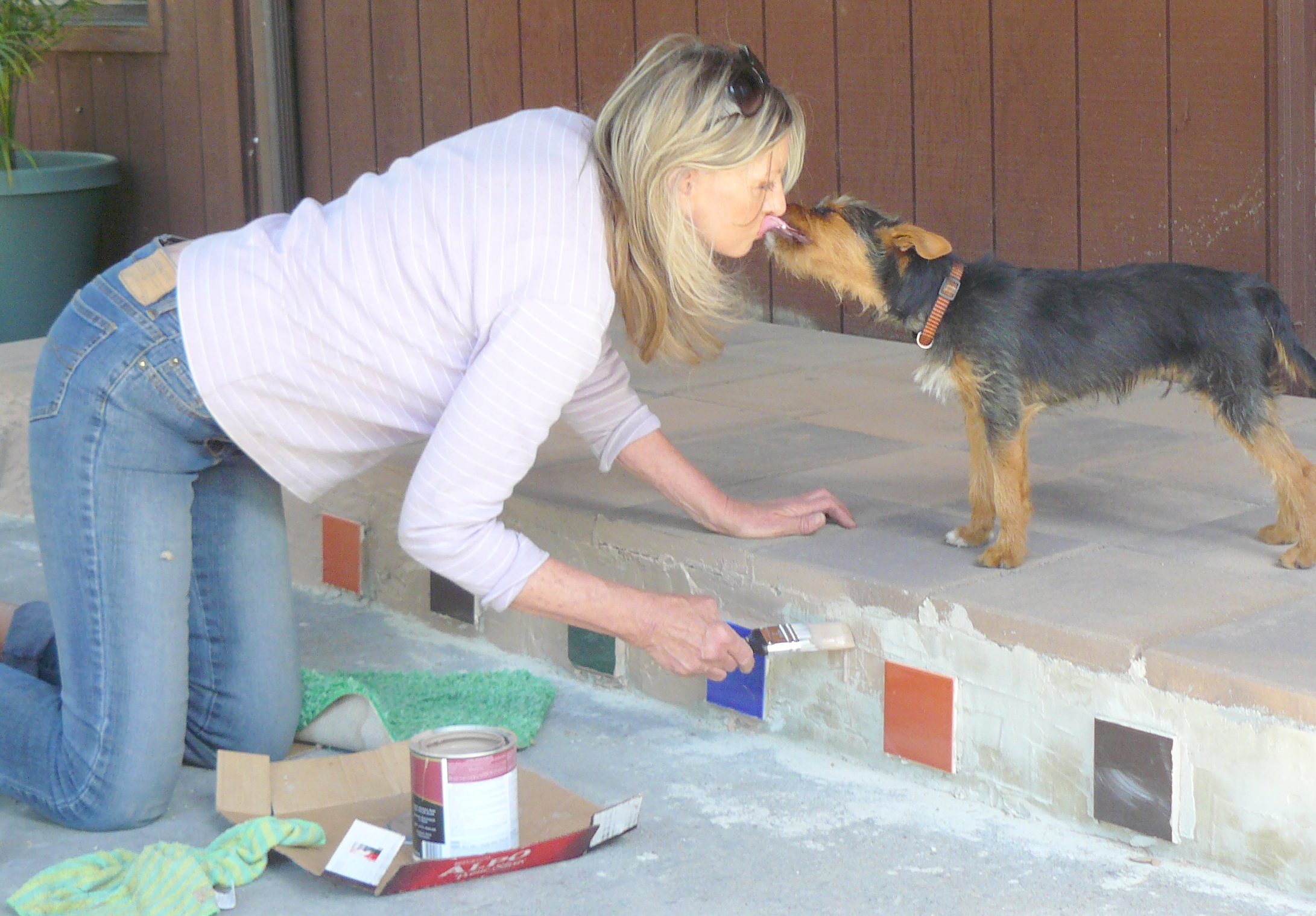
Sweeny loving Jeannie on the door-step of our Payson house; May, 2011.
Today, Sweeny is a twenty-pound terrier mix. A very ‘sassy’ little dog that is as much loved by his doggie brothers and sisters. Sweeny, too, sleeps on the bed, laying alongside me and the edge of the bed so that he isn’t between Paul and me. Sweeny has developed the habit of waking me in the morning by laying, full-bodied, over my face; to the point of me not being able to breathe. Guess I shouldn’t have called him Sweeny Todd! 😉
No dog will ever take the place of Poppy or fully assuage me of my guilt that I still feel to some extent. But ‘The Sween’ has helped beyond measure.
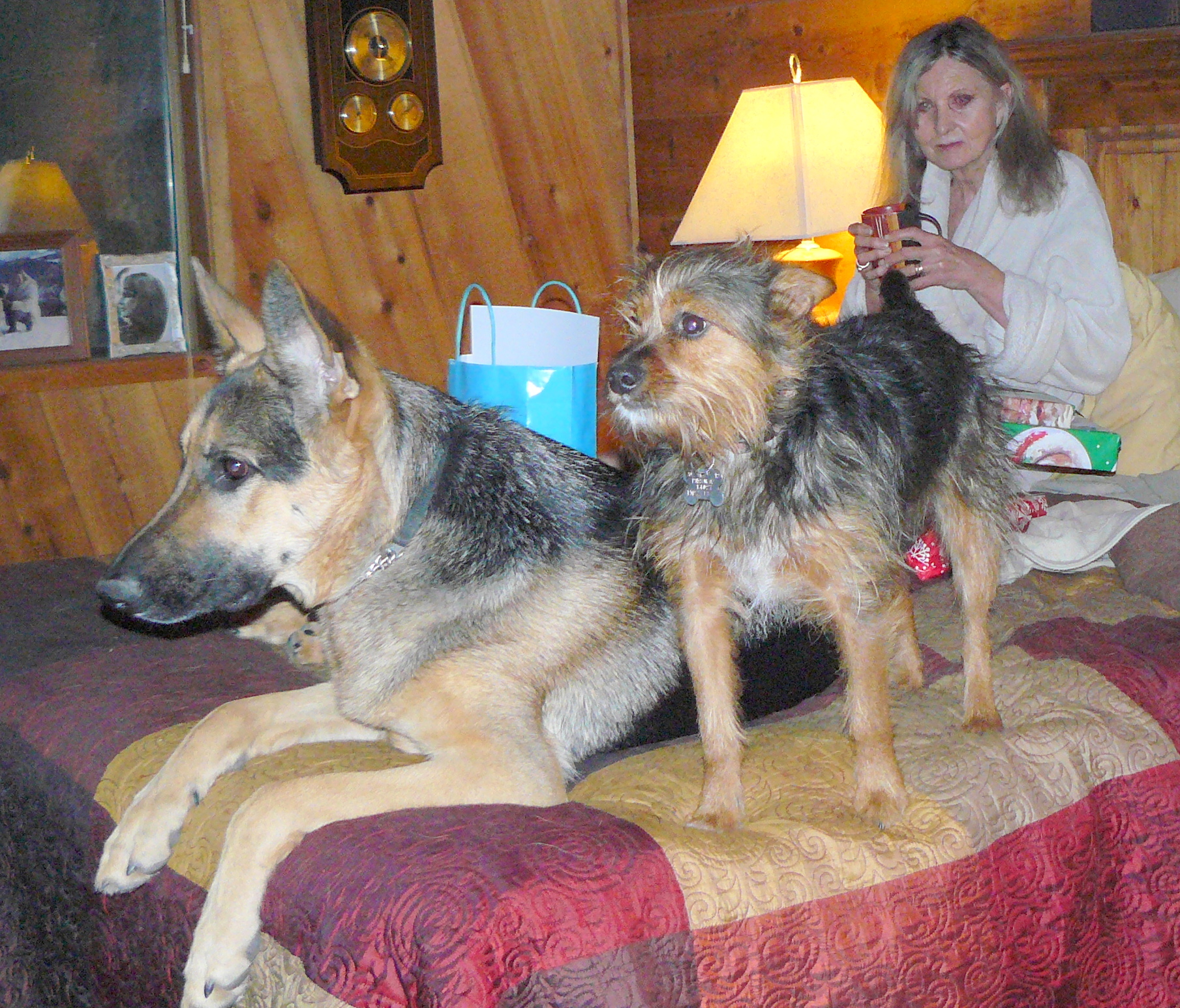
Cleo and Sweeny, 2013. Our first Christmas Day in our home here in Oregon.
After the run of eye-wateringly beautiful pictures of dogs and small children, the third and final set being a week ago, I was gently panicking as to how to follow that up. Then dear friend, Bob Derham, came to the rescue, the first seven of which are offered today.
A number of essays and items from a variety of sources have passed my screen in recent times that ….. well, you complete the sentence! Let me illustrate; in no particular order.
I have long been a follower of the writings of George Monbiot. Those who haven’t come across Mr. Monbiot before can avail themselves of his background and dip into his articles, many of which underscore my proposition that we really are a peculiar race. For example, just three days ago George Monbiot published an article under the title of The Benefits Claimants the Government Loves. It highlights one mad aspect of UK Policy.
Corrupt, irrational, destructive, counter-productive: this scarcely begins to describe our farming policy.
By George Monbiot, published in the Guardian 4th March 2014
Just as mad cow disease exposed us to horrors – feeding cattle on the carcasses of infected cattle – previously hidden in plain sight, so the recent floods have lifted the lid on the equally irrational treatment of the land. Just as BSE exposed dangerous levels of collusion between government and industry, so the floods have begun to expose similar cases of complicity and corruption. But we’ve heard so far just a fraction of the story.
You really do need to read the article in full to get your arms around the terrible state of affairs of the UK benefits scandal. But try this:
As a result of these multiple failures by the government, even Farmers’ Weekly warns that “British soils are reaching crisis point” (16). Last week a farmer sent me photos of his neighbours’ fields, where “the soil is so eroded it is like a rockery. I have the adjoining field … my soil is now at least 20 cm deeper than his.” In the catchment of the River Tamar in Devon, one study suggests, soil is being lost at the rate of five tonnes per hectare per year (17).
I could go on. I could describe the complete absence of enforceable regulations on the phosphates farmers spread on their fields, which cause eutrophication (blooms of algae which end up suffocating much of the freshwater ecosystem) when they run into the rivers. I could discuss the poorly-regulated use of metaldehyde, a pesticide that is impossible to remove from drinking water (18). I could expand on the way in which governments all over Europe have – while imposing a temporary ban for flowering crops – permitted the use of neonicotinoid insecticides for all other purposes, without any idea of what their impact might be on animals in the soil and the rivers into which they wash. The research so far suggests it is devastating, but they were licensed before any such investigation was conducted (19).
There is just one set of rules which are effective and widely deployed: those which enforce the destruction of the natural world. Buried in the cross-compliance regulations is a measure called GAEC 12 (20). This insists that, to receive their money, farmers must prevent “unwanted vegetation” from growing on their land. (The rest of us call it wildlife habitat). Even if their land is producing nothing, they must cut, graze or spray it with herbicides to get their money. Unlike soil erosion, compaction and pollution, breaches of this rule are easy to detect and enforce: if the inspectors see trees returning to the land, the subsidy can be cut off altogether.
Perhaps a clue to the extreme unfairness of who is in receipt of UK benefits can be explained by the fact expressed by George Monbiot above, “The biggest 174 landowners in England take £120m between them.”
With that in mind, let’s move on. Move on to a recent essay from Patrice Ayme: WAR MAKES HISTORY! To say it makes disturbing reading is, trust me, an understatement. But in the context of the UK’s rich landowners, as George Monbiot explained above, try this closing extract from Patrice’s essay:
We are a deeply equalitarian species. Out of equality rises our superior cultural performance. Plutocracy, the rule of the Dark Side, denies giving, love, and the equality which make us possible. Thus plutocracy is a denial of our species. Only an anger great enough to destroy it, will save us, and the biosphere. And there is hope: greed is neither as natural, nor as strong as anger.
It’s time to get angry against dictator Putin. Angry now is better than very sorry tomorrow.
War makes history. Of this we must think, if we want to make history better.
Patrice Aymé
Frankly, my own knowledge of these ‘dark forces’, of the influence of money and power, is practically zero. But the more that one looks at the madness of so many aspects of mankind’s existence, the more one thinks the truth, as Patrice writes it, is the real truth. Indeed, here’s how Patrice opens his essay:
WAR MAKES HISTORY
HERE WE GO AGAIN
The earlier unjustifiable, unprovoked fascism, greedy plutocracy, imperial overstretch, murderous paranoia and other aspects of the Dark Side get smashed, the better.
Such is the most basic lesson of the 1930s.
For the millions of us that live relatively comfortable lives, it’s easy to read this stuff, nod sagely, and wonder if the heating needs to be left on this coming night. But, pardon the pun, wake-up calls as to the approaching nightmares (sorry!) are not hard to find.
Try this from an interview with Elizabeth Kolbert, as recently published on Grist:
In “The Sixth Extinction,” Elizabeth Kolbert reports from the frontlines of a dying world
The New Yorker writer and acclaimed author Elizabeth Kolbert has a penchant for depressing topics. Her 2006 book, Field Notes from a Catastrophe, helped push climate change into the mainstream (with bonus points for not mincing words in the title).
Now that climate change is safely keeping most of us up at night, Kolbert turned her pen to another big bummer: the sixth extinction. We’re currently losing species at a rate of 1,000 to 10,000 times higher than unassisted nature wiping out the occasional newt. While humans weren’t responsible for the last five mass extinctions, our fingerprints are all over this one. Yep: We collectively have the force of an asteroid when it comes to erasing species (high five, guys!) and for the most part, our response has been classic Urkel.
That interview concludes:
Q. You also write about some efforts to save species. Could you share some of those?
A. I happened to go to the San Diego Zoo, where they have a very impressive conservation program. I was there to see something called the “frozen zoo.” It’s just a bunch of vats of liquid nitrogen with cell lines from, in many cases, highly endangered animals and, in one case, an animal that doesn’t exist anymore, a Hawaiian bird. The idea is pretty much what it sounds like: You have these cell lines, you’re going to keep them alive forever, and eventually people are going to figure out how to resurrect some of these species. Or maybe if you don’t want to go quite that sci-fi, we’ll take the cell lines, we’ll do a DNA analysis, we’ll try to figure out why this population is having trouble.
They took me to see this bird named Kinohi, one of the last Hawaiian crows. He’s “reluctant to part with his genetic material,” let’s put it that way. He had been taken from this breeding facility on Maui to San Diego, and he is ministered to by a PhD physiologist who is trying to, let’s say, pleasure this bird, so that he will give up some sperm, so she can artificially inseminate a bird back in Maui. When I visited he had not yet, you know, come through. She was literally preparing to try again — I don’t know if it has ever worked, I should call her.
That was really, to me, emblematic of this crazy situation we find ourselves in. We’re incredibly smart, we’ve figured out how to freeze cell lines and quite possibly bring back extinct animals — we’re willing to pleasure crows. And yet, the Hawaiian Islands are called the extinction capital of the planet — it’s an absolutely devastated ecosystem. Many, many birds are extinct already; those that aren’t are just clinging to existence. Those forces are not changing and, in fact, things are getting worse. There used to be no mosquitoes in Hawaii; there are now mosquitoes. They carry avian malaria, and as the climate warms, avian malaria is moving up the slopes so that even these refugees species that are high on the mountains are increasingly not there. A lot of birds are in terrible trouble there.
All of these things are happening at once and, once again, they’re all true. People are devoting a lot of time and energy and love to trying to preserve these species, and meanwhile the world is increasingly screwed up. So that is how I end the book: They can both be true; it’s not one or the other.
Did you notice the reference to yet another example of mankind’s madness? “That was really, to me, emblematic of this crazy situation we find ourselves in. We’re incredibly smart, we’ve figured out how to freeze cell lines and quite possibly bring back extinct animals — we’re willing to pleasure crows. And yet, the Hawaiian Islands are called the extinction capital of the planet — it’s an absolutely devastated ecosystem.“
I believe inherently that the great majority of individuals are good people. Take Kevin Richardson for instance. Not for him money and power. Just a passion to save lions. Oh, and hugging them! Just watch, and be moved.
Don’t know how to close this? Maybe using a quotation from Ernest Hemingway:
The world breaks everyone, and afterward many are strong at the broken places.
So in these broken times, let all the good people come out strong – stronger than those who are corrupt, irrational, destructive and counter-productive!
It is the ultimate time for hope and faith in the power of goodness!
Last week Jean wrote about Casey. Slight difference this week in the sense that both Jean and I equally know the story of how Hazel came into our lives. So you are stuck with me today for the story of Hazel.
ooOOoo
Hazel
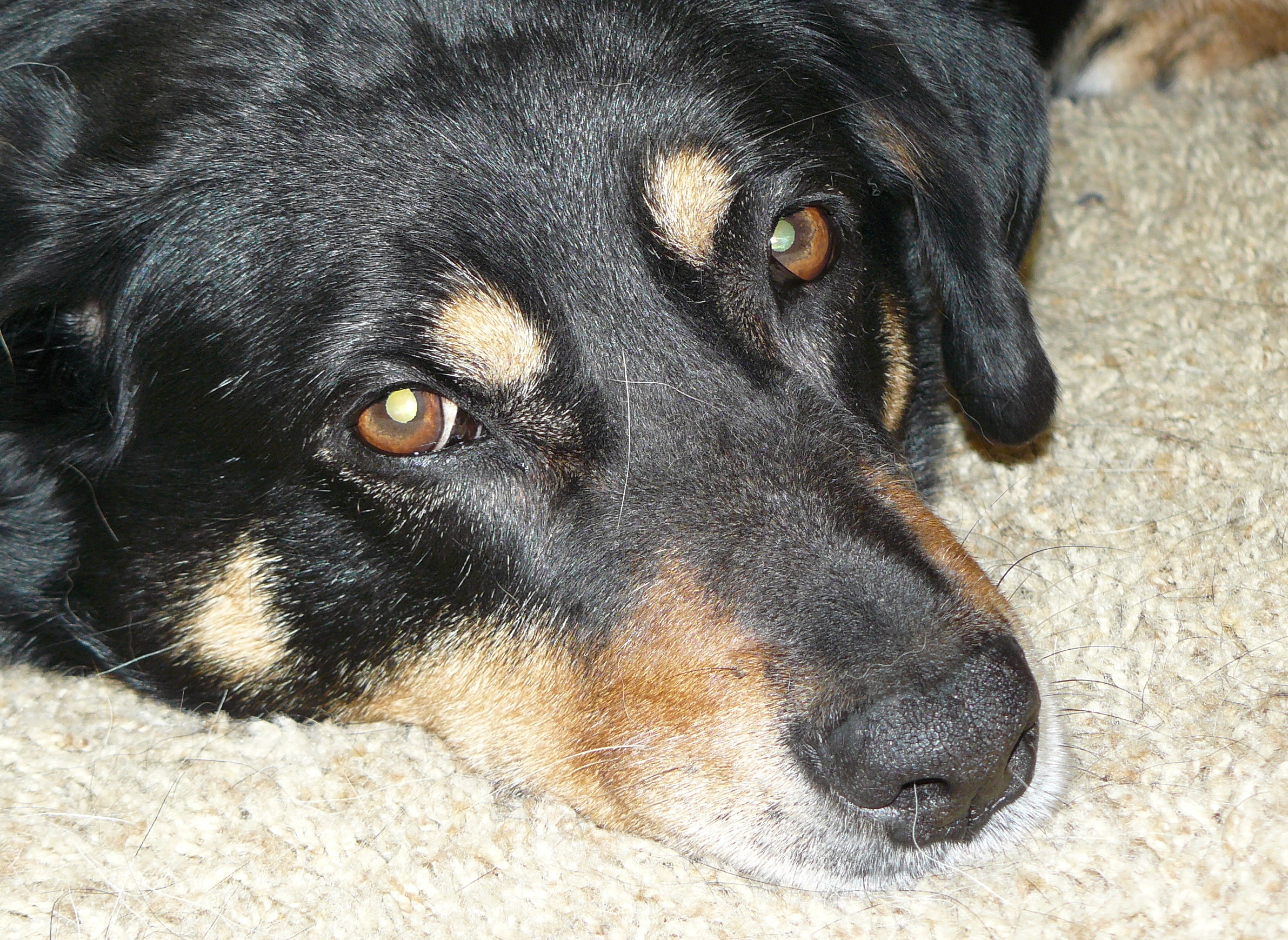
Picture of Hazel taken in the last twenty-four hours.
I first met Jean in Mexico; namely, in San Carlos, Sonora, Mexico to be precise. Just a few days before Christmas, 2007. At that time, Jean had 16 dogs, all of them rescues off the streets in and around San Carlos. Jean was well-known for rescuing Mexican feral dogs.
In September, 2008 I travelled out to Mexico, via London-Los Angeles, with my Pharaoh. Jean and I have been together ever since. In February, 2010, because we wanted to be married and to be married in the USA, we moved from San Carlos to Payson, in Arizona; some 80 miles North-East of Phoenix.
One morning, just a few days before we were due permanently to leave San Carlos and move our animals and belongings the 513 miles (827 km) to Payson, AZ, Jean went outside the front of the San Carlos house to find a very lost and disorientated black dog alone on the dusty street. The dog was a female who in the last few weeks had given birth to puppies that had been weaned. Obvious to Jean because the dog’s teats were still somewhat extended.
The dog had been abandoned outside in the street. A not uncommon happening because many of the local Mexicans knew of Jean’s rescues over many years and when they wanted to abandon a dog it was done outside Jean’s house. The poor people of San Carlos sometimes resorted to selling the puppies for a few Pesos and casting the mother dog adrift.
Of course the dog was taken in and we named her Hazel. Right from Day One Hazel was the most delightful, loving dog and quickly attached herself to me.
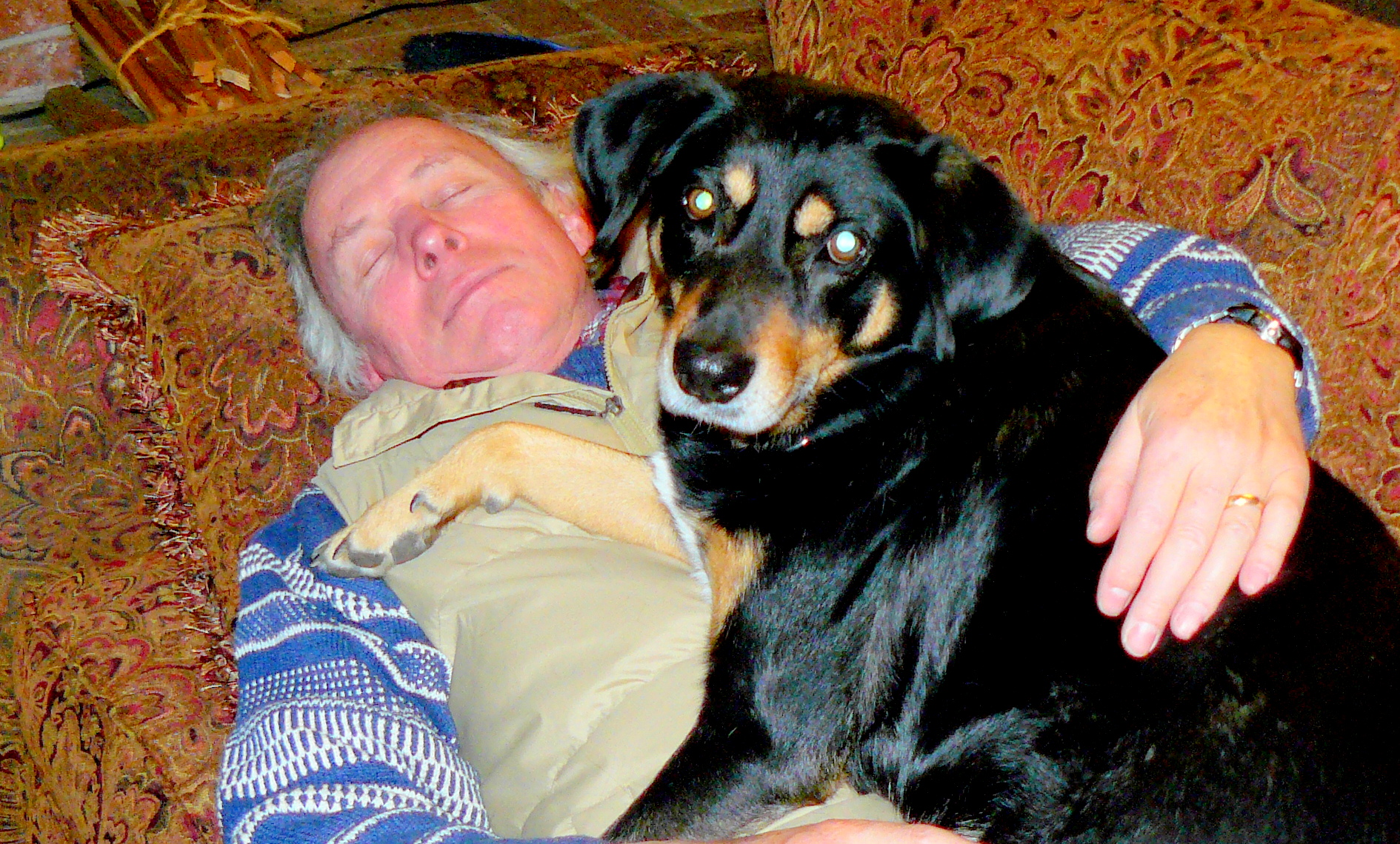
The truest of love between a man and a dog!
Of all the dogs that we have here at home, and, trust me, many are extremely loving, my relationship with Hazel is precious beyond description. She is in Pharaoh’s ‘group’ (Pharaoh, Hazel, Cleo, Sweeny and Dhalia) so sleeps in our bedroom at night. Most nights Hazel is tucked up against me.
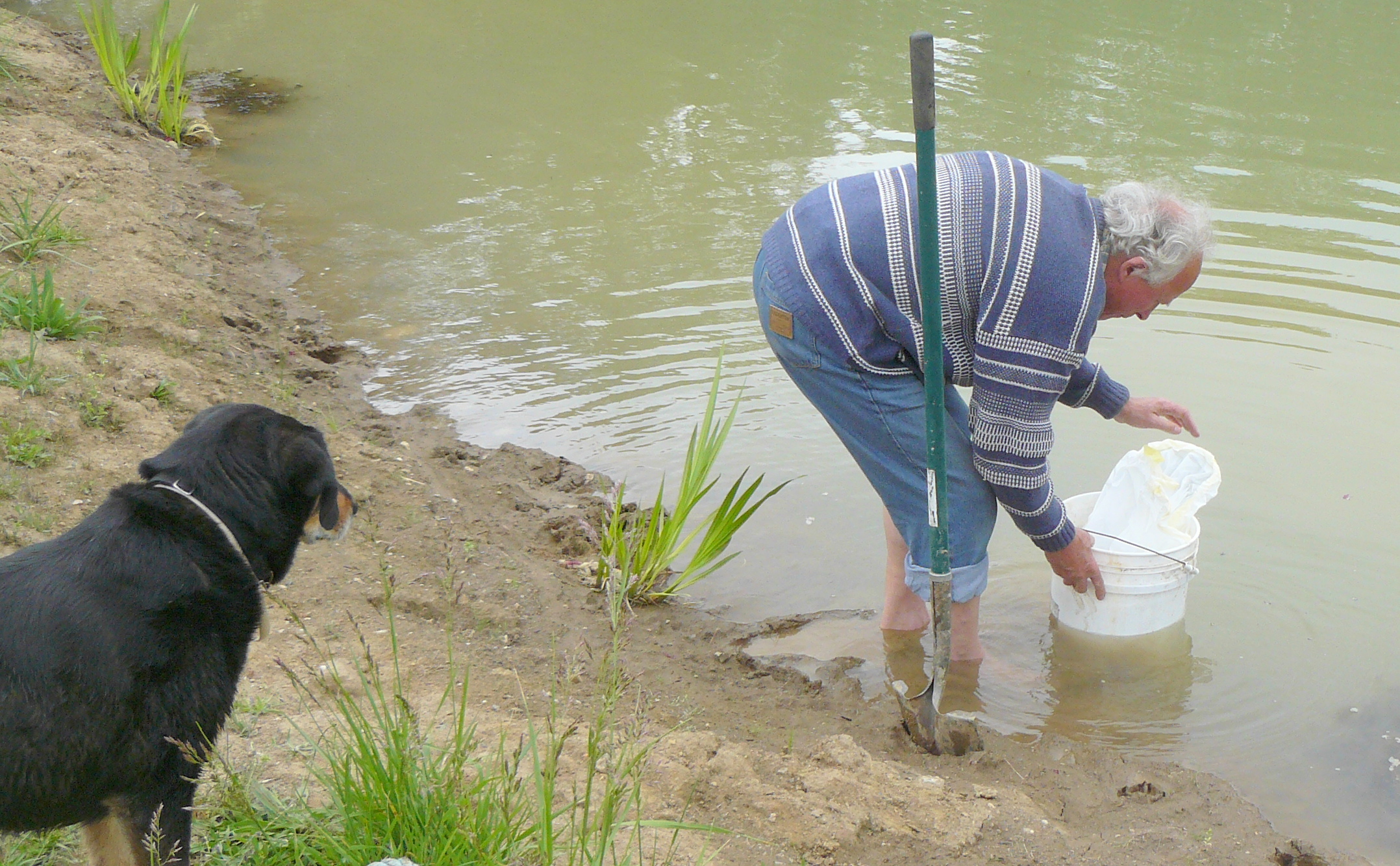
Plus frequently during the day Hazel will take an interest in what I am doing, as the next photograph illustrates.
Hazel taking an interest in my potterings.
Very little more that can be said without the risk of repeating myself.
If ever one wanted an example of the unconditional love that a dog can offer a human, then Hazel is that example.













 Learning from Dogs