This last Tuesday, the 15th April, was a month to the day after our rescue horses, Ben and Ranger, arrived here in Merlin. There was a post on the 20th March called Welcome Ranger – and Ben!
Here’s a picture from that day:
Jean leading Ranger; Darla leading Ben.
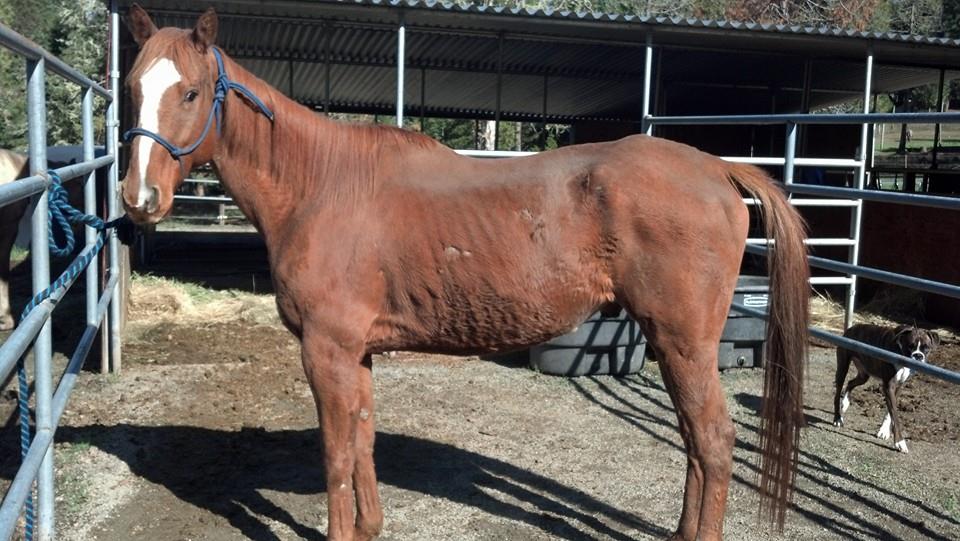
Here’s a picture of Ben from sadder times:
October 2013: The Sheriff’s department have passed Ben to Darla.
So with no further ado, here are four photographs taken last Tuesday, the 15th April.
Waiting to greet Jean and me in the morning!
oooo
Ranger totally at ease with his ‘old Dad!’.
oooo
Ben, behind Ranger; both loving up to Jean.
oooo
Ben loving up to yours truly!
Jean is used to horses from previous times in her life but, for me, horses are not animals that I am familiar with.
But after a month of getting to know Ranger and Ben and them getting to know me, I find them adorable!
Inspired by hearing a young boy shoot a wild turkey early on Saturday morning.
Preface
Because we have horses, friends living close to us called to warn that early on Saturday morning, a young lad, accompanied by his father, would be experiencing what it was like to shoot a wild turkey at close range. The turkeys are easy targets; almost pets.
So it was that around 6:30am last Saturday morning that a single shot rang out and we knew that a turkey had been killed. Now in fairness to American history it’s not that long ago that the early settlers relied on hunting to survive. The first permanent European settlement in Oregon wasn’t until 1811. Thus hunting may be something close to the American’s heart; so to speak. However, this eight-year-old lad is facing a future that demands that he and all his generation accept that embracing nature, totally and whole-heartedly, is their only hope of not being the last generation of humans on this beautiful planet.
Jean and I thought the following was an appropriate way of expressing our feelings.
ooOOoo
Dear Jimmy,
What was it like to point your gun at that turkey and pull the trigger? What did you feel as you saw the bullet hit and the turkey fall to the ground?
Now I wasn’t there with you, of course, but I could imagine the thrill and excitement that you would have felt. Not many young lads of your age get to handle a gun and shoot a turkey.
But Jimmy, what we feel as an eight-year-old is a very poor indicator for what we feel when we are much older. Possibly the only exception is love, which is a golden feeling at any age.
So, if you will forgive this sixty-nine-year old from reading an eight-year-old a very short bedtime story, I will get started.
The world, this enormous world, must seem infinitely huge to you. Even if you stand on the shoulders of your Dad, your eyes ten feet above the ground, the horizon is just four miles away. You could run to that horizon in less than an hour. However, to run all the way around the world at that same speed would take you, dear Jimmy, nearly two hundred and sixty days of running; running twenty-four hours a day! It’s a very big planet!
Look at this wonderful picture of our planet. Have you ever seen anything more beautiful!
It must seem to you that there is nothing an eight-year-old could do to harm this planet we all live on.
That’s true! There is nothing you could do to harm the planet.
However, when you get older and reach the point where you have a job, drive a car, fly to places on an aeroplane, heat your house and a million other things that we grown-ups do, then all of us together, all the millions of people living on this green planet can hurt it.
Indeed, Jimmy, you may have already heard of things like climate change and global warming being spoken about on the television. All of the people living on this planet are hurting it. And the people who are really going to see how we humans are hurting the planet, and how the planet is changing, are all the people who, like you Jimmy, are not yet even finished school.
So what does shooting a wild turkey have to do with caring for your planet throughout the many years ahead for you?
If we care for nature then we care for the health of our lands, for our forests and for our seas. We are careful with how we live our lives. If we care for nature then as we live our lives we do our best to leave things better for those that come after us.
Jimmy, sleep well my young man. Wake knowing the death of that turkey was not in vain. Wake with love in your heart. Love for every living creature.
Only love for all creatures will offer all creatures a future.
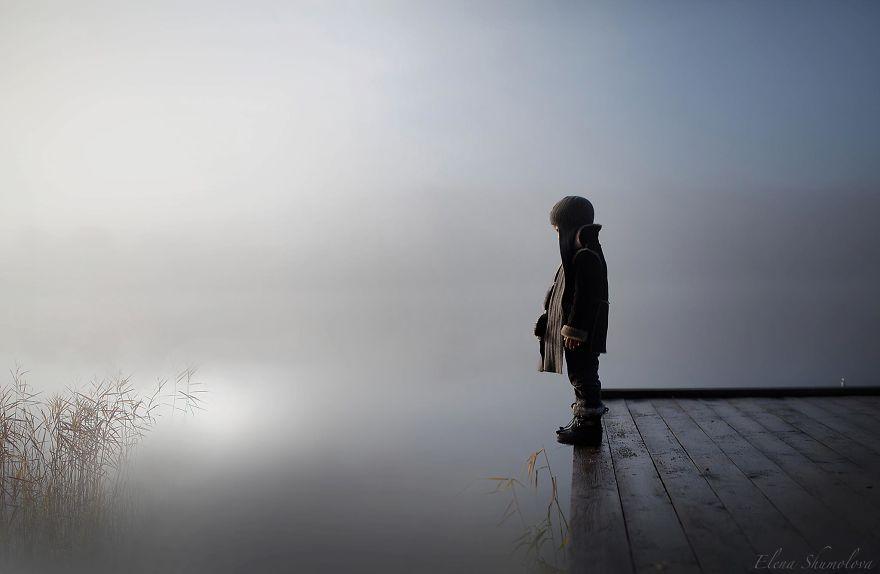
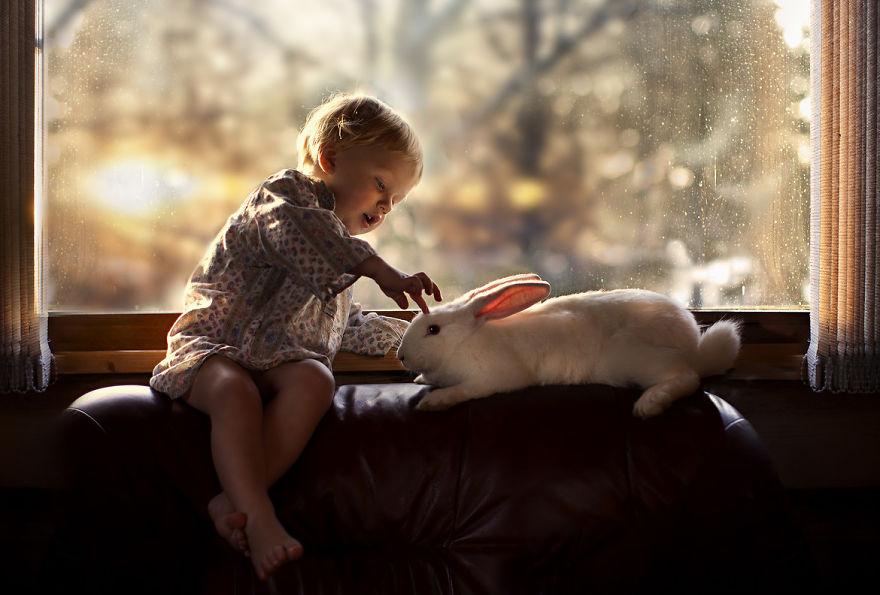
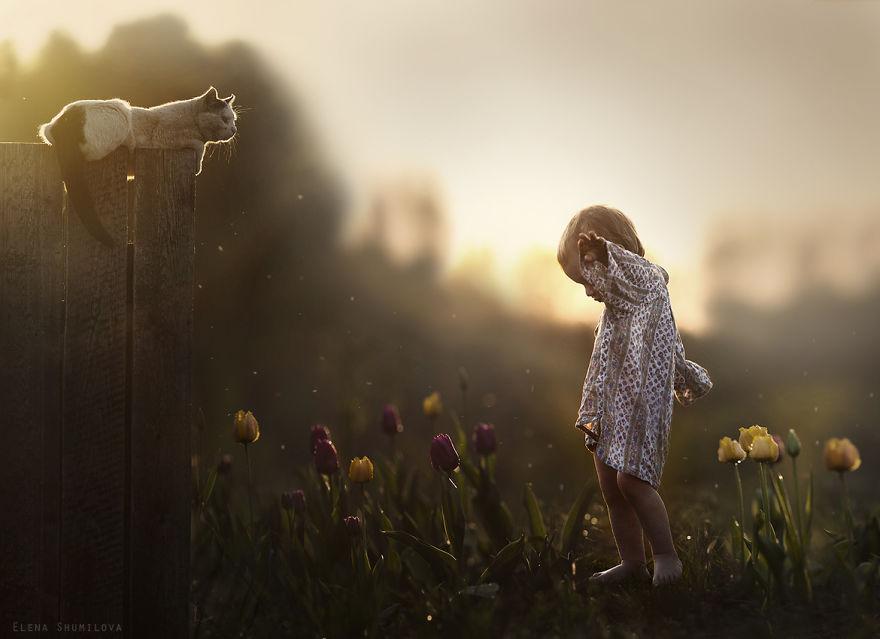
The third and final set of photographs by Elena Shumilova.
ooOOoo
A MOTHER FROM RUSSIA TOOK THESE PICTURES AT HER FARM
ALONG WITH HER TWO SMALL BOYS, A CAT AND A DOG.
These wonderful photographs by Elena Shumilova plunge the viewer into a beautiful world that revolves around her two boys and their adorable dog, cat, duckling and rabbit friends.
Taking advantage of natural colors, weather conditions and her enchanting surroundings, the gifted Russian artist creates cozy and heartwarming photography that leaves you amazed. Elena said, “Children and animals – it’s my life. I’m a mom with two sons and we spend a lot of time on the farm.”
oooo
oooo
oooo
oooo
oooo
oooo
oooo
ooOOoo
Aren’t they stunningly beautiful!
If you missed the other sets of pictures, the first set is here and the second set is here.
One might be forgiven for thinking that community is an odd bed-fellow with trust and truth. Many might think that faith would be a more logical third leg, so to speak.
However, I hope to show that in today’s world where trust and truth are beleaguered qualities a rethinking of community is critically vital for the long-term health of mankind.
Community
Can’t resist a third look-up in Roget’s Thesaurus.
community noun
Persons as an organised body: people, public, society.
For me two words jump out from that definition: persons; organised.
The challenge is that the word organised is easily interpreted as an organisation with leaders and followers. But that’s not how community is regarded in the context of this third essay.
“No man is an island”, John Donne wrote in 1624.
This is a quotation from John Donne (1572-1631). It appears in Devotions upon emergent occasions and seuerall steps in my sicknes – Meditation XVII, 1624:
“All mankind is of one author, and is one volume; when one man dies, one chapter is not torn out of the book, but translated into a better language; and every chapter must be so translated…As therefore the bell that rings to a sermon, calls not upon the preacher only, but upon the congregation to come: so this bell calls us all: but how much more me, who am brought so near the door by this sickness….No man is an island, entire of itself…any man’s death diminishes me, because I am involved in mankind; and therefore never send to know for whom the bell tolls; it tolls for thee.”
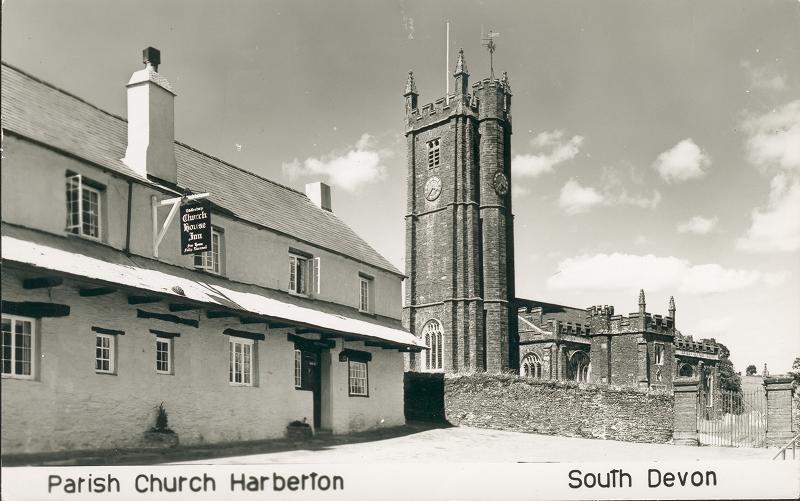
Thus for the vast majority of people on the face of this planet, we are linked to others and how we live our lives is fundamentally influenced by those others about us. In a past life, I lived in the village of Harberton in South Devon. The population of Harberton was 300 persons.
An E. M. Morison (Totnes) postcard, bearing a 3p stamp, which gives a sending date between Feb 1971 and Sept 1973.
Now I was lucky when I moved into Harberton because my two sisters, Rhona and Corinne, had lived in the area for many years and it was easy for me to be positioned as ‘the brother’. Nevertheless, the way that the village embraced all newcomers was wonderful and within a very short time one felt a settled member of the community.
Same for Jean and me as relative newcomers to our property just 4 miles from Merlin, Oregon. All of our neighbours have embraced us and helped us understand this new rural life that we have embarked on. We feel part of the local community.
Yet it doesn’t stop there.
Obviously, I’m a WordPress user! Learning from Dogs is a WordPress blog! But were you aware of the size of the WordPress community? (As of now!)
How many posts are being published?
Users produce about 44.5 million new posts and 56.7 million new comments each month.
How many people are reading blogs?
Over 409 million people view more than 14.7 billion pages each month.
Even my funny little blog has 959 followers!
What that figure doesn’t reveal is how many of my followers have offered support, openness and real loving friendship. None better demonstrated than by the comments left by readers when I announced the recent death of Dhalia.
Think of the way that untold numbers of internet users rely on that ‘worldwide web’ for referrals, opinions or knowledge about anything ‘under the sun’.
So while there might be many aspects of our new technological world that create unease, the opportunities for having ‘virtual’ friends to complement our social friends make this era unprecedented.
I would go so far as to say this. That the way that knowledge and information can be shared around the world in no time at all may be our ultimate protection against those who would seek to harm us and this planet.
How to close these essays? Perhaps no better than as follows:
On Wednesday evening we were joined by neighbours, Dordie and Bill. My post on truth came up in discussion. Bill mentioned that he had read about a person who had spent many years studying the texts of all the world’s major religions. What had emerged was that across all those great religions there was a common view as to what the long-term health and survival of societies requires.
It is this: the telling of truth and the keeping of promises!
Today, and the next two days, I want to offer you three essays under the theme of Trust, truth and community.
As is so often the case, there was a series of outwardly unconnected experiences that seemed, well to my eyes anyway, to speak to a theme. You will have to wait until Friday to judge whether or not you agree with me!
Trust
This first essay was motivated by two disparate events: One very local and one as far removed from being local as one could imagine.
But first, what do we mean by trust? Roget’s Thesaurus defines the word (in part):
trust noun
Absolute certainty in the trustworthiness of another: belief, confidence, dependence, faith, reliance.
You will recall that just over three weeks ago, we welcomed two horses to our pastures; Ranger and Ben. Both horses had previously been treated badly by humans, especially Ben who had been starved and beaten by his ex-owners.
In the early days, Ben was very cautious of any sudden movement by me and would back away from any contact from me other than being offered a food treat.
But in just three weeks, Ben has gone a huge way towards trusting Jean and me.
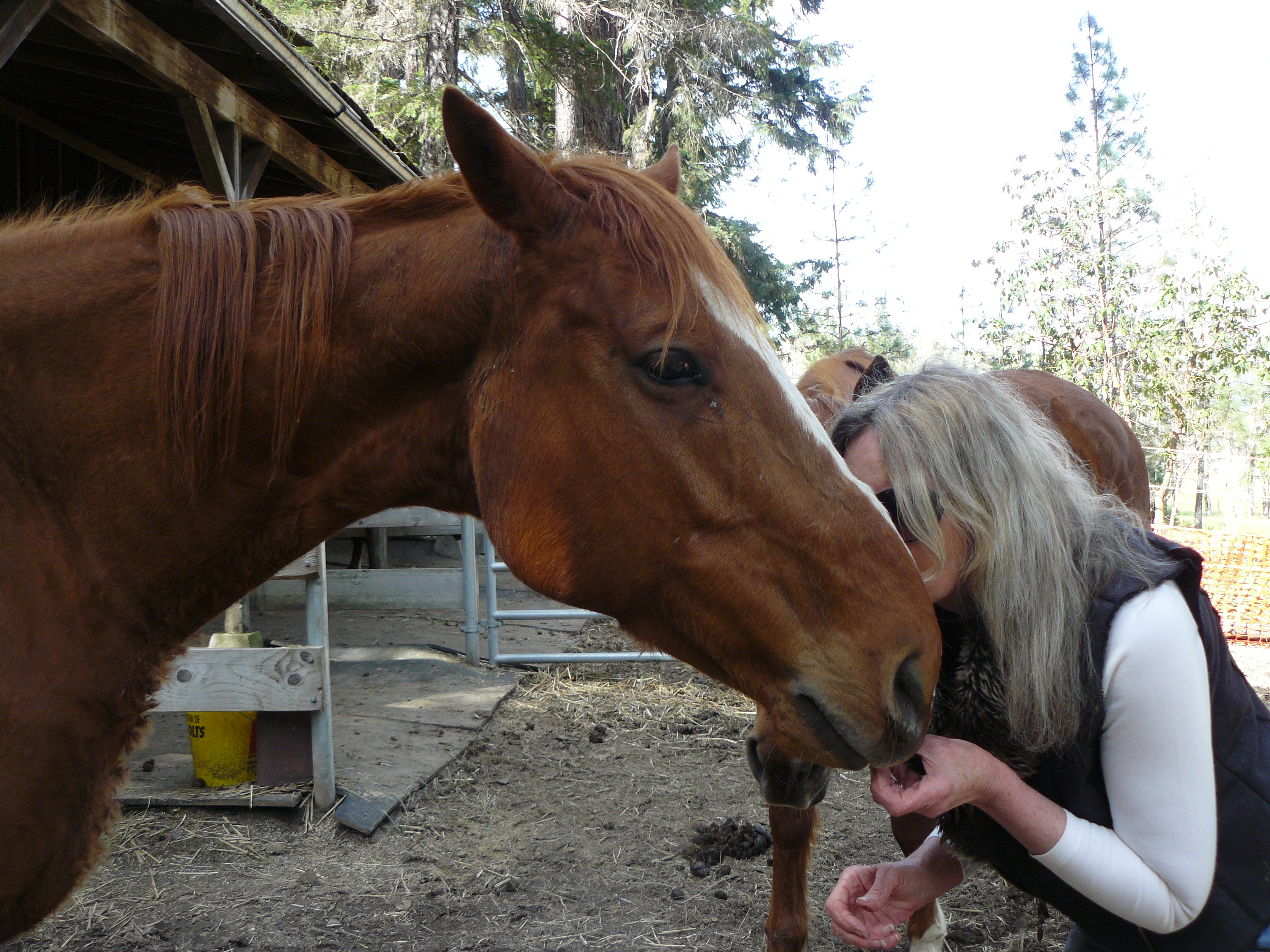
Taken yesterday afternoon.
oooo
My face is closer than three inches to Ben’s nose.
oooo
Both Ben and Ranger in the background are now very comfortable with Jean and me.
Now, I don’t know about you, but my guess is that if a human had experienced the degree of cruelty from the hands of another person that these horses had, it would take very much longer than three weeks for that human victim to regain the same level of trust that Ben and Ranger now offer. Indeed, many persons would harbour anger and distrust forever.
That was the local example of trust
Now to the ‘non-local’ example of trust. It involves PayPal.
You must read it in full, especially if you are a PayPal user. Thanks to Wolf, I can offer you his opening paragraphs:
I Just Got PayPal’s New Absolutely-No-Privacy-Ever Policy
TUESDAY, APRIL 1, 2014 AT 1:00AM
Sunday, when people had other things to do and weren’t supposed to pay attention, PayPal sent its account holders an innocuous-sounding email with the artfully bland title, “Notice of Policy Updates.” PayPal didn’t want people to read it – lest they come away thinking that the NSA, which runs the most expansive spying dragnet in history, is by comparison a group of choirboys.
The email started with corporate blah-blah-blah on privacy, that PayPal was “constantly” changing things “to give you more of what you want and improve your experience using us.”
Do read the rest of the essay here. Here’s a comment from a reader of Wolf’s essay, republished with Wolf’s permission:
Concerning: I Just Got PayPal’s New Absolutely-No-Privacy-Ever Policy
I will relate an experience I had regarding Pay Pal that I believe has some relevance to your blog on Pay Pal’s privacy policy.
I am a retired old geezer living in NY State. About 4 years ago I looked at Ebay’s bidding process to place a bid on an item I wanted. However I discovered that I could not make such a bid without subscribing to pay pal. I provided pay pal with the information it required and made my bid. My bid was exceeded by other bids and I did not get the item. My credit card was not used at that time and I never used Ebay or pay pal after that.
Because I did not respond to ongoing emails from the 2 companies I believed that I had no further connection to either of them and that my single failed bid was the end of our relationship.
Then about 2-3 years ago I received a couple of emails from Best Buy: one thanking me for opening a new account, and the other thanking me for purchasing an expensive electronic item.
When I opened up that new Best Buy account I discovered that my address was stated to be in California in care of a person named Pham Pham and that the credit card that was used was one that had recently expired although the number was still in use on a subsequently issued card. I checked all my credit cards online and found that the charge was not pending. I also took some other measures to protect myself. Within hours I received another email from Best Buy cancelling the order because payment was not made by my credit card company.
This incident took a strange turn a couple of days later. Initially I had no idea as to the source of the credit information leak. But then 2-3 days afterwards I received an email from Pay Pal requesting an update of the credit card information in my Pay Pal account. Pay Pal’s email request for updated credit information so soon after the online theft attempt may be just a coincidence, but in my mind there is an undisclosed connection. Of course I have not complied with Pay Pay’s requests. To this day no company has informed me that their accounts were hacked and that my credit information was stolen.
If, when you have read Wolf’s report in full, you feel, as I do, that the time has come to cut the relationship with PayPal then go for it. Because only a customer base that is ‘voting with their feet’ will deliver the message.
What is that message?
Simply, if organisations want to be trusted by their customers, those organisations must behave with integrity. Now I am not accusing PayPal of a lack of integrity but it goes beyond that. It goes to operating with a genuine sensitivity for what is correct. PayPal’s privacy policy is anything but that. There are parts of their ‘new’ policy that stink of gross insensitivity to their feelings for their customers. Read it in full courtesy of Wolf Richter
Oh, want to know how to close a PayPal account?
To close your Payflow account:
If your partner is PayPal, VeriSign or CyberCash contact PayPal Merchant support at 1-888-883-9770 or via email at payflow-support@paypal.com. Be sure to include your login ID.
If your partner is with a Payflow partner, reseller, or merchant bank you will need to contact the partner, reseller, or bank directly to close your Payflow account.
For additional information, contact PayPal Merchant support at 1-888-883-9770 or via email at payflow-support@paypal.com.
Note: Once your Payflow account is terminated, you cannot access the PayPal Manager or any account data. If you need access to this data, you will be charged a fee.
If you are trying to close your PayPal account and not a Payflow account do the following:
Log in to your PayPal account.
Click Profile at the top of the page.
Click Close Account in the Account Information column and follow the steps listed.
My PayPal account was closed at 15:10 PDT yesterday.
Perhaps PayPal should take note of how humans witness trust offered by our dear animals!
Dhalia, as with so many other dogs, offered lasting lessons.
Inevitably, as Jean and I went around our ‘stuff’ yesterday after burying Dhalia in the morning, there were moments of quiet contemplation and gentle discussion. Interludes over a hot drink where we reflected on the special dog that she was.
Much has already been written in this place but there can’t be too many reminders for us quirky humans of how valuable are the qualities of trust and love given to us by our dogs.
We need reminding how dogs are so intuitive and can reach out to a stranger without a moment of hesitation. As Jean described when recalling how she first came across Dhalia.
Dhalia – domesticated but still the wild dog shows through.
It was a Sunday around the middle of the month of September in the year 2005. My friend, Gwen, and I had set off for La Manga, a small fishing village three miles from San Carlos, Mexico. As the trip would take us through areas of desolate desert and the day was forecast to be a sizzler, we left early. The purpose of the journey was to feed a pack of dogs that were living on the outskirts of La Manga. These wild dogs were gradually getting used to our presence and with the aid of a humane trap we had previously caught two of them, a small puppy and her mother. Those two dogs were at my home and were gradually becoming tame so that good homes could be found for them.
Half-way to our destination, we saw two dogs running by the side of the road. It wasn’t unusual to see strays searching for road-kill. I stopped the car and prepared food and water for them. One dog took off almost immediately but the other just stood perfectly still looking intently at me. She was rail-thin and full of mange. Her ears and chest were scabbed with blood, and I could see that previously she had had pups. Tentatively, I pushed the food towards her. She took a bite and sat on her haunches; her eyes never leaving mine. Then she lifted a paw and reached out to me. Immediately, I burst into tears and scooped her into my arms. I carried her back to the car where she lay quietly in my lap whilst we went on to do our feeding. She was bloody and very smelly. However, I didn’t care.
Dhalia was always a gentle dog. One that would mix with any of the other dogs. A dog that loved people, of all types and ages.
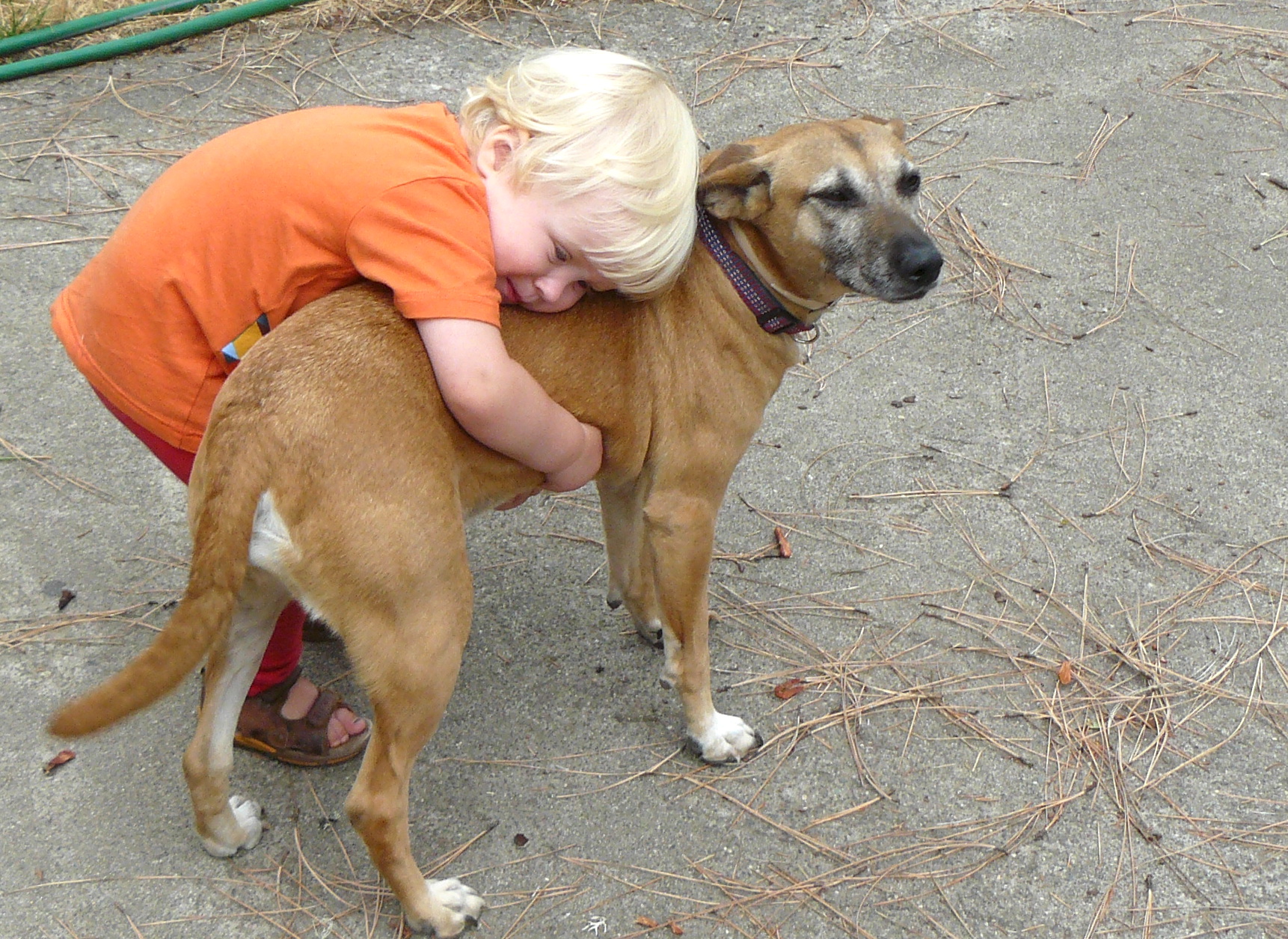
Love and Trust – Grandson Morten hugging Dhalia, September 2013.
It was Dhalia who inspired me to write a short story a couple of years ago: Messages from the Night.
So to the last couple of weeks. Back just a couple of weeks to when the vet’s assessment of Dhalia was that she had bone cancer that, in turn, inspired me to write the post Life, and mortality. So little time to say goodbye to Dhalia. (Dr. Codd’s assessment when we went to him with Dhalia yesterday morning was that the cancer must have been well-established for it to have metastasised so quickly; the normal interval between diagnosis of cancer and death would be six to eight weeks.)
That Dhalia reached out to the other dogs in our ‘bedroom’ pack was evident these past six or seven nights. For it has been in the last week that Dhalia was unable to go through the night without needing to pee.
The first night that this happened, I was awakened by Cleo coming to my side of the bed and running her head past my arm. It was 3am. Cleo repeated that for the next few nights and each time I was able to take Dhalia outside so she could relieve herself. Then as Dhalia’s internal organs started to fail it was Pharaoh who in the middle of the night uttered a couple of tiny barks; just sufficient to wake me and allow me and Jean to look after Dhalia’s needs.
When the bedroom door was opened to allow Dhalia to go through the house and, thence, to the front gardens, all the rest of the dogs remained still in the bedroom. They sensed the nature of what was going on.
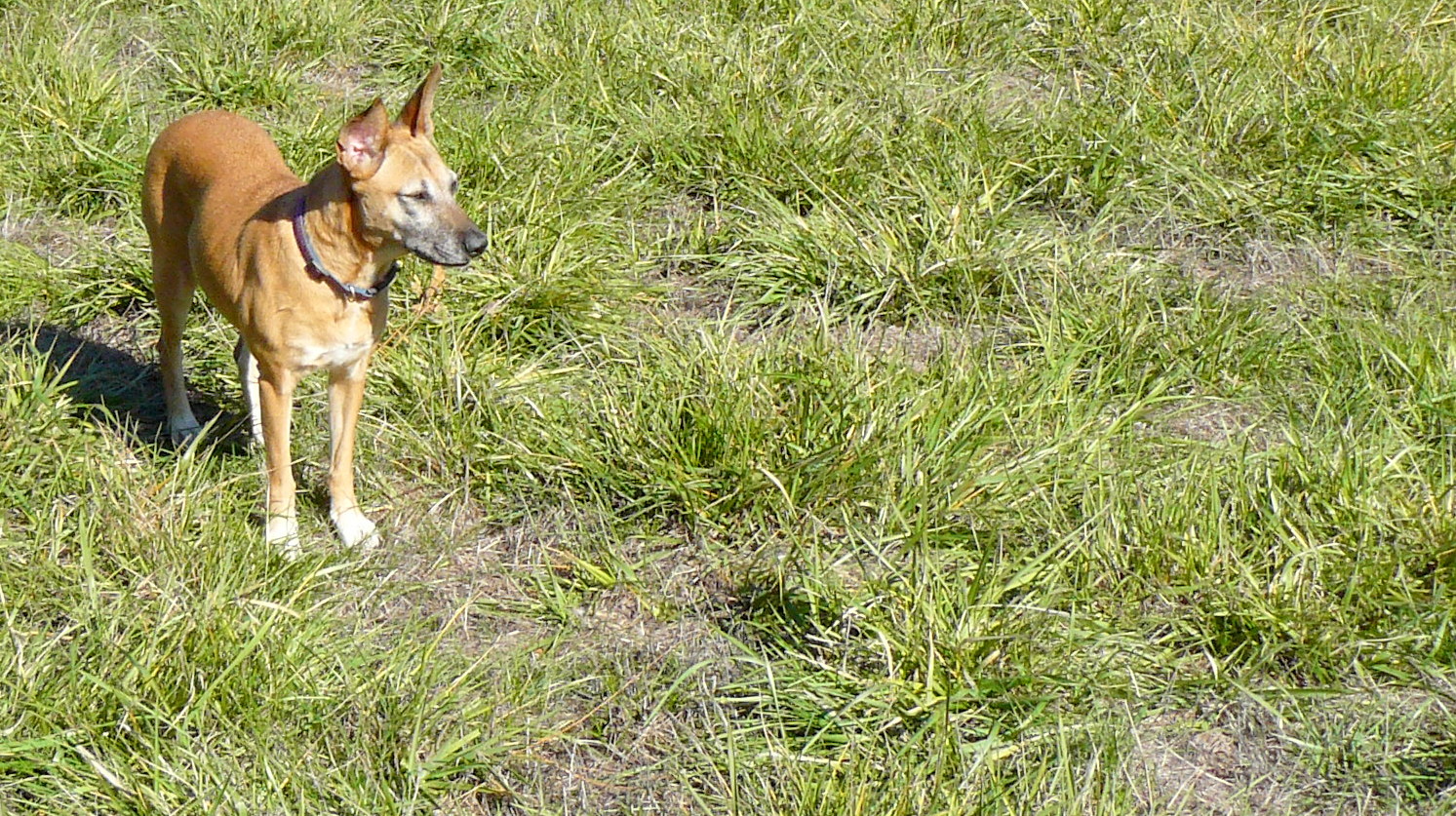
So to the last photograph. Taken last October here at home in Oregon showing Dhalia in typical independent spirits.
Dhalia was clearly close to death when Jean and I took her to our vet, Dr. Codd, earlier this morning.
Indeed, she was probably dead when Dr. Codd administered the euthanasia injection. It was 8:45 am.
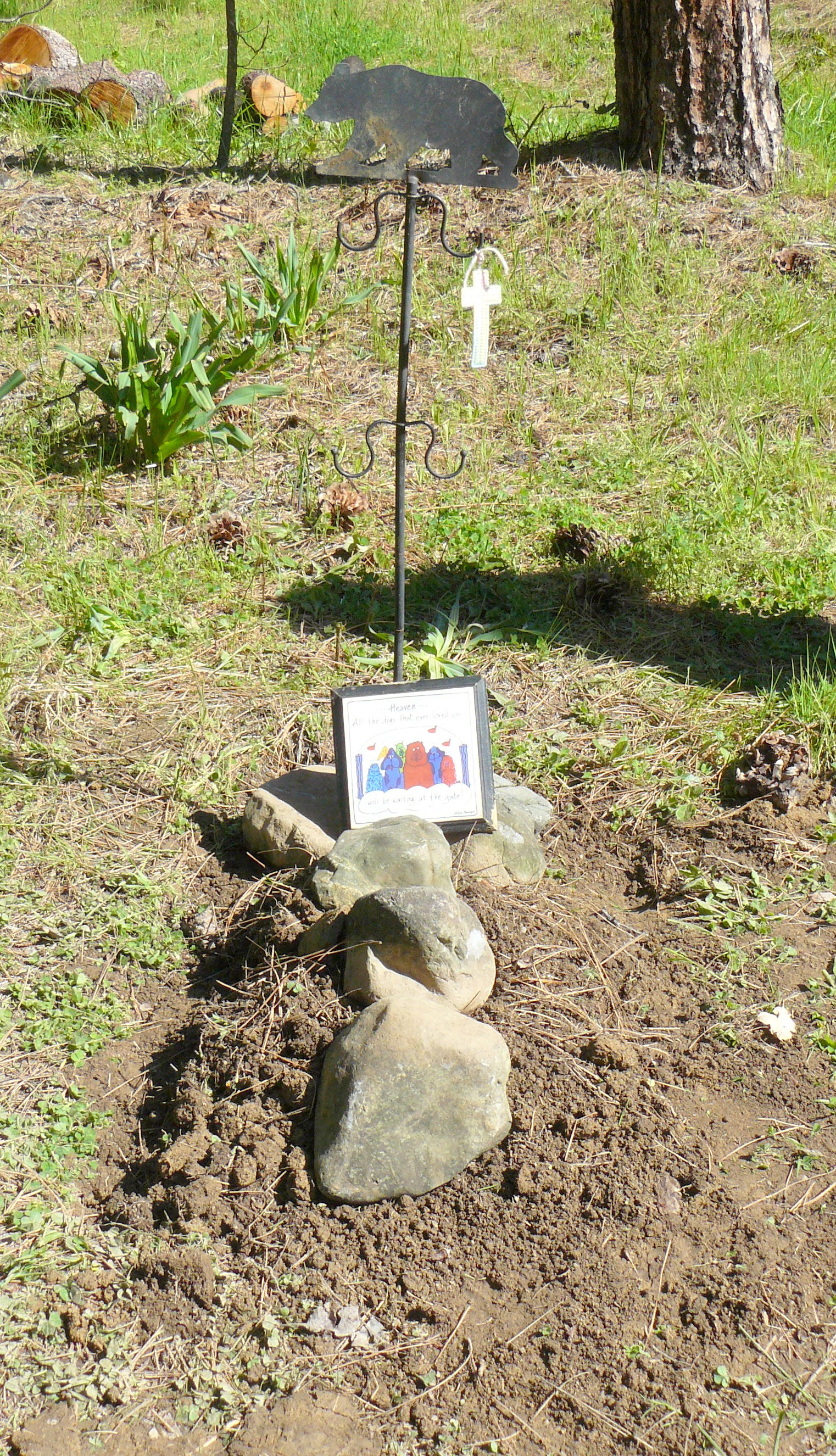
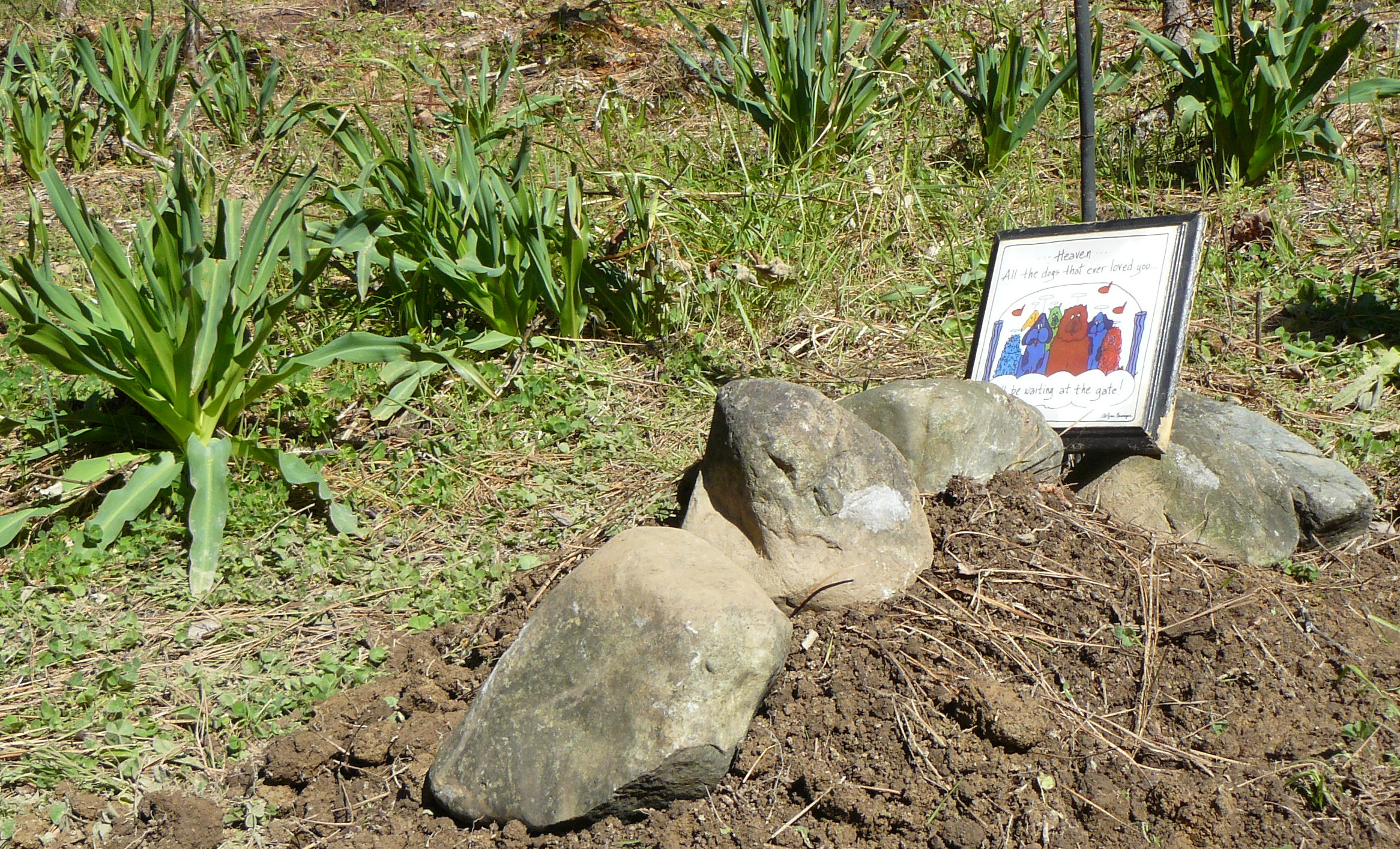
While there is more I want to write about Dhalia, you’ll appreciate it if that is left for tomorrow’s post and I close this with a couple of photographs.
oooo
oooo
For those that can’t read the plaque it says, “Heaven. All the dogs that ever loved you will be waiting at the gate.“
It’s almost incomprehensible to realise that less than two weeks ago, the 27th March to be exact, I wrote a post under the title of Life, and mortality. These few paragraphs will give you a feel for that post:
Possibly the most important lesson we can learn from dogs!
I was aware when writing the concluding part of Meet the dogs – Pharaoh that the next day I would be faced with writing about a subject that is a whole degree more difficult. Death!
It must have been in my mind when I wrote “of the need to smell the flowers in this short life of ours.“
What has prompted today’s post?
Simply that Dhalia developed a limp in her front, right-hand, leg. That was a few weeks ago. Naturally, we took her to our local vet, Dr. Codd, who diagnosed a strained elbow joint probably as a result of arthritis; Dhalia is believed to be ten-years-old. With the recommended medication, the limp came to an end.
Then about two weeks ago, the elbow weakness appeared in her left-hand, front leg.
On Monday, we returned to Dr. Codd who took further X-rays and sought a second opinion. That second opinion came back with the probability that it was a “osteoproliferative neoplastic lesion” or bone cancer to you and me! It’s not one-hundred-per-cent certain but likely.
The reason it feels so painful is that today (Sunday) it’s very clear to Jean and me that Dhalia’s life forces are ebbing away and that tomorrow morning (i.e. your today, dear reader) we will be taking Dhalia back to Dr. Codd, undoubtedly for him to put her to sleep.
I had in mind writing this week a series of posts on Truth, Trust and Community. For obvious reasons those posts are on hold for a couple of days.
Please keep Dhalia in your thoughts.
Dhalia, just two weeks ago. She was already barely using her right front-leg.
The second set of photographs from Elena Shumilova.
A week ago I introduced Elena Shumilova and am delighted to stay with her fabulous pictures. I’m repeating the introduction from last week.
ooOOoo
A MOTHER FROM RUSSIA TOOK THESE PICTURES AT HER FARM
ALONG WITH HER TWO SMALL BOYS, A CAT AND A DOG.
These wonderful photographs by Elena Shumilova plunge the viewer into a beautiful world that revolves around her two boys and their adorable dog, cat, duckling and rabbit friends.
Taking advantage of natural colors, weather conditions and her enchanting surroundings, the gifted Russian artist creates cozy and heartwarming photography that leaves you amazed. Elena said, “Children and animals – it’s my life. I’m a mom with two sons and we spend a lot of time on the farm.”
oooo
oooo
oooo
oooo
oooo
oooo
ooOOoo
Final set for you in a week’s time. You all take care of yourselves.