Category: consciousness

Unanticipated consequences!

Who would have believed it!

Way back in July 2012, I posted the following item.

oooo

Dear Readers of Learning from Dogs.

Today, Jeannie and I are off on a trip to Oregon.

Oregon State

We expect to be away for about the next 10 or 11 days.

While there are a number of new posts that will come out during this period, rather than have quiet days with nothing being posted, some days I will be republishing posts from the last three years; hopefully most of them new to your eyes.

Inevitably, responding promptly to comments will be tough.

Which is why I am so grateful to Martin Lack of Lack of Environment who graciously agreed to keep an eye on things while we are away.

The Punch Bowl Falls, Columbia River, Oregon

oooo

That was twenty-six months ago.

Yesterday morning, Jean and I took Reggie and Chris down to our creek area to feed some wild deer that have been congregating in recent days.

P1150076

After Jean had sprinkled some cracked corn on the ground, one of the seven deer around us started feeding and when it looked up at me, I took the following picture.

P1150079

Can’t ever imagine living anywhere else now.

Funny how life runs!

Seeds of thought.

Two very different perspectives.

solstice

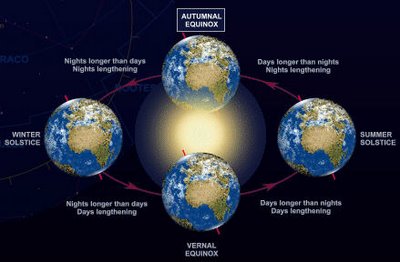
I’m writing this post a short while after midnight (UTC) on the morning of Tuesday, 23rd September.  In other words, 00:00 UTC 23/9/2014. (I hasten to add that the local time in Oregon is late afternoon Monday!)

In approximately three hours time it will be the moment of the September Equinox, or 02:29 UTC on the 23rd to be precise. The planet Earth has been in orbit around the sun for a very long time!  It’s almost beyond comprehension how long the Solar System has been the way it is.

All of which constitutes my introduction to a recent beautiful post over at Sue Dreamwalker.  Kindly republished with her gracious permission.

ooOOoo

Planting a Seed … A Thought!

William Blake, said:

that everything that now exists was once imagined,

Wayne Dyer said:

So, if you want something to exist, you must first be able to imagine it.

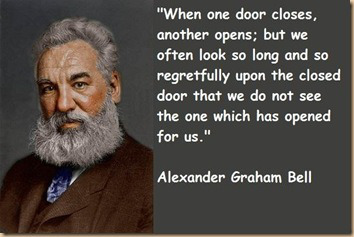
Each of us have a chance of planting new seeds.. Yet we so often never have the courage to pick them out of our minds to plant them with intention into our reality… Those alexander-graham-bell_thumbwho do have the courage may see how from their tentative thoughts ideas grew beyond their wildest dreams… I bet Alexander Graham Bell never in his wildest dreams would have thought how his invention would now be in everyone’s pocket!.

But we need to have the courage to take those first steps and plant them..

Like all seeds they take time to germinate, so too with our ideas we often wonder why our wishes are not fulfilled.. All too often we sabotage them before they even begin to grow roots. How?, because we doubt our own capabilities and we say we are far from worthy of success. Telling ourselves we are never lucky.. and its bound to fail.. So we poison the very idea, so the seed withers even before it gets a chance to grow..

Our subconscious mind is an incredible tool, it possess the power to manifest from our thoughts to bring them into our physical reality. You only have to take a look around the room you are now in, and see that every thing in it was once someone’s thought, even the paint upon the walls… An idea born, brought into reality from that first seed of an idea..

I have just finished a book the second time in reading it, I think this time its message really hit home. As I see how I have sabotaged many such seeds in the past. The Book is called Wishes Fulfilled By Wayne Dyer, listen to his talk HERE upon the subject of Wishes Fulfilled.

‘Thoughts become things when you Feel them’ says Wayne Dyer, In the past I have often experienced frustration, Anger, worry, stress. These I have amplified with my ‘Feelings’ as the frustration of helplessness, or horror at how brutal we can be to one another have overshadowed my thoughts..

We need to reprogrammed ourselves to think differently about ourselves and the World..

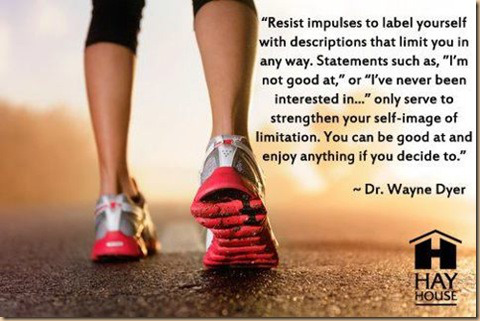
dr-wayne-dyer-quote_thumb

Seeds are sown, every day within our minds.. What sort of seeds are you sowing within your own mind? Which type of thoughts are you cultivating?

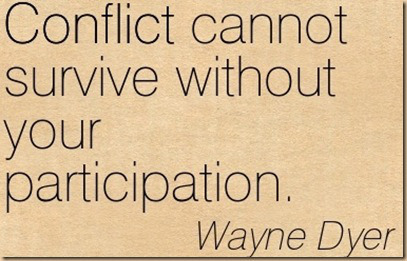
wayne-dyer-quote_thumb2

My last simple post World Peace! Just Imagine got reblogged 6 times!. I got more traffic today than for a long while.. People Do want Peace, and yet how many of us are being manipulated into getting caught up in Conflict? We are part of it every time we read a Newspaper, every time we watch the Media News, Every time we join in Gossip, every time we Judge another. Every time we argue, even with ourselves, We are creating yet more Conflict , more Negative Energy in the World.

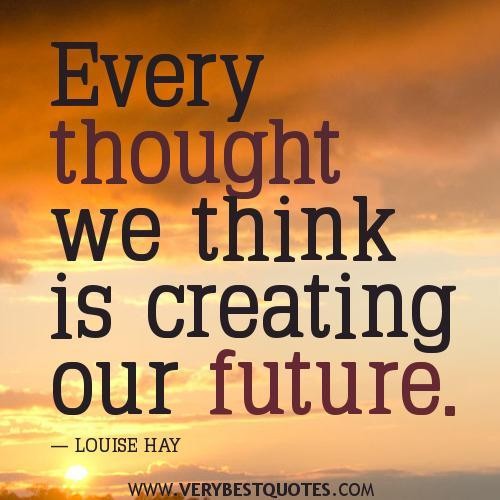
Our very thoughts Create…

32108-Positive+thoughts+quotes+every

Let us Create the Future we each wish to Live in..

Have a Brilliant Thought Provoking and Harmonious Week!

Blessings

~Sue~

ooOOoo

So wherever you are in the world, take a moment to look up into the sky and marvel at it all.  As one of Sue’s followers remarked, “ ….. Equinox is an excellent time to focus on the seed ideas for the future.

Finally, the link that Sue included in the sentence, “The Book is called Wishes Fulfilled By Wayne Dyer, listen to his talk HERE upon the subject of Wishes Fulfilled.” took you to a YouTube video.  It is below because I know many will want to listen to Wayne Dyer’s important words.

3D-Autumn-1680x1050

From seeds grow great futures.

A welcome and understandable distraction.

We have family guests with us for the next seven days.

Jean’s brother, Reg, and his lady are arriving today so for a while blogging will be less of a priority than usual.

Although I have spoken to Reg over the telephone on numerous occasions, this will be the first time we have met and I am looking forward to better knowing him.

Thus, as in previous times when we have had friends and family staying with us, I will be reposting popular items from previous times on Learning from Dogs, or republishing things that have caught my eye in recent days.

As with today’s post.

Reg, shares the same birth year as me: 1944!

Thus we are staring over the edge of our eightieth decade!

So this short talk by Isabel Allende seems like a worthwhile topic for today!

Published on Sep 3, 2014
Author Isabel Allende is 71. Yes, she has a few wrinkles—but she has incredible perspective too. In this candid talk, meant for viewers of all ages, she talks about her fears as she gets older and shares how she plans to keep on living passionately.

Want to know more about Isabel Allende?  Her website is here.

Yet another thing we can learn from dogs! Living passionately right up to the last days.

Pharaoh, age 88 years in human equivalent, passing on his wisdom to Oliver, age 3 in human terms.
Pharaoh, age 88 in human equivalent years, passing on his wisdom to Oliver, age 3 in human terms. Makes being 70 look a doddle!

A world at peace.

Never say never!

Next Monday, the 21st September, is going to be the most important day this year.  No! The most important day ever!

Because next Monday is the date of the People’s Climate March in New York.  It is predicted to be the largest climate march in history. Well over 100,000 are expected to attend.  I shall write more about this event during the coming week.

But also the 21st September will be International Day of Peace. That coincidence strikes me as highly significant. For a world at peace would cause the most massive reduction in our use of carbon-based fuels.

Thus without any embarrassment, I intend to republish in full [Ed: but see my comment] a recent item on the Permaculture News website: Seven Reasons Why World Peace is Possible.

Do I mention dogs?  Read through to the end to find out! (Probably not difficult to guess the answer!)

ooOOoo

Seven Reasons Why World Peace is Possible

Introduction

The 21st of September will be International Day of Peace. It may seem a little premature to declare that world peace is due to break out by the end this month. I do not deny that the amount of killing and death and war and torture and death and coercion and abuse and death all over everywhere can be overwhelming. Nor do I deny that considering this, it is a natural assumption to believe people are sinners, destined for extinction. However, I do argue that compassion is as much a part of human nature as cruelty.

There is evidence that humankind did not always live violent lives. In fact, I assume most people reading this article are not habitually violent, and do not desire to watch someone suffer. All animals have the capacity to enrich the lives of others. We have the capacity to be both selfish and kind. What matters is which quality we chose to focus on; bringing that quality into focus within ourselves, the world, and our children.

Here I have collected an array of research demonstrating that there is a positive potential within each social group and person. I argue that humans can learn to build societies which are not founded on the expectation of organised violence. Here are seven reasons why world peace is possible. You won’t believe your own strength of belief: There is at least some hope.

aadsdas
National Peace Academy’s Peace Spheres

Experimental prototypes

The balance of this powerful and fascinating article may be read here.

ooOOoo

How many links did you follow?  Most of them are wonderful links to organisations that many readers, including me, may not have come across before.

So to close.

I was about half-way through arranging today’s post when I realised that dogs have evolved without the need to have their own police forces or armies.  It’s not as silly as it first sounds. Of course, dogs fight and some fights can be brutal and, occasionally, fatal to one or more of the participants.  But they have a keen sense of their locality, of their tribal space; so to speak.  Even as domestic animals, they are fiercely protective of what is their own place.  Before dogs were domesticated, like the wolves from whence dogs evolved, the pack size was around fifty animals with just three animals having any form of status; something that has been mentioned many times before in this place.

The point is that dogs are creatures that have evolved to live in a local community and to live peacefully; by and large.  My sense is that ancient man also evolved to be most complete within a community environment.

This is the end of the era of huge federal and national social constructions.

We must return to locally run and managed communities, which is the pathway to peace across this planet.

Think you know our Solar System – Think again!

An incredible discovery about the motion of the sun, and the planets.

Serendipity

I have turned on my computer. It’s 15:30 on Sunday. My creative juices re Monday’s blog post are not flowing. Why? Because, together with a young helper who comes over most Sunday mornings, this morning we have shifted 100 bales of hay from outside the garage, taken them down to the hay-loft and stacked them floor to ceiling: all two and a half tons of them!  To use an old English colloquial expression: I am fair knackered!

Then I am rescued!

Top of my email inbox is an email from Dan Gomez that is an item sent to him from his brother Chris.  It’s a truly incredible discovery. One that requires us all to tear up what we understand about the Solar System and start again.

Here is the essay in question.  It has been recently published on the Spirit, Science and Metaphysics website.

ooOOoo

Our Model Of The Solar System Has Been Wrong This Entire Time!

Written by Amateo Ra

solar-system1

If you walk into any classroom today, and likely ever since you were a kid yourself , there is one model being taught regarding the structure of our Solar System. It’s the model that looks like this:

SolarSysScope-1024x571

It’s the traditional orbiting model of the Solar System, or the Heliocentric Model, where our planets rotate around the sun.

While this isn’t entirely wrong, it’s omitting one very important fact. The sun isn’t stationary. The sun is actually travelling at extremely fast speeds, upward of 828,000 km/hr, or 514,000 miles an hour.
Our whole Solar System is orbiting the Milky Way Galaxy. In fact it takes 220-Million Years for the Sun to orbit our Galaxy.

milkyway

Knowing this to be true, our visual model of the Solar System needs to change, and has been inaccurate this whole time. In fact, our planets are barreling through space with the sun, and literally creating a giant Cosmic DNA Helix, and a vortex similar to our Milky Way Galaxy.

Like this but in space, creating a never ending Sine Wave.

SineWAves

This entails that our Sun & the Planets of our Solar System are never in the same place. When we make one rotation around the sun, we have already traveled millions of miles through space, meaning these Cosmic Cycles are far grander than we might have previously imagined.

Here are two video examples of the Helical Model of our Solar System:

This is one by Physicist Nassim Haramein, which clarifies the difference:

Here is a beautiful digital representation of how our solar system is actually a vortex.

Thanks & Spread the Word! Let’s get this changed in Classrooms all around the World.

About the author: Amateo Ra is the co-founder of Creator Course, an Online School for Conscious Living which is currently being built. For the last 4-years, he has been training with Global leaders in Spirituality, Channeling & Conscious Business.

ooOOoo

Don’t know about you but reading this for the first time and watching the two videos really invigorated me. What an amazing universe it is out there!

Harvest Moon 2014

Sorry, couldn’t resist this.

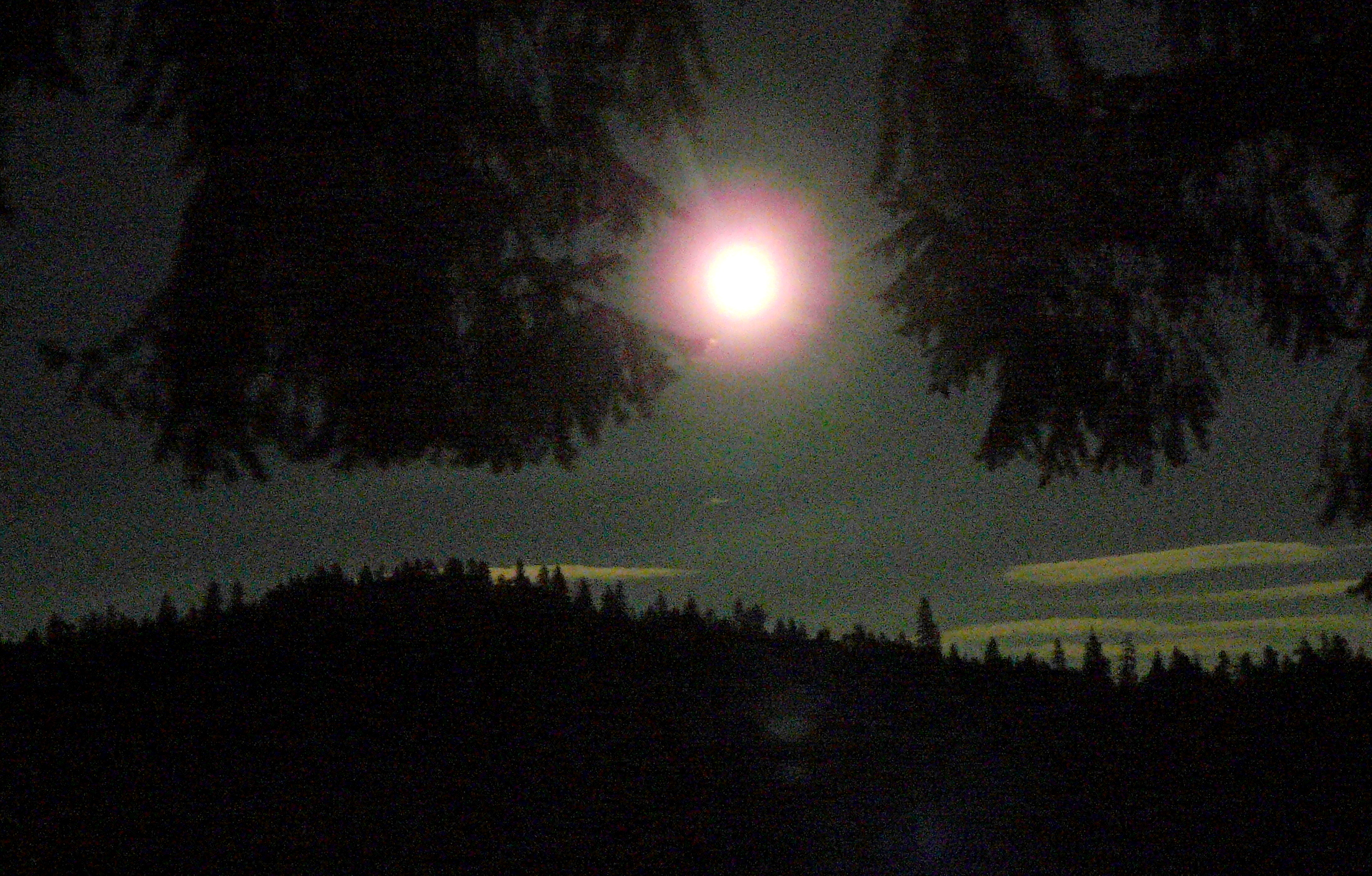
The following photograph was taken around 9pm (PDT) on the evening of the 8th September; i.e. Monday evening.

The image has been tweaked to display the picture more clearly but, nonetheless, shows the most beautiful Harvest Moon.  The camera was pointing to the East; I was standing on the deck at the back of our house.

P1150050

Anything to do with dogs?

You bet! There’s this ….

dogmoon

oooo

and this:

Uploaded on Nov 9, 2010
During Bob and Jan Shaw’s Annual fall training session outside of Newberry, MI in the beautiful Upper Peninsula, I had the opportunity to record over 100 huskies howling at a full moon.

We all shine on…like the moon and the stars and the sun…we all shine on…come on and on and on…John Lennon.

Wisdom, nature and … a Koala!

As topic changes go, this takes some beating!

I am referring, of course, to the contrast to yesterday’s post title: Wisdom, nature and philosophy.

The drought that this part of Oregon has been experiencing has had one obvious effect: the availability of good hay is rapidly diminishing.  With four horses to feed and our own pasture just about eaten out, we need a few more tons before the rains arrive around the end of the year: fingers crossed!  We have been frantically trying to find some.

What, you may ask, has this to do with Learning from Dogs?  Only that by the time I sat down yesterday to write today’s post, I was squeezed in terms of writing a longer post, and had less than an hour to spare before driving up to Glendale to look at some second-cutting hay for sale.

Then a recent email from a long-term friend in Australia saved the day.  It was from Amanda Smith and is reproduced just as she sent it to me; that in turn had been sent to Amanda from a friend of hers.  It’s a delightful tale.

ooOOoo

Koalas Like the Beach As Well.

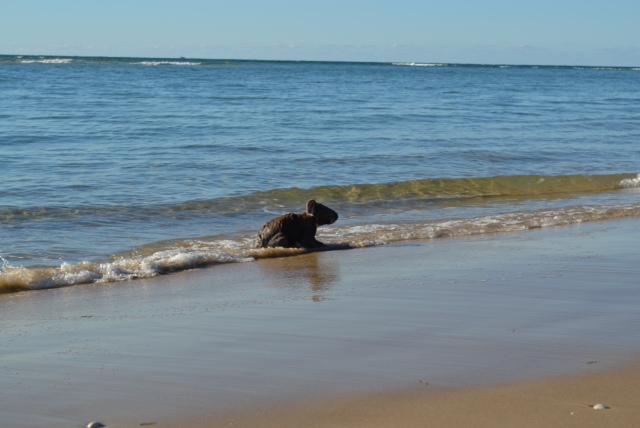
This occurred on a walk along Flinders Beach on North Stradbroke Island in Queensland a couple of days ago.

The Koalas seem fairly tame over here. We passed two sitting in she-oak trees each about two metres off the ground. They were not spooked at all by the attention we gave them.

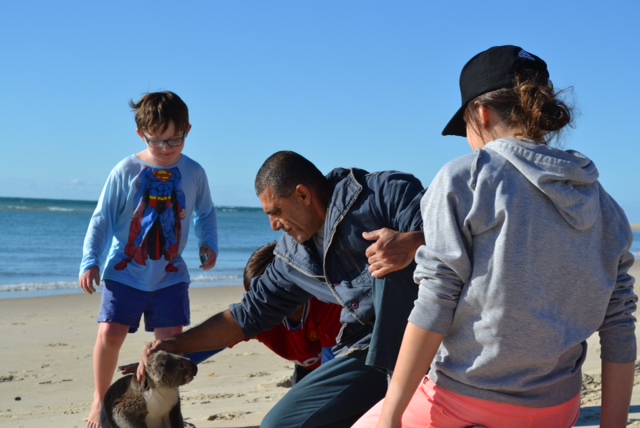
Then, about half way along the beach, we saw this young fellow actually running up and down the beach and playing around the kids like a puppy.

Koala01

oooo

Koala02

oooo

Koala03

oooo

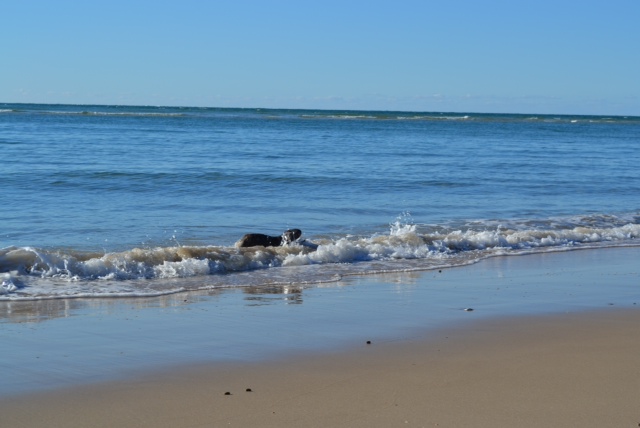
After the koala allowed itself to be stroked and petted by us humans, it decided to go for a swim!

Koala04

oooo

Koala05

oooo

Then the little chap went about twenty metres into the sea, swam around for a good half-hour fascinating onlookers, before coming back to the beach.

Koala06

oooo

Koala07

oooo

The little chap then took a while to recover from his swim.

We have never heard of or seen this behaviour before: a koala who likes to “play” with humans, and swim in the ocean.

Unbelievable stuff, something we will always remember.

(Credit Allan Duncan)

ooOOoo

Makes finding hay for horses seem mundane! 🙂

Suzann’s Dog Spot – Number Two: L’il Bear Cruz and Blaze

More beautiful dogs looking for loving homes.

Readers will recall that the first dog spot was published two weeks ago.  I explained the background behind the idea:

Anyway, long before I came on the scene, Suzann and Jean had been working together caring for the countless feral street dogs that roam so many Mexican streets. In many cases that caring included finding new, loving homes for them in the USA. When Jean and I moved away from San Carlos in 2010, eventually ending up here in Southern Oregon almost 2 years ago, Suzann didn’t hesitate to continue caring for these Mexican dogs and, wherever possible, finding new homes for them.

Thus came the idea of promoting a wonderful dog ready for a new home here on Learning from Dogs. Who knows, maybe a reader somewhere may know of a family or a person looking for a dog and as a recent post highlighted, rescued dogs are life-savers.

So to the story behind these two dogs.

Please do everything you can to share this post as far and wide as possible, because the rescuing of dogs off the streets of Mexico can only be continued if loving homes are found for each and every one of them.

oooo

L’il Bear Cruz and Blaze

by Suzann Reeve

What's not to love with these two!
What’s not to love with these two!

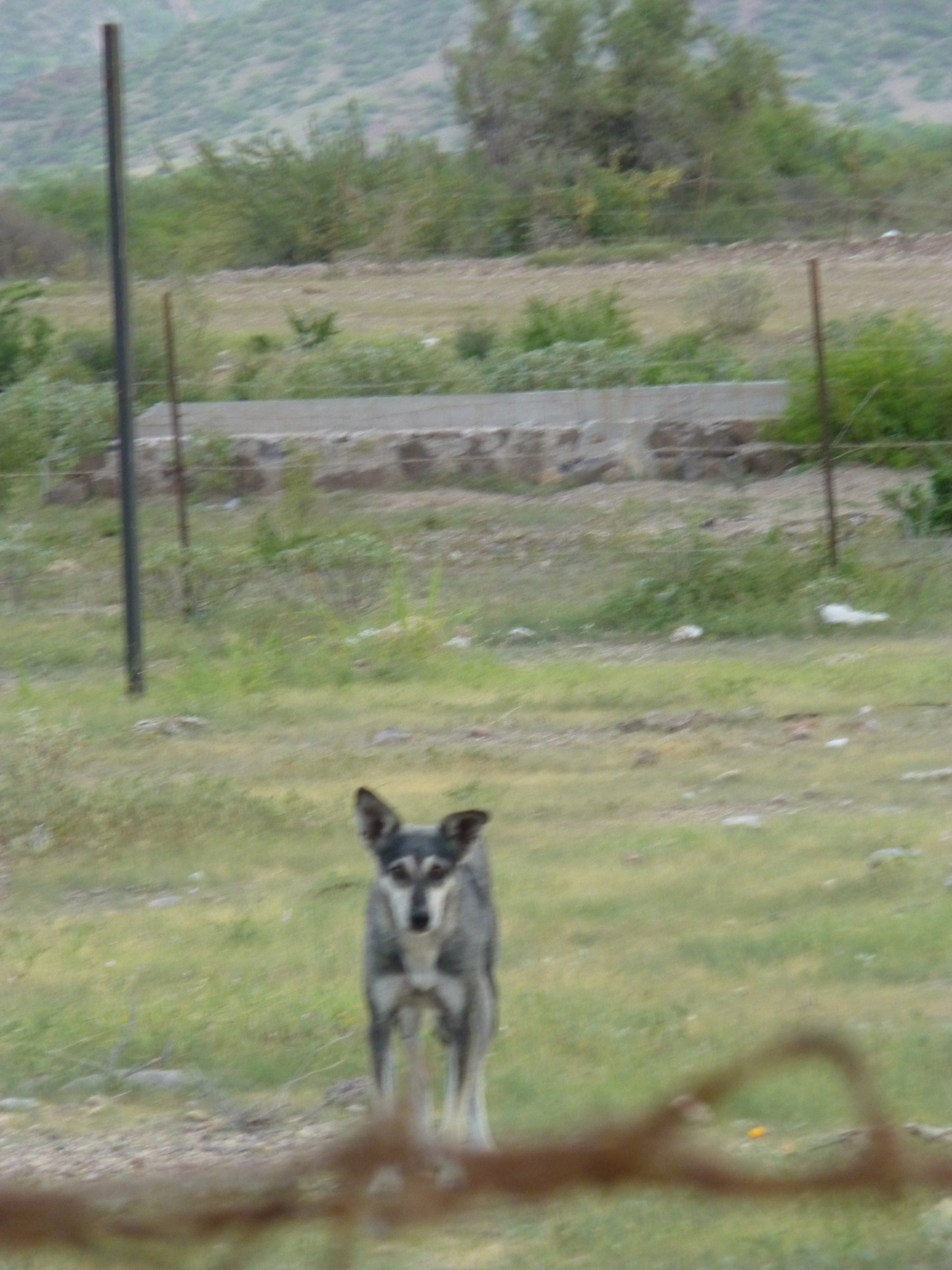
These two little darlings are the offspring of a half-coyote I have been feeding off and on for years out in the desert.

I named the half-coyote Luna and she is totally feral and has always lived at the base of the mountains in the desert 20 minutes outside of town.

Luna, the half-coyote mother dog.

Luna learned as a pup that if she came down to the sea she would be fed, and she has been for years by a whole string of people, the latest being myself. But she always returns to the desert at the bottom of the mountain.

I’m pretty certain that Luna is around 14-years-old. But she looks like she is 4. Luna has had a litter every year, only ever has 3 pups, never gains weight and her teats never show any milk, so it is difficult to understand how she even feeds them!

In the case of L’il Bear Cruz and Blaze, I had to take the pups after only two weeks because of threats to their continued existence due to vultures hovering over the young animals.  Indeed, Luna had to chase the big birds away every day from her nest!

They are happy little creatures and I dearly love them.

L'il Bear Cruz at just six weeks of age.
L’il Bear Cruz at just six weeks of age.

oooo

Please find homes for them!

Empathy and bonding.

Who would have thought that yawning revealed so much more than one’s tonsils!

Alex Jones, he of the blog The Liberated Way, recently posted You need room to grow. On reading the post a section stood out for me:

The human eye needs the stimulation of sunlight and the outdoors to develop properly. The BBC [Ed: Massive rise in Asian eye damage] reports that a recent study of students in South Asian cities found 90% of the samples were short-sighted, a condition called myopia that needs glasses. Modern South Asian students spend a large part of their lives indoors studying or involved with electronic technology such as the internet. Young children in the UK are rapidly getting myopia as young as three because of being indoors and on computers for long periods of time according to the Daily Mail.

That got me thinking about both the ‘old’ and ‘new’ styles of social bonding.  In defence of our digital world, there is no question that social media programs (apps?) such as Facebook, Linked-In and Twitter are incredible means of communicating with people that one doesn’t know directly.  Even the funny old world of blogging delivers that. I would have stopped writing for Learning from Dogs years ago if it weren’t for the many ‘friends’ that have been made across the ‘blogosphere’!

But (and you knew there was a ‘but’ coming, didn’t you!), social intimacy, as in being able to rub shoulders with people, is the vital core to how we ‘wear’ the world around us.

That was brought home to me by a recent article on the Smithsonian website, an article that I am taking the liberty of republishing in this place. The article is about the contagious nature of yawning; not just for us humans but for wolves.

Note: there were many links to other content in the article making it almost impossible to replicate. So please go to the original to follow up those links.

ooOOoo

Yawning Spreads Like a Plague in Wolves

Evidence of contagious yawning in chimps, dogs and now wolves suggests that the behavior is linked to a mammalian sense of empathy

By Helen Thompson smithsonian.com
August 27, 2014

Chimps do it, birds do it, even you and I do it. Once you see someone yawn, you are compelled to do the same. Now it seems that wolves can be added to the list of animals known to spread yawns like a contagion.

Among humans, even thinking about yawning can trigger the reflex, leading some to suspect that catching a yawn is linked to our ability to empathize with other humans. For instance, contagious yawning activates the same parts of the brain that govern empathy and social know-how. And some studies have shown that humans with more fine-tuned social skills are more likely to catch a yawn.

Similarly, chimpanzees, baboons and bonobos often yawn when they see other members of their species yawning. Chimps (Pan troglodytes) can catch yawns from humans, even virtual ones, as seen in the video below. At least in primates, contagious yawning seems to require an emotional connection and may function as a demonstration of empathy. Beyond primates, though, the trends are less clear-cut. One study found evidence of contagious yawning in birds but didn’t connect it to empathy. A 2008 study showed that dogs (Canis lupus familiaris) could catch yawns from humans, and another showed that dogs were more likely to catch the yawn of a familiar human rather than a stranger. But efforts to see if dogs catch yawns from each other and to replicate the results with humans have so far had no luck.

Now a study published today in PLOS ONE reports the first evidence of contagious yawning in wolves (Canis lupus lupus). “We showed that the wolves were able to yawn contagiously, and this is affected by the emotional bond between individuals, which suggests that familiarity and social bonds matter in these animals the same way as it does in humans,” says study co-author Teresa Romero, who studies animal behavior at the University of Tokyo.

The prevalence of contagious yawning in primates and other mammals could give us some clues to the evolution of empathy—that’s in part what makes the phenomenon so interesting and so controversial. If dogs can catch yawns from humans, did they pick up the behavior because of domestication, or does the trait run deeper into evolutionary history?

The Tokyo team took a stab at those questions by looking at contagious yawning in dog’s closest relatives, wolves. For 254 hours over five months, they observed twelve wolves (six males and six females) at the Tama Zoological Park in Tokyo. They kept tabs on the who, what, when, where, how many and how long of every yawn, then separated out data for yawns in relaxed settings, to minimize the influence of external stimuli.

Next, they statistically analyzed the data and looked for trends. They found that wolves were much more likely to yawn in response to another’s yawn rather than not, which suggests that contagious yawning is at play.

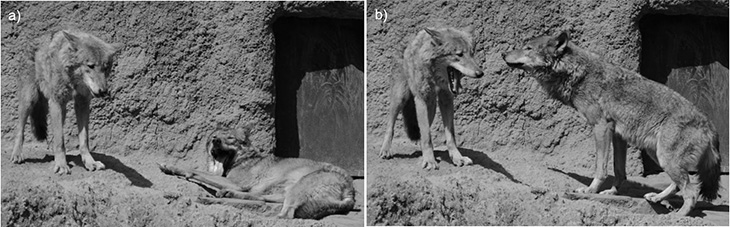
Smithyawning
In image A, an individual (right) yawned during a resting period, and a few seconds later, image B shows the subject (on the left) yawned contagiously. (Teresa Romero)

Wolves were more likely to catch the yawn if they were friends with the yawner. Females were also quicker on the yawn uptake when watching the yawns of those around them—possibly because they’re more attuned to social cues, but with such a small group it’s hard to say for sure.

The results seem to add to the case for empathy as the primary function of contagious yawning. “We have the strongest responses to our family, then our friends, then acquaintances, and so on and so forth,” says Matt Campbell, a psychologist at California State University, Channel Islands. “That contagious yawning works along the same social dimension supports the idea that the mechanism that allows us to copy the smiles, frowns and fear of others also allows us to copy their yawns.”

Empathy likely originated as an ancestral trait in mammals, and that’s why it emerges in such disparate species as wolves and humans. “More and more research is supporting this idea that basic forms of empathy are very ancient, and they are present in a wide number of species, at least in mammals,” says Romero. Elephants, for example, comfort their upset friends. Even rats exhibit a basic helping behavior toward other friendly rodents.

Why does contagious yawning between members of the same species show up in wolves and not dogs? The difference probably comes down to study design, not biology. “Most likely, dogs also catch yawns from [other dogs], as now shown for wolves,” says Elaine Madsen, a cognitive zoologist at Lund University in Sweden. Further studies might reveal the extent to which human interaction has affected present-day dogs’ susceptibility to catching another species’ yawns, she says.

It’s impossible to say what true function contagious yawning serves in wolves, but the researchers argue that such behavior could cultivate social bonds. “If an individual is not in sync with its group, it risks being left behind. That is not good,” says Campbell. Just watching wolves yawn can’t definitively prove that empathy drove the behavior, but it’s certainly compelling evidence that wolves might feel for their fellow lupines.

ooOOoo

Fascinating. As too is an article also on the Smithsonian website about dogs yawning.  Going to republish that in a few days.

However, this post was prompted by the reminder that there is no substitute for social bonding with others who we meet physically. That is why the Smithsonian essay seemed such an important reminder.  As was written (my emphasis):

Among humans, even thinking about yawning can trigger the reflex, leading some to suspect that catching a yawn is linked to our ability to empathize with other humans. For instance, contagious yawning activates the same parts of the brain that govern empathy and social know-how. And some studies have shown that humans with more fine-tuned social skills are more likely to catch a yawn.

Time for an afternoon nap!

The real you!

I am delighted to present the following guest post from Ruth Nina Welsh.

We seem to be on a bit of a roll in terms of seeking a better self-understanding.

Last Thursday I offered up some thoughts and reflections on meditation Quietening one’s self down and then the following day presented the film Inner worlds, Outer worlds, the wonderful film by Canadian film maker, musician and meditation teacher Daniel Schmidt. Daniel described his film “as the external reflection of his own adventures in meditation.” (And did you read the fascinating comments by ‘R’?)

Anyway, to today.

I forget how Ruth and I made contact with each other but that’s immaterial to today’s guest post. What is material is that we did make contact and through Ruth’s website I became aware of her talents. In her own words:

BE YOUR OWN COUNSELLOR & COACH shares psychology, memoirs and creativity to help and inspire you to live a happier, more fulfilling and purposeful life.

****

WHO AM I? – I’m a freelance writer, specialising in lifestyle, wellbeing and self-help; a former counsellor & coach and an erstwhile musician. I have a diverse educational Ruth-Profile-Photobackground – with degrees in arts and law – but psychology is my passion. You can find out more about me on my personal site.

  • As a singer-songwriter, I released my debut acoustic album – As I Breathe – in 2000.
  • As a counsellor and coach, I was in private practice from 2008-2011.
  • As a freelancer in the publishing field, I’ve been involved as an editor, formatter, copy-editor, proofreader and I’ve also managed book projects and manuscript submissions.
  • Now, as a freelance writer, I write articles and guest posts, and continue to build this free online self-help resource.

So back to the connection between Ruth and me.

A couple of weeks ago, Ruth asked me if I would like to publish an essay from her.

I read it and replied without hesitation that I would be honoured to publish said essay.

Thus with no further ado here it is. (And do read to the end to be informed about a very generous free offer from Ruth.)

ooOOoo

The Struggle To Be Authentic

Introduction

Of all the challenges we face in life, the struggle to be authentic is a vital one. It’s not always recognised that being authentic – being true to ourselves – is essential for our own wellbeing and happiness. We struggle with authenticity because it’s often hard to reveal the truth about how we feel. And, as strange as it may seem, sometimes we don’t even know how we truly feel. It can be painful and difficult to begin to speak from a place of truth and to unmask hidden feelings which may be covered over by years of denial, trauma and people pleasing.

How we learn to be authentic in childhood

Being authentic and true to ourselves is not innate; it’s something we learn how to do. We learn from those close to us as we grow up. As children we observe our parents, or others who care for us. We notice how truthful and genuine they are. We also learn that there is power in the gap between how we feel and what we actually reveal to others. During our childhood we sometimes find that it can be unwise to say what we honestly feel or think, it can get us into trouble. Bruising judgements from our parents can mean we stay quiet rather than speak up. If a parent constantly criticises and mocks us it’s likely that we’ll modify our behaviour around them. We’ll try to please them and avoid unnecessary pain by saying what they want to hear – even if this is not our own truth. Not being true to ourselves can also follow a traumatic event where we may feel the need to hide our feelings or bury painful grief. All of these things and more mean that, piece by piece, we can lose connection with ourselves and how we truly feel.

The struggle to be authentic in adulthood

As we leave childhood behind us we take the lessons we learn from it into our adult lives. If we felt unable to speak up truthfully when younger then this usually doesn’t change when we become an adult. We can find ourselves unable to speak up within an intimate relationship, downtrodden in our work life and unable to fully connect in our friendships. Over time, if we keep speaking the words only others want to hear – words that are not our own truth – we can lose touch with what we actually feel. We can lose touch with our true selves, our true desires and our true needs and wants. Having been a spokesperson for others for so long we can find ourselves lost and adrift, not knowing how we truly feel about anything, not knowing who we really are. And this can lead us to a treacherous place – living behind a mask, fearing disapproval, and not connecting at a genuine level with anyone. This damaging cycle will continue unless, or until, we see the need for change and realise that being authentic is vital for our own happiness and wellbeing.

Learning to be authentic

It’s difficult to be authentic when this has not been our normal way of being. We may have been used to white lies, outright untruths, or just unconsciously denying our own thoughts and feelings. We may have lived in a family where half-truths and masks were the norm. We may have had to hide our own feelings to survive. This is then our problem: without a template of truth-telling and speaking out in a genuine way, we often struggle to be authentic. We may even have to learn how to be honest and authentic from the bottom up.

Two steps to authenticity

As a starting point, our task is two-fold and can be seen in two distinct steps. Firstly, to find out how we actually feel about things and, secondly, to begin to reveal how we feel to others. This sounds straightforward but doing these two things can be intensely challenging. We are often beaten down by life, our words may have been ridiculed, our self-esteem may be low. We can feel worthless and feel that what we have to say doesn’t matter. If you are in this place, then the most important thing to understand, as a given, is that what you have to say does matter and you have a right to say it. Whatever you have learned in the past and whatever you have been told, know these vital, universal truths:

Each of us has value, has a voice, and we are entitled to speak out and have our own precious, individual opinions heard.

First Step: How do you feel?

With that as your starting point – that your true, individual voice matters – you can begin the first step: to find out how you actually feel. This can be easier said than done. You’ve spoken the words others wanted to hear for so long now that you may not actually know how you genuinely feel. To begin to make inroads into this takes time, an effort of will, and an increase in your own self-awareness. One of the easiest ways to begin this process is to record your thoughts, feelings and opinions down on paper. In a private way, in your own journal, you can start to look and search inside yourself for how you actually feel about things – what you believe, what your opinions are, what you want from life. You can uncover what your own personal likes and dislikes are – not to please others, but to please yourself. With time and patience your awareness will increase and you’ll begin to hear your own inner voice speak out. It may be a whisper at first, but, if nurtured, this will develop. Gradually you will begin to connect with your true self and start to know how you truly feel.

Second Step: Share how you feel

As you begin to know how you feel you can start to embark on the second step on the road to being authentic and true to yourself – revealing and sharing how you feel. You can begin to speak up for yourself and share your own beliefs and opinions. Your voice does not need to be loud or demanding, but with calm authority you can learn to speak out. This can be a difficult process at the beginning but try starting this process by speaking out in safe emotional surroundings. Find friends who are supportive and then begin to honestly and truthfully share your thoughts and feelings with them. As you begin to know how you feel, and start to voice your own opinions, you can create more meaningful relationships. You can connect at a deeper emotional level – from a place of truth and honesty.

Conclusion

It sounds simple, being true to ourselves, but it is a continual struggle and it is fraught with difficulty. Fraught with judgement, disapproval and fear. But the courageous speak out from a place of truth and in doing this they make deep, meaningful and honest connections. This impacts on all parts of a person’s life: from choices made to the quality of relationships enjoyed. Being authentic becomes a way of being, a way of life. With the voice of authenticity comes true connection and it is well worth the struggle it costs us. For if we are just a spokesperson for others, or a mouthpiece for others – fake, in other words – then what value and meaning can we attach to our own lives and to our relationships? And if we are not being true to ourselves and genuinely authentic in our words and deeds then who are we in this world and what is the point of our life?

© 2014 Ruth Nina Welsh

ooOOoo

So to that special offer.

Ruth asked me to include this invitation for all readers of Learning from Dogs.

Simply if you go across to Ruth’s website Be Your Own Counsellor & Coach and sign up as an email subscriber, you will get the free ebook when it becomes available in the autumn!!  The sign-up box is to the top right-hand corner of the home page, just above the following:

Free Ebook For Subscribers – Coming Autumn 2014

RNW ebook

FREE to Subscribers. The first book in my series will be free to subscribers of this site and also available on Amazon as an ebook.

Subscribe above to receive this free book when it becomes available.

oooo

Being authentic?

Do you share your life with a dog?  Learn!