Category: consciousness

Treasures Within and Without.

We must never let go of admiring beauty.

It’s Sunday lunchtime and I have come in from outside to check my emails and to put together the post for today. For reasons I can’t exactly put my finger on I’m feeling a little distracted. I sense a yearning for being transported away from the ‘outside world’ and turning inwards: Even giving blogging a rest for a couple of weeks (but I won’t).

So thank goodness for the blogging contacts we make all around the world. Just last Saturday Sue, of Sue Dreamwalker’s blog, published an exquisitely beautiful poem. Sue very promptly gave me permission to republish it in full. Sue’s poem speaks to me just now; speaks to me in this rather introspective place. I hope her wonderful words speak to you as well.

Here it is.

ooOOoo

Mother Gaia ~ The Blue Dot.

11 Jun 2016 .

dsc02478
Three Sisters Glen Coe Scotland.

How many times have you gazed at the stars?

To ask the question of whom we are

This Blue Dot in the vastness of space

Have you questioned the existence of the Human Race?

~~

Did we really evolve from Neanderthal Man?

From Ape to Human imagine if you can

Woolly Mammoths along with Sabre Tooth Tigers

Ice Ages and Floods, Volcanoes and Fires

~~

Mountains crashing, rising from ocean floors

Fossils created into stony forms

Petrified wood in glaciers saved

While Crystals grow beneath deep dark cave

~~

How many times have you asked ‘Who am I?’

As you gaze longingly at the starlit sky

So many treasures now upon this Blue Dot

So sad that we’ve evolved, but we also forgot

~~

That we Humans just like the Dinosaur race

Could soon disappear without a trace

As our superior brains seemed to have lost the plot

Of our coexistence within this amazing Blue Dot

~~

As we pollute our Mother who brings such life

While we rage in greed creating more strife

We poison our land modifying crops

Caring less and less until the last Bee drops

~~

Long after we’re gone as the planets realign

A new dawn will break over the memory of mankind

His legacy I’m sure one day will be discovered

As some future traveller his fossils will uncover.

~~

But it’s never too late to alter our future

When we live in harmony and learn to nurture

Holding onto LOVE and Letting go of Hate

We can all help our Blue Planet Regenerate.

Copyright Sue Dreamwalker 2016.

show
This is just one of the beautiful slides from Sue’s slide show. As she writes, “The above slide show are the photo’s I took that inspired the poem above. They were taken in Scotland where I visited a crystal and mineral centre near Fort William. It was a delightful find holding a wealth of Treasures of The Earth which can be found here. “

ooOOoo

 (Please view the full slide show here.)

Sue then completes her beautiful post; as follows:

There is so much more that lays hidden beneath our Earth Mother, as well as within ourselves.

If only we dig deep enough to find the Treasures Within.  

Love and Blessings

~Sue~

I am still digging Deep How about You?

Life is an endless dig to find treasures within.

Beautiful, Sue!

In praise of wolves

Three stunning photographs of wolves.

In my post yesterday, A Eulogy for OR-4, I republished a passionate and moving account by Rob Klavins of the killing of a magnificent wolf. It included these words:

He escaped kill orders and poachers. He endured at least 4 collarings and he beat the odds. There aren’t many ten year old wolves out there. Today there is one less.

OR4 was shot and killed today. And it hurts. Anyone celebrating his death, the killing of his likely pregnant partner, and two of his pups, must have a hardened heart indeed.

All I am offering for you today is the contents of a recent email that I received from the Endangered Species Coalition.

ooOOoo

Paul,

We are excited to announce the winning entries in our first-ever Wolves in the Wild photo contest! While we received many beautiful photos of gray wolves, the difficult task of choosing winning submissions was carried out with much deliberation by our panel of judges.

The Grand Prize winner is:

url
Dan Ritzman

Runner ups are:

John Long
John Long
Brenna Burke
Brenna Burke

We are enormously grateful to everyone who participated! Your photos were all amazing and I assure you that choosing a winner was a difficult task for the judges. While the contest was fun, we hope the photos will serve a very serious purpose in helping to show decision makers in the Pacific Northwest that wolves are important not only for their role in a healthy ecosystem, but as a driver of tourism and associated economic benefits.

Thank you for your commitment to disappearing wildlife and wild places.

Sincerely,

Danielle Moser
Pacific Northwest Wolf Organizer
Endangered Species Coalition

ooOOoo

Let me just repeat that key sentence from Danielle, “While the contest was fun, we hope the photos will serve a very serious purpose in helping to show decision makers in the Pacific Northwest that wolves are important not only for their role in a healthy ecosystem, but as a driver of tourism and associated economic benefits.”

Exactly!

A Eulogy for OR-4

Wolves in the wild.

Humanity has such a strange view of its earliest beginnings.

In the last few weeks there has been much publicity surrounding the science about the earliest domestication of dogs. I’m sure you have seen this but if not then read it over on the Science Mag website; an article that opens:

Asian dogs like this Tibetan mastiff have been separated from European breeds such as Labradors for more than 6000 years. Darko Vrcan/Alamy Stock Photo

Dogs may have been domesticated more than once

For years, scientists have debated where dogs came from. Did wolves first forge their special relationship with humans in Europe, or in Asia? The answer, according to a new study, is yes. This week in Science, researchers report that genetic analysis of hundreds of canines reveals that dogs may have been domesticated twice, once in Asia and once in Europe or the Near East, although European ancestry has mostly vanished from today’s dogs. The findings could resolve a rift that has roiled the canine origins community—but the case isn’t 
closed yet.

Read the full article here.

David Grimm‘s words in that second sentence points to the fact that, irrespective of where on this Planet, wolves forged a “special relationship with humans”. In my book I offer evidence that this special relationship may have been crucial in our, as in humanity’s, ability to evolve from hunting and gathering to farming and thence the long journey to modern times.

Ergo, across the world we should recognise the wonders of that relationship and the magical qualities of the wolf.

Yesterday, I mentioned that Jean and I are supporters of Oregon Wild and that in the current newsletter author Rob Klavins had written a eulogy for an Oregon wolf and given me permission to republish it.

ooOOoo

A Eulogy for OR-4

Rob Klavins Mar 31, 2016

or4We met three times, but I imagine that I barely registered in his life.

To him I was no more than an occasional scent on his trail or the source of a tortured imitation of a howl.

But to me, no nonhuman animal ever has been or likely ever will be as important or consequential in my life as OR4.

He escaped kill orders and poachers. He endured at least 4 collarings and he beat the odds. There aren’t many ten year old wolves out there. Today there is one less.

OR4 was shot and killed today. And it hurts. Anyone celebrating his death, the killing of his likely pregnant partner, and two of his pups, must have a hardened heart indeed.

He became a symbol for those who revere wolves as well as for those who hate them and hate the wild. Even some of the most cynical wolf haters paid him begrudging respect.

He was imperfect. He challenged us. He was loud. But he was tough and he was tenacious. He was resilient, and he was a good father.

OR4 and his partners OR2 and a wolf known as “Limpy” leave behind an unparalleled legacy. His offspring include OR7, the first pups in California in nearly a century, OR3, and wolves both known and unknown quietly living their lives and retaking their rightful place on the Oregon landscape.

He never set paw in Salem or DC, but for better and worse, he had more impact on policy and politics than any animal I know of other than Cecil the Lion.
He also leaves behind questions. Lots of questions. Questions about our future – the future of his offspring…and ours.

Above all, as I heard the helicopter take off near my home this morning, I wondered if our society will leave room for the wild on the landscape…and in our hearts.

Despite his collars and dayglo ear tags, OR4 was wild. alpha2

OR4 is dead, and we killed him.

But we’ll keep fighting for his legacy as imperfectly and tenaciously as he did.

The story of Oregon’s biggest and baddest wolf didn’t end in “happily ever after”. But the story for wolves and those of us who value the wild is still not fully written. It’s a new chapter. I’m no starry-eyed optimist. So I’ll stubbornly cling to hope and tenacity.

The alternative is surrender. OR4 was no quitter. And we shouldn’t be either.

He was loud.

And he was annoying to those who hate the wild. We should be too.

ooOOoo

Enough said!

Reaching out to the wilderness.

This is where our solace is.

Jean and I are members of the Oregon Wild organisation. As their home page states:

Oregon Wild supporters help us protect and restore our wildlands, wildlife, and waters as an enduring legacy for future generations.

In their last Newsletter (Volume 43, Number 2) there was a heart-breaking item about the killing of a wild wolf. I asked them if I might have permission to republish that and it was promptly granted.

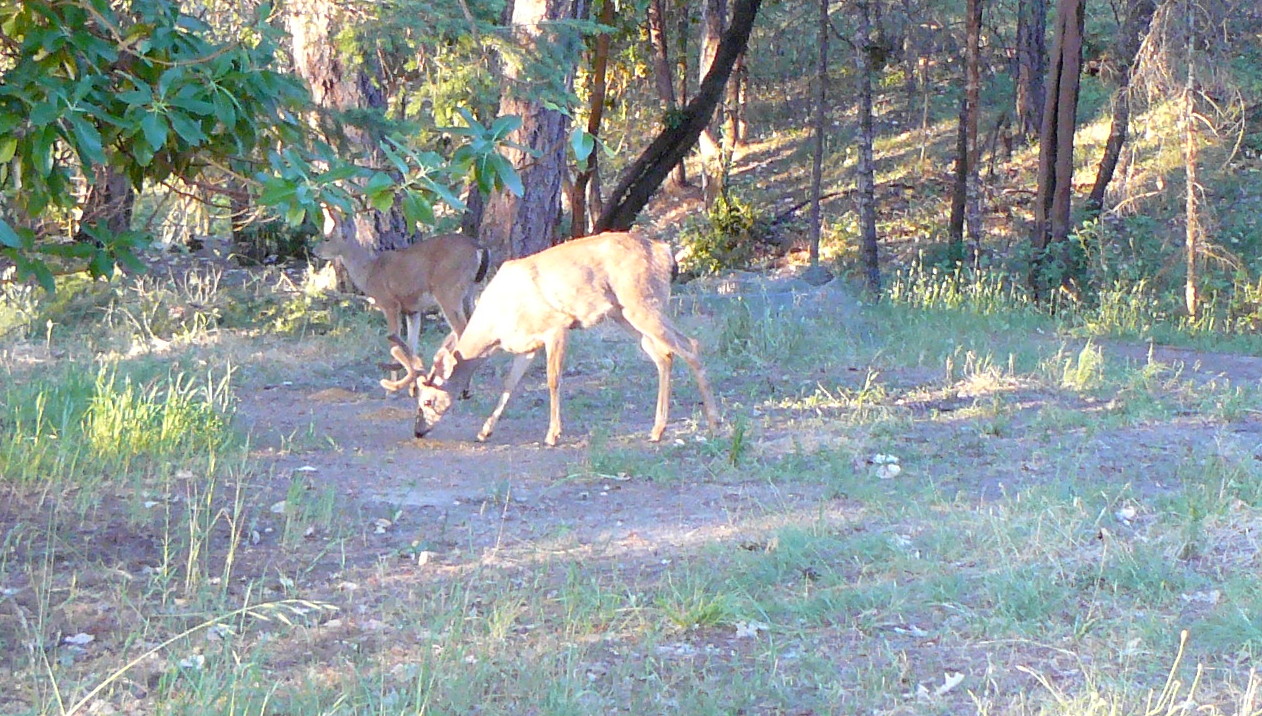
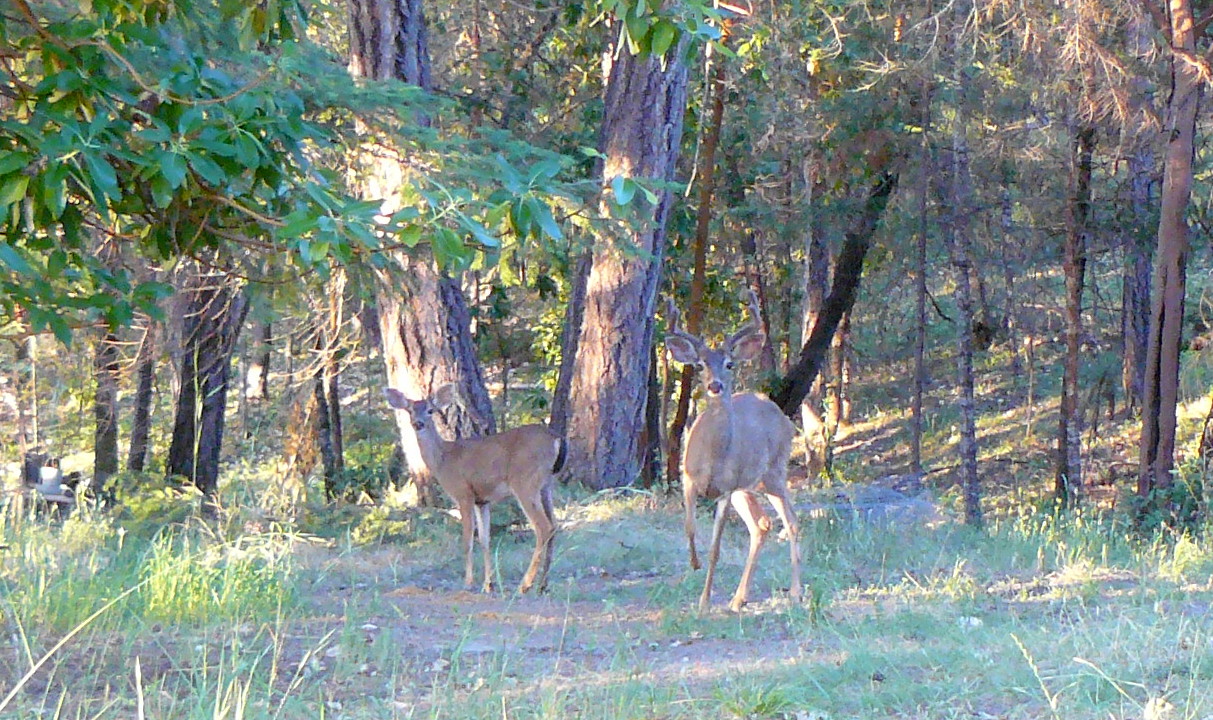
Then early yesterday morning, around 7am, the early morning sunlight picked up two deer, a young stag and a doe, who had come to feed on the molasses cob that we put out twice a day.

I grabbed my camera and went quietly out to where they were feeding. Although both creatures were familiar to Jean and me, and they are not too uncomfortable with us out there putting cob down, this time my different behaviour and especially the cold, dark ‘eye’ of the camera lens made the two deer pretty twitchy.

So I’m putting off the sad eulogy of the shot wolf until tomorrow and offering up the magic of being trusted by these beautiful creatures.

P1160172
The young stag in the foreground and the doe feeding on the cob both without being freaked out by my presence.
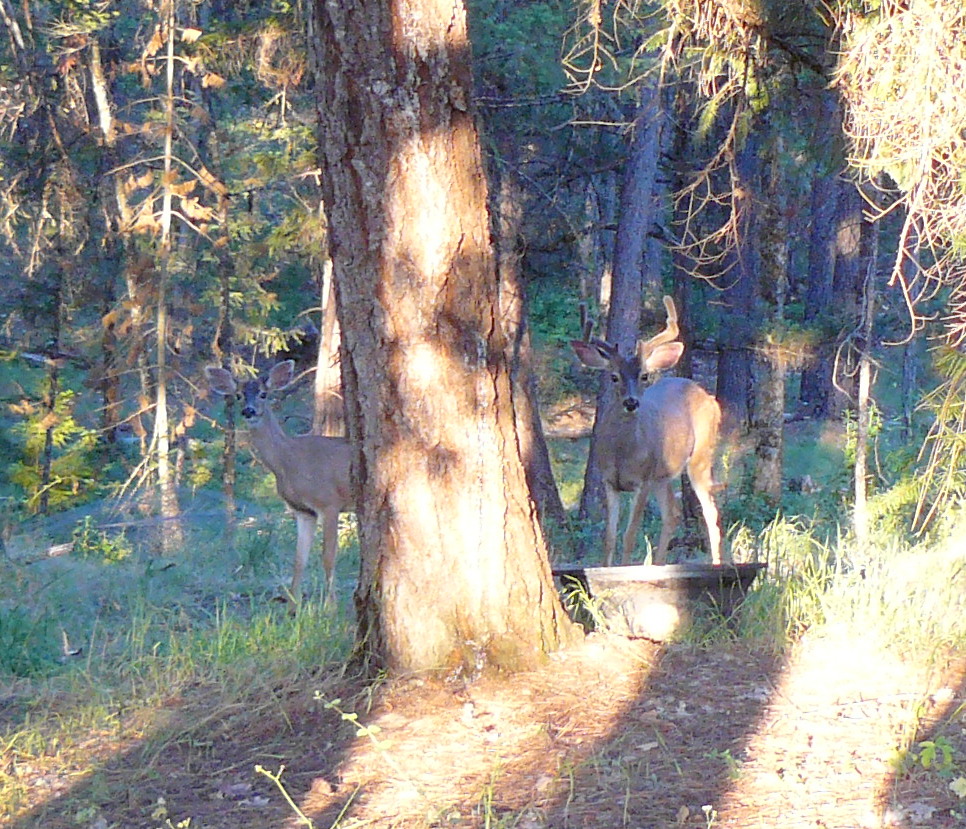
P1160173
But two further steps towards them by yours truly had them instantly watching me very closely.
P1160175
Now I’m on the verge of getting too close.
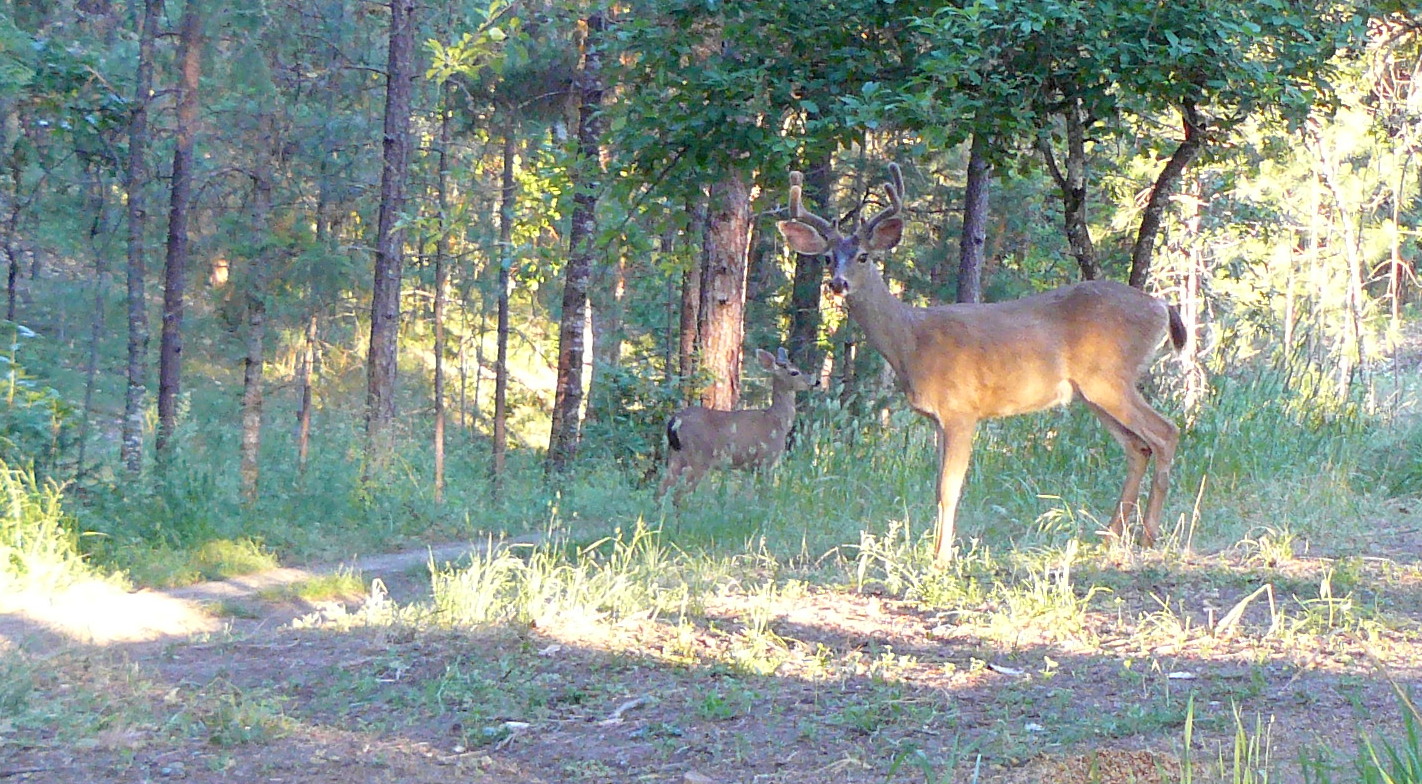
P1160176
One last photograph grabbed before they disappear into the forest. But what a magnificent, beautiful animal is that young stag!

See you tomorrow and the sad story of wolf OR-4

Pharaoh’s weekend!

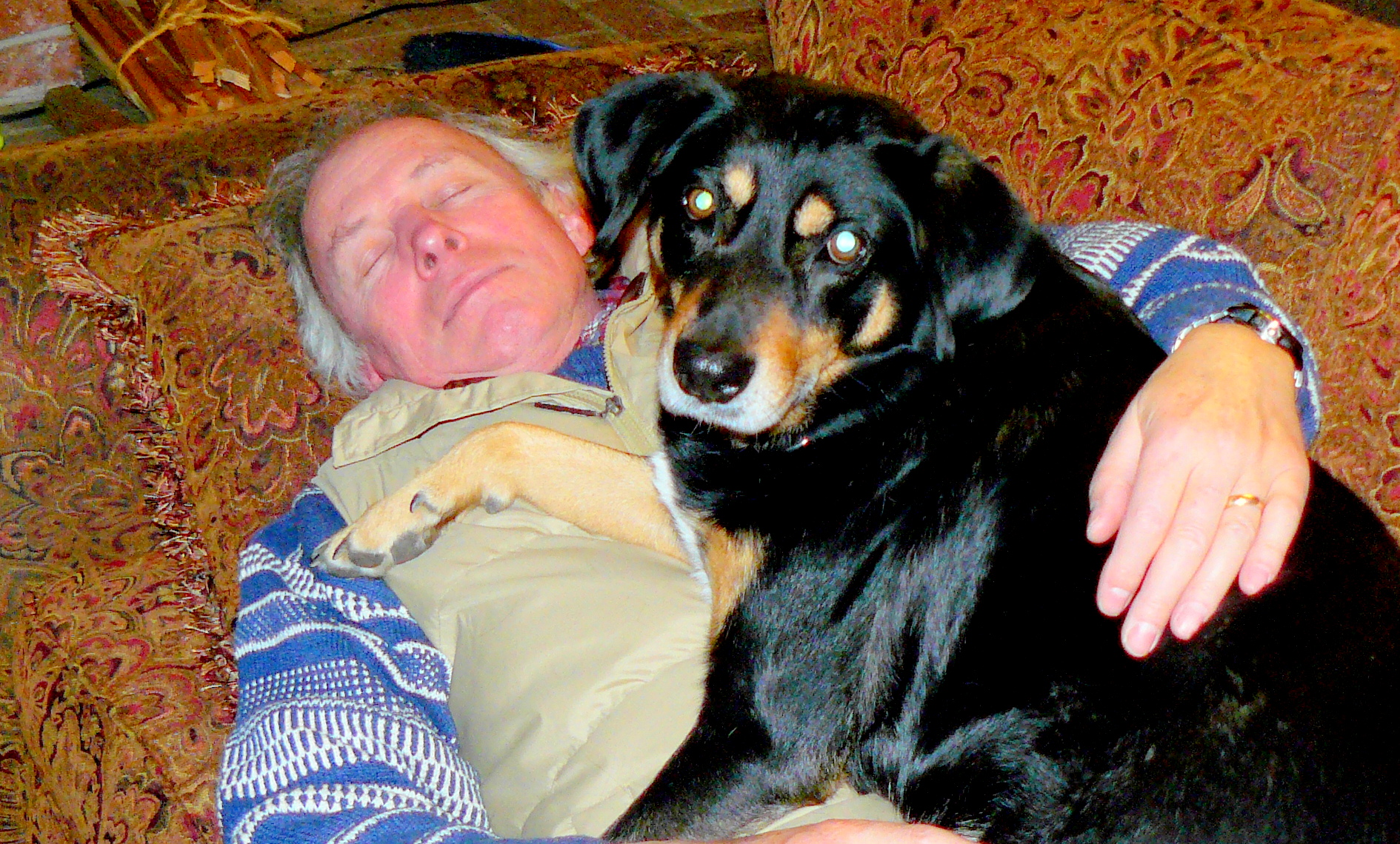
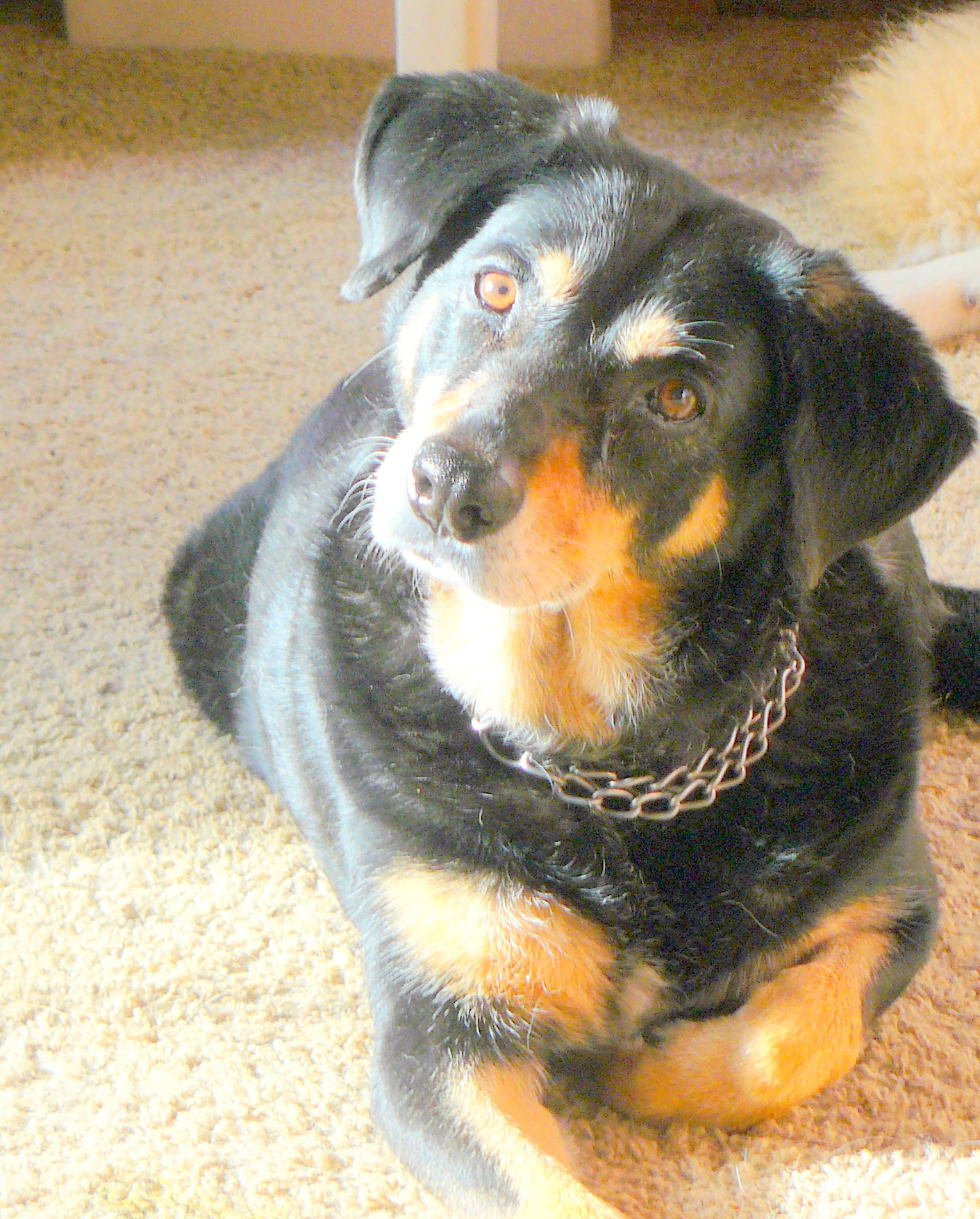
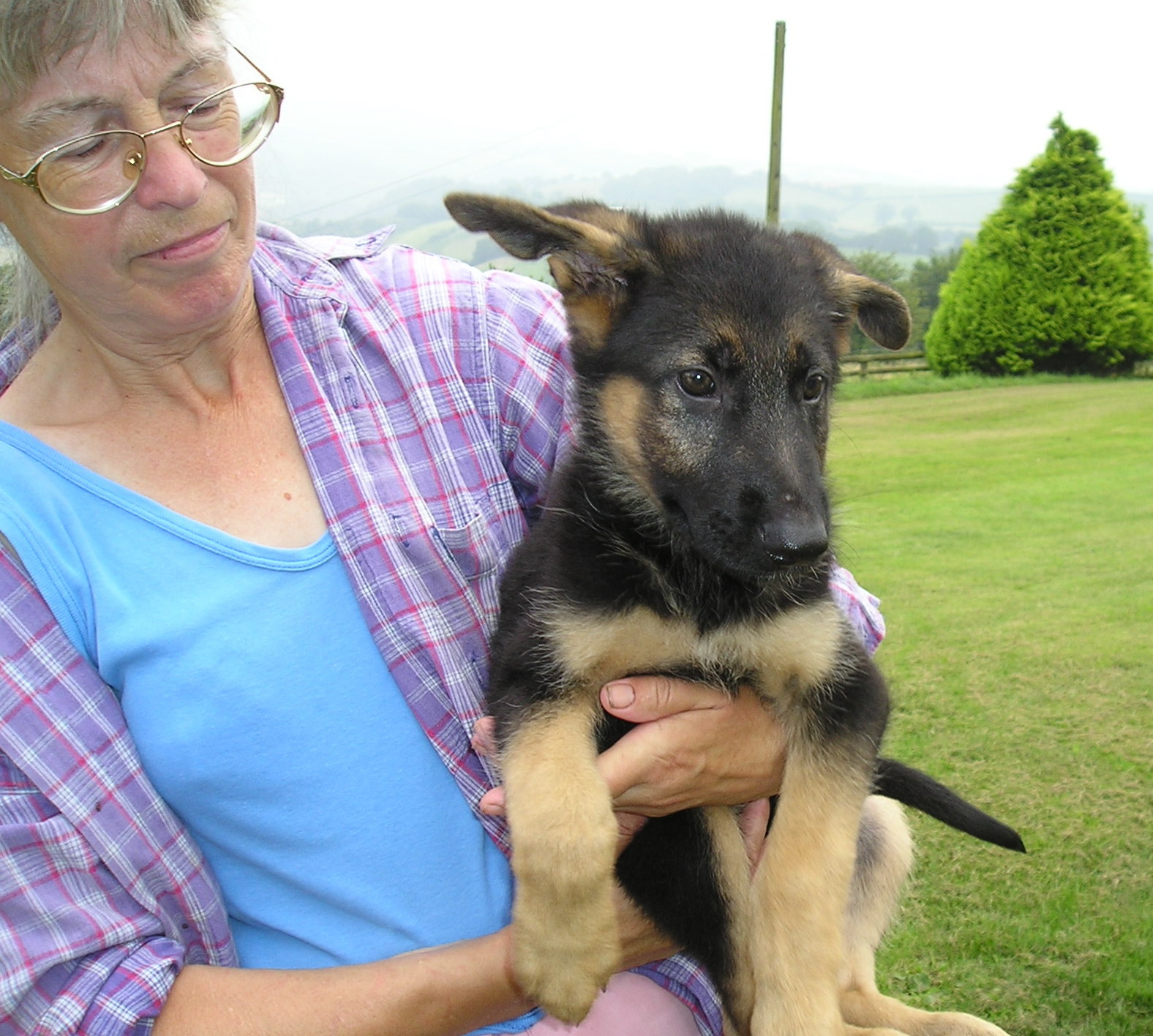
Pharaoh was thirteen years old yesterday.

Yes, Pharaoh was born on June 3rd., 2003 in Devon, South-West England close to where I was living at that time.

I deliberately didn’t mention it yesterday as I wanted to devote both days this weekend in celebration of this wonderful doggy friend.

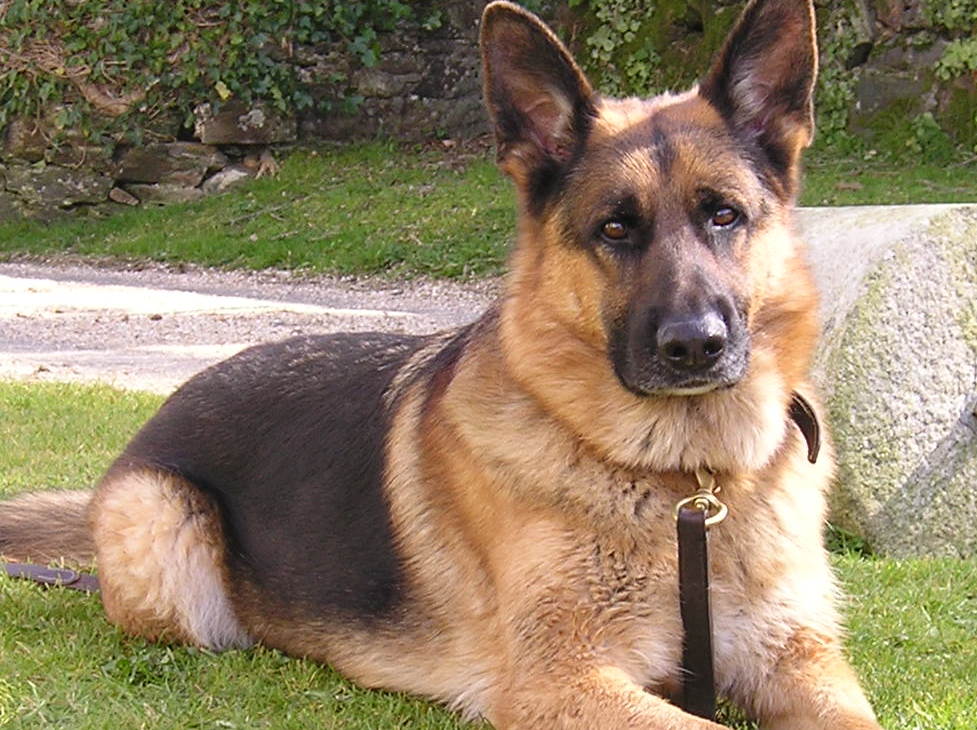
Pharaoh being held by Sandra Tucker, the breeder. Date around late Summer in 2003.
Pharaoh being held by Sandra Tucker, of Jutone, the breeder. Date around late Summer in 2003.

So rather than write reams about this wonderful relationship that I have had with Pharaoh all I am going to do both today and tomorrow is to share with you a few memories of these fantastic years.

steam-train
As a young dog Pharaoh was up for anything new. This picture of him on the Dart Valley Steam Railway in South Devon.
Plane dog
Never could bring myself to take off with Pharaoh in the back of this old Piper Super Cub (Reg: R-151) but he enjoyed no end of taxying around the grass airfield in Devon. Picture taken in July, 2006.
abo
Pharaoh digging on a Devon beach in January, 2008 days after I had returned from Mexico and meeting Jean for the first time.
OLYMPUS DIGITAL CAMERA
That incredible, intense face of his! Photograph taken in Devon before Pharaoh and I travelled out to Mexico.
Pharaoh now settled in to life in San Carlos, Mexico. Picture taken in March, 2009.
P1090692
Fast forward to all of us living up at 5,000 ft in Payson, Arizona, some 80 miles North-East of Phoenix. Photo taken the last day of the year in 2010.
P1110558
Enjoying the warm grass in July, 2012 just a few weeks before we discovered our present home in Southern Oregon.

Hope you can return tomorrow for my usual Picture Parade as it will be exclusively more photographs of Pharoah.

The power of open opinions

We can never turn aside from cruelty, in all its forms.

The rather rosy mood engendered by my post about the relationship between a Brazilian fisherman and a penguin published on the 31st May and the saving of a dog from a culvert by a serving police officer in Rhode Island was bound not to last. But I didn’t anticipate that it would turn so bleak by the following petition that was highlighted to me and everyone by a recent comment to a post by John Zande.

This was the petition.

ooOOoo

497417-1434490365-wideDemanding Justice for Dog Crushed to Death by a Garbage Man

BY: June Haggar

TARGET: Cidade de Presidente Figueiredo Mayor Neilson da Cruz, Brazil

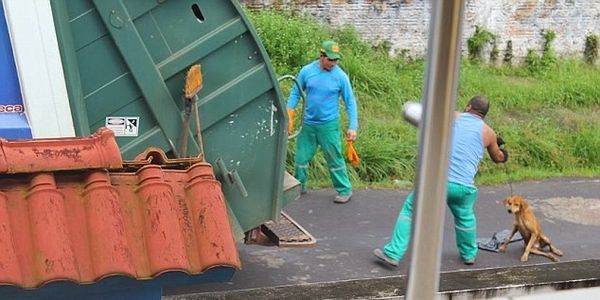
A garbage man can be seen in pictures, attached, as he deliberately went on to the sidewalk to hit a dog and then stopped the truck to put a chain around his neck and drag and throw him into the truck’s compactor to be crushed to death.
Although the article claims that the man was fired, we hereby implore the Mayor Neilson da Cruz to prosecute Jadson James Franca to the fullest extent of the law with jail time and fines. We also want the garbage company ViaLimpa to fire the 2 co-workers in the photos laughing and allowing this madman to crush the dog.
Mr. Mayor: If you do not prosecute this man with jail time, you are sending a message to the youth of Brazil that this is acceptable conduct to innocent animals that have done nothing wrong other than to walk on the sidewalk. This Jadson James Franca is clearly a sociopath who enjoys the torture and murder of animals. He is a danger to the people of Brazil, while he is still walking free. It is a known fact that sociopaths begin to torture and murder animals and then move on to people. ALL serial killers started out with torturing and murdering animals and Jadson Franca is no different. What will you do if he kills his wife, child, neighbor or an innocent person on the street and you could have done something to stop it by prosecuting him now?

I ask all to sign this petition to stop this murdering rampage that is happening on the streets of Brazil and send a message that this blatant murder of an innocent dog will not be tolerated by the citizens of the world.

ooOOoo

I can do no better in terms of my own feelings than to highlight what June wrote, “This Jadson James Franca is clearly a sociopath who enjoys the torture and murder of animals. He is a danger to the people of Brazil, while he is still walking free.”

Well over 30,000 people signed that petition including John and myself. In doing further research, however, it became clear that this group anger and disgust worked, assuming the British Daily Mail newspaper is reporting the story accurately.

For in their online edition of May 31st, their online reporter, Matt Roper published this:

A binman has been sacked after he was caught dragging an injured dog across a road before throwing the terrified animal in the back of his rubbish truck to be crushed alive.

Jadson James Franca, 35, mounted the pavement of the street in Presidente Figueiredo, northern Brazil and hit the stray dog, according to shocked residents.

The council binman then stopped the garbage truck and tied a chain around the neck of the whimpering animal, which had had both of its legs broken.

As his colleagues looked on, Franca then dragged the frightened dog along the pavement before tossing it into the compacting mechanism of the collection vehicle.

Later on in that same article Matt Roper reported:

Brazilian TV presenter Xuxa, who once dated football legend Pele, also posted the shocking photos to her 4.4million Facebook followers.

She wrote: ‘This little dog, who wasn’t bothering anyone, had its legs broken, and in agony was tied up and dragged by the neck, before being brutally murdered by this individual, being thrown and crushed alive in the back of the garbage truck.’

This monster can still appeal against a fine and will still be walking the streets in freedom! Are we going to let that happen?? Let’s do something?? Together we can.’

Yesterday Presidente Figueiredo’s mayor, Neilson da Cruz, told Brazil’s A Critica newspaper that the binman had been sacked and the refuse collection company, ViaLimpa, would face an unspecified fine.

That Daily Mail article also has more photographs but without permission to republish them here all I can do is give you the links included in my ‘copy and paste’ of those two extracts above.

Read more: http://www.dailymail.co.uk/news/article-3105342/Brazilian-binman-sacked-pictured-dragging-injured-dog-road-throwing-animal-rubbish-truck.html#ixzz4AMsr2xRG
Follow us: @MailOnline on Twitter | DailyMail on Facebook

Thank goodness for the power of mass opinions now offered to us by this online world of ours.

And speaking of Brazil!

What a wonderful coincidence! From the country to the surname!

As many of you will know yesterday I published a delightful story of how fisherman Joao Pereira de Souza, 71, who lives in an island village just outside Rio de Janeiro, Brazil [my italics] saved a penguin that then bonded with Joao.

So imagine my surprise when yesterday morning I read over on the Care2 website a story of a policeman, Officer Joe Brazil [my italics] who rescued a dog. I was compelled to republish that in full for your pleasure.

ooOOoo

Barefoot Policeman Saves Pup From Watery Danger

By: Laura S. May 30, 2016

About Laura

13087551_10206497645741920_394354682604112285_n-11Every so often a photo shines light on a moment of heroism more than words ever could. This amazing image comes from Rhode Island resident Peggy Edwards who stayed on scene as a 911 call summoned help for a puppy trapped in a culvert.

The dog, now known to be Cece, had escaped from her Woonsocket home one day after arriving. Without her litter mates for the first time and unfamiliar with her new surroundings, Cece became frightened after slipping through a back door and being confronted by the great outdoors.

Cece ran all night and wasn’t spotted until the next afternoon. She was wandering down Alice Avenue when a passing car startled her further and she took refuge in a culvert. To further complicate the situation, Cece went quite far into the tunnel and soon found herself trying to cling to the edge as water flowing from a nearby brook lapped her body.

“She was stuck about 20-25 feet in and was clinging to the side,” Peggy Edwards explained. “We tried to help but were afraid of scaring her further in”

But when Officer Joe Brazil arrived on scene, he calmly took off his shoes and rolled up his pants. If Cece couldn’t come to him, he’d simply go to her.

“As I got closer, I could see Cece just clinging to the side and just shaking,” Brazil told NBC 10 News. “(The dog was) very, very frightened.”

Cece sniffed Brazil’s hand briefly and then allowed him to pick her up.

“It just seemed like she was almost saying thank you. Like she knew I was there to help,” Brazil said.

Cece’s owner, Michelle Perez, was deeply relieved to be reunited with her new family member.

“She’s only 5 months old. I wasn’t able to sleep,” Perez said. “All I kept doing was just driving around, calling her.”

And as for Officer Brazil, well, he is reportedly looking to adopt a dog of his own very soon.

ooOOoo

 I shall be going nuts over the next few hours trying to think of a follow-on third story about Brazil! (Apologies: just could resist that!)

A rare plea from me!

Utah is one of only a few states that still permits animal shelters to euthanize animals using gas chambers.

On a regular basis I share stories that I read on the Care2 website. Indeed, there’s a lovely story of a police officer rescuing a dog that is being republished by me at my usual posting time tomorrow.

But this petition so upset me that I wanted to share it with you all, and to do that now.

Here are the details:

212041-1464376962-wideDemand Utah Animal Shelters Stop Using Gas Chamber Euthanasia

BY: Kaylie Fox

TARGET: Utah Legislators, Utah

Utah is one of only a few states that still permits animal shelters to euthanize animals through gas chambers.
This is a cruel method, that can take up to an hour or more to be effective. During that hour the animals are scared as they slowly die alone in a cage, box, or drawer. There is a much more humane way to euthanize animals by intravenous injection, which allows animals to experience a much more peaceful death – usually within 30 seconds.
Gas chamber euthanasia is inhumane and outdated, when there are better methods available. Sign this petition demanding that the Utah Legislature pass a bill to end gas chamber use in animal shelters.

I just signed a Care2 petition to demand that the Utah State Legislature pass a bill to end gas chamber use in animal shelters.

Will you join me? Click here to learn more and sign your name too!

Thanks!

*****

Sincerely,
Kaylie Fox

Gratitude – the Penguin model!

The Bricklayer and the Penguin.

The following glorious story, a true story I should have made clear, was sent to me recently by Cynthia, wife of my long-term Californian friend Dan Gomez. It’s a story that was broadcast by TV Globo, not a station I had previously heard of. Unsurprising really when a quick web search finds their details:

Rede Globo, or simply Globo, is a Brazilian television network, launched by media mogul Roberto Marinho on 26 April 1965. It is owned by media conglomerate Grupo Globo, being by far the largest of its holdings.

Here’s that story.

ooOOoo

The Bricklayer and the Penguin

This penguin swims 5,000 miles every year for a reunion with the man who saved his life.

Mail Attachment
Best buds (Picture: TV Globo)

Todays most heartwarming story is brought to you from a beach in Brazil. The story of a South American Magellanic penguin who swims 5,000 miles each year to be reunited with the man who saved his life.

Retired bricklayer and part time fisherman Joao Pereira de Souza, 71, who lives in an island village just outside Rio de Janeiro , Brazil , found the tiny penguin, covered in oil and close to death, lying on rocks on his local beach in 2011. Joao cleaned the oil off the penguin’s feathers and fed him a daily diet of fish to build his strength. He named him Dindim.

The prodigal penguin returns (Picture: TV Globo)

After a week, he tried to release the penguin back into the sea. But, the bird wouldn’t leave.

He stayed with me for 11 months and then, just after he changed his coat with new feathers, he disappeared, Joao recalls. And, just a few months later, Dindim was back. The penguin spotted the fisherman on the beach one day and followed him home.

Look who's back (Picture: TV Globo)
Look who’s back (Picture: TV Globo)

For the past five years, Dindim has spent eight months of the year with Joao and is believed to spend the rest of the time breeding off the coast of Argentina and Chile. It is thought he swims up to 5,000 miles each year to be reunited with the man who saved his life.

(Picture: Rio de Janeiro Federal University )
(Picture: Rio de Janeiro Federal University)

I love the penguin like it’s my own child and I believe the penguin loves me, Joao told Globo TV. No one else is allowed to touch him. He pecks them if they do. He lays on my lap, lets me give him showers, allows me to feed him sardines and to pick him up.

It's thought Dindim believes the fisherman is also a penguin (Picture: TV Globo)
It’s thought Dindim believes the fisherman is also a penguin (Picture: TV Globo)

Everyone said he wouldn’t return but he has been coming back to visit me for the past four years. He arrives in June and leaves to go home in February and every year he becomes more affectionate as he appears even happier to see me.

(Picture: Rio de Janeiro Federal University)

Biologist Professor Krajewski, who interviewed the fisherman for Globo TV, told The Independent: “I have never seen anything like this before. I think the penguin believes Joao is part of his family and probably a penguin as well. When he sees him he wags his tail like a dog and honks with delight.”

And, just like that, the world seems a kinder place again.

ooOOoo

Unsurprisingly there are numerous videos of Joao and Dindim to be found on YouTube but I have selected the following one for you.

It’s wonderful how our worries about the nature of us humans can be swept away just as easily as an ocean wave breaking on a beach near an island village just outside Rio de Janeiro.

The magic of touch!

At all levels and in so many ways it is life-giving.

dt14Animals must see touch as a natural way of living. We humans are less natural about touch especially with people that we don’t know so well. Not everyone, of course, but as a general statement it is probably not wrong.

The topic of touch has come to me today as a result of a recent item read over on The Conversation blogsite; specifically about the importance of touch between a doctor and his or her patient. Here it is republished within the terms of The Conversation:

ooOOoo

Touch creates a healing bond in health care

May 23, 2016 8.23pm EDT

Touch is a powerful tool in medicine. Hands via www.shutterstock.com
Touch is a powerful tool in medicine. Hands via http://www.shutterstock.com

In contemporary health care, touch – contact between a doctor’s hand and a patient – appears to be on its way out. The expanding role of CT and MRI imaging is decreasing reliance on touch as a way of making diagnoses. Pressures to move patients through the system more quickly leave health professionals with fewer opportunities to make contact. Our experience suggests that when doctors spend fewer minutes with patients, less time is available for touch.

Yet despite the rise of scanners, robots and other new medical technologies, the physician’s hand remains one of medicine’s most valuable diagnostic tools. Touch creates a human bond that is particularly needed in this increasingly hands-off, impersonal age. Medical practice is replete with situations where touch does more than any words to comfort and reassure.

The USC psychologist Leo Buscaglia, whose habit of hugging those he met soon earned him the sobriquet “Doctor Love,” bemoaned our neglect of touch in his book, “Love,” in these terms:

Too often we underestimate the power of a touch, a smile, a kind word, a listening ear, an honest compliment, or the smallest act of caring, all of which have the potential to turn a life around.

For thousands of years, touch has been recognized as an essential part of the healing arts. Native American healers relied on touch to draw out sickness, and kings and queens were long believed to possess the “Royal Touch,” through which the mere laying on of hands could heal. The Bible contains numerous stories of the healing power of touch.

Touch is an essential part of our well-being

An indication of our need for touch can be found among our primate relatives. Psychologists have observed that many such species spend upwards of five hours of each day touching one another, partly through grooming. For many human beings, however, the daily dose of touching would be measured not in hours but minutes, perhaps even seconds.

Lack of touch can be hazardous to health. In experiments with primates some 60 years ago,

 A young mother participates in a ‘Kangaroo Mother’ program at the National Maternity Hospital in El Salvador. Luis Galdamez/Reuters
A young mother participates in a ‘Kangaroo Mother’ program at the National Maternity Hospital in El Salvador. Luis Galdamez/Reuters

researcher Harry Harlow demonstrated that young monkeys deprived of touch did not grow and develop normally. Mere food, water and shelter are not sufficient – to thrive, such creatures need to touch and be touched.

The same can be said for human beings. During the 20th century, wars landed many babies in orphanages, where their caretakers observed that no matter how well the infants were fed, they would fail to thrive unless they were held and cuddled on a frequent basis. Touch offers no vitamins or calories, yet it plays a vital role in sustaining life.

More recent studies have corroborated these findings. “Kangaroo care,” using papoose-like garments to keep babies close to their mothers, decreases the rate at which they develop blood infections. Touching also improves weight gain and decreases the amount of time that newborns need to remain in the hospital.

Touch creates a bond between doctor and patient

Novelist and physician Abraham Verghese has argued that touching is one of the most important features of the patient-physician interaction. When he examines a patient, he is not merely collecting information with which to formulate a diagnosis, but also establishing a bond that provides comfort and reassurance.

The notion that touch can reassure and comfort has a scientific basis. Ten years ago researchers used MRI scans to look at the brains of women undergoing painful stimuli. When subjects experience pain, certain areas of the brain tend to “light up.” The researchers studied subjects when they were alone, when they were holding a stranger’s hand, and when they were holding their husband’s hand.

They found the highest levels of pain activation when the women were alone. When they were holding a stranger’s hand, the pain response was decreased. And levels of activation were lowest of all when they were holding their husband’s hand. Interesting, the higher the quality of subjects’ marriages, the more pain responses were blunted.

Touch from parents helps kids in intensive care

We have been studying this phenomenon in our own institution, looking at the effect of touch not only on patients but on the parents of patients admitted to the pediatric intensive care unit.

The project, called ROSE (Reach Out, Soothe, and Embrace), sought to determine whether increasing opportunities to touch patients could promote parent well-being without compromising patient safety.

Instead of merely determining whether patients could be taken off the ventilator or fed, we also identified patients who could be safely touched and even held in their parents’ arms. When a patient was deemed safe to hold, a magnet bearing the image of a red rose embraced by two hands was placed on the door to the patient’s room.

While we are still analyzing the results and further study is needed to fully delineate the health benefits of touch, several findings are already clear.

First, increasing opportunities for touch does not compromise patient safety. Second, the subjective well-being of family members is enhanced when touching is encouraged. Third, promoting touch empowers family members to become more involved in their child’s care.

To be sure, inappropriate and unsafe touching can be harmful. But when touch is encouraged in the right ways and for the right reasons, it is good for patients, family, friends and health professionals alike. Touch is one of the most fundamental and effective ways to create a sense of connection and community among human beings.

In the words of the 20th-century theologian Henri Nouwen, who wrote in his book, “Out of Solitude”:

When we honestly ask ourselves which person in our lives means the most to us, we often find that it is those who, instead of giving advice, solutions, or cures, have chosen rather to share our pain and touch our wounds with a warm and tender hand.

So next time you find yourself confronted by a person in distress, remember the power of touch. Medicines and words both have healing power, but so does touch, and it is perhaps the most widely available, financially responsible and safest tool in the healing arts. When we touch, we connect, and when we connect, we create a healing bond for which there is simply no substitute.

ooOOoo

“When we touch, we connect, and when we connect, we create a healing bond for which there is simply no substitute.”

P1140965
Jean with my mother back in July, 2014.

P1150928The healing touch!

Or to repeat the elegant words of Leo Buscaglia:

Too often we underestimate the power of a touch, a smile, a kind word, a listening ear, an honest compliment, or the smallest act of caring, all of which have the potential to turn a life around.

3175758.largeWho have you given a hug today?