Category: consciousness

Another fabulous guest post from Rohit.

Three years have passed by; just like that!

In the first couple of weeks of the New Year in 2014 I received an email from Rohit Agawal asking if I would like to receive a guest post. Of course I said yes.

That started a wonderful series of guest posts coming in from Rohit.

Here is his latest.

ooOOoo

Five Questions to Ask Before Adopting a Dog
Dogs are like children in a broader sense and when you decide to adopt one, there are many things that you need to be responsible for. There is not much difference between adopting a dog and having a child as you will need to take responsibility for another living being by giving him the necessary care and support.

Therefore, adopting a dog is a huge decision and should not be taken on a random impulse. You need to be aware of all the pros and cons before taking your decision and a major part of estimating them involves asking yourself some important questions. To help you get ready for an important life changing decision, we have listed a couple of questions that you need to ask yourself before adopting a dog and therefore without any further ado, let us get started!

  1. Can You Afford to Buy and Maintain a Dog?

The first question that you need to add yourself is quite obvious because a dog will need constant love and support throughout its whole life. To give him the best, you will need to shell extra bucks. The expenses that are involved include adoption or buying fees, spraying (no needed if you are adopting a dog from any rescue shelter), dog food, dog accessories like collar, dog crates (you can visit this website to explore your options) etc and annual veterinarian checkups for your pet’s well being.

Additional expenses can also include monthly heartworm medicines and flea and tick prevention but these vary from dog to dog.

  1. Do you have the time?

Dogs are tactile beings and they need to be given a suitable amount of time. Young puppies without their mothers will need an extra touch and support. The amount of tactile contact is different for different breeds but all domesticated dogs do need their owner’s love and affection to survive. You would also need to dedicate some time to go on walks as a dog needs to out at least 8 hours a day. If you are busy with work the n employ dog walkers.

  1. Are you prepared to commit for a long time?

This is an important question that you need to ask yourself at every step of the process. Dogs can live up to 18 years and therefore you need to be prepared for a lifelong commitment and not change your mind after actually adopting one. Abandoned dogs are a common sight and this is even true with fancier and smaller breed that people adopt for certain reasons and wash their hands off their pets after a few years, citing reasons like job relocation, marriage etc. A dog deserves a stable home and if you can’t provide that for a long duration then it is better to not adopt.

  1. Select the Dog Breed That Suits Your Lifestyle

When you finally decide to adopt, the first thing that you need to select is the breed that you want. Now different types of breeds have different needs and wants. You need to know everything about the same before you select any breed and therefore concentrate on conducting an extensive research about the same.

Also make sure that the dog you adopt will be able to adapt to your lifestyle.

  1. Dogs get sick and are you ready to handle that?

Dogs are prone to sickness and you need to accept that you would need to shell out extra money for healthcare emergencies. It can be something simple as a weight issue or it can also be a serious condition that might require surgery. Pet insurance is a great option that dog owners can look into to cover any emergencies.

So these were some significant questions that you need to ask yourself when you adopt a dog. It might seem too much of work but the joy that a dog will bring in your life will be second to no other and I promise that you will never regret your decision if you take all the necessary steps.

ooOOoo

Author Bio: Rohit is a dog lover and pet enthusiast; he owns two adorable and wonderful dogs that include a German shepherd and a Labrador retriever. As work keeps him away from home, concerns arise about the safety and comfort of his pet friends, which made him try out various products that facilitate the same.

As Rohit makes so clear at the end, the joy that a dog will bring in your life will be second to none

Consuming the living planet.

The eating habits of us humans have to change!

Funny how things go!

For just two days ago I published a post under the heading of Meat is Heat. It featured an essay by Michael Greger. He of the website NutritionFacts.org. That essay promoted the message:

What we eat may have more of an impact on global warming than what we drive.

Just cutting out animal protein intake one day of the week could have a powerful effect. Meatless Mondays alone could beat out a whole week of working from home and not commuting.

Many of you read that post.

On the same day that I published that post, George Monbiot published an article in The Guardian newspaper that offered the same message, albeit coming at it from a different place but nonetheless just as critically important.

Here it is republished with Mr. Monbiot’s very kind permission.

ooOOoo

We Can’t Keep Eating Like This

This is the question everyone should be attending to – where is the food going to come from?

By George Monbiot, published in the Guardian 11th December 2017

Brexit; the crushing of democracy by billionaires; the next financial crash; a rogue US president: none of them keeps me awake at night. This is not because I don’t care – I care very much. It’s only because I have a bigger question on my mind. Where is the food going to come from?

By mid-century there will be two or three billion more people on Earth. Any one of the issues I am about to list could help precipitate mass starvation. And this is before you consider how they might interact.

The trouble begins where everything begins: with soil. The UN’s famous projection that, at current rates of soil loss, the world has 60 years of harvests left, appears to be supported by a new set of figures. Partly as a result of soil degradation, yields are already declining on 20% of the world’s croplands.

Now consider water loss. In places such as the North China Plain, the central United States, California and north-western India – among the world’s critical growing regions – levels of the groundwater used to irrigate crops are already reaching crisis point. Water in the Upper Ganges aquifer, for example, is being withdrawn at 50 times its recharge rate. But, to keep pace with food demand, farmers in South Asia expect to use between 80 and 200% more water by 2050. Where will it come from?

The next constraint is temperature. One study suggests that, all else being equal, with each degree Celsius of warming the global yield of rice drops by 3%, wheat by 6% and maize by 7%. This could be optimistic. Research published in the journal Agricultural & Environmental Letters finds that 4°C of warming in the US Corn Belt could reduce maize yields by between 84 and 100%.

The reason is that high temperatures at night disrupt the pollination process. But this describes just one component of the likely pollination crisis. Insectageddon, caused by the global deployment of scarcely-tested pesticides, will account for the rest. Already, in some parts of the world, workers are now pollinating plants by hand. But that’s viable only for the most expensive crops.

Then there are the structural factors. Because they tend to use more labour, grow a wider range of crops and work the land more carefully, small farmers, as a rule, grow more food per hectare than large ones. In the poorer regions of the world, people with less than 5 hectares own 30% of the farmland but produce 70% of the food. Since 2000, an area of fertile ground roughly twice the size of the United Kingdom has been seized by land grabbers and consolidated into large farms, generally growing crops for export rather than the food needed by the poor.

While these multiple disasters unfold on land, the seas are being sieved of everything but plastic. Despite a massive increase in effort (bigger boats, bigger engines, more gear), the worldwide fish catch is declining by roughly 1% a year, as populations collapse. The global land grab is mirrored by a global seagrab: small fishers are displaced by big corporations, exporting fish to those who need it less but pay more. Around 3 billion people depend to a large extent on fish and shellfish protein. Where will it come from?

All this would be hard enough. But as people’s incomes increase, their diet tends to shift from plant protein to animal protein. World meat production has quadrupled in 50 years, but global average consumption is still only half that of the UK – where we eat roughly our bodyweight in meat every year – and just over a third of the US level. Because of the way we eat, the UK’s farmland footprint (the land required to meet our demand) is 2.4 times the size of its agricultural area. If everyone aspires to this diet, how do we accommodate it?

The profligacy of livestock farming is astonishing. Already, 36% of the calories grown in the form of grain and pulses – and 53% of the protein – are used to feed farm animals. Two-thirds of this food is lost in conversion from plant to animal. A graph produced last week by Our World in Data suggests that, on average, you need 0.01m2 of land to produce a gram of protein from beans or peas, but 1m2 to produce it from beef cattle or sheep: a difference of 100-fold.

It’s true that much of the grazing land occupied by cattle and sheep cannot be used to grow crops. But it would otherwise have sustained wildlife and ecosystems. Instead, marshes are drained, trees are felled and their seedlings grazed out, predators are exterminated, wild herbivores fenced out and other lifeforms gradually erased as grazing systems intensify. Astonishing places – such as the rainforests of Madagascar and Brazil – are laid waste to make room for yet more cattle.

Because there is not enough land to meet both need and greed, a global transition to eating animals means snatching food from the mouths of the poor. It also means the ecological cleansing of almost every corner of the planet.

The shift in diets would be impossible to sustain even if there were no growth in the human population. But the greater the number of people, the greater the hunger meat eating will cause. From a baseline of 2010, the UN expects meat consumption to rise by 70% by 2030 (this is three times the rate of human population growth). Partly as a result, the global demand for crops could double (from the 2005 baseline) by 2050. The land required to grow them does not exist.

When I say this keeps me up at night, I mean it. I am plagued by visions of starving people seeking to escape from grey wastes, being beaten back by armed police. I see the last rich ecosystems snuffed out, the last of the global megafauna – lions, elephants, whales and tuna – vanishing. And when I wake, I cannot assure myself that it was just a nightmare.

Other people have different dreams: the fantasy of a feeding frenzy that need never end, the fairytale of reconciling continued economic growth with a living world. If humankind spirals into societal collapse, these dreams will be the cause.

There are no easy answers, but the crucial change is a shift from an animal to a plant-based diet. All else being equal, stopping both meat production and the use of farmland to grow biofuels could provide enough calories for another 4 billion people and double the protein available for human consumption. Artificial meat will help: one paper suggests it reduces water use by at least 82% and land use by 99%.

The next Green Revolution will not be like the last one. It will rely not on flogging the land to death, but on reconsidering how we use it and why. Can we do this, or do we – the richer people now consuming the living planet – find mass death easier to contemplate than changing our diet?

http://www.monbiot.com

ooOOoo

As many of you know Jeannie and I changed our diet to a vegan diet some four weeks ago. It was done more for personal health reasons than from an awareness of the difference that it made to the future of the planet. But over the last few weeks we have had our eyes opened to the broader benefits of not eating meat. George Monbiot spells out the urgency of change for all of us, especially the richer people in the richer countries.

Am I hopeful that there will be a mass awareness of the need to change? I truly just don’t know. I will close be repeating Mr. Monbiot’s closing sentence.

Can we do this, or do we – the richer people now consuming the living planet – find mass death easier to contemplate than changing our diet?

Interesting times!

Get lost in one’s dreams!

A very beautiful photograph.

I’m sure I have mentioned previously the fun, education and sheer enjoyment that I, and many, many others, get from the photography forum Ugly Hedgehog.  I drop into the forum several times a day.

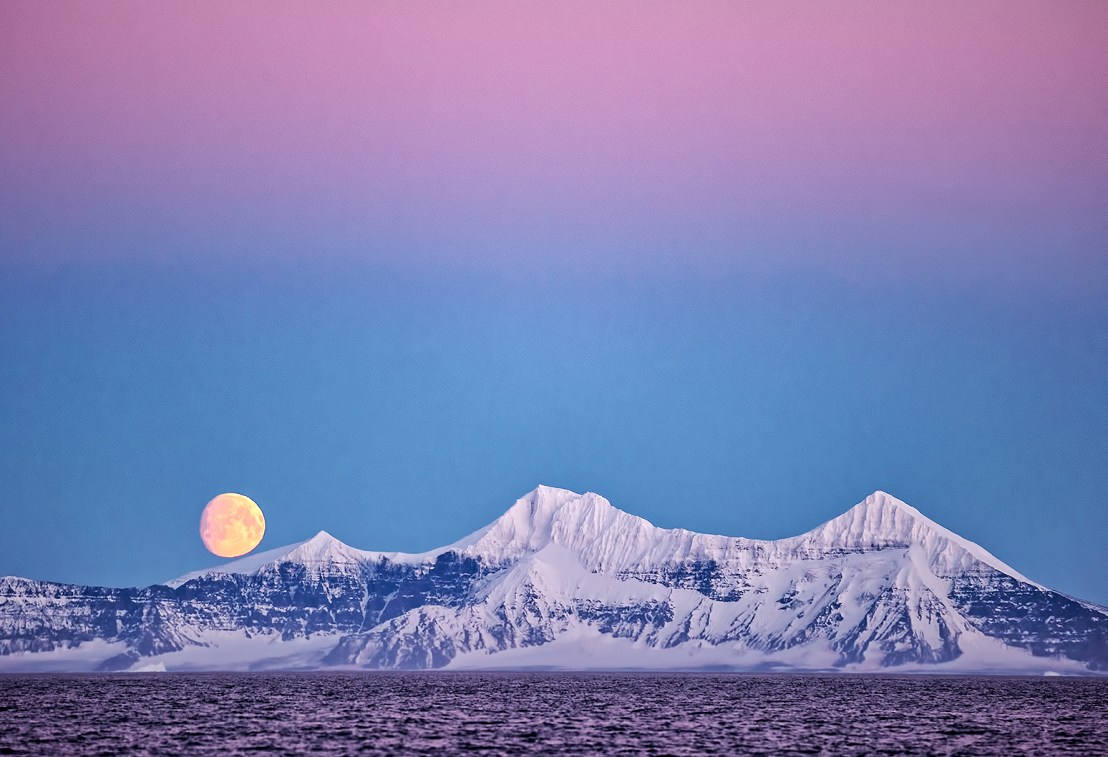
Thus it was that yesterday morning I went to an item posted by Kalina. It was called Moonset in Greenland.

This is the photograph that Kalina had shared on the forum:

And how that photograph was described by Kalina.

This is a moon, not a supermoon, not a fancy moon, not even a full moon, just a moon rising outside of Scoresby Sound, Greenland. What a magical place..

Later on, as I was seeking, and being given, permission to share the image with all you good people, Kalina answered my question as to what had brought her to Greenland. Her answer:

I love the absolute raw beauty in Greenland. I was on a schooner built in 1909 sailing through the largest fjord system in the world, words cannot describe the beauty. We never encountered another soul the entire time, there is no evidence of humans..polar bears and musk ox but no people. I will add that this image is not photoshopped..

Just go back to that image and get lost in it.

Get lost in one’s dreams!

Then when you return to your real world, go across to WikiPedia and read more about this magical place. Here’s an extract from that WikiPedia entry.

ooOOoo

Scoresby Sound

Scoresby Sund (Danish: Scoresby Sund, Greenlandic: Kangertittivaq) is a large fjord system of the Greenland Sea on the eastern coast of Greenland. It has a tree-like structure, with a main body approximately 110 km (68 mi)[2] long that branches into a system of fjords covering an area of about 38,000 km2 (14,700 sq mi). The longest of the fjords extends 340–350 km (210-216 mi) inland from the coastline.[1] The depth is 400–600 m (1,310-1,970 ft) in the main basin, but depths increase to up to 1,450 m (4,760 ft) in some fjords.[1] It is one of the largest and longest fjord systems in the world.[3][4][5]

On the northern side of the mouth of the Scoresby Sund stands Ittoqqortoormiit, the only permanent settlement in the region, with a population of 469 (in 2010). The name of the sound honours English explorer William Scoresby, who in 1822 mapped the fjord area in detail.

ooOOoo

Plus wanted to share another photograph of Scoresby Sund taken by Hannes Grobe, seen on that WikiPedia page.

Dr. Hannes Grobe 20:10, 16 December 2007 (UTC) – Own work

More details of Dr. Hannes Grobe may be read here.

Friendship cat and dog style

It’s stories like this that put a smile on one’s face (and heart!).

Most evenings, after we have finished supper we go into the den, as we call it, and watch a few hours of television. This room has doors to the other rooms in the house and, therefore, during the day may be closed off. Reason why that is useful is that the den is home to our three cats.

Thus, after supper the dogs and the cats get to mingle together, as this photograph of Pedi and Mitts so well illustrates.

All of which is a great introduction to a post that was recently seen over on Mother Nature Network and is republished here for all you good people.

ooOOoo

Removed because of copyright infringement.

ooOOoo

That photograph of Henry and Baloo is so wonderful that I will close today’s post by sharing it with you again but cropped to really focus on them both.

Have a wonderful weekend!

Let us always remember them.

Another wonderful guest post from Susan Combs

Some eighteen months ago I published a guest post from Susan entitled: How To Meet The Nutritional Needs Of Pregnant Dogs

I am delighted to offer another guest post from Susan.

ooOOoo

7 Wonderful Ways to Cherish and Honor the Memories of Your Beloved Dog

by Susan Combs.

Our relationship with our dogs is arguably the most genuine and pious one. The shear nature of dogs to shower unconditional love to their owners makes them no less a family member. Their honesty, faithfulness and a deep sense of belonging to their families is the reason as to why they are so adored across all the cultures, communities and societies.

Since it is also the hard truth that dogs tend to live much shorter lives than their owners; which renders the relationship end abruptly in their passing away. This is certainly not a happy stage for any pet owner either.

Therefore, losing a beloved pet, especially a dog is one of the most painful situations for owners. Their affection towards owners in the times of adversity is the most nostalgic part of their memories long after they have gone. By being together through thick and thin with relentless love their owners’ lives are impacted in many ways, and their absence is deeply felt.

If you are also mourning the loss of your dog, it must be difficult for you to cope with this undesirable situation. However, we have some wonderful ways with which you can cherish and honor the memories of your beloved dog.

Here are they:

  1. Plant a tree in his honor

Planting a tree in the honor of your dog is an excellent way to let his legacy live on for a long time to come. Choose a nice spot in your garden or backyard and plant a young tree, preferably an eternity plant. As the day will pass, it will grow up signifying a new life form from the previous one. Eventually, you will witness a sapling grow into a beautiful and strong tree. Till the time you live, this tree will remind you about that special bond with your canine friend.

  1. Make jewelry with his ashes

If you want to keep your furry pal all the time with you, creating jewelry with his remains would be a perfect idea. You can turn his ashes into diamond and wear it in the form of a ring. So there cannot be a better way to pacify his soul than this. Whether you make a ring or wear it as a locket, the shine of the diamond will keep on reflecting his memories. Your friends will also see in awe that the sparkle of the diamond was once your dog himself.

  1. Donate in the name of your dog

You dog meant everything to you, he still does. So, what else would be more heart-felt gesture than to donate for a good cause in the name of your dog? It is also a great way to give back what your dog gave you unflinchingly. You can give money to animal shelters because donating to these organizations is the best possible way to support the lives of other pets. In the situation of cash crunch, you can still donate another valuable asset: time. You can be there, spend some time with them and take care of them. Helping an animal in need is the best chance to remember your beloved dog.

  1. Create a picture book

Since you spent a lot of time with your dog, you must also have taken plenty of pictures of his. So collect all the past photos of your dog at one place; you can also ask your friends and family members if in case they had also taken his pictures. With these photographs you can either create a photo album or a picture book by forming a large collage. It would be better if you take printouts of these pictures and cut & paste them on the wall.

  1. Write an obituary

Didn’t you ever think to pen down the journey of your dog since he was cute little puppy? Now is the time since he is not there with you anymore. So document an insightful journey from the moment when you took him in your hands for the first time to his final moments. Write down how you used to spend time with him, how you used to play with him, what activities did he do at home, and whose life did he touch besides yours. You can post this personal obituary online.

  1. Bury him with honor

From giving him a memorable funeral to making his cemetery, your dog deserves honor in his last rites. Gather all your friends and family in order to say final goodbye to him.

You can also often visit his burial site whenever you like. You can place a gravestone at this spot and write your message for him or whatever you used to feel about him.

  1. Adopt again

If the pain of separation is not endurable for you or if you do not want to let go off your happy life with him, adopting again is the only option for you. This is also a good way to pay your tribute to him as he would also want to pass on a chance to another dog in need.

ooOOoo

As was mentioned in Susan’s previous guest post here again is her background:

Susan works as a Pet Health and Safety Expert and holds expertise in the area of animal/pet care. She has over 6 years of experience in pet healthcare and is a pet parent to a dog named chilly.

Finally, I would like to add a wonderful way of my own to remember our dear dogs. That is write up your own memories of your dog and post them to the special section on this blog: We Shall Not Forget Them.

Picture Parade Two Hundred and Twenty-Three

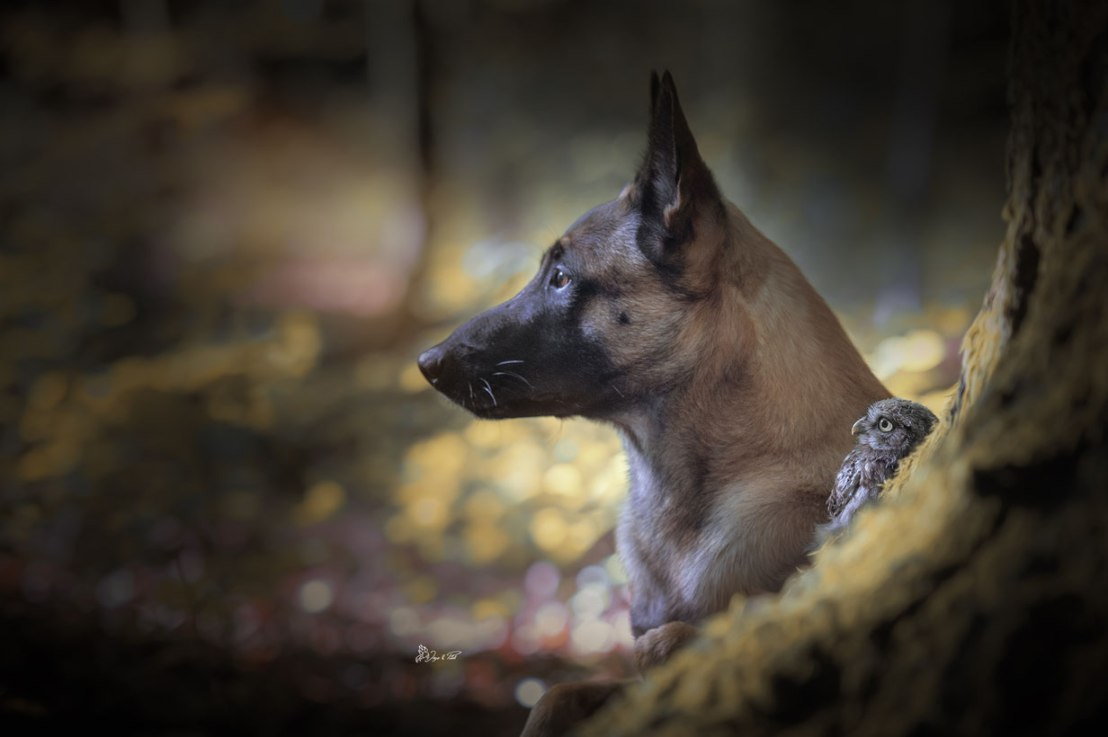
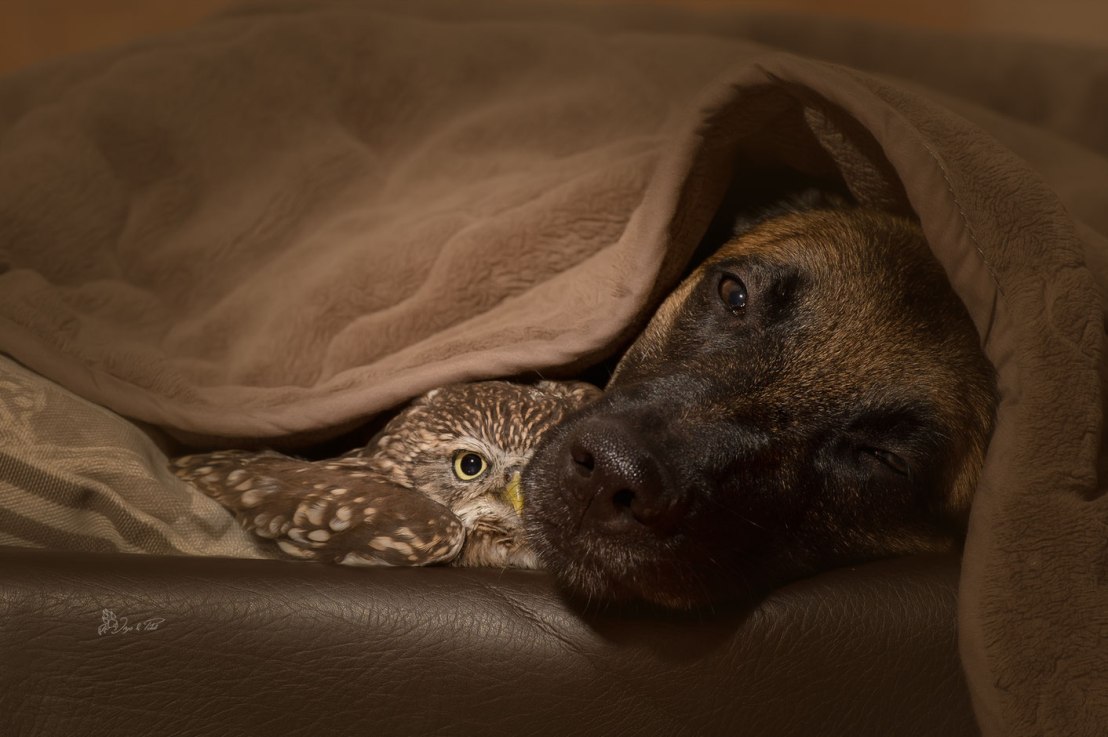
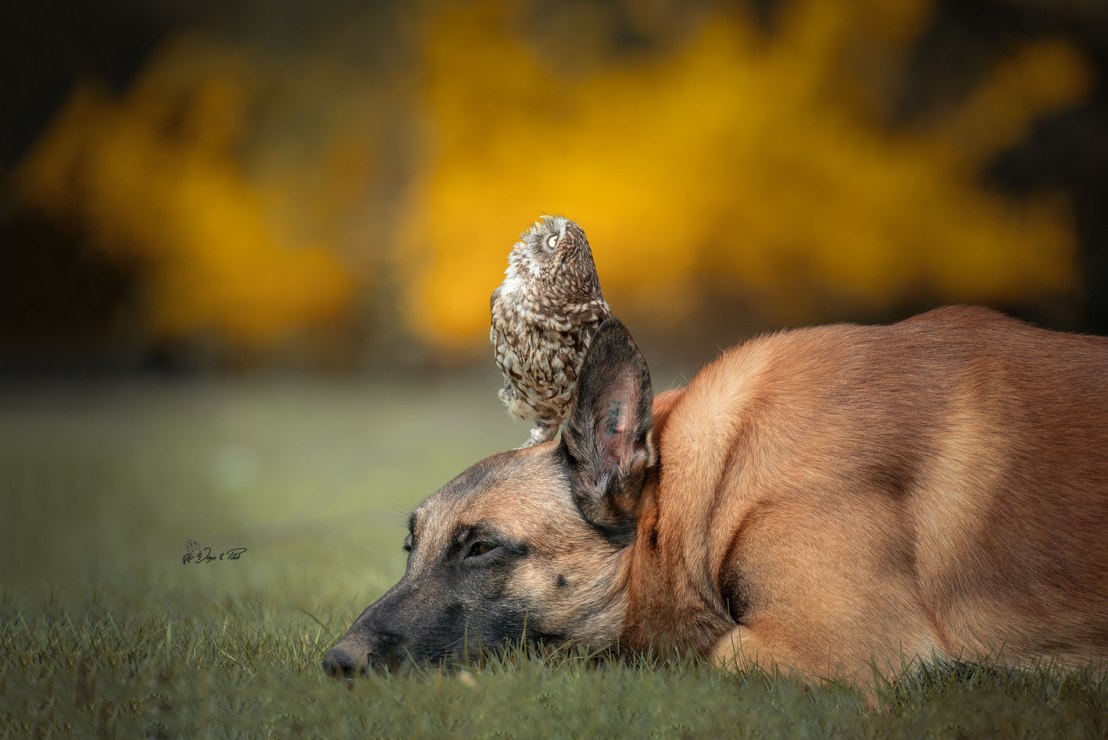
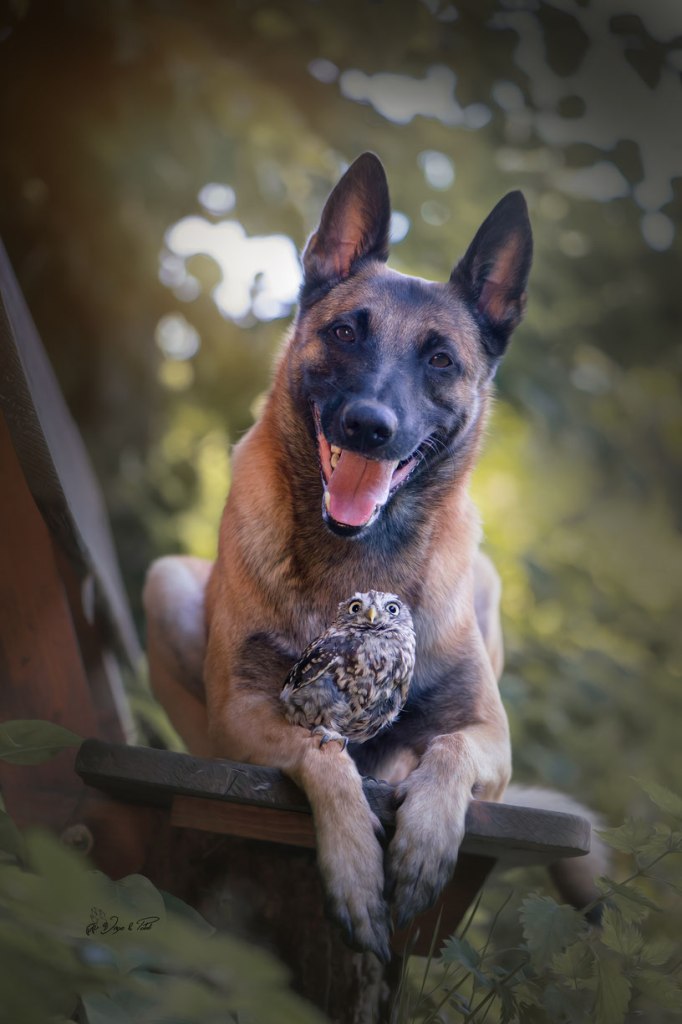
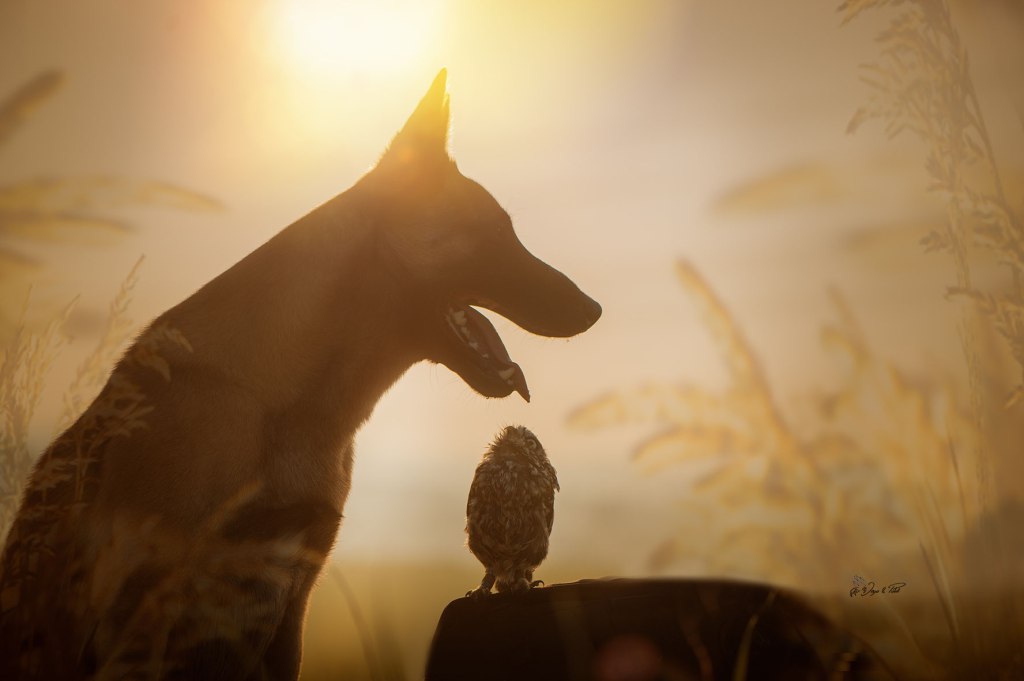
Back to fabulous Tanja Brandt!

Again, good people, all taken from here.

oooo

oooo

oooo

oooo

oooo

oooo

One of these days I am going to have to find some other photographs to share with you. But not quite yet!!

Happy Birthday, my darling Jeannie.

Philosophising about this ageing lark!

A few days ago Jean and I listened to an episode from the BBC Radio 4 series The Art of Living. Or as the home page of the programme’s website explains, The Art of Living is a …

Documentary series revealing how engagement with art has transformed people’s lives.

Anyway, the episode that we listened to was a delightful 30-minute discussion between Marie-Louise Muir and the Belfast-born poet Frank Ormsby. The reason we selected this episode to listen to in particular is revealed by republishing how the BBC introduced the programme. (For Jean was diagnosed with Parkinson’s Disease in December, 2015.)

Frank Ormsby’s Parkinson’s

The Art of Living

When the poet Frank Ormsby was diagnosed with Parkinson’s Disease, his response was unexpected. He embarked on a newly fertile creative period, documenting his experiences and finding a voice in his poetry that he was beginning to lose in his daily communications.
His first act was to search Google – for jokes. “Which would you rather have, Parkinson’s or Alzheimer’s. Obviously Parkinson’s! I’d rather spill half my pint than forget where I left it.”

As he discusses with Marie-Louise Muir, the illness has changed him. It’s mellowed him. After a career as a school teacher, his daily life is now quieter and more solitary. There’s a poetry, almost, in his pauses and silences.
Frank belongs to the generation of Northern Irish writers that has followed in the footsteps of Seamus Heaney and Michael Longley. His medication, he believes, has aided his creativity. But it has also induced hallucinations. He finds himself sitting on his own in his study but surrounded by people, by the ghosts of his mother-in-law and unidentified visitors. And he’s also haunted by a fear that the earth will open up and swallow him.
But if you ask how he’s doing, he writes, “I’ll tell you the one about ‘parking zones disease’.
I’ll assure you that the pills seem to be working”.

Photo credit: Malachi O’Doherty, With readings by Frank himself and Ciaran McMenamin from The Darkness of Snow. Produced by Alan Hall. A Falling Tree production for BBC Radio 4.

That wonderful joke offered by Frank, this one: “Which would you rather have, Parkinson’s or Alzheimer’s. Obviously Parkinson’s! I’d rather spill half my pint than forget where I left it.” comes a little after the 5-minute point in the interview. I strongly encourage you to listen to the full interview. Here’s the link to the radio programme.   

Jean and I were sitting up in bed a couple of mornings ago reflecting on how recent it has been since we ‘got it’ in terms of what becoming old really means. For me and Jean, for different reasons, it is only in the last twelve months that ageing, the process of becoming older, the decline in one’s faculties, and more and more, has been truly understood. Yes, before then of course one understood that we were getting old. But it was an intellectual understanding not the living it on a daily basis understanding we now experience.

Back to Frank Ormsby. Or rather to a feature in the Belfast Telegraph published in 2015.

Frank Ormsby: Life at Inst was very different from my upbringing

Leading Belfast poet and former Inst. Head of English Frank Ormsby on his tough Fermanagh upbringing, losing his father when he was 12 and how humour has helped him cope with a Parkinson’s diagnosis.

Write stuff: Frank Ormsby at his home in north Belfast

March 23, 2015

As Frank Ormsby sits in the study of his beautifully-appointed 1930s home in north Belfast there is no hint of his much more austere upbringing. As befits the workspace of a poet and long-time English teacher at one of Belfast’s leading schools, the bookcases that line the walls are crammed with a wide range of literature.
It could not be a more different environment from the rural home where he grew up just after the Second World War.

When Frank was born in 1947, his father Patrick was already in his 60s. “I remember him as an old, grey-haired man”.

It was Patrick’s second marriage. His first had produced 10-12 children. “I was never totally sure of the exact number”, Frank recalls.

“I never met them as they had dispersed to Scotland and other places by the time my father, by then a widower, had married my mother. As far as I know the last one of them died last year.”

Frank’s home was about a mile and half outside Irvinestown. His mother Anne had worked on a relative’s farm – “she could build hay or cut turf as well as any man” – and his father as a farm labourer who occasionally sought work in the factories in Scotland.

“The conditions in which we lived were lacking in luxury. We had no running water. We had to carry it in buckets from a well half a mile away. There was no electricity and it was a long time before we even had a radio, or wireless as it was called then,” Frank says.

You may read the rest of that article here.

Here’s one of Frank’s poems that was published by The New Yorker in March, 2013.

BOG COTTON

By Frank Ormsby

They have the look
of being born old.
Thinning elders among the heather,
trembling in every wind.
My father turns eighty
the spring before my thirteenth birthday.
When I feed him porridge he takes his cap off. His hair,
as it has been all my life, is white, pure white.

Maybe that’s how it is. Having the look of being born old!

But there’s one thing that I treasure beyond gold itself. Having the fortune to be living out my final days, however many there are, in the company of my beautiful Jeannie and all the loving dogs around me.

Puppy Cleo coming home – April 6th, 2012


Happy Birthday, sweetheart!

Picture Parade Two Hundred and Twenty-Two

Of dogs, and birds, and darlings!

More of Ingo and Friends 3 plus two pics from our anniversary dinner.

oooo

oooo

oooo

oooo

oooo

oooo

oooo

oooo

And that last photograph seems so perfect a lead-in to my final two for today. Both taken at The Schoolhaus Brewhaus restaurant in Jacksonville, Oregon where we had our anniversary dinner on the 20th.

oooo

A beautiful lady looking down on very beautiful wife!

Don’t try this at home!

All it takes is a moment’s inattention.

The reason I am posting this is simply because it might help someone else out there.

I go bike riding three times a week; weather permitting. Usually with a group from close by: Jim; Richie; Pam; Dordie; Ken.

Two days ago there was a break in the wet weather and Jim rang round seeing who was up for a ride. It turned out that four of us could go riding: Jim, Richie, Dordie and myself.

We decided to ride down Hugo Road, turn left onto the Merlin-Galice Road, follow that right to the end of Galice Road, very close to Junction 61 on Highway I-5, then turn left along Monument Drive, left again down past Grants Pass airport then back on to the Galice Road this time heading west back through Merlin to meet up with the foot of Hugo Road and then home.

All had gone very well for all four of us and it was a great ride and already we had some 14 miles under our belts.

Coming back into Merlin there is a railway track that crosses Galice Road. It has quite a wide shoulder to stop us cyclists having to mix it with the road traffic. But the tracks across that shoulder are not the smoothest of rides for a cyclist.

I did my best to cross the tracks square on but didn’t manage it. My front tyre slipped on the wet, metal rail and in that instant I lost my balance. Tried to recover but just a few yards later went down falling heavily on my left side and knocking myself out.

Luckily I was not riding on my own (Lesson Number One) and Jim and the others were quick to check me out. Jim said later that many drivers stopped including an off-duty medic who quickly summoned the ambulance.

But I was still out!

Dordie had the presence of mind to capture what was going on and it is her photographs that are in today’s post.

I continued being unconscious and later Jim said that I was out for eight minutes.

I was placed in a gurney with a neck brace because the medics were concerned that I might have damaged my neck.

Then carried across to the ambulance.

 I only properly regained consciousness when the ambulance was speeding its way to Three Rivers Hospital in nearby Grants Pass.

The attendant caring for me in the ambulance remarked how lucky I was to have been wearing a safety helmet, for had I not been: “We wouldn’t be taking you to the accident ward!”

Plus, I realised that the other stroke of fortune is that I was riding with a group of friends. Had I been riding alone, something I have been doing, I might not have been helped in such a prompt and timely way.

So that’s my lesson for today! If you ride a bicycle don’t go out alone and never, ever ride without a safety helmet!

Oh, nearly forgot! Lesson Number Two: Don’t ride across wet railway tracks – Get off and walk!

UPDATE 14:20 Friday, 24th

In view of the many helpful ideas and suggestions I thought it would be good to present the follow information.

When I was discharged from the Emergency Department at our local Three Rivers Medical Center, I was given 4 pages of guidance and information. Page 3 of those notes included:

WHEN SHOULD I SEEK IMMEDIATE MEDICAL CARE?

You should get help right away if:

  • You have confusion or drowsiness.
  • You feel sick to your stomach (nauseous) or have continued, forceful vomiting.
  • You have dizziness or unsteadiness that is getting worse.
  • You have severe, continued headaches not relieved by medicine. Only take over-the-counter or prescription medicines for pain, fever, or discomfort as directed by your health care provider.
  • You do not have normal function of the arms or legs or are unable to walk.
  • You notice changes in the black spots in the center of the colored part of your enemy (pupil).
  • You have a clear or bloody fluid coming from your nose or ears.
  • You have a loss of vision.

Thought it might be useful including those.

Plus when I saw the pharmacist at our local RiteAid, he took a look at the wounds on my left knee and recommended a transparent dressing; namely a product called Tegaderm. It is a product made by 3M and more details may be read about it here.

Thanks everyone for you caring responses!

Our beautiful planet.

It is the only lovely planet that we all have.

That ‘we’ being all the animals, plants, insects and humans there are.

I’m not saying anything new and not making this plea for the first time in this place.

But just take a few minutes out of your busy day to reflect that for you, for me, for everyone wherever they are in the world, physically and culturally, doing nothing is not an option.

More of that in a minute.

First I want to share with you a few autumnal photographs of our home here in Oregon.

Below was taken at 9am on October 24th showing the  mountain mist right down to the tops of our trees that mark the edge of our driveway from the house to our Hugo Road entrance.

Next, a sunrise photograph with the camera pointing to the East. The tree line follows the ridge of some hills the other side of Hugo Road. The picture taken on the 19th October at 07:20.
Now a close-up of the remains of a very old tree trunk with the trees that border Bummer Creek, that runs through our land, just showing through the morning mist. Taken on the 24th October at 09:05.

Final photograph I wanted to share with you is this beautiful sight of the moon taken from our property at 16:05 on the 25th. October.

Regular readers will know that Jean and I are not believers in any religion; we are atheists. But to my way of thinking that puts even more pressure on me and Jean to try to make a difference. We do all that we can but there’s no doubt that we can do more.

Yesterday, I referred to Bill Ripple, or to give him his full signature: William J. Ripple, Distinguished Professor of Ecology, Department of Forest Ecosystems and Society, Oregon State University, Corvallis, Oregon.

I sent Bill an email:

Dear Bill (and forgive the over familiarity if that offends),
I am a Brit, just turned 73, living with my beautiful wife, Jean, London-born as I was, down in Merlin, Oregon.

We live on 13 wonderful acres of rural property with 6 dogs (down from 12 when we moved here 5 years ago) and 4 horses, the majority of whom are ex-rescues.

I am the author of the blog Learning from Dogs and want to publish a post highlighting that viewpoint article. Because I believe with every neuron left in my ageing brain that the political changes that this world so urgently needs can only come when 99.9% of the public are screaming out “enough is enough”!

But there’s another saying that comes to mind, the one about being the change you want to see or something like that.

Is there information anywhere online that spells out, almost in words of one syllable, what lifestyle changes each of us can and need to commit to today? Changes that are as appropriate for elderly authors living in the country as young people seeking their first job or those up to their necks in working and raising families?

For that is what I want to publish on my blog!

If it would be easier for me to make an appointment to call you and take notes over the phone then I am just as happy to do that.

Sincerely,

Paul Handover
Hugo Road, Merlin,

Bill promptly replied:

Hi Paul, how long of a list of lifestyle changes do you want to make? Would three or four be enough? Bill

then followed that up with another email:

Paul, Consider suggesting that if people want to help, they could have fewer children, reduce energy consumption such as driving autos and flying, avoid meat and eat mostly plant-based foods and avoid wasting food. Below are quotes from our paper. Bill

“It is also time to re-examine and change our individual behaviors, including limiting our own reproduction (ideally to replacement level at most) and drastically diminishing our per capita consumption of fossil fuels, meat, and other resources ….

… reducing food waste through education and better infrastructure; promoting dietary shifts towards mostly plant-based foods

Now watch this video

I will close this post by listing out all the things that you and I can do now!

  • Set a target for reducing your car mileage next year compared to 2017,
  • If you are a regular aircraft passenger, then set a target for flying fewer hours in 2018 compared to 2017,
  • reduce or stop eating meat,
  • do not waste food,
  • reduce the use of heating and cooling in your home/s for next year,
  • commit to a dietary change away from meats and processed foods to a plant-based diet.

Then for younger couples who want a family around them, limit the number of children to a “replacement level” at most. Adopt??