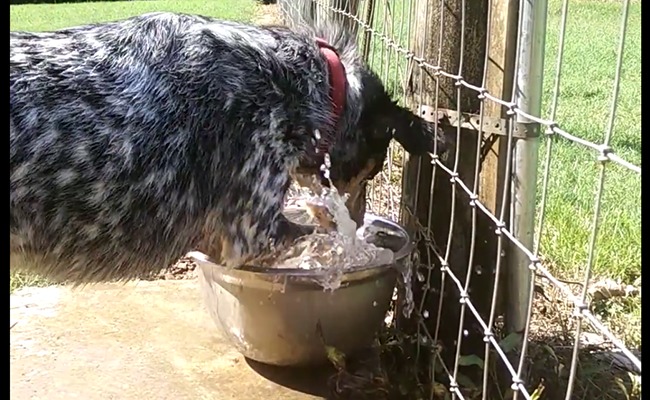
At the dog park, Syd decides to utilize the drinking water for another purpose.
(As seen over on the Care2 blogsite.)
Daily Cute: Dog Finds a Way to Cool Down
Not just your dogs but all you good folks stay cool out there!
Dogs are animals of integrity. We have much to learn from them.
Author: Paul Handover
At the dog park, Syd decides to utilize the drinking water for another purpose.
(As seen over on the Care2 blogsite.)
Not just your dogs but all you good folks stay cool out there!
A republication of an earlier post.
Our new young puppy is consuming a great deal of attention and time!
As regular readers will know (and your readership is so much appreciated) last Tuesday I published the news that we had taken on a new puppy. He is settling in incredibly well but consuming heaps of attention; as well he should.
So rather than struggle to be creative with today’s post, I’m cheating by going back to the last time I wrote about a new arrival to our flock; namely puppy Cleo. If you will forgive me, I’m going to republish the post I wrote for puppy Cleo back on April 8th, 2012.
But before so doing, let me explain that our latest arrival has gone through a name change. The previous owners had named the young pup Smokey but we were not comfortable with that name; Jean especially so. So Smokey is now Ollie!
ooOOoo
The arrival of Cleo brings us back to eleven dogs.
Way back in 2003 when I became the proud ‘Dad’ of Pharaoh, my German Shepherd dog that you see on the home page of Learning from Dogs, Sandra Tucker who ran the GSD Breeders Jutone, where Pharaoh was born, gave me some advice. Sandra said that when Pharaoh was getting on in life, then bring in a German Shepherd puppy. Apparently, there were two solid reasons why this made sense. The first was that Pharaoh would teach the new puppy many of the skills and disciplines that Pharaoh had learnt as a young dog and, secondly, the puppy would keep Pharaoh active.
Now we know this to be true because years later when Pharaoh had his own mini pack here in Payson, we introduced a new ‘rescue’ puppy called Sweeny. Pharaoh took an instant like to him and became very tolerant to Sweeny’s ‘games’.
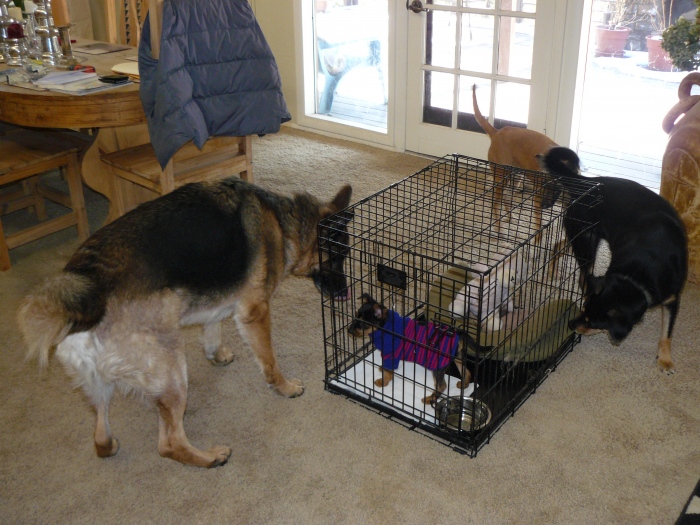
But as adorable as Sweeny is, Jean understood the deep reasons why I always wanted a German Shepherd in our lives. So when a chance encounter in Payson Feed Store between Jean and Brendon S. revealed that Brendon had a litter of German Shepherd puppies for sale, just a couple of miles outside Payson, the temptation was irresistible!
Thus a few days ago, Jean and I went round to Brendon’s home and spent a couple of hours mingling with the puppies and their GSD mother. They all looked excellent dogs and a review of their blood lines showed that their genetic background included German stock not too far back. It was difficult to select any one pup as they were all wonderful animals. But one youngster seemed to catch Jean’s eye.
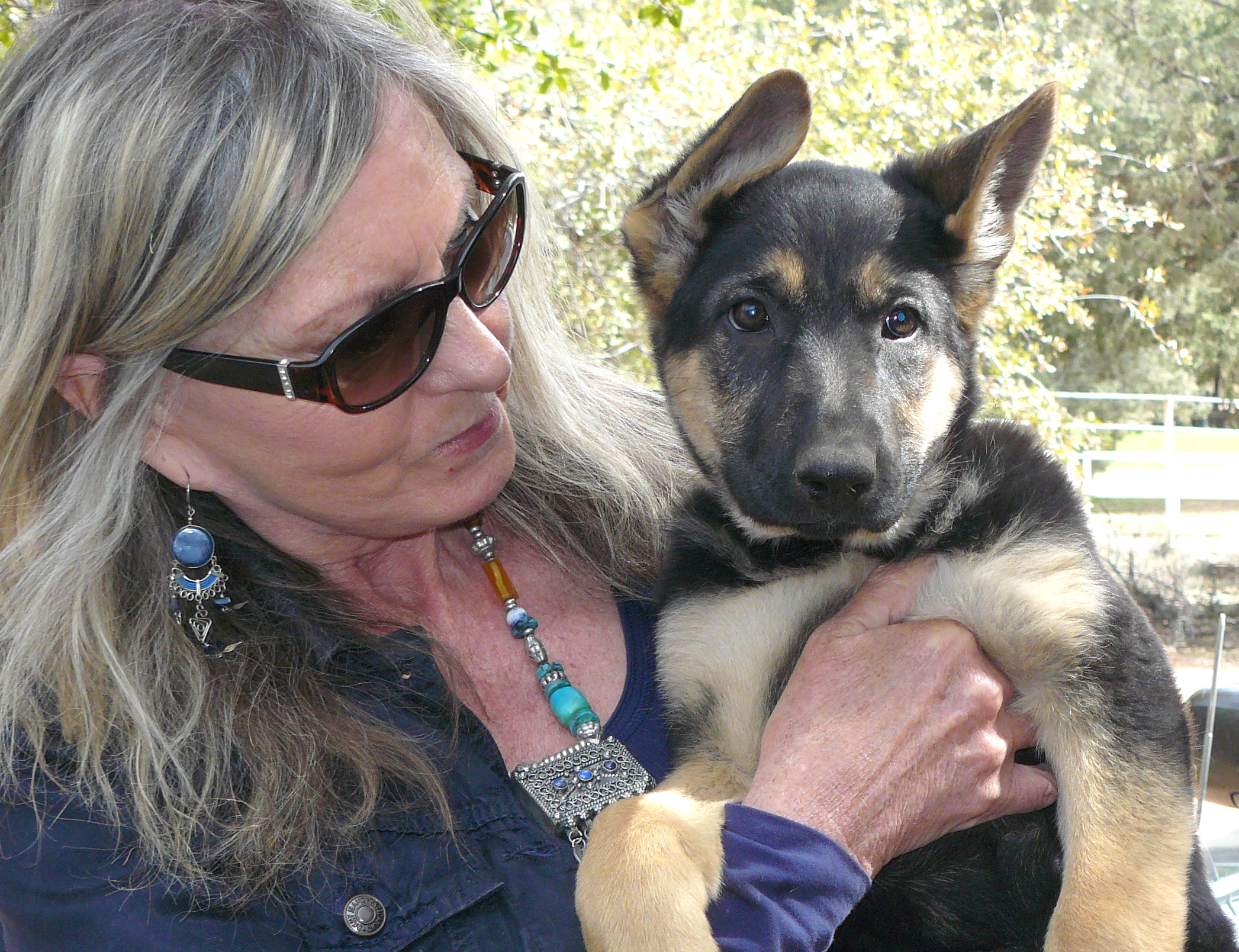
Then the next test was to introduce Pharaoh to the puppies. That took place last Friday and it was wonderful to see how well he coped with the onslaught of puppies!
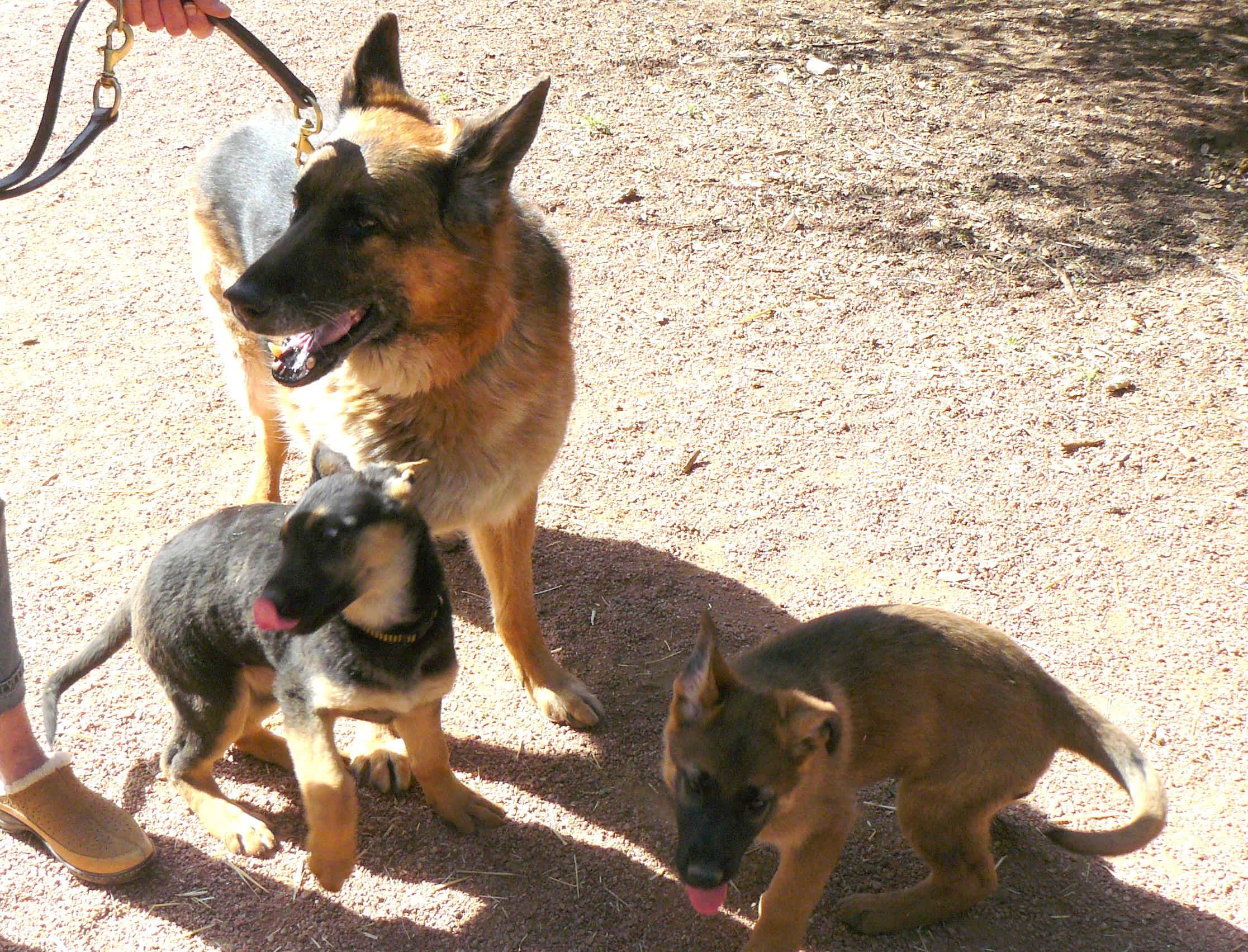
In the end, we ran out of reasons not to follow Sandra’s advice from all those years ago and we agreed terms on a young female GSD that, inevitably, was christened Cleopatra (Cleo) by Jean!
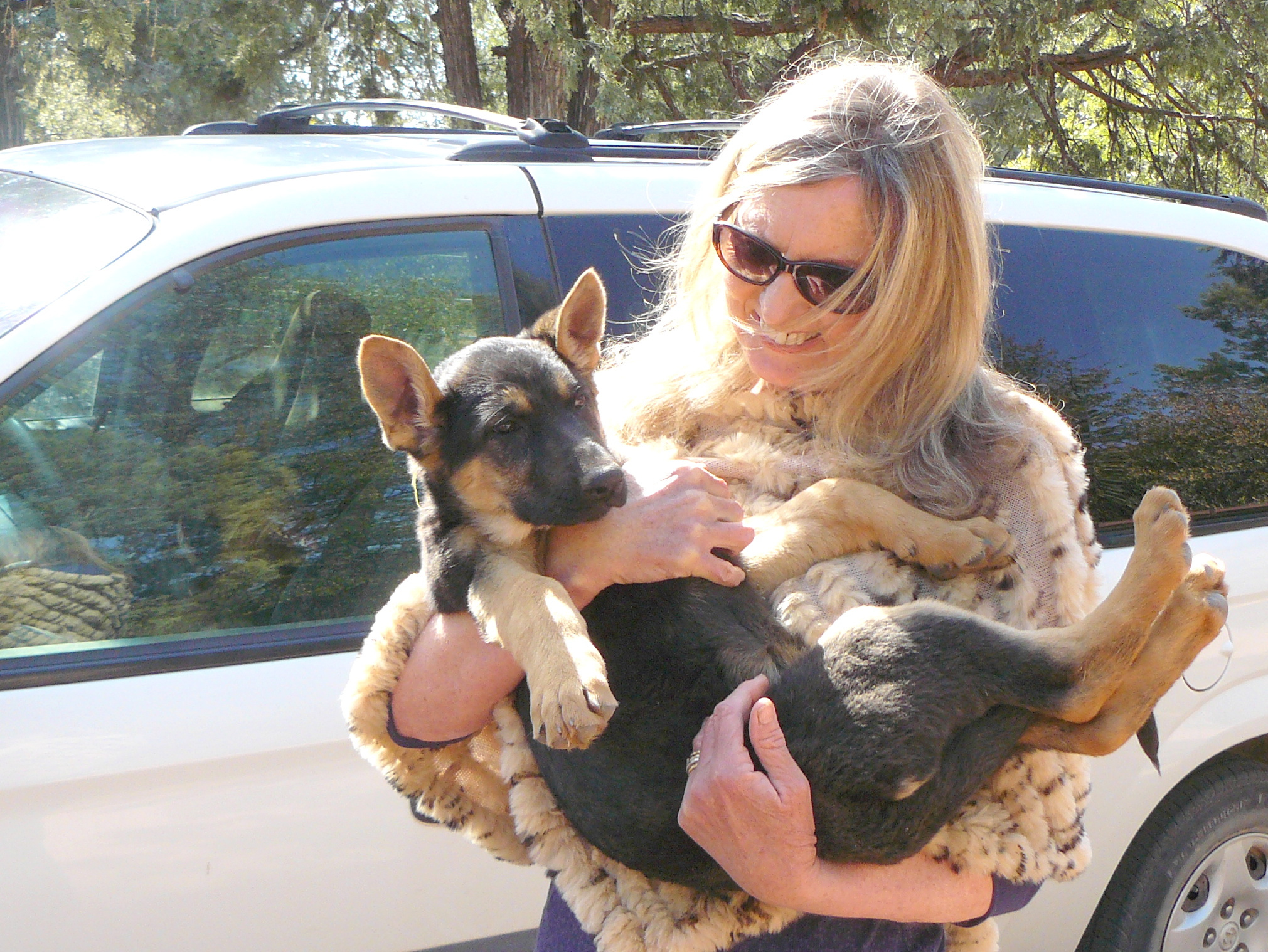
Then yesterday, Saturday, we went back round to collect young Cleo, meeting Brendan’s wife Ebony in the process. The following photographs record some of the key moments.
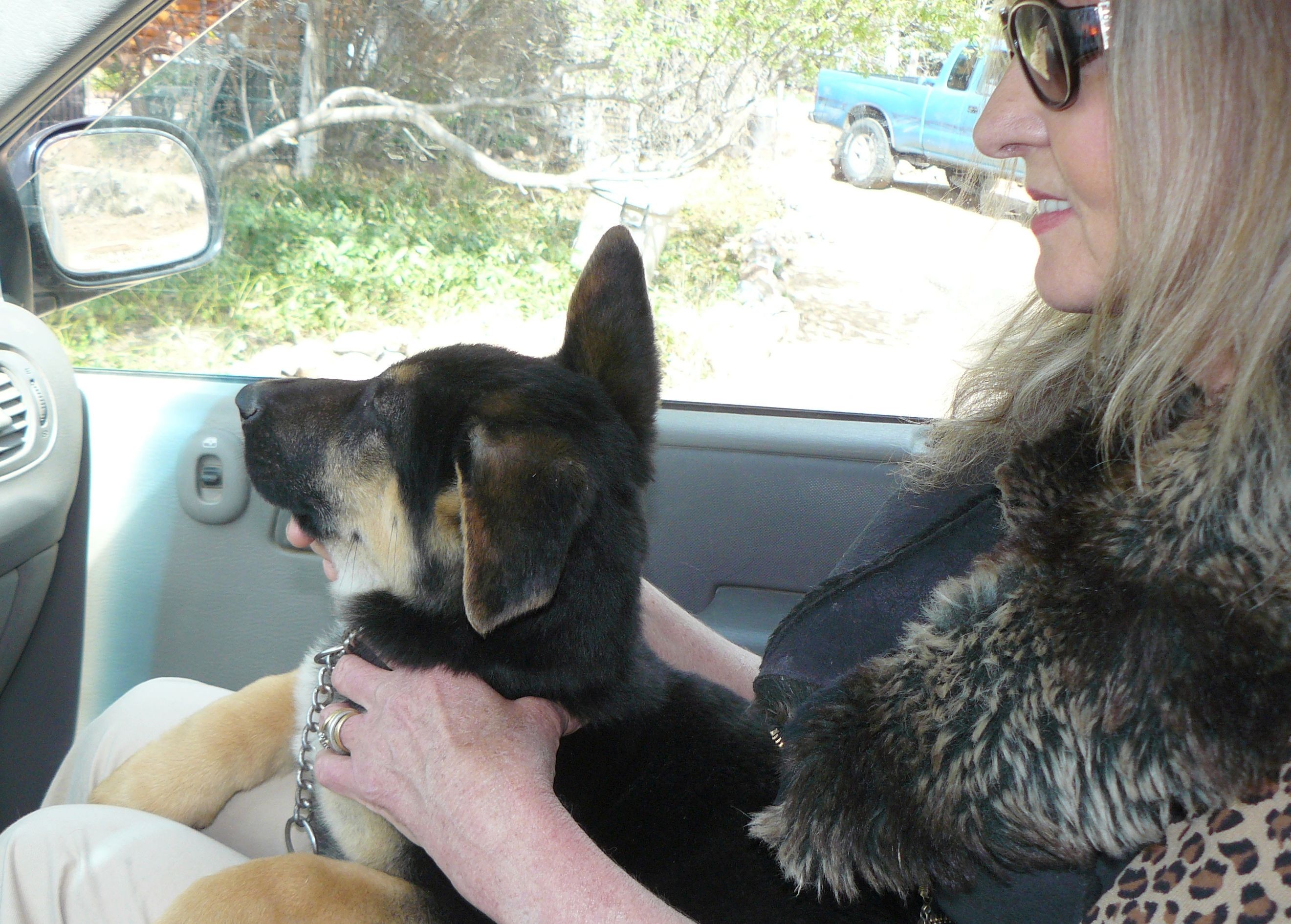
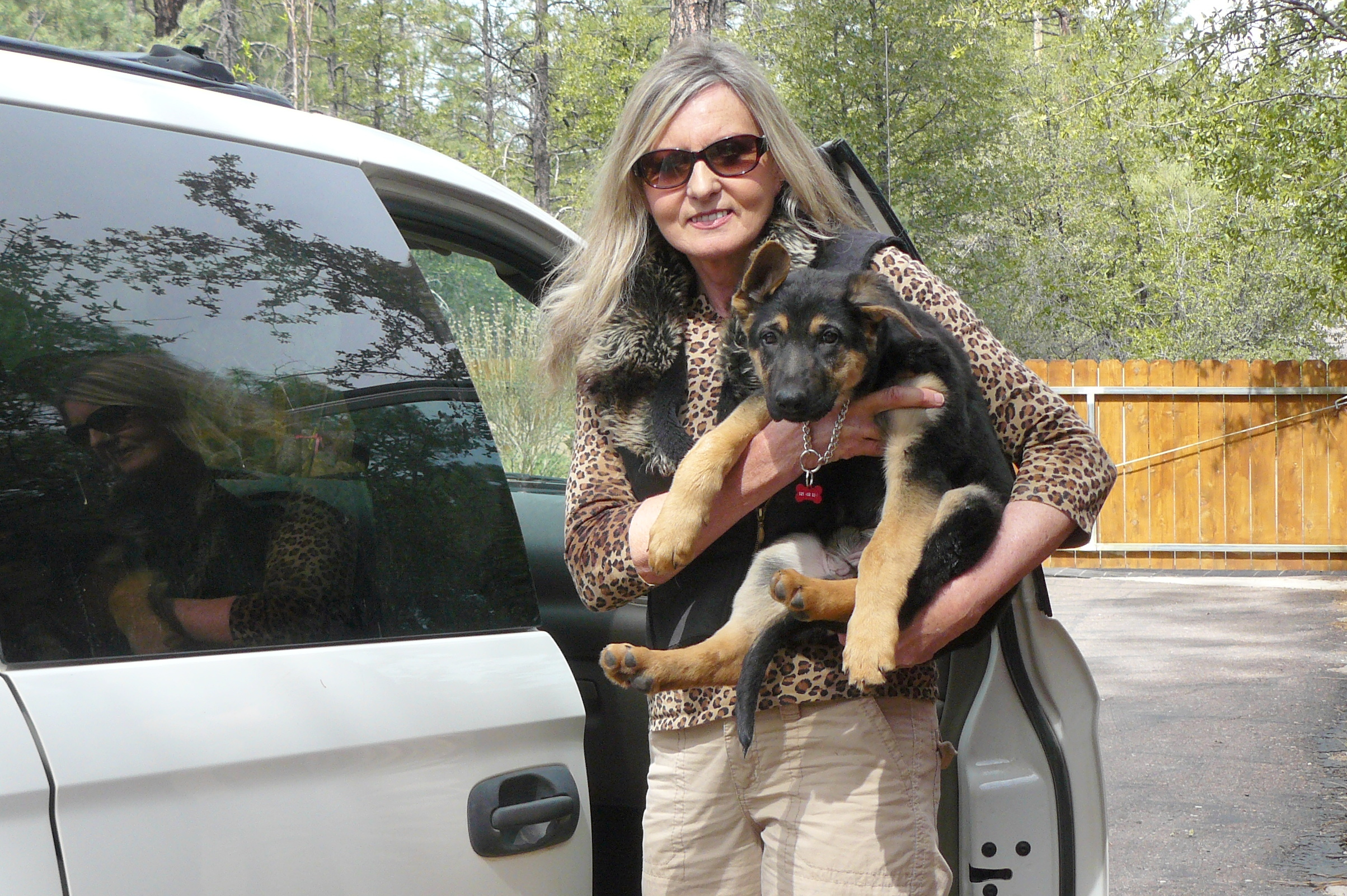
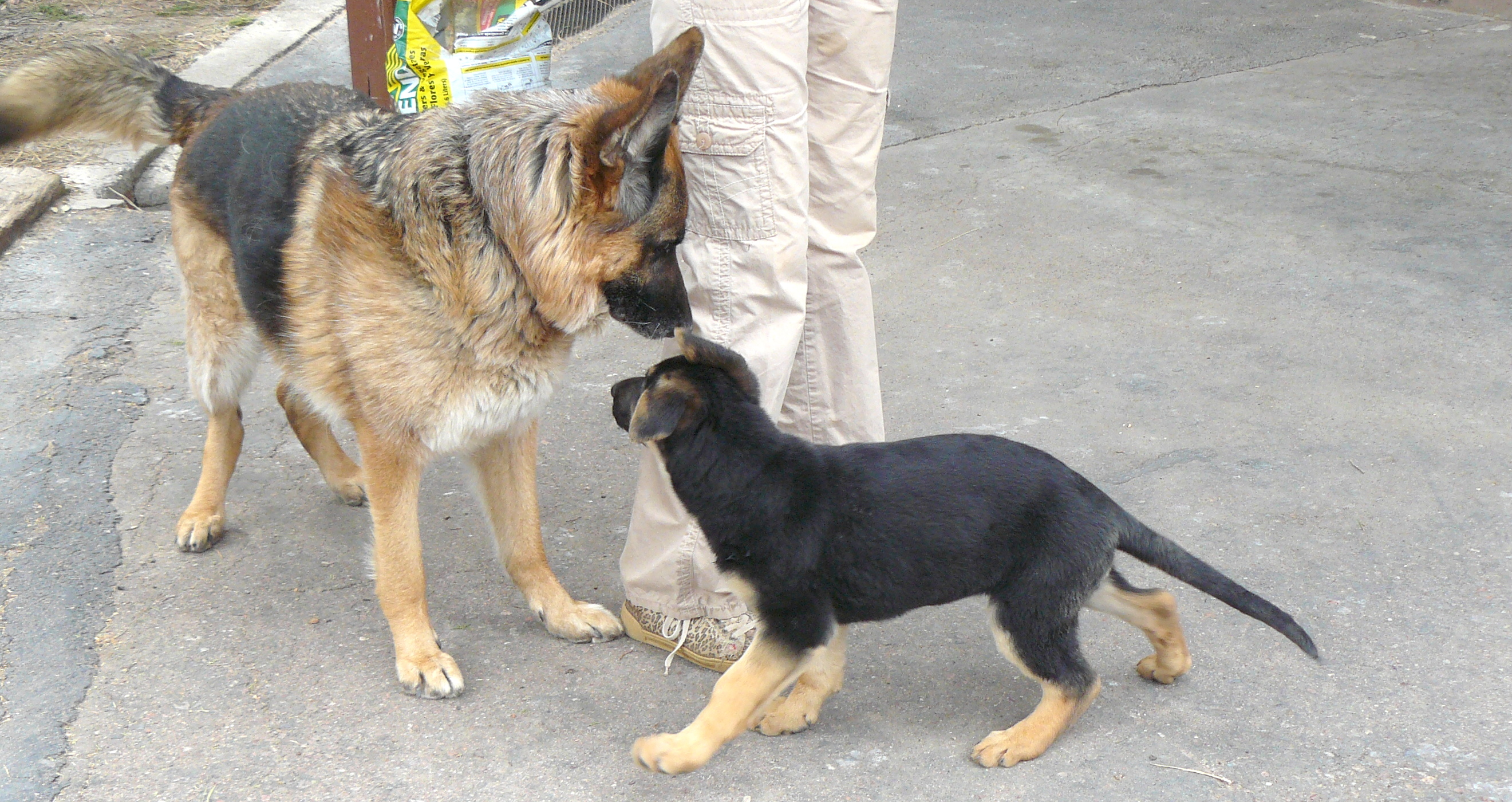
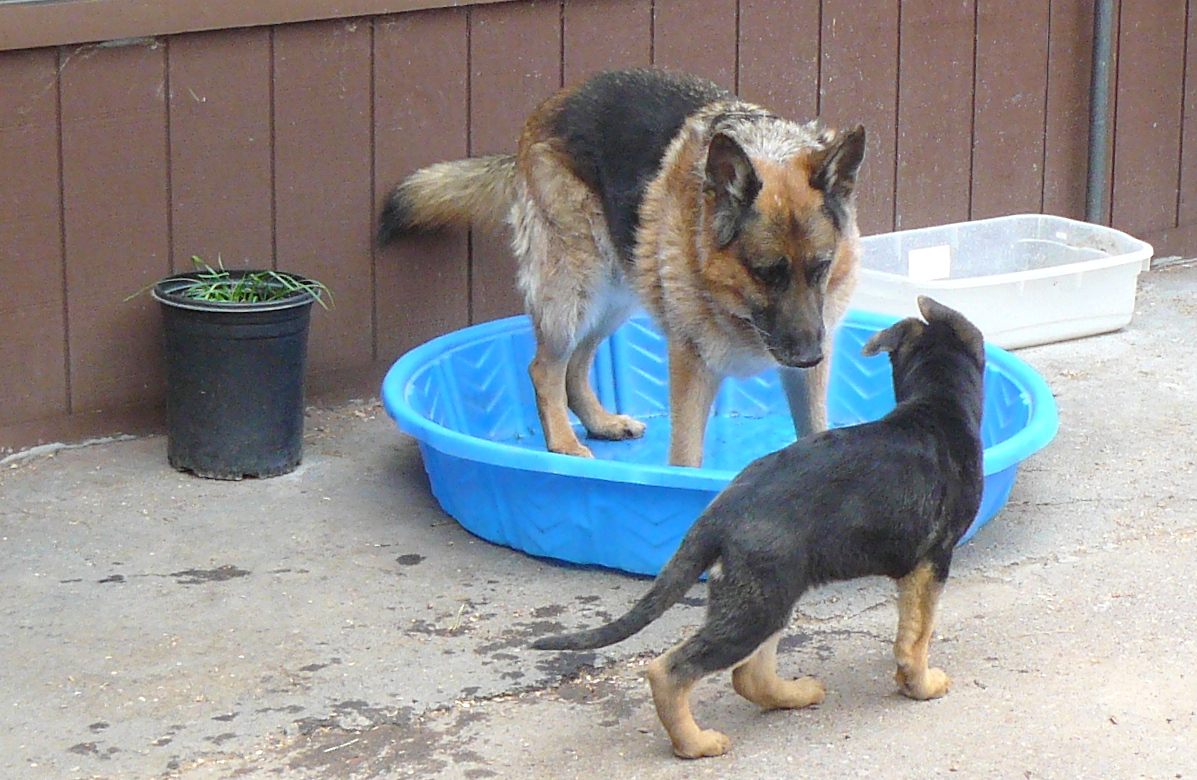
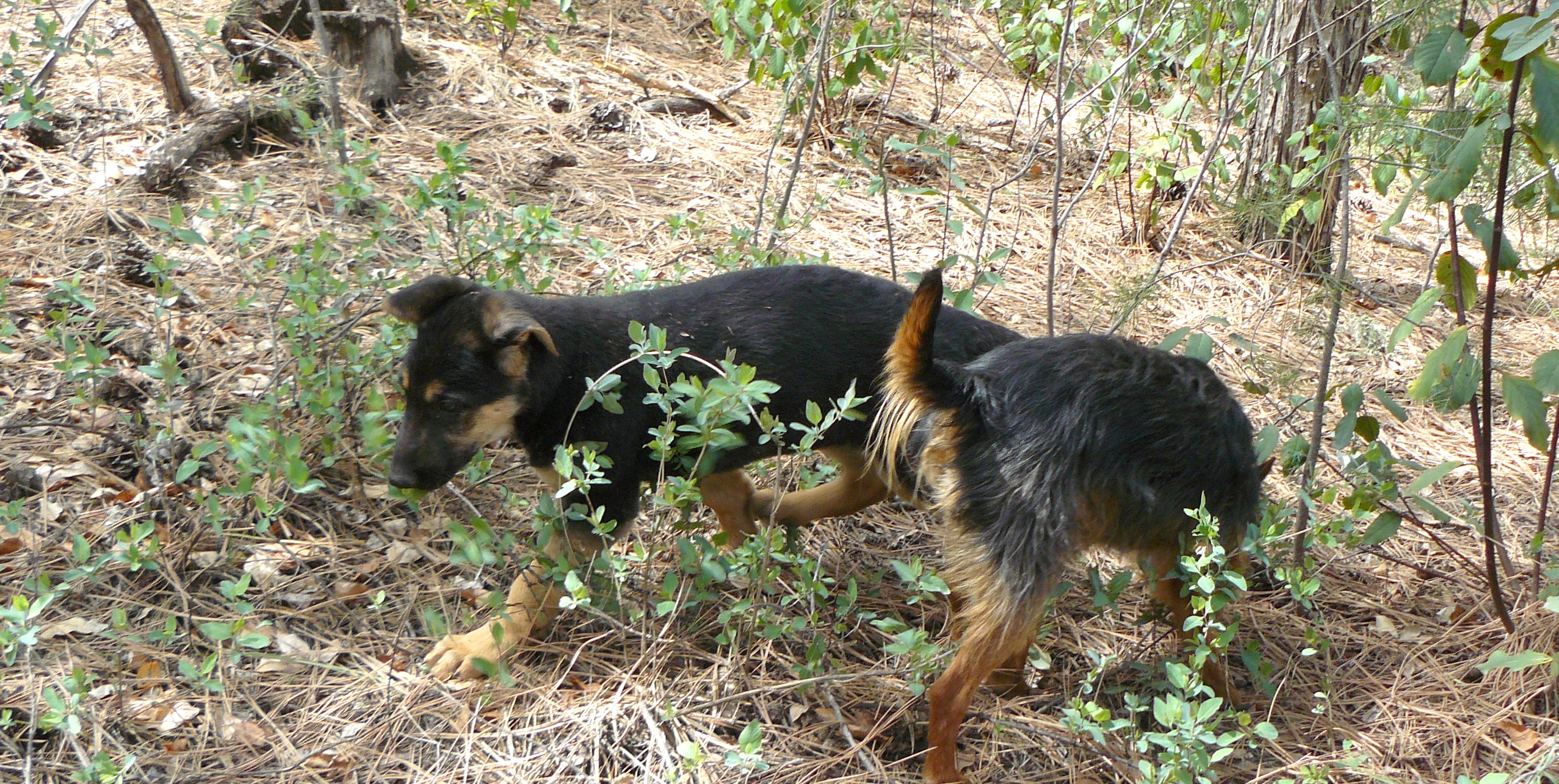
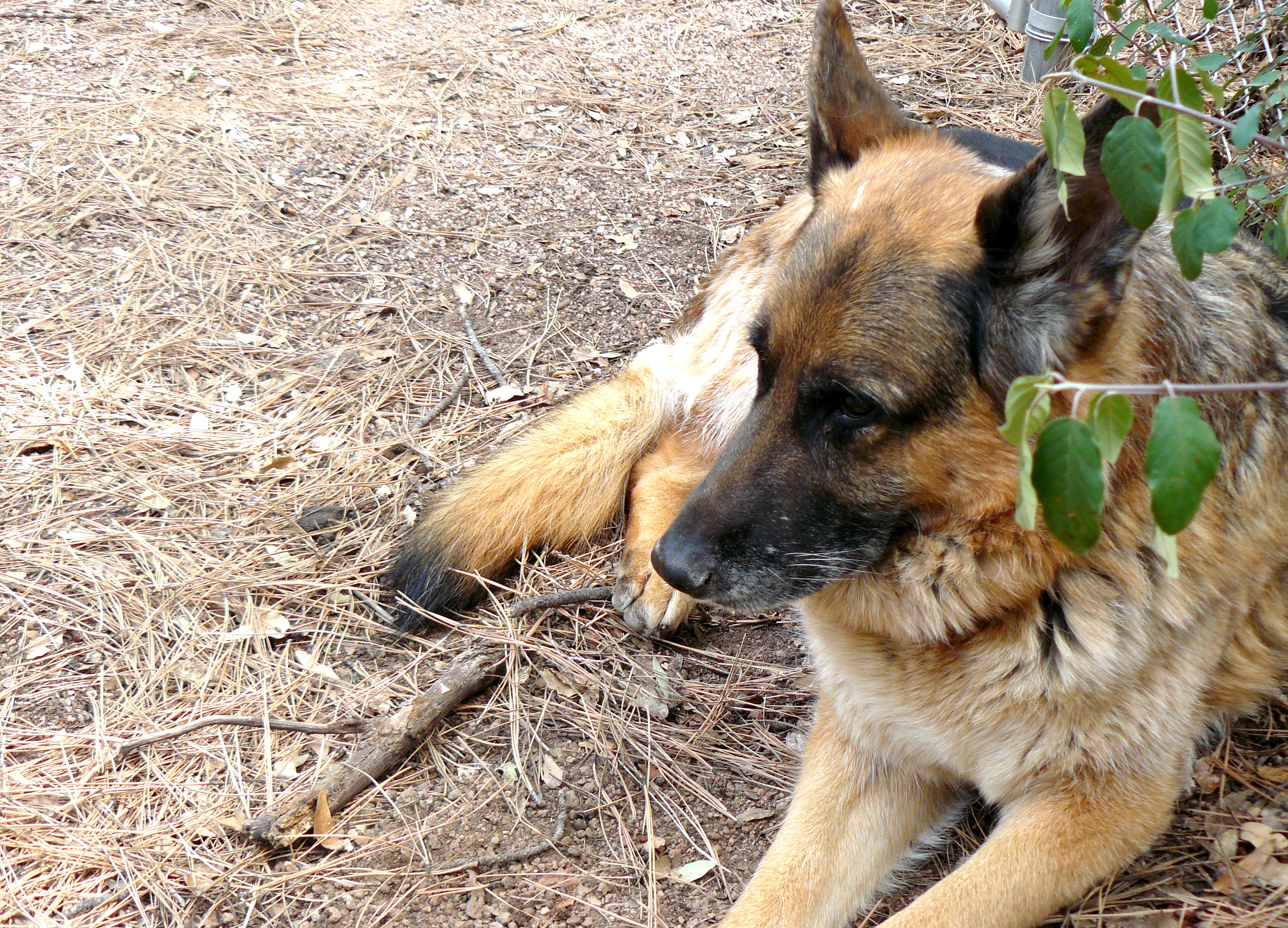
So there we are. Back up to eleven dogs, five chickens, six cats, and a fish!
Finally, a big thanks to Sandra of Jutone for her guidance in the last few days.
ooOOoo
Back to the present to leave you with a picture of puppy Ollie happily playing with Cleo and Hazel. More pictures of Ollie on Sunday.
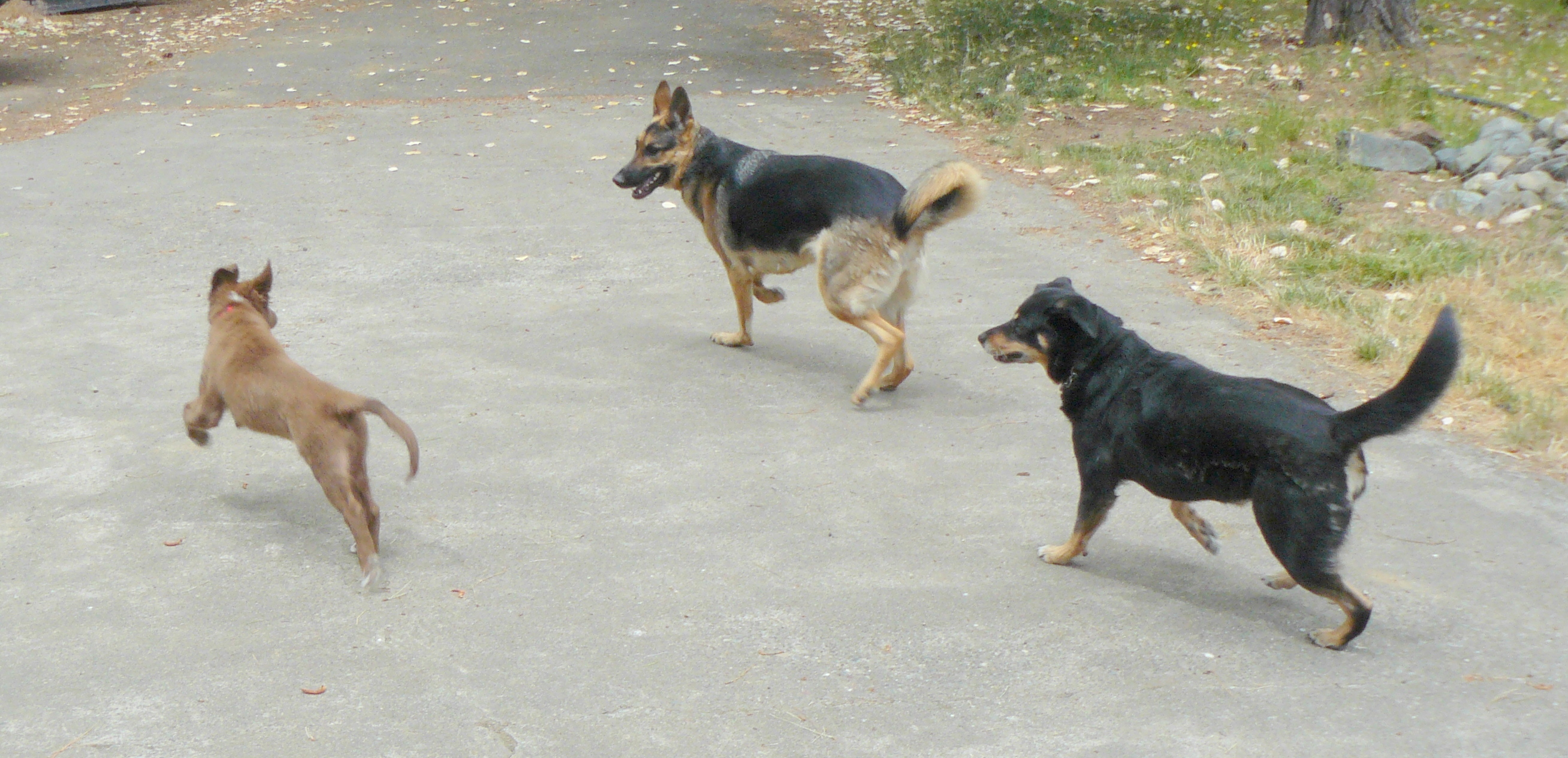
ooOOoo
How the years slip by.
Sharing a recent Care2 story with you.
ooOOoo


“I’m 15 feet away and I can hear a two pound dog crying,” Great Plains SPCA’s Scott Poore says with frustration dripping in his voice, almost as much as the sweat on his brow in the 90 degree sun. “We’re going on about 45 minutes with this little dog in the back seat of this car.”
Standing in the parking lot of a Home Depot in Merriam, Kansas, Scott films a live stream broadcast that gives Facebook fans real-time access to the situation that every animal lover dreads: a dog locked inside a hot car.
But the circumstances of this particular rescue are even more bizarre than usual. First of all, this Home Depot allows dogs inside the store. Second, the puppy inside the vehicle was extremely young, only weeks old. Third, the woman went inside to shop without even slightly cracking the windows of the vehicle (although that would be of little benefit). Fourth, she actually lost her car keys so she wasn’t able to open the vehicle when she arrived.
“When the lady came out, she was absolutely blown away that anybody had an issue with this,” Scott said. “And that’s pretty typical.”
A misguided sense of affection actually seems to be at the root of most instances of dogs being left in hot cars. People bring the dogs along because they feel that the dogs will be lonely at home, but they don’t take into account the very real threat to the dog’s physical welfare.
According to the local news station, KCTV, the puppy was returned to his “owner” who was issued a citation. Watch the video and decide for yourself if the law enforcement action available to police under the current law will be sufficient to safeguard this puppy from additional neglect.
ooOOoo
Words fail me! But well done the police!
As in the nutritional needs of those dear creatures.
Having said in yesterday’s post that this week would be a succession of repeat posts along comes an email from Susan Combs offering a guest post. It seemed a great post to share with you all.
She describes herself as:
Susan works as a Pet Health and Safety Expert and holds expertise in the area of animal/pet care. She has over 6 years of experience in pet healthcare and is a pet parent to a dog named Chilly.

As a pet owner you should remain educated about the nutritional requirements of your dog at the time of her pregnancy. A pregnant dog needs precise nutrition and if proper care is not taken then it can lead to serious health issues.
It lasts for 63 days. The first 3-4 weeks she can be fed a regular diet, however the last weeks are important from nutrition point of view and she requires more calories. During the first 3-4 weeks, it is recommended to feed her green trippet which is made from high quality green tripe. It contains lots of digestive enzymes and ensures good health. You can mix tippet to high-quality kibble and feed to your dog.
During the 2nd half of pregnancy, dog should be fed around 30-40% more calories than what she was being fed in the first half of pregnancy. Your dog’s weight should increase by 15-25% at the time of whelping in order to maintain optimal body weight after parturition, as she needs to produce sufficient quantities of milk and colostrums to support growth in the newborn pups until they are weaned.
By week 8-9, the meal should be a third more than the regular meal. Total food quantity should be divided into four or more servings per day and dog foods with minimum levels of 430 kilocalories/cup should be provided in order to supply adequate quantities of calories. If the dog is experiencing weight issues then it is recommended to consult a vet immediately.
It is absolutely okay if your dog is eating too little in one go. You can break the meal into little portions to be fed entire day. Actually, in the advanced stages of pregnancy, the stomach cannot take large quantities of food in one intake so it is better to allow eating several portions of light meal throughout the day.
If your dog is experiencing diarrhea then that’s an indication that you are feeding her high volumes of food. If this is the case then shift to energy dense food, preferably dry dog food.
Once the bitch is ready to give birth, you should slowly increase her calorie intake to around 15 to 25 percent. It should be noted here that most bitches refuse to eat food 12 hours prior to whelping. You should keep attention and provide her to drink water in order to prevent dehydration.
For every puppy, your dog will require a 25% increase in her caloric intake, up to 180-200% maximum increase can be done in case she has around 10-12 puppies. Increasing more than 200% is not recommended. For example, a dog eating 2 cups of a high quality dog food each day before breeding will now need about 6 cups of food a day, in order to feed herself and provide for 8-10 puppies.
Yes, there is certain preparation that you need to as a dog owner prior to the birth of the puppies. You must prepare a room for the birth to occur. Ensure that the floor should be easy to clean and the area should be calm and soothing. You should also prepare a bed for the mother to deliver the babies. Have lots of towels and encourage the mother to sit on them so they become comfortable with them and opt to use them when on labor. This would make the birth easier for both you and the mother. Also as a responsible pet owner, it is your duty to get them insured.
Puppies will begin to start eating food once they achieve 3-4 weeks of age. Henceforth, weaning should be completed at 6-7 weeks of age. After 6-7 weeks, you should start giving puppy food to them.
It is important to note here that the energy content level in dog’s milk increases all the time until around day 40. After this, the level of milk drops down and this is the time when you should start feeding the pups with light puppy food.
Yes, puppy food is different than adult food. It is high in proteins and contains higher amounts of fat soluble and water soluble vitamins, minerals, fats, and other essentials. It also has a controlled amount of calcium and phosphorus that helps in the overall growth and health of the newly born puppies.
Obesity is potential danger in pregnant dogs when delivery time comes so exercising should be done regularly during the first 4 weeks of pregnancy but during the later stages, light walk is preferred.
Any other precaution that I need to take?
Treatment for internal and external parasites is necessary. It is better to consult the veterinarian if there is any problem related to external parasites. Another important point to note is that soon after whelping, your dog will actually need to eat twice as much as normal – and three times the normal level during the peak lactation period, which occurs three to four weeks after whelping.
Visiting a vet should be a regular practice. If possible, take your dog to the vet during each week of her pregnancy. This will ensure that all her nutritional requirements are met. Your vet should also guide you regarding any complications and after pregnancy care tips.
Pregnancy is an important part in the life of your dog and making her comfortable is your duty. You should take complete care of her nutritional and emotional needs so that the pups born are healthy. Apart from healthy and nutritious food, you need to ensure that your dog is getting plenty of clean, fresh water, enough exercise and fresh air.
The recent news of finding a dog graveyard that is 2,000 years old.
Before going on to today’s post, can I just remind you kind folks that as of today, and for the rest of this week, we have family guests staying with us here in Oregon.

Thus from tomorrow until the end of the coming weekend my posts will be a preponderance of republications of previous posts. Plus my attention to you dear readers will be less than you are accustomed to.
Now on to today’s post that was kindly sent to me by Chris Gomez. Thanks Chris.
ooOOoo

The carefully buried remains of five dogs were recently found in a 2,000-year-old doggy graveyard near the Arctic Circle in Siberia, according to archaeologists.
This discovery at the Ust-Polui archaeological site, in Salekhard, Russia, reveals close relationships between the region’s people and their animal “best friends” two millennia B.C. The dogs likely served as pets, workers and sources of food — and possibly as sacrificial offerings in religious ceremonies, the researchers said.
“The role of dogs at Ust-Polui is really complex and variable,” Robert Losey, an archaeologist at the University of Alberta in Canada, wrote in an email to Live Science from Salekhard, where he is carrying out fieldwork at Ust-Polui. [See photos of the prehistoric dog graveyard in Siberia]
“The most striking thing is that the dog remains are really abundant compared to all other sites in the Arctic — there are over 115 dogs represented at the site,” Losey said. “Typically, sites have only a few dog remains — 10 at most.”
The dogs were likely involved in various tasks in the ancient Arctic village, including pulling sleds, he said. The remains of two sleds, as well as a carved bone knife handle thought to depict a sled dog in a harness, have been found at the site.
“Some [dogs] were probably also used in hunting, for reindeer and birds, the remains of which were both abundant at the site,” Losey said.
Parts of a reindeer harness had also been found at Ust-Polui, he added, and dogs may have been used to herd reindeer, as is still done today by some communities in the region.
But despite evidence that the dogs worked with people and other animals, it was also clear that many of the dogs at Ust-Polui had been butchered and probably eaten, Losey said. Many of the dog bones had cut marks on them, and were found scattered around the site in the same way as the bones of other food animals, such as deer and birds, he said.
Some of the dog consumption may have been related to sacrifices or rituals, or even feasting, Losey noted. In fact, “at one place in the site, the heads of 15 dogs were piled together, all with their brain cases broken open in the same manner,” he said.
He added that the sacrificing of dogs was well documented among indigenous people in this region of Siberia, “and is done to appease spirits, or to ensure community health, and so on.”
But though it might have been a dog’s life for most of the canine population of Ust-Polui, a few top dogs seem to have enjoyed special treatment, the archaeologists said. [10 Things You Didn’t Know About Dogs]
Of the more than 115 dogs that archaeologists identified among the animal bones at Ust-Polui, the remains of just five dogs were found carefully buried in a group near one edge of the site, Losey said.
This separation likely indicates close bonds between some people and some dogs in the ancient village, he said.
Each of the prehistoric doggy graves contained the entire dog skeleton, laid on its side in a shallow pit, similar to three human burials at the site, and they showed no signs of butchery or of being intentionally killed, the researchers found.
“The only thing that distinguishes them from the human burials is their location. No other animals at Ust-Polui were treated like this,” Losey said.
Losey started working with the dog remains from Ust-Polui three years ago, as part of his work studying the ancient relationships between people and dogs in the world’s northern regions.
In 2013 in the journal PLOS ONE, Losey published the results of his research into dog burials, dated to around 8,000 years ago, from archaeological sites in the Lake Baikal region of Siberia.
Some of the dogs from Lake Baikal were buried with decorated collars and what appeared to be grave goods, such as pottery jars and wooden spoons.
Losey said the differences between the two sites showed how people’s relationships with dogs varied among cultures over the estimated 15,000 years since dogs evolved from wolves.
“At Baikal, we have no evidence of dog consumption or sacrifice at all, and many of the dogs there are from carefully made burials,” Losey said.
Although tests on the dog remains at both sites suggested they would have been similar to Siberian huskies, the dogs at Ust-Polui were much smaller, with most weighing less than 50 lbs. (22 kilograms) and standing only 1.6 feet (0.5 meters) tall at the shoulder, Losey said.
Original article on Live Science.
ooOOoo
What a long and intensely beautiful relationship. I’m bound to reinforce how that relationship is so powerful all these thousands of years later by republishing one of the photographs from yesterday’s picture parade:
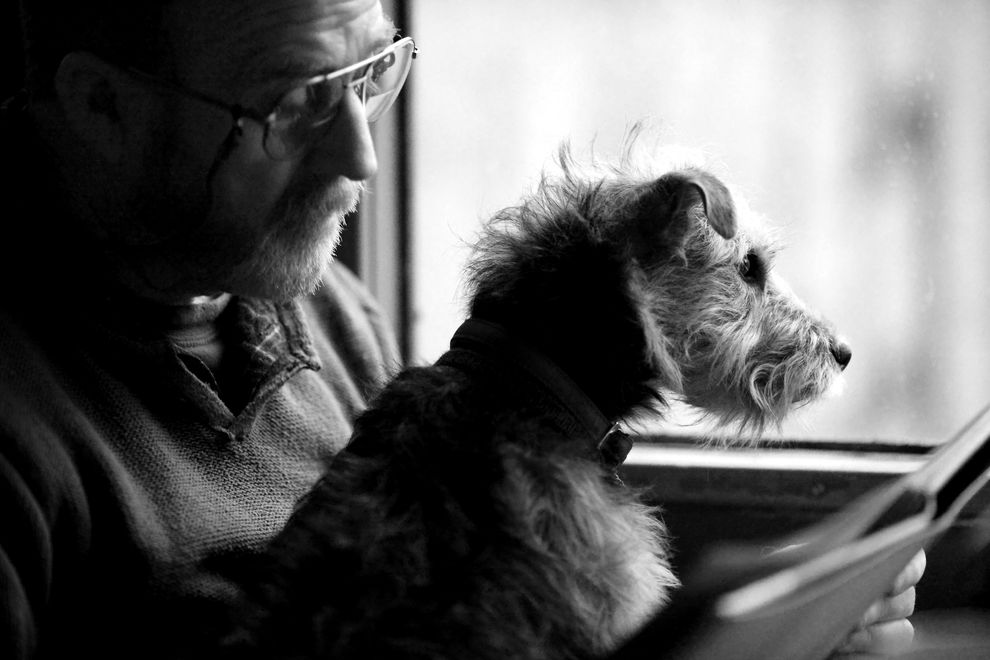
Incredible, prize-winning, images of dogs.
The following was read over on Mother Nature News on June 30th. The item, and especially the photographs, just had to be shared with you.
However, to ensure the integrity of republication and the identity of the photographers, I’m going to include the photographs and the words of the original MNN piece, and split it across today and next Sunday.
Trust me you will adore these photographs.
ooOOoo
Jaymi Heimbuch June 30, 2016.
The love of a dog is a universal joy, as the latest photography competition from The Kennel Club illustrates. The 10th annual competition drew over 13,000 entries from photographers in 90 countries. The photographs show the beauty, loyalty, companionship, dignity and, of course, the adorableness of dogs around the world.
The competition features eight categories, including Puppies, Oldies, Dogs at Work, Dogs at Play, Man’s Best Friend (winner pictured above), Assistance Dogs and Dog Charities, Dog Portraits and I Love Dogs Because.

This image of Sheldon the English springer spaniel enjoying a mist-shrouded pond early one morning is the work of Anastasia Vetkovskaya from Russia. Not only did it win for the Dogs At Work category, but it also placed as the overall winner of the competition.
Vetkovskaya states, “I have loved animals from an early age, which is why I went to Moscow Veterinary Academy and became a veterinary surgeon in 2007. Around this period of time, my husband gave me my first SLR camera, and since then I have devoted all of my free time to photography. My specialty is pets, and I am inspired most by horses and dogs.”

Baxter the Westie inspired his photography-loving human, Tom Lowe, to snap this image of Baxter playing in the water of Loch Lomond in Scotland.

This poignant image was taken by Michael Higginson, and features his brother Dale with Esta the dog. The win not only benefits the photographer but also a charity of his choice. The Kennel Club is making a donation to Higginson’s favorite charity, Dogs for Good.
Higginson states, “Winning the Assistance Dog category has made it even more special. It’s an honor to be able to show the world what a difference a dog can make to someone else’s life.”
ooOOoo
Aren’t they breath-takingly beautiful!
The rest of these fabulous photographs in a week’s time.
Well, perhaps not completely all change!
There will be few who can’t have heard of the enormous changes going on in my old country, with Teresa May now Britain’s second female Prime Minister. Talk about out with the old and in with the new!
But as this lovely story recently published over on the Smithsonian Magazine website illustrates, it’s not total change.
ooOOoo

In the weeks since British citizens voted to leave the European Union in a national referendum, the government of the United Kingdom has seen its share of political turmoil. Following the results of the vote, then-Prime Minister and “Remain” supporter David Cameron announced that he would be stepping down, and has now been replaced by his successor, Theresa May. But while Cameron has officially left the Prime Minister’s residence and offices at 10 Downing Street in London, at least one of his appointees will remain in May’s service: a brown and white tabby cat named Larry.
“It’s a civil servant’s cat and does not belong to the Camerons—he will be staying,” a government official tells the BBC.
Larry first came to 10 Downing Street in 2011, when Cameron adopted him from a rescue home in hopes that the feline would help handle a mouse infestation plaguing the Prime Minister’s residence. As the first cat to hold the title of Chief Mouser to the Cabinet Office, Larry has become a familiar face in and around the building over the years.
“Larry spends his days greeting guests to the house, inspecting security defenses and testing antique furniture for napping quality,” an official government website detailing the history of 10 Downing Street writes. “His day-to-day responsibilities also include contemplating a solution to the mouse occupancy of the house. Larry says this is still ‘in tactical planning stage.’”
However, despite being touted as a “good ratter” with “a high chase-drive and hunting instinct,” some reports suggest that Larry is not as good at his job as official statements might lead one to believe. Indeed, Larry has faced harsh scrutiny for slacking on the job, as his love of long naps often gets in the way of his hunting duties, Jack Goodman reports for Atlas Obscura. In one incident, Cameron reportedly was forced to throw a silver fork at a mouse to shoo it away during a meeting with other government officials, even after Larry was brought on board to handle the problem. However, despite his lack of progress on the mouse problem, Larry has managed to continue to retain his position.
While Larry may be the first cat to hold this particular title, he isn’t the first cat to make his home at 10 Downing Street. During the 1920s, Prime Minister Ramsay MacDonald brought along his cat, Rufus of England, and, in the 1930s and ’40s, the so-called “Munich Mouser” ran rampant throughout the residence, the BBC reports. In the 1970s, a cat named Wilberforce took up guard. Upon retirement, he was replaced by a stray who wandered into the offices during Margaret Thatcher’s premiership (he was called Humphrey). The last cat before Larry to hold court at 10 Downing Street was Sybil, who belonged to former Chancellor Alastair Darling. However, she reportedly did not care for city life, and later retired with Darling to his home in the Scottish countryside.
Whatever other effects the decision to leave the European Union will have on the United Kingdom’s government in the coming weeks, Larry’s position as “top cat,” at least, remains assured.
ooOOoo
Well done, Larry!
… it’s not that easy to be rational!
It’s alright! I haven’t missed taking my pills! 😉
My headline and sub-heading was me trying to catch your eye and persuade you stop what you are doing for eleven minutes and watch this video that was filmed earlier this year at the TEDxPSU conference. It’s all about being rational.
The presenter is Julia Galef described by WikiPedia (in part) as:

Julia Galef (born 1983) is president and co-founder of the Center for Applied Rationality. She is a writer and public speaker on the topics of rationality, science, technology and design. She serves on the board of directors of the New York City Skeptics and hosts their official podcast, Rationally Speaking, which she has done since its inception in 2010, sharing the show with co-host and philosopher Massimo Pigliucci until 2015. She also blogs with her brother Jesse on the website Measure of Doubt.
Biography
Galef received a B.A. in statistics from Columbia University. In 2010 she joined the board of directors of the New York City Skeptics. She co-founded and became president of the nonprofit Center for Applied Rationality (CFAR) in 2012. The organization also gives workshops to train people to internalize and use strategies based on the principles of rationality on a more regular basis to improve their reasoning and decision making skills and achieve goals. She was elected a fellow of the Committee for Skeptical Inquiry in 2015.
Julia’s website further explains:
The problem I’m most interested in is how to change one’s mind. Starting from the premise that every human being is at least a little wrong about many things that matter — in our careers, or about health, science, politics, our self-image, and more — we should, in theory, be updating our views frequently as we learn more about the world. In practice, however, our opinions ossify.
So here’s that talk from Julia – I bet all of you will find it interesting! Rationally speaking, that is!
Published on Jul 11, 2016Perspective is everything, especially when it comes to examining your beliefs. Are you a soldier, prone to defending your viewpoint at all costs — or a scout, spurred by curiosity? Julia Galef examines the motivations behind these two mindsets and how they shape the way we interpret information, interweaved with a compelling history lesson from 19th-century France. When your steadfast opinions are tested, Galef asks: “What do you most yearn for? Do you yearn to defend your own beliefs or do you yearn to see the world as clearly as you possibly can?”
If only our leaders and power-brokers across the world yearned for truth!
Reading the behaviours of our dogs.
Apologies, going straight into this republication of an article that appeared on the Care2 blogsite back in June. Didn’t get to sit down in front of my computer until 4pm.
ooOOoo
 By: Katie Waldeck June 19, 2016
It’s not surprising that our beloved canine companions’ behavior is sometimes confusing to us. After all, it’s not like they can tell us why they do certain things! But is your pooch’s behavior normal, or a sign of something more troubling?
And, for that matter, are common dog behaviors totally fine, or something we should be working to stop? Oftentimes, the answer is the former. Read on to discover some of the strangest dog behaviors that are actually totally normal.
1. Barking at Mirrors
If you show a human baby a mirror, they don’t always recognize themselves— young infants lack the self-awareness needed to do that — and dog babies are no exception. Most of the time, dogs grow out of it as they age, losing interest in their own reflections. Dogs are much less affected by visual events than humans, relying far more on their sense of smell to gather information. Since the dog in the mirror doesn’t have its own smell, most dogs tend to lose interest pretty quickly.
2. Being Scared of Thunderstorms
3. Eating Poop
Though it’s certainly not appetizing to us humans, many dogs eat poop. Eating feces is actually a fairly typical behavior for canine mothers, because it cleans the area where they are caring for their puppies. Some evidence also suggests that dogs eat feces when they’re lacking in certain nutrients. Eating poop can even be a way to get your attention and alleviate anxiety. This is not exactly a GOOD behavior for dogs, however, and solutions for it are mostly simple. Supervision and simple commands like “Leave it” and “Come” are often enough to curb most dogs’ fecal fascination, and vitamin and enzyme supplementation can work for dogs whose diets are missing nutrients.
4. Spinning Around in Circles
Plenty of dogs spin around and around for what seems like forever. Some breeds, including bull terriers in particular, are especially susceptible to this behavior. While this is often normal dog behavior, it can also be a sign of stress or anxiety. Whatever the reason your pooch spins in circles, this behavior should be nipped in the bud. The best way to do that? Well, get them moving and thinking. Take them on walks. Give them toys that stimulate their mind. If that still doesn’t work, you might need a dog behavior expert to intervene.
5. Separation Anxiety.
Many dogs experience separation anxiety — they just love you THAT much! Often, this is a result of changes in routines, moving, household membership changes or after moving in with a new family. It’s totally normal, but, unsurprisingly, it isn’t the best behavior for your pet’s mental health. The key to breaking your pooch of this behavior is to identify how big of a problem it is before you go about fixing it. Click here for detailed ways to help break this habit.
6. Hating Other Dogs.
Dogs who weren’t socialized at an early age around fellow canines will understandably have some aggression towards unknown dogs. Conversely, some dogs that have been socialized around other dogs seem to pick and choose which dogs they like. Why is that? Well, dogs aren’t all that different than humans in that regard — sometimes we just don’t like certain people. Dogs perceive a massive amount of information through scent, and two dogs may find something off-putting about each other’s smells. Dogs may also be overprotective of their owners or have something in their history that makes them especially distrustful of certain other kinds of dogs. Avoiding another dog at the park isn’t much cause for concern, but if your dog is consistently aggressive, it’s time to consult a veterinary behaviorist.
7. Having Sensitive Spots.
Some dogs have areas where they just don’t like to be touched. There can be several reasons for this — everything from a recent injury to poor socialization as a puppy — but, often, this is simply because, well, dogs just don’t like to be touched in certain spots. Think about it this way: plenty of humans don’t want to be patted on the butt by people they don’t know. In fact, most don’t! This can be perfectly innocuous — or it can be a sign of trouble. Dogs that demonstrate overly aggressive behavior regardless of where they’re touched may be in need of a behavior expert. You can read more about this here.
ooOOoo
Any thoughts dear people?
The wisdom of ancient minds.
The following was published by Val Boyco recently over on her blog Find Your Middle Ground.
It is republished here with Val’s very kind permission.
ooOOoo
 Many people have shared this traditional Native American legend filled with wisdom:
I shared this story the other day and asked the question “What can we do to stop feeding the dark wolf and nourish the white wolf?”
What came up was surprising. I had always thought of our inner emotions being the key to which wolf we are feeding. When we are angry, jealous or resentful, we feed the dark. When we are loving and grateful, we feed the light.
But it’s not as simple as this.
Like life, its more than black or white.
I believe that the biggest feeder of the dark wolf comes from the environment we live in nowadays. It feeds the dark insecurity within us. It ignites fear and anger. It triggers old wounds and deep insecurities. It fans the waves of violence and retribution. Whether we are surrounded by negative angry people, or are listening to negative politicians, or are watching live footage of violence … this is the food that feeds our dark wolf.
It is mostly unconscious, and perhaps habit … but I’m sure you know it is so.
So now, you can choose.
What can you stop doing that is feeding the dark wolf? For me it was to turn off the t.v. and make a conscious decision about what I listen to and who I choose to be around. I have become aware of which wolf I am feeding, and my life has changed for the better.
Namaste
ooOOoo
I’m going to conclude today’s post by adding a comment that was left by Karen Lanser in response to Val’s post.
Years ago I came across the most lovely little meditation called “Egg of Light Exercise”. I was reminded of it with your question … here it is! I hope it helps! Karen
Egg of Light Exercise
Excerpted from The Power of the Mind to Heal (pp.50-52)
(Joan Borysenko, Ph.D and Miroslav Borysenko, Ph.D)Begin by taking a good stretch, and then allow your eyes to close … Focus lightly on your breathing, noticing the way that your body rises slightly as you breathe in and relaxes down as you breathe out …
As you settle gently into observing the tide of your incoming and outgoing breath, your concentration can become more and more focused …
Now, in the space about you and slightly in front of you, imagine a great star of loving light …
Allow the light to cascade over you like a waterfall and to run through you …
Imagine the light entering the top of your head and running down through and between every cell, the way that a river washes through the sand on its bottom …
Allow the river of light to carry away any fatigue, illness, or negativity and wash it out through the bottoms of your feet into the earth for transformation …
As the river of light washes through you, imagine that it is scrubbing away any darkness around your heart, allowing the light within you to shine more and more brightly … joining with the river of light … filling you and extending around you for two or three feet in every direction like an enormous, luminous egg …
Make a firm mental declaration that any thoughts of love and encouragement will penetrate the egg and reach your heart, while any negative thoughts will bounce off the egg and return to the sender with a blessing. Declare also that your own loving thoughts will penetrate the egg and reach their destination, while your negative thoughts will bounce off the interior of the egg and return to you with the awareness of loving kindness and encouragement.
*****
Anytime during the day that you feel anxious, assaulted by someone’s energy, or fatigues, try the egg-of-light exercise. After you are used to doing it, you can place yourself in the egg almost instantaneously.
P.S. LOVED your post Val!!
The wisdom, beauty and encouragement that exists in the hearts of so many people (and dogs).

 Learning from Dogs