There I was celebrating Donald’s exquisite photograph, published on Friday, and today we are bemoaning the loss of Sheena. As in:
Sheena has a one-way journey to Lincoln Road vet.
Jean had been putting it off because she knew the likelihood of the outcome. But yesterday with Sheena heavily breathing, but not in pain, Jean decided it was time to take our girl to Lincoln Road Vet.
Later in the morning Dr. Carolyn called us; Sheena was not at all well, she had fluid inside her, she had a growth in her lungs, and more. Jean decided while Sheena was not in pain it was best to have her put down. Dr. Carolyn said that if Sheena was her dog then that is what she would do. Simply because when Sheena goes downhill she will deteriorate very quickly.
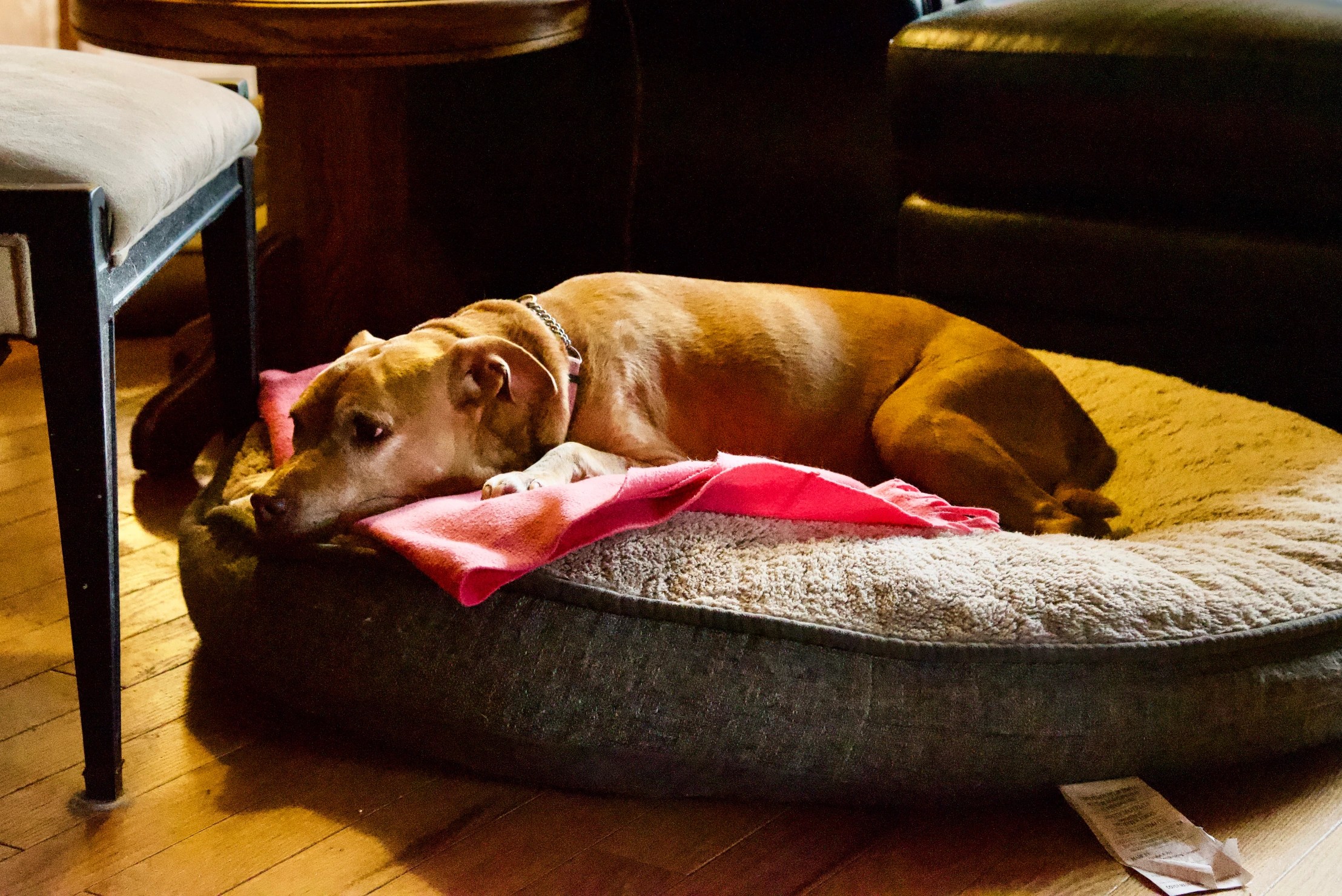
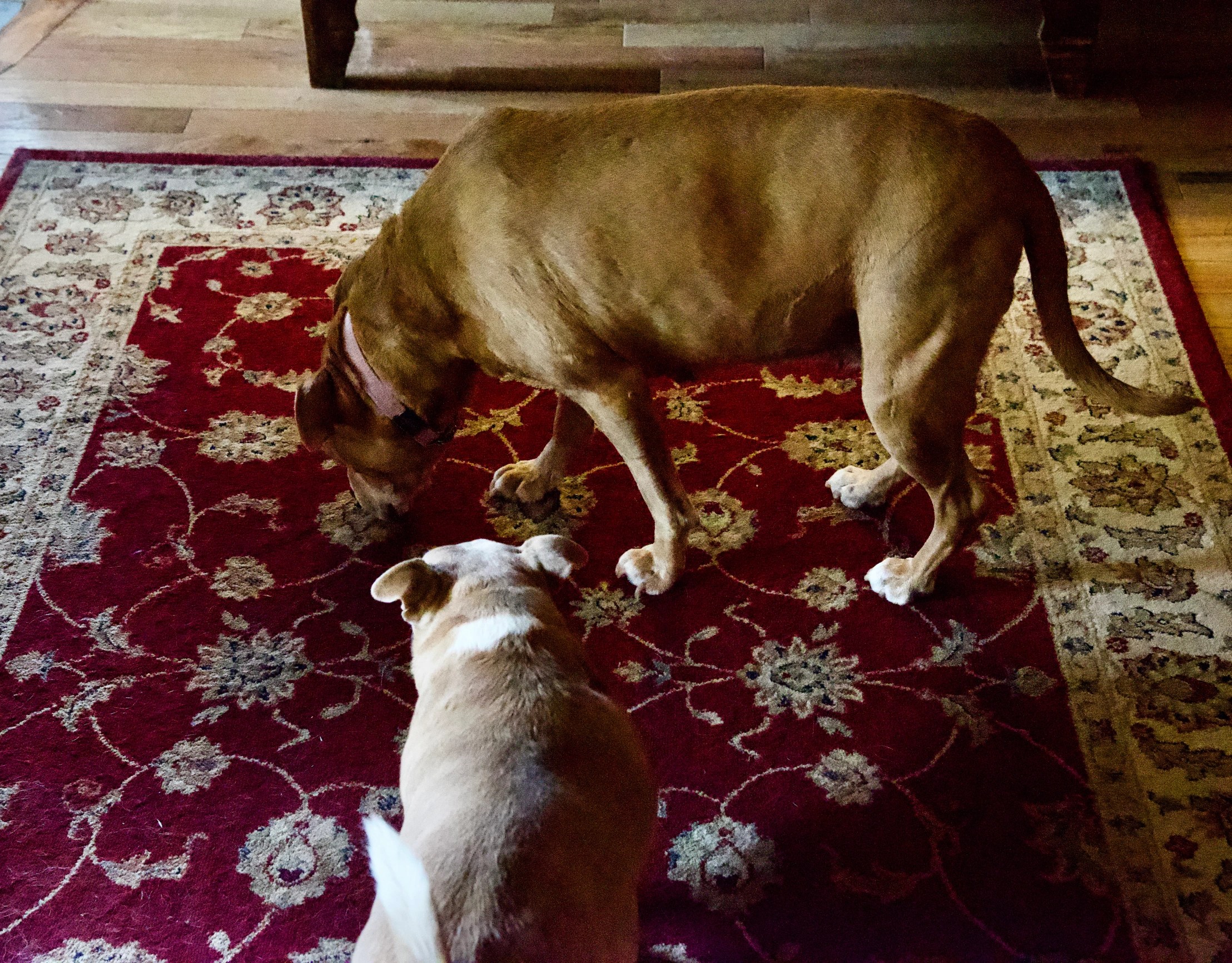
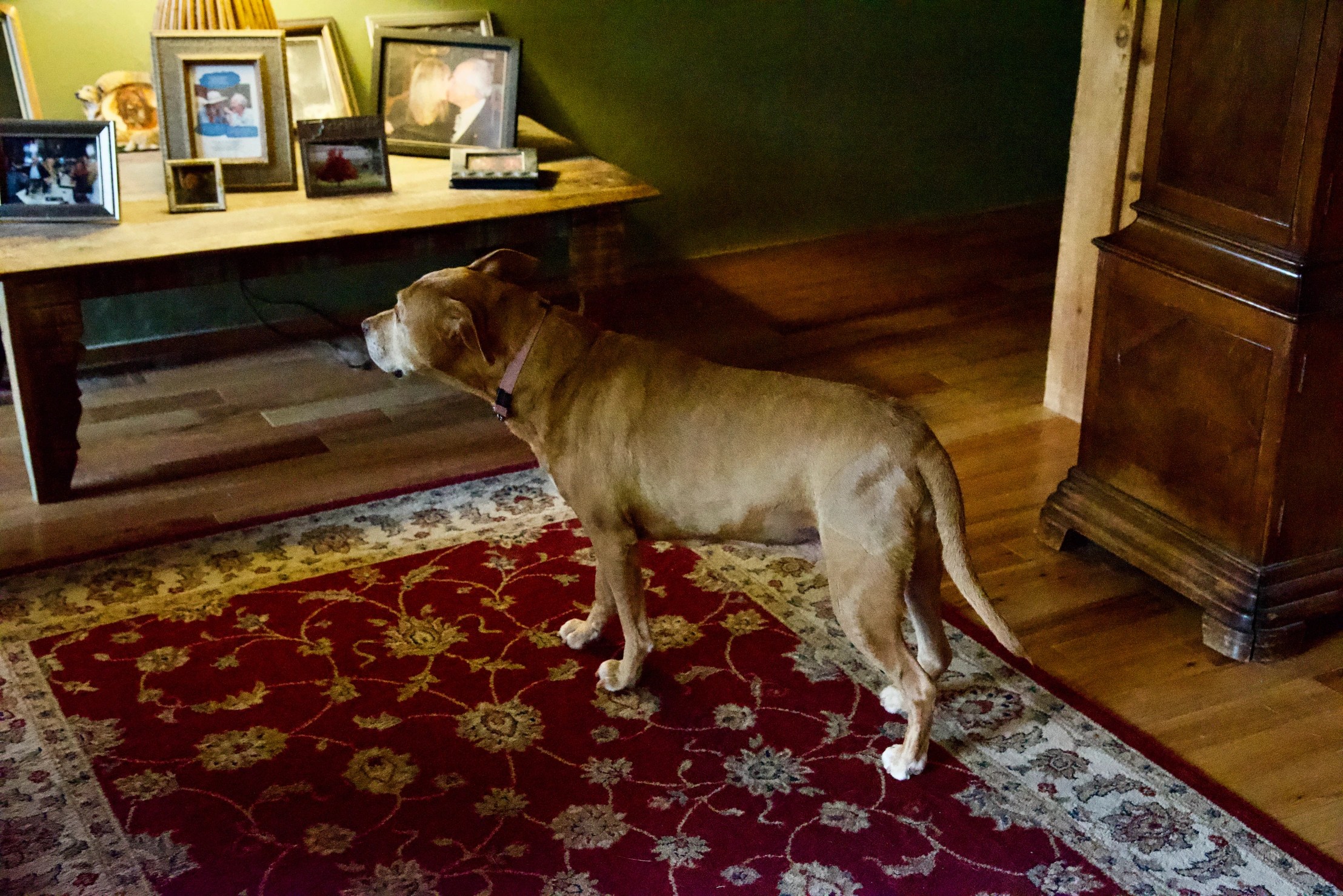
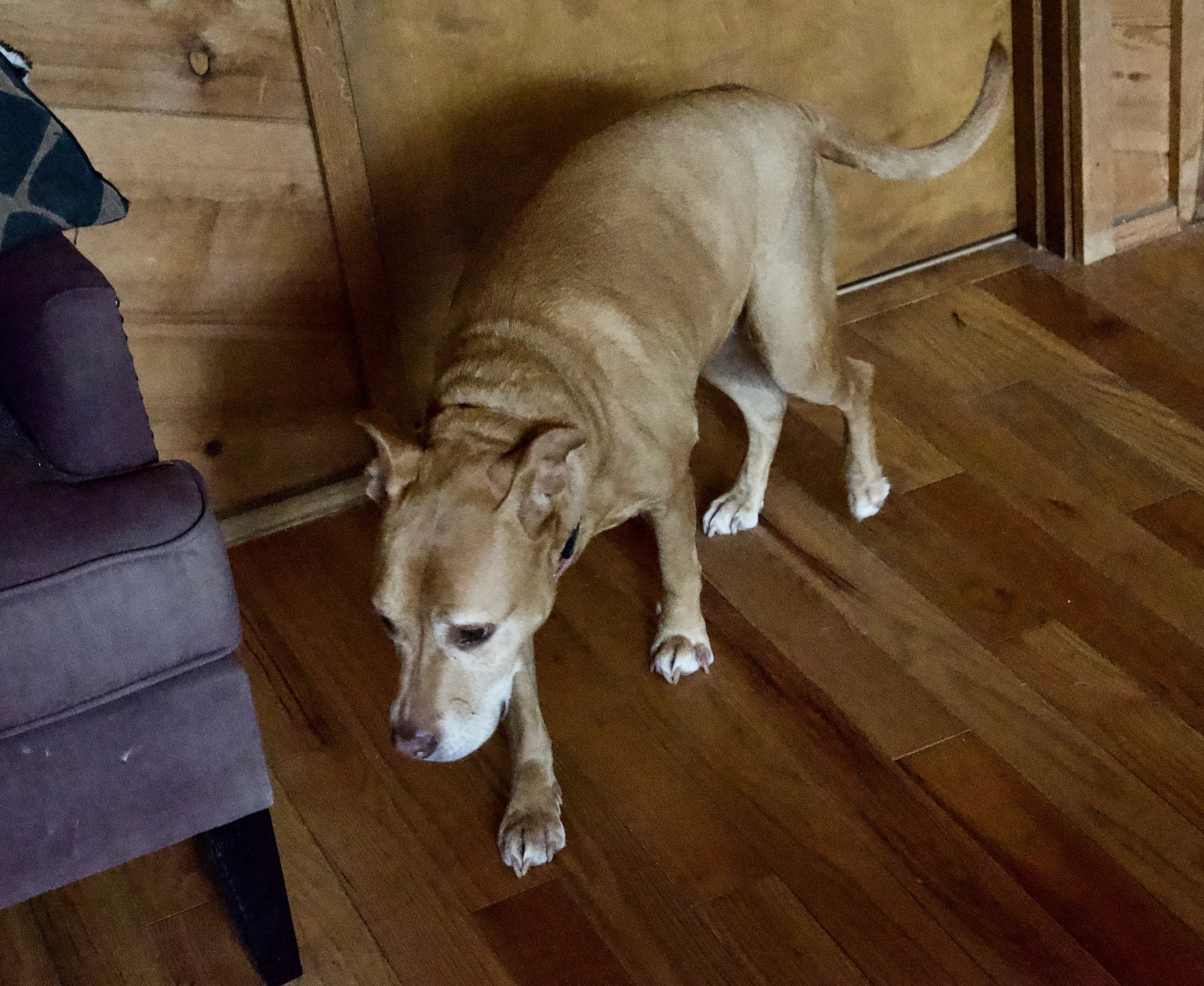
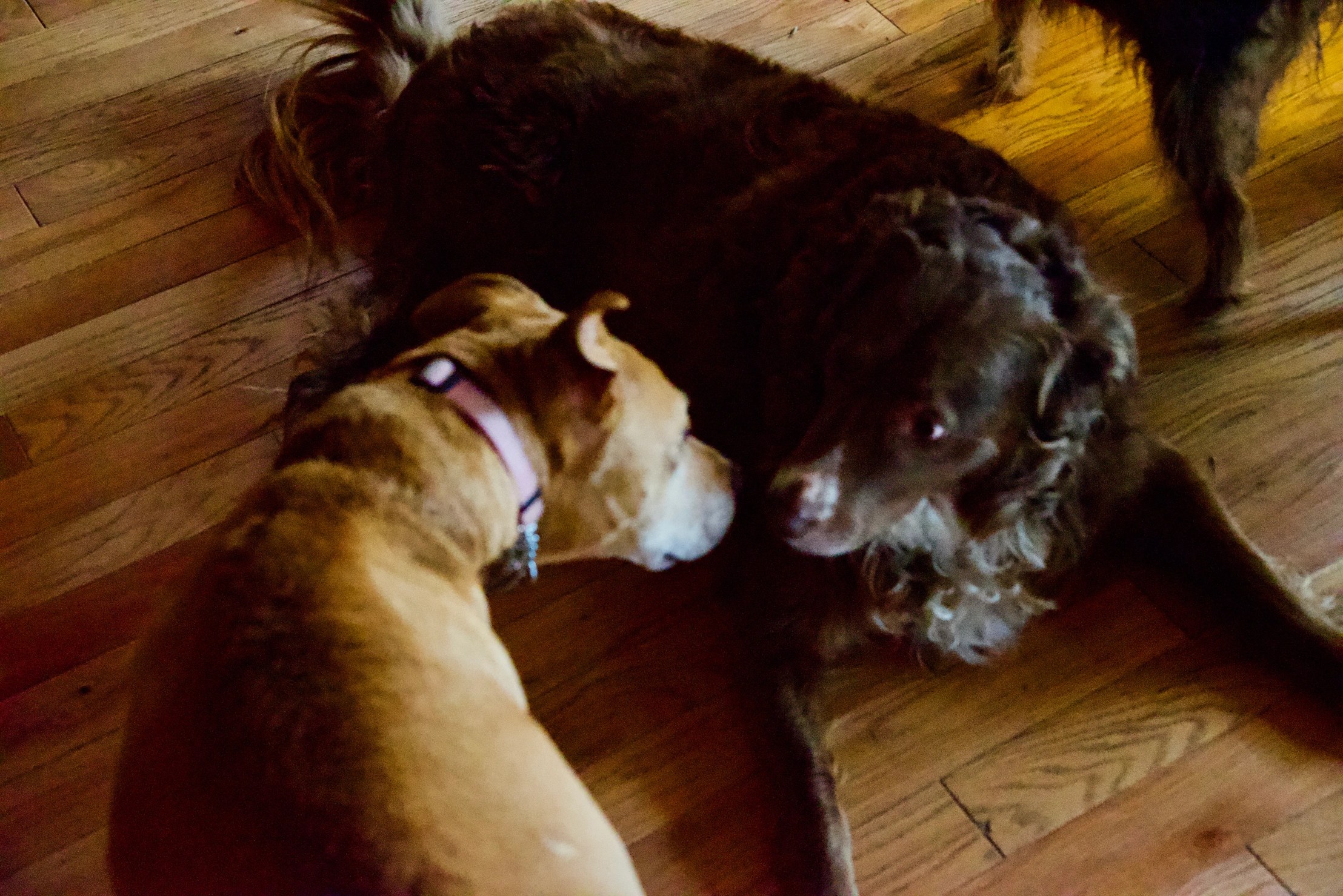
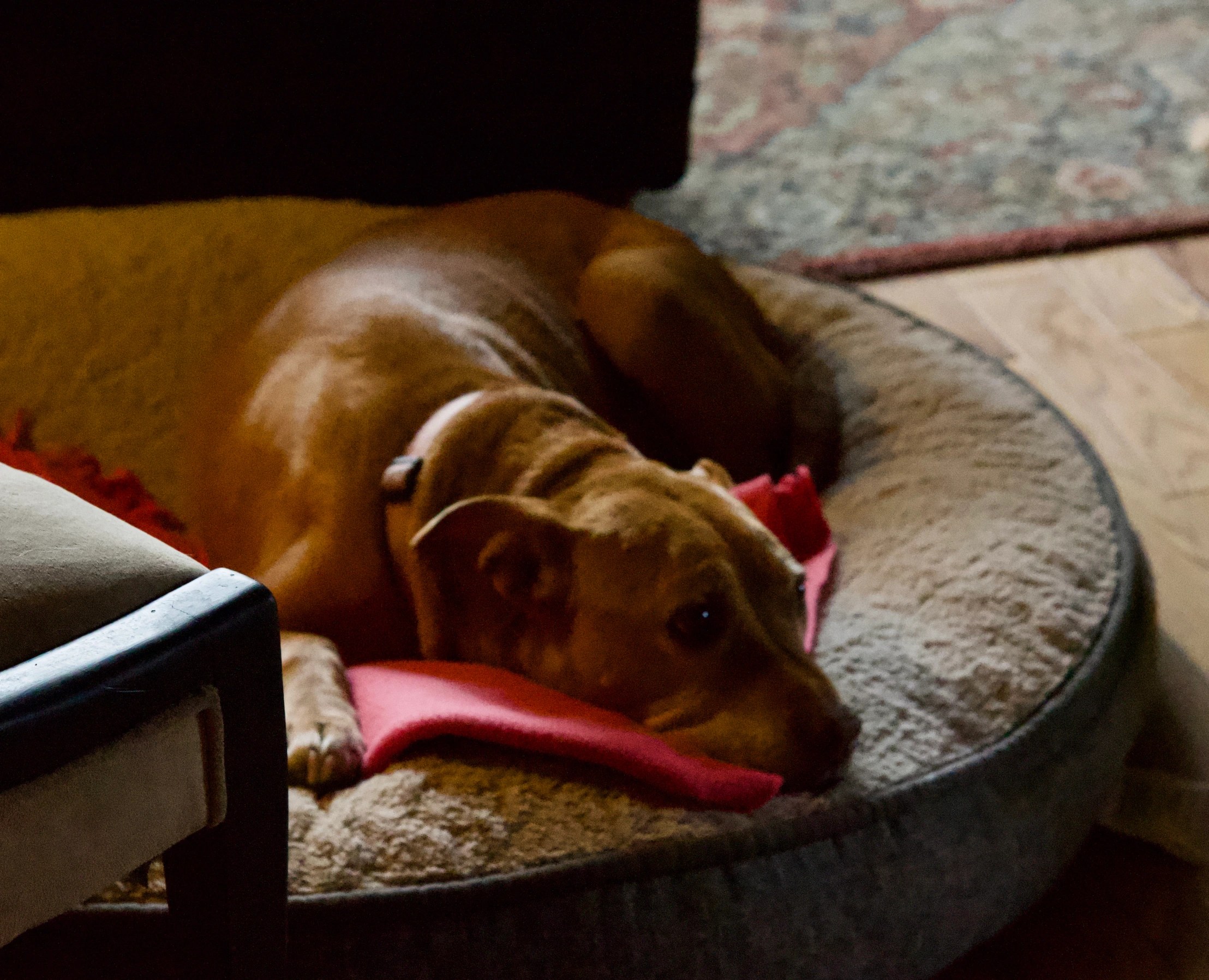
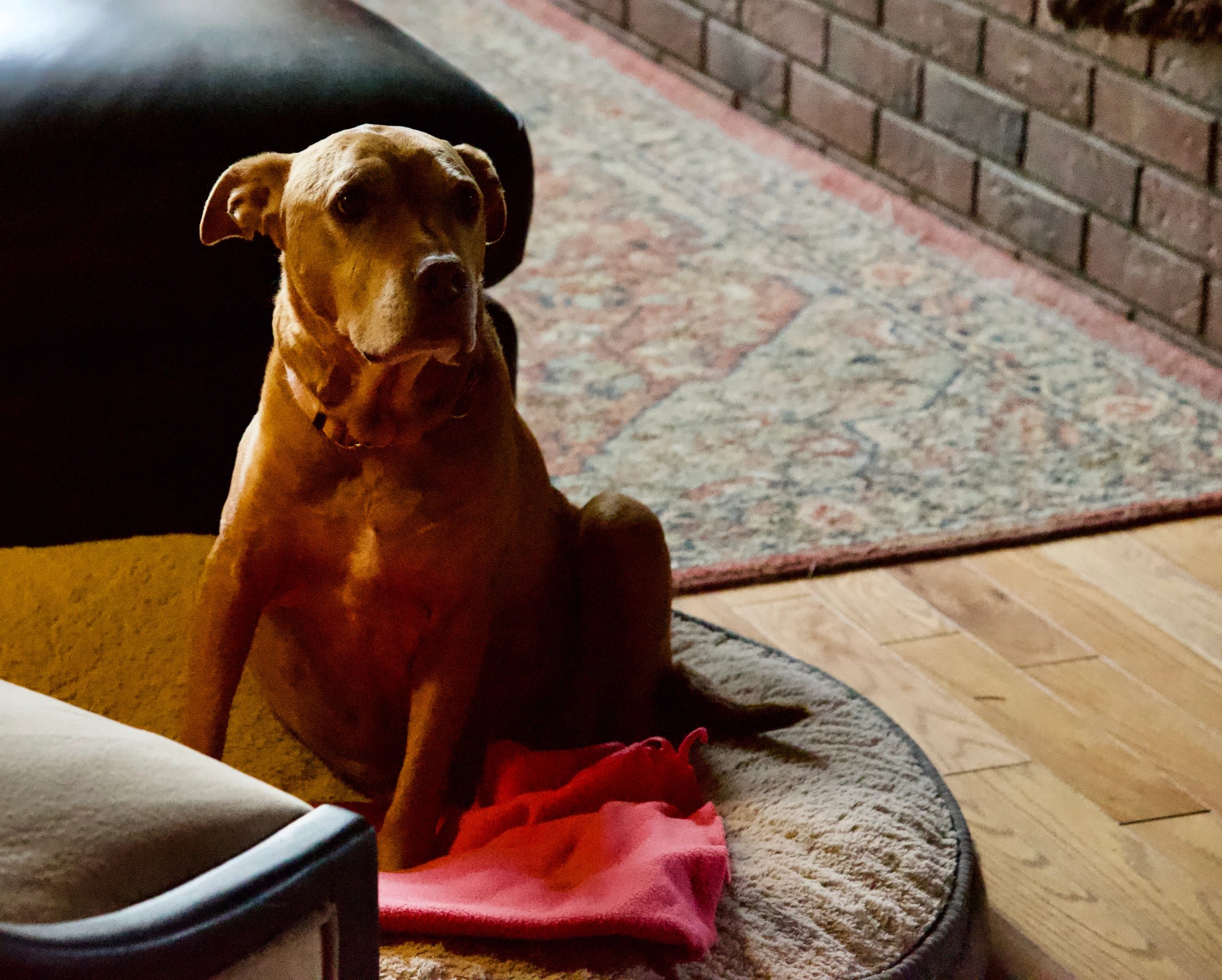
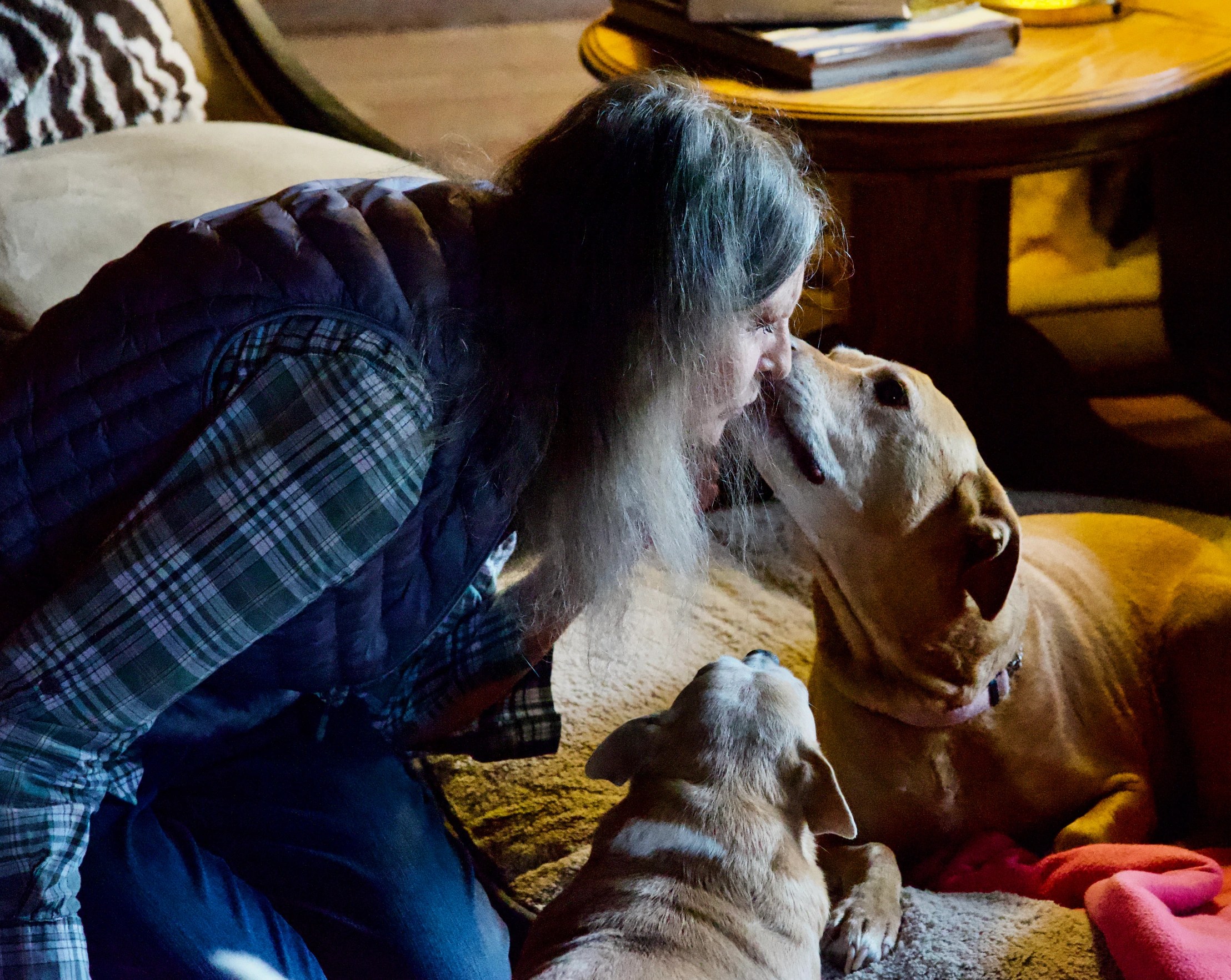
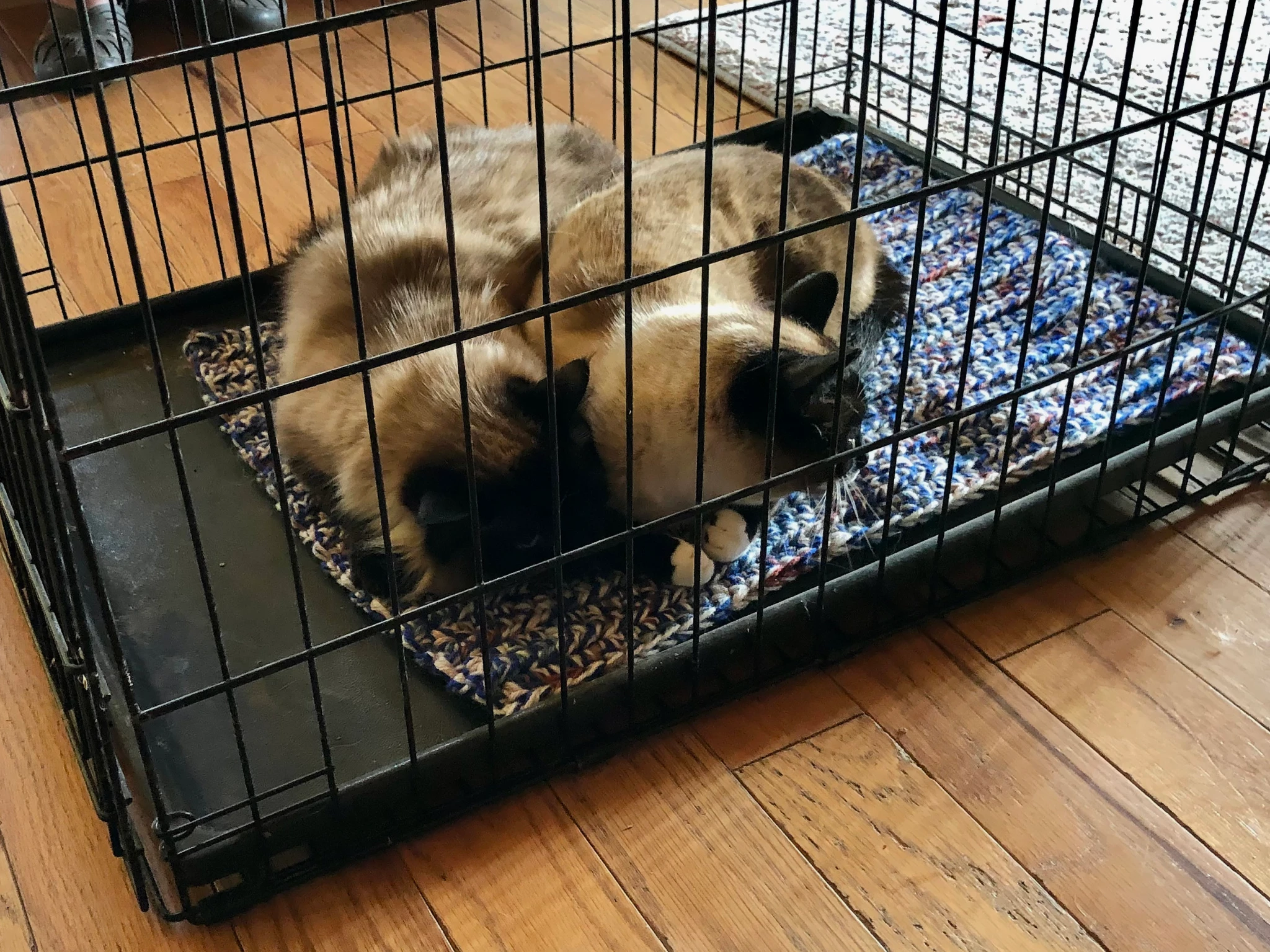
Here are the photos I presented when we took her in back in June, 2020.
oooo
oooo
oooo
oooo
oooo
oooo
oooo
All things comes to pass but that doesn’t stop the deep sadness that is felt in the Handover household!
As I said at the outset, what a difference a day makes!
Another very useful guest post from Penny Martin who is becoming a very regular contributor to this place. This time Penny writes about being on a budget, aren’t we all, but still keeping your dog safe and happy.
Six Ways to Make Your Home and Yard Dog-Friendly on a Budget
By Penny Martin.
Dogs add many wonderful things to their owners’ lives; however, owning a dog can be a drain on your bank account. According to statistics, the average American dog owner spends $1,480 per year on dog expenses. These tips can help you make your home and yard more dog-friendly without breaking the bank.
1. Add a Fence
Dogs need exercise, a place to go to the bathroom and a chance to sniff around and be a dog. However, if you don’t have a yard with a secure fence, it isn’t safe to allow your dog outside without a leash. Even a well-trained dog may run off to chase a squirrel, greet a strange dog or go exploring. This puts your dog at risk of being hit by a car, getting in a fight with another dog or animal or becoming lost. Adding a fence to your yard allows you to enjoy time with your pet off leash without risking your pet’s safety.
2. Add a Backyard Pool
Not every dog loves to swim, but many do. You can give your dog a place to cool off and have some fun without spending a lot of money by purchasing a wading pool or a small stock tank. If you think your dog would enjoy more than splashing around, search for a dog-friendly place in your area where you can inexpensively take your dog to swim. However, don’t just toss your pup into the deep end. Not all dogs are natural swimmers. Many facilities that have pools for dogs offer swimming lessons.
3. Create Shady Spots
Dogs love to run and play and on hot days they can easily overheat. Help your dogs stay cool by making sure they have plenty of shady spots to hang out. One inexpensive way to do this is to purchase a portable awning. You can set the awning up anywhere in your yard and put it away when you no longer need it. Trees are also a good source of shade, but it is important to keep your trees maintained.
4. Remove Dead Trees and Branches
Dead trees create a safety hazard and provide a home for pests. Have a professional local tree service remove any dead trees and branches in your yard before they cause an injury or accident. Do not try to remove the tree yourself. Professionals have the right gear, tools and safety training to remove the tree safely and without damaging your property. Read online reviews before you reach out to contractors. Get at least three estimates and make sure to ask whether stump grinding and disposal are included in the price.
5. Buy Trash Cans With Lids
Trash cans are smelly, full of tasty food and plenty of stuff to shred. It is no wonder that most dogs love to root through them. However, spoiled food, sharp objects or toxic materials can injure or sicken your dog. Avoid this problem by purchasing trash cans with lids that lock.
6. Remove Dangerous Plants
Many plants can be harmful to dogs who ingest them. Research the plants in your yard and remove any that could cause a problem.
Owning dogs is not a cheap endeavor. However, you can make your home safe and comfortable for them without spending all your savings by adding a fence and pool, creating shady spots, removing dead trees, purchasing garbage cans with lockable lids, and getting rid of poisonous plants.
ooOOoo
Here at home, because we live in a rural location, dead trees and branches are an ever-present problem. Luckily our dogs don’t seem to be drawn to them but the issue of pests is a different matter. We have thirteen acres of which half is forest and it is all too much for a contractor. Correction: It is all too expensive for us!
For the wider audience of readers this, I am sure, offers very good advice and is another great post from Penny.
Another item about the James Webb Space Telescope (JWST).
I make no apologies for returning to the JWST in just a week after publishing my first article about the telescope. For I found the latest article, again published on The Conversation, to be incredible and that was all I needed to share it with you.
ooOOoo
To search for alien life, astronomers will look for clues in the atmospheres of distant planets – and the James Webb Space Telescope just proved it’s possible to do so
Published July 14th, 2022.
By Chris Impey University Distinguished Professor of Astronomy, University of Arizona and
Daniel Apai Professor of Astronomy and Planetary Sciences, University of Arizona.
We are two scientists who study exoplanets and astrobiology. Thanks in large part to next-generation telescopes like James Webb, researchers like us will soon be able to measure the chemical makeup of atmospheres of planets around other stars. The hope is that one or more of these planets will have a chemical signature of life.
There are many known exoplanets in habitable zones – orbits not too close to a star that the water boils off but not so far that the planet is frozen solid – as marked in green for both the solar system and Kepler-186 star system with its planets labeled b, c, d, e and f. NASA Ames/SETI Institute/JPL-Caltech/Wikimedia Commons
Habitable exoplanets
Life might exist in the solar system where there is liquid water – like the subsurface aquifers on Mars or in the oceans of Jupiter’s moon Europa. However, searching for life in these places is incredibly difficult, as they are hard to reach and detecting life would require sending a probe to return physical samples.
Theoretical calculations suggest that there are around 300 million potentially habitable planets in the Milky Way galaxy alone and several habitable Earth-sized planets within only 30 light-years of Earth – essentially humanity’s galactic neighbors. So far, astronomers have discovered over 5,000 exoplanets, including hundreds of potentially habitable ones, using indirect methods that measure how a planet affects its nearby star. These measurements can give astronomers information on the mass and size of an exoplanet, but not much else.
Every material absorbs certain wavelengths of light, as shown in this diagram depicting the wavelengths of light absorbed most easily by different types of chlorophyll. Daniele Pugliesi/Wikimedia Commons, CC BY-SA
Looking for biosignatures
To detect life on a distant planet, astrobiologists will study starlight that has interacted with a planet’s surface or atmosphere. If the atmosphere or surface was transformed by life, the light may carry a clue, called a “biosignature.”
For the first half of its existence, Earth sported an atmosphere without oxygen, even though it hosted simple, single-celled life. Earth’s biosignature was very faint during this early era. That changed abruptly 2.4 billion years ago when a new family of algae evolved. The algae used a process of photosynthesis that produces free oxygen – oxygen that isn’t chemically bonded to any other element. From that time on, Earth’s oxygen-filled atmosphere has left a strong and easily detectable biosignature on light that passes through it.
When light bounces off the surface of a material or passes through a gas, certain wavelengths of the light are more likely to remain trapped in the gas or material’s surface than others. This selective trapping of wavelengths of light is why objects are different colors. Leaves are green because chlorophyll is particularly good at absorbing light in the red and blue wavelengths. As light hits a leaf, the red and blue wavelengths are absorbed, leaving mostly green light to bounce back into your eyes.
The pattern of missing light is determined by the specific composition of the material the light interacts with. Because of this, astronomers can learn something about the composition of an exoplanet’s atmosphere or surface by, in essence, measuring the specific color of light that comes from a planet.
This method can be used to recognize the presence of certain atmospheric gases that are associated with life – such as oxygen or methane – because these gasses leave very specific signatures in light. It could also be used to detect peculiar colors on the surface of a planet. On Earth, for example, the chlorophyll and other pigments plants and algae use for photosynthesis capture specific wavelengths of light. These pigments produce characteristic colors that can be detected by using a sensitive infrared camera. If you were to see this color reflecting off the surface of a distant planet, it would potentially signify the presence of chlorophyll.
Telescopes in space and on Earth
It takes an incredibly powerful telescope to detect these subtle changes to the light coming from a potentially habitable exoplanet. For now, the only telescope capable of such a feat is the new James Webb Space Telescope. As it began science operations in July 2022, James Webb took a reading of the spectrum of the gas giant exoplanet WASP-96b. The spectrum showed the presence of water and clouds, but a planet as large and hot as WASP-96b is unlikely to host life.
However, this early data shows that James Webb is capable of detecting faint chemical signatures in light coming from exoplanets. In the coming months, Webb is set to turn its mirrors toward TRAPPIST-1e, a potentially habitable Earth-sized planet a mere 39 light-years from Earth.
Webb can look for biosignatures by studying planets as they pass in front of their host stars and capturing starlight that filters through the planet’s atmosphere. But Webb was not designed to search for life, so the telescope is only able to scrutinize a few of the nearest potentially habitable worlds. It also can only detect changes to atmospheric levels of carbon dioxide, methane and water vapor. While certain combinations of these gasses may suggest life, Webb is not able to detect the presence of unbonded oxygen, which is the strongest signal for life.
Even using the most powerful telescopes of the coming decades, astrobiologists will only be able to detect strong biosignatures produced by worlds that have been completely transformed by life.
Unfortunately, most gases released by terrestrial life can also be produced by nonbiological processes – cows and volcanoes both release methane. Photosynthesis produces oxygen, but sunlight does, too, when it splits water molecules into oxygen and hydrogen. There is a good chance astronomers will detect some false positives when looking for distant life. To help rule out false positives, astronomers will need to understand a planet of interest well enough to understand whether its geologic or atmospheric processes could mimic a biosignature.
The next generation of exoplanet studies has the potential to pass the bar of the extraordinary evidence needed to prove the existence of life. The first data release from the James Webb Space Telescope gives us a sense of the exciting progress that’s coming soon.
The James Webb Space Telescope is the first telescope able to detect chemical signatures from exoplanets, but it is limited in its capabilities. NASA/Wikimedia Commons
ooOOoo
So despite the advances in technology that resulted in the JWST it will still not be possible to detect unbonded oxygen; a sure indicator of life. It will be able to detect many other fascinating aspects of stars and planets beyond the Milky Way. I do not know if “The first data release…” relates to software or whether further launches of Mk 2 ‘JWST’ will be required. I will try and find out!
A complete change of photos but I guarantee you will love these!
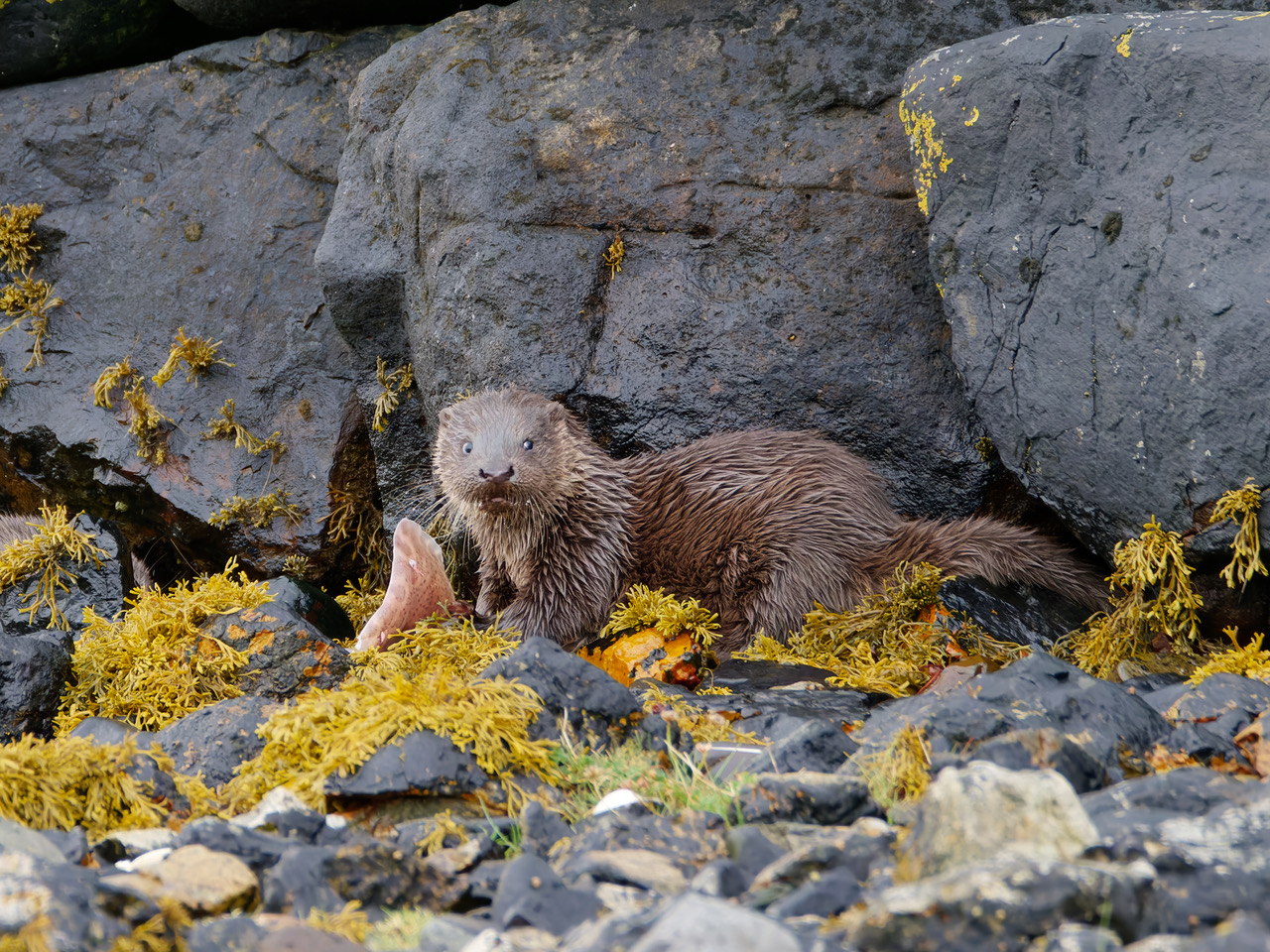
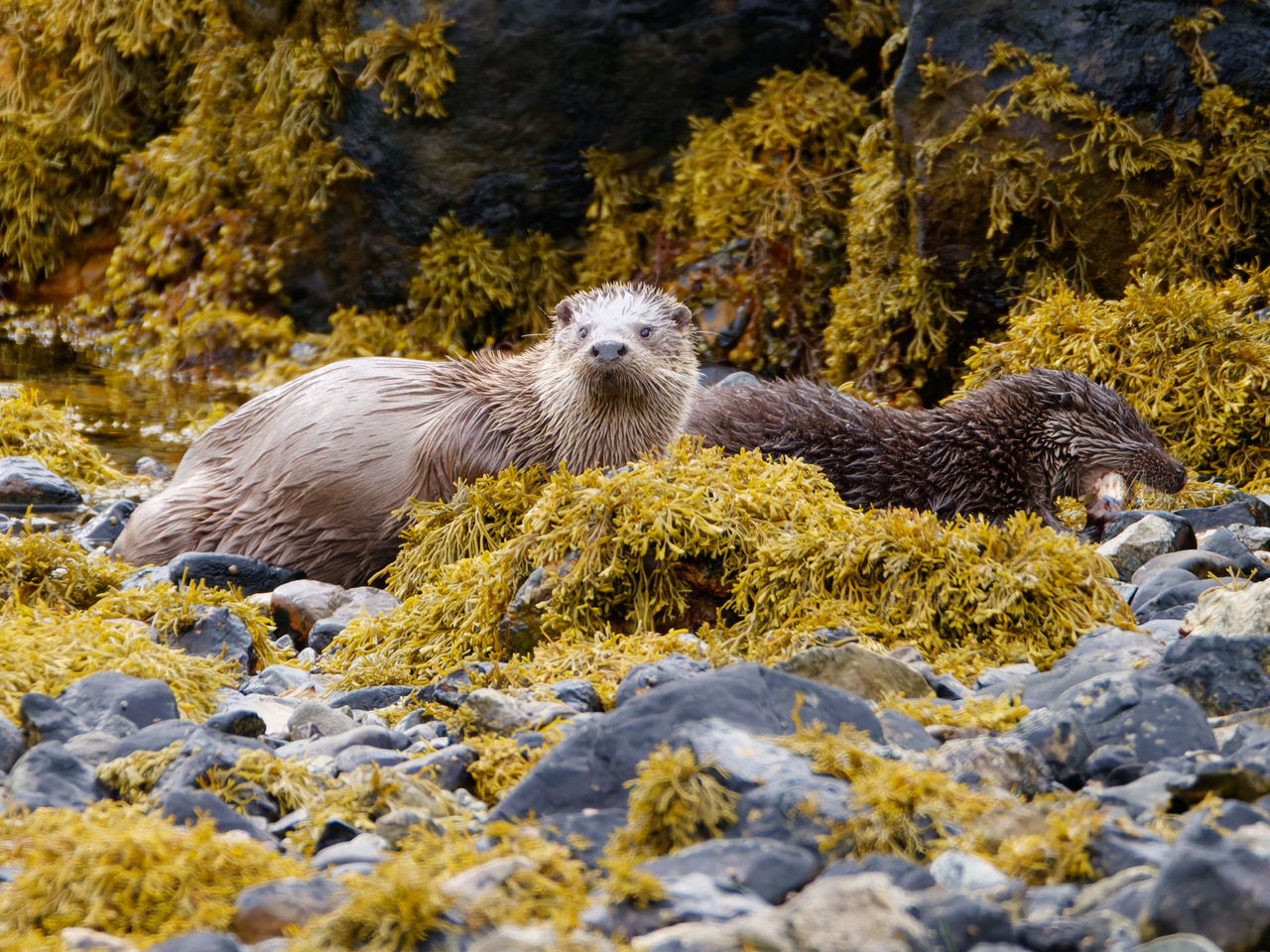
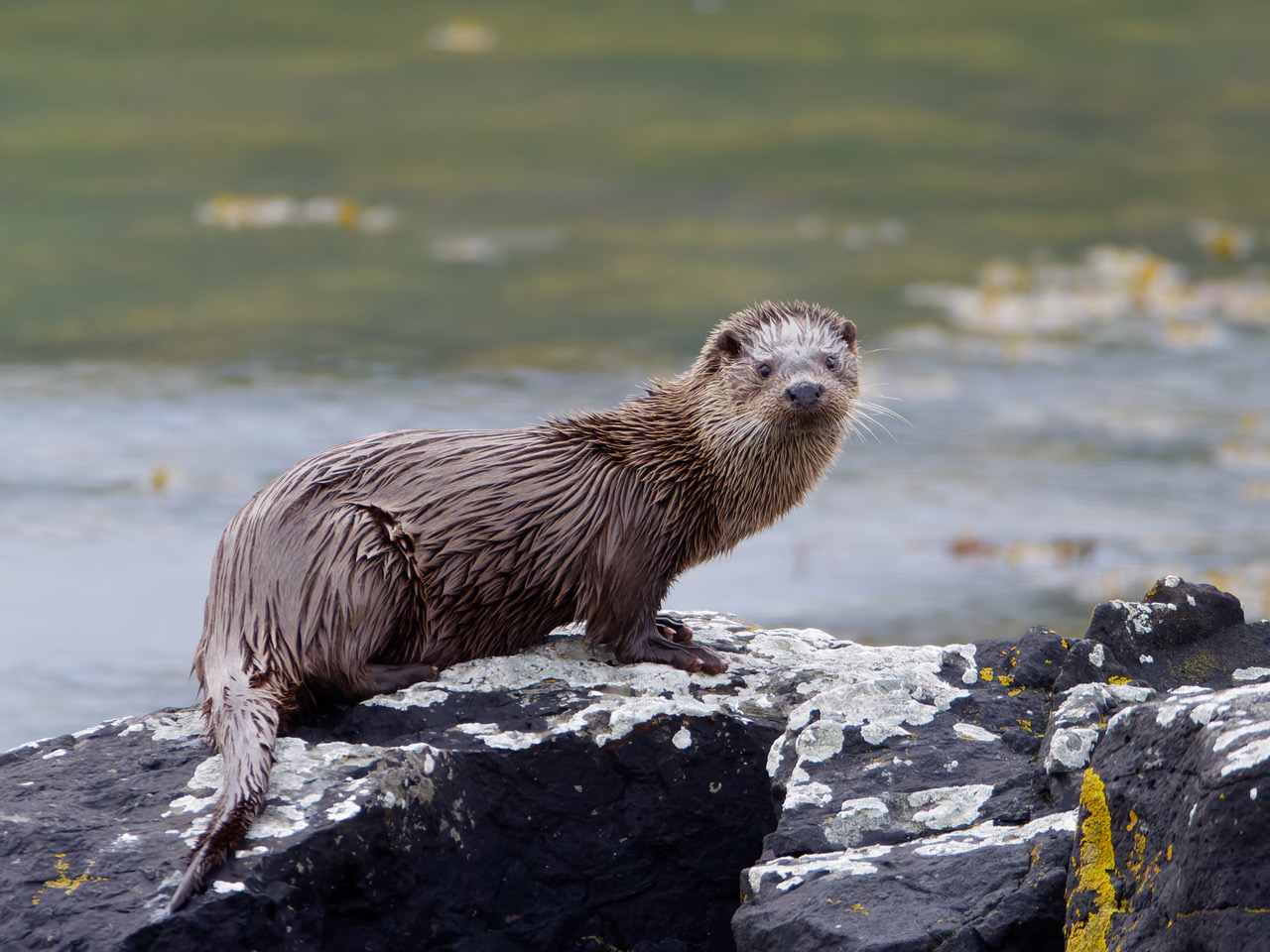
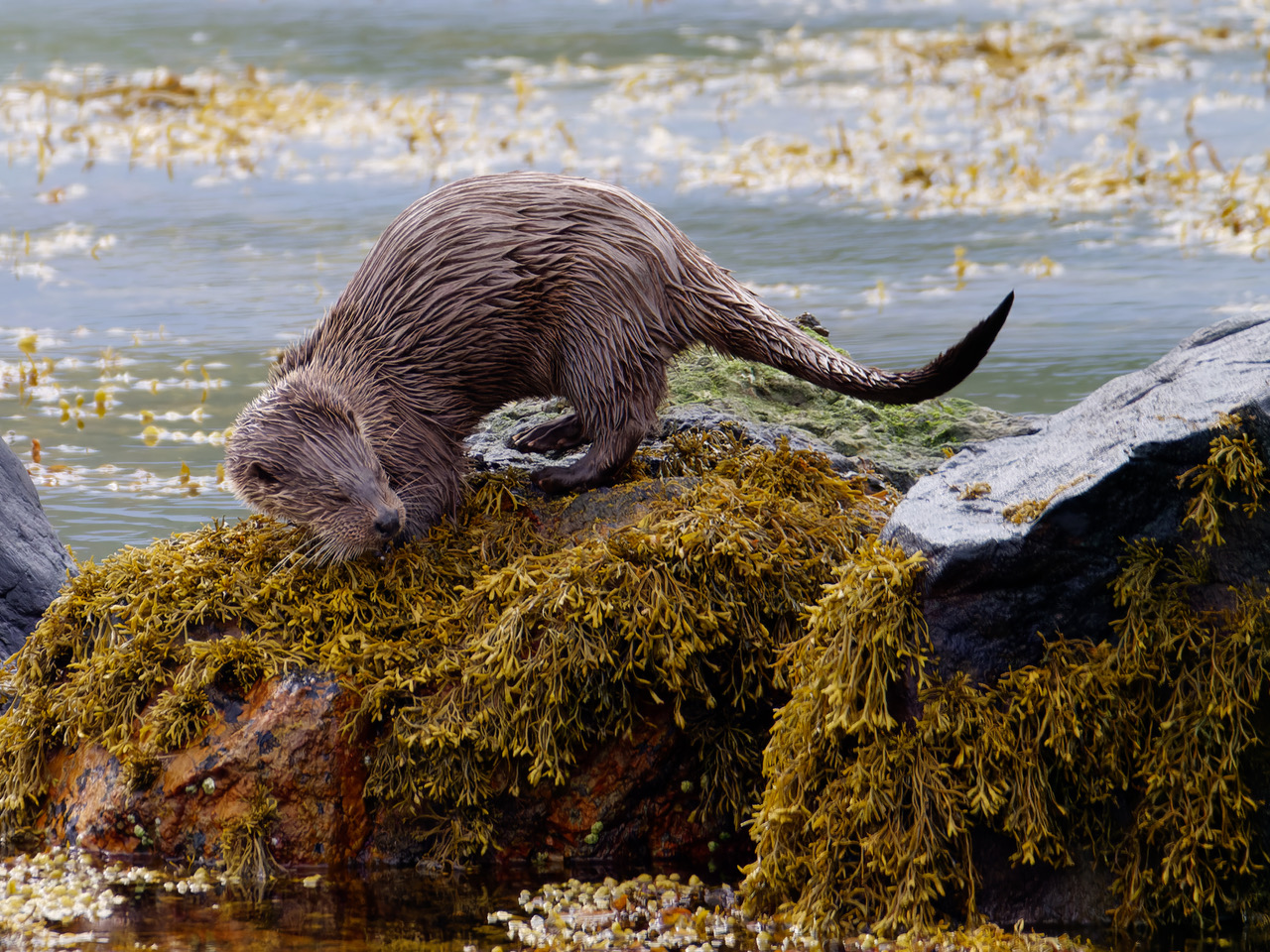
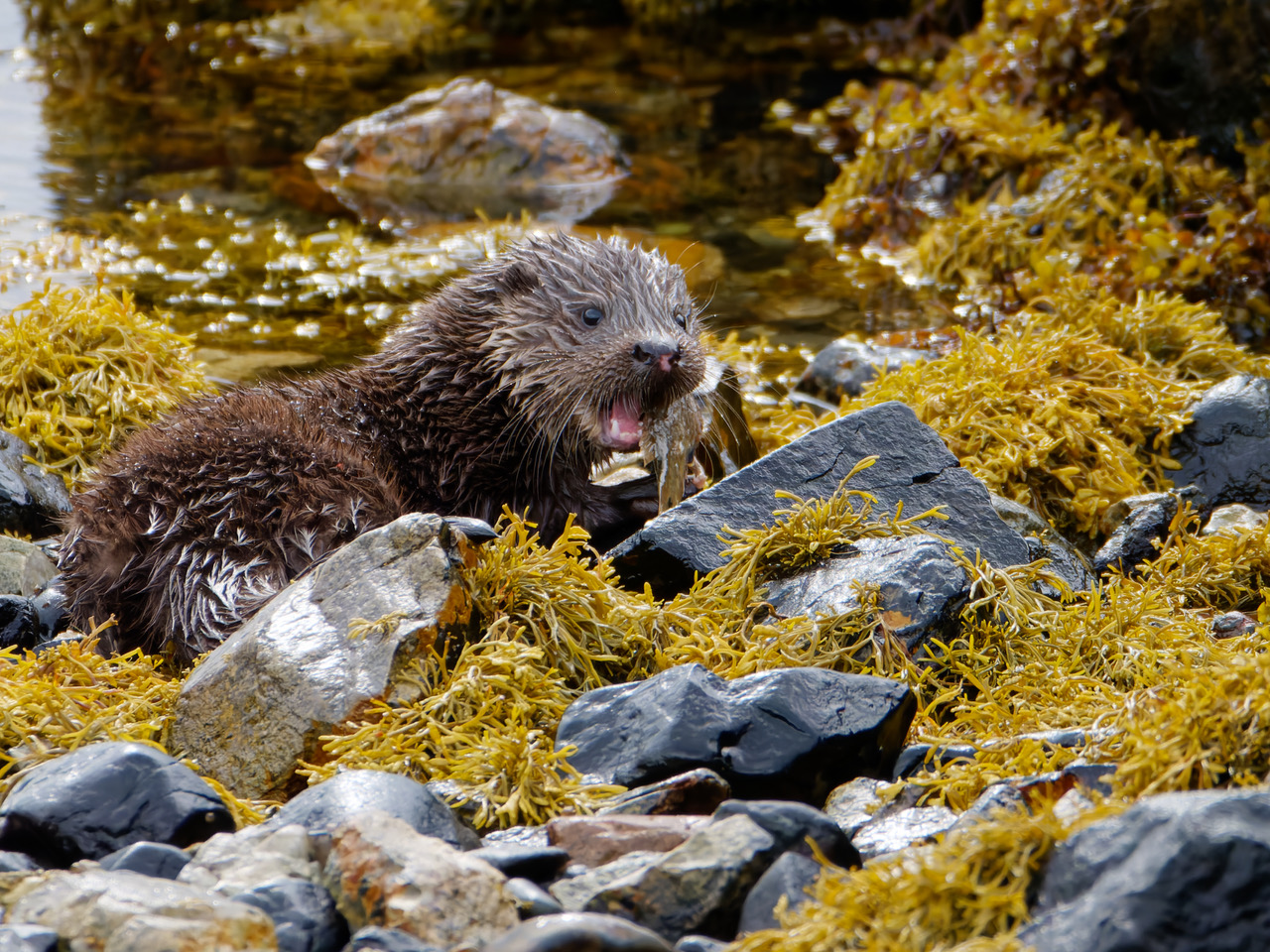
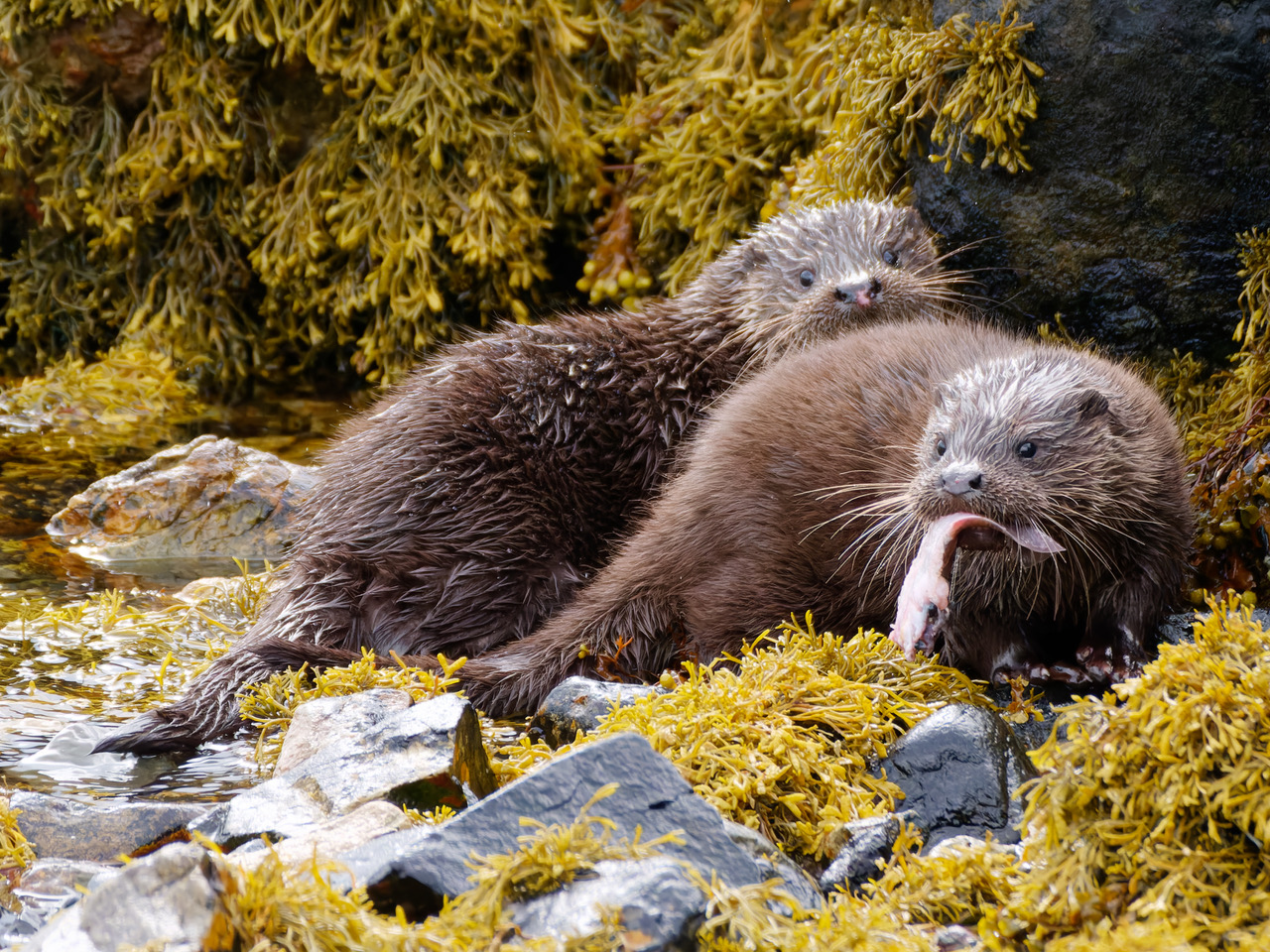
My son, Alex, and his partner, Lisa, recently returned from a vacation on the Isle of Mull. This is a Scottish island lying off the west coast of the mainland. (Home for Alex and Lisa is just outside Bristol in the south-west of England.) Between them they took many photographs.
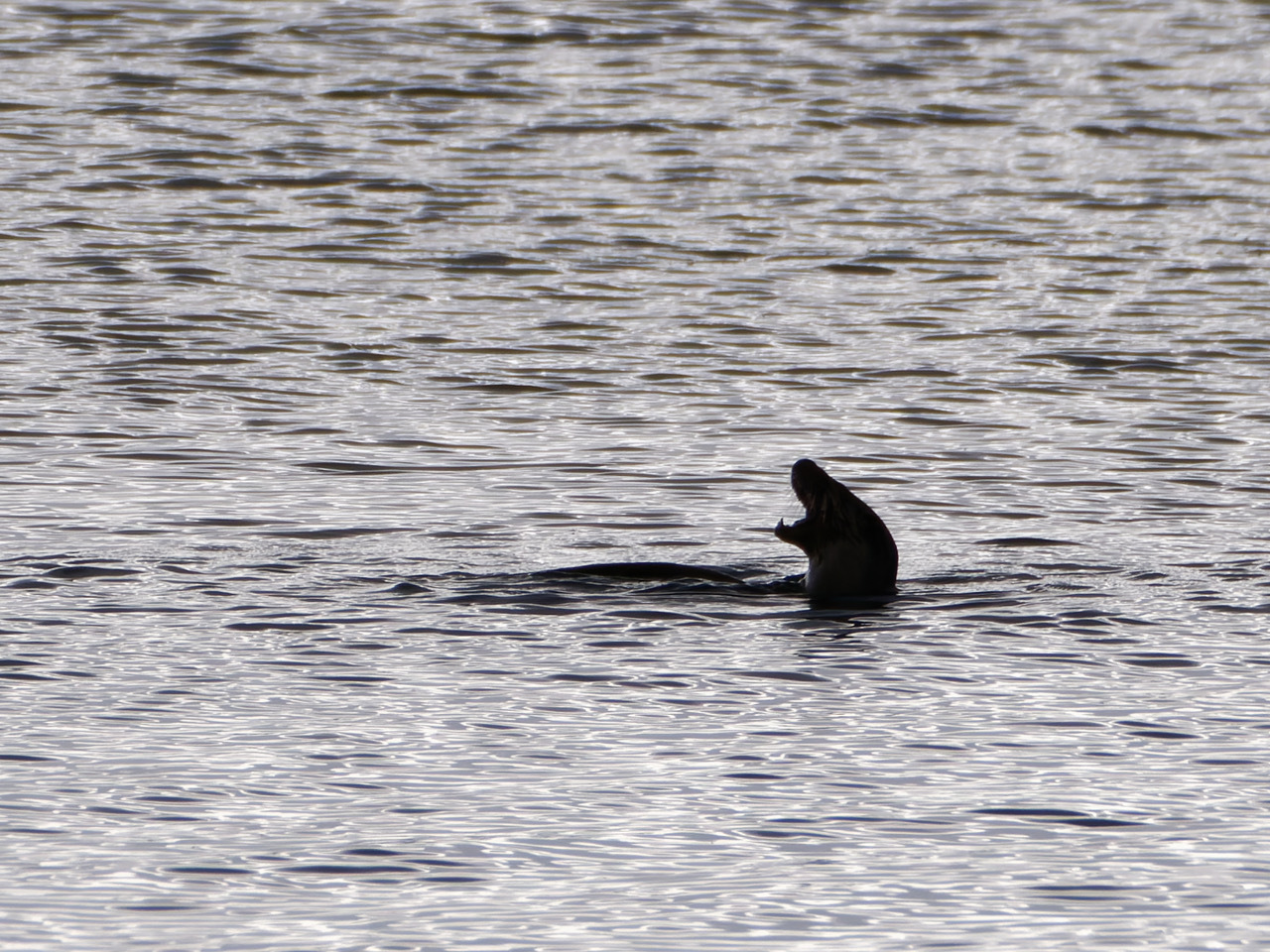
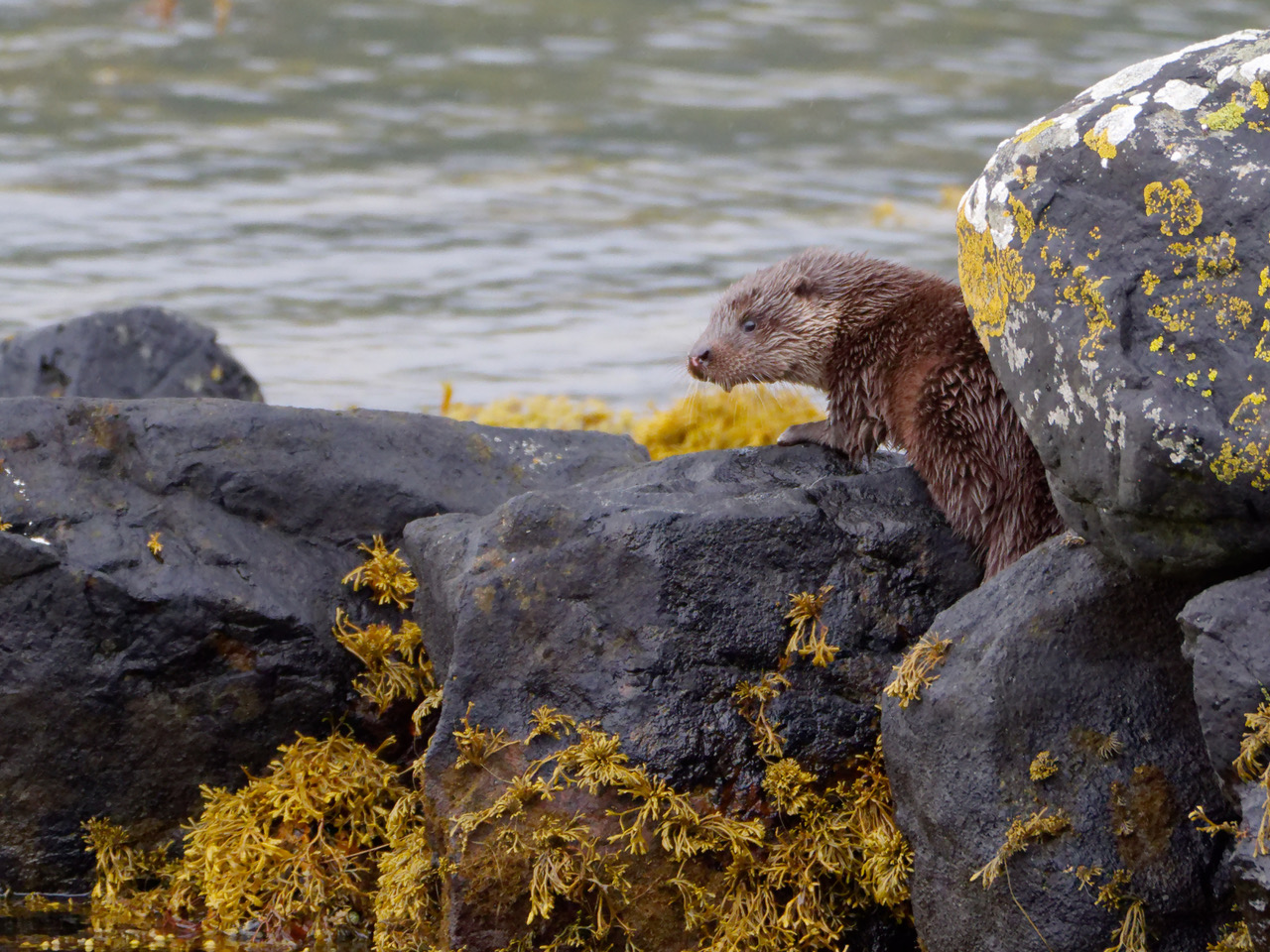
For the next two Sundays I want to share the photos that Alex took of the otters, eight today and seven next Sunday.
Here is the introduction that Alex wrote on Facebook.
Was very lucky to spot this Otter Family whilst on a guiding trip with Brian Boyes and Lisa Williams on the Isle of Mull, the Mum fed the young pups three fish, we watched from the road and then later using Brian’s advice, quietly settled into the rocks and watched the Mum come right past us, a fantastic encounter and these are only a few of the photos I got.
oooo
oooo
oooo
oooo
oooo
oooo
oooo
These are absolutely gorgeous and that’s an understatement!
When Maile Trist checked her email last week, she opened up a message she assumed was a prank. Her beloved dog, a senior Chihuahua named Jazzy, was at the Cowley County Humane Society after being found wandering around a nearby rock quarry.
The email didn’t make sense to Trist because Jazzy had passed away two years ago.
When Trist first met Jazzy at San Diego Humane Society four years ago, she ignored the “Do not pet” sign on her cage. Somehow she knew they’d have a connection.
“I came across my gorgeous girl, I stuck my hand in the cage, and she automatically walked right up to me, tail wagging, and put her head in my hand,” Trist told The Dodo. “I started crying because I had found my dog!”
Two years passed, and Trist moved from California to Kansas. Overwhelmed with the move and a new full-time job, she felt she didn’t have enough time to give to Jazzy. So she asked a dog-loving couple she was friendly with to watch her pup until she got settled.
However, when Trist tried to get back in touch with the couple, they ignored her calls and deleted their social media accounts. She couldn’t find them anywhere. Then, six months later, Trist’s fiancé managed to track them down and asked for Jazzy back.
“The lady told him she had died three months prior,” Trist said. “About a year and half went by, and lots and lots of grieving. I felt horrible for ever giving her to them because I thought I wasn’t there for her last moments.”
Trist thought she’d never see her beloved dog again, but luckily, Jazzy had a microchip. And when she got the news that Jazzy had been located, she dropped everything to be with her dog again.
“I automatically headed home from my job and got in the car and headed to her,” Trist said. “I was crying on and off the whole way there, which was almost a three-hour drive. I couldn’t believe she was still alive and I had no idea how she ended up that far away, but in those moments, I did not care.”
When Trist arrived at the shelter, and watched Jazzy walk towards her again, she couldn’t hold back her tears.
Jazzy recognized her mom immediately, and her little tail started wagging uncontrollably.
“She kind of went to sniff around, but came right back to me and gave me even more kisses,” Trist said. “She would not leave my lap or my arms the whole car ride home, either.”
Now, Jazzy is home and the little dog is not letting her mom out of her sight ever again.
“She’s been so, so happy ever since and she will not leave my side or let me go anywhere without her,” Trist said. “And I feel the same way!”
What exactly happened to the senior dog remains a mystery, but what’s important is that she’s safe and ready to spend her golden years in comfort, surrounded by her loving family.
“She’s a little more white than she was from the last time I saw her, and her hips are a little more sore,” Trist said, “but she’s still the same old lady she was before, and I’m so glad she stayed loving through these last two years.”
(All photographs by Maile Trist.)
ooOOoo
Yet another example of the love between people and their dogs. I would like to say that it doesn’t get any better than that but I would be wrong. It is a perfect case of unconditional love and there are hundreds and hundreds of other stories out there.
Hopefully a few of them will be featured on Learning from Dogs!
Nasa’s James Webb telescope is awesome beyond words.
The recent launch of this telescope, as a successor to Hubble, can see right back more than 13.5 billion years. The universe was formed 13.78 billion years ago. The reach of the James Webb telescope is therefore 98% (97.96) of the life of the universe. But the superlatives about this telescope are almost never-ending. For example it will, in time, be able to explore the tiny planetary worlds far, far away. We may in time see signs of life, as in water, vegetation, or industrialisation, connected with those planets.
The James Webb is in orbit some million miles away from Earth and will, in fact, be orbiting the sun.
One could go on and on speaking about this achievement but I will resist. I want to share a three things with you.
First the release of this early image and a portion of the associated text:
NASA’s James Webb Space Telescope has delivered the deepest and sharpest infrared image of the distant universe so far. Webb’s First Deep Field is galaxy cluster SMACS 0723, and it is teeming with thousands of galaxies – including the faintest objects ever observed in the infrared.
Webb’s image is approximately the size of a grain of sand held at arm’s length, a tiny sliver of the vast universe. The combined mass of this galaxy cluster acts as a gravitational lens, magnifying more distant galaxies, including some seen when the universe was less than a billion years old. This deep field, taken by Webb’s Near-Infrared Camera (NIRCam), is a composite made from images at different wavelengths, totaling 12.5 hours – achieving depths at infrared wavelengths beyond the Hubble Space Telescope’s deepest fields, which took weeks. And this is only the beginning. Researchers will continue to use Webb to take longer exposures, revealing more of our vast universe.
Second, why is it named after James E. Webb (1906- 1992)? James Webb was NASA’s second administrator and known for leading Apollo, the series of lunar exploration programs that landed the first humans on the Moon. (A good Q&A is here: https://www.jwst.nasa.gov/content/about/faqs/faq.html )
Last thing to share is some music! ‘Floating in Heaven’ by Graham Gouldman and Brian May
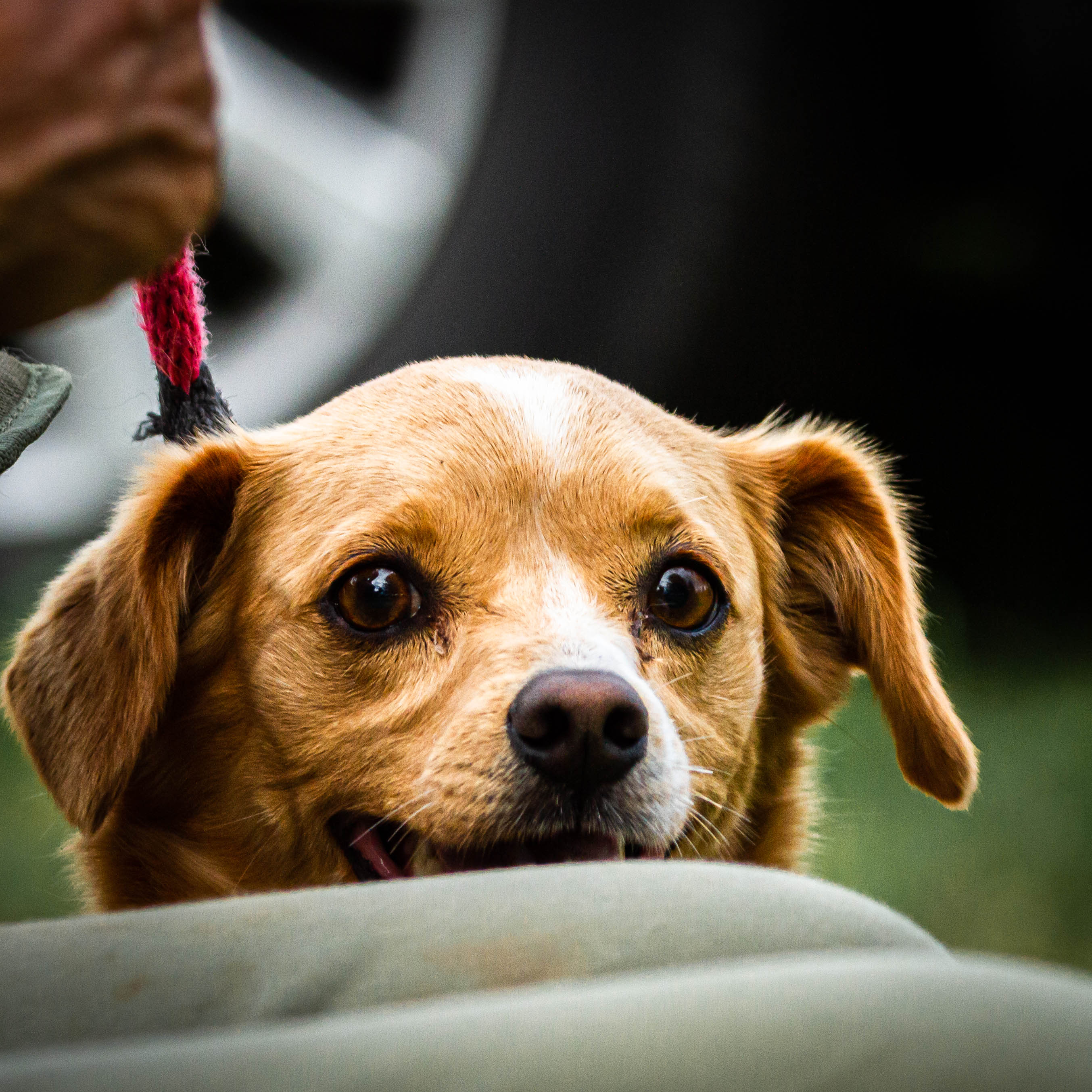
I am still dogless after more than two years (some of you remember Ted) but I have started attending a dog training class with a friend to fill the gap. Of course I can’t just sit there, so I asked permission to bring my camera and zoom lens. I’m no pro at dog portrait photography, but I had fun getting these shots of some good-looking subjects. You can see they are all concentrating very hard.
I asked for permission to share the photographs with you and it was promptly given.
Here they are.
oooo
oooo
oooo
oooo
oooo
oooo
oooo
They are lovely photographs and they are a tribute to the dogs and the photographer alike.
Thank you, ‘SW Feral’, for granting me permission to publish them.
Over at The Dodo is an item that I want to share with you. And my apologies for keeping my own comments really short; it is a hectic couple of hours here.
ooOOoo
Random Dog Crashes Pool Party And Everyone Is Overjoyed
“He floated around the pool, got pets and kisses, went swimming and had a great time!”
A bunch of friends were having a pool party when they noticed two dogs hanging around outside the fence on the edge of the yard. The dogs seemed like they wanted to come in, so a bunch of partygoers went over to investigate. One of the dogs had a tag, so they decided to let the dogs into the yard to hang out until they could track down their owners.
The dogs ran into the yard, and while one of them was a little shy, the other immediately decided he was joining the party.
“At that point, some of us were on the deck, some in the pool, and some out in the yard,” Jennifer Motes, one of the partygoers, told The Dodo. “The golden was down to party right away and immediately started running around, wagging its tail, going up to everyone and getting pets. The shepherd was much more timid, kinda stayed in the yard for a bit, but then when she saw her friend up on the deck with us, she eventually came up there too.”
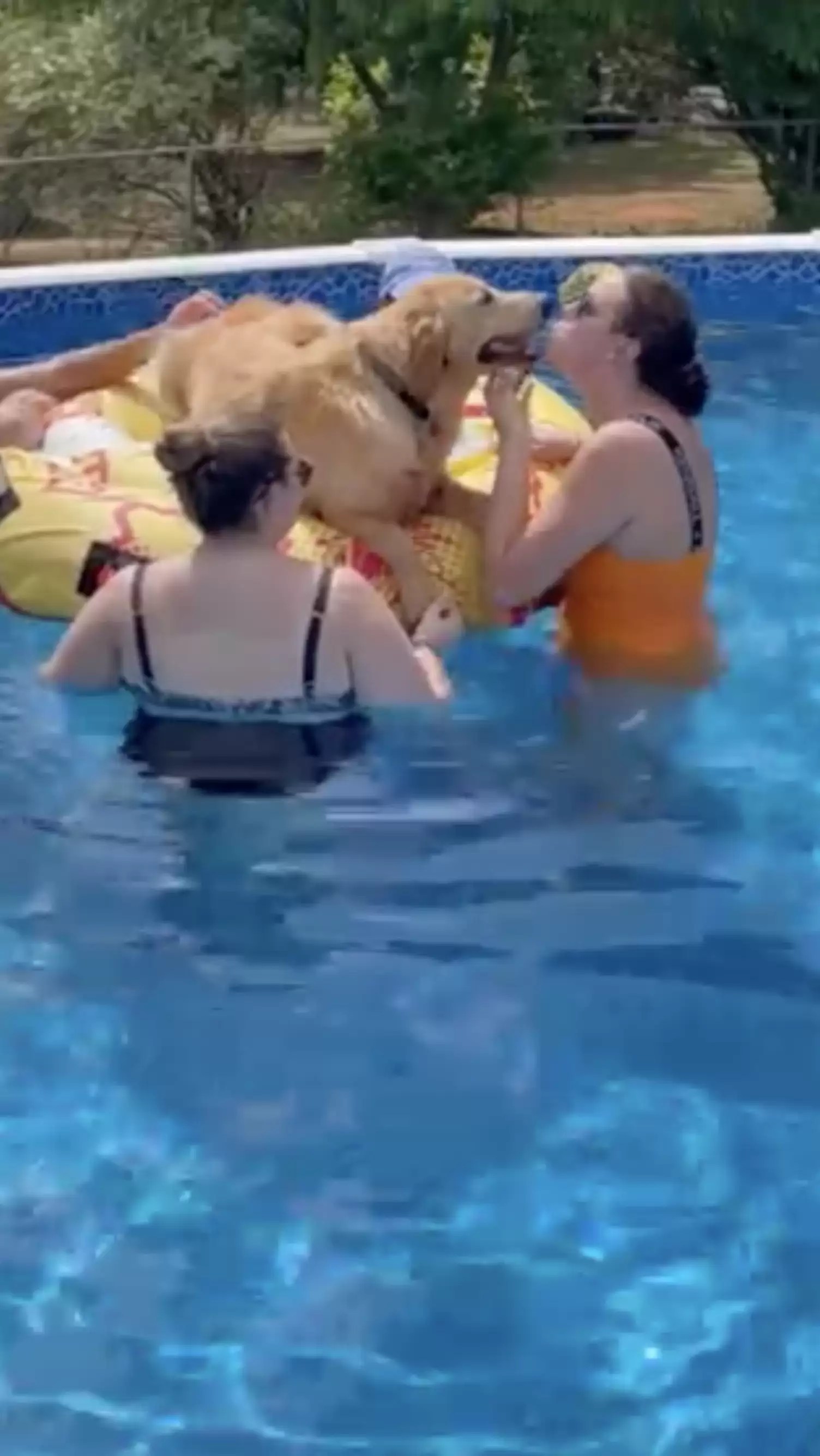
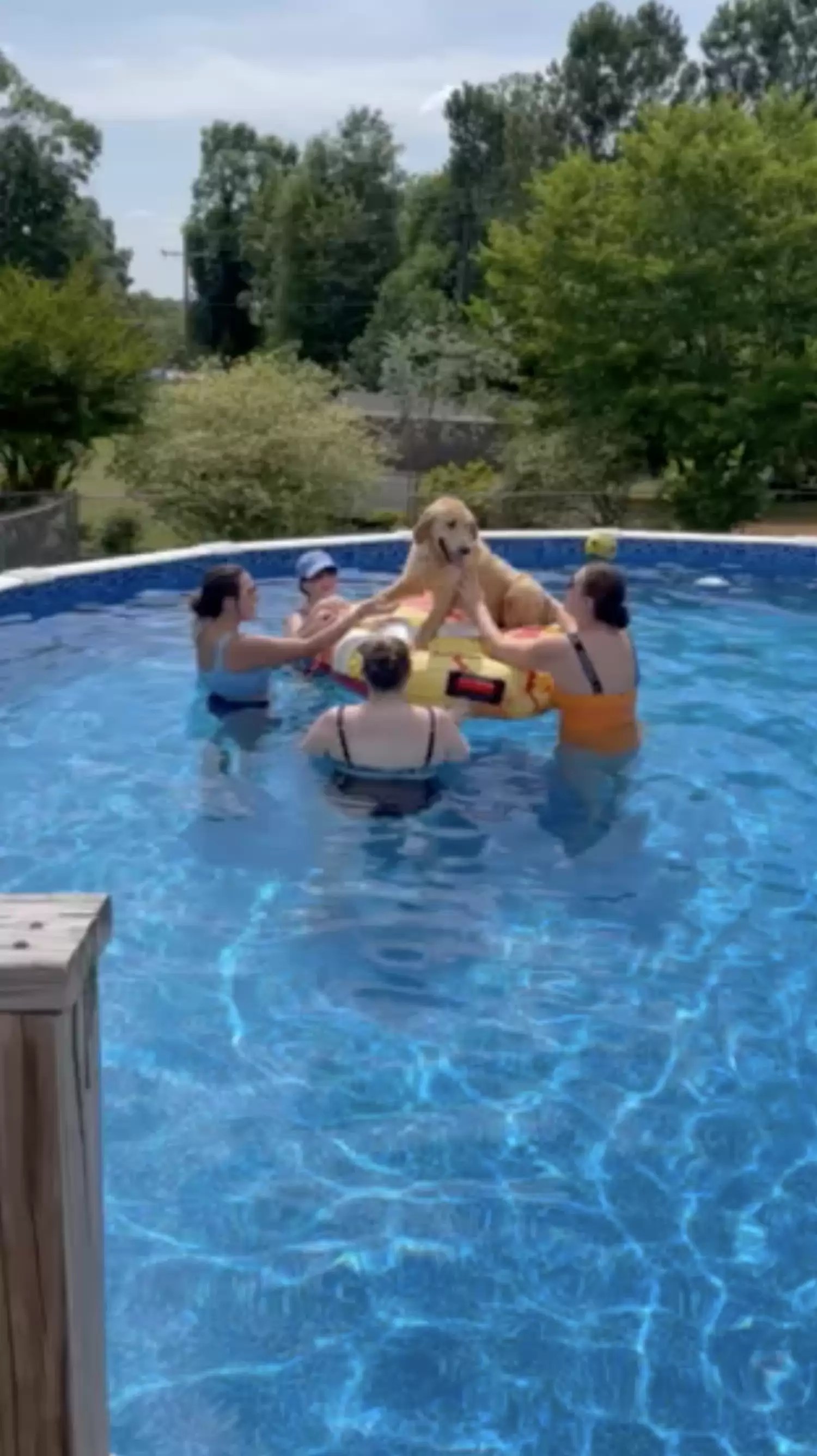
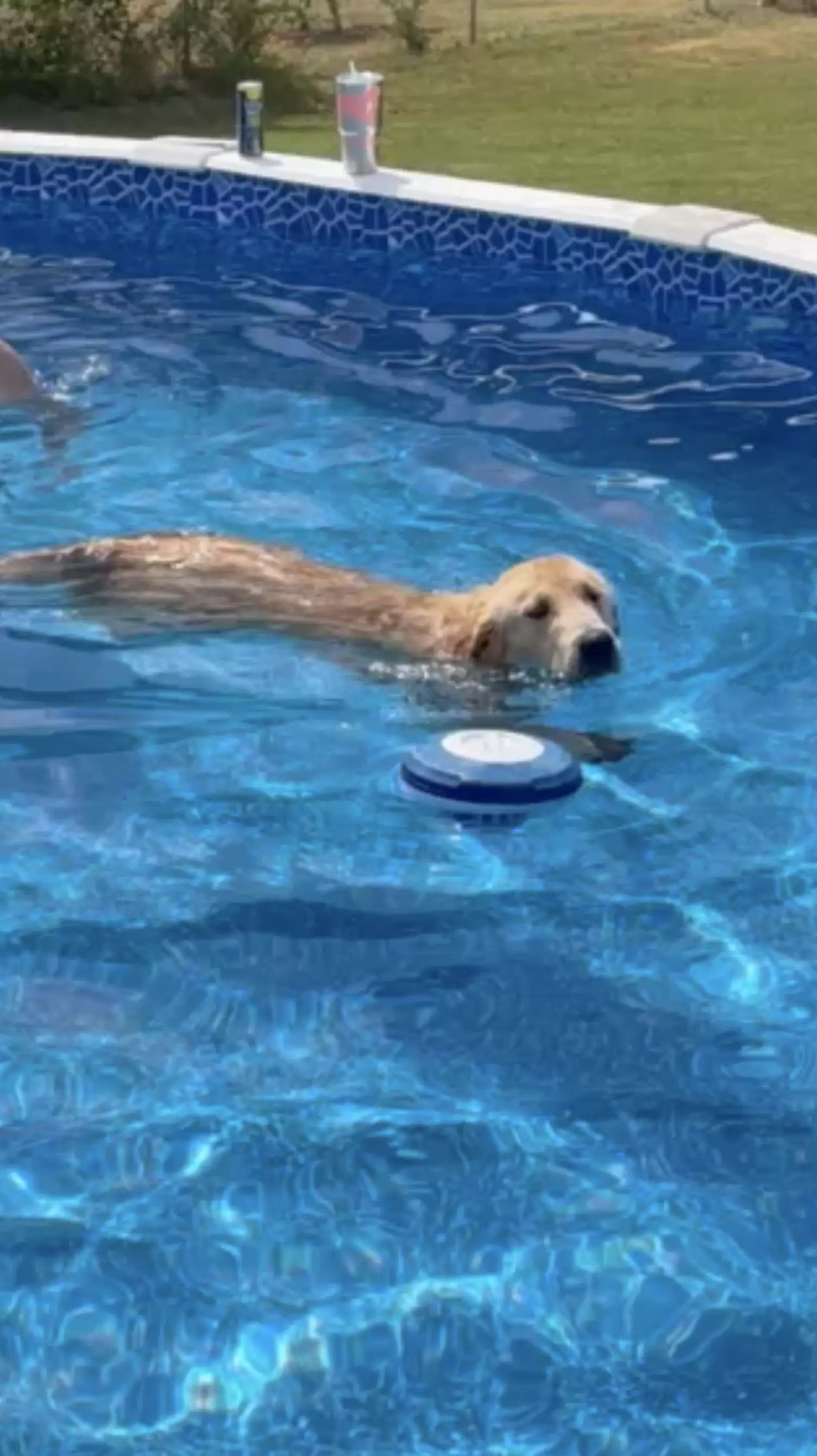
The golden retriever, who they later found out is named Stoker, clearly knew how to have a good time. He didn’t hesitate to join the fun and ran around playing fetch, begging for food, stealing shoes and eventually even hopping into the pool with everyone.
“Some of the people in the pool had slid the innertube raft over to the edge and Stoker climbed right on,” Motes said. “He floated around the pool, got pets and kisses, went swimming and had a great time! The shepherd never was brave enough to go in the pool, she just walked around and watched us, let some of us pet her and she chased after Stoker.”
As the dogs partied, someone was able to get in touch with Stoker’s dad, who said the other dog belonged to his neighbor and that she and Stoker were best friends who played together all the time. Apparently, the pair had run off together in search of a party, and they’d certainly succeeded in that endeavor.
The dogs were there for a few hours before they got picked up — and the party hosts made sure to emphasize that they’re absolutely welcome to come back anytime they want.
The only thing that can make a pool party even better is dogs, and Stoker and his best friend were more than happy to make that dream come true.










 Learning from Dogs


.jpg#/media/File:Cows_eating_grass_(42882305160).jpg)
