What part of the word ‘change’ are you having trouble with?
Climate change denialists and cloud cuckoo land!
Yesterday, I republished the recent Post from Martin Lack under my title of Playing with fire! In that Post there was a reference to just one example of the very different climatic world that we all live in. That reference was to the recent huge devastation of the apple and soft-fruit crops in Northern USA and Canada.
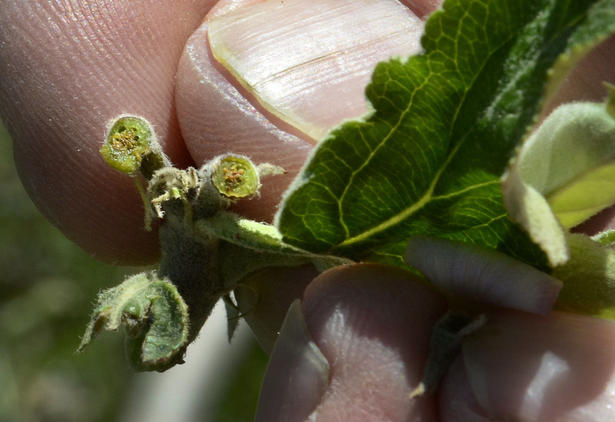
A catastrophic freeze has wiped out about 80 per cent of Ontario’s apple crop and has the fruit industry looking at losses already estimated at more than $100 million.
“This is the worst disaster fruit growers have ever, ever experienced,” Harrow-area orchard owner Keith Wright said Friday. “We’ve been here for generations and I’ve never heard of this happening before.
“This is unheard of … all fruit growing areas in the Great Lakes area, in Michigan, Pennsylvania, New York State, Ontario, are all basically wiped out.”
Wright lost hundreds of thousands of dollars worth of apples and peaches Sunday morning when freezing temperatures killed the blossoms.
Warm temperatures caused fruit trees to bloom early and when temperatures plummeted Sunday morning it damaged or wiped out much of the $60-million apple crop and 20 to 30 per cent of Ontario’s $48-million tender fruit crop which includes peaches, cherries, pears, plums and nectarines.
Brian Gilroy, a Georgian Bay-area apple grower who is chairman of the Ontario Apple Growers, said the loss to fruit growers and the economy will easily be more than $100 million. On top of the lost yield or no crop at all, orchard workers and spinoff industries such as juice, packing, storage and farm supplies will be affected.
Gilroy said consumers will find locally grown apples pricey and difficult to find this fall. Some varieties of apples, such as Empire, will be very difficult to find.
Washington State has a good crop but consumers should expect apple prices to jump because all of northeastern North America was affected, he said.
The article goes on to report from the Globe and Mail and the Toronto Star. It does not make for pretty reading!
April 2012: Earth’s 5th Warmest On Record And La Niña Officially Ends, So The Heat Is On.
By Climate Guest Blogger on May 19, 2012 at 3:09 pm
JR: It’s remarkable how warm it was globally in April considering that we were only just coming out of a double dip La Niña. If we don’t triple dip, we’ll set more temperature records soon. Indeed, NOAA models predict a good chance of an El Niño forming in the late summer, which would make it quite likely next year would be the hottest on record. As for April, you’ll note it was hot in the ‘wrong’ places again — over much of the tundra, which is a carbon time bomb
The Think Progress article then draws heavily on an extensive comment from Dr.Jeff Master’s WunderBlog that I am going republish, hopefully in the interests of helping to spread the truth about this planet of ours.
April 2012 was the globe’s 5th warmest April on record, according to the National Oceanic and Atmospheric Administration’s National Climatic Data Center (NCDC). NASA rated April 2012 as the 4th warmest April on record. April 2012 global land temperatures were the 2nd warmest on record, and the Northern Hemisphere land surface temperature was 1.74°C (3.13°F) above the 20th century average, marking the warmest April since records began in 1880. Global ocean temperatures were the 11th warmest on record, and April 2012 was the 427th consecutive month with ocean temperatures warmer than the 20th century average. The last time the ocean temperatures were below average was September 1976. The increase in global temperatures relative to average compared to March 2012 (16th warmest March on record) was due, in part, to warming waters in the Eastern Pacific, due to the La Niña event that ended in April. Global satellite-measured temperatures for the lowest 8 km of the atmosphere were 6th or 4th warmest in the 34-year record, according to Remote Sensing Systems and the University of Alabama Huntsville (UAH). April temperatures in the stratosphere were the 1st to 4th coldest on record. We expect cold temperatures there due to the greenhouse effect and to destruction of ozone due to CFC pollution. Northern Hemisphere snow cover during April was 4th smallest in the 46-year record. Wunderground’s weather historian, Christopher C. Burt, has a comprehensive post on the notable weather events of April in his April 2012 Global Weather Extremes Summary. Notably, national heat records (for warmest April temperature on record) occurred in the United States (a tie), Germany, Austria, Poland, Belarus, Lithuania, Moldova, Hungry, Croatia, Ukraine, and Slovakia as well as the cities of Moscow and Munich.
Figure 1. Departure of temperature from average for April 2012. The most notable extremes were the warmth observed across Russia, the United States, Alaska, and parts of the Middle East and eastern Europe. There were no land areas with large-scale cold conditions of note. Image credit: National Climatic Data Center (NCDC) .
La Niña officially ends
According to NOAA’s Climate Prediction Center (CPC), La Niña conditions are no longer present in the equatorial Pacific, where sea surface temperatures were approximately average as of May 13. The threshold for a La Niña is for these temperatures to be 0.5°C below average or cooler. CPC forecasts that neutral conditions will persist though the summer, with a 41% chance of an El Niño event developing in time for the August – September – October peak of hurricane season. El Niño conditions tend to decrease Atlantic hurricane activity, by increasing wind shear over the tropical Atlantic.
Figure 2. Arctic sea ice extent in 2012 (blue line) compared to the average (thick grey line.) The record low year of 2007 (dashed green line) is also shown. Arctic sea ice was near average during April, but has fallen well below average during the first half of May. Image credit: National Snow and Ice Data Center (NSIDC).
April Arctic sea ice extent near average
Arctic sea ice extent was near average in April 2012, the 17th lowest (18th greatest) extent in the 35-year satellite record, according to the National Snow and Ice Data Center (NSIDC). This was the largest April Arctic sea ice extent since 2001. However, ice in the Arctic is increasingly young, thin ice, which will make it easy for this year’s ice to melt away to near-record low levels this summer, if warmer than average weather occurs in the Arctic.
So to those that still think the jury is out on climate change, let me just repeat the title, “What part of the word change are you having trouble with?”
5 thoughts on “What part of the word ‘change’ are you having trouble with?”
The Heartland Institute may have cornered the market in objectionable advertising and confidentiality failings but, if the documents for sale and/or download on the website of the Science and Public Policy Institute (SPPI) are anything to judge, which has as its Chief Policy Advisor the Classics graduate Christopher Monckton, the SPPI has surely cornered the market in hard-boiled reality inversion: With titles such as “Global Warming did not Cause the Brisbane Floods” and “The Many Benefits of Atmospheric CO2 Enrichment”, you can hardly be in any doubt about the message before you start…
Thanks Paul. The second and concluding part of my critique of Monckton has now been published (here). Taken together with part 1, despite being deliberately provocative in its presentation of facts, I think my use of humour and admission of error on the part of others with whom I generally agree should allow readers to conclude I am not being aggressive.
I really like the way you have combined the pieces from Climate Denial Crock of the Week and Think Progress. With regard to the latter, your readers may also like to take a look at yet another excellent post on Weatherdem’s Weblog, which similarly combines recent research findings to great effect: http://weatherdem.wordpress.com/2012/05/25/nasa-noaa-april-2012-among-top-5-warmest-on-record/


 Learning from Dogs
The Heartland Institute may have cornered the market in objectionable advertising and confidentiality failings but, if the documents for sale and/or download on the website of the Science and Public Policy Institute (SPPI) are anything to judge, which has as its Chief Policy Advisor the Classics graduate Christopher Monckton, the SPPI has surely cornered the market in hard-boiled reality inversion: With titles such as “Global Warming did not Cause the Brisbane Floods” and “The Many Benefits of Atmospheric CO2 Enrichment”, you can hardly be in any doubt about the message before you start…
http://scienceandpublicpolicy.org/monckton/
LikeLike
Thanks Martin, took a quick look at your own Post on the subject before going out earlier today. Here’s that link for others – http://lackofenvironment.wordpress.com/2012/05/25/on-the-trail-of-christopher-monckton/ Paul
LikeLike
Thanks Paul. The second and concluding part of my critique of Monckton has now been published (here). Taken together with part 1, despite being deliberately provocative in its presentation of facts, I think my use of humour and admission of error on the part of others with whom I generally agree should allow readers to conclude I am not being aggressive.
LikeLike
I really like the way you have combined the pieces from Climate Denial Crock of the Week and Think Progress. With regard to the latter, your readers may also like to take a look at yet another excellent post on Weatherdem’s Weblog, which similarly combines recent research findings to great effect:
http://weatherdem.wordpress.com/2012/05/25/nasa-noaa-april-2012-among-top-5-warmest-on-record/
LikeLike
Thanks Martin, I will undoubtedly take a look at that link before the week-end is out. Paul
LikeLike