This is a very strange world that we live in.
It would be fair to say that my knowledge about what I am writing in this Post is minimal to the point of total ignorance. So why open my mouth and prove it! Because the conquest of fundamental questions about our world is not only an example of mankind at its greatest but also something of broad appeal.
That is proved by the continuing popularity of the BBC Television Series – Horizon. In that series there have recently been two fascinating programmes: Who’s afraid of a big Black Hole? and How long is a piece of string? (Readers outside the UK will not be able to view these programmes.)
Here are the programme summaries:
Black holes are one of the most destructive forces in the universe, capable of tearing a planet apart and swallowing an entire star. Yet scientists now believe they could hold the key to answering the ultimate question – what was there before the Big Bang?
The trouble is that researching them is next to impossible. Black holes are by definition invisible and
there’s no scientific theory able to explain them. Despite these obvious obstacles, Horizon meets the astronomers attempting to image a black hole for the very first time and the theoretical physicists getting ever closer to unlocking their mysteries. It’s a story that takes us into the heart of a black hole and to the very edge of what we think we know about the universe.

and
Alan Davies attempts to answer the proverbial question: how long is a piece of string? But what appears to be a simple task soon turns into a mind-bending voyage of discovery where nothing is as it seems.
An encounter with leading mathematician Marcus du Sautoy reveals that Alan’s short length of string may in fact be infinitely long. When Alan attempts to measure his string at the atomic scale, events take an even stranger turn. Not only do objects appear in many places at once, but reality itself seems to be an illusion.
Ultimately, Alan finds that measuring his piece of string could – in theory at least – create a black hole, bringing about the end of the world.
Now my very flimsy understanding of both the very small (say, atoms) and the very large (say, the universe) is that there are two branches of mathematics that appear to explain these extremes very well indeed. The very small is 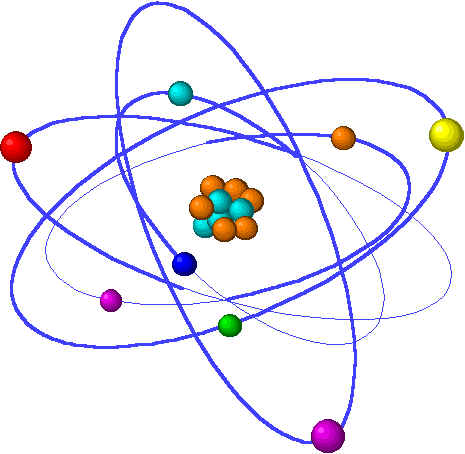 beautifully described by quantum mechanics and the very large by relativity. However that first Horizon programme threw out a challenge to the intellect. The universe is expanding and, therefore, logic assumes that by going backwards we reach a point in time (whatever ‘time’ means) where the universe was a point. Now the universe was very small at this time – and relativity, as a mathematical concept, stops working. But the problem is exacerbated because quantum mechanics doesn’t work for something as large as our universe. Whoops!
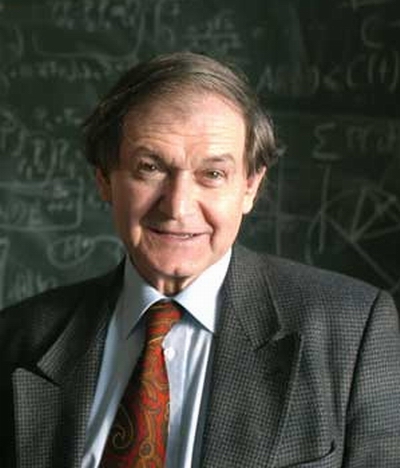
Frankly, I would have left it at that acknowledging that my brain is missing the few trillion brain cells required to really get one’s mind around these paradoxes. But then up pops that Roger Penrose, who does have the necessary number of brain cells (and many more besides) who seems to be saying science has got it all wrong!
An interview in Discover Magazine has Penrose saying:
You have called the real-world implications of quantum physics nonsensical. What is your objection?
Quantum mechanics is an incredible theory that explains all sorts of things that couldn’t be explained before, starting with the stability of atoms. But when you accept the weirdness of quantum mechanics [in the macro world], you have to give up the idea of space-time as we know it from Einstein. The greatest weirdness here is that it doesn’t make sense. If you follow the rules, you come up with something that just isn’t right.
In quantum mechanics an object can exist in many states at once, which sounds crazy. The quantum description of the world seems completely contrary to the world as we experience it.
It doesn’t make any sense, and there is a simple reason. You see, the mathematics of quantum mechanics has two parts to it. One is the evolution of a quantum system, which is described extremely precisely and accurately by the Schrödinger equation. That equation tells you this: If you know what the state of the system is now, you can calculate what it will be doing 10 minutes from now. However, there is the second part of quantum mechanics—the thing that happens when you want to make a measurement. Instead of getting a single answer, you use the equation to work out the probabilities of certain outcomes. The results don’t say, “This is what the world is doing.” Instead, they just describe the probability of its doing any one thing. The equation should describe the world in a completely deterministic way, but it doesn’t.
Well that’s a relief! It’s all very well showing off at parties by name dropping Schrödinger and his cat into the conversation but in the real world how can the cat simultaneously be both dead and alive until the point of observation!
Penrose is no slouch. Indeed, many believe that his name stands alongside the very greatest names in science.
Roger Penrose could easily be excused for having a big ego. A theorist whose name will be forever linked
with such giants as Hawking and Einstein, Penrose has made fundamental contributions to physics, mathematics, and geometry. He reinterpreted general relativity to prove that black holes can form from dying stars. He invented twistor theory—a novel way to look at the structure of space-time—and so led us to a deeper understanding of the nature of gravity. He discovered a remarkable family of geometric forms that came to be known as Penrose tiles. He even moonlighted as a brain researcher, coming up with a provocative theory that consciousness arises from quantum-mechanical processes. And he wrote a series of incredibly readable, best-selling science books to boot.
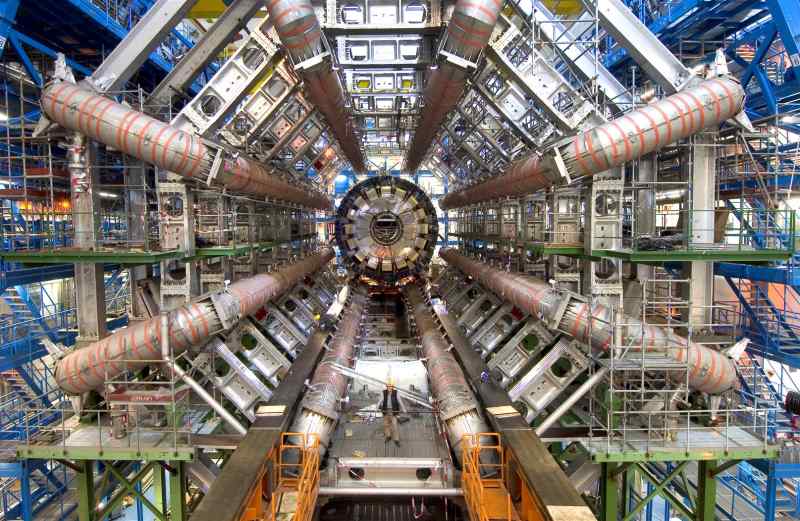
Thus the news that CERN’s Large Hadron Collider is nearly ready to be restarted is very good news indeed. Mankind needs to continue to explore the world, in the biggest sense, that we live in. Because only knowledge, at all levels, protects us from making errors. As Penrose said in that interview, “The equation should describe the world in a completely deterministic way”.
Precisely!
By Paul Handover
P.S.More nice pics of the LHC here And a fun article in Vanity Fair.
 Learning from Dogs
Paul: Well done! The right attitude. The greatest objection I had was about what Penrose said, but, as you point out, Penrose is an amazing thinker, with a colossal body of work, and probably the vastest scientific competence (I think he towers above Hawking).
Here is my take on some issues related to the LHC, a version of which will be published on my site too:
***
THE LHC VERSUS THOSE WHO PREFER TO LIVE IN DARKNESS, PULLING STRINGS:
The Large Hadrons Collider (LHC) is getting ramped up, again. Last year, nine days after it was turned on, a whole section of it exploded. The LHC is buried one 100 meters below the Franco-Swiss Jurassic countryside, because, when it operates with trillions of particles zooming very close to the speed of light, weighting 1,000 their rest masses, it’s significantly radioactive. But a kind of radioactivity that can be turned off instantly (just stop the hadrons!). Why hadrons? Because, well, they are hard, and they are on. Whatever. Actually a hadron is any particle made of quarks.
Why did the LHC explode? Because it is by far the largest superconducting magnet facility on earth, and we do not master that technology very well. When we do, though, any doctor’s office will be able to diagnose any cancer in seconds, anywhere, however small, using Magnetic Resonance Imaging.
After the LHC, the next monster superconducting facility will be the ITER (the International Thermonuclear Experimental Reactor, built in Provence, one of the place of oldest civilization). As we push the technological envelope, many things hit the fan (just ask Boeing with its 787 and Airbus with its A400M; although, of course aircraft companies are not inventing really new technologies , as LHC and ITER are doing, just putting them together).
As the LHC is getting on again, it is fashionable in the Wall Street countries to predict the end of the world, LHC made.
Why is that? No doubt that beats worrying about the end of the world due to the Gold Man who Sacks, or, as they say, Goldman Sachs.
Wall Street is into magical thinking, and it hates reason. Science smacks of reason, so Wall Street countries are submitted to a constant barrage about the LHC being dangerous. As long as reason does not reign, the culturally retarded, and corruption perfused Wall Street endured politician-servants will claim to see no contradiction between their role as democratic leaders, and sending all the disposable capital to Wall Street, condemning the multitudes to poverty, unemployment, exploitation and mystification.
***
SOME OF THE SILLY WHINING AROUND THE LHC:
So let’s recapitulate:
A) TINY BLACK HOLE THEORY IS FISHY, THE LHC WILL NOT DEVOUR YOU:
Some have argued that the LHC will create a black hole that will swallow the Earth. Nice try. But:
1) Black Hole theory is just a theory. But it is less consistent than Swiss cheese. It has blatant logical holes, and very dark loopholes. Many of them. The funniest one I rolled out one day, long ago, for one of the world’s top Black Hole experts, driving him mad with my enraging simplicity.
According to QFT, the gravitational field is carried by a massless particle, the graviton. In a Black Hole, light can’t get out, because it follows geodesics (in spacetime), and those are loops, or spiral down to a point when the gravitational source is dense enough. So why should gravitons come out? This silly remark would lead us to believe that Black Holes would drop out of everything, all together.
2) In any case, for the formation of a Black Holes, especially a tiny one, plenty of dubious hypotheses are made during the collapse about how fast it goes, and whether it gives time for Quantum effects to freeze the collapse.
3) The only sort of Black Holes which seems safe to predict are galactic sized ones.
Indeed, for these, very few hypotheses are made. If an object the size of the Milky Way, and the density of air could gather, light could not escape, at least for a while. This theory goes back to Laplace: suppose light is made of particles. They have a kinetic energy proportional to their mass. But the energy to extract them from a gravitational well is also proportional to their mass. Equate both, and divide by the common mass of the light particle. Now introduce the experimental fact of a finite speed of light, limiting the kinetic energy term. But the gravitational well (represented by the gravitational acceleration of the massive object) can be made arbitrarily high. So light cannot get out, QED. The modern General Relativity computation is roughly the same (except kinetic energy is replaced by spacetime geodesics, a detail for the reasoning at hand).
4) That two Hadrons would collide, and make a Black Hole, is thus pure science fiction. Same thing for other bizarre forms of matter. Collision with much higher energy happen in the atmosphere all the time, as some cosmic rays impact particles at relative rest.
B) THE BIG BANG IS ANOTHER FISHY THEORY:
Astute minds will notice that the Big Bang was assuredly very dense, containing supposedly the entire mass of the universe and the mass of its entire energy. And it was made of light. So why did not it stay a Black Hole? Are we in a Black Hole without knowing it? An assuredly dark possibility. Clearly, as they fleetingly and discreetly considered these dark possibilities, physicists became desperate, and went around in circles, heating up between the ears. So they invented something naturally desperate, called “inflation”. During “inflation” normal physics simply does not apply and the universe supposedly would have expanded at an enormous speed, well above a zillion times the speed of light, making everything possible. Whatever, as teeny boppers would say.
It is to put reins to this sort of flight of fancy that the LHC is made to operate. To focus minds on reality. Replace apparent absurdities with Large Hard On facts. For a number of reasons, the LHC is guaranteed to find something. (Because the Standard Model of QFT makes precise predictions, including a weird theory on the origin of mass, no less…)
Because physicists apparently believe the people to be primitive, and have read the Bible too many times to believe anything else, they often argue, at least in the USA, that the LHC is out to confirm the Big Bang.
The Big bang is found, more or less, inside the Bible: “Fiat Lux!”
The truth is more interesting than this primitive superstition from the dark past. In truth, the LHC is after all kinds of possible totally new science, such as SUSY and new dimensions physics. SUSY is a necessary way to establish a grand symmetry throughout Quantum Field Theory.
Some hope to see hints of “stings”, or “M Theory”, which are just attempts to involve tiny supplementary dimensions. But there is no reason for dimensions to tiny and bounded. Unbounded new dimensions could very well exist, and would be a drastic way to reunify the spirit behind General Relativity, with the (experimentally confirmed) tremendous complexity of Quantum Field Theory.
***
HIGH ENERGY PHYSICS IS SOMEWHAT TRANSVERSE TO QUANTUM PHYSICS:
The LHC is not the end all, be all, the physics experiment that will solve it all, forever. Far from it. It’s the ultimate machine in High Energy Physics. It makes particles very small, so to speak, by shrinking their De Broglie wave length. But Quantum effects are all the more blatant when the De Broglie wave length are large. So the LHC does not replace the direct study of Quantum Mechanics (QM). In a way it simplifies QM by avoiding its non local effects.
QM solves the problem of the infinitely small by saying that, actually, the infinitely small is not small, but very large, and (geometrical) context dependent. Some are shocked by the fact QM predicts only probabilities of outcomes. But any prehistoric man was familiar with that concept, of probabilistic outcomes, when going hunting. It’s only seventeenth century physicists who thought otherwise (because they believed that they had found the two or three laws of the entire universe. This way, in that sense, man had become omnipotent , as if ha was an all knowledgeable god!)
For some, even it seems Penrose, QM is probabilistic because we ignore the details. But this can be disposed of: even if there are details, they are non local, so, according to the spirit of Special relativity, they could not be known. (Experiments testing the Bell Inequalities are clear on this. In particular those of Aspect in Orsay, France.)
The author has his own (non local) theory of Quantum Collapse (aka “Decoherence” in modern Quantum parlance hiding ignorance, and lack of progress behind a semantic shift). According to it, the probabilistic outcomes are not locally controlled (this is, well, coherent with the latest experiments on Quantum Non Locality, as I just said). We will see relatively soon whether such a theory has legs, because “Decoherence” is the number one problem of laboratories trying to make a Quantum Computer, and they are trying to control all known stray fields. If they fail, then Quantum Mechanics will be incomplete (because Schrodinger Cats will pounce non locally, something not in QM).
When people such as Einstein, or Penrose criticize the probabilistic aspect of Quantum Mechanics, all they cling to are meta emotions from obsolete physics.
The axiomatics of General Relativity and Quantum Mechanics are violently contradictory, their mathematics deeply antagonistic. It is not impossible that the LHC would find hints about how to get of that theoretical mess (finding more dimensions would help, because it would allow to carry over the main idea behind General Relativity to QFT.)
In truth we do not know what to expect, but something will be discovered, such is the beauty of the LHC.
Good to see that the old continent looks far ahead. Good to see that the old continent is not sending all its money to Goldman Sachs, but has enough mind to keep on searching “Plus Oultre!” (More Beyond!) as Charles Quint put it, to define his life (Charles was ordering bankers around, whereas, according to the just published Bank Of England report, now it is the banks who order the sovereign around).
The fate of the planet is in the hands of mind, and the mind better stay in shape, finding out what is real, and what is not.
Patrice Ayme
LikeLike
Patrice, your time spent in adding rich comments to this Blog is really appreciated by all the authors. Responses like the one above make all the work so worth while. You are a real gent – which you may know is about as high a compliment as an Englishman can offer! 😉
PH
LikeLike
Because only knowledge, at all levels, protects us from making errors.
Having knowledge does NOT prevent us from making errors …… as for CERN, as has been said, its value depends on where you sit. Form a comfy taxpayer-funded lab in the affluent west it may appear one way; to the parents of a dying child in Asia or Africa who could have been saved with a microscopic part of the cost of CERN it may look different and seem a hopelessly-irrelevant indulgence.
LikeLike
Paul: thanks for the compliment, which is highly appreciated from the other side of the Channel.
I discovered a few typos in what I wrote, and forgot to mention the poorly named “God Particle” aka, “Higgs boson”… Which LHC will be able to say something about, one way or another. I will post the improved essay soon.
Chris’ argument on cost is misplaced; CERN plus ITER are just a fraction of what just one American financier stole, for himself (Mr. Madoff). In both cases, CERN and ITER,the superconducting plant is the heart of the cost, and where the real challenge, technically, lays. But mankind, even Africans, has economic interest that superconductivity be made to work. CERN is about opening the door on how ( a big part of) the world works. Anything could be out there, even anti-gravity. We don’t know.
Chris says: let’s save lives first. But, as I pointed out, the way to save all lives in Africa is to reinstitute direct administration from advasnced countries. The wars in West africa were stopped because Britain and France sent their armies, and they started to shoot.
Chris neglects the unsustainable nature of our present technology. Extend the trends enough, and we run out of everything. Before that, of course, there will thermonuclear wars, and dying children somewhere else will stop being a consideration.
The solution? There is only one peaceful solution. Advanced technology, science fiction made reality.
Easy to achieve is a total mastery of superconductivity, at energies much higher than CERN, or ITER. It’s a must. It will save at least 10% of the electric energy presently produced. The mistakes done with the LHC were very instructive.
PA
LikeLike
Patrice
May I echo Paul’s comments. It is tremendously interesting to have you on the site. This is because of A) the depth and variety of your knowledge, B) your formidable powers of argument and C) your obvious commitment to the sorts of issues and principles that inspired the authors of this site to set up.
Going up against you in a debate is like starting a boxing round with Mike Tyson. One has to watch every step and beware of a knockout punch coming out of the blue at any moment.
I also gather that you are pretty busy and so to find time to appear on here is a compliment to us.
This doesn’t mean I always agree with you, by the way! But you must have noticed that already ….
LikeLike