Tag: climate change

Sceptical about global warming? Read this!

Learning from Dogs is not a blogsite about climate change!

Why, you may ask, do I start today’s post with that sub-heading?  Because, I am conscious that many of my posts do touch on this subject.  For example, just two days ago there was Breaking news.  Then there was the piece about the climate implications for Phoenix, Arizona.  Followed the next day by the changes in the flow of the jet stream across the North Atlantic with all the weather implications for North-West Europe.

Indeed, as the heading to today’s post makes clear, this is also about the changes going on to our planet.

Learning from Dogs is about a different way of living and behaving.  A campaign, if one wants to call it that, to show that the way that modern man is living is corrupt.  Not with a big ‘C’ but still in the sense of living a dishonest life.  Learning from Dogs attempts to show that our wonderful dogs, a source of so much love and pleasure for so many millions, offer us an example of a life in and of this planet.

If there was ever a time in the history of man when we needed being reminded of our frailty and vulnerability, it is now.  As the following so starkly illustrates.

Peter Sinclair of Climate Crocks recently republished an item from Skeptical Science that opened up as follows:

A new study of ocean warming has just been published in Geophysical Research Letters by Balmaseda, Trenberth, and Källén (2013).  There are several important conclusions which can be drawn from this paper.

  • Completely contrary to the popular contrarian myth, global warming has accelerated, with more overall global warming in the past 15 years than the prior 15 years.  This is because about 90% of overall global warming goes into heating the oceans, and the oceans have been warming dramatically.

But what really jumped off the page was this graph.  It is truly scary!

orasa4
Figure 1: Ocean Heat Content from 0 to 300 meters (grey), 700 m (blue), and total depth (violet) from ORAS4, as represented by its 5 ensemble members. The time series show monthly anomalies smoothed with a 12-month running mean, with respect to the 1958–1965 base period. Hatching extends over the range of the ensemble members and hence the spread gives a measure of the uncertainty as represented by ORAS4 (which does not cover all sources of uncertainty). The vertical colored bars indicate a two year interval following the volcanic eruptions with a 6 month lead (owing to the 12-month running mean), and the 1997–98 El Niño event again with 6 months on either side. On lower right, the linear slope for a set of global heating rates (W/m2) is given.

I’m not going to republish the whole piece, although Peter Sinclair kindly gave permission, because I want to move on.  But please do go to that article here and take in the conclusions; for all our sakes.  Conclusions such as:

Their results in this respect are very similar to the main conclusion of Nuccitelli et al. (2012), in which we noted that recently, warming of the oceans below 700 meters accounts for about 30% of overall ocean and global warming.  Likewise, this new study concludes,

“In the last decade, about 30% of the warming has occurred below 700 m, contributing significantly to an acceleration of the warming trend.”

and such as:

Most importantly, everybody (climate scientists and contrarians included) must learn to stop equating surface and shallow ocean warming with global warming.  In fact, as Roger Pielke Sr. has pointed out, “ocean heat content change [is] the most appropriate metric to diagnose global warming.”  While he has focused on the shallow oceans, actually we need to measure global warming by accounting for all changes in global heat content, including the deeper oceans.  Otherwise we can easily fool ourselves into underestimating the danger of the climate problem we face.

What I want to move on to is a recent item highlighted on Grist.  This was an essay by David Roberts under the heading of Two reasons climate change is not like other environmental problems.  David opens by saying:

If you’ll forgive me for stating the obvious: Most people don’t understand climate change very well. This includes a large proportion of the nation’s politicians, journalists, and pundits — even the pundits who write about it. (I’m looking at you, Joe Nocera.)

One reason for the widespread misunderstanding is that climate change has been culturally coded as an “environmental problem.” This has been, in all sorts of ways, a disaster. Lots of pundits, especially brain-dead “centrist” pundits, have simply transferred their framing and conception of environmental problems to climate. They approach it as just another air pollution problem.

David writes that firstly carbon dioxide is not like other pollutants, for example like air particulants.  Then later goes on to say:

The second difference is that climate change is irreversible.

As Joe Romm notes in a recent post, New York Times columnist Joe Nocera slipped up in his latest column and referred to technology that would “help reverse climate change.” I don’t know whether that reflects Nocera’s ignorance or just a slip of the pen, but I do think it captures the way many people subconsciously think about climate change. If we heat the planet up too much, we’ll just fix it! We’ll turn the temperature back down. We’ll get around to it once the market has delivered economically ideal solutions.

But as this 2009 paper in Nature (among many others) makes clear, it doesn’t work that way:

This paper shows that the climate change that takes place due to increases in carbon dioxide concentration is largely irreversible for 1,000 years after emissions stop. Following cessation of emissions, removal of atmospheric carbon dioxide decreases radiative forcing, but is largely compensated by slower loss of heat to the ocean, so that atmospheric temperatures do not drop significantly for at least 1,000 years. [my emphasis]

The article is really best read in full. Because it’s a reminder that the way we presently behave is, in so many ways, a scary legacy for future generations.

So, back to dogs!

When dogs were living as wild dogs, thousands of years ago, a typical pack size was between 40 to 50 animals. The ‘head’ dog was the alpha dog, always a female.  Next in status was the beta dog, always a dominant male. The last one in terms of status was the omega dog, or clown dog.  Those genetic traits still survive in the domestic dog.

Pharaoh - still being an assertive beta dog; taken 22 days ago!
Pharaoh – still being an assertive beta dog; taken 22 days ago!

The alpha dog had two important roles as ‘leader of the pack’.  She had first pick of the male dogs, for obvious reasons. (Only much later in life do we human men come to understand that it’s always the woman who chooses!)

The second role was that she was the one who decided that their territory was unsustainable for her pack and signalled the need to find a new territory.

For man, there’s no other territory to move to.  So we will just have to clean up the only one we have!

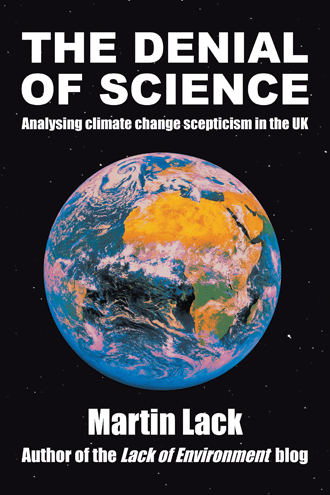
The Denial of Science: A review.

A review of the recently published book by Martin Lack.

denial of science

In many ways it would be terribly easy to find fault with this book. If it had been written as a book, been through the edits that a new book requires, then published, those faults would be a significant criticism.

But it was not written as a book! It was originally written as an academic text.  As Martin explains in the Preface:

This book is based on research originally undertaken – and a dissertation written – as part of my MA in Environmental Politics from Keele University in Staffordshire (in 2010-2011).

Then in the following paragraph goes on to say:

Academics generally disapprove of the publication of academic research via non-academic, non-peer-reviewed routes.  However, I am trying to reach more than just an academic audience.

Three sentences later:

However, this book retains many of the features of a piece of academic research, …. (All quotes from page viii of the preface)

To a person unaccustomed to reading academic research, as is this reader, the structural and presentational differences between a ‘normal’ non-fiction book and a dissertation are significant.  That needs to be borne in mind as you turn to page one.

OK, now that I have got that off my chest, on to the substance of the review.

Turning to the outside back cover, one sees Martin clearly explaining that the book is not about climate science, rather an analysis of why some people dispute “the reality, reliability and reasonableness of this science.”

That alone justifies the work that Martin put into his research and dissertation and his subsequent decision to adapt his findings into a book.

The pace and scale of the changes that are being visited on Planet Earth is truly frightening.  The number of feedback loops that we are locked into now don’t even bear thinking about.  Just take the continuing and accelerating loss of the Arctic ice-cap and extrapolate that for a couple of decades (touched on in my recent post More new tomorrows and see footnote.)

We are not talking of subtle changes over many generations. We are talking about irreversible and irrevocably massive changes to our environment within the lifetimes of just about every living person on this planet.  (I’m 70 next year and while I have no idea how many years I have left, I rate it as at least 50:50 that before I take my last breath, the coming destruction of biosphere will be blindingly obvious to me, Jean and 99.9% of the world’s population.)

Makes me want to shout out ……

There is not much time left to leave a sustainable world for future generations.  Come on politicians and power-brokers; start acting as though you truly understand the urgency of the situation!

Ah, that feels much better!

Back to the book!

Martin examines 5 categories that display denial behaviours, to a greater or lesser extent.  These categories are: Organisations; Scientists, Economists, Journalists and Politicians. Oh, and a 6th catch-all category: Others.

Each section dealing with a category is structured in the same way: Preliminary Research; Key Findings and Summary.  Tables are used extensively to allow easy review of the findings.

Again, what needs to be hammered out is that this format is very unlike a typical non-fiction book.  Because it’s fundamentally an academic dissertation!  But, so what!

What is important is for the widest possible audience to understand the breadth and extent of the denial going on.  Denial that is, literally, playing with the future of humanity on this planet; the only home we have.

Let me reinforce that last sentence by picking up on what Martin writes on his closing page (p.76):

Furthermore, there is strong circumstantial evidence to suggest that this scepticism is being fuelled by those with a vested interest in the continuance of “business as usual” by seeking to downplay, deny or dismiss the scientific consensus on the extent of ACD.

Martin Lack’s book may be unconventional in many ways.  But as a tool to show how those who deny the science of climate change deny the right of future millions to live in a sustainable manner, it is most powerful.  It is a valuable reference book that should be in every library and every secondary school across the globe!

The Denial of Science is published by AuthorHouse 02/23/2013

oooOOOooo

Footnotes:

  1. To add weight to the points made in this review, do look in on tomorrow’s post.
  2. I have no commercial links to Martin Lack; indeed, I purchased the copy of the book that I used for this review.

The new tomorrows.

When we are no longer able to change a situation – we are challenged to change ourselves.”  Viktor Frankl.

Like many bloggers I enjoy using a quotation to set the theme for a post.  Found this on the web; it seemed appropriate.

Over the next two days, I want to range across a number of ideas that, together, point to changes that are underway in every conceivable manner for the vast majority of the inhabitants of this planet.

My musings were prompted by a recent essay on Tom Dispatch.  Regulars will know that Tom Engelhardt generously granted me permission to republish essays that appear on his very widely-read blogsite.  This particular essay is about Phoenix in Arizona.

But first indulge me as I recount something rather personal, possibly silly but also mysteriously beautiful.

Many will know that Jean and I moved from San Carlos in Mexico to Payson, Arizona early on in 2010.  (My long comment to yesterday’s post about poor Lupe explains the background.)  Payson is 80 miles North-East of Phoenix and despite being up at 5,000 feet is very much in the same broad weather systems as Phoenix.

With our 14 dogs and 7 cats we quickly settled down and were made to feel very welcome by one and all.  Jean and I were married in Payson in November of 2010.  We were happy and contented.

One night in June last year, I had this vivid dream about going to the bathroom and finding that no water came from the tap.  Where we were living was out of town and our water supplies came from our own well (borehole in English speak!).  While the water level in the well was down by about 50 feet there was no question of the well failing; it was drilled to over 180 feet and flow tests were positive.

When I awoke the dream was still very much in the forefront of my mind.  I talked about it over breakfast with Jeannie.  By chance, we had a guest staying with us and when she heard the tale she said, “If you’re worried about water, you should go to Oregon.

Again, by chance, a couple of weeks later we had someone offer to house-sit.  With our menagerie of animals that was no casual offer!

We accepted, came up to Oregon and found this most beautiful home in Merlin, Southern Oregon complete with 13 acres and Bummer Creek running across the width of the property, a creek that flows for most of the year.

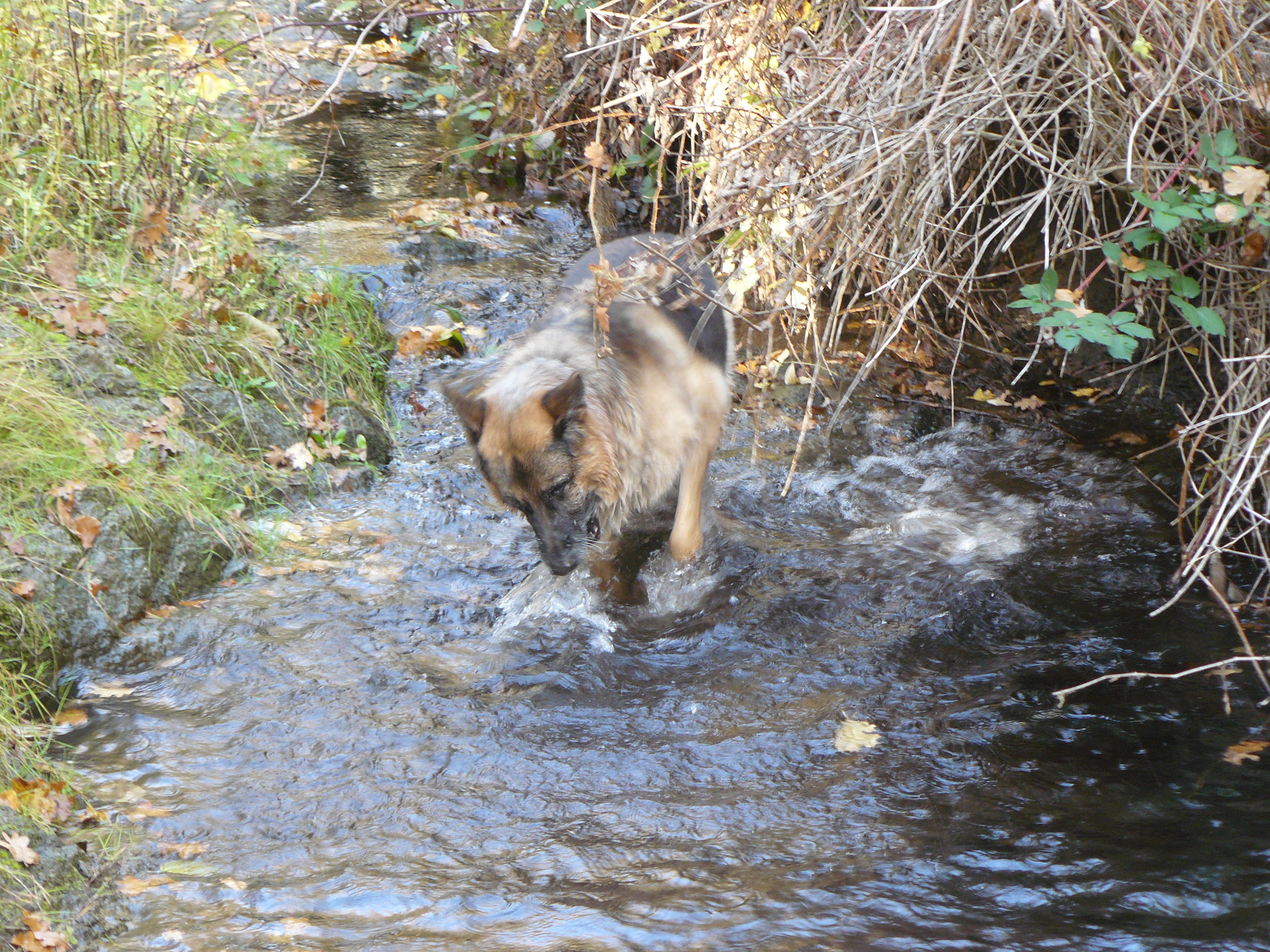
Pharaoh checking out our creek.
Pharaoh checking out Bummer Creek.

We quickly did the deal, sold the house in Payson and moved in on October 25th 2012, less than 5 months ago.

Keep all of that in mind as you read this TomDispatch essay.

oooOOOooo

Tomgram: William deBuys, Exodus from Phoenix

Posted by William deBuys at 7:58am, March 14, 2013.

We’re not the first people on the planet ever to experience climate stress.  In the overheating, increasingly parched American Southwest, which has been experiencing rising temperatures, spreading drought conditions, and record wildfires, there is an ancient history of staggering mega-droughts, events far worse than the infamous “dust bowl” of the 1930s, the seven-year drought that devastated America’s prairie lands.  That may have been “the worst prolonged environmental disaster recorded for the country,” but historically speaking it was a “mere dry spell” compared to some past mega-droughts that lasted “centuries to millennia.”

Such events even happened in human history, including an almost century-long southwestern dry spell in the second century AD and a drought that was at least decades long in the twelfth century.  These were all events driven by natural climate variation.  Climate change adds a human factor to the equation in a region already naturally dry and short on water.  It ups the odds of bad events happening.  In the coming century, how habitable will parts of the bustling desert Southwest turn out to be?  Already, in the face of heat and drought, small numbers of people from small towns in the region are leaving.  And this, too, has happened before.  There are sobering previous examples of what it means when extreme climate stress hits this area.

Chaco Canyon was abandoned by its native population during that twelfth-century drought, and 150 years later, the Hohokam native culture of what is now central Arizona, whose waterworks in the dry lands of that area were major and impressive, also abandoned its lands, possibly due to drought, as TomDispatch regular William deBuys recounts in his recent book A Great Aridness: Climate Change and the Future of the American Southwest.  “At some point,” he writes, “Hohokam society passed a threshold: the number of able-bodied workers it could muster was no longer sufficient to meet the challenge of rebuilding dams when they washed out and cleaning canals as they inevitably silted up. Eventually the hydraulic system collapsed, and the society that depended on it could no longer exist. The survivors turned their backs on their cities and scattered into the vastness of the land, doing what they could to survive.”

As you read deBuys’s latest post, it’s worth remembering that even the greatest hydraulic engineers have their limits when the water dries up.  When the Anglo farmers of the Phoenix Basin first started using the local rivers, they found themselves “reopening the canals the Hohokam had left behind.”  Who knows what monumental works we, too, might someday abandon? Phoenix, anyone? Tom

Phoenix in the Climate Crosshairs 
We Are Long Past Coal Mine Canaries 
By William deBuys

If cities were stocks, you’d want to short Phoenix.

Of course, it’s an easy city to pick on. The nation’s 13th largest metropolitan area (nudging out Detroit) crams 4.3 million people into a low bowl in a hot desert, where horrific heat waves and windstorms visit it regularly. It snuggles next to the nation’s largest nuclear plant and, having exhausted local sources, it depends on an improbable infrastructure to suck water from the distant (and dwindling) Colorado River.

In Phoenix, you don’t ask: What could go wrong? You ask: What couldn’t?

And that’s the point, really. Phoenix’s multiple vulnerabilities, which are plenty daunting taken one by one, have the capacity to magnify one another, like compounding illnesses. In this regard, it’s a quintessentially modern city, a pyramid of complexities requiring large energy inputs to keep the whole apparatus humming. The urban disasters of our time — New Orleans hit by Katrina, New York City swamped by Sandy — may arise from single storms, but the damage they do is the result of a chain reaction of failures — grids going down, levees failing, back-up systems not backing up. As you might expect, academics have come up with a name for such breakdowns: infrastructure failure interdependencies. You wouldn’t want to use it in a poem, but it does catch an emerging theme of our time.

Phoenix’s pyramid of complexities looks shakier than most because it stands squarely in the crosshairs of climate change. The area, like much of the rest of the American Southwest, is already hot and dry; it’s getting ever hotter and drier, and is increasingly battered by powerful storms. Sandy and Katrina previewed how coastal cities can expect to fare as seas rise and storms strengthen. Phoenix pulls back the curtain on the future of inland empires. If you want a taste of the brutal new climate to come, the place to look is where that climate is already harsh, and growing more so — the aptly named Valley of the Sun.

In Phoenix, it’s the convergence of heat, drought, and violent winds, interacting and amplifying each other that you worry about. Generally speaking, in contemporary society, nothing that matters happens for just one reason, and in Phoenix there are all too many “reasons” primed to collaborate and produce big problems, with climate change foremost among them, juicing up the heat, the drought, and the wind to ever greater extremes, like so many sluggers on steroids. Notably, each of these nemeses, in its own way, has the potential to undermine the sine qua non of modern urban life, the electrical grid, which in Phoenix merits special attention.

If, in summer, the grid there fails on a large scale and for a significant period of time, the fallout will make the consequences of Superstorm Sandy look mild. Sure, people will hunt madly for power outlets to charge their cellphones and struggle to keep their milk fresh, but communications and food refrigeration will not top their list of priorities. Phoenix is an air-conditioned city. If the power goes out, people fry.

In the summer of 2003, a heat wave swept Europe and killed 70,000 people. The temperature in London touched 100 degrees Fahrenheit for the first time since records had been kept, and in portions of France the mercury climbed as high as 104°F. Those temperatures, however, are child’s play in Phoenix, where readings commonly exceed 100°F for more than 100 days a year. In 2011, the city set a new record for days over 110°F: there were 33 of them, more than a month of spectacularly superheated days ushering in a new era.

In Flight From the Sun

It goes without saying that Phoenix’s desert setting is hot by nature, but we’ve made it hotter. The city is a masonry world, with asphalt and concrete everywhere. The hard, heavy materials of its buildings and roads absorb heat efficiently and give it back more slowly than the naked land. In a sense, the whole city is really a thermal battery, soaking up energy by day and releasing it at night. The result is an “urban heat island,” which, in turn, prevents the cool of the desert night from providing much relief.

Sixty years ago, when Phoenix was just embarking on its career of manic growth, nighttime lows never crept above 90°F. Today such temperatures are a commonplace, and the vigil has begun for the first night that doesn’t dip below 100°F. Studies indicate that Phoenix’s urban-heat-island effect may boost nighttime temperatures by as much as 10°F. It’s as though the city has doubled down on climate change, finding a way to magnify its most unwanted effects even before it hits the rest of us full blast.

Predictably, the poor suffer most from the heat.  They live in the hottest neighborhoods with the least greenery to mitigate the heat-island effect, and they possess the least resources for combatting high temperatures.  For most Phoenicians, however, none of this is more than an inconvenience as long as the AC keeps humming and the utility bill gets paid. When the heat intensifies, they learn to scurry from building to car and into the next building, essentially holding their breaths. In those cars, the second thing they touch after the ignition is the fan control for the AC. The steering wheel comes later.

In the blazing brilliance of July and August, you venture out undefended to walk or run only in the half-light of dawn or dusk. The idea for residents of the Valley of the Sun is to learn to dodge the heat, not challenge it.

Heat, however, is a tricky adversary. It stresses everything, including electrical equipment. Transformers, when they get too hot, can fail. Likewise, thermoelectric generating stations, whether fired by coal, gas, or neutrons, become less efficient as the mercury soars.  And the great hydroelectric dams of the Colorado River, including Glen Canyon, which serves greater Phoenix, won’t be able to supply the “peaking power” they do now if the reservoirs behind them are fatally shrunken by drought, as multiple studies forecast they will be. Much of this can be mitigated with upgraded equipment, smart grid technologies, and redundant systems.  But then along comes the haboob.

haboob is a dust/sand/windstorm, usually caused by the collapse of a thunderstorm cell. The plunging air hits the ground and roils outward, picking up debris across the open desert. As the Arabic name suggests, such storms are native to arid regions, but — although Phoenix is no stranger to storm-driven dust — the term haboob has only lately entered the local lexicon. It seems to have been imported to describe a new class of storms, spectacular in their vehemence, which bring visibility to zero and life to a standstill. They sandblast cars, close the airport, and occasionally cause the lights — and AC — to go out. Not to worry, say the two major utilities serving the Phoenix metroplex, Arizona Public Service and the Salt River Project. And the outages have indeed been brief.  So far.

Before Katrina hit, the Army Corps of Engineers was similarly reassuring to the people of New Orleans. And until Superstorm Sandy landed, almost no one worried about storm surges filling the subway tunnels of New York.

Every system, like every city, has its vulnerabilities. Climate change, in almost every instance, will worsen them. The beefed-up, juiced-up, greenhouse-gassed, overheated weather of the future will give us haboobs of a sort we can’t yet imagine, packed with ever greater amounts of energy. In all likelihood, the emergence of such storms as a feature of Phoenix life results from an overheating environment, abetted by the loose sand and dust of abandoned farmland (which dried up when water was diverted to the city’s growing subdivisions).

Water, Water, Everywhere (But Not for Long)

In dystopic portraits of Phoenix’s unsustainable future, water — or rather the lack of it — is usually painted as the agent of collapse. Indeed, the metropolitan area, a jumble of jurisdictions that includes Scottsdale, Glendale, Tempe, Mesa, Sun City, Chandler, and 15 other municipalities, long ago made full use of such local rivers as the Salt, Verde, and Gila. Next, people sank wells and mined enough groundwater to lower the water table by 400 feet.

Sometimes the land sank, too.  Near some wells it subsided by 10 feet or more. All along, everyone knew that the furious extraction of groundwater couldn’t last, so they fixed their hopes on a new bonanza called the Central Arizona Project (CAP), a river-sized, open-air canal supported by an elaborate array of pumps, siphons, and tunnels that would bring Colorado River water across the breadth of Arizona to Phoenix and Tucson.

The CAP came on line in the early 1990s and today is the engine of Arizona’s growth. Unfortunately, in order to win authorization and funding to build it, state officials had to make a bargain with the devil, which in this case turned out to be California. Arizona’s delegation in the House of Representatives was tiny, California’s was huge, and its representatives jealously protected their longstanding stranglehold on the Colorado River. The concession California forced on Arizona was simple: it had to agree that its CAP water rights would take second place to California’s claims.

This means one thing: once the inevitable day comes when there isn’t enough water to go around, the CAP will absorb the shortage down to the last drop before California even begins to turn off its faucets.

A raw deal for Arizona? You bet, but not exactly the end of the line. Arizona has other “more senior” rights to the Colorado, and when the CAP begins to run dry, you may be sure that the masters of the CAP will pay whatever is necessary to lease those older rights and keep the 330-mile canal flowing. Among their targets will be water rights belonging to Indian tribes at the western edge of the state along the lower reaches of the river. The cost of buying tribal water will drive the rates consumers pay for water in Phoenix sky-high, but they’ll pay it because they’ll have to.

Longer term, the Colorado River poses issues that no amount of tribal water can resolve. Beset by climate change, overuse, and drought, the river and its reservoirs, according to various researchers, may decline to the point that water fails to pass Hoover Dam. In that case, the CAP would dry up, but so would the Colorado Aqueduct which serves greater Los Angeles and San Diego, as well as the All-American Canal, on which the factory farms of California’s Imperial and Coachella valleys depend. Irrigators and municipalities downstream in Mexico would also go dry. If nothing changes in the current order of things, it is expected that the possibility of such a debacle could loom in little more than a decade.

The preferred solution to this crisis among the water mavens of the lower Colorado is augmentation, which means importing more water into the Colorado system to boost native supplies. A recently discussed grandiose scheme to bail out the Colorado’s users with a pipeline from the Mississippi River failed to pass the straight-face test and was shot down by then-Secretary of the Interior Ken Salazar.

Meanwhile, the obvious expedient of cutting back on water consumption finds little support in thirsty California, which will watch the CAP go dry before it gets serious about meaningful system-wide conservation.

Burning Uplands

Phoenicians who want to escape water worries, heat waves, and haboobs have traditionally sought refuge in the cool green forests of Arizona’s uplands, or at least they did until recently. In 2002, the Rodeo-Chediski fire consumed 469,000 acres of pine and mixed conifer on the Mogollon Rim, not far from Phoenix. It was an ecological holocaust that no one expected to see surpassed. Only nine years later, in 2011, the Wallow fire picked up the torch, so to speak, and burned across the Rim all the way to the New Mexico border and beyond, topping out at 538,000 charred acres.

Now, nobody thinks such fires are one-off flukes. Diligent modeling of forest response to rising temperatures and increased moisture stress suggests, in fact, that these two fires were harbingers of worse to come. By mid-century, according to a paper by an A-team of Southwestern forest ecologists, the “normal” stress on trees will equal that of the worst megadroughts in the region’s distant paleo-history, when most of the trees in the area simply died.

Compared to Phoenix’s other heat and water woes, the demise of Arizona’s forests may seem like a side issue, whose effects would be noticeable mainly in the siltation of reservoirs and the destabilization of the watersheds on which the city depends. But it could well prove a regional disaster.  Consider, then, heat, drought, windstorms, and fire as the four horsemen of Phoenix’s Apocalypse. As it happens, though, this potential apocalypse has a fifth horseman as well.

Rebecca Solnit has written eloquently of the way a sudden catastrophe — an earthquake, hurricane, or tornado — can dissolve social divisions and cause a community to cohere, bringing out the best in its citizenry. Drought and heat waves are different. You don’t know that they have taken hold until you are already in them, and you never know when they will end. The unpleasantness eats away at you.  It corrodes your state of mind. You have lots of time to meditate on the deficiencies of your neighbors, which loom larger the longer the crisis goes on.

Drought divides people, and Phoenix is already a divided place — notoriously so, thanks to the brutal antics of Maricopa County Sheriff Joe Arpaio. In Bird on Fire: Lessons from the World’s Least Sustainable City, Andrew Ross offers a dismal portrait of contemporary Phoenix — of a city threatened by its particular brand of local politics and economic domination, shaped by more than the usual quotient of prejudice, greed, class insularity, and devotion to raw power.

It is a truism that communities that do not pull together fail to surmount their challenges. Phoenix’s are as daunting as any faced by an American city in the new age of climate change, but its winner-take-all politics (out of which has come Arizona’s flagrantly repressive anti-immigration law), combined with the fragmentation of the metro-area into nearly two dozen competing jurisdictions, essentially guarantee that, when the worst of times hit, common action and shared sacrifice will remain as insubstantial as a desert mirage. When one day the U-Haul vans all point away from town and the people of the Valley of the Sun clog the interstates heading for greener, wetter pastures, more than the brutal heat of a new climate paradigm will be driving them away. The breakdown of cooperation and connectedness will spur them along, too.

One day, some of them may look back and think of the real estate crash of 2007-2008 and the recession that followed with fond nostalgia. The city’s economy was in the tank, growth had stalled, and for a while business-as-usual had nothing usual about it. But there was a rare kind of potential. That recession might have been the last best chance for Phoenix and other go-go Sunbelt cities to reassess their lamentably unsustainable habits and re-organize themselves, politically and economically, to get ready for life on the front burner of climate change. Land use, transportation, water policies, building codes, growth management — you name it — might all have experienced a healthy overhaul. It was a chance no one took. Instead, one or several decades from now, people will bet on a surer thing: they’ll take the road out of town.

William deBuys, a TomDispatch regular, is the author of seven books, most recently A Great Aridness: Climate Change and the Future of the American Southwest. He has long been involved in environmental affairs in the Southwest, including service as founding chairman of the Valles Caldera Trust, which administers the 87,000-acre Valles Caldera National Preserve in New Mexico.

Follow TomDispatch on Twitter and join us on Facebook. Check out the newest Dispatch book, Nick Turse’s The Changing Face of Empire: Special Ops, Drones, Proxy Fighters, Secret Bases, and Cyberwarfare.

Copyright 2013 William deBuys

oooOOOooo

Just to reinforce the magic of my dream and how Jean and I feel so blessed by our life changes, the photo below was taken on our property the day we arrived in Merlin.

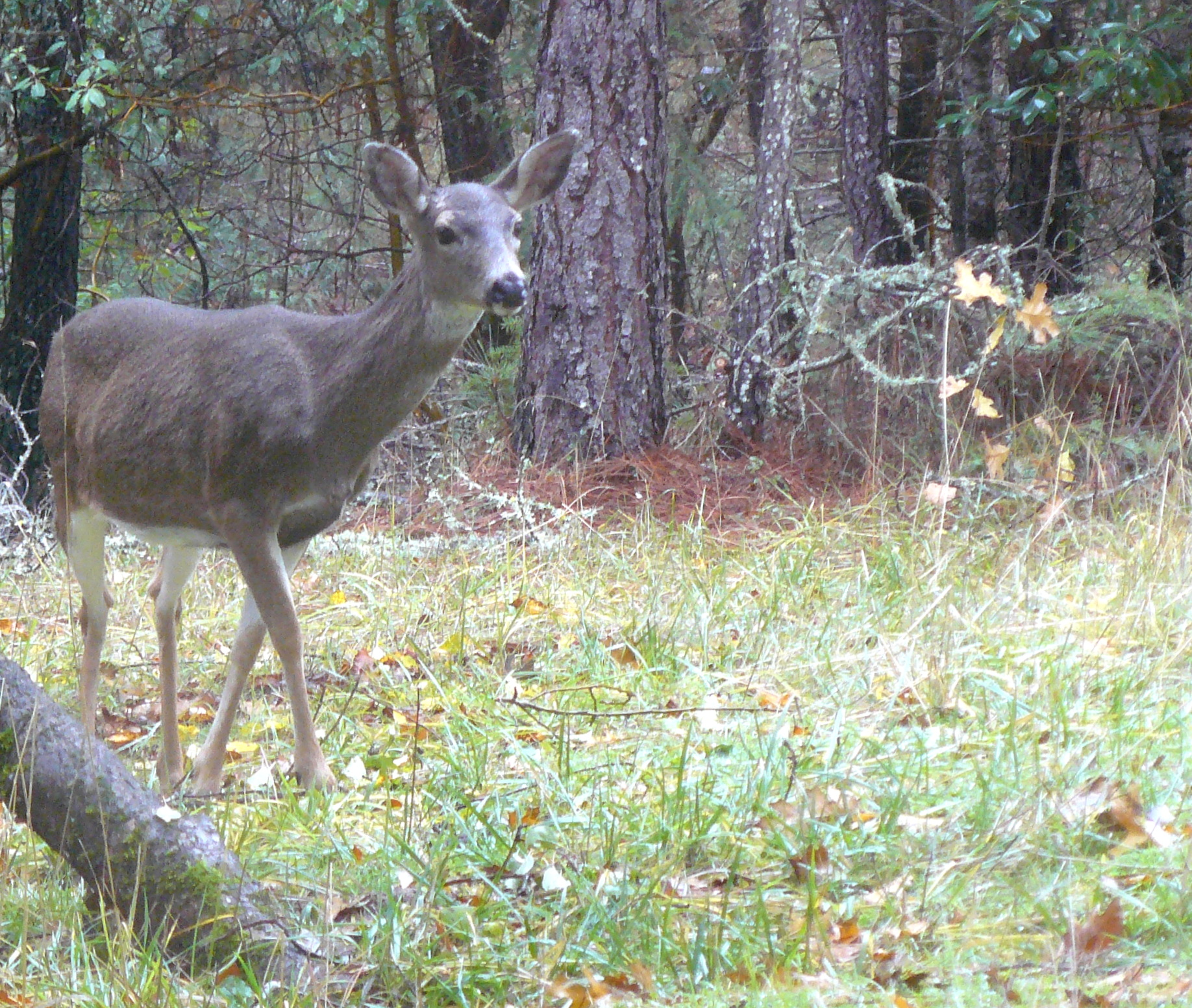
Within arm's reach of the beauty of nature.
Within arm’s reach of the beauty of nature.

Musings continued tomorrow.  Hope you stayed with it so far.

In search of intelligent life!

One does have to wonder at times!

The title of today’s post comes from that silly anecdote as to why Planet Earth has never been visited by a species of intergalactic explorers from a far, distant world?

Answer: Because as they passed by and looked down upon our planet they saw no signs of intelligent life!

So what triggered all this?

Well last Wednesday, Christine over at 350 or bust published a review of the recently released film Greedy Lying Bastards.  Christine offered an insightful review of the film but more importantly went on to reveal a whole raft of issues that deserve to be widely promoted.  She has been generous in allowing me to republish her post on Learning from Dogs.

What has this to do with dogs?  On the face of it, very little.  But then again, everything.  Because if humans reverted to the standards of trust, loyalty and openness that we see every day in our dogs then we wouldn’t be in the mess that we are in!

oooOOOooo

Greedy Lying Bastards: Exposing The Fossil Fools Who Put Profit Before Human Lives

GreedyLyingBastards.com

*

One of the few-and-far-between perks of being a climate blogger is that occasionally I get access to books and movies before the general public does. This past weekend I got to watch “Greedy Lying Bastards” before it hit movie screens across the U.S. on Monday. Sunday night I, along with some fellow Citizens Climate Lobby volunteers, got together to watch this 90 minute documentary. This movie exposes the American fossil fuel interests that have been blocking action on climate change for decades, taking a page – and some of the same PR firms and lobbyists – right out of the tobacco companies’ playbook.  Like the tobacco lobby, these fossil fools have opposed government action on the science showing their product is harmful and have actively disseminated lies about the science.

After the movie, I surveyed group members for their responses; we all gave it 10 out of 10 for its topic, but for actual delivery the movie was rated between 6 to 8 out of 10.

Some of the comments were:

“I really appreciated the whistle-blowing, the naming of names. I also really appreciated first-hand accounts of people in the U.S. who are already suffering the consequences of climate change.”

“I haven’t watched a documentary about this topic before, and really appreciated the great graphics. They made the connections for me.”

Two viewers had recently watched “The Age of Stupid” and felt that it spelled out the greed and petro-corruption as well as the consequences of inaction on climate change more clearly than did GLB.

I enjoyed the movie. Of course as a climate hawk I’m thrilled that this corruption and interference in democracy is receiving more attention at this critical juncture in the planet’s history, and for that I want to give a big shout-out to writer and director Scott Rosebraugh and producer Darryl Hannah. Compared to “Age of Stupid” which totally overwhelmed and depressed me and my companion, GLB left me riled up and ready to fight back at these soulless corporate monsters. One critique I have is that the movie ended with a whimper. Rosebraugh offers – in 60 seconds – four actions for people to take in response to the information they’ve just heard (possibly for the first time). It’s not that the actions mentioned (boycotting Exxon & Koch products, asking your Congressional representatives to take action to curb greenhouse gases, “joining the campaign” to stop fossil fuel subsidies and campaigning to overturn Citizens United) aren’t important, they are but to spend 89 minutes of the movie focused on the fossil fools who are destroying U.S. democracy as well as our children’s future without giving viewers more information on taking action may well foster more futility and despair. And, frankly, just signing a petition or writing a letter to your congressperson isn’t going to cut it at this point. The movie doesn’t give enough specifics on responses; the shocking amount of fossil fuel subsidies companies are given every year ($4 Billion in the United States, $775 Billion globally) isn’t even mentioned even while people are encouraged to get active on this issue. To move people from outrage to action, more information and empowerment is necessary. For example, viewers should know that there are governments (Australia, and the Canadian province of British Columbia) who have enacted a tax on carbon pollution, one of the first actions that governments can take to counter the fossil fuel stranglehold on our democracies and our economies.There are groups like 350.org and Citizens Climate Lobby (to name the ones I’m most familiar with) who are working to mobilize people at the grassroots; these important resources are not mentioned in the movie or on the movie’s “take action” website. This silo mentality is one of the biggest stumbling blocks to climate action, so I would beg the fine people involved in GLB and its website to expand their resources and “take action” focus. For that reason I would give the movie a ranking of 7.5 out of 10. Having said that, get out and watch the movie if it’s showing in a theatre near you, and take some friends with you.

For my part as a Canadian, I’d like to add a few more GLBs to the rogues’ gallery compiled by Rosebraugh:

Tim Ball worked as a professor of geography at the University of Winnipeg for eight years between 1988 and 1996. I am personally offended by Mr. Ball because not only did he work at my alma mater, and employed a family member for several years as his research assistant, he has been quoted back to me by acquaintances of mine from rural Manitoba where he’s gone on paid lecturing junkets. I hear that he can be very persuasive, and he’s told these good people that climate change is nothing to worry about (“the climate has always changed”), and so they don’t worry, even while this inaction puts their children’s future at risk. He even lies about his credentials – in this 2007 movie that purports to debunk climate science, you can see he’s identified as being from a department that never existed, in the university that he left 11 years earlier. Now that’s what I call a GLB!

SwindleTimBall

And this Canadian GLB gallery wouldn’t be complete without a portrait of our current prime minister, Stephen Harper, son (spawn? LOL) of an Imperial Oil employee who went on to work for the oil company himself. Harper and his party’s ties to Big Oil are well-documented and are clearly playing themselves out in the current federal government’s policy decisions (see Murray Dobbin’s “Stephen Harper and the Big Oil Party of Canada, or DesmogBlog’s new series, Blame Canada).

406305_339945026024087_278550055496918_1365624_697749516_n

*

More links:

Dr. Jeff Masters’ WunderBlog: Greedy Lying Bastards: A Movie Review

Washington Post: Greedy Lying Bastards: Movie Review

GreedyLyingBastards.com

ExposeTheBastards.com: Take Action

Change is never easy ….

… but change is also the one constant in life.

For every one of us there is no escaping change.  It’s always been been that way; always will be.

Today, however, there’s an additional unsettling element.  I’m speaking of the growing realisation that humanity could be facing the perfect storm.  The ultimate storm of runaway climate change and the collapse of our global economy.

Therefore, when one comes across the wind of common-sense it needs to be promoted.  My reason for promoting the opening speech by Jennifer Granholm at the TED2013 conference.

Because if we are to find a way of avoiding this storm, we have to do it through innovative ways of thinking and behaving.  Each and every one of us deciding to work for a better future. (And see my P.S.)

P.S.

Back in the days of dogs living as coherent packs, one of the key roles of the alpha dog was to decide a change of territory.  Then she, because the alpha dog was always a female, would lead the pack to a better place.

So we should learn from our ancient furry friends and take personal responsibility to find a ‘better’ place for ourselves and all our loved ones.

A letter to Dan.

But first Happy Valentine’s Day to you and Cynthia.

sunset

(Image courtesy of UK’s Met Office blog post: Top ten romantic weather phenomena.)

My dear Dan,

In a way this stunningly beautiful photograph is a reflection of our long relationship.  Over the 33 years that we have been friends you and I have enjoyed many calm moments and tried to make sense of this crazy world.  Yes, we have often disagreed about many things but never fallen out; not even come close to it.  No better illustrated than me wanting you as my Best Man when Jean and I were married November 20th, 2010.

IMG_4040ps
Payson, Arizona, November 20th 2010
Bridesmaid Dianne and Best Man Dan with the happy couple!

Your email to me of the 4th February was a difficult one to embrace; the Controversy Continues one.  The last thing I wanted to do was to react impulsively because I knew you would disregard such a thoughtless response.  After all, we have known each other’s views on the matter of climate change for a very long time.

Thank goodness I did sit on my hands. It allowed a more reflective part of my aged brain to compose a blog post on Learning from Dogs.  The post that came out on the 12th under the title of Doggedly seeking the truth.

That post then led to yesterday’s post Truth never follows a straight line.  Two essays that gave me much joy.  Thank you.

But the plain fact of the matter is that I profoundly disagree with the idea, as expressed in your email heading, that there is any controversy over the question of global warming resulting from man’s behaviours.  I know from our years of friendship that you are open to all sorts of ideas. Meaning you wouldn’t be closed-minded to the biggest issue facing Homo sapiens and all the species on this planet, the one of anthropogenic global warming (AGW).

So let me offer you some links that make it very clear as to the reality of what is happening to this planet.

Start with this one Why Climate Deniers Have No Scientific Credibility – In One Pie Chart. Or this one IPCC Draft Report Leaked, Shows Global Warming is NOT Due to the Sun.

Then there’s this one A Brief Note on the Latest Release of Draft IPCC Documents and this one Global Extinction within one Human Lifetime as a Result of a Spreading Atmospheric Arctic Methane Heat wave and Surface Firestorm.  I could go on and on.

Perhaps the reason that so many intelligent people ‘avoid’ the truth of what we are doing to this planet was voiced in a recent comment by Prof. Guy McPherson on Learning from Dogs, “Perhaps Upton Sinclair had it right, years ago: “It is difficult to get a man to understand something, when his salary depends on his not understanding it.

Even though you and I are well past salary days it doesn’t alter the chilling realisation that comes from embracing the truth of climate change and global warming: The undermining of just about everything that we have embraced over our years.  No wonder it’s so much easier to stay within familiar comfort zones!  To remain hypocrites as Jean and I do!

Let me close with the words uttered by mother Dellarobia to son Preston in Barbara Kingsolver’s book Flight Behavior: “It won’t ever go back to how it was, Preston.

In my heart I know that to be the truth.

Jean and I send you and Cynthia our fondest love,

Paul

Doggedly seeking the truth.

As a dog follows a scent.

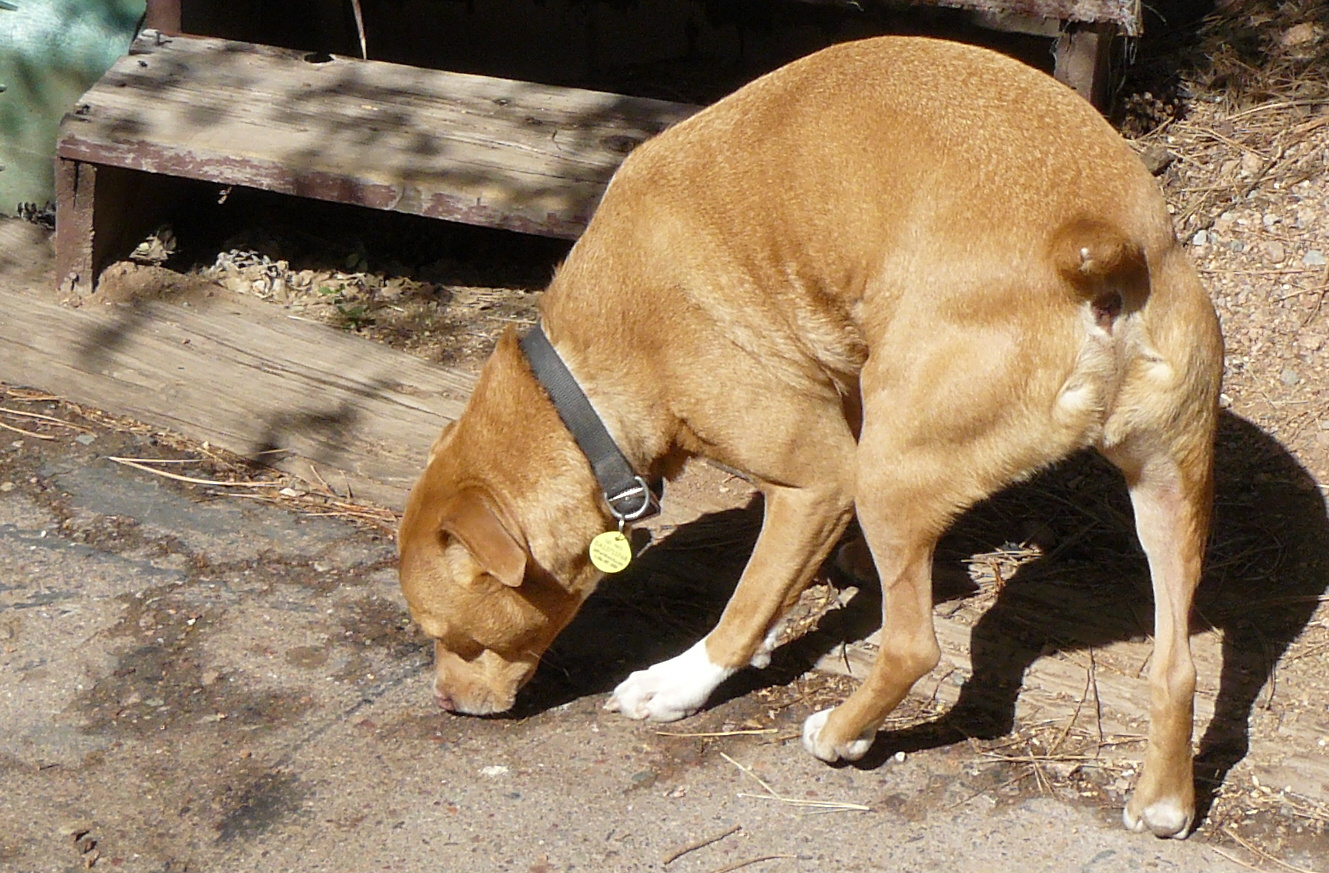
P1110019
Casey doing what dogs do so well – picking up a scent.

I have been pondering about how one gets to the truth of a complex issue.  And there’s none more complex nor more essential in terms of the truth of an issue than Anthropogenic Global Warming (AGW).

It was kicked off by an email received from Dan Gomez.  Followers of Learning from Dogs will have seen mention of Dan’s name as he regularly sends me bits and pieces.  Indeed, let me refer you to a post that came out last August, Feeling depressed? Join your pals in the pool! and this extract:

Regular followers of Learning from Dogs will know that Dan and I go back a long way; far too long! In fact the occasion of me becoming aware of Mr. Daniel Gomez was at a Commodore Computer dealers conference in Boston, Mass.

I was giving a talk promoting a UK word-processing program that I was marketing for the Commodore. That software was called Wordcraft and I think the year was 1979, possibly 1980. Anyway, I used the word ‘fortnight’, which back in England is a common word meaning two weeks. Immediately, a voice called out from the audience, “Hey Handover, what’s a fortnight?“

The session deteriorated rapidly thereafter! Dan and I became very good friends and his LA company Cimarron became my West Coast USA distributor for Wordcraft. And it was Dan’s sister, Suzann, who invited me down to Mexico for Christmas 2007 which led to me meeting my beloved Jeannie! Funny old world!

Dan is a smart cookie. He holds a degree in psychology, as well as being a very easy guy to get along with.  We have been good friends for more than 30 years.

Anyway, back to the theme of the post; determining the truth of a complex issue.

Recently, Dan sent me an email with the subject heading of The Controversy Continues – A couple of Articles for your Digestive Tract….

The first article was:

Report shows UN admitting solar activity may play significant role in global warming

A leaked report by a United Nations’ group dedicated to climate studies says that heat from the sun may play a larger role than previously thought.

“[Results] do suggest the possibility of a much larger impact of solar variations on the stratosphere than previously thought, and some studies have suggested that this may lead to significant regional impacts on climate,” reads a draft copy of a major, upcoming report from the U.N.’s Intergovernmental Panel on Climate Change (IPCC).

The man who leaked the report, StopGreenSuicide blogger Alec Rawls, told FoxNews.com that the U.N.’s statements on solar activity were his main motivation for leaking the document.

The second article was from the Dick Morris website, from which I offer this extract (if, like me, you hadn’t heard of Mr. Morris before, details are here):

According to Bloomberg News, US carbon emissions are down 13% over the past five years and that they are now the lowest since 1994. In fact, we are more than halfway to President Obama’s goal of a 17% reduction below our peak year of 2007.

….

Coal has fallen to only 18% of our energy use (down from 23% in 2007) and natural gas is up to 31%. Natural gas has half the carbon emissions of coal.

Evidence suggests that climate change and global warming are happening, but at a much slower rate than doomsday warnings suggested. We are now on track for an increase in global temperatures of one degree centigrade by 2100. This increase is not enough to cause major flooding or rises in sea levels.

Please feel free to read the whole Dick Morris piece here.

So on the face of it, two convincing reports, especially the one from Alec Rawls.

Professor McPherson
Professor McPherson

Now let me turn to Professor Guy McPherson; professor emeritus at the University of Arizona.  Just take a peek at the professional recognition granted to Professor McPherson.

Guy McPherson writes a blog called Nature Bats Last.  It is described thus:

This blog focuses on the natural world, with a particular emphasis on the twin sides of our fossil-fuel addiction: (1) global climate change and (2) energy decline. Because these phenomena impact every aspect of life on Earth, specific topics range widely, and include philosophy, evolution, economics, humanity, politics, current events, and many aspects of the human condition.

Less than 3 months ago, Guy McPherson visited Greenfield Community College in western Massachusetts to deliver his presentation “The Twin Sides of the Fossil-Fuel Coin: Developing Durable Living Arrangements in Light of Climate Change and Energy Decline.

It lasts for just 40 minutes and needs to be watched.  Why do I say needs to be watched?  Because tomorrow I delve deeper into the challenges facing ordinary folk and watching the presentation and reflecting on the start of this post are very pertinent to following the scent of truth.

Plus ça change – footnote

Plus ça change, plus c’est la même chose (“the more it changes, the more it’s the same thing”).

The final of three repostings from a year ago.  To recap, I wrote on Monday, “… out of curiosity I wondered what I had published a year ago, in early February 2012.  To my amazement what was published was as fresh and relevant as if it had been published today.

The second post from a year ago was reposted yesterday.  Today the footnote is from the 9th February, 2012.  (It reads in its original form with the links and references unchanged.)

oooOOOooo

So many vested opinions!

Regular readers will know that I published recently, in two parts, a post with the heading of Climate, truth and integrity, the first part being here and the second part here.

To me the arguments supporting the premise that mankind is engaged in the process of destroying our very being are powerful and convincing.  But if there is any serious scientific doubt, then I am reminded of that saying in aviation circles about a risk to the safety of an aircraft, “If there’s any doubt, there’s no doubt!”  Surely, that’s the stance the climate change skeptics should be taking!  Because when the evidence of global warming, pollution, natural resource depletion, species extinctions, and habitat destruction is drawn together and there are no skeptics left, then will the last person left alive please switch the lights off!

Anyway, I’m going to republish, with permission, a recent Post that appeared on Tom Engelhardt‘s powerful blogsite, Tom Dispatch.  It was written by Bill McKibben of 350.org fame.  Here it is,

Tomgram: Bill McKibben, Why the Energy-Industrial Elite Has It In for the Planet

Posted by Bill McKibben at 9:39am, February 7, 2012.

Introduction

Two Saturdays ago, I was walking with a friend in a park here in New York City.  It was late January, but I was dressed in a light sweater and a thin fall jacket, which I had just taken off and tied around my waist.  We were passing a strip of bare ground when suddenly we both did a double-take.  He looked at me and said, “Crocuses!”  Dumbfounded, I replied, “Yes, I see them.”  And there they were, a few clumps of telltale green shoots poking up from the all-brown ground as if it were spring.  Such a common, comforting sight, but it sent a chill through me that noticeably wasn’t in the air.  Even the flowers, I thought, are confused by our new version of weather.

Later that same week, as temperatures in the Big Apple crested 60 degrees, I was chatting on the phone with a friend in Northampton, Massachusetts.  I was telling him about the crocuses, when he suddenly said, “I’m looking out my window right now and for the first time in my memory of January, there’s not a trace of snow!”

Of course, our tales couldn’t be more minor or anecdotal, even if the temperatures that week did feel like we were on another planet.  Here’s the thing, though: after a while, even anecdotes add up — maybe we should start calling them “extreme anecdotes” — and right now there are so many of them being recounted across the planet.  How could there not be in a winter, now sometimes referred to as “Junuary,” in which, in the United States, 2,890 daily high temperature records have either been broken or tied at last count, with the numbers still rising?  Meanwhile, just to the south of us, in Mexico, extreme anecdotes abound, since parts of the country are experiencing “the worst drought on record.”  Even cacti are reportedly wilting and some towns are running out of water (as they are across the border in drought-stricken Texas).  And worst of all, the Mexican drought is expected to intensify in the months to come.

And who can doubt that in Europe, experiencing an extreme cold spell the likes of which hasn’t been seen in decades — even Rome had a rare snowfall and Venice’s canals were reported to be freezing over — there are another set of all-too-extreme anecdotes.  After all, in places like Ukraine, scores of the homeless are freezing to death, pipes are bursting, power cuts are growing, and maybe even an instant energy crisis is underway (at a moment when the European Union is getting ready to cut itself off from Iranian oil).

That’s just to begin a list.  And yet here’s the strange thing.  At least in this country, you can read the “freaky” weather reports or listen to the breathless TV accounts of unexpected tornadoes striking the South in January and rarely catch a mention of the phrase “climate change.”  Given the circumstances, the relative silence on the subject is little short of eerie, even if worries about climate change lurk just below the surface.  Which is why it’s good to have TomDispatch regular Bill McKibben, author of Eaarth: Making a Life on a Tough New Planet, take a clear-eyed look at American denialism and just what it is we prefer not to take in. Tom

The Great Carbon Bubble
Why the Fossil Fuel Industry Fights So Hard

By Bill McKibben

If we could see the world with a particularly illuminating set of spectacles, one of its most prominent features at the moment would be a giant carbon bubble, whose bursting someday will make the housing bubble of 2007 look like a lark. As yet — as we shall see — it’s unfortunately largely invisible to us.

In compensation, though, we have some truly beautiful images made possible by new technology.  Last month, for instance, NASA updated the most iconic photograph in our civilization’s gallery: “Blue Marble,” originally taken from Apollo 17 in 1972. The spectacular new high-def image [see below, Ed] shows a picture of the Americas on January 4th, a good day for snapping photos because there weren’t many clouds.

It was also a good day because of the striking way it could demonstrate to us just how much the planet has changed in 40 years. As Jeff Masters, the web’s most widely read meteorologist, explains, “The U.S. and Canada are virtually snow-free and cloud-free, which is extremely rare for a January day. The lack of snow in the mountains of the Western U.S. is particularly unusual. I doubt one could find a January day this cloud-free with so little snow on the ground throughout the entire satellite record, going back to the early 1960s.”

In fact, it’s likely that the week that photo was taken will prove “the driest first week in recorded U.S. history.” Indeed, it followed on 2011, which showed the greatest weather extremes in our history — 56% of the country was either in drought or flood, which was no surprise since “climate change science predicts wet areas will tend to get wetter and dry areas will tend to get drier.” Indeed, the nation suffered 14 weather disasters each causing $1 billion or more in damage last year. (The old record was nine.) Masters again: “Watching the weather over the past two years has been like watching a famous baseball hitter on steroids.”

In the face of such data — statistics that you can duplicate for almost every region of the planet — you’d think we’d already be in an all-out effort to do something about climate change. Instead, we’re witnessing an all-out effort to… deny there’s a problem.

Our GOP presidential candidates are working hard to make sure no one thinks they’d appease chemistry and physics. At the last Republican debate in Florida, Rick Santorum insisted that he should be the nominee because he’d caught on earlier than Newt or Mitt to the global warming “hoax.”

Most of the media pays remarkably little attention to what’s happening. Coverage of global warming has dipped 40% over the last two years. When, say, there’s a rare outbreak of January tornadoes, TV anchors politely discuss “extreme weather,” but climate change is the disaster that dare not speak its name.

And when they do break their silence, some of our elite organs are happy to indulge in outright denial. Last month, for instance, the Wall Street Journal published an op-ed by “16 scientists and engineers” headlined “No Need to Panic About Global Warming.” The article was easily debunked. It was nothing but a mash-up of long-since-disproved arguments by people who turned out mostly not to be climate scientists at all, quoting other scientists who immediately said their actual work showed just the opposite.

It’s no secret where this denialism comes from: the fossil fuel industry pays for it. (Of the 16 authors of the Journal article, for instance, five had had ties to Exxon.)Writers from Ross Gelbspan to Naomi Oreskes have made this case with such overwhelming power that no one even really tries denying it any more. The open question is why the industry persists in denial in the face of an endless body of fact showing climate change is the greatest danger we’ve ever faced.

Why doesn’t it fold the way the tobacco industry eventually did? Why doesn’t it invest its riches in things like solar panels and so profit handsomely from the next generation of energy? As it happens, the answer is more interesting than you might think.

Part of it’s simple enough: the giant energy companies are making so much money right now that they can’t stop gorging themselves. ExxonMobil, year after year, pulls in more money than any company in history. Chevron’s not far behind. Everyone in the business is swimming in money.

Still, they could theoretically invest all that cash in new clean technology or research and development for the same. As it happens, though, they’ve got a deeper problem, one that’s become clear only in the last few years. Put briefly: their value is largely based on fossil-fuel reserves that won’t be burned if we ever take global warming seriously.

When I talked about a carbon bubble at the beginning of this essay, this is what I meant. Here are some of the relevant numbers, courtesy of the Capital Institute: we’re already seeing widespread climate disruption, but if we want to avoid utter, civilization-shaking disaster, many scientists have pointed to a two-degree rise in global temperatures as the most we could possibly deal with.

If we spew 565 gigatons more carbon into the atmosphere, we’ll quite possibly go right past that reddest of red lines. But the oil companies, private and state-owned, have current reserves on the books equivalent to 2,795 gigatons — five times more than we can ever safely burn. It has to stay in the ground.

Put another way, in ecological terms it would be extremely prudent to write off $20 trillion worth of those reserves. In economic terms, of course, it would be a disaster, first and foremost for shareholders and executives of companies like ExxonMobil (and people in places like Venezuela).

If you run an oil company, this sort of write-off is the disastrous future staring you in the face as soon as climate change is taken as seriously as it should be, and that’s far scarier than drought and flood. It’s why you’ll do anything — including fund an endless campaigns of lies — to avoid coming to terms with its reality. So instead, we simply charge ahead.  To take just one example, last month the boss of the U.S. Chamber of Commerce, Thomas Donohue, called for burning all the country’s newly discovered coal, gas, and oil — believed to be 1,800 gigatons worth of carbon from our nation alone.

What he and the rest of the energy-industrial elite are denying, in other words, is that the business models at the center of our economy are in the deepest possible conflict with physics and chemistry. The carbon bubble that looms over our world needs to be deflated soon. As with our fiscal crisis, failure to do so will cause enormous pain — pain, in fact, almost beyond imagining. After all, if you think banks are too big to fail, consider the climate as a whole and imagine the nature of the bailout that would face us when that bubble finally bursts.

Unfortunately, it won’t burst by itself — not in time, anyway. The fossil-fuel companies, with their heavily funded denialism and their record campaign contributions, have been able to keep at bay even the tamest efforts at reining in carbon emissions. With each passing day, they’re leveraging us deeper into an unpayable carbon debt — and with each passing day, they’re raking in unimaginable returns. ExxonMobil last week reported its 2011 profits at $41 billion, the second highest of all time. Do you wonder who owns the record? That would be ExxonMobil in 2008 at $45 billion.

Telling the truth about climate change would require pulling away the biggest punchbowl in history, right when the party is in full swing. That’s why the fight is so pitched. That’s why those of us battling for the future need to raise our game. And it’s why that view from the satellites, however beautiful from a distance, is likely to become ever harder to recognize as our home planet.

Bill McKibben is Schumann Distinguished Scholar at Middlebury College, founder of the global climate campaign 350.org, a TomDispatch regular, and the author, most recently, of Eaarth: Making a Life on a Tough New Planet.

Follow TomDispatch on Twitter @TomDispatch and join us on Facebook.

Copyright 2012 Bill McKibben

This photo was taken on January 4, 2012.

Most Amazing High Definition Image of Earth – Blue Marble 2012

January 25, 2012

*Updated February 2, 2012: According to Flickr, “The western hemisphere Blue Marble 2012 image has rocketed up to over 3.1 million views making it one of the all time most viewed images on the site after only one week.”

A ‘Blue Marble’ image of the Earth taken from the VIIRS instrument aboard NASA’s most recently launched Earth-observing satellite – Suomi NPP. This composite image uses a number of swaths of the Earth’s surface taken on January 4, 2012. The NPP satellite was renamed ‘Suomi NPP’ on January 24, 2012 to honor the late Verner E. Suomi of the University of Wisconsin.

Suomi NPP is NASA’s next Earth-observing research satellite. It is the first of a new generation of satellites that will observe many facets of our changing Earth.

Suomi NPP is carrying five instruments on board. The biggest and most important instrument is The Visible/Infrared Imager Radiometer Suite or VIIRS.

To read more about NASA’s Suomi NPP go to: www.nasa.gov/npp

Credit: NASA/NOAA/GSFC/Suomi NPP/VIIRS/Norman Kuring

Please Americans, set the lead.

Powerful words from President Obama; now we the people must act.

I’m taking the liberty of reproducing in full the item that was published by Bill McKibben of 350.org yesterday.  As I wrote on the 17th this year has to be the year that we make a difference, a call to every man, woman and child on the planet.  This is a snippet from that post.

With these in mind, Doherty proposes a new grand strategic concept: “The United States must lead the global transition to sustainability.
What a vision for the United States of America.  That this Nation will be the most wonderful example of how man can learn, adapt and change.

So to the call issued by 350.org.

oooOOOooo

Dear Friends,

Here’s what President Obama said about climate change during his address today:

barack-obama8_text_small

With words like that, it’s easy to let ourselves dream that something major might be about to happen to fix the biggest problem the world has ever faced.

But we know that even if the President is sincere in every syllable, he’s going to need lots of backup to help him get his point across in a city dominated by fossil fuel interests. And, given the record of the last four years, we know that too often rhetoric has yielded little in the way of results.

That’s why we need you — very badly — to take a trip to our nation’s capital on Feb. 17th. We’ll gather on the National Mall, in what is shaping up to be be the largest environmental rally in many years.

Click here to join us in DC: act.350.org/signup/presidentsday

Together we’ll send the message loud and clear: ‘If you’re serious about protecting future generations from climate change, stop the Keystone XL tar sands pipeline. If you can do that, Mr. President, we can all work together to help build a climate legacy that will be a credit to your critical eight years in office.’

Look — numbers count. If 20,000 of us show up on February 17th, it will be noticed. We need you in that number. The President may have given us an opening, but it’s up to us to go through it, and we need to do it together.

Thanks for all you’ve done to bring us this far, friends. Let’s keep it up — this is our chance.

Bill

oooOOOooo

Even if you are unable to be there in person on the 17th., do what you can to circulate this just as far and wide as possible.

This year of separation.

Ultimately, a message of hope.

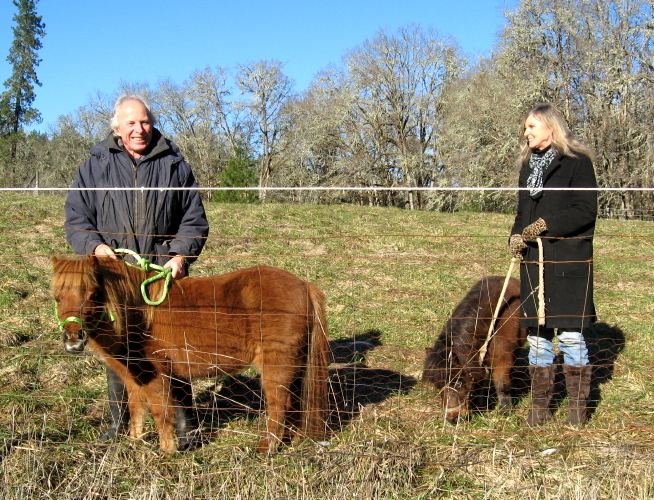
Today’s title came from a recent chat ‘across the garden fence’ with our neighbours, Dordie and Bill.  At their request we had walked our two horses over to the fence-line between our two properties so Dordie and Bill could meet and fondle them.  The warm afternoon sunshine was beautiful and while the horses munched the newly-found grass, we grown-ups talked about this and that and generally tried to put the world to rights!

Paul with Dancer; Jean with Grace.

We talked about the strangeness of present times.  Not just in the USA but across the world. Bill thought 2013 would be the year of separation.  I queried what he meant by that.

Bill replied, “I sense that by the end of the year, the vast majority of people will have decided if climate change is or is not a significant issue.”  There would be few who remained neither unconcerned nor undecided.

That resonated with me and neatly put the framework to today’s post.  Stay with me while I journey to the destination that this year will be the year of hope.

I am one of many who subscribe to the online magazine Grist.  They describe themselves, thus:

Laugh now — or the planet gets it.

You know how some people make lemonade out of lemons? At Grist, we’re making lemonade out of looming climate apocalypse.

It’s more fun than it sounds, trust us!

Grist has been dishing out environmental news and commentary with a wry twist since 1999 — which, to be frank, was way before most people cared about such things. Now that green is in every headline and on every store shelf (bamboo hair gel, anyone?), Grist is the one site you can count on to help you make sense of it all.

The weekly Grist digest that arrived in my in-box that same day as when we were chatting with Dordie and Bill included a number of key stories.

Here’s one that smacked me in the eye.

The 32 most alarming charts from the government’s climate change report

By Philip Bump

Just reading about the government’s massive new report outlining what climate change has in store for the U.S. is sobering. In brief: temperature spikes, drought, flooding, less snow, less permafrost. But if you really want to freak out, you should check out the graphs, charts, and maps.

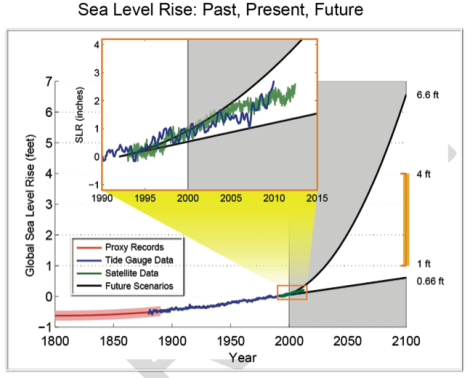
Now I’m not going to republish all 32 charts but will include just these two, because the message is clear.

It’s possible that sea levels could only rise eight inches. It is also possible that they could rise over six-and-a-half feet.

sea-level-range

—-

7-sea-rises

Sea-level rise will affect different areas to different degrees — but note the map at lower right. On the Georgia coast, “hundred year” floods could happen annually.

OK, that first chart takes a while to absorb the full implications. The second one doesn’t!

The full range of charts is chilling.  While they refer to the USA, the messages apply to the whole world.

Then in that same Grist weekly summary was this story.

If you aren’t alarmed about climate, you aren’t paying attention

By David Roberts

There was recently another one of those (numbingly familiar) internet tizzies wherein someone trolls environmentalists for being “alarmist” and environmentalists get mad and the troll says “why are you being so defensive?” and everybody clicks, clicks, clicks.

I have no desire to dance that dismal do-si-do again. But it is worth noting that I find the notion of “alarmism” in regard to climate change almost surreal. I barely know what to make of it. So in the name of getting our bearings, let’s review a few things we know.

We know we’ve raised global average temperatures around 0.8 degrees C so far. We know that 2 degrees C is where most scientists predict catastrophic and irreversible impacts. And we know that we are currently on a trajectory that will push temperatures up 4 degrees or more by the end of the century.

David then works his way through those ‘things we know’ in a powerful manner.  Do read the full article, please!  This is his conclusion:

All this will add up to “large-scale displacement of populations and have adverse consequences for human security and economic and trade systems.” Given the uncertainties and long-tail risks involved, “there is no certainty that adaptation to a 4°C world is possible.” There’s a small but non-trivial chance of advanced civilization breaking down entirely.

Now ponder the fact that some scenarios show us going up to 6degrees by the end of the century, a level of devastation we have not studied and barely know how to conceive. Ponder the fact that somewhere along the line, though we don’t know exactly where, enough self-reinforcing feedback loops will be running to make climate change unstoppable and irreversible for centuries to come. That would mean handing our grandchildren and their grandchildren not only a burned, chaotic, denuded world, but a world that is inexorably more inhospitable with every passing decade.

Take all that in, sit with it for a while, and then tell me what it could mean to be an “alarmist” in this context. What level of alarm is adequate?

So am I stark staring mad for having hope in my mind?  Stay with me for just a little longer.  Then form your own judgment.

Recall the post that I published on Tuesday hitting out at the British newspaper The Daily Mail.  Towards the end of that post, in discussing the recently released American National Climate Assessment, I wrote this:

That’s why this report is to be encouraged, nay embraced.  Of all the nations in the world, the one that should be setting the lead is the United States of America.  As the banner on that globalchange.gov website proclaims: Thirteen Agencies, One Vision: Empower the Nation with Global Change Science

So go and read the report.  For your sake and all our sakes.

Because the more informed you and I are, the better the chances of real political leadership taking place in this fine nation.

Now with that in mind let’s go to the final Grist article.

A new grand strategy for the U.S., built around sustainability

By David Roberts

Let’s just accept it: America’s current political and economic systems are incapable of responding adequately to climate change. As things stand, reducing carbon emissions — or more broadly, shifting to sustainability — is a kind of add-on, a second-tier consideration, bolted onto systems and institutions that were built for other purposes.

A little later, David writes:

So what would a new U.S. grand strategy built around sustainability look like? That’s the question tackled by “A New U.S. Grand Strategy,” a piece in Foreign Policy by Patrick Doherty, director of the Smart Strategy Initiative at the New America Foundation.

It’s a hugely ambitious and wide-ranging piece, far too much to even summarize adequately here. Bookmark it. Instapaper it. Pinterest it to your iCloud, or whatever kids do these days. But let’s take a quick look.

Doherty identifies four central challenges facing the U.S.:

  • Economic inclusion: People are swarming out of poverty around the world (especially in China). Over the next 20 years, the global middle class will welcome around 3 billion new members. That’s going to put intense stress on natural, economic, and political systems that are already showing signs of strain.
  • Ecosystem depletion: Pretty sure Grist readers are familiar with this one.
  • Contained depression: Rather than a recession, the U.S. faces a “constrained depression,” with the full effects of low aggregate demand and high debt being masked by policy. No amount of fiscal or economic stimulus will revive a system that has exhausted itself.
  • Resilience deficit: Our industrial supply lines and value chains are efficient, but lack redundancy; they are brittle. Our infrastructure is old and crumbling, $2.2 trillion in the hole, and that’s just for the aging Cold War stuff, never mind building water, power, and transportation systems suited to an era of climate disruption.

“These four challenges,” Doherty says, “are the four horsemen of the coming decades.” And they are inter-dependent. They must be solved together. It’s a rough situation.

With these in mind, Doherty proposes a new grand strategic concept: “The United States must lead the global transition to sustainability.

What a vision for the United States of America.  That this Nation will be the most wonderful example of how man can learn, adapt and change.  David Roberts concludes:

Here are Doherty’s main suggestions for how to realign the U.S. economic engine:

  • Walkable communities: More and more Americans want to live in dense, walkable areas; get rid of regulations that hamper them and start building them.
  • Regenerative agriculture: Farmers can produce “up to three times the profits per acre and 30 percent higher yields during drought” with agricultural techniques that also clean water and restore soils. America must “adopt modern methods that will bring more land into cultivation, keep families on the land, and build regional food systems that keep more money circulating in local economies.”
  • Resource productivity: “Energy and resource intensity per person will have to drop dramatically.” That imperative can drive “innovation in material sciences, engineering, advanced manufacturing, and energy production, distribution, and consumption.”
  • Excess liquidity: Channel all the corporate cash that’s sitting around in funds into long-term investments in America by taxing waste and creating regional growth strategies.
  • Stranded hydrocarbon assets: Figure out how to devalue the immense amount of carbon that’s still sitting underneath the ground without unduly traumatizing the economy.

Obviously the devil is in the details on this stuff, but at a broad level, this is about as eloquent and forward-thinking as it gets. I love the idea of using sustainability in a muscular way, to revive regional economies and nurture the middle class. I recommend reading the whole thing.

I, too, recommend reading “A New U.S. Grand Strategy – Why walkable communities, sustainable economics, and multilateral diplomacy are the future of American power.” (NB: You will have to register with Foreign Policy before access to the report is possible, but it’s free.)

So, the wall-to-wall stream of information that is shouting out how quickly the planet is changing is the fuel that is going to feed the fires of hope.

Let me leave you with the most beautiful words of an ancient philosopher – Aristotle.

Hope is a waking dream.