I have two sisters: Elizabeth and Eleanor. Elizabeth lives in Tokyo, Japan and Eleanor lives in Johannesburg, South Africa. They are both dear sisters and we all love each other as brothers and sisters should!
Anyway, Eleanor’s husband, Warwick, has a brother and this story is about Warwick’s brother’s step-daughter, Stacey Maguire.
It was Eleanor who sent this story to me to be published in this place.
ooOOoo
My dog saves my life every day
Stacey Maguire’s life is always in danger.
A severe Type 1 Diabetic, her body doesn’t produce the insulin it needs to control her blood sugar, leaving her vulnerable to catastrophic changes in sugar levels. But as long as her dog, Gretchen, is around she has nothing to fear. For Gretchen is a trained Diabetic Assist Dog (DAD).
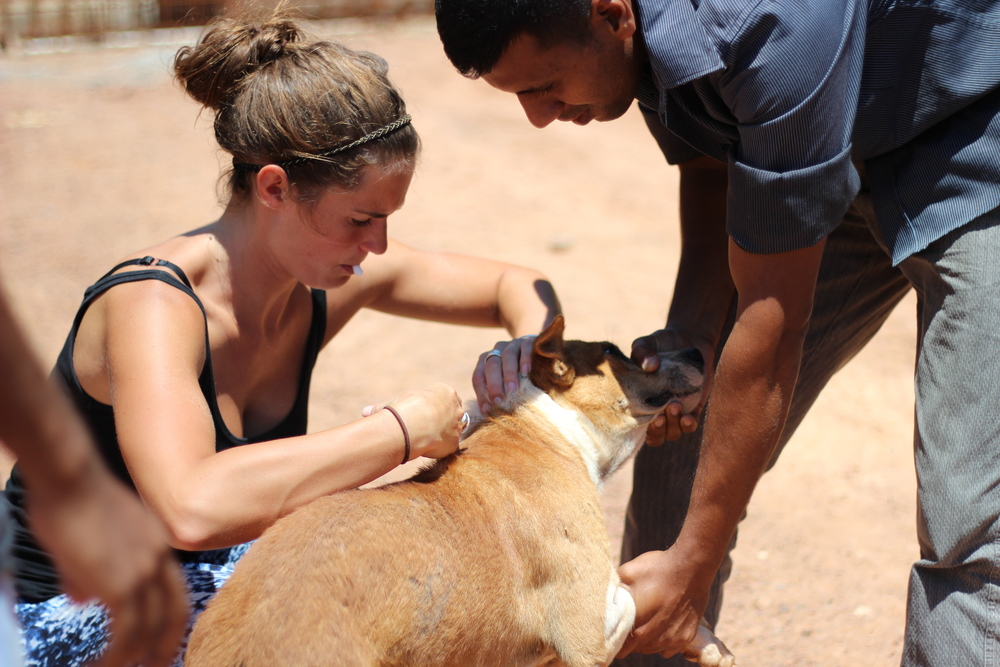
Gretchen is a Swiss Shepherd who saves her owner’s life on a daily basis by warning her whenever her blood sugar is at a dangerous level. Incredibly, Gretchen does this by smell.
Stacey’s chronic condition is so severe that she’s on the best monitoring technology in South Africa. But before Gretchen came into her life, and even with that monitoring technology, Stacey still experienced hypoglycemic episodes and seizures at least once a week when changes in her blood sugar levels weren’t detected in time.
Thus when Gretchen arrived from America her sole objective was sniffing out the problem as fast as possible. And Gretchen does that – a full hour ahead of that best available technology!
Her method? An urgent paw to the knee, followed by a bark. Gretchen takes no nonsense, delivering the testing kit to Stacey’s hand if her response is sluggish. If anything goes wrong Gretchen, as a trained service animal is taught to so do, sounds an alarm or alerts the nearest person to the danger. Stacey couldn’t ask for better care.
Stacey is the first South African to benefit from a Diabetic Assist Dog. Stacey Maguire’s dream is to start a facility to train more dogs to help diabetics like her. That’s something South Africa can get behind.
ooOOoo
Eleanor also added the following by way of background:
We found a phenomenal lady called Diane Marquette in Minnesota who agreed to train a dog for export – her first time for such an undertaking.
A three-year-old white Swiss Alsatian called Gretchen made the grade for the initial training after which Di started the diabetic training. In preparation, whenever Stacey felt unwell she spat into cotton-wool and put these samples into the freezer. When Stacey had collected a bundle she sent them via courier to Di who then trained Gretchen on Stacey’s scent.
This process took ten months. Then Stacey flew to Minnesota to meet Gretchen, to be bonded with Gretchen, to be trained and, finally, to sit and pass a very stringent exam before being allowed to bring Gretchen back home. Ten days later we met them at Cape Town International, after twenty-one hours of flying for Stacey with Gretchen at her feet in the aeroplane. SA’s first DAD had landed!
In an email to me, Eleanor included:
Stacey and Gretchen have now been together for several years with their bond just strengthening and strengthening! Gretchen alerts Stacey continuously and in recent times has started alerting at night too. Thus even accounting for the fact that, as with all dogs, Gretchen sleeps at night coinciding, unfortunately, with when Stacey is most vulnerable to shocking lows, this fabulous dog maintains awareness of Stacey’s body scents during the night hours.
Stacey’s wish is to bring trainer Di of Scent Angels to Cape Town to train trainers, and then to roll this life-saving program out to fellow diabetics.
Diane Marquette
Eleanor also included the link to the website for Scent Angels. I shall pass on the link to this post to Diane Marquette with the request that she might allow me to share some more stories of these incredible dogs with you all.
As is the way of the Internet and Blogging it is inevitable that connections are made in all four corners of the globe. Some connections are transient, others become long-term. The connection between author John Zande and this blog fits the latter description.
If, dear reader, you have read my posts of the last two days, then that connection between John and me will be clear.
Now despite the fact that I awarded the book five stars on Amazon I can’t tell you that it is an easy read. Nor, to that fact, is it a comfortable read.
For John’s book played around with my head in so many ways that I am still far from returning to a settled mind. Indeed, I have a sneaky suspicion that On the Problem of Good represents another one of those turnstiles in life where once through the ‘gate’ there is no returning to the past way of seeing things.
It played with my mind in the sense of forcing me, albeit with a very small ‘f’, to truly comprehend the consequences of unanticipated outcomes. You know that old saying: “Never underestimate the power of unanticipated consequences“.
Here’s an example.
In 1889 a total of 26 road deaths were recorded in the United States. By 2013 that number had exploded to approximately 35,500. Globally, the number stands at 1.24 million and the World Health Organisation predicts the body of carnage will grow to 1.9 million by 2020. (p.44)
That is just one of the many examples that John uses to support his premise that “good simply does not exist”.
But it goes deeper than that. For John reveals the incalculable, unstoppable force of evolution. Going right back to the very origins of matter. How hydrogen fused into the more complex helium that, in turn, fused into the still heavier and more complex carbon, then along came the fusing of helium and carbon to make oxygen. Then the journey of evolution of atoms. From single atoms to simple compounds, binding to produce double compounds and on to molecules. Then the marriage between molecules to produce amino acids, and on and on to proteins and enzymes and … well, you get the idea!
That continuum from simple to complex organisms and on and on to air-breathing animals (including wolves and then dogs!) and all the way to the likes of yours truly sitting in front of a modern computer writing the review of another person’s book.
All the time, since 13.82 billion years ago, the evolutionary force being a one-way street. A one-way street where John, with some degree of persuasiveness, demonstrates that everything that might, at that time, be seen as a good is not fundamentally a good because it is inextricably connected to a resulting evil.
The Problem of Good is a word problem. It is a lexical glitch, a squabble in temporal, fleshy definitions, and nothing more.
There is no disagreement or antipathy because there is no problem.
Good does not exist. (p.29)
See what I mean about this not being a comfortable book to read!
Nevertheless, you are waiting to hear from me as to whether or not you should read this book?
In answer, here’s a part of what I wrote for my review of the book on Amazon:
If you ever pause for a moment and wonder about the meaning of life, better written as The Meaning of LIFE, then this book is for you. More than that. For if you never ponder about the meaning of life then this really, really is the book for you.
Because for most of us, for most of the time, we live in the land of the blind.
So, thank goodness, that from time to time along comes a person who is the one-eyed King.
I am really sorry folks but both today and tomorrow I am adding my tiny shoulder to a very large and heavy wheel. Endeavouring to make a very small difference before I leave this land of the living.
But before going on to share something that was sent to me by Scott Beckstead, the Senior Oregon and Rural Outreach Director of The Humane Society, I want to repeat something that I wrote in response to a comment left to yesterday’s Picture Parade. Because it may be seen as utterly irrelevant to today’s complex world but, nonetheless, it does explain where my love of this planet comes from.
In yesterday’s post, Yvonne of the blog Pets, People and Life left the following comment:
Those beautiful dog’s spirit lives on in the air you breathe, the green of the trees, the beating wings of a hummingbird, the house where they lived and where ever they ran and played. I hope you and Jean feel their presence when things are rough and in the quiet of the night.
I was so moved by those words that almost without any further thought I replied, thus:
Wow! Wow! And Wow!
There is something wondrous about the nature of the human consciousness that still escapes science. Neither me nor Jean are believers in a ‘God’ or subscribe to religious ‘factions’ for so much pain, war and suffering may be laid at the feet of religions (excuse my rant!), but ….
But there is something magical in “the air you breathe, the green of the trees, the beating wings of a hummingbird,” that defies definition. I like to think of it as a deep, connection with the planet that is our womb and sustains us.
This really smacked into me in back in the early 90’s; something that forever changed me. That something I experienced roughly about 4 days out in a solo sailing passage from the Azores to Plymouth. I came up on deck, clipped on, and looked around me. Primarily on the lookout for steaming lights that might indicate a ship in the same patch of ocean. It was after midnight. Having checked there wasn’t a ship in sight, I looked up at what was a totally cloud-free night sky.
What I saw were stars in that night sky that were visible 360 degrees around me. Not only visible in every single direction but visible right down to the edge of that black, ocean horizon. A huge celestial dome centered over this tiny me on my tiny boat. (A Tradewind 33: Songbird of Kent.)
It put into perspective, emotionally, visibly, intellectually and spiritually, how irrelevant one human being is and yet, how each of us is, or should be, the custodian of something immeasurably precious and beautiful: Planet Earth.
(Whoops! Sorry about that! Rather wandered off topic!)
OK, here’s what Scott sent me:
In the past two weeks, USDA Wildlife Services has:
1. Killed an Idaho family’s beloved pet dog;
2. Sent the family’s 14 year-old to the hospital with suspected cyanide poisoning;
3. Killed a Wyoming family’s two beloved pet dogs; and
4. Killed a protected Oregon wolf.
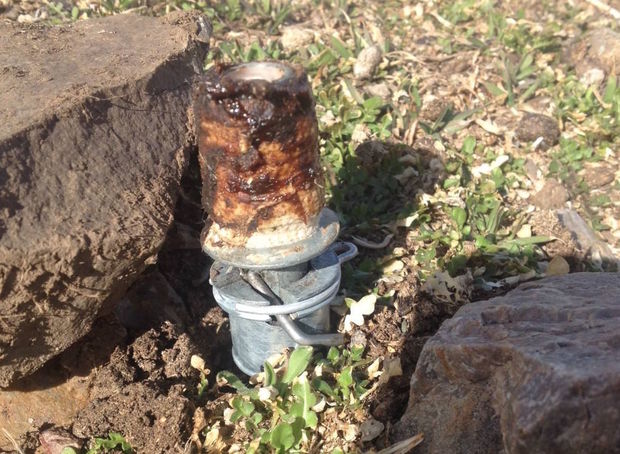
All of these incidents were caused by the M-44, a device used by Wildlife Services that fires a cyanide pellet into an animal’s mouth, causing a slow and agonizing death.
Wildlife Services’ greatest regret in all of these incidents is that they brought the agency more negative press – and given their history, they will probably use all of the incidents as “teaching moments” to instruct their agents to “shoot, shovel, and shut up.”
PLEASE CONTACT YOUR SENATORS AND U.S. REP AND URGE THEM TO ELIMINATE FUNDING FOR USDA WILDLIFE SERVICES.
A three-year-old Labrador retriever died and a 14-year boy was knocked to the ground when a cyanide device deployed by the federal government exploded in Pocatello, Idaho.
The Idaho State Journal reported the boy, who had been on a walk with his dog Thursday on a ridge near their home, watched his dog die. According to the Bannock County Sheriff’s Office, the boy was also “covered in an unknown substance” when the device known as an M-44 detonated. He was evaluated at a hospital and released.
“That little boy is lucky,” Sheriff Lorin Nielsen told the Pocatello newspaper. “His guardian angel was protecting him.”
The Idaho incident comes a few weeks after a gray wolf was accidentally killed by an M-44 on private land in Oregon’s Wallowa County. The controversial type of trap is used by the U.S. Department of Agriculture’s Wildlife Services crews around the country primarily to kill coyotes and other predators.
U.S. Rep. Peter DeFazio, D-Ore., introduced legislation as recently as 2012 to ban the trap.
DeFazio has said he would reintroduce a similar bill in Congress.
The wolf death was the first documented “incidental take” of its kind in Oregon involving the protected animal and the M-44, fish and wildlife officials said.
Federal Wildlife Services officials said there were 96 M-44 devices dispersed across Oregon as of last week and the agency was looking to remove devices that were near known wolf habitat. Oregon fish and wildlife officials have said the devices were not allowed in areas of known wolf activity.
Oregon has long paid Wildlife Services to kill invasive species and specific predators. But Gov. Kate Brown’s’ recommended budget doesn’t include $460,000 typically set aside to pay the federal agency to kill animals in Oregon.
Bannock County officials described the device as “extremely dangerous to animals and humans.”
The department circulated photos of the trap. “If a device such as this is ever located please do not touch or go near the device and contact your local law enforcement agency,” officials said.
Government officials have said the number of deaths of domestic animals and non-target animals each year is low, and officials say they are conducting an “internal review” of the wolf death.
Wildlife Services killed 121 coyotes in Oregon in 2016 with M-44 devices, along with three red foxes, according to the government’s figures. No gray wolf was killed in the U.S. last year with the cyanide capsules, according to the government.
A Eugene nonprofit says the government isn’t being truthful about the number of pets and non-target animals – such as wolves – killed each year.
“Yesterday’s Idaho poisoning of a dog and the near poisoning of a child is yet another example of what we’ve been saying for decades: M-44s are really nothing more than land mines waiting to go off, no matter if it’s a child, a dog, or a wolf,” Brooks Fahy, executive director of Predator Defense, said in a statement.
“It’s time to ban these notoriously dangerous devices on all lands across the United States.”
— Andrew Theen
atheen@oregonian.com
503-294-4026
@andrewtheen
ooOOoo
I will be writing about another terrible example of cruelty to animals tomorrow. One where you have the opportunity to add your name to a petition trying to have this cruel ‘tradition’ stopped.
Because as Anna Sewell (1820-1878), the English author who was the author of many books including Black Beauty is recorded as saying:
My doctrine is this, that if we see cruelty or wrong that we have the power to stop, and do nothing, we make ourselves sharers in the guilt.
James Ephraim Lovelock CHCBEFRS[2] (born 26 July 1919) is an independent scientist, environmentalist and futurist who lives in Devon, England. He is best known for proposing the Gaia hypothesis, which postulates that the Earth functions as a self-regulating system.[5]
Moving on.
These times in this fine country, The United States of America, are troubling as Rebecca Gordon set out so compellingly in yesterday’s post.
But what is so terrible about these times is the failure to put integrity at the heart of every pronouncement that comes from a Government. And it would be grossly unfair to pick on the present US Government as the only example of this failure.
Because just a few mouse clicks can inform millions of us as to the real issues. Such as the effect that Climate Change is having on our health, as this recent Grist article so aptly put it in the opening paragraphs:
Here are 4 ways climate change is messing with our brains — for the worse.
We might think of climate change as purely physical: wildfires blazing through forests, rising seas lapping at the doors of coastal homes.
But those brutal conditions also affect our mental health, changing how we think and act. Mental health professionals are paying attention to the link between climate change and emotional health — and health insurance companies are, too.
Or take the issue of the state of America’s water. Recently the subject of an important essay just presented by Naked Capitalism:
Yves here. Grist has been doing an admirable job of keeping on top of this important yet oddly still-under-the-radar story. In the US, the big driver of rising water costs is the need to invest in aging, neglected water works. But water is going to become an issue in many places for differing reasons. As we have been saying for years, the natural resource that is projected to come under pressure first is potable water. And please don’t push desalination as a magic bullet. That costs money (both the plants and new transportation infrastructure, uses energy, plus has the not-trivial problem of how to dispose of the salt residues.
By Ciara O’Rourke, a freelance writer and 2015-16 Ted Scripps Fellow in Environmental Journalism at the University of Colorado Boulder. Originally published by Fusion and reproduced at Grist as part of the Climate Desk collaboration
When Elizabeth Mack wondered about a future in which Americans wouldn’t be able to pay for water, a couple of colleagues waved her off. “Don’t be ridiculous,” they said. But the idea niggled at Mack, an assistant professor at the Department of Geography, Environment, and Spatial Sciences at Michigan State University. And in January, in an article published in the science journal PLOS ONE, she asked a new question: Is there a burgeoning water affordability crisis in the United States?
Mack, along with research assistant Sarah Wrase, determined that if water rates increase at projected amounts over the next five years, the percentage of households that can’t pay their water bills could triple from 11.9 percent to more than a third. Nearly 14 million households nationwide already struggle to afford water services. An additional 27.18 million — or 8.5 percent of the country’s population — could soon face the same challenges.
Yes, integrity in politics is more, so much more, than a nice idea from this silly old Brit now living in Oregon. Here’s a post I published some four years ago that says it as clearly as it needs to be said.
ooOOoo
Reflections on Integrity.
Going back to basics.
Many will know the origins of this blog; a chance comment by Jon Lavin back in England in early 2007 that dogs were integrous, (a score of 210 as defined by Dr David Hawkins).
“There is nothing to fear except the persistent refusal to find out the truth, the persistent refusal to analyse the causes of happenings.” Dorothy Thompson.
When I started Learning from Dogs I was initially rather vague but knew that the Blog should reflect the growing need for greater integrity and mindfulness in our planetary civilisation. Here are some early musings,
Show that integrity delivers better results … integrity doesn’t require force … networking power of a group … demonstrate the power of intention … cut through the power of propaganda and media distortion …
Promulgate the idea that integrity is the glue that holds a just society together … urgent need as society under huge pressures …. want a decent world for my grandchildren … for all our grandchildren …. feels like the 11th hour….
But as the initial, rather hesitant, start to the Blog settled into a reliable, daily posting, and as the minuscule number of readers steadily grew to the present level of many hundreds each day, the clarity of the purpose of Learning from Dogs also improved.
Because, while it may sound a tad grandiose and pompous, if society doesn’t eschew the games, half-truths and selfish attitudes of the last, say, 30 years or more, then civilisation, as we know it, could be under threat.
Or, possibly, it’s more accurate to say that our civilisation is under threat and the time left to change our ways, to embrace those qualities of integrity, truth and consciousness for the very planet we all live on, is running out.
“Time left to change our ways is running out.”
So what’s rattled my cage, so to speak, that prompted today’s reflection? I’ll tell you! (You knew I was going to anyway, didn’t you!)
I’m drafting these thoughts around noon Pacific Standard Time on Sunday, 17th. At the same time, tens of thousands of ordinary good folk (40,000 plus at the latest estimate) are gathering by the Washington Monument ready to march past the White House demanding that President Obama block the Keystone XL pipeline and move forward toward climate action.
Do I trust the US Government to take this action? On balance, no! That hurts me terribly to write that. I really want to trust and believe what the President of my new home country says.
State of the Union speech 2013. AP photo.
Here’s a snippet of what the President did say in his State of the Union speech on February 12th.
Now, it’s true that no single event makes a trend. But the fact is, the 12 hottest years on record have all come in the last 15. Heat waves, droughts, wildfires, floods, all are now more frequent and more intense.
We can choose to believe that Superstorm Sandy, and the most severe drought in decades, and the worst wildfires some states have ever seen were all just a freak coincidence. Or we can choose to believe in the overwhelming judgment of science and act before it’s too late.
A frank admission that the climate is changing in dramatic ways; the overwhelming judgment of science – fantastic!
The evidence that burning carbon-based fuels (coal, oil, gas) is the primary cause of today’s high CO2 levels is overwhelming. As a recent BBC radio programme reveals (being featured tomorrow) huge climate changes going back millions of years are a natural part of Earth’s history. However, as one of the scientists explains at the end of that radio programme, the present CO2 level, 395.55 ppm as of January, is now way above the safe, stable limit for the majority of life species on the planet.
But say you are reading this and are not yet convinced?
Let me borrow an old pilot’s saying from the world of aviation: If there’s any doubt, there’s no doubt!
That embracing, cautious attitude is part of the reason why commercial air transport is among the most safest forms of transport. If you had the slightest doubt about the safety of a flight, you wouldn’t board the aircraft.
If you had the slightest doubt about the future for civilisation on this planet likewise you would do something! Remember, that dry word civilisation means family, children, grandchildren, friends and loved ones. The last thing you would do is to carry on as before!
Which is where my lack of trust of leaders comes from!
Back to that State of the Union speech. Just 210 words after the spoken words “act before it’s too late” (I counted them!) Pres. Obama says, “That’s why my administration will keep cutting red tape and speeding up new oil and gas permits.”
Here’s the relevant section:
I will direct my cabinet to come up with executive actions we can take, now and in the future, to reduce pollution, prepare our communities for the consequences of climate change, and speed the transition to more sustainable sources of energy.
Now, four years ago, other countries dominated the clean-energy market and the jobs that came with it. And we’ve begun to change that. Last year, wind energy added nearly half of all new power capacity in America. So let’s generate even more. Solar energy gets cheaper by the year. Let’s drive down costs even further. As long as countries like China keep going all-in on clean energy, so must we.
Now, in the meantime, the natural gas boom has led to cleaner power and greater energy independence. We need to encourage that. That’s why my administration will keep cutting red tape and speeding up new oil and gas permits.
We don’t require any more oil to be used. We are already using a staggering amount of it. Let me refer you to an essay on Nature Bats Last called Math. The scary kind, not the fuzzy kind. Prof. McPherson wrote:
I performed a little rudimentary math last week. A little because even a little pushes my limit for math, these days. And rudimentary for the same reason. The outcome was staggering: We’re using oil at the rate of 5,500 cubic feet per second (cfs).
“5,500 cubic feet per second” Don’t know about you but I have some trouble in visualising that flow rate. Try this from later in the essay:
Here’s another shot of perspective: We burn a cubic mile of crude oil every year. The Empire State Building, the world’s ninth-tallest building, towers above New York at 1,250 feet. The world’s tallest building, Taipei 101, is 1,667 feet from ground to tip.
Put those buildings together, end to end, and you have one side of a cube. Do it again, and you have the second side. Once more, but this time straight up, and you have one big cube. Filling that cube with oil takes nearly 200 billion gallons … which is about one-sixth the size of the cube of oil we’re burning every year.
Burning a cubic mile every year! Yes, Mr. President, more oil permits is a wonderful way of taking action before it’s too late!
So let’s see what transpires? Let’s see if integrity is given the highest political focus. As in “adherence to moral and ethical principles; soundness of moral character; honesty.” Because if there’s ever been a time when all of us, from every spectrum of society need honesty about what we are doing to the planet, it’s now!
As the tag on the home page of this blog says, “Dogs are integrous animals. We have much to learn from them.”
ooOOoo
Going to close with two more quotations from Mr. Lovelock.
The first:
You never know with politicians what they are really saying. And I don’t say that in a negative way-they have an appalling job.
And the second one to close today’s post:
If you start any large theory, such as quantum mechanics, plate tectonics, evolution, it takes about 40 years for mainstream science to come around. Gaia has been going for only 30 years or so.
A cap cloud at sunrise over Mount Rainier, spotted from Seattle, Washington, US, by Elaine Thompson (Member 41974).
“Though outwardly a gloomy shroud,
The inner half of every cloud
Is bright and shining:
I therefore turn my clouds about,
And always wear them inside out
To show the lining.”
[From ‘The Wisdom of Folly’ by Ellen Thorneycroft Fowler in Verses, Wise or Otherwise (1895)]
Then to the amazing!
It’s hard to comprehend the sheer size of objects in space, but take 2 minutes and give it a try!
This video is from the European Southern Observatory (ESO) comparing the sizes of Earth, our sun and stars.
Sorry, folks but still a few days away from being back to normal service.
We awoke yesterday morning with Casey sufficiently unwell that Jim Goodbrod recommended taking him to Southern Oregon Veterinary Services (SOVC) down in Medford. There SOVC said that it does look as though Casey has a failure in one of the spinal discs in his neck. First, we have been advised to up the pain medicine before embarking on an MRI and then, possibly, surgery.
In the middle of all this the tube from my catheter into my drainage bag became blocked, evidenced by pee running down my leg!!
SOVC offered me their very comfortable bathroom where I then unblocked the tube using a syringe and sterile water; luckily all brought with me.
Then it was up to Grants Pass to find a solution to my ‘leaking’ catheter only to find that Southern Oregon Medical Equipment, who we thought were in Grants Pass, had moved a year ago from Grants Pass to …… guess?? ……. yes: Medford!
Plus it was raining for most of the day!
Yes, it was one of those days!!
One of those days where one needs a head for the heights that life can throw at one.
No better demonstrated by the following video sent to me by my loving son: Alex!
So will just close by saying that until my catheter is taken out next Tuesday (fingers crossed) I may be ‘distracted’ from Learning from Dogs at times!
The most incredibly relationship we humans have ever had with an animal.
Tomorrow, I am going to repeat a post that first appeared on Learning from Dogs seven years ago. A beautiful documentary explaining in clear, scientific ways how important has been the relationship between the dog and humans.
But for today, as a ‘warm up’ to tomorrow’s post, I wanted to share an essay that appeared on The Conversation blogsite a little over a week ago and is republished within the terms of The Conversation site.
ooOOoo
How man’s best friend is helping cancer treatment
By Nicole Ehrhart Professor of Veterinary Medicine, Colorado State University
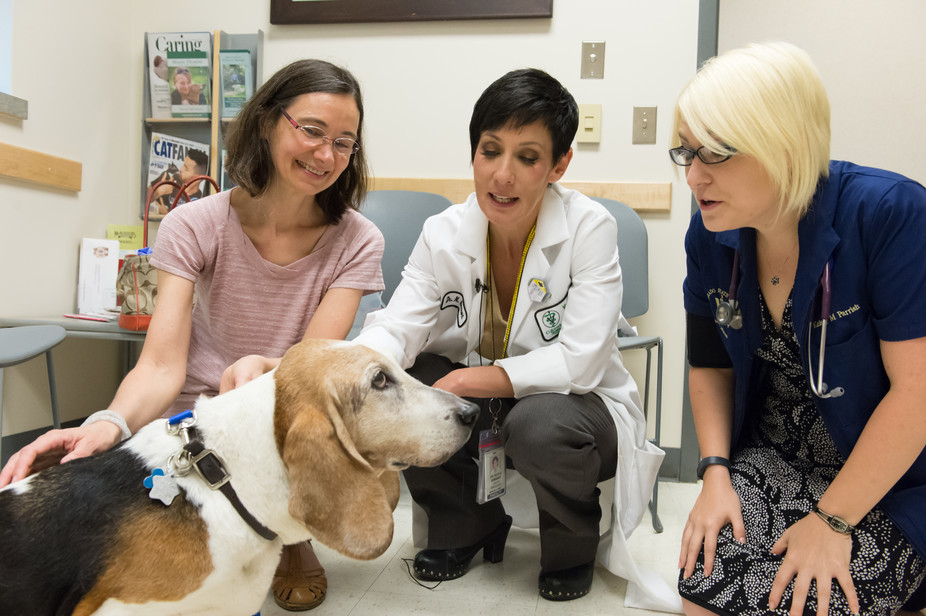
February 2, 2017The author, center, and Dr. Anna Conti, left, and student Kelsey Parrish with Conti’s Basset hound, Picasso, who had surgery for cancer. Via Colorado State University. William Cotton/CSU Photography, Author provided
“A person can learn a lot from a dog, even a loopy one like ours. Marley taught me about living each day with unbridled exuberance and joy, about seizing the moment and following your heart… Mostly, he taught me about friendship and selflessness and, above all else, unwavering loyalty.”
Isn’t it true? We learn so much from our dogs. But beyond what man’s best friend can teach us about enjoying life, they share something else with us. Cancer diagnoses in dogs are on the rise, as are cancer diagnoses in people. In fact, canine cancer is the leading cause of death in pets over the age of 10 years.
This confluence, it turns out, can be beneficial to cancer research. A field of study known as “comparative oncology” has recently emerged as a promising means to help cure cancer. Comparative oncology researchers study the similarities between naturally occurring cancers in pets and cancers in people in order to provide clues to treat cancer more effectively.
In fact, phase 1 and 2 clinical trials in comparative oncology are underway at 22 sites across the country, including Colorado State University, where I conduct research and am a surgical oncologist for animals.
Research in this field, involving veterinarians, physicians, cancer specialists and basic scientists, is leading to improved human health and more rapid access to effective cancer treatment than has been previously possible through traditional cancer research approaches.
As a species, dogs have strong physiologic and genetic similarities to people, much more so than mice, who do not typically live long enough for us to know whether they naturally get cancer. We do know that some rodent species, such as pet rats, can get cancer, but predators typically end a field mouse’s life while it is still young. The laboratory mice typically used by scientists are injected with cancer rather than it occurring naturally in their bodies.
Just as scientists officially mapped the human genome, or the complete set of genetic instructions, in 2003, scientists decoded the canine genome. They discovered that dogs have greater than 80 percent genetic similarity to humans, versus only 67 percent for mice.
In addition, cancers such as bone cancer, lymphoma and bladder cancer that spontaneously arise in pet dogs are microscopically and molecularly identical to cancers in people. Many of the genetic mutations that drive cells to become cancerous in people are the same mutations that cause cancer in dogs. In fact, when viewed under a microscope, it is impossible to distinguish between a tumor from a human and a dog.
In addition, dogs provide a large and varied population to study, important in the study of medicine. Individual dogs who develop cancer are as different from one another as are humans. Whereas laboratory mice are essentially identical twins to each other and live in a highly regulated environment, the variation among different dog breeds, home environments, diet and overall lifestyle translate into a population diversity very similar to that in humans.
Today, most pet dogs receive high-quality health care into old age and dog owners are highly motivated to seek out improved options for the management of cancer in their companions, and are also motivated to minimize side effects.
Similarities in response to treatment, too
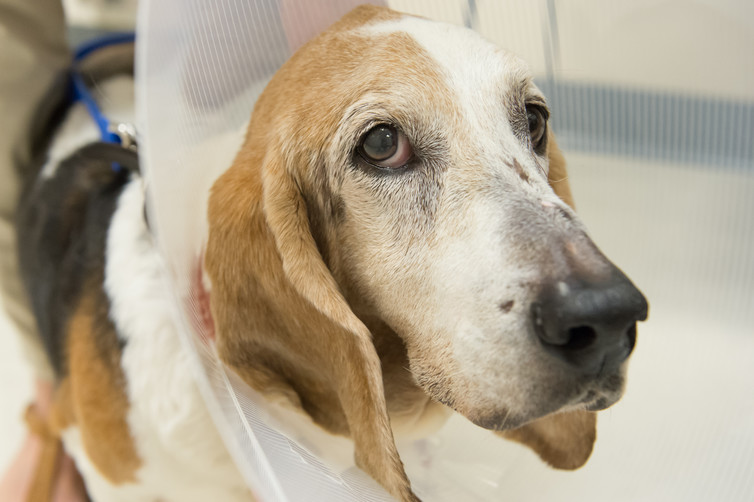
Picasso at the James L. Voss Veterinary Teaching Hospital, Colorado State University. Author provided., Author provided.
This genetic diversity and sharing of similar DNA, physiology, microscopic structure and molecular features between dogs and humans has presented cancer researchers with a key opportunity. Dogs not only develop similar types of cancers as humans, but their cancer responds to treatments in similar ways.
This means that new cancer treatments first shown to be effective in canine cancers can frequently be predicted to have a similar benefit in human cancer patients. As a result, researchers now recognize that new drug trials in dogs with cancer will result in therapeutic discoveries that are highly “translatable”; that is, more likely to predict “real-life” medical responses in human cancer patients.
By studying how cancer responds in dogs, scientists are gaining a better understanding of how new cancer drugs not only treat the cancer but also influence the patient’s overall quality of life during treatment. This benefits dog owners, by providing access to promising new cancer treatments for their pets with cancer, and benefits human cancer patients by providing a rapid way to collect crucial data needed for FDA approval.
Dogs with cancer are helping kids
For example, a bone cancer known as osteosarcoma is so similar between dogs and people that
The author performing surgery on a dog. Author provided. Colorado State University., Author provided.
intensive research in canine osteosarcoma has led to several breakthroughs in treating osteosarcoma in children. Limb-saving surgical techniques for safe and effective reconstruction following bone tumor surgery in dogs are now the standard of care in children following bone tumor surgery.
More recently, a form of immunotherapy was shown to drastically improve survival in dogs with bone cancer by delaying or altogether preventing spread of the cancer to the lungs. As a result of the success in dogs, the FDA granted fast-track status to the same treatment for use in humans last April.
Fast-tracking was developed by the FDA to support accelerated approval for promising treatments, especially for serious and life-threatening conditions. A clinical trial in children with osteosarcoma is scheduled to begin this year at multiple pediatric cancer centers throughout the United States.
These types of discoveries demonstrate that our furry companions have a crucial role in teaching us new ways to help all victims in the war against cancer – with two legs or four.
ooOOoo
As I said in my introduction, more on this theme tomorrow.
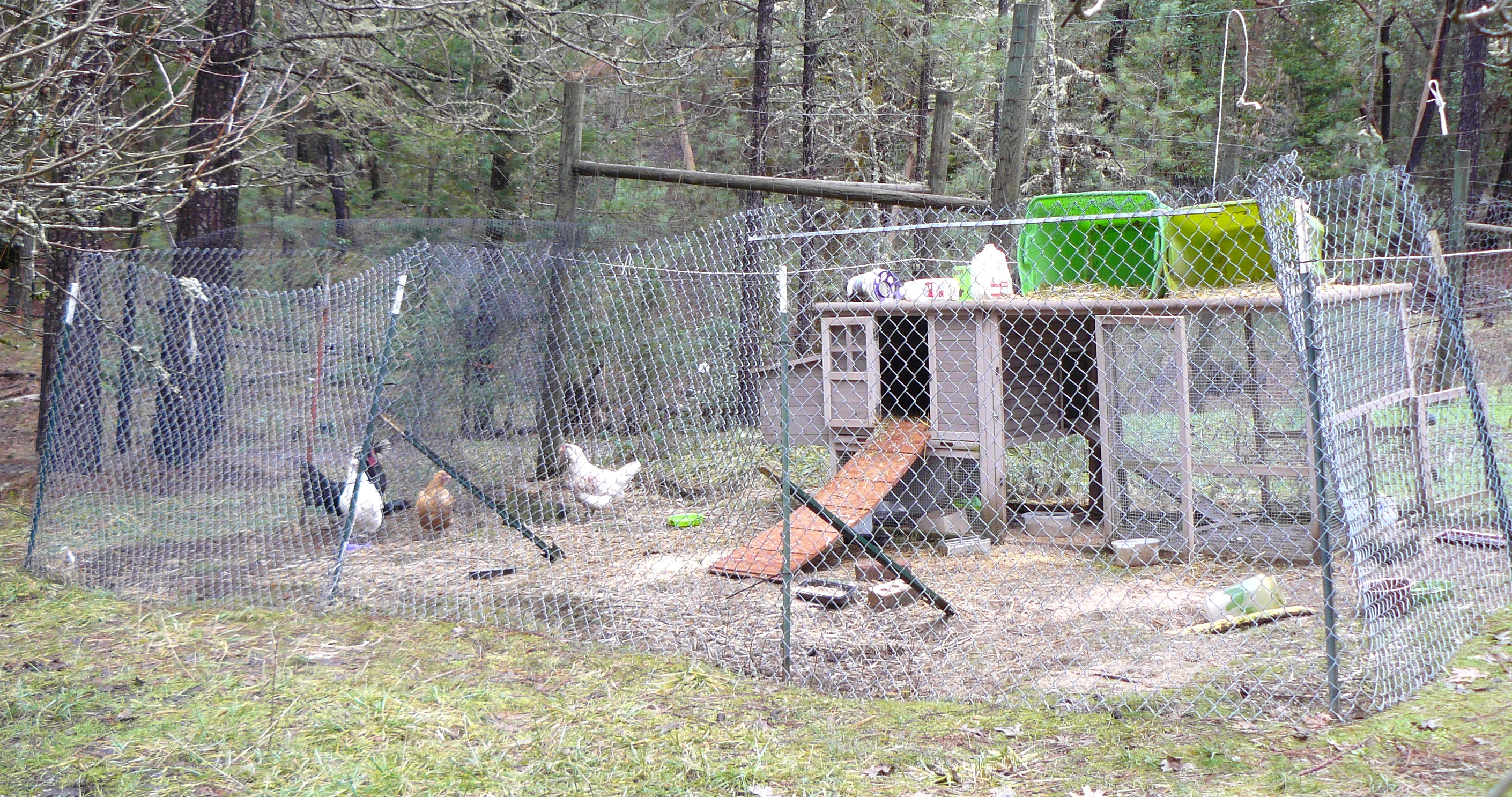
We have a rather run-down ‘home’ for our chickens close to the house. It was run-down before the snow fell and almost brought down the surrounding wire fence.
But, hopefully, this coming Thursday sees a new walk-in run being constructed for our birds so they are better protected.
It’s time we started paying attention to chickens, one of the most misunderstood and ignored species on Earth.
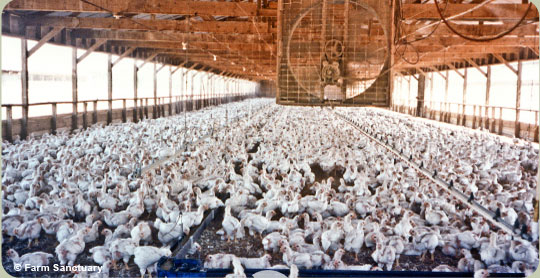
There was a time when chickens were viewed as exotic, fascinating birds. Descendants of exotic Asian jungle fowl, they were revered for their ferocity and intelligence, and domesticated around 8,000 years ago, more for cockfighting than eating. But then, we humans began eating them in ever-larger quantities, until we reached the point where we are now, with 20 billion (mostly white) chickens living in dirty, crowded barns, awaiting slaughter.
Chickens have been a part of human lives for millennia, and yet they are one of the most misunderstood, if not ignored, species on Earth. Lori Marino, an American neuroscientist and animal intelligence researcher, wants to change this. She is intrigued by the fact that chickens are so rarely recognized for their cognitive abilities and frustrated that studies about birds almost always focus on other, less-domesticated species, like crows and parrots.
“Arguably even the scientific community has been influenced by public perceptions of chickens as cognitively simple… This asymmetry in the literature is likely a reflection of, as well as a contributor to, the disconnect scientists and the public have between chickens as commodities and who they actually are as individuals.”
Chickens deserve more attention, and here are some quirky, interesting facts to get you thinking about chickens less as food and more as fascinating co-inhabitants of our world. These come via Marino’s recent paper, “Thinking Chickens,” published online in Animal Cognition in January 2017.
1. Chickens are a sub-species of the red jungle fowl that hails from southeast Asia.
The red jungle fowl (galls gallus) inhabit the edges of fields, scrubland, and groves. Domestication was well established 8,000 years ago, but some records suggest it could have started as much as 58,000 years ago.
2. Domestic chickens are similar to their wild counterparts.
Despite the intense breeding and genetic manipulation of recent years, chickens have not been cognitively or behaviorally affected by domestication. This stands in contrast to dogs and wolves, for example, which have diverged significantly due to domestication. Nor have chickens become less aggressive toward predators through domestication, which is a common outcome; in fact, some chickens are more aggressive even than red jungle fowl.
3. A chicken’s beak is highly sensitive to touch.
The beak, with numerous nerve endings, is used to explore, detect, drink, preen, and defend. This also means that when a bird is de-beaked, as often happens in industrial farming, it experiences great pain, sometimes for months, which changes its behavior. Marino writes, “At the end of the beak is a specialized cluster of highly sensitive mechanoreceptors, called the bill tip organ, which allows chickens to make fine tactile discriminations.”
4. Chickens have finely tuned senses.
They can see long distance and close-up at the same time in different parts of their vision. They can see a broader range of colors than humans. They can hear at low and high frequencies at a variety of pressure levels. They possess well-developed senses of taste and smell. They can orient to magnetic fields, like many other birds.
5. Chickens are surprisingly good at math.
Three-day-old chicks are able to perform basic arithmetic and discriminate quantities, always opting to explore a set of balls with the greater number, even when an object was visibly transferred from one set to another. Five-day-old chicks have been found to track up to five objects.
“When they were presented with two sets of objects of different quantities disappearing behind two screens, they were able to successfully track which screen hid the larger number by apparently performing simple addition and subtraction.”
6. Chickens can exercise self-control.
In an experimental setting, chickens have been given the choice between 2-second delay with 6 seconds of access to food, versus a 6-second delay with 22-seconds of access to food. The hens waited for the longer reward, “demonstrating rational discrimination between different future outcomes while employing self-control to optimize those outcomes.” Self-control usually doesn’t appear in humans until four years of age.
These are just a few of the remarkable discoveries described in Marino’s study, a highly readable, entertaining paper. It’s an important reminder that chickens, arguably the most ubiquitous animals in our world, deserve far more respect than they currently receive. Hopefully this will lead to more people questioning the horrific conditions in which most of them are kept.
It’s easy to fall into the trap of looking for a humourous way to close today’s post. But a more responsible approach would be to repeat the words from the start of the article to serve as a reminder of trying, wherever possible, to think about the food we eat, especially when animals and birds have to be slaughtered to provide us with that food.
…. we reached the point where we are now, with 20 billion (mostly white) chickens living in dirty, crowded barns, awaiting slaughter.
But please don’t leave this page until you have watched the following video.
After 22 years of raising chickens for Perdue, one brave factory farmer Craig Watts was at his breaking point and did something no one has done before. He invited us, as farm animal welfare advocates, to his farm to film and tell his story. Ask your supermarket for Better Chicken at http://better-chicken.org.
A vet has left behind her home in England to care for Sri Lanka’s street dogs.
Janey Lowes from Barnard Castle, County Durham, has spent the past two years caring for the neglected animals.
There are about three million street dogs on the island – about 60% of puppies born on the street do not survive to adulthood.
The 28-year-old set up charity WECare Worldwide to raise money to buy the equipment needed to treat the animals and to set up her own clinic in Talalla.
I am pleased that the video clip that was included in the BBC News story has found its way to YouTube.
Inevitably the charity WECare Worldwide has its own website: the home page is here. Then you can read on the charity’s ‘About’ page: (Note: CNVR is the acronym standing for catch-neuter-vaccinate-release.)
CNVR
CNVR is carried out as it is the most humane way to reduce roaming dog populations and reduce the number of unwanted puppies that are dumped on the streets at a very young age. It also allows the females that would inevitably spend their whole lives pregnant to only have to worry about number one when thinking about limited food resources and shelter options, which transforms their lives.
Vaccinating the dog population against Rabies is the most effective way to eliminate the disease in the human population. As an island nation, eradication of Rabies in the near future is a very real possibility and will change the future of both animals and humans here, allowing improved relationships between the two.
CNVR is the backbone of everything we are trying to achieve in Sri Lanka.
But that’s only one part of what they do. Again, as the website sets out:
We focus on 3 main areas here in Sri Lanka.
CNVR (catch-neuter-vaccinate-release)
Treatment of sick and injured animals
Education and training
I shall be making contact with the charity very soon .
Not only to pass on our respect and admiration for what she has accomplished but to see if there are other ways we can help them in what they are doing. I use the word ‘we’ to cover not only Jean and me but also all of you who are close to this blog and who, so frequently, show how much love you have for dogs!
WECare Worldwide will help by providing free veterinary treatment, alongside love, compassion and respectful care of the Ceylon dogs, who make up such a huge part of Sri Lankan heritage and culture, both in the past and the current day.
For both humans and, in consequence, for those dogs close to us.
Effectively, the whole of the New Year has been a tad challenging here in Merlin, OR. For even before the snows arrived early on in January, leading to power outages and frozen pipes, the local weather service was warning of unusually severe storms. Indeed, more than once we have heard locals speaking of this looking like a one-hundred-year-storm.
So it was inevitable that there were some anxious periods. Plus the challenging weather may not be not fully behind us. For this is the current (Sunday 18:00 PST) weather warning:
HYDROLOGIC OUTLOOK
NATIONAL WEATHER SERVICE MEDFORD, OR
134 PM PST SUN JAN 15 2017
…Flood Potential Outlook for main stem river flooding, snow melt flooding, and quick rises on rivers and streams in the following counties…in California…Siskiyou…and in Oregon…Coos… Curry…Douglas…Jackson…Josephine…
A strong atmospheric river event is expected to arrive in Southern Oregon and Northern California by Wednesday. While models have trended towards a faster progression of the front, and therefore lesser rainfall amounts, this event may still produce high snow levels, periods of heavy rain, and significant melting of lower level snow-pack Wednesday and into Thursday. With the extensive snow-pack, saturated soils and high river levels, there is a potential for flooding and rapid rises along main stem rivers and small creeks and streams. Urban areas may also experience high water from blocked culverts and runoff.
Continue to monitor forecasts for any updates as this potentially hazardous situation develops.
Anyone who has a dog (or several) in their lives will know how our anxiety is so quickly picked up by our dogs. Ergo, looking after our dogs, as in keeping them relaxed, is really important.
Now read this article that was published over on the Care2 site. I am republishing here for all you good people.
Does your dog suffer from anxiety? A lot of rescued dogs do, and often we don’t know the exact cause for their nervousness. Abuse, neglect or even a single bad experience before you adopted your dog could cause mild to debilitating anxiety. These natural remedies for dog anxiety have worked wonders for my very anxious dog.
We adopted my dog, Jenna, two years ago. Jenna was three years old when we rescued her, and her story still breaks my heart. Lifeline Animal Project rescued Jenna from an animal hoarder when she was six months old. For those first six months, she lived in a crate 24/7. They didn’t even take her out to pee and poop, they just changed the newspaper or laid new paper down. Jenna lived in Lifeline’s no-kill shelter for two and a half years before she was socialized enough to be adoptable.
Even after those years of care, Jenna was still incredibly fearful when we got her home. For the first 36 hours that we had her, she didn’t pee or poop at all. She basically sat on her bed, shaking. By the end of second day we could get her to eat and use the bathroom, but it took weeks for her to finally trust us.
We’ve had Jenna for two years now, and she is a completely different dog. She is still wary of strangers and has her nervous moments, but she loves to run and play. She’s even warmed up to family and friends who visit us often. Jenna is always going to have a high base level of anxiety, but thanks to the natural remedies I’m going to get into below, she also can relax and behave like a normal dog the vast majority of the time.
Look at this mellow, happy gal!
Natural Remedies for Dog Anxiety
Every dog’s situation is different, so what worked for Jenna may not work for your dog. If one of these natural remedies isn’t doing it for your nervous dog, try another one! This is a laundry list of everything that’s worked and one thing that didn’t work for us but does for too many other dog owners to leave out of the list. Pick and choose natural remedies as you find out what helps with your dog’s anxiety.
1. Obedience Training
I can’t recommend a good trainer enough. Training gives your anxious dog confidence, and a good trainer can help you with commands that are especially important. I’ve been taking Jenna to training on and off the entire time that we’ve had her, and it has been a miracle for us. It took a few months for us to start seeing results, so don’t expect a quick fix from this. The long-term benefits for you and your dog are well worth it.
2. Exercise
Getting exercise with your dog is a bonding experience, and it also helps her work off some of that nervous energy. Jenna and I run 9-15 miles a week together, when I can swing it, and she loves to run more than anything else. We had to stop running towards the end of my pregnancy, and on that first run back, she had a huge puppy grin on the whole time we were out.
Running is just one way to get your dog exercise. You can go for walks, play catch, or play training games like “touch.” Whatever you choose to do, talk to your vet first. Some breeds of dog are great runners, but others (like pugs) can overheat easily and need lower-key exercise.
3. Essential Oils
One fear that Jenna is definitely not over is thunderstorms. She shuts down during storms, which can be rough during spring and summer when it storms frequently here in Atlanta. Essential oils combined with Rescue Remedy (more on that below) have helped her out a lot. Choose a calming scent like lavender, and just put a couple of drops onto the dog’s collar. Putting it on the collar is key, because then your dog can smell the soothing oil but can’t eat it.
4. Rescue Remedy
Rescue Remedy is a blend of flower extracts, and they make blends for pets and for humans. We use the liquid for pets and feed it to her in a lump of peanut butter. (**** See my Footnote below) It calms her down considerably. Though, to be honest, I do wonder if getting her favorite treat (peanut butter) has something to do with it. You can find Rescue Remedy at natural food stores or online.
5. Focus Toys
Redirecting your dog’s attention when she’s feeling anxious can be a big help. You can try using commands that you learned in training class, or you can give your dog a focus toy. There are all varieties of these. You can go with a rawhide bone or one of those puzzle toys that dispenses treats when the dog gets it right. Jenna’s favorite toy is a Nylabone. She’s a 50 pound lab mix, so she tears through a rawhide in minutes. She’s had the same Nylabone for months, and it’s still pretty much intact.
6. Watching Your Tone
When your dog is scared, how do you react? Do you say, “It’s OK, sweetie!” in a higher-pitched voice than usual? This is a normal reaction, but it’s actually not the best one when your dog is scared. If your dog sees you as the alpha in the pack, she’s going to take her cues from you, and that kind of attention rewards your dog’s fear, reinforcing it.
Next time your dog is scared, try to react as if everything is normal. You can put a hand on her back, so she knows that you’re there, but try not to make a big deal out of the situation. Don’t say “It’s OK.” Instead, show her that everything is OK with your body language.
7. Crate Training
We were lucky that Jenna was crate trained when we adopted her. For an anxious dog, the crate can be a “safe place” they can retreat to. When there’s a thunderstorm or our neighbors decide to shoot off fireworks, Jenna often curls up in her crate. Dogs like a small, cozy space. If you’re not into crate training, I’d suggest setting up a dog bed in a quiet corner or even under an end table, so your dog has a cozy place that’s hers where she can go when she is scared.
8. The Thunder Shirt
This is the one natural remedy on this list that has not worked for us at all. Jenna is more afraid of the Thunder Shirt than she is of thunder! We are definitely outliers here, though. Every dog owner I know that has an anxious dog recommends the Thunder Shirt to me when I mention Jenna’s fear of storms. This is a great example of how different natural remedies work for some dogs and not others. The Thunder Shirt is definitely worth a shot! If it doesn’t work for you, you can pass it on to a fellow dog owner or donate it to your local shelter.
ooOOoo
Footnote!
Regarding feeding dogs peanut butter, do not, repeat not, do this until you are sure that the brand of peanut butter you are considering is free of the ingredient xylitol.
I wrote of the dangers of xylitol in a post last December 8th. It is being republished in an hour’s time just to make sure the widest number of readers of this place are aware of the danger.
Anyway, this seemed like a very useful article. Plus there’s another benefit of having one’s loved dogs in a relaxed state. It helps the people around those dogs remain relaxed as well!
Brandy and Jean enjoying mutual relaxation!
Chill out everyone! Both the two-legged and the four-legged ones!
 Gretchen is a Swiss Shepherd who saves her owner’s life on a daily basis by warning her whenever her blood sugar is at a dangerous level. Incredibly, Gretchen does this by smell.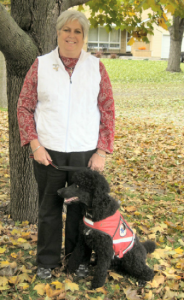











 Learning from Dogs