Category: Strategy

Emergency event.

It may not be so rare as one thinks.

Last Sunday the BBC (Radio 4) broadcast a programme entitled Are You Ready. The programme was presented by Lucy Easthope: “Lucy Easthope is on a mission to find out how we can become better prepared as individuals and as a society.”

It was thirty-minutes long and contained very useful information. I wanted to share further information found online.

Firstly on YouTube.


Be prepared for a blackout with this emergency kit! Don’t get caught in the dark – watch this video to see what essentials you need to have on hand. In this video I want to help you be prepared for when the power goes OUT. Your emergency kit can be a lifeline when the lights go out. With these preps, you can help keep you and your loved one’s safe. Don’t wait until it’s too late – start preparing now for peace of mind in 2024 and beyond. Watch till the end and I’ll share with you 3 ADDITIONAL items that are non-nucket items but can be a HUGE blessing in a power outage.

LIST OF GEAR IN THIS VIDEO: 5 gallon buckets: https://amzn.to/3L6crXS (If you want one, here’s a label maker I use: https://amzn.to/3VYnqca)

BUCKET #1:

Freeze-dried food: https://amzn.to/4bnFPUu

Canned food – get this at your local grocery store

Pepperoni sticks: https://amzn.to/3VWAAqi

Clif Bars: https://amzn.to/45G25aG

Powerade: https://amzn.to/45YtPI5

Gatorade: https://amzn.to/45YtPI5

Mentos: https://amzn.to/3xziLEl

Starburst: https://amzn.to/3zvkuLi

BUCKET #2:

Toilet paper: https://amzn.to/3XIFOXU

Exotac 16 Hour Candle: https://amzn.to/4bgaxyM

Bag of rice: https://amzn.to/4ckwwFW

Bottled Water: https://amzn.to/3XHaSY6

BUCKET #3:

3M Duct Tape: https://amzn.to/4bBN1MZ

Anker battery: https://amzn.to/3L0Qf1r

Batteries: https://amzn.to/3xLvZxI

Bleach: https://amzn.to/4eCJ659

Soap: https://amzn.to/3znY3rK

MyMedic First Aid Kit: https://tinyurl.com/3nfbz9bs

Plugs, instructions for electronics, and cash

Lantern – a batter one from UCO: https://amzn.to/4ciik06

Hybridlight Lantern: https://amzn.to/3L2x5Z0

Candles: https://amzn.to/4bkuynR

Energizer headlamps: https://amzn.to/4ciUHor

Huge flashlight: https://amzn.to/4eFB3o4

Emergency radio: https://amzn.to/3XFCrBd

Meat thermometer: https://amzn.to/3xwj7M1

BONUS RECOMMENDATIONS: Blankets and a fan

+ Power Bank from Anker: https://amzn.to/3zlFcgV

Solar panels for power bank: https://amzn.to/3znYTVq

Secondly, from The Guardian newspaper.

As a former Red Cross emergency volunteer in London, I have experienced that events such as blackouts, gas leaks and floods aren’t as uncommon as we would like to think. I have a camping bag as a “go bag” containing:
 * toilet roll
 * soap
 * toothbrush and toothpaste
 * a change of clothes, walking shoes and a raincoat
 * a blanket
 * a first-aid kit with added blister plasters and water filtration tablets
 * 2 large bottles of water
 * four days’ worth of non-perishable snacks (cereal bars, crackers, flapjack type things)
 * a battery and solar-powered radio
 * a battery and solar-powered torch
 * a map and compass
 * a small address book containing my loved ones’ home addresses.

There you are.

I thought we had a ‘go bag’ prepared but it must have been me thinking of it and nothing more.

Time to turn ideas into actions! Plus we have two dogs plus two caged birds that would not be left behind.

P.S. I have found the two large boxes we had purchased a while ago plus a list of the items to be taken in the event of an emergency. However these were in the garage and had been forgotten. So now they are in the home and will be prepared for use in that emergency.

Making your vet clinic profitable

The second guest post from Penny Martin.

ooOOoo

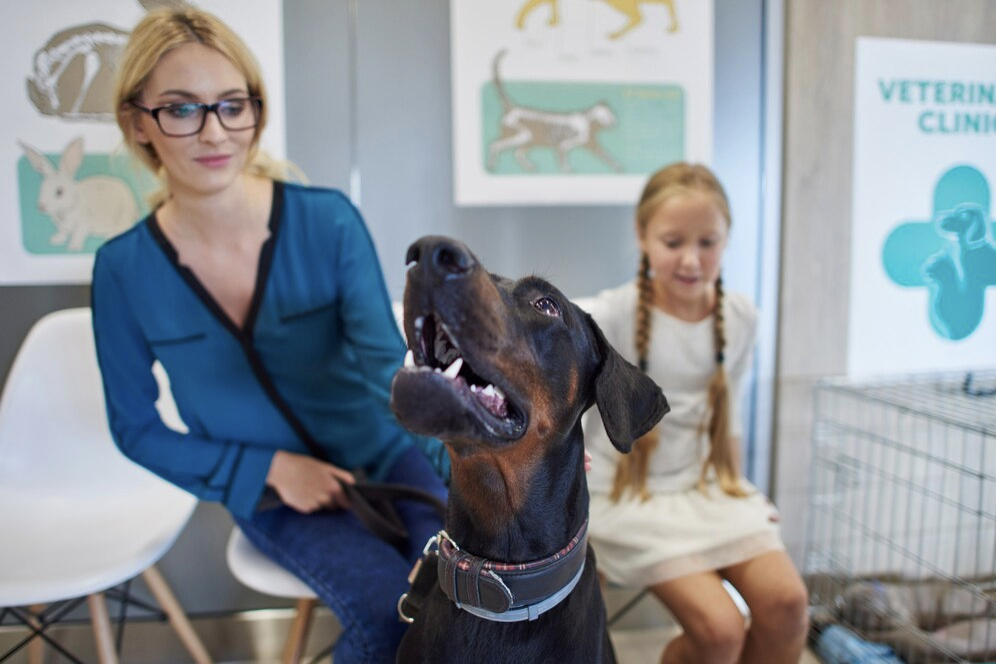
Image: Freepik

Vision to Reality: Building a Profitable Vet Clinic

Launching a veterinary clinic is a significant endeavor that requires meticulous planning and strategic decision-making. This venture combines a passion for animal care with the intricacies of managing a successful business. Aspiring clinic owners must navigate several critical steps to lay a strong foundation and ensure operational excellence. Starting your own clinic promises not only to fulfill a dream of helping animals but also to establish a thriving enterprise in the community.

Build a Strong Foundation with an Effective Marketing Strategy

A robust marketing strategy is essential to attract potential clients in the digital era. Establishing a professional online presence through a user-friendly website that details your services, team, and location builds trust among pet owners. Engage actively on social media with regular updates and client testimonials to showcase your expertise and commitment to animal care. Forge partnerships with local pet-related businesses to increase visibility and drive traffic to your clinic, enhancing both your and your partners’ customer bases.

Craft a Clear and Detailed Business Plan

A well-constructed business plan acts as your clinic’s roadmap, detailing your mission, services offered, and the specific target market. Identify your niche early—whether it’s specializing in certain animals or treatments—to attract the appropriate clientele. Include comprehensive financial projections and a marketing budget in your plan to ensure financial preparedness and support your clinic’s promotional activities.

Enhance Your Business Knowledge by Pursuing an MBA

Running a veterinary clinic demands a blend of clinical and business expertise. Pursuing a master’s of business administration online can boost your proficiency in key business areas such as strategy, management, and finance. An MBA not only deepens your understanding of business operations but also enhances leadership skills and self-assessment capabilities. These competencies are essential for balancing the medical and business demands of your clinic, ensuring its long-term success.

Safeguard Your Business with Proper Insurance

Operating a veterinary clinic comes with inherent risks, making comprehensive insurance coverage essential. Essential policies include malpractice insurance to handle legal issues and general liability insurance for accidents on your premises. Property insurance is crucial to protect your clinic’s infrastructure and equipment against unexpected events. Consulting with an insurance expert can ensure that you have thorough coverage to protect against potential financial setbacks.

Invest in High-Quality Veterinary Equipment

Providing top-tier care necessitates investing in high-quality veterinary equipment. Essential tools like X-ray machines, surgical instruments, and lab equipment should be of the highest standard to ensure accurate diagnoses and treatments. Modern technologies, such as digital imaging systems, not only enhance patient care but also improve operational efficiency. While the initial cost may be higher, investing in quality equipment pays off in the long run by boosting efficiency and minimizing errors.

Secure the Necessary Funding for Your Clinic

Securing sufficient funding is critical when starting a veterinary clinic. Estimate your startup costs accurately to understand your financial needs, including equipment, premises, staffing, and marketing. Explore diverse financing options, such as bank loans, private investors, and specialty medical practice loans that might offer favorable terms. Adequate initial funding prevents cash flow problems and supports your clinic’s growth trajectory.

Choose the Right Location for Your Clinic

The location of your clinic is pivotal to its success, necessitating a spot with a high demand for veterinary services. Conduct thorough market research to choose a community rich in pet owners who need your services. Select a location that is accessible, visible, and has ample parking to ensure convenience for your clients. Proximity to complementary services like pet groomers or dog trainers can further enhance client traffic and provide expansion opportunities.

Opening a veterinary clinic is both challenging and rewarding, demanding a careful blend of dedication and strategic foresight. Success in this field not only enhances the well-being of pets but also contributes positively to the local community. It requires ongoing commitment to adapt and grow in a dynamic environment. Ultimately, the fulfillment of running a successful veterinary clinic comes from both the impact on animal health and the achievement of entrepreneurial goals.

Discover the timeless wisdom that dogs offer at Learning from Dogs, where integrity and living in the present are celebrated. Dive into our content and embrace the lessons from our four-legged friends.

ooOOoo

This is all very sound advice. Thank you, Penny.

Starting a veterinary clinic

Like any new start-up of a business venture, this requires knowledge, skills and quite a bit of luck!

I am delighted to offer this guest post by Penny.

ooOOoo

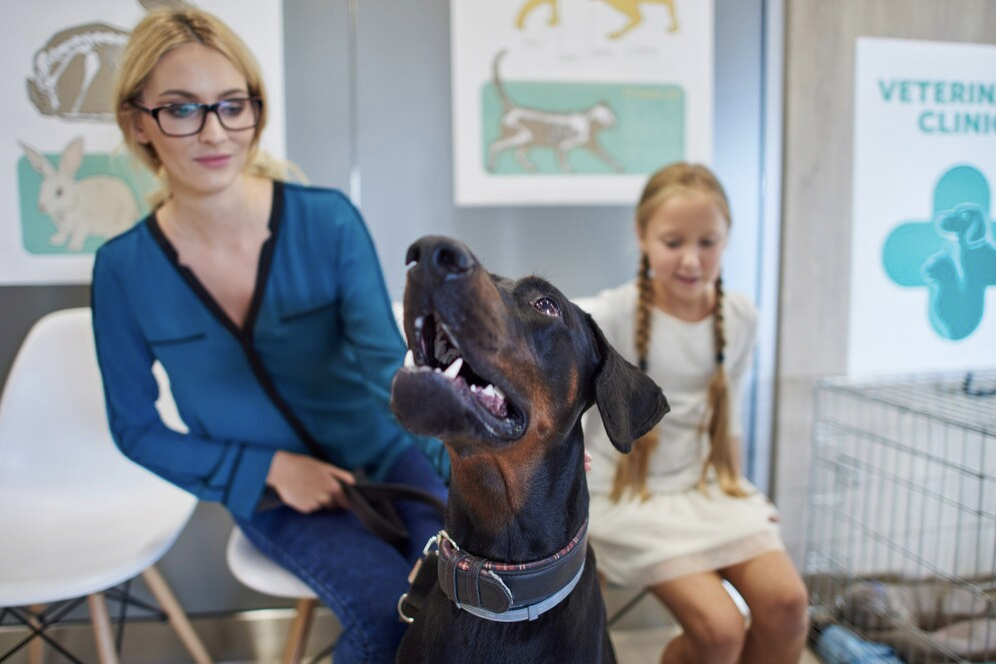
Image: Freepik

Vision to Reality: Building a Profitable Vet Clinic

Launching a veterinary clinic is a significant endeavor that requires meticulous planning and strategic decision-making. This venture combines a passion for animal care with the intricacies of managing a successful business. Aspiring clinic owners must navigate several critical steps to lay a strong foundation and ensure operational excellence. Starting your own clinic promises not only to fulfill a dream of helping animals but also to establish a thriving enterprise in the community.

Build a Strong Foundation with an Effective Marketing Strategy

A robust marketing strategy is essential to attract potential clients in the digital era. Establishing a professional online presence through a user-friendly website that details your services, team, and location builds trust among pet owners. Engage actively on social media with regular updates and client testimonials to showcase your expertise and commitment to animal care. Forge partnerships with local pet-related businesses to increase visibility and drive traffic to your clinic, enhancing both your and your partners’ customer bases.

Craft a Clear and Detailed Business Plan

A well-constructed business plan acts as your clinic’s roadmap, detailing your mission, services offered, and the specific target market. Identify your niche early—whether it’s specializing in certain animals or treatments—to attract the appropriate clientele. Include comprehensive financial projections and a marketing budget in your plan to ensure financial preparedness and support your clinic’s promotional activities.

Enhance Your Business Knowledge by Pursuing an MBA

Running a veterinary clinic demands a blend of clinical and business expertise. Pursuing a master’s of business administration online can boost your proficiency in key business areas such as strategy, management, and finance. An MBA not only deepens your understanding of business operations but also enhances leadership skills and self-assessment capabilities. These competencies are essential for balancing the medical and business demands of your clinic, ensuring its long-term success.

Safeguard Your Business with Proper Insurance

Operating a veterinary clinic comes with inherent risks, making comprehensive insurance coverage essential. Essential policies include malpractice insurance to handle legal issues and general liability insurance for accidents on your premises. Property insurance is crucial to protect your clinic’s infrastructure and equipment against unexpected events. Consulting with an insurance expert can ensure that you have thorough coverage to protect against potential financial setbacks.

Invest in High-Quality Veterinary Equipment

Providing top-tier care necessitates investing in high-quality veterinary equipment. Essential tools like X-ray machines, surgical instruments, and lab equipment should be of the highest standard to ensure accurate diagnoses and treatments. Modern technologies, such as digital imaging systems, not only enhance patient care but also improve operational efficiency. While the initial cost may be higher, investing in quality equipment pays off in the long run by boosting efficiency and minimizing errors.

Secure the Necessary Funding for Your Clinic

Securing sufficient funding is critical when starting a veterinary clinic. Estimate your startup costs accurately to understand your financial needs, including equipment, premises, staffing, and marketing. Explore diverse financing options, such as bank loans, private investors, and specialty medical practice loans that might offer favorable terms. Adequate initial funding prevents cash flow problems and supports your clinic’s growth trajectory.

Choose the Right Location for Your Clinic

The location of your clinic is pivotal to its success, necessitating a spot with a high demand for veterinary services. Conduct thorough market research to choose a community rich in pet owners who need your services. Select a location that is accessible, visible, and has ample parking to ensure convenience for your clients. Proximity to complementary services like pet groomers or dog trainers can further enhance client traffic and provide expansion opportunities.

Opening a veterinary clinic is both challenging and rewarding, demanding a careful blend of dedication and strategic foresight. Success in this field not only enhances the well-being of pets but also contributes positively to the local community. It requires ongoing commitment to adapt and grow in a dynamic environment. Ultimately, the fulfillment of running a successful veterinary clinic comes from both the impact on animal health and the achievement of entrepreneurial goals.

Discover the timeless wisdom that dogs offer at Learning from Dogs, where integrity and living in the present are celebrated. Dive into our content and embrace the lessons from our four-legged friends.

ooOOoo

This is a skilled summary of the needs of opening a vet’s clinic. And thank you, Penny, for your last paragraph. It has been a pleasure!

We humans!

No clear reaction comes to mind.

I came across this post yesterday and thought that it would make a good article for today. But the truth is that I, and I expect many other readers, do not understand the article.

ooOOoo

Employees Heartbroken When They See Someone Tied To ‘Do Not Abandon Animals’ Sign

She waited there 11 hours 💔

By Caitlin Jill Anders, Published on the 11th April, 2024.

Outside the front door of the Harbor Humane Society sits a sign. “Do not abandon an animal here,” the sign reads. “Wait until business hours. No fee for bringing an animal to HHS. For the sake of the animal, please be humane.” An older, outdated version of the same sign sits at the back of the shelter, too, near some picnic tables where employees can take a break. When they arrived at work one morning recently, there were no animals waiting for them out front.

Harbor Humane Society

Sadly, the same could not be said for the sign in the back.

Tied to the base of the “do not abandon animals” sign was a tiny dog who had been abandoned there the night before. Security footage showed the dog, later named Trixie, had been tied to the sign around 9 p.m. and wasn’t found until 7:30 a.m. the next morning, meaning she’d waited there for 11 hours.

Harbor Humane Society

“Our team member was just about to unarm the building (had just arrived to start their morning shift) when she noticed the dog tied to the signpost near our intake door located toward the back side of the shelter,” Jen Nuernberg, director of marketing and strategic initiatives at Harbor Humane Society, told The Dodo. “Initially, she was nervous and scared, barking at her. But once she crouched down and gave her some time, she quickly warmed up and crawled right into her lap. She has been very friendly ever since!”

Harbor Humane Society

Trixie was terrified out there all alone, wondering why she’d ended up there. As soon as she met her rescuer, though, all was well. She was rushed inside and eventually met the rest of the staff members, who were just as heartbroken by the situation. Thankfully, Trixie seemed to be pretty healthy, just a little confused — as was everyone at the shelter.

“When someone abandons an animal without any information, we are just left to guess,” Jen Self Aulgur, executive director at Harbor Humane Society, told The Dodo. “So we can assume she is about 3 to 4 years old, but we don’t know her story, her name, her likes, her favorite treats or toys. This is all information we try to get on animals when they are surrendered to the shelter.”

Harbor Humane Society

The shelter employees are still hoping someone might come forward to give them some information about Trixie before she’s adopted, just to make sure she’s getting the best care possible.

“This pup deserves to have her story and history known,” Self Aulgur said. “We do not want to shame or get you in trouble — we just want to help this poor pup.”

Harbor Humane Society

Trixie is safe now and will be available for adoption in about a week or so. Until then, she’s getting as many kisses and cuddles as the staff can give her while she dreams of her loving forever family.

ooOOoo

Let me add my wishes to the Harbor Humane Society in hoping that very soon Trixie will be adopted by that loving family.

Starting your own pet business.

Another guest post from Penny Martin.

Well I am preparing this post on Saturday, the 14th. The operation for the hernia on the 10th went smoothly enough but I did not reckon on the discomfort that would follow. Indeed, I was talking to a good friend on Thursday and he said that the pain would more or less last for two weeks. My son gave me the good advice to take regular doses of an over-the-shelf painkiller rather than the stronger tablets the hospital gave me because those prohibited driving! I returned to a small amount of driving last Friday.

Now on with the show!

Penny Martin first wrote a guest post for me in February, Fostering or adopting a dog, and I am delighted to present her second post. Over to her!

ooOOoo

Why Now Is a Great Time for a Pet Business and How to Start Your Own

By Penny Martin.

If you are an animal lover who wants to spend your days scrolling through cute dog pictures and surrounded by furry clients, now is a great time to consider starting your own pet business. Here, you can learn more about which relevant business areas experiencing growth and tips to get started on the right foot. 

Reasons Why It’s a Great Time for Pet Businesses

A growing number of families include animals. According to the American Veterinary Medical Association data, more than half of American households have a pet. That number appears to be growing, too, representing an increased need for care services. 

Pets are not just more abundant; they are also becoming full-fledged family members. As a result, spending on them is also increasing. Despite rapid growth in many care service areas, there are not enough providers to meet this increased demand. 

Animal-Related Businesses That Are Thriving

If you are curious about what type of business to start, look no further than pet care providers. There are several types of jobs you can get involved in:

  • Training and behavioral services: Training isn’t just for puppies. Dogs of all ages can benefit from learning household rules and appropriate behaviors when they are out and about. 
  • Dog walking and pet sitting: This is usually based out of the client’s home, where you pick them up for a walk or provide companionship for short periods.
  • Boarding: This is an excellent option for individuals who would rather welcome dogs and cats to their own home or care facility. Many boarding companies also provide daycare services. 
  • Grooming: You will need to learn how to groom different types of pets to master the skills for a successful grooming career. However, if you enjoy helping dogs look their best, this is an excellent high-demand field. 

Business Strategies to Help You Succeed

Economic conditions are excellent for small pet-focused companies to thrive. However, as an entrepreneur, you need to follow some basic business principles to succeed.

Start by choosing an appropriate legal structure. Research the most popular setup for businesses like yours to find one that fits your needs. Then, file with the appropriate offices to make it official. Next, take time to develop a comprehensive business plan. This document will do more than get you up and running; it will also serve as a reference as you continue to grow. Be sure to conduct market research to identify your target customers.  

Implement a structured invoicing process to set clear payment terms for clients and ensure you get paid on time, especially if you send invoices immediately after performing a service. Accepting several forms of payment is also helpful for clients. Use an invoice maker, free online usually, to streamline the process. Simply add your logo and business information, and you are ready to go. 

Use bookkeeping software to track your income and expenses and gain insight into your cash flow. This is a great way to organize and store receipts, ensuring compliance with regulatory agencies. It also makes tax filing easier at the end of the year and helps you find the most deductions.

A growing number of households with pets and increased spending make now a great time to start an animal-related business. Care and service providers are excellent fields to consider, with high demand for groomers, trainers, and dog walkers. However, no matter what type of company you start, sound business strategies can keep it running smoothly.

Image via Pixels

oOOoo

Excellent!

As an ex-entrepreneur, who fundamentally was a salesman, I can also add the following to that post.

It starts and ends with the customer. A business plan is vital and so too is market research. But unless you have a clear vision of how you are to sell your services and what’s the difference that makes the difference you must not proceed. Selling is all about: Need; Feature; Benefit.

  • Open-ended questions to establish the need. (Those are questions that cannot be answered with a yes or a no.)
  • Keep on asking, and establishing a relationship, until you and the potential customer are clear that there is a need.
  • Then speak about the features of what you are selling that matches the need/s. Do not progress until the prospective customer understands and agrees.
  • For every agreed feature be clear what the benefit is for the customer; of that particular feature.
  • Try closing the deal. If there is hesitation then understand why. Resolve it. Try closing the deal again.

The very best of luck to those that want to run with this.

The End of Ice – A review

Background

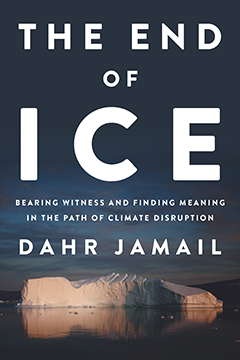
On January 21st this year I republished a post by Tom Engelhardt and called it The song this planet needs to hear. His post was essentially a piece written for Tom by Dahr Jamail. It was called A Planet in Crisis and it included reference to a recently published book The End of Ice.

Subsequently, I decided to order the book by Dahr Jamail, it arrived a week ago and I ended up finishing it last Saturday.

I was minded to publish a review of the book, and here it is:

The End of Ice by Dahr Jamail

This is a book that I wished I had not read.

Yet, this is a book that once started I wanted to finish, and finish quickly.

It’s a brilliant book. Very impressive and very readable.  But I speak of it from a technical point-of-view.

Now that I have finished it life will never be quite the same again. Nor, for that matter, for anyone else who chooses to read it.

Dahr Jamail has a background as a reporter, with some other books under his belt. But his reporting skills really come to the fore with The End Of Ice. For he has travelled the world speaking to experts in their own field and listening to what they say about the future prognosis of the planet that you and I, and everyone else lives on.

Earth has not seen current atmospheric CO2 levels since the Pliocene, some 3 million years ago. Three-quarters of that CO2 will still be here in five hundred years. Given that it takes a decade to experience the full warming effects of CO2 emissions, we are still that far away from experiencing  the impact of all the CO2 that we are currently emitting. (p.5)

And if you are below the age of 60 or thereabouts you are going to experience this changing world head on. To be honest, whatever age you are things are starting to change.

Take this:

We are already facing mass extinction. There is no removing the heat we have introduced into our oceans, nor the 40 billion tons of carbon dioxide we pump into the atmosphere every single year. There may be no changing what is happening, and far worse things are coming. (p.218)

It really is a grim read. A grim but necessary read.

The eight chapters in the book spell out what is already happening. The diminishing glaciers and rising snow levels, the loss of coral, the rise in sea level and the loss of vast tracts of land as a consequence. Then there is the future of forests around the world. As I said, it is a grim read but a necessary one.

Towards the end of the book Dahr Jamail quotes author and storyteller Stephen Jenkinson:

“Grief requires us to know the time we’re in,” Jenkinson continues. “The great enemy of grief is hope. Hope is a four-letter word for people who are willing to know things for what they are. Our time requires us to be hope-free. To burn through the false choice of being hopeful and hopeless. They are the two sides of the same con job. Grief is required to proceed.” (p. 218)

Upon finishing this superb book, that you really do need to read, the one emotion that I was left with was grief. For what we have done to this planet. For what we are doing to this one and only home of ours.

Grief.

P.S. Dogs would not have done this to our beautiful planet.

How to walk your dog on a pet leash.

A guest post from Anoop Nain.

From time to time I receive inquiries as to whether or not I publish guest posts. And if they are not trying to sell something then I am more than happy to do so.

So here is a guest post from Anoop Nain.

ooOOoo

How to walk your dog on a leash?

By Anoop Nain.

Walking with your dogs should be a fun activity, free from stress and worries. Unfortunately, for many dog parents it can be more complicated. Here are some common problems faced by the people when walking their dogs and some solutions to address those problems.

Preventing Pulling
Leash pulling is one of the most common dog walking challenges. There may be a number of factors at play, but often pulling is due to excitement on the walk and a lack of focus. If your pleasant dog walking dream has turned into a tug-of-war game with your pooch, here are some tips you can try to stop them from pulling on the leash.

  • The first step to stop your dog from being a major-league puller is to make sure your dog is paying attention to you and not everything around you while you walk.
  • Walk in front of your dog. This will allow you to be seen as the pack leader. You should always be the first one out the door and the first one in.
  • Keep the leash really short (This will allow you to have more control).
  • With your dog calmly by your side or behind you, make different moves, such as – start, st
    op and turn. This way, he/she will start paying attention to you in order to keep up.
  • Stop walking if your dog begins to pull. When he stops pulling, begin walking forward again. Repeat this until your dog understands that pulling will prevent him from moving forward.
  • If your dog obeys you and shows good behavior, reward him/her by allowing him to sniff around.

Stop Constant Sniffing

Does your dog want to sniff everything on walks, or mark his territory? Rest assured; you are not alone! Sniffing is totally normal in dogs but constant sniffing while walking, especially when you have not allowed him to do so is not acceptable. As a responsible pet parent, you should not allow your furry kid to decide when and where to sniff.

Dogs, who pull on walks to sniff do so because they find it rewarding. Everytime your pooch pulls on the leash he gets to sniff something, which is a form of reward for him/her. You have to teach him/her that pulling no longer works and good behavior will get him/her reward from you. Here are some tips to try:

  • Keep the leash short but not tight. Walk in front of your dog and make sure his head is up during the walk. Stay focused on your destination and maintain your calm-assertive energy. When your dog starts following you, allow him brief breaks to relieve himself and explore the area around him. These breaks are your dog’s reward for obeying you.
  • Never reward your dog when he stops to sniff. Many people think treats will lure their dog to get up and walk again. But, it is wrong as you’re rewarding them for stopping.
  • Don’t pull on the leash because your dog will only strain harder due to “oppositional reflex.” It means when you try to pull your dog to make him move, he/she will pull in the other direction to maintain balance.
  • Instead of pulling your dog, stop and say your dog’s name or do something strange that distracts them, like squeaking a toy, whistling or anything to capture their attention and distract them from the thought that they don’t want to move anymore. When using a squeaky toy to distract him/her, remember not to actually give your dog the toy as your dog will see it as a reward for stopping.

Lunging and barking at other dogs and people

If you always have to walk to the other side of the street to prevent your dog from lunging, barking and snapping at other dogs and people, then you need to fix this problem as soon as possible. This problem is commonly known as leash reactivity. Most leash reactivity is caused by fear, anxiety or discomfort. Dogs bark and lunge at others to warn them.
Here’s what you can do to fix it:

  • To ‘heal’ your leash reactive dog, you have to identify the triggers and then avoid them altogether for some time. After some time, you have to gradually reintroduce them after desensitization and counter conditioning. For example: you can initially walk your dog when there are no other dogs or people around.
  • Then gradually, you have to figure out what your dog’s threshold is with other dogs – Does he/she get triggered when the other dogs are just a few meters away, or just seeing one on the other side of the park makes them agitated?
  • Once you have figured out your dog’s threshold with other dogs, you can ask a friend with a well behaved dog for help. You friend has to walk his/her dog within sight of yours. Each time the dog is in sight, shower your dog with lots of praise and treats. By doing this you will make an association between seeing the dog and getting lots of treats and praise.

Important thing to remember: Never punish your dog for his reactivity. Doing so will make the problem even worse. Dogs learn by making associations, and you want your dog to associate other dogs with pleasant things. So, make all the sessions positive by using lots of rewards.
When reframing your dog’s opinion of seeing other dogs and people, be protective of what he is exposed to and be careful where you take him. Just one fight is enough to trigger leash reactivity.
As you reframe your dog’s opinions of other dogs, consider not walking your dog for some time. Instead, just sit on your front porch with your dog on leash, and practice giving him rewards every time another dog comes into your dog’s line of sight.
When desensitization and counter-conditioning is done right, your dog will turn his head away on seeing another dog and look into your eyes, expecting a reward. Over time he will come to tolerate or even look forward to meeting other dogs.

WALKING TOOLS YOU CAN USE TO TRAIN YOUR POOCH

Training your dog to be a ‘good boi or gal’ on a leash can take few weeks to months of regular practice and patience. To make your job a bit easier, here are some humane walking tools that can be used:
Head harnesses

Head harnesses are designed to fit around your dog’s snout, with the leash attaching in front to gently turn his head when he starts pulling. This tool can be effective for short-term pull-prevention but it must be properly fitted and used appropriately to avoid stress and injuries.
Front-hook harnesses

These harnesses work exactly like head harnesses but they are fastened on your dog’s chest. When your dog starts pulling, it turns your dog back towards you, discouraging pulling.
No-pull harnesses
When the dog starts pulling, these specially designed harnesses discourage pulling by applying gentle pressure to the dog’s chest or legs.
All these tools can be quite effective for training your dogs but they must be gradually introduced, properly fitted, and used appropriately.
Wrap up
Training your pooch is an important and necessary part of your life together. It is a great bonding experience and well worth the effort! So train your dog to put his/her best paw forward and you will soon be able to enjoy the world with your happy, fun and leash friendly four legged companion.

ooOOoo

So it needs little else from me save to explain Anoop’s background. In response to me asking for him to provide a little about himself he wrote:

Anoop Nain is a proud father of four rescued dogs and two Flemish giant rabbits. Besides being a full-time dog father, he is a freelance content writer/blogger and an educationist, with more than 6 years experience in the field of content writing.

I hope you enjoyed this guest post.

The disaster of empire?

The view of Alfred McCoy

Despite Tom Engelhardt giving me permission years ago to republish his essays I rarely go down that path. Not because many of his essays aren’t deeply interesting but because he doesn’t to the best of my knowledge write about dogs!

However, a recent TomDispatch was sufficiently concerning that I am republishing it for you.

It’s quite a long article.

ooOOoo

Tomgram: Alfred McCoy, Grandmasters of the Universe

Posted by Alfred McCoyat, December 2, 2018.
Follow TomDispatch on Twitter @TomDispatch.

Whether you realize it or not, we are in a new age of imperial geopolitics on a grand — and potentially disastrous — scale. TomDispatch regular Alfred McCoy, author of In the Shadows of the American Century: The Rise and Decline of U.S. Global Power, lays out devastatingly just what that is likely to mean in the age of Donald Trump. And once you’ve read his piece on a century-plus of geopolitical thinkers who helped reorganize this planet in genuinely discordant ways, perhaps you’ll feel it’s time for us to imagine a new kind of geopolitics, one that finally addresses the disaster of empire and the ways in which such geopolitical thinking now intersects with another kind of disaster: climate change. For catastrophic as the previous versions of geopolitics may have been, just wait until such imperial and national follies, including the drive of China and India to build new coal plants galore, meet global warming.  By this century’s end, that phenomenon may leave significant parts of the planet facing six nightmarish crises at once, ranging from mega-droughts and mega-fires to rising sea levels and catastrophic flooding. Or what about the possibility that intense heat waves (sparked in part by the massive burning of coal) will, later in this century, make the north China plain, now the most heavily populated part of that country, uninhabitable and do the same for parts of northern India and South Asia? Or what about the recent estimate in a congressionally mandated report on climate change (carefully released by the Trump administration on Black Friday in an attempt to bury it) that this country will also be deeply affected, as, for instance, wildfires of the kind that just devastated parts of California will triple, and the U.S. economy will be downsized by 10% or more by 2100?

We are now on a planet guaranteed, barring a miracle of coordinated human action, to find itself in a set of geo-ruins of an unprecedented sort by 2100, ruins that will remain so on a time scale anything but historical or in any way human. With that in mind, consider McCoy’s account of the “architects of imperial disaster” who got us to just this spot and to an American president whose goal in life is to do everything humanly possible to pump more greenhouse gases in the atmosphere. Tom

Trump’s Trade Czar, The Latest Architect of Imperial Disaster
Five Academics Who Unleashed the “Demon” of Geopolitical Power
By Alfred W. McCoy

As Washington’s leadership fades more quickly than anyone could have imagined and a new global order struggles to take shape, a generation of leaders has crowded onto the world stage with their own bold geopolitical visions for winning international influence. Xi Xinping has launched his trillion-dollar “Belt and Road Initiative” to dominate Eurasia and thereby the world beyond. To recover the Soviet Union’s lost influence, Vladimir Putin seeks to shatter the Western alliance with cyberwar, while threatening to dominate a nationalizing, fragmenting Eastern Europe through raw military power. The Trump White House, in turn, is wielding tariffs as weapons to try to beat recalcitrant allies back into line and cripple the planet’s rising power, China. However bizarrely different these approaches may seem, they all share one strikingly similar feature: a reliance on the concept of “geopolitics” to guide their bids for global power.

Over the past century, countless scholars, columnists, and commentators have employed the term “geopolitics” (or the study of global control) to lend gravitas to their arguments. Few, though, have grasped the true significance of this elusive concept. However else the term might be used, geopolitics is essentially a methodology for the management (or mismanagement) of empire. Unlike conventional nations whose peoples are, in normal times, readily and efficiently mobilized for self-defense, empires, thanks to their global reach, are a surprisingly fragile form of government. They seem to yearn for strategic visionaries who can merge land, peoples, and resources into a sustainable global system.

The practice of geopolitics, even if once conducted from horseback, is as old as empire itself, dating back some 4,000 years. Until the dawn of the twentieth century, it was the conquerors themselves — from Alexander the Great to Julius Caesar to Napoleon Bonaparte — whose geopolitical visions guided the relentless expansion of their imperial domains. The ancient Greek historian Plutarch tried to capture (or perhaps exaggerate) the enormity of Caesar’s conquest of Gaul — a territory that comprises all of modern France and Belgium — by enumerating the nine years of war that “took by storm more than eight hundred cities, subdued three hundred tribes, and fought pitched battles… with three million men, of whom he slew one million… and took as many more prisoners.”

In his own account, however, Caesar reduced all of this to its geopolitical essentials. “All Gaul is divided into three parts,” he wrote in that famous first sentence of his Gallic Wars. “Of all these, the Belgae are the bravest, because… they are the nearest to the Germans, who dwell beyond the Rhine, with whom they are continually waging war; for which reason the Helvetii also surpass the rest of the Gauls in valor, as they contend with the Germans in almost daily battles.” When those formidable Helvetii marched out of their Alpine cantons to occupy Gallic lowlands in 58 BC, Caesar deployed geopolitics to defeat them — seizing strategic terrain, controlling their grain supplies, and manipulating rival tribes. Instead of enslaving the vanquished Helvetii as other Roman generals might have, Caesar, mindful of the empire’s geopolitical balance, returned them to their homelands with generous provisions, lest the German “barbarians” cross the Rhine and destabilize Gaul’s natural frontier.

In more modern times, imperial expansion has been guided by professional scholars who have made the formal study of geopolitics a hybrid field of some significance. Its intellectual lineage is actually remarkably straightforward. At the end of the nineteenth century, an American naval historian argued that seapower was the key to national security and international influence. A decade later, a British geographer observed that railroads had shifted the locus of global power landward into the interior of the vast Eurasian continent. In the succeeding century, a succession of scholars would draw on these two basic ideas to inspire bold geopolitical gambits by Nazi Germany, Cold War Washington, post-Soviet Russia, and even Donald Trump’s White House.

There is, in fact, a common thread in those disparate scholarly lives: in each case, the study of geopolitics seemed to change the trajectory of their careers, lifting them from the margins of society to the right hand of power. There, at moments when the empire they lived in was experiencing a crisis, their unconventional, even eccentric, ideas won influence — often in what would prove in the long term a nightmarish fashion.

Over the last century or so, while the actual application of such thinking regularly proved problematic at best and genuinely horrific at worst, geopolitics would remain a seductive concept with a persistent power to entice would-be practitioners. It would also prove an enormously elusive style of thinking, making it difficult to distinguish between the banal and the brilliant, between the imperially helpful and the imperially devastating.

Charting the interplay of land, people, and resources inside any empire, much less in a clash between such behemoths, is impossibly difficult. Admittedly, geopolitics in the hands of a grandmaster has, in the past, led to the crushing of armies and the conquest of continents. But seemingly similar strategies have also produced searing defeat and disaster. Caesar’s deft geopolitical balancing of Gaul and Germany on the fulcrum of the Rhine survived for some four centuries; Napoleon’s similar attempt lasted all of seven years.

Telling the difference, in the historical moment, is a daunting task and one that hasn’t turned out well in the last century. With that in mind, let’s now approach the careers of five modern “grandmasters” of geopolitics with an appropriate skepticism.

America’s Strategic Visionary

In 1890, as the industrial boom of the Gilded Age prepared the nation for a debut on the world stage, Captain Alfred Thayer Mahan, arguably America’s only original strategic thinker, published his famed Influence of Seapower Upon History. In it, he argued that naval power was the determining factor in the fate of nations. Born at West Point, where his father taught military tactics to Army cadets, Mahan came to the study of strategy almost by birthright. After graduating from the Naval Academy and having an indifferent career at sea, he became the head of the Naval War College in 1886. There, he developed novel geopolitical ideas that would revive a stalled career.

By analyzing sea power through a wide range of factors, including the defensibility of ports, national technological prowess, and the nature of good government, Mahan would produce the first serious study of geopolitics in the guise of a guide to naval strategy. In the process, he became an international celebrity, influencing admirals from London to Tokyo and inspiring leaders worldwide to join a naval arms race that would drain their treasuries to build costly battleships. The admiral who headed Germany’s navy, for instance, distributed 8,000 copies of Mahan’s history in translation and in the process won passage of the country’s first naval bill in 1898, funding his fateful challenge to British sea power.

As Europe’s empires continued to spread globally in the 1890s, Mahan’s prolific prose persuaded Washington that national defense required the creation of a genuine blue-water navy and bases in both the Caribbean and the Pacific. So important were such bases for the nation’s defense that, as Mahan gravely concluded, “No European state should henceforth acquire a coaling position within three thousand miles of San Francisco” — a distance that encompassed the Hawaiian Islands, soon to become U.S. possessions.

Like many advocates of geopolitics to come, Mahan would use seemingly precise strategic concepts to project his country’s current position into a murky future. As his geopolitical principles took physical form after 1898, they would produce an indefensible string of bases stretching across the Pacific from Panama to the Philippines.

Following his doctrine, the Navy ordered Admiral George Dewey’s squadron to seize Manila Bay during the Spanish-American War of 1898, which he did by sinking the Spanish fleet. Within five years, however, Japan’s stunning victory over the Russian fleet in the Sea of Japan forced Washington to withdraw much of its navy from the Western Pacific. In 1907, President Theodore Roosevelt began building a new Pacific bastion at Pearl Harbor in Hawaii, not in Manila Bay, saying that the Philippines, by then an American colony, is “our heel of Achilles.” Making matters worse, the Versailles peace settlement at the end of World War I conceded the Mariana Islands in the Western Pacific to Japan, allowing its navy to block the sea-lanes from Pearl Harbor to Manila Bay — a geopolitical reality that would doom General Douglas MacArthur’s Philippine command to a searing defeat at the start of World War II.

At that war’s end, however, Washington finally resolved this geopolitical conundrum by conquering Japan and building a chain of more than 100 bases from that country to the Philippines, making the Pacific littoral the strategic fulcrum for the defense of one continent (North America) and dominion over another (Eurasia).

Sir Halford Propagates Geopolitics

Little more than a decade after Mahan wrote his influential studies of seapower, Sir Halford Mackinder, head of the London School of Economics (LSE), published a seminal article that shifted the focus of geopolitics from sea to land. Writing in 1904, as the 5,700 miles of the Trans-Siberian Railway was still being built from Moscow to Vladivostok, Mackinder argued that future rail lines would knit Eurasia into a unitary landmass that he dubbed “the world island.” When that day came, Russia, perhaps in alliance with another land power like Germany, could control Eurasia’s sprawling “heartland,” allowing “the use of vast continental resources for fleet-building, and the empire of the world would be in sight.”

This path-breaking analysis came at a fortuitous time in Mackinder’s academic career. After teaching geography at Oxford for 10 years, he had failed to win a professorship and his marriage collapsed. At this low ebb in his life, he tried to establish himself as an exploratory geographer by making the first recorded ascent of Mount Kenya. Using the “moral suasion of my Mauser” rifle to force his 170 African bearers to “obey like the faithful dogs they are,” Mackinder moved through the famine-stricken foothills leading to that mountain by extracting food from hungry villages at gunpoint. Then, in September 1899, at the cost of 10 porters shot and many more whipped for “malingering,” he traversed glaciers to reach the summit at 17,000 feet. His triumph before a cheering crowd at the Royal Geographical Society in London was, however, marred not by his treatment of those bearers but by his failure to bring back significant findings or scientific specimens.

So, in yet another career change, Mackinder joined the LSE where he produced that influential article on geopolitics. At the end of World War I, he turned it into a book that contained his most memorable maxim: “Who rules East Europe commands the Heartland; Who rules the Heartland commands the World-Island; Who rules the World-Island commands the World.”

Mackinder’s expertise in imperial geopolitics helped launch his political career, including gaining him a seat in Parliament. In 1919, amid the turmoil of the Russian revolution, Britain was shipping arms to anti-Bolshevik forces there under General Anton Denikin. At Winston Churchill’s behest, the cabinet then appointed Mackinder as a special high commissioner for southern Russia. In a unique test of his “heartland” theory, Mackinder made an abortive attempt to rally the Czarist forces by meeting General Denikin inside his railcar in the Caucasus to propose an alliance with Poland and promise a mass evacuation in the event of defeat. Upon return to London, ignoring the general’s role in slaughtering some 100,000 Jews, Mackinder recommended recognizing his government and providing aid — advice the cabinet quickly dismissed.

From that brief moment at the apex of power, Mackinder soon fell into obscurity — losing his seat in Parliament, retiring from the LSE, and settling into a sinecure as chairman of the Imperial Shipping Committee. Were it not for the surprising later appeal of his ideas in Nazi Germany and Vladimir Putin’s Russia, his name would have been largely forgotten.

The Sorcerer’s Nazi Apprentice

As the Versailles peace conference of 1919 stripped Germany of its colonial empire and placed its Rhineland frontier under foreign occupation, Karl Haushofer exchanged his general’s baton for a geography professorship at Munich University. There, he would apply Mackinder’s concepts in an attempt to assure that his fatherland would never again engage in the sort of strategic blunders that, in World War I, had led to such a humiliating defeat.

While Mackinder himself was courting the powerful in postwar London, Haushofer was teaching geopolitics to future top Nazis in Munich — first to his graduate assistant Rudolf Hess (later to become the deputy Führer), and then to Adolf Hitler himself while he was writing Mein Kampf during his incarceration at Munich’s Landsberg Prison in 1924. Both Haushofer and his son Albrecht, who would train Nazi diplomats in the geopolitics of European conquest, were later rewarded with influential positions in the Third Reich. By dressing the British don’s idea of the Eurasian heartland as the pivot of world power in the local garb of Lebensraum (or “the Greater German Reich’s dazzling ascent by war… for extension of its living space”), Haushofer helped propagate an enticing logic of expansion that would send Hitler’s army on the road to defeat.

In 1942, Hitler dispatched a million men, 10,000 artillery pieces, and 500 tanks to breach the Volga River at Stalingrad and capture Russia’s heartland for lebensraum. In the end, the Reich’s forces would suffer 850,000 casualties — killed, wounded, and captured — in a vain attempt to break through the East European rimland into the world island’s heartland.

Appalled by the attack on Russia, Haushofer’s son joined the underground’s attempt to assassinate Hitler and was imprisoned. Before he was finally shot by the SS (on the day the Allies captured Berlin), he would compose mournful sonnets about geopolitical power, which he saw metaphorically as buried deep under the sea until “my father broke the seal” and “set the demon free to roam throughout the world.” A few months later, Karl Haushofer and his Jewish wife committed suicide together when confronted with the possibility that the victorious allies might prosecute him as a senior Nazi war criminal.

The Liberator of Eastern Europe

As the United States recoiled from its searing defeat in Vietnam, Zbigniew Brzezinski, an émigré Polish aristocrat and autodidact when it came to geopolitics, went from teaching international relations in New York to being President Jimmy Carter’s national security advisor in Washington. There, his risky geopolitical gambits gained an attentive audience after the Soviet Red Army invaded Afghanistan in 1979.

As an intellectual acolyte of Mackinder, Brzezinski embraced his concept of the Eurasian heartland as the “pivot” of global power. But in marked contrast to Mackinder’s failure in southern Russia in 1920, Brzezinski would prove adept at applying that geopolitician’s famous dictum on the dynamic that tied Eastern Europe to Eurasia’s heartland. (In the end, however, his Afghan moves would help give rise to Osama bin Laden, al-Qaeda, the 9/11 attacks, and the never-ending war on terror of this century.)

Wielding a multi-billion-dollar CIA covert operation in Afghanistan like a sharpened wedge, Brzezinski drove radical Islam deep into the heart of Soviet Central Asia. In the process, he drew Moscow into a debilitating decade-long Afghan war, so weakening it that Eastern Europe would finally break free from the Soviet empire in 1989. Asked about the enormous human suffering his strategy inflicted on Afghanistan and his role in creating a militant Islam hostile to the United States, he would remain coolly unapologetic. “What is most important to the history of the world?” he responded in 1998. “The Taliban or the collapse of the Soviet empire? Some stirred-up Moslems or the liberation of Central Europe and the end of the Cold War?”

In retirement, Brzezinski resumed his study of Mackinder’s theory, doing a better job as an armchair analyst than he had as a presidential adviser. In a 1998 book, he warned that dominance over Eurasia remained “the central basis for global primacy.” To control that vast region, Washington, he insisted, would have to preserve its “perch on the Western periphery” of Europe and hold its string of “offshore bases” along the Pacific littoral. Should these conditions change, he predicted with some prescience, “a potential rival to America might at some point arise.”

Putin’s Geopolitical Visionary

In the aftermath of the Soviet Union’s collapse, a Russian rightist ideologue, Alexander Dugin, would revive Mackinder’s ideas yet again to promote expansion into Eurasia. In the process, he would become “a major influence” on Russian President Vladimir Putin.

In the 1980s, as the Soviet Union was beginning to unravel, Dugin was still moving in Moscow’s bohemian circles as a dabbler in the occult and a fringe member of the “ultra-nationalist and anti-Semitic organization Pamiat.” After the Soviet collapse, he became chief ideologue for an eclectic alliance of patriotic and punk-rock groups called the New Bolshevik Party, serving as its candidate for a seat in the 1995 Duma legislative elections and winning just 1% of the vote.

At this political nadir for both him and his country, Dugin recycled Mackinder’s long-forgotten writings in a 1997 bestseller, The Foundation of Geopolitics: Russia’s Geopolitical Future. As his book moved into its fourth printing and he “became a pole star for a broad section of Russian hardliners,” he began teaching geopolitics to military officers at the General Staff Academy, later lecturing on it to elite students at Moscow State University, and anchoring Landmarks, a weekly television show on the subject. In those years, Moscow bookstores even opened special sections for geopolitics, the legislature formed a geopolitics committee, and the Russian leadership began to embrace Dugin’s vision of expansionist nationalism.

Drawing on Haushofer’s German writings, he argued that Russia should become a Eurasian bastion against “the conspiracy of ‘Atlanticism’ led by the United States and NATO… aimed at containing Russia within successive geographic rings” of the former Soviet republics. To achieve the destiny envisioned by Mackinder, Russia needed, in Dugin’s view, to dominate Eurasia — annexing Ukraine, conquering Georgia, incorporating Finland, and bringing the Balkan states (Serbia, Romania, and Bulgaria) under its rule as an Orthodox “Third Rome.” To advance such ideas, Dugin founded the Eurasia Youth Union of Russia in 2005, first to serve as “human shields” to fight against the Orange revolution in Ukraine and later to counter the “degeneration” caused by American cultural influence.

For the past decade, he has been a forceful advocate for Russian expansionism. During that country’s war with Georgia in 2008, he was photographed with a rocket launcher in South Ossetia and quoted in the national press calling for its annexation. After serving as “the brains behind Vladimir Putin’s wildly popular annexation of Crimea” in March 2014, Dugin embraced the Russian minority in eastern Ukraine, prodding the Russian president to openly support their separatist militia.

While advocacy of aggressive geopolitics has given Dugin significant political influence and Putin unprecedented popularity in Russia, it is still unclear whether in the long run such expansionism, in defiance of international norms, will prove a geopolitical masterstroke or a diplomatic debacle.

The Geopolitics of Trump’s Trade War

Most recently, a dissident economist and failed California politician named Peter Navarro has parlayed his hostility toward China into the role of key architect of Donald Trump’s “trade war” against Beijing. Like his Russian counterpart Alexander Dugin, Navarro is another in a long line of intellectuals whose embrace of geopolitics changed the trajectory of his career.

Raised by a single mom who worked secretarial jobs to rent one-bedroom apartments where he slept on the couch, Navarro went to college at Tufts on a scholarship and earned a doctorate in economics from Harvard. Despite that Ivy League degree, he remained an angry outsider, denouncing the special interests “stealing America” in his first book and later, as a business professor at the University of California-Irvine, branding San Diego developers “punks in pinstripes.” A passionate environmentalist, in 1992 Navarro plunged into politics as a Democratic candidate for the mayor of San Diego, denouncing his opponent’s husband as a convicted drug-money launderer and losing when he smirked as she wept during their televised debate.

For the next 10 years, Navarro fought losing campaigns for everything from city council to Congress. He detailed his crushing defeat for a seat in the House of Representatives in a tell-all book, San Diego Confidential, that dished out disdain for that duplicitous “sell out” Bill Clinton, dumb “blue-collar detritus” voters, and just about everybody else as well.

Following his last losing campaign for city council, Navarro spent a decade churning out books attacking a new enemy: China. His first “shock and awe” jeremiad in 2006 told horror stories about that country’s foreign trade; five years later, Death By China was filled with torrid tales of “bone-crushing, cancer-causing, flammable, poisonous, and otherwise lethal products” from that land. In 2015, a third book turned to geopolitics, complete with carefully drawn maps and respectful references to Captain Mahan, to offer an analysis of how China’s military was pursuing a relentless strategy of “anti-access, area denial” to challenge the U.S. Navy’s control over the Western Pacific.

To check China, the Pentagon then had two competing strategies — “Air-Sea Battle,” in which China’s satellites were to be blinded, knocking out its missiles, and “Offshore Control,” in which China’s entire coastline was to be blockaded by mining six maritime choke points from Japan to Singapore. Both, Navarro claimed, were fatally flawed. Given that, Navarro’s third book and a companion film (endorsed by one Donald Trump) asked: What should the United States do to check Beijing’s aggression and its rise as a global power? Since all U.S. imports from China, Navarro suggested, were “helping to finance a Chinese military buildup,” the only realistic solution was “the imposition of countervailing tariffs to offset China’s unfair trade practices.”

Just a year after reaching that controversial conclusion, Navarro joined the Trump election campaign as a policy adviser and then, after the November victory, became a junior member of the White House economic team. As a protectionist in an administration initially dominated by globalists, he would be excluded from high-level meetings and, according to Time Magazine, “required to copy chief economic adviser Gary Cohn on all his emails.” By February 2018, however, Cohn was on his way out and Navarro had become assistant to the president, with his new trade office now the co-equal of the National Economic Council.

As the chief defender of Trump’s belief that “trade wars are good and easy to win,” Navarro has finally realized his own geopolitical dream of attempting to check China with tariffs. In March, the president slapped heavy ones on Chinese steel imports and, just a few weeks later, promised to impose more of them on $50 billion of imports. When those started in July, China’s leaders retaliated against what they called “typical trade bullying,” imposing similar duties on American goods. Despite a warning from the Federal Reserve chairman that “trade tensions… could pose serious risks to the U.S. and global economy,” with Navarro at his elbow, Trump escalated in September, adding tariffs on an additional $200 billion in Chinese goods and threatening another $267 billion worth if China dared retaliate. Nonetheless, Beijing hit back, this time on just $60 billion in goods since 95% of all U.S. imports had already been covered.

Then something truly surprising happened. In September, the U.S. trade deficit with China ballooned to $305 billion for the year, driven by an 8% surge in Chinese imports — a clear sign that Navarro’s bold geopolitical vision of beating Beijing into submission with tariffs had collided big time with the complexities of world trade. Whether this tariff dispute will fizzle out inconsequentially or escalate into a full-blown trade war, wreaking havoc on global supply chains and the world economy, none of us can yet know, particularly that would-be geopolitical grandmaster Peter Navarro.

The Desire to be Grandmaster of the Universe

Though such experts usually dazzle the public and the powerful alike with erudition and boldness of vision, their geopolitical moves often have troubling long-term consequences. Mahan’s plans for Pacific dominion through offshore bases created a strategic conundrum that plagued American defense policy for a half-century. Brzezinski’s geopolitical lunge at the Soviet Union’s soft Central Asian underbelly helped unleash radical Islam. Today, Alexander Dugin’s use of geopolitics to revive Russia’s dominion over Eurasia has placed Moscow on a volatile collision course with Europe and the United States. Simultaneously, Peter Navarro’s bold gambit to contain China’s military and economic push into the Pacific with a trade war could, if it persists, produce untold complications for our globalized economy.

No matter how deeply flawed such geopolitical visions may ultimately prove to be, their brief moments as official policy have regularly shaped the destiny of nations and of empires in unpredictable, unplanned, and often dangerous ways. And no matter how this current round of geopolitical gambits plays out, we can be reasonably certain that, in the not-too-distant future, another would-be grandmaster will embrace this seductive concept to guide his bold bid for global power.

Alfred W. McCoy, a TomDispatch regular, is the Harrington professor of history at the University of Wisconsin-Madison. He is the author of The Politics of Heroin: CIA Complicity in the Global Drug Trade, the now-classic book which probed the conjuncture of illicit narcotics and covert operations over 50 years, and the recently published In the Shadows of the American Century: The Rise and Decline of U.S. Global Power (Dispatch Books).

Follow TomDispatch on Twitter and join us on Facebook. Check out the newest Dispatch Books, John Feffer’s new dystopian novel (the second in the Splinterlands series) Frostlands, Beverly Gologorsky’s novel Every Body Has a Story, and Tom Engelhardt’s A Nation Unmade by War, as well as Alfred McCoy’s In the Shadows of the American Century: The Rise and Decline of U.S. Global Power and John Dower’s The Violent American Century: War and Terror Since World War II.

Copyright 2018 Alfred W. McCoy
ooOOoo

We are now on a planet guaranteed, barring a miracle of coordinated human action, to find itself in a set of geo-ruins of an unprecedented sort by 2100, ruins that will remain so on a time scale anything but historical or in any way human.

Indeed!

Back to dogs tomorrow!

Can we really avoid the ‘train crash’?

The idea that humanity will not prevent the approaching disaster is beyond belief!

One of the results of all you great people signing up to follow Learning from Dogs is that it encourages me to share things that strike me as so, so important.

Another of the results in there being, as of today, 3,349 following this place, is that I get the sense of what many of you good people also feel is important. Ergo, it is clear to me, clear beyond doubt, that caring and loving a dog or two makes you a person who cares and loves passionately this beautiful planet that is our home.

The emotion that is spilling out of me via these words to you is a result of having just read an essay published recently on The Conversation site and shared with you today.

Directly, it has nothing to do with our dear dogs. Yet, in a way, it does!

ooOOoo

7.5 billion and counting: How many humans can the Earth support?

By Associate Professor of Mathematics, College of the Holy Cross, July 9th 2018.

Humans are the most populous large mammal on Earth today, and probably in all of geological history. This World Population Day, humans number in the vicinity of 7.5 to 7.6 billion individuals.

Can the Earth support this many people indefinitely? What will happen if we do nothing to manage future population growth and total resource use? These complex questions are ecological, political, ethical – and urgent. Simple mathematics shows why, shedding light on our species’ ecological footprint.

The mathematics of population growth

In an environment with unlimited natural resources, population size grows exponentially. One characteristic feature of exponential growth is the time a population takes to double in size.

Exponential growth of world population

It took 127 years for the world population to double from one billion to two. By contrast, it took only 47 years, from 1927 to 1974, to double from two billion to four. Since 1960, world population has grown by about one billion every 13 years. Each point represents an additional one billion people.

[Ed: Text taken from a chart displayed in the article.]

Exponential growth tends to start slowly, sneaking up before ballooning in just a few doublings.

To illustrate, suppose Jeff Bezos agreed to give you one penny on Jan. 1, 2019, two pennies on Feb. 1, four on March 1, and so forth, with the payment doubling each month. How long would his $100 billion fortune uphold the contract? Take a moment to ponder and guess.

After one year, or 12 payments, your total contract receipts come to US$40.95, equivalent to a night at the movies. After two years, $167,772.15 – substantial, but paltry to a billionaire. After three years, $687,194,767.35, or about one week of Bezos’ 2017 income.

The 43rd payment, on July 1, 2022, just short of $88 billion and equal to all the preceding payments together (plus one penny), breaks the bank.

Real population growth

For real populations, doubling time is not constant. Humans reached 1 billion around 1800, a doubling time of about 300 years; 2 billion in 1927, a doubling time of 127 years; and 4 billion in 1974, a doubling time of 47 years.

On the other hand, world numbers are projected to reach 8 billion around 2023, a doubling time of 49 years, and barring the unforeseen, expected to level off around 10 to 12 billion by 2100.

This anticipated leveling off signals a harsh biological reality: Human population is being curtailed by the Earth’s carrying capacity, the population at which premature death by starvation and disease balances the birth rate.

World population projections

In 2020, the UN predicts that there will be 7,795,482 people worldwide.

[Ed: Text taken from a chart displayed in the article.]

Ecological implications

Humans are consuming and polluting resources – aquifers and ice caps, fertile soil, forests, fisheries and oceans – accumulated over geological time, tens of thousands of years, or longer.

Wealthy countries consume out of proportion to their populations. As a fiscal analogy, we live as if our savings account balance were steady income.

According to the Worldwatch Institute, an environmental think tank, the Earth has 1.9 hectares of land per person for growing food and textiles for clothing, supplying wood and absorbing waste. The average American uses about 9.7 hectares.

These data alone suggest the Earth can support at most one-fifth of the present population, 1.5 billion people, at an American standard of living.

A man works recycling plastic bottles outside Hanoi, Vietnam. REUTERS/Kham

Water is vital. Biologically, an adult human needs less than 1 gallon of water daily. In 2010, the U.S. used 355 billion gallons of freshwater, over 1,000 gallons (4,000 liters) per person per day. Half was used to generate electricity, one-third for irrigation, and roughly one-tenth for household use: flushing toilets, washing clothes and dishes, and watering lawns.

If 7.5 billion people consumed water at American levels, world usage would top 10,000 cubic kilometers per year. Total world supply – freshwater lakes and rivers – is about 91,000 cubic kilometers.

World Health Organization figures show 2.1 billion people lack ready access to safe drinking water, and 4.5 billion lack managed sanitation. Even in industrialized countries, water sources can be contaminated with pathogens, fertilizer and insecticide runoff, heavy metals and fracking effluent.

Freedom to choose

Though the detailed future of the human species is impossible to predict, basic facts are certain. Water and food are immediate human necessities. Doubling food production would defer the problems of present-day birth rates by at most a few decades. The Earth supports industrialized standards of living only because we are drawing down the “savings account” of non-renewable resources, including fertile topsoil, drinkable water, forests, fisheries and petroleum.

The drive to reproduce is among the strongest desires, both for couples and for societies. How will humans reshape one of our most cherished expectations – “Be fruitful and multiply” – in the span of one generation? What will happen if present-day birth rates continue?

Population stays constant when couples have about two children who survive to reproductive age. In some parts of the developing world today, couples average three to six children.

We cannot wish natural resources into existence. Couples, however, have the freedom to choose how many children to have. Improvements in women’s rights, education and self-determination generally lead to lower birth rates.

As a mathematician, I believe reducing birth rates substantially is our best prospect for raising global standards of living. As a citizen, I believe nudging human behavior, by encouraging smaller families, is our most humane hope.

ooOOoo

This essay from Professor Hwang is one of those articles that one frequently sees online that comes across as really interesting but, in the end, only gets a skim read; at best.

So if you didn’t fully comprehend what the good Professor included then ‘Stop‘ and go back and read it all very carefully.

Don’t just be alarmed at Professor Hwang writing:

This anticipated leveling off signals a harsh biological reality: Human population is being curtailed by the Earth’s carrying capacity, the population at which premature death by starvation and disease balances the birth rate.

Or:

Though the detailed future of the human species is impossible to predict, basic facts are certain. Water and food are immediate human necessities. Doubling food production would defer the problems of present-day birth rates by at most a few decades. The Earth supports industrialized standards of living only because we are drawing down the “savings account” of non-renewable resources, including fertile topsoil, drinkable water, forests, fisheries and petroleum.

Be concerned that each and every one of us, as in you and me, can only prevent the train crash by making a change in how we live: Today!

Otherwise ….

In so many ways we are such a clever and inventive race, capable of exploring the farthest reaches of outer space and the innermost aspects of quantum mechanics. Surely we must learn to live sustainably on beautiful Planet Earth!

Lateral thinking

In debt to Edward de Bono.

One of the great differences between us humans and our beloved dogs is that frequently we think too much! But it’s worse than that. We think too much and get caught up in some spiral from which we can’t think ourselves back out. Perhaps that can be likened to a dog worrying away at something that the dog thinks is being overlooked by it’s human friend, or over-licking a wound or such.

A very quick web search will bring up the background information on Dr. de Bono who was responsible for overturning the way we think. It was de Bono who attended an IBM Office Products management course that I was attending, far too many moons ago, when I was promoted from being a salesman to the first rung of the management ladder; the position of Marketing Manager. It was during de Bono’s talk that I first learned of lateral thinking and what de Bono called the “PO” moment.

Just watch the first minute of this talk to get an appreciation of what the PO moment is. Seriously, the video starts with Simon Middleton defining a PO moment. It’s relevant to the rest of this post.

As you all know Jean has Parkinson’s Disease (PD). We have come to understand that PD affects different people in different ways, albeit there are some aspects that many PD sufferers share.

Take this symptom as described on the APDA website:

Many individuals report difficulties in multitasking and organizing daily activities.

In recent weeks I noticed I was becoming frustrated because although I was suggesting to Jeannie a number of what I thought were pleasant things to do in and around our property they weren’t being done.

As much as I tried to say to myself to chill out, this is all down to Jean’s PD, I couldn’t push out of sight the growing frustration that my help was being rejected, and I know I have a problem dealing with rejection! I really didn’t want my frustration to build up to anger.

Eventually, one morning last week after I came back to the bedroom from having fed the horses and the deer I blurted out, rather clumsily I admit, this frustration that was close to becoming a real annoyance.

At first Jean was upset by what I said, understandably so, but then we settled down to examining each suggestion of mine and where I was coming from. Then the conversation became very productive and in a moment of creative thinking I suggested what turned out to be a ‘PO’ moment. In other words, we had both agreed that while we acknowledged the fact that Jean was not motivated to do the things I was suggesting nonetheless it was important that we choose another day and time to discuss how I should remind Jean of these ‘overlooked’ suggestions and, more importantly, how it could be done in a loving and constructive manner.

It was a fascinating outcome and I immediately jumped out of bed, went to my office room next to the bedroom, grabbed a new, unused notebook and came back to the bedroom.

“Jean, let’s write this down in the book as a reminder of something we need to return to and resolve in a creative way! Let’s call these reminders Pharaoh moments!”

Jean very happily agreed!

I then explained to Jean that this felt very much like one of de Bono’s PO moments and calling it a Pharaoh moment was a beautiful way of remembering our wonderful dog.

It was beyond doubt an example of Jean and me thinking laterally.

So thank you, dear Edward, your legacy still endures.

I will close today’s post by inviting you to watch either or both of these talks by de Bono.

The first is a little over 4 minutes long.

Or a longer video that is still highly recommended:

Published on 22 Oct 2015

Edward de Bono is the originator of the concept of Lateral Thinking, which is now a firm entry in the Oxford English Dictionary. Dr de Bono was born in Malta. As a well-established academic, de Bono was a Rhodes Scholar at Oxford and holds an MA in psychology and physiology from Oxford. He is a Professor at many leading institutions around the world. He is an author of many best-selling books, and is known as the world’s leading authority on thinking.
I write this post as a very happy man who has lived the value and benefits of not bottling up one’s feelings!