The lesson of love from our dogs just keeps rolling along.
Neighbour Dordie had the following sent to her in an email and, subsequently, passed it on to me.
I share it with you and hope that it brightens your day.
ooOOoo
After losing his parents, this three-year-old orangutan was so depressed he wouldn’t eat and didn’t respond to any medical treatments. The veterinarians thought he would surely die from sadness.
The zoo keepers found an old sick dog on the grounds in the park at the zoo where the orangutan lived. They took the dog to the animal treatment center; the dog arriving at the same time that the orangutan was there being treated.
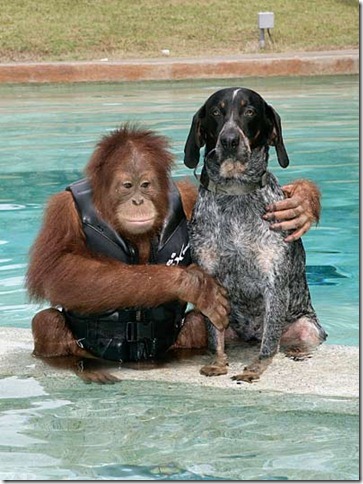
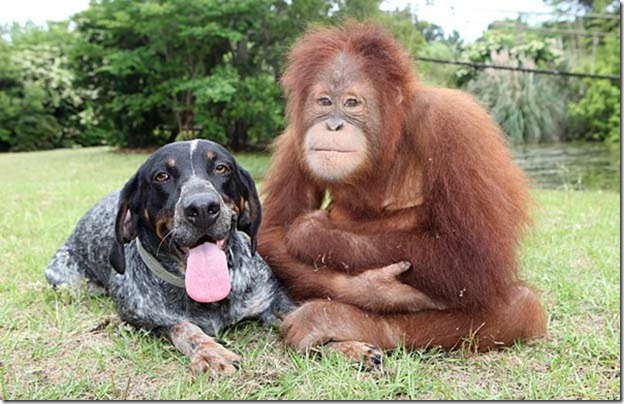
The two lost souls met and have been inseparable ever since. The orangutan found a new reason to live and each always tries his best to be a good companion to his new-found friend. They are together 24-hours-a-day in all their activities.
They live in Northern California where swimming is their favorite past-time, although Roscoe (the orangutan) is a little afraid of the water and needs his friend’s help to swim.
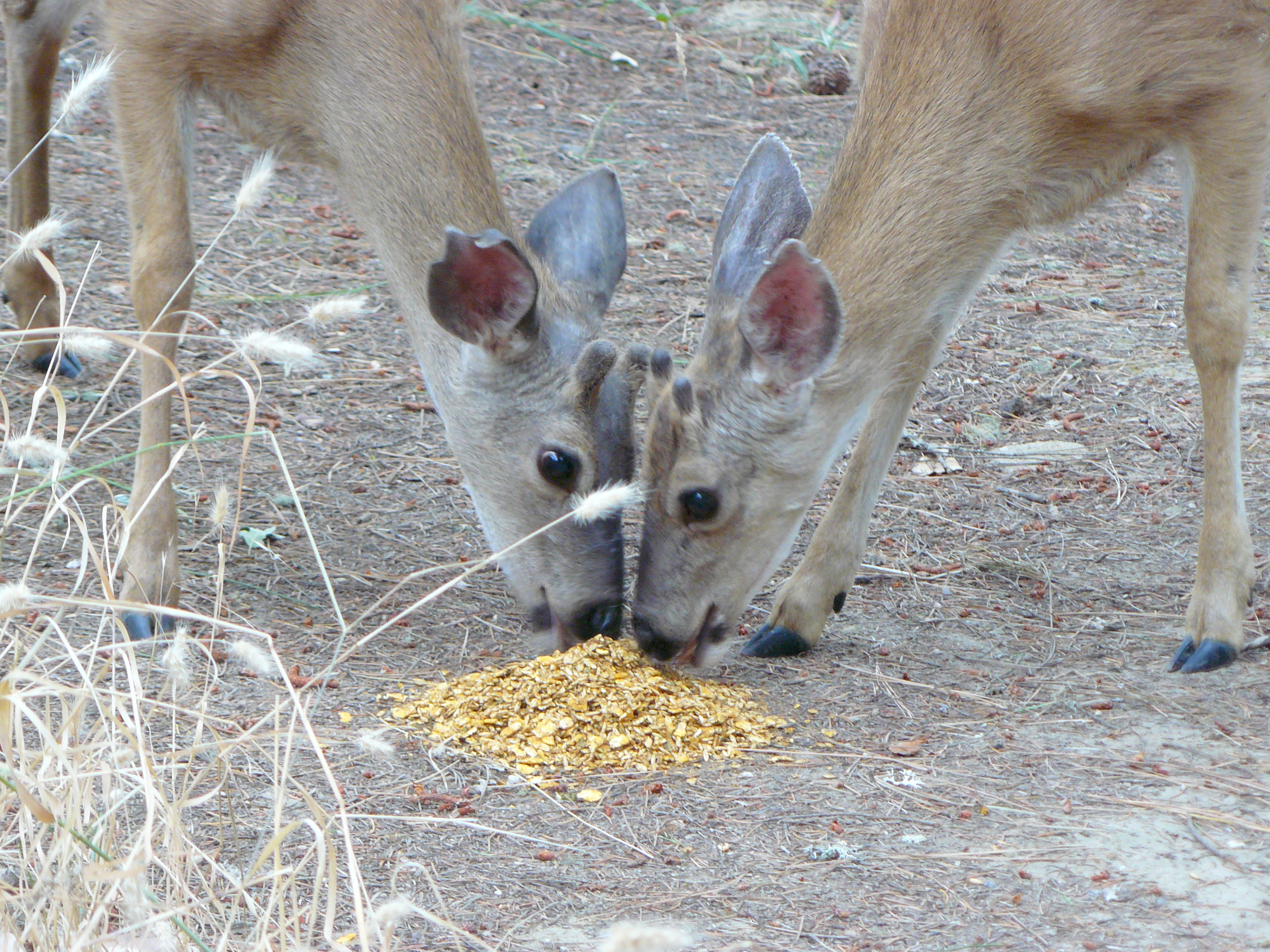
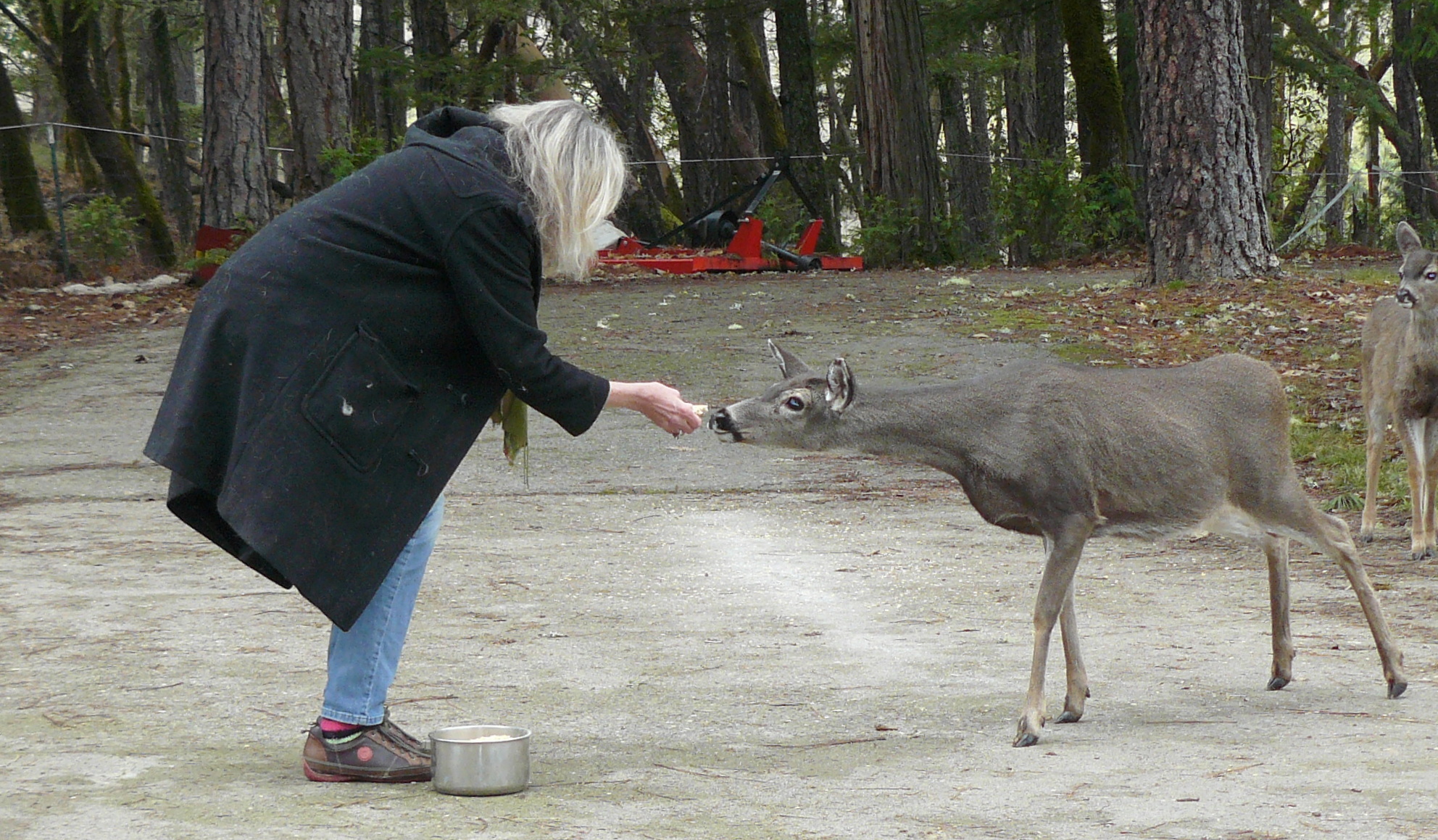
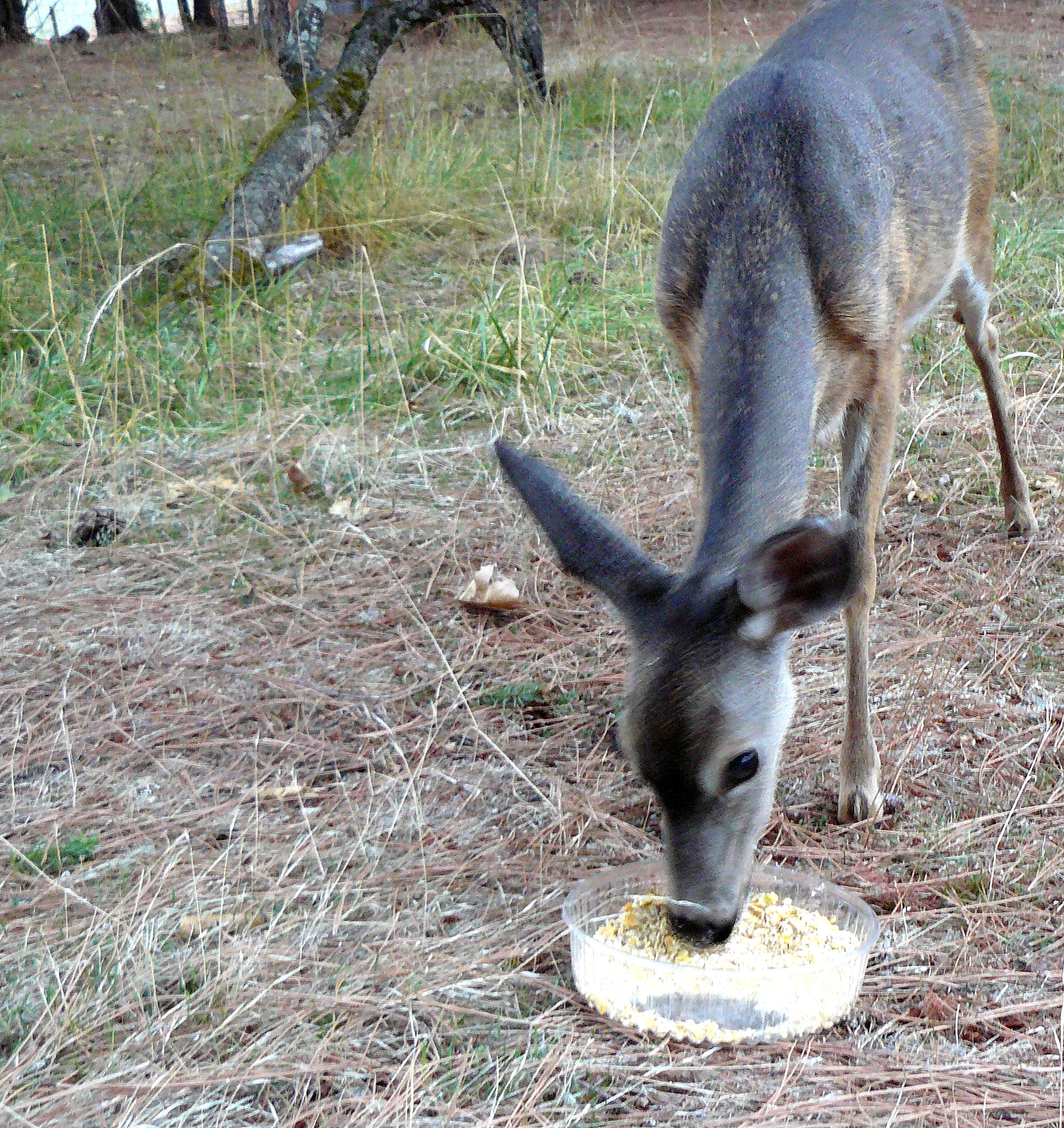
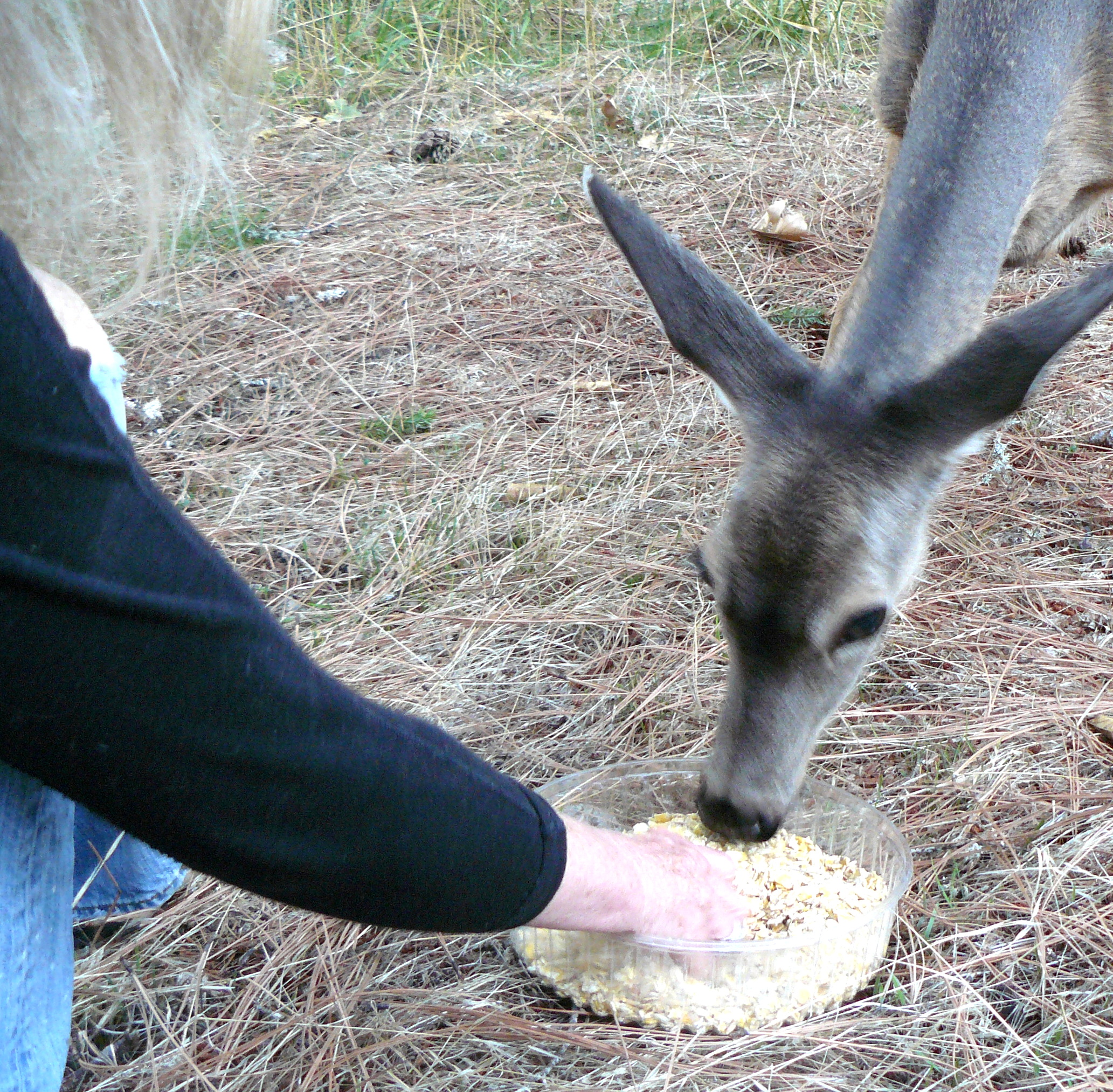
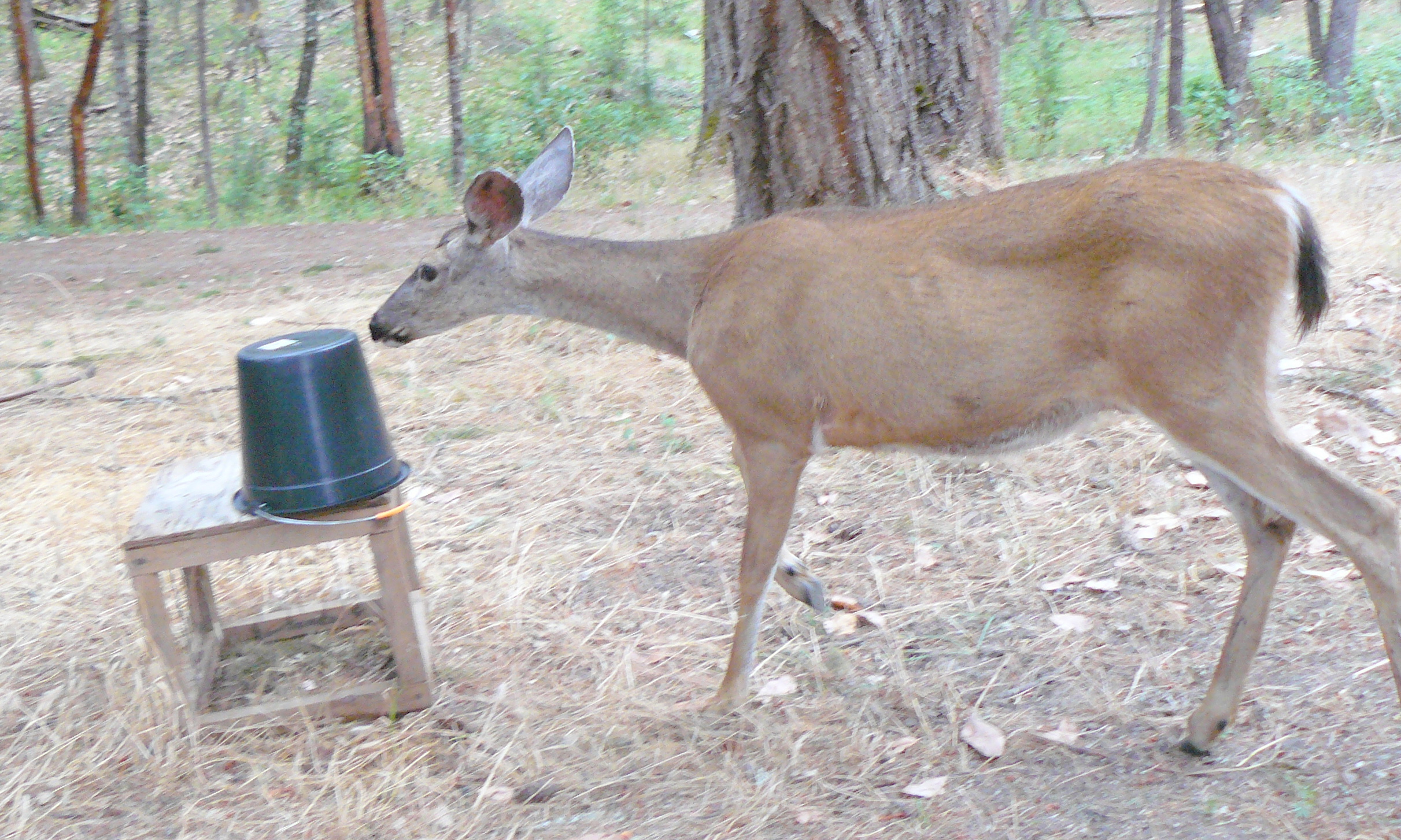
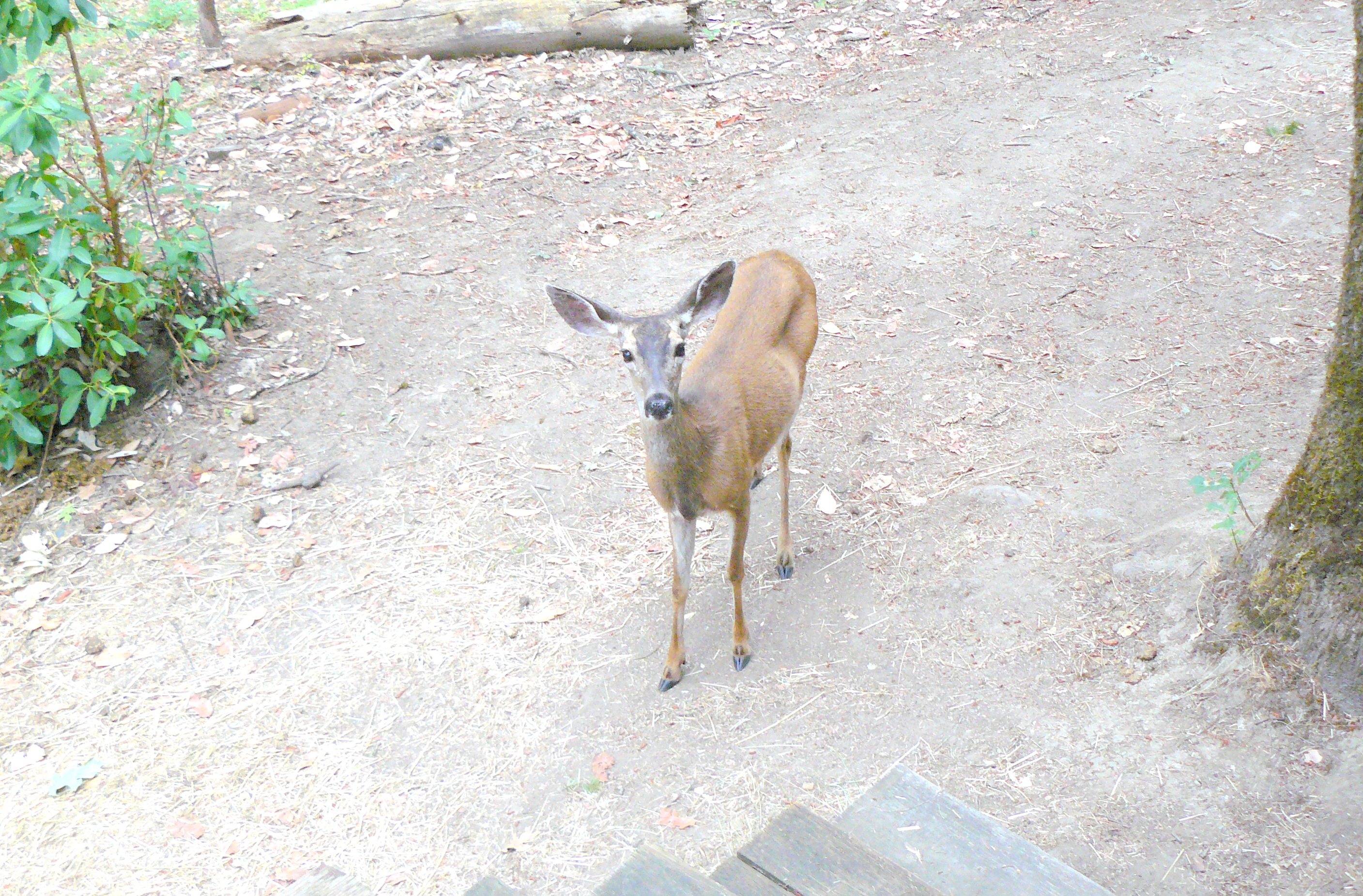
Returning to the photographs of the deer that come to our property.
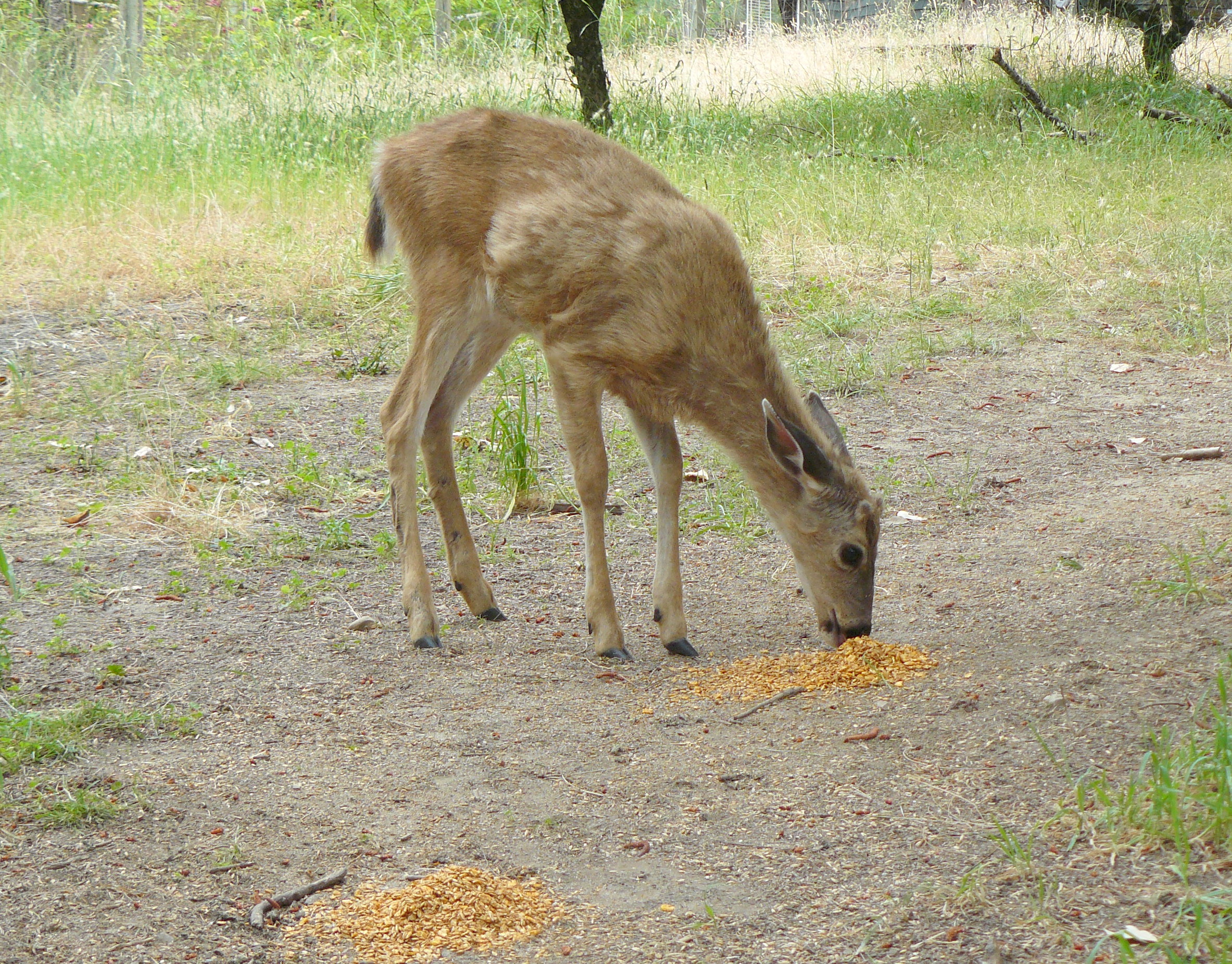
Feeding the deer has been featured before on Learning from Dogs but I just wanted to devote today and next Sunday to nothing more sophisticated than photographs; all of them taken here at home.
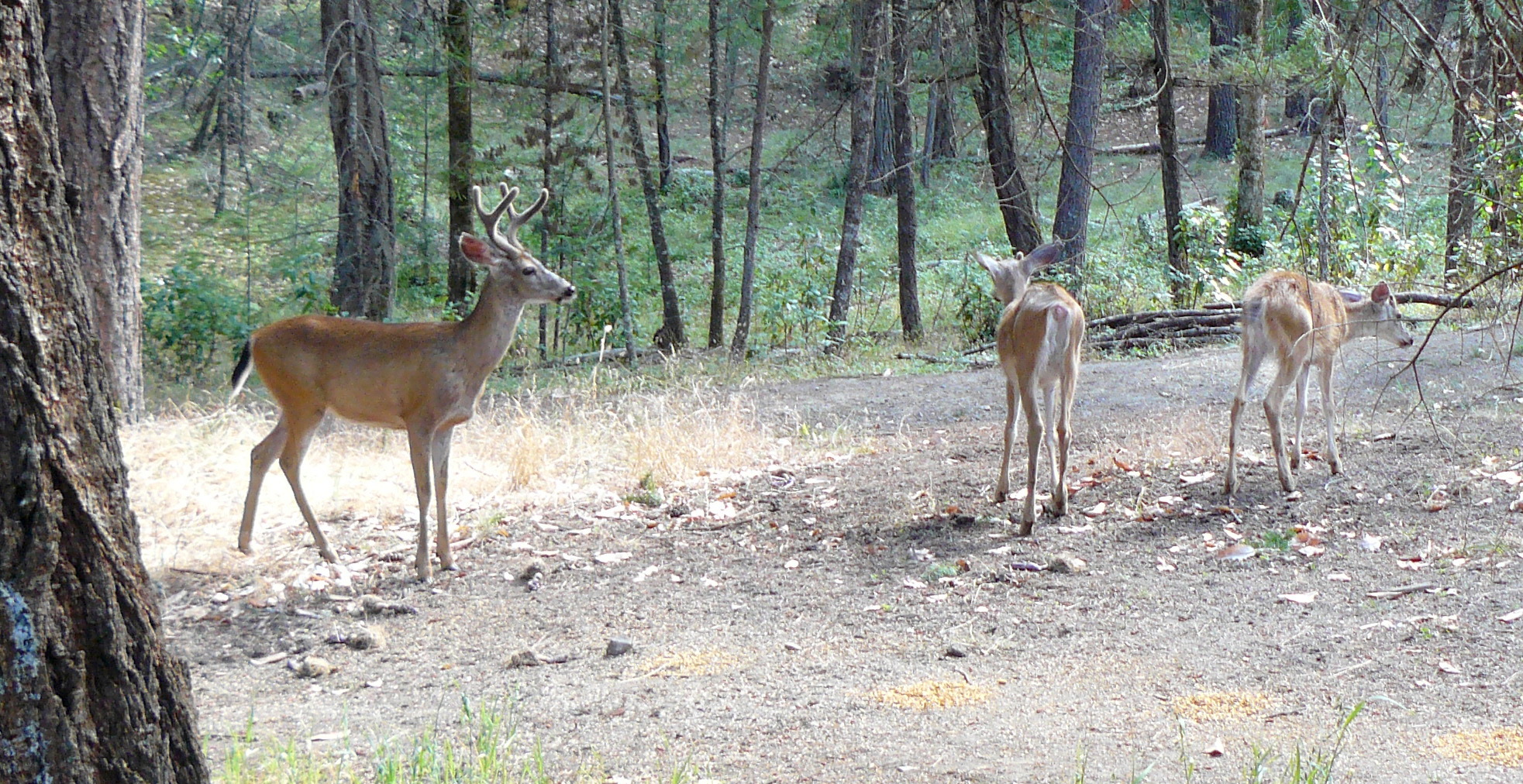
Photograph taken mid-January, 2014
oooo
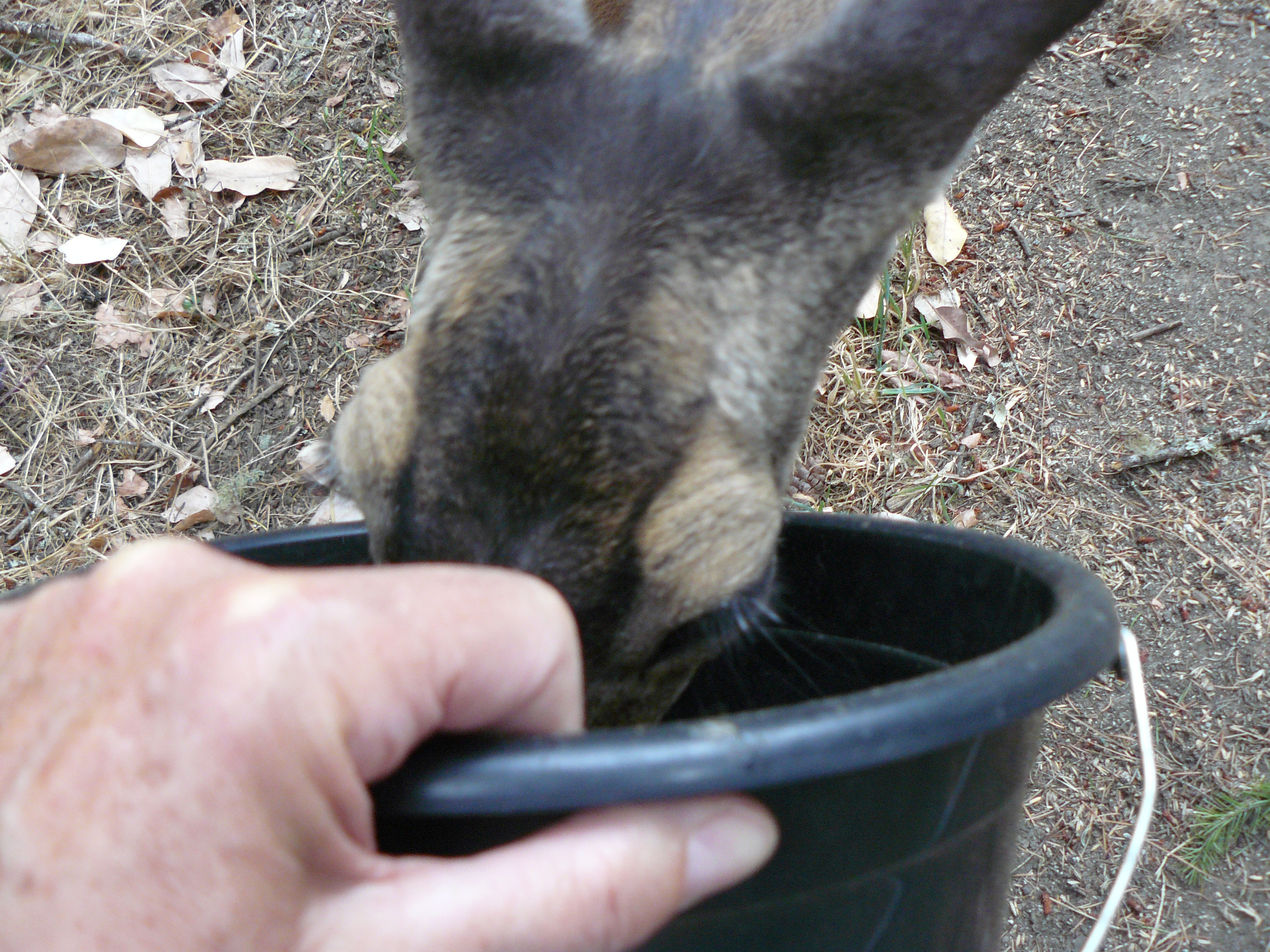
A deer reaches down to feed; the tray is about three feet in front of Jean and me. (October, 2014)
oooo
Jean reaches forward and gently draws the tray closer to us. The deer continues to feed. (October, 2014)
oooo
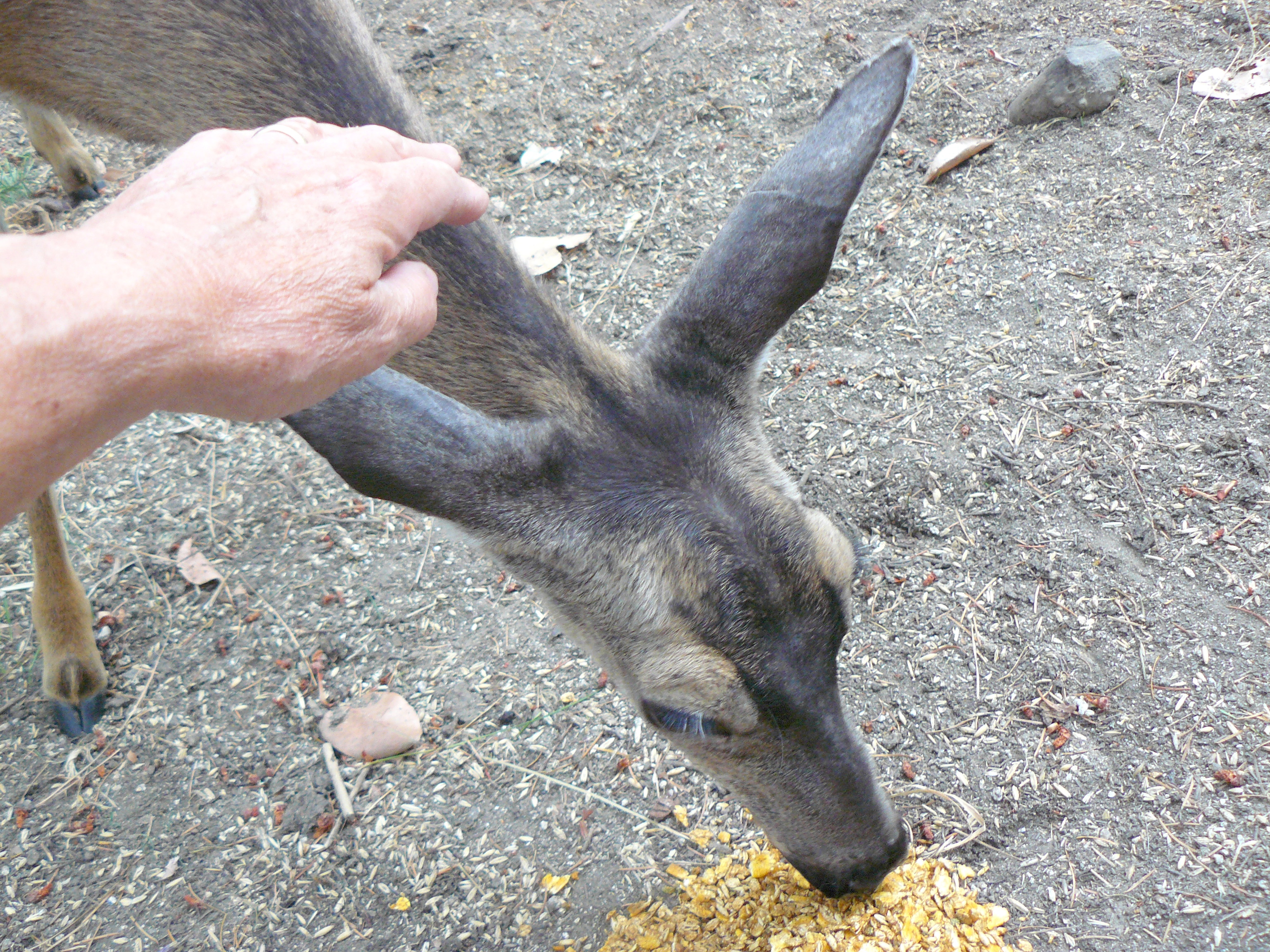
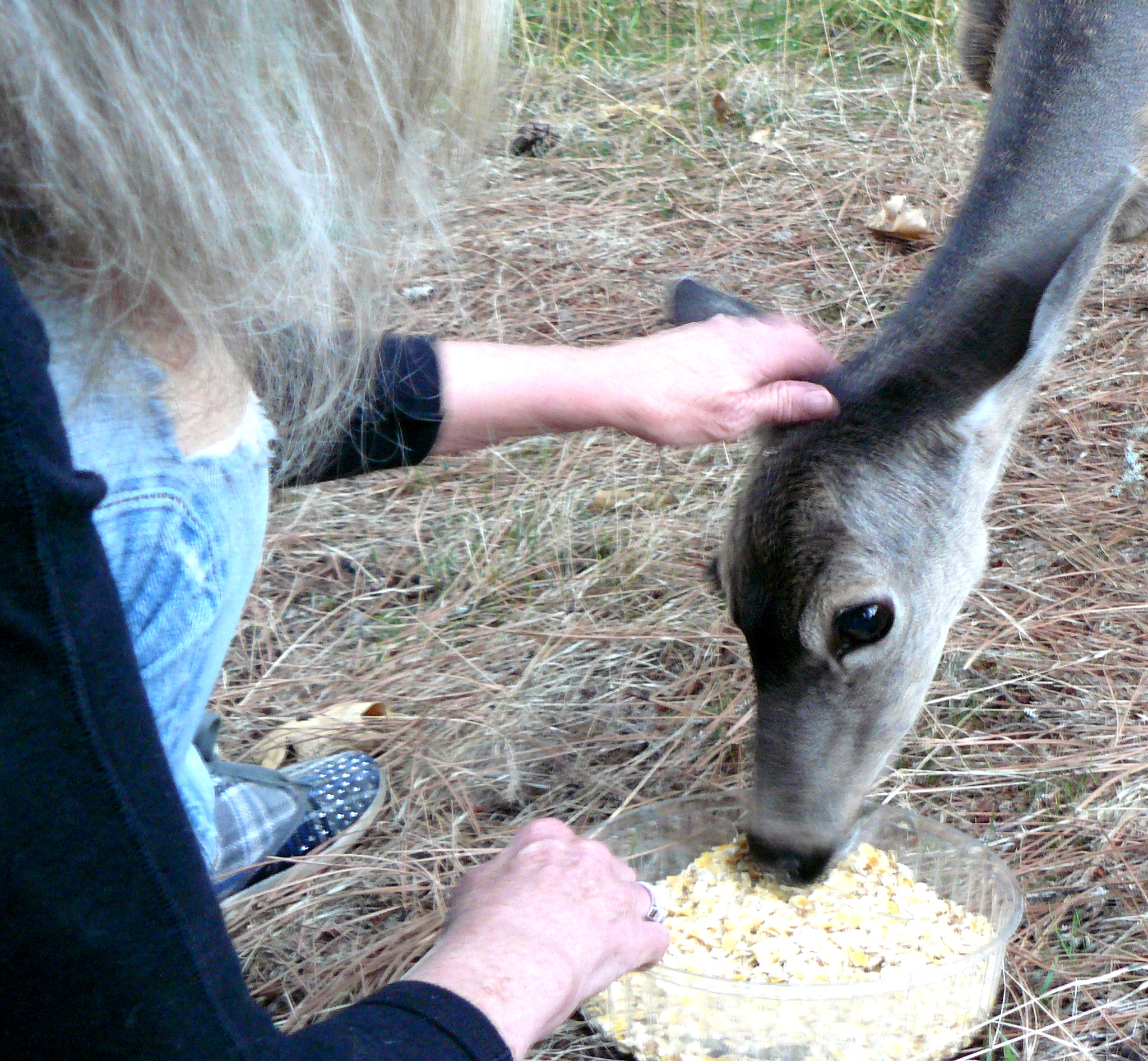
Then, unbelievably, the wild deer continues feeding as Jean fondles the deer’s head and neck. (October, 2014)
oooo
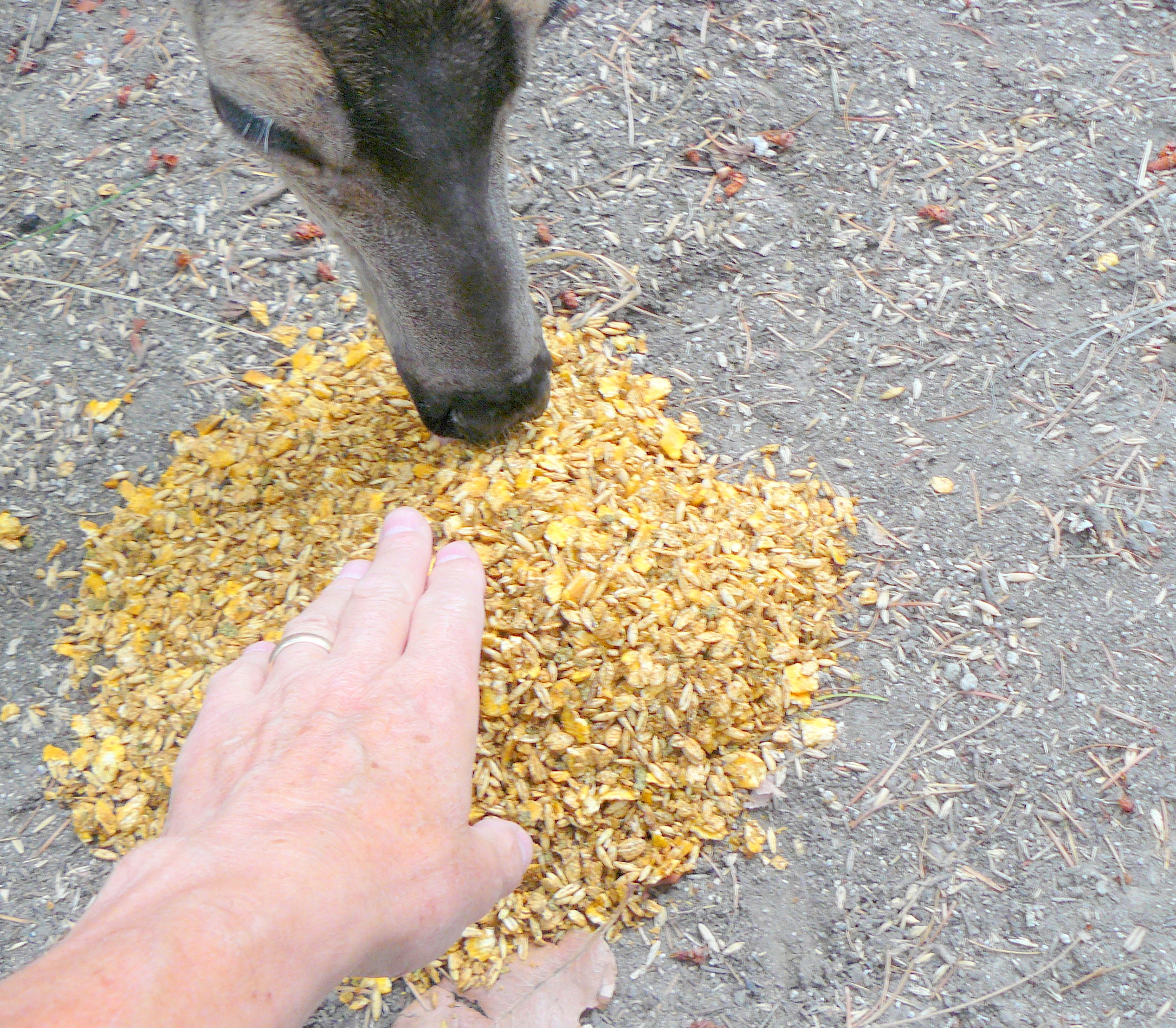
The trust between the deer and Jean then enabled the deer to feed from Jean’s hand. (October, 2014)
oooo
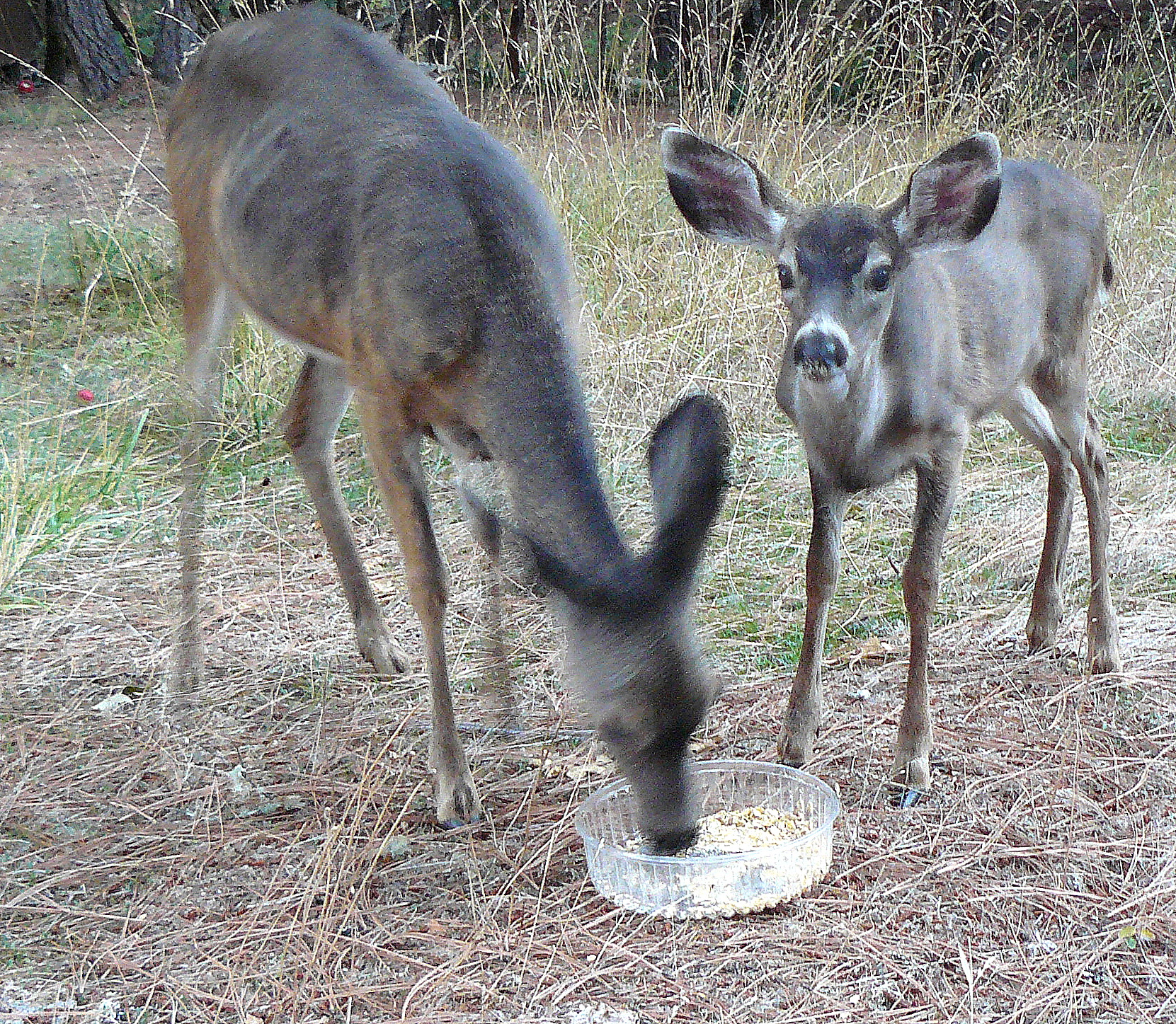
Then there was a rustle in the leaves some twenty feet away and we saw the fawn watching her mother feeding on the cob. Jean and I backed away, just by a few feet, and the fawn came right up to her mother. (October, 2014)
oooo
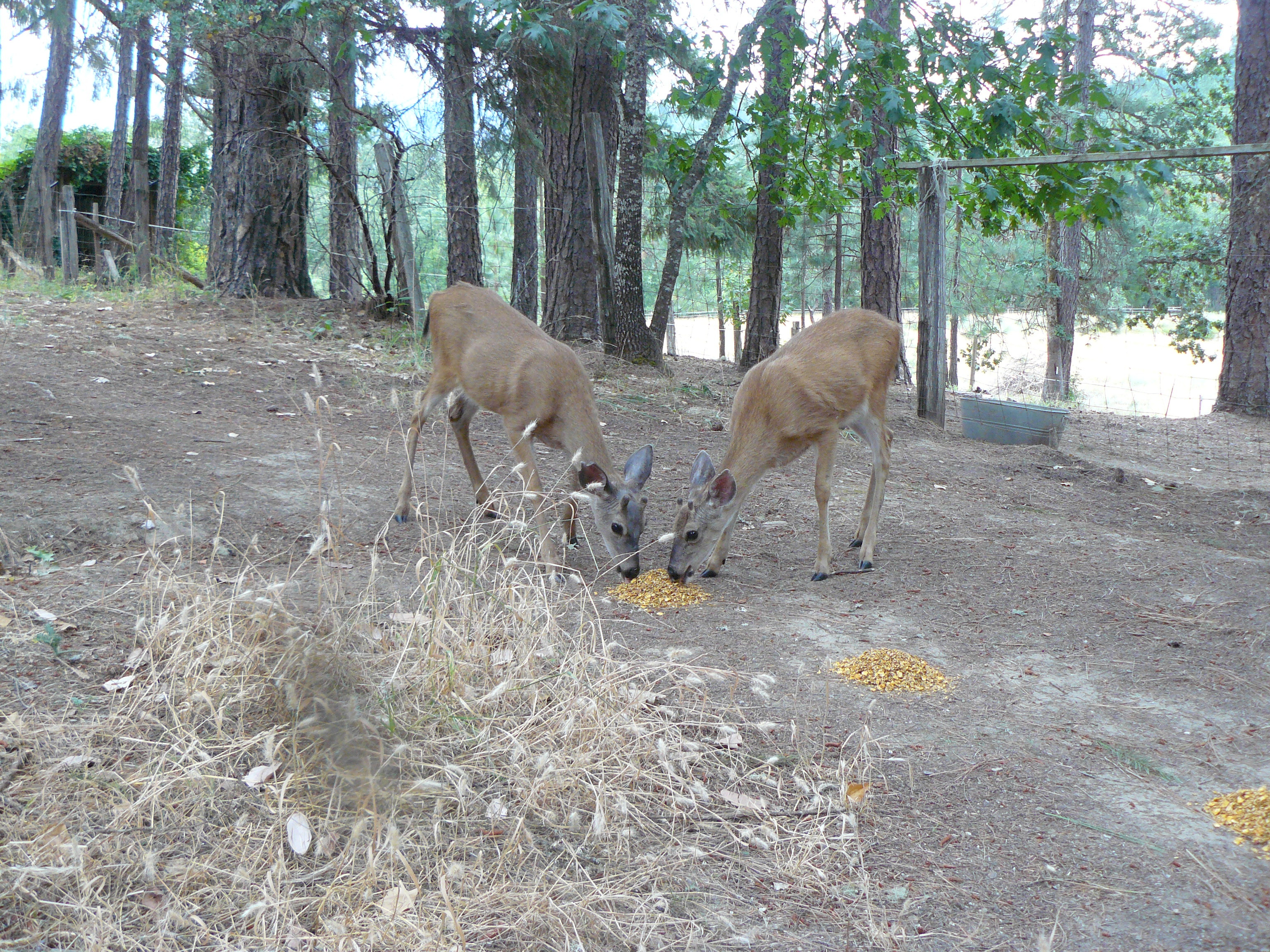
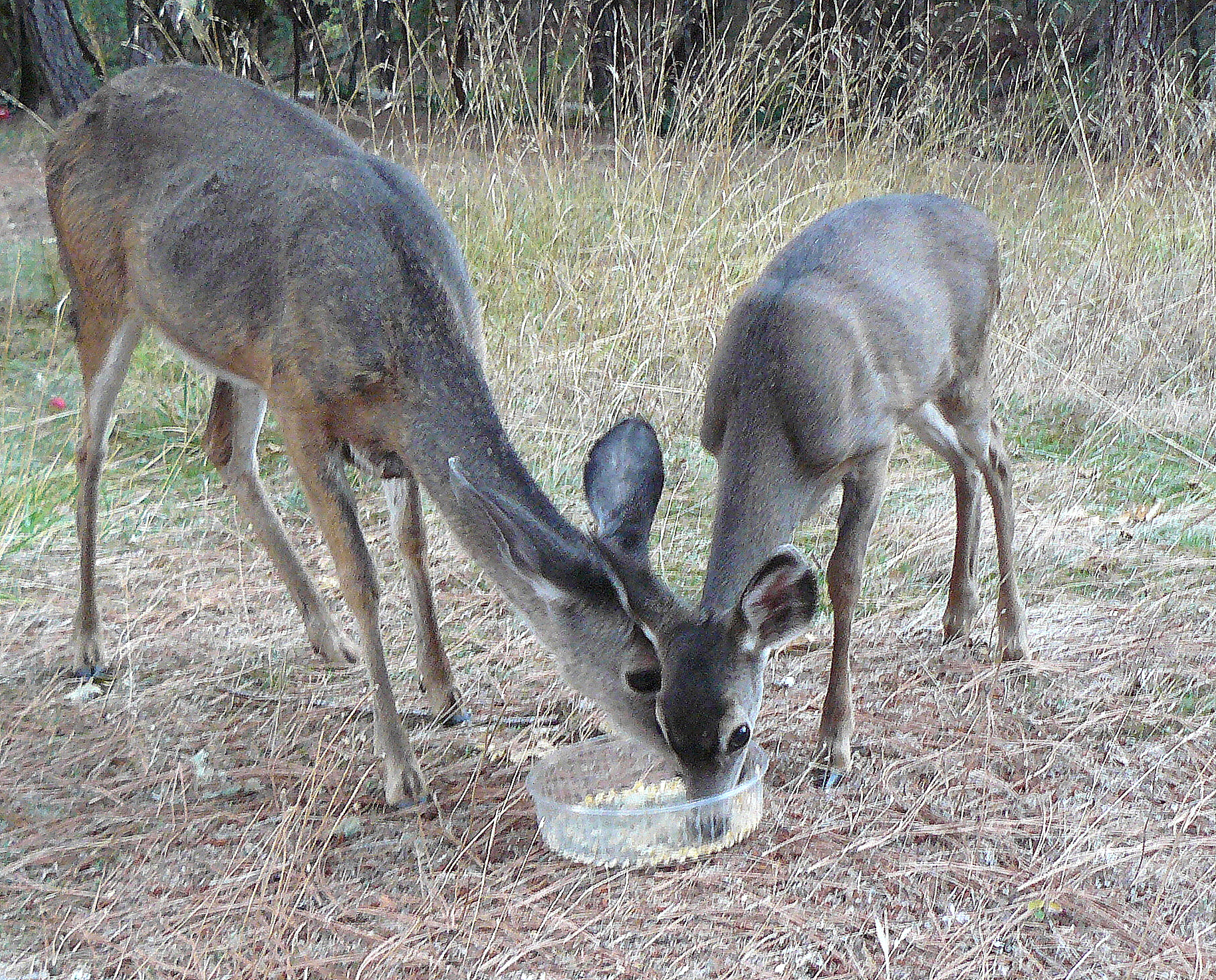
The culmination of the most magical of experiences: mother deer and her fawn eating together some three feet in front of us. (October, 2014)
A trip to the Oregon Caves National Monument & Preserve.
A week ago when our family guests were staying with us we decided it would be a treat for all of us to visit the very famous Oregon Caves – it was not a disappointment.
Morten and Marius gathering information.
The history of the caves does involve a dog.
Apparently Elijah Davidson discovered the caves in 1874 when he was out with Bruno, his dog, and it disappeared. The dog had fallen down a fissure that Elijah managed to squeeze into and, bingo!, there was the most incredible deep cave ahead of him. (Watch the video below for a fuller description of how the cave was discovered.)
Joaquin Millers Chapel This is a room seen on the cave tour. It is called Joaquin Miller’s Chapel and it is named after the author, Joaquin Miller because he wrote about Oregon Caves in Sunset magazine.
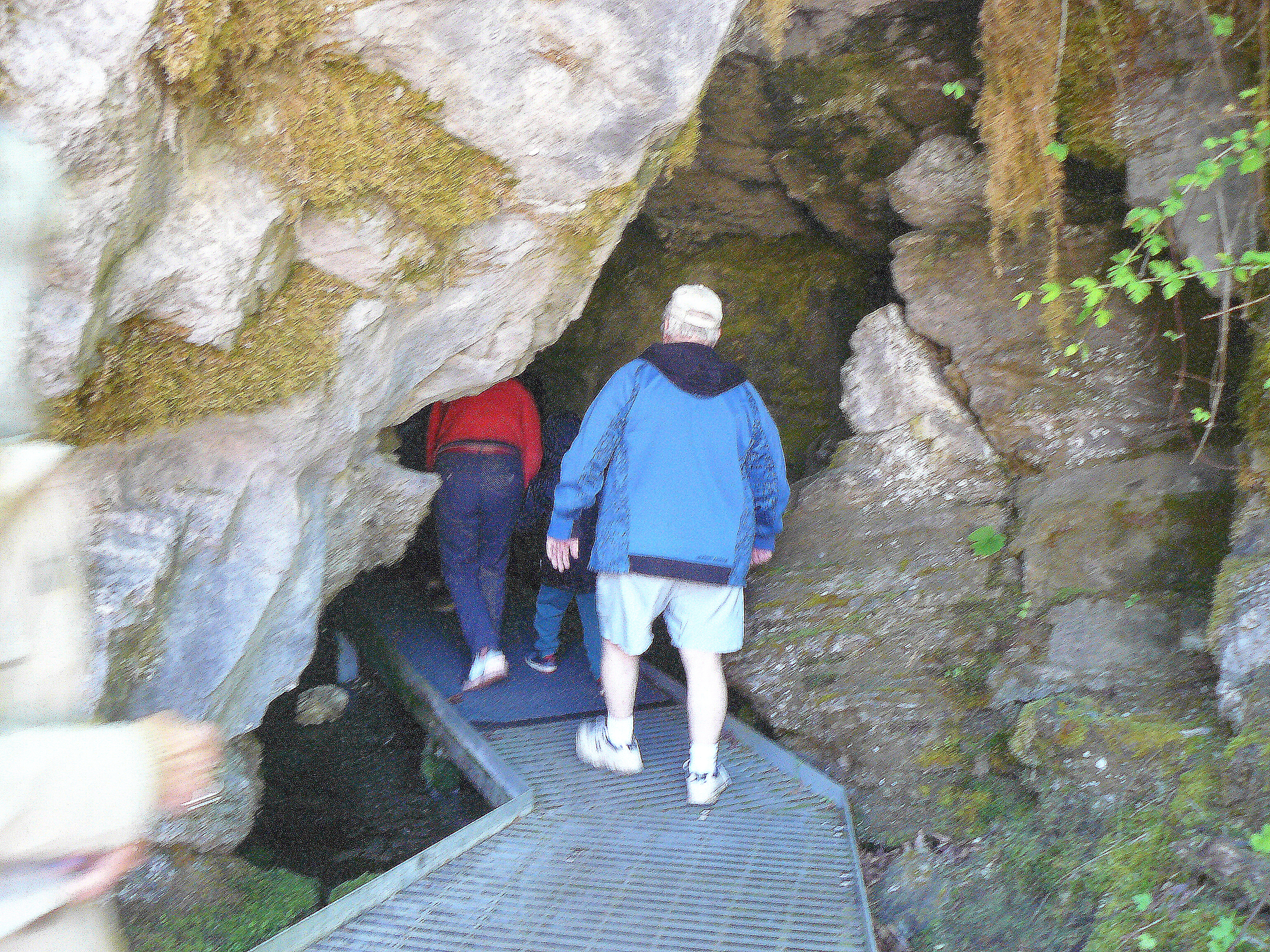
Clearly today’s visitors to the cave enter in a more gentle fashion!
Oregon Caves National Monument and Preserve is a National Monument and Preserve in the northern Siskiyou Mountains of southwestern Oregon in the United States. The main part of the 4,558-acre (1,845 ha) park, including the marble cave and a visitor center, is located 20 miles (32 km) east of Cave Junction, on Oregon Route 46. A separate visitor center in Cave Junction occupies 4 acres (1.6 ha) of the total. Both parts of the monument, managed by the National Park Service, are in southwestern Josephine County, near the Oregon–California border. The climate is generally mild even at the cave’s elevation of about 4,000 feet (1,200 m) above sea level, but icicles can form at the cave entrance, and winter snow sometimes blocks the park highway.
Elijah Davidson, a resident of nearby Williams, discovered the cave in 1874. Over the next two decades, private investors failed in efforts to run successful tourist ventures at the publicly owned site. After passage of the Antiquities Act by the United States Congress, President William Howard Taft established Oregon Caves National Monument, to be managed by the United States Forest Service, in 1909. The popularity of the automobile, construction of paved highways, and promotion of tourism by boosters from Grants Pass led to large increases in cave visitation during the late 1920s and thereafter. Among the attractions at the remote monument is the Oregon Caves Chateau, a six-story hotel built in a rustic style in 1934. It is a National Historic Landmark and is part of the Oregon Caves Historic District within the monument. The Park Service, which assumed control of the monument in 1933, offers tours of the cave from mid-April through early November. In 2014, the monument was expanded by about 4,000 acres (1,600 ha) and re-designated a National Monument and Preserve. In addition, the River Styx, which flows through the cave and emerges as Cave Creek, was named to the National Wild and Scenic Rivers System.
Oregon Caves is a solutional cave, with passages totaling about 15,000 feet (4,600 m), that formed in marble. The parent rock was originally limestone that metamorphosed to marble during the geologic processes that created the Klamath Mountains, including the Siskiyous. Although the limestone formed about 190 million years ago, the cave itself is no older than a few million years. Valued as a tourist cave, the cavern also has scientific value; sections of the cave that are not on tour routes contain fossils of national importance.
Daughter Maija, grandson Morten and yours truly just having exited the cave.
Between Marius and myself we took a great number of photographs but many of them can’t compare to the quality of photos found on the web.
These are formations known as soda straws and like soda straws they are hollow tubes. They are made up of the mineral calcite.
Won’t go on! (But I will post a collection of photographs, both from me and Marius and found online in a future Picture Parade.)
What I will do is to close with this YouTube video. It is 17 minutes long but very interesting and, hopefully, an inspiration to others to come and visit this incredible geological site.
The concluding photographs from the 10th annual Dog Photographer of the Year competition.
The first set were published a week ago, together with this introduction:
Incredible, prize-winning, images of dogs.
The following was read over on Mother Nature News on June 30th. They just have to be shared with you.
However, to ensure the integrity of republication and the identity of the photographers, I’m going to include the photographs and the words of the original MNN piece, and split it across today and next Sunday.
Trust me you will adore these photographs.
Here are the concluding photographs.
ooOOoo
These prize-winning images of dogs will steal your heart.
10th annual Dog Photographer of the Year competition drew entries from photographers in 90 countries.
Winner of the ‘I Love Dogs Because…’ category (Photo: Jade Hudson/Dog Photographer of the Year Competition)
Hugo the puppy is the subject of this winning image by 16-year-old Jade Hudson.
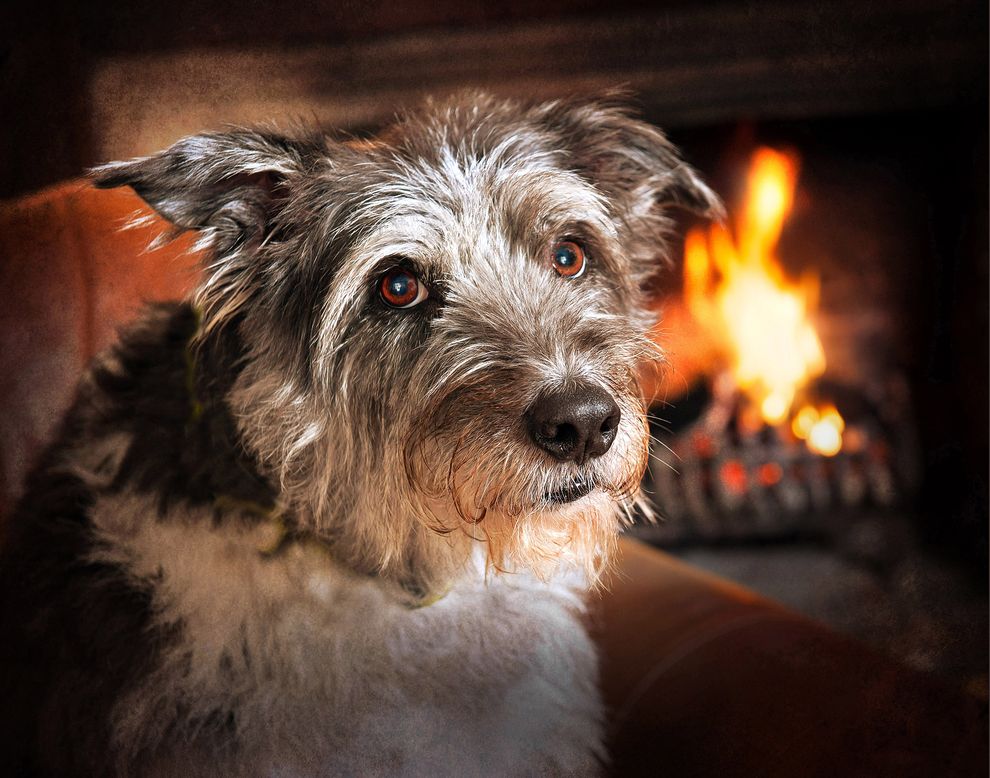
Winner of the Oldies category (Photo: Kevin Smith/Dog Photographer of the Year Competition)
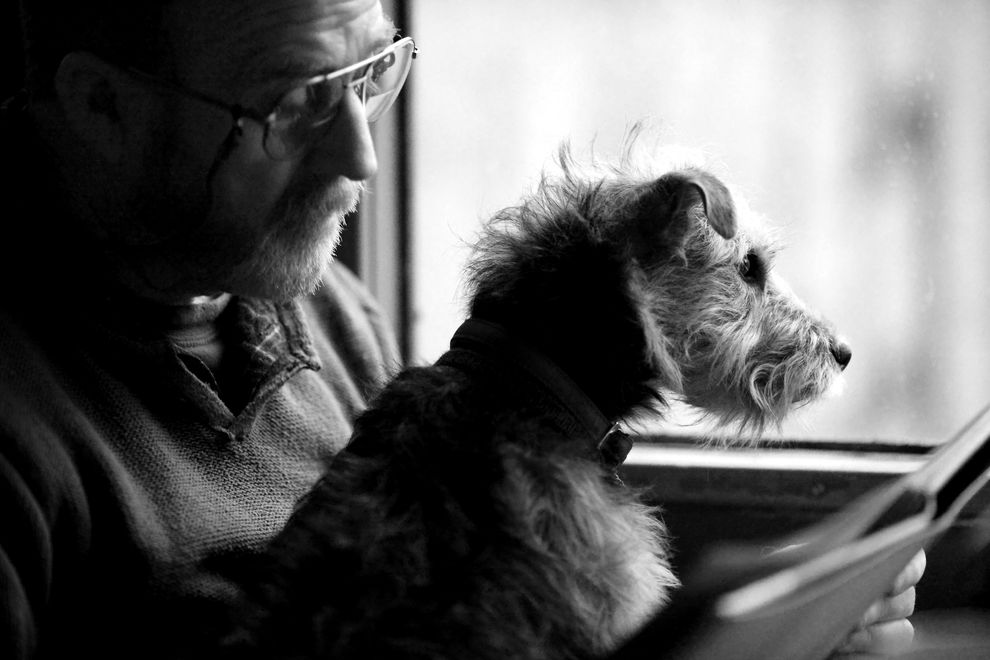
The gray faces of old dogs speak to all the love and friendship they’ve provided over the years as Lizzie, a 12-year-old mixed breed dog, shows us. Curling up with a cracking fire and your four-legged BFF is one of life’s great joys.
Winner of the Dog Portrait category (Photo: Jamie Morgan/Dog Photographer of the Year Competition)
This portrait of two Afghan hounds named Ozzie and Elvis took first place for the Dog Portrait category. The setting is the idyllic Ashdown Forest in Sussex.
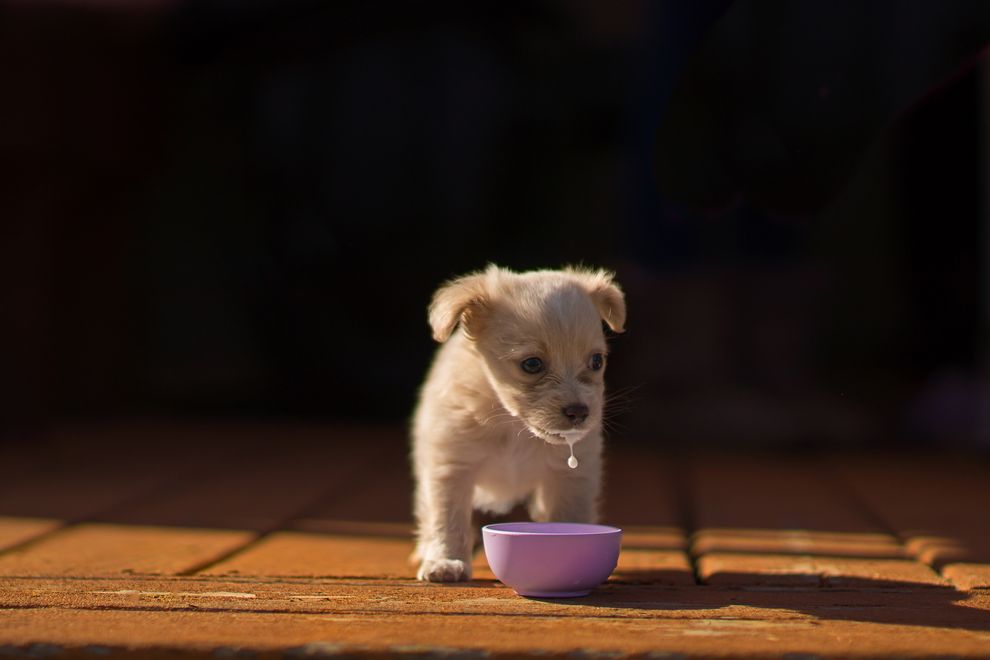
Winner of the Puppy category (Photo: Linda Storm/Dog Photographer of the Year Competition)
And finally, the winner of the Puppy category is little rescue puppy Buddy enjoying a bowl of milk. The photo was taken by Colorado-based photographer Linda Storm.
“The entries for this year’s Dog Photographer of the Year competition were some of the best we have ever seen,” says Rosemary Smart, Kennel Club chief executive. “Choosing the winners was an incredibly challenging task and we commend every photographer who entered. Each of the winning photographers beautifully captured the essence of their canine subjects on camera, demonstrating how important dogs are to us in every walk of life.”
If you’re a photographer who loves dogs as your subject, keep an eye on the opening date for next year’s competition!
ooOOoo
Going to repeat the words of Rosemary Smart as I can’t even come close to the power of what she said:
The entries for this year’s Dog Photographer of the Year competition were some of the best we have ever seen.
Choosing the winners was an incredibly challenging task and we commend every photographer who entered. Each of the winning photographers beautifully captured the essence of their canine subjects on camera, demonstrating how important dogs are to us in every walk of life.
Our new young puppy is consuming a great deal of attention and time!
As regular readers will know (and your readership is so much appreciated) last Tuesday I published the news that we had taken on a new puppy. He is settling in incredibly well but consuming heaps of attention; as well he should.
So rather than struggle to be creative with today’s post, I’m cheating by going back to the last time I wrote about a new arrival to our flock; namely puppy Cleo. If you will forgive me, I’m going to republish the post I wrote for puppy Cleo back on April 8th, 2012.
But before so doing, let me explain that our latest arrival has gone through a name change. The previous owners had named the young pup Smokey but we were not comfortable with that name; Jean especially so. So Smokey is now Ollie!
ooOOoo
The arrival of Cleo brings us back to eleven dogs.
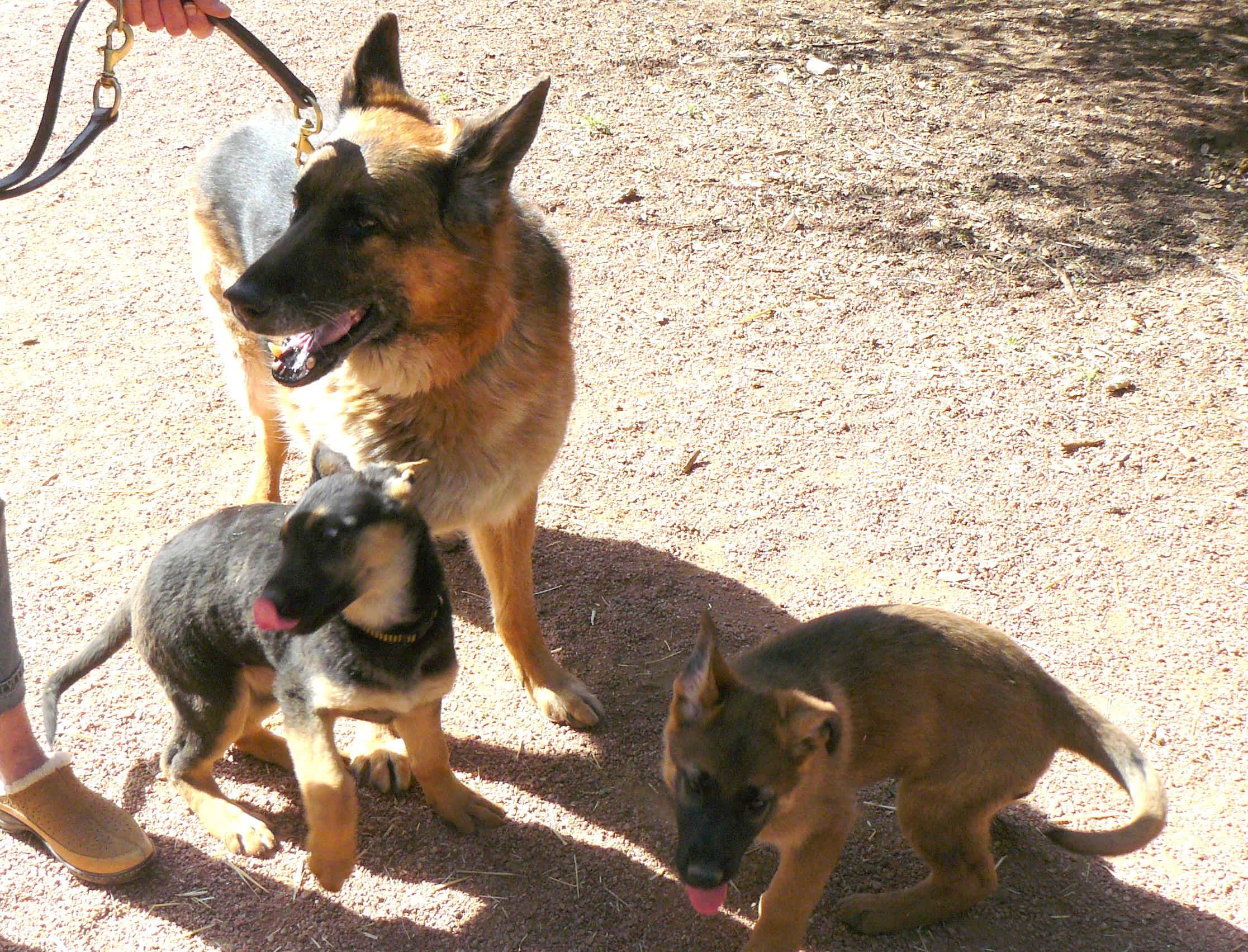
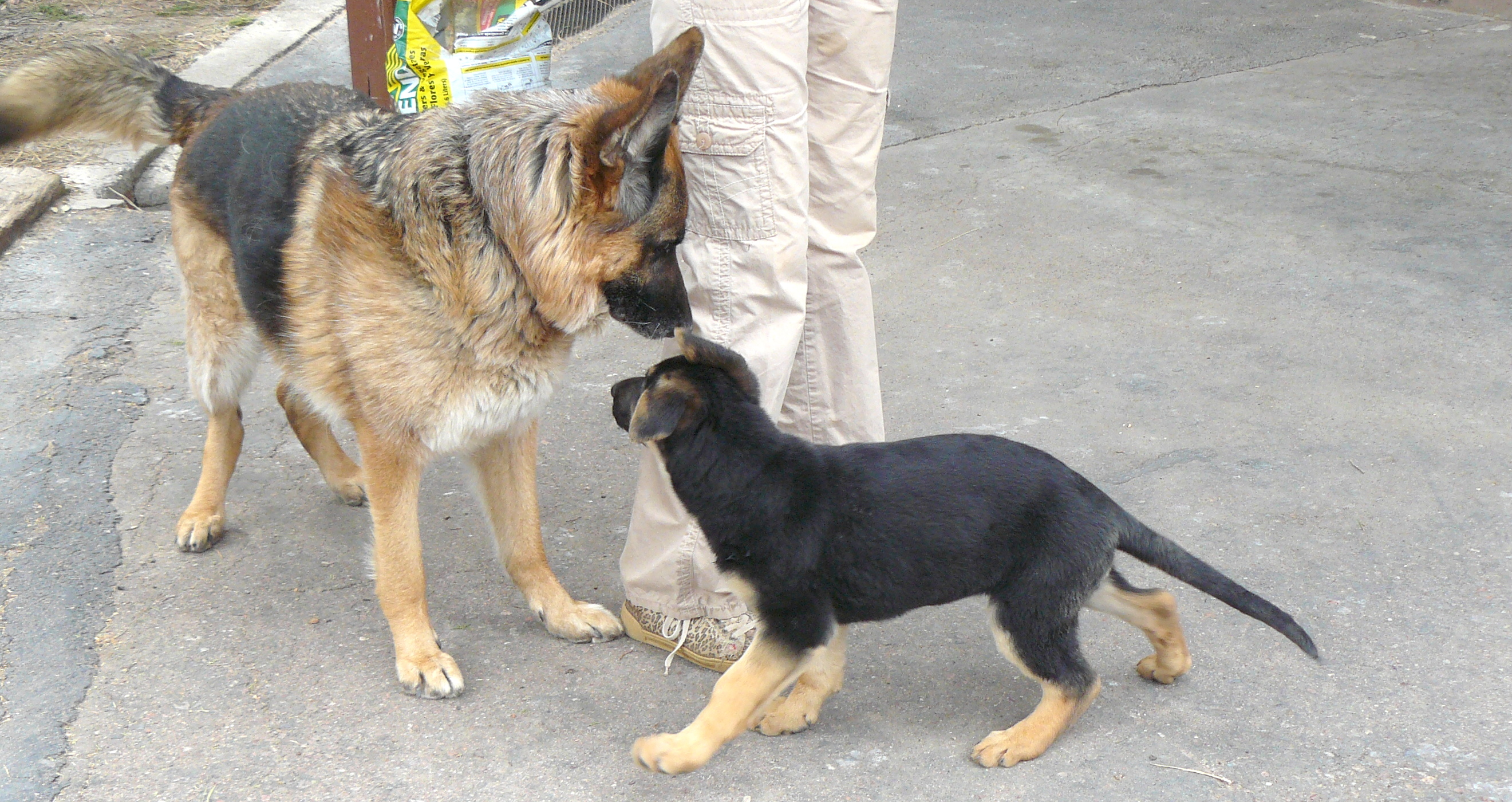
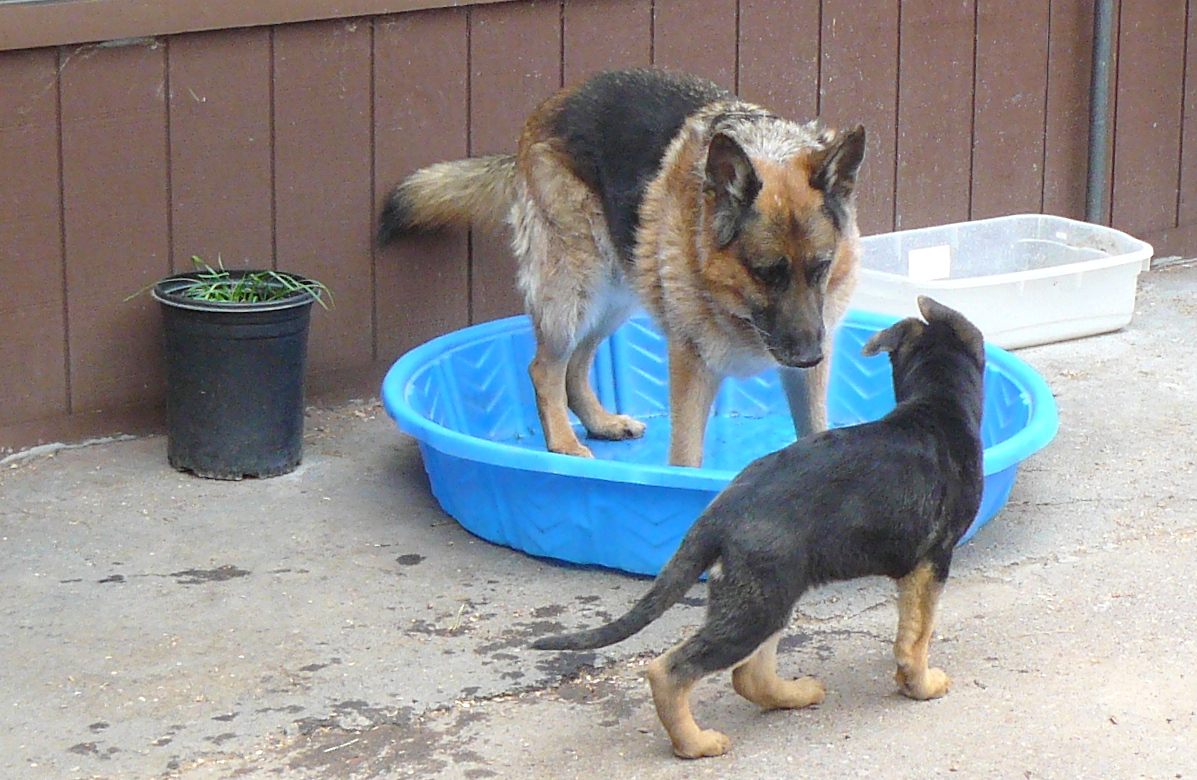
Way back in 2003 when I became the proud ‘Dad’ of Pharaoh, my German Shepherd dog that you see on the home page of Learning from Dogs, Sandra Tucker who ran the GSD Breeders Jutone, where Pharaoh was born, gave me some advice. Sandra said that when Pharaoh was getting on in life, then bring in a German Shepherd puppy. Apparently, there were two solid reasons why this made sense. The first was that Pharaoh would teach the new puppy many of the skills and disciplines that Pharaoh had learnt as a young dog and, secondly, the puppy would keep Pharaoh active.
Now we know this to be true because years later when Pharaoh had his own mini pack here in Payson, we introduced a new ‘rescue’ puppy called Sweeny. Pharaoh took an instant like to him and became very tolerant to Sweeny’s ‘games’.
Hi! I’m Pharaoh, going to be my buddy? (February, 2011)
But as adorable as Sweeny is, Jean understood the deep reasons why I always wanted a German Shepherd in our lives. So when a chance encounter in Payson Feed Store between Jean and Brendon S. revealed that Brendon had a litter of German Shepherd puppies for sale, just a couple of miles outside Payson, the temptation was irresistible!
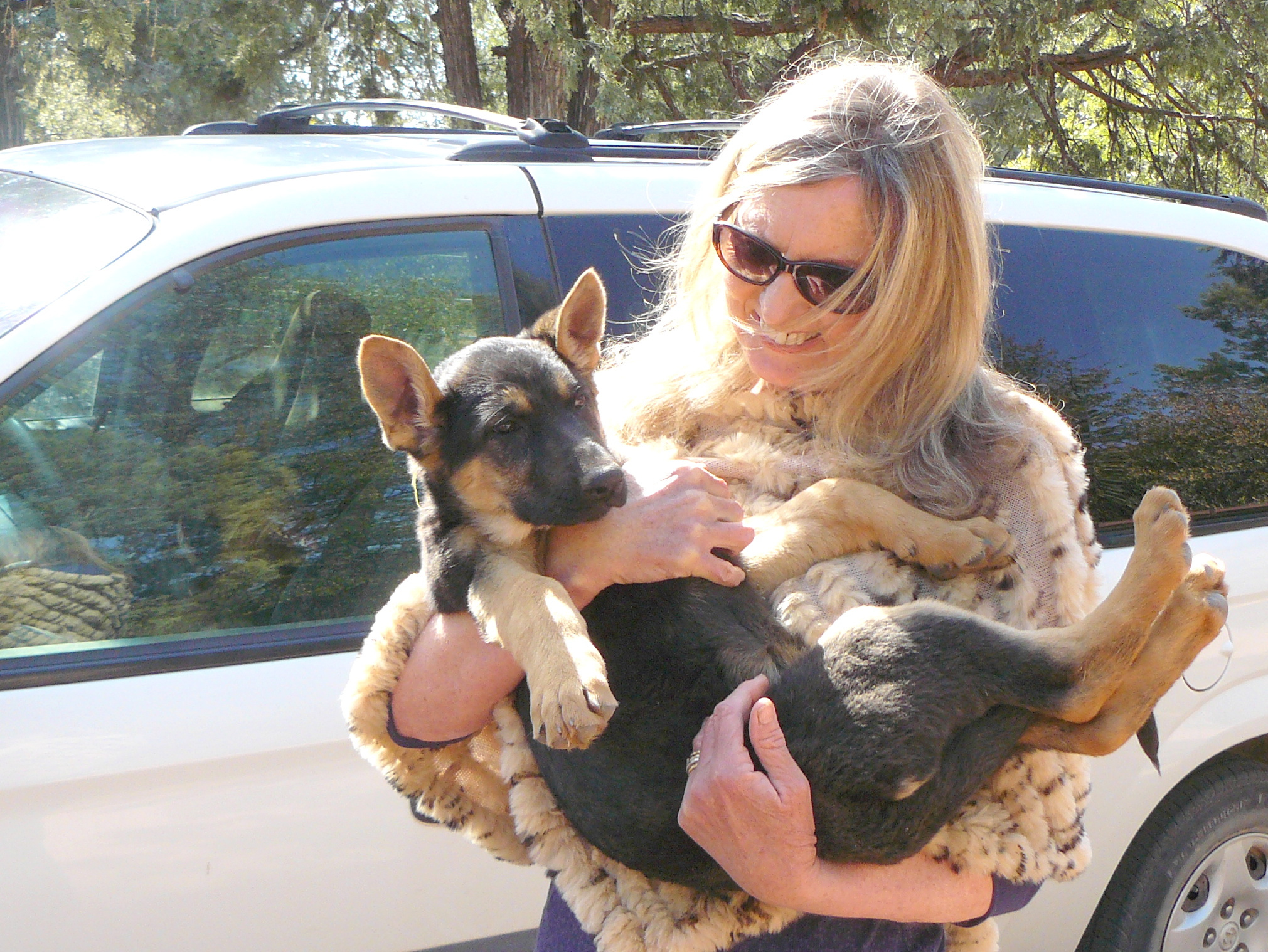
Thus a few days ago, Jean and I went round to Brendon’s home and spent a couple of hours mingling with the puppies and their GSD mother. They all looked excellent dogs and a review of their blood lines showed that their genetic background included German stock not too far back. It was difficult to select any one pup as they were all wonderful animals. But one youngster seemed to catch Jean’s eye.
Little bit of bonding going on!
Then the next test was to introduce Pharaoh to the puppies. That took place last Friday and it was wonderful to see how well he coped with the onslaught of puppies!
More puppies that one could shake a stick at!
In the end, we ran out of reasons not to follow Sandra’s advice from all those years ago and we agreed terms on a young female GSD that, inevitably, was christened Cleopatra (Cleo) by Jean!
Cleo meet your new Mum!
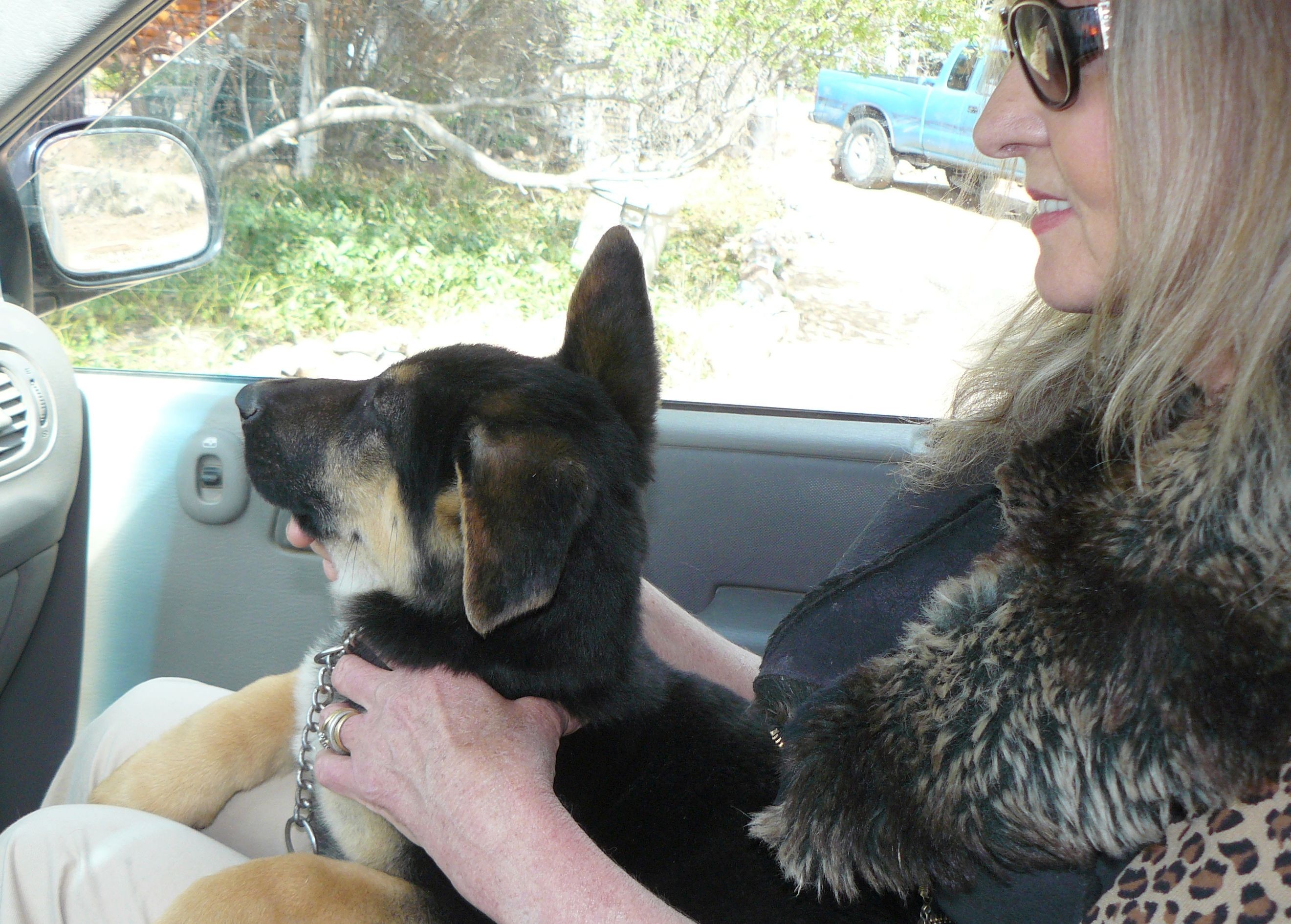
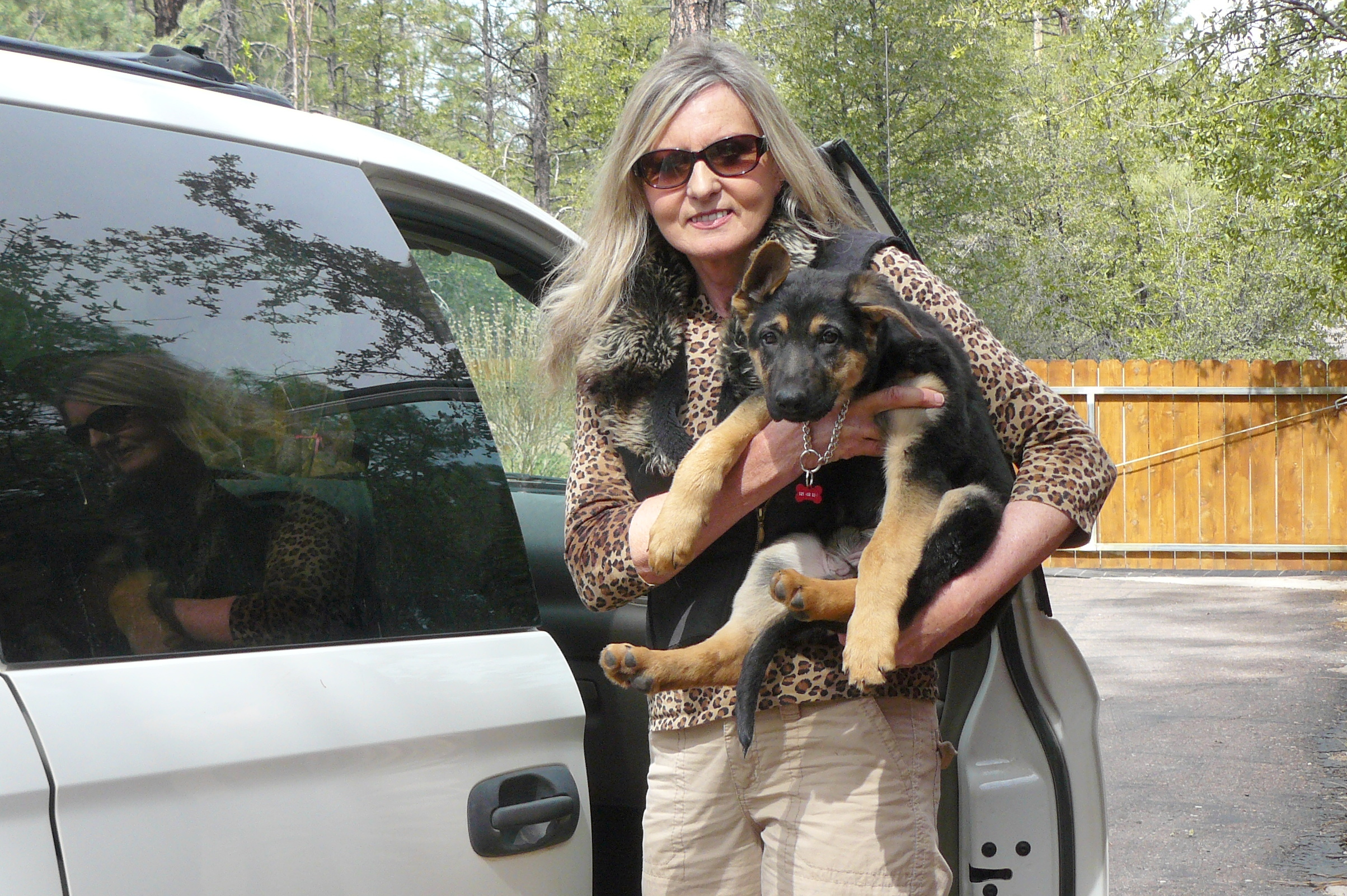
Then yesterday, Saturday, we went back round to collect young Cleo, meeting Brendan’s wife Ebony in the process. The following photographs record some of the key moments.
Homeward bound to a new life!Next step is to meet the gang!Welcome, young lady. I’m the boss around here!It’s my pool but you can use it!Hey Sweeny, fancy having one’s own woods to play in!She’ll do! Nice addition to my family!
So there we are. Back up to eleven dogs, five chickens, six cats, and a fish!
Finally, a big thanks to Sandra of Jutone for her guidance in the last few days.
ooOOoo
Back to the present to leave you with a picture of puppy Ollie happily playing with Cleo and Hazel. More pictures of Ollie on Sunday.
The recent news of finding a dog graveyard that is 2,000 years old.
Before going on to today’s post, can I just remind you kind folks that as of today, and for the rest of this week, we have family guests staying with us here in Oregon.
Grandson Morten responding to his mother, Maija, taking a picture of him and Marius, as they wait to board the aircraft for San Francisco yesterday morning.
Thus from tomorrow until the end of the coming weekend my posts will be a preponderance of republications of previous posts. Plus my attention to you dear readers will be less than you are accustomed to.
Now on to today’s post that was kindly sent to me by Chris Gomez. Thanks Chris.
ooOOoo
2,000-Year-Old Dog Graveyard Discovered in Siberia
By Tom Metcalfe, Live Science Contributor | July 15, 2016
Archaeologists have discovered a prehistoric dog graveyard at a 2,000-year-old village near the Arctic Circle in Russia’s Siberia. Credit: University of Alberta/Robert Losey
The carefully buried remains of five dogs were recently found in a 2,000-year-old doggy graveyard near the Arctic Circle in Siberia, according to archaeologists.
This discovery at the Ust-Polui archaeological site, in Salekhard, Russia, reveals close relationships between the region’s people and their animal “best friends” two millennia B.C. The dogs likely served as pets, workers and sources of food — and possibly as sacrificial offerings in religious ceremonies, the researchers said.
“The role of dogs at Ust-Polui is really complex and variable,” Robert Losey, an archaeologist at the University of Alberta in Canada, wrote in an email to Live Science from Salekhard, where he is carrying out fieldwork at Ust-Polui. [See photos of the prehistoric dog graveyard in Siberia]
“The most striking thing is that the dog remains are really abundant compared to all other sites in the Arctic — there are over 115 dogs represented at the site,” Losey said. “Typically, sites have only a few dog remains — 10 at most.”
Working dogs
The dogs were likely involved in various tasks in the ancient Arctic village, including pulling sleds, he said. The remains of two sleds, as well as a carved bone knife handle thought to depict a sled dog in a harness, have been found at the site.
“Some [dogs] were probably also used in hunting, for reindeer and birds, the remains of which were both abundant at the site,” Losey said.
Parts of a reindeer harness had also been found at Ust-Polui, he added, and dogs may have been used to herd reindeer, as is still done today by some communities in the region.
But despite evidence that the dogs worked with people and other animals, it was also clear that many of the dogs at Ust-Polui had been butchered and probably eaten, Losey said. Many of the dog bones had cut marks on them, and were found scattered around the site in the same way as the bones of other food animals, such as deer and birds, he said.
Some of the dog consumption may have been related to sacrifices or rituals, or even feasting, Losey noted. In fact, “at one place in the site, the heads of 15 dogs were piled together, all with their brain cases broken open in the same manner,” he said.
He added that the sacrificing of dogs was well documented among indigenous people in this region of Siberia, “and is done to appease spirits, or to ensure community health, and so on.”
Prehistoric pets
But though it might have been a dog’s life for most of the canine population of Ust-Polui, a few top dogs seem to have enjoyed special treatment, the archaeologists said. [10 Things You Didn’t Know About Dogs]
Of the more than 115 dogs that archaeologists identified among the animal bones at Ust-Polui, the remains of just five dogs were found carefully buried in a group near one edge of the site, Losey said.
This separation likely indicates close bonds between some people and some dogs in the ancient village, he said.
Each of the prehistoric doggy graves contained the entire dog skeleton, laid on its side in a shallow pit, similar to three human burials at the site, and they showed no signs of butchery or of being intentionally killed, the researchers found.
“The only thing that distinguishes them from the human burials is their location. No other animals at Ust-Polui were treated like this,” Losey said.
Ancient friendship
Losey started working with the dog remains from Ust-Polui three years ago, as part of his work studying the ancient relationships between people and dogs in the world’s northern regions.
In 2013 in the journal PLOS ONE, Losey published the results of his research into dog burials, dated to around 8,000 years ago, from archaeological sites in the Lake Baikal region of Siberia.
Some of the dogs from Lake Baikal were buried with decorated collars and what appeared to be grave goods, such as pottery jars and wooden spoons.
Losey said the differences between the two sites showed how people’s relationships with dogs varied among cultures over the estimated 15,000 years since dogs evolved from wolves.
“At Baikal, we have no evidence of dog consumption or sacrifice at all, and many of the dogs there are from carefully made burials,” Losey said.
Although tests on the dog remains at both sites suggested they would have been similar to Siberian huskies, the dogs at Ust-Polui were much smaller, with most weighing less than 50 lbs. (22 kilograms) and standing only 1.6 feet (0.5 meters) tall at the shoulder, Losey said.
What a long and intensely beautiful relationship. I’m bound to reinforce how that relationship is so powerful all these thousands of years later by republishing one of the photographs from yesterday’s picture parade:
Winner of the Man’s Best Friend category (Photo: Fiona Sami/Dog Photographer of the Year Competition)
The following was read over on Mother Nature News on June 30th. The item, and especially the photographs, just had to be shared with you.
However, to ensure the integrity of republication and the identity of the photographers, I’m going to include the photographs and the words of the original MNN piece, and split it across today and next Sunday.
Trust me you will adore these photographs.
ooOOoo
These prize-winning images of dogs will steal your heart.
10th annual Dog Photographer of the Year competition drew entries from photographers in 90 countries.
Winner of the Man’s Best Friend category (Photo: Fiona Sami/Dog Photographer of the Year Competition)
The love of a dog is a universal joy, as the latest photography competition from The Kennel Club illustrates. The 10th annual competition drew over 13,000 entries from photographers in 90 countries. The photographs show the beauty, loyalty, companionship, dignity and, of course, the adorableness of dogs around the world.
The competition features eight categories, including Puppies, Oldies, Dogs at Work, Dogs at Play, Man’s Best Friend (winner pictured above), Assistance Dogs and Dog Charities, Dog Portraits and I Love Dogs Because.
Winner of the Dogs At Work category as well as overall winner of the competition (Photo: Anastasia Vetkovskaya/Dog Photographer of the Year Competition)
This image of Sheldon the English springer spaniel enjoying a mist-shrouded pond early one morning is the work of Anastasia Vetkovskaya from Russia. Not only did it win for the Dogs At Work category, but it also placed as the overall winner of the competition.
Vetkovskaya states, “I have loved animals from an early age, which is why I went to Moscow Veterinary Academy and became a veterinary surgeon in 2007. Around this period of time, my husband gave me my first SLR camera, and since then I have devoted all of my free time to photography. My specialty is pets, and I am inspired most by horses and dogs.”
Winner of the Dogs at Play category (Photo: Tom Lowe/Dog Photographer of the Year Competition)
Baxter the Westie inspired his photography-loving human, Tom Lowe, to snap this image of Baxter playing in the water of Loch Lomond in Scotland.
Winner of the Assistance Dogs and Dog Charities category (Photo: Michael Higginson/Dog Photographer of the Year Competition)
This poignant image was taken by Michael Higginson, and features his brother Dale with Esta the dog. The win not only benefits the photographer but also a charity of his choice. The Kennel Club is making a donation to Higginson’s favorite charity, Dogs for Good.
Higginson states, “Winning the Assistance Dog category has made it even more special. It’s an honor to be able to show the world what a difference a dog can make to someone else’s life.”
ooOOoo
Aren’t they breath-takingly beautiful!
The rest of these fabulous photographs in a week’s time.
 The zoo keepers found an old sick dog on the grounds in the park at the zoo where the orangutan lived. They took the dog to the animal treatment center; the dog arriving at the same time that the orangutan was there being treated.
 The two lost souls met and have been inseparable ever since. The orangutan found a new reason to live and each always tries his best to be a good companion to his new-found friend. They are together 24-hours-a-day in all their activities.
 They live in Northern California where swimming is their favorite past-time, although Roscoe (the orangutan) is a little afraid of the water and needs his friend’s help to swim.
 Together, they have discovered the joy and laughter in life and the value of friendship.
 They have found more than a friendly shoulder to lean on.
 Long Live Friendship!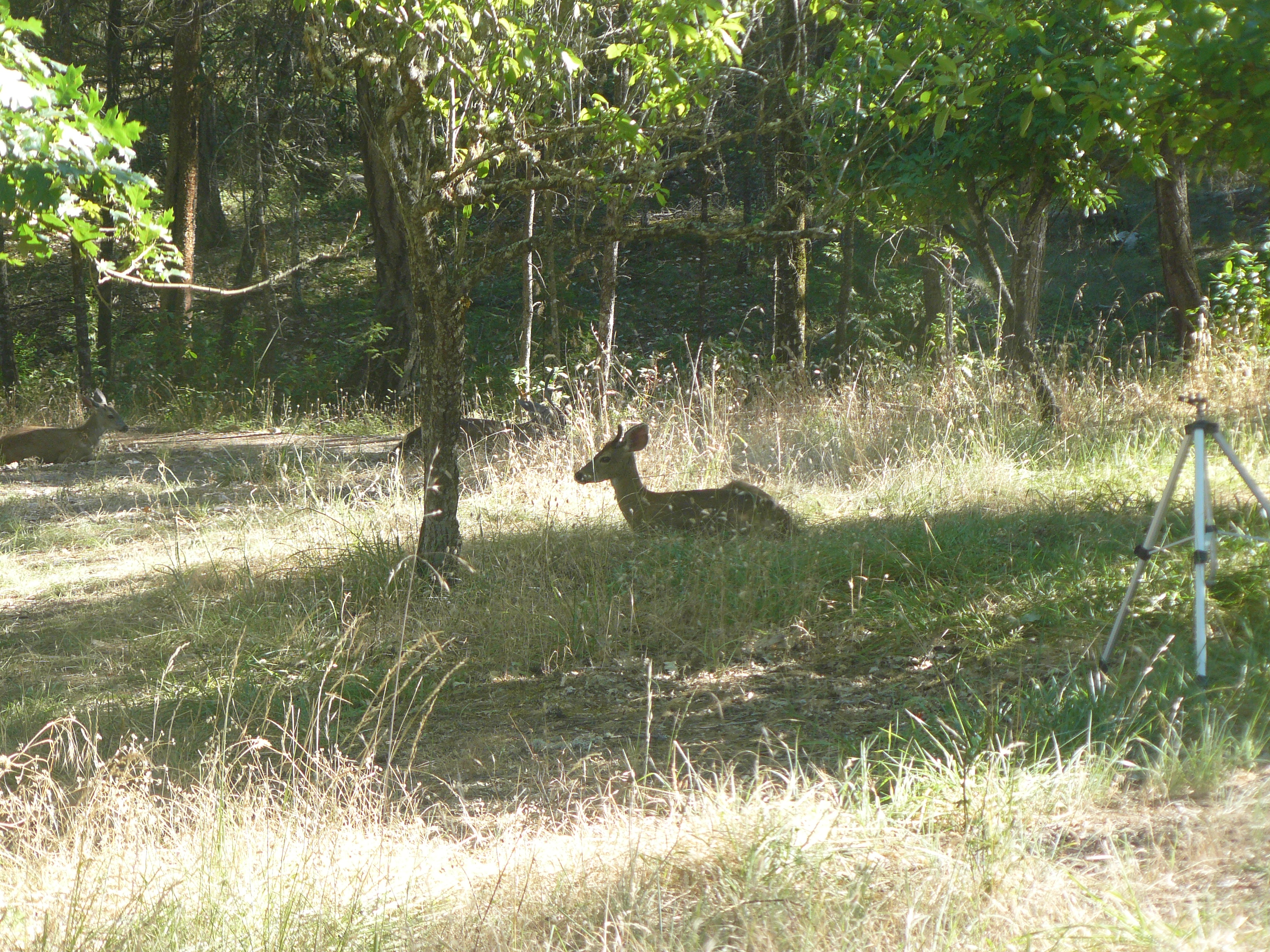











 Learning from Dogs