She died a short while ago, at 21:22 GMT/UTC on Monday, November 14th.
That is 9:22 pm British time on the same day as the moon’s closest distance to our Mother Planet since 1948.
Or to find some poetry in the timing of the end of my mother’s life, she died 10 hours to the minute after that closest moment of the moon’s passing, that was at 11:22 British time this morning.
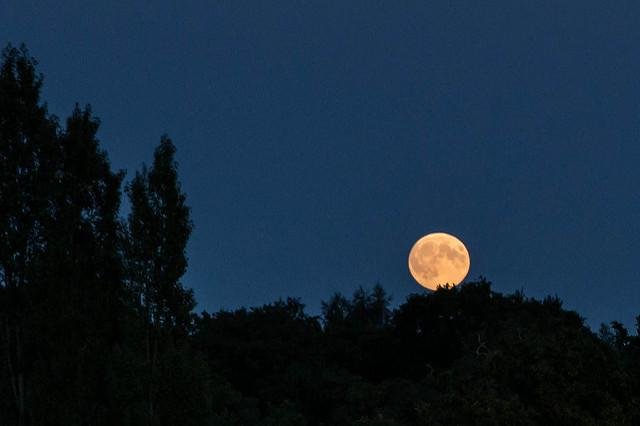
This photograph of the moon was taken last night from here at home in Oregon at a few minutes after 10pm.
My mother was born Elizabeth Foreman and after the death of our father, Frederick Handover, in 1956, she subsequently married Richard Mills.
My sister, Elizabeth, and I were born in 1944 and 1949 respectively. My mother and Richard were parents to our half-sister Eleanor, who was born in 1959.
Our mother was an incredible woman and her death is truly the end of an era for the family.
For the rest of my years, I will look up at the full moon and remember my mother’s amazing life.
Dan, my Best Man, at the wedding of Jean and me, November 20th 2010. My mother is between Dan and me.
Dear people, you will understand why I will be taking a few days away from blogging.
According to NASA, the full moon that rises on Nov. 13 will be the closest one to Earth since 1948. If viewing conditions are clear, the moon will not only appear 30 percent brighter, but also 14 percent larger. While the nighttime viewing is supposed to be spectacular, the true closest approach of the supermoon will take place on the morning of Nov. 14 at 8:52 a.m. EST.
Just how special is this super supermoon? Humanity won’t get another show like this one until Nov. 25, 2034.
The moon turns precisely full on November 14, 2016 at 1352 UTC. This full moon instant will happen in the morning hours before sunrise November 14 in western North America and on many Pacific islands, east of the International Date Line.
For those of us on Pacific time that equates to 0852 PST.
So the balance of today’s post will comprise the republication, with permission, of a recent essay on The Conversation blogsite.
ooOOoo
Supermoons are big and bright, but not as rare as the hype would suggest.
Senior Lecturer and Associate Department Head for Undergraduate Programs in Astronomy & Astrophysics, Pennsylvania State University.
As an observational astronomer who teaches students about the behavior of the moon, I’m thankful for anything that inspires people to go out and look at the sky. For me it’s second nature to pay attention to the moon; when my son was born, I would take him out at night to observe with me, and one of his very first words was “moon.”
But I have mixed feelings about what’s being billed as the upcoming “super-supermoon.” Many astronomers do not like using the term because reports overhype the factors that make certain full moons unusual. Most of what you’ve likely read has probably misled you about what you can expect to see on Nov. 14 and just how rare this event is. Beautiful, yes. Worth looking up for, definitely. Once in a lifetime… that’s a bit overblown.
The moon’s phases as it revolves around the Earth. Orion 8, CC BY-SA
The moon’s cyclical phases
Just about everyone is familiar with the moon’s changing appearance as it goes through its phases from crescent, to half-illuminated (first quarter), to gibbous, to full, and then back through gibbous, to half-illuminated (third quarter), to crescent, to new.
This pattern occurs because the moon orbits the Earth. When the moon is between the Earth and sun, it’s a new moon, and you don’t see it that day. When the moon is on the opposite side of the Earth from the sun we get a full moon as the sun’s light illuminates almost its entire face. The complete sequence of phases takes about the same amount of time as it does for the moon to orbit the Earth once – just about a month.
As the moon makes its monthly trip around our planet, it travels on an elliptical, not circular, path. Every object in the solar system orbits like this, including the Earth around the sun; over the course of the year, the Earth is sometimes closer to the sun and sometimes more distant. Same for the moon – sometimes it’s closer to us and sometimes farther away.
The changes are proportionally not large; at “perigee” (the closest it gets to the Earth) the moon’s approximately 10 percent closer to the Earth than at “apogee” (most distant point on its orbit). Over the year, the moon’s distance from Earth varies from around 222,000 to 253,000 miles.
The moon’s orbit is elliptical and changes over time. Rfassbind
The time it takes the moon to go from perigee to perigee (about 27.3 days) is shorter than the time it takes to go through a complete set of phases (about 29.5 days). Because these timescales are different, the phase at which perigee occurs varies. Sometimes perigee occurs when the moon is full, but it is just as likely for perigee to occur when the moon is in the first quarter phase, or any other. Whichever phase the moon is in when it’s at perigee will be the one that looks largest to us here on Earth for that month.
At perigee, the moon can appear 14 percent larger and 30 percent brighter than an apogee full moon. But this is complicated by the fact that our eyes play tricks on us and convince us the moon looks larger when it is near the horizon than when it is higher in the sky. Every full moon will look big and bright whether it happens at perigee or apogee.
So what’s a supermoon?
The first time I heard the phrase “supermoon” was in 2011, and someone had to explain the suddenly in vogue term to me. People were using it to describe the full moon that happened to occur within an hour of perigee in March of that year. The moon’s perigee distance also varies a bit, and March 2011 was the moon’s closest perigee of that year.
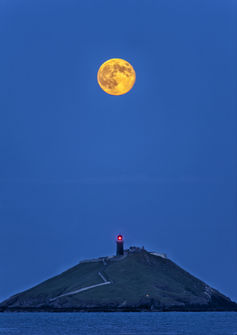
A 2013 supermoon as seen from Ireland. John Finn, CC BY-NC-ND
This was a somewhat rare event – a full moon occurring not just at perigee, but at the closest perigee of the year. But many people got the impression that this was an exceedingly unusual event, and rushed to see and capture images of this supposedly ultra-rare moon. Depending on how closely you require the full moon to occur to perigee in order to call it a supermoon, though, these events happen at least roughly once a year, and often more frequently.
Which brings us to this month’s much ballyhooed “super-supermoon.” News stories are hyping the upcoming full moon as a once-in-a-lifetime viewing opportunity. It’s true that the Nov. 14 full moon is the closest since 1948, and the next time the full moon will be closer is in 2034.
But this month’s full moon is only 0.02 percent closer – a mere 41 miles! – than the March 2011 supermoon. These tiny distances make no noticeable difference in the moon’s appearance.
Get out there and enjoy this supermoon! AP Photo/Charlie Riedel
Please do go out and observe the November full moon. If you are good with photography, try to document that the moon does appear larger than the other months this year. Just be aware you’ll have other virtually equivalent opportunities to do so pretty much every year for the rest of your life. So don’t worry if you miss it. You can catch the supermoon next time around.
ooOOoo
Fingers crossed our local weather will enable Jean and me to view this moon and I will try and photograph it.
If any readers also get to see this moon do let us know your thoughts and feelings.
And there’s another special moment regarding the moon coming up in a week’s time! (You’ll have to be patient for I’m not saying anything more just now!)
Yesterday was another one of those days where everything seemed to be squeezing in on me. Not in a negative fashion just stuff that had to be done; and that before I even got to the book!
So when I sat down mid-afternoon to think about today’s post, trying to ignore the beautiful day it was here in Merlin, Oregon and how I really wanted to take a bike ride, I wasn’t particularly creative of thought; to say the least! 😉
Thus when I saw the email from Cynthia Scobey that included a link to the following video I would have hugged her had she been in the same room!
Settle back for ten minutes and forget about the funny old world we seem to be living in just now!
(Not so much this funny old world but more about this funny old fart who is the author of this blog. For when I was screening this post to Jeannie yesterday evening she quickly pointed out that we had seen this before. Indeed, we had. Back on the 19th October! Sorry folks!)
Here’s a very delightful guest post coming up. But first to my introduction.
Speke’s Monument, Kensington Gardens
Whatever one feels about London, the city of my birth (Acton; North-West London, to be more precise), there’s no denying that it has some glorious parks.
One of those wonderful parks is Kensington Gardens that is located not that far from the Royal Albert Hall. Or as Wikipedia puts it:
Kensington Gardens, once the private gardens of Kensington Palace, are one of the Royal Parks of London, lying immediately to the west of Hyde Park.
So keep that image in your mind as we turn to today’s guest post.
ooOOoo
A Victorian Dog Story
If you are ever in the UK, wander through Kensington Gardens (past the palace where Princess Diana resided) and go Northeast, behind Victoria Lodge; you will find a pet cemetery. Mentioned by Peter Pan author, J.M. Barrie, in his work The Little White Bird, over 200 dogs, cats and birds have been laid to rest here. All of its inhabitants were once beloved pets.
The cemetery was started by the lodge keeper around 1881; the first dog to be buried in Kensington was her “Cherry”, a Maltese terrier who died of old age. The second dog was “Prince”, once belonging to the Duke of Cambridge (no relation to the present Duchess of Cambridge, Kate Middleton!). Struck by a carriage, this dog’s simple gravestone reads: “Poor Prince.” Though the cemetery is no longer active, contemporary guests can take pictures of the tiny tombstones and read such sentiments as “Maudie, An Old Friend”, “Darling Dolly My Sunbeam, My Consolation”; and “In Loving Memory of Our Faithful Little Friend Wobbles.”
Keeping dogs as pets gained popularity in the 19th century. As sanitation conditions started to be regulated, animals such as pigs, cows and sheep were banned from the streets. So dogs that were once kept outside were now invited by the fire. The dog changed from being a worker to being a member of the family. In 1837 there were about 140 dog nappers; they stole lap dogs from the wealthy and charged hefty ransoms for their return. A Temporary Home for Lost and Starving Dogs opened in 1860; ultimately this became The Battersea Dogs Home, where strays could be adopted. For more information on the Victorian cult of the dog, I would recommend At Home and Astray by Philip Howell. Meanwhile, if you are searching for a name for your new pet puppy, you might want to consider Dandie, Dash or Eos, pronounced ee-oohs–if they were good enough for Queen Victoria’s pooches, they may be good enough for yours!
ooOOoo
Let me close with the words of the author: Annabelle Troy
An American who loves UK culture, I alternate my time between New York City and London. I’m the author of four books available on Amazon: Jane Eyre Gets Real, A Cure for Cecily, The Grace of the Hunchback, and Hansel and Gretel Inside the House of Candy. Inspiration comes to me through literature, history and magic.
Here’s the cover of that first-named book.
I don’t know about Jane Eyre but Annabelle Troy comes over as real enough!
 oooo
oooo oooo
oooo oooo
oooo oooo
oooo oooo
oooo oooo
oooo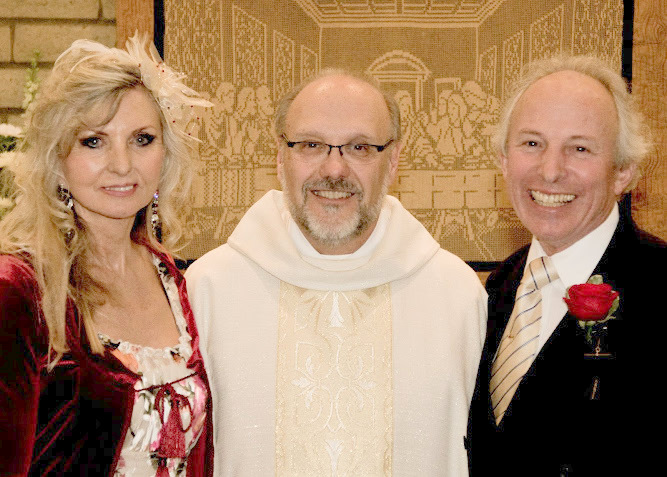




















 Learning from Dogs