I am indebted to neighbours Janet and Jim for sending these to me.
 oooo
oooo
 oooo
oooo
 oooo
oooo
 oooo
oooo
 oooo
oooo
 oooo
oooo
 oooo
oooo
 oooo
oooo
More of these next week.
Thanks Janet and Jim.
Dogs are animals of integrity. We have much to learn from them.
Category: Photography
I am indebted to neighbours Janet and Jim for sending these to me.
oooo
oooo
oooo
oooo
oooo
oooo
oooo
oooo
More of these next week.
Thanks Janet and Jim.
It has been a bit of a week weather-wise!
During the heavy rains this last week we had an oak tree come down in front of the house. Luckily not doing any collateral damage.
But cutting it up into rounds and then splitting them ready for the wood tent took up most of yesterday (and Michael and Stanley many thanks for your help).
For today’s post I wanted to share two photographs with you. Two very different views of the world as seen from our property.
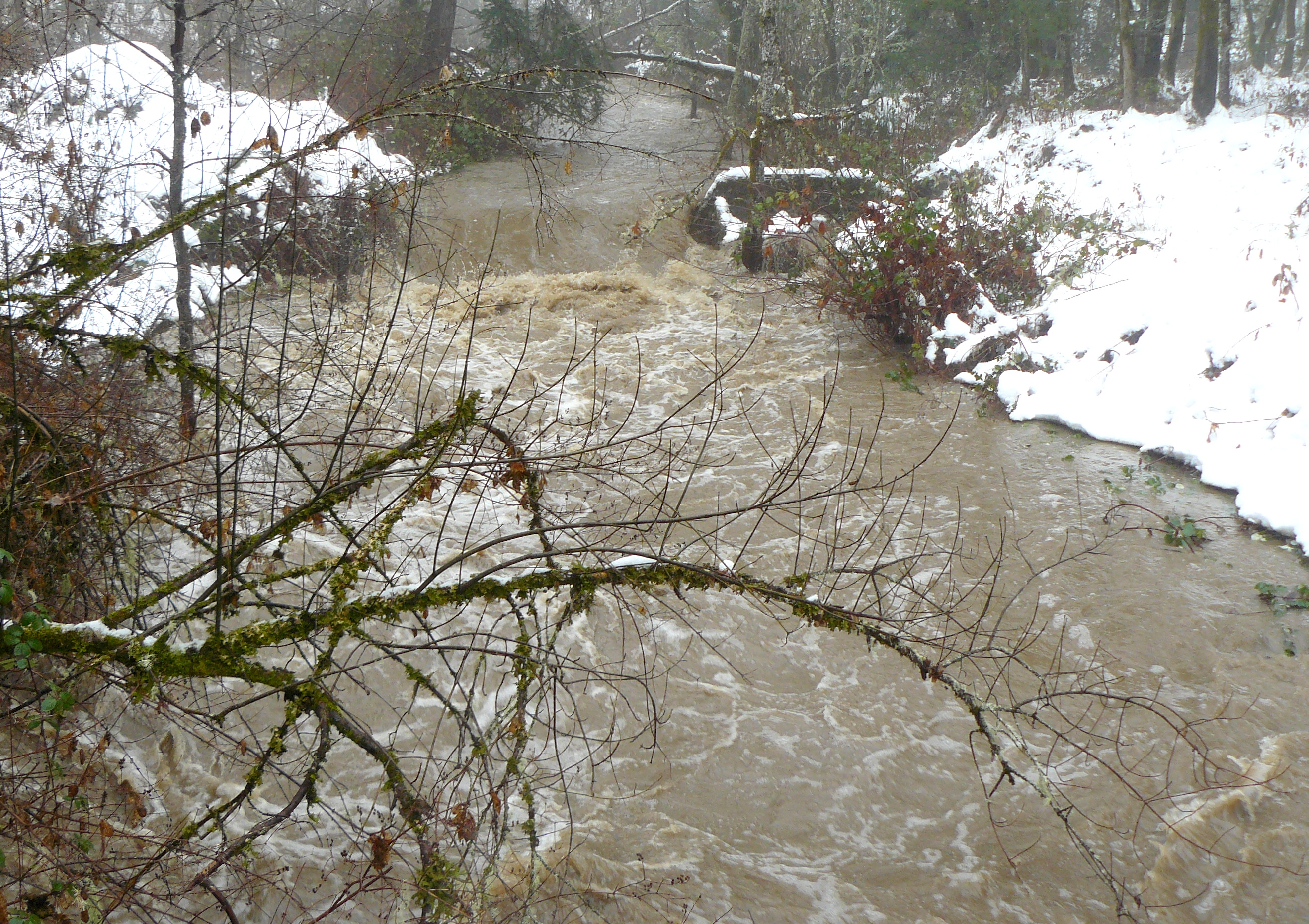 The first photograph above is of Bummer Creek that runs through our property. The view is upstream and the picture was taken last Sunday from our driveway bridge that crosses the creek. The flood waters were as high as we have ever seen them.
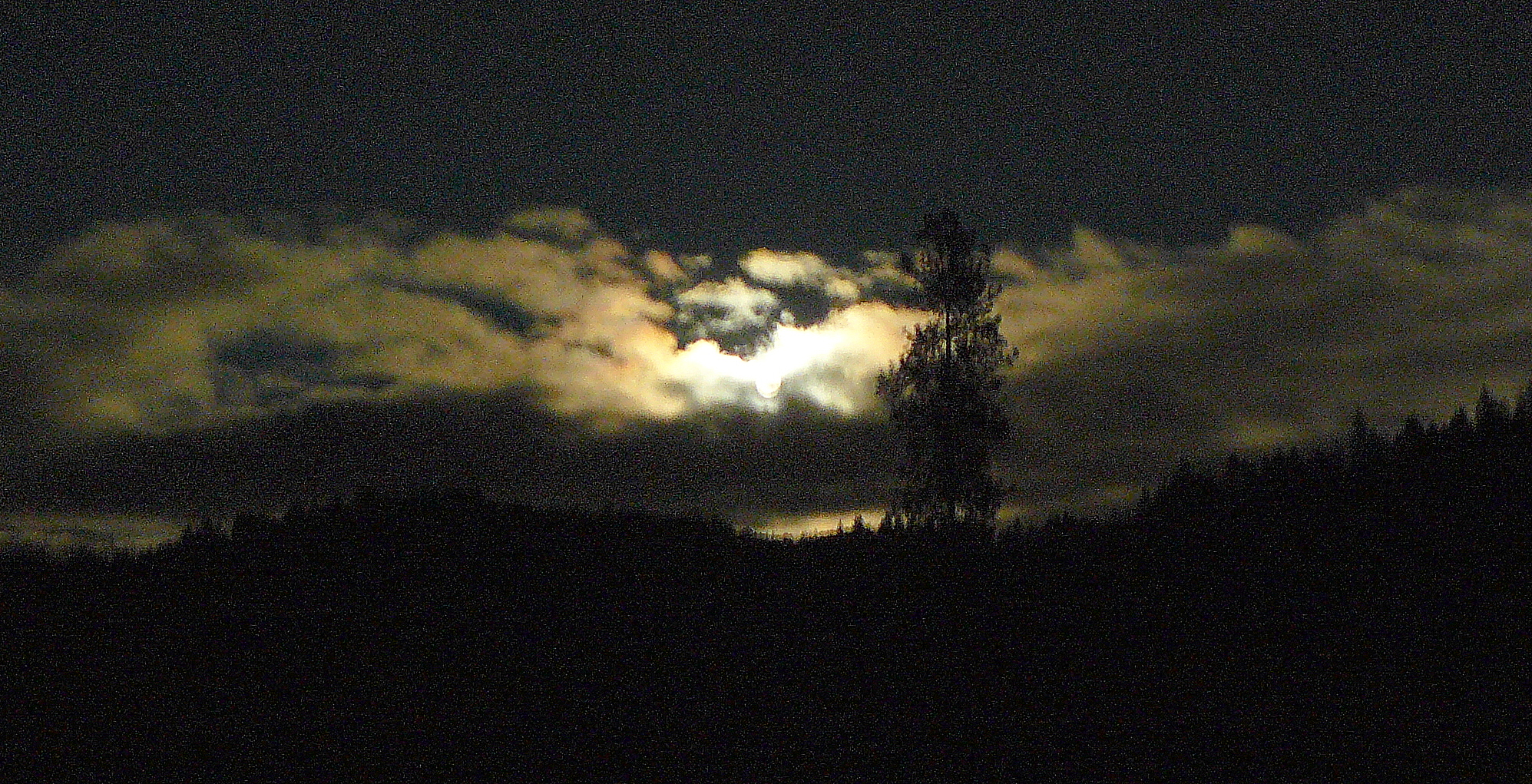 Please accept the slight fuzziness of the second photograph. But it is a shot of the full moon just as it appeared above the line of hills to the North-East. I dashed out to our deck and took the shot. Moments later the moon had been hidden by clouds. This was Thursday evening.
The picture doesn’t even get close to recording the magic of the dark night sky, stars shining so brightly, and the glorious full moon. Apparently a moon in orbit closer to planet Earth than is usual.
Nonetheless, the two photographs represent two very different and contrasting faces of our natural world.
You all have a very relaxing weekend.
Friday the 13th!
We are on course for a warm, sunny day. We were starting to wonder what they felt like!
But there’s never any question what the love of a dog feels like!
 I am now going to follow this image up with a video made in England by Sophie Hannah Richardson recording her experience of welcoming to her home a new puppy.
Enjoy (and please read my footnote!).
Say hello to Luna the french bulldog everyone! How cute is she?!
We’ve had our little Luna just over a month now and we absolutely adore her. She’s playful, loving and very sociable! And she’s slowly learning to love the camera!
Follow Luna’s adventure right here: https://www.instagram.com/luna_thefrenchbulldog/
Footnote: In the last couple of days the number of good people who are following this blog has gone over 2,000. I am truly lost for words and will just leave it like this: Thank you from the bottom of my heart!
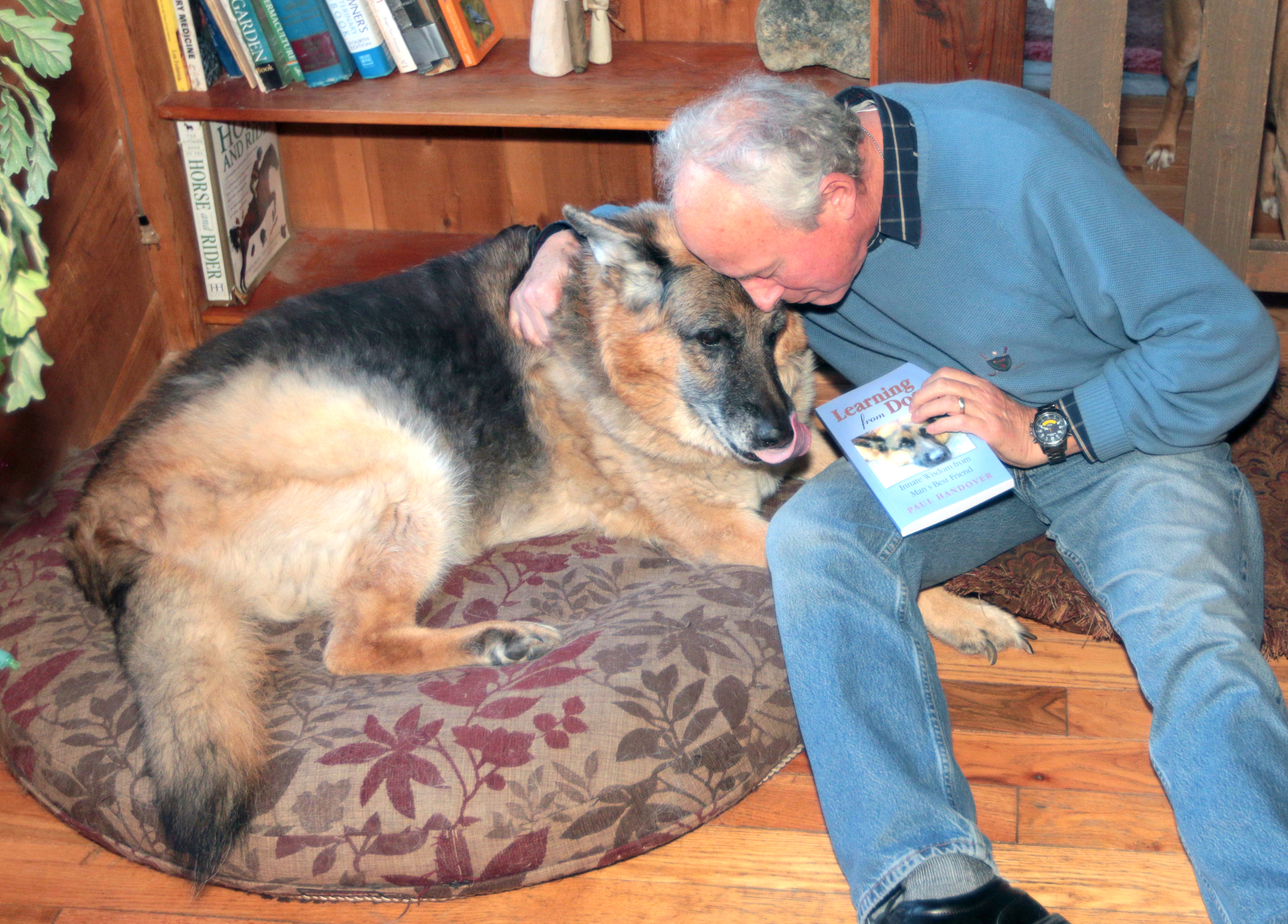
That is the language of love spoken by our beautiful dogs.
The present unreliability of our internet connection prompted me to think about re-posting whatever I had posted exactly a year ago. It only took me a minute to look it up and, bingo, what a perfect topic for these wintry days.
ooOOoo
As our dear dogs speak it.
You will recall that last Friday I featured an item under the title of Private First Class Lingo. The item had been brought to my attention by Constance Frankland.
Well here’s another really special story that Constance came across on a website called Arditor and I wanted to share it with you.
ooOOoo
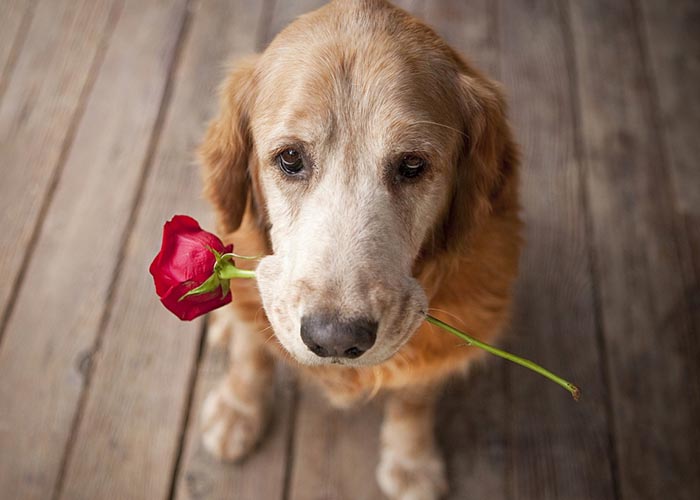 8 Ways Your Dog is Saying “I Love You“
Although dogs don’t speak our language, they are constantly trying to tell us that they love us and always showing love through their actions. Unfortunately, many shrug their shoulders or get annoyed over their dogs’ love gestures.
Here are 8 ways your dog is saying “I love you”…
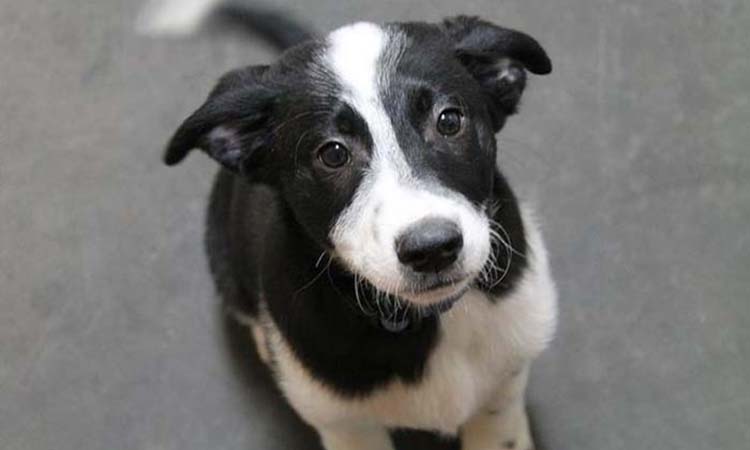 Tail Wagging
Similar to a cat, a dog’s tail is a communication tool. In fact it is sometimes more accurate in translating its emotions than barking. Held at different positions, a dog’s wag could communicate excitement, fear, threat or submission. If your dog’s tail is held in a relaxed position and wagging all together with its entire butt, it means it is very happy to see you.
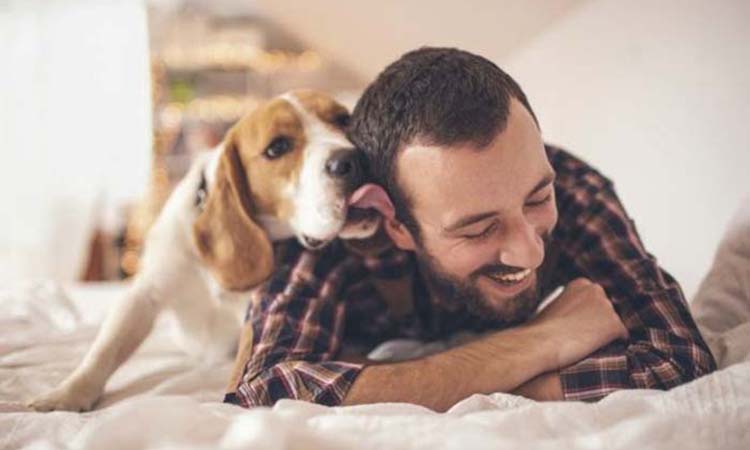 Face Licking
Warm, sticky, wet and stinky! We know this can get annoying but licking a person’s face is a love gesture from a dog. Dogs lick faces for a few reasons. Mainly, if your pet dog is licking your face, he is trying to groom you! Grooming is an intimate gesture only done after a strong connection is made between dogs (so now you know he sees you as one of his kind). On the other hand, if a stranger dog licks your face, it is simply trying to say that he is harmless and friendly.
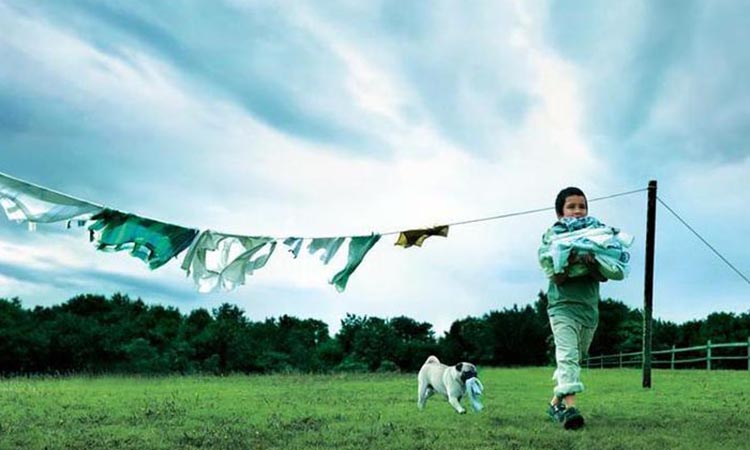 Following You Wherever You Go
This is another behaviour that can get on your nerves, especially when your dog attempts to follow you to work! However, it is only a dog’s way to show his love, devotion and loyalty to you. Wherever you are, that is where your dog wants to be. Dogs are extreme social creatures and unlike humans, there is no need for solitude.
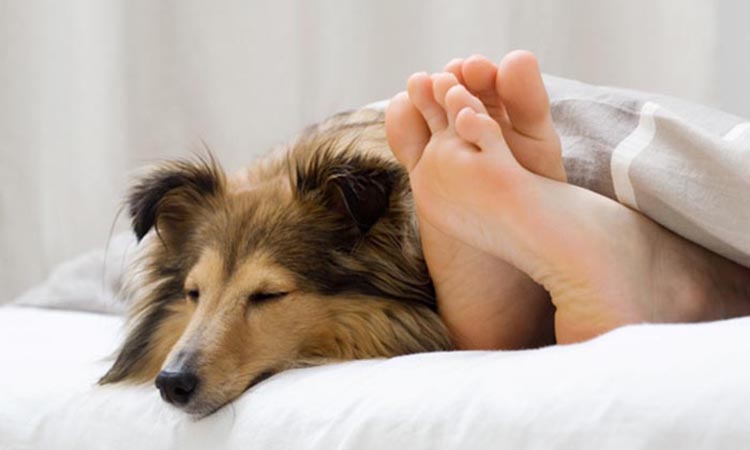 Sleeping with You
Similar to wild wolve packs, wild dogs curl up together to sleep in the night. Rather than sleeping alone in his designated corner, your dog prefers to snuggle right next to you in your bed. If you catch your dog sneaking onto your bed or falling asleep next to you in your couch, it implies that you are his family.
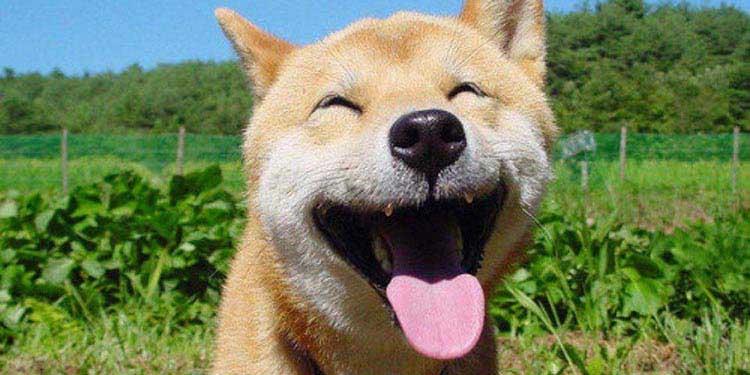 Smiling
It is no surprise when you see something like a smile on your dog. Dogs do smile too! Research has found that dogs can also show and use facial expressions similar to how humans do. A dog’s smile is another way of showing his love and joy to his owner. Having said that, most of us are guilty of not recognizing our dog’s smile.
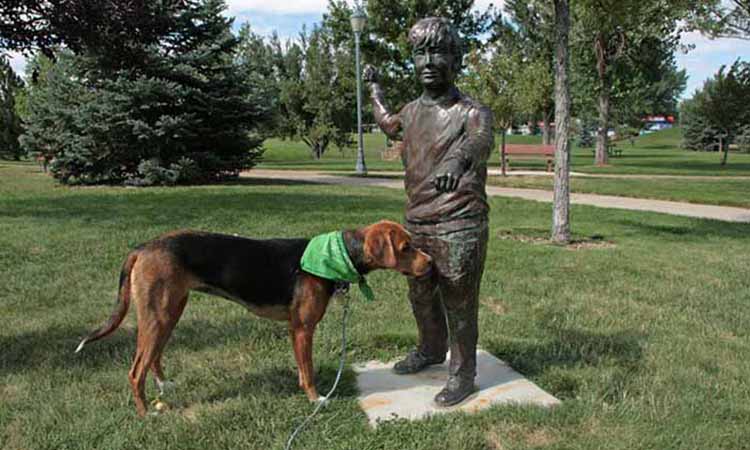 Crotch Sniffing
Argh, this is an embarrassing one and how we wished our dogs can quit going around sniffing crotches. But before you start screaming at your dog, try to understand it. This behaviour is in fact a dog’s perculiar way of greeting. More importantly, apart from a hello, it allows the dog to understand and remember you through your scent.
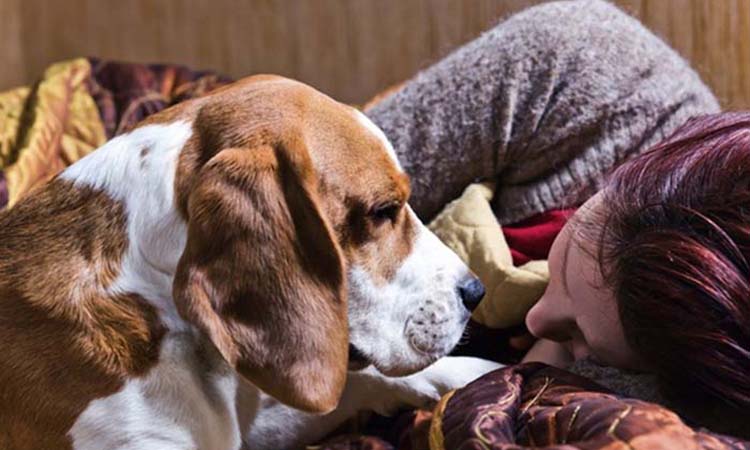 Taking Care of You When You are Sick
Does your dog stay by your bed and watch you the whole time while you are nursing a flu? This is its natural instinct to care for a sick or wounded family member, just as they would in the wild. A dog extends its love and care to its sick or injured owner by quietly and patiently watching over him/her. But make sure you hide any superficial wounds away from your dog! It might actually lick your wound as its form of first aid.
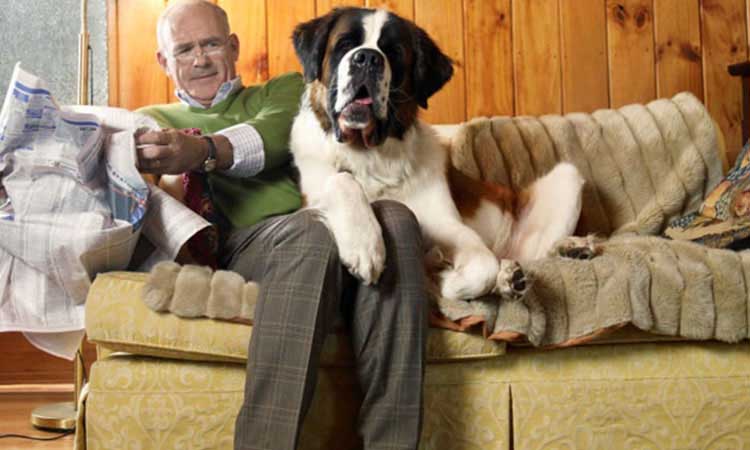 Leaning on You
Whether you are sitting or standing, your dog is leaning on you and wouldn’t budge. You can’t move and you can’t get on with your daily routine. While you are wondering what they are up to, your dog has already got what they needed: your attention. Getting your attention and giving you their attention by leaning on you is their way of showing affection. Next time this happens, stop what you are doing and reciprocate with some love.
oooooooo
This turned out to be more of a Sunday Picture Parade but it seemed too special to hold it from you until the weekend.
No, our dogs don’t speak a language that we humans would recognise as such but, nonetheless, our dogs communicate in ways that still are as magical and special as our human poetry.
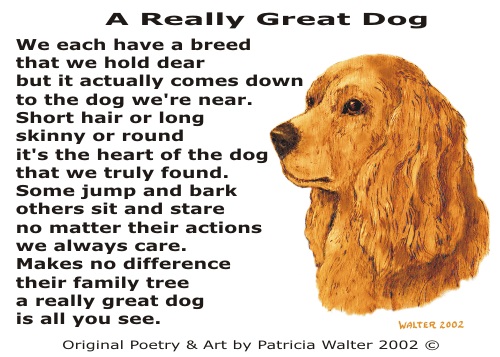
Speaking of poetry, let me close today’s post with this.
 ooOOoo
Wherever you are in the world, with or without a dog in your life, please embrace the power of love.
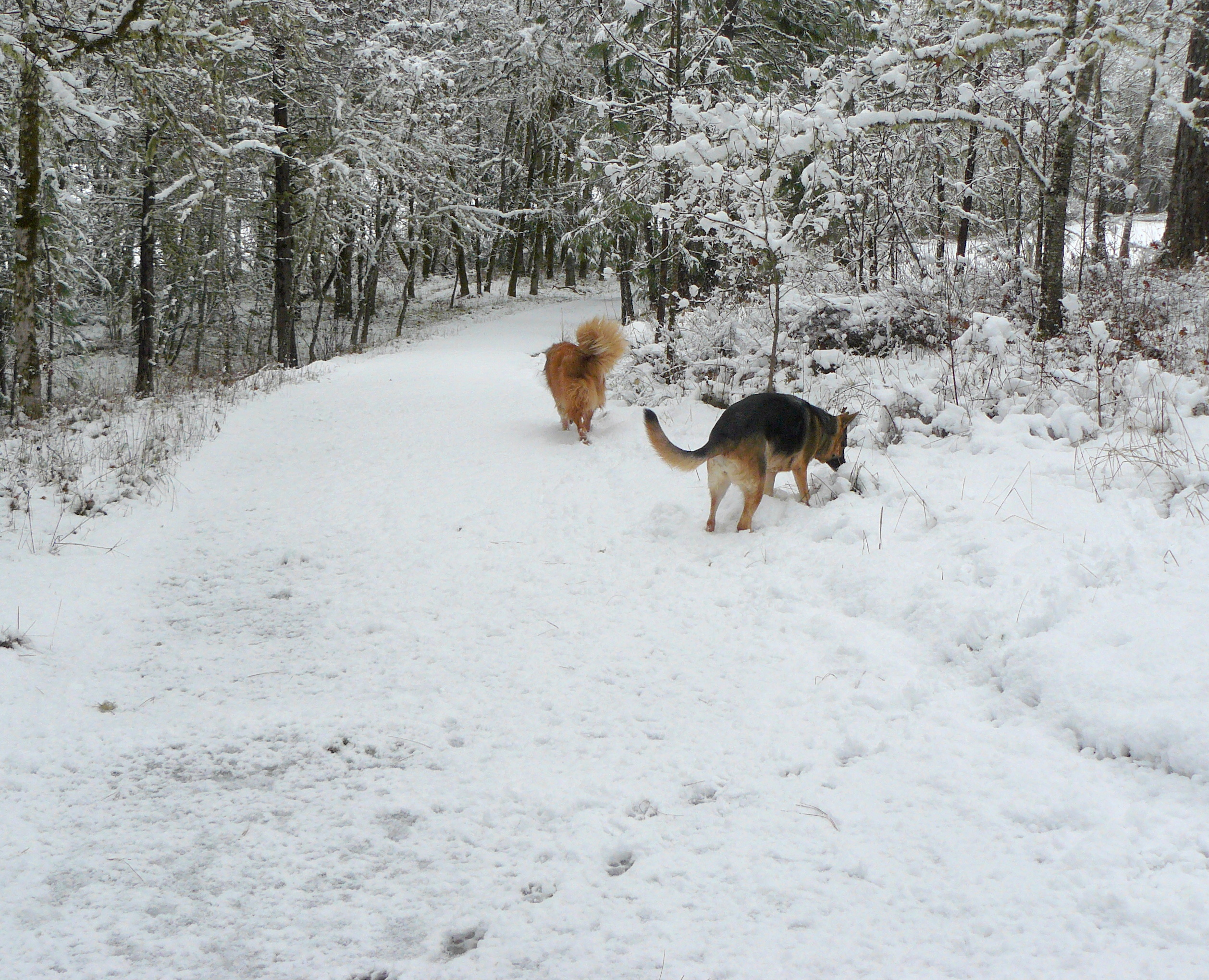
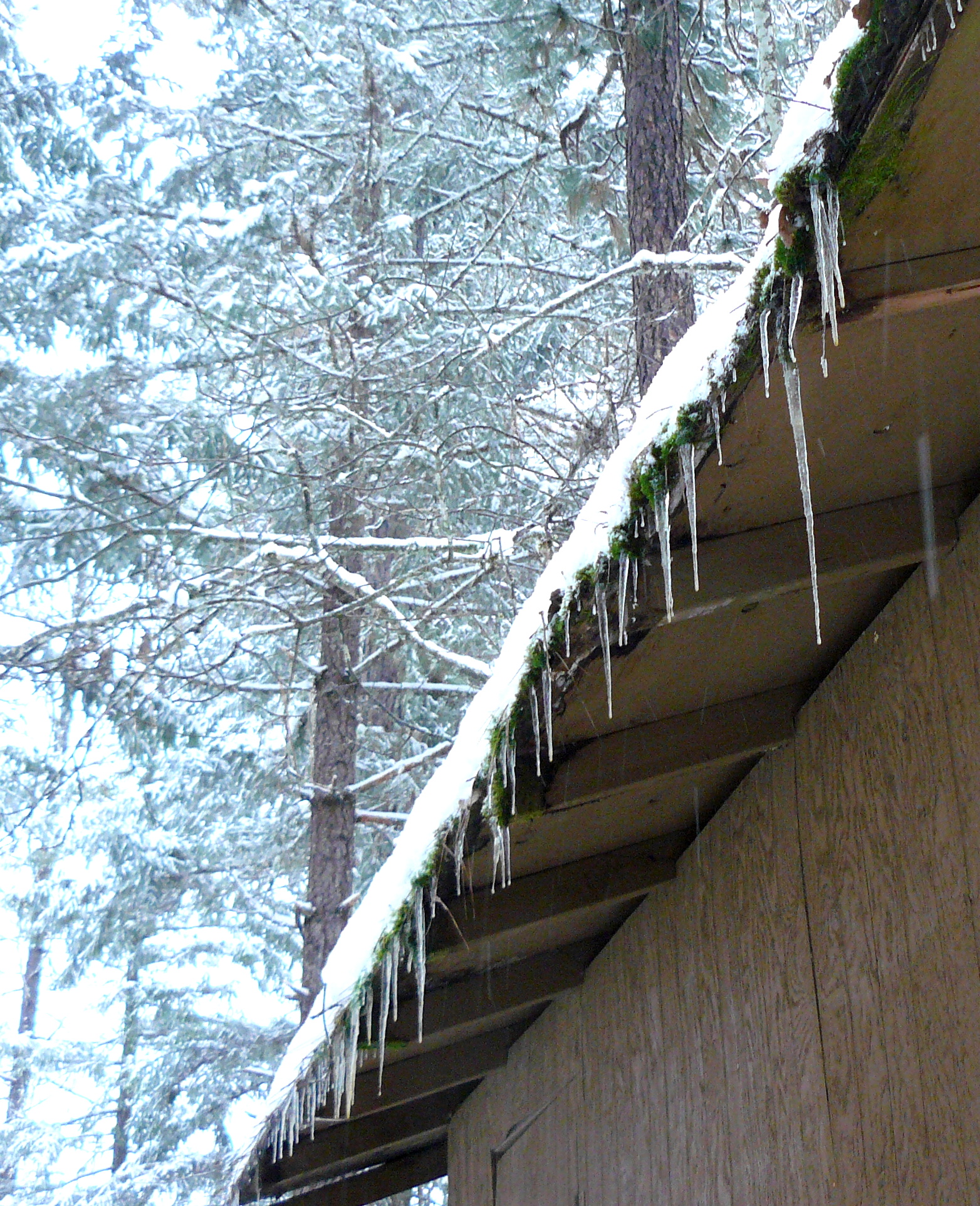
Scenes of the last week!
 oooo
oooo
oooo
 oooo
oooo

oooo

oooo
 oooo
oooo


See what the coming week has in store! (Oh, we live in Josephine County!)
FLOOD WATCH
NATIONAL WEATHER SERVICE MEDFORD OR
151 PM PST SAT JAN 7 2017

...HEAVY RAIN WILL COMBINE WITH MELTING SNOW TO CAUSE POSSIBLE
LOCAL FLOODING LATE TONIGHT THROUGH SUNDAY...

.ANOTHER FRONT MOVES INTO THE REGION LATE TONIGHT WITH MODERATE
TO HEAVY RAINFALL RATES. SNOW LEVELS WILL RISE WELL ABOVE THE
VALLEY FLOORS AND WILL COMBINE WITH SNOW MELT TO INCREASE RUN-OFF
THROUGH THE DAY SUNDAY AND INTO SUNDAY NIGHT.
...FLOOD WATCH NOW IN EFFECT FROM LATE TONIGHT THROUGH SUNDAY EVENING... THE FLOOD WATCH IS NOW IN EFFECT FOR * PORTIONS OF THE COOS AND CURRY COUNTY COASTS...EASTERN CURRY AND JOSEPHINE COUNTY IN OREGON...AND WESTERN SISKIYOU COUNTY IN NORTHERN CALIFORNIA. * FROM LATE TONIGHT THROUGH SUNDAY EVENING. * 1 TO 3 INCHES OF RAIN...WITH HIGHEST AMOUNTS NEAR THE COAST AND LOWEST NEAR GRANTS PASS...ARE EXPECTED ON SUNDAY. THIS MODERATE TO HEAVY RAIN COMBINED WITH SNOW MELT MAY CAUSE URBAN AND SMALL STREAM FLOODING. CURRY AND JOSEPHINE COUNTIES ARE THE PRIMARY AREAS OF CONCERN...HOWEVER...PORTIONS OF WESTERN SISKIYOU COUNTY MAY SEE LOCALIZED FLOODING AS WELL. * RECENT BROKEN BRANCHES AND OTHER DEBRIS FROM THE HEAVY SNOW COMBINED WITH ICE MAY CLOG STORM DRAINS AND CULVERTS IN THE WATCH AREA. HEAVY RAIN MAY ALSO CAUSE SLIDES OR DEBRIS FLOWS ON THE GAP WILDFIRE BURN SCAR NEAR HORSE CREEK...POSSIBLY REACHING HIGHWAY 96 BELOW THE BURN SCAR. PRECAUTIONARY/PREPAREDNESS ACTIONS... LANDSLIDES AND DEBRIS FLOWS ARE POSSIBLE DURING THIS FLOOD EVENT. PEOPLE...STRUCTURES AND ROADS LOCATED BELOW STEEP SLOPES...IN CANYONS AND NEAR THE MOUTHS OF CANYONS MAY BE A SERIOUS RISK FROM RAPIDLY MOVING LANDSLIDES. A FLOOD WATCH MEANS THERE IS A POTENTIAL FOR FLOODING BASED ON CURRENT FORECASTS.
Well at least it isn’t boring!
This is too wonderful.
Slowly getting back to normal although yesterday morning saw the water supply fail from the well. (Now restored!) Perhaps not surprising as overnight Thursday-through-Friday the outside temperature went down to 8.6 deg. F. or in ‘new money’ -13 deg. C. (In fact I’m writing this at 10am yesterday waiting for the well engineer to arrive!)
On January 4th, the Care2 site published what has to be one of the most remarkable examples of the loyalty of a dog. This is about as perfect an example of what we humans can learn from our dogs as it gets!
ooOOoo
 By: Laura Goldman January 4, 2017
If you’ve ever had the slightest doubt about just how loyal dogs can be – not only to people but to other dogs – a pup who’s been named Panda really proved it on Christmas Day.
Panda and his pal, now named Lucy, apparently escaped from their home in western Ukraine and somehow ended up on railroad tracks in the town of Uzhhorod. Lucy had an injury and was unable to stand or move. Panda remained right by her side, warming her with his body in the freezing cold.
A train engineer contacted a group of animal rescue volunteers including Denis Malafeyev, telling them he’d seen the dogs on the tracks for two days. Malafeyev and the others took off to try to save them.
“I saw a train approaching and felt sick,” he wrote on Facebook. “The male dog heard the sound of the approaching train, came close to the female dog and laid down next to her. Both of them pushed their heads toward the ground and let the train pass.”
A viral video Malafeyev posted shows the dogs being run over by the speeding train. It’s chilling to think that this wasn’t the first time this happened to the dogs.
The video is disturbing and difficult to watch, but amazingly, both dogs survived with just minor injuries. It may also seem disturbing that, knowing a train would be approaching, Malafeyev didn’t put down his camera and save the dogs. He wrote in his Facebook post that he and the group had tried, unsuccessfully, to move them, but Panda would bark at them and refuse to let them get close to Lucy.
“Think about it. He was keeping her warm,” Malafeyev wrote. ” I don’t know what to call this: instinct, love, friendship, loyalty? One thing I know for sure is that not all people would do the same as this dog!”
The video has been viewed more than 1.5 million times, with many commenters agreeing with Malafeyev that humans have a lot to learn from this dog.
 Four days later, Malafeyev posted new videos of Panda and Lucy on Facebook. The dogs were taken to an animal shelter and have been reunited their owners, UPI reports. (There are conflicting reports that the dogs were adopted and given the names Panda and Lucy by their new owners. Either way, the two dogs are in a forever home together.)
(Note: there was another video on that Care2 page that I can’t find on YouTube.)
Lucy had no fractures, but only severe bruising, The Sun reports.
“Lucy lives in a house in a warm room! It’s really warm in here!” Malafeyev wrote. “The animals are on the mend!”
Hopefully Panda will be rewarded with treats for his heroic actions, and the owners will make their home more escape proof.
Photo credit: YouTube
ooOOoo
I am going to close this post by including another YouTube video of this incredible act together with the text supporting this video.
Incredible Story of Devotion Dog! 2017
Published on Jan 4, 2017
Incredible Story of Devotion Dog! The dog two days guarded wounded friend on the rails!
On Sunday, December 25 near the village of Uzhgorod in the district of Tyyglash a touching story took place in Ukraine. Two dogs spent about two days on the tracks, one of them was injured, and the other kept the injured dog warmed and protected from the passing trains.
The story was posted on his page on facebook user Denis Malafeev. His friends noticed two dogs lying on the tracks, one of them was injured. Later, the man himself arrived on the scene.
Several attempts to remove the animal from the rails were in vain, because the dog strongly defended her friend from the people!
When the animals heard an approaching train, the healthy dog lay next to a wounded dog and together they were pressed to the ground between the rails. This moment Malafeev managed to capture on video.
The dog did it for two days in a row! Just think! He warmed it for two days, so that it did not freeze and put himself in danger every time! I do not know how to call it: the instinct, love, friendship, loyalty? It is instructive for us!
Together with his friends, they took dogs and took them to the shelter. The Post reports that they are now waiting for their owners.P.S. Shortly after the publication in social networks there were dog owners. It was learned that the Pandas and Lucy – so call the animals – there are no serious injuries, only bruises and hematomas. I found out that shaggy live in the home side’s S. Tseglovka in Transcarpathia for several years and are committed to each other from puppyhood. Dogs run away from home when someone from the house forgot to close the door on the site. They searched all over the village. But when the owners heard the story of “Romeo and Juliet” on track – immediately rushed to pick up pets from the shelter. Now dogs are at home, and their life is not threatened.
For two days that one dog protected the other. It is beyond imagination to think how frightening a speeding train would have been for those two precious dogs. Not just once but numerous times before rescue came to them.
Such a privilege to be able to share this with you.
To all of you and your families and loved ones.
I saw this post below on a blog site that was new to me. It was just called Lady Fi. It simply reached out to me in the most beautiful and peaceful manner and seemed like the perfect re-posting (with LadyFi’s permission) for today: December 25th.
Can’t add anything more to who LadyFi is other than what she writes on her About page.
So, you want to know who I am? Well, you’ll get a pretty good idea from reading my blog. But, in brief:
A Brit living in Sweden since 1996. Came here as a so-called love immigrant.
Have got two small kids and good supply of ear plugs.
Husband is like a third child and the dog is like the fourth.
Blessed with an ironic sense of humour.
Scriptwriter, textbook writer and translator (Swedish into English).
Here’s that post.
ooOOoo
13 December is Lucia – one of my favourite times of year.
Lucia is all about children dressed in white and carrying candles
To symbolize hope and light in the darkness.
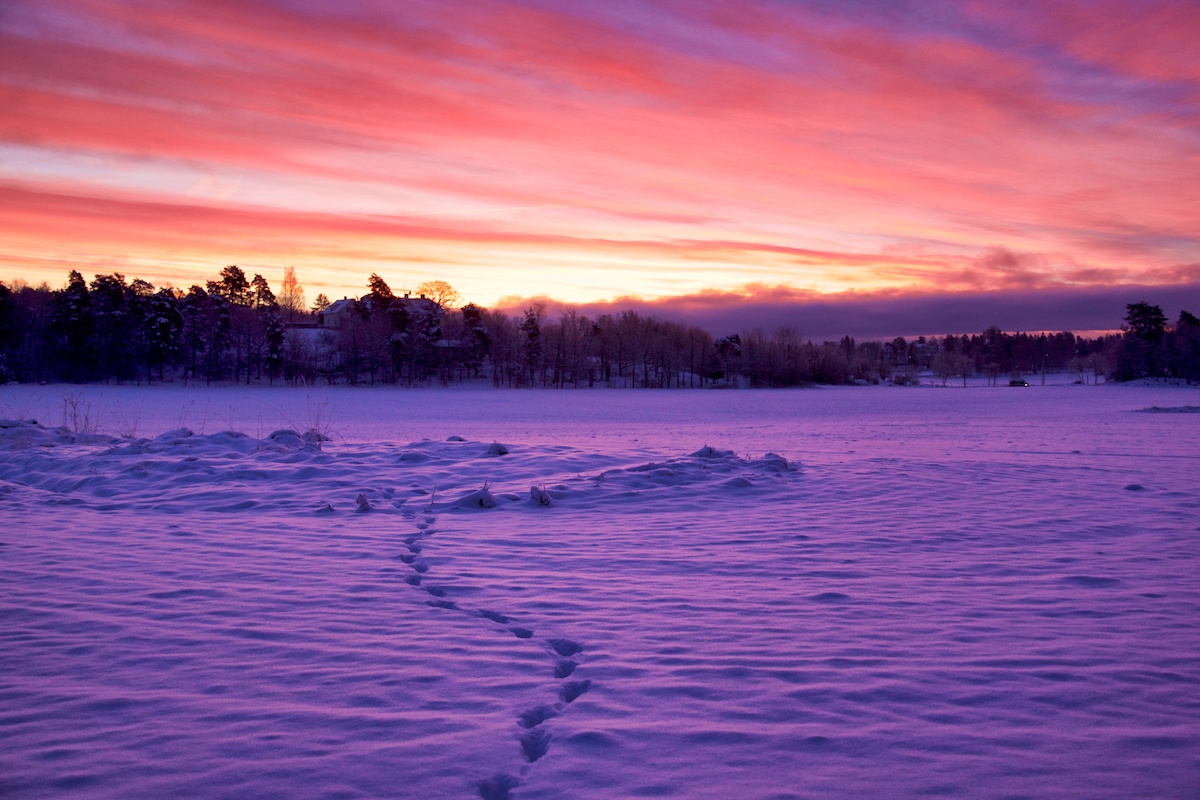
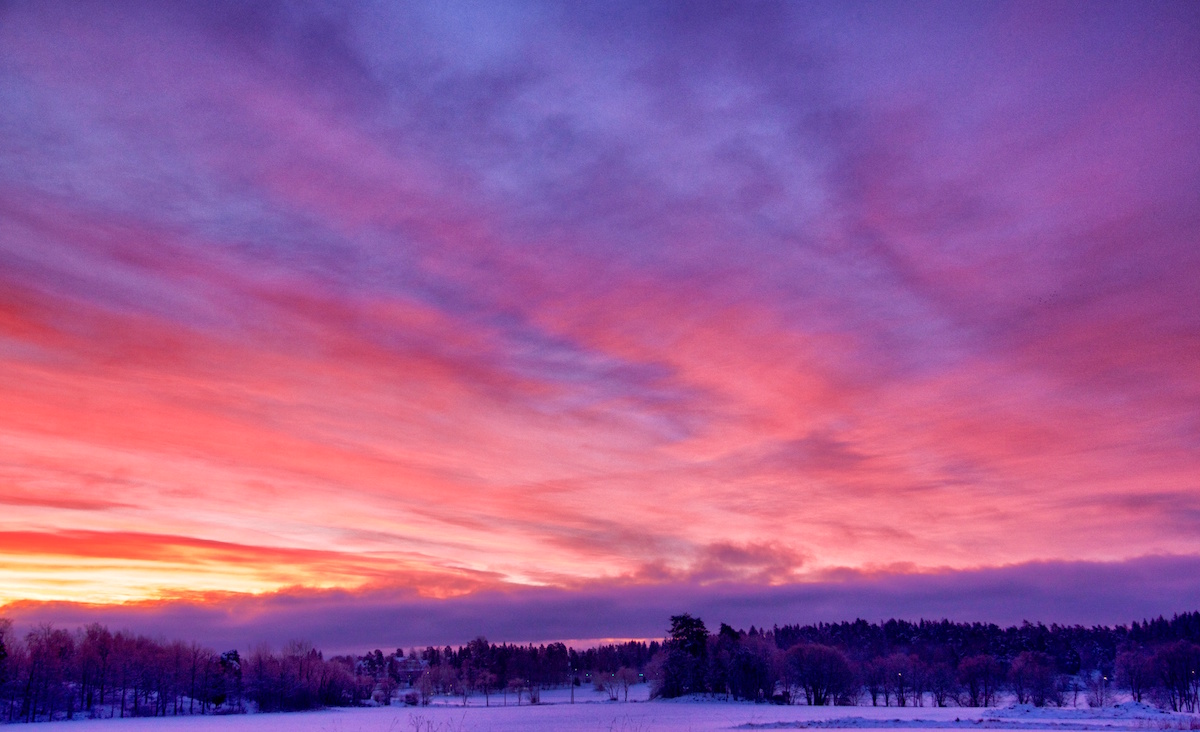 The dawn that day didn’t disappoint either.
It blazed with light and colour,
So that dogs (and people) seemed small and humble
Under the huge lilac sky;
 And paw prints were etched across a purple
Canopy of snow – leading the eye
To that glorious sky of hope.
 ooOOoo
(I believe these pictures came from the Skywatch site.)
Trusting that for all of us your Christmas period and the whole year to follow offer endless visions of such stillness, peace and beauty.
Taken looking to the North-East.

The photograph was taken a little after 4pm PST as the cloud cover was breaking up.
Happy Holidays to everyone!
The big flood!
Regulars will recall that during the week I missed being able to publish a post and just quickly dropped a note to say that Rain Stopped Play commenting:
Sorry good people but the rain yesterday interfered with our Internet connection until early evening.
Then there just wasn’t time to post something for you.
Other than at 6:50 pm we had had 3.17 in of rain since midnight!
Well on Thursday morning our ‘on-property’ weather station was reporting that in the 30 hours since the start of Wednesday through to 6 am on that Thursday we had had a total of 4.78 inches of rain.
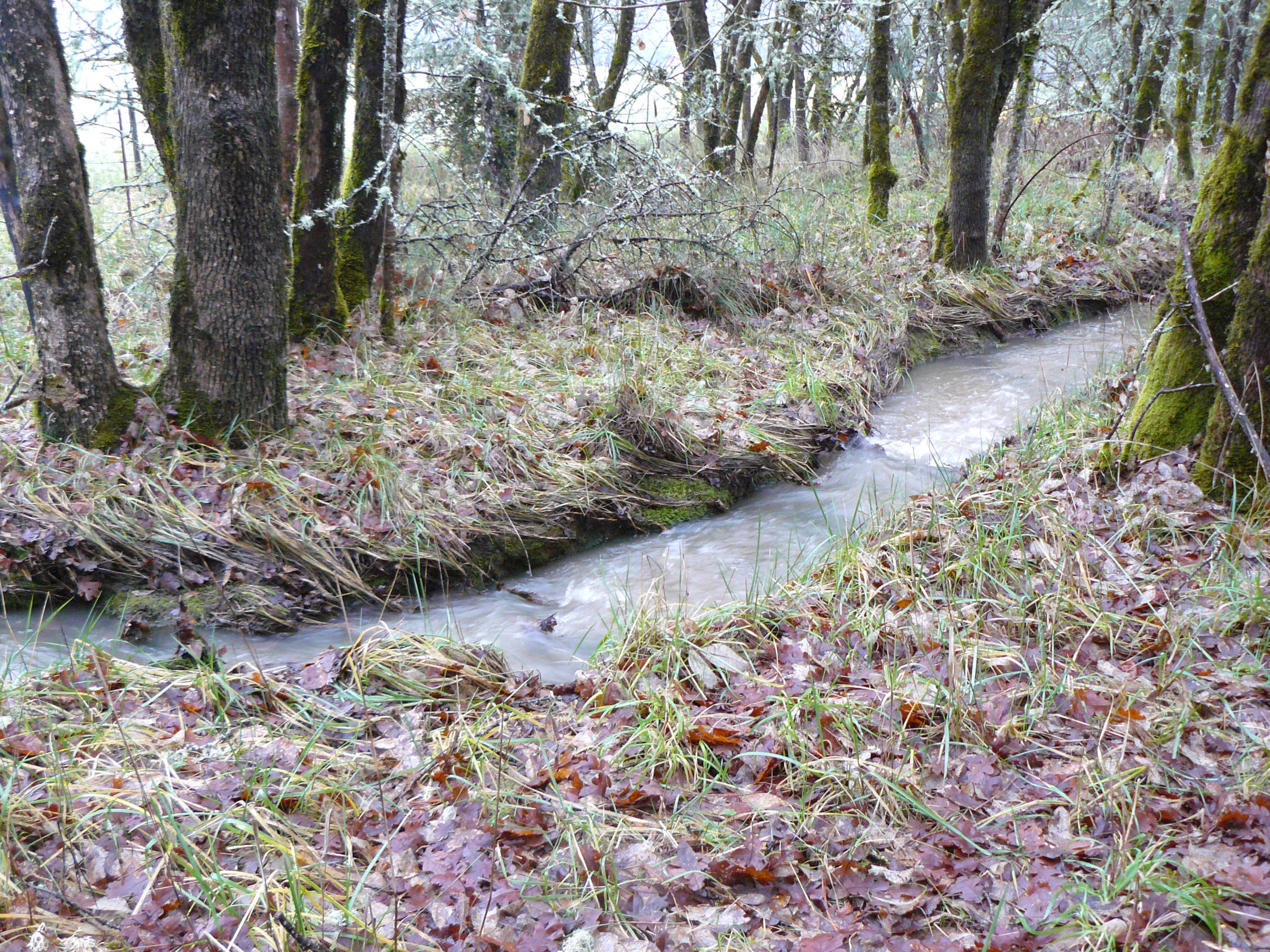
Later on Thursday morning I went down to our creek and the following photographs record the scene!Our driveway drops gently down for about 250 yards from the house to our bridge over Bummer Creek where I was heading with my camera. To the left of the driveway is a creek with no official name but the locals call it Cup Creek. For most of the year it is dry!
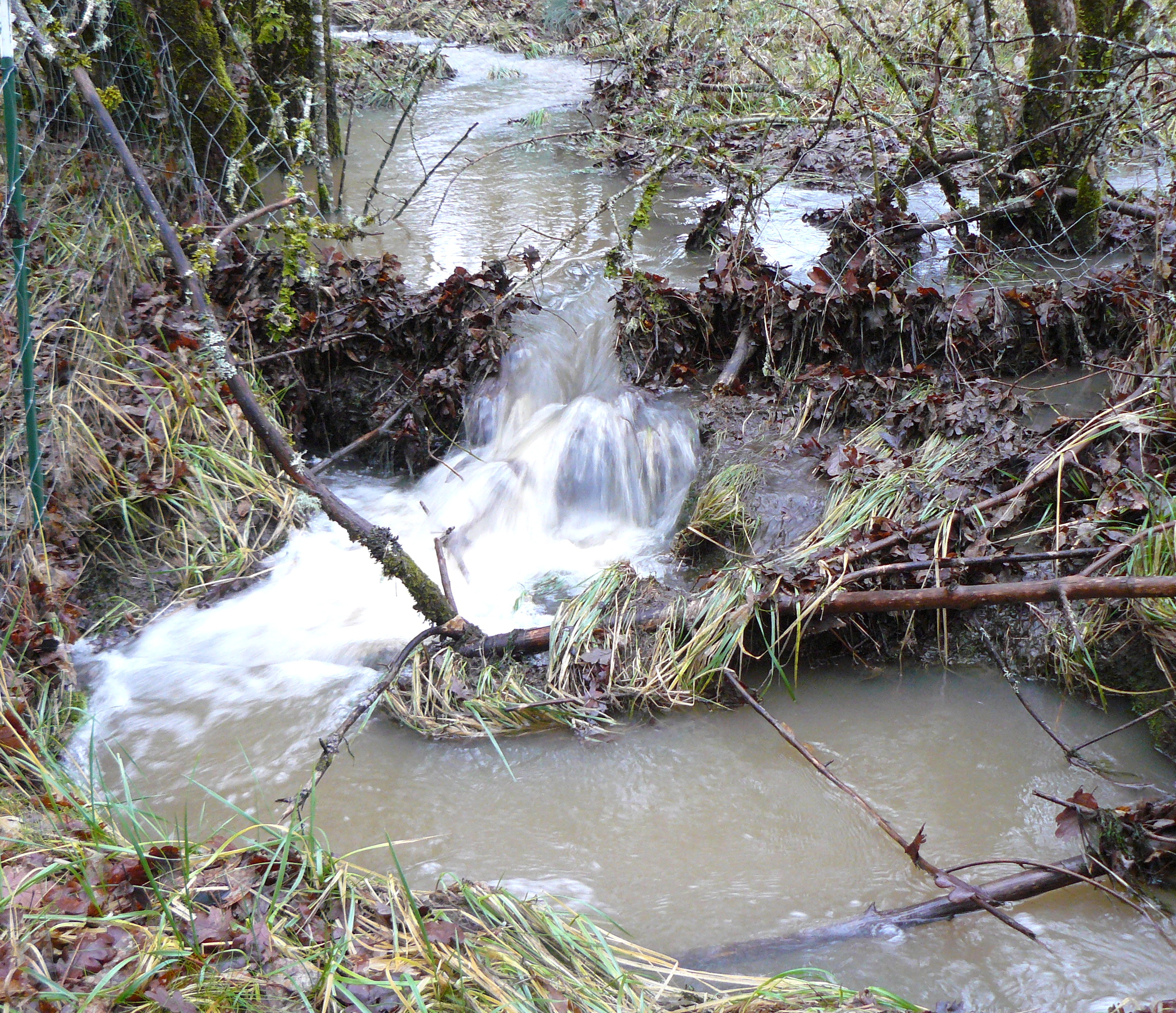
Then I arrived at our bridge that crosses Bummer Creek. Upstream years ago an irrigation dam was installed. It is just visible under the raging waters.
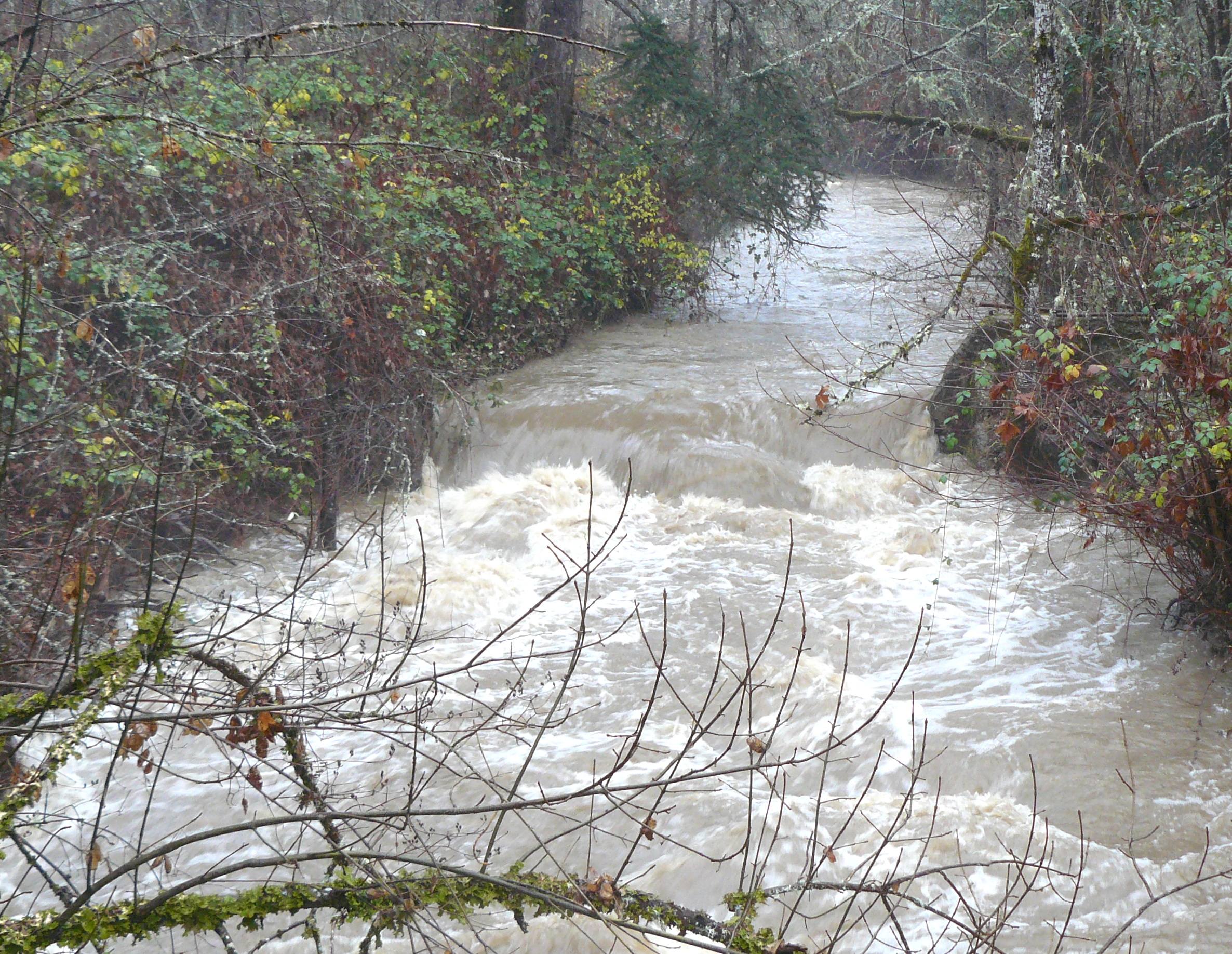
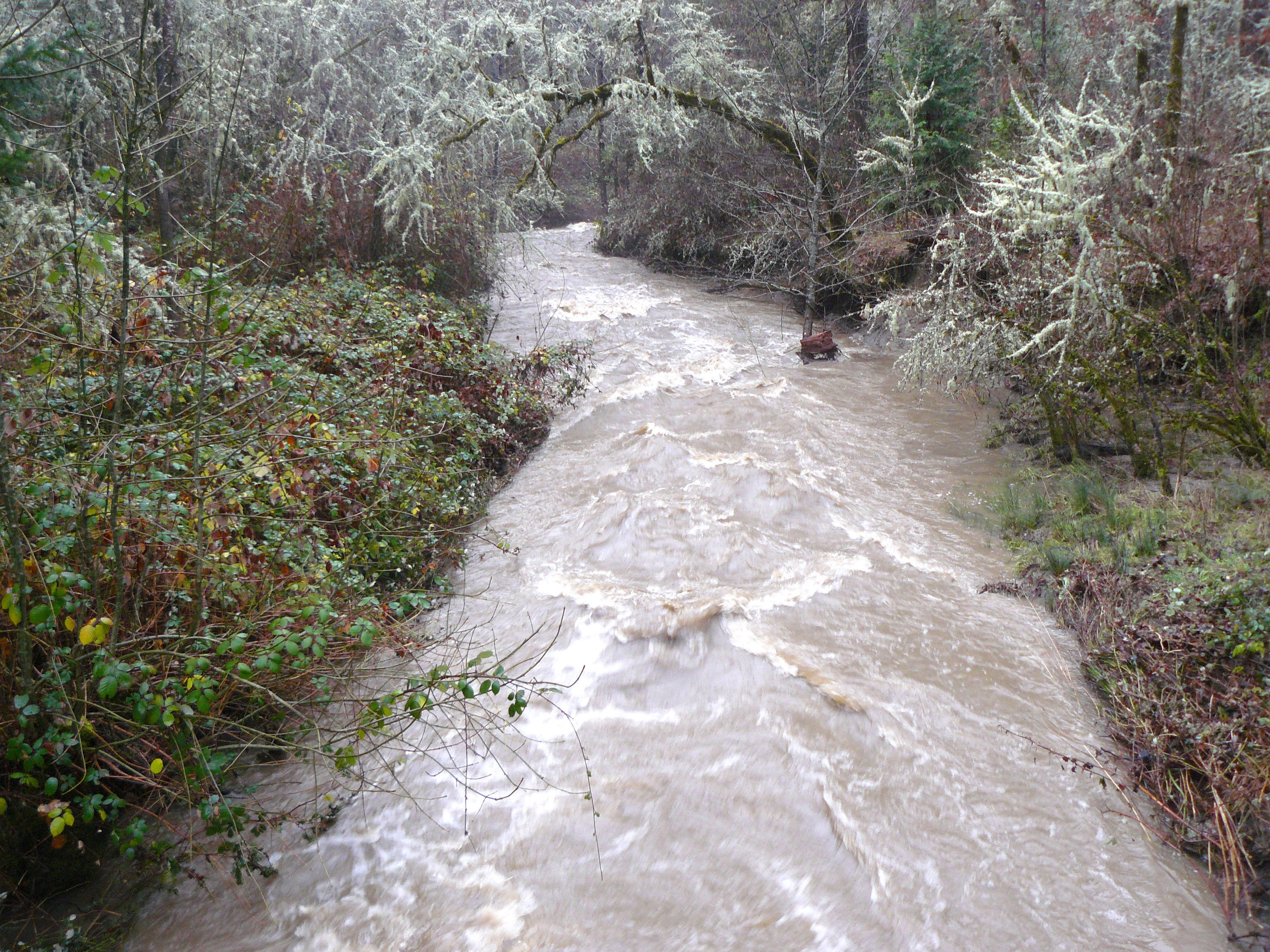
Difficult to estimate how swollen the creek was but it was carrying many, many times more water than even the usual effects of a couple of rainy days.
But then looking up from the bridge to where the driveway runs up to Hugo Road this mini-river met my eyes.
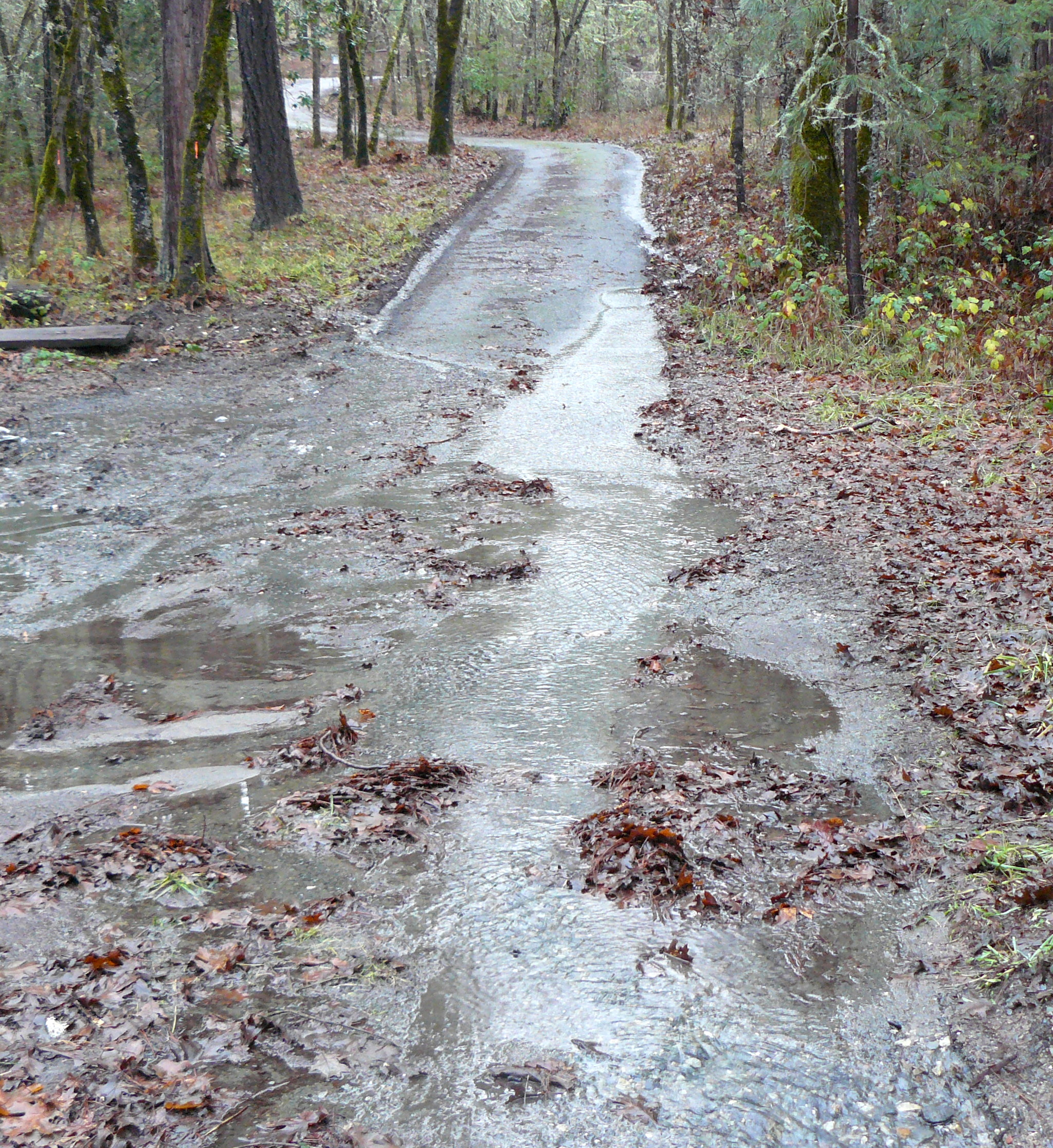
The gully to the side of the driveway had become blocked with leaves hence the surface water. But then I saw that where the driveway met the metal platform of the bridge the flowing water had carved out quite a section of the driveway.
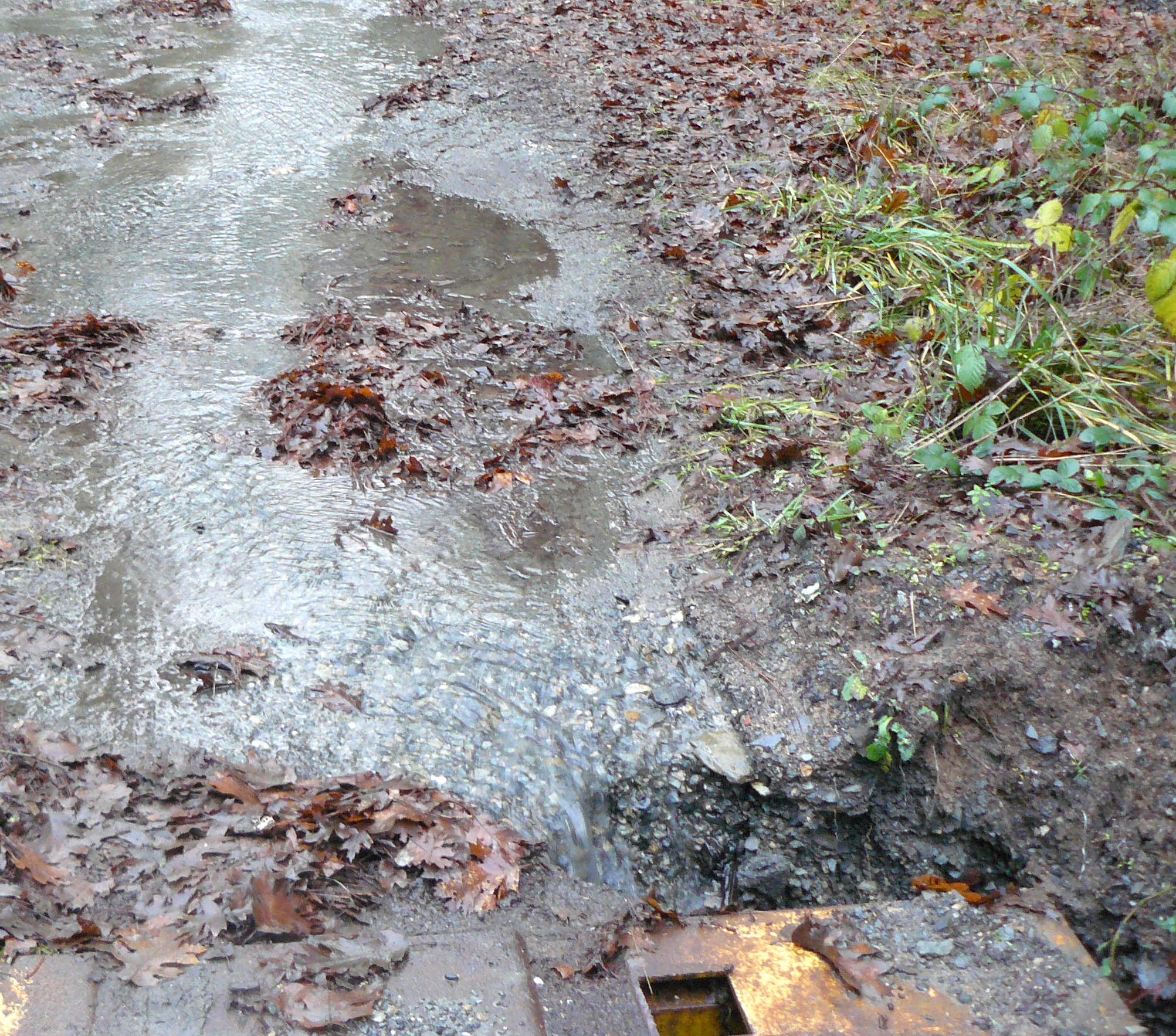 No question this has to be repaired by yours truly that morning because the hole would have prevented anything larger than a standard car from coming across the bridge.
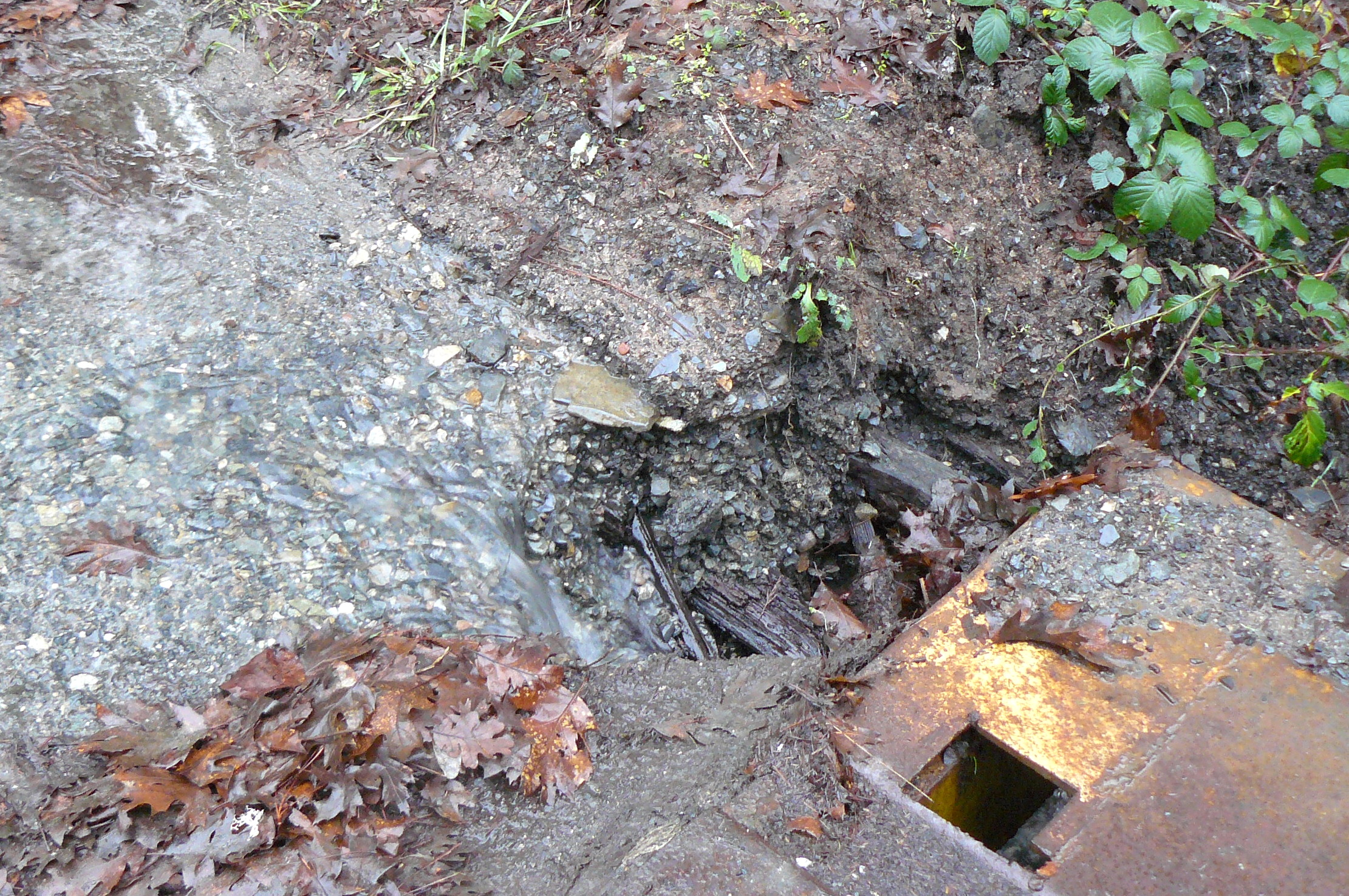 So that was our rainy day; how was it for you!
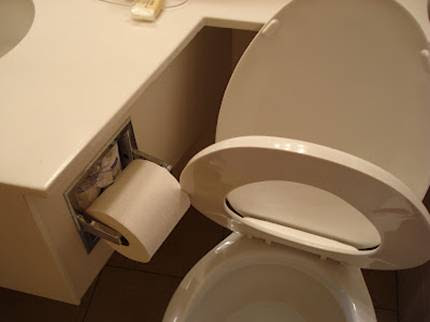
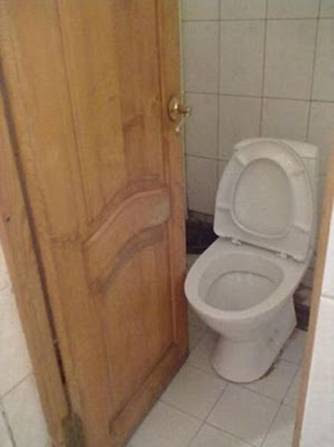
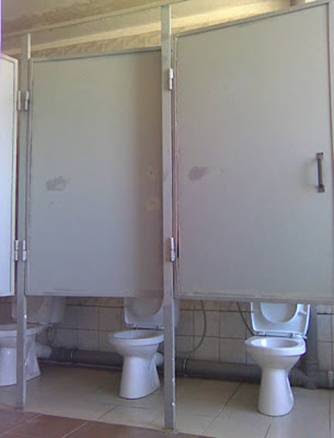
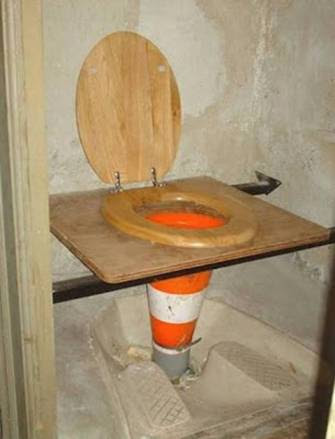
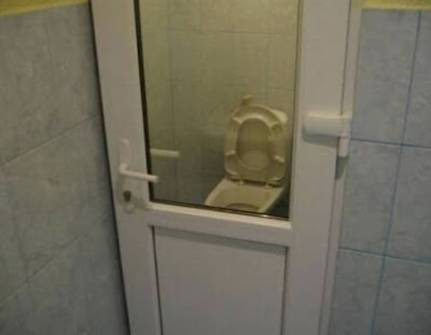
The Finalists of the 2016 Plumbers of the Year Competition.
The craftsmanship skills shown by these winners is simply ‘breath-taking’!
(Huge thanks to Cynthia Gomez for sending these to me.)
oooo

oooo
oooo
oooo
oooo
oooo
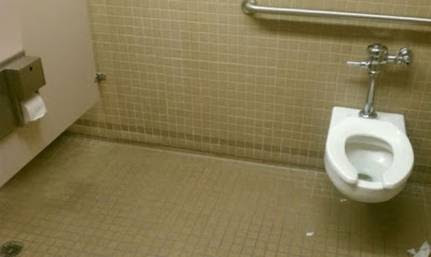
Cynthia will be delighted to forward you contact details for any of the plumbers whose work is shown above!
 Learning from Dogs