Back to Janet’s wonderful photographs.

oooo

oooo

oooo

oooo

oooo
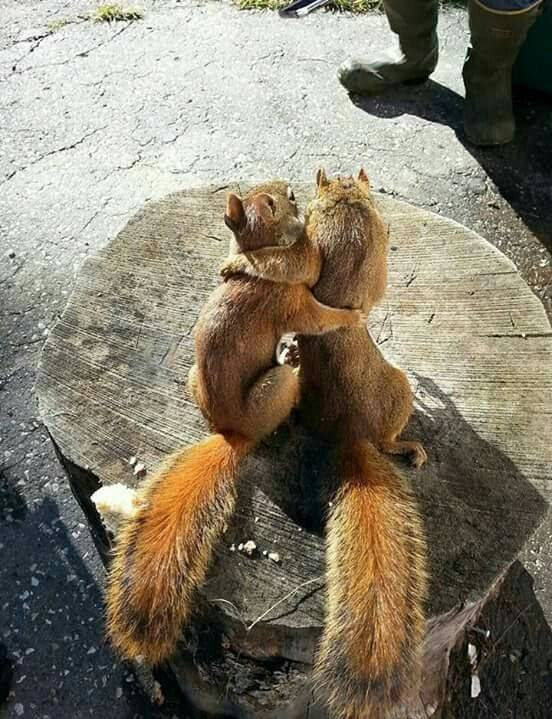
oooo
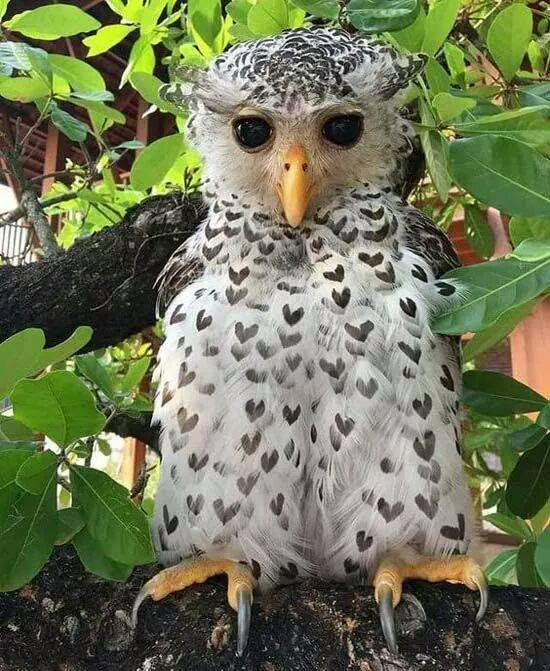
oooo
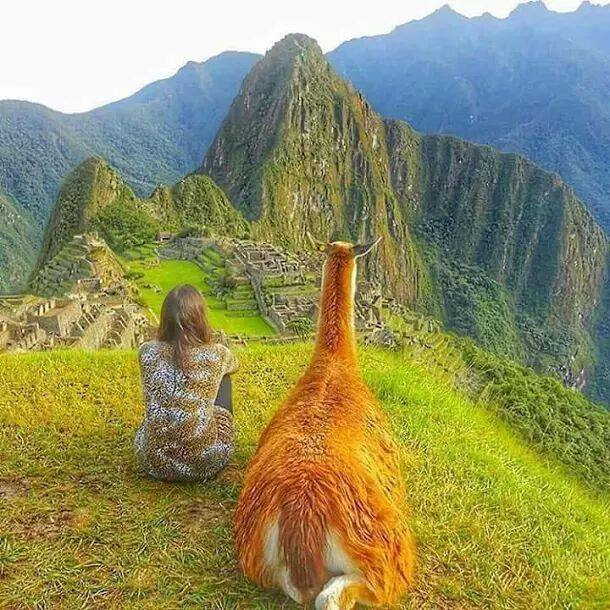
oooo

oooo
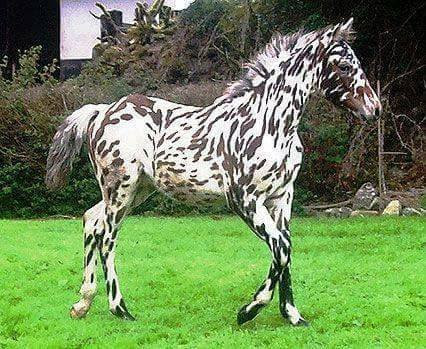
oooo

The last set from this series in a week’s time.
Dogs are animals of integrity. We have much to learn from them.
Category: People
Back to Janet’s wonderful photographs.
oooo
oooo
oooo
oooo
oooo
oooo
oooo
oooo
oooo
oooo
The last set from this series in a week’s time.
The power of unanticipated outcomes.
I am referring to the result of the British election that was held last Thursday.
Now I am well aware that many readers will not have the same relationship with the outcomes of British elections as your faithful scribe. But I am also aware that we live in a very connected world. I am also acutely aware that for many, many years I was a devoted listener to the 15-minute weekly radio broadcast on the BBC by Alistair Cooke Letter from America.
So for me, and many others I don’t doubt, the views of America as to what goes on across the pond are just as fascinating today as they have always been.
But in the absence of dear Mr. Cooke (20 November 1908 – 30 March 2004) passing on his experienced assessment on what the outcomes of British elections mean for America then I turn to a recent item on The Conversation site and republished here within the terms of that site.
ooOOoo
June 9, 2017 6.04am EDT
Editor’s note: U.K. Prime Minister Theresa May’s election gamble failed badly as her Conservatives lost 12 seats, leaving them with 318, shy of a majority. It was a stunning loss for a party earlier projected to gain dozens of seats. Without a majority, the Conservatives will have to rely on another party to govern – known as a hung Parliament. If they’re unable to forge a coalition, rival Labour leader Jeremy Corbyn – whose party gained 31 seats – would be able to give it a go. We asked two experts to offer their insights on what Americans should make of the election and its results.

Charles Hankla, George State University
The results of this election show how similar, and yet how different, British politics are from what is happening in America.
As in the United States, there has been an explosion of populism in Britain, most recently evidenced by the Brexit referendum. This new political force is translating into less liberal policies from the major parties.
In continental Europe, the new populism is mostly embodied by the resurgent far right. But in Britain, as in America, it is being filtered through the existing two-party system – though the U.K.‘s smaller parties do complicate the electoral map.
To accommodate the political winds, May and her Conservatives decided to shift their electoral strategy away from Margaret Thatcher’s pro-market economic approach toward a greater focus on immigration, security and economic nationalism.
Labour leader Jeremy Corbyn, for his part, deserted the more centrist “New Labour” ideas of Tony Blair in favor of a more robust form of social democracy.
The American left, like its British counterpart, has also become increasingly skeptical of unbridled markets. But among Republicans, a traditional hostility to “big government” makes pro-worker redistributive policies, some of which the Tories have adopted to win votes, hard to stomach. For this reason, populism on the American right has mostly taken the form of protectionist and anti-immigrant policies, as embodied by Donald Trump.
Yesterday’s results were devastating for May and indicate that the Conservatives were ultimately unable to balance their new populist message with their traditional support for neo-liberal policies.
Corbyn, for his part, will use this unexpected victory (of sorts) to solidify his hold over the Labour Party and to move it further to the left.
It remains to be seen whether the election will result in a minority or a coalition government, or whether the parties will be well and truly deadlocked. Whatever happens, the British electorate, like its cousin across the pond, has shown itself to be highly polarized.
Still, at a minimum, Britain’s parliamentary structure, along with the ability of the Labour leadership to co-opt disillusioned voters, seems to have spared Britain the fate of America – the takeover of government by a populist insurgent.

Terrence Guay, Pennsylvania State University
So now that we know the results, what are the implications for U.S. business interests in the U.K., America’s seventh-biggest trading partner?
May took a calculated political risk and lost. While the market reaction has been severe, with the pound plunging, it’s nothing new to companies, which take calculated risks like that every day – some pay off and some do not.
So first of all, U.S. corporate executives will need to take a deep breath. Assuming a combination of other parties do not cobble together at least 322 seats – despite winning seven seats, Northern Ireland’s Sinn Fein will not send MPs to London – the Conservatives will dominate a coalition government and have considerable sway over policy.
This means a “hard Brexit,” as outlined by May in January, and as seen in the European Union’s tough negotiating guidelines, is unlikely to change. But this is what most U.S. companies have been planning for anyway since last June’s Brexit vote. Many companies, particularly banks and financial institutions, are already planning to move some of their U.K. operations to other EU countries to take advantage of the single market rules.
This process will continue no matter who’s in power, since only the low-polling Liberal Democrat and Green parties promised a Brexit revote.
Second, a weakened Conservative Party will need more foreign friends, and that includes U.S. companies. Since Brexit, some foreign businesses have threatened to downsize or close their U.K. operations as leverage for obtaining government subsidies. Expect more companies to use this strategy with a weaker U.K. government.
As I argue in my recent book, the business environment of Europe is much more than the U.K. market, and U.S. companies have become increasingly aware of this since Brexit.
In other words, it’s business as usual, and that means the continued segmenting of companies’ U.K. and EU strategies, regardless of who is governing in London.
ooOOoo
Expect things to continue to be interesting for some time. Or as more eloquently put by Tariq Ramadan “Times have changed; so must the lenses through which we see the political future.”
Back to Alistair Cooke. There are many of his broadcasts available on the BBC Radio website and on YouTube.
I’m closing with just a small part of Charlie Rose interviewing Alistair Cooke in May, 1996.
Uploaded on Sep 25, 2011Tuesday, May 7, 1996
Charlie Rose: An interview with Alistair Cooke
Alistair Cooke celebrates the 50 year anniversary of his BBC broadcast, “Letter from America”, a 15-minute talk about life in America for British listeners.
Recorded some twenty-one years ago. Somethings don’t seem to change!
As in how a primate chooses to communicate with humans.
In recent times there have been a couple of posts in this place about the science of communication between dogs and humans.
What about other animals?
What about a gorilla?
If you drop across to the YouTube site and search for Koko the Talking Gorilla you will be astounded by how many videos are to be seen.
Try this one:
A very moving account from Robin Williams.
If we then want more background information on this remarkable animal, Wikipedia is there to oblige (in part):
Hanabiko “Koko” (born July 4, 1971) is a female western lowland gorilla who is known for having learned a large number of hand signs from a modified version of American Sign Language (ASL).
Her instructor and caregiver, animal psychologist Francine “Penny” Patterson, reports that Koko is able to understand more than 1,000 signs of what Patterson calls “Gorilla Sign Language” (GSL).[2] In contrast to other experiments attempting to teach sign language to non-human primates, Patterson simultaneously exposed Koko to spoken English from an early age. Reports state that Koko understands approximately 2,000 words of spoken English, in addition to the signs.[3] Koko’s life and learning process has been described by Patterson and some of her collaborators in a number of books, peer reviewed articles, and on a website.
Then, naturally, Koko has her own website, The Gorilla Foundation, where one can watch more videos, enjoy photographs and even drop in to Koko’s very one blog site!
Time for another video from YouTube.
Published on Oct 13, 2015
Koko got her birthday wish this July 4th — not only did one kitten come to visit, but a whole litter. Koko fell in love with one, and the other fell in love with her. Koko has adopted these two kittens into her family, and it has energized her world.
Not only have Koko’s maternal and play instincts kicked in, but she is signing more to her caregivers and generating new content everyday that can be used by The Gorilla Foundation to create empathy for great apes. This can have significant benefits to both endangered free-living great apes and those in captive environments, by encouraging the development of 2-way communication with their caregivers (which Koko has had since she was a baby).
The Gorilla Foundation is now working on a multimedia sequel to the classic book, “Koko’s Kitten,” which has already reached millions of children worldwide, and has the power to motivate millions more to learn how to make the world a better place for all of its conscious inhabitants.
You can support The Gorilla Foundation mission of Conservation through Communication by visiting http://www.koko.orgThank you!
Will close with this photograph seen ‘on the web’.
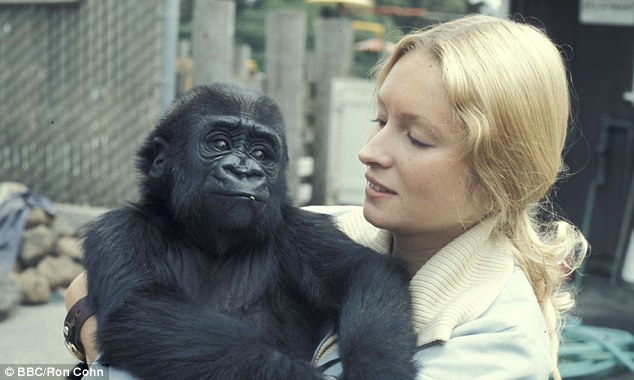
Yes, really!
Here’s a photograph of Pharaoh taken on the 3rd December, 2005. Taken in my home in Harberton, Devon, some two years before I met Jeannie.
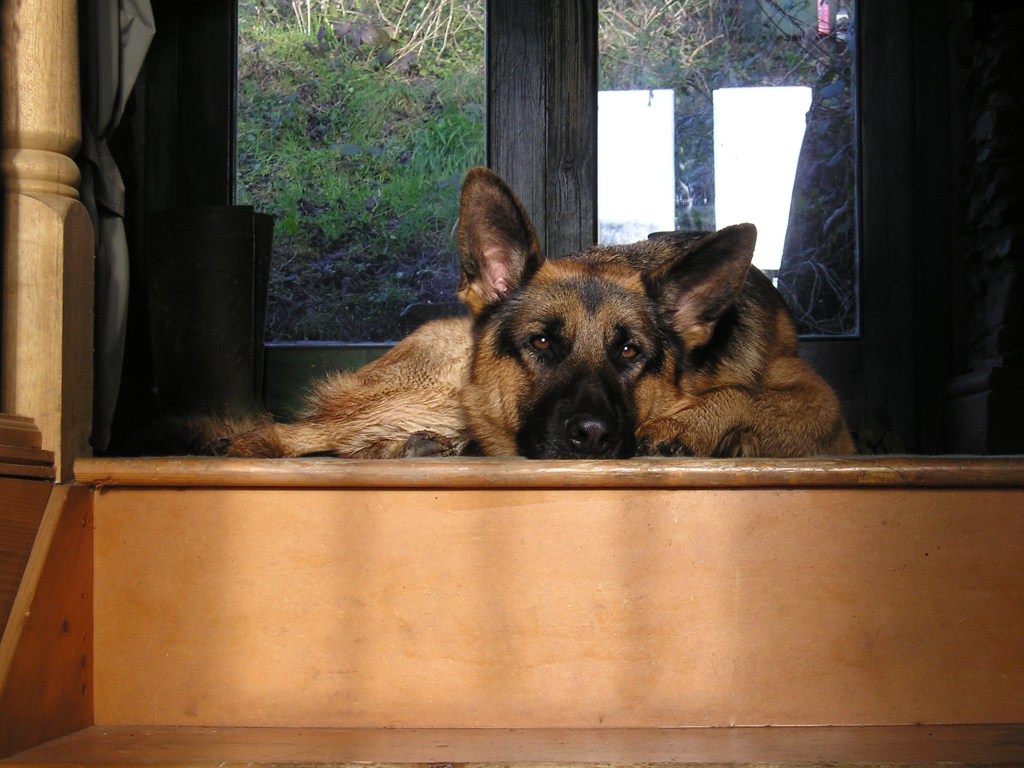
It’s not the world’s best photograph but I start today’s post with it simply because there is a look in Pharaoh’s eyes that spells out love to me in capital letters. Always has since the day I took that photograph.
Here’s an enlargement of the photo offering a closer look at Pharaoh’s expression in those eyes.

Right from the very first moment that I held Pharaoh I sensed the start of a loving bond. Did I choose to love Pharaoh? Well, of course I did! Was it a conscious decision? I don’t think so!
All of which is my introduction to a fascinating essay about the science of love that recently appeared on the Care2 site.
Enjoy!
ooOOoo

By: Zoe Blarowski June 2, 2017
Love may often feel spontaneous and sometimes even out of control. But is it, really? Research is starting to show that you can change the intensity of love you feel towards others. Similar to emotions like fear or sadness, love can be influenced simply by how you think about a situation.
One study looked at altering love feelings in people who were either in a romantic relationship or had recently broken up from one. Each participant started by viewing pictures of their current lover or their ex-partner to bring up their current feelings towards them.
Then, researchers asked them to think about positive aspects of their partner, relationship or possible future scenarios. Their feelings towards their current or previous partners were assessed again.
The second part of the study asked participants to think of negative things about their partner, such as what’s wrong with them or their relationship.
Perhaps it’s not surprising that participants reported having greater love feelings after thinking positive thoughts. Whereas, they reported decreased lovingness after the negative thoughts. It was the same for everyone, whether they were in a relationship or had recently broken up.
Researchers felt this shows great potential for people to take more control of their emotional world, which could in turn benefit their lives and relationships.
Interestingly, thoughts also appeared to affect everyone’s overall mood and feelings about life in general. The positive thoughts improved people’s mood and disposition, whereas the negative thoughts brought everyone down.
This may highlight the importance of how positive and negative thoughts in general can affect our mental health.
You can likely think of times in your own life when it would be helpful to either decrease or increase your love for another person.
Have you ever had an unwanted crush on someone? For instance, obsessing over a celebrity you’ll likely never meet can cause more frustration than joy in your life. Or maybe you’ve fallen for someone who’s not available, either physically or emotionally.
These are times when it’s in your best interest to end your attachment to the person and move on.
In addition, research has shown that thinking negatively about an ex-partner or your previous relationship helps you get over a break-up. The reverse is also true – if you think positively about an ex, it’s more difficult to heal and move on.
Keep this in mind if you’re going through a break-up, or need to reduce your feelings towards someone for another reason.
Try asking yourself questions like these:
Reframing your thoughts is also a much healthier way to try to get over someone than taking self-destructive action to distract yourself, such as drinking too much.
On the other hand, the world always needs a lot more love to go around. Increasing your love towards others is often one of the best things you can do to help yourself and everyone in your life.
Unfortunately, the top reason married couples give for getting a divorce is growing apart and falling out of love. It’s true the intensity of love feelings usually fluctuates throughout a long-term relationship, but a decrease in feelings doesn’t have to mean the end.
If you’re starting to question whether or not you should stay in a long-standing relationship, take a closer look at your situation before making a final decision. Do you still respect and care for your partner? Do you still have lots in common? Is it possible you’re just in a temporary slump?
Questions like these may help to re-frame how you feel about your relationship:
Romantic partners who view each other in a positive light have been shown to actually have happier relationships. This is likely true for all relationships. Choosing more positive thoughts can go a long way towards creating greater harmony with all your loved ones.
Sharing your thoughts and telling others why you love them is even better.
ooOOoo
As my dearest Jeannie will confirm, I have never been the most comfortable person in terms of verbalising my love for her, despite Jean being the dream loving partnership of my life. Jean, on the other hand, expresses her love for me many times each day.
Maybe this essay offers an insight into the different ways we love?
For Jean also tells the dogs individually many times each day that she loves them. I feel the same but don’t say it anything like as often.
So is science showing us why the difference between Jean and me? I think so.
Yet another thing that we learn from dogs. Or more specifically that I have to learn from dogs!
Tell them every day how much I love them!
A guest post from Sloan McKinney.
Serendipity!
Funny how things work.
The reason I start today’s post in such a fashion is that Jean and I have been mulling over how we might consider doing some traveling once we are down to six dogs. Indeed, to that end, just last week we met Jana Stewart, a local woman who came highly recommended and who has been in the pet industry for over 30 years.
The serendipitous aspect is that quite recently I received an email from a Sloan McKinney. This is part of what she wrote:
My name is Sloan McKinney and I am freelance writer and journalist and pet enthusiast. I just wanted to say that Learning from Dogs offers great information and advice about pet care issues.
I did happen to notice that you don’t have much information about pets and sitters, which I believe your readers would love to know more about, especially with many people having to leave their pets at home for travel or work.
Since your website contains relevant issues, I was wondering if you would be interested in sharing an infographic about choosing the right sitter for your pet.
More research quickly found Sloan’s background details:
Sloan McKinney is a journalist based in Southern California. After writing about pop culture for a number of years, she has recently begun writing for a new audience. Inspired by DeAnthony, her cat, as well as her dog Max, Sloan now hopes to help other pet owners guarantee their animal companions happy and healthy lives.
I replied that I would be delighted to receive Sloan’s guest post and her accompanying infographic. Here it is:
ooOOoo
by Sloan McKinney. 1st June, 2017.
If you live with a four-legged friend, you sure understand how nervous and stressful it can be to leave it at home alone for a couple of days.
However, so wags the world that we sometimes have to travel, and oftentimes it is impossible to bring our pets with us. When such a situation occurs, you find yourself in an ethical dilemma. You have to choose between an expensive pet hotel or a friend who’ll be coming to your place once per day to feed your ball of fluff. While the first option is not cost-efficient, the second one might put you into uncomfortable situation when you have to ask your friend or relative to spend time on something that is your responsibility. What a hard choice to make, huh?
But the good news is that there is a great alternative in between the two options described above. This option won’t make you drain your purse, not it will make you feel shy and uncomfortable. Wonder what is it? Pet sitter is the answer. Yes, you will have to pay some money, but the price will be reasonable. No, you won’t have to put pressure on your friends or family members. And the best part is that professional pet sitters know how to make friends with virtually any pet. After all, it’s their job, right?
If you need more reasons to get convinced that pet sitters are the best solution, here is the list of benefits. To begin with, professional pet sitters guarantee regular visits and care. Apart from it, they can get on the right side of even the most demanding pet (of course, it might be still hard even for professional pet sitters to tame a squirrel or raccoon living in your attic). What’s more, they will assure an easier separation for both you and your four-legged friend.
Still not sure it’s a good idea to hire a pet sitter for your favorite ball of fluff? Then you absolutely need to see this beautiful infographic:

ooOOoo
Don’t know about you but Jean and I found that a very useful aide-memoir.
How did you find Sloan’s guest article? I would love to have your feedback.
Talk about extremes of topics!
Yesterday it was gliding, tomorrow it is going to be a celebration of Pharaoh’s 14th birthday and today it is about you!
Kadam Morten Clausen is a Buddhist teacher. Now I would be the first to stick up my arm and say that my understanding of Buddhism is pretty poor. But in the days many years back when I spent time exploring a number of Asian countries I found the culture surrounding Buddhism very appealing. (And I write as someone who is not a religious believer.)
Back to Morten Clausen.
The Kadampa Meditation Center in New York, where Kadam is a resident teacher, describe him as follows:
Kadam Morten Clausen is the Eastern US National Spiritual Director of the New Kadampa Tradition and Resident Teacher at the Kadampa Meditation Center New York City, and also Bodh Gaya Center in Bayside, Queens. For over 30 years he has been a close disciple of Venerable Geshe Kelsang Gyatso, who gave him the title “Kadam,” indicating that he is a senior lay teacher of the Kadampa Tradition.
Kadam Morten met his teacher, Geshe Kelsang, while attending university in England. He
taught widely throughout the UK and helped develop many Kadampa Centers in England. Kadam Morten has been teaching in the US for more than 20 years and has established centers throughout the New York area, as well as Washington DC, Virginia, and Puerto Rico. In addition to his local teaching responsibilities, he teaches and guides retreats regularly throughout the United States and Europe.
Kadam Morten is greatly admired as a meditation teacher and is especially known for his clarity, humor and inspirational presentation of Dharma. His teachings are always practical and easy to apply to everyday life. Through his gentle and joyful approach and his peaceful example, he has helped many people find true happiness in their hearts.
So what’s this all about when I say that today’s post is about you?
Enjoy the following, recently published on the Big Think site:
ooOOoo
by

Evan Thompson of the University of British Columbia has verified the Buddhist belief of anatta, or not-self. Neuroscience has been interested in Buddhism since the late 1980s, when the Mind and Life Institute was created by HH Dalai Lama and a team of scientists. The science that came out of those first studies gave validation to what monks have known for years — if you train your mind, you can change your brain. As neuroscience has begun studying the mind, they have looked to those who have mastered the mind.
While Buddha didn’t teach anatta to lay people, thinking it might be too confusing, the concept is centered on the idea that there is no consistent self. The belief that we are the same one moment to the next, or one year to the next, is a delusion. Thompson says that “the brain and body is constantly in flux. There is nothing that corresponds to the sense that there’s an unchanging self.”
[W]hen there is no consistent self, it means that we don’t have to take everything so personally.
It is useful to look at a video of yourself from the past, or read something you wrote years ago. Your interests, perspective, beliefs, attachments, relationships, et al, have all changed in some way. Anatta doesn’t mean there’s no you; it just means that you are constantly changing, constantly evolving, and shape-shifting. Why is this important? Why does it matter if there’s no solid “you” or “me”?
Buddhist teacher Kadam Morten Clausen says Buddhism is a science of the mind:
Dr. Rick Hanson, author of Hardwiring Happiness and Buddha’s Brain, argues that when there is no consistent self, it means that we don’t have to take everything so personally. That is, our internal thoughts are only thoughts and don’t define us. External events are only external events and aren’t happening to us personally. Or as Tara Brach says, our thoughts are “real, but not true.”There is tremendous liberation in not identifying ourselves with thoughts, or a set idea of who we are.
It is then that we can grow and change, with the help of neuroplasticity. There is then hope that we can overcome our vices or bad habits (of mind and body), because if we aren’t stuck with the self-limiting beliefs inherent with a consistent self, we may orient ourselves toward becoming more of who we want to be.
The belief that we are the same one moment to the next, or one year to the next, is a delusion.
As science and Eastern thought continue to hang out with each other, there may be more 21st Century studies to back up 2,600-year-old thoughts. But, as HH Dalai Lama said, “Suppose that something is definitely proven through scientific investigation. … Suppose that that fact is incompatible with Buddhist theory. There is no doubt that we must accept the result of the scientific research.”Hearing a pro-science stance from a religious leader is a relief to many. In the end it seems Buddhism and neuroscience have similar goals: What is this thing we call the mind, and how can we use it to make ourselves a little less miserable and a little happier? Maybe even just 10 percent happier, as Dan Harris wrote. If there is no consistent self, it is at least my intention that my ever-changing self be equanimous and, well, 10 percent happier. No matter who I am.
—
Lori Chandler is a writer and comedian living in Brooklyn, NY, which is the most unoriginal sentence she has ever written. You can look at her silly drawings on Tumblr, Rad Drawings, or read her silly tweets @LilBoodleChild. Enough about her, she says: how are you?
PHOTO CREDIT: Chris McGrath/Getty Images
ooOOoo
So if there are times when you find yourself talking to yourself, perhaps the first thing to do is to ask if it is you! (Golly! I can feel a headache coming on!)
Wonder if it is the same for dogs?
Up, up and away!
Apologies in advance for this being possibly of limited interest to others.
A couple of years after I left IBM UK and formed my own company, Dataview Ltd., based in Colchester, Essex, I formed both a personal and business relationship with a Roger Davis.
That relationship exposed me to gliding, or sail-planing in American speak, for Roger was a volunteer instructor at Rattlesden Gliding Club in Suffolk that flew from an ex-wartime aerodrome of the same name.
Thus on the 7th June, 1981, I was taken up for two air-experience circuits in a two-seater glider known as a ‘K7’. I was immediately hooked! Those experience flights leading to a 4-minute flight (flight number 46) on the 6th September, 1981 that has the remark in my pilot’s log book: Solo!
Now fast forward to October, 1984 and my log book shows me attending a gliding instructor’s course at Lasham, resulting in me being issued with a British Gliding Association (BGA) Assistant Instructor Rating on the 14th October. (105/84).
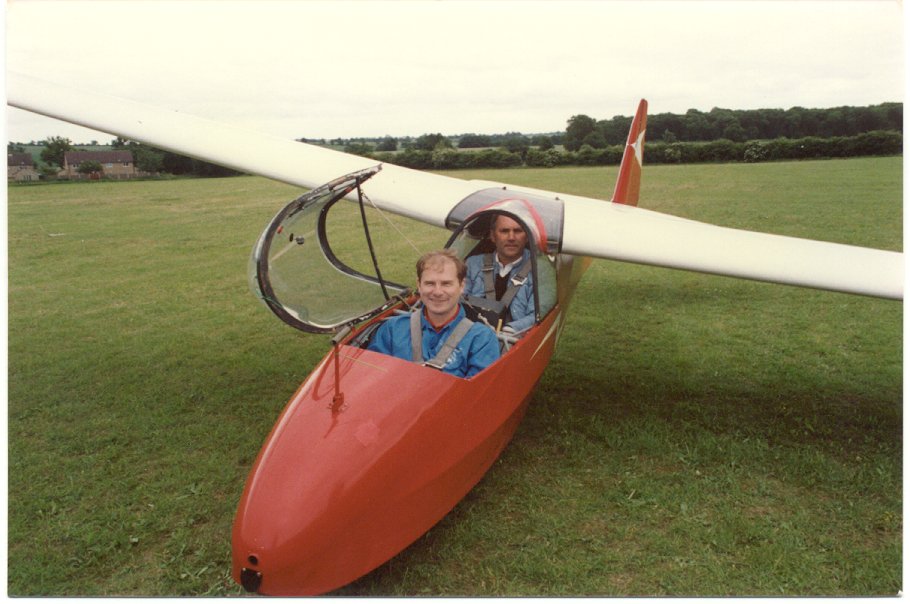

A few days ago, Roger sent me a link to the following video.
It’s a compilation of photos, cartoons from the pen of dear Bob White, and videos. A little over eleven minutes long I do hope some of you find it of interest.
Published on May 29, 2017
Slide show produced from photos and images produced by Mark Taylor for Rattlesden Gliding Club’s 25 anniversary in 2001. Shows a collection of members involved from those early days, including some cartoons produced by Bob White whenever there was a notable event, or incident as well!
Let me close with this photograph!

(All those years ago, Roger and Sheila had a beautiful Old English Sheepdog. His name was Morgan and he was a wonderful, loving dog.)
So is there anyone reading this who has experienced gliding?
Continuing with Janet’s wonderful pictures.
(The last set from Janet were published a fortnight ago.)

oooo

oooo

oooo
oooo

oooo

oooo

oooo
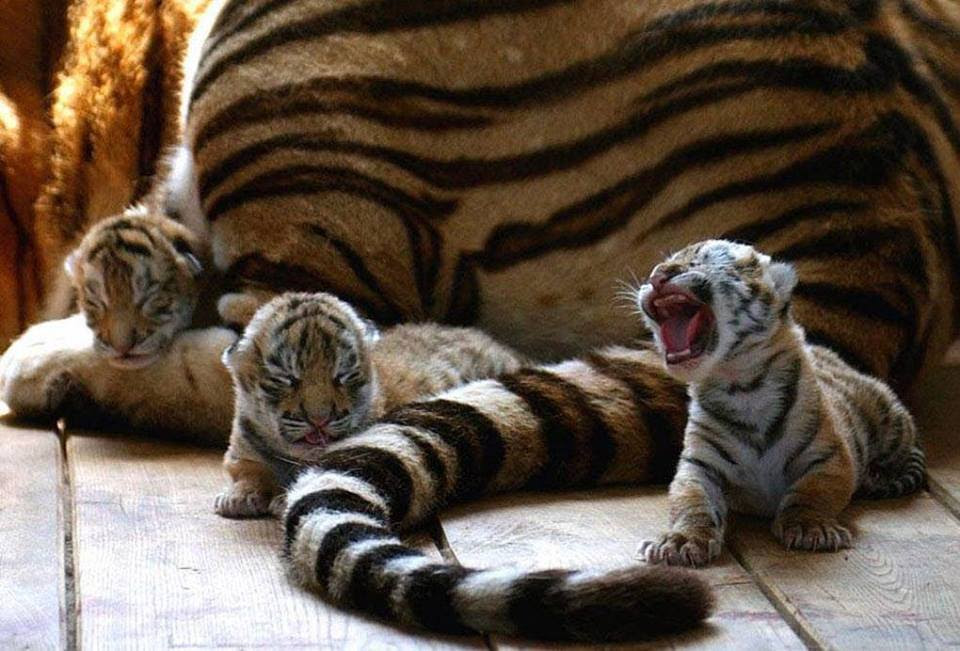
Going to round off today’s picture parade with a photograph of our growing Canadian geese goslings. The photograph was taken at 7:30pm two evenings ago. I would imagine that we aren’t that far off them all taking to the wing!

Sound UK produces extraordinary musical encounters for all
That sub-heading is the banner statement you will read if you go across to the Sound UK website. You may recall that I featured Sound UK in a post last June under the title of Sonic Journeys. I also presented the fact that my daughter is one of two directors of Sound UK. As in:
Sound UK is run by Directors Polly Eldridge and Maija Handover. We work alongside a crack team of freelancers and consultants across production, marketing, design, participation and fundraising. These include Tim Hand (production), Becky Morris Knight at Shipshape Marketing (digital marketing), Beth Fouracre (participation), John Gilsenan at IWant (design), Sarah Coop (fundraising) plus many more.
The reason I am featuring Sound UK again is because I wanted to share with you an exciting new project. I am republishing this from the Sound UK site.
ooOOoo
We need your support to produce the first multimedia production of Royal Academy artist Tom Phillips’ Irma: an opera at South London Gallery this September. An exquisite miniature opera and audio visual installation, Irma is drawn from his masterpiece A Humument, which he recently completed after 50 years. This unique production celebrates Phillips’ extraordinary output in art and music.
Tom Phillips RA: Phillips has had major exhibitions in national galleries, painted figures such as John Gielgud and Iris Murdoch and created works for the Imperial War Museum, Westminster Abbey and Westminster Cathedral. His work can also be seen on the streets of Peckham where he has lived and worked for most of his life. You may even own one of his artworks; the Benjamin Britten 50p piece.

In the 1960s, Phillips was at the centre of the vibrant art school scene where music and art collided. He brought over key composers of that era to the UK – Morten Feldman, John Cage, performed with Cornelius Cardew – and even taught Brian Eno, who he introduced to ideas that had a great influence on Eno’s music. This landmark event recognises Phillips’ work as a composer and wider influence on the world of music.

The Creative team: Sound UK is working with one of the UK’s most gifted opera designer / directors Netia Jones and her company Lightmap, with music director Anton Lukoszevieze and his leading ensemble Apartment House.
“Netia Jones is the most imaginative director of opera working in Britain today” The Observer
“One of the most innovative and exciting chamber ensembles in Europe” Royal Philharmonic Society on Apartment House
We need YOU to be part of Irma!
We have already raised the majority of our funding with the generous support of Arts Council England and Hinrichsen Foundation. We are also grateful for major in kind support from South London Gallery, where Phillips first showed his work as a student.
YOU can play a key role in Phillips’ new artwork. We need to raise £5,000 to help pay for rehearsals and the creation of the video for this extraordinary artwork.
To thank you for your invaluable support, we have put together a selection of unique rewards based on Irma characters – view by scrolling up on the right of this page – including an exclusive limited edition print created by Tom Phillips and mementos of his work.
Please visit our website for more information on Irma
www.sounduk.net/events/tom-phillips/
Image of Tom Phillips limited edition print – Irma: Our Lamplit History
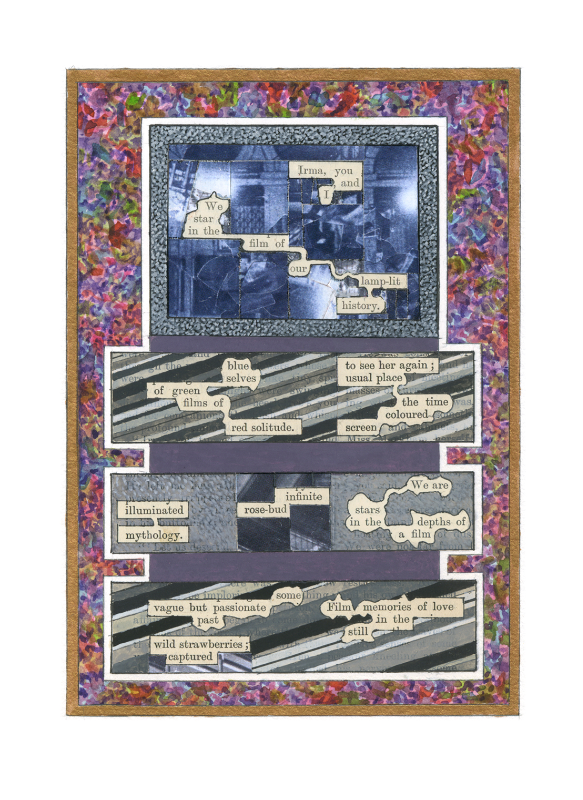
Paper size h:28.4cm x w:21cm
Limited edition of 50
A unique print created by Tom Phillips in support of the world premiere full version of his opera Irma, at South London Gallery, September 2017, directed / designed by Netia Jones, musical direction Anton Lukoszevieze, performed by Apartment House with video by Lightmap.
Digital print with silkscreen 2017
All prints are sent signed and numbered by the artist.
ooOOoo
If anyone is so moved to participate in this ‘crowdfunding’ project then the donation details may be seen here: https://payment.crowdfunder.co.uk/reward/246262
Or observing Lady Luck in great form!
We all know that so many things in life have two sides to them. As in a positive and negative side. Which ‘side’ we look at has more to do with ourselves, again as you all know.
So when I republished an essay from Patrice Ayme a little over a year ago about the loss of the ice in Antarctica I was in harmony with Patrice’s gloomy stance:
I have written for years that a runaway Antarctica was certain, with half the icy continent melting rather spectacularly on an horizon of two centuries at most, and probably much less than that. This rested on the fact that half of Antarctica rests on nothing but bedrock at the bottom of the sea. At the bottom of what should naturally be the sea, in the present circumstances of significant greenhouse gas concentrations.
But Lady Luck comes into view and we have this: (Courtesy of Mother Nature Network.)
ooOOoo
At current rates, it’s not crazy to think that the Antarctic peninsula could eventually become forested again.
Bryan Nelson May 19, 2017

When you think of Antarctica, you probably imagine a frigid, windswept, icy, inhospitable domain; the whitest, most barren canvas on Earth. That’s pretty much the way the Southern continent has been for at least the last 3 million years, since the last time atmospheric carbon dioxide levels approached their current levels. But times, they are a-changing.
The effects of global warming are beginning to radically alter the Antarctic landscape in some surprising ways. Scientists say it’s like looking back in time, to an epoch when this bleached terrain was actually green. Mossy mats are rapidly spreading across the thawed, exposed soils at unprecedented rates, transforming the land from a place of desolation, to a place of viridescence.
At the very least, we’re getting a peek at Antarctica’s future, which like its past was green and filled with plant-life, reports the Washington Post.
“This is another indicator that Antarctica is moving backward in geologic time — which makes sense, considering atmospheric CO2 levels have already risen to levels that the planet hasn’t seen since the Pliocene, 3 million years ago, when the Antarctic ice sheet was smaller, and sea-levels were higher,” said Rob DeConto, a glaciologist at the University of Massachusetts, Amherst.
“If greenhouse gas emissions continue unchecked, Antarctica will head even further back in geologic time… perhaps the peninsula will even become forested again someday, like it was during the greenhouse climates of the Cretaceous and Eocene, when the continent was ice free.”
So far, the greening of Antarctica is mostly limited to the peninsula, where two different species of mosses are fanning out at a startling clip, at four to five times the rate seen just a few decades ago. They gain a footing in the summers, when the frozen ground thaws, then freeze back over in the winter. But these layers-upon-layers are thickening, generating an increasingly detailed record of Antarctica’s warming climate.
It’s perhaps only a matter of time before grasses, bushes, perhaps even trees begin to sprout. As beautiful as a forested Antarctica might be to imagine, it’s important to remember that this isn’t necessarily a good thing. Climate change is an ambiguous beast; Antarctica might be getting greener, but deserts elsewhere in the world are expanding, sea levels are rising, and weather is becoming more severe.
“These changes, combined with increased ice-free land areas from glacier retreat, will drive large-scale alteration to the biological functioning, appearance, and landscape of the [Antarctic peninsula] over the rest of the 21st century and beyond,” wrote the authors of the study, which was published in the journal Current Biology.
Lead author Matthew Amesbury added: “Even these relatively remote ecosystems, that people might think are relatively untouched by human kind, are showing the effects of human induced climate change.”
ooOOoo
Sorry to drag out this old saw of mine, but it is so perfect: “I can predict anything except those things that involve the future”!
Because I am still staying with the Lady Luck theme but this time going from the vastness of the Southern polar regions to something a little closer to home. (Again, seen on Mother Nature Network.)
ooOOoo
Leonard recently became Ohio’s first ever pit bull K-9.
Jenn Savedge May 19, 2017

When Leonard, a stout young pit bull, arrived on the doorstep of the Union County Humane Society in Ohio a few months ago, the staff had little hope for his prospects of being adopted. Leonard was deemed “aggressive,” and that meant he was more likely to be euthanized than sent home with a new family. But Jim Alloway, the center director, saw something different in the dog. And thanks to his observation, Leonard has a future that includes work, play and lots of belly rubs.
As luck would have it, Alloway has an extensive background of working with police dogs. He realized Leonard’s aggression was really a very strong desire to play. Whenever someone was holding something, Leonard wanted it and would try to grab it. As a pet in the average family, this may not be a desirable trait. But this strong “prey drive” made him a great candidate for training as a police dog.
So Alloway called Storm Dog K-9 training. After an initial round of testing, Mike Pennington, the owner of the training facility, agreed to take Leonard on and train him to sniff out narcotics. (Leonard wasn’t a good candidate for tracking and catching suspects because he loves people way too much.)
Before his training with Pennington, Leonard didn’t even know basic commands. But after a few weeks of hard work — which his trainers said he absolutely loved — Leonard was fully certified as a police dog, becoming Ohio’s first pit bull K-9 officer.
Leonard was paired with Terry Mitchell, Clay Township’s Chief of Police. Mitchell told the local ABC affiliate that he was unsure at first about the idea of using a pit bull as a K-9. But the pair bonded immediately.
“I scheduled a time to come down and see him, and after about 10 minutes, I knew this was the dog for us,” Mitchell said.
Leonard officially started work with the force this week. When he has his police vest on, Mitchell says the pup is all business and ready to tackle his narcotics-sniffing job. Off-duty though, Leonard is just a sweet, playful pup, hopping on Mitchell’s lap for evening naps. Oh, and according to Mitchell, he snores horribly.
Leonard — and Mitchell — couldn’t be happier.
ooOOoo
Wonder how long it will be before we have happy ex-rescue dogs frolicking through the forests of Antarctica!!
 Learning from Dogs