Category: People

Duh! Is it me!

Sometimes, one does have to wonder!

Years ago I recall hearing the retort, “What part of the word no are you having trouble with!

It made me laugh out loud.

It comes to mind again, and this is why.

The accumulation of evidence mounts almost on a daily basis that mankind is critically affecting the viability of Planet Earth. Not only threatening a sustainable home for tens of thousands of species but, most importantly, for homo sapiens.

Yesterday, I included a report that suggested we may be on the verge of one of the largest El Ninos in history.  The presumption being that the extra heat energy in the atmosphere is transferring to the Pacific waters.

Today, I want to stay with the theme that it is nature, not mankind, that is dictating our future; that our leaders, are way ‘behind the drag curve’ to use an aviation expression.

But let me offer yet another lesson from dogs.  Learnt from understanding the role of the ‘alpha’ dog; the leader.

When dogs lived in the wild the size of their pack, or community, was around fifty animals.  The most senior in status was the alpha dog.  The alpha dog was a female who had two important roles on behalf of the pack.  First, the alpha dog had the pick of the male dogs to ensure the optimum genetic health of the entire group.

Second, it was alpha dog that, in the rare circumstances of their pack’s territory becoming unsustainable, made the decision for her pack to find a new territory.

Humans are on the verge of understanding that our ‘territory’ is rapidly becoming unsustainable.  Just a great shame we don’t have any ‘alpha leaders’ to find ‘a new territory’.  Clearly in a metaphorical sense.  Because the last time I looked a ‘backup’ to Planet Earth wasn’t anywhere close!

No better illustrated than by a recent essay from George Monbiot that I am republishing in full within his blanket permission to so do.  The essay is called Loss Adjustment and was published in the Guardian newspaper on the 1st April 2014.

ooOOoo

Loss Adjustment

When people say we should adapt to climate change, do they have any idea what that means?
By George Monbiot

To understand what is happening to the living planet, the great conservationist Aldo Leopold remarked, is to live “in a world of wounds … An ecologist must either harden his shell and make believe that the consequences of science are none of his business, or he must be the doctor who sees the marks of death in a community that believes itself well and does not want to be told otherwise.” (1)

The metaphor suggests that he might have seen Henrik Ibsen’s play An Enemy of the People (2). Thomas Stockmann is a doctor in a small Norwegian town, and medical officer at the public baths whose construction has been overseen by his brother, the mayor. The baths, the mayor boasts, “will become the focus of our municipal life! … Houses and landed property are rising in value every day.”

But Dr Stockmann discovers that the pipes were built in the wrong place, and the water feeding the baths is contaminated. “The source is poisoned …We are making our living by retailing filth and corruption! The whole of our flourishing municipal life derives its sustenance from a lie!” People bathing in the water to improve their health are instead falling ill.

Dr Stockmann expects to be treated as a hero for exposing this deadly threat. After the mayor discovers that re-laying the pipes would cost a fortune and probably sink the whole project, he decides that his brother’s report “has not convinced me that the condition of the water at the baths is as bad as you represent it to be.” He proposes to ignore the problem, make some cosmetic adjustments and carry on as before. After all, “the matter in hand is not simply a scientific one. It is a complicated matter, and has its economic as well as its technical side.” The local paper, the baths committee and the business people side with the mayor against the doctor’s “unreliable and exaggerated accounts”.

Astonished and enraged, Dr Stockmann lashes out madly at everyone. He attacks the town as a nest of imbeciles, and finds himself, in turn, denounced as an enemy of the people. His windows are broken, his clothes are torn, he’s evicted and ruined.

Yesterday’s editorial in the Daily Telegraph, which was by no means the worst of the recent commentary on this issue, follows the first three acts of the play (3). Marking the new assessment by the Intergovernmental Panel on Climate Change, the paper sides with the mayor. First it suggests that the panel cannot be trusted, partly because its accounts are unreliable and exaggerated and partly because it uses “model-driven assumptions” to forecast future trends. (What would the Telegraph prefer? Tea leaves? Entrails?). Then it suggests that trying to stop manmade climate change would be too expensive. Then it proposes making some cosmetic adjustments and carrying on as before. (“Perhaps instead of continued doom-mongering, however, greater thought needs to be given to how mankind might adapt to the climatic realities.”)

But at least the Telegraph accepted that the issue deserved some prominence. On the Daily Mail’s website, climate breakdown was scarcely a footnote to the real issues of the day: “Kim Kardashian looks more confident than ever as she shows off her toned curves” and “Little George is the spitting image of Kate”.

Beneath these indispensable reports was a story celebrating the discovery of “vast deposits of coal lying under the North Sea, which could provide enough energy to power Britain for centuries.” (4) No connection with the release of the new climate report was made. Like royal babies, Kim’s curves and Ibsen’s municipal baths, coal is good for business. Global warming, like Dr Stockmann’s contaminants, is the spectre at the feast.

Everywhere we’re told that it’s easier to adapt to global warming than to stop causing it. This suggests that it’s not only the Stern review on the economics of climate change (showing that it’s much cheaper to avert climate breakdown than to try to live with it (5)) that has been forgotten, but also the floods which have so recently abated. If a small, rich, well-organised nation cannot protect its people from a winter of exceptional rainfall – which might have been caused by less than one degree of global warming – what hope do other nations have, when faced with four degrees or more?

When our environment secretary, Owen Paterson, assures us that climate change “is something we can adapt to over time” (6) or Simon Jenkins, in the Guardian yesterday, says that we should move towards “thinking intelligently about how the world should adapt to what is already happening” (7), what do they envisage? Cities relocated to higher ground? Roads and railways shifted inland? Rivers diverted? Arable land abandoned? Regions depopulated? Have they any clue about what this would cost? Of what the impacts would be for the people breezily being told to live with it?

My guess is that they don’t envisage anything: they have no idea what they mean when they say adaptation. If they’ve thought about it at all, they probably picture a steady rise in temperatures, followed by a steady rise in impacts, to which we steadily adjust. But that, as we should know from our own recent experience, is not how it happens. Climate breakdown proceeds in fits and starts, sudden changes of state against which, as we discovered on a small scale in January, preparations cannot easily be made.

Insurers working out their liability when a disaster has occurred use a process they call loss adjustment. It could describe what all of us who love this world are going through, as we begin to recognise that governments, the media and most businesses have no intention of seeking to avert the coming tragedies. We are being told to accept the world of wounds; to live with the disappearance, envisaged in the new climate report, of coral reefs and summer sea ice, of most glaciers and perhaps some rainforests, of rivers and wetlands and the species which, like many people, will be unable to adapt (8).

As the scale of the loss to which we must adjust becomes clearer, grief and anger are sometimes overwhelming. You find yourself, as I have done in this column, lashing out at the entire town.

http://www.monbiot.com

References:

1. Aldo Leopold, 1949. A Sand County Almanac. Oxford University Press.

2. Read at http://www.gutenberg.org/files/2446/2446-h/2446-h.htm

3. http://www.telegraph.co.uk/comment/telegraph-view/10733381/The-climate-debate-needs-more-than-alarmism.html

4. http://www.dailymail.co.uk/news/article-2593032/Coal-fuel-UK-centuries-Vast-deposits-totalling-23trillion-tonnes-North-Sea.html

5. http://webarchive.nationalarchives.gov.uk/+/http:/www.hm-treasury.gov.uk/sternreview_index.htm

6. http://www.theguardian.com/environment/2013/sep/30/owen-paterson-minister-climate-change-advantages

7. http://www.theguardian.com/commentisfree/2014/mar/31/ipcc-report-adaptation-climate-change

8. http://ipcc-wg2.gov/AR5/images/uploads/IPCC_WG2AR5_SPM_Approved.pdf

ooOOoo

Now watch this film!

Published on Apr 6, 2014
Hollywood celebrities and respected journalists span the globe to explore the issues of climate change and cover intimate stories of human triumph and tragedy. Watch new episodes Sundays at 10PM ET/PT, only on SHOWTIME.

It’s the biggest story of our time. Hollywood’s brightest stars and today’s most respected journalists explore the issues of climate change and bring you intimate accounts of triumph and tragedy. YEARS OF LIVING DANGEROUSLY takes you directly to the heart of the matter in this awe-inspiring and cinematic documentary series event from Executive Producers James Cameron, Jerry Weintraub and Arnold Schwarzenegger.

The natural world.

Hardly seems necessary to say this but natural forces are ‘top of the pyramid‘!

As is so often the case, a few outwardly disconnected events offered a deeper picture; well they did for me!

The first was a recently published post by Alex Jones over on his blog The Liberated Way.  Alex lives in Colchester, Essex, North-East of London, a place where I ran a business way back in the ’80’s’ and lived not far away in the village of Great Horkesley.  Many people, including many Brits are unaware that Colchester, or Camulodunon as the Celtics called it, meaning “the Fortress of Camulos” (Camulos was the Celtic god of war), was the Capitol city in Roman days and that evidence of man’s settlement goes back 3,000 years.

Anyway, back to the thread of today’s post.

That first post from Alex.  A post under the title of Catching a fox.  Alex has generously given me permission to republish it.

Catching a fox.

After two years of hunting I catch a fox with my camera.

fox_colchester
After two years of frustration I finally photograph a fox, which appeared out of nowhere in my garden.

Nature is a shifting tapestry of life, often catching me by surprise with magical manifestations of wildlife that abruptly vanish before I can catch a brief record of its passing through my life. It is a matter of chance that I get lucky with my camera, and I was in luck today.

This morning a fox manifested in my garden. The fox sat looking at me, it had a forlorn look about it, but the fox was content to sit and watch me as it sun bathed in the warmth of a tranquil garden. I had my camera with me, so I made up for two years of frustration by firing off dozens of photographs of my elusive wary model. The fox made my day.

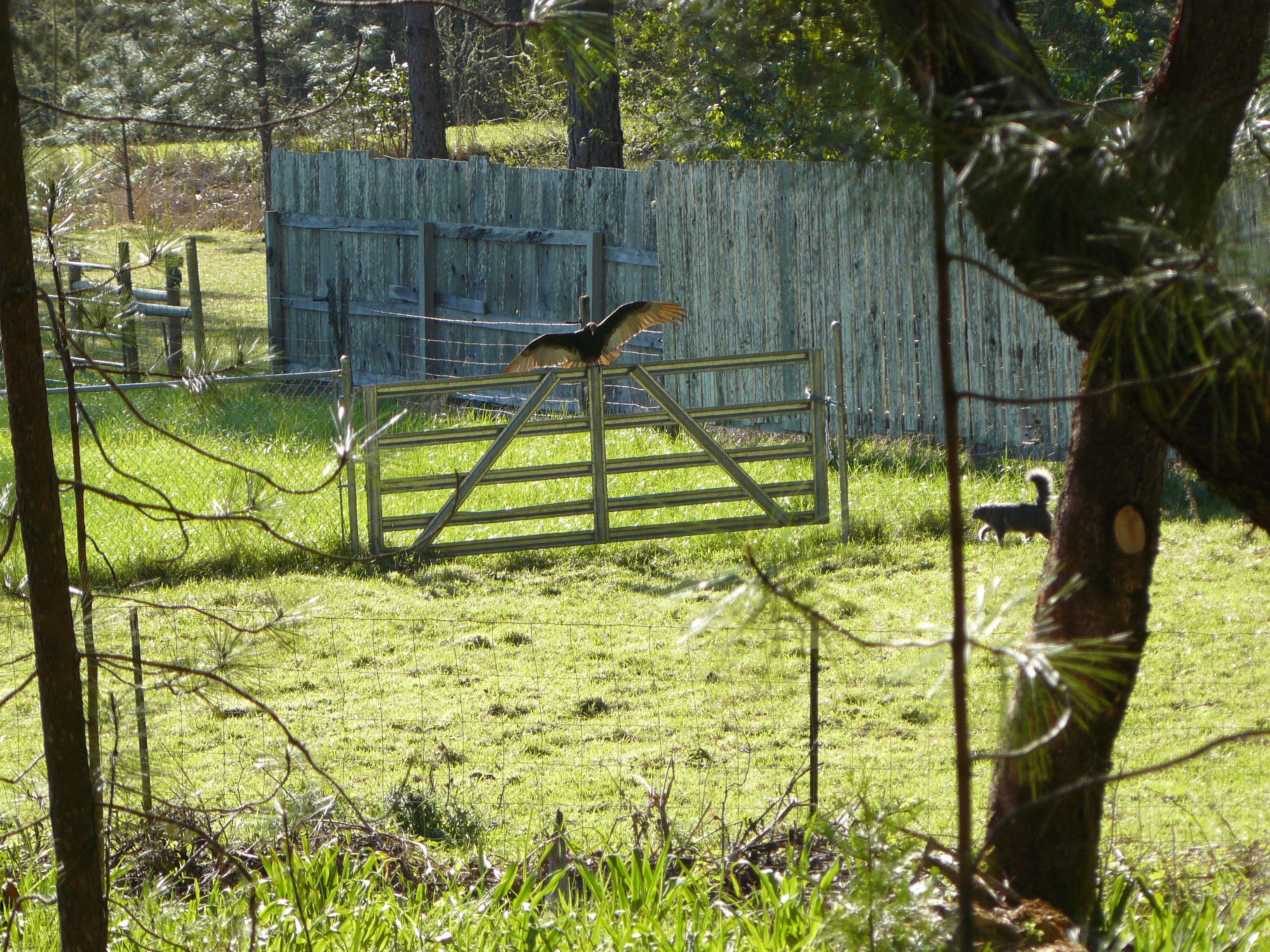
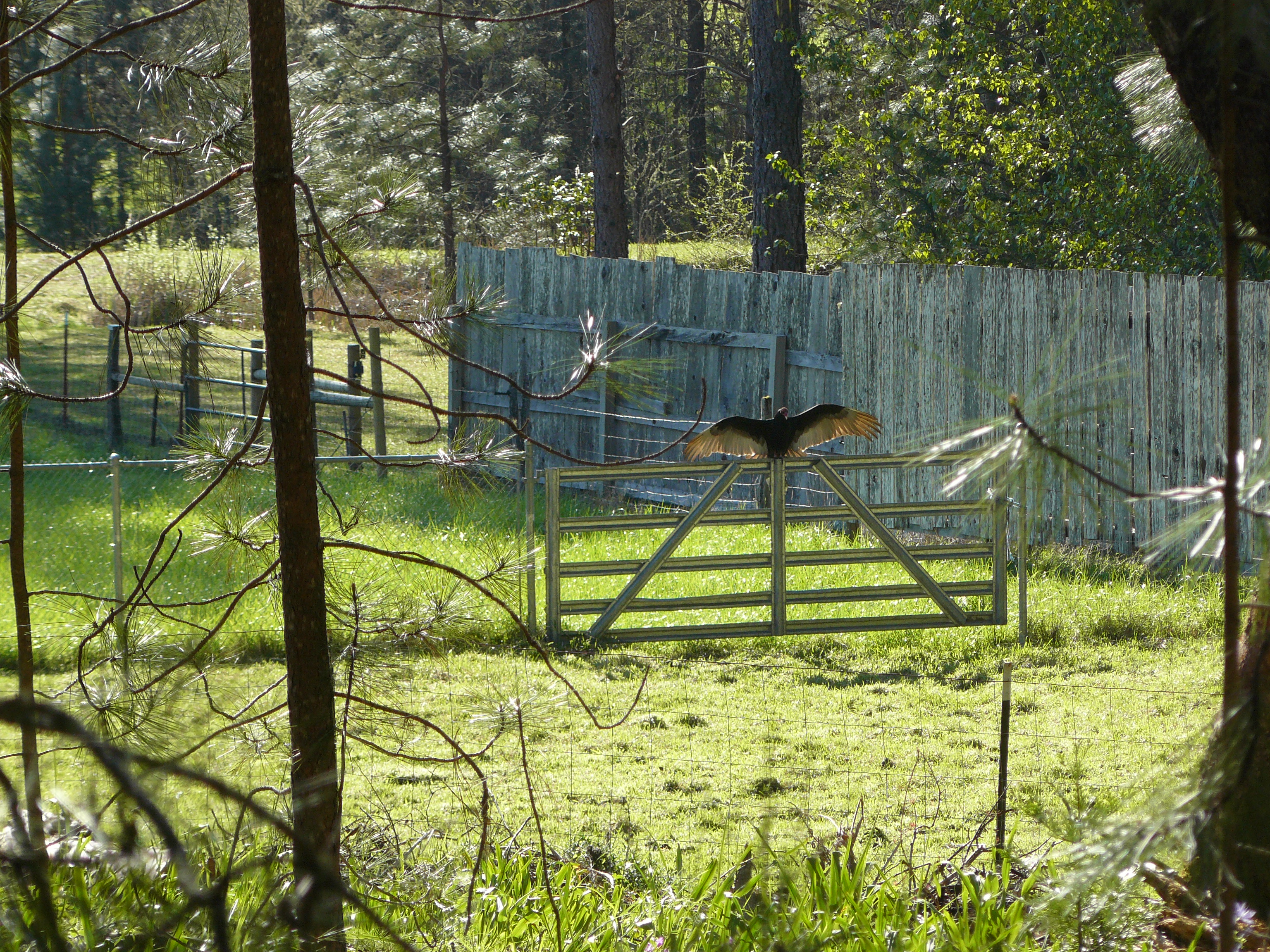
The second event was a chance photograph of a vulture taken two days ago here at home.

Ah, that early morning sun feels good on my back feathers!

 oooo

Ah, that sun feels good on my back feathers!
Damn! Thought it was too good to last!

Now I’m sure that readers so far will find these three photographs, of the fox and the vulture, are producing feelings of pleasure; feelings of wonderment about the natural world around us.

That world of nature ‘speaks’ to us.  If we are prepared to listen.

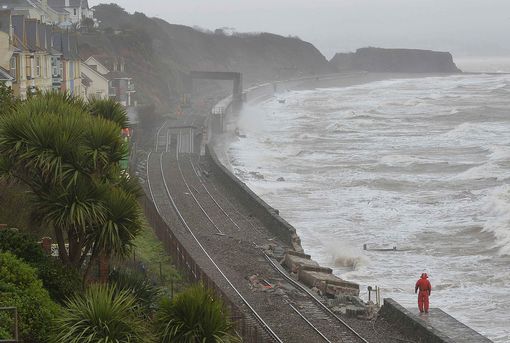
It spoke to South-West England in February earlier this year:

rail-emergency-workers-inspect-damaged-track-along-the-seafront-at-dawlish-in-south-west-england-
Dawlish – Rail emergency workers inspect damaged track along the seafront.

There are signs that Mother Nature will be speaking to us again; fairly soon. From EarthSky:

Warm water in Pacific could spark a monster El Nino in 2014

Scientists are watching a giant mass of sub-surface water in the Pacific. When this water reaches the sea surface, it could set off a powerful El Nino.

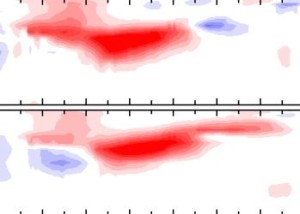
The giant red blob in this image is a huge, unusual mass of warm water that currently spans the tropical Pacific Ocean. Eric Holthaus, a meteorologist who writes about weather and climate for Slate, says the volume of water is big enough to cover the United States 300 feet deep. And that’s a lot of warm water, he says. Holthaus also says that, as the sub-surface warm water in the Pacific moves eastward – propelled by anomalous trade winds – it’s getting closer to the ocean’s surface. Once the warm water hits the sea surface, it will begin to interact with the atmosphere. Why? Because Earth’s oceans and atmosphere are always interacting. In this case, the warm water will likely boost temperatures and change weather patterns … and possibly bring on a monster El Nino in 2014. There are signs this is already beginning to happen. Read more at Slate.

If one clicks on the link to that Slate article, one then reads:

By Eric Holthaus

The odds are increasing that an El Niño is in the works for 2014—and recent forecasts show it might be a big one.

As we learned from Chris Farley, El Niños can boost the odds of extreme weather (droughts, typhoons, heat waves) across much of the planet. But the most important thing about El Niño is that it is predictable, sometimes six months to a year in advance.

That’s an incredibly powerful tool, especially if you are one of the billions who live where El Niño tends to hit hardest—Asia and the Americas. If current forecasts stay on track, El Niño might end up being the biggest global weather story of 2014.

The most commonly accepted definition of an El Niño is a persistent warming of the so-called “Niño3.4” region of the tropical Pacific Ocean south of Hawaii, lasting for at least five consecutive three-month “seasons.” A recent reversal in the direction of the Pacific trade winds appears to have kicked off a warming trend during the last month or two. That was enough to prompt U.S. government forecasters to issue an El Niño watch last month.

Forecasters are increasingly confident in a particularly big El Niño this time around because, deep below the Pacific Ocean’s surface, off-the-charts warm water is lurking:

Now I’m not going to post the whole of that article so for that reason strongly recommend you read the rest here. However, I am going to offer a couple more extracts.

Like this:

The warm water just below the ocean’s surface is on par with that of the biggest El Niño ever recorded, in 1997-98. That event caused $35 billion in damages and was blamed for around 23,000 deaths worldwide, according to the University of New South Wales. The 1997-98 El Niño is also the only other time since records begin in 1980 that sub-surface Pacific Ocean water has been this warm in April.

Or like this:

One of the theories put forth by the mainstream scientific community to explain the slow-down since 1998 has been increased storage of warm water in the Pacific Ocean. If that theory is true, and if a major El Niño is indeed in the works, the previously rapid rate of global warming could resume, with dramatic consequences.

As I wrote last fall, the coming El Niño could be enough to make 2014 the hottest year in recorded history, and 2015 could be even warmer than that. The 1997-98 super El Niño was enough to boost global temperatures by nearly a quarter of a degree Celsius. If that scale of warming happens again, the world could approach a 1ºC departure from pre-industrial times as early as next year. As climate scientist James Hansen has warned, that’s around the highest that temperatures have ever been since human civilization began.

Now I’m not trying to be a ‘drama queen’ but there are times when one does wonder what it will take for those who govern us to wake up to the fact that Mother Nature is getting more and more restless.

I shall return to this theme tomorrow.

Trust, truth and community, Pt. 3.

How a very ancient concept has modern attributes.

One might be forgiven for thinking that community is an odd bed-fellow with trust and truth.  Many might think that faith would be a more logical third leg, so to speak.

However, I hope to show that in today’s world where trust and truth are beleaguered qualities a rethinking of community is critically vital for the long-term health of mankind.

Community

Can’t resist a third look-up in Roget’s Thesaurus.

community noun

Persons as an organised body: people, public, society.

For me two words jump out from that definition: persons; organised.

The challenge is that the word organised is easily interpreted as an organisation with leaders and followers.  But that’s not how community is regarded in the context of this third essay.

“No man is an island”, John Donne wrote in 1624.

This is a quotation from John Donne (1572-1631). It appears in Devotions upon emergent occasions and seuerall steps in my sicknes – Meditation XVII, 1624:

“All mankind is of one author, and is one volume; when one man dies, one chapter is not torn out of the book, but translated into a better language; and every chapter must be so translated…As therefore the bell that rings to a sermon, calls not upon the preacher only, but upon the congregation to come: so this bell calls us all: but how much more me, who am brought so near the door by this sickness….No man is an island, entire of itself…any man’s death diminishes me, because I am involved in mankind; and therefore never send to know for whom the bell tolls; it tolls for thee.”

Thus for the vast majority of people on the face of this planet, we are linked to others and how we live our lives is fundamentally influenced by those others about us.  In a past life, I lived in the village of Harberton in South Devon.  The population of Harberton was 300 persons.

An E. M. Morison (Totnes) postcard, bearing a 3p stamp, which gives a sending date between Feb 1971 and Sept 1973.

Now I was lucky when I moved into Harberton because my two sisters, Rhona and Corinne, had lived in the area for many years and it was easy for me to be positioned as ‘the brother’.  Nevertheless, the way that the village embraced all newcomers was wonderful and within a very short time one felt a settled member of the community.

Same for Jean and me as relative newcomers to our property just 4 miles from Merlin, Oregon. All of our neighbours have embraced us and helped us understand this new rural life that we have embarked on.  We feel part of the local community.

Yet it doesn’t stop there.

Obviously, I’m a WordPress user!  Learning from Dogs is a WordPress blog!  But were you aware of the size of the WordPress community? (As of now!)

How many posts are being published?

Users produce about 44.5 million new posts and 56.7 million new comments each month.

How many people are reading blogs?

Over 409 million people view more than 14.7 billion pages each month.

Even my funny little blog has 959 followers!

What that figure doesn’t reveal is how many of my followers have offered support, openness and real loving friendship. None better demonstrated than by the comments left by readers when I announced the recent death of Dhalia.

Think of the way that untold numbers of internet users rely on that ‘worldwide web’ for referrals, opinions or knowledge about anything ‘under the sun’.

So while there might be many aspects of our new technological world that create unease, the opportunities for having ‘virtual’ friends to complement our social friends make this era unprecedented.

I would go so far as to say this. That the way that knowledge and information can be shared around the world in no time at all may be our ultimate protection against those who would seek to harm us and this planet.

How to close these essays? Perhaps no better than as follows:

On Wednesday evening we were joined by neighbours, Dordie and Bill.  My post on truth came up in discussion. Bill mentioned that he had read about a person who had spent many years studying the texts of all the world’s major religions.  What had emerged was that across all those great religions there was a common view as to what the long-term health and survival of societies requires.

It is this: the telling of truth and the keeping of promises!


Trust, truth and community, Pt. Two.

Musings on truth and the corrosive nature of fear.

Yesterday, in Part One, I explored how easy it is to signal to the public that they are not to be trusted.  I used the case of PayPal’s changes to their ‘privacy’ policy which, as Wolf Richter wrote, only partially tongue-in-cheek perhaps, made “the NSA, which runs the most expansive spying dragnet in history, is by comparison a group of choirboys.

Truth

Again, back to Roget’s Thesaurus.

truth noun

1. Correspondence with fact or truth: accuracy, correctness, exactitude, exactness, fidelity, veraciousness, veracity

2. Freedom from deceit or falseness: truthfulness, veracity

So that’s all clear then!

If only it was that easy.  So many aspects of our modern lives are exposed to complex issues.  None more complex than, of course, the issue of humans having a damaging effect on the planet’s climate.  Or if one wants something more esoteric then try the origins of the universe. (So far as the former is concerned, then my personal belief is that mankind is damaging the global climate.  But do I have the scientific background to support that belief? No Sir!)

However, one thing that our complex society does offer is the opportunity to spread fear. Indeed, fear pervades popular culture and the media.  I picked up that theme from an essay published by David L. Altheide and R. Sam Michalowski of Arizona State University.

Just a random example of the spread of fear.

The link to that essay is here. It opens, thus:

Fear pervades popular culture and the news media. Whether used as a noun, verb, adverb, or adjective, an ongoing study finds that the word “fear” pervades news reports across all sections of newspapers, and is shown to move or “travel” from one topic to another. The use of fear and the thematic emphases spawned by entertainment formats are consistent with a “discourse of fear,” or the pervasive communication, symbolic awareness and expectation that danger and risk are a central feature of the effective environment. A qualitative content analysis of a decade of news coverage in The Arizona Republic and several other major American news media (e.g., the Los Angeles Times, and ABC News) reveals that the word “fear” appears more often than it did several years ago, particularly in headlines, where its use has more than doubled. Comparative materials obtained through the Lexis/Nexis information base also reveals that certain themes are associated with a shifting focus of fear over the years (e.g., violence, drugs, AIDS), with the most recent increases associated with reports about children. Analysis suggests that this use of fear is consistent with popular culture oriented to pursuing a “problem frame” and entertainment formats, which also have social implications for social policy and reliance on formal agents of social control.

No passion so effectually robs the mind of all its powers of acting and reasoning as fear. [my italics]

That last sentence offers the words of Edmund Burke, the Irish statesman and author from over 200 years ago. So, perhaps, nothing changes in this regard!

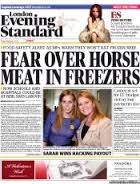
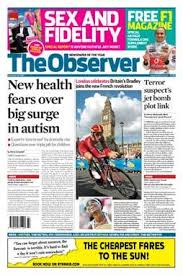
In my old country, the British press love to sell their newspapers on the back of fear.  Here are some examples of lurid front pages.

horse meat

oooo

meltdown

oooo

autism

However, it doesn’t end there. Fear of the unknown, of forces beyond our control, are behind the incredible number of conspiracy theories, many of them quite famous.  WikiPedia lists dozens of them. One that was voiced by friends of ours concerned HAARP, which is an acronym for High Frequency Active Auroral Research Program.  It was a perfectly legitimate research programme, one that was unclassified, albeit a program that was shut down in July, 2013.

But that didn’t stop it being regarded by many as deeply suspicious, “Many conspiracy theories surround HAARP. Some theorists believe that it is being used as a weather-controlling device that can trigger catastrophic events, such as floods, hurricanes, etc. Others believe that the government uses HAARP to send mind-controlling radio waves to humans.”  Taken from here.

As it happens, this was a programme that I was acquainted with back in my UK days.

OK, time to round this off.

This new, digital world allows the sharing and spreading of information in a manner unimaginable from, say, 25 years ago.  It has many positive attributes, as I will touch upon in tomorrow’s post.  But it also has the power to spread fear and misinformation.  In a world that is becoming more complex and more uncertain year by year, it takes effort by every one of us to stop, think and check on anything that has the potential to upset one.

It takes the power of community to keep us rooted in the stuff of our daily lives, to live calmly and stay in touch with the truth.  More on the power of community tomorrow.

Trust, truth and community, Pt. One.

Reflections on our present world.

Today, and the next two days, I want to offer you three essays under the theme of Trust, truth and community.

As is so often the case, there was a series of outwardly unconnected experiences that seemed, well to my eyes anyway, to speak to a theme.  You will have to wait until Friday to judge whether or not you agree with me!

Trust

This first essay was motivated by two disparate events: One very local and one as far removed from being local as one could imagine.

But first, what do we mean by trust? Roget’s Thesaurus defines the word (in part):

trust noun

Absolute certainty in the trustworthiness of another: belief, confidence, dependence, faith, reliance.

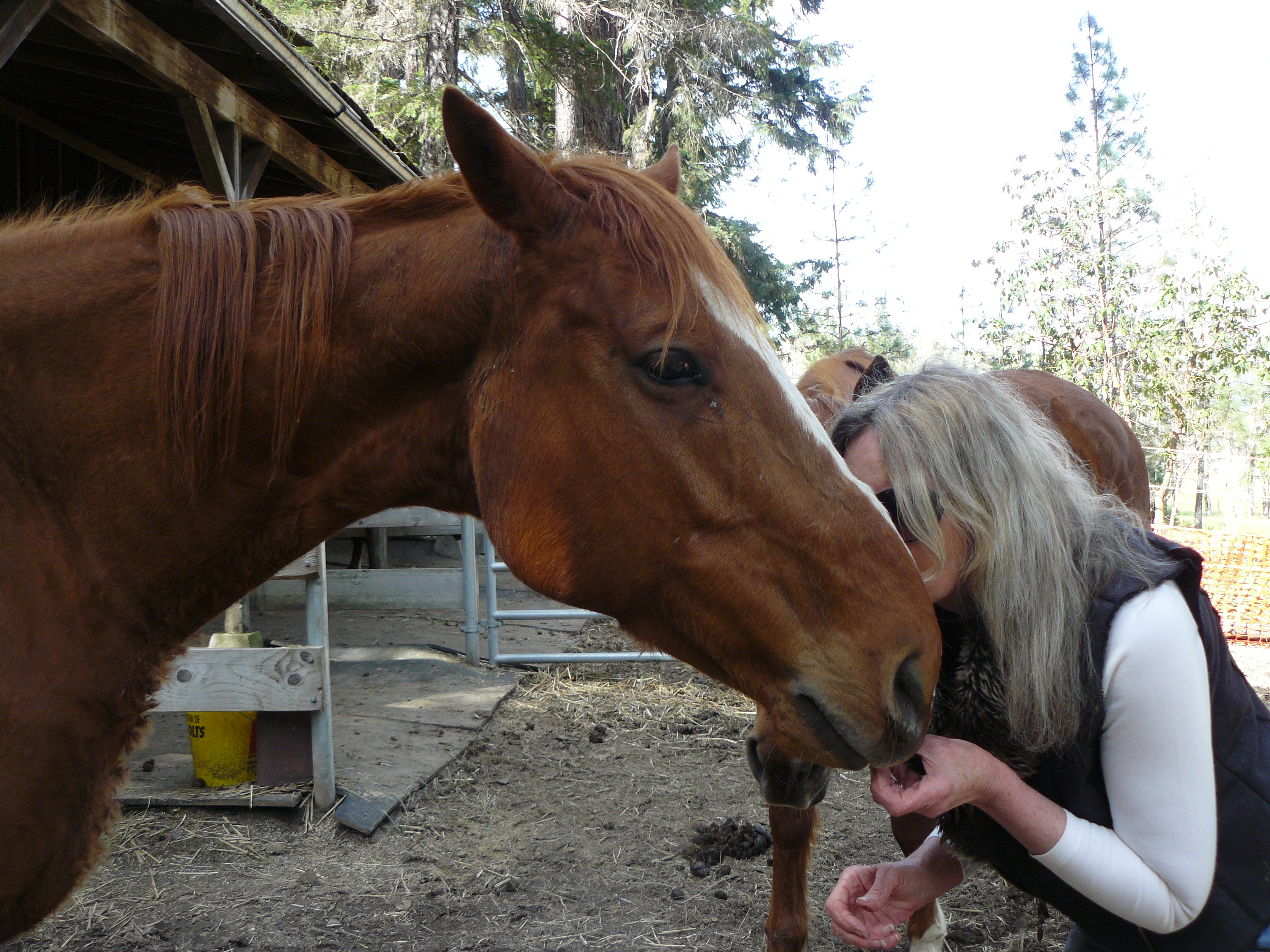
You will recall that just over three weeks ago, we welcomed two horses to our pastures; Ranger and Ben.  Both horses had previously been treated badly by humans, especially Ben who had been starved and beaten by his ex-owners.

In the early days, Ben was very cautious of any sudden movement by me and would back away from any contact from me other than being offered a food treat.

But in just three weeks, Ben has gone a huge way towards trusting Jean and me.

Taken yesterday afternoon.

oooo

My face is closer than three inches to Ben's nose.
My face is closer than three inches to Ben’s nose.

oooo

Both Ben and Ranger in the background are now very comfortable with Jean and me.

Now, I don’t know about you, but my guess is that if a human had experienced the degree of cruelty from the hands of another person that these horses had, it would take very much longer than three weeks for that human victim to regain the same level of trust that Ben and Ranger now offer. Indeed, many persons would harbour anger and distrust forever.

That was the local example of trust

Now to the ‘non-local’ example of trust. It involves PayPal.

Not so long ago, Wolf Richter, he of the Testosterone Pit blogsite, published an essay about PayPal’s recently revised privacy policy.  Or as Wolf called it: I Just Got PayPal’s New Absolutely-No-Privacy-Ever Policy

You must read it in full, especially if you are a PayPal user.  Thanks to Wolf, I can offer you his opening paragraphs:

I Just Got PayPal’s New Absolutely-No-Privacy-Ever Policy

TUESDAY, APRIL 1, 2014 AT 1:00AM
Sunday, when people had other things to do and weren’t supposed to pay attention, PayPal sent its account holders an innocuous-sounding email with the artfully bland title, “Notice of Policy Updates.” PayPal didn’t want people to read it – lest they come away thinking that the NSA, which runs the most expansive spying dragnet in history, is by comparison a group of choirboys.

The email started with corporate blah-blah-blah on privacy, that PayPal was “constantly” changing things “to give you more of what you want and improve your experience using us.”

Do read the rest of the essay here. Here’s a comment from a reader of Wolf’s essay, republished with Wolf’s permission:

Concerning: I Just Got PayPal’s New Absolutely-No-Privacy-Ever Policy

I will relate an experience I had regarding Pay Pal that I believe has some relevance to your blog on Pay Pal’s privacy policy.

I am a retired old geezer living in NY State. About 4 years ago I looked at Ebay’s bidding process to place a bid on an item I wanted. However I discovered that I could not make such a bid without subscribing to pay pal. I provided pay pal with the information it required and made my bid. My bid was exceeded by other bids and I did not get the item. My credit card was not used at that time and I never used Ebay or pay pal after that.

Because I did not respond to ongoing emails from the 2 companies I believed that I had no further connection to either of them and that my single failed bid was the end of our relationship.

Then about 2-3 years ago I received a couple of emails from Best Buy: one thanking me for opening a new account, and the other thanking me for purchasing an expensive electronic item.

When I opened up that new Best Buy account I discovered that my address was stated to be in California in care of a person named Pham Pham and that the credit card that was used was one that had recently expired although the number was still in use on a subsequently issued card. I checked all my credit cards online and found that the charge was not pending. I also took some other measures to protect myself. Within hours I received another email from Best Buy cancelling the order because payment was not made by my credit card company.

This incident took a strange turn a couple of days later. Initially I had no idea as to the source of the credit information leak. But then 2-3 days afterwards I received an email from Pay Pal requesting an update of the credit card information in my Pay Pal account. Pay Pal’s email request for updated credit information so soon after the online theft attempt may be just a coincidence, but in my mind there is an undisclosed connection. Of course I have not complied with Pay Pay’s requests. To this day no company has informed me that their accounts were hacked and that my credit information was stolen.

If, when you have read Wolf’s report in full, you feel, as I do, that the time has come to cut the relationship with PayPal then go for it.  Because only a customer base that is ‘voting with their feet’ will deliver the message.

What is that message?

Simply, if organisations want to be trusted by their customers, those organisations must behave with integrity.  Now I am not accusing PayPal of a lack of integrity but it goes beyond that.  It goes to operating with a genuine sensitivity for what is correct. PayPal’s privacy policy is anything but that.  There are parts of their ‘new’ policy that stink of gross insensitivity to their feelings for their customers. Read it in full courtesy of Wolf Richter

Oh, want to know how to close a PayPal account?

To close your Payflow account:

If your partner is PayPal, VeriSign or CyberCash contact PayPal Merchant support at 1-888-883-9770 or via email at payflow-support@paypal.com. Be sure to include your login ID.

If your partner is with a Payflow partner, reseller, or merchant bank you will need to contact the partner, reseller, or bank directly to close your Payflow account.

For additional information, contact PayPal Merchant support at 1-888-883-9770 or via email at payflow-support@paypal.com.

Note: Once your Payflow account is terminated, you cannot access the PayPal Manager or any account data. If you need access to this data, you will be charged a fee.

If you are trying to close your PayPal account and not a Payflow account do the following:
Log in to your PayPal account.
Click Profile at the top of the page.
Click Close Account in the Account Information column and follow the steps listed.

My PayPal account was closed at 15:10 PDT yesterday.

Perhaps PayPal should take note of how humans witness trust offered by our dear animals!

Things not as they quite seem.

Two videos that end up very differently to how they started!

The common link between Ed Scalpello, Dan Gomez and me is that Ed and Dan are good friends.

Coincidentally, both of them sent me links that matched today’s theme.

So with no further blathering from yours truly here’s the first video from Ed.

and here’s the second that Dan sent me.

You all have a great weekend.

Immediate concern? Try this!

Talk about extreme ends of the spectrum!

Yesterday, I posted about the prediction that in four billion years the Milky Way galaxy would collide with the Andromeda galaxy.  I called the post Not of immediate concern.

Today, I am writing about something that is of immediate concern. That is if you regard the next couple of decades as ‘immediate’.

The post is prompted by an item that was published on the BBC News website two days ago.  It carried the title Climate inaction catastrophic – US

Climate inaction catastrophic – US

By Matt McGrath
Environment correspondent, BBC News, Yokohama, Japan

The costs of inaction on climate change will be “catastrophic”, according to US Secretary of State John Kerry.

Mr Kerry was responding to a major report by the UN which described the impacts of global warming as “severe, pervasive and irreversible”.

He said dramatic and swift action was required to tackle the threats posed by a rapidly changing climate.

Our health, homes, food and safety are all likely to be threatened by rising temperatures, the report says.

Scientists and officials meeting in Japan say the document is the most comprehensive assessment to date of the impacts of climate change on the world.

In a statement, Mr Kerry said: “Unless we act dramatically and quickly, science tells us our climate and our way of life are literally in jeopardy. Denial of the science is malpractice. There are those who say we can’t afford to act. But waiting is truly unaffordable. The costs of inaction are catastrophic.”

Putting to one side the mild irony of a representative of the US Government wringing his hands about what mankind is doing to our climate, the report is valuable and potentially significant.

The report was from the Intergovernmental Panel on Climate Change (IPCC) which is, as their website explains:

The Intergovernmental Panel on Climate Change (IPCC) was established by the United Nations Environmental Programme (UNEP) and the World Meteorological Organization (WMO) in 1988 to assess the scientific, technical and socio-economic information relevant for the understanding of human induced climate change, its potential impacts and options for mitigation and adaptation.

Watch this 5-minute video of Stanford professor Dr. Chris Field, co-chair of that IPCC working group, addressing some of the key questions raised by this latest report.  In particular, focus on Dr. Field discussing the potential of the loss of the Greenland ice cap around 3 min 30 seconds.

Back to the BBC report (which you should read in full!).  Back to Dr. Chris Field being quoted as saying:

I think the really big breakthrough in this report is the new idea of thinking about managing climate change as a problem in managing risks. Climate change is really important but we have a lot of the tools for dealing effectively with it – we just need to be smart about it.

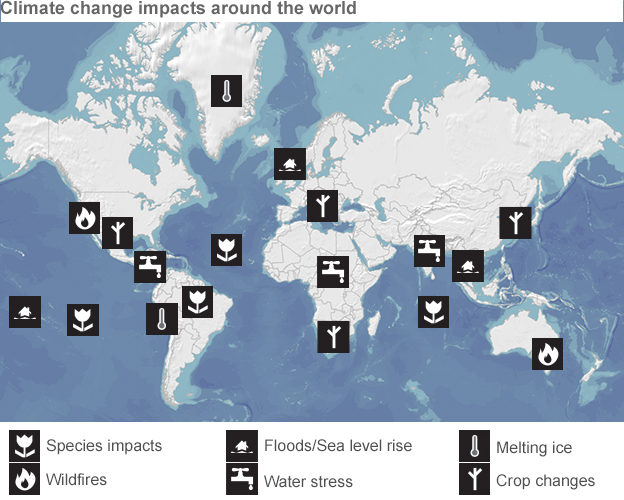
BBC climate-change-impacts_v2

It would be easy to get into the mindset that humanity is not going to change its ways in time.

But, then again, the pace of growing awareness about what the changes are that we all need to make, and make relatively soon, is dramatic.

Maybe, just maybe, this will turn out alright!

Fingers-crossed1

For all the young people in the world, I do so hope!


Not of immediate concern!

Milky Way galaxy heading for a collision – in about 4,000,000,000 years!

As with huge numbers of others who come to this blog, the night sky has always been of incredible fascination to me.  To reinforce that fact, one of the favourite posts on Learning from Dogs for the last three years has been The night sky above published back on the 27th March, 2011.  If you haven’t read it, do pop across and do so as the title is misleading in terms of the post.

Thus it was unavoidable not to pick up on an item recently referred to by Naked Capitalism that had been published by the EarthSky blog.  This particular item was called Night sky as Milky Way and Andromeda galaxies merge.  It began thus:

As seen on Cosmos … the collision and merger between our Milky Way galaxy and the nearby Andromeda galaxy 4 billion years from now.

The video below illustrates what NASA scientists announced in 2012 – and what the Cosmos TV series featured in 2014 – that the nearby Andromeda galaxy will collide and merge with our Milky Way galaxy 4 billion years from now. The video (from the Hubble Space Telescope news center) is from a series of photo illustrations, showing the predicted merger between our two titan spiral galaxies, as seen in Earth’s sky. Will Earth as a planet survive long enough to see this? A word about that at the end of this post.

The video lost a lot for me by not carrying a commentary.  But no problem as one was found that did have a ‘voice-over’.  However, the article photographs were stunning.  For example:

merger-milky-way-andromeda-NASA-e1395662599173
This series of photo illustrations shows the predicted merger between our Milky Way galaxy and the neighboring Andromeda galaxy. Via NASA; ESA; Z. Levay and R. van der Marel, STScI; T. Hallas, and A. Mellinger

A description of what’s happening in the images above:

First Row, Left: Present day.
First Row, Right: In 2 billion years the disk of the approaching Andromeda galaxy is noticeably larger.
Second Row, Left: In 3.75 billion years Andromeda fills the field of view.
Second Row, Right: In 3.85 billion years the sky is ablaze with new star formation.
Third Row, Left: In 3.9 billion years, star formation continues.
Third Row, Right: In 4 billion years Andromeda is tidally stretched and the Milky Way becomes warped.
Fourth Row, Left: In 5.1 billion years the cores of the Milky Way and Andromeda appear as a pair of bright lobes.
Fourth Row, Right: In 7 billion years the merged galaxies form a huge elliptical galaxy, its bright core dominating the nighttime sky.

The sequence is inspired by dynamical computer modeling of the inevitable future collision between the two galaxies.

Further on in the article one reads:

This illustration shows the collision paths of our Milky Way galaxy and the Andromeda galaxy. The galaxies are moving toward each other under the inexorable pull of gravity between them. Also shown is a smaller galaxy, Triangulum, which may be part of the smashup. Via NASA; ESA; A. Feild and R. van der Marel, STScI.

Will Earth survive long enough to see this merger of galaxies, as depicted in the video above? Earth as a planet might, but life on Earth – probably not. Astronomers say that the luminosity, or intrinsic brightness, of our sun will steadily increase over the next 4 billion years. As the sun’s luminosity increases, the amount of solar radiation reaching the Earth will also increase. It’s possible that – around 4 billion years from now – the increase in the Earth’s surface temperature will cause a runaway greenhouse effect, perhaps similar to that going on now on the planet next door, Venus, whose surface is hot enough to melt lead. No one expects to find life on Venus. Likewise, life on Earth will probably not exist 4 billion years from now. What’s more, our sun is expected to become a red giant star eventually. A probable fate of the Earth is absorption by the sun in about 7.5 billion years, after our sun has entered the red giant phase and expanded to cross Earth’s current orbit.

Anyhow, I mentioned that I found a better video on YouTube than the one included in the original article, and that is now presented.

Rather puts the grunt and grind of daily life into perspective! 😉

Nostalgia isn’t what it used to be!

The sirens of past lives take some silencing.

Going to relate to you a true story.

In 1968 I emigrated to Australia; to the city of Sydney.  It was an easy move in many ways.  For before I left I was working in the sales office of British Visqueen Ltd in Stevenage in Hertfordshire. ‘BVL’ were part of Imperial Chemical Industries (ICI).

On Day Three of my new life in Sydney I noticed that ICIANZ (Australia & New Zealand) had their headquarters building on Macquarie Street near North Circular Quay.  On impulse I went in and two hours later had been offered a job in the sales office of ICI’s Inorganic Chemicals Division.

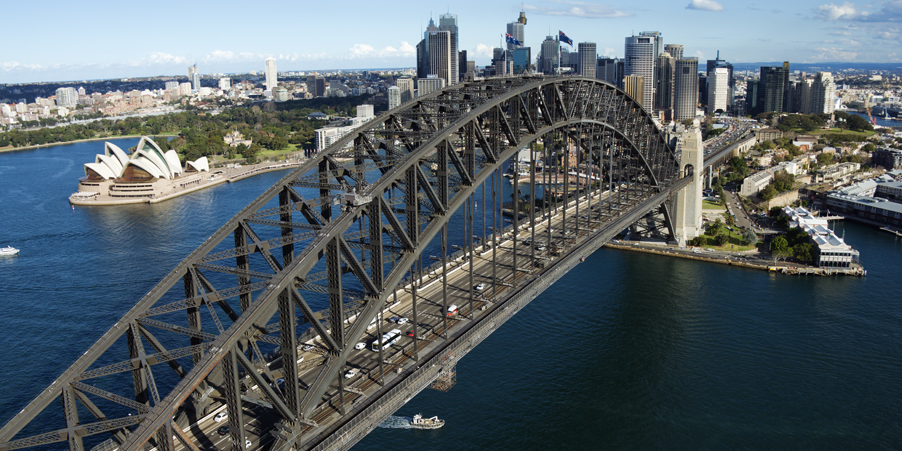
From the window of my office I had a stupendous view of the Sydney Harbour Bridge. This is a picture taken the other side of the Bridge looking back at the office complex to the right of the Sydney Opera House; the office block partially obscured by the top curve of the bridge.

Sydney_Harbour_Bridge

Anyway, back to the story.

I was dating a Finnish woman who with her sister and parents had emigrated from Finland some years previously.  That woman’s name was Britta and later we were married and then upon returning to England in 1970 we had two children; a son and a daughter. In Australia I didn’t miss England and when back in England I didn’t miss Australia.

I was 26 when we returned to England.

Fast forward forty-four years to now.

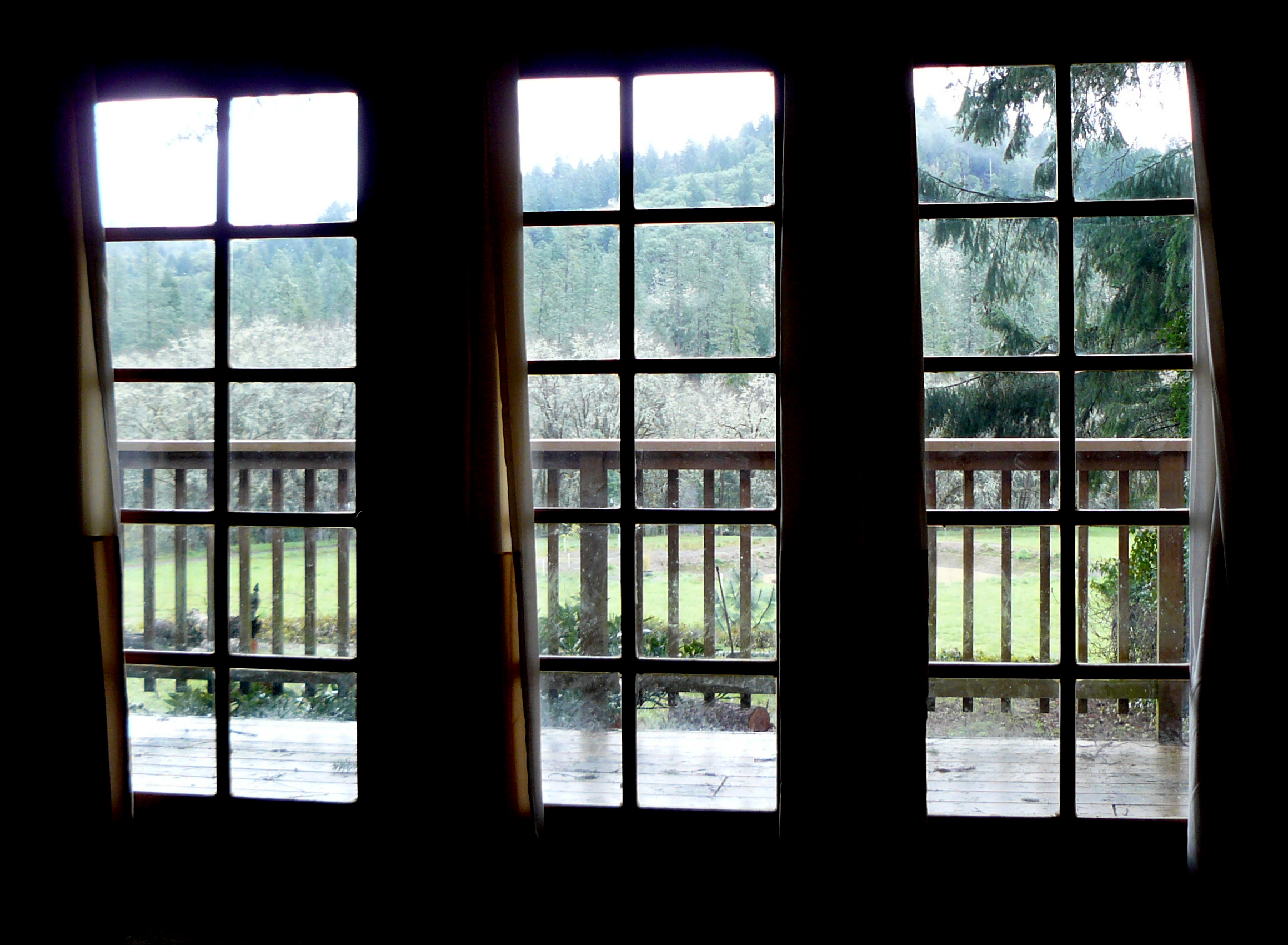
This is the view through our bedroom window in the morning when Jean and I awake.

Morning

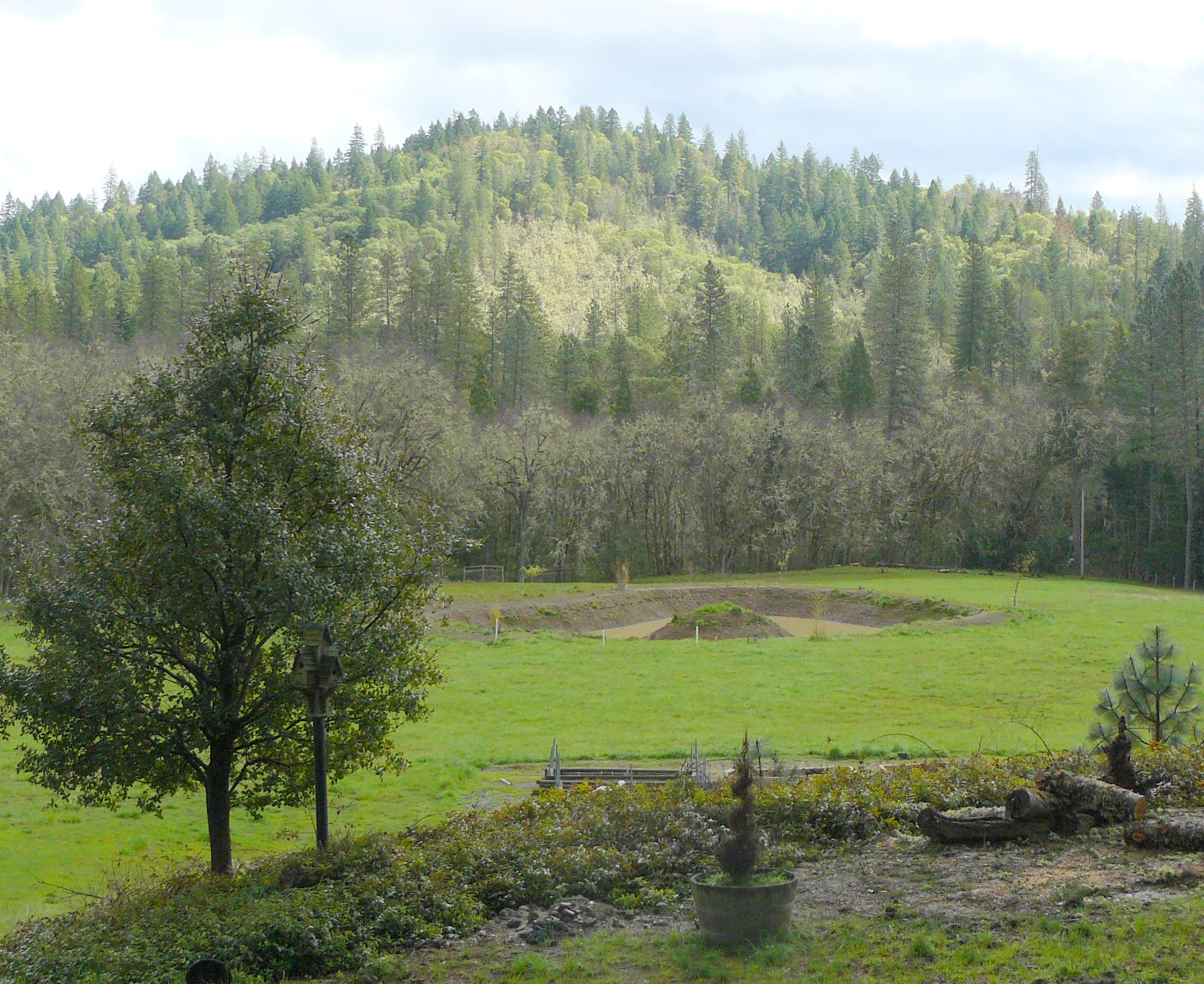
This is another view of the same scene but taken from outside the windows.

Morning2

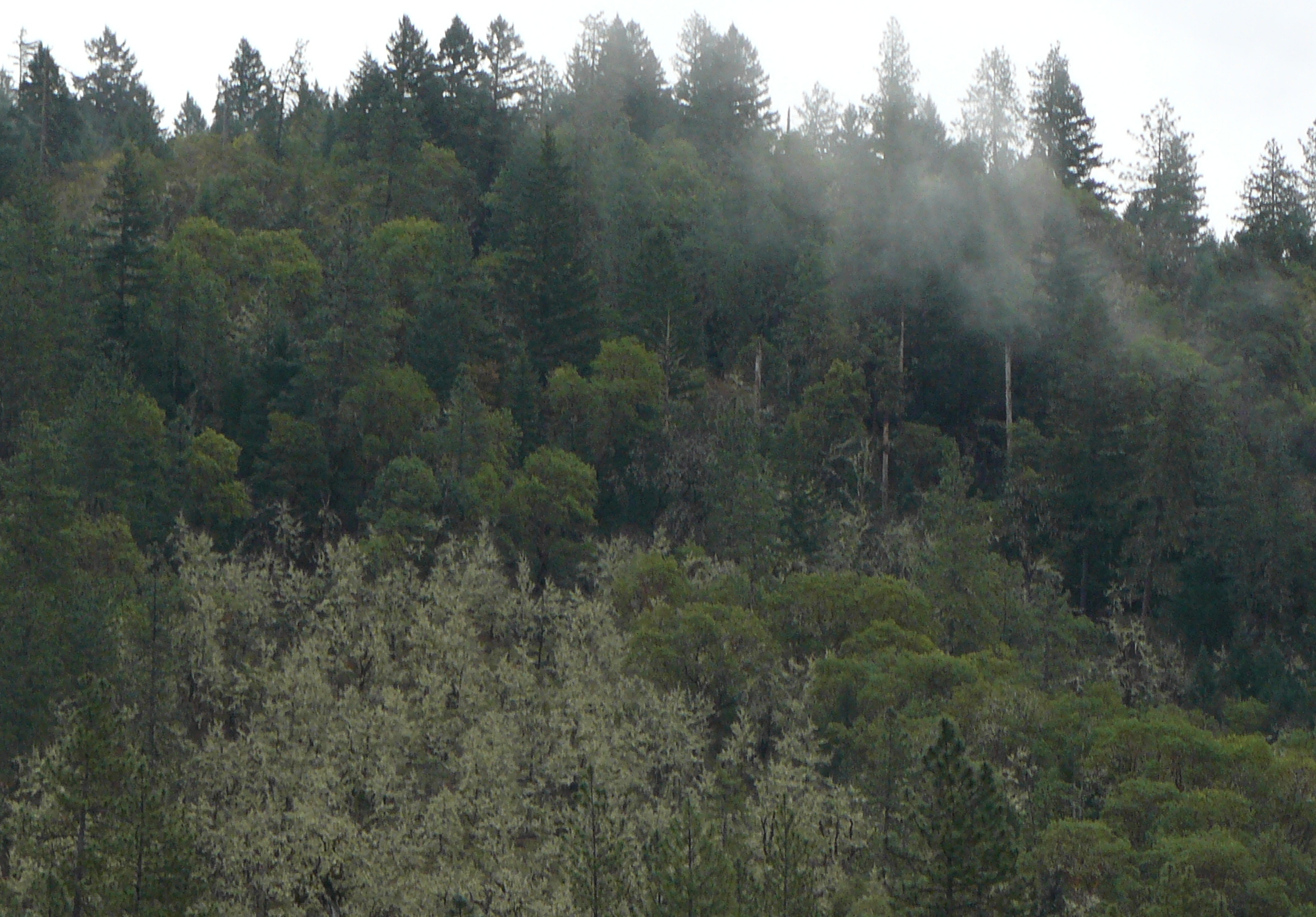
When the air is really moist and there are clouds hanging low over the ridge, it’s common to see mist swirling through the trees.

Morning mist

It is a beautiful place to live, for us and for all our animals …. yet …. we don’t feel perfectly settled.

Back to Britta’s parents.  After they had been living in Australia for quite a few years, in Brisbane in those days, and all settled with jobs and their own house, they still didn’t feel perfectly settled.  So they gave up their jobs, sold the house and transported themselves and their belongings all the way back to Helsinki, Finland.

Only to find that in less than three months that they had made a ghastly mistake and so, yes you know what’s coming, they transported themselves and all their belongings all the way back to Australia; this time settling in Sydney.

OK, to the point of this tale.

In many, many ways this life that Jean and I have here in Oregon is better than anything we have previously experienced.

Yet, there are times when I hear the sirens of Devon calling out to me and for Jean there are times when she hears the sirens of Mexico calling out to her; Jean lived in San Carlos, Mexico for twenty-five years, off and on, with her late American husband, Ben, who died in 2005.

I’m 70 in November this year.

What does it all mean?

When Jean and I were living in Payson, Arizona we were talking one day to a woman who in previous times had been a personal counsellor.  She asked how we were settling in.  We mentioned that we were not yet settled.  The woman went on to say that people over the age of 60 frequently had a much more difficult time adjusting to major moves and changes in their lives than younger persons.

Jean and I wouldn’t rewind our lives for all the tea in China but what, dear reader, do you think?

Anyone out there the ‘wrong’ side of 60 who can relate to this?


Aviation nostalgia alert!

The fabulous story of the restoration of a British Navy Supermarine Seafire Mk.XV

From time to time I let on that in the past I was a keen private pilot and before that a glider (sailplane) pilot.  My son has been a commercial airline pilot for many years.  Inevitably, one gets to know other pilots, a few of whom become firm friends.  One such friend is Bob Derham who recently sent me this story about the restoration of a Supermarine Seafire.  For anyone interested in classic aircraft, the story of this particular aircraft is fascinating.

Seafire Mk. XV
Seafire Mk. XV

While WikiPedia has a good description of the type, there’s a fine description of this particular aircraft over at the Salute website, (the photo above came from that website) from which I offer:

Supermarine Seafire Mk. XV

This airplane is one of only four known Seafire Mk. XVs to exist in the world and it may be the only flying Supermarine Seafire Mk. XV in the world. Dr. Wes Strickler’s immaculate Supermarine Seafire Mk. XV (also known as the “hooked Spitfire”) is based in Columbia, MO, was restored by Jim Cooper, and made its first post-restoration flight in 2010. The Supermarine Seafire was a naval version of the Supermarine Spitfire specially adapted for operation from aircraft carriers. The Seafire’s mission was primarily as a short range interceptor. The name Seafire was derived by abbreviating the longer name “Sea Spitfire”.

The Mk XV variant of the Seafire was powered by a Griffon VI (single-stage supercharger, rated at 1,850 hp driving a 10 ft 5 in Rotol propeller. It appeared to be a naval Spitfire F Mk XII but was an amalgamation of a strengthened Seafire III airframe and wings with the wing fuel tanks, retractable tailwheel, larger elevators and broad-chord “pointed” rudder of the Spitfire VIII. The engine cowling was from the Spitfire XII series, being secured with a larger number of fasteners and lacking the acorn shaped blister behind the spinner. A vee-shaped guard forward of the tailwheel prevented arrestor wires getting tangled up with the tailwheel.

One problem which immediately surfaced was the poor deck behavior of this mark, especially on take-off. At full power the slipstream of the propeller, which swung to the left (as opposed to the Merlin, which swung to the right), often forced the Seafire to swing to starboard, even with the rudder hard over on opposite lock. This sometimes led to a collision with the carrier’s island. The undercarriage oleo legs were still the same as the much lighter Merlin engined Spitfires, meaning that the swing was often accompanied by a series of hops. This undercarriage also gave it a propensity of the propeller tips “pecking” the deck during an arrested landing and occasionally bouncing over the arrestor wires and into the crash barrier.

Wing span: 36ft 10in. Max takeoff weight: 7,640 lb. Max speed: 359 mph. Power: 1,850 hp.

This is an example of incredible dedication!
This is an example of incredible dedication! Jim Cooper in front of the Seafire.

When you watch the film, Jim Cooper makes it clear that there were others on the restoration project.  But the film also makes it clear that without Jim this beautiful aircraft would never have been restored, let alone restored to a flying machine.

Settle back and enjoy!

Uploaded on Aug 18, 2010 by Scott Schaefer

“While Sarah Hill and I were taping the first Central Missouri Honor Flight special in the Ozark Hangar at Columbia Regional Airport in January 2009, I noticed Jim Cooper working on a plane in the corner of the hangar. I love airplanes and this sight piqued my interest.

The corner was enclosed by plastic from floor to ceiling and inside sat a plane, wings folded toward the ceiling and a paint job that left more to be desired. It was the Seafire XV – one of only a handful still in existence. As soon as I saw the plane and learned a few facts about it, I knew I wanted to do a story on it and follow Cooper through the rest of the restoration process.

Cooper had already been working on the Seafire for nearly a year and half by the time we met, but there was still plenty of work that had to be done. I started shooting that night and throughout the next year and half, whenever Cooper would move to a different stage in the restoration, he’d call and I would head to the hangar to shoot video. I didn’t shoot every part of the process, but tried to capture the big ones ?cleaning the plane, painting, revealing the paint job, testing the landing gear, testing the engine and of course the first flight.

After 10 trips to the airport, 130 miles and nearly 6 hours of video, it was time to start the editing process. Once all the video was in the system, I spent 14 hours typing the details from of every sound and interview captured in the video. That log was essential in writing the story. I needed to know exactly what was said in order to organize everything into a story that would hopefully hold people’s interest. After I had a rough script written, I began to edit the video. After about 15 hours in the edit bay tweaking every little audio and video cut? then re-tweaking them? I was finally finished. Nineteen months later. It was a tough job picking the best four minutes from six hours of video, but in the end, I think I accomplished what I set out to do.”

Leave you with another photograph.

One of a kind!
One of a kind!


If you wanted to see the aircraft in the air, then it will be at this year’s EAA OSHKOSH.  I’ve always wanted to go but never made it! Anyone fancy baby-sitting some dogs and horses around the end of July? 😉

Thanks Bob for sending me the video link.