Category: People and their pets

Dogs can be so smart!

But the day is tinged with sadness!

Today, Tuesday, we went across to The Red Barn to get some hay, a regular occurrence.

Tyler, the manager, was not there but his brother, Zach, was. But just as important were Jean & I seeing Tully again. He is such a sweet dog and so full of life. A Labrador cross. But we learnt that recently he had been hit by a car, suffered severe injuries, and had to be put down. Even Duke, another dog of the same breed, seemed sad.

Apparently Tully was hit by a car and the driver didn’t even stop!

So on to today’s post.

ooOOoo

Dog Pretends To Go Outside To Go Potty So She Can Get A Treat

Such an adorable little liar 💛

By Caitlin Jill Anders
Published on the 8th February, 2021.

Even though Dakota is almost 12 years old, she still acts like a puppy most of the time. She loves meeting new people and taking naps, and is happy pretty much all the time. Her absolute favorite thing in the whole world, though, is food.

“She acts like she is innocent but … is an evil genius inside when it comes to food of any kind,” Cheryl Dorchinsky, Dakota’s mom, told The Dodo.

CHERYL FEINGOLD

When the family got a new dog door and wanted to teach Dakota how to use it, they of course turned to treats to help encourage her. She was scared of it at first, but once treats were involved, she quickly turned into a dog door pro and never looked back.

Once she knew how to use the dog door, though, she also quickly figured out how to use it to her advantage to trick her family into giving her extra treats.

CHERYL FEINGOLD

Whenever Dakota goes outside and goes to the bathroom, she gets a treat, so one day, she came up with a genius plan. She decided to start going outside through the dog door, sitting right outside it for a little while, then coming back in as if she’d gone to the bathroom and asking for a treat.

What Dakota failed to consider is that the dog door is clear — so her mom can see her sitting right outside it, very blatantly not going to the bathroom.
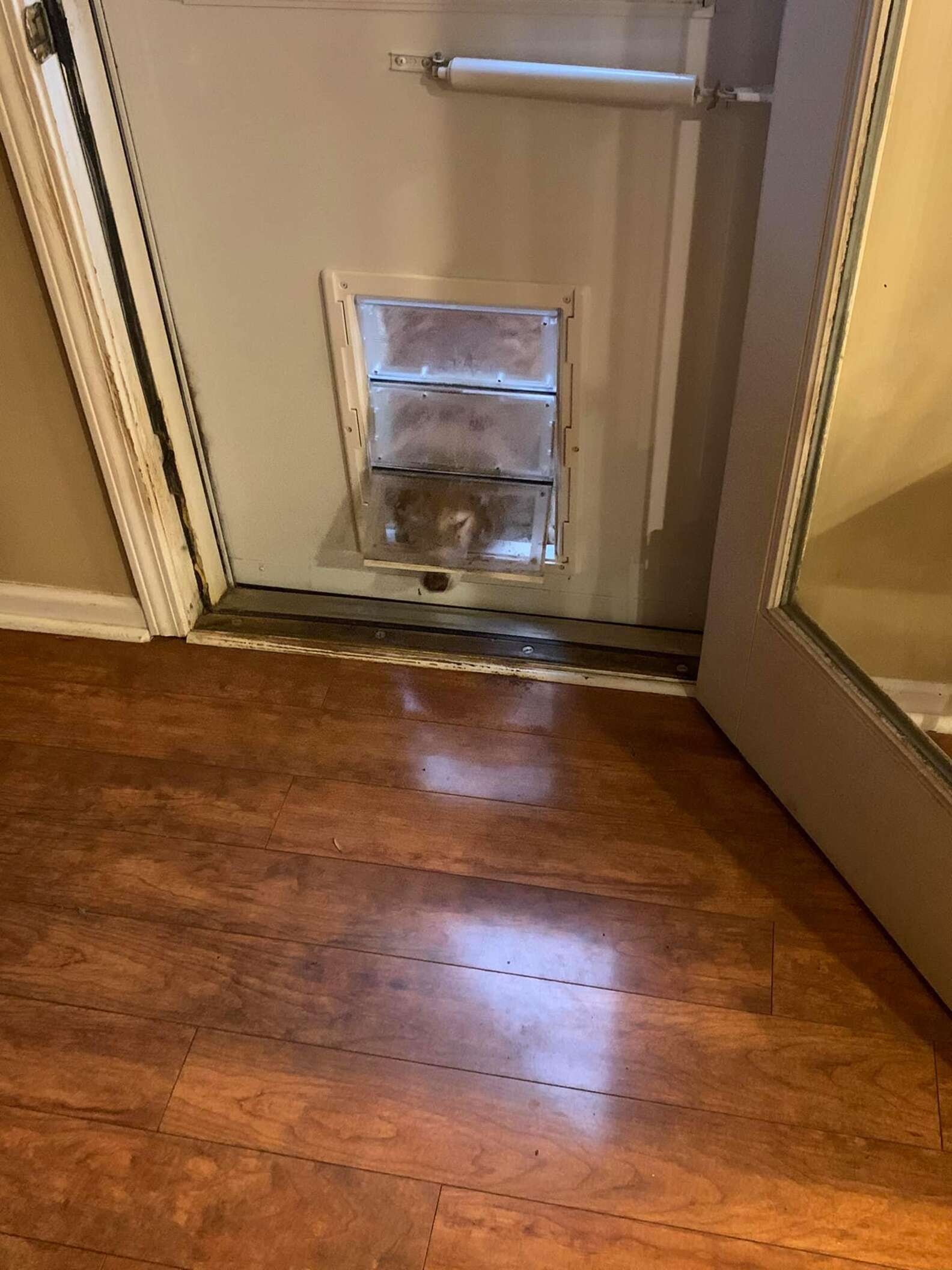
CHERYL FEINGOLD

“At first I believed her but then questioned how she came back in so fast,” Dorchinsky said. “I would watch and noticed that she was doing that. It’s almost like a child who thinks you can’t see them if they can’t see you. She always looks away. It’s funny!”

Even though Dorchinsky has totally caught on to the sneaky scheme, Dakota doesn’t care. She still does it every single day, because the potential treats are absolutely worth it.
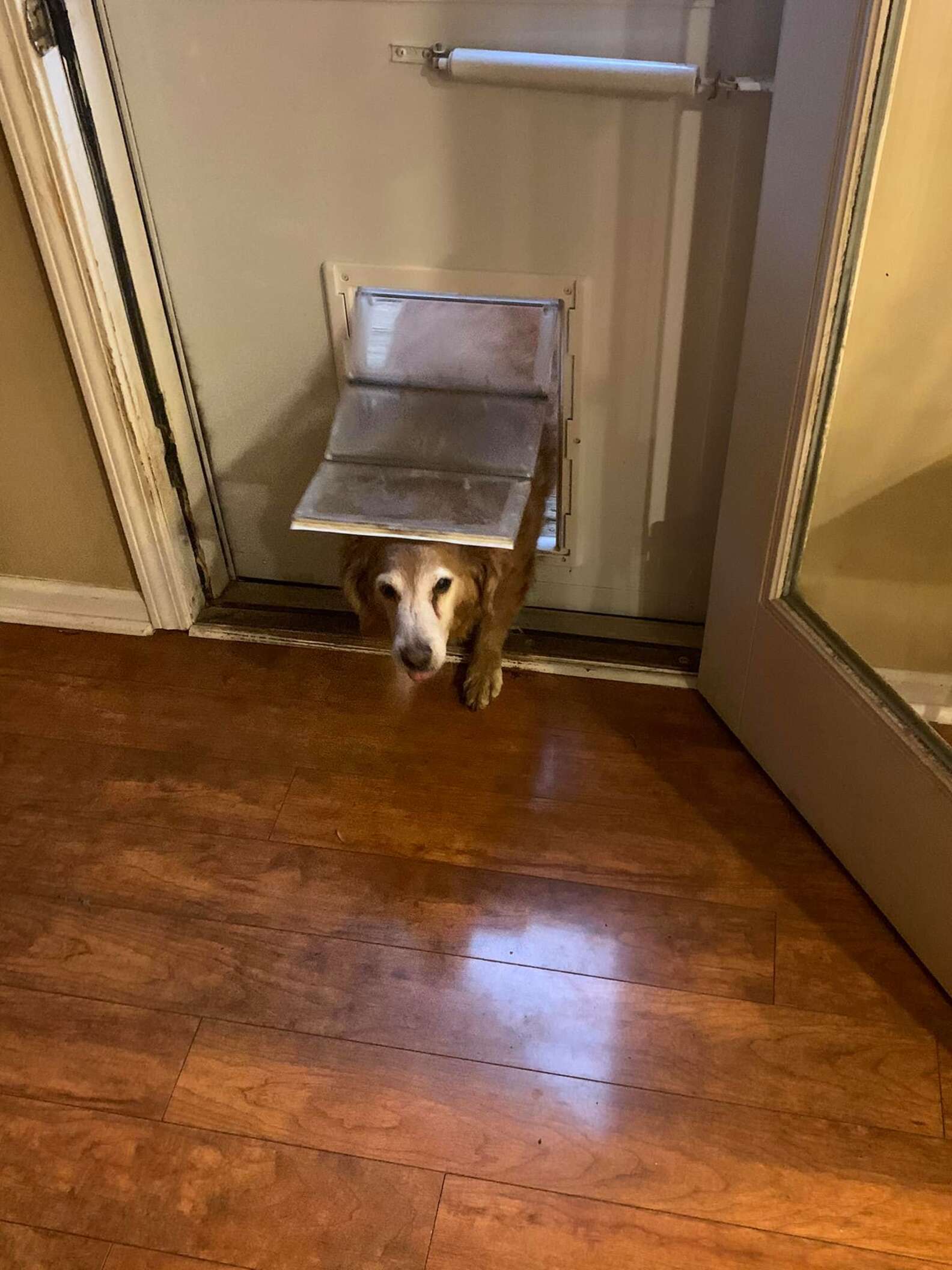
CHERYL FEINGOLD

“She seems very proud of her scam,” Dorchinsky said. “There is no shame in Dakota’s game.”

Despite knowing that Dakota isn’t actually going to the bathroom most of the time, Dorchinsky still gives her treats anyway. It’s hard to say no to that face.
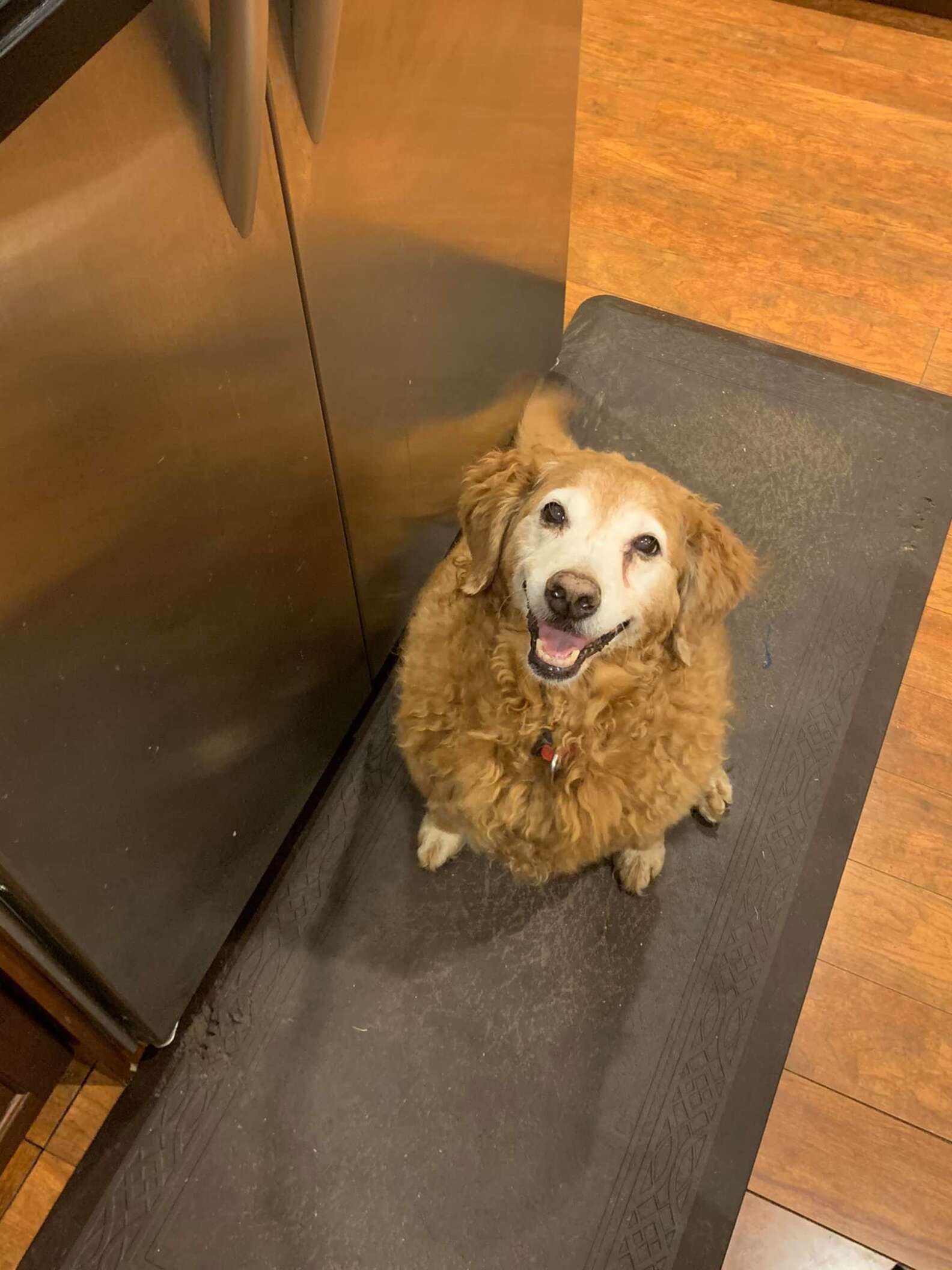
CHERYL FEINGOLD

“If I don’t react she will bark at me to let me know she went potty (fuzzy liar),” Dorchinsky said. “She is adorable and I totally give in. Maybe she deserves the treat for not going potty on the porch?”

ooOOoo

As I said, dogs are very smart!
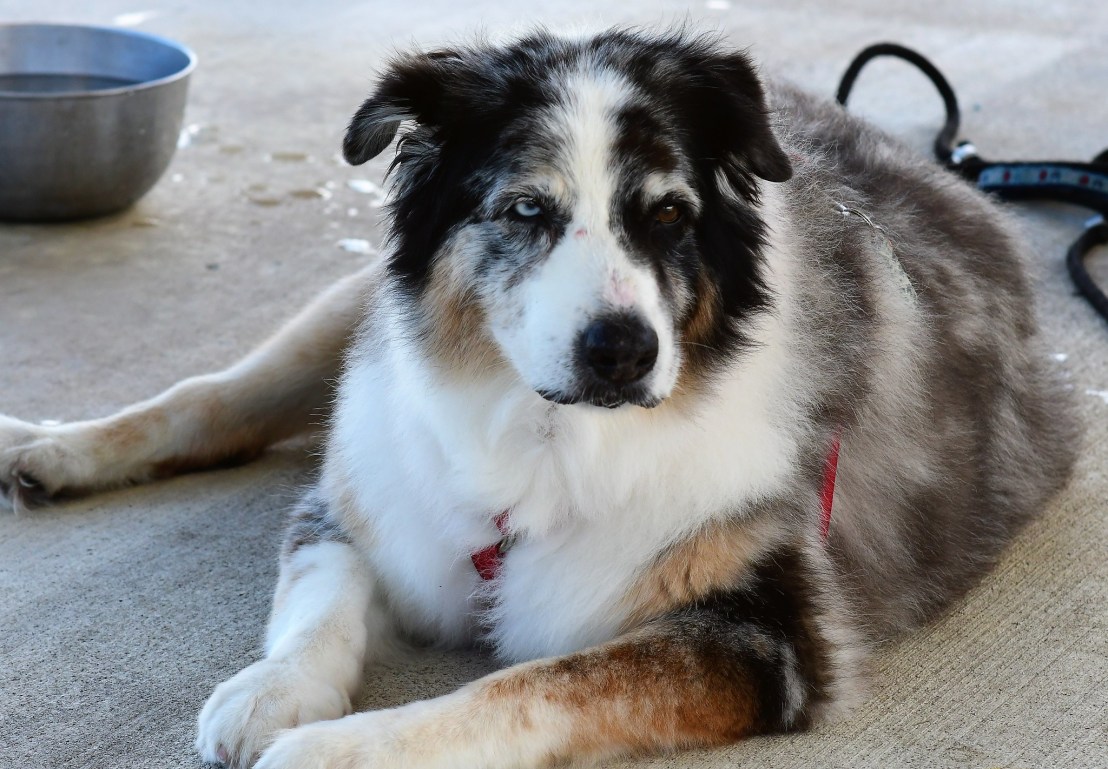
Picture Parade Three Hundred and Seventy-Six

More fabulous photos from Nimbushopper.

oooo

oooo

oooo

oooo

oooo

oooo

oooo

oooo

In a sense these are an extension of yesterday’s post about the wolves.

But so far as these dogs are concerned I shall never tire of downloading them and sharing them with you.

Dear Lulu!

She is now a wealthy dog!

From the BBC News of seven days ago:

Lulu the dog inherits $5m from deceased US owner

Lulu the border collie was left $5 million (£3.6 million) after her owner died last year.

Bill Dorris left the dog in the care of his friend, Martha Burton. The will states that Burton is to be reimbursed for Lulu’s reasonable monthly expenses.

The love for dogs shows no bounds at all.

Beautiful creatures!

Now here’s an idea!

Using the dog’s nose to sniff out positive Covid cases!

I follow Tony and I have been across to his blog before One Regular Guy Writing about Food, Exercise and Living Past 100.

But on the 15th February Tony came up with a brilliant idea; read it for yourself:

ooOOoo

Dogs’ highly evolved noses can rapidly detect the SARS-CoV-2 virus

For some 15,000 years, dogs have been our hunting partners, workmates, helpers and companions. Could they also be our next allies in the fight against COVID-19? As a dog owner with a small poodle who could sniff out a chicken bone in the middle of a football field I was not surprised to learn this.

According to UC Santa Barbara professor emeritus Tommy Dickey and his collaborator, BioScent researcher Heather Junqueira, they can. And with a review paper published in the Journal of Osteopathic Medicine they have added to a small but growing consensus that trained medical scent dogs can effectively be used for screening individuals who may be infected with the COVID-19 virus.

I would volunteer my 15-year-old poodle, Gabi, for this study.

This follows a comprehensive survey of research devoted to the use of trained scent dogs for detecting COVID. “The most striking result is that studies have already demonstrated that dogs can identify people who are COVID-19 positive,” Dickey said of their findings. “Not only that,” he added, “they can do it non-intrusively, more rapidly and with comparable or possibly better accuracy than our conventional detection tests.”

Not surprisingly, the magic lies in canine sense of smell, which gives dogs the ability to detect molecules in tiny concentrations — “one part in a quadrillion compared with one part in one billion for humans,” according to the paper. Add to that other optimizations for smell, such as a large nasal area and the structure of their noses, which allows inflow through the nostrils and outflow through nasal folds. Further, with 125-300 million olfactory cells and a third of their brains devoted to interpreting odors, dogs are well equipped with the ability to sniff out the volatile organic compounds that indicate the presence of COVID.

ooOOoo

I must gently disagree with Tony’s opening statement. Dogs evolved from the grey wolf something like 23,000 years ago.

But what a great article and will we see the authorities take him up on the idea? I certainly hope so.

German Shepherd

A wonderful video.

This was sent to me by Jules. Julie is the partner of my friend of too many years, Richard Maugham. Richard and I go back many, many years. Indeed we met on a flight in the Commodore PET Jet over 40 years ago. Prior to that Richard was working for Olivetti and me for IBM Office Products. We were then selling electric typewriters and the early forms of dedicated word-processing machines. As I said a long time ago!

This is what ‘Frosty Life’ has to say about the video:

My daughter has a German Shepherd puppy that is huge, but is only 7 months old. This German Shepherd has never experienced snow before. Watch as Rollo, the German Shepherd experiences snow for the first time and then he barks at the snow. This GSD has his hackles up as he growls and barks at the new fallen snow. It is amazing to watch her German Shepherd as he experiences snow for the first time and barks at it. He ate the snow and now he likes it.

Enjoy!

Picture Parade Three Hundred and Seventy-Five

It’s Valentine’s Day and yet more dogs!

Yes, they are from Nimbushopper and you can go across to his Flickr account here.

oooo

oooo

oooo

oooo

oooo

oooo

And the last one for today is a non-doggy one but is still a beautiful photograph.

So on to next Sunday and, hopefully, more photographs.

You all take great care of yourselves.

Finally, a Happy Valentine’s Day!

Communicating dogs!

Not just for kids!

The Conversation blog recently had a question in the Curious Kids section:

Curious Kids is a series for children of all ages. If you have a question you’d like an expert to answer, send it to CuriousKidsUS@theconversation.com.

But to be honest the answer is just as interesting for those a tad older than a kid!

ooOOoo

When dogs bark, are they using words to communicate?

By
Professor of Psychology, Arizona State University
February 8th, 2021


When dogs bark, do they have words? – Sarah W., age 9, Clinton, New York


Does your dog bark a lot? Or is he one of those quiet pooches who barks only when things get really exciting? Most dogs bark at least a little.

Dog barks are not words. But although your dog will never tell you about his parents or the weather or the amazing bone he had yesterday, his barks still communicate important information.

Dog barks are much closer to the noises people make when they accidentally hit their thumb with a hammer – “Ow!” – or open a fantastic present – “Wow!” These sounds convey how someone feels, but not why they feel that way. When other people hear these kinds of sounds, they often come over to see what has happened: How did you hurt yourself? What is this wonderful gift you received?

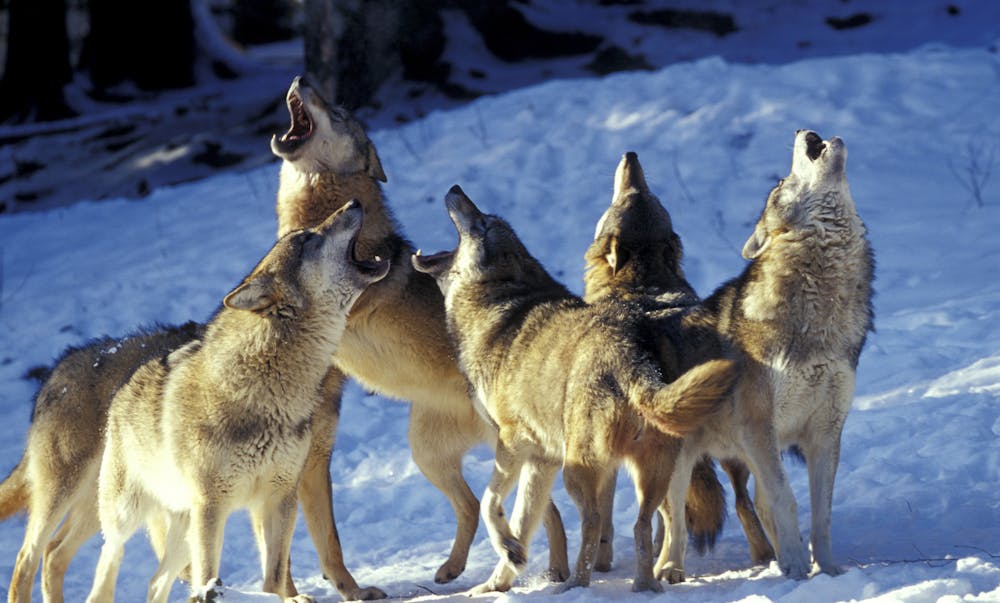
All dogs, even the tiniest chihuahua, are descended from great grey wolves. Wolves almost never bark. They howl. Sometimes dogs howl too – but howling is rarer in dogs. Understanding why wolves howl and dogs bark helps explain what barking is for.

United in sound. Fotosearch via Getty Images

A howl can be a beautiful sound – almost like a kind of music. And, just as group singing brings people together, so too does group howling help a pack of wolves feel united.

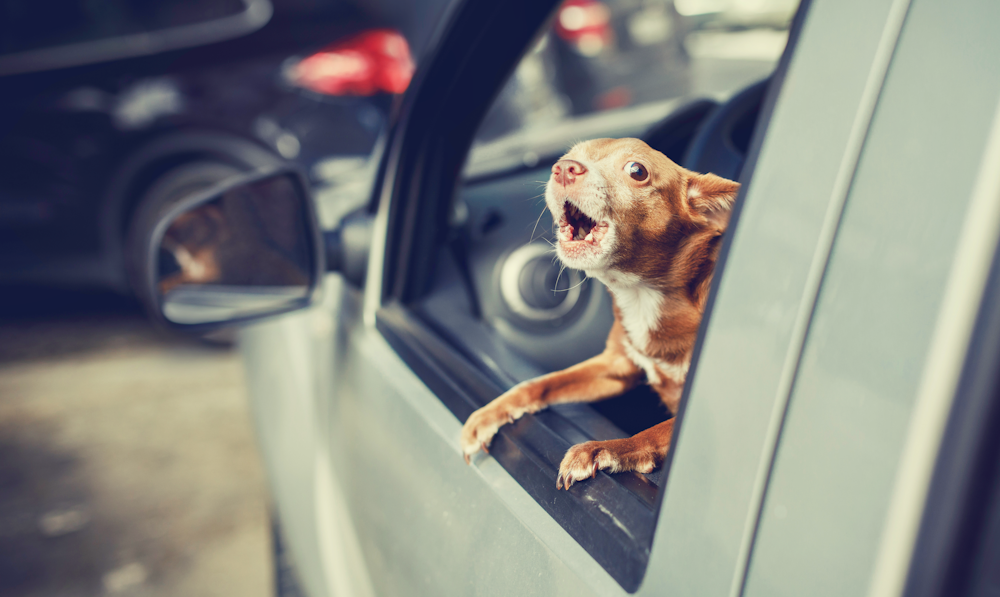
Dog barking also brings groups together – but it’s not a beautiful sound. It is a much more urgent noise, just like the sounds you make when you are hurt or very pleased. Many smaller animals, like scrub jays, meerkats and California ground squirrels, make such noisy sounds. They do this when they feel frightened by something. In dogs, barking can bring a group together to defend against a danger that can’t be coped with alone.

Wolves don’t need to make sounds like this because they are big and fearsome and don’t often feel threatened. Dogs, on the other hand, are much smaller and weaker than their wolf ancestors – and often need to call the group together.

A call for assistance. Seregraff/iStock/Getty Images Plus

This is why dogs bark. They are calling their group to get help with something they are not confident they can handle on their own. This doesn’t mean a barking dog is always frightened. He may just be very excited. He badly needs the family to know that there is a stranger coming to the door, or another dog coming close to the house.

Your dog’s barks may not be words, but he probably barks a little differently depending on what kind of thing has got him excited. If you listen closely, you may find you can tell the difference between a bark directed at a package deliverer and one directed toward a friend at the door. The bark to a passing dog may be different than the bark at a passing car.

Your dog doesn’t understand much of what you say, but he listens hard to try to make sense of human language. If you return the compliment and listen hard to his sounds, you may find you can also understand him better, and the two of you will have a richer life together.

ooOOoo

This touches on something that I saw elsewhere; the business of dogs having emotions (which they really do!).

I will try and find the article and see if I have permission to republish it.

Until then, keep safe all of you!


Ancient DNA

Ancient DNA shows that dogs probably came from Siberia.

There has been much discussion recently that Siberia may have been the site of dog domestication. In that a research team examining the origins of the domestic dog via the genetic past found that all American dogs carried a genetic signature.

This signature, dubbed A2b, in dogs descended from a canine ancestor that lived in Siberia some 23,000 years ago. An article in the January 2021 issue of Science went on to say:

That ancestral dog probably lived with people who belonged to a genetic grouping known as the ancient north Siberians, the team speculates. The group, which appeared more than 31,000 years ago, lived in a relatively temperate part of northeastern Siberia for thousands of years, and they shared this refuge with the gray wolf, the direct ancestor of today’s dogs.

The assumption being that this group of people brought the dogs with them when, about 15,000 years ago, they splintered into four groups as they spread around North America and Europe.

Dingo relative discovered in remote highlands of New Guinea. From abc.net.au

I wish I could say more but all the texts and pictures that I have come across have all been protected by copywrite.