A fabulous example of how we reach out to others across the internet!
A week-and-a-half ago in came an email to me:
Hi Paul,
Just came across a post of yours for Earth Day 2014.
Absolutely love the fact that you’ve written about a “Green” topic!
In fact, I wanted to reach out and let you know that in honor of this year’s Earth Day (April 22), I just finished designing an infographic about 14 easy ways dog owners can become more environmentally friendly people.
Would it be okay with you if I passed it along? I’d love to hear your thoughts on it!
Best,
Mike
Mike was Mike Shannon, about which more at the bottom of this guest post. Of course, I was delighted to receive his lovely guest post and infographic. Over to Mike.
ooOOoo
In its 46th anniversary to date, Earth Day is bound to continue to do what it has always succeeded in doing, help raise awareness among† individuals from all across the globe about environmentally-friendly topics so they work together to make this† world a better place to live in for the future generations to come.
In honor of this year’s Earth Day, which happens to be on Friday, April the 22nd, Ultimate Home Life have designed an info-graphic† that explains the most important 14 steps you can take as of today to go green with your dog.
This topic is certainly nothing to be taken lightly, and most certainly nothing of the impossible. Just look at the statistic provided at the beginning of the info-graphic – nearly 50% of families in the United States alone have a dog at home, which makes for more than 70 million dogs!
Let’s kick off our “going green” mission this year by making our dogs greener, one dog at a time.
If you have any tips for going green with your dog, make yourself heard in the comments!
Bio: Michael is the creator, editor, webmaster – alright, let’s just say he runs the show over at UltimateHomeLife.Com! He regularly blogs about anything and everything dog related, with an emphasis on trying to cover all questions that dog owners tend to worry about. So, hop over and give him a bark!
ooOOoo
What a fabulous and highly pertinent post for these times.
Happy Earth Day to all of us and our wonderful dogs right across this magnificent planet.
CAUTION: The following is offered by way of information reaching out to other loving dog owners. Please do not assume I have any specialist veterinarian knowledge and please do not take the following as a replacement for seeing your own vet.
About three or four weeks ago we noticed that Hazel’s bark was changing, almost as though she had a sore throat. In every other way she continued being the happy, lively dog that she is.
Then very suddenly last Thursday she started sicking up white, foamy bile and went off her food. Hazel rapidly became lethargic and lacking any vigour. Last Friday we took Hazel to our local Lincoln Road Vet Clinic and she was seen by Dr. Russ Codd, DVM. He took xrays that showed that Hazel’s lungs were far from being as clear as they should be. Potentially, Dr. Codd said that we could be looking at one of three things:
Some form of bronchial pnemonia,
A fungal infection of the lungs,
Cancer.
In view of the fact that Hazel hadn’t been coughing that ruled out 1.
Dr. Codd forwarded the xray pictures to a specialist. Later came the information that the spherules in her lungs, as seen on the xray pictures, were not as would be expected with a cancer diagnosis. Dr. Codd concluded that Hazel was indicating a fungal lung infection. Especially as this is commonly found in hot, drier parts of the USA and Mexico. Hazel was an ex-rescue from Mexico and for a couple of years we lived in Payson, Arizona.
The medical term for the disease is Coccidioidomycosis and I republish a little of what may be read over on the Pet MD website:
Coccidioidomycosis in Dogs
Mycosis is the medical term for any disorder caused by a fungus. Coccidioidomycosis comes from inhalation of a soil-borne fungus which normally affects the dog’s respiratory system. However, it is known (even likely) to spread out into other body systems.
The fungus spores begin in the lungs as round spherules, and live in a parasitic stage in the lungs until they grow large enough to rupture, releasing hundreds of endospores, which then begin a parasitic stage in the tissues, growing and rupturing, spreading out (disseminating) into the body perpetually. Endospores can also take a faster route through the body by way of the lymphatic and blood vessel systems, resulting in systemic infection — meaning the entire body will be affected. Coccidioidomycosis sets in from 7 to 20 days after exposure, though some dogs can develop immunity and never show any symptoms, especially younger dogs.
Dogs that are susceptible to the infection can become ill from only a small amount of the Coccidioides fungus, and fewer than 10 fungus spores are needed to cause the disorder. And though uncommon, Coccidioidomycosis is a deadly disease that originates mainly in the arid, hot regions of the western and southwestern regions of the U.S., and in several Central and South American countries. Coccidioidomycosis affects many different types of mammals, but tends to occur more commonly in dogs than cats. This infection is also known as valley fever, California fever, Cocci, and desert fever.
The condition or disease described in this medical article can affect both dogs and cats. If you would like to learn more about how this disease affects cats, please visit this page in the PetMD health library.
Dr. Codd recommended getting Hazel on a course of antibiotics with Fluconazole being his first choice. That commenced on Friday afternoon.
Early today (Monday) Dr. Codd will be seeking to narrow down the diagnosis with further analysis of Hazel’s blood being undertaken because while he was confident that it is a fungal infection he wanted to confirm precisely the nature of the infection.
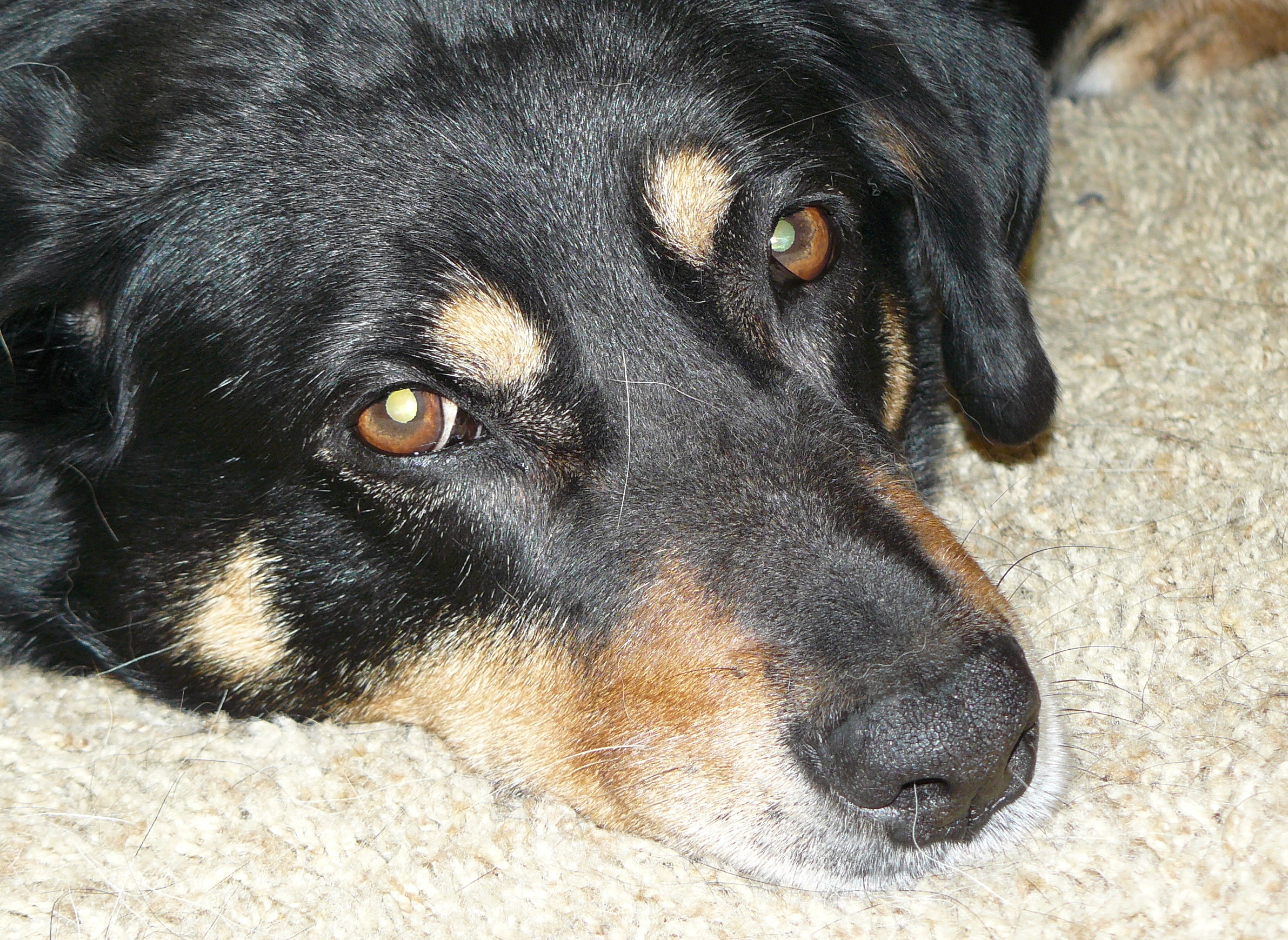
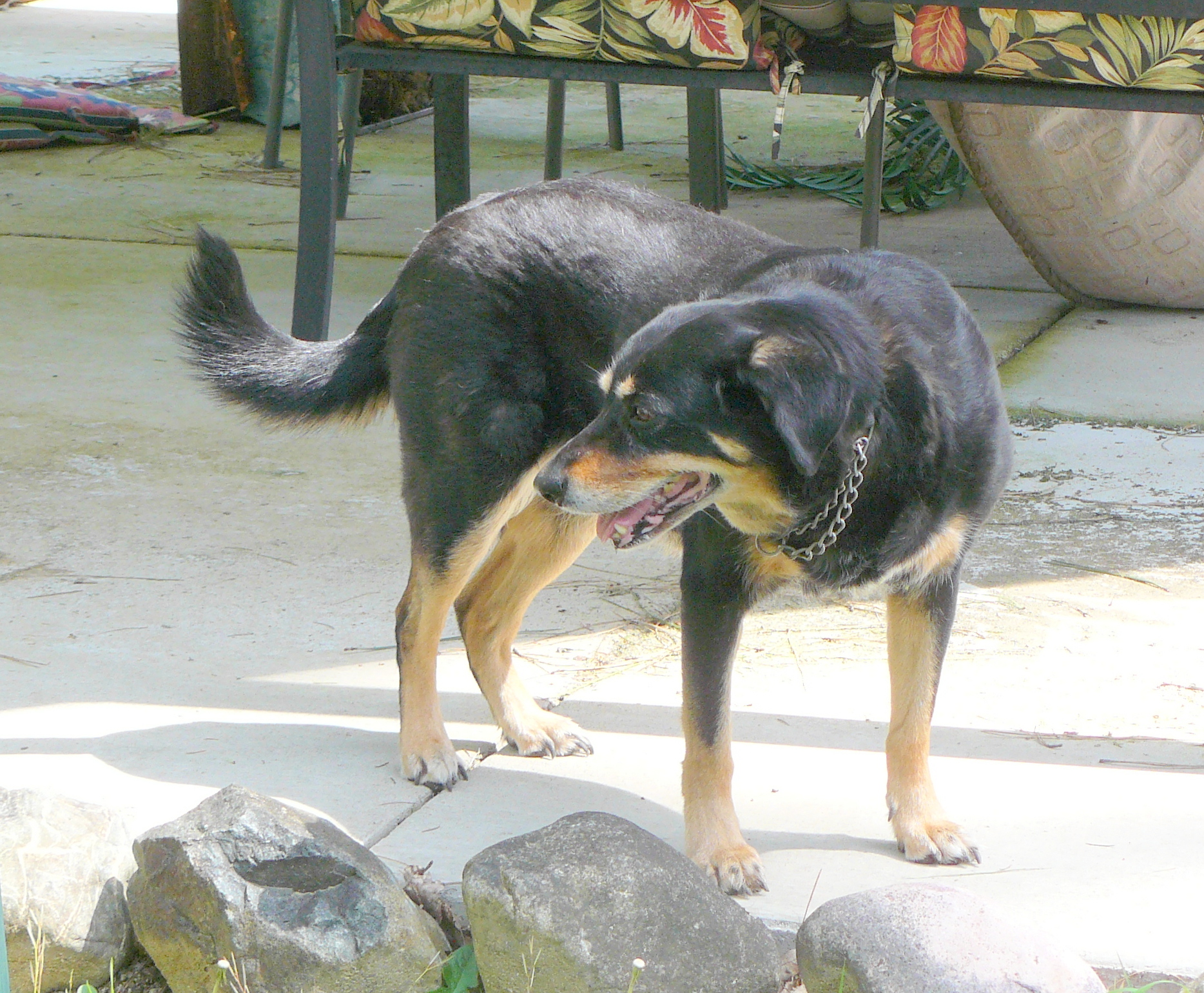
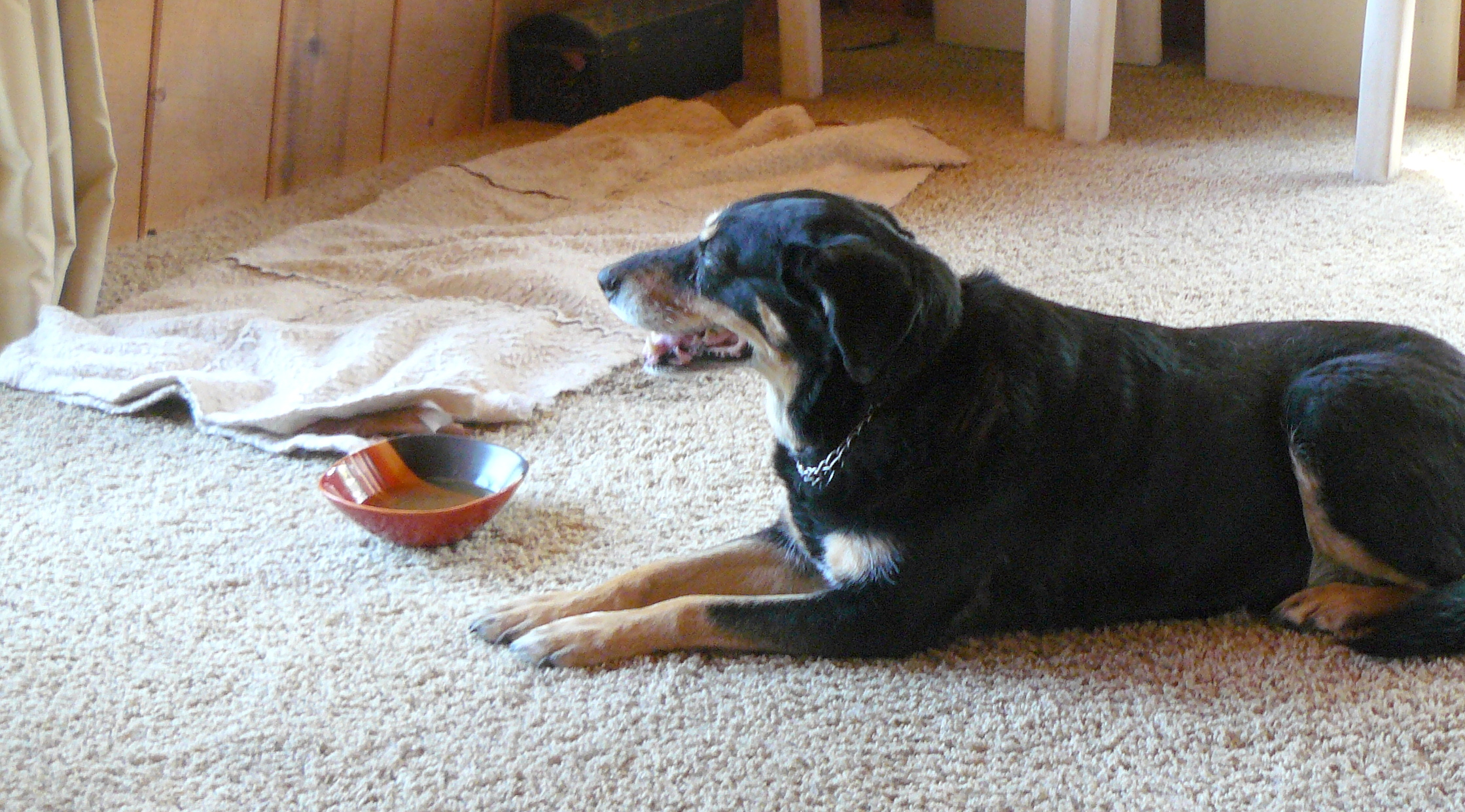
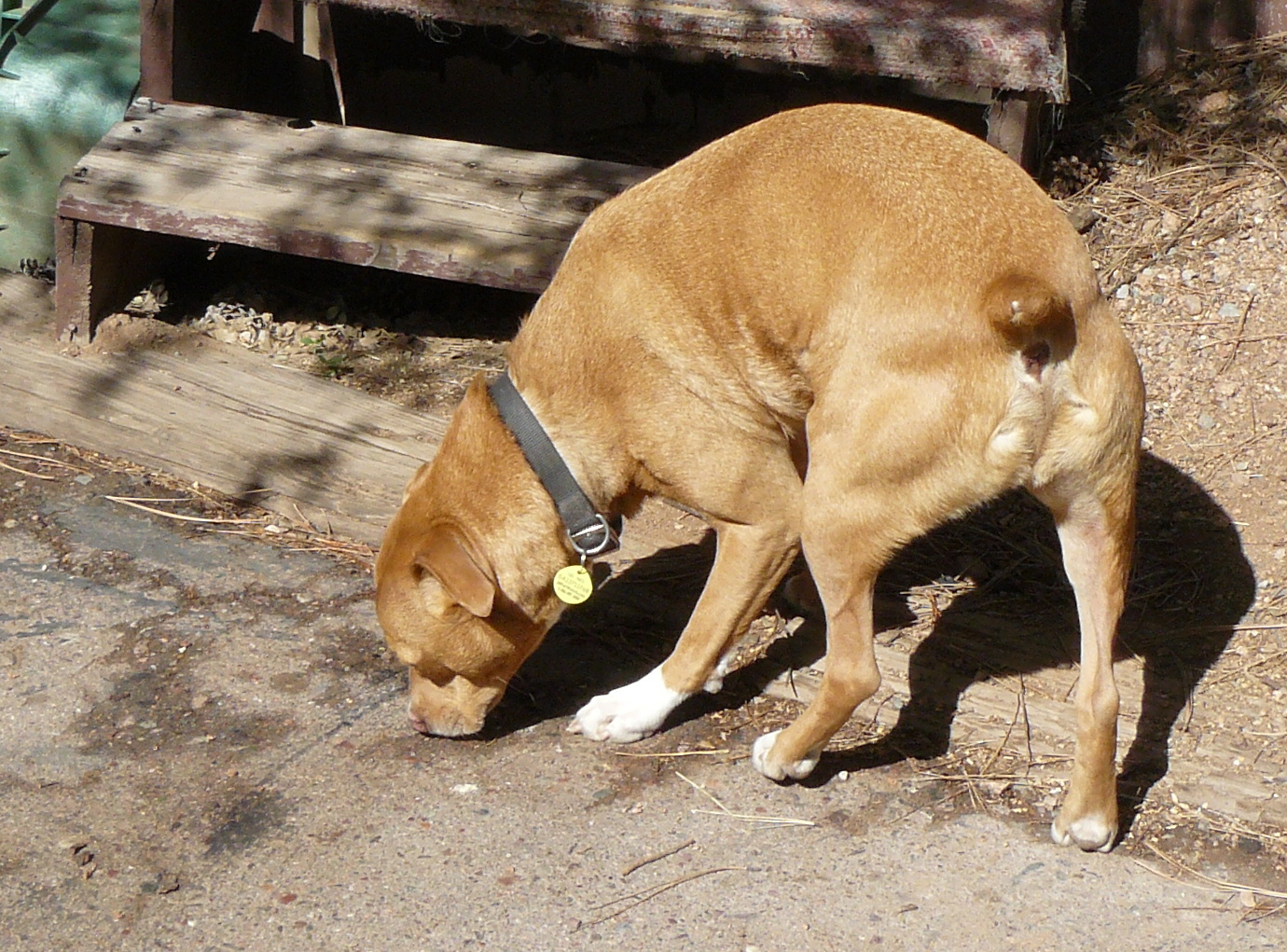
I will publish more information as it comes to hand and close with these photographs taken yesterday afternoon.
Hazel taking a very slow walk outside.
oooo
But most of the time she just wanted to be left on her own in our bedroom.
We are holding Hazel very close to our hearts just now.
I can’t close without thanking once again Larry and Janell from next door who sent all these wonderful photographs to be shared with you. How on earth can one follow those up?
Yesterday, my good friend of over 40 years, Dan Gomez, left a reply to our introductory post for Brandy. Despite how long I have been blogging it’s rare for Dan to drop in. Indeed, yesterday may well have been his first comment in this place: “Beautiful animal, Paul and Jean! He’s going to have a wonderful country home too!”
Well it wasn’t that long ago that Dan’s previous dog, Bella, died tragically and about a month ago Dan sent me a couple of pictures and a short video of their new dog: Lexi.
So staying with the theme of new members of our respective families, here are a few glimpses of Lexi.
Lexi at Rancho Mirage.
oooo
oooo
Lexi at two months old – 26th March, 2016.
As Dan said in his covering email:
What a fine animal! Sweet, adventurous, obedient, beautiful and loves the wet!
Saved our life and Bella would be proud.
May all those across the world that welcome and treasure their dogs live happy, safe and peaceful lives.
On Saturday morning Jean and two girl friends, Janet and Pam from close by, went to a $1 Clothing Fair. The Fair sold off donated garments raising money for a local charity for abused women. After they had had their fill of clothes Janet suggested going to a garage sale about three miles from home.
It turned out to be a couple and their daughter that were selling off stuff in advance of having to move to a much smaller house including needing to re-home their dog.
There in the garage was the dog, a beautiful tan coloured Great Pyrenees, as they are known in North America. Or as Wikipedia explains:
Jean, of course, went up to fondle the dog and enquired as to how they were going to re-home him. Taking the dog to a local dog shelter was mentioned by way of reply.
I heard all about this when Jean returned and we quickly agreed we should offer the dog a new home.
So after a quick lunch we both went to meet the dog.
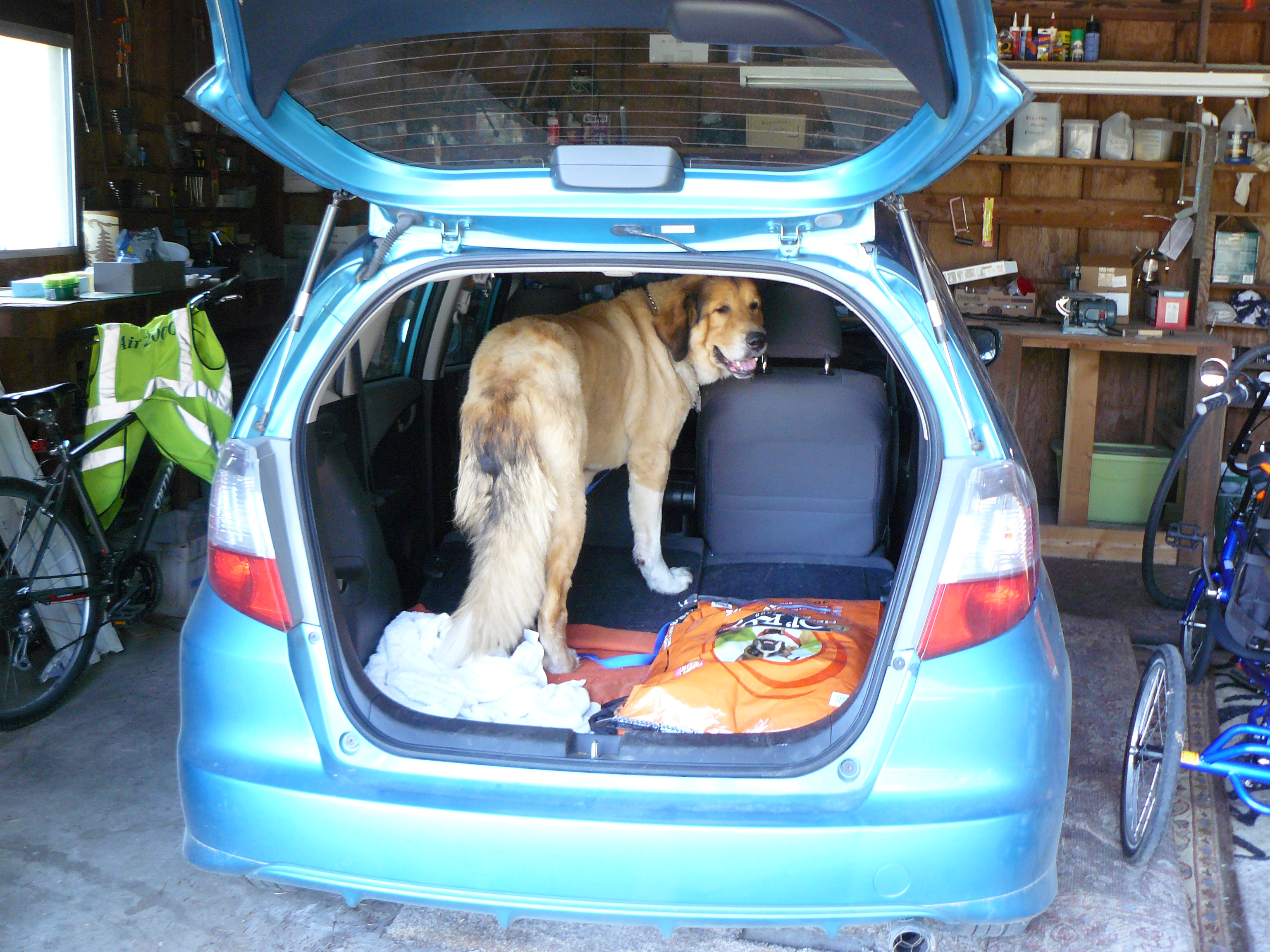
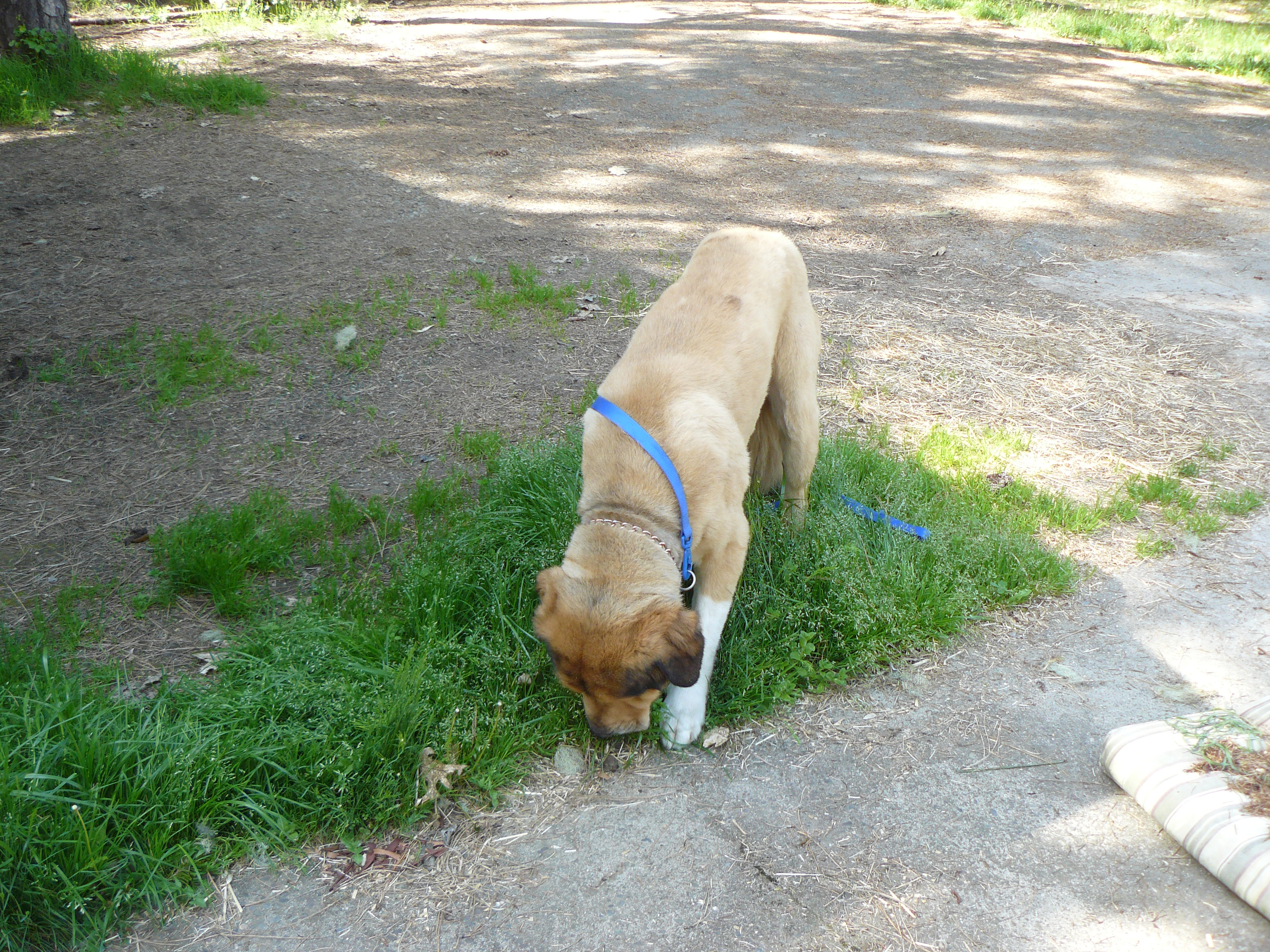
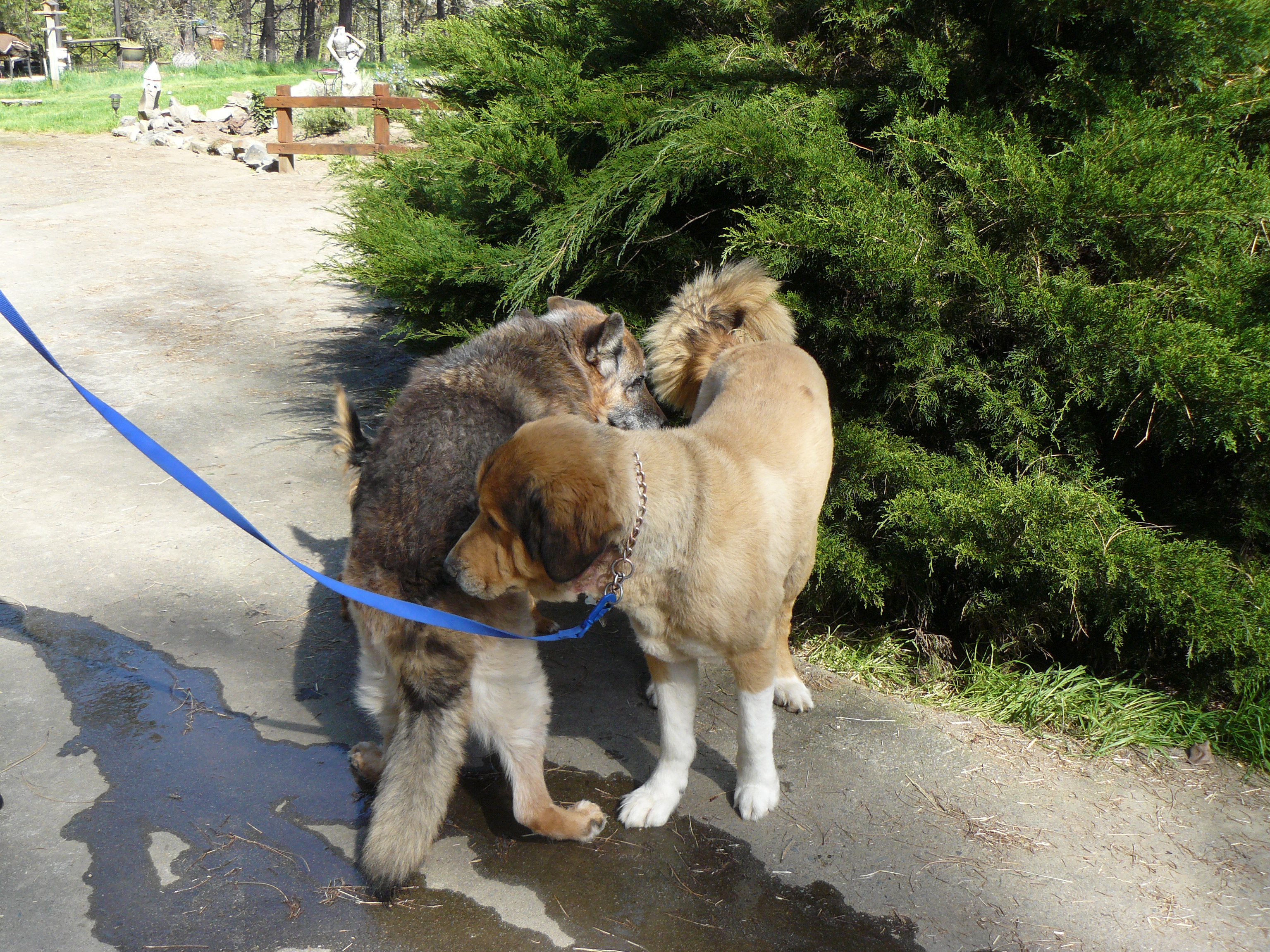
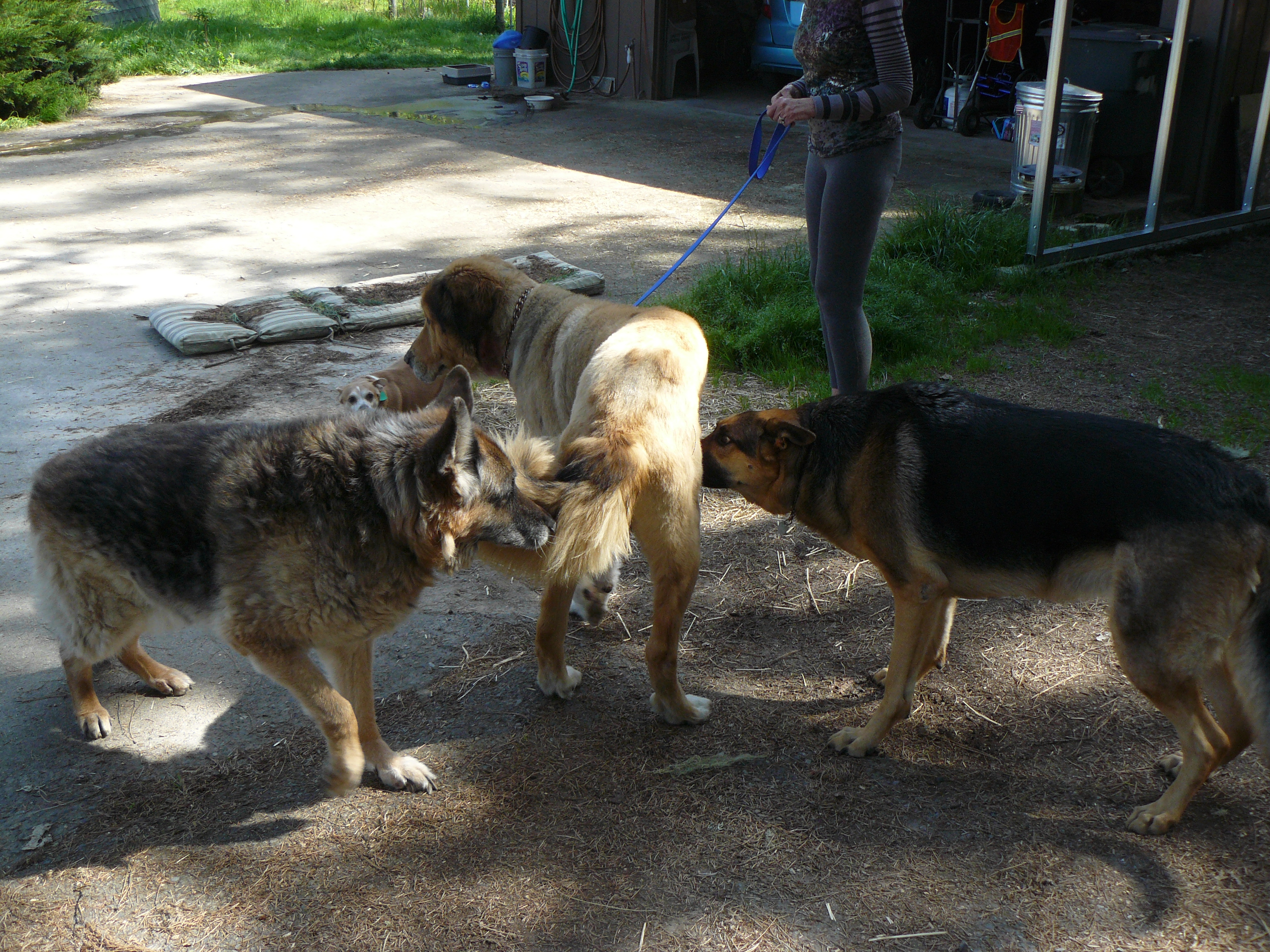
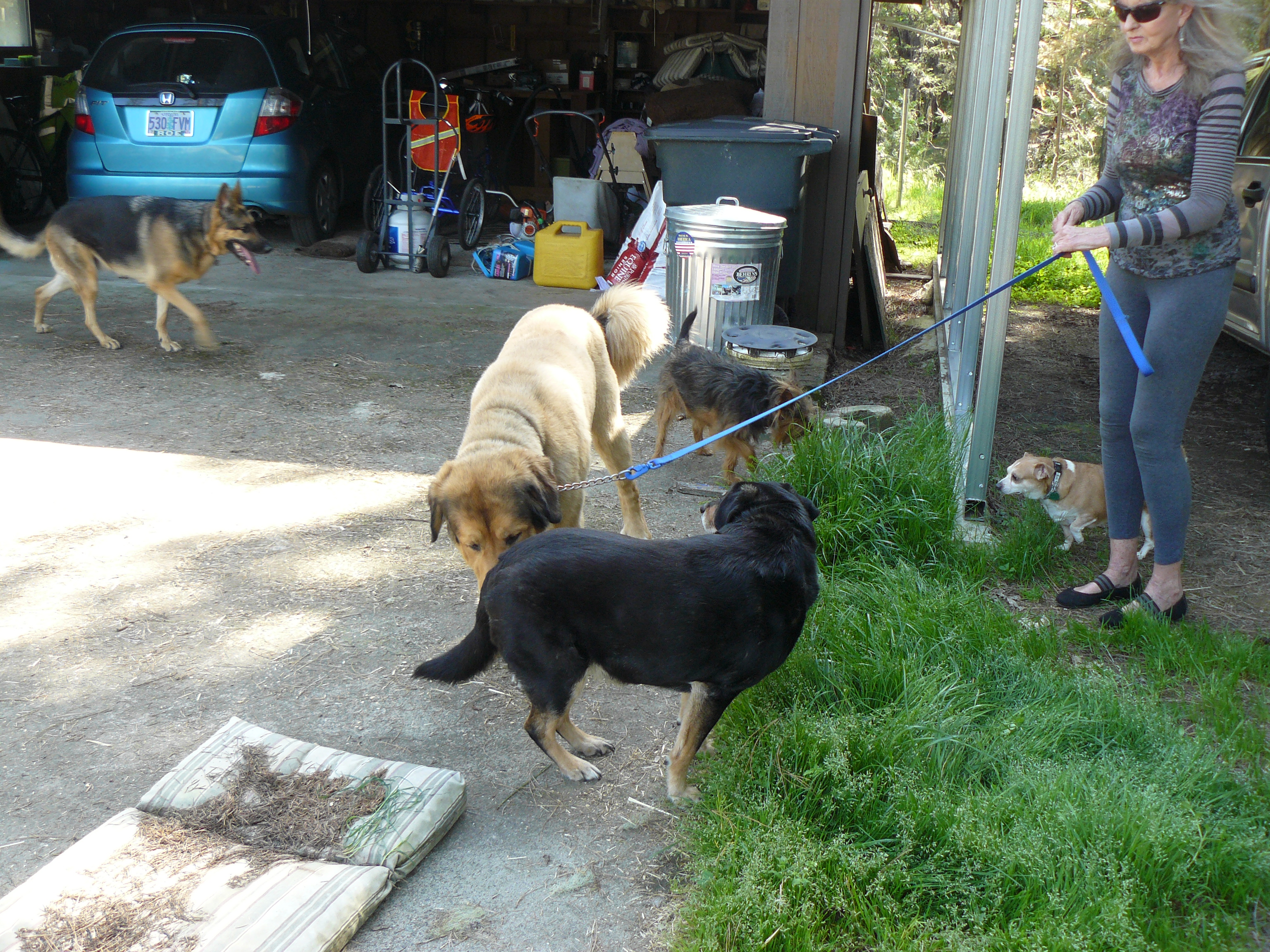
An hour later Jean and I returned home with Brandy! He is gorgeous and here are some photographs of the first few hours of welcoming Brandy to his new place. Note: Brandy was recently shaved by his owners thus coat-wise doesn’t quite look like the Great Pyrenees that he is (possibly with a slight cross with a Mastiff but Dr. Jim doesn’t think so).
Brandy’s first look at his new home from the back of the car in the garage.Brandy signalling that he is ready for big changes!First sniff of our grass.Brandy, welcome!So far, so very good!Now the meet and greet with, of course, first up being the old king!And it didn’t stop with Pharaoh!More smells than you could shake a stick at!Yet more new friends to meet!Then time to settle down at home.What an adorable boy he is going to be.Sunday morning and everything is still going well.Just another dog for Jeannie and me to love.
Apparently, Brandy is a three-year-old dog but hasn’t yet been neutered. As soon as Brandy has settled down we will get Dr. Jim to check him over thoroughly over at Lincoln Road Vet Clinic, make sure everthing is fine and perform the neutering. (It was neighbour Dr. Jim who wrote the foreword to my book, by the way.)
Woman Rescues Burned Puppy and He Grows Up to Save Her Life
This wonderful story was recently published on the Care2 site and is republished here to share with you all and to underline the importance of always trying to find your next pet from a rescue shelter.
ooOOoo
Woman Rescues Burned Puppy and He Grows Up to Save Her Life
Editor’s note: This post was originally published on January 7, 2013. We are republishing it for your reading pleasure. Enjoy!
Anyone who has ever saved an animal will tell you that its the kind of experience that shakes up your DNA. You won’t regrow hair on a balding head or suddenly run a four-minute-mile, but there is a pulse of positive energy that churns through the human body much like a twister. In some cases, fragments of that emotional explosion are powerful enough to be credited with modern medical miracles. And for one Texas woman, the experience was profound enough to help wake her from a coma.
My Name is Danielle…
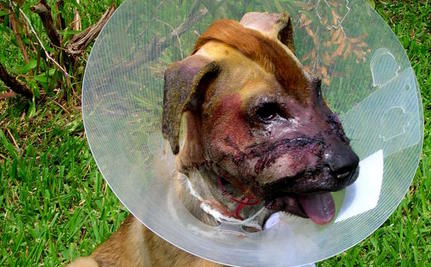
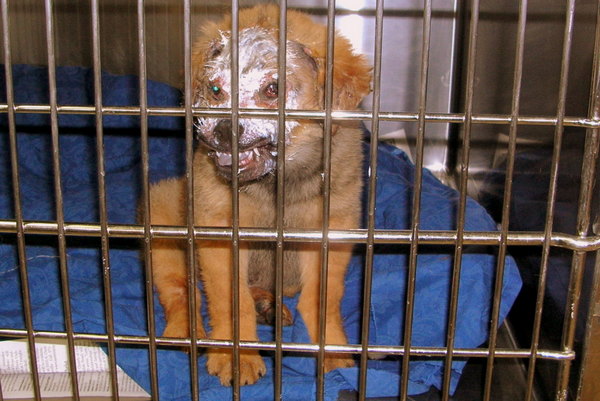
“My name is Danielle and it’s been over a year since something terrible happened to me. I am ready now to share my story,” explained the letter we received recently from veterinary technician Danielle Torgerson of Killeen, Texas. ”Four years ago somebody brought a puppy to the clinic. I was not assigned to that room but I was in the second room when I felt something pull me into the hallway. It was strange, but I glanced into the other exam room and saw a puppy on the table. He looked at me with so much pain and despair. A man had brought him in for a ‘sting’ but I knew instantly that was not the case. The puppy was horribly burned on the head like somebody had poured gasoline over him and set him on fire. He was there to be euthanized.”
But Danielle’s conscience began to wrestle down the injustice of extinguishing this young life before it had known the simple joys that every dog should know. She wondered if he might be able to have a bed of his own. Could there be walks through the park in the cool evening air? Was it possible that this puppy might wake up each morning beside a person whose first words were his name?
“I asked the vet if something could be done,” Danielle recalls. “He said that treatment could be carried out, but only with lots of money.”
The Rescue Begins
And that was all Danielle needed to hear. She wasn’t wealthy, but she was determined and if there was a chance at recovery, she’d already made up her mind to take it. So Danielle had the man who brought in the puppy sign over custody to her. She then contacted Dr. Elaine Caplin in Austin and the puppy was brought in for a surgical consulation to see what could be done.
“He was not able to eat or drink because part of his mouth was melted,” Danielle recalls.
Skingraft surgery was undertaken to reconstruct the mouth and soon the puppy’s condition improved dramatically and he began to function on his own.
Danielle named the puppy D’Artagnan (who served Louis XIV as captain of the Musketeers of the Guard) or Mister D for short and introduced him to other dogs and cats who welcomed him.
Mister D began to grow into a large dog and earned a reputation for his generous nature. “He allows all the cats to sleep with him and we have actually seen him share food with other dogs. He picks out pieces of food and gives it to them.”
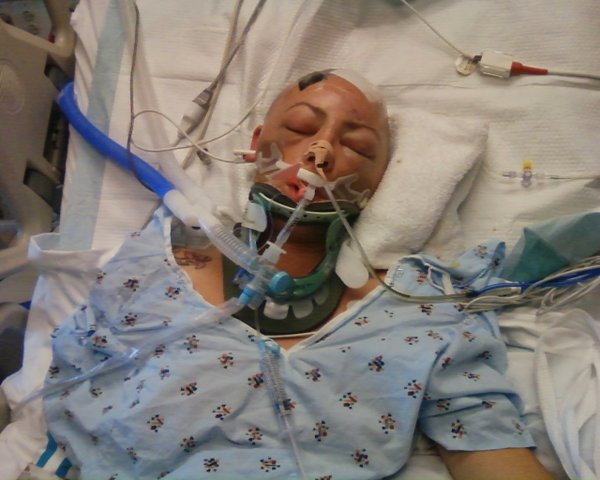
All grown up.But in the street, Mister D is sometimes regarded as a beast.“He looks like a werewolf with his skin grafts and people are kind of scared,” Danielle explains. “But he truly is my loving angel and I know that saving him is what helped save me.”You see, last year, Danielle was in a terrible motorcycle accident when she tried to avoid a collision with a car. Within seconds, she was on the ground bleeding with a broken skull and awaiting a lifelight helicopter to a trauma center where doctors would find no brain function.For 12 days, Danielle lay motionless in her pale blue hospital gown while her mother, who flew in from Germany, went back and forth between the hospital and Danielle’s home to take care of not only her dying daughter, but of the animals who meant the world to her.
At night, Danielle’s ex-husband would help look after the pets so that her mother could spend more time with Danielle, and try to get some rest, but everyone feared the worst.
But in the silence of the mind, a louder voice came from Danielle’s soul.
“I had to get back to Mister D and my other ‘kids’ because they needed me and I needed them,” Danielle says of her sense that she carried that desperate need to be reunited with her pets, despite the lack of medical evidence that she was processing those emotions during her coma.
I Had to Wake Up for My Animals
“After 12 days, a miracle happened,” Danielle says tearfully. “I woke up. The doctors and nurses have told me that the first words that I uttered were ‘Mister D.’”
For several weeks, Danielle remained in rehabilitation while she learned to walk and to fully speak again. It seemed so painfully long for her to be away from the ones she loved and that motivated her to work harder each day.
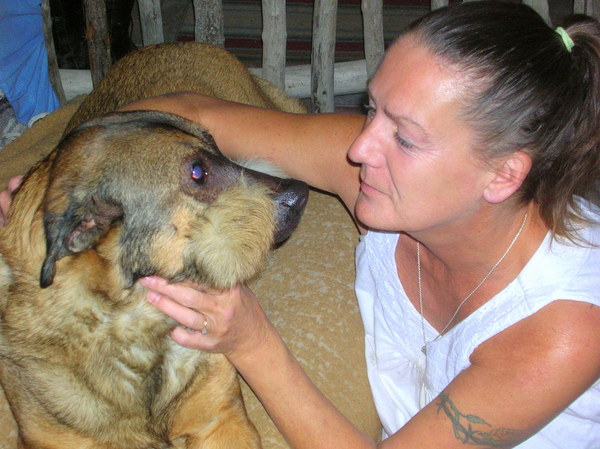
“When I finally got home, Mister D was so happy,” Danielle said. “He checked on me all the time. When he felt that I was hurting, he would put his paw very carefully on my head and sigh. I truly know that if it was not for Mister D, I would not be here. He has become my musketeer, my protector and has given me the security and protection that I never had from people.”
Now fully recovered, Danielle’s greatest hope is that her story will inspire others to rescue animals. She asks people to consider rescuing, rather than buying pets and explains that “the bond between you is one that can never be broken.”
ooOOoo
Please help share this message of the bond and love that is possible between us and our pets and to always consider taking on rescues.
It was after 3pm yesterday when I turned on my computer and wondered what today’s post was going to be; I wasn’t feeling especially creative!
But sitting in my ‘in-box’ was a link to the latest newsletter from The Smithsonian and within that newsletter was a perfect sequel to yesterday’s post What’s In A Name?
I’ll go straight to that article. (Apologies if you notice that there is a fair degree of overlap between the two articles.)
ooOOoo
Call a Dog a Pit Bull and He May Have Trouble Finding a Home
Dogs labeled as pit bulls at shelters may wait three times longer to be adopted—even when they aren’t actually pit bulls
An adorable shelter dog shouldn’t have a difficult time finding a home—but it might if it comes with the label “pit bull.” (LeticiaRose / iStock)
Regardless of a canine’s actual breed, simply labeling a dog a “pit bull” can condemn it to a significantly longer stay in a shelter and make it less attractive to potential adopters, concludes a new study in PLOS One.
Pit bulls are often stereotyped as aggressive and dangerous toward humans, though there is little evidence that those characteristics are inherent to the breed. The breed is popular among the dog fighting crowd, however, which contributes to its reputation for aggressiveness. To complicate matters, when attacks do occur, dogs may be labeled as pit bulls even when they are not. Indeed, in the United States, “pit bull” often serves as a catchall for a handful of breeds ranging from English bulldogs to American Staffordshire terriers; one person’s pit bull is another’s American bulldog mix.
This reputation follows the canines when they land in shelters. When potential adopters look at available dogs, they “don’t rate pit bulls any differently than look-alike dogs,” says the study’s lead author, Lisa Gunter, a graduate student in psychology at Arizona State University. “It’s only when we start attaching labels that people begin to perceive them more negatively.”
Most shelter dogs are of unknown origin, so employees often have to guess at an animal’s breed. Over a 10-year career working in shelters, Gunter noticed that she and her co-workers frequently arrived at different conclusions about a dog’s breed. And genetic studies have found significant discrepancies between descriptions of shelter dogs and their actual breed. One study found, for example, that half of the dogs that had been labeled as pit bulls at four Florida shelters had no pit bull ancestry in their DNA.
Gunter and her colleagues undertook a series of studies to find out how those potentially flawed labels might impact an animal’s chance of finding a home. They started by showing college students in California and users of the website Reddit photos of three dogs—a Labrador retriever, a pit bull-like dog and a border collie—without attached breed labels and asked questions about each, such as whether the dog looked smart or if the person would feel comfortable approaching it. The team found that participants ranked the pit bull-type dog as lowest on intelligence, friendliness, approachability and adoptability, and highest on aggressiveness and difficulty to train. When the pit bull appeared in a photo with an elderly woman or a child, however, it was rated more favorably.
Next, the researchers asked potential adopters at an Arizona shelter to rank dogs that appeared in photos and short videos on the animals’ approachability, intelligence, aggressiveness, friendliness, difficulty to train and adoptability. These scores were then summed to create an “attractiveness” composite for each pooch. To get around possible biases, such as apartment rules about animal sizes or bans on certain breeds, the team used phrases such as, “If circumstances allowed, I would consider adopting this dog,” to assess willingness to take a canine home.
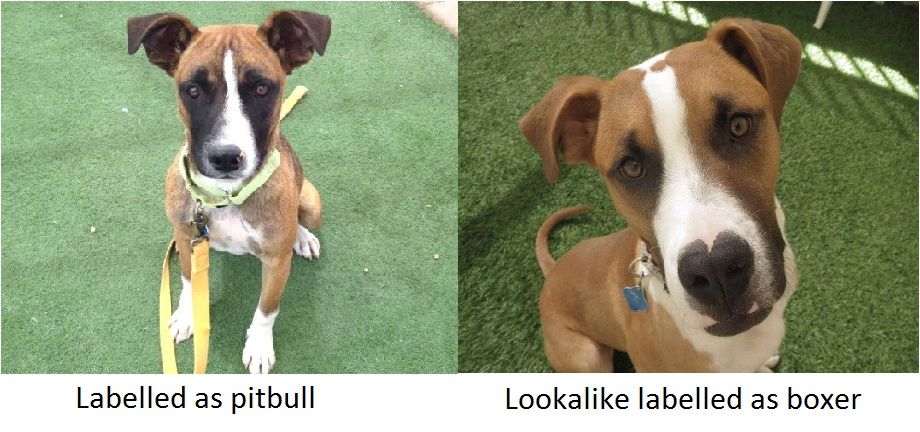
These two dogs may look similar, but the pit bull label could mean that the one on the left may wait a lot longer to find a home. (Arizona Animal Welfare League)
When the dogs were not labeled as any particular breed, participants ranked pit bulls and look-alikes (dogs that were the same size and color as the pit bulls) as equally attractive. Potential adopters even ranked the pit bulls in video recordings as more attractive than the non-pit bull matches. When the researchers introduced breed labels, however, that trend reversed, with participants ranking the same dog as significantly less attractive than similar dogs without the label.
The researchers also found that pit bulls at that shelter waited over three times as long to find a home as their matched counterparts.
Finally, the team analyzed a set of data from an animal shelter in Florida that recently removed breed descriptions altogether. When freed from the loaded label, pit bull-like dogs were much more likely to find a home. Adoptions of these dogs increased by more than 70 percent, compared with the prior year, and the shelter’s euthanasia rate for the same group dropped by 12 percent, probably because more of them were finding homes.
Taken together, these results “are very convincing that breed labels negatively impact any dog that is labeled as ‘pit bull,’” says Erica Feuerbacher, who studies dogs at Carroll College in Montana and was not involved in the study. “Furthermore, we know from other studies that humans are quite bad at correctly labeling breeds, so many dogs could be erroneously labeled pit bull—even though they are not—and by that label they become less adoptable.”
Eliminating breed labels, which people seem to be using as poor proxies for stereotyped traits, may be the key to banishing a significant amount of dog discrimination—and getting more dogs into homes, Feuerbacher and the other researchers argue. There is also a need to devise better means of measuring dogs’ true personalities, including their potential for aggression, and of ensuring those assessments are valid not just in the shelter environment but also in homes, Gunter notes.
“We want to drive the adoption conversation toward evaluating whether an individual dog, regardless of the breed, is a suitable candidate for adoption,” she says. “Then we can match-make between the personality of the dog and that of the person, instead of just relying on labels.”
ooOOoo
You can see why it so perfectly followed on from yesterday!
Not just my post but yesterday’s comments. Such as this from Tony:
Another example of form over substance. When will we learn?
So I know you will all cheer Erica Feuerbacher who is quoted towards the end of that Smithsonian essay and I will close with her words, in part: “We want to drive the adoption conversation toward evaluating whether an individual dog, regardless of the breed, is a suitable candidate for adoption. Then we can match-make between the personality of the dog and that of the person, instead of just relying on labels.”
“What’s in a name? That which we call a rose by any other name would smell as sweet”.
That very well-known quotation from Wm. Shakespeare was the obvious sub-title to today’s post.
You will be aware that I have written several times previously about Pit Bull dogs. But I would like to draw your attention to a post that was published here back in 2013. It was called In praise of Pit Bull dogs and featured a guest post from Noella Schink, in Portland, Maine, where she then lived and played with her 3-year-old pit bull mix, Addie, 8-year old shih-tzu, Brutus, and 2-year old hound, Lula. Apart from all of them being a little older I trust nothing else has changed.
That post in 2013 also included a picture of our gorgeous Casey, as follows.
Casey doing what dogs do so well – picking up scents around his home.
Over on the Care2 petition site there was a compelling case being made for Pit Bulls to be given a different name. Read it and see if you are convinced of the need.
ooOOoo
How We Could Save More Dogs From Death Row by Changing One Thing
Whether we like it or not, labels matter — even for dogs. New research from Arizona State University published in PLOS ONE, suggests labels could even lead to a potential death sentence, if you’re a pit bull.
Pit Bulls Wait 3 Times as Long to be Adopted
The pit bull went from America’s darling dog to one of the most feared (and misunderstood) dogs today. Their fall from grace is evident in stories like Olive’s. Olive the Pit Bull was brought in as a stray and stayed in the shelter for approximately 11 years. Olive was lucky enough to find her forever home, but so many dogs like her aren’t — and our arbitrary labels aren’t helping their cause.
According to Science Daily, researchers from Arizona State University wanted to know if breed identification influences adoption. The researchers found that dogs labeled as “pit bulls” could wait three times as long to be adopted from shelters into their forever homes compared to their lookalikes without the label or labelled as another breed.
Compared to other breeds, like Labradors, pits were perceived as less friendly and more aggressive. They also were considered less “attractive” than their lookalikes. Weird, right?
Even the researchers were surprised by how much the pit bull label influences perception and, ultimately, adoption. As researcher Lisa Gunter from Arizona State University explains, “We were surprised how very similar looking dogs sometimes get labelled ‘pit bull’ and other times as something completely different. These dogs may look and act the same, but the pit bull label damns them to a much longer wait to adoption,” reports Science Daily.
Ultimately, the researchers recommend losing the pit bull label to stop inadvertently penalizing these dogs in the shelter setting.
Heartbreaking Pit Bull Statistics
If you thought that Olive’s story was sad, she’s actually one of the lucky ones — not only for getting adopted, but for staying in the shelter system for the 11 years that she did.
According to Pit Bull Rescue Central (PBCR) 200 pit bulls are euthanized in Los Angeles County animal shelters every single day.
PBCR emphasizes that “for homeless pit bulls the death sentence is almost always automatic.”
Villalobos Rescue Center (made popular by the TV show Pit Bulls and Parolees) had this to say about the pit bull plight in Los Angeles: “The pit bull population has now risen to 40% of all the dogs in 12 shelters in Los Angeles. That means that almost half of the entire Los Angeles dog population is pits or pit mixes! Most are strays, tossed out like dirty laundry. It’s heartbreaking.”
Sadly, the plight of pit bulls is not limited to Los Angeles County. A 2013 Nat Geo Wild infographic reveals that:
60 percent of the total dogs euthanized in U.S. shelters are pit bulls
30 percent of the total dogs admitted to shelters are labeled pit bulls
86.7 percent of pit bulls admitted to open admission shelters are euthanized
Do you know what the worst part of this sad situation is? There’s no such thing as a pit bull.
As Bark Post explains, the pit bull label is just “an umbrella term that most people use to refer to different types of dogs – the American Pit Bull Terrier, the American Staffordshire Terrier, the Staffordshire Bull Terrier, any mixes thereof, and any dog that vaguely resembles these dogs.”
The breed isn’t real, but the stigma has real consequences. And time and again pit bulls prove that they can be great dogs with the correct guidance and training when they get a second chance. Remember how Jericho the Pit Bull went from death row to being an amazing service dog?
Take Action!
Sign and share this petition urging animal rescuers to lose the stigmatizing pit bull label that unnecessarily penalizes innocent dogs. It’s a matter of life and death.
Only idiots believe that pit bulls are bad! When are some morons going to finally wake up and realize bad owners are responsible for bad dogs! BSL should be banned everywhere. We must never stop fighting to end the senseless killing of this breed.