Back to the regular Sunday Picture Parade.
Warmest thanks to Larry Little from next door for sending these great pictures across to me.
 oooo
oooo
 oooo
oooo
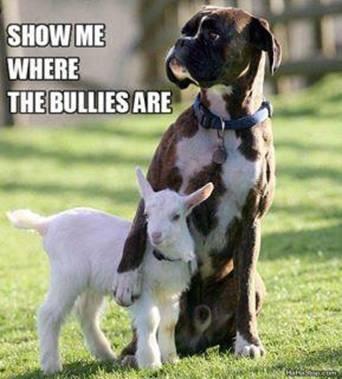 oooo
oooo
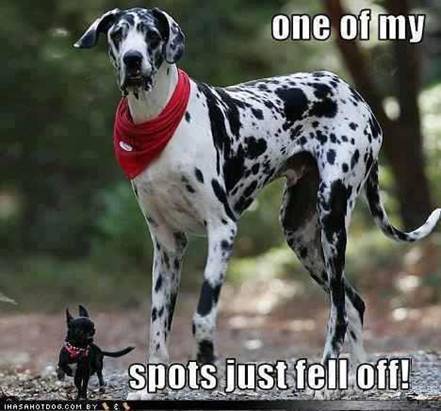 oooo
oooo
 oooo
oooo
 oooo
oooo
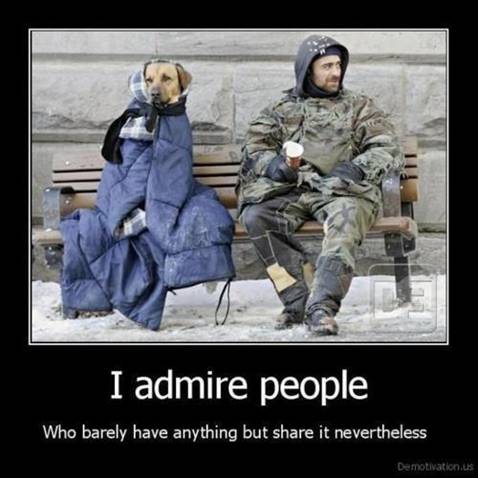 oooo
oooo
Another wonderful set next Sunday.
Be happy good people!
Dogs are animals of integrity. We have much to learn from them.
Category: People and their pets
Back to the regular Sunday Picture Parade.
Warmest thanks to Larry Little from next door for sending these great pictures across to me.
oooo
oooo
oooo
oooo
oooo
oooo
oooo
Another wonderful set next Sunday.
Be happy good people!
Mary Nielson provides the answer
Yesterday lunchtime was a very stressful period. Because I was speaking to various members of the family in England but especially to my sister, Eleanor, who had come over from South Africa to be with my mother, and to Rose, my cousin, who lives in Baldock, Hertfordshire, and is being so supportive.
In the middle of all of this Brandy came across to the low table where the remains of my lunchtime sandwich were still on my plate and started helping himself. I was striding around the room speaking to Eleanor and when I spotted Brandy eating my lunch I really showed my anger. I shouted “No!” and prodded him hard in the back. Brandy slunk off giving me a really foul look.
Fifteen minutes later Jean and I took the dogs outside for their regular ‘after-lunch’ leg-stretch and Brandy kept his distance from me. I went across to Brandy: “Oh, Brandy! I am so sorry for being cross with you Please forgive me.” There was real remorse in my voice and, undoubtedly, showing on my face too.
Brandy came over to me and nestled his wonderful, beautiful head against my thighs and I curled down and rubbed his chest with my left hand. As simply and as quickly as it could ever be, Brandy had forgiven me.
A short while ago I was approached by a Mary Neilsen who asked me if I would like her to write a post for Learning from Dogs. I agreed and in hindsight I am so pleased I did.
Read her wonderful post and you will understand why!
ooOOoo
Your dog throws you that look – you know the one – and walks away. You’ve been snubbed! So what is causing this emotional outburst? Maybe your canine pal is holding a grudge.
“What have I done now?” you might ask yourself. Depending on the circumstances, you may not be guilty of anything. You may just be misinterpreting that look – or yes, indeed, your furry friend may be paying you back for some grievance.
No pet owner is perfect. We all make mistakes. We accidentally step on our pet’s tail; take away a favorite toy; or abandon them to a night alone in the house. These are things that can set our dog to turn their backs on us to teach us a lesson – if only for a little while. But is it true? Do dogs really hold grudges?
The Experts Say No
If you live with guilt every time your furry friend gives you a sideways look, you are reading too much into it, say the experts. They don’t hold grudges and they don’t act in petty ways or seek revenge. [Ed: The dogs that is not the ‘experts’! Sorry; couldn’t resist!] Their emotional lives are not as complicated as humans. Dogs are more simple creatures. They live in the moment.
According to famed canine expert Cesar Millan, dogs don’t hold long-term grudges simply because they can’t. They don’t think that way. Sure, they may act miffed now, but will soon forget what’s bothering them and move past it.
People, on the other hand, tend to hold onto negative feelings and expressing that kind of anger or anxiety can make your dog react too. In other words, if you express prolonged feelings of guilt over slamming your dog’s paw in the screen door, he may react by steering clear. It is not the action that is causing him to distance himself from you for a while; it’s your reaction to the event. In other words, it is your angst causing him to act this way.
What We Can Learn From Our Dogs
There may be some who still believe dogs can (and do) hold grudges, while research shows this assumption incorrect. Even so, there is one thing most canine psychological experts agree on and it is that we can learn an important lesson from our canine counterparts: how to let go.
Humans have a really hard time letting go of our grievances. In a recent Gallop poll, more than two thirds of participants acknowledged the importance of forgiveness, yet less than half actually were able to forgive those who hurt them. That equals a lot of grudge holding going on.
While our dogs move past every infraction, humans tend to hold on, dwelling on our hurts and allowing them to rule our lives. This can cause relational issues; depression, or worse. But, when we take after our dogs and let go of those negative feelings we can experience such benefits as:
[Ed: read the Mayo Clinic article here about forgiveness that Mary referred to above.]
Take a look at your dog. He seems happy enough. Wouldn’t you like to be able to experience the kind of true joy and relaxation he does? The trick to that kind of contentment is learning how to let go of those grudges and live in the moment.
Yes, people are going to hurt us. That is simply life. But those hurts do not have to cause you chronic pain. Take a cue from your dog. Allow yourself to feel the pain in the moment, and then move on. You will discover that life is a lot more enjoyable that way.
About the Author
 Mary Nielsen is a passionate dog lover, blogger and part-time music teacher. She founded MySweetPuppy.net to share her ups and downs of being a pet parent to a bunch of adorable mutts. When she is not playing with them or teaching, you can find her experimenting in the kitchen.
ooOOoo
Please join with me in thanking Mary for such a delightful guest post and hoping that we will be reading more from her.
Sharing the ups and downs of life with your dog.
Yesterday I used the phrase, “A number of domestic circumstances are taking priority at the moment …” and I wasn’t overplaying that. I can’t say anymore at this stage other than to say that a very close family member has been diagnosed with a terminal illness (and it’s not Jeannie, my son or my daughter.)
Naturally, it has been dominating my thoughts and emotions these last 72 hours but my ability to comprehend what has happened and to weep from time to time would have been impossible without the love of my sweet, dear Jeannie and the emotional sensitivity of our dogs.
For example, yesterday morning when I swung myself out of bed a little after 5:15am, the room still dark, and then sat on the side of the bed wondering what the diagnosis would be from the consultant in London, Brandy came up to me and just buried his head in between my slightly opened legs. With his head held down he pressed himself into my crutch and I then bent my own chest and head down and buried my face in the warm fur of Brandy’s neck just behind his ears.
So on to a short film that has been shown before here on Learning from Dogs but is still worth seeing again.
Published on Mar 27, 2015Hey:)
Thanks for watching my film. I really hope you share and comment as we love your feedback also feel free to email your thoughts as well. www.ShawnWellingVisuals.com for more info and my email.
The Director
-Shawn Welling
Full Synopsis:
A friend to share the ups and downs of life with him — and, soon, his family. “If I Could Talk” gives this dog the one chance he wants to share his thoughts.
Director: Shawn Welling AXI
Story: Mark Galvin / Shawn Welling
Screenplay: Shawn Welling
Starring:
Max Welling / The White Lab
Shawn Welling / Shawn Welling
Michelle Simmons / Michelle Welling
Grace Calabrese / Grace Welling
Kalyssa Lauer / Kalyssa Welling
Music:
Reuel
Composer:
Phillip Glass
Cinematographer
Shawn Welling
Art Giraldo
Scott Budge
Thinking of every one of you and what your dogs mean to you!
Coping with an emergency includes looking after our dogs.
Most of us live our daily lives without paying too much attention to the likelihood of an emergency. But as Hurricane Hermine and the recent explosion of that SpaceX rocket show the unexpected does come along.
All of which is my preamble to a recent item over on the Mother Network Nature site that reviewed taking care of our beloved pets when an emergency does strike.
I have pleasure in sharing it with you.
ooOOoo

Jaymi Heimbuch August 31, 2016

A car crash, an arrest, a natural disaster or a medical emergency. While no one wants to think about these awful possibilities, sometimes we should to protect and provide for those we love, in case one day we can’t make it home as planned. And those we love include our pets.
Imagine something happens to you and you can’t get home to your dogs, cats, birds or other critters. You need a way to not only alert others to the fact that you have pets at home, but also the information they need to care for your pets in your absence. Here are five ways you can ensure that your pets will be looked after.
Create a card that you can carry in your wallet or purse. If you’re ever in a medical emergency, a rescue worker or paramedic looking through your wallet for identification will also know that there are animals at your home that need care.
The card can be as simple as a note that you have pets at home on one side, and on the other side lists contact information for friends or family members you’ve designated to care for them. Or it can be detailed, listing how many pets you have at home, their names and the kind of animal each pet is, your address, and emergency contact information for two people you trust to care for your pets. How much information you want to include is entirely up to you.
You can create your own card, download a free template online to print out, or buy cards online that you can fill in information with a pen.
Another place to put an alert card is in your window or on the door to your home. An emergency  pet alert sticker is ideal when you can’t get to your home but someone like a firefighter or rescue worker can.
Like a wallet card, a sticker should list how many pets are inside and what species they are, so any rescue worker would know if they’d found all the animals inside.
This is a small but potentially life-saving step in preparing for emergency situations such as after an earthquake, tornado, fire or flood, so that someone who is searching through homes can rescue your pet even if you can’t — or aren’t allowed — to get back to your home.
Your emergency wallet card states contact information for people you trust to care for your pet if you’re in an emergency situation and can’t get home to them. The next step is ensuring they can get to your pet when needed.
Make sure each person listed as an emergency guardian has a set of keys, or that they know the secret hiding place for your spare set of keys. If you have an alarm system on your home, you’ll need to provide these friends with the access code.
Because these friends or family members not only have access to your home but also will take responsibility for your animal companion, you’ll need to put some thought into who you’ll have in place as a temporary caregiver or as a permanent caregiver.
The ASPCA notes:
When choosing a temporary caregiver, consider someone who lives close to your residence. He or she should be someone who is generally home during the day while you are at work or has easy access to your home. When selecting a permanent caregiver, you’ll need to consider other criteria. This is a person to whom you are entrusting the care of your pet in the event that something should happen to you. Be sure to discuss your expectations at length with a permanent caregiver, so he or she understands the responsibility of caring for your pet.
You may want to put down temporary caregiver contact information on your emergency cards, and ensure they know who is designated as the permanent caregiver should you not be able to return home to your pets for a long time, or at all.

A disaster preparedness kit is a great idea both for you and your pet. This also benefits your pet not just for a natural disaster, but if you’re in an emergency and can’t get to them.
An emergency supply kit should include a document that a temporary caregiver or potential permanent guardian can use to understand your pet’s needs. This includes:
Be sure to tell your emergency contacts and temporary caregivers where this information is located in your home, so they can access it should they need it.
We briefly discussed designating someone as a permanent caregiver for your pet should you not be able to return to them. You may want to consider setting up a formal arrangement for this to ensure that your pet definitely goes to the person you’ve designated and receives the care they need.
This could be a formal written arrangement with a permanent caregiver or it may be part of your will. You might also consider creating a trust or other financial arrangement to ensure your pet is cared for if you’re incapacitated. However, Petfinder notes:
Before making formal arrangements to provide for the long-term care of your pet, seek help from professionals who can guide you in preparing legal documents that can protect your interests and those of your pet. However, you must keep in mind the critical importance of making advance personal arrangements to ensure that your pet is cared for immediately if you die or become incapacitated. The formalities of a will or trust may not take over for some time.
Such a document may at first seem like a lot to handle for a “what if” situation, but by taking the appropriate precautions ahead of time, you can be sure that your pets are immediately cared for should something occur that prevents you from returning home to them.
ooOOoo
This all seems like very sound advice and, believe me, advice that Jeannie and I will review and adopt wherever we can.
Please, good people, do take care of yourselves including all your pets.
Of people, dogs and mutual love!
(The second part of Peter and Leslie Sonne’s guest post. Do read the first part before today’s post.)
ooOOoo
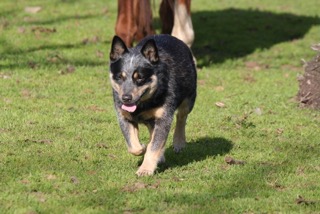 It was December 2010. We didn’t need another dog. We had four at the time, one of whom had just started chemotherapy.
A staff member at our specialty vet knew of a rescue that reminded her of our beloved cattle dog, who we had lost the year before, and pushed us to contact the foster mom. Peter had really been missing his truck buddy and none of the other dogs had worked as his constant companion.
The photos melted our hearts and we contacted the foster mom, Jenn. The little girl was called Hedgehog, as she had lost much of her hair due to neglect and as it was growing back in, everyone thought she looked like a hedgehog. It was love at first sight, but Jenn diligently ensured that “Hedgy” got along with the rest of the ranch hands before approving the adoption. Peter teaching her to roll over within 5 minutes of meeting her helped seal the deal. The adoption led to an immediate name change and our Peggy Sue joined the pack. We thank Jenn for giving us the thumbs up and allowing us to share the second half of Peggy’s life.
Peggy acclimated to the pack quickly, although she was a loner. Fiercely independent, she would 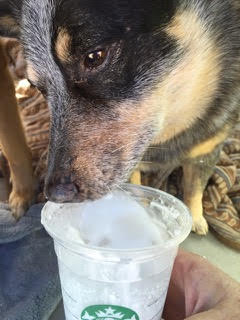 often be in her rocker in the great room, keeping an eye on the scary ceiling fan, while the rest of the gang was in the office or kitchen with us. She sort of just tolerated the others, although on rare occasion her nub would go up and she would play with someone for about 30 seconds – almost like she figured it was expected of her now and then.
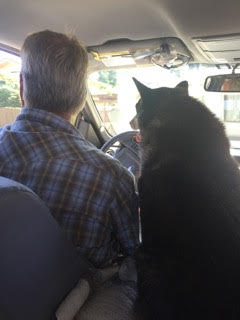
One of Peggy’s favorites things was to go for rides in the truck. She preferred to be alone, but would grudgingly share her backseat with one or more siblings if necessary. We think she actually preferred to be with only one of us so that she could ride shotgun, resting her head on the console and gazing at us with eyes full of love. The ear massages as we meandered down the road helped!
We discovered right away that she was a foodie. While she never really begged, actually feigning a look of boredom at the human meal process, she moved with lightning speed to get any morsel that fell to the ground and the others quickly learned to not even try to out maneuver her.
 Peggy was not overtly affectionate, did not like to cuddle and really did not give kisses. However, it was certainly OK for some humans to give her belly rubs, neck massages and her favorite, massages to her ears. Peggy had a signature gait where as she trotted along every few steps her back legs would do a little hop, which would propel her back end forward, causing her to look like the letter “J.” I loved to watch, as she would trot down the hall each morning beside Peter.
Last August, we found a small lump on her neck and she was diagnosed with lymphoma. She breezed through the chemotherapy and was in remission when a different lymphoma was discovered. She breezed through that treatment and all was good. She was in remission from both when she started having GI problems and unspecified infections. Initially, she was able to respond and rebound but a couple of days ago she got sick again. Hoping for the best, we treated her, but when our little foodie stopped eating, not even tempted with the tastiest morsel, we felt that she was giving us a sign.
Last night, we spent a couple of hours with her as she relaxed on the lawn. Her nose was often raised in the air as if taking in all the smells of the ranch that she loved so much. This morning, Mille, Samantha and Jake all said their goodbyes, and she accepted their kisses, which was another sign to us that she was ready to go.
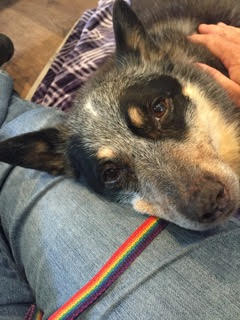 As we sat with her this morning we knew that she was dancing across the Rainbow Bridge, with her signature hop, as she went to join all of our other ranch hands that have gone before. We pictured Bucky and Spencer playing in the river with Lexy and Minnie, Sundance egging Jack and Gus into a game of tag and Queenie impatiently waiting for Peggy to brief her on the ins and outs of her new pack. Big Jake happily grazes nearby and looks forward to a nap in the sun while the others watch his back.
From the bottom of our hearts we thank Dr. Merrianne Burtch from Pacific Veterinary Specialists for her initial treatment and Dr. Theresa Arteaga from Animal Cancer Center for her loving extended treatment (and both of them for their friendship). Dr. Arteaga and her fantastic staff (Jodi, Linda, Nicole and Elizabeth) always made Peggy’s treatments as relaxing as possible and this morning was no exception.
To know us is to know our dogs. To know us is to know our heartache.
Peter and Leslie
PS- Miss Peggy Sue most certainly did become Peter’s truck buddy and constant companion!
 ooOOoo
When I was working on this post yesterday afternoon, I didn’t have a clue as to how to close it off. This from someone who is not normally lost for words.
But I wanted some words that would leave the most glorious echo or afterglow of Peggy, and of every other dog that brings out the best of love in us.
One of the followers of this place is Susan Leighton. This is her blog: Woman on the Ledge.
I will close with Susan’s words:
I guess one of the reasons I am enamored with dogs is because they give to us unconditional love. They don’t care what we look like, if we are rich or poor, they are attracted to our souls.
They ask for so little!
That sub-heading was inspired by a comment left by Barb, author of the blog Passionate About Pets, in response to Maria Matthews’ story on Monday. This is what Barb wrote (my emphasis):
I loved Maria’s story, very uplifting and special. I can’t imagine my life without a dog, they give us so much and ask for little in return, just to be loved and cared for.
Yesterday, I mentioned that as well as Maria’s guest post there would be another today. In fact, the guest post will be in two parts. That guest is Peter Sonne.
Today, I am going to focus on the email that Peter sent to me and then on Thursday I will publish the article that accompanied Peter’s email. Peter also included pictures of Peggy that will be shared with you both today and tomorrow. So here’s Peter’s email:
ooOOoo
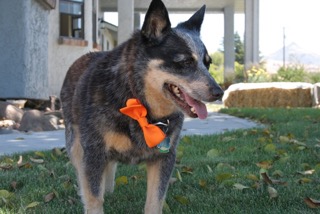 Hello Paul, I hope you all have been well.
I wanted to send you this little write-up and photos that Leslie put together for our little cattle dog, Peggy.
We had to let her go about a week ago. We had sent this out to all our animal friends and I thought of you as I have started to read your book. It is giving me a good deal of comfort, for I can relate to most everything. This one has been particularly hard on me.
Peggy was with me most everyday, and went just about everywhere with us. I think what stands out in my thoughts is that we know the first half of her life was pretty much a nightmare all around. When she was rescued, most of her hair was gone, her skin was in terrible shape, her teeth the same, etc. We quickly found that loud noises would send her running and she was a grubber for sure; food was her top priority, even up to the end.
 I could see in her eyes when we first met her that she still had a spark, a desire if you will, to be a ‘good’ part of something; a pack.
She took to us, and to me right off she sensed a good change for her. Up until the end, however, when I would reach over to her to put my hand on her, she would always, always have a slight flinch – but followed through the connection.
I would catch her just staring at me many times while in the truck or in the house, just relaxing. You know, as I have mentioned to people before, if its dogs, cats, horses or what ever, if one takes that extra second to pay attention, to look at what’s happening when these beings see you each time, it’s really amazing. They do recognize you, and if one always tries to make that connection a positive one, that reward of seeing the reaction between that animal and you, time after time, can be extremely fulfilling for both, and that bond grows.
I think I felt more protective over her than all the others. That alone is a strong statement from me, as I have loved all those so dearly that have blessed us, by allowing us to be a part of their pack. Leslie was speaking with our cancer vet, whom we have worked with many times before, and mentioned this never gets easier only harder it seems.
Our vet said that is true and more so for us as we always have 3 to 5 dogs, and the odds of dealing with this loss are much, much higher for us. Most families have maybe 1 dog for 10 or so years and then something happens, and it’s time to let them go.
So with us, and others who always have multiple dogs, the need to deal with sickness and that final decision to let them go is greatly increased. It makes sense, but it is still very hard to deal with.
Didn’t mean to ramble, but it seems to help a little. Thanks again for writing that book! It helps as well.
ooOOoo
All dogs respond to our love and affection as does almost every species of warm-blooded animal, and a fair few humans as well!
But those dogs that are rescued truly appear to find a joyfulness, call it an inner happiness, that is just a tad richer than with dogs that were born straight into loving families.
Impossible to prove; just my ‘pet’ theory!
Come back tomorrow and read Leslie’s story.
Or should that be rescue tails!
I have another guest post for you tomorrow that, as with Maria’s story yesterday, will be appreciated greatly by you.
But for today I’m going to republish an item that appeared on the Care2 site that isn’t a million miles away from Maria’s theme about her Ellie finding lost persons.
ooOOoo
 By: Laura Goldman
August 25, 2016
Celebrated on August 26 every year, National Dog Day encourages pet adoptions and honors dogs who save lives, keep us safe and bring us comfort. Created in 2004 by pet lifestyle expert Colleen Paige, the holiday falls on the date her family adopted their first rescue dog. Among the ways you can celebrate are by adopting a dog of your own or donating $5 to your local animal shelter.
In honor of National Dog Day, meet three rescued dogs who really “pawed” it forward this year by saving the lives of their forever family members.
Leon Alerts Family to Home Intruders
As Theresa Lero was feeding her horses outside her Gulfport, Miss., home early one April morning, two armed and masked men entered her house.
When she went inside, her rescue dog, Leon, was growling at the door to the sunroom. Peeking through a window, Lero saw a man with a gun.
She ran to wake up her husband. Grabbing a gun, she ran back to the sunroom with her dog by her side. “Get ‘em, Leon,” she told him.
The men began shooting. They missed Lero, but shot Leon in the head. “You shot my dog. I’ll kill you myself,” Lero yelled at them. A neighbor heard her and called 911.
The intruders ran off and were later caught by police. In the meantime, the Leros rushed Leon to the veterinarian. Amazingly, the bullet skimmed his skull and exited out his ear. He was able to walk in and out of the animal hospital.
For saving his family, Leon was given a framed certificate of bravery from the county sheriff.
When the Leros adopted their dog from a shelter two years ago, they thought he was a redbone coonhound, so they named him after the singer Leon Redbone. As it turns out, Leon may actually be a red nose pit bull. One thing is certain: Leon is definitely a hero.
Haus Saves Girl from Rattlesnake
In May, 7-year-old Molly Deluca was playing in her Tampa backyard with Haus, the German Shepherd her family adopted in March from a rescue organization, when her grandmother noticed Haus jump in front of the girl and then rear up.
He was protecting her from a venomous Eastern diamondback rattlesnake that had slithered in from a habitat at a nearby state park. Haus “had every opportunity to run but he didn’t,” Molly’s mother, Donya Deluca, told the Associated Press.
Molly was unharmed, but Haus was bitten three times in the leg. He was successfully treated at an animal hospital for kidney damage, and was given a blood transfusion and anti-venom. A week later, Haus was well enough to return home. His expensive veterinary bills were covered by generous donations from an online fundraising campaign. Haus received a Heroic Dog Award from PETA.
“He just exceeded our expectations all the way around,” Molly’s dad, Adam DeLuca, told the Associated Press. “He’s the type of dog that when you want to go buy a dog, you pay thousands of dollars and that’s the dog you get. But we adopted him and got him for free.”
Earl Wakes Up New Owner as House Burns
Barely a week after he was adopted from Petco’s Stray Animal Adoption Program in July, a pug named Earl rescued his new dog mom by alerting her to a house fire in their Erlanger, Ky., home.
“He just fell asleep with me on the couch along with (another dog named) Tucker, and the next thing I know, he’s waking me up, licking my face. It’s the first time he’s done that,” Kristina Brate told WLWT.
The fire, believed to have been caused by faulty wiring, started in the basement and quickly spread through the rest of the house.
Brate lost almost everything in the fire, but she’s alive thanks to Earl. Petco awarded the hero dog with a $500 shopping spree to help replace the lost pet items and also stock up on some well-deserved treats.
“I believe that he came to me for a reason,” Brate told WLWT. “I think that, for some reason, the first family had passed him up and that there’s a reason why I got him.”
Photo credit: YouTube
ooOOoo
Physically, psychologically and emotionally the number of ways that dogs save us is almost limitless!
Casey’s return to full health is remarkable!
On the 17th August I published a post Life’s Lottery that was about an injury that our Casey had suffered on the 14th August. It included this photograph:
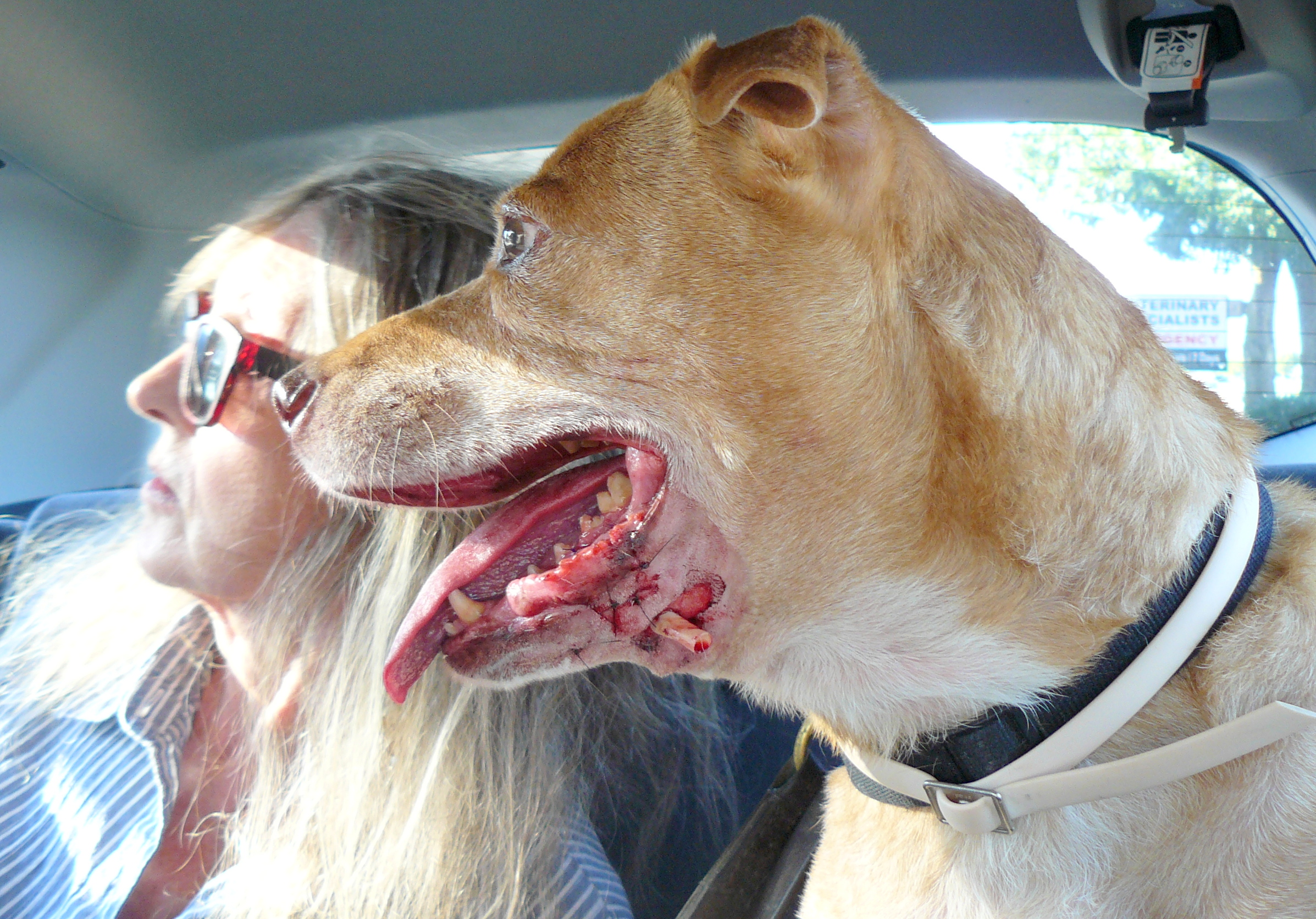 I’m delighted to say that yesterday morning Casey returned to Lincoln Road Vet Clinic and the sutures were removed.
The drain was removed last Monday.
Jean and I were not with Casey for the five minutes it took to remove the sutures but the picture below shows a very happy Casey just 15 minutes after we arrived.
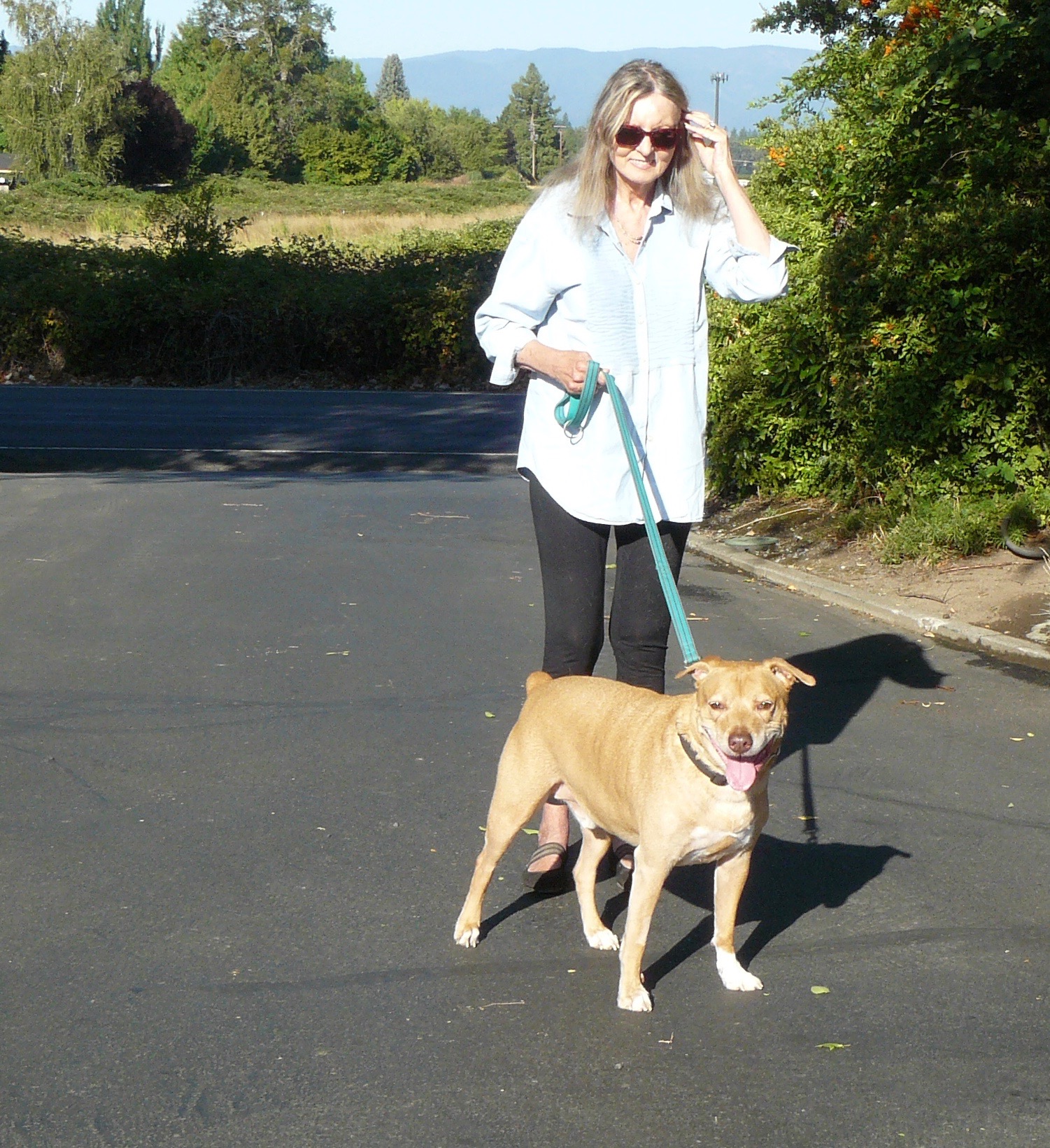 (If I could better drive the Apple photos app on my new iMac I would have shown you a closer image! Revised image inserted on Saturday morning as a result of me playing with the app.)
For our precious dogs, that is!
Dog Food Selector recently published a post about whether or not dogs can eat human foods.
As one might anticipate the answer is neither an unqualified yes nor a no. The article included a detailed list of human foods and an analysis of their potential risks as well as a useful graphical summary.
But first to the article.
ooOOoo
The most important recommendation for introducing new foods to your dog’s diet is to do so progressively.
Because introducing new foods into your dog’s diet may lead to digestive problems.
Our advice is to introduce only one new food at a time, in small amounts at first and observe your dog for any reactions to the change.
Keep in mind that every dog is different, so if you have any doubts please check with your veterinarian to see which ingredients are appropriate for your dog.
But how about foods you eat?
We’re sure you sometimes wonder yourself: Can my dog eat this? Is this food bad for him? Are human foods for dogs OK?
The following list includes numerous foods organized by alphabetical order.
Every food is marked with the potential risk to induce gastrointestinal or toxicity problems in dogs.
The risk is classified as:
0: Minimal risk if given in controlled amounts
1: Low risk
2: Moderate risk
3: High Risk
We advise you not to give your dog foods marked with risk 2 and 3.
Anyhow, you should always consult a vet to get a specific overview of the human foods’ risks on your dog.
ooOOoo
Then follows an extensive list of foods in alphabetical order. Here’s an example:
Food: Apricot Risk: 2 Comments: The seeds, leaves, and stems contain cyanide. Additionally, the pits can be a potential choking hazard or cause an intestinal obstruction.
But as well as the detailed list of foods with their associated Risk factor and additional comments, the article included the following ‘infographic’.

Produced by DogFoodSelector.com
I think that’s a most useful reference.
What are your thoughts as to how useful this chart is?
….. for the animals in our lives.
In yesterday’s post Senior Smiles there was a lovely exchange between Cindy and me. Cindy wrote:
Just a few days ago I relived in my mind the pain of losing our 16 year old Bichon- and that was a year and a half ago! Honestly, that is my biggest fear of adopting another dog- esp an older one.
Cindy then, mistakenly in my view, thought that, “it’s selfish to hang on to grief like this, and I REALLY don’t mean to“, to which I replied:
Grief is not a selfish attitude, far from it! You will know when it’s the right time to adopt, and love, a new dog.
You can then easily imagine my pleasure when thinking of what to write for today’s post to see a recent item over on the Care2 site about our commitment to our pets. About our love for our pets.
The item was called How Far Would You Go For Your Pet? and is republished here today. I would like to dedicate this post to Cindy! Cindy is the author of the blog: Mermaid in a Mudslide.
ooOOoo
 By: TreeHugger. August 23, 2016
There is simply no denying the power that pets hold over us.
I suppose there are a number of reasons why we love our dogs and cats (and others) so much, but surely their innocence and unconditional love rank right up there on top. Plus they’re cute, and furry, and funny, and sweet, and overall good companions. But I have to think there is something about them providing access to the larger animal world in general as well – domesticated animals are like a bridge between us civilized humans and wildlife, and for this they serve an important role. If we can find compassion for our companion animals, in many cases that compassion seeps out and becomes extended to other elements of the natural world as well.
And we really, really have compassion for our pets. Like, approaching fervency. Last year Americans spent over $60 billion on their pets, a number expected to increase by another $2 billion this year. That. Is. So. Much. Money. If you spent $20 per second, it would take 95 years to spend $60 billion.
But even more telling than how much we spend on our pets is the other sacrifices we would make for them. With pets on their mind, the website Abodo conducted a survey of 2,000 dog and cat owners and asked them all kinds of bordering-on-Sophie’s-Choice type of questions. The following results display just how cuckoo we are for our creature cohabitants.

See more of the survey’s results here.
Written by Melissa Breyer, this post originally appeared on TreeHugger.
Photo Credit: dougwoods/Flickr
ooOOoo
The power of (unconditional) love!

