Category: Musings

Two thousand posts!

Funny how things in life roll along!

Today is the publication of the 2,000th post on Learning from Dogs.  To be frank, I’m staggered.  But it is what it is!

The first post was published on July 15th, 2009.  Ergo, I can’t think of anything better for today than to republish that first post.

ooOOoo

Parenting lessons from Dogs!

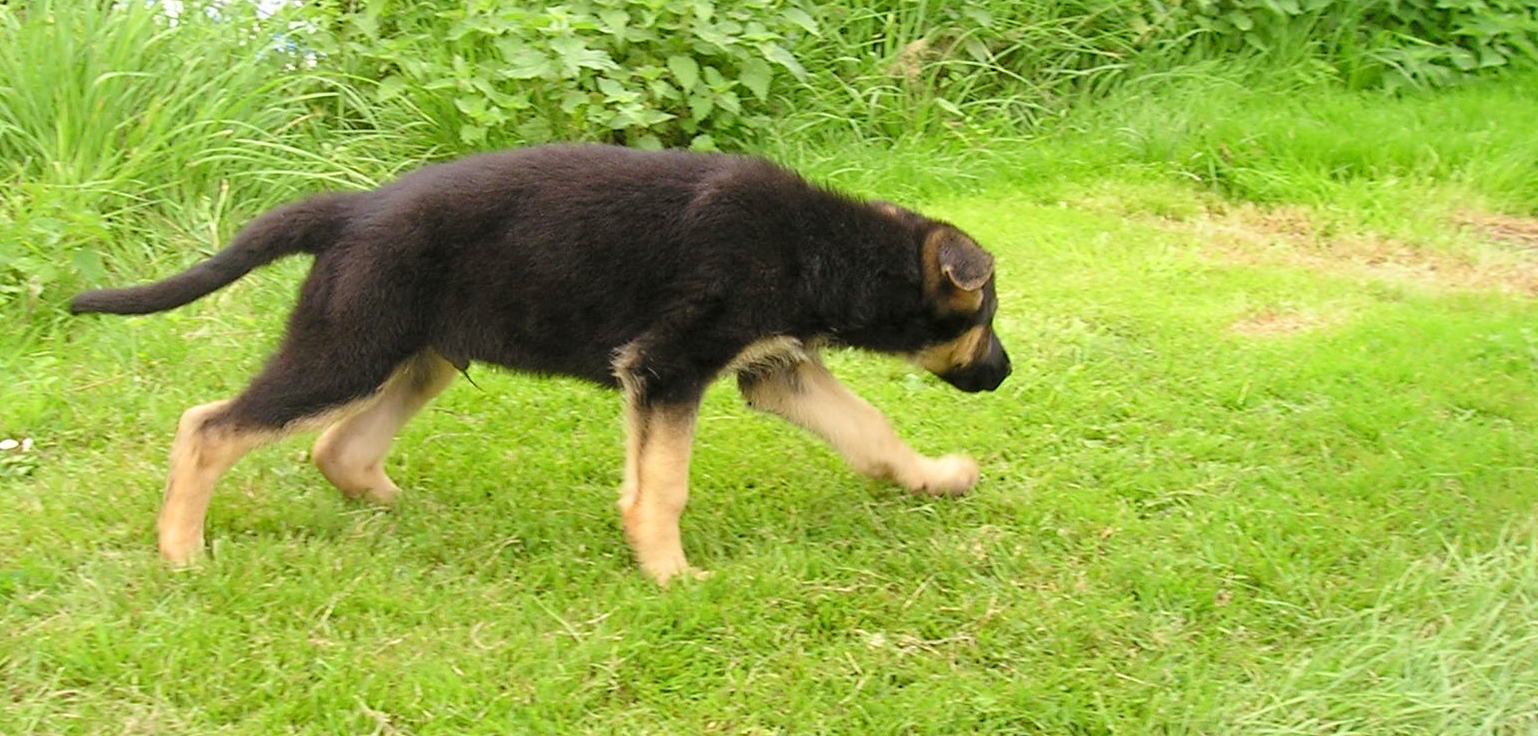
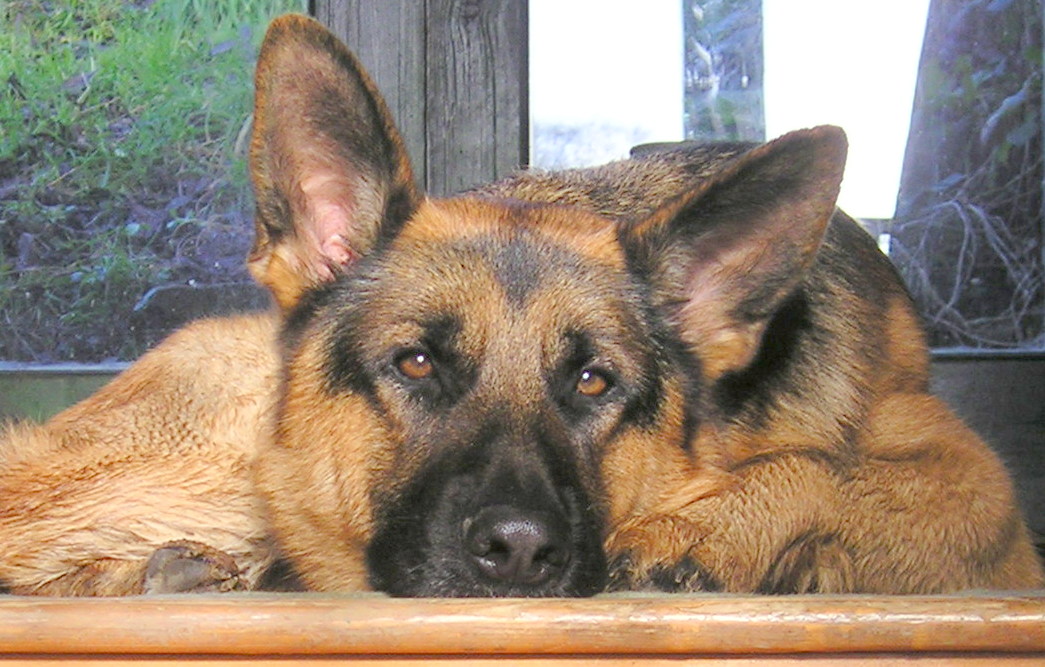
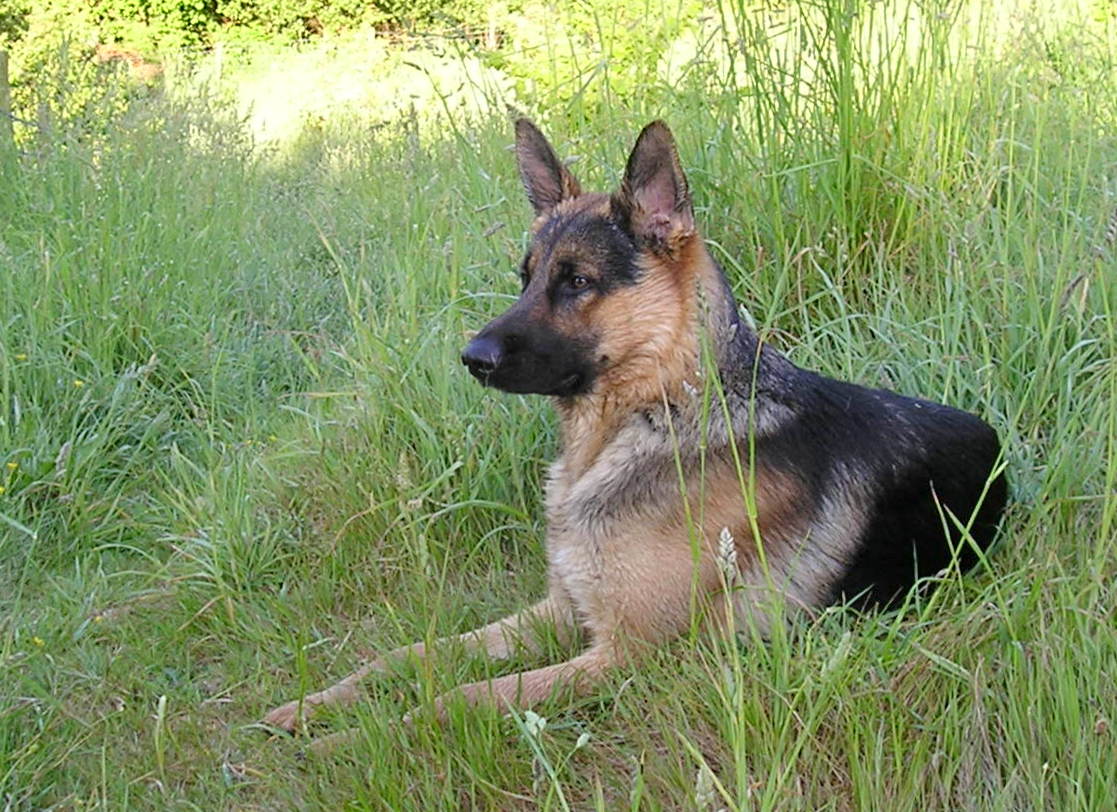
Much too late to make me realise the inadequacies of my own parenting skills, I learnt an important lesson when training my German Shepherd Dog (who is called Pharaoh, by the way).  That is that putting more emphasis into praise and reward for getting it right ‘trains’ the dog much quicker than telling it off.  The classic example is scolding a dog for running off when it should be lots of hugs and praise for returning home.  The scolding simply teaches the dog that returning home isn’t pleasant whereas praise reinforces that home is the place to be.  Like so many things in life, very obvious once understood!

Absolutely certain that it works with youngsters just the same way.

Despite being a very dominant dog, Pharaoh showed his teaching ability when working with other dogs.  In the UK there is an amazing woman, Angela Stockdale, who has proved that dogs (and horses) learn most effectively when being taught by other dogs (and horses).  Pharaoh was revealed to be a Beta Dog; second in status below the female Alpha Dog.  The role and natural instinct of the Beta dog is to teach puppy dogs their social skills and to break up squabbles within a pack.

When you think about it, don’t kids learn much more, often to our chagrin, from other kids than they do from their parents.  Nevertheless focusing on giving more praise than punishment seems like a much more effective strategy.

As was read somewhere, Catch them in the act of doing Right!

ooOOoo

Hopefully, you, dear reader, has found the quality of the posts to have improved over time! That first one did leave something to be desired.

Thank you all for making these many posts such a labour of love!

Hugs to all, Paul.

Nostalgic times.

Flying the Piper Super Cub

Last Saturday, I posted an item that included a great video about the Air-Cam sports aircraft.  I succumbed to a bout of nostalgia in that I dipped into both my old gliding and flying log-books.  As I wrote:

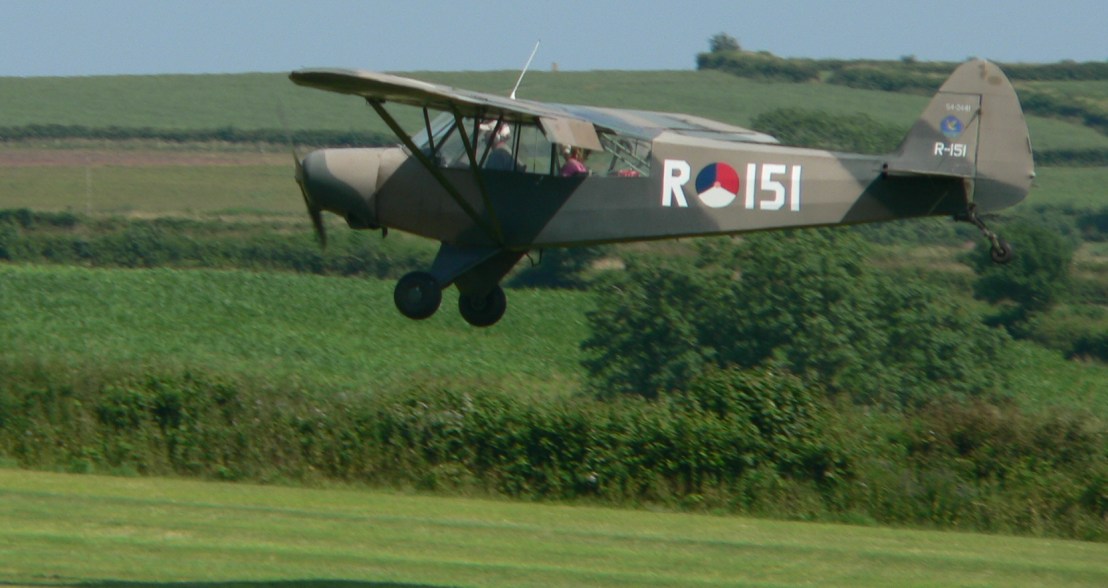
 My last (powered) flight was in a Piper Super Cub, registration R-151, a flight of 1 hr 40 mins from Kemble returning to Watchford Farm, where the Cub was based.

I ‘warned’ readers that today’s post would offer some more about that wonderful aircraft; Piper Super Cub R-151.

ooOOoo

Approaching home in South Devon, England
Approaching home airfield in South Devon, England

Piper Super Cub, L-21B, R-151

A/C Construction No. 18-3841, Frame No. 18-3843

Original Engine, Lycoming 135 Type 0-290-D2, 54/2441

R-151 was one of a batch of 298 L-21’s delivered in 1954. There were 584 L-21B’s produced by Piper for military use, the ‘L’ standing for Liaison. The L-21B’s were PA-18-135’s with civil Lycoming 0-290-D2 engines, glasswork as most L-21A’s and L-18’s and a gross weight of 1760 lbs.

This aircraft was delivered to Koninklijke Luchtmacht, Dutch Air Force, on the 1st July, 1954 and registered R-151. After various homes, R-151 transferred to the Dutch civil register as PH-GER, on the 1st April 1976 with 4,458 hours. Shortly thereafter the aircraft was registered to Vliegclub Hoogeveen, Certificate Number 2380.  Amazingly, the club is still in existence as their website shows.

On the 27th March, 1981 the aircraft was delivered to the UK with a total time of 5,043 hours and in September, 1981 became G-BIYR. In April, 1983 G-BIYR was the first of type to be given a Public Transport CofA (Certificate of Airworthiness) and was used for training at Tollerton; Nottingham. G-BIYR reverted to a Private CofA in January, 1984 when purchased by Mike and Barbara Fairclough from Devon at 5,120 hours.

In 1992, the aircraft was re-engined with a Lycoming 150HP, 0320-A2B No. L49809-27A (zero hours). Finally on the 2nd June, 1995 the aircraft was repainted in original Dutch insignia and given CAA (UK Civil Aviation Authority) permission to use the original call-sign, Romeo 151.

The aircraft is based in South Devon, England and owned by the five members of the Delta Foxtrot Flying Group.

More pictures.

Flying in the French Alps, Mt Blanc in sight

oooo

9,300 ft up in the French Alps

oooo

This last photograph was taken shortly after Pharaoh decided to jump into the passenger’s seat.  The year was 2006 when Pharaoh was 3 years old.  As much as I was tempted, I resisted the urge of taxying him around the airfield!

P1000357.s
Rather like the view from here, Dad!

Picture parade thirty-four

Pieces of wisdom.

After the run of eye-wateringly beautiful pictures of dogs and small children, the third and final set being a week ago, I was gently panicking as to how to follow that up.  Then dear friend, Bob Derham, came to the rescue, the first seven of which are offered today.

RD1

oooo

RD2

oooo

RD3

oooo

RD4

oooo

RD5

oooo

RD6

oooo

RD7

oooo

More from Capt. Bob next week.

Now for something completely different!

Echoes of a past life.

A few days ago, dear friend Suzann, sent me an item about a wonderful new light aircraft.  (It was Su and Don who invited me to Mexico in December, 2007 that resulted in me and Jeannie meeting!)

Before I explain what Su sent me, allow me a few moments of nostalgia.

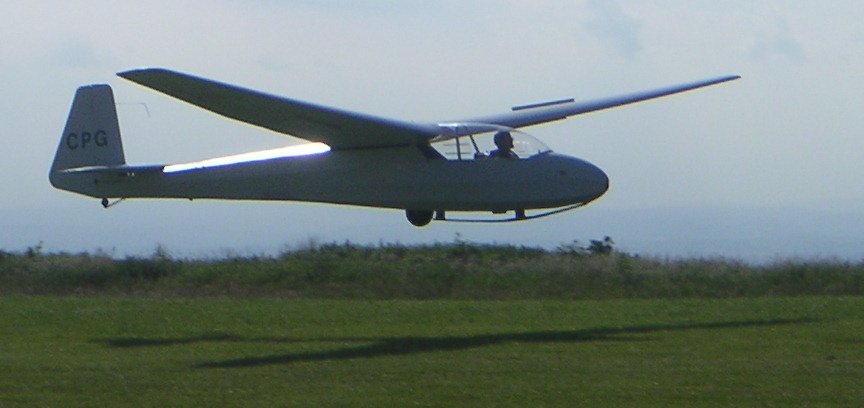
'K7' glider.
‘K7’ glider.

I have a gliding (sailplaning in US speak) log book that has the following entry at the top of page 1:

Flights 1 & 2. June 7th 1981. K7 dual seat glider. Rattlesden Gliding Club, Suffolk. Winch launch. Total flight time 12 minutes.

Those flights started a love affair with flying.

I have a powered-flight log book that has the following entry at the top of page 1.

March 3rd, 1984. Cessna 150. Reg: G-BGAF. Capt: Martin Lowe. Ipswich Airport – local flight 1325 – 1355. Exercises 4,5.

I continued glider flying, becoming an instructor along the way, until my last flight, flight number 1,424, on the 19th December, 1992; again from Rattlesden.

I continued power flying until the 4th August, 2008, a short time before I left the UK to be with Jean in Mexico.  My last flight was in a Piper Super Cub, registration R-151, a flight of 1 hr 40 mins from Kemble returning to Watchford Farm, where the Cub was based.

My son, Alex, shared my love of flying as a young man and is now a Senior Captain with a British airline.

G-EWFN, a Socata TB20.

Anyway, all of which is a rather long preamble to this.

http://www.youtube.com/watch?v=fymn5sWVkvg

What a fabulous aircraft!  The relevant website is, unsurprisingly, the Air-Cam site.

(Come back on Monday for some more recollections about flying the Piper Super Cub!)

Sunlight from grey skies!

Just stop whatever you are doing for fewer than four minutes …

… watch this in full screen mode.

You will not be disappointed,


Oregon wolves, and book writing!

Just wanted to share some good news with you. Well, regarding Oregon’s wolves!

My so-called book has rather ground to a halt.  Sturdy followers of this blog will recall that in November last year, I sat down and wrote the first draft of a book, under the umbrella of NaNoWriMo = write a minimum of a 50,000-word novel in the month of November.  That I did write in excess of 50,000 words (53,704) in under thirty days felt a wonderful achievement.

But then reality set in!

I subscribed to a NaNoWriMo webinar on editing hosted by David Henry Sterry and Arielle Eckstut of The Book Doctors. To my horror, half-way through the webinar came the realisation that what I had written wasn’t even a fictional novel: It was a personal story on the theme of what dogs have taught me over a life of approaching 70 years.

So those 53,000 words had to be rewritten as non-fiction book!

The next boulder to cause me to fall was the issue of tense.  The book had been written in the 3rd-person, as you can see from the draft of Chapter Twenty-Three.  But the more that I thought about the story the more that it felt that it should be in the 1st-person; namely this first person!  Reinforced by feedback from Jeannie and from reading Melinda Roth’s latest book Mestengo clearly written in the first-person.

Mestengo book cover.

Chapter One

I first smelled the smoke as I stood in the driveway of the farmhouse on the top of a hill in McHenry County in Northern Illinois that was, according to the man who leased it to me one month before, the highest point in all of Northern Illinois.

Damn, damn, damn!  Now the rewrite not only has to go from fiction to non-fiction, it also has to change the tense from ‘Philip’ to ‘Paul’; from him to me!  The words from The Book Doctors seminar rang louder and louder, “You write the first draft for yourself; you edit it for your readers!” (Smart arses!)

Then along came hope in the form of Kami Garcia, the author.  It was a NaNoWriMo pep talk.

So you made it through NaNoWriMo, and you have 50,000 words… Now what? It’s the same question a lot of writers face when they finish a first draft. The good news is you finished the hard part: you have a draft.

I can hear some of you cursing me now: “But Kami, my first draft is totally crappy and worthless. It’s terrible. I wasted an entire month of my life, and all I have 50,000 terrible words to show for it.”

My answer: It doesn’t matter if you wrote the crappiest first draft in the history of all first drafts. You have something to work with, which means you can fix it, mold it, and bang it into whatever shape you want. Here are a few tips to get started:

Read Your First Draft (and Possibly Cry a Little)

After you put away the pint of ice cream and the tissues, take an objective look at your draft. What are the strongest points? The parts that kept you reading? Whether you print out your draft to make notes or use software (I love Scrivener), mark the best bits—circle, highlight, whatever works for you. These are the parts you’ll re-read whenever you start to lose hope (which will be often).

All of which is a long-winded way of me saying that I shouldn’t be spending time writing blog posts but have my head down in the big edit.

But, hey, already come this far so going to leave you with this wonderful news.

ooOOoo

Hello Paul,

Good news: For the first time since 2009, the Oregon Department of Fish & Wildlife has confirmed wolves south of the Eagle Cap Wilderness!

Based on recent evidence, it’s clear that at least five wolves are frequenting an area in Northern Baker County. It may not be a story as epic as Journey’s, but it’s another good sign wolves are continuing to retake their rightful place on the Oregon landscape.

Those of you who have been tracking wolf issues for a long time, may remember the iconic photo of a scraggly Oregon wolf in sagebrush. The young wolf and his partner frequented an area near the Keating Valley in Baker County.

Sadly, the “Keating Wolves”, as they came to be known, were killed in 2009. Despite some tantalizing reports, since that time, only one Oregon wolf is known south of the Wallowas.

Later today, we’ll revisit the story of the Keating Wolves on the Oregon Wild Blog and post it on the Oregon Wolves Facebook page. Wolf recovery still has a long ways to go. But today’s news is significant.

Since 2009 – with your help – we’ve stopped round after round of wolf kill bills in Salem. We’ve stood up for wolves in court. We’ve worked with responsible ranchers. We’ve educated the public, highlighted the positive impacts of having wolves back on the landscape, and shared news – good and bad – of wolf recovery.

Things are far from perfect. Old prejudices die hard and wolves continue to be at the center of a campaign of misinformation and fear. The Obama administration is stubbornly pushing a scheme to strip wolves of important protections, and the state can still kill wolves on behalf of the livestock industry.

But today’s news is a sign that we’re headed in the right direction here in Oregon. And there should be more on the horizon. Wolves are mating, pups should be on their way, and Oregon will announce an updated wolf population estimate soon. That’s more news we look forward to sharing.

For wolves and wildlife,
Rob Klavins
Wildlife Advocate, Oregon Wild

ooOOoo


Friendship.

An appropriate Saturday smile for the day after Valentine’s Day.

Sent on to me by Chris Snuggs.

CS1

oooo

CS2

oooo

CS3

oooo

CS5

oooo

CS6

Here’s the story:

Everyday, at the same time, this dog waits outside the cat’s house. When the cat comes out, they go for their daily walk together.

Their respective owners are neither neighbours nor friends. But somehow, in a manner unknown to us humans, these two creatures connected with each other and now enjoy their shared walk everyday.

They have been doing this for five years.

Yet another lesson from our dear animals.

The scent of danger.

A reflection on our reptilian brains.

Now of all the things I am not, I am neither a biologist nor a scientist of any description.  However, general knowledge told me years ago that the human brain is composed of three areas, as the following diagram shows.

The constituents of the human brain.

A quick web search brings up THE EVOLUTIONARY LAYERS OF THE HUMAN BRAIN, from which I quote:

The first time you observe the anatomy of the human brain, its many folds and overlapping structures can seem very confusing, and you may wonder what they all mean. But just like the anatomy of any other organ or organism, the anatomy of the brain becomes much clearer and more meaningful when you examine it in light of the evolutionary processes that created it.

The most efficient model for understanding the brain in terms of its evolutionary history is the famous triune brain theory developed by Paul MacLean. According to this theory, the following three distinct brains emerged successively in the course of evolution and now co-inhabit the human skull:

The reptilian brain, the oldest of the three, controls the body’s vital functions such as heart rate, breathing, body temperature and balance. Our reptilian brain includes the main structures found in a reptile’s brain: the brainstem and the cerebellum. The reptilian brain is reliable but tends to be somewhat rigid and compulsive.

The limbic brain emerged in the first mammals. It can record memories of behaviours that produced agreeable and disagreeable experiences, so it is responsible for what are called emotions in human beings. The main structures of the limbic brain are the hippocampus, the amygdala, and the hypothalamus. The limbic brain is the seat of the value judgments that we make, often unconsciously, that exert such a strong influence on our behaviour.

The neocortex first assumed importance in primates and culminated in the human brain with its two large cerebral hemispheres that play such a dominant role. These hemispheres have been responsible for the development of human language, abstract thought, imagination, and consciousness. The neocortex is flexible and has almost infinite learning abilities. The neocortex is also what has enabled human cultures to develop.

These three parts of the brain do not operate independently of one another. They have established numerous interconnections through which they influence one another. The neural pathways from the limbic system to the cortex, for example, are especially well developed.

I’m well into reading the book Waking The Tiger: Healing Trauma authored by Peter A. Levine.  As early as Chapter One, Peter Levine explains [my emphasis]:

The involuntary and instinctual portions of the human brain and nervous system are virtually identical to those of mammals and even reptiles. Our brain, often called the ‘triune brain,’ consists of three integral systems. The three parts are commonly known as the ‘reptilian brain’ (instinctual), the ‘mammalian or limbic brain (emotional), and the ‘human brain or neo-cortex’ (rational). Since the parts of the brain that are activated by a perceived life threatening situation are the parts we share with animals, much can be learned by studying how certain animals, like the impala, avoid traumatization. To take this one step further, I believe that the key to healing traumatic symptoms in humans lies in our being able to mirror the fluid adaptation of wild animals as they ‘shake out’ and pass through the immobility response and become fully mobile and functional.

Unlike wild animals, when threatened, we humans have never found it easy to resolve the dilemma of whether to fight or flee. This dilemma stems, at least in part, from the fact that our species has played the role of both predator and prey. Prehistoric peoples, though many were hunters, spent long hours each day huddled together in cold caves with the certain knowledge that they could be snatched up at any moment and torn to shreds.

Anyway, to get back to what triggered today’s post.

If you read yesterday’s post you will recall me chatting with Jon Lavin and Jon reminding me that humans are drawn to positive messages.  But in stark contrast, the news media industry excels in promoting ‘doom and gloom’.  Why is this?  Why are we so fascinated by danger?

Well here’s my theory.

That is our evolution would not have succeeded if early man didn’t become pretty smart at identifying animal behaviours and plants and fruits that had the capacity to harm or even kill.  For example, what parent hasn’t made it a priority to teach their children the difference between harmful fungi and edible mushrooms.  Indeed to the extent that most of us would think long and hard before eating any fungi found in the wild unless we were 150% certain it was edible.  Look at the following picture.  Your instinct tells you if it’s safe to eat or not – it’s not!

Amanita muscaria photo © Michael Wood

So early man became over-sensitised to dangers to his health for his own good and continued existence. While modern man functions in ways almost unrecognisable from early man, that good old reptilian brain still is doing it’s best to protect us (flight, fight or freeze).  Think how we all respond to a sudden alarming sound, such as a gun shot or a scream, to know that the old reptilian brain is still alive and well.

Thus while all of us hate negativity we all seem to have this fascination with doom and gloom – just in case it helps us and our loved ones survive.

Back to Jon Lavin.  He makes it very clear that anything more than a small amount of ‘doom and gloom’ speaking to our consciousness increases the odds of depression and introversion.

Thus the message is that we humans should allow our Neocortex to tell our Reptilian ‘neighbour’ to go easy on the bad news, go and open a beer and watch the world go by! Whoops! Watch the world go by with a smile!

Oh, and Happy Valentine’s Day to you all.

The spirit in all life.

There are things that are beyond rational explanation.

Warning – this post is rather more ‘touchy-feely’ than you are used to seeing on Learning from Dogs.  So if it wanders about in ways that you struggle to follow then just stifle your yawn and come back tomorrow!
It goes back to an earlier plan that I had in terms for a couple of posts.  Both focussing on the myriad of examples of the appalling decline in our world.  I had been collecting a number of essays to support the proposition that if we don’t learn from dogs the qualities of integrity and unconditional love then our world was doomed.  I had collected the essay from Ellen Cantaro over on TomDispatch about the incredible stupidity of fracking. Or the one from Tom’s own pen in an essay about climate change being the new ‘Anti-News’.  I had saved the recent essay from George Monbiot discussing the madness of the so-called dredging practices in the UK’s Somerset Levels.  I had fumed at another George Monbiot essay Bring It On that included this incredible statement:

It is hard to think of a more serious allegation. For six months an undercover officer working for the Metropolitan Police was instrumental in planning a major demonstration, which ended up causing injuries and serious damage to property. Yet the police appear to have failed to pass this intelligence to the City of London force, leaving the target of the protest unprotected.

I had many more examples but you get the message!

So what stopped me?

I was chatting to Jon Lavin on Monday about a variety of things.  Jon asked how the book was coming along.  I replied by saying that a recent NaNoWriMo webinar had persuaded me that the book wasn’t a novel and should be re-written as a non-fiction story.  Going on to add that I might include some of the appalling examples of what was going wrong in our society to strengthen the argument that we truly have much to learn from dogs.

Jon, who had read the first, very rough draft of the book that appeared on this blog, cautioned me against doing that.  He went on to say that in the world of solutions focussed therapy, the area that Jon practices in professionally, the way forward was always to focus “on what’s working“.  Jon continued by saying that while one would initially allow the problems to be voiced, this negativity would always be a tiny piece of the overall process, say less than 5% of the session.  That even if a client’s whole world seemed to be failing, there would always be something that was alright, always a 1% that was working, and that would be the place to start.  A quick web search endorsed that as the website of Good Therapy revealed, from where I read:

Solution focused brief therapy (SFBT) targets the desired outcome of therapy as a solution rather than focusing on the symptoms or issues that brought someone to therapy. This technique only gives attention to the present and the future desires of the client, rather than focusing on the past experiences. The therapist encourages the client to imagine their future as they want it to be and then the therapist and client collaborate on a series of steps to achieve that goal. This form of therapy involves reviewing and dissecting the client’s vision, and determining what skills, resources, and abilities the client will develop and use to attain his desired outcome. Solution focused therapy was developed by Steve De Shazer, Insoo Kim Berg, and their team at the Brief Family Therapy Family Center in Milwaukee, USA.

Thus coming back to the book rewrite, Jon said that people wanted to read ‘good news’ not negativity.  It was a key reminder for me and an incredibly inspiring call that in these challenging times, whether on this blog or in a potential book, I need to write about all the powerfully, positive lessons that dogs, and all warm-blooded creatures, offer mankind.  The lessons of integrity, love, trust, balance, loyalty, faithfulness, affection, forgiveness and more.

OK, moving on.

On the evening of February 7th Jean and I settled down to watch a YouTube video.  It had been featured in a post from LadyBlueRose that had been published on the 6th.  The post was called His Name is Spirit and it was the story of a woman, Anna Breytenbach, who has dedicated her life to what she calls interspecies communication.

We had reached the six-minute point in the film, already captivated by it, when the telephone rang.  I paused the film and answered the phone.  It was neighbour Dordie from next door ringing to say that when she had seen us earlier in the day she had forgotten to mention that there was this incredible film that we really had to watch …… yes, you guessed it!  The film that Jean and I were watching at that moment.

Here is that film.

Now here is Anna’s website Animal Spirit where one learns:

ENHANCING THE RELATIONSHIP BETWEEN HUMANS, OTHER ANIMALS AND THE NATURAL WORLD

Welcome to an exploration of interspecies communication – a journey of discovering ways to restore a deep relationship with all of life.

Human and animal communication creates a valuable bridge between human and non-human animals. By connecting with our intuition, we can engage in meaningful dialogue and remember how to hear the subtle messages from those whose space we share in our lives and our natural environment. Coming from a place of respect and reverence for all life, we can learn to understand our wilder relatives, honour their truths and live in greater harmony.

and where one also can watch the short introductory film that is on her home page; as below.

A web search then came across a fascinating interview with Anna.

So where does this all end up?

Simply, that in a world dominated by media of all types that favour ‘doom and gloom’ it can be incredibly difficult to hang on to the message offered by Jon and by Anna, and by many others no doubt, the message that our individual health, and by implication the health of this planet, is afforded through staying positive.

Or put more basically, if you are feeling low go and hug a dog!  So I can do no better than to close with the same picture that closed Tuesday’s post Meet the dogs – Dhalia.

Love and Trust - Grandson Morten hugging Dhalia.
Love and Trust – Grandson Morten hugging Dhalia

Picture parade twenty-four.

The first of the New Year and dedicated to Sue of Sue Dreamwalker.

A week ago, Sue left a nice comment about our ‘backyard’ here in Oregon. Specifically with regard to the two photographs of deer feeding in front of the house.  I replied by saying that today I would offer a selection of views of our property.

First off, an aerial view with the property boundary line overlaid, taken from the sale particulars.  The right-hand, Eastern boundary follows the edge of Hugo Road. We are some four miles from Merlin in Southern Oregon.

Thirteen acres orientated West-East.

The solid blue line is the course of Bummer Creek that flows from top to bottom of the image.  The thin, dotted blue line is the driveway that runs from Hugo Road up to the house, a distance of a 1/4 mile.  The house is close to the Western boundary almost hidden from sight in this picture by the trees.  There is a faint label ‘The House’ just below the building.

From left to right: Pharaoh, Sweeny, Cleo and Hazel.

The above photograph was taken from a point about half-way along the driveway, the house being behind the camera.  Ahead, the driveway dips down to cross the bridge over the Creek, as the following picture reveals.  Luckily the boundary fence is dog-proof!

P1140200

oooo

Dogs and water!
Dogs and water!

Pharaoh in Bummer Creek just downstream of the bridge.

Looking farther downstream from the bridge.
Looking further downstream from the bridge.

oooo

Looking upstream from the bridge.

The barrier across the Creek seen in the upper half of the photograph is a flood irrigation dam installed many years ago, presumably for agricultural purposes before the plot was sold for house building prior to 1977. One installs an iron pole on a centre bolt embedded in the dam and then places a stout plank across the flow on top of the dam.  The plank can just be seen to the right of the dam, resting on the bank.  Never tried the dam but going to some day!

Looking to the West up towards the house.

The above picture was taken close to where the previous one was shot.  Simply by swinging around to the left and looking back up.  The house is barely visible in the background behind the metal gate and wooden fence posts in the middle of the photograph.

Corinne's field visible through the trees and undergrowth.
Corinne’s field visible through the trees and undergrowth.

Again, the picture above is taken not far removed from where the previous two were taken.  If one looks at the aerial view of the property in the first picture, in the top-right corner there is a small area of grassland; what would have been an offshoot of our neighbour’s grassland in previous times.  After my sister, Corinne, died in the Summer of 2013 we named that area of grassland Corinne’s field.

A general view down over the main area of grass.

So now we are back standing just outside the Eastern side of the house looking South-East out over the main area where the dogs are walked twice a day.  The picture was taken a little before noon and shows the low mist that has been with us for about two weeks.

Nature's beauty.
Nature’s beauty.

Above, another photograph picking up on the mist that has been with us for some days.  Until yesterday!

This is what I call a Winter day!

Yesterday dawned cold, clear and frosty. As this picture of one of our tall pine trees so vividly demonstrates.  (The tree edges our driveway, about half-way to the house.)

So will close today’s post with three more pictures of a frosty Saturday morning in Merlin, Oregon, USA.

A frosty yet sunny morning.

oooo

Frost on a bamboo tree.

oooo

It really is a beautiful world at times.

oooo

So there you are, Sue!

Needless to say, Jean and I are reminded almost daily how lucky we and all our animals are at finding such a beautiful place to live.  I can’t ever imagine taking it for granted.