In a post published last Monday under the title of Having yourself as your best friend, I presented a poem from Kimberly that was published on her blog: Words4jp’s Blog. As regular readers will recall that poem was an expression of personal sadness.
Then two days later, there was a further poem from Kimberly that just bowled me over with its beauty. Kimberly generously allowed me to share it with you.
Regular readers of Learning from Dogs will recall that just under a week ago I published an essay under the title of A bedtime story for mankind. The post centred around an essay from Patrice Ayme. Patrice’s essay could be summarised as follows: “At the present rate of greenhouse gases emissions, within nine years, massively lethal climate and oceanic changes are guaranteed.”
Then just last Sunday, Patrice published a second essay reinforcing that first one. The subsequent essay was called Ten Years to Catastrophe. I was minded to republish that but upon reflection thought that there was a better option. That was to explore the deep, core questions that both of Patrice’s essays raised in my mind and, presumably, must be raised in the minds of countless thousands of others. Questions along the lines of a comment I submitted to that subsequent post from Patrice.
Do you have an idea, even a sense, of when global leaders, elected Governments, the ‘movers and shakers’ in societies, will truly embrace the global catastrophe that is heading our way?
And a supplementary question: What would be the indicators that Governments were acknowledging the task ahead?
Frankly, they weren’t especially good questions but they were an attempt by me to open up a debate on whether or not this is the “beginning of the end” of life for us humans. Central to what was going through my mind was the core question of how did it all go wrong?
Welcome to Payson, AZ
On Monday evening, I rang John Hurlburt, a close friend of Jean and me from our Payson, Arizona days and kicked around those questions . It was a most enlightening conversation. John is an active founder member of Transition Town Payson and Payson recently welcomed the Great March for Climate Action in their walk from Los Angeles to Washington D.C. (An essay on that event coming soon.)
Anyway, from out of that conversation with John came the idea of a series of essays here on Learning from Dogs about the past, present and future of man’s relationship with Nature. The aim is to offer an essay on a weekly basis but we’ll see how it goes. Wherever possible, I will use the essays and posts from other bloggers that reinforce the vision. As always, your feedback in the form of ‘Likes’ or comments will reflect on the value of the essays to you.
After John and I finished the call, he sent me an email with what could be best described as his vision for these essays. Here is that email [my emphasis].
Integral Vision
Everything fits together. Otherwise, we’d simply be disassociated atoms.
Human beings are a consciously aware component of Nature. We have a DNA-level directive to survive as a species and as individual members of a species …. in that order!
We are consciously aware components of the conscious interaction between energy and matter in a predominently smoothly emerging cyclic universe with departures from time to time into pockets of chaos.
We disconnect from reality when we become self-centered, often during the various stages of our lives. When we are blessed we continue to live and learn.
Issues of ideology, rational thought, economics, politics, religion, history and science become insignificant in comparison to the whelming power of Nature.
Such is life. It comes with the territory. Spirituality, Nature and Science describe the metanexus in which we live.
Maintain an even strain,
an old lamplighter
Ref: Episcopal “Catechism of Creation”
Ideas, feedback and comments, as always, hugely welcomed.
This last Tuesday, the 15th April, was a month to the day after our rescue horses, Ben and Ranger, arrived here in Merlin. There was a post on the 20th March called Welcome Ranger – and Ben!
Here’s a picture from that day:
Jean leading Ranger; Darla leading Ben.
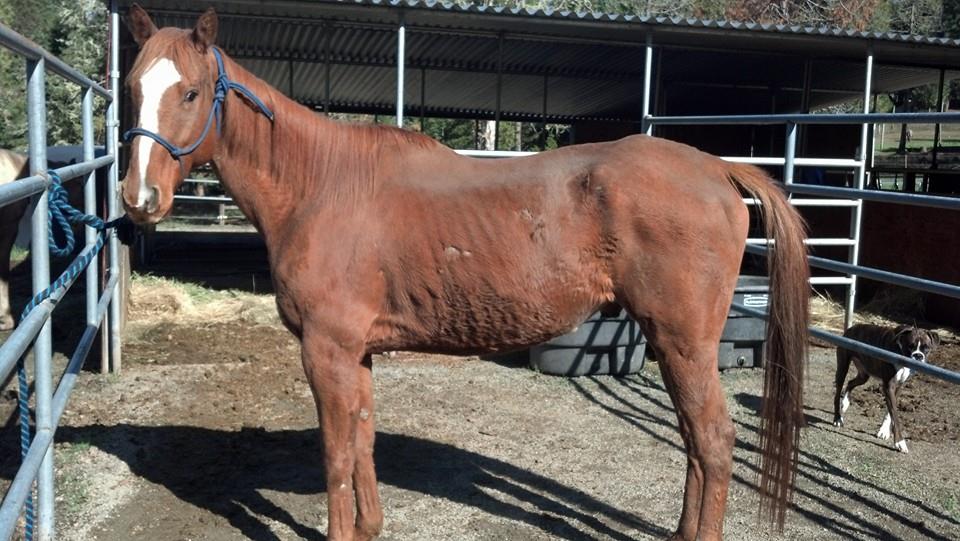
Here’s a picture of Ben from sadder times:
October 2013: The Sheriff’s department have passed Ben to Darla.
So with no further ado, here are four photographs taken last Tuesday, the 15th April.
Waiting to greet Jean and me in the morning!
oooo
Ranger totally at ease with his ‘old Dad!’.
oooo
Ben, behind Ranger; both loving up to Jean.
oooo
Ben loving up to yours truly!
Jean is used to horses from previous times in her life but, for me, horses are not animals that I am familiar with.
But after a month of getting to know Ranger and Ben and them getting to know me, I find them adorable!
Musings on truth and the corrosive nature of fear.
Yesterday, in Part One, I explored how easy it is to signal to the public that they are not to be trusted. I used the case of PayPal’s changes to their ‘privacy’ policy which, as Wolf Richter wrote, only partially tongue-in-cheek perhaps, made “the NSA, which runs the most expansive spying dragnet in history, is by comparison a group of choirboys.”
Truth
Again, back to Roget’s Thesaurus.
truth noun
1. Correspondence with fact or truth: accuracy, correctness, exactitude, exactness, fidelity, veraciousness, veracity
2. Freedom from deceit or falseness: truthfulness, veracity
So that’s all clear then!
If only it was that easy. So many aspects of our modern lives are exposed to complex issues. None more complex than, of course, the issue of humans having a damaging effect on the planet’s climate. Or if one wants something more esoteric then try the origins of the universe. (So far as the former is concerned, then my personal belief is that mankind is damaging the global climate. But do I have the scientific background to support that belief? No Sir!)
However, one thing that our complex society does offer is the opportunity to spread fear. Indeed, fear pervades popular culture and the media. I picked up that theme from an essay published by David L. Altheide and R. Sam Michalowski of Arizona State University.
Fear pervades popular culture and the news media. Whether used as a noun, verb, adverb, or adjective, an ongoing study finds that the word “fear” pervades news reports across all sections of newspapers, and is shown to move or “travel” from one topic to another. The use of fear and the thematic emphases spawned by entertainment formats are consistent with a “discourse of fear,” or the pervasive communication, symbolic awareness and expectation that danger and risk are a central feature of the effective environment. A qualitative content analysis of a decade of news coverage in The Arizona Republic and several other major American news media (e.g., the Los Angeles Times, and ABC News) reveals that the word “fear” appears more often than it did several years ago, particularly in headlines, where its use has more than doubled. Comparative materials obtained through the Lexis/Nexis information base also reveals that certain themes are associated with a shifting focus of fear over the years (e.g., violence, drugs, AIDS), with the most recent increases associated with reports about children. Analysis suggests that this use of fear is consistent with popular culture oriented to pursuing a “problem frame” and entertainment formats, which also have social implications for social policy and reliance on formal agents of social control.
No passion so effectually robs the mind of all its powers of acting and reasoning as fear. [my italics]
That last sentence offers the words of Edmund Burke, the Irish statesman and author from over 200 years ago. So, perhaps, nothing changes in this regard!
In my old country, the British press love to sell their newspapers on the back of fear. Here are some examples of lurid front pages.
oooo
oooo
However, it doesn’t end there. Fear of the unknown, of forces beyond our control, are behind the incredible number of conspiracy theories, many of them quite famous. WikiPedia lists dozens of them. One that was voiced by friends of ours concerned HAARP, which is an acronym for High Frequency Active Auroral Research Program. It was a perfectly legitimate research programme, one that was unclassified, albeit a program that was shut down in July, 2013.
But that didn’t stop it being regarded by many as deeply suspicious, “Many conspiracy theories surround HAARP. Some theorists believe that it is being used as a weather-controlling device that can trigger catastrophic events, such as floods, hurricanes, etc. Others believe that the government uses HAARP to send mind-controlling radio waves to humans.” Taken from here.
As it happens, this was a programme that I was acquainted with back in my UK days.
OK, time to round this off.
This new, digital world allows the sharing and spreading of information in a manner unimaginable from, say, 25 years ago. It has many positive attributes, as I will touch upon in tomorrow’s post. But it also has the power to spread fear and misinformation. In a world that is becoming more complex and more uncertain year by year, it takes effort by every one of us to stop, think and check on anything that has the potential to upset one.
It takes the power of community to keep us rooted in the stuff of our daily lives, to live calmly and stay in touch with the truth. More on the power of community tomorrow.
Dhalia, as with so many other dogs, offered lasting lessons.
Inevitably, as Jean and I went around our ‘stuff’ yesterday after burying Dhalia in the morning, there were moments of quiet contemplation and gentle discussion. Interludes over a hot drink where we reflected on the special dog that she was.
Much has already been written in this place but there can’t be too many reminders for us quirky humans of how valuable are the qualities of trust and love given to us by our dogs.
We need reminding how dogs are so intuitive and can reach out to a stranger without a moment of hesitation. As Jean described when recalling how she first came across Dhalia.
Dhalia – domesticated but still the wild dog shows through.
It was a Sunday around the middle of the month of September in the year 2005. My friend, Gwen, and I had set off for La Manga, a small fishing village three miles from San Carlos, Mexico. As the trip would take us through areas of desolate desert and the day was forecast to be a sizzler, we left early. The purpose of the journey was to feed a pack of dogs that were living on the outskirts of La Manga. These wild dogs were gradually getting used to our presence and with the aid of a humane trap we had previously caught two of them, a small puppy and her mother. Those two dogs were at my home and were gradually becoming tame so that good homes could be found for them.
Half-way to our destination, we saw two dogs running by the side of the road. It wasn’t unusual to see strays searching for road-kill. I stopped the car and prepared food and water for them. One dog took off almost immediately but the other just stood perfectly still looking intently at me. She was rail-thin and full of mange. Her ears and chest were scabbed with blood, and I could see that previously she had had pups. Tentatively, I pushed the food towards her. She took a bite and sat on her haunches; her eyes never leaving mine. Then she lifted a paw and reached out to me. Immediately, I burst into tears and scooped her into my arms. I carried her back to the car where she lay quietly in my lap whilst we went on to do our feeding. She was bloody and very smelly. However, I didn’t care.
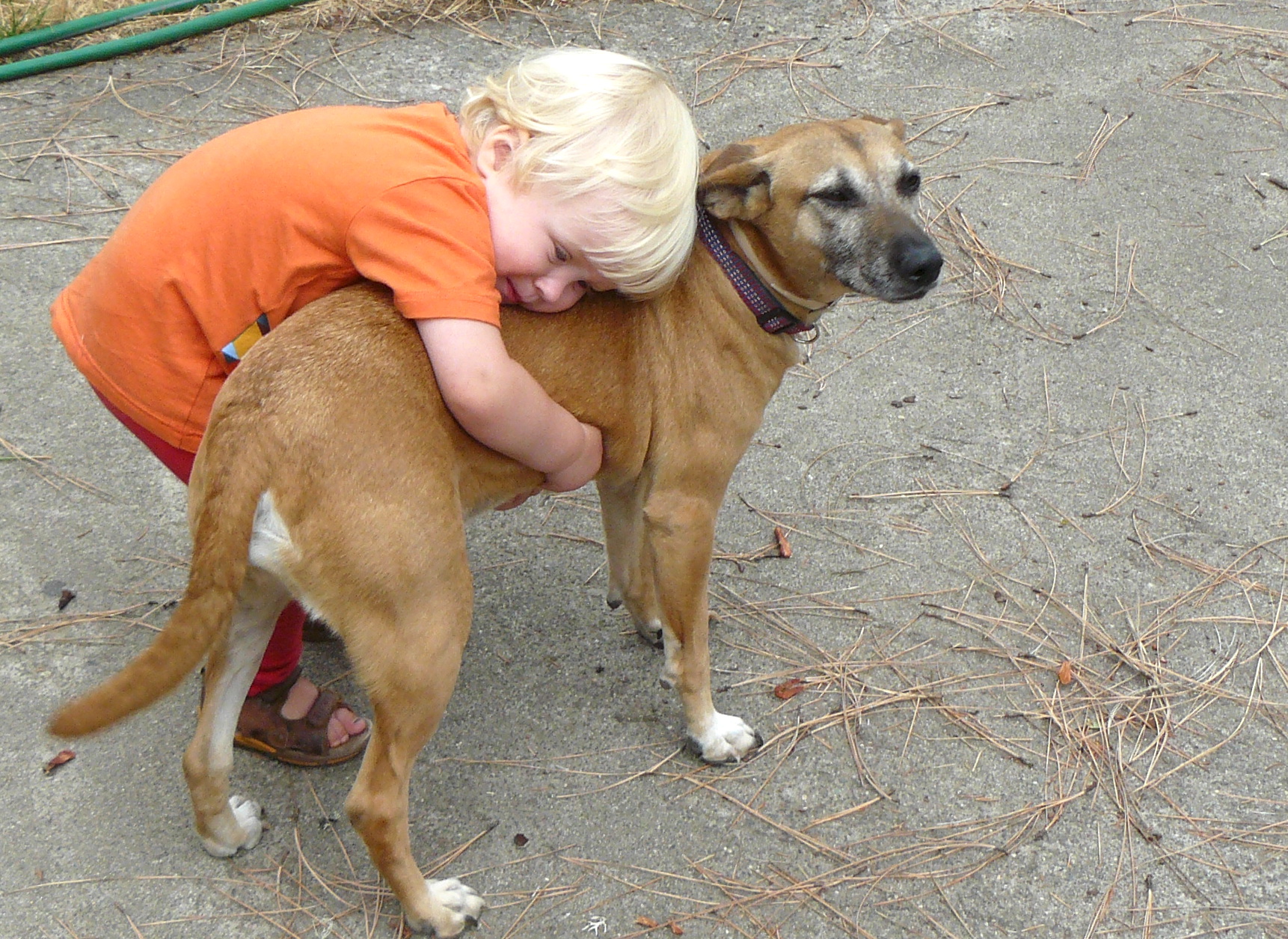
Dhalia was always a gentle dog. One that would mix with any of the other dogs. A dog that loved people, of all types and ages.
Love and Trust – Grandson Morten hugging Dhalia, September 2013.
It was Dhalia who inspired me to write a short story a couple of years ago: Messages from the Night.
So to the last couple of weeks. Back just a couple of weeks to when the vet’s assessment of Dhalia was that she had bone cancer that, in turn, inspired me to write the post Life, and mortality. So little time to say goodbye to Dhalia. (Dr. Codd’s assessment when we went to him with Dhalia yesterday morning was that the cancer must have been well-established for it to have metastasised so quickly; the normal interval between diagnosis of cancer and death would be six to eight weeks.)
That Dhalia reached out to the other dogs in our ‘bedroom’ pack was evident these past six or seven nights. For it has been in the last week that Dhalia was unable to go through the night without needing to pee.
The first night that this happened, I was awakened by Cleo coming to my side of the bed and running her head past my arm. It was 3am. Cleo repeated that for the next few nights and each time I was able to take Dhalia outside so she could relieve herself. Then as Dhalia’s internal organs started to fail it was Pharaoh who in the middle of the night uttered a couple of tiny barks; just sufficient to wake me and allow me and Jean to look after Dhalia’s needs.
When the bedroom door was opened to allow Dhalia to go through the house and, thence, to the front gardens, all the rest of the dogs remained still in the bedroom. They sensed the nature of what was going on.
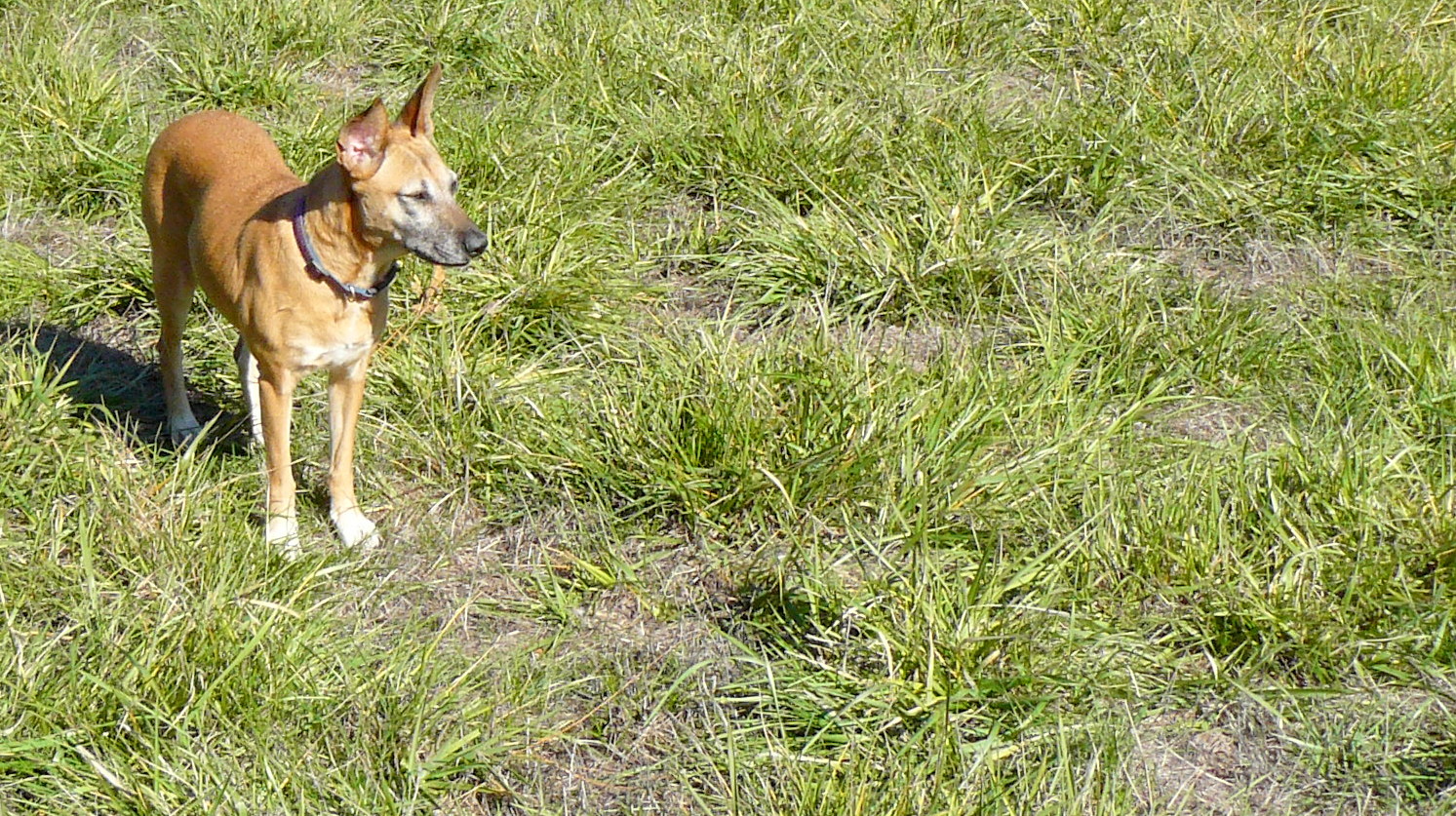
So to the last photograph. Taken last October here at home in Oregon showing Dhalia in typical independent spirits.
Just some words to celebrate his life. You may recall my post Life, and mortality was published a week ago.
George was a street cat that Jean found in San Carlos, Mexico, close to where she was then living. He just turned up on Jean’s doorstep one day back in 2003, perhaps a little over a year old. Just typical of the many cats struggling to live on the streets.
George became ill a few weeks ago with feline leukaemia. He was made comfortable in our guest bedroom.
Late last night he was barely alive but not in any pain. This morning we found that he had died during the night.
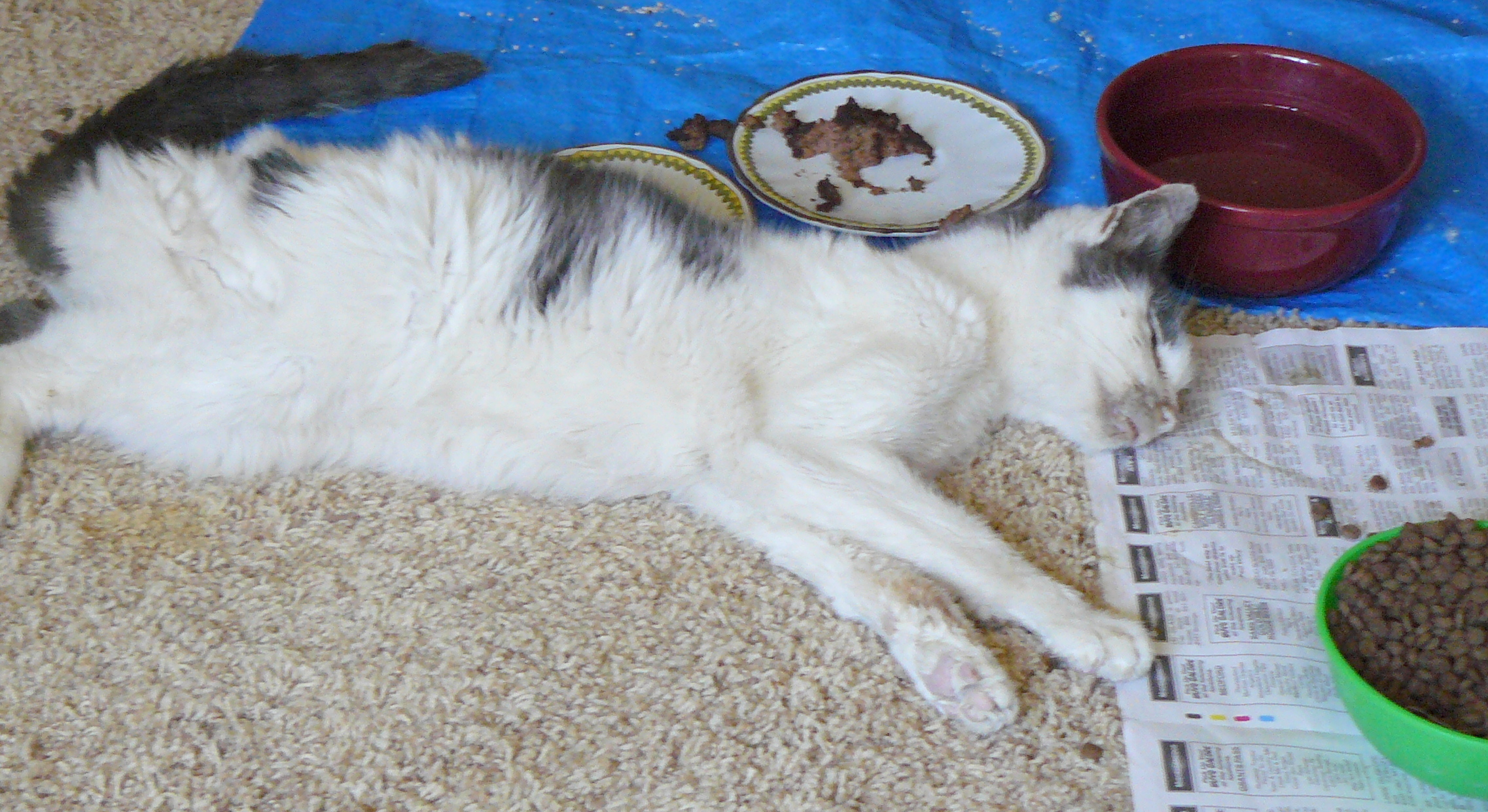
George sleeping very peacefully yesterday evening.
oooo
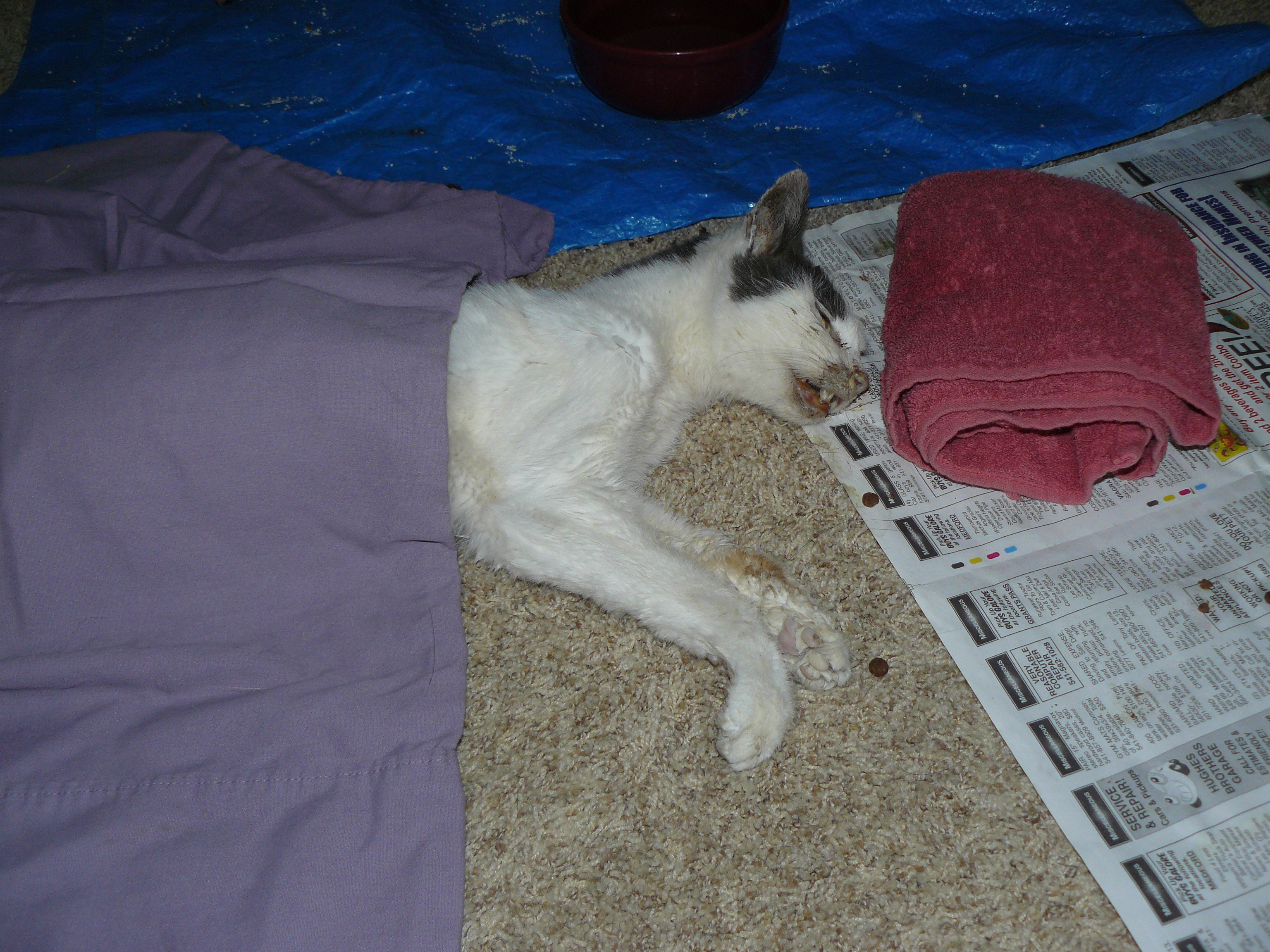
George this morning, having passed away overnight.
oooo
Resting in peace.
oooo
Meanwhile, the grass continues to grow, and ..
oooo
The waters continue to flow …
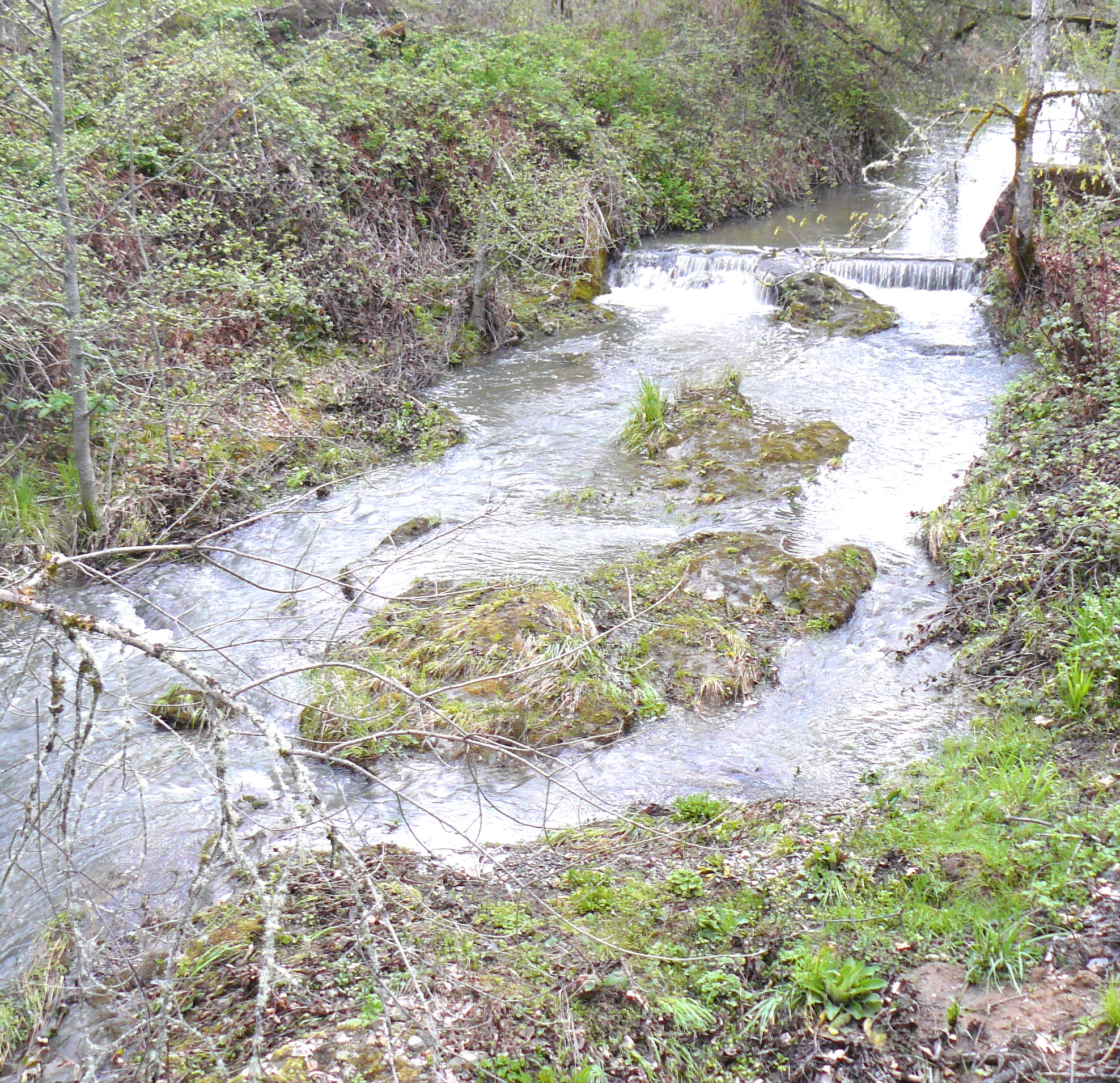
I included the last two photographs simply because they seemed to express the reality of death; in the sense that the world continues to revolve long after we have gone.
Yesterday, I posted about the prediction that in four billion years the Milky Way galaxy would collide with the Andromeda galaxy. I called the post Not of immediate concern.
Today, I am writing about something that is of immediate concern. That is if you regard the next couple of decades as ‘immediate’.
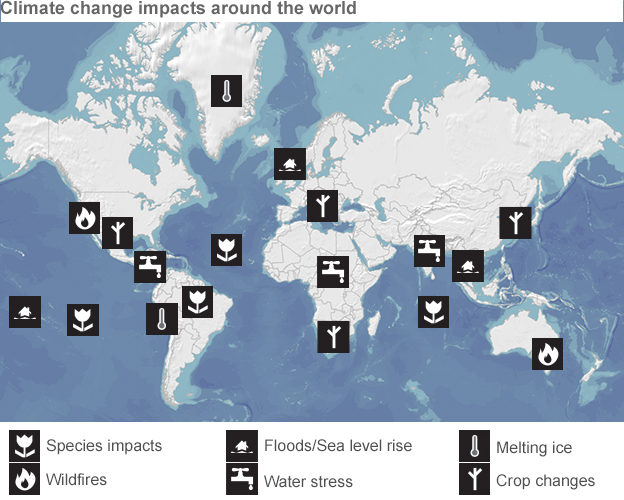
The post is prompted by an item that was published on the BBC News website two days ago. It carried the title Climate inaction catastrophic – US
Climate inaction catastrophic – US
By Matt McGrath
Environment correspondent, BBC News, Yokohama, Japan
The costs of inaction on climate change will be “catastrophic”, according to US Secretary of State John Kerry.
Mr Kerry was responding to a major report by the UN which described the impacts of global warming as “severe, pervasive and irreversible”.
He said dramatic and swift action was required to tackle the threats posed by a rapidly changing climate.
Our health, homes, food and safety are all likely to be threatened by rising temperatures, the report says.
Scientists and officials meeting in Japan say the document is the most comprehensive assessment to date of the impacts of climate change on the world.
In a statement, Mr Kerry said: “Unless we act dramatically and quickly, science tells us our climate and our way of life are literally in jeopardy. Denial of the science is malpractice. There are those who say we can’t afford to act. But waiting is truly unaffordable. The costs of inaction are catastrophic.”
Putting to one side the mild irony of a representative of the US Government wringing his hands about what mankind is doing to our climate, the report is valuable and potentially significant.
The report was from the Intergovernmental Panel on Climate Change (IPCC) which is, as their website explains:
The Intergovernmental Panel on Climate Change (IPCC) was established by the United Nations Environmental Programme (UNEP) and the World Meteorological Organization (WMO) in 1988 to assess the scientific, technical and socio-economic information relevant for the understanding of human induced climate change, its potential impacts and options for mitigation and adaptation.
Watch this 5-minute video of Stanford professor Dr. Chris Field, co-chair of that IPCC working group, addressing some of the key questions raised by this latest report. In particular, focus on Dr. Field discussing the potential of the loss of the Greenland ice cap around 3 min 30 seconds.
Back to the BBC report (which you should read in full!). Back to Dr. Chris Field being quoted as saying:
I think the really big breakthrough in this report is the new idea of thinking about managing climate change as a problem in managing risks. Climate change is really important but we have a lot of the tools for dealing effectively with it – we just need to be smart about it.
It would be easy to get into the mindset that humanity is not going to change its ways in time.
But, then again, the pace of growing awareness about what the changes are that we all need to make, and make relatively soon, is dramatic.
Maybe, just maybe, this will turn out alright!
For all the young people in the world, I do so hope!
In 1968 I emigrated to Australia; to the city of Sydney. It was an easy move in many ways. For before I left I was working in the sales office of British Visqueen Ltd in Stevenage in Hertfordshire. ‘BVL’ were part of Imperial Chemical Industries (ICI).
On Day Three of my new life in Sydney I noticed that ICIANZ (Australia & New Zealand) had their headquarters building on Macquarie Street near North Circular Quay. On impulse I went in and two hours later had been offered a job in the sales office of ICI’s Inorganic Chemicals Division.
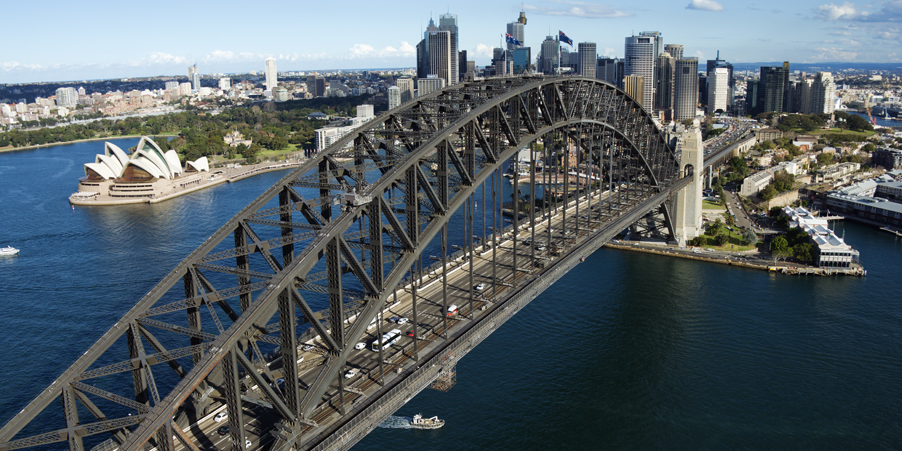
From the window of my office I had a stupendous view of the Sydney Harbour Bridge. This is a picture taken the other side of the Bridge looking back at the office complex to the right of the Sydney Opera House; the office block partially obscured by the top curve of the bridge.
Anyway, back to the story.
I was dating a Finnish woman who with her sister and parents had emigrated from Finland some years previously. That woman’s name was Britta and later we were married and then upon returning to England in 1970 we had two children; a son and a daughter. In Australia I didn’t miss England and when back in England I didn’t miss Australia.
I was 26 when we returned to England.
Fast forward forty-four years to now.
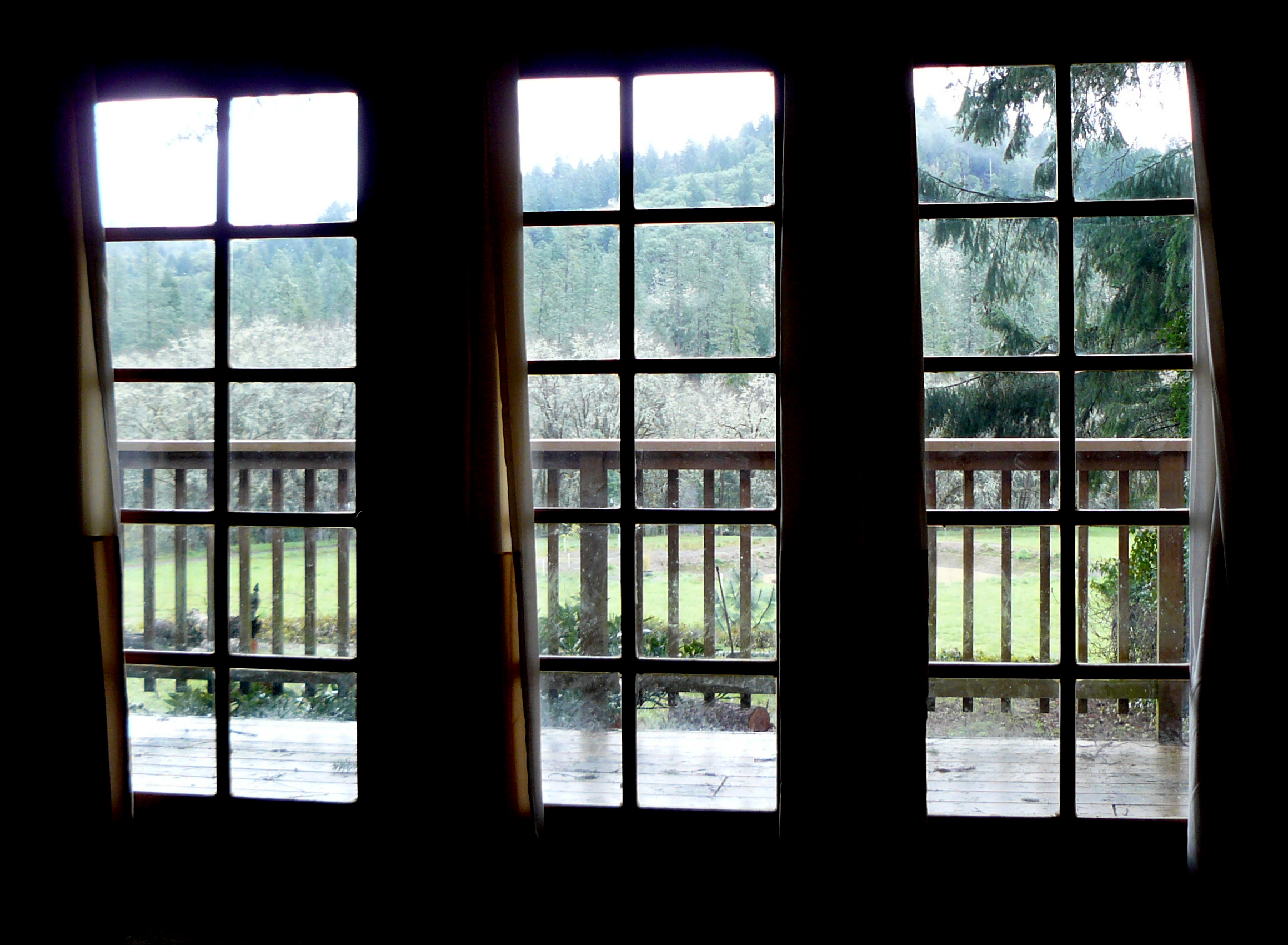
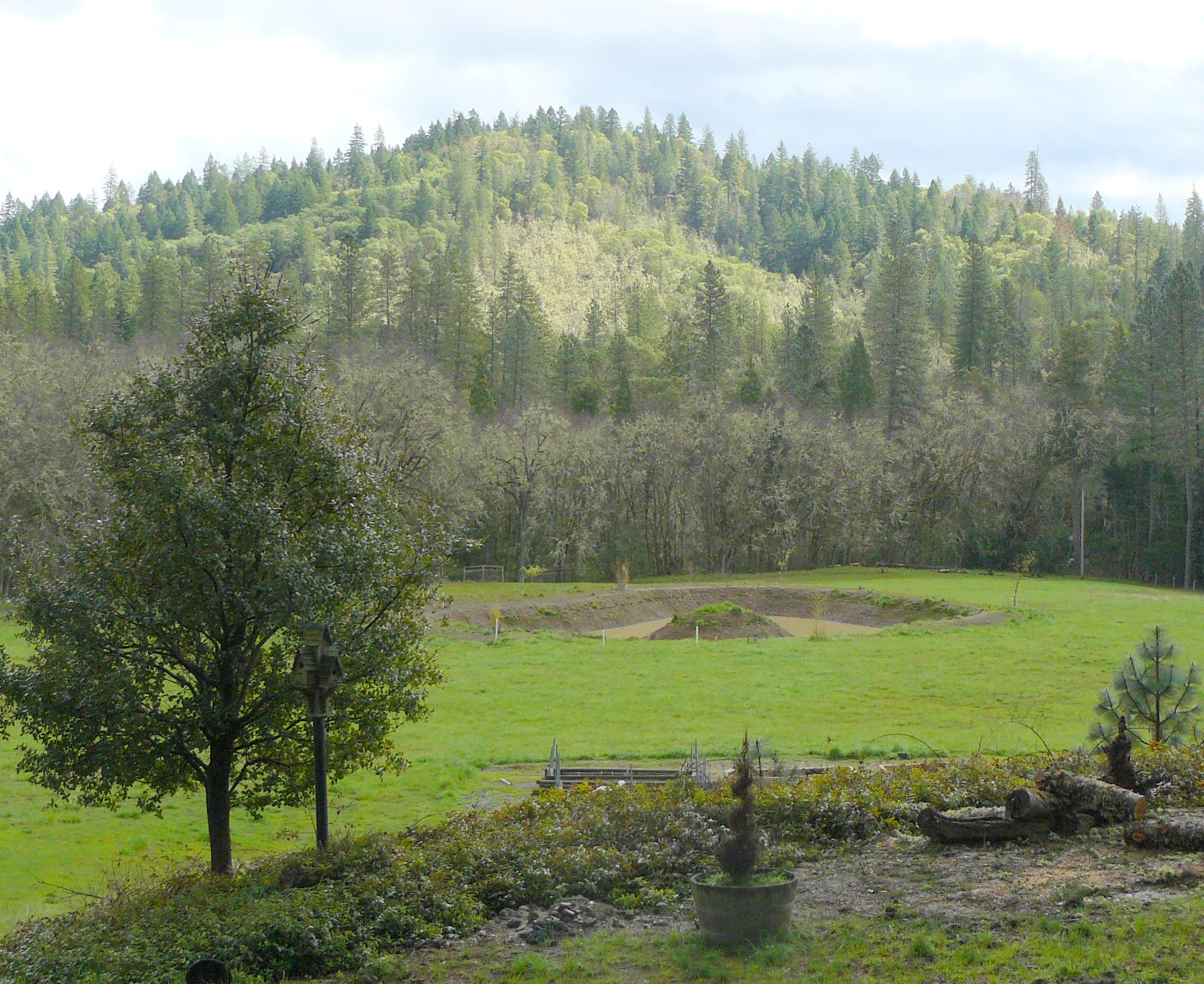
This is the view through our bedroom window in the morning when Jean and I awake.
This is another view of the same scene but taken from outside the windows.
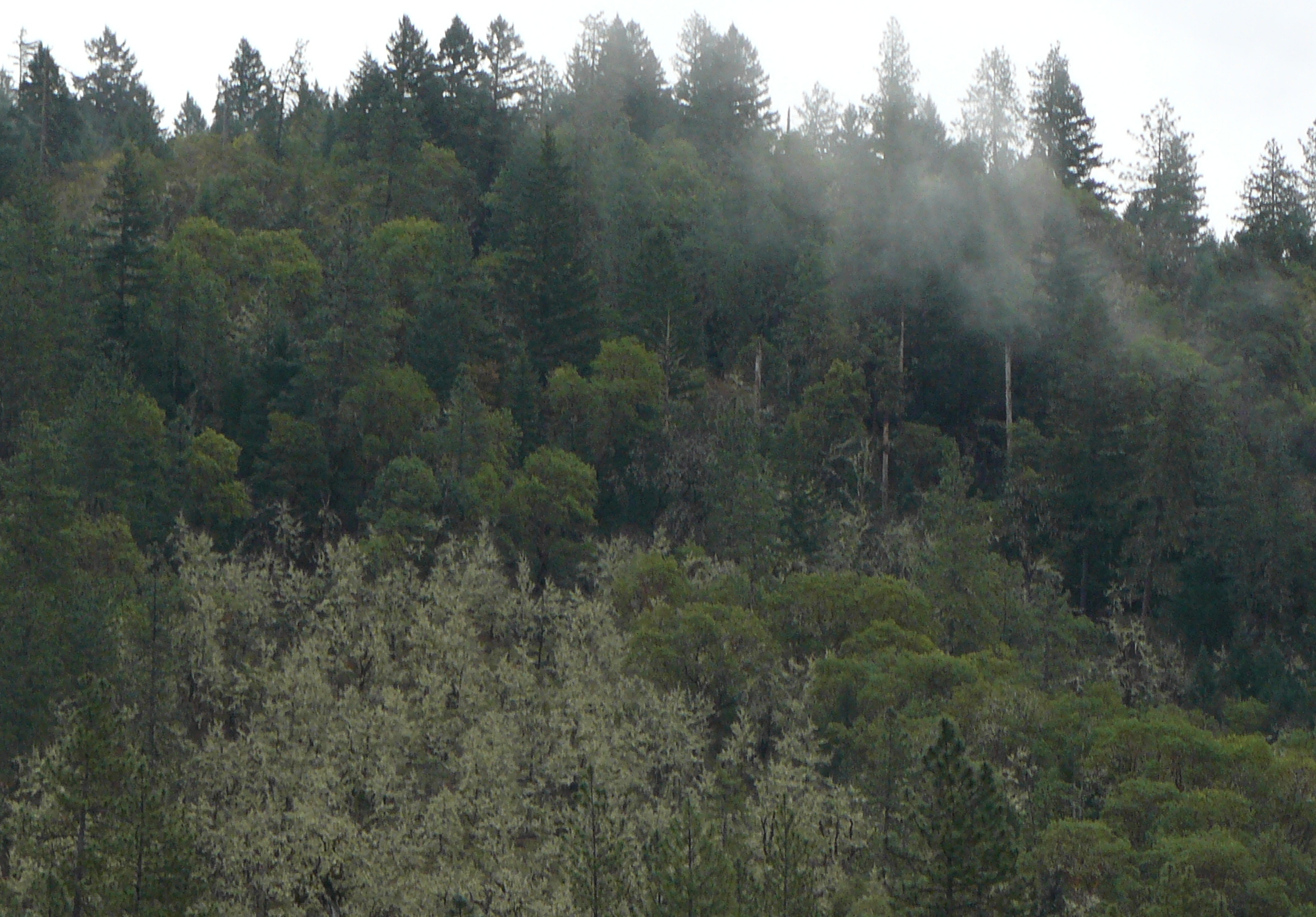
When the air is really moist and there are clouds hanging low over the ridge, it’s common to see mist swirling through the trees.
It is a beautiful place to live, for us and for all our animals …. yet …. we don’t feel perfectly settled.
Back to Britta’s parents. After they had been living in Australia for quite a few years, in Brisbane in those days, and all settled with jobs and their own house, they still didn’t feel perfectly settled. So they gave up their jobs, sold the house and transported themselves and their belongings all the way back to Helsinki, Finland.
Only to find that in less than three months that they had made a ghastly mistake and so, yes you know what’s coming, they transported themselves and all their belongings all the way back to Australia; this time settling in Sydney.
OK, to the point of this tale.
In many, many ways this life that Jean and I have here in Oregon is better than anything we have previously experienced.
Yet, there are times when I hear the sirens of Devon calling out to me and for Jean there are times when she hears the sirens of Mexico calling out to her; Jean lived in San Carlos, Mexico for twenty-five years, off and on, with her late American husband, Ben, who died in 2005.
I’m 70 in November this year.
What does it all mean?
When Jean and I were living in Payson, Arizona we were talking one day to a woman who in previous times had been a personal counsellor. She asked how we were settling in. We mentioned that we were not yet settled. The woman went on to say that people over the age of 60 frequently had a much more difficult time adjusting to major moves and changes in their lives than younger persons.
Jean and I wouldn’t rewind our lives for all the tea in China but what, dear reader, do you think?
Anyone out there the ‘wrong’ side of 60 who can relate to this?
Possibly the most important lesson we can learn from dogs!
I was aware when writing the concluding part of Meet the dogs – Pharaoh that the next day I would be faced with writing about a subject that is a whole degree more difficult. Death!
It must have been in my mind when I wrote “of the need to smell the flowers in this short life of ours.”
What has prompted today’s post?
Simply that Dhalia developed a limp in her front, right-hand, leg. That was a few weeks ago. Naturally, we took her to our local vet, Dr. Codd, who diagnosed a strained elbow joint probably as a result of arthritis; Dhalia is believed to be ten-years-old. With the recommended medication, the limp came to an end.
Then about two weeks ago, the elbow weakness appeared in her left-hand, front leg.
On Monday, we returned to Dr. Codd who took further X-rays and sought a second opinion. That second opinion came back with the probability that it was a “osteoproliferative neoplastic lesion” or bone cancer to you and me! It’s not one-hundred-per-cent certain but likely.
It only seemed like yesterday that Jean wrote about Dhalia in our ‘Meet the dogs’ series. That post included this photograph.
Love and Trust – Grandson Morten hugging Dhalia, September 2013.
Jean is very sad, as one would expect, nay we both are. Dhalia, like Hazel and some of the other dogs here at home, has a loving openness towards humans that is truly remarkable when one learns of how these dogs came to be rescued: Dhalia being found by Jean living rough in a desolate part of a Mexican desert. This is what Jean wrote in that ‘Meet the dogs‘ account:
I named her Dhalia and after treatments for mange she became quite beautiful. She was the pivotal part of a short story, Messages from the Night, Paul wrote back in 2011. Under her sweet exterior remains that same will to survive so evident when I rescued her all those years ago. There has been more than one occasion that she has brought me a recently killed squirrel or an ancient bone. We love our Dhalia: she still reaches out with her front paw when she seeks attention. Dhalia will be ten-years-old this year.
Somehow, Dhalia’s possible last few weeks of life resonated with much else going on. Close to us, the recent death of a chicken, and one of our cats that does not have much longer to live. In the wider world, the Washington State mud-slide, flight MH370, and the Ukraine. The news media treat death as almost a trivial, incidental part of the scheme of things.
It takes others to offer words that elevate death to its deserved meaning. Take, for example, author Brian Beker, who writes the blog The Dog in the Clouds. Brian recently wrote the following post:
Prayer for an eagle
Please say a prayer for beautiful bald eagle who just died a death he did not deserve.
He was stuck on the ground near a concrete barrier on a stretch of interstate under construction in Arkansas. I spotted him with his head down, facing into the traffic that was passing a foot away from him.
He was an adult bald eagle-big and brave, facing down the oncoming 18 wheelers.
There was no place to pull off, concrete barriers on both sides, so I went to the next exit and backtracked. My adrenaline was rushing in horror and fear. My plan was just to stop and block traffic, and pick him up. But he had been killed by the time I got back to him three or four minutes later.
I failed that bird.
I hope he is circling over the lakes and trees he loves.
Back to learning about death from our dogs.
Dhalia’s possible terminal condition; my Pharaoh being the age he is; somewhere in there has come the recognition that we should embrace life yet also embrace our mortality; our death. As Leonardo da Vinci was reputed to have said, “While I thought that I was learning how to live, I have been learning how to die.”
What does death mean; truly mean? I don’t know. All I know is that death is the end of a life. That our immortality is only an echo, a reverberation of who we were and what we stood for. Or no better put than by American lawyer, Albert Pike, who left these words before he died on April 2nd, 1891 (Yes, I looked it up!)
What we have done for ourselves alone dies with us;
what we have done for others and the world remains and is immortal.
Last thought from our dogs. Recall that yesterday, I wrote, “Pharaoh has been my greatest inspiration of the power of unconditional love; of the need to smell the flowers in this short life of ours.”
Day in, day out, anyone with dogs in their lives know how often they offer us simple acts of love.
A life of simple acts of love – now that does give death a meaning!