Category: Musings

What is Love?

Today’s post is inspired by something I read that is very special.

The last time I published a post headed What is love?, back in 2012, I included this:

I would imagine that there are almost as many ideas about the meaning of love as there are people on this planet.  Dictionary.com produces this in answer to the search on the word ‘love’.

love

[luhv]  noun, verb, loved, lov·ing.
noun

  1. a profoundly tender, passionate affection for another person.
  2. a feeling of warm personal attachment or deep affection, as for a parent, child, or friend.
  3. sexual passion or desire.
  4. a person toward whom love is felt; beloved person;sweetheart.
  5. (used in direct address as a term of endearment, affection,or the like): Would you like to see a movie, love?

But, I don’t know about you, those definitions leave something missing for me.  Here’s my take on what love is, and it’s only by having so many dogs in my life that I have found this clarity of thought.

“Love is trust, love is pure openness, love is knowing that you offer yourself without any barriers.  Think how you dream of giving yourself outwardly in the total surrender of love.  Reflect on that surrender that you experience when deeply connecting, nay loving, with your dog.“

One of the very special qualities of our dogs is their natural and instinctive ability to love, unconditionally, both us humans and other animals around them (with some notable exceptions; of course.)

Yet as much as we want to learn unconditional love from our dogs, there is something just too complex about us humans to manage that. Possibly rooted in our inability to really live in the present, another quality our dogs also demonstrate so perfectly.

In doing research for today’s post, I was amused by an article in The Guardian newspaper back in 2012, What is love? Five theories on the greatest emotion of all. Amused by there being just five theories!

That article opens:

“What is love” was the most searched phrase on Google in 2012, according to the company. In an attempt to get to the bottom of the question once and for all, the Guardian has gathered writers from the fields of science, psychotherapy, literature, religion and philosophy to give their definition of the much-pondered word.

So I sub-titled today’s post by saying that I was inspired by something.

Here it is, recently published over on The Conversation and republished within their terms. I think you are going to love it!

ooOOoo

The life-changing love of one of the 20th century’s greatest physicists

December 9, 2015

Author: Richard Underman, Chancellor’s Professor of Medicine, Liberal Arts, and Philanthropy, Indiana University

Love is for everyone. mawazeFL/Flickr, CC BY-NC

One of the great short stories of the 20th century is Nobel Laureate Isaac Bashevis Singer’s The Spinoza of Market Street. It tells of an aged scholar who has devoted his life to the study of Spinoza’s great work, Ethics. Protagonist Dr Fischelson has lost his library job and, like his hero, been expelled from his religious community for his heretical views. Looking down from his garret with disdain at the crowded street below him, he devotes his days to solitary scholarship. At night he gazes up through his telescope at the heavens, where he finds verification of his master’s wisdom.

Then one day Dr Fischelson falls ill. A neighbor, an uneducated “old maid,” nurses him back to health. Eventually, though the good doctor never understands exactly how or why, they are married. On the night of the wedding, after the unlikeliest of passionate consummations, the old man gazes up at the stars and murmurs, “Divine Spinoza, forgive me. I have become a fool.” He has learned that there is more to life than the theoretical speculations that have preoccupied him for decades.

The history of modern physics boasts its own version of Fischelson. His name was Paul Dirac. I first encountered Dirac in physics courses, but was moved to revisit his life and legacy through my service on the board of the Kinsey Institute for the Study of Human Sexuality and teaching an undergraduate course on sexuality and love.

A brilliant but very strange man

Born in Bristol, England, in 1902, Dirac became, after Einstein, the second most important theoretical physicist of the 20th century. He studied at Cambridge, where he wrote the first-ever dissertation on quantum mechanics. Shortly thereafter he produced one of physics’ most famous theories, the Dirac equation, which correctly predicted the existence of antimatter. Dirac did more than any other scientist to reconcile Einstein’s general theory of relativity to quantum mechanics. In 1933 he received the Nobel Prize in Physics, the youngest theoretical physicist ever to do so.

At the time Dirac received the Nobel Prize, he was leading a remarkably drab and, to most eyes,
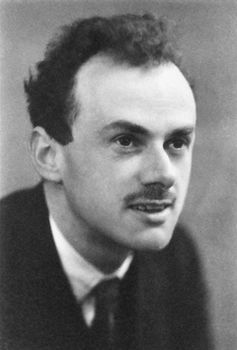
Paul Dirac in 1933. Nobel Foundation via Wikimedia Commons

unappealing existence. As detailed in Graham Farmelo’s wonderful biography, The Strangest Man: The Hidden Life of Paul Dirac, Mystic of the Atom, on which I rely heavily in this article, Dirac was an incredibly taciturn individual. Getting him to utter even a word could prove nearly impossible, leading his mischievous colleagues to introduce a new unit of measure for the rate of human speech, the Dirac, which amounted to one word per hour.

Dirac was the kind of man who would “never utter a word when no word would do.” Farmelo describes him as a human being completely absorbed in his work, with absolutely no interest in other people or their feelings, and utterly devoid of empathy. He attributes this in part to Dirac’s tyrannical upbringing. His father ruthlessly punished him for every error in speech, and the young Dirac adopted the strategy of saying as little as possible.

Dirac was socially awkward and showed no interest in the opposite sex. Some of his colleagues suspected that he might be utterly devoid of such feelings. Once, Farmelo recounts, Dirac found himself on a two-week cruise from California to Japan with the eminent physicist Werner Heisenberg. The gregarious Heisenberg made the most of the trip’s opportunities for fraternization with the opposite sex, dancing with the flapper girls. Dirac found Heisenberg’s conduct perplexing, asking him, “Why do you dance?” Heisenberg replied, “When there are nice girls, it is always a pleasure to dance.” Dirac pondered this for some minutes before responding, “But Heisenberg, how do you know beforehand that the girls are nice?”

Love finds the professor

Then one day, something remarkable entered Dirac’s life. Her name was Margit Wigner, the sister of a Hungarian physicist and recently divorced mother of two. She was visiting her brother at the Institute for Advanced Study in Princeton, New Jersey, where Dirac had just arrived.

Known to friends and family as “Manci,” one day she was dining with her brother when she observed a frail, lost-looking young man walk into the restaurant. “Who is that?” she asked. “Why that is Paul Dirac, one of last year’s Nobel laureates,” replied her brother. To which she replied, “Why don’t you ask him to join us?”

Thus began an acquaintance that eventually transformed Dirac’s life. Writes Farmelo:

His personality could scarcely have contrasted more with hers: to the same extent that he was reticent, measured, objective, and cold, she was talkative, impulsive, subjective, and passionate.”

A self-described “scientific zero,” Manci embodied many things that were missing in Dirac’s life. After their first meeting, the two dined together occasionally, but Dirac, whose office was two doors down from Einstein, remained largely focused on his work.

After Manci returned to Europe, they maintained a lopsided correspondence. Manci wrote letters that ran to multiple pages every few days, to which Dirac responded with a few sentences every few weeks. But Manci was far more attuned than Dirac to a “universally acknowledged truth” best expressed by Jane Austen: “A single man in possession of a good fortune must be in want of a wife.”

She persisted despite stern warnings from Dirac:

I am afraid I cannot write such nice letters to you – perhaps because my feelings are so weak and my life is mainly concerned with facts and not feelings.

When she complained that many of her queries about his daily life and feelings were going unanswered, Dirac drew up a table, placing her questions in the left column, paired with his responses on the right. To her question, “Whom else should I love?” Dirac responded, “You should not expect me to answer this question. You would say I was cruel if I tried.” To her question, “Are there any feelings for me?” Dirac answered only, “Yes, some.”

Realizing that Dirac lacked the insight to see that many of her questions were rhetorical, she informed him that “most of them were not meant to be answered.” Eventually, exasperated by Dirac’s lack of feeling, Manci wrote to him that he should “get a second Nobel Prize in cruelty.” Dirac wrote back:

You should know that I am not in love with you. It would be wrong for me to pretend that I am, as I have never been in love I cannot understand fine feelings.

Yet with time, Dirac’s outlook began to change. After returning from a visit with her in Budapest, Dirac wrote, “I felt very sad leaving you and still feel that I miss you very much. I do not understand why this should be, as I do not usually miss people when I leave them.” The man whose mathematical brilliance had unlocked new truths about the fundamental nature of the universe was, through his relationship with Manci, discovering truths about human life that he had never before recognized.

Soon thereafter, when she returned for a visit, he asked her to marry him, and she accepted immediately. The couple went on two honeymoons little more than month apart. Later he wrote to her:

Manci, my darling, you are very dear to me. You have made a wonderful alteration in my life. You have made me human… I feel that life for me is worth living if I just make you happy and do nothing else.

A Soviet colleague of Dirac corroborated his friend’s self-assessment: “It is fun to see Dirac married, it makes him so much more human.”

In Dirac, a thoroughly theoretical existence acquired a surprisingly welcome practical dimension.
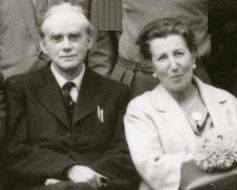
Paul and Manci in 1963. GFHund via Wikimedia Commons, CC BY

A man who had been thoroughly engrossed in the life of the mind discovered the life of the heart. And a human being whose greatest contributions had been guided by the pursuit of mathematical beauty discovered something beautiful in humanity whose existence he had never before suspected.

In short, a brilliant but lonely man found something new and wonderful that had been missing his entire life: love. As my students and I discover in the course on sexuality and love, science can reveal a great deal, but there are some aspects of reality – among them, love – that remain largely outside its ambit.

ooOOoo

Picking up on that last sentence, “there are some aspects of reality – among them, love – that remain largely outside its ambit.” all I can offer is to introduce dogs to the students!

I struggled for ages wondering how to close today’s post. In the end, decided on the following:

Why Am I Talking?

At first, this may seem like a rather bizarre question.

Before plunging in to today’s post, can I just explain, especially to those who are new to this place, why there has been a preponderance of republished articles from other sources in recent times. (And that’s not to say that these articles aren’t fascinating reads; by the way.)

While my book is now available, I am still just over a week away from a formal launch, both here on Learning from Dogs, and locally in the town of Grants Pass. However, the level of demands upon me in connection with the launch is building rapidly. For example, on Friday a team from the local Daily Courier are coming here in connection with a feature article that they want to write. On Saturday, Jean and I have a stand at a local craft fair. Next Tuesday I have my fingers crossed that there will be a radio broadcast from local KAJO about the book on their local community slot. (More details will be published here once the time and day has been confirmed.)

I’m sure you get the picture!

So with all that out of the way, here’s a wonderful sequel to my recent posts on Stillness and Happiness. It is a fascinating essay from Val Boyco under the heading of  W.A.I.T., republished with Val’s kind permission.

ooOOoo

W.A.I.T. ?

Posted on December 1, 2015 by Val Boyko

I love to work with people on becoming better communicators. The key, of course, is to learn to really listen – becoming engaged listeners and tuning into the other person, rather than letting our own thoughts take us away from the moment and distract us.

But before we even get to this step, there is one vital piece of wisdom to absorb.

When we are talking we are not listening.

1-2

So, the question to ask yourself is : Why Am I Talking?…

Have you ever considered why you are talking? It is usually more than sharing valuable information; that’s for sure!
Next time you notice you are talking, consider these questions:

  • Am I trying to release something that’s bottled up?
  • Am I trying to persuade someone to my point of view?
  • Is it a habit?
  • Am I trying to work through something out loud?
  • Do I have an unmet personal need that I am trying to get met? For example: a need for validation, attention, love, approval, recognition or to be right.
  • Do I find talking entertaining?
  • Am I uncomfortable with silence?
  • Do I believe that people really need all the information I am providing, that I am being helpful or teaching something?
  • To explore more, you may want to write W.A.I.T.? on a post-it note before your next meeting and notice what comes up for you.

When we become aware of our talking, we are in a better position to choose whether we want to continue or not. Enjoy tuning in to yourself this week.. and this video.

ooOOoo

Guess I have nothing more to say! 😉

These extraordinary minds of ours.

Serendipity at work.

Chapter 8 of my book is entitled: Behaviours and Relationships. It opens thus:

“It is all to do with relationships.”

I heard this many years before the idea of writing this book came to me. Heard it from J, who was referred to in the previous chapter. J was speaking of what makes for happy people in all walks of life. It’s one of those remarks that initially comes over as such an obvious statement, akin to water being wet or the night being dark, that it is easy to miss the incredible depth of meaning behind those seven words.

Humans are fascinating. Every aspect of who we are can be seen in our relationships. How we relate to people around us, whether it be a thirty-second exchange with a stranger or a long natter with friends whom we have known for decades, including our partners and family relations. The core relationship, of course, the relationship that drives so many of our behaviours is the relationship that we have with ourself. That being rooted in our relationship experiences with the adults around us when we were young people.

When one looks at the performance of successful companies one often sees, nay one always sees, people being valued. The directors and managers of those companies understand that if people are valued then a myriad of benefits flow from that approach to relationships. Moving out of the workplace, the relationships that people have are always stronger and happier if those individual persons know they are valued. Moving beyond people, our dogs, and many other animals, are always stronger and happier if they feel valued. It’s the difference between empathy and sympathy.

Recently over on Mother Nature Network there was an essay presented by Russell McLendon who is science editor for MNN. It is about happiness.

ooOOoo

Happiness is all in your head

Scientists say they’ve found where happiness happens in the brain. What does that mean?

By: Russell McLendon, November 24, 2015

Understanding how our brains generate happiness could help make it less elusive, researchers say. (Photo: Andrew Vargas/Flickr)

Everyone wants to be happy. Yet despite all our efforts in pursuit of this prized emotion, it can be a surprisingly nebulous goal. What is “happiness,” exactly?

That question has puzzled philosophers for thousands of years, and it’s still tricky for anyone to tackle. But recent advances in neuroscience have finally begun to shed light on it, and now a new study claims to have found an answer. Being told happiness is “all in your head” may seem both obvious and dismissive, but in this case the specifics are also empowering. The more we know about how (and where) happiness happens, the less helpless we’ll be to summon it when we need it.

By comparing magnetic resonance imaging (MRI) with questionnaires about emotional states, researchers from Kyoto University in Japan say they’ve traced the experience of happiness to a specific part of the human brain. Overall happiness, they conclude, occurs when positive emotions combine with a sense of life satisfaction in the precuneus, a region of the medial parietal lobe that’s linked to important brain tasks like episodic memory, self-reflection and consciousness.

Psychologists already distinguish between broad life satisfaction and “subjective well-being,” since happiness often seems to fade during bad moods without necessarily plunging us into deeper existential despair. But by revealing the neural mechanics of how these feelings combine to create overall happiness, the authors of the new study hope to make it easier to objectively quantify this mysterious and elusive emotion.

“Over history, many eminent scholars like Aristotle have contemplated what happiness is,” lead author Wataru Sato says in a press release. “I’m very happy that we now know more about what it means to be happy.”

Scientists used MRI brain scans to identify happiness in a brain region known as the precuneus. (Photo: Kyoto University)

To pinpoint the location of happiness, Sato and his colleagues first used MRI to scan the brains of their study subjects. Those participants then took a survey, which asked about their general sense of happiness, the intensity of their emotions and the degree of their overall life satisfaction.

After analyzing the data, the researchers discovered that those who scored higher on the happiness survey also had more gray matter mass in the precuneus. That means this brain region is larger in people who feel happiness more intensely, feel sadness less intensely and who are better able to find meaning in life.

“To our knowledge, our study is the first to show that the precuneus is associated with subjective happiness,” the researchers write in the journal Scientific Reports.

Complex phenomena like happiness rarely boil down to a single brain region, but other recent research also points to an outsized role for the precuneus. A study published this month links impaired connectivity in the precuneus to depression, for example, and a 2014 study suggests the region is a “distinct hub” in the brain’s default-mode network, which is active during self-reflection and daydreaming.

All this may seem like an esoteric quest for neuroscientists, but it’s about more than just academic curiosity. By knowing which parts of the human brain generate our sensation of happiness, we might develop more accurate ways to test methods of becoming happier, like travel, exercise or meditation.

“Several studies have shown that meditation increases grey matter mass in the precuneus,” Sato says. “This new insight on where happiness happens in the brain will be useful for developing happiness programs based on scientific research.”

ooOOoo

It’s an unscientific opinion from me but I truly believe that humans have a bias towards happiness. And if there’s one animal that we can learn happiness from, it’s the dog!

Photo: Kiuko/flickr.

More and more learning from dogs!

This was sent to me by neighbour Jim Goodbrod.

(Jim also wrote the foreword to my book!)

It comes from a post over on The Brandbuilder Blog: here is a link to the original article.

ooOOoo

Twenty-one things my dog taught me about being a better man.

June 7, 2010 by Olivier Blanchard

sasha003

We had to put our golden retriever to sleep this weekend, our friend of fifteen years, our family’s faithful guardian and companion, and one of the kindest, most loyal and giving souls I have ever met. True to her breed, Sasha was courageous, tender and selfless until the end.

I was trying to figure out how to give her a worthy send-off here on The BrandBuilder blog, and settled on some of the things she taught me over the years. Or rather, the things I didn’t realize she had taught me until this past week, much of which I spent caring for her, as she could no longer take care of herself. She and I had some long chats, in our own way, and the old girl was much wiser than I gave her credit for.

Are there business lessons in this list? Yes. There are. But all are deeply human lessons at the core. If being human can make a business better, if it can fuel its soul (or even simply give it one), then yes, let these be business lessons. But don’t ever forget that what makes a business truly great isn’t technology or design or a fancy logo. Those are expressions of something deeper. Something more visceral and powerful and true. What makes a business great, what makes it special, worthy of a connection, worthy of trust and loyalty, admiration and respect, even love, always starts with a beating heart, not a beeping cash register. (One is the cause, and the other one of many effects. Don’t lose sight of that distinction. Horse before cart: Soul drives love. Love drives business.)

It’s so easy to lose sight of what’s important in our lives. And this isn’t me being overly sentimental because I just lost my dog. I mean, yes, sure, okay… But there’s also something to this: That sentimentality, that emotion, these things that make us connect with other souls is at the heart of EVERYTHING this blog has been about these last few years: Business, design, marketing, social media, communications, corporate responsibility, best practices… No company can ever be great unless it can tap into the very essence of what makes us want to connect with each other, and no executive or business manager or cashier can ever truly be great at their jobs unless they also tap into the very thing that makes genuine human connections possible. If ever there was a secret to successfully building a brand, a lovebrand, the kind that people will fight for and whose mark they will tattoo on their bodies, it is this. The rest is merely execution.

If you only walk away with one bit of wisdom from this post, let it be this: You cannot build a better business unless you first become a better human being. Everything that strips you of your humanity, of your empathy, of your ability to connect with others is bad for business. It’s bad practice. It is doomed to fail in the end.

As my good friend John Warner noted yesterday, “If more people were as loyal and loving as dogs the world would be a better place.” (source) And he’s right. How do you become a better human being then? Well, that’s up to you, but if you had asked Sasha, she might have given you a few pointers of her own. Granted, she was never a Fortune 500 C.M.O. She didn’t design the iPad. She didn’t invent the internet or write a book. She never presented at a conference. All she did was hang out with me and Chico. We went on car rides. She watched me work. She lived the simple life of a dog, uncluttered by Twitter followers and Hubspot rankings and the drive to publish and present case studies. She was a dog, and so her perspective is a little different from what you may be used to. At any rate, here are twenty-one she and I discussed at length last week. I hope they will be as valuable to you as they now are to me.

Twenty-one things my dog taught me about being a better man:

1. Be true to your own nature. There’s no point in faking it. A golden retriever isn’t a chihuahua or a pug or a greyhound, and for good reason. Being comfortable in your own skin is 90% of the trick to rocking out your life. Not everyone is meant to be Rintintin or a seeing-eye dog or an Iditarod racer. It’s okay. Find yourself and embrace your nature. That’s always a great place to start.

2. Be true to the ones you love. Your friends, your family, your tribe, your pack. A life lived for others is a life well-lived. Selfish pursuits aside, ambition often grows hollow when turned inwardly instead of outwardly. It’s one thing to want to be pack leader, but there is just as much value and honor in serving than in leading. When in doubt, see item number one.

3. Never say no to a chance to go on a car ride. When the days grow short, I guarantee you’ll wish you’d have gone on more car rides.

4. Leashes are the enemy. Avoid them at all cost.

5. People are strange. So much potential, yet here they are, doing everything they can to complicate rather than simplify their lives. It’s puzzling.

6. Belly scratches.

7. The end isn’t pretty, but if you can face it with dignity and grace, none of your body’s weaknesses will matter. Your heart, your courage, your spirit is what people will see and remember. This isn’t only applicable in your last days and weeks. It’s applicable every day of your life. Adversity happens. It’s how you deal with it that matters.

8. Forgiveness is easier for dogs than for humans, but humans have opposable thumbs and the ability to speak, so it all balances out in the end.

9. Your bark is your own. No one has one quite like yours. Own it. Love it. Project it.

10. Trust your instincts. They rarely steer you wrong. The feeling in your gut though, that’s probably just something you ate.

11. Just because you’re meant to live on land doesn’t mean you can’t feel at home in water. Play outside the safety zone. Swim in the deep end. Dive in. We’re all designed to do more than the obvious.

12. Play more. The game is irrelevant. Just play. Tip: Exploring is play. Having adventures is play. Finding out what’s behind the next hill is play.

13. Your body growing old doesn’t mean you can’t be a puppy at heart. Actually, the first should have no impact on the latter. If you find that it does, take a step back, regroup, and restart. Always be a puppy at heart.

14. Humans aren’t all bad. But they aren’t all good either. Choose yours wisely.

15. Always keep that 20% wolf in you. If you ever give it up, you’re done. A dog without a little wildness in the blood isn’t a dog. It’s a furry robot. The beauty of a great dog doesn’t lie in its obedience but in its loyalty. Loyalty is a choice. Dogs choose to be dogs and not wolves. That’s what makes them so special.

16. Running full bore across a field in the rain.

17. There are no mysteries. Take cats, for example: Half rat, half badger. Crap in a box. Eat rodents. Where’s the mystery in that? If you look hard enough, you can figure most things out for yourself. The world isn’t as complicated as it sometimes seems.

18. Sometimes, you have to back up your growl with a bite. Go with it. Some people like to test your bark-to-bite ratio. With those “inquisitive” types, a little education goes a long way. As much as it sucks to have to go there, it is sometimes necessary. (It’s what the fangs are for.) Your territory, your space, your safety… They’re worth defending. Make a show of it once, and chances are you’ll never have to teach anyone a lesson again.

19. Being alone is no way to go through life. We’re pack animals. Humans, dogs, same thing. We need others to make all of this worthwhile. As an aside, if we live through others, why not also live for others, even if only a little bit? It isn’t that much of a stretch.

20. When you chase the ball, CHASE the fucking ball. Two reasons: a) It’s a chase. You don’t half-ass a chase. You go all out. It’s what you do. It’s the point. b) You don’t want some other mutt to get to the ball before you and slobber it all up, do you?

21. In the end, you will revisit your adventures, your battles, your chases, your voyages and all the excitement of your life with bemused pride, but it’s the quiet moments with loved ones that your mind will settle on. The comfort of those days when all you did was spend lazy hours with them, your head on their lap, their’s on yours, taking in the afternoon sun and the hundreds of fleeting stories carried like whispers on the breeze, those are the memories that will stay with you to the end and beyond.

Never give up on your thirst for life, on the beauty subtle moments, and on chasing that ball as hard and fast as your legs and heart will carry you.

Godspeed, Sasha.

Sasha (1995 - 2010) R.I.P.
Sasha (1995 – 2010) R.I.P.

ooOOoo

Shortly after completing today’s post, I read the following. It seemed appropriate to include it today.

When you talk, you are only repeating what you know,

But if you listen, you may learn something new.

It is one of the Dalai Lama’s sayings.

You all take care out there.

Happy Writersgiving!

In view of all that’s been happening these last few weeks, this is perfect!

We are exactly one month away from Christmas Day! Not sure if that’s scary or satisfying. For years, I have always embraced mid-Winter’s Day on December 21st as the bottom of the slope; so to speak. Thus on that basis Christmas Day is satisfying.

Anyway, tomorrow is Thanksgiving Day in this fine, new country of ours and I was wondering what to write to recognise both the importance, current and historical, for Americans and, at a more parochial level, for yours truly.  Because, for sure, at the start of this year I wouldn’t have imagined in my wildest dreams that by Thanksgiving Day I would have a book available on Amazon!

Then along comes the perfect answer to my pondering as to what to write. A gorgeous post written by Kate Johnston of 4am Writer‘s fame. Even better, Kate giving me permission to republish it in this place. So to all my readers and followers: Happy Thanksgiving.

ooOOoo

The Writers’ Tree

Kate Johnston

There once was a tree where writers could go and put down stories in the thin bark. Over time, the stories began to bleed into each other until the day came when the tree could take no more stories.

image courtesy of wordsareart.wordpress.com

The writers didn’t have any other place to go.

They tried to write in the sand dunes, but the wind just blew the words around into gibberish.

They tried to write in the sky, but the rains came and washed everything away.

They tried to write on the animals and birds but got bitten and clawed for their trouble.

One little girl missed writing too much. Her stories were piling up inside her like rotten apples on the ground, and she needed a place to write them. She went searching. Over the hills and behind some mist that beckoned with gauzy fingers.

She found a secret place where trees grew by the dozens, trees with papery bark that wanted to give stories. She told no one of her discovery, wanting to keep all the trees to herself. She spent day after day writing story after story upon tree after tree.

When she had scribed all her stories, she abandoned the secret place and never returned. She didn’t tell a single soul about the trees that gave stories, for fear that someone wouldn’t like what she wrote, would laugh at her, wouldn’t understand.

But while she was gone, attending to other things like school, friends, growing up and starting a family, her stories began to fade away. With no one to savor them, the tales began to disappear from the trees.

Stories cannot exist without readers. And writers cannot exist without stories.

The girl, now an old woman, returned to the secret place with her grandson, thinking he would appreciate the magic of the stories on the trees. Imagine her devastation when she saw that her words were destroyed, scabbed over by new bark and punctured by holes from insects and birds.

It was plain to the girl, now an old woman, the trees could no longer give to a writer who had stopped writing. She fell to her knees and wept. She couldn’t even start over. It’d been too long since she’d come to the secret place and had forgotten how to write at all.

image courtesy of socialmeems.com

Her grandson scraped away the new growth, traced his finger over the faintest of marks, trying to find the long-lost stories. It was no use, not by himself. He was young and couldn’t yet read.

They went back to the world where they found a baker, a postman, a teacher, an electrician, and a dancer, all of whom could read and longed to write stories. The old woman and her grandson brought their new friends to the secret place to find the lost stories, but still, it was no use.

The stories were gone forever.

It had been too long since the girl, now an old woman, had written them that she couldn’t even remember how they went, or what they were about, or why she wrote them at all.

All she knew was that when she wrote, she’d felt indescribable joy. She’d fooled herself into thinking that was enough. The girl not knowing then as the old woman knows now that you must tend to joy if you want joy to stay.

Together, the friends wrote anew, wrote stories into the bark like paper. They shared their ideas and questions and hopes. They took the time to feel and find meaning in all of the stories. They laughed and cried and debated over worlds they created. They left comments with hearts to show how much each story moved them. They talked about how they couldn’t wait to bring a husband or a mother or a friend to the writers’ trees to show them the stories that grew there.

The girl, now an old woman, watched her friends’ stories blossom and grow with each reader that visited the writers’ trees. She saw the joy on her friends’ faces, saw how the joy stayed because they kept doing the one thing they loved: writing.

She wondered if she dared try again, to bring a story to life here, even though she’d failed so miserably in the past.

Image courtesy of Paul W. Koester Photography

Her friends walked the old woman to a new tree. If you love it so, they said, if writing brings you joy, they said, then write you must and never give up, they said.

The old woman took to the tree and wrote.

Her stories live on.

Happy Writersgiving!

ooOOoo

Perfect!

Dear readers: I am going to take a break for one day, so my next post will be on Friday. You all have a wonderful time wherever you are in the world.

Picture parade one hundred and twenty-three.

Couldn’t resist these!

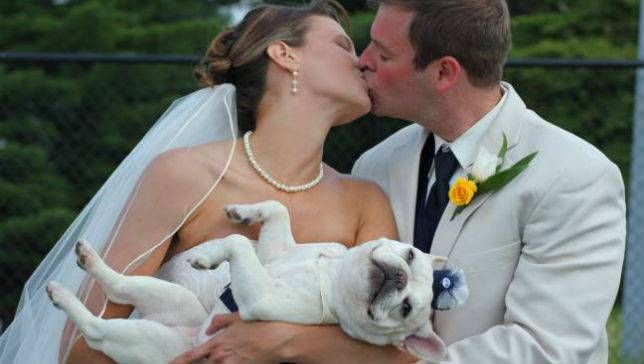
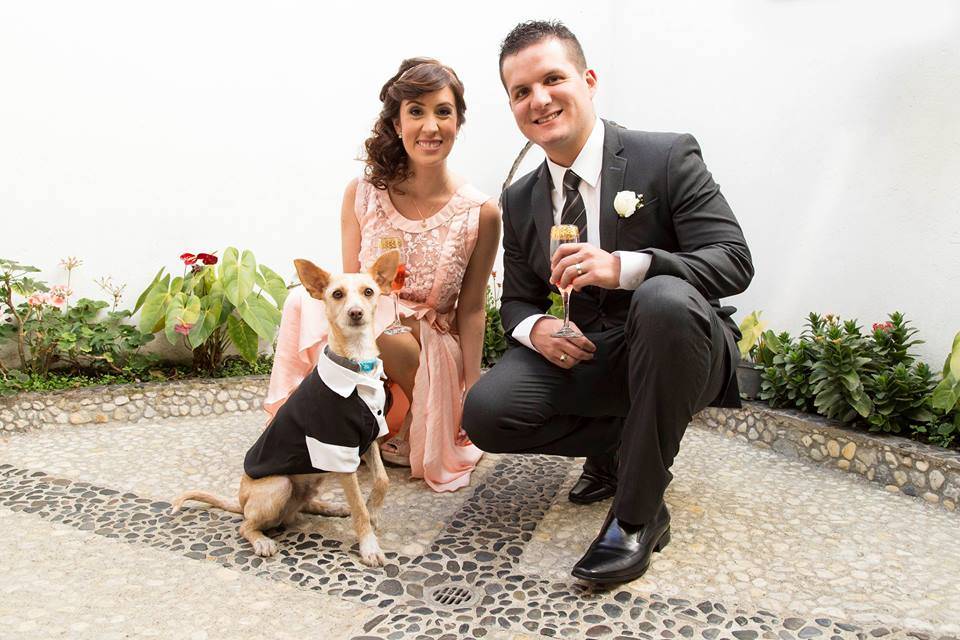
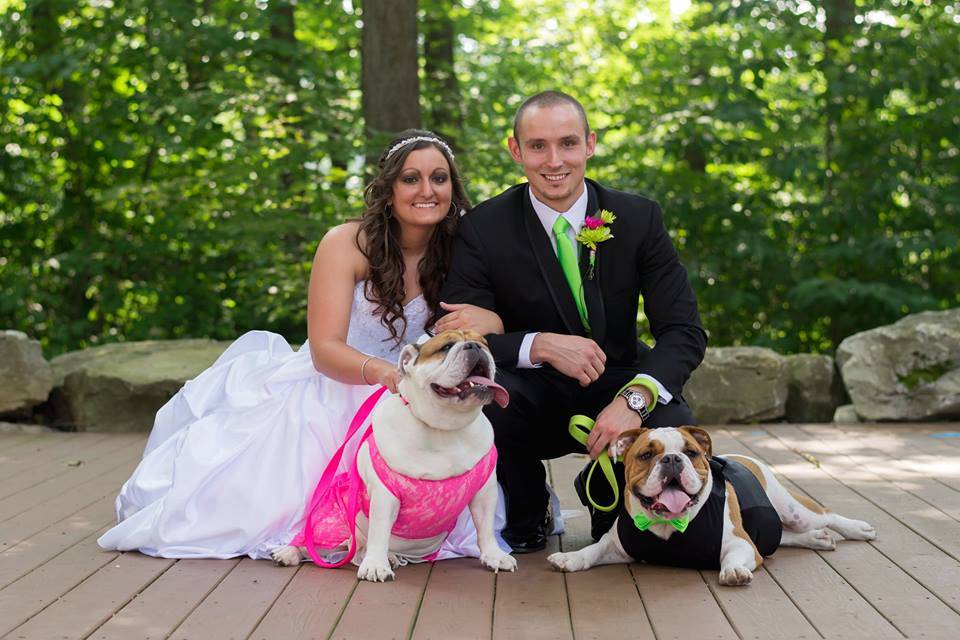
When putting together yesterday’s post, based heavily on a recent article over on Mother Nature Network, I couldn’t help noticing a link on that MNN item to this: 13 photos of dogs that got invited to the wedding. Wanted to share some of the photographs with you for today’s picture parade.

wedding dogs1

oooo

wedding dog2

oooo

wedding dogs3

oooo

wedding dogs4

oooo

weddingdogs5

oooo

wedding dogs6

oooo

wedding dogs7

oooo

Sources for all the pictures may be looked up here.

Final picture for today is the one of Jean and me at our anniversary lunch taken at The Twisted Cork in Grants Pass on Friday. Not quite newly-weds but still not that long ago!

P1150800

Best wishes to everyone!

Man, dog and Piper Cub

A small dose of nostalgia.

In yesterday’s post, I referred to Dunkeswell Airfield in South Devon and the fact that I was part of a group that owned a Piper Super Cub that was based at that airfield.

So while the bulk of this post has been previously published in this place it was over three years ago and, perhaps, may be shown again.

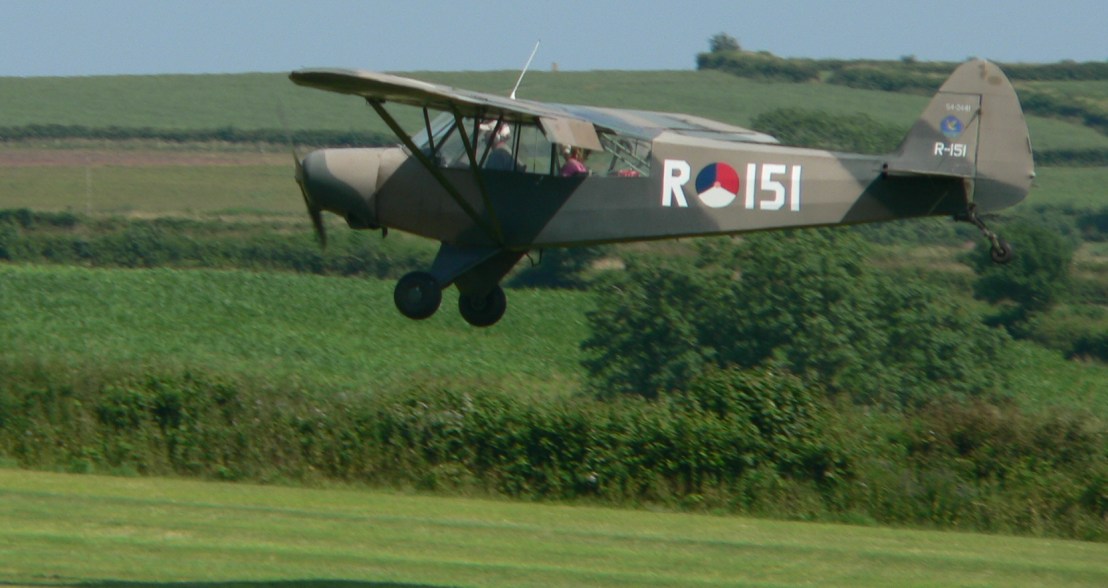
The photograph below was taken in 2006 when Pharaoh was 3 years old.  The aircraft, by the way, is an L21B, the military variant of the Piper Super Cub.  The aircraft was originally delivered to the Dutch Air Force in 1954 and has dispensation from the UK CAA to retain the original registration and callsign of R151.

P1000357.s

More on the aircraft.

Originally when the post was published readers asked for more information on the aircraft.

So here it is.

Piper Super Cub, L-21B, R-151

A/C Construction No. 18-3841, Frame No. 18-3843

Original Engine, Lycoming 135 Type 0-290-D2, 54/2441

Romeo 151 was one of a batch of 298 L-21’s delivered in 1954. There were 584 L-21B’s produced by Piper for military use, the ‘L’ standing for Liaison. The L-21B’s were PA-18-135’s with civil Lycoming 0-290-D2 engines, glasswork as most L-21A’s and L-18’s and a gross weight of 1760 lbs.

This aircraft was delivered to Koninklijke Luchtmacht, Dutch Air Force, on the 1st July, 1954 and registered R-151. After various homes R-151 transferred to the Dutch civil register as PH-GER, 1st April 1976 with 4,458 hours and shortly thereafter was registered to Vlieclub Hoogeveen, Certificate Number 2380.

On the 27th March, 1981 the aircraft was delivered to the UK with a total time of 5,043 hours and in September, 1981 became G-BIYR. In April, 1983 YR was the first of type to be given a Public Transport CofA and was used for training at Tollaton. YR reverted to a Private CofA in January, 1984 when purchased by Mike and Barbara Fairclough at 5,120 hours.

In 1992 YR was re-engined with a Lycoming 150HP, 0320-A2B No. L49809-27A (zero hours). Finally on the 2nd June, 1995 the a/c was repainted in original Dutch insignia and given CAA (UK Civil Aviation Authority) permission to use the original call-sign, Romeo 151.

The aircraft is based in South Devon, England and owned by the five members of the Delta Foxtrot Flying Group.

A few photos of the aircraft.

Approaching home in South Devon, England
Approaching home airfield in South Devon, England
Flying in the French Alps, Mt Blanc in sight
9,300 ft up in the French Alps

Really takes me back does this!


Having fun with history.

Nothing to do with dogs but, nonetheless, a neat way to finish the week.

I was looking at a recent George Monbiot essay and getting myself all wound up about it, thinking that it should be today’s post. Then I thought, “Come on, Paul, end the week on a gentle tone.”

So with that in mind, let me offer you an item on British history that Su sent me a week ago. I can’t authenticate the details but my instinct is that everything mentioned is correct.

ooOOoo

There is an old Pub in Marble Arch, London, which used to have a gallows adjacent to it. Prisoners were taken to the gallows (after a “fair” trial of course) to be hanged. The horse-drawn dray, carting the prisoner, was accompanied by an armed guard, who would stop the dray outside the pub and ask the prisoner if he would like ”ONE LAST DRINK.” If he said YES, it was referred to as ONE FOR THE ROAD. If he declined, that prisoner was ON THE WAGON.

So there you go … On with some more history.

They used to use urine to tan animal skins, so families used to all pee in a pot and then once a day the pot was taken and sold to the tannery. If you had to do this to survive you were “piss poor”, but worse than that were the really poor folk, who couldn’t even afford to buy a pot, they “didn’t have a pot to piss in” and were the lowest of the low. The next time you are washing your hands and complain because the water temperature isn’t just how you like it, think about how things used to be.

Here are some more facts about the 1500s:

Most people got married in June, because they took their yearly bath in May and they still smelled pretty good by June. However, since they were starting to smell, brides carried a bouquet of flowers to hide the body odor. Hence the custom today of carrying a bridal bouquet when getting married.

Baths consisted of a big tub filled with hot water. The man of the house had the privilege of the nice clean water, then all the other sons and men, then the women and finally the children. Last of all came the babies. By then the water was so dirty you could actually lose someone in it. Hence the saying, “Don’t throw the baby out with the bath water!”

Houses had thatched roofs, thick straw piled high on the rafters, with no wood underneath. It was the only place for animals to get warm, so all the cats and other small animals (mice, bugs) lived in the roof. When it rained it became slippery and sometimes the animals would slip and fall off the roof. Hence the saying “It’s raining cats and dogs.” There was nothing to stop things from falling into the house.

This posed a real problem in the bedroom, where bugs and other droppings could mess up your nice clean bed. Hence, a bed with four big posts and a sheet hung over the top afforded some protection. That’s how canopy beds came into existence.

The floor was dirt. Only the wealthy had something other than a dirt floor. Hence the saying, “dirt poor.” The wealthy had slate floors that would get slippery in winter when wet, so they spread thresh (straw) on floor to help keep their footing. As the winter wore on they added more thresh until, when you opened the door, it would all start slipping outside. A piece of wood was placed in the entrance. Hence: a threshold.

In those old days, they cooked in the kitchen with a big kettle that always hung over the fire. Every day they lit the fire and added things to the pot. They ate mostly vegetables and did not get much meat. They would eat the stew for dinner, leaving leftovers in the pot to get cold overnight, then start over the next day. Sometimes stew had food in it that had been there for quite a while. Hence the rhyme: ”Peas porridge hot, peas porridge cold, peas porridge in the pot, nine days old.” Sometimes they could get pork, which made them feel quite special. When visitors came over they would hang up their bacon, to show off.

It was a sign of wealth that a man could, “Bring home the bacon.” They would cut off a little to share with their guests and would all sit around talking and ”chew the fat.”

Those with money had plates made of pewter. Food with high acid content caused some of the lead to leach onto the food, causing lead poisoning and death. This happened most often with tomatoes, so for the next 400 years or so, tomatoes were considered poisonous.

Bread was divided according to status. Workers got the burnt bottom of the loaf, the family got the middle, and guests got the top, or ”The Upper Crust.”

Lead cups were used to drink ale or whisky. The combination would sometimes knock the imbibers out for a couple of days. Someone walking along the road would take them for dead and prepare them for burial. They were laid out on the kitchen table for a couple of days and the family would gather around and eat and drink and wait and see if they would wake up. Hence the custom of ”Holding a Wake.”

England is old and small and the local folks started running out of places to bury people, so they would dig up coffins and would take the bones to a bone-house and reuse the grave site. When reopening these coffins, 1 out of 25 coffins were found to have scratch marks on the inside and they realised they had been burying people alive. So they would tie a string on the wrist of the corpse, thread it out through the coffin and up through the ground and tie it to a bell. Someone would have to sit out in the graveyard all night (the graveyard shift) to listen for the a bell; thus someone could be, ”Saved by the Bell ”or was considered a ”Dead Ringer.” And that’s the truth.

Now, whoever said history was boring ! ! !
So ….. get out there and educate someone!

ooOOoo

Just out of curiosity, I did a web search on that Pub in Marble Arch. Quickly came across this, from which I quote, in part:

The site of the Tyburn Tree is said to be at what is now Marble Arch, at the north-east corner of Hyde Park. Some historians give a more precise location as slightly to the north-west at Connaught Square. In fact, many bodies were found there when the square was being built in the 1820s, so it’s possible that some Tyburn victims were buried right where they died.

Mass executions took place on Mondays, when prisoners were transported from Newgate Prison to Tyburn in an open wagon, often in their finest clothes. The procession, which was watched by a large and enthusiastic crowd, wound down Snow Hill, across Holborn Bridge into Holborn, down Broad St Giles into Oxford Street and on to Tyburn.

And it was but a moment to find a photograph of the place.

Tyburn

 You all have a wonderful, relaxing week-end and don’t lose your head over anything!

Our caring dogs.

Staying with the theme of our lives being “rebooted” by our dogs.

Again, as so often occurs, a thought or reply left by someone to a previous post kicked off a new post for me.

So it was yesterday when Hariod commented: “This is the organisation that brought dogs into the care home my father lived in: http://www.petsastherapy.org/”

That website is full of great information and any readers living in the UK who have not come across them before are highly recommended to have a good browse. One item that caught my eye was the Precious Memories link.

The loss of a pet is always a devastating and traumatic experience but even more so for the owner of a PAT dog or cat who has brought much love and companionship to many people, as well as to their owners.

This page contains lasting memorials to some PAT dogs and PAT cats who have given much to society by regularly visiting in Hospitals, Hospices, Residential homes or Day Care Centres.

PETS AS THERAPY

They will not be forgotten.

Here is one of those memories:

Baggy

Baggy

Baggy was a Finnish Lapphund and a wonderful and loving companion. She enjoyed taking part in many canine events including passing the KCGC Bronze, Silver & Gold awards, agility, showing and heel work to music, Baggy loved to go on a camping trip in the caravan or a trip down the river in our boat.

Baggy had two litters of puppies and two sons one from each litter are PAT dogs and her grand daughter is also a PAT dog. Baggy was my first PAT dog and she loved to go visiting in our local Residential home bringing joy and love to many people.

We love and miss Baggy so much our special sweet little friend.

Sheila Hall

The last aspect of the Pets As Therapy site that I want to refer to is their blog: Dog Dog Dog. Do drop in there and read some of the wonderful stories of those caring dogs.

That very nicely leads on to two videos that I quickly came across.

The first is described, thus:

Published on Dec 19, 2013
Follow Fraser, a black lab-golden mix, who has been a part of HCA Virginia’s unique Pet Therapy program since 2007. For several years, Fraser has spread comfort, compassionate care and joy to the faces of countless patients and staff at Chippenham and Johnston-Willis Hospitals from Tucker Pavilion and the Thomas Johns Cancer Hospital to many other areas. Catch a glimpse of how pet therapy is a source of alternative care for those in need.

While the second is about the therapy dog test.

Published on Dec 16, 2012
Achilles, my German Shepherd Dog, taking the Therapy Dog International test for certification.

Having this certification will allow Achilles and I to visit people in the hospital and other health care facilities.

Achilles is an AKC Obedience trained competitor and was able to pass the TDI test using that training and experience rather than special training for the test.

If you are interested in making your dog a TDI Therapy Dog go to their web site for information on how to accomplish that.

Here is the website for Therapy Dogs International, who are based in New Jersey, USA.

Can’t get those words from Per out of my mind: It is all about those huge small things. The huge consequences that flow from a small, adorable puppy.

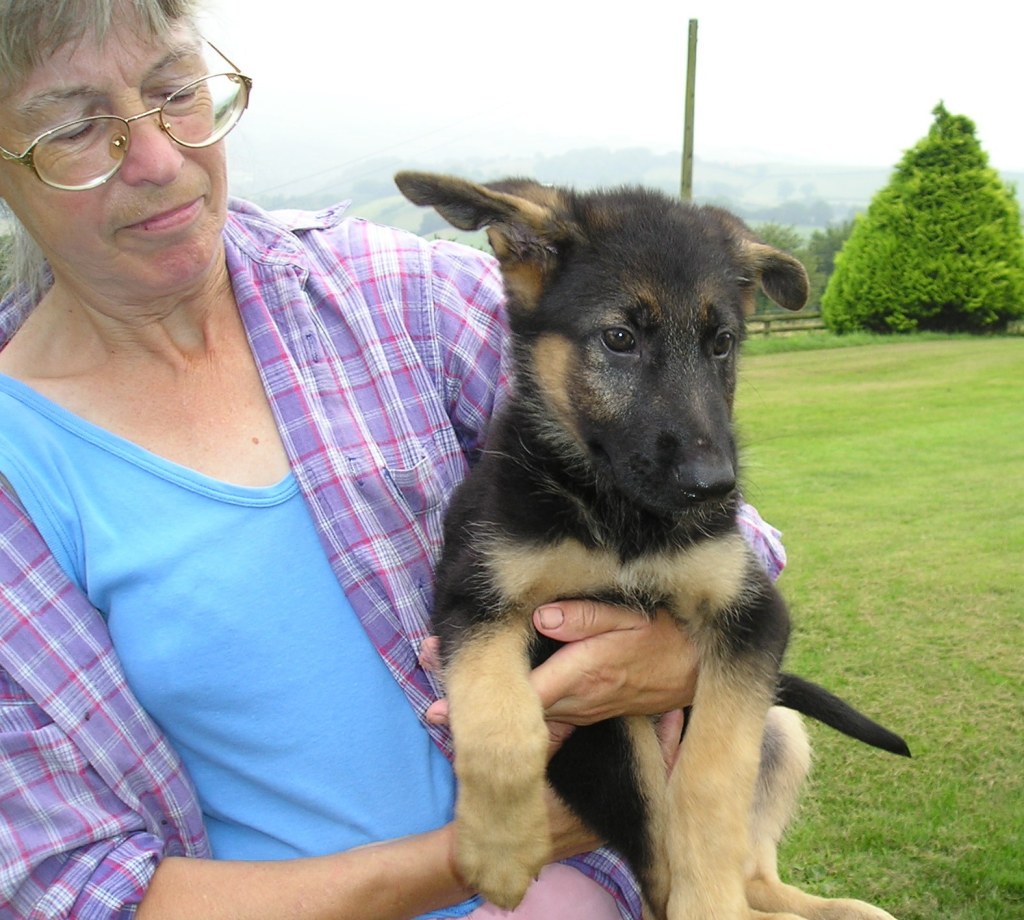
Puppy Pharaoh in the arms of Sandra Tucker of Jutone Breeders in Devon, UK. September, 2003.


Rebooting the program of life!

Interesting conundrum!

Some of you may have noticed a reply left by Marg (aka MargfromTassie) to my post yesterday. In part, this is what Marg wrote:

By the way Paul, you’re 71 now. If you reverse it, and were 17 again – what is the major thing, if any, that you would do differently with your life – knowing what you know now? ( or is this just too difficult?)

In turn, I replied:

What would I do differently? What a fascinating question. Rather than dump the first thing that comes to mind, let me reflect on the question for a while. Who knows? Maybe make it tomorrow’s post?

At first it was very clear what I would have done differently. Namely, had I had the awareness at a much earlier age of the psychological and emotional impact of my father’s death back in December 1956, just six weeks after I had had my twelfth birthday, I would have been a much more emotionally settled person and, in time, a better father to my son and daughter.

Then almost immediately I recognised the conundrum in what I was thinking.

For that subconscious fear of rejection that I carried all the way through my life until 2007, when a local Devon psychotherapist exposed that fear (thank you, J), had both strong positive and negative consequences. The positive consequences far outweighed the negative ones, that were mainly to do with uncertainty over relationships with women.

Because if my previous wife hadn’t announced in December 2006, fifty years to the day after my father died, that she had been unfaithful, I wouldn’t have sought J’s help, wouldn’t have gained the self-awareness that is so vital for all of us, and wouldn’t have met Jean in December 2007. And that has been a positive consequence of unimaginably beautiful measure.

So dear Marg, thank you for your fascinating question but, in the end, if I had the chance I would repeat my life exactly the same way again.

With apologies to any readers who have regarded the above as excessive navel-gazing! But my justification for writing this is to underline the supreme importance of knowing oneself!