“A dog is the only thing on earth that will love you more than you will love yourself.” – Josh Billings
oooo
“You can live without a dog, but it is not worthwhile.”
oooo
“If a dog does not come to you after looking you in the face, it is better that you go home and examine your conscience“ – Woodrow Wilson
oooo
“Buying a dog may be the only opportunity that a human being has to choose a relative”. – Mordecai Siega
oooo
“You can say any foolish thing to a dog and the dog will look at you in a way that seems to say: ‘My God, he is right!!! That would have never occurred to me’ “. – Dave Barry
oooo
“Sitting back in the evening, stargazing and stroking your dog, is an infallible remedy.“ – Ralph Waldo Emerson
oooo
“To exercise, walk with someone who will accompany you willingly, preferably a dog.“ – David Brown
oooo
It breaks my heart to advise you that the Picture Parade in a week’s time will be the last of the most glorious and touching photographs that came from Marg down in Tasmania.
Margaret (MargfromTassie) comes up with wonderful pictures for you.
These will make today’s Post and the next three Picture Parades. And there was me worrying about where I would find more Picture Parades!!
(Note that on the original Powerpoint images some of them had neat sayings as overlays. In the conversion from pps to jpg formats those were not carried across. I have them as introductions to each picture.)
MAN’s BEST FRIEND!
oooo
“A life without a dog is a mistake” – Karl Zuckmayer
oooo
“Women and cats will do what pleases them, dogs and men should relax and get used to the idea” – Robert A. Heinlein
oooo
“The love for animals, enhances the cultural level of the people.” – F. Salvochea
oooo
When you leave a dog behind because he “grew old”, your children will learn the lesson. Maybe they will do the same to you when you are an old man. Think about it….
oooo
“The dog has made man their God, if the dog was an atheist, it would be perfect” – Paul Valery
oooo
“Love is when your dog licks your face, even if you leave it alone the whole day” – Anita, 4 years old
oooo
“It doesn’t matter if an animal can reason. It matters only that it is capable of suffering and that is why I consider it my neighbor” – Albert Schweitzer
This is a very personal, possibly rather mixed-up, set of reflections of how the day after Pharaoh died felt for me. Some of you may prefer not to read this or view the photos.
I sat down to write this, late morning Tuesday, as it was becoming too hot to stay outside. I felt inspired to be 100% honest about my feelings and the photographs are, in essence, copies of the pictures that are in my head.
I woke early yesterday, a little after 4am, and started listening to BBC Radio Four using ear-phones plugged into my tablet while Jeannie slept on.
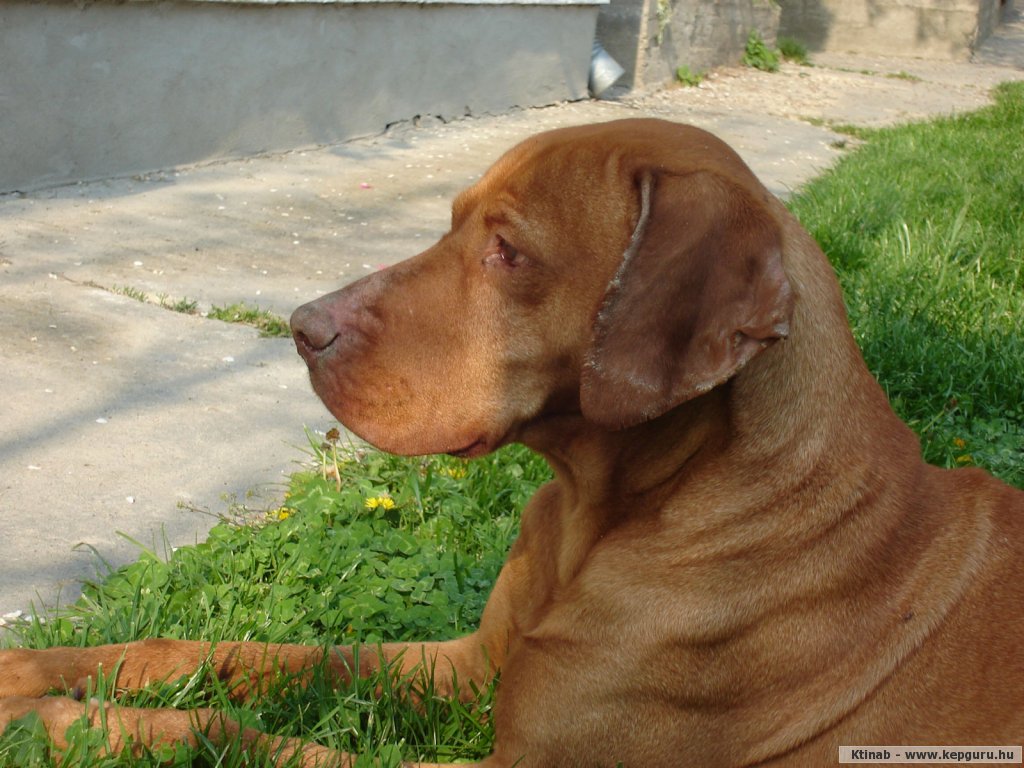
But I couldn’t get the images of Monday out of my head. Such that it seemed unreal to think that less than thirty-six hours previously Pharaoh was sleeping quietly near his bed, albeit unable to walk on his own.
Then, in what seemed like the flick of a finger, Jeannie was offering Pharaoh my dinner plate Monday evening.
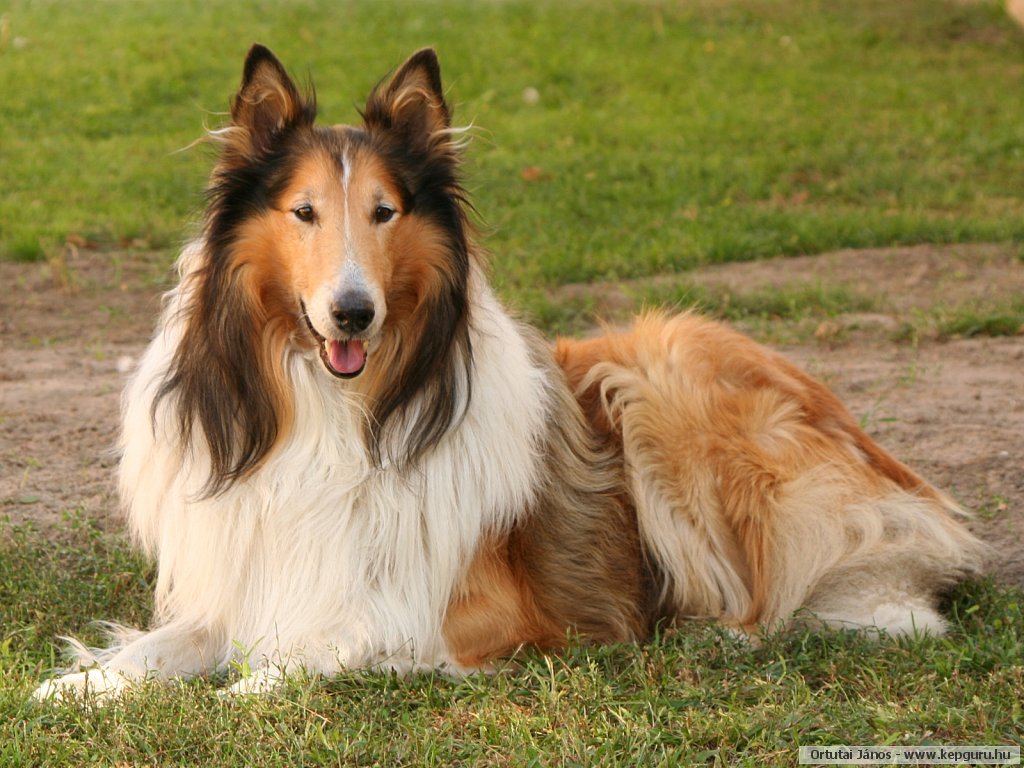
For every evening, unless we had eaten a very spicy meal, Pharaoh always licked my plate clean.
A routine that had gone on for years.
I lay there in bed as 1pm arrived in England (5am PDT) and BBC Radio 4 was broadcasting The World At One. Despite the gloomy headlines still focusing on that terrible fire at the Grenfell Tower in London (not three miles from where I was born in 1944), the images of Monday kept thundering into my consciousness.
How dear friend, Jim Goodbrod, and I had driven into Allen Creek Veterinary Hospital, where Jim is a visiting DVM each week, to collect the required amount of euthanasia drug (apparently just 1 c.c. for every 10 lbs of animal weight – looking at it in the syringe it seemed such a small amount of fluid to bring an end to Pharaoh’s life.)
Then over breakfast, as in Tuesday morning, Jean said how difficult it was watching Pharaoh yesterday (Monday) when Jim and I were away getting the meds because it seemed to her that Pharaoh sensed something was happening outside the run of a normal morning.
Continuing with Monday. When Jim returned, accompanied by his wife, Janet, and knelt down to examine Pharaoh his analysis was that the time was right. Pharaoh had lost massive amounts of muscle tissue from his rear legs and hips.
It was time. Jean and I settled down sitting on the floor alongside Pharaoh’s bed. Pharaoh shifted his body and placed his wonderful, furry head across my outstretched legs. It was time.
Jim injected Pharaoh with an anesthetic. Slowly, gently Pharaoh fell fast asleep. Jim shaved a patch of fur from Pharaoh’s front, right lower leg. Janet pinched a vein in Pharaoh’s leg and moments later, Jim injected the euthanasia drug. Jean and I continued to stroke Pharaoh’s forehead but frequently looked down to where the rise and fall of Pharaoh’s lungs was visible.
Then at 11:57 PDT Monday, June 19th., there was no more breathing. Jim took out a stethoscope and confirmed that there was no heart-beat. Jim closed Pharaoh’s eyelids while Jean and I sat quietly just holding on to Pharaoh. A few minutes later, Jean and I had wriggled out from under Pharaoh and then Jim slipped a plastic sack over the rear half of Pharaoh’s still body.
Pharaoh had died without pain and in the most gentle way imaginable.
Back to Tuesday, as in yesterday, and now Jean and I were awake and I was reading every comment and response to the post Adieu, Mon Brave.
I must tell you that the love and compassion extended by every single one of you, including the numerous emails sent to me, is the most precious, special recognition of what Pharaoh meant to me, to my Jeannie, and to you all.
Thank you! Thank you so much!
Time then for a call into England and to let Sandra Tucker know that Pharaoh had died. For Pharaoh had been born at Jutone, the GSD breeding kennels run by Sandra Tucker, and Jim, in Hennock, Devon.
Pharaoh’s legacy will live on forever. What he stood for. What he represented. What I learned from Pharaoh. What he inspired in me. That inspiration that will live with me until it’s my turn to take my last breath.
Then it was time to get up and try and stay occupied. But I didn’t warrant for seeing Pharaoh’s empty bed as I walked out of the bedroom into the living-room.
It looked so empty, so lonely.
I burst into tears.
I turned on my heels and went out to feed the horses and the wild deer. As is done every morning.
Walking back to the house, I stepped up on to the rear deck and looked up at the line where the tops of the forest trees on the hills to the East meet the morning sky. It was a clear, cloudless sky.
The sun was within seconds of rising above that skyline. I took a photograph and then the sun had risen. It was 06:24 am. Fifteen hours to the minute before the exact moment of the Summer Solstice this evening (21:24 PDT).
I don’t know what it all means other than in some mysterious, natural fashion, everything is connected.
Yesterday, I shared an article about what flowed from the bond between ex-shelter dogs and special needs children. It underlined what so many dog lovers instinctively understand: The magic that flows from the relationship of a dog to a person, disadvantaged or otherwise.
However, or perhaps better said inevitably, the obverse face of that life-saving bond practically guarantees that the loss of that bond results in huge stress and emotional turmoil for the dog.
In other words helping our beloved dog cope with the loss of a family member is something else that we can be helped with by others.
I liked the article and asked for permission to share it with you here. That permission was promptly given.
ooOOoo
Helping Your Dog Adjust To Loss or Separation
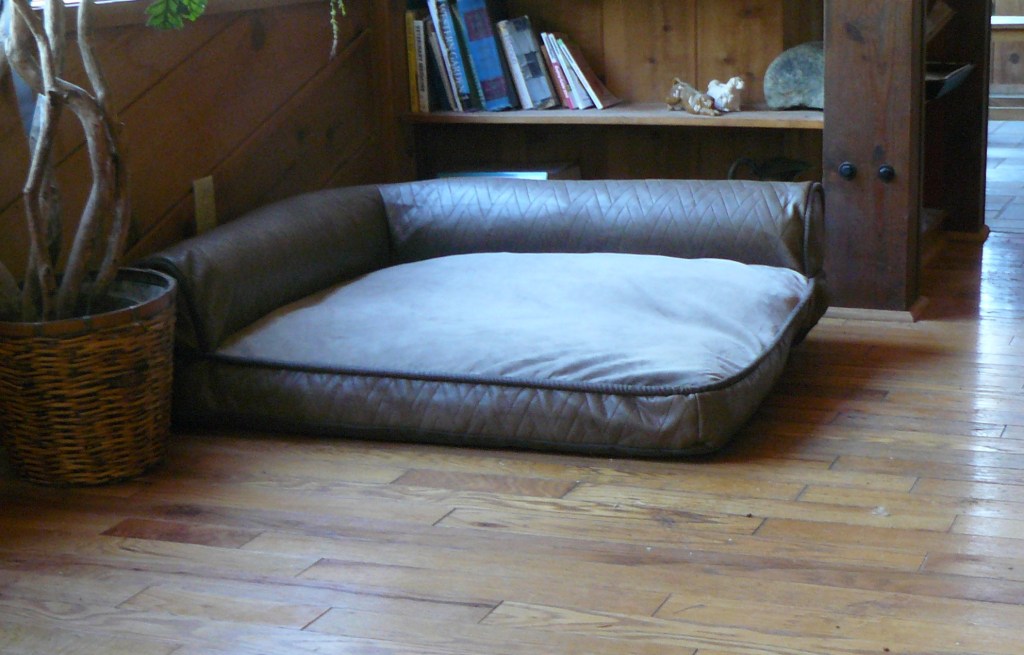
by Jennifer Hinders Whether it’s a death in the family, a child leaving home, or a divorce, your dog will notice that one of his “pack” members is missing. Learn to help him deal with his grief.
Grief has many forms, and can arise from many situations besides the death of a loved one. A relationship breakup, a child leaving home, even a prolonged business trip or hospital stay are all examples of family changes that can cause feelings of loss and grief in those remaining at home. That grief can be felt even more keenly by your dog, who doesn’t understand where the missing person is and when or even if s/he will be back.
My own dog became extremely sad when my husband left for an extended trip. Every time I sat down, he jumped in my lap (no small task since he weighs 50 pounds), lay his head on my arm and sighed pathetically. He poked around the house with his head drooping like a deflated balloon.
I asked veterinary behaviorist Dr. Nicholas Dodman about my dog’s behavior. “Dogs can get into a funk or lose interest in life because of separation,” he told me, adding that even short absences can cause changes in behavior. “For instance, if a man goes out to play a game of golf for five hours, the dog will feel temporary loss, but will be relieved when the owner returns.
“With long term separation or loss, dogs suffer bereavement and get depressed, not unlike humans,” Dr. Dodman adds. “Dogs have a difficult time adjusting to an owner or family member being removed from the household. This is especially the case if the person is someone to whom the dog is close — for example, a dog sleeps in someone’s room and then suddenly that person is out of the picture. The dog can’t understand why that person has disappeared.”
Symptoms of bereavement or loss
Here are some common symptoms that indicate your dog is grieving over a separation or loss:
He seems down and depressed.
He has lost interest in things he formerly liked to do.
He’s listless, not playing with toys.
His appetite changes – typically, a grieving dog eats less and may lose weight.
He shows signs of anxiety.
His energy seems low when he’s out for walks.
In extreme cases, bereavement can cause compulsive behaviors like incessant licking.
How to cheer him up
Many separations and losses in life are inevitable, which means you have to help your dog adjust to the absence of the missing family member. If you’re also grieving, it might be easy to overlook your dog’s feelings; but one of the best ways to help both of you is to try and find ways to make life happy and interesting again.
Act in an upbeat way around your dog; sympathy will actually make his depression worse because he’ll pick up on your own emotions. Dog behaviorist Bill Campbell calls this the “Jolly Routine”: when you act happy or jolly, it helps lift the dog’s mood. An old proverb states that “a cheerful heart is good medicine”. Being upbeat, fun and positive is good medicine for your dog (and for you).
Give your dog lots of attention — treats, new toys, extra walks or play sessions. Throw a ball. Let him play with other dogs. Consider getting him a new friend in the form of a puppy, if circumstances allow. When you go back to work after the loss or separation, don’t leave your dog at home alone. If your workplace allows, take him with you, or have him stay with a friend or family member he knows well.
The good news is that your dog’s grief will ease over time. He may feel low for a few weeks, but it’s generally temporary. As his owner, being aware of his suffering and taking the necessary actions to help him through it will speed his (and your) recovery and adjustment.
Losing a dog buddy is also hard on him
Dogs don’t just grieve when people in their lives die or go away. It’s also common for a dog to grieve over the loss of another dog he was closely bonded with. Dogs in the same household may play together, sleep together, operate as a pack, so the loss of one has a deep impact on the other.
Here’s one dramatic example involving two dogs in the same home. The older dog became terminally ill and needed to be put to sleep. The owner arranged for his healthy dog to go for a long run while the other was euthanized. Back home, the owner buried the older dog in the garden, covering the grave completely so it was basically indistinguishable from the surrounding area.
When the healthy dog was brought back from his outing, he ran around the house looking for his buddy, then begged to go outside. He immediately went to his friend’s grave and lay on it for three days.
ooOOoo
A few words of reflection from me following Jennifer Hinders useful article.
Death is inevitable. For both our beloved pets and, for that pet, their beloved humans. As they say about death and taxes!
But for that pet the loss of their beloved human can come about for other reasons apart from death.
Yet in the midst of say a divorce, or a loved young person leaving home to make their own life, it must be all too easy for people to lose the focus on what that means for the family pet, especially the family dog.
Again and again the power of our relationship with dogs is breathtakingly beautiful.
If I carried on writing about dogs and sharing articles with you for a thousand years, I still don’t think I would become immune to the joy and wonder of what dogs mean to us. (Luckily for your sake you won’t have to follow this blog for quite those many years!)
Turning to us, the measure of a compassionate and caring society is how it looks after those who, through circumstance and bad luck, are disadvantaged. While there are many in such a situation who are the wrong side of twenty-one there’s something especially important, critically so, in reaching out to help our youngsters.
So why this switch from dogs to disadvantaged young people?
Read on:
ooOOoo
Shelter Dogs and Special Needs Kids: A Match Made in Heaven
Brook, a Rhodesian Ridgeback mix, was sitting in a high-kill shelter in Arizona with just two days to live when she was rescued by Janice Wolfe, founder and CEO of Merlin’s KIDS. The nonprofit organization rescues, rehabilitates and trains shelter dogs to work as service dogs for children with autism and special needs, as well as to assist disabled veterans. After extensive training Brook returned Wolfe’s kindness by transforming the life of Julie, 21, who is developmentally delayed due to a premature birth.
Wolfe describes Brook as a “rock star,” a calm sweet dog with the perfect temperament for working as an emotional support service dog. Julie’s mom, Ellen, couldn’t agree more.
“Brook has given Julie a greater sense of confidence,” Ellen said. “They are always together and Brook definitely knows that it’s her responsibility to take care of Julie.”
Before being paired with Brook, Julie was afraid to go outside the house on her own. Now she and Brook take walks down the block or sit together in the yard. Julie has become more outgoing and enjoys speaking or singing in front of people.
“Brook has become an emotional support for all of us,” Ellen said. “I can’t believe that they almost put her to sleep. She is the love of our lives!”
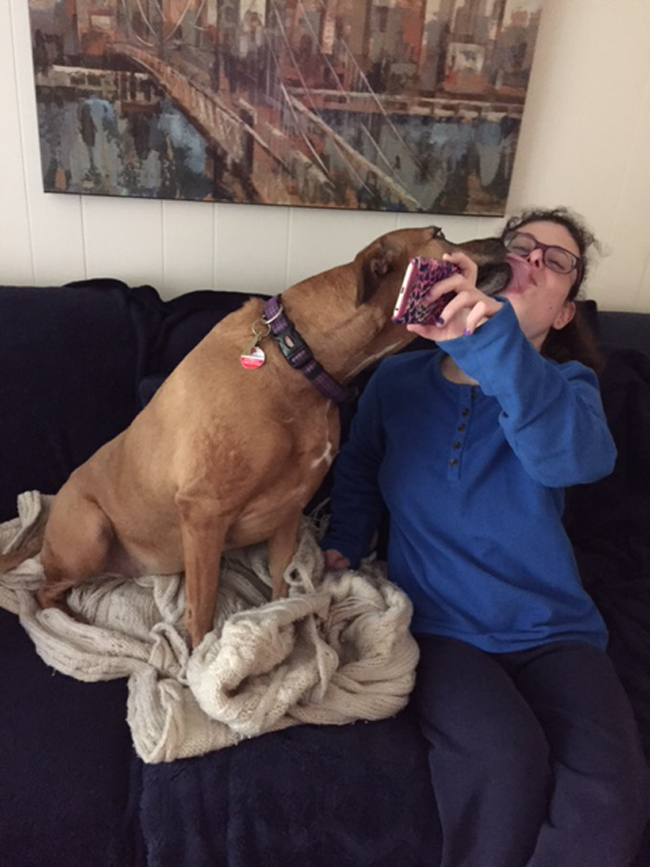
Julie takes a selfie with Brook as he smothers her with kisses.
Another Merlin’s KIDS graduate, Willow, was rescued from a beach in Aruba where she ran with a feral pack. She was so scared that nobody could touch her. With patience and love her foster family won her love and trust. Now after completing the training program, the 40-pound sweet-natured cunucu dog is ready to join three other Merlin’s Kids service dogs in the Animal Adaptive Therapy program at the Calais School for special needs children in New Jersey. Willow is a cortisol detection dog trained to detect stress signals in students and to alert the counseling team so that they can intervene before a problem escalates. She will also work with students to learn the social, emotional and behavioral skills they need to succeed in life.
Willow and Brook are just two of the 1,300 dogs that have been rescued, rehabilitated and trained as service dogs by Wolfe, a canine behavior rehabilitation specialist and author of “SHH HAPPENS! Dog Behavior 101.” In addition to Rhodesian Ridgebacks, the nonprofit organization has rescued and rehabilitated Labrador mixes, pointer mixes and coonhound mixes to work as service dogs. The goal of the organization is to ensure that service dogs are available to families in need regardless of financial circumstances. To fulfill this mission it depends on financial donations and sponsorships.
Wolfe said that Merlin’s KIDS service dogs are highly trained and highly specialized. They can do anything from keeping a special needs child from wandering away to opening doors or picking up pencils for children with disabilities to alerting before the onset of a seizure. It’s important, the trainer said, to make sure that the dogs are physically capable of doing the jobs being asked of them and that they have the right temperament.
“I’m very careful when placing dogs with autistic children because these kids can have such erratic behavior and the dogs have to be able to handle that,” Wolfe said. “Service dogs who will be tethered to a child have to be really chill and calm”
When it comes to autistic children Wolfe’s dogs are trained to serve the individual child. For example, dogs are trained to help children who are overstimulated by interrupting behavior patterns, and they can prevent children from opening a door and running out into the street. Some children need deep pressure to fall asleep so Wolfe and her team train service dogs to lay across their laps at night.
“We have a lot of autistic kids who had never slept in their own beds until they got a service dog,” Wolfe said. In addition to donations and sponsors, Merlin’s Kids is always in need of volunteers and foster families.
I am referring to the result of the British election that was held last Thursday.
Now I am well aware that many readers will not have the same relationship with the outcomes of British elections as your faithful scribe. But I am also aware that we live in a very connected world. I am also acutely aware that for many, many years I was a devoted listener to the 15-minute weekly radio broadcast on the BBC by Alistair Cooke Letter from America.
So for me, and many others I don’t doubt, the views of America as to what goes on across the pond are just as fascinating today as they have always been.
But in the absence of dear Mr. Cooke (20 November 1908 – 30 March 2004) passing on his experienced assessment on what the outcomes of British elections mean for America then I turn to a recent item on The Conversation site and republished here within the terms of that site.
ooOOoo
How populism explains May’s stunning UK election upset: Experts react
June 9, 2017 6.04am EDT
Editor’s note: U.K. Prime Minister Theresa May’s election gamble failed badly as her Conservatives lost 12 seats, leaving them with 318, shy of a majority. It was a stunning loss for a party earlier projected to gain dozens of seats. Without a majority, the Conservatives will have to rely on another party to govern – known as a hung Parliament. If they’re unable to forge a coalition, rival Labour leader Jeremy Corbyn – whose party gained 31 seats – would be able to give it a go. We asked two experts to offer their insights on what Americans should make of the election and its results.
May had a bad night and may face a struggle over her party’s leadership
The results of this election show how similar, and yet how different, British politics are from what is happening in America.
As in the United States, there has been an explosion of populism in Britain, most recently evidenced by the Brexit referendum. This new political force is translating into less liberal policies from the major parties.
In continental Europe, the new populism is mostly embodied by the resurgent far right. But in Britain, as in America, it is being filtered through the existing two-party system – though the U.K.‘s smaller parties do complicate the electoral map.
To accommodate the political winds, May and her Conservatives decided to shift their electoral strategy away from Margaret Thatcher’s pro-market economic approach toward a greater focus on immigration, security and economic nationalism.
Labour leader Jeremy Corbyn, for his part, deserted the more centrist “New Labour” ideas of Tony Blair in favor of a more robust form of social democracy.
The American left, like its British counterpart, has also become increasingly skeptical of unbridled markets. But among Republicans, a traditional hostility to “big government” makes pro-worker redistributive policies, some of which the Tories have adopted to win votes, hard to stomach. For this reason, populism on the American right has mostly taken the form of protectionist and anti-immigrant policies, as embodied by Donald Trump.
Yesterday’s results were devastating for May and indicate that the Conservatives were ultimately unable to balance their new populist message with their traditional support for neo-liberal policies.
Corbyn, for his part, will use this unexpected victory (of sorts) to solidify his hold over the Labour Party and to move it further to the left.
It remains to be seen whether the election will result in a minority or a coalition government, or whether the parties will be well and truly deadlocked. Whatever happens, the British electorate, like its cousin across the pond, has shown itself to be highly polarized.
Still, at a minimum, Britain’s parliamentary structure, along with the ability of the Labour leadership to co-opt disillusioned voters, seems to have spared Britain the fate of America – the takeover of government by a populist insurgent.
Corbyn and his Labour Party had reasons to smile on election night. AP Photo/Frank Augstein
May took a calculated political risk and lost. While the market reaction has been severe, with the pound plunging, it’s nothing new to companies, which take calculated risks like that every day – some pay off and some do not.
So first of all, U.S. corporate executives will need to take a deep breath. Assuming a combination of other parties do not cobble together at least 322 seats – despite winning seven seats, Northern Ireland’s Sinn Fein will not send MPs to London – the Conservatives will dominate a coalition government and have considerable sway over policy.
This means a “hard Brexit,” as outlined by May in January, and as seen in the European Union’s tough negotiating guidelines, is unlikely to change. But this is what most U.S. companies have been planning for anyway since last June’s Brexit vote. Many companies, particularly banks and financial institutions, are already planning to move some of their U.K. operations to other EU countries to take advantage of the single market rules.
This process will continue no matter who’s in power, since only the low-polling Liberal Democrat and Green parties promised a Brexit revote.
Second, a weakened Conservative Party will need more foreign friends, and that includes U.S. companies. Since Brexit, some foreign businesses have threatened to downsize or close their U.K. operations as leverage for obtaining government subsidies. Expect more companies to use this strategy with a weaker U.K. government.
As I argue in my recent book, the business environment of Europe is much more than the U.K. market, and U.S. companies have become increasingly aware of this since Brexit.
In other words, it’s business as usual, and that means the continued segmenting of companies’ U.K. and EU strategies, regardless of who is governing in London.
ooOOoo
Expect things to continue to be interesting for some time. Or as more eloquently put by Tariq Ramadan “Times have changed; so must the lenses through which we see the political future.”
Back to Alistair Cooke. There are many of his broadcasts available on the BBC Radio website and on YouTube.
I’m closing with just a small part of Charlie Rose interviewing Alistair Cooke in May, 1996.
Uploaded on Sep 25, 2011
Tuesday, May 7, 1996
Charlie Rose: An interview with Alistair Cooke
Alistair Cooke celebrates the 50 year anniversary of his BBC broadcast, “Letter from America”, a 15-minute talk about life in America for British listeners.
Recorded some twenty-one years ago. Somethings don’t seem to change!
As in how a primate chooses to communicate with humans.
In recent times there have been a couple of posts in this place about the science of communication between dogs and humans.
What about other animals?
What about a gorilla?
If you drop across to the YouTube site and search for Koko the Talking Gorilla you will be astounded by how many videos are to be seen.
Try this one:
A very moving account from Robin Williams.
If we then want more background information on this remarkable animal, Wikipedia is there to oblige (in part):
Hanabiko “Koko” (born July 4, 1971) is a female western lowland gorilla who is known for having learned a large number of hand signs from a modified version of American Sign Language (ASL).
Her instructor and caregiver, animal psychologist Francine “Penny” Patterson, reports that Koko is able to understand more than 1,000 signs of what Patterson calls “Gorilla Sign Language” (GSL).[2] In contrast to other experiments attempting to teach sign language to non-human primates, Patterson simultaneously exposed Koko to spoken English from an early age. Reports state that Koko understands approximately 2,000 words of spoken English, in addition to the signs.[3] Koko’s life and learning process has been described by Patterson and some of her collaborators in a number of books, peer reviewed articles, and on a website.
Koko got her birthday wish this July 4th — not only did one kitten come to visit, but a whole litter. Koko fell in love with one, and the other fell in love with her. Koko has adopted these two kittens into her family, and it has energized her world.
Not only have Koko’s maternal and play instincts kicked in, but she is signing more to her caregivers and generating new content everyday that can be used by The Gorilla Foundation to create empathy for great apes. This can have significant benefits to both endangered free-living great apes and those in captive environments, by encouraging the development of 2-way communication with their caregivers (which Koko has had since she was a baby).
The Gorilla Foundation is now working on a multimedia sequel to the classic book, “Koko’s Kitten,” which has already reached millions of children worldwide, and has the power to motivate millions more to learn how to make the world a better place for all of its conscious inhabitants.
You can support The Gorilla Foundation mission of Conservation through Communication by visiting http://www.koko.org
Thank you!
Will close with this photograph seen ‘on the web’.
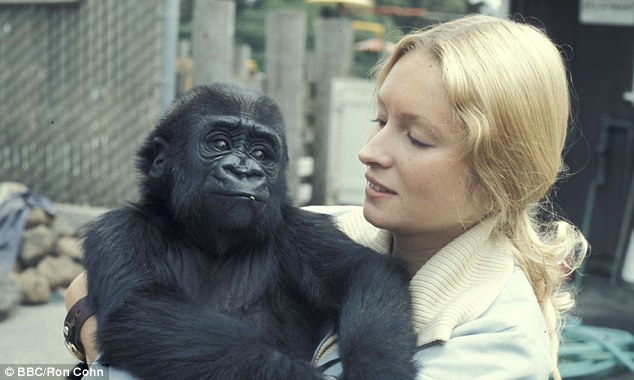
Graduate student Penny Paterson with a young Koko on her back not long after they met in 1971 in San Francisco. (The Daily Mail newspaper 2nd June, 2016.)


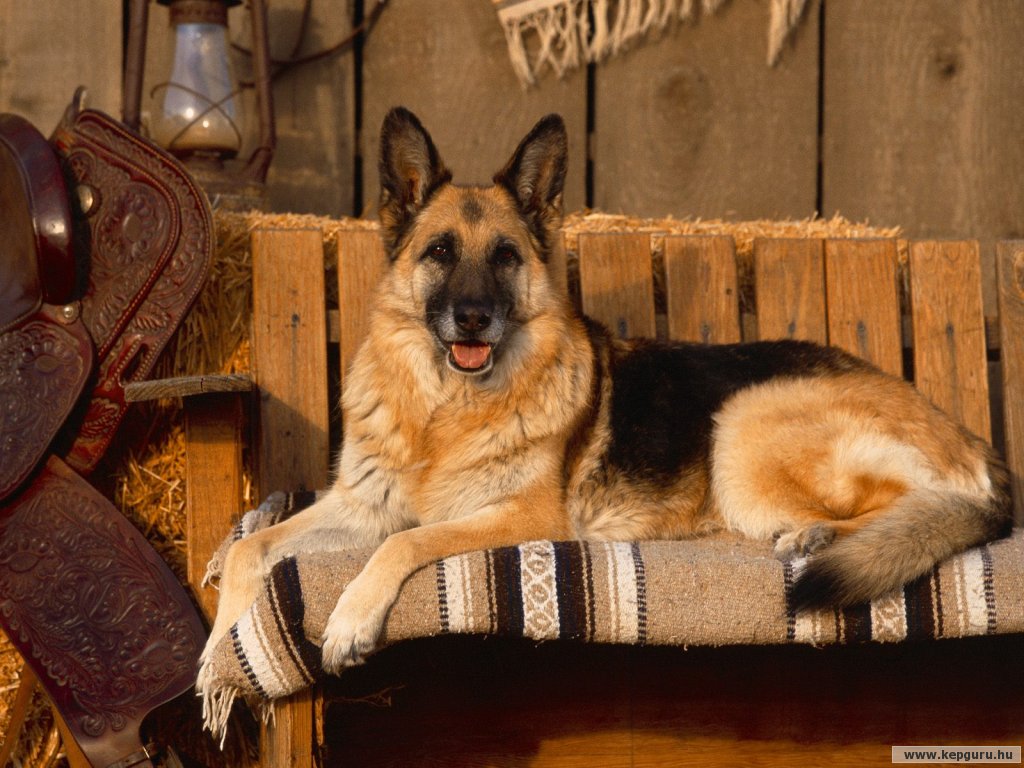






 that less than thirty-six hours previously Pharaoh was sleeping quietly near his bed, albeit unable to walk on his own.
 meal, Pharaoh always licked my plate clean.


 that one of his “pack” members is missing. Learn to help him deal with his grief.