I was born in London in November, 1944. Exactly six months before the Second World War ended in April, 1945.
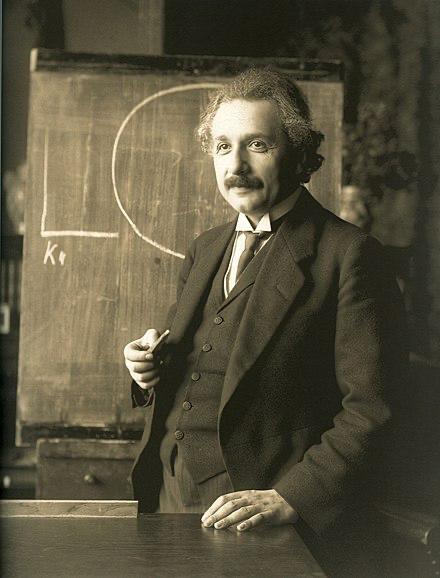
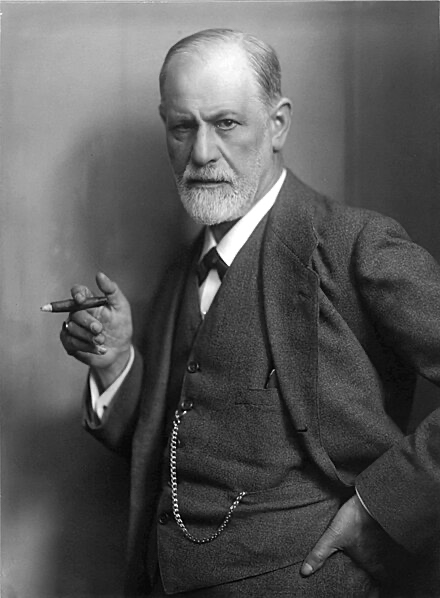
Thus it was of great interest to me that yesterday Jean and I listened to a BBC Radio 4 programme about the letters that were exchanged between two great Jewish men: Einstein and Freud, in 1932. The programme was called Why War? The Einstein-Freud Letters.
The programme ends with offering the listener a fundamental choice, which I won’t spoil for you now. But to me it is an extension of my post (or Patrice’s post) that I published recently on March 19th.
I believe, and hope, you can listen to it by clicking on this link. Here also is the text that is at that link:
In 1932 the world-famous physicist Albert Einstein wrote a public letter to the founder of psychoanalysis, Sigmund Freud. Einstein, a keen advocate of the League of Nations and peace campaigner, asked Freud if he thought war and aggression was forever tied to human psychology and the course of international relations: could we ever secure a lasting world peace?
Einstein’s letter is deeply prescient, as is Freud’s extraordinary response. The exchange was titled ‘Why War?’. The two thinkers explore the nature of war and peace in politics and in all human life; they think about human nature, the history of warfare and human aggression and the hope represented by the foundation of the League of Nations (precursor to the UN) and its promise of global security and a new architecture of international law.
At the time of their exchange, Freud is in the last great phase of his career and has already introduced psychoanalysis into the field of politics and society. Einstein, the younger of the two, is using his huge international profile as a physicist for political and pacifist intervention.
For Einstein, future world security means a shared moral understanding across the global order – that humankind rise above the ‘state of nature’ never to devolve into total war again. He wrote to Freud, as ‘a citizen of the world…immune to nationalist bias…I greatly admire your passion to ascertain the truth. You have shown how the aggressive and destructive instincts are bound up in the human psyche with those of love and the lust for life. At the same time, you make manifest your devotion to the goal of liberation from the evils of war…’ Is it possible, Einstein asks Freud, to make us ‘proof against the psychoses of hate and destructiveness?’. Freud’s answer is fascinating and quite unexpected.
The exchange of letters was sponsored by the International Institute of Intellectual Cooperation, an organisation promoting global security by using prominent thinkers, drawing on multiple fields of knowledge (from science to psychology, politics and law) to achieve a new language for international peace, following the lessons learned from the Great War of 1914-18.
But even as Einstein wrote to Freud in the summer of 1932, the Nazi party became the largest political party in the German Reichstag. Both men felt a sense of apprehension about what was coming; both were pacifist, both Jewish, both would be driven into exile (both Einsteinian physics and Freudian psychoanalysis were denounced by the new regime). The letters were finally published in 1933 when Hitler came to power, suppressed in Germany, and as a result never achieved the circulation intended for them.
Featuring readings from the Einstein–Freud letters and contributions from historians of warfare and psychoanalysis, war journalism and global security, this feature showcases the little-known exchange between two of the 20th century’s greatest thinkers, ‘Why War?’ – a question just as relevant in today’s world.
Contributors include historian of war and peace Margaret MacMillan, BBC chief international correspondent Lyse Doucet, defence and security expert Mark Galeotti, historian of international relations Patrick O Cohrs, author Lisa Appignanesi, who has written on Freud and the history of psychoanalysis, and Faisal Devji, historian of conflict and political violence in India and the Middle East.
Readings are by Elliot Levey (Einstein) and Henry Goodman (Freud)
A story about a dog that was first thought to be dead.
Dear reader,
We had so much going on Wednesday afternoon that I was tempted to give this post a miss. But then I changed my mind considering how beautiful the story is.
ooOOoo
‘Dead’ Dog Abandoned In Amazon Box Turns Out To Be A Total Lovebug
Earlier this year, on a sunny day in Pennsylvania, a woman stepped out onto her porch and found a horrifying package. Lying in an open cardboard box was a fluffy white dog — and he wasn’t moving.
“[M]y mom called me in a panic because she found a ‘dead’ dog dropped on her porch in an Amazon box,” the rescue wrote in a Facebook post about the event. “Turns out this boy wasn’t dead, he was just unconscious.”
FACEBOOK/SPERANZA ANIMAL RESCUE
When rescuers arrived, they were heartbroken to realize the pup was barely a year old. His pupils were cloudy, and he suffered from seizures. Rescuers moved the sick dog, later named G.I. Joe, into veterinary care, where he began receiving necessary treatment.
FACEBOOK/SPERANZA ANIMAL RESCUE
Within days, G.I. Joe’s gentle spirit began returning. He moved in with Karen Spangler, an experienced foster mom, and made friends with his new dog siblings. Though she immediately loved G.I. Joe, Spangler initially insisted that the situation would only be temporary.
“I didn’t want another permanent dog to add to my family,” Spangler told The Dodo. “I told multiple family and friends I would not become a foster fail.”
FACEBOOK/SPERANZA ANIMAL RESCUE
But as the weeks went on, Spangler realized G.I. Joe, or “Joey,” as she calls him, was too special to let go. The curious, quiet rescue pup had already bonded with her grandchildren and with her other two dogs. Spangler adored G.I. Joe, and she wanted him to feel safe and secure.
“I could not put him through another change,” Spangler said. “That was it. I became a foster fail.”
KAREN SPANGLER
These days, Spangler can’t imagine her life without G.I. Joe. Her new pup has already proven to be a great influence on her other dogs, encouraging them to play and exercise. Spangler looks forward to G.I. Joe’s continued training and hopes to walk him on neighborhood country roads soon.
“They always say things happen for a reason, and this is so true,” Spangler said. “My family needed Joey. Never in a million years did I think he would turn out to be so sweet and smart. [I]m looking forward to seeing where he takes us.”
ooOOoo
Karen Spangler is a very kind soul and clearly loves dogs. Congratulations to her and to the Speranza Animal Rescue. Finally, many thanks to Maeve Dunigan for writing the story.
At first sight, the above title goes without saying. But then one quickly realises that not everyone, by far, has the circumstances that are ideal for dogs.
Thus, it is an important guest post from Penny.
ooOOoo
Explore the world of Learning from Dogs, where the integrity and lessons from our canine friends are celebrated.
Photograph courtesy of Freepik
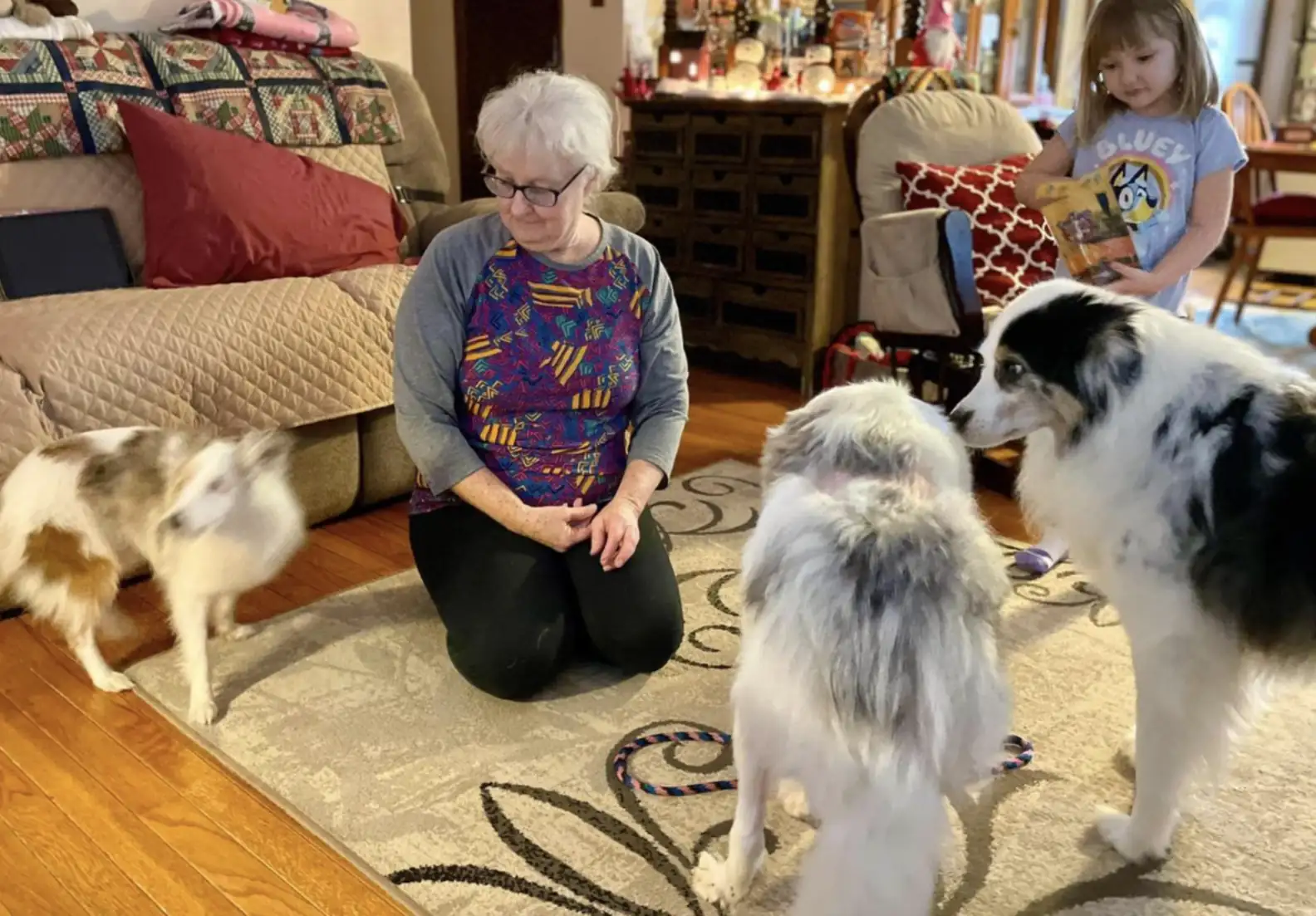
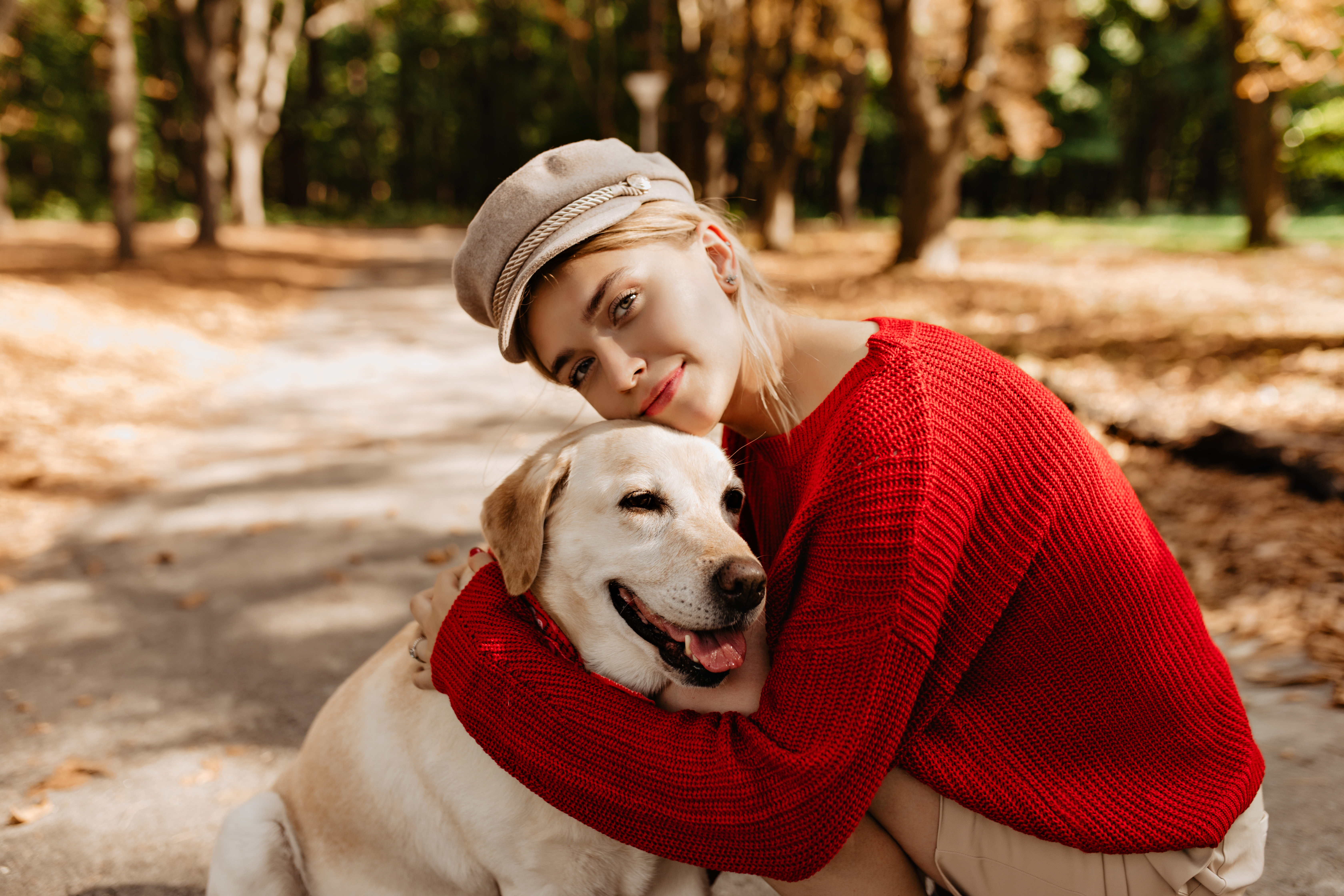
Canine Contentment: Effortless Ways to Please Your Pooch
Enhancing your dog’s quality of life goes beyond just fulfilling their basic needs. It’s about creating a fulfilling environment that nurtures both their physical and mental well-being, ensuring they lead a happy and healthy life. By adopting a few straightforward strategies, you can make a significant impact on your furry companion’s daily life. In today’s post on the Learning From Dogs blog, we delve into practices that promise to elevate your dog’s overall happiness and strengthen the bond you share.
Diversify Playtime
Traditional fetch is a classic game, but expanding your play sessions to include interactive toys, agility courses, and the teaching of new tricks can significantly stimulate your dog’s mind and body. These activities are not just fun; they challenge your dog, keeping them mentally sharp and physically fit. An engaged dog is a happy dog, and by incorporating variety into your playtime, you ensure their days are filled with anticipation and excitement.
Upgrade Their Living Space
A nurturing environment for your dog goes beyond daily walks and playtime; it extends into the realm of maintaining a safe and secure home. Leveraging a home maintenance and repair app can be a game-changer for pet owners, offering an efficient way of covering repair and maintenance. These digital tools simplify the process of arranging service appointments. Furthermore, they connect homeowners with skilled professionals, ready to provide estimates for any necessary work, keeping the living space both comfortable and safe for your furry friend.
Plan for Daily Exercise
Tailoring daily exercise to match your dog’s breed and energy level is crucial for their overall well-being. Incorporating at least 30 minutes of brisk walking or running into their routine plays a pivotal role in maintaining physical fitness and mental alertness. This practice acts as a fundamental pillar of health, warding off boredom and potential behavioral problems, thereby securing a state of contentment and optimal health for your pet. Moreover, this commitment to regular physical activity reinforces your bond with your dog, highlighting the shared experiences that enrich your relationship.
Socialize Regularly
Socialization introduces your dog to new experiences and fellow canines, crucial for their emotional development. Visits to dog parks, pet-friendly stores, or arranging doggy playdates offer your dog a chance to develop social skills and enjoy a variety of experiences. Such outings enrich your dog’s life, offering new sights, sounds, and smells to explore, keeping their days interesting and fulfilling.
Consistent Training Sessions
Consistent training sessions are crucial for both teaching your dog new skills and enhancing the bond between you and your pet. By employing positive reinforcement methods, you not only make learning enjoyable for your dog but also significantly strengthen your relationship. Keeping the training sessions regular and brief ensures your dog’s mental stimulation is high and reaffirms their status as a cherished family member. The technique of positive reinforcement turns each training encounter into an anticipated and joyous occasion, underscoring the pleasure found in the learning process.
Mealtime Enrichment
Transforming mealtime into a game satisfies your dog’s natural foraging instincts. Puzzle feeders, snuffle mats, or hiding treats around the house can turn a routine meal into an exciting adventure. This not only enriches their daily routine but also provides mental stimulation, keeping their minds sharp and engaged.
Provide a Cozy Retreat
Ensuring your dog has a comfortable resting area is essential for their sense of security and well-being. Spending time each day on calm interactions, such as petting or grooming, reinforces their feeling of love and security. A dedicated space for rest and the assurance of your love helps them feel safe and cherished, fostering a deep sense of well-being.
Adopting these strategies not only improves your dog’s physical and mental health but also enhances the bond you share, making each moment together richer and more meaningful. Each practice, from diversifying playtime to ensuring a comfortable living space, plays a vital role in your dog’s overall happiness. By investing time and love into your dog’s well-being, you ensure they lead a fulfilling life, full of joy and love. Embrace these strategies and witness the transformation in your dog’s life, knowing you’re providing the best care and affection possible.
ooOOoo
I am very grateful to Penny for sending these posts to me.
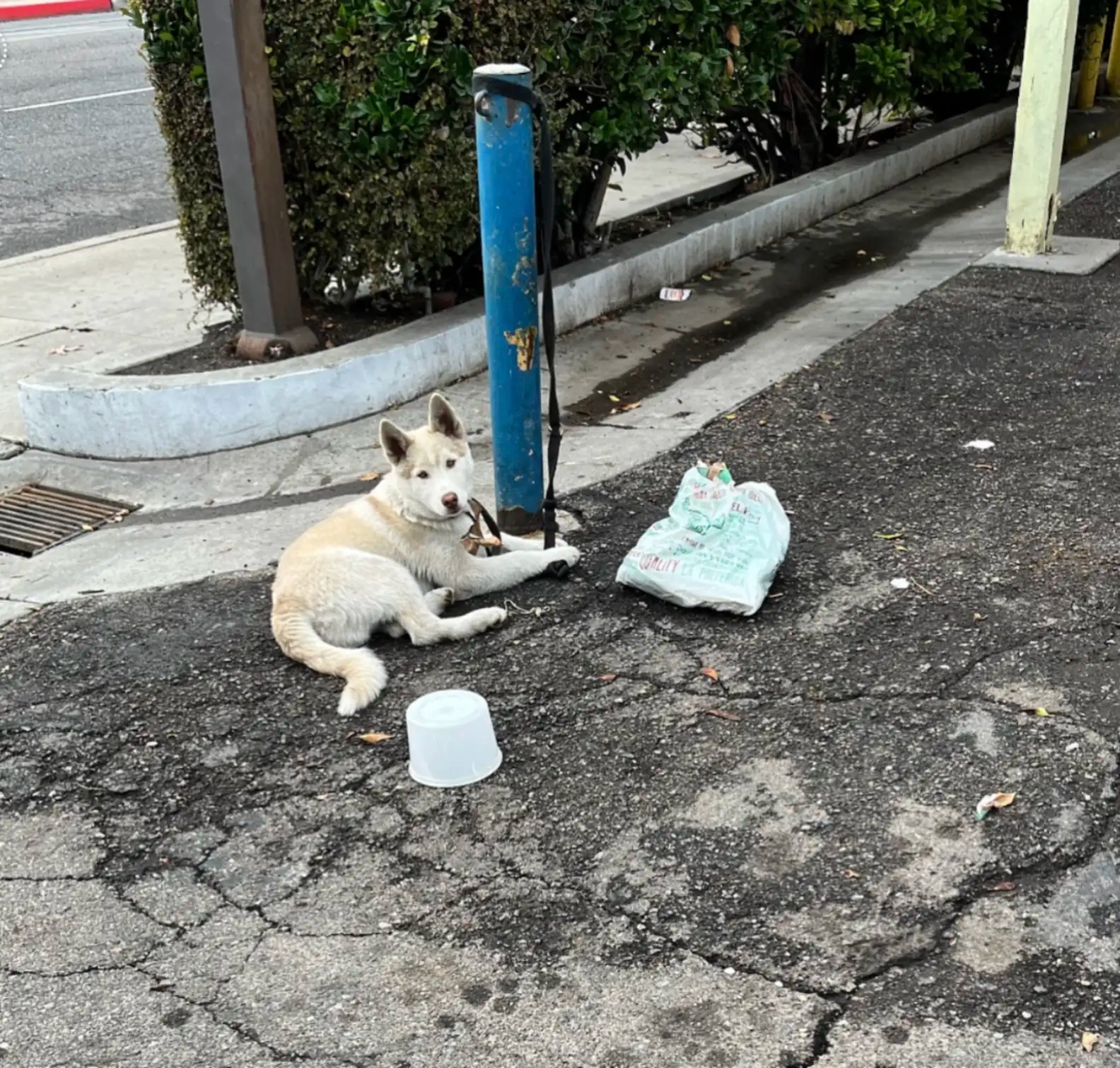
Alone on a cracked patch of cement, a white dog named Buckley stared up the street from where he was left tied to a pole in Santa Monica, California. For days, the gentle dog waited for someone to notice him, hoping they might take him somewhere safe.
LOVE LEO RESCUE
One day, a local rescuer passing by noticed Buckley’s big brown eyes. She couldn’t believe the 6-month-old husky puppy was alone without food or water. She knew she had to help.
Soon, Buckley was off the streets, safe in the expert hands of Love Leo Rescue.
LOVE LEO RESCUE
Meeting the pup for the first time, rescuers felt moved by Buckley’s warmth and resilience.
“Buckley is an exceptional dog,” Love Leo Rescue director Sasha Abelson told The Dodo. “He is well balanced and loving and didn’t let his previous experiences change his lovely personality.”
The wayward pup eventually moved in with a foster family. Lately, he’s enjoyed spending lots of time outside with his new friends.
“Buckley is a typical, happy-go-lucky husky,” Leo said. “He loves playing with his dog friends and learning new skills. He loves going for hikes and also cuddling near his humans. He is just a perfect family dog.”
LOVE LEO RESCUE
For now, Buckley is still searching for his forever home, hoping his family finds him soon.
“Buckley would love to go into a home that is active and preferably a home with another playful, balanced dog,” Leo said. “We think a dog brother or sister would be wonderful for him.”
With any luck, Buckley won’t be waiting very much longer.
We think that climate change is a relatively recent phenomenon. Wrong! And I am not going to say any more because this post from The Conversation covers it beautifully.
ooOOoo
What ancient farmers can really teach us about adapting to climate change – and how political power influences success or failure
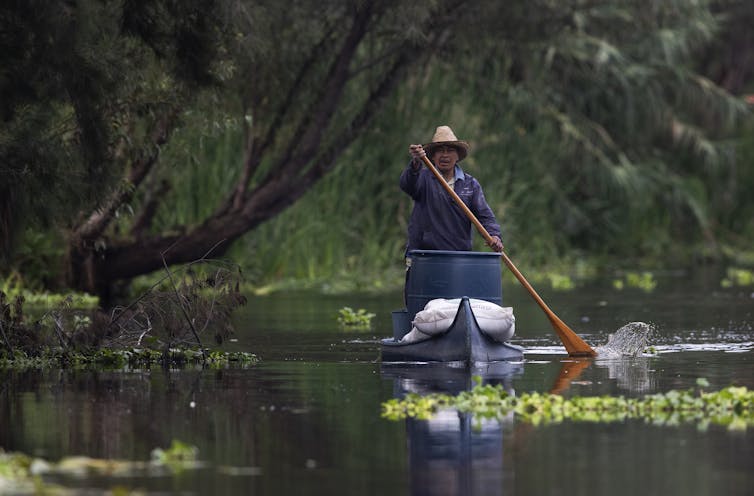
A farmer paddles to his fields on an artificial island among canals, part of an ancient Aztec system known as chinampas, in 2021. AP Photo /Marco Ugarte
In dozens of archaeological discoveries around the world, from the once-successful reservoirs and canals of Angkor Wat in Cambodia to the deserted Viking colonies of Greenland, new evidence paints pictures of civilizations struggling with unforeseen climate changes and the reality that their farming practices had become unsustainable.
Among these discoveries are also success stories, where ancient farming practices helped civilizations survive the hard times.
Zuni farmers in the southwestern United States made it through long stretches of extremely low rainfall between A.D. 1200 and 1400 by embracing small-scale, decentralized irrigation systems. Farmers in Ghana coped with severe droughts from 1450 to 1650 by planting indigenous African grains, like drought-tolerant pearl millet.
Ancient practices like these are gaining new interest today. As countries face unprecedented heat waves, storms and melting glaciers, some farmers and international development organizations are reaching deep into the agricultural archives to revive these ancient solutions.
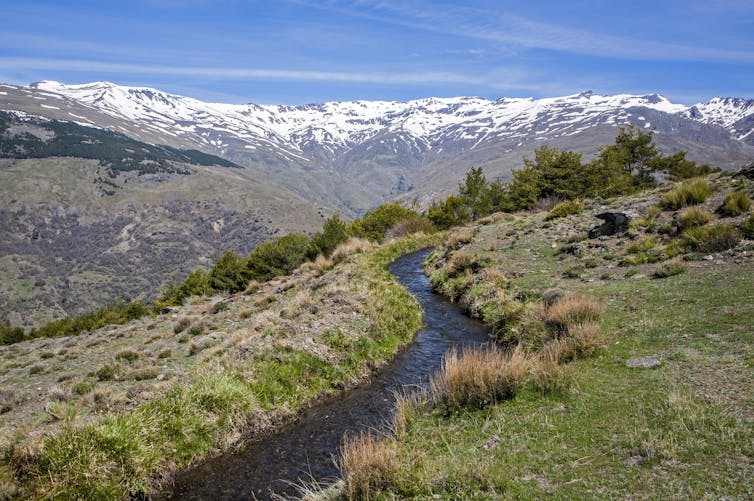
Drought-stricken farmers in Spain have reclaimed medieval Moorish irrigation technology. International companies hungry for carbon offsets have paid big money for biochar made using pre-Columbian Amazonian production techniques. Texas ranchers have turned to ancient cover cropping methods to buffer against unpredictable weather patterns.
But grasping for ancient technologies and techniques without paying attention to historical context misses one of the most important lessons ancient farmers can reveal: Agricultural sustainability is as much about power and sovereignty as it is about soil, water and crops.
In the tropical lowlands of Mexico and Central America, Indigenous Maya farmers have been practicing milpa agriculture for thousands of years. Milpa farmers adapted to drought by gently steering forest ecology through controlled burns and careful woodland conservation.
The knowledge of milpa farming empowered many rural farmers to navigate climate changes during the notorious Maya Collapse – two centuries of political disintegration and urban depopulation between A.D. 800 to 1000. Importantly, later Maya political leaders worked with farmers to keep this flexibility. Their light-handed approach is still legible in the artifacts and settlement patterns of post-Collapse farming communities and preserved in the flexible tribute schedules for Maya farmers documented by 16th century Spanish monks.
Maya farmers and researchers explain milpa farming.
In my book, “Rooting in a Useless Land: Ancient Farmers, Celebrity Chefs, and Environmental Justice in Yucatán,” I trace the deep history of the Maya milpa. Using archaeology, I show how ancient farmers adapted milpa agriculture in response to centuries of drought and political upheaval.
However, these groups condemned the traditional milpa practice of burning new areas of forest as unsustainable. They instead promoted a “no-burn” version to grow certified organic maize for high-end restaurants. Their no-burn version of milpa relies on fertilizers to grow maize in a fixed location, rather than using controlled fire ecology to manage soil fertility across vast forests.
The result restricted the traditional practices Maya farmers have used for centuries. It also fed into a modern political threat to traditional Maya milpa farming: land grabs.
Traditional milpa agriculture requires a lot of forested land, since farmers need to relocate their fields every couple of years. But that need for forest is at odds with hotel companies, industrial cattle ranches and green energy developers who want cheap land and see Maya milpa forest management practices as inefficient. No-burn milpa eases this conflict by locking maize agriculture into one small space indefinitely, instead of spreading it out through the forest over generations. But it also changes tradition.
Maya milpa farmers are now fighting to practice their ancient agricultural techniques, not because they’ve forgotten or lost those techniques, but because neocolonial land privatization policies actively undermine farmers’ ability to manage woodlands as their ancestors did.
Milpa farmers are increasingly left to either adopt a rebranded version of their heritage or quit farming all together – as many have done.
Mexico’s fragile artificial islands: Threats from development
When I look to the work of other archaeologists investigating ancient agricultural practices, I see these same entanglements of power and sustainability.
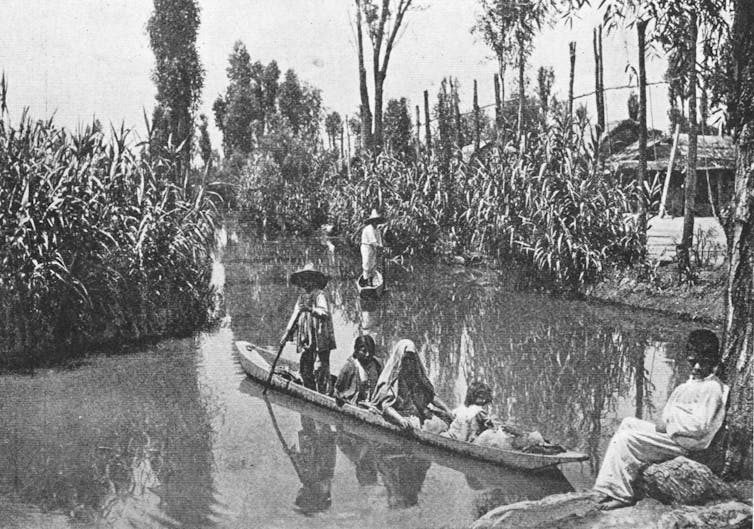
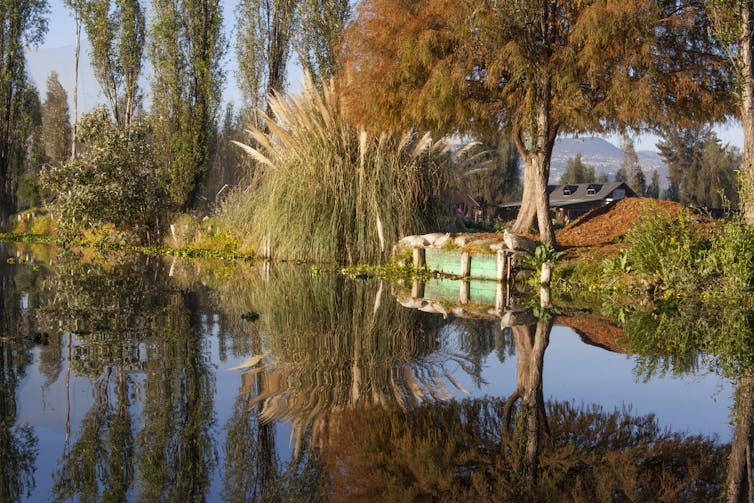
In central Mexico, chinampas are ancient systems of artificial islands and canals. They have enabled farmers to cultivate food in wetlands for centuries.
The continuing existence of chinampas is a legacy of deep ecological knowledge and a resource enabling communities to feed themselves.
The chinampas of Xochimilco are a UNESCO world heritage site today, but development expanding from Mexico City has put their survival in danger. Sergei Saint via Flickr, CC BY-ND
But archaeology has revealed that generations of sustainable chinampa management could be overturned almost overnight. That happened when the expansionist Aztec Empire decided to re-engineer Lake Xaltocan for salt production in the 14th century and rendered its chinampas unusable.
Today, the future of chinampa agriculture hinges on a pocket of protected fields stewarded by local farmers in the marshy outskirts of Mexico City. These fields are now at risk as demand for housing drives informal settlements into the chinampa zone.
Andean raised fields: A story of labor exploitation
Traditional Andean agriculture in South America incorporates a diverse range of ancient cultivation techniques. One in particular has a complicated history of attracting revival efforts.
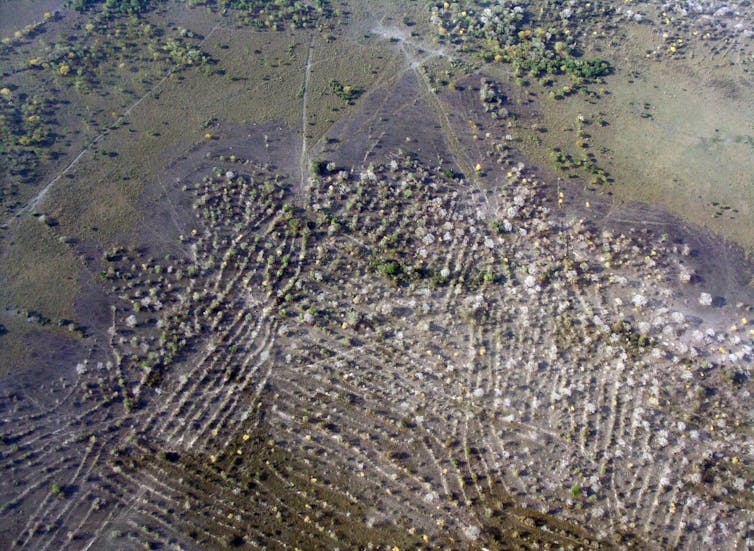
In the 1980s, government agencies, archaeologists and development organizations spent a fortune trying to persuade Andean farmers to revive raised field farming. Ancient raised fields had been found around Lake Titicaca, on the border of Peru and Bolivia. These groups became convinced that this relic technology could curb hunger in the Andes by enabling back-to-back potato harvests with no need for fallowing.
But Andean farmers had no connection to the labor-intensive raised fields. The practice had been abandoned even before the rise of Inca civilization in the 13th century. The effort to revive ancient raised field agriculture collapsed.
Since then, more archaeological discoveries around Lake Titicaca have suggested that ancient farmers were forced to work the raised fields by the expansionist Tiwanaku empire during its peak between AD 500 and 1100. Far from the politically neutral narrative promoted by development organizations, the raised fields were not there to help farmers feed themselves. They were a technology for exploiting labor and extracting surplus crops from ancient Andean farmers.
Respecting ancient practices’ histories
Reclaiming ancestral farming techniques can be a step toward sustainable food systems, especially when descendant communities lead their reclamation. The world can, and I think should, reach back to recover agricultural practices from our collective past.
But we can’t pretend that those practices are apolitical.
The Maya milpa farmers who continue to practice controlled burns in defiance of land privatizers understand the value of ancient techniques and the threat posed by political power. So do the Mexican chinampa farmers working to restore local food to disenfranchised urban communities. And so do the Andean farmers refusing to participate in once-exploitive raised field rehabilitation projects.
Depending on how they are used, ancient agricultural practices can either reinforce social inequalities or create more equitable food systems. Ancient practices aren’t inherently good – it takes a deeper commitment to just and equitable food systems to make them sustainable.
We like to think that the changing climate is a modern phenomenon but this article shows it is not. That sentence by Chelsea Fisher offers a route out of the present situation: “The world can, and I think should, reach back to recover agricultural practices from our collective past.”
Vanessa Keating, Theresa Burge and Aubrey Metropulos, a group of full-time RVers and Vanlifers, were wandering around Bulldog Canyon in Arizona one day, looking for a specific type of cactus. They weren’t far from their campsite when they spotted someone tiny and furry, and quickly realized it was a dog out in the desert all alone.
They immediately knew they couldn’t leave the pup out there by himself and began the process of trying to win him over. Thankfully, it didn’t end up taking very long. The sweet dog was more than ready to be rescued.
“He growled at us at first and took some convincing to come over,” Keating told The Dodo. “It only took a few minutes for him to come up to my sister, Theresa, first, but he was still nervous. We quickly realized he had a cholla cactus stuck to the side of him, and once she pulled it off, he warmed up and got excited. So many kisses, and he even had the zoomies!”
Vanessa Keating
Once the cactus was safely removed from his fur, the lost dog felt so much better and jumped for joy that he’d finally be found. His new friends gave him all the cuddles he’d been missing and started asking around their campsite about him, trying to find his family. Unfortunately, they didn’t have any luck, but they refused to stop trying.
Vanessa Keating
The next day, they took the lost dog to get scanned for a microchip and were overjoyed when they discovered he had one. They got in touch with his dad, who told them the pup’s name was Echo, and quickly made arrangements for a long-awaited reunion.
“The reunion was amazing,” Keating said. “Lots of tears. He thought Echo had been eaten by a coyote and was giving up hope … He was so grateful and relieved.”
Echo had only been lost in the desert for a few days before he was found, thankfully, and he was so excited once he was back in his dad’s arms. He knew once the three women found him that they would be the ones to get him back home safely, and he was right.
ooOOoo
Echo is a lucky dog and being reunited with his Dad must have been magical. But then again, the three women that stopped to gain the attention of this lost dog, and then cuddled him and gave him perfect love are really special
So here’s to Vanessa, Theresa, and Aubrey. Well done all three of you.
Bob Derham is someone I met many years ago, when I was living on my yacht in Larnaca, Cyprus, and I can do no better than to repeat what I wrote in my autobiography.
ooOOoo
I negotiated what I thought was a good deal and sold the company. Inevitably I resigned from what was now not my company; it was the end of November in the year of 1988.
In Tollesbury, I had my annual tax returns done by Peter Michael, also living in the village. Peter was an accountant who also taught accountancy at the nearby Essex University. I saw Peter and we discussed the recent agreement for the sale of the business.
“Paul, there is not a lot you can do, to be honest. You will be liable in broad terms for the tax in the difference between the opening price and the closing price. In your case the opening price was near enough zero and the closing price…” Peter did not need to finish the sentence. I got the picture and stood up to leave. Just has I was going out of the room, Peter added: “Unless you can leave the country before April 15th next year, and stay away for a minimum of four tax years. In other words, leave before April 15th, 1989.”
I walked home from Peter Michael’s house that November, 1988 with the advice I had been given ringing in my ears. I would worry about the tax implications in a day or two. But once again fate intervened.
I was a subscriber to the boating magazine Practical Boat Owner (PBO). In a late 1988 issue I read in the classifieds:
Songbird of Kent – Tradewind 33
Great opportunity to purchase a long-distance ocean yacht designed by John Rock for sea-kindly short-handed sailing.
Well kitted out, continually updated and maintained Songbird of Kent is the yacht for you if you dream of blue waters and serious long distance cruising.
Lying Larnaca, Cyprus.
I knew about Tradewind yachts, was familiar with John Rock. (As the designer of Tradewind yachts he had been featured several times in Practical Boat Owner magazine), and knew how many of his yachts had made world circumnavigations, and, finally, I deserved a holiday. I arranged to go out to Larnaca as soon as I could.
About a week later I caught a flight to Larnaca International Airport; upon arriving I rented a car and drove the few miles to the Marina.
The yacht was easy to find as it was out of the water. I met the owners, Michael and Betty Hughes, who were still living onboard Songbird of Kent. They explained why they were selling. Simply because, as Michael put it, they had been living on the boat for many years and it was time to return to their native Wales. Songbird had been extensively cruised the length of the Mediterranean Sea using Larnaca Marina as the base.
I quietly inspected the boat. Because it was lifted out viewing the boat in detail was much easier than had it still been floating. It was in good condition; very good condition in fact. Then I climbed up the ladder and entered the boat. Again I found everything that I expected, and more. It was clear to me that Michael and Betty had had the boat as their home and, consequently, everything was in order. Or to use the phrase; shipshape and Bristol fashion!
I excused myself, left the yacht and went and sat on a nearby seawall. I wanted to think. To be honest, it was pretty easy thinking. I loved the boat; it was a purchase I could afford, and if everything went to plan and I left the UK before April 15th, 1989, and stayed away for four tax years, there would be no UK tax to pay on the sale of my company Dataview. Nothing: Nada!
So that is exactly what I did!
I went back to Songbird, where Michael and Betty were still sitting in the cockpit, and told them I would buy it. They drew up a contract there and then and I signed it!
My autobiography
ooOOoo
Here is Bob’s story:
Paul and I first met in 1992, when I was working as a contract pilot on the BAC 1-11 for Cyprus Airways.
My last flying post was down in New Zealand, a wonderful place to be, with it’s natural beauty, and lack of aggression and oppression. The joy of life is set around being outdoors, so road trips, camping, sailing, and skiing all feature, but less on big houses, and possessions.
Although I have travelled widely in my career, I now want a simple life, and that amounts to being free of ties to a property, such that all I really need is a warm, dry place to sleep, a suitable place to prepare food, and a place to relax, it is no longer about the big house, which brings it’s own issues, and expenses.
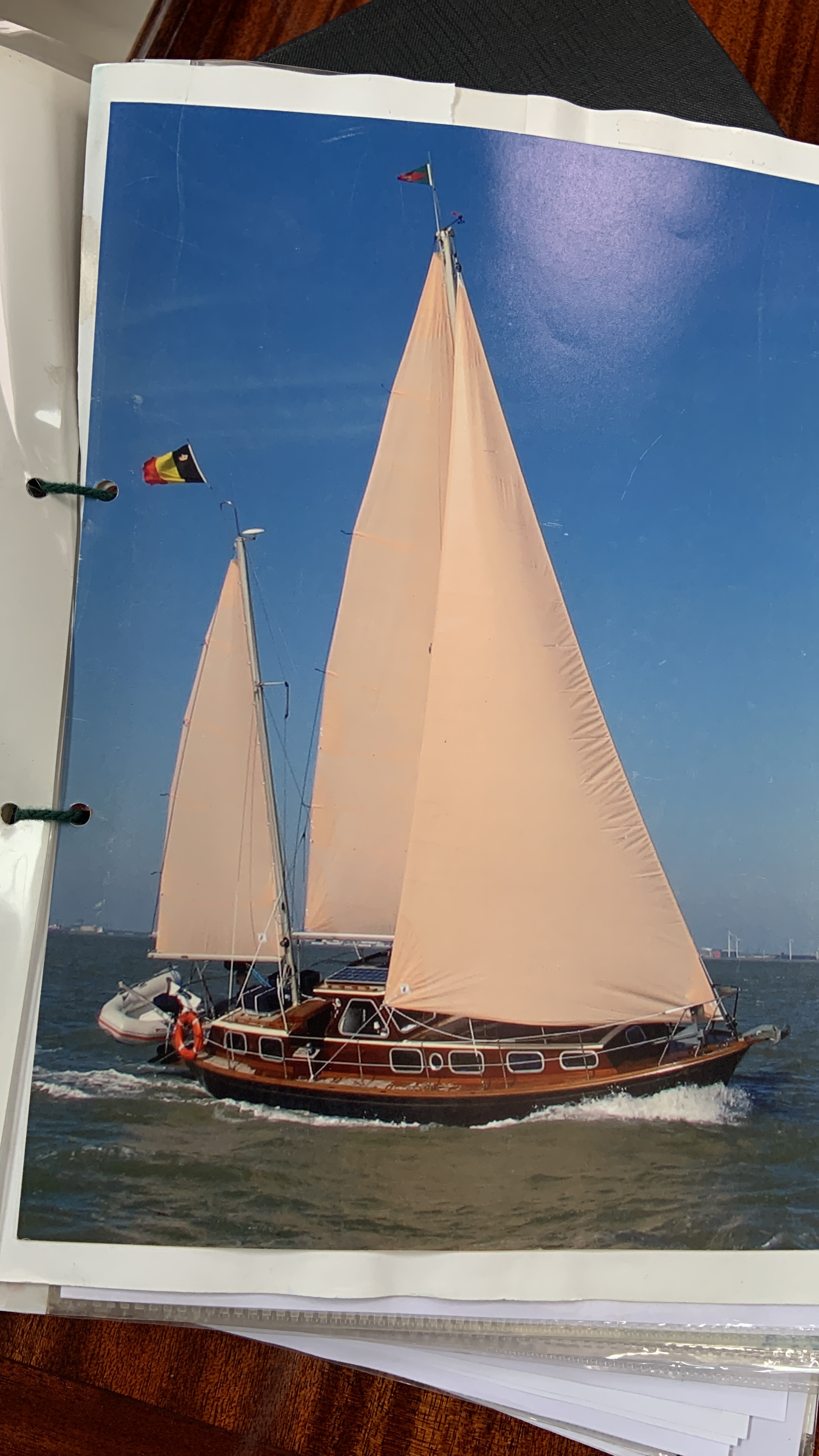
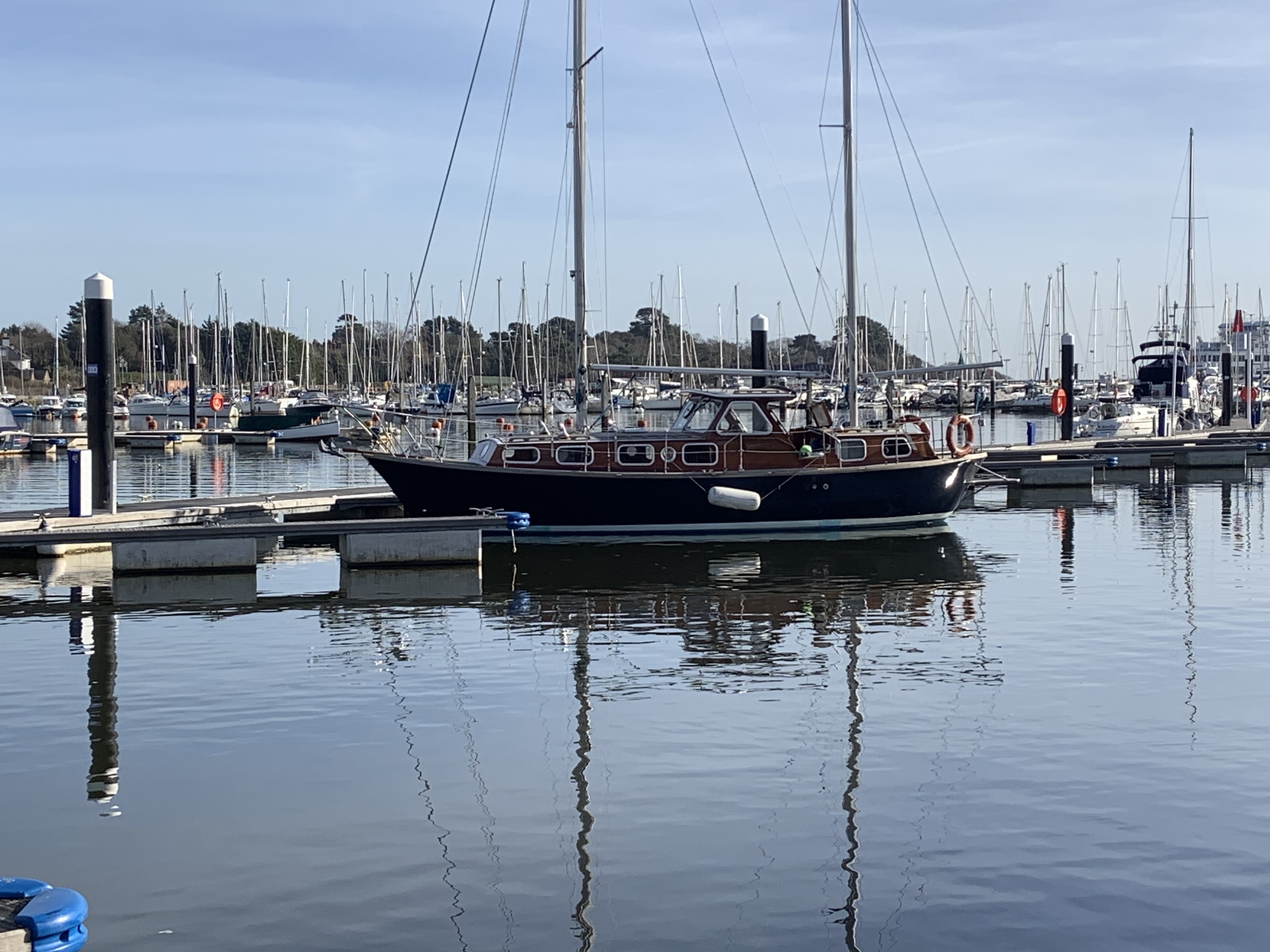
Following on from my time living on Paul’s boat, I was then drawn to living on a boat. I owned a smaller Westerley Centaur, for a few years, and even though small, I had a very happy time when I lived on that. It was down in Lymington, a small market town on the south coast of England opposite Yarmouth, on the Isle of Wight, that I kept my first boat.
The reason for this was simple 🙂
One of the interesting people I met in Cyprus was a man called Les Powles. Paul and I would regularly go out and have a mezze in a side street of Larnaca. Les would be very easy company, and found fun in the most silly situations. I was invited to call by on his boat any time, and have a “ cuppa” What I was intrigued with onboard was a picture of the globe, but cut in half, and opened up. There were a series of lines around the world. I asked Les what this was. His reply was “It’s where I have been when sailing round the world.“
So why I asked are their three lines ?
“Because I have done it three times!“
Les was a most unusual character in that he had started building his boat in 1970. It took him 5 years to complete, and apart from a few short sea trials, Les actually had no other sailing experience, but in 1975, with barely enough rice and water onboard, he headed west. Actually he had intended to go to the Caribbean, but he had applied the variation to his navigation the wrong way, and made land fall 1500 miles from his intended destination. Les only died last year, 96, and his home had been his boat for all those years.
It’s that bit that has been the big thing for me.
Having a home has been ongoing hassle, the fun and enjoyment has been removed, because you are in a trap.
It is important to have a home, but I started to question the point of having a physical building. That brings all the ongoing costs and expenses, where the authorities can milk you for a lot of money!
I first saw Antoinette, in Lymington, and from the first moment I saw the boat, I knew I could make the boat my “home.”
She went to Southwold in Suffolk, England for a major refit, and so there is a new engine, gearbox, and propeller, replaced decking, and repairs have been carried out to the hull.
Inside, I can stand up, and although only 37 foot long, being beamy, there is a lot of room.
There are double cabins both fore and after, with “heads” (bathrooms). The main cabin and galley is very comfortable. It has a lot of mahogany wood, so looks homely, and the “dog house” (bit in the middle), is a very open useable space, either enclosed when cold and wet, or if the weather permits, opened up to enjoy the sun.
The key is that this is “my home”.
I can now travel, and go where I like, but I have my home with me. It has heating, but normally when you arrive somewhere, part of the mooring fees offer a shower unit and facilities. I have space to entertain, but above all, I am free of all the ties that we adopt by following the life society offers us as “the norm“.
It is only now that I see the traps that others face, because I can up anchor and head off, and can see where Les Powles got his freedom, and lived his dream.
In the cabin of Antoinette with Finn the dog belonging to Natalie (on the left).
The collie is “Finn”, Natalie’s dog. I think Paul was one of the first to see her when she was born, so 31 years later, Natalie wants to enjoy the alternative life.
As for Finn, he loves it. Fresh air, plenty going on, and a lot to see.
“Tiny living”, but the release from the way most people live is amazing.
No speeding tickets for me. 🤪
ooOOoo
Thank you, Bob for the story of you and me. That last thirty years have flown by and those years on Songbird of Kent were really special albeit the end of my cruising days were pretty scary.