Category: Morality

Part Two of a Loving Rescue

A stray dog rescue story, from a beach in Greece to home in the United Kingdom.

Part One was yesterday.

Part Two is kindly republished from here.

ooOOoo

Day Two: Tuesday 19th June 2018

by Charlotte Hargreaves

I awoke at 6:15am and immediately checked Luna’s spot beneath the balcony but of course she had already gone. She was undoubtedly an early riser, a being who rose and set with the sun. I wondered what her life must be like, a nomad who roams freely, a life so alien to that which we know. 

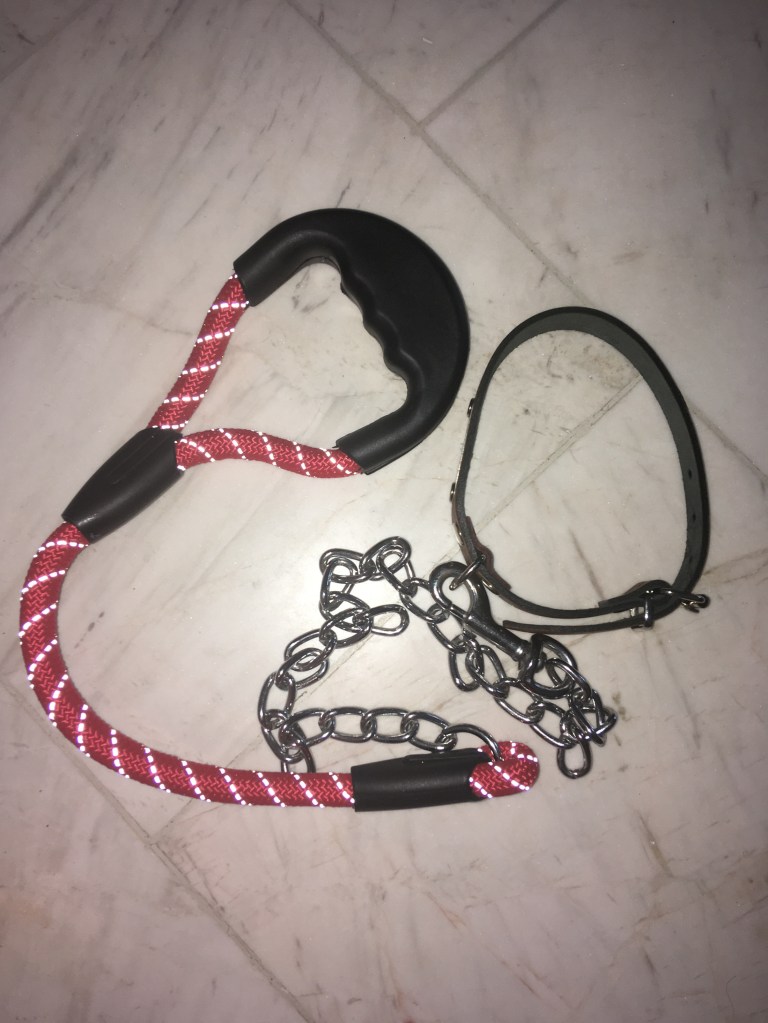
The plan for the day began with a trip into Ouranoupolis for supplies for the journey ahead. After a LOT of being re-directed from mini market to mini market like some deluded scavenger hunt, we finally managed to acquire a small brown leather collar, a variety of meats and a small bowl for water and lead.

On route back to the apartment, I also managed to sneak a purse full of some of the restaurant’s hotdogs which I know she likes.

Before we began to climb Mount Everest aka the path to our apartment (although we can’t complain, the views of the bay were spectacular), we decided it was worthwhile to check in with the barman at the beach who was familiar with our hunt for Luna. Unfortunately, we were disappointed to learn that she had not shown up down there all day. This made me anxious. We thought we had figured out a rough idea of her routine; beach/main road/village in the daytime, retreat to the hotel and mountains when it gets dark so this seemed out of character.

After another call with Olga, who by this point is saved in my contacts with a dog emoji besides her name, we had agreed to bring Luna to Thessaloniki on Thursday in an animal-friendly taxi. Luckily, Better Dogs is situated by the airport and so we could drop Luna and head straight for the flight. With this potential journey only days away, we needed to be sure we could track and locate her when needed and so this irregularity in her routine had me concerned. But, after all, a stray is called a stray for good reason, they are wanderers, governed by their individual desires. Although, I must admit that I secretly hoped that as we begun the ascent to our apartment, we might find her relaxing in the pool on a lilo…no luck.

Later that evening, things went from bad to worse as we learnt that the animal-friendly taxi had cancelled on us after having second-thoughts about transporting a stray without a travel box. This left us with two options…

  1. Olga sends transport to collect Luna.
  2. We hire a car and drive to Thessaloniki ourselves

Option 2 won, primarily because we wanted to meet Olga personally, visit the kennels for ourselves and rather selfishly, prolong our time with her.

Hiring the car would need to happen on Wednesday which meant we would need Luna in the apartment THIS evening to ensure a smooth, early and most importantly, undetected departure in the morning. We needed to find her and fast!

After roughly half an hour of searching across the complex, from the beach to the hills, lead and hotdog in hand, we finally spotted our Luna trotting along down the main road behind some fellow tourists. She crossed the road confidently and once on the same side, we called out to her. Instantly she recognised us and came bounding over, back in the dirt, legs in the air and that tongue lolling out of the mouth, such a comedic pose.

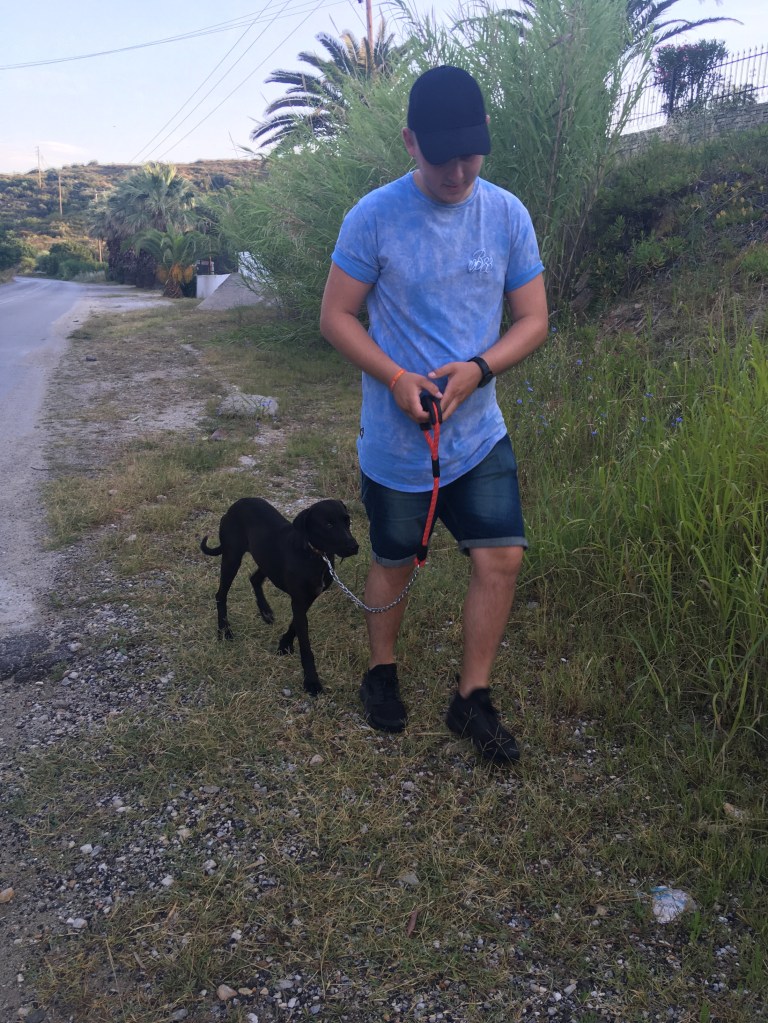
Getting the lead on was relatively easy, her nose fixated on her favourite treat – hotdogs. Once on, she had a momentary panic but was soon trotting along beside us, the perfect image of domestication…if strays are anything, it’s adaptable!

Then, stealth mode was activated. The three of us sticking to the shadows as we ventured across the complex towards our room. Other than a few passers by, we got to the room pretty much unnoticed and with some encouragement (and more hotdogs), she was safely inside.

After a few minutes of stationary uncertainty, her curiosity got the better of her and she began her  exploration.

Long black legs tip-toeing into the shower, a twitching nose tracing every surface, wide eyed and reassuringly, waggy-tailed. Her only reservation was the other dog in the room who got a little growl…aka her own reflection in the mirror.

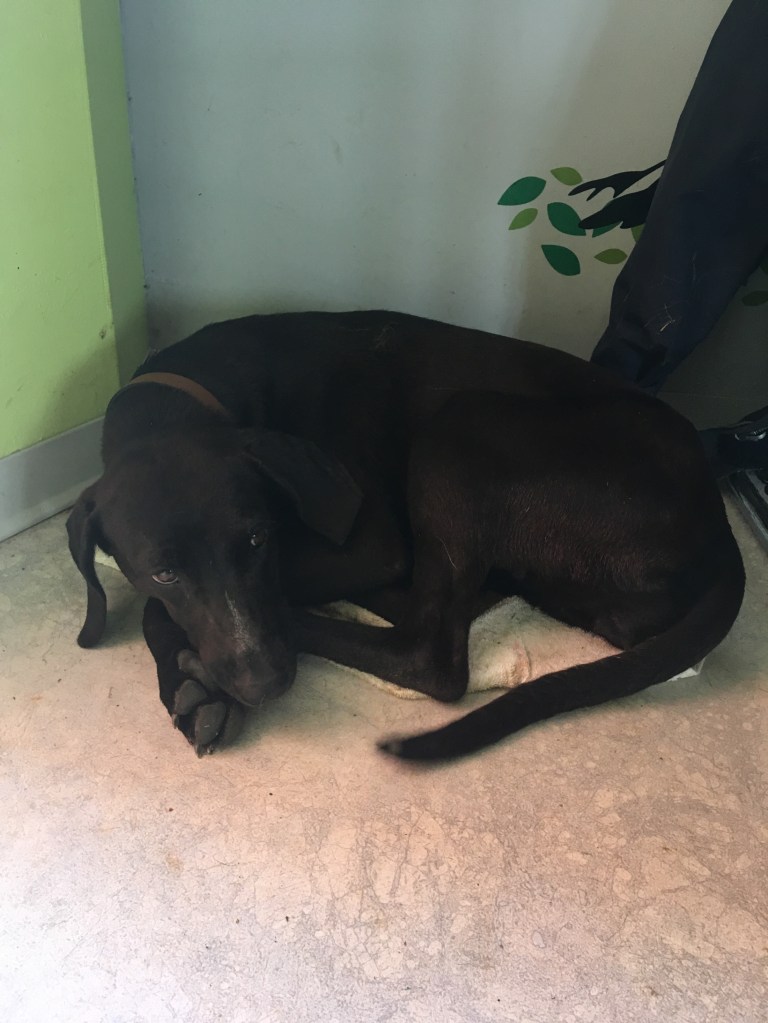
Soon enough, she was settled on her makeshift bed of towels, cushions and with her collar, water bowl and hotdog beside her, she was beginning to look the part and our family felt complete.

ooOOoo

Part Three of this wonderful story of love and caring for a stray dog appears tomorrow.

A story of a loving rescue

A stray dog rescue story, from a beach in Greece to home in the United Kingdom.

So many times this world of blogging creates special connections.

Just a few days ago there was an email, automatically generated by WordPress, to inform me that there had been a new subscriber, or follower, of Learning from Dogs. As I always do if that new subscriber has, in turn, their own blog-site, I go across to their place and leave a ‘thank you’ note.

In this recent case the blog-site that I went to was one under the title of Loving Luna. If you go to that home page you will read this:

Hey! My name is Charlotte Hargreaves.
On 11th June 2018, my partner Oliver and I arrived in Halkidiki, Greece for our third holiday together.

With Oliver recently starting a new job as a Sales Executive and myself finishing University two weeks prior, we were more than ready for the ten day break!

The trip started out like any other – sand, sea, sun, tequila. However on Monday 18th June, just three days before we were scheduled to depart back home, we came across a stray who was to steal our hearts and set us off on a wild adventure to #bringLunahome.

This is her story.

Charlotte has very kindly given me permission to republish her four posts that go into the details of getting Luna back to England.

Here is her first one.

ooOOoo

Day One: Monday 18th June 2018

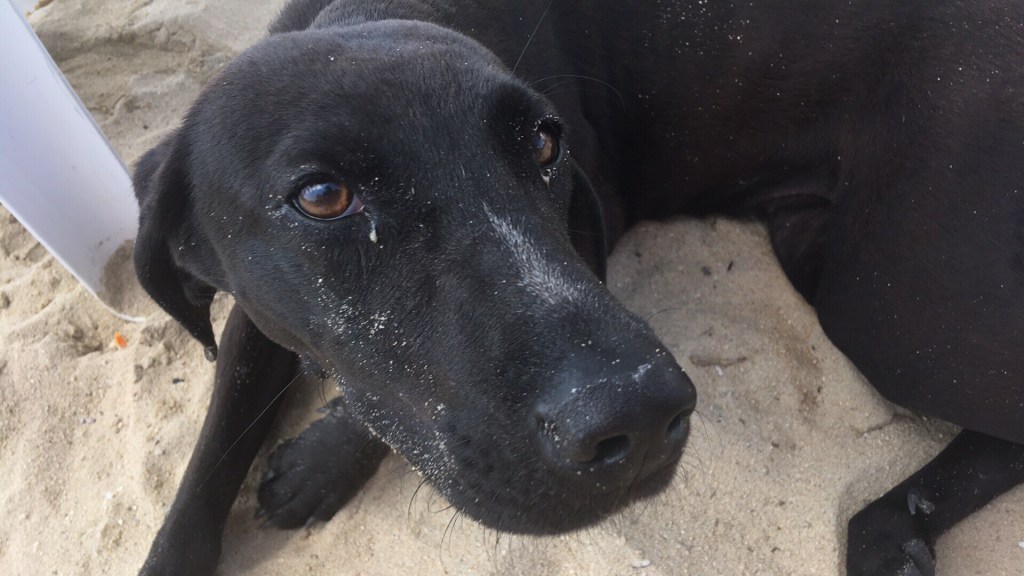
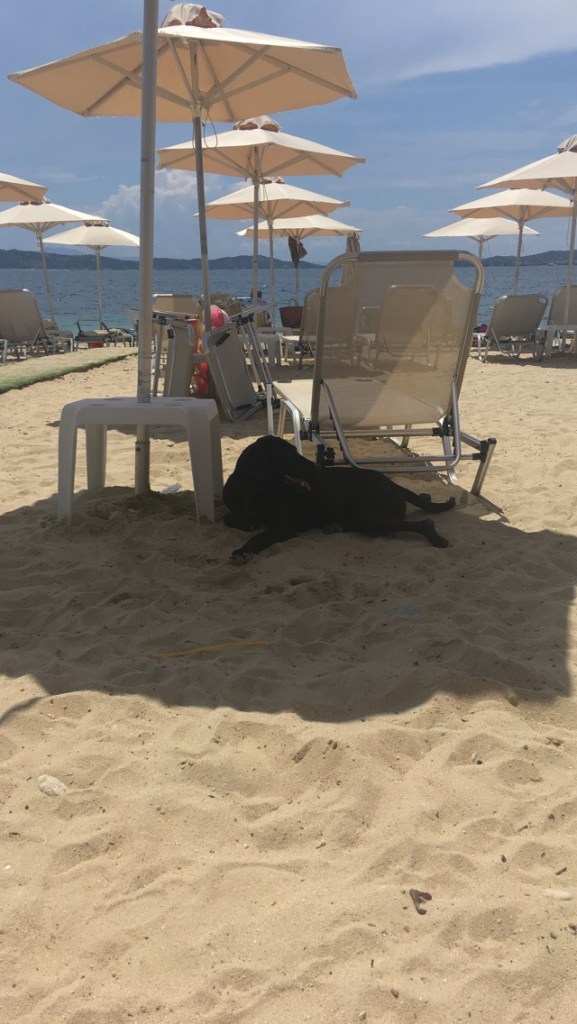
We first spotted Luna on the private beach of our hotel. Dehydrated and drained, she appeared out of nowhere and desperately tried to wriggle her body underneath the occupied sun lounger in front of us, for shade from the blistering mid-day sun. Her eyes rolled in the back of her head, half-closed and she panted heavily, her tongue lolling clumsily to one side. Oliver fetched some water and she lapped it quickly from the cup. In return, she was incredibly affectionate and offered strokes and belly rubs in between sips, her loving nature at the forefront of her character.

After a short while, she ventured to a vacant sun lounger and fell asleep underneath its accompanying parasol. When the sun lounger behind this one also became vacant, we quickly moved to observe her more closely. For a stray dog, we were taken aback by how gentle and friendly she was. She took slices of ham which we had salvaged from the all inclusive sandwiches so delicately and always with that wagging tail. Some she ate, some she buried, demonstrating that deeply engrained survival instinct. It broke our hearts. We knew we had fallen in love and never wanted her to have to plan for her next meal again.

She remained on the beach for the most part of the day before retreating up the mountain and out of sight. After speaking to some of the locals, two things became clear. Firstly, we learned that she had a wide roaming ground, from the beach to the top of the mountains, from Ouranoupolis town right down to the opposite end of the main road. In total, she most likely covered a distance of 5-10km per day, sparking a fear in us that with only three days left in Halkidiki, we might never see her again. Secondly, and most notably, we learnt that Luna was loved. Rather than scavenging dustbins, her main tactic for acquiring food seemed to be earning it from tourists through her approachability. As a result, the locals said many people across the Island knew Luna and recognised her as she her passed through.

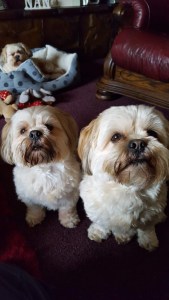
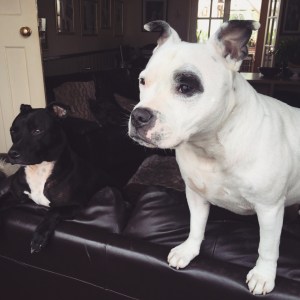
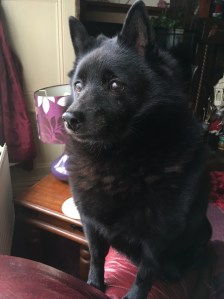
Back home in the United Kingdom, my family has always owned and loved dogs.  At the moment, we have a Schipperke called Koko and three Lhasa Apso’s, Jussy, Lucy and Phoebe, who live with my Nan across the road. We also regularly dog-sit for two cheeky Staffie’s called Boss and Jet.

When I retold Luna’s tale to them, they were incredibly supportive and this motivated me to reach out to several charities including PAWS (Pelion Animal Welfare Society). PAWS contacted us with wonderful news – there was a lady called Olga in Thessaloniki who would take Luna in her boarding kennels, Better Dogs. Olga could assist with arranging the necessary veterinary procedures for travel including micro-chipping, anti-rabies injection, de-worming and acquiring a pet passport. After that, PAWS informed us, they had a place for Luna on their next ferry trip to the UK, scheduled to arrive in Maidstone, Kent on Saturday 14th July.                                                        Suddenly, things became very real.
Could we actually be bringing this little dog home? Could we pull this all together just three days before our departure?

We set to work like two mad men, the bed covered with scribbled notes, plans of actions, contact numbers and (premature, I know) …suggestions for names. We were attached, well and truly. But pivotally, it had become doable. This crazy idea now had structure, logisitics, possibility! We knew there would be costs, extensive planning required and still a hell of a lot of uncertainty but PAWS had made this dream transition into a reality. It was then we decided… she was coming home.

That night, England was playing their first World Cup match and the hotel bar was filled to brim. I sat amongst the crowd with my phone in hand, anxiously awaiting my first call with Olga. At 9:24pm, it rang. One of the first things she said to me was, ‘Charlotte, I am going to help you and your dog’ and the relief that we were not alone in this came flooding in. People wanted to help. My family were behind us, PAWS were behind us and now Olga was behind us. I wondered if this pup had any idea of the support she was rallying and the love she was already spreading.

It was beginning to grow dark and conscious that we hadn’t seen Luna in a few hours, our hearts began to ache for her. By this point, news had spread through the hotel of our quest and opinions of us were divided between those idiotic, soppy Brits or genuinely, good-hearted people. I like to think the latter. Suddenly, in the midst of the game and, ironically, whilst I was continuing to jot down ideas for names, a lady hurried through the crowd towards us, gesturing and calling ‘She’s here! She’s in the hotel!’. Oliver and I darted from our seats but unfortunately when we came to the place where she had been spotted, she had vanished. Her coat acting as a perfect camouflage against the night. Disheartened, and with a feeling that she was somehow mocking us, we returned to the game.

The employees of the hotel had told us that she was often seen at the very top of the complex, close to the employee housing and so I felt more hopeful when the whistle blew and we headed up the hill, desperate to catch another glimpse of her. By some stroke of luck, we turned the corner and saw a young couple petting a small, black silhouette. We dashed over, probably giving them a fright as we fell about the floor, stroking her and telling her how beautiful she was and how we’d missed her. To avoid coming off as completely crazy, we explained the story to the couple who seemed amazed and it began to sink in that what we were doing was something very out of the ordinary but something very special. All the while, she lay on her back in the undergrowth, letting Oliver rub her belly, play with her ears, and scratch her nose, content to be part of the action-filled plot.

We attempted to lure her to our apartment with leftover takeaway, wanting her to be comfortable and familiar with the surroundings. If we were to transport her to Olga’s, she would need to spend the night in the apartment for we couldn’t risk not being able to track her on the day of the trip. She was as playful as ever but metres from the front door, her skittishness took a hold of her and uncertain, she trotted away into the darkness. An old adage rang in my head that you should never chase a stray and so we retreated to our apartment balcony and talked about how we were going to make it work, how badly we wanted her and to psychologically assess ourselves…just to confirm that we were not actually just a pair of idiotic, soppy Brits.

An hour or so passed when all of a sudden, as if she had overheard, a little black shadow appeared below our balcony with its signature head tilt and inquisitive ears. Like two rabbits caught in the headlights, we were dared not breathe, partly to avoid scaring her off and also to discourage unwanted attention. ‘Where’ve you been girl?’, we began to call to her in hushed tones. Her tail began to wag continuously until pitifully, she began to cry, unable to work out how she could reach us. Like a bullet, Oliver was out the door, round to the front and straight into her affections. A few minutes later, she climbed the mounted verge directly underneath our balcony, out of sight and laid down for the night. We wished her goodnight and returned to the apartment. Knowing that she recognised our voices in the darkness, that she was excited to see us and that she felt safe enough to sleep directly below us filled our hearts with hope and we felt positive about what the next day would bring.

On a side note, we would like to thank everyone who may appear in this article unnamed. Whether you alerted us to her whereabouts or told us we weren’t crazy….we three are so grateful for your time, support and belief in us.

*I will be writing a separate blog on both Better Dogs and PAWS and the incredible work they do. For more information in the meantime you can visit their websites below:

https://m.facebook.com/betterdogshotel/

http://www.paws-peliongreece.com

ooOOoo

The second episode will be republished tomorrow!

Gentle souls

This was the post that I had planned for the 20th.

But a power failure across quite a large area of Oregon rather stopped things in their tracks. Nevertheless, it’s a wonderful post and I ‘borrowed’ the photograph to close Colette’s story last Monday. Here’s a repeat of that close:

Colette’s story didn’t come with a photograph. So I thought I would do a quick web search and find a picture that fitted Colette’s story well.

In fact, the article that included this photograph may be republished and I will be doing that tomorrow!

The article was seen here and I trust may be republished in this place!

ooOOoo

Everyone Else Walked Past This Homeless Guy And His Dog, But One Guy Didn’t. This Is Heartbreaking.

In my city (Paris, France) there is a homeless man…

Every day he is begging, always at the same place. Despite ‘his situation,’ he is always smiling and says “hello” or “have a good day” even to people who don’t donate to him.

This man has a dog who is as gentle as he is. It never barks or shows its teeth. Many people say this man is dumb, having a dog when he can barely feed himself. Despite being summer in France, mornings are often cold.

One morning, I was walking and I saw him with his dog. He was hugging him tightly. They were very cold.

It was so cold, seeing those two felt like a knife to the heart. I thought about them all day, even though I don’t have a lot of money, I decided to do something.

The next morning I told my boss I was taking the morning off. I took one of my blankets, bought a whole box of food for the dog, and as much food for the man as I could carry.

I bought two coffees and asked if I could sit and talk with him for a few minutes. He agreed.

I asked him why he was there and he asked me why I was speaking to him.

So I told him “Every day I walk to work. And every day everyone around me seems so sad except for you. You are always smiling. You always seem so happy despite your living conditions and every day you warm my heart. Every day I tell myself that even if it’s a bad day and I am not as happy as I want to be, here’s this man living on the street who seems happier than I am despite that he has nothing.”

He stopped me and said “I have something, something that you can’t value. It’s this little boy in my arms (the dog).”

I asked him how he found this dog and he told me:

“One day I asked myself why I was still living if I was just going to be begging for my survival. I had no one to think about, and no one who would miss me if I died. So it was two years ago when I was on the bridge when I was about to commit suicide and then this little guy came, barking at me and even biting my cloths, preventing me from jumping. So I gave him the last cookie I had in my pocket. He was so happy that I cried and decided not to jump. Since that moment, he’s all I have and he is like my child. Sometimes he goes off for a walk and returns with something for both of us to eat (piece of cake, half eaten sandwich, etc…). He always wants to sleep next to me.”

I asked him if he had ever found a place at a homeless shelter and he told me something that brought me to tears. “8 months ago, I was offered a place to sleep, something to eat and a warm place to stay. Thing is, dogs were not allowed. So I declined the offer. This guy is all I have left and I would rather die than abandon him. When I thought that I had nothing, this little boy taught me love and gave me something to live for. I can never thank him enough for that. When people give me money, I always buy food for him. I only buy human food when I have everything he needs. I sometimes hear people telling me that I am dumb for having him, and I say to them ‘maybe he’s an animal, but he’s given me more love than any human I have ever met and for that, I will never let him go hungry.’”

Hearing that, I gave him the blanket and the food. He thanked me like no one ever has. He said that thanks to me, Bobby (the dog) would eat well and never be cold again.

And then for reasons I still can’t explain, I gave him a piece of paper, wrote my address on it, tied it to the dog’s collar and said “you don’t have to worry anymore. If someday something bad happens to you, I will take care of Bobby. He will never be alone.”

Then he cried. That day I saw the happiest man in my life and I wish you could have seen the same.

Story originally sourced here.

ooOOoo

I’m speechless!

(But will only underline how much we can learn from our dogs!)

Please, always adopt a dog first!

This wonderful guest post from Zara Lewis adds real weight to the title.

There is no doubt in my mind that hundreds of you good people out there love and care for dogs that were first seen in a dog shelter or rescue centre.

But at the same time, inevitably, there are those who want to learn more about adopting a dog.

Zara Lewis has written another guest post that is a real help to those who are uncertain as to how to care for a newly-adopted dog.

ooOOoo

Five Tips on Making Your Adopted Dog Feel at Home

by Zara Lewis, May 24th, 2018

Adopting a dog is one of the noblest and most rewarding decisions you can make. With dog shelters filled to the brim with pooches in need of a loving home, there is really no reason to support the inhumane ways of the puppy mill industry; instead, welcoming a shelter dog into your family will save not one, but two lives.

However, sometimes welcoming an adopted dog into your home can seem like a daunting task. How do you banish their fears of abandonment, their anxiety, and the instilled behavioral patterns that define them yet are unsuited for domesticated life? How do you truly make them feel at home, loved, and most importantly, safe? Here to answer these questions are the five tips that will make this transition as pleasant and rewarding as possible.

Set the stage for the pooch

First things first, there’s a lot to be done before your pooch actually arrives at what will be their new, loving home. You want to make sure you have covered all the basics, from deciding where the dog will sleep and eat, all the way to buying a sizable crate and all of the necessities your new furry friend might need.

This includes getting in touch with a trusted veterinarian and making an appointment for the following day. You can never be too careful, no matter how trustworthy the shelter staff are. For the time being, you will want to roll up all of your carpets so that the dog gets used to walking around the house (they tend to stick to carpets when confronted by sleek surfaces), and don’t forget to buy a leash, plenty of toys, and most importantly, dog treats for those long training sessions ahead.

Let them explore the place one day at a time

One of the biggest mistakes new dog owners inadvertently make is letting their new companion explore the new surroundings freely the minute they bring them home. Although completely understandable and very nice of you to want to make your new dog feel welcome, this is a common mistake that will result in plenty of pee stains on the floor you’ll have to scrub out.

Moreover, you might even frighten the pooch, so you want to let them familiarize themselves with the surroundings gradually. It’s always an excellent idea to buy a crate so that they can have their “safe space”, and explore the household one day at a time.

Banish anxiety and set some ground rules

Being adopted is a thrilling, wonderful, joyous experience for a dog, but it’s also a traumatic one. More often than not, your new pooch will come with some emotional baggage you will want to eliminate as soon as possible to avoid behavioral issues induced by anxiety, stress, and fear. It’s also never a bad idea to let a professional lend a helping hand. In Australia, for instance, dog training is sort of a must among homeowners.

In the Land Down Under, adopting a dog is a serious matter involving thorough preparation and planning, and professional dog training in Sydney and across the country is readily available to all homeowners looking to instill positive habits in their new dog, and banish their fears. Remember, dogs ,above all, require firm but loving guidance in order to find their place in the pack, and feel like a part of the family.

Let them have their personal space

It often seems as if dogs haven’t the faintest idea what personal space is, as attested to by thousands of pet videos circling the web; but in fact, they do. And they cherish their personal space very much. Your new furry compadre needs time to heal, to reflect on their past experiences, and take in this new scenario they’re in. Needless to say, this is a stressful time for them and although they require plenty of time and attention, it’s important to recognize the moments when peace and quiet are all they need.

Make your dog feel loved and safe

Finally, this is not the time to be going through other important chapters in your life. This is the time you want to devote solely to the upbringing of your new pooch, so if you’re having personal issues you need to resolve, do it before you get a dog. Remember that they need your undivided attention and lots of it.

You will be spending plenty of time quietly stroking their back to make them feel safe, playing with them to develop a trusting bond, and plenty of time teaching them to behave. This requires patience and positivity, so make sure you’re ready and willing to take on this beautiful responsibility.

There is an ideal dog out there for you. And while a purebred dog would make an amazing lifelong companion as well, there is not quite a feeling as magnificent and rewarding as adopting a shelter dog. With these essential tips, you will have no problem making your new best friend feel right at home.

Zara Lewis

Zara is a contributing editor at Ripped.me and a contributor at TheWellnessInsider

ooOOoo

What a fabulous post. Thank you, Zara. (And let me close by saying that out of our six dogs, five have been rescued in one form or another!)


The continuing fallout from Chernobyl

Will you, please, consider taking one of these puppies!

I closed last Saturday’s post with this plea: “If only there wasn’t a single dog in need of adoption in the world!

That plea is being used to introduce today’s post. An article that was recently read on the Smart News section from The Smithsonian magazine website.

I have republished it, hopefully without infringing copyrights, because it’s a story that needs to be circulated as far and wide as possible.

ooOOoo

Chernobyl Puppies Going Up for Adoption in the U.S.

Now in quarantine, the pups are expected to come to the U.S. this summer in search of their forever homes.

Please for to adopt us, Comrade. (Chernobyl Exclusion Zone Authority)
By Jason Daley smithsonian.com , May 16, 2018

In 1986, the Chernobyl nuclear power plant melted down, sending nearby residents fleeing the disaster zone. And sadly, most pets got left behind. Over the last 32 years, the surviving pups have multiplied, creating a community of hundreds that live in the Chernobyl Exclusion Zone and another 250 that live on the grounds of the former power plant itself.

Now, a dozen of those homeless puppies will head to the United States for adoption, reports Matt Novak at Gizmodo.

According to the Russian website Meduza, Ukrainian authorities have captured 200 of the stray Chernobyl puppies. They are currently keeping them in a 45-day quarantine in the city of Slavutych, and then a dozen will be shipped to the United States.

“We have rescued the first puppies, they are now in our adoption shelter going through the quarantine and decontamination process,” Lucas Hixson, co-founder of the U.S.-based Clean Futures Fund, a non-profit created to take care of Chernobyl clean-up workers, their families and the dogs tells Novak. “The goal is 200 dogs but will likely be more in the long run. My hope is to get 200 dogs rescued and adopted in the next 18 months and then go from there.”

The pups have a heartbreaking story, as The Guardian’s Julie McDowell detailed earlier this year. During the evacuation, more than 120,000 people were herded onto buses to escape the meltdown of the Unit 4 reactor, leaving most of their valuables and their pets behind. Many dogs tried to follow their owners onto the buses but were kicked off. People left notes on their doors asking authorities not to kill their animals, but Soviet Army squads were dispatched to put down as many contaminated animals as they could find.

Some of the dogs survived the army and the radiation, rebuilding their community as a pack. The Clean Futures Fund reports that the 250 dogs living on the grounds of the former power plant were likely driven out of the surrounding forests by wolves and a lack of food. Another 225 dogs roam Chernobyl City and hundreds of others live and scrounge at security checkpoints and throughout the woods and abandoned communities in the Exclusion Zone. Most of the dogs around the plant are under the age of 4 or 5, and clean-up workers at the site sometimes feed and tend to sick animals.

But last year, after becoming aware of the animals, The Clean Futures Fund decided the pups needed a more permanent solution. That’s why they’ve implemented a three-year program in the Exclusion Zone to spay and neuter 1,000 animals and vaccinate them against rabies. At their first clinic last August, the Fund spayed and neutered 350 dogs and cats in the area. Each animal was tested for radiation, given antibiotics, vaccinated for rabies and microchipped. Each dog’s vital data was also recorded.

For the next clinic scheduled for June, the Fund has also partnered with researchers from the University of South Carolina. The team will study the dogs for signs of radiation poisoning as well as genetic damage and disruptions to the dogs’ microbiomes, reports Mary Katherine Wildeman at The Post and Courier. The team will sedate the dogs and look for tumors and cataracts, which can signal radiation poisoning.

Understanding the impacts of radiation exposure is becoming increasingly important, says Timothy Mousseau, a researcher who has studied radiation in the birds, insects and small animals of Chernobyl and will lead the project. Exposure rates in daily life from medical treatments and other sources are on the rise, with the average yearly dose Americans receive doubling in the last 20 years alone.

There is no word when or where the dozen Chernobyl pups will go up for adoption. But even if you’re not lucky enough to have one of the reminders of Soviet-era nuclear power at the foot of your bed, it’s still possible to see the place for yourself and hand out treats to some of the remaining pups. There’s a booming tourism industry in the area to visit the eerie ghost towns and surprisingly quiet and beautiful green space that has overtaken the Zone.

ooOOoo

I am going to contact The Clean Futures Fund to see how one can register a potential interest in taking one of these puppies.

In the meantime, is there any reader who would be interested in having a puppy? Send me an email if so.

Dogs and Humans!

Great to be back to blogging again!

Jean and I flew back into Portland last Thursday evening and after a motel stay near to the airport arrived back home last Friday a little before mid-day.

It was an incredible trip covering family in both England and France and I will start writing up the details of where we went and who we stayed with over the coming days; sing out if this is not want you want to read!!

But as good as the vacation was it was fabulous to be home and I wanted to share with you a few sights of home taken over the last couple of days.

Mother Goose now has her goslings!

oooo

oooo

oooo

I will never tire of looking at Mount Sexton!

oooo

Nor of the beauty of where we live!

OK!

I can think of no better way of re-starting my blog posts than to republish an item that Dan shared with me back in early April.

ooOOoo

“Dogs Welcome”

A man wrote in a letter to a small hotel in a Midwest town he planned to visit on his vacation:

“I would very much like to bring my dog with me. He is well-groomed and very well behaved. Would you be willing to permit me to keep him in my room with me at night?”

An immediate reply came from the hotel owner, who wrote:

“SIR: I’ve been operating this hotel for many years. In all that time, I’ve never had a dog steal towels, bedclothes, silverware or steal pictures off the walls or use them as a coloring book.

I’ve never had to evict a dog in the middle of the night for being drunk and disorderly. And I’ve never had a dog run out on a hotel bill. Yes, indeed, your dog is welcome at my hotel. And, if your dog will vouch for you, you’re welcome to stay here, too.”

ooOOoo

Dan also shared some really gorgeous photographs that can be seen on the next two Sundays.

Real Learning from Dogs – for our Children!

Another wonderful guest post from Zara Lewis.

Back on March 13th, Zara published her first guest post in this place. It was called Dogs and allergies and was very well received by many if not most of you.

So what a pleasure it was to receive a further email and material from Zara last Friday.

Here it is for all you good people!

ooOOoo

How Your Family Pooch Can Teach Your Youngsters Responsibility

by Zara Lewis, March 30th 2018

It’s easy to confuse pure obedience with true responsibility, simply because the former serves as the stepping stone, while the latter is a mindset that takes years to build. We as parents make choices every day that affect how well this mindset develops in our kids, but one of the best, most seamless ways for them to succeed is by nurturing their relationship with your family doggo.

With a four-legged friend by their side, kids tend to assume the role of a leader, a friend, and a caregiver with greater ease. Although it comes with its own set of parenting challenges, teaching your kids responsibility with your little fuzzy buddy is a rewarding experience that will enrich your kids’ childhood and help you be a better parent, as well!

Building healthy habits

From regular vet check-ups, vaccines, feeding on a schedule, and taking them for walks every day, your kids will quickly realize that only a healthy dog will be a happy dog. I know that some kids will be eager to split their chocolate cake with their furry pal, but when you explain to them that such a diet can be very harmful, they will be much more careful when choosing the right dog food.
When they’re young, they won’t perceive those walks and frisbee throws as exercise, but if they start embracing this lifestyle so early, they will be much more likely to stay active throughout their adulthood, too.

Learning about boundaries
No matter how in love your youngsters may be with their pet, they often don’t understand that dogs have moods, too. That means they won’t always be in the mood to be hugged, or that dogs won’t put up with having their tail pulled all the time.

The sooner they understand to respect the needs and wants of their pets, your kids will appreciate the meaning of personal preferences even in life. They will learn how to recognize certain body language signals that they are about to cross a line and transfer that knowledge to their hooman friends as well.


Mastering discipline

Just like that birthday cake is almost too irresistible not to be shared with your pooch, it’s no surprise that many kids want to take their dogs everywhere and share absolutely everything with them. My own little boy wanted to share his bed with our dog, Joey, and even though this is perfectly fine from time to time, making it into a habit wasn’t the best option for either of them.

So, we got a Snooza bed for Joey and placed it in our son’s bedroom and explained that it’s best for each of them to have their own space, since they both grow very fast. Plus, once I told my son that the cleaning of his room will be much more difficult if his bed was filled with dog hair, he immediately changed his mind!


Handling suitable tasks

Overburdening your kids with too many difficult chores is as bad as not giving them enough opportunities to be responsible. It’s best to discern how much your youngsters can handle depending on their age. For example, toddlers can tell you if their water bowl is empty or if they caught the little rascal in the potty act.

Older kids can share the entire feeding, grooming, and walking routine with you, depending on their school responsibilities and other chores. In fact, older kids can even help you train the dog by teaching them various tricks, and playing sessions are beneficial both for your kids and the dog, as they’ll help them grow stronger, and build their bond over time.

Fostering independence

Sometimes the homework will pile up and perhaps the flu season will kick in, so you’ll feel the need to spare your kids the trouble of caring for your pet. Even though it’s perfectly fine to help them manage their chores and take over a portion until they are well enough, they shouldn’t suddenly let you take over for good.
Moreover, encourage your kids to pitch in, no matter how little, with their birthday savings or their pocket money when buying dog food, or getting new chew toys. This is yet another way of sharing and learning to become more autonomous even financially with their pets.

The cycle of learning and teaching
While we’re on the subject of sharing, some kids perceive their pooch as another toy at first, or even as a chore you’ve added to their “unwanted” list. This is especially common among very young kids, and it becomes essential for parents to help them cope with these responsibilities by gradually introducing new ones.
Talk to them, see if they would actually like to take charge of a particular activity such as feeding or walking, while you share other responsibilities with them. Explain why these actions are important for keeping your pooch happy and healthy, and they will be much more likely to take on more responsibilities over time.

Finally, don’t forget to be a true role model while your kids are still in the learning stages of caring for your family pet. They will make mistakes, but they should look up to you for better behavioral patterns, and it’s your duty to be the caregiver you’d want your kids to become for your pooch.

ooOOoo

You do know if Zara carries on like this I shall hang up my keyboard and just savour Zara’s writings!!

Shit Happens!

A very inspirational essay from George Monbiot.

It is said that there are only two certainties in life: Death and Taxes.

I think that is one short: The Unexpected. As in Death, Taxes and The Unexpected!

As evidence of The Unexpected, one could put falling off one’s bike or being diagnosed with Parkinson’s Disease. Or the many other ‘hiccups’ that are an attribute of the real world that we humans live in. Put in the words of the street: Shit Happens!

Now read this very inspirational essay from George Monbiot. Republished here with Mr. Monbiot’s very kind permission.

ooOOoo

Unprostrated

16th March 2018

I have prostate cancer, but I’m happy. Here’s how.

By George Monbiot, published in the Guardian 14th March 2018

It came, as these things often do, like a gunshot on a quiet street: shocking and disorienting. In early December, my urine turned brown. The following day I felt feverish and found it hard to pee. I soon realised I had a urinary tract infection. It was unpleasant, but seemed to be no big deal. Now I know that it might have saved my life.

The doctor told me this infection was unusual in a man of my age, and hinted at an underlying condition. So I had a blood test, which revealed that my prostate specific antigen (PSA) levels were off the scale. An MRI scan and a mortifying biopsy confirmed my suspicions. Prostate cancer: all the smart young men have it this season.

On Monday, I go into surgery. The prostate gland is buried deep in the body, so removing it is a major operation: there are six entry points and it takes four hours. The procedure will hack at the roots of my manhood. Because of the damage that will be caused to the surrounding nerves, there’s a high risk of permanent erectile dysfunction. Because the urethra needs to be cut and reattached to the bladder, I will almost certainly suffer urinary incontinence for a few months, and possibly permanently. Because the removal of part of the urethra retracts the penis, it appears to shrink, at least until it can be stretched back into shape.

I was offered a choice: radical surgery or brachytherapy. This means implanting radioactive seeds in the parts of the prostrate affected by cancer. Brachytherapy has fewer side effects, and recovery is much faster. But there’s a catch. If it fails to eliminate the cancer, there’s nothing more that can be done. This treatment sticks the prostate gland to the bowel and bladder, making surgery extremely difficult. Once you’ve had one dose of radiation, they won’t give you another. I was told that the chances of brachytherapy working in my case were between 70 and 80%. The odds were worse, in other words, than playing Russian roulette (which, with one bullet in a six-chambered revolver, gives you 83%). Though I have a tendency to embrace risk, this was not an attractive option.

It would be easy to curse my luck and start to ask “why me?”. I have never smoked and hardly drink; I have a ridiculously healthy diet and follow a severe fitness regime. I’m 20 or 30 years younger than most of the men I see in the waiting rooms. In other words, I would have had a lower risk of prostate cancer only if I had been female. And yet … I am happy. In fact, I’m happier than I was before my diagnosis. How can this be?

The reason is that I’ve sought to apply the three principles which, I believe, sit at the heart of a good life. The first is the most important: imagine how much worse it could be, rather than how much better.

When you are diagnosed with prostate cancer, your condition is ranked on the Gleason Score, which measures its level of aggression. Mine is graded at 7 out of 10. But this doesn’t tell me where I stand in general. I needed another index to assess the severity of my condition, so I invented one: the Shitstorm Scale. How does my situation compare to those of people I know, who contend with other medical problems or family tragedies? How does it compare to what might have been, had the cancer had not been caught while it is still – apparently – confined to the prostate gland? How does it compare to innumerable other disasters that could have befallen me?

When I completed the exercise, I realised that this bad luck, far from being a cause of woe, is a reminder of how lucky I am. I have the love of my family and friends. I have the support of those with whom I work. I have the NHS. My Shitstorm Score is a mere 2 out of 10.

The tragedy of our times is that, rather than apply the most useful of English proverbs – “cheer up, it could be worse” – we are constantly induced to imagine how much better things could be. The rich lists and power lists with which the newspapers are filled, our wall-to-wall celebrity culture, the invidious billions spent on marketing and advertising, create an infrastructure of comparison that ensures we see ourselves as deprived of what others possess. It is a formula for misery.

The second principle is this: change what you can change, accept what you can’t. This is not a formula for passivity. I’ve spent my working life trying to alter outcomes that might have seemed immovable to other people. The theme of my latest book is that political failure is, at heart, a failure of imagination. But sometimes we simply have to accept an obstacle as insuperable. Fatalism in these circumstances is protective. I accept that my lap is in the lap of the gods.

So I will not rage against the morbidity this surgery might cause. I won’t find myself following Groucho Marx who, at the age of 81, magnificently lamented, “I’m going to Iowa to collect an award. Then I’m appearing at Carnegie Hall, it’s sold out. Then I’m sailing to France to pick up an honour from the French government. I’d give it all up for one erection.” And today there’s viagra.

The third principle is this: do not let fear rule your life. Fear hems us in, stops us from thinking clearly and prevents us from either challenging oppression or engaging calmly with the impersonal fates. When I was told that this operation has an 80% chance of success, my first thought was “that’s roughly the same as one of my kayaking trips. And about twice as good as the chance of emerging from those investigations in West Papua and the Amazon”.

There are, I believe, three steps to overcoming fear: name it, normalise it, socialise it. For too long, cancer has been locked in the drawer labelled Things We Don’t Talk About. When we call it the Big C, it becomes, as the term suggests, not smaller, but larger in our minds. He Who Must Not Be Named is diminished by being identified, and diminished further when he becomes a topic of daily conversation.

The super-volunteer Jeanne Chattoe, whom I interviewed recently for another column, reminded me that, just 25 years ago, breast cancer was a taboo subject. Thanks to the amazing advocacy of its victims, this is almost impossible to imagine today. Now we need to do the same for other cancers. Let there be no more terrible secrets.

So I have sought to discuss my prostate cancer as I would discuss any other issue. I make no apologies for subjecting you to the grisly details: the more familiar they become, the less horrifying. In doing so, I socialise my condition. Last month, I discussed the remarkable evidence suggesting that a caring community enhances recovery and reduces mortality. In talking about my cancer with family and friends, I feel the love that I know will get me through this. The old strategy of suffering in silence could not have been more misguided.

I had intended to use this column to urge men to get themselves tested. But since my diagnosis, we’ve discovered two things. The first is that prostate cancer has overtaken breast cancer to become the third biggest cancer killer in the UK. The second is that the standard assessment (the PSA blood test) is of limited use. As prostate cancer in its early stages is likely to produce no symptoms, it’s hard to see what men can do to protect themselves. That urinary tract infection was a remarkably lucky break.

Instead, I urge you to support the efforts led by Prostate Cancer UK to develop a better test. Breast cancer has attracted twice as much money and research as prostate cancer, not because (as the Daily Mail suggests) men are the victims of injustice, but because women’s advocacy has been so effective. Campaigns such as Men United and the Movember Foundation have sought to bridge this gap, but there’s a long way to go. Prostate cancer is discriminatory: for reasons unknown, black men are twice as likely to suffer it as white men. Finding better tests and treatments is a matter of both urgency and equity.

I will ride this out. I will own this disease but I won’t be defined by it: I will not be prostrated by my prostate. I will be gone for a few weeks but when I return, I do solemnly swear I will still be the argumentative old git with whom you are familiar.

http://www.monbiot.com

ooOOoo

It appears to be a unique aspect of the human mind. I am referring to our ability to worry about the future, to struggle to break away from ‘habitual’ responses to unanticipated crap coming along, to see the glass as half full as opposed to half empty, and so on, and so on.

Oh, to be like our dear, sweet, wise dogs.

Just let the world roll by!

Saving lives!

Saving the lives of our dogs and their owner/carers!

The Smithsonian website recently featured a dog rescue centre in Costa Rica that has the odd dog or one thousand being cared for!

I kid you not!

This Costa Rican Paradise Shelters Over 1,000 Stray Dogs

A photographer documents scenes from Territorio De Zaguates, a converted farm in the Santa Bárbara mountains that’s giving abandoned dogs a second chance
By Jennifer Billock, smithsonian.com, March 6, 2018

The article also includes a range of incredible photographs. I have ‘borrowed’ a couple to share with you.

oooo

What rescuing a dog means to thousands of gentle-hearted people is no better spoken about than in the words of a poem that Colin published over on his blog A Dog’s Life.

It is republished here with Colin’s very kind permission.

ooOOoo

“A Stray they named Ray”

The following is one of the poems in my book “Just Thinking”, which is available direct from Friesen Press, Amazon, and other on-line book retailers.

https://books.friesenpress.com/store/title/119734000032944229/Colin-Chappell-Just-Thinking

This is such a sweet collection of beautiful thoughts and sentiments and reflections. The people and stories and memories are so real and tangible, easy to connect with, easy to read. For each poem I have read so far, it’s like he is talking about someone I know… or someone I would want to know 🙂 This books explores so many things, takes you on so many journeys.. the good and the bad and the beauty in between. This book was given as a gift, and it’s one I will treasure!” (Amazon review)

 “A Stray they named Ray”

They were found on a farm

Not too far away,

But… where was their home?

Two dogs, frightened, hungry,

So very tired and,

Surviving somehow on their own.

***

The rescue van arrived,

And the crew discussed

How best to capture this pair.

Traps were determined

To be the most humane,

But… so many questions were there.

***

Why were these two dogs

Having to scavenge for food?

Why were they out on their own?

The treats in the traps,

Put an end to all that,

And they were captured, scared… and alone.

***

They had no collars; no tags;

No microchips were found.

They were just two dogs without names.

Their faces were expressionless,

And their fur in poor condition.

Were they siblings? Perhaps their mother was the same?

***

Once back at the shelter

They were caged together,

But then a fight ensued.

Trainers intervened,

And gave them separate cages,

But then had to decide what to do.

***

One (they later named Ray) was not unfriendly,

Although cautious and rather aloof.

He seemed to know he was no longer alone.

He was given a bath and a bowl of food

And, with some loving care (they thought),

He could possibly adapt to a home.

***

He was a sorry sight,

And no doubt a once proud dog.

Clearly a German Shepherd cross,

Just managing to survive,

By eating scraps to stay alive.

To explain him, they were quite at a loss.

***

They tried to find his owners.

They checked the Missing Pets files,

But there only seemed one option.

He now belonged to the shelter

And… as he was neither reported lost, nor stolen,

He would be trained for adoption.

***

Four months later he was ready.

His adoption photo was published,

And all were looking for a sign.

He needed a family,

To love… and be loved by.

This will, hopefully, be his time.

***

Eventually a couple arrived

Who clearly were drawn to him,

And regular walks were arranged.

It was soon to be seen

That his life, as it had been,

Was quickly going to change.

***

His day of adoption came.

The staff all said their farewells.

Smiles, and tears, were all around,

For the life of a stray;

Of a dog they named Ray;

A life almost lost… had been found.

*

ooOOoo

I am finishing today’s post with another photograph from the Costa Rican Paradise Shelter.

Then my final words are those in that Smithsonian article:

Now, more than 1,000 dogs roam the countryside of the Costa Rican estate. They go on daily walks in the mountains and eat roughly 858 pounds of food per day. They’re bathed and treated on-site for illness or injury (though more intense cases go to a specialist vet in San Jose). And most importantly, they’re given a better quality of life than they’d experience on the streets.

“There is a major problem with stray and abandoned dogs in Costa Rica,” Dan Giannopoulos, a photographer who recently visited the shelter, told Smithsonian.com. “The government line on [the] treatment of strays is to destroy them. This is the only shelter of its kind in Costa Rica. It offers a new lease [on] life to the dogs, many of whom have lived terrible lives and have terminal illnesses.”

Read more: https://www.smithsonianmag.com/travel/these-photos-transport-you-dogs-central-american-paradise-180968018/#v9xZpKmRadL5JHeA.99
Give the gift of Smithsonian magazine for only $12! http://bit.ly/1cGUiGv
Follow us: @SmithsonianMag on Twitter

Picture Parade Two Hundred and Twenty-Seven

Guess what!

More taken from here. Spoiling us all for today there are nine of Tanja’s incredible photographs!

oooo

oooo

oooo

oooo

oooo

oooo

oooo

oooo

You do realise good people that at some point I will come to the end of Tanja’s fabulous photographs! But worry about that when it happens!