Category: Morality

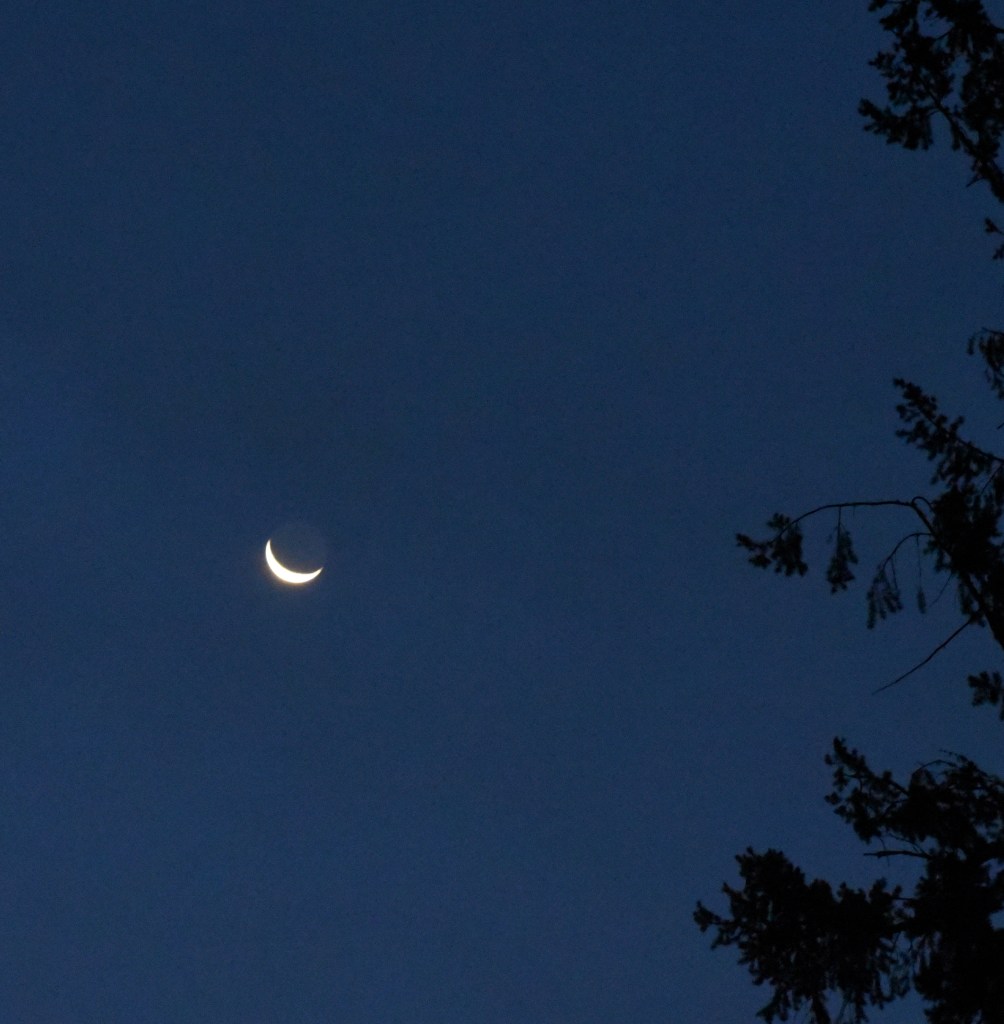
A Letter to the Moon

We live on such a fragile planet!

The idea of writing a letter to the moon is not a new one and it came to me when listening to an item yesterday morning, Pacific Time, broadcast by the BBC on Radio 4. The item was the news that Elon Musk has announced that:

Elon Musk’s company SpaceX has unveiled the first private passenger it plans to fly around the Moon.

Japanese billionaire and online fashion tycoon Yusaku Maezawa, 42, announced: “I choose to go to the Moon.”

The mission is planned for 2023, and would be the first lunar journey by humans since 1972.

So here is that letter!

ooOOoo

Dear Mr Moon,

I cannot believe how quickly the years roll by!

Who would have thought that yesterday, the 18th of September, 2018, was the anniversary of the day in September, 1977 when:

On September 18, 1977, as it headed toward the outer solar system, Voyager 1 looked back and acquired a stunning image of our Earth and moon.

You will surely remember that first image taken of the Planet Earth and your good self in the same frame.

Here is the 1st-ever photo of the Earth and moon in a single frame. Voyager 1 took the photo on September 18, 1977, when it was 7.25 million miles (11.66 million km) from Earth. Image Number: PIA00013 via NASA/JPL.

Now here we are some 41 years later and, my, how things have changed.

But something, dear Mr. Moon, has never changed for you. That is the sight of our most beautiful planet. Plus, I would go so far as to venture that what makes our planet such a beautiful sight, one that has captivated us humans when we have gone into space and looked back at home, is the magic of our atmosphere.

It is so thin!

Picture taken by a NASA satellite orbiting the earth some 200 miles above the planet’s surface.

So, so thin …. and so, so fragile.

It is akin to the thinness of the skin of an onion.

In fact, Mr. Moon, that layer that we earthlings call the troposphere, the layer closest to Earth’s surface varies from just 4 miles to 12 miles (7 to 20 km) thick. It contains half of our planet’s atmosphere!

Everything that sustains the life of air-breathing creatures, human and otherwise, depends on the health of this narrow layer of atmosphere above our heads. Now the thickness of that layer varies depending on the season and the temperature of the air. But let’s use an average thickness of 8 miles (say, 13 km) because I want to explore in my letter to you some comparisons.

In your infinite gaze down upon your mother planet you will have seen the arrival  of H. sapiens, out of ancestral H. erectus, that took place roughly 315,000 years ago.

You will also have seen from your lofty vantage point the growth of both CO2 levels in the planet’s atmosphere and the average land-ocean temperature. Forgive me quoting something at you, but:

OBSERVABLE CHANGES IN THE EARTH

SINCE THE INDUSTRIAL REVOLUTION

While politicians have been busy debating the merits of climate science, the physical symptoms of climate change have become increasingly apparent: since the industrial revolution, sea level has grown by 0.9 inches, the atmospheric concentration of carbon dioxide has risen to unprecedented levels, average global temperatures have increased by about 1.0 degree Celsius and, to top it off, the global population has jumped by nearly 600 percent; 15 of the 16 hottest years on record occurred in the 21st century, and 2016 is likely to be the warmest year ever recorded.

Now the Industrial Revolution was all but over back in 1840 and the last 178 years have seen an explosion in the way we use energy, in all its forms. Plus we have to accept that back then the global population was around 1 billion persons. It is now over 7 billion.

Between 1900 and 2000, the increase in world population was three times greater than during the entire previous history of humanity—an increase from 1.5 to 6.1 billion in just 100 years.

So on to my comparisons.

The radius of our beautiful planet is about 3,959 miles (6,371 km). The average thickness of the troposphere is 8 miles (13 km).

Thus the ratio of thickness of our liveable atmosphere to the radius of the planet is 8 divided by 3,959. That is a figure of 0.002! Our atmosphere is 1/1000th of the size of the radius of our planet.

Hang on that figure for a moment.

In the last 178 years humanity has transformed our consumption of energy and especially carbon-based fuels. H. sapiens has been around for 315,000 years.

Thus the ratio of these present ‘modern’ times (the last 178 years) to the arrival of us back then (315,000 years ago) is 178 divided by 315,000. That is a (rounded) figure of 0.0006. Our modern times are just 1/10,000th of the time that so-called modern man has been on this planet.

So, dear Mr. Moon, you must despair that in so short a number of years, proportionally ten times smaller than the ratio of the troposphere to the radius of our planet, we funny creatures have done so much damage to what we all depend on to stay alive – clean air!

Or maybe, my dear companion of the night sky, because you are celebrating your 4.1 billionth year of existence, what we humans are doing is all a bit of a yawn.

Sincerely,

This old Brit living in Oregon.

ooOOoo

My dear friends (and I’m now speaking to you dear reader, not the moon!) when you reflect on the fragility of our atmosphere, well the layer we depend on for life, you realise without doubt that each and every one of us must make this pledge.

“I promise to do everything possible to reduce my own personal CO2 output and to ensure that both to my near friends and my political representatives I make it clear that we must turn back – and turn back now!”

Or, as George Monbiot writes in closing a recent essay (that I am republishing tomorrow): “Defending the planet means changing the world.”

Please do this!

For our beloved pets.

This was recently posted on Facebook by the wife of a local vet.

I will say no more for no more words from me are required.

ooOOoo

ooOOoo

Please spread the word.


People!

What a complex lot we are!

(And that’s putting it kindly!)

I wasn’t planning to publish a post for today. But then a recent post from Patrice Ayme spurred me to so do.

Let me explain.

Our nearest town, Grants Pass, has the wonderful Rogue River flowing through it and alongside it there is Riverside Park. To quote:

Riverside Park in Grants Pass was set aside by our founders for the enjoyment of our citizens and guests.

People come from all over to Riverside Park to watch the majestic Rogue River as it courses its’ way through our city.

As you can see it is a popular place for ducks and geese.

Last Tuesday, we had a contractor completing some new guttering for the house. Terry, the owner of TC Gutters, ran out of the coated aluminium he was folding into the correct shape using a rather cute machine!

Terry apologised and said that he would need to run back into Grants Pass to pick up some more of the sheeting.

He returned a little later and I went over to chit-chat with him.

He was unexpectedly downcast.

Terry, is there a problem?

Paul, when I was in town, down at the bottom of 6th Street near the bridge, there was a flock of ducks crossing the road.

Terry paused for quite a while; I stood there next to him with not a clue as to what was coming.

He sighed, and continued: “Instinctively, I slowed down along with a number of other drivers. But what really upset me was the fact that a few drivers were clearly gleefully driving into the ducks and killing them!

It hurt me to hear that; very much so!

Is it too strong for me to regard those drivers who thought it great fun to drive into those ducks as being evil?

A stock photo courtesy Alamy.

What do you think?

Managing change

Following on from yesterday’s post.

I paused yesterday’s post by writing this:

In addition, Dr. Lee said to always THINK BIG! Big in voice, big in attitude, big in stature.

Finally, let me share with you what was posted on the Visible Procrastinations blog back in 2009. Reposted with the author’s permission.

Change.

Change is unavoidable for everyone one of us. Some changes are certainly wonderfully positive ones. Others not quite so. But the thing about change is that whatever the reason in one’s life for having to experience change it has a disruptive effect.

Today’s post leans heavily on that Visible Procrastinations (VP) post but the main theme is fully endorsed by yours truly!

ooOOoo

My Change Journey

Some notes from My Change Journey: This workshop is designed to help you understand your emotional and psychological needs during times of change and strategies you can use to take control of your own change journey. It also focuses on creating opportunities and seeing possibilities in the new world of work.

change – an event that occurs when something passes from one state or phase to another;

transition – the act of passing from one state or place to the next

Seeing the Big Picture

Many times we do not always see the bigger picture.

There are two examples of that; the first is this rather delightful 5-minute video that is just a bit of fun to watch. The second comes along shortly.

Experiencing Transitions

When change is implemented at any level in an organisation or personally, people typically respond by moving through a series of phases. People will spend different times in each phase. This is a crucial thing to understand and is at the heart of why change is always disruptive and frequently unsettling.

Take a few moments to reflect on the next item; this three-phase framework.

Bridges (1995)William Bridges (1995) Bridges’ three-phase transition framework: The first phase, the Ending phase, is about letting go of an old identity, an old reality or an old strategy. The Neutral Zone is akin to crossing the wilderness between the old way and the new. The final phase is making a new beginning and functioning effectively in a new way.

I am going to reinforce this message because it underpins everything to do with us understanding the business of change. Especially when we have to deal with unsettling events!

Ending – Letting go of what has been.

Neutral Zone or The Bridge – yes, it does feel like a ‘wilderness’ in some circumstances. Give it time!

Starting – Embracing the new way and making it work really well for you.

The key is to allow each phase plenty of time to take effect; frequently much longer than one senses!

The Process of Transition

John Fisher’s model of personal change – The Transition Curve – is an excellent analysis of how individuals deal with personal change.
J.M.Fisher’s ‘transition curve’

(More may be read here:  http://www.businessballs.com especially here: http://www.businessballs.com/personalchangeprocess.htm )

Influencing and exploring options

“You should only worry about things that are within your sphere of influence.”

This is such a key message. So take a long hard look at the things that make you anxious or worry you. Then clearly identify those things over which you have no or very little control. Then walk away from them!

There’s a great book: The Seven Habits of Highly Effective People, from which is taken:

You should only worry about things in your “sphere of influence.” If you have no control over certain aspects of your life, why bother worrying about them?

circle of concern

Mental Models: our way of seeing the world

(NB. This includes the second example of seeing the bigger picture)

Mental models are usually tacit, existing below the level of awareness. Another way of thinking about them is as a paradigm. This is a big topic and I am going to return to it by way of a separate post, probably one day next week.

But this second example of not seeing the bigger picture is also stirring the deeper waters of one particular personal paradigm.

Take 1000
add 40 to it
Now add another 1000
Now add 30
Add another 1000
Now add 20
Now add another 1000
Now add 10
What is the total?
Did you get 5000? The correct answer is actually 4100.

P.S. The number of times I did this, adding it up in my head, and finding it came to 5000. Then I did it on a calculator and it came to 4100. Talk about the eyes looking but not seeing!!

But there’s an important message. If you, as me and Jeannie did first time around, made it 5000 then you are demonstrating that what your eyes see, interpreted by your brain, isn’t necessarily correct.

So if it’s important: Give it a coating or two of thought!

Moving on!

The Fifth Discipline Fieldbook by Peter M. Senge

References

Amado, G., & Ambrose A. (Eds.) (2001) The Transitional Approach to Change. London: Karnac

Amado, G., & Vansina, L. (Eds.) (2004) The Transitional Approach in Action. London: Karnac

Bridges, W. (1998) Managing Transitions: Making the Most of Change London: Nicholas Brealey.

Bridges, W. & Associates (online resources to articles and assessment tools for ‘Managing Transitions’) www.wmbridges.com

Bunker, K. (2008) Responses to Change: Helping People Make Transitions San Francisco: Jossey-Bass

Covey, S.R. (1990) The Seven Habits of Highly Successful People Melbourne: The Business Library

Duck, J. (1993) Managing Change: the art of balancing Harvard Business Review, 71 (Nov/Dec): pp.109-118

Ethical work and life learning (Free online education for ethical work, business, career and life learning; training materials for entrepreneurs, organizations, seflf-development, business management, sales, marketing, project management, communications, leadership, time management, team building and motivation) www.businessballs.com

Fischer, P. (2008) The New Boss: How to Survive the First 100 Days. London: Kogan Page.

Johnson, S. (1999) Who Moved My Cheese? An amazing way to deal with change in your work and in your life London: Vermillion

O’Hara, S. & Sayers, E. Organizational change through individual learning. Career Development International, 1 (4): pp. 38-41

Rogers, C.R. & Roethlisberger, F.J (1991) Barriers and gateways to communication. Harvard Business Review (Nov-Dec): pp.105-111

Stuart, R (1995) Experiencing organizational change: triggers, processes and outcomes of change journeys Personnel Review, 24 (2): pp.3-88

Vansina, L. & Vansina-Cobbaert, J-M (2008) Psychodynamics for Consultants and Managers: From Understanding to Leading Meaningful Change. Chichester: John Wiley & Sons

Williams, D (1999, 2008 update) Transitions: Managing Personal and Organisational Change.

ooOOoo

Tomorrow I cover the specifics of what took Jeannie (and me) to OHSU in Portland and the consultation with Dr. John Nutt and what flowed from that!

I so hope you found in today’s post some nuggets of personal gold for you!

I will close with a quote from the BrainyQuote site:

Can we really avoid the ‘train crash’?

The idea that humanity will not prevent the approaching disaster is beyond belief!

One of the results of all you great people signing up to follow Learning from Dogs is that it encourages me to share things that strike me as so, so important.

Another of the results in there being, as of today, 3,349 following this place, is that I get the sense of what many of you good people also feel is important. Ergo, it is clear to me, clear beyond doubt, that caring and loving a dog or two makes you a person who cares and loves passionately this beautiful planet that is our home.

The emotion that is spilling out of me via these words to you is a result of having just read an essay published recently on The Conversation site and shared with you today.

Directly, it has nothing to do with our dear dogs. Yet, in a way, it does!

ooOOoo

7.5 billion and counting: How many humans can the Earth support?

By Associate Professor of Mathematics, College of the Holy Cross, July 9th 2018.

Humans are the most populous large mammal on Earth today, and probably in all of geological history. This World Population Day, humans number in the vicinity of 7.5 to 7.6 billion individuals.

Can the Earth support this many people indefinitely? What will happen if we do nothing to manage future population growth and total resource use? These complex questions are ecological, political, ethical – and urgent. Simple mathematics shows why, shedding light on our species’ ecological footprint.

The mathematics of population growth

In an environment with unlimited natural resources, population size grows exponentially. One characteristic feature of exponential growth is the time a population takes to double in size.

Exponential growth of world population

It took 127 years for the world population to double from one billion to two. By contrast, it took only 47 years, from 1927 to 1974, to double from two billion to four. Since 1960, world population has grown by about one billion every 13 years. Each point represents an additional one billion people.

[Ed: Text taken from a chart displayed in the article.]

Exponential growth tends to start slowly, sneaking up before ballooning in just a few doublings.

To illustrate, suppose Jeff Bezos agreed to give you one penny on Jan. 1, 2019, two pennies on Feb. 1, four on March 1, and so forth, with the payment doubling each month. How long would his $100 billion fortune uphold the contract? Take a moment to ponder and guess.

After one year, or 12 payments, your total contract receipts come to US$40.95, equivalent to a night at the movies. After two years, $167,772.15 – substantial, but paltry to a billionaire. After three years, $687,194,767.35, or about one week of Bezos’ 2017 income.

The 43rd payment, on July 1, 2022, just short of $88 billion and equal to all the preceding payments together (plus one penny), breaks the bank.

Real population growth

For real populations, doubling time is not constant. Humans reached 1 billion around 1800, a doubling time of about 300 years; 2 billion in 1927, a doubling time of 127 years; and 4 billion in 1974, a doubling time of 47 years.

On the other hand, world numbers are projected to reach 8 billion around 2023, a doubling time of 49 years, and barring the unforeseen, expected to level off around 10 to 12 billion by 2100.

This anticipated leveling off signals a harsh biological reality: Human population is being curtailed by the Earth’s carrying capacity, the population at which premature death by starvation and disease balances the birth rate.

World population projections

In 2020, the UN predicts that there will be 7,795,482 people worldwide.

[Ed: Text taken from a chart displayed in the article.]

Ecological implications

Humans are consuming and polluting resources – aquifers and ice caps, fertile soil, forests, fisheries and oceans – accumulated over geological time, tens of thousands of years, or longer.

Wealthy countries consume out of proportion to their populations. As a fiscal analogy, we live as if our savings account balance were steady income.

According to the Worldwatch Institute, an environmental think tank, the Earth has 1.9 hectares of land per person for growing food and textiles for clothing, supplying wood and absorbing waste. The average American uses about 9.7 hectares.

These data alone suggest the Earth can support at most one-fifth of the present population, 1.5 billion people, at an American standard of living.

A man works recycling plastic bottles outside Hanoi, Vietnam. REUTERS/Kham

Water is vital. Biologically, an adult human needs less than 1 gallon of water daily. In 2010, the U.S. used 355 billion gallons of freshwater, over 1,000 gallons (4,000 liters) per person per day. Half was used to generate electricity, one-third for irrigation, and roughly one-tenth for household use: flushing toilets, washing clothes and dishes, and watering lawns.

If 7.5 billion people consumed water at American levels, world usage would top 10,000 cubic kilometers per year. Total world supply – freshwater lakes and rivers – is about 91,000 cubic kilometers.

World Health Organization figures show 2.1 billion people lack ready access to safe drinking water, and 4.5 billion lack managed sanitation. Even in industrialized countries, water sources can be contaminated with pathogens, fertilizer and insecticide runoff, heavy metals and fracking effluent.

Freedom to choose

Though the detailed future of the human species is impossible to predict, basic facts are certain. Water and food are immediate human necessities. Doubling food production would defer the problems of present-day birth rates by at most a few decades. The Earth supports industrialized standards of living only because we are drawing down the “savings account” of non-renewable resources, including fertile topsoil, drinkable water, forests, fisheries and petroleum.

The drive to reproduce is among the strongest desires, both for couples and for societies. How will humans reshape one of our most cherished expectations – “Be fruitful and multiply” – in the span of one generation? What will happen if present-day birth rates continue?

Population stays constant when couples have about two children who survive to reproductive age. In some parts of the developing world today, couples average three to six children.

We cannot wish natural resources into existence. Couples, however, have the freedom to choose how many children to have. Improvements in women’s rights, education and self-determination generally lead to lower birth rates.

As a mathematician, I believe reducing birth rates substantially is our best prospect for raising global standards of living. As a citizen, I believe nudging human behavior, by encouraging smaller families, is our most humane hope.

ooOOoo

This essay from Professor Hwang is one of those articles that one frequently sees online that comes across as really interesting but, in the end, only gets a skim read; at best.

So if you didn’t fully comprehend what the good Professor included then ‘Stop‘ and go back and read it all very carefully.

Don’t just be alarmed at Professor Hwang writing:

This anticipated leveling off signals a harsh biological reality: Human population is being curtailed by the Earth’s carrying capacity, the population at which premature death by starvation and disease balances the birth rate.

Or:

Though the detailed future of the human species is impossible to predict, basic facts are certain. Water and food are immediate human necessities. Doubling food production would defer the problems of present-day birth rates by at most a few decades. The Earth supports industrialized standards of living only because we are drawing down the “savings account” of non-renewable resources, including fertile topsoil, drinkable water, forests, fisheries and petroleum.

Be concerned that each and every one of us, as in you and me, can only prevent the train crash by making a change in how we live: Today!

Otherwise ….

In so many ways we are such a clever and inventive race, capable of exploring the farthest reaches of outer space and the innermost aspects of quantum mechanics. Surely we must learn to live sustainably on beautiful Planet Earth!

Defending the world we love!

Mr. George Monbiot offers a deeply personal, deeply powerful reason to change!

I have long followed George Monbiot’s writings. Both for his writing skills and the many times he really spells it out. As in spelling out the madness of our present ways! Frequently I find him very inspiring. However, his latest essay In Memoriam is one of the best ones that I have read. It is a plea from George Monbiot to see what we are doing to our wildlife and our ecosystems.

It is republished here with George Monbiot’s very kind permission. I have taken the liberty of including a few recent photographs of the wildlife that graces our acres here in Oregon.

ooOOoo

In Memoriam

As our wildlife and ecosystems collapse, remembering is a radical act.

By George Monbiot, published in the Guardian 29th June 2018

It felt as disorientating as forgetting my pin number. I stared at the caterpillar, unable to attach a name to it. I don’t think my mental powers are fading: I still possess an eerie capacity to recall facts and figures and memorise long screeds of text. This is a specific loss. As a child and young adult, I delighted in being able to identify almost any wild plant or animal. And now it has gone. This ability has shrivelled from disuse: I can no longer identify them because I can no longer find them.

Perhaps this forgetfulness is protective. I have been averting my eyes. Because I cannot bear to see what we have done to nature, I no longer see nature itself. Otherwise, the speed of loss would be unendurable. The collapse can be witnessed from one year to the next. The swift decline of the swift (down 25% in five years) is marked by the loss of the wild screams that, until very recently, filled the skies above my house. My ambition to see the seabird colonies of the Shetlands and St Kilda has been replaced by the intention never to visit those islands during the breeding season: I could not bear to see the empty cliffs, whose populations have crashed by some 90% this century.

I have lived long enough to witness the vanishing of wild mammals, butterflies, mayflies, songbirds and fish that I once feared my grandchildren would experience: it has all happened faster than even the pessimists predicted. Walking in the countryside or snorkelling in the sea is now as painful to me as an art lover would find her visits to a gallery, if on every occasion another Old Master had been cut from its frame.

The cause of this acceleration is no mystery. The United Nations reports that our use of natural resources has tripled in 40 years. The great expansion of mining, logging, meat production and industrial fishing is cleansing the planet of its wild places and natural wonders. What economists proclaim as progress, ecologists recognise as ruin.

This is what has driven the quadrupling of oceanic dead zones since 1950; the “biological annihilation” represented by the astonishing collapse of vertebrate populations; the rush to carve up the last intact forests; the vanishing of coral reefs, glaciers and sea ice; the shrinkage of lakes, the drainage of wetlands. The living world is dying of consumption.

We have a fatal weakness: a failure to perceive incremental change. As natural systems shift from one state to another, we almost immediately forget what we have lost. I have to make a determined effort to remember what I saw in my youth. Could it really be true that every patch of nettles, at this time of year, was reamed with caterpillar holes? That flycatchers were so common I scarcely gave them a second glance? That the rivers, around the autumn equinox, were almost black with eels?

Others seem oblivious. When I have criticised current practice, farmers have sent me images of verdant monocultures of perennial rye grass, with the message “look at this and try telling me we don’t look after nature”. It’s green, but it’s about as ecologically rich as an airport runway. One of my readers, Michael Groves, records the shift he has seen in the field beside his house, where the grass, that used to be cut for hay, is now cut for silage. Watching the cutters being driven at great speed across the field, he realised that any remaining wildlife would be shredded. Soon afterwards, he saw a roe deer standing in the mown grass. She stayed throughout the day and the following night. When he went to investigate, he found her fawn, its legs amputated. “I felt sickened, angry and powerless … how long had it taken to die?”. That “grass-fed meat” the magazines and restaurants fetishise? This is the reality.

When our memories are wiped as clean as the land, we fail to demand its restoration. Our forgetting is a gift to industrial lobby groups and the governments that serve them. Over the past few months, I have been told repeatedly that the environment secretary, Michael Gove, gets it. I have said so myself: he genuinely seems to understand what the problems are and what needs to be done. Unfortunately, he doesn’t do it.

He cannot be blamed for all of the fiascos to which he has put his name. The 25-year plan for nature was, it seems, gutted by the Prime Minister’s office. The environmental watchdog he proposed was defanged by the Treasury (it has subsequently been lent some dentures by Parliament). Other failures are all his own work. In response to lobbying from sheep farmers, he has allowed ravens, a highly intelligent and long-lived species just beginning to recover from centuries of persecution, to be killed once more. There are 24 million sheep in this country and 7400 pairs of ravens. Why must all other species give way to the white plague?

Responding to complaints that most of our national parks are wildlife deserts, Gove set up a commission to review them. But governments choose their conclusions in advance, through the appointments they make. A more dismal, backward-looking and uninspiring panel would be hard to find: not one of its members, as far as I can tell, has expressed a desire for significant change in our national parks, and most of them, if their past statements are anything to go by, are determined to keep them in their sheepwrecked and grouse-trashed state.

Now the lobbyists demand a New Zealand settlement for farming after Brexit: deregulated, upscaled, hostile to both wildlife and the human eye. If they get their way, no landscape, however treasured, will be safe from broiler sheds and mega-dairy units, no river protected from run-off and pollution, no songbird saved from local extinction. The merger between Bayer and Monsanto brings together the manufacturer of the world’s most lethal pesticides with the manufacturer of the world’s most lethal herbicides. Already the concentrated power of these behemoths is a hazard to democracy; together they threaten both political and ecological disaster. Labour’s environment team have scarcely a word to say about any of it. Similarly, the big conservation groups, as usual, have gone missing in inaction.

We forget even our own histories. We fail to recall, for example, that the Dower report, published in 1945, envisaged wilder national parks than we now possess, and that the conservation white paper the government issued in 1947 called for the kind of large-scale protection that is considered edgy and innovative today. Remembering is a radical act.

That caterpillar, by the way, was a six spot burnet: the larva of a stunning iridescent black and pink moth that once populated my neighbourhood and my mind. I will not allow myself to forget again: I will work to recover the knowledge I have lost. For I now see that without the power of memory, we cannot hope to defend the world we love.

http://www.monbiot.com

ooOOoo

“… the world we love.”

No better illustrated each morning as my world reaches out to me with love and trust.

Thank you, George, for speaking out so powerfully!

The slippery food slope.

The second in this three-part focus on food; both for us and our dogs!

A republication, within the terms of The Conversation site, of an article that was originally published on June 26th, 2018.

ooOOoo

Why it’s time to curb widespread use of neonicotinoid pesticides

By  Associate Professor of Entomology and Extension Specialist, Pennsylvania State University

Planting season for corn and soybeans across the U.S. corn belt is drawing to a close. As they plant, farmers are participating in what is likely to be one of the largest deployments of insecticides in United States history.

Almost every field corn seed planted this year in the United States – approximately 90 million acres’ worth – will be coated with neonicotinoid insecticides, the most widely used class of insecticides in the world. The same is true for seeds in about half of U.S. soybeans – roughly 45 million acres and nearly all cotton – about 14 million acres. In total, by my estimate, these insecticides will be used across at least 150 million acres of cropland, an area about the size the Texas.

Neonicotinoids are very good at killing insects. In many cases they require only parts per billion, equivalent to a few drops of insecticide in a swimming pool of water.

In recent years, concerns have been raised about the influence of neonicotinoids on bee populations. As an applied insect ecologist and extension specialist who works with farmers on pest control, I believe the focus on bees has obscured larger concerns. In my view, U.S. farmers are using these pesticides far more heavily than necessary, with potential negative impacts on ecosystems that are poorly understood.

Pesticides on seeds 

Most neonicotinoids in the United States are used to coat field crop seeds. Their role is to protect against a relatively small suite of secondary insect pests – that is, not the main pests that tend to cause yield loss. National companies or seed suppliers apply these coatings, so that when farmers buy seed, they just have to plant it.

The percentage of corn and soybean acreage planted with neonicotinoid seed coatings has increased dramatically since 2004. By 2011, over 90 percent of field corn and 40 percent of soybeans planted were treated with a neonicotinoid. Between 2011 and 2014, the area treated crept toward 100 percent for corn and 50 percent for soybeans. And the mass of neonicotinoids deployed in each crop doubled, indicating that seed suppliers applied about twice as much insecticide per seed. Unfortunately, many farmers are unaware of what is coated on their seeds, while others like the peace of mind that comes from an apparently better protected seed.

Unlike most insecticides, neonicotinoids are water soluble. This means that when a seedling grows from a treated seed, its roots can absorb some of the insecticide that coated the seed. This can protect the seedling for a limited time from insects. But only a small fraction of the insecticide applied to seeds is actually taken up by seedlings. For example, corn seedlings only take up about 2 percent, and it only persists in the plant for two to three weeks. The critical question is where the rest goes.

Clothianidin is a neonicotinoid used almost exclusively as a coating on seed corn. Maps from USGS.

Pervading the environment

Because neonicotinoids are water soluble, the leftover insecticide not taken up by plants can easily wash into nearby waterways. Neonicotinoids from seed coatings are now routinely found polluting streams and rivers around the country.

Here it is likely that they are poisoning and killing off some of the aquatic insects that are vital food sources for fishes, birds and other wildlife. In the Netherlands, neonicotinoids in surface waters have been associated with widespread declines in insectivorous bird populations – a sign that concentrations of these insecticides are having strong effects on food webs.

Neonicotinoids also can strongly influence pest and predator populations in crop fields. My lab’s research has revealed that use of coated seeds can indirectly reduce crop yield by poisoning insect predators that usually kill slugs, which are important crop pests in mid-Atlantic corn and soybeans fields.

More broadly, planting coated seeds generally decreases populations of insect predators in crop fields by 15 to 20 percent. These predatory insects can eat insect pests, such as black cutworm and armyworm, that can reduce yield. Crop fields with fewer resident predators are more vulnerable to pest infestations.

Slugs, shown here on a soybean plant, are unaffected by neonicotinoids, but can transmit the insecticides to beetles that are important slug predators. Nick Sloff/Penn State University, CC BY-ND

An exaggerated need

Neonicotinoid advocates point to reports – often funded by industry – which argue that these products provide value to field crop agriculture and farmers. However, these sources typically assume that insecticides of some type are needed on every acre of corn and soybeans. Therefore, their value calculations rest on comparing neonicotinoid seed coatings to the cost of other available insecticides.

History shows that this assumption is clearly faulty. In the decade before neonicotinoid seed coatings entered the market, only about 35 percent of U.S. corn acres and 5 percent of soybean acres were treated with insecticides. In other words, pest populations did not cause economically significant harm very often.

Importantly, the pest complex attacking corn today is more or less the same as it was in the 1990s. This suggests that it is not necessary to treat hundreds of millions of acres of crops with neonicotinoid seed coatings.

Neonicotinoids can harm birds via multiple pathways, sometimes in very small quantities.

From overkill to moderation

Should the United States follow the European Union’s lead and pass a broad ban on neonicotinoids? In my view, action this drastic is not necessary. Neonicotinoids provide good value in controlling critical pest species, particularly in vegetable and fruit production. However, their use on field crops needs to be reined in.

In the Canadian province of Ontario, growers can only use neonicotinoid seed treatments on 20 percent of their acres. This seems like a good start, but does not accommodate farmers’ needs very well.

Integrated Pest Management (IPM), a control strategy based on using pesticides only when they are economically justified, offers valuable guidelines. It was introduced in the late 1950s in response to issues stemming from overuse of insecticides, including environmental damage and pest populations that had evolved resistance. Field-crop growers have a good history of using IPM, but current use of neonicotinoids ignores pest risk and conflicts with this approach.

To implement IPM in field crops with neonicotinoids, seed companies need to acknowledge that the current approach is overkill and poses serious environmental hazards. Extension entomologists will then need to provide growers with unbiased information on strengths and limitations of neonicotinoids, and help farmers identify crop acres that will benefit from their use. Finally, the agricultural industry needs to eliminate practices that encourage unnecessary use of seed coatings, such as bundling together various seed-based pest management products, and provide more uncoated seeds in their catalogs.

These steps could end the ongoing escalation of neonicotinoid use and change the goal from “wherever possible” to “just enough.”

ooOOoo

It’s enough to make one give up!!

We truly are what we eat!

That’s both us and our beloved dogs!

Today through to Wednesday is all about increasing awareness of the risk of not being ultra-careful as to what we put into the mouths of both ourselves and our beloved dogs.

Thus, on Wednesday I will be republishing a recent post from Colette about the power of eating a vegan diet. Tomorrow will be a post about curbing the widespread use of neonicotinoid pesticides. Today is a republication of an important article that appeared on the Healthy Pets website on June 25th. (Thank you Belinda for the ‘heads up’!)

ooOOoo

Dozens of Dog Deaths Now Linked to This Pentobarbital-Tainted Food

By Dr. Karen Shaw Becker, June 25th, 2018

Earlier this year I wrote about a second incident of the euthanasia drug pentobarbital discovered in dog food. The first incident was in 2017 and involved Evanger’s formulas. Then came the more recent recall of Gravy Train tainted with pentobarbital.

Background on Contaminated Gravy Train Dog Food

The Gravy Train situation was investigated by WJLA ABC 7 in Washington D.C. The station teamed up with Ellipse Analytics, a laboratory that specializes in testing food for contami­nants. They tested 62 samples of over 24 brands of wet (canned) dog food for pentobarbital.

“After months of tests and re-tests, one brand repeatedly came back positive for pentobarbital,” says WJLA. “In total, we tested 15 cans of Gravy Train. Nine cans — 60 percent of the sample — were positive for pentobarbital. And while the levels detected were not lethal, under federal law they are also not permitted at any concentration.”1

The WJLA investigation resulted in a class action lawsuit against J.M. Smucker/Big Heart Pet Brands filed on February 9 of this year in a U.S. District Court in California by a Missouri woman who believes Gravy Train may have contributed to the death of her Miniature Schnauzer.2

The lawsuit wants Smucker/Big Heart to “… disclose its pet food sold throughout the United States is adulterated and contains pentobarbital and to restore monies to the consumers and businesses who purchased the Contaminated Dog Foods ….”3

Later in February, Smucker/Big Heart voluntarily withdrew 10 varieties of Gravy Train dog food, along with certain shipments of Kibbles ‘N Bits, Ol’ Roy and Skippy.4 A complete list of the products pulled from store shelves — all of it canned dog food — can be found here. In early March, the FDA notified Smucker/Big Heart that its voluntary removal of products was now considered a recall, based on a test confirming the presence of pentobarbital in the tallow the company used in the recalled pet foods.

The Plot Thickens

My friend and pet food consumer advocate Susan Thixton of Truth About Pet Food recently wrote an update regarding the class action lawsuit, noting a Master Consolidated Complaint filed on May 1.5 The newly filed document names 11 additional plaintiffs (pet owners), and as Susan says, “… reveals some damning information against pet food manufacturer Smucker.”6

The updated filing asserts that “… Defendant [Smucker/Big Heart] knew the Contaminated Dog Foods contained pentobarbital.” The plaintiffs did not make this claim in the initial lawsuit, which means that between February 9 and May 1, their investigation revealed additional unfavorable details about Smucker’s business practices.

On February 16, 2018, the FDA issued an alert to consumers about the recalled Gravy Train dog foods, stating very clearly that pentobarbital should not be in pet food.

A week or so later, Smucker issued a press release stating it had identified the source of the pentobarbital and described it as “a single ingredient (beef fat).” According to the updated filing, Smucker was less than forthcoming about what they tested to arrive at their conclusion:

“Defendant did not identify what exactly was tested — whether it was cans of the food pulled from the shelves, cans shipped directly from the manufacturing plant, and/or isolated samples of beef fat from the supplier. Defendant did claim the tested beef fat was sourced from cattle from the United States. However, Defendant has offered no information about how it identified this particular ingredient or whether it tested any other ingredients included in the recalled pet foods.

Defendant also did not specify what animals they tested the Contaminated Dog Foods for beyond cattle. When doing DNA testing, it must be determined beforehand what species will be looked for (i.e. dog, cat, cattle, horse, etc.). Defendant has not disclosed whether its testing looked for dog, cat, or horse DNA.”

In early March, Smucker updated the above statement, claiming the animal fat was from “cow, pig and chicken and no other animal of the nine types tested.” Smucker still didn’t identify what types of animals were included in the testing, nor did it disclose the name of the manufacturing plant and/or supplier that is the suspected source of the tainted raw materials.

Later the same day, Smucker changed its statement yet again, now claiming the source of contamination was pig and chicken fat (no cow this time) and “no other animal of the nine types tested,” again neglecting to name the nine types of animals tested. From the updated filing:

“In the end, over ninety million cans of food manufactured and distributed by Defendant were recalled because of the inclusion of pentobarbital.

Moreover, the testing results showed alarmingly high levels of pentobarbital in the tallow. Specifically, the current supply tested showed levels ranging from 801 ppb to 852 ppb, and the retained sample from 2017 contained pentobarbital at the level of 529 ppb.

Despite this, Defendant has publicly represented that the testing showed ‘extremely low levels of pentobarbital do not pose a threat to pet safety’ but failed to disclose or acknowledge the testing results that showed the high levels of pentobarbital in the tallow.”

Smucker/Big Heart ‘Knew or Recklessly Chose to Ignore That the Contaminated Dog Foods Were Adulterated Pet Food’

Smucker ultimately named the source of the contaminated tallow as a single supplier, JBS USA Holdings, Inc. and its rendering facility. According to the plaintiffs, JBS “knowingly” works with meat byproduct recycling, including animal byproducts not suitable for human consumption.

And in addition, JBS “has been plagued by investigations, recalls, and other red flag situations.” This should have alerted Smucker that it needed to routinely confirm the safety and quality of products purchased from this supplier, especially since it claims to “regularly audit our suppliers and have assurances from them about the quality and specifications of the materials they supply us.” From the updated filing:

“Yet Defendant chose to utilize JBS as a supplier even though it maintains that it keeps rigorous quality and supplier standards from ‘start to finish’ and performs three-tier auditing that includes third party auditors, to ensure pure ingredients and fair labor are used in its products, including the Contaminated Dog Foods.

Given this rigorous auditing process, Defendant knew or recklessly chose to ignore that the Contaminated Dog Foods were adulterated pet food as it retained samples of the tallow that should have been tested based on the claimed practices and standards by Defendant.”

According to Susan Thixton, who’s been conducting her own investigation of Big Pet Feed business practices for years, these clearly shady dealings are commonplace.

“Audits of pet food ingredient suppliers, [and] testing of ingredients for safety and quality are mostly to support a paper trail,” she writes. “Little to no true quality control testing is ever performed.

Truck drivers delivering ingredients to pet food facilities have been instructed to carry in the truck cab ‘clean’ samples provided for testing; not a sample of what is actually delivered to the plant. Drivers have also shared that when a load of pet food ingredients is actually tested and fails, lot numbers are changed and the delivery is then accepted without question.

It has been shared multiple times from multiple individuals — the main goal is to keep the pet food plant in production … not the quality of ingredients.”

At an AAFCO meeting Susan attended a few years ago, pet food company employees shared that manufacturers keep a supply of clean samples on hand in the event regulatory authorities or auditors ask to test ingredients. “Rarely, if ever, are the actual ingredients used in a pet food tested by regulatory or auditors,”she writes.

Naming the Dead

Sadly, the victims of Big Pet Food’s unconscionable business practices and lack of regulatory oversight by the FDA and individual State Departments of Agriculture are innocent pets and their unsuspecting owners. From the Master Consolidated Complaint:

“In August 2017, Plaintiff Sebastiano’s dog became weak and confused, began vomiting, had blood in his stool, lost weight, no longer wanted to eat, and had trouble standing and walking. At only [7] and a half years old, Samson died, on December 4, 2017.

Plaintiff Johnson … fed the Contaminated Dog Foods to his thirteen border collie and Australian shepherd mixes he used as herding dogs for his cattle. Plaintiff Johnson had seven males and six female dogs that ranged from [10] months to approximately [7] years old. … Devastatingly, Plaintiff Johnson lost all thirteen dogs, including one pregnant female, on January 14 and 15, 2018.

At that time, all of his dogs were showing symptoms of kidney failure so the veterinarian recommended that all thirteen be put down. All of the dogs were fed the Contaminated Dog Foods at the same time and all were sick within hours after eating the Contaminated Dog Foods. They subsequently all died within two days of eating the Contaminated Dog Foods.

Plaintiff Williamson purchased certain lines of the Contaminated Dog Foods … and fed the Contaminated Dog Foods to her two Great Danes, Nova and Sadie. Sadie passed away on Wednesday, September 7, 2016, and Nova passed away on Sunday, January 22, 2017.

Plaintiff Todd purchased certain lines of the Contaminated Dog … and fed the Contaminated Dog Foods to his American pit bull, Tito. Tito passed away on November 18, 2017.” Plaintiff Brown purchased certain lines of the Contaminated Dog Foods … She rescues stray dogs and has fed all of them the Contaminated Dog Foods.

Several of her dogs have died over the course of the class period, including: Speedy, a [2]-year-old Chihuahua mix who died in December 2016; Humpty, an [8]– or [9]-year-old lab-chow mix who died in November 2017; Elly Mae, a [10]-year-old lab-chow mix who died in December 2017; Sara, an [8]-year-old lab who died in October 2017; Red, an [8]-year-old lab who died November 2017; Mary, a [9]-year-old lab-chow mix who died in August 2017; Duke, a [7]-year-old Great Pyrenees who died in August 2017.

Plaintiff Mayo purchased the Contaminated Dog Foods … and fed the Contaminated Dog Foods to her dogs, including Cocheese (a lab mix), Glory B (a chocolate lab mix), and Blade (an Alaskan husky mix). Most recently, Glory B passed away on or around February 2, 2018, two days after she consumed a can of Gravy Train with Chicken Chunks on or around January 31, 2018. On February 5, 2018, Plaintiff Mayo’s cat, Midnight, also passed away after having accidentally ingested some of the Contaminated Dog Food fed to Glory B on January 31st.”

Plaintiff Collins purchased the Contaminated Dog Foods … and fed the Contaminated Dog Foods to his miniature poodle, Duffy. Duffy passed away in February 2018, soon after consuming a can of Gravy Train.”

As Susan Thixton points out, had it not been for intrepid reporters at WJLA ABC 7 in D.C., specifically Lisa Fletcher, the deaths of these precious pets and probably many more would have gone unnoticed by the FDA and others.

“Nobody cared … until they got caught,” writes Susan. “That is the real crime of pet food — nobody cares if ingredients contain pentobarbital, violate law, or pets die … until they get caught.”

Protecting Furry Family Members From Poisoned Pet Food

Between low-grade ingredients, too-frequent recalls, and an exploding population of pets with chronic digestive issues, allergies and degenerative disease, it’s no wonder so many pet parents are exploring homemade diets, fresh food diets made by smaller, transparent pet food producers, raw diets, and other alternatives to the dead, rendered, dubious, processed stuff.

My advice? Search this website for more information on choosing the best diet for your pet. There are dozens of videos and articles here that can help you become more knowledgeable about pet nutrition so that you can make the best diet choices for your own dog or cat.

If you want to help change the deceptive practices occurring in the pet food industry, I recommend becoming a member of the Association for Truth in Pet Food, which is the only organization out there committed to holding the regulatory agencies and AAFCO accountable.

ooOOoo

Dr. Becker opens up her important article with a summary of the situation.

I have chosen to close the post with that summary.

Story at-a-glance

  • Dog food contaminated with pentobarbital triggered a class action lawsuit that has been recently updated to reveal several additional plaintiffs and jaw-dropping allegations of pet food manufacturer misconduct
  • Over 90 million cans of Gravy Train were recalled due to alarmingly high levels of pentobarbital in tallow (animal fat)
  • Smucker/Big Heart Brands, manufacturer of Gravy Train products, has not been forthcoming with information about the company’s business practices or testing methods as requested by plaintiffs in the class action lawsuit
  • It seems likely Smucker knew it was selling dog food contaminated with pentobarbital
  • The Master Consolidated Complaint lawsuit update filed on May 1 reveals that tragically, many dogs fed pentobarbital-tainted Gravy Train diedGravy 

The loving rescue: so far, so good!

Staying with the beautiful story of a stray dog rescued from a beach in Greece to home in the United Kingdom

The footnote will explain why there is a pause in the story.

The fourth part of the story is a republication, with permission, of this.

ooOOoo

Day Four: Saturday 24th June

by Charlotte Hargreaves

Day Four…I’m calling it this when in reality, it’s actually Day Seven. We needed a few days to adjust back into life in the UK, recover from the early morning flight followed by subsequent early get-ups (tomorrow will be my first full day of doing absolutely nothing and I CANNOT wait) and also, to spread the news of Luna throughout both of our families. Writing this one feels different, it’s the first blog about Luna…but without Luna.

Although we know she is having the time of her life right now; regular walks, a paddling pool to splash in, being pampered and pedicured, spending time with an abundance of four-legged friends and overrun with all kinds of toys, we can’t help but miss her, a dog we have known for one week. It’s funny how quickly you can fall in love.

We also can’t help but feeling like a pair of anxious parents who have sent their only child off to their first day of school. This little lady was now whole-heartedly ours, our responsibility, our family member, our precious girl. I found myself texting Olga in the same way I might a teacher, ‘Is she settling in? Has she made friends? Has she eaten all of her dinner? It’s ridiculous, and yet we can’t help but laugh at ourselves. The reality is she’s most likely sunbathing, with a full belly and waggy tail, and harbouring no bother in the world for our wellbeing, thoughts such as ‘Did they get home okay? Did the plane take off on time? Are they well rested?’, never occurring or simply overtaken by ‘When’s dinner?’ Olga did however tend to the needs of the soppy Brits, and on Thursday, we received a lovely message to say that she had settled in well. Yay! This was followed by an email from Ally on Friday with the below picture, stating ‘this was Luna minutes after you left’.

Confirmed, she is now a carefree, lady of luxury. Ally also added that she would try to send some more pictures today so fingers crossed we will receive some (which I will post the second they come through).

We also learned that her veterinary appointment had been postponed after an emergency came up at the Vets and has been rescheduled to Monday. In a way, this could be seen as a blessing in disguise because it gives her a few more days to really get comfortable before they start with the prodding and poking, although based on her unconditional love of people, I imagine she’ll be the vet’s best friend in no time.

So, now that we’ve covered the latest from across the waters, what’s been happening at home? Well, my mum has already begun to accumulate items for ‘Luna’s Bag’ including pink poo bags, treats and toys, and the general feeling across both sides of our families is one of excitement. On Sunday, I posted the blog to Facebook and we were overwhelmed with such lovely messages of support. It seems that she is going to have bred a fully-fledged fan club by the time she arrives. Through the blog, we have also begun to make a whole bunch of new friends who are keen to follow Luna’s story. Our first new pals include, Tails Around the Ranch (who gave our blog its first ever like – thanks guys!) and also Paul Handover, of Learning from Dogs, whom we have received several emails of encouragement, advice and support from, along with his lovely wife Jean. We highly recommend you check both of their blogs out at https://tailsaroundtheranch.blog and https://learningfromdogs.com

Finally, I’d like to end on a high by saying that we are now officially one day past the ‘under three weeks to go’ marker until Luni arrives (Luni – a nickname we’ve already coined for her). My part-time job covers Saturdays and Sundays and I find myself looking forward to my shifts even more so now, in that each weekend, each shift signifies another passing of a marker, another week which has come and gone, and brings us that little closer to our very exciting delivery.

#HurryHomeLuna

ooOOoo

Footnote:

This is part of an email sent to me by Charlotte on June 26th.

All is okay – we had some slightly bad news today. Luna’s vaccinations, micropchipping and blood tests all went well however she could not be neutered due to her being in season. As a result we are left with two options-

1. She stays in Greece for another 6-8 weeks until she can be neutered.
2. She comes to the UK on the same date however we would need to arrange different travel to the ferry as she won’t be able to go in the van with the other dogs.

It’s been a tough decision, and disappointing for us both, but you cannot control nature and we must do what is right for her.

With that in mind, we are 90% sure that we are going to ask Olga to hold her in Greece for the treatment to be carried out there as planned. For several reasons,

  1. She can recover under Olga’s 24/7 supervision and then come to the UK and start a fresh, rather than one of her first experiences over here being a more negative one.
  2. We won’t have to make alternative arrangements for transport which may prove complicated and costly.
  3. She is already settled with Olga and so it involves less upset for her, as we want to make her transition as smooth as possible.
  4. Also, the cost of neutering in the UK is much higher, and therefore even with paying for the extra boarding, it will most likely work out more cost effective. Although money is no concern in regards to her, we must also remember that we are saving for a house for the three us.

So potentially, we are looking at a longer wait, although good things come to those who are patient! We did think things were running far too smoothly so there was bound to be a bump in the road. Nevertheless, she is safe, healthy and happy and we could not ask for more.

Many thanks

P.S. If there are others who like Jean thought the 6-8 weeks seemed like a long time, a relevant article over on the Australian VetWest website included the following: [my italics]

How soon after an oestrous cycle can a bitch be desexed?

When an animal is in season, there is an increased blood supply to both the uterus and the ovaries. Dogs can be desexed whilst they are in season, but generally we try to do the surgery 8 weeks after the start of their last oestrous cycle.

Rest assured that I will share the rest of Luna’s story with you just as soon as it is published over on Loving Luna.

The loving rescue continues with Part Three.

The continuing beautiful story of a stray dog rescued from a beach in Greece to home in the United Kingdom

This third part is kindly republished from here.

ooOOoo

Day Three: Wednesday 20th June

by Charlotte Hargreaves

Of Luna, I am quickly learning one thing – she is full of surprises. She walked on the lead like it came naturally and spent the night, confined within four walls, sleeping blissfully. At the same time, I am surprising myself. My new-dog-mum instincts are becoming more refined. During the night, I couldn’t help but keep peering over the sheets to make sure she was content and in the morning, I awoke literally seconds before she did, as if we were already in sync with one another.

At 6:10am, minutes after we had woken, I could tell that she was eager to stretch her legs and so we ventured out together on an early walk. This allowed Oliver some well-deserved rest for he had so patiently waited up throughout most of the night while she drifted into a deep sleep. We managed to trek through the complex, up to the mountain and back without seeing a single soul. The sky was awash with an orange hue and we walked under it in silence, perfectly peaceful

At approximately 7:00am, us three amigos hit the road to Ouranoupolis on foot. We figured that getting Luna away from the hotel was a smart move and a refreshing one at that, it felt good not to be watching over our shoulders. We were just a couple of tourists and their pet. Yes I said it, ‘pet’ (this still doesn’t feel real).

Once in Ouranoupolis, I waited on the beach with Luna while Oliver arranged the rental car and boy did she have a good time. She splashed in the ocean, rolled in the sand and played, or more accurately, flirted with a new canine friend and it was so heart-warming to see. She also made time for a little cuddle on the towel I had laid down for us. It’s the little things that get you.

Oliver returned with a Ford Focus and things had almost gone off without a hitch…until the rental car lady spotted the dog. After some pleading, we convinced her to take an extra 20€ and agreed to keep Luna in the passenger footwell on a towel…which we didn’t…but needs must! She is far too big a pooch to spend two and a half hours between my feet. This was the first leg of Luna’s big journey and we were not going to be defeated at the first hurdle.

After some coaxing into the back seat, Luna soon settled down for the journey and was content to watch the world rushing by past the window. I wondered if her mind could associate the inside of the car with the outside of which she so regularly avoided. Besides the odd speed bump and a few three-point turns which knocked her balance to and fro, the journey went better than we ever could have hoped. I would go as far to say she enjoyed it.

When we arrived at the meeting point, Olga was waiting. She guided us to the Better Dogs Hotel and my first thought was, ‘she’s going to love it here’. The complex has large pens, with thick grass and paddling pools, and the kennels were plentiful. We released Luna into one of the pens, and no surprise, she headed straight for the paddling pool. This dog is most definitely a water baby.

Meanwhile, Olga invited us to her office where we met Ally and Savvas.  We had refreshments and spoke for a couple of hours about the incredible work that Olga and the team do. Currently, she has 42 animals boarding with her but during the summer months, she told us it could rise to as many as 60. I will be publishing another blog which will include more information as to the incredible  work that Olga and her team do because I cannot simply express in so little words the passion, care and dedication which goes into everything they do.

Olga estimated that Luna was aged between 1-2 years. This surprised us for although she played (and in play, occasionally nipped) like a puppy, she had a few grey hairs within her coat. Olga told us this was most likely her natural colouring and that once she had been properly bathed, they would most likely come up more white.

Olga then brought Luna into the office and she was as happy and lively as ever, exploring the office, playing with the toys, assessing the people. She already looked at home.

She weighed in at 18kg and Olga explained to us that she did not look skinny which reinforced the theory that she is well fed by tourists. This will be interesting to compare with her weight when she leaves as I’m sure she will fatten up some from the genuine dog food (and not hot dogs or mini market ham).

Finally, she collapsed in a ball by the front door, probably exhausted from her big adventure. Then came the hardest part of this whole experience… saying goodbye. We approached her and she rolled straight onto her back, tail wagging, big brown eyes staring up. I told her, ‘be good’, and that was enough to set me off. Soppy Brit.

As we drove away, with promises to keep in touch with Olga for regular updates, I felt happy. I knew in my heart that she would be so loved by Olga and the team, that she was the safest she had probably ever been and hopefully, the happiest. She seemed so at ease, adapting so easily as she has already shown, to new people and new places. I knew we had made the right decision. It was going to be a long wait until July 14th and lots of worries raced round my mind….What if she doesn’t recognise us? What if she’s happier with Olga? What if something goes wrong with the transport? But those worries could wait another day, for now, she is safe and sound, and already so loved by so many. 

ooOOoo

Speaking of waiting for another day, I am afraid that all of you lovely people will have to wait another day in order to read Day Four!