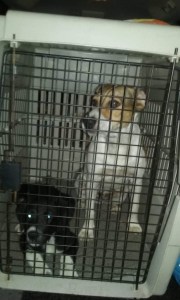
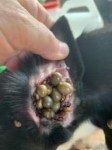
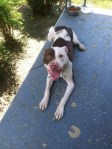
Funny how things come around!
I just happened to click on the ‘signature’ of a follower that took me to a blog where I was truly enthralled. It was called Who Will Let the Dogs Out? and I was fascinated by what was being written.
Now I already follow this blog but had been very reluctant to go across to their place and read the posts. Shame on me! I have no idea why!
How about this post, that I am taking the liberty of republishing.
ooOOoo
No Kill is Not Rocket Science.
BY CARA SUE ACHTERBERG
July 25th, 2019
Ian and I are still processing what we saw and what we learned in Tennessee, each in our own way.
He is taking a break and feels he can’t look at the pictures for a bit. His pictures capture the emotion of the dogs caught in our human failure, and that is hard to look at. I know eventually he will be ready to edit them and to hopefully share more here on the blog. He took thousands of pictures. My big son has a very big heart, and it truly broke in Tennessee.
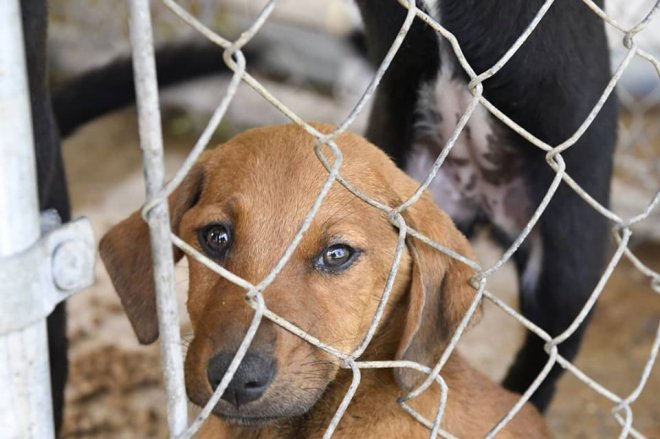


For me, seeing the conditions in western Tennessee made me furious. This should not be happening. We should not be leaving the responsibility for lost and surrendered animals to a handful of citizens who are quite literally standing in the gap left by a government that neglects its duties and an unaware public.
I cannot look away. So, I am doing what I do– writing and talking and making a nuisance of myself. I’m working on articles, blog posts (like this one), and even a book. I am in the midst of signing a publishing contract for 100 Dogs and Counting, a follow up to Another Good Dog: One Family and Fifty Foster Dogs that will recount more of our fostering adventures, and then take the reader south to discover where these dogs come from and what they can do about it.
I am also planning another trip in September– this time back to Tennessee, and then on to Alabama. Ian will be in school, but I will bring along another talented photographer and excellent co-pilot, Nancy Slattery.
One of the people I am excited to see on this next trip is a rescue hero of mine — Aubrie Kavanaugh. I’m excited to introduce you to her today in the following interview. Aubrie is not only an expert in the fight for a No-Kill nation, but a talented writer, a wickedly smart and funny person, and a dog-hearted woman relentlessly and methodically committed to changing the situation.
Enjoy!
The biggest first – the question everyone asks me – Why are there so many unwanted dogs in the south?
I honestly try to avoid the word “unwanted” because it implies that no one wants the animals when that is not necessarily true. Having said that, we have so many in need of homes for a host of reasons, some of which I’ll explain.
In many locations, there is a complete disconnect between animal control agencies/animal shelters which have animals needing new homes and the general public who could provide those homes. The shelters presume no one wants the animals and the public presumes the animals all find homes. The chasm between the agencies and the public is wide and leads to animals who otherwise may be saved being destroyed.
We have issues with most municipalities who manage animal shelters continuing to use the outdated “catch and kill” method of sheltering because they have not learned about or embraced No Kill programs and philosophies which could both reduce shelter intake and increase shelter output. Rather than educate themselves on how to keep animals alive which still ensure public safety, they hold firm to the status quo with the mindset of, “its’ not broken, so don’t fix it.” But the shelter system is broken and it does need to be fixed.
Many people are quick to ascribe what has been called “The Bubba Factor” to the south which essentially means that people here are too woefully stupid or callous to care about what happens to animals in need. We do have cultural differences regarding the value of animals in our lives (“it’s just a dog”) or where animals live (inside v. outside) and there are some people who could care less about animal welfare. Most people, however, do care at most about the welfare of animals and at least about how their tax dollars are spent. People can be informed not only about how their tax dollars can be best used, but also about how they can make better personal choices which affect how shelters operate (like the value of spay/neuter, how to keep pets contained, how to rehome pets in the event of their death or some life crisis, etc.). Many see themselves as stewards of the species we have domesticated and for them this is an issue of ethics, but they need to be informed of the need to address the need.
In many parts of the south, there is also very limited access to spay/neuter at all, let alone at a reasonable cost. This means that in some places, pet populations are not contained and just continue to grow over time. The more animals there are in any particular community, the more animals are apt to end up in animal control systems.
Define what ‘no-kill’ means to you.
No kill means we don’t kill healthy and treatable shelter animals using our tax dollars or donations.
Some try to portray the phrase as controversial or complicated when it really is not. When we use the intended meanings of words like “euthanasia” and “kill,” the phrase makes more sense.
If you have ever made The Terrible Decision to euthanize a beloved pet who is suffering, you know exactly what euthanasia means. It is an act of mercy to end or alleviate suffering. If a shelter ends the life of a healthy dog, that is not euthanasia no matter how many times we call it that. If someone outside an animal shelter setting were to end the lives of healthy animals, we would not say those animals were euthanized. We would say they were killed. We should not alter the meaning of words based on the location where the act takes place.
There will always be animals in shelters who are suffering and for whom euthanasia is the only responsible action as an act of mercy. There will also always be a very small number of dogs who are so broken as to be genuinely dangerous (as opposed to scared, traumatized or undersocialized) and who cannot be adopted out because they present a public safety risk and those dogs must, unfortunately, be euthanized. No Kill does not mean animals do not die. It means we keep the healthy and treatable animals alive because that’s what the public expects and because it is possible using a progressive business model.
I blogged about this topic recently for No Kill Movement and the blog explains a bit more about what No Kill is and what it is Not.

What made you get involved in no-kill advocacy?
We had our 16-year old German Sheppard mix euthanized on Earth Day of 2006. We knew for years that the day was coming, but it was heart-wrenching. I found I was not coping well in the wake of our loss. I began donating to the animal shelter in the city where I work in her honor and to help me cope with the loss by doing something positive.
I was on the shelter website a few months later when I came across a promotional video which began harmlessly but then transitioned to footage of an outwardly healthy dog being taken from his kennel to be killed. It shocked me. I had no real clue prior to that that the shelter was destroying healthy and treatable animals. When I later asked if the dog in the video had actually died, I was told five words that changed my life: “nobody wants Beagles these days.”
I got upset, then I got angry and then I began educating myself about why this was happening not just in my area, but all over the country. I wanted to do all I could to make it stop. I now consider myself an unapologetic No Kill advocate. For me, this is an issue about free speech and municipal accountability. I see my advocacy as a moral imperative. Shelters operate using tax dollars and it is up to us to hold those places accountable for how they spent our money and in our name (while sometimes blaming us for the process). As a country, we are better than this.
Is no-kill truly possible and if so, what will it take?
I absolutely believe that any community can become a No Kill Community and that as more places take this step, we move closer to a time when the killing of healthy and treatable animals will become part of our shameful past. Change can come in one of two ways. Municipalities can get ahead of this issue by adopting progressive programs. If they will not do so, the burden passes to citizens to educate themselves and then speak out to demand better of elected and appointed officials. If elected officials will not listen to the will of the people, they need to be replaced.
I support and promote the No Kill Equation which is a one-size-fits-all DIY solution for any community which was first published by Nathan Winograd in 2007. It is an all-in series of programs which work in concert with each other to reduce shelter intake and then move animals who are in the shelter through the system as quickly as possible. I group them into “keep them out” and “get them out” programs. Anyone can learn about the No Kill Equation by reading Nathan’s book, “Redemption: The Myth of Pet Overpopulation and the No Kill Revolution in America.” They can also read about the equation on numerous websites including those for the No Kill Advocacy Center, No Kill Movement, No Kill Learning, my Paws4Change website or our No Kill Huntsville website. I also go into a lot of detail about the Equation in my book and explain a bit about how each of the programs works.
What can someone who is not in the rural south do to help?
Every area can improve. If you live outside the south, find out how your local shelter is functioning using your tax dollars. Many shelters claim to have high release rates when, in fact, they are playing a numbers game or are using words in different ways than they are used by the public to condone or excuse killing. If you don’t like what you learn, speak out and ask for better. Only when more places across our country change will those changes ultimately become infectious everywhere, including in the south.
Even if your local area is doing a great job, you can connect with people you know in the south and encourage them to educate themselves and perhaps become politically active about their local shelter. It often falls to the public to speak out and demand better. Only those who live in the area can speak out for better use of their tax dollars in ways which are consistent with their values.
If you don’t know anyone in the south, you can help rescue and advocacy organizations in the south which are doing some of the heavy lifting to keep animals alive. If that is the help you choose to provide, please also encourage the rescue group or advocates with whom you engage to speak out to seek better. While I have the utmost respect for people “in the trenches,” who are keeping animals alive, they are doomed to provide that role indefinitely unless the system is forced to change through public demand. I have a section in my book called “For Rescuers,” which addresses this need to go beyond saving X dog and Y cat to becoming a catalyst for change so there are fewer animals in need of rescue or help. As simple as it sounds, nothing will change unless something changes to alter the process.
I love the title of your book because that’s what I’ve concluded, too – It’s not Rocket Science. Tell me a little about why you wrote the book and what you hope people take from it.
I formed an advocacy group called No Kill Huntsville in 2012 to speak with one voice to persuade the City of Huntsville, Alabama, to stop destroying healthy and treatable animals using tax dollars. The live release rate at the shelter at the time was about 34% and my individual efforts going back to 2008 to bring about change had failed. Fast forward a few years and things have changed remarkably. The live release rate at the shelter has been above 90% for more than four years and while there is still work to be done, the culture at our shelter has changed. It was an incredible struggle for a long time. It got ugly with some strong opposition from some unlikely sources. But we’re proud of what we did working together as a coalition.
One day last fall after a city council meeting which set some new guidelines for the shelter, I was thinking back to all the times people have contacted us asking for help or asking what we recommend. People contact us from the south, from other regions and even from other countries. I decided to write the book to help others learn from our path. We didn’t get everything we wanted and our work is not over, but the worst is behind us and I think people may learn something from our methods and from our mistakes. I think the content in the book about the opposition we faced is almost as important as the No Kill Equation we promoted and still promote. If advocates are not prepared to counter opposition, their arguments in support of animal shelter reform may fall short.
Anything else you’d like to add?
The phrase No Kill is on the public radar and is not going away. We do better to educate people on what it means and to help people learn how to promote change than to try to sugarcoat what is happening in our shelters using our money. We should be respectful in our advocacy, but there truly is no polite way to say, “please stop killing healthy and treatable animals using our money.” No Kill advocates are not the enemy of shelters any more than the public is the enemy. I always encourage people to focus not on the messenger, but the fact that the message is necessary in the first place.
There are some who use the phrase No Kill and do so in ways which are inconsistent with our social movement. Some of these people engage in criminal acts for which they should be prosecuted. We should absolutely call out those bad actors when we find them. Those people who co-opt the phrase No Kill for illegal or unethical purposes are no more representative of our social movement than unethical breeders of animals represent all breeders. If an organization calls itself No Kill and destroys a lot of animals, keeps them for years, or does not provide for their care, they are using the words without the actions to support them. My book covers this topic and I touch on it in the No Kill Movement blog.
I believe a time will come when all shelters in America will be No Kill shelters. How long that takes is up to all of us. We must educate ourselves on what his happening in our own communities so we can decide if our money is being spent in ways of which we approve. When it is not, it is up to us to ask for better and, when necessary, be advocates for change. The lives of animals depend on it.
Aubrie Kavanaugh is an Army veteran who has worked for decades as a litigation paralegal doing  defense work; her clients are mostly municipalities and law enforcement officials.
Aubrie became an animal welfare advocate in 2006 after learning about the deaths of animals at her local animal shelter. She manages the Paws4Change educational website, blogs on animal welfare issues, creates video productions and public service announcements for animal shelters and nonprofit organizations across the country, and is involved in advancing animal welfare legislation on the local and state level. She also leads an advocacy group called No Kill Huntsville. She lives in northern Alabama with her husband, their dog, and the enduring inspiration of their dogs to whom they have said farewell for now.
Her book, “Not Rocket Science: A Story of No Kill Animal Shelter Advocacy in Huntsville, Alabama” is available on Amazon. It is priced to print.

ooOOoo
Well done, Aubrey!
And if you go to that Amazon Books page you will read this:
America is an animal friendly society. Approximately sixty-eight percent of U.S. households own a pet – about 85 million families. Most of us consider our companion animals family members. We recognize that they enrich our lives in countless ways, improve our physical and mental health, and make us better people. We value the fact that they don’t care what we look like, where we live, what we do for a living or how much money we make; their love for us is unconditional. And we agonize over our decisions when the time comes to say farewell to them due to advanced age or disease.
But there is a dark side to our relationship with companion animals which is our collective shame. We destroy millions of healthy and treatable animals in our tax-funded animal shelters every year. Many people simply do not know about what happens at their local animal shelter using their money and in their name. Some who know about this tragedy believe there is no other way to function. There is.
“Not Rocket Science” is a story of no kill animal shelter advocacy in Huntsville, Alabama, which explains how a group of animal welfare advocates joined forces to speak with one voice to save the lives of healthy and treatable animals in the municipal animal shelter. This advocacy helped change the shelter from one which destroyed more than half of the animals entrusted to its care to a shelter which saves the lives of all healthy and treatable animals instead.
Any community can be a no kill community. Sometimes it just takes the courage to try something new. And sometimes it just takes a group of people willing to band together and speak out with one voice to say “enough. We are better than this.”
The book is priced at $5.52. I have ordered a copy!
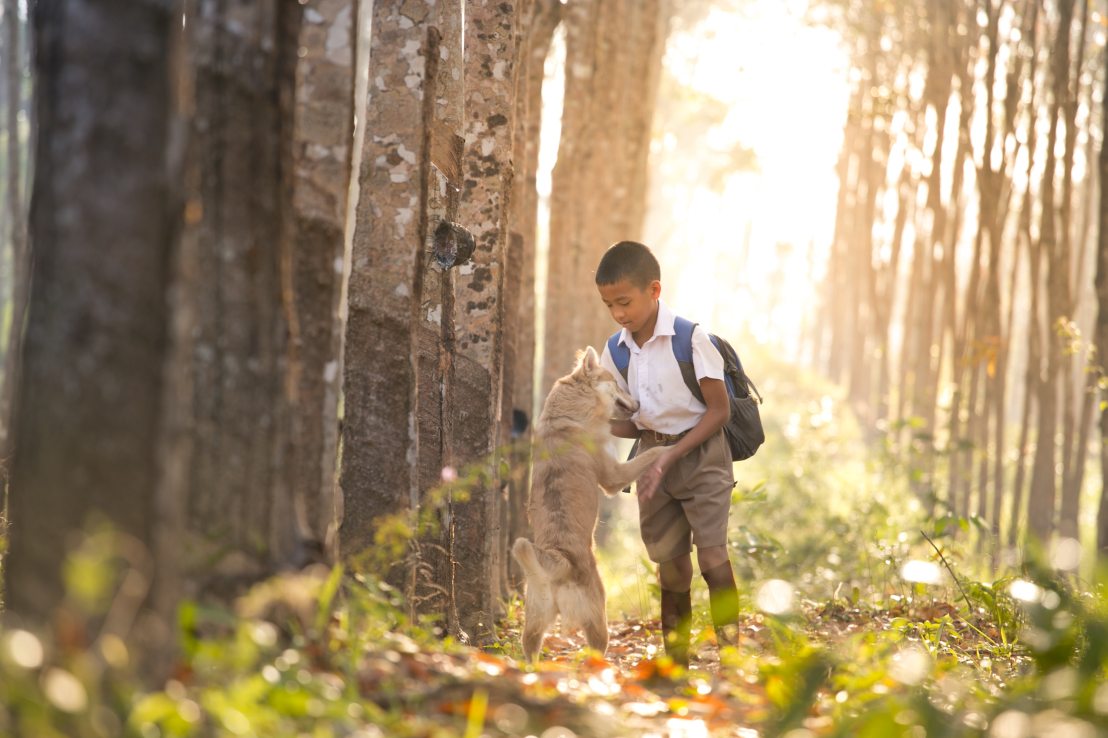
 While we know that dogs teach kids loyalty and unconditional love, there are also many other reasons that dogs are good for kids! I feel so grateful to be able to have both human and canine kids at home. I have always had dogs around me as a child also. My dad had hunting dogs and my mom liked the smaller poodle terrier dog breeds.
 We rescued Tuffy (above) from a shelter, as a puppy, after my daughter lost her horse in a traumatic accident. It’s been a couple years now and Tuffy has also helped her through more. We are blessed to have her and she follows my daughter everywhere. I know she will always keep her safe. Their bond is so strong and if she is ever feeling down, Tuffy knows and is right there to lift her spirit.
 One last thing I want to mention is how important it is to teach your child to respect their dog. First few things to teach is to respect their boundaries, how dogs communicate and how to interact when the dog is new to the family.
 I would love to hear your comments and stories about how your dogs have helped your kids!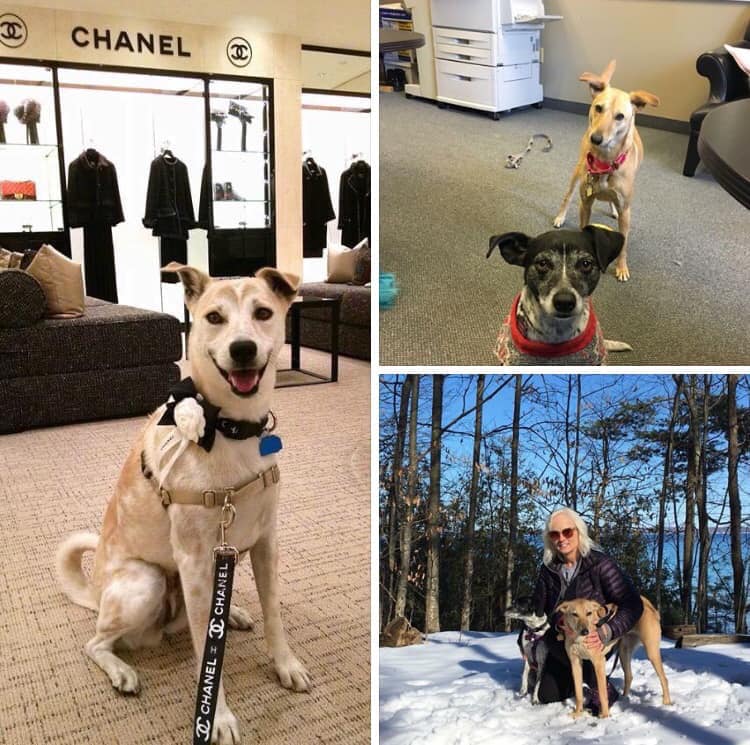






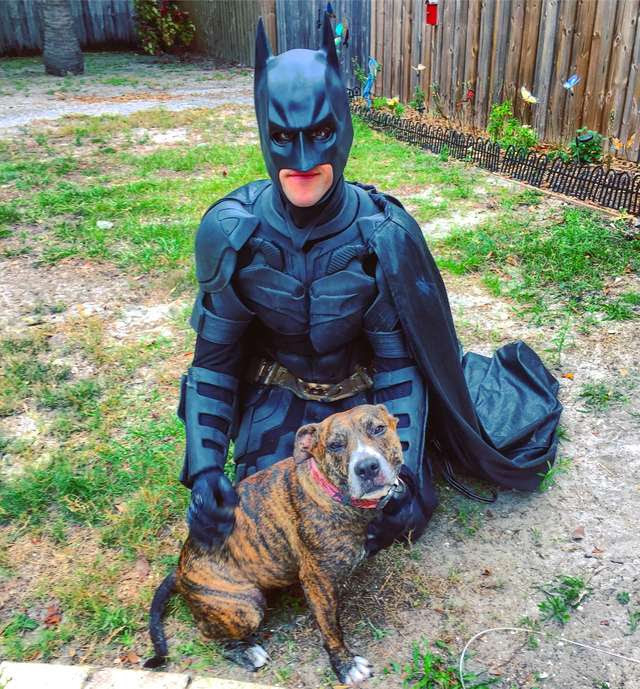
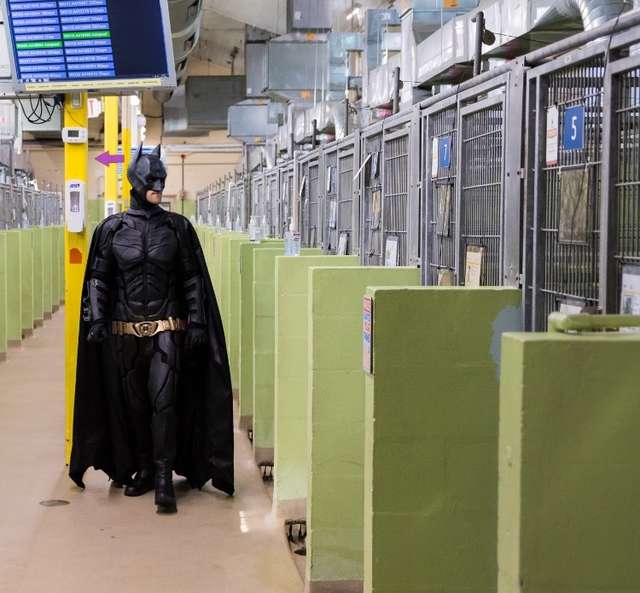
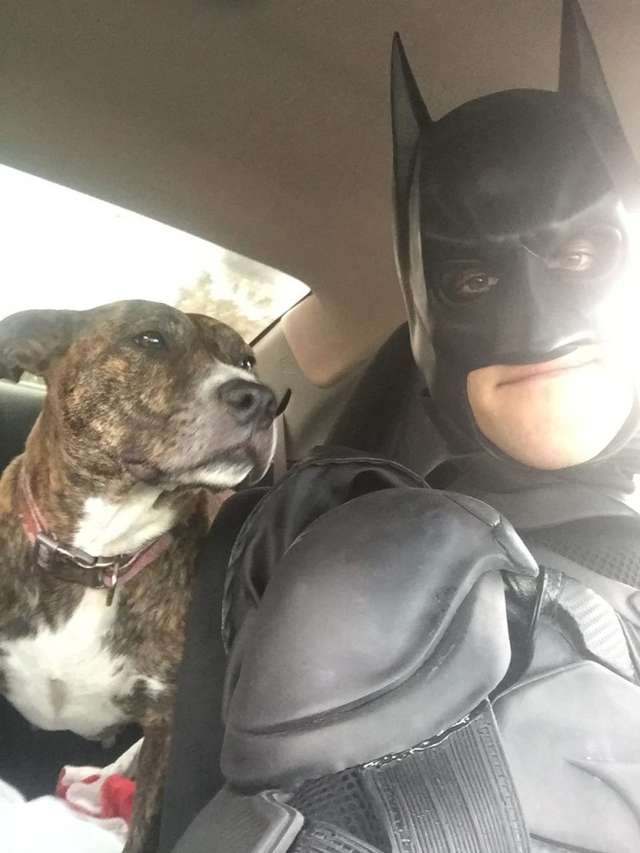
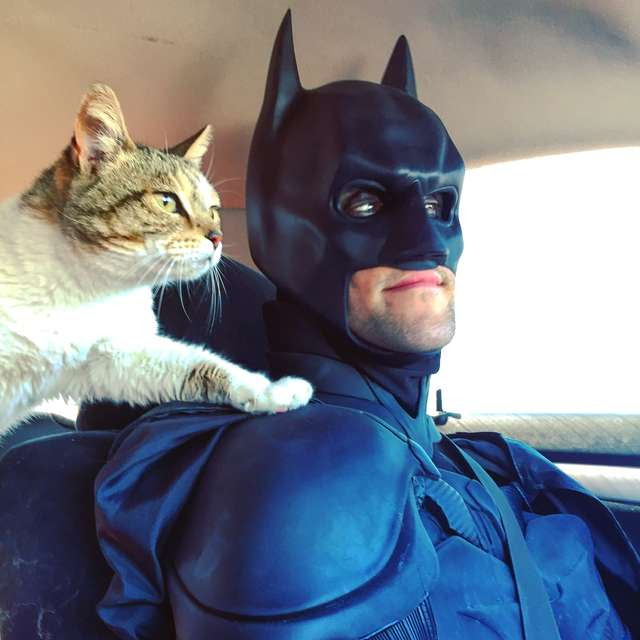 Batman4Paws[/caption]
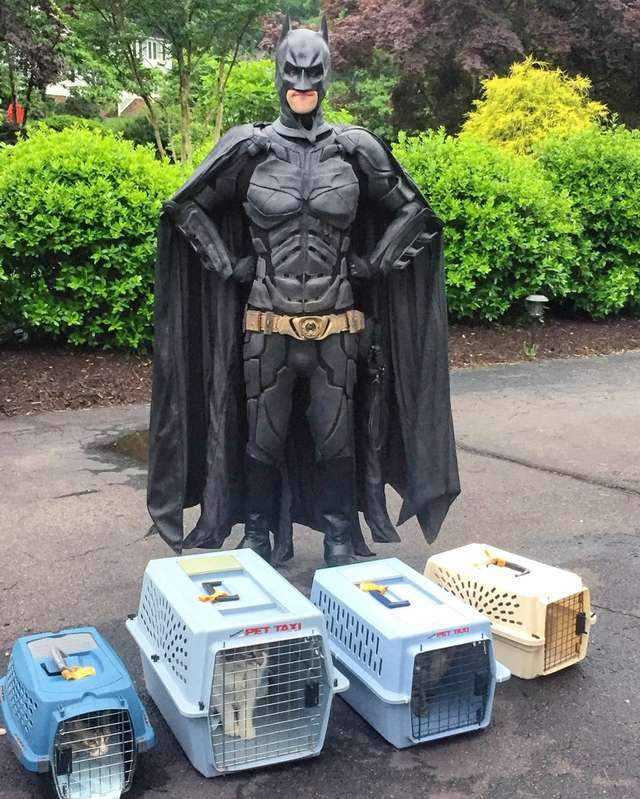 Batman4Paws