Category: History

The story of transition, part one

A fun collection of short films about Transition.

I shall avoid the temptation of writing about our need for transition, well for now that is, and just go straight to this recent article that appeared on the Transition Culture website.

As part of the promotion of ‘The Transition Companion‘, Emilio Mula made these 10 short films of different stories from the book.  The recent BBC series ‘A History of the World in 100 Objects’ beautifully told the story of the evolution of human history illustrated by 100 objects chosen from the British Museum’s collection. We used a similar approach to tell the story of the emerging and unfolding Transition movement, which in its short life has spread to 35 countries around the world from its humble beginnings in Kinsale, Ireland.  You can read more about these stories here, and here are the films…

So the first three of the films today and some more tomorrow.

Film One – A Really Quite Horrible Jumper  Origin: Transition Taunton Deane

Between July and September 2009, Transition Taunton Deane ran a series of workshops with their local council looking at peak oil, climate change and resilience. What was extraordinary was that every one of the Council’s 375 employees attended, from CEO to car park attendants.

This was written up as ‘Towards a resilient Taunton Deane’ and the whole process deeply impacted the Council. They set up a Green Champions team, every department now has an energy charter, it has cut its electricity use by 14%, set up a car club and is now installing PV and insulating its buildings. After the initial workshop, a planning officer and a car park attendant got together and planted a new community orchard on public land.

Chrissie Godfrey from TTD told me “our main role is to keep telling them how brilliant they are… it just goes to show how powerful a catalyst Transitioners, in the right place at the right time, can be”.

The jumper? In 2010, the Council held a ‘Turn the Heat Down’ day where the heating in their offices was turned down and staff were invited to wear the most revolting jumper they could find to work, and prizes were awarded for the most hideous.

Film Two – Bertie & Gertie Origin: Transition Town Tooting’s Trashcatchers’ Carnival

In July 2010, Tooting was the setting for the Trashcatchers’ Carnival, the first Transition project to get Arts Council funding. Together with Project Phakama and Emergency Exit Arts, Transition Town Tooting (TTT) created a street carnival celebrating the Earth using entirely recycled materials. Over 800 people took part, including local schools, mosques and temples, and over one million plastic bottles and shopping bags, half a million crisp packets, half a ton of renewable willow and half a ton of materials were collected over a six month period to create this extravaganza, which included several structures over 6m (20ft) high.

On the day, thousands turned out, the sun shone, local restaurants fed over 1,000 people for free at the end of the event, and the community was left with the feeling of ‘if we can do that we can do anything’.

Bertie and Gertie were made entirely from recycled plastic bags by members of Tooting Bec Lido as part of their float, and represent the real Bertie and Gertie, who are often to be found swimming in the Lido.

Film Three – A Gas Lamp Bulb Origin: Transition Malvern Hills’ ‘Gasketeers’

Malvern is home to 109 Victorian gas lamps, which provided C.S. Lewis with the inspiration for the lamp that first greets Lucy in The Lion, the Witch and the Wardrobe. They are listed, part of the identity of the place, but are also hugely inefficient. At the moment each lamp costs £130 to maintain per year and £450 to maintain.  They don’t even create that much light, and as local council budgets tighten, there is a risk that they will be turned off altogether.

Enter Transition Malvern Hills’ energy group, known locally as the ‘Gasketeers’. The group brought together experts in gas lighting from the local area and also from further afield. They have now started making the lamps over; their changes will mean that each lamp will now cost just £14 a year in gas and £40 a year in maintenance, reducing carbon emissions by 84%. They will also be 10 times brighter, and produce no light pollution at all. They are maintained by Lynn, the UK’s first qualified female gas lamp technician, who performs all her maintenance with a bicycle and trailer.
Pick up thy pen!

A reminder that other people in other places may not be so fortunate as you.

In that sub-heading is an assumption that everyone who calls by Learning from Dogs enjoys a life where they are, relatively speaking, free to make their own life decisions.  My apologies if that is a false assumption.

Amnesty International have a December campaign Write for Rights.  It is so worth supporting.  Here are some details from that website,

YOUR WORDS CAN CHANGE LIVES.

Your words can be a SPOTLIGHT that exposes the dark corners of the torture chamber. They can bring POWER to a human rights defender whose life is in jeopardy. They can IGNITE hope in a forgotten prisoner.

Your words can SAVE LIVES.

Join hundreds of thousands of people around the world in marking International Human Rights Day this December by taking part in Amnesty International’s Write for Rights Global Write-a-thon – the world’s largest human rights event. Through letters, cards and more, we take action to demand that the human rights of individuals are respected, protected and fulfilled. We show solidarity with those suffering human rights abuses, and work to bring about positive change in people’s lives.

Will you write a letter to save a life?

Sign up now to Write for Rights!

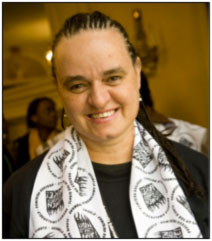
Jenni Williams

“I am alive today, after 34 arrests, because members of Amnesty International spoke out for me.”

 – Jenni Williams, human rights defender in Zimbabwe

It really doesn’t make any difference which Amnesty case you support – just pick one and do it before the end of the month.

Amnesty also offer a full suite of resources, obtainable from here, to assist you with producing your letter.

Jean and I have decided to write in support of Jabbar Savalan, as described here and below,

AZERBAIJAN – Jabbar Savalan / Youth activist detained after using facebook

Jabbar Savalan

Hours after he posted a note on Facebook calling for protests against the government, Jabbar Savalan told his family that he was being followed. The next evening, February 5, 2011, police arrested him without explanation and took him to the Sumgayit police station, where they “discovered” marijuana in his outer coat pocket. Police questioned him without a lawyer for two days, reportedly hitting and intimidating him to make him sign a confession.

Authorities in Azerbaijan have a history of using trumped-up drug charges to jail perceived critics. Jabbar maintains that he does not use drugs and that the marijuana was planted on him. In May 2011, he was was convicted of possessing illegal drugs and sentenced to two-and-a-half years in prison. Amnesty International believes that authorities fabricated the drug charges against Jabbar to silence him. Amnesty considers him to be a prisoner of conscience.

A history student in college, Jabbar was an active member of an opposition political party. In January 2011, he posted on Facebook a newspaper article that described Azerbaijan’s President Ilham Aliyev as corrupt.

On February 4, Jabbar was inspired by the protests in the Middle East and North Africa to use Facebook to call for a “Day of Rage” to protest the government in Azerbaijan. The next day, police arrested him. He was 19 years old at the time.

Enough said!

Let me close with this video.

Kepler 22b

In a sense the discovery of a potential life-supporting planet isn’t news.

What do I mean by that sub-heading?

Many (and I mean ‘many’) years ago I was a student at Faraday House Electrical Engineering College in Southampton Row, London.  The College was closely associated with London University and one year there was an invite to attend a lecture by the famous British astronomer, Sir Bernard Lovell.

Sir Bernard Lovell and the Jodrell Bank radio telescope

Despite that lecture being about 45 years ago, I still recall Sir Bernard explaining the statistics of the universe to demonstrate that the odds of another planet somewhere ‘out there’ that could support life were huge.  (Just as an aside do read this interesting story of Jodrell Bank picking up signals from the Russian Lunar 15 just as Neil Armstrong and Buzz Aldrin prepared to leave the moon’s surface.)

So with the positive identification of this planet some 600 light-years away, Sir Bernard’s speculation has been proved spot-on.

But in another very real sense, the discovery of Kepler 22b is astounding.  Step outside the science of the find and just cogitate a little about the implications; the deep philosophical issues that Kepler 22b raises.  Here’s an extract from Northern Voices Online news,

The excitingly named Kepler 22b, a planet believed to have been discovered orbiting a star a mere 600 light years away, is being hailed as a “New Earth”. But sci-fi fans shouldn’t get too excited just yet: as always with these stories, the likelihood is that we have not met the neighbours. Or, if we have, they probably aren’t very exciting conversationalists.

Talking about the likelihood of intelligent life on Kepler 22b, Dr Lewis Dartnell, of the Centre for Planetary Sciences at UCL, said, “There are big hurdles that life has to get over, and we don’t know how big a hurdle the origin of life itself is. You simply can’t tell with a single datum – you can’t do stats when N=1.”

The N that Dr Dartnell mentioned was earth: the only known planet inhabiting intelligent life forms, or better still, life forms of any kind.

Dr Dartnell further adds, “The interesting thing will be when we go to Mars and Europa and see whether there are bacteria there. It would be enormously significant if life is found there. But the next step, once Kepler has looked at a lot of planets, will be to see what their atmospheres are made of, using infrared spectroscopy.

“If one or two of them have oxygen in the atmosphere, it may be a transient thing – like Venus, undergoing a runaway greenhouse effect – but if we find, say, 20 Earth-like planets, all with the signature of oxygen in their atmosphere, then that would be very unlikely. Life would be the more reasonable explanation,” concluded Dr Dartnell.

Read the rest of this article here.

There are many news reports online but this short video caught my eye.

The latest NASA report is here from which is quoted,

NASA’s Kepler Mission Confirms Its First Planet in Habitable Zone of Sun-like Star

NASA’s Kepler mission has confirmed its first planet in the “habitable zone,” the region where liquid water could exist on a planet’s surface. Kepler also has discovered more than 1,000 new planet candidates, nearly doubling its previously known count. Ten of these candidates are near-Earth-size and orbit in the habitable zone of their host star. Candidates require follow-up observations to verify they are actual planets.

The newly confirmed planet, Kepler-22b, is the smallest yet found to orbit in the middle of the habitable zone of a star similar to our sun. The planet is about 2.4 times the radius of Earth. Scientists don’t yet know if Kepler-22b has a predominantly rocky, gaseous or liquid composition, but its discovery is a step closer to finding Earth-like planets.

Previous research hinted at the existence of near-Earth-size planets in habitable zones, but clear confirmation proved elusive. Two other small planets orbiting stars smaller and cooler than our sun recently were confirmed on the very edges of the habitable zone, with orbits more closely resembling those of Venus and Mars.

“This is a major milestone on the road to finding Earth’s twin,” said Douglas Hudgins, Kepler program scientist at NASA Headquarters in Washington. “Kepler’s results continue to demonstrate the importance of NASA’s science missions, which aim to answer some of the biggest questions about our place in the universe.”

So let me leave you with this tantalising thought.  One day it will be confirmed that there is intelligent life on a planet out there in the universe.  That is likely to be one of the astounding events ever in the history of man on this planet.  Even trying some wild guesses about how that will change mankind’s self-perception is more than difficult – yet it will change the way we look at ourselves irrevocably!

I pray that I am still alive when that happens, as I’m sure many others must do.

The Greatest Crash – footnote

The story that could run for an awfully long time!

I rather revealed my newness as a US resident by posting my review of David Kauders’ book The Greatest Crash over 2 days last week,  one of them being Thanksgiving Day.  Despite that 1,895 people viewed my review which was entitled The end of an era.

A week has now passed since that review.  I was curious to see what sorts of headlines had been making the news in the last 7 days.  It’s just a random trawl through those items that have captured my attention.

Let’s start with the Financial Times, November 27th,

The eurozone really has only days to avoid collapse

By Wolfgang Münchau

In virtually all the debates about the eurozone I have been engaged in, someone usually makes the point that it is only when things get bad enough, the politicians finally act – eurobond, debt monetisation, quantitative easing, whatever. I am not so sure. The argument ignores the problem of acute collective action.

Last week, the crisis reached a new qualitative stage. With the spectacular flop of the German bond auction and the alarming rise in short-term rates in Spain and Italy, the government bond market across the eurozone has ceased to function.

Wolfgang concludes his article thus,

Italy’s disastrous bond auction on Friday tells us time is running out. The eurozone has 10 days at most.

Then my print copy of The Economist that arrived on the 26th had this lurid cover page,

Unless Germany and the ECB move quickly, the single currency’s collapse is looming

The leader article contains this paragraph,

Past financial crises show that this downward spiral can be arrested only by bold policies to regain market confidence. But Europe’s policymakers seem unable or unwilling to be bold enough. The much-ballyhooed leveraging of the euro-zone rescue fund agreed on in October is going nowhere. Euro-zone leaders have become adept at talking up grand long-term plans to safeguard their currency—more intrusive fiscal supervision, new treaties to advance political integration. But they offer almost no ideas for containing today’s conflagration.

and a few paragraphs later, this,

This cannot go on for much longer. Without a dramatic change of heart by the ECB and by European leaders, the single currency could break up within weeks. Any number of events, from the failure of a big bank to the collapse of a government to more dud bond auctions, could cause its demise. In the last week of January, Italy must refinance more than €30 billion ($40 billion) of bonds. If the markets balk, and the ECB refuses to blink, the world’s third-biggest sovereign borrower could be pushed into default.

Then on Sunday, 27th, MISH’s Trend Analysis blogsite reveals,

ICAP Plc, the world’s largest inter-dealer broker (one that carries out transactions for financial institutions rather than private individuals), is now Testing Trades In Greek Drachma Against Dollar, Euro

ICAP Plc is preparing its electronic trading platforms for Greece’s potential exit from the euro and a return to the drachma, senior executives at the inter-dealer broker said Sunday.

ICAP is the latest firm to disclose such preparations, joining the growing ranks of banks, governments and other key players in the global financial system whose officials are worried enough about the stability of the common currency to be making contingency plans for a possible break-up.

Then Bloomberg published an article by Peter Boone and Simon Johnson, the latter of Baseline Scenario fame, that opened as follows,

Investors sent Europe’s politicians a painful message last week whenGermany had a seriously disappointing government bond auction. It was unable to sell more than a third of the benchmark 10-year bonds it had sought to auction off on Nov. 23, and interest rates on 30-year German debt rose from 2.61 percent to 2.83 percent. The message? Germany is no longer a safe haven.

and concluded,

Ultimately, an integrated currency area may remain in Europe, albeit with fewer countries and more fiscal centralization. The Germans will force the weaker countries out of the euro area or, more likely, Germany and some others will leave the euro to form their own currency. The euro zone could be expanded again later, but only after much deeper political, economic and fiscal integration.

Tragedy awaits. European politicians are likely to stall until markets force a chaotic end upon them. Let’s hope they are planning quietly to keep disorder from turning into chaos.

Finally, on the 29th the BBC News website carried details of the Autumn Statement made by British Chancellor, George Osborne, to Parliament.

Osborne confirms pay and jobs pain as growth slows

Chancellor George Osborne has said public sector pay rises will be capped at 1% for two years, as he lowered growth forecasts for the UK economy.

The number of public sector jobs set to be lost by 2017 has also been revised up from 400,000 to 710,000.

Borrowing and unemployment are set to be higher than forecast and spending cuts to carry on to 2017, he admitted.

Just look at that figure of public sector job losses – 710,000!

Well that’s more than enough from me but it does surely endorse the opening views that David Kauders expounded in his book, as carried in my review, and reproduced here,

Starting with the first sentence, David sets out the core problem;

This book argues that it is impossible to expand the financial system much further.

expanding this a few paragraphs later,

This is the financial system limit: lack of new borrowing plus excessive weight of debt obligations from past borrowing combine to slow economies down. This is the barrier whichever way policy makers turn. It is like the lid on a boiling kettle. Enough steam can lift it for a while but it always snaps back into place. The financial system limit is a roadblock preventing growth.

A few pages later in this opening chapter ‘The roadblock preventing growth‘ this limit is explained thus,

Policy contradictions also show us that the financial system has reached a roadblock. The glaring conflict between bailout and austerity is at the core. Each bailout or stimulus requires creation of more credit, leading to false financial speculation, and for a short while markets recover their poise. The threat of inflation returns. Later, bad debts rise, the markets tumble again and a new crisis emerges. Austerity, the alternative policy, cuts spending thereby cutting the immediate level of economic activity and bringing economic decline more quickly than the stimulus alternative. Whichever way they turn, the authorities are damned.

You can understand why I called this Post a ‘footnote’ not an endnote.

More on this new era

Some reflections from Herbert Marshall McLuhan

In a sense this piece today connects with the conclusions from my review of David Kauders’ new book The Greatest Crash; that we are transitioning into a new era.

That’s why I was fascinated to come across a long essay about Herbert Marshall McLuhan written by Michael Valpy and published in the The Globe and Mail last July.

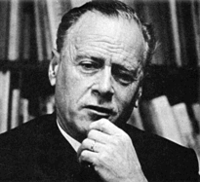
Marshall McLuhan in the 1970s

WikiPedia has a comprehensive description of Mr. McLuhan.

Let me quote some extracts from that article to illustrate why I made the connection with my book review.

The University of Toronto professor of English credited with foreseeing the Internet 30 years before it was invented and broadcasting scores of ideas about how electronic communications media was changing the way humans think has been redeemed from labels of McLuhanacy and psuedo-scientific charlatanism.

His work no longer is described, as it was in one erudite journal of the 1970s, as “a hoax so gigantic that it shows every sign of becoming an international intellectual scandal.”

Later on in the article,

Deciding recently to pay a visit to the McLuhan coach house, she wrote: “To be perfectly honest, I had never heard of McLuhan until I moved into residence at SMC, and accidentally stumbled into the book and media studies program. But as I quickly learned, Marshall McLuhan is kind of a big deal. You know that phrase that you hear everywhere: ‘The medium is the message?’ Yeah, that was McLuhan.”

And McLuhan’s problem – one of his problems – is that his message couldn’t escape his medium. As Douglas Coupland points out in a 2009 McLuhan biography, the wonderful, whimsical, boundlessly optimistic and imaginative sixties society that embraced him and lapped up his ideas morphed into the gloom of a change-fatigued seventies society that tired of hearing from him. Yet the brand remained strong. “You know that phrase that you hear everywhere: ‘The medium is the message?’” Ms. Kellogg asks us. “Yeah, that was McLuhan.”

Think of his intellectual history as a journey between two mountain peaks passing through a shadowed valley.

When one thinks of the power of the many new tools we lump under the title ‘social media’ then it’s easy to think that the way that humans are now communicating will have profound implications.  Even this humble Blog was read by over 31,000 in the month of October.  Back to the article,

McLuhan believed that each new technology created a new human environment and thus a new way of thinking. The medium-is-the-message meant that the content of electronic media is insignificant; it is the medium itself that has the greater impact on the environment. In other words, it wasn’t what we were seeing on TV that was important; it was the fact that we were watching TV (and not doing other things) that altered our brains.

And because, as Prof. Francis points out, McLuhan saw humans as essentially communicative animals, he believed it was the technologies of communication that were primary in shaping who we were, what we thought, and how we acted, with effects that often were subliminal and therefore not recognized.

Finally, the article concludes thus,

To truly understand McLuhan and his ideas, says Prof. Scheffel-Dunand, students have to read him.

Most students of McLuhan today, she says, read scholars who write about McLuhan rather than read McLuhan himself. Which is a mistake, she says, because McLuhan wrote as a poet: he wrote metaphorically, aphoristically, he wrote in what he called “mosaics.”

Biographer Philip Marchand agrees. “My suggestion for students is to begin with the articles written by McLuhan – ‘Acoustic Space’ and ‘The Effect of the Printed Book on the language of the 16th century’ and a couple others that appear in the anthology entitled Explorations in Communication. These articles are lucid, comprehensible introductions to McLuhan’s thought.”

To rejoin UpbeaT blogger Emily Kellogg on her coach house tour: “I don’t want to bore you, dear readers, but I just can’t help gushing. I dig this stuff. These kind of conversations, are the things that make an undergraduate degree worth pursuing. They’re the ones that give you an adrenalin rush because you’re thinking so quickly – and your brain kind of feels like a trapeze artist jumping from idea to idea.

There’s also something innately cool about having an intellectual conversation that ranges from iPhones to Heidegger in five seconds flat in the place that housed Marshall McLuhan as he wrote the books that revolutionized the field of media research.”

Ms. Kellogg: 2011 medium of McLuhan’s message.

Michael Valpy is a freelance writer based in Toronto.

The end of an era, part two.

A review of David Kauder’s recently published book, The Greatest Crash.

Details of the availability of the book are included at the end of the review.

Extracts from the book included are with grateful thanks to Sparkling Books.

Part One of this review was published yesterday which needs to be read before Part Two.

——————-

Chapter 5 continues by examining the over-bearing consequences of excessive public spending, excessive Government regulations, substitute taxation, weakness of Treasury forecasts, and so on. While these are UK issues, there is no doubt that similar restraints of free enterprise exist in many other western nations.

In Chapter 6, ‘Group Think‘, David looks at the strange ways in which we form opinions.  It’s a topic that has been discussed and written about widely but the point behind this chapter is that people have in great part lost the ability to discern truth from fiction, with terrible implications when it comes to understanding how individuals are affected by government and bureaucratic institutions.

The chapter closes;

One of the remarkable points that I have found in writing this book is that many of the detailed errors, incorrect policies et al, have already been amply documented by others. But we never learn. The delegated society, the strength of lobby groups and vulnerability of our political system to pressure, the sheer volume of noise in the media and on the Internet, the immediacy of the demands of daily life, all combine to make our collective memory rather short.

Amen to that!

Chapter 7, ‘Academic differences of opinion‘, was surprisingly short at just 6 1/2 pages. One would have thought the subject worthy of a much longer review especially as David was exploring the fundamental differences between Keynesian and Ricardian economic theories and opportunities for alternative theories. Must say that that I laughed out loud (David’s book is a little short on humour!) at the sentence on p.127 that ran, “One correspondent writing to the Financial Times proposed that economics should be declared a failing discipline, economists as not fit for purpose, and a physicist put in charge of sorting their theories out.”

Chapter 8, ‘The dark side of capital markets‘, is the penultimate chapter and quite a technical one at that. But David manages to trip through esoteric aspects, well esoteric to the lay reader, in a manner that keeps one involved.   Here’s an example from early on in the chapter.

Capital markets follow a long cycle beyond the experience of most practitioners, detectable only by understanding history and then applying this understanding to contemporary conditions.

It didn’t mean much to me. Then the next sentence;

The principles are identical for any market where prices depend on the supply of credit: equities, bonds, property and commodities are all markets where the prices must relate to the availability of credit.

That, at least, was understood but still the penny hadn’t dropped. Then came;

Bond prices prosper when credit is lacking while the other three prosper when credit is abundant.

That then made sense to me but still only at some academic level. David then followed those sentences with these two paragraphs;

The whole market cycle consists of bull market followed by bear market, as surely as night follows day. The bull market in assets is driven by an increasing supply of credit and economic expansion, since more credit leads to higher prices. The bear market in assets is driven by less credit and economic contraction; there is no purchasing power to keep asset prices high. Only fixed interest bonds are contra-cyclical, declining in price as credit expands and rising in price as credit sinks.

There are two useful theories for analysing the whole market cycle: conversion flow and Dow theory.

So in half-a-page of text, the book effectively educated me and then showed the relevance of that learning to the world I was living in. Cleverly done!

Chapter 9, ‘The attitude change‘, is, without doubt, a clincher of a close to this fascinating book. The sentiments conveyed in this chapter are so unexpected that, forgive me, it would be wrong to explicitly refer to them.  Buy the book!

Let me just say that the last chapter fully endorsed me calling this review The End of an Era.

Overall conclusions

This is an important book from a writer who has both the academic and professional experience to enable him to form the views that he expresses. Only time will tell if the whole scenario that is envisaged by Mr. Kauders will play out as he expects. My personal view is that it will.

For individuals and business alike, reading The Greatest Crash will inform you in a manner that I would argue is critical when one notes the precarious and potentially unstable period we are living through. The decisions readers make after reading the book are beyond the remit of this review and, of course, David Kauders, but, at least, read the book!

Prof. Myddelton in the book’s introduction wrote, “But one of the things we need now is new thinking on the fundamentals.” Perhaps not new thinking on fundamentals, as the Prof. puts it, but a reinstatement of core fundamental values.

I am not alone from sensing that the world, especially the western world, is transitioning from an era of greed and materialism, seeing a world of unlimited resources, to a different societal relationship with planet Earth, the only planet we have. A transition across all layers of society towards the values of truth, integrity and compassion; values whose day has come.

The Greatest Crash reinforces immensely my notion that this truly is the end of an era.

——————

Want to buy The Greatest Crash?  The ebook was published in October worldwide, the  paperback published in the UK on the 1st November UK, the hardcover being released any day now in the UK.  For North America both the paperback and hardcover versions are being published on 1st February, 2012.

Full details from the Sparkling Books webpage here.

Copyright © 2011 Paul Handover

The end of an era, part one.

A review of David Kauder’s recently published book, The Greatest Crash.

Details of the availability of the book are included at the end of both parts of my review, part two is published tomorrow.

Extracts from the book included are with grateful thanks to Sparkling Books.

Personal introduction.

Back in the late 90s, when I was living in England, I attempted to bolster my self-employed income by investing and trading in equities. It was a frustrating game, game being the right word! One day I was lamenting this to a close friend and he gave me the name of David Kauders at Kauders Portfolio Management and suggested I might like to contact him.

I followed my friend’s recommendation and met with David. What he outlined at that meeting all those years ago was mind-blowing, no other way of putting it. Essentially, David predicted a financial and economic crisis of huge proportions. He convinced me of the likelihood of that crisis and in November 2001 I became a fee-paying client. As the world now knows that prediction came to fruition. My anticipated residency in the USA meant continuing to be a client was not possible, and I ceased being a client of Kauders Portfolio Management in June 2010.

Thus not only am I deeply indebted to my friend for referring me to David but also unable to write this review from an unprejudiced point of view.

The Greatest Crash

The book, released in paperback in England in October 2011, published by Sparkling Books, is subtitled ‘How contradictory policies are sinking the global economy‘. Frankly, that subtitle doesn’t do much for me. A clearer message that comes from the book is this: the economic world has reached a ‘systems limit’. Indeed, the term systems limit is used widely throughout the book.

In his introduction to the book, Professor D. R. Myddelton, Chairman of the Institute of Economic Affairs, writes,

Adam Smith said ‘There’s a deal of ruin in a nation’, and it would be a mistake to despair. But one of the things we need now is new thinking on the fundamentals. That is what David Kauders provides in his book ‘The Greatest Crash’.

Without doubt, David achieves that.

Starting with the first sentence, David sets out the core problem;

This book argues that it is impossible to expand the financial system much further.

expanding this a few paragraphs later,

This is the financial system limit: lack of new borrowing plus excessive weight of debt obligations from past borrowing combine to slow economies down. This is the barrier whichever way policy makers turn. It is like the lid on a boiling kettle. Enough steam can lift it for a while but it always snaps back into place. The financial system limit is a roadblock preventing growth.

A few pages later in this opening chapter ‘The roadblock preventing growth‘ this limit is explained thus,

Policy contradictions also show us that the financial system has reached a roadblock. The glaring conflict between bailout and austerity is at the core. Each bailout or stimulus requires creation of more credit, leading to false financial speculation, and for a short while markets recover their poise. The threat of inflation returns. Later, bad debts rise, the markets tumble again and a new crisis emerges. Austerity, the alternative policy, cuts spending thereby cutting the immediate level of economic activity and bringing economic decline more quickly than the stimulus alternative. Whichever way they turn, the authorities are damned.

In the next chapter, ‘Evolution by trial and error‘, David writes about economic cycles and reminds his readers that the long economic cycle is often “beyond the practical experiences of our working lifetimes“.  Then later suggesting that because we have seen the greatest period of inflation ever since the end of World War Two, ergo “the unwelcome lesson from history is that the greatest deflation should follow.”

In Chapter 4, ‘An Era of Wishful Thinking‘, the spotlight is put on the horrific policy errors that have been made for decades, try these three examples (there is a longer list in the book),

  • Policy makers believed that debt could expand indefinitely, at no cost.
  • Nobody realised that interest rate rises would make existing borrowing unaffordable and cause a wave of defaults.
  • The world was swamped with so many detailed requirements and standards that nobody could understand how they all fitted together. It was assumed that ‘transparency’, i.e. extensive detail, would solve the inability to comprehend how the parts made the whole.

Part Two of the review, continuing with Chapter 5 is tomorrow.

Want to buy The Greatest Crash?  The ebook was published in October worldwide, the  paperback published in the UK on the 1st November UK, the hardcover being released any day now in the UK.  For North America both the paperback and hardcover versions are being published on 1st February, 2012.

Full details from the Sparkling Books webpage here.

Copyright © 2011 Paul Handover

The view from the window.

Perhaps ancient man is still alive and well in all of us.

Two delightful events have provided the fuel for today’s post which, I warn you, is much more the personal mental ramble than the usual daily post on Learning from Dogs.  So, health warning, continue reading at your own risk, or be safe and switch off now!

Before getting in to my perambulations, just a word of thanks to you for your support.  Last month, there were 31,291 viewers of Learning from Dogs and 71 of you have chosen to subscribe.  I am humbled by your interest.  Don’t ever hesitate to give me feedback or, if you prefer, comment to a specific post.

OK, to the theme of today.

On Wednesday I had an enjoyable lunch with a friend from here in Payson, Dennis L.  Sitting in the Crosswinds restaurant at Payson airport is one of the most beautiful eating spots in terms of the view from the window.  So it’s a very conducive place to relax and try put the world to rights!  Conversation ranged across a variety of topics but frequently touched on the lunacy of so many things to do with man, especially when it comes to the government of peoples.

Dennis and I also acknowledged that entering politics with a set of passionate ideals, as we were sure many persons did, would quickly run up against the skein of vested interests that must permeate governments from top to bottom.

Yes Minister was a satirical comedy written by Antony Jay and Jonathan Lynn that ran for many years.  It was extraordinarily funny, here’s a 3-minute clip,

That programme underlined, far better than anything else, how governments most probably work in reality.

Dennis and I were clear, as so many millions of other global citizens must be, that the complexity of commerce, politics, national interests, global finance, and more, had created ‘systems’ of decision making that were utterly disconnected with the needs of mankind having a long and stable future on the only finite home around, Planet Earth.

Then today (Thursday), Jean and I attended our regular weekly gardening course at the local college in Payson.  Today’s subject was Arizona’s Climate and the tutor, Mike C., was a professional climatologist and meteorologist.  It was fascinating, indeed, totally absorbing.  Mike’s graphs and slides about the climate, some showing data for the last 1,000 years, underlined the incredible complexity and interconnectedness of the processes that made up the global climate system.

Once again that use of the word ‘complexity’.  He confirmed that there was no scientific doubt that the world was warming as a result of changes to the Earth’s atmosphere, science certain most of it is caused by increasing concentrations of greenhouse gases produced by human activities such as deforestation and burning fossil fuels.

Mike closed the session with an interesting reflection.  He reminded the audience that mankind is still essentially wired, in evolutionary terms, to know how to react to an attacking tiger or similar wild beast, as in the fight or flee response, than know how to deal with such complex, despite intellectually obvious, threats as global climate change, rising sea levels and many other totally unsustainable practices.  Mike held the view that only when man had the threat in his face equivalent to that of the attacking tiger would there be a wholesale change.

On the home page of this blog, I write,

As man’s companion, protector and helper, history suggests that dogs were critically important in man achieving success as a hunter-gatherer.  Dogs ‘teaching’ man to be so successful a hunter enabled evolution, some 20,000 years later, to farming,  thence the long journey to modern man.  But in the last, say 100 years, that farming spirit has become corrupted to the point where we see the planet’s plant and mineral resources as infinite.  Mankind is close to the edge of extinction, literally and spiritually.

In the context of homo sapiens, Latin for “wise man” or “knowing man”, then we know that modern man, anatomically, originated in Africa about 200,000 years ago.  Modern man only evolved from hunter/gatherer to farmer around 10,000 years ago, a tiny proportion of H. sapiens existence and, in evolutionary terms, no time at all.

The DNA of the domesticated dog separated from that of the wolf around 100,000 years ago.  No one knows for sure when man and dog came together but there is archaeological evidence of dogs being buried in mens’ graves around 30,000 years ago.  That’s an association over a huge time period.

Dennis and Mike, between them, triggered in my mind something fundamental.  Perhaps modern society, with all it’s bizarre behaviours and so many totally illogical practises (especially, in terms of a long-term relationship with our planet), could be understood.  Understood from the perspective of our social behaviours, built so much on technology, having raced far on to the point where they are now practically out of sight of our instinctive evolutionary behaviours.  We really don’t know how to change those core behaviours.

In contrast, dogs have remained much more stable with regard to their evolutionary progress and their external world.  Consider that the last big change for the domesticated dog was the association with man and that is at least three times as long ago as man becoming farming man.  No wonder when we curl up with our dog it has echoes of a time thousands of years before we could even spell the word, ‘politician’.  Echoes of a stability that seems now so way beyond reach.

And the view from the window of the Crosswinds ……

Mogollon Rim, North of Payson, AZ., in Winter

All Watched Over by Machines of Loving Grace

Three very thought-provoking films

Over the last week we have watched all three 0ne-hour films made by the BBC, aired in 2011,  under the title of the heading of this post, All Watched Over by Machines of Loving Grace.  The films are available on the website Top Documentary Films, the direct link is here.  As that website explains,

A series of films about how humans have been colonized by the machines they have built. Although we don’t realize it, the way we see everything in the world today is through the eyes of the computers. It claims that computers have failed to liberate us and instead have distorted and simplified our view of the world around us.

1. Love and Power. This is the story of the dream that rose up in the 1990s that computers could create a new kind of stable world. They would bring about a new kind global capitalism free of all risk and without the boom and bust of the past. They would also abolish political power and create a new kind of democracy through the Internet where millions of individuals would be connected as nodes in cybernetic systems – without hierarchy.

2. The Use and Abuse of Vegetational Concepts. This is the story of how our modern scientific idea of nature, the self-regulating ecosystem, is actually a machine fantasy. It has little to do with the real complexity of nature. It is based on cybernetic ideas that were projected on to nature in the 1950s by ambitious scientists. A static machine theory of order that sees humans, and everything else on the planet, as components – cogs – in a system.

3. The Monkey in the Machine and the Machine in the Monkey. This episode looks at why we humans find this machine vision so beguiling. The film argues it is because all political dreams of changing the world for the better seem to have failed – so we have retreated into machine-fantasies that say we have no control over our actions because they excuse our failure.

Adam Curtis is a documentary film maker, whose work includes The Power of Nightmares,The Century of the Self, The Mayfair Set, Pandora’s Box, The Trap and The Living Dead.

As was eluded, the three films are deeply thought-provoking.  There is a ‘taster’ to the first film on YouTube, as below,

Adam Curtis, the film maker, has a blog site under the BBC Blogs umbrella.  The entry on that blog-site by Adam in connection with these films is here, and makes interesting reading.  It also includes a longer trailer than the one from YouTube, above.

Finally, there are comprehensive writings on all three films on the WikiPedia website here.  To give you a taste, here’s what was written about the third film,

The Monkey In The Machine and the Machine in the Monkey

This programme looked into the selfish gene theory which holds that humans are machines controlled by genes which was invented by William Hamilton. Adam Curtis also covered the source of ethnic conflict that was created by Belgian colonialism’s artificial creation of a racial divide and the ensuing slaughter that occurred in the Democratic Republic of the Congo, which is a source of raw materialfor computers and cell phones.

William Hamilton went to Kisangani in the Democratic Republic of the Congo while the Second Congo War was raging. He went there to collect Chimpanzee faeces to test his theory that HIV was due to a medical mistake. Unfortunately he caught malaria, for which he took aspirin, which caused a haemorrhage and he died. However his selfish gene theory lived on.

In 1960 Congo had become independent from Belgium, but governance promptly collapsed, and towns became battle grounds as soldiers fought for control of the mines. America and the Belgians organised a coup and the elected leader was assassinated, creating chaos. The Western mining operations were largely unaffected however.

Bill Hamilton was a solitary man, and he saw everything through the lens of Darwin’s theory of evolution. When he wanted to know why some ants and humans gave up their life for others, he went to Waterloo station and stared at humans for hours, and looked for patterns. In 1963 he realised that most of the behaviours of humans was due to genes, and looking at the humans from the genes’ point of view. Humans were machines that were only important for carrying genes, and that it made sense for a gene to sacrifice a human if it meant that another copy of the gene elsewhere would prosper.

In the 1930s Armand Denis made films that told the world about Africa. However, his documentary gave fanciful stories about Rwanda’s Tutsis being a noble ruling elite originally from Egypt, whereas the Hutus were a peasant race. In reality they were racially the same and the Belgian rulers had ruthlessly exploited the myth. But when it came to create independence, liberal Belgians felt guilty, and decided that the Hutus should overthrow the Tutsi rule. This led to a blood bath, as the Tutsis were then seen as aliens and were slaughtered.

So, all in all, this is a great personal recommendation and, it goes without saying, those of you that do watch the films and want to comment, would love to hear from you.

Have a Sunday Smile

Courtesy of Neil K. from South Devon.

Laurel & Hardy dance the Santana

and, now, one for the road,

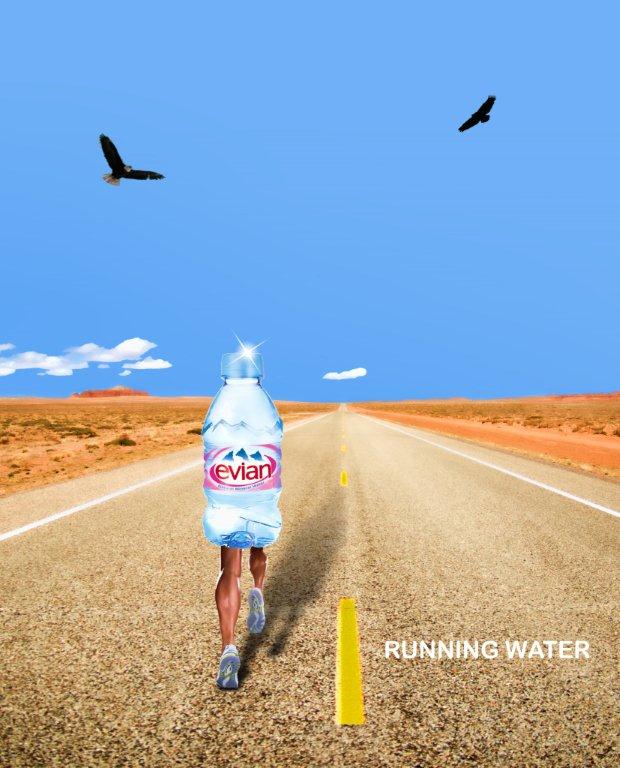
Running Water!

Big thanks to Neil for supplying a steady stream of smiles.