Last Friday, I published a post under the title: Written with a heavy heart! It was about the appalling atrocities being carried out by ISIS. I was humbled by the many replies.
Yesterday, Su sent me another email that contained a link to a short video of what happened in Holland in September, 2011 when a Muslim attempted to make his personal beliefs known to Queen Beatrix of Holland.
All will become clear when you watch the video.
Love is the answer!
Now at first sight this may seem a silly, naive comment from a Brit who is way past longing for the hippie days of the 60s.
Sue, I looked at Paul’s post and came away with tears rolling down my face. Why isn’t this shown on our news, why aren’t we doing more to save these people? We start wars for oil and political ideology but not to save children. Today i just heard that the last group of the Peace Corp just pulled out of Israel because it was no longer safe enough to be there. We can’t keep ignoring what is going on in other parts of the world yet what can we as individuals do? Your poem was perfect for the subject and brings out much of the same questions I have swirling in my head now.
Here’s another reminder of the power of love; a reminder of the role of dogs in allowing us humans to open our hearts and practice unconditional love.
It’s what Jean and I experienced when we were out shopping in Grants Pass yesterday morning.
We were in a largish store when I saw a grey-haired woman pushing her shopping cart. Nothing unusual about that! But this shopping cart had a small, black puppy riding in the section where handbags are placed; just beyond the push-bar.
Halfway down the same aisle that we were in, the lady paused, lifted the puppy into her arms, and was looking at some food items on a shelf. It was more than Jean and I could resist and we both approached the woman.
It turned out that the lady was 71 and had recently lost a dog from old age. As we petted the little puppy we learnt that he was 10 weeks old and that his name was Shadow.
Then without any prompting she went on to say:
People said I’m too old to be taking on a puppy. But I was so heart-broken when my dog died; so lonely without having him in my life. Now I have Shadow and I can face my days again. Little Shadow means the world to me. And I’m not going to worry about the future – I’m sure someone will take Shadow when I die. I just know that there is nothing better than the love of a little dog.
The power of love.
Of all the many things we can learn from dogs love is the greatest.
How to finish today’s post?
To me, only one way. Over to you: Simply Red.
Lives and loves
Don’t tell me about it
To respond to something permanent
You’ve got to be strong
Lives and loves
Only you know in your heart
How the pain felt
How the love made you melt
Me and you love
We have a way that seems to brighten up the day
We have our problems
Is the whole world asking, “Is it worth it?”
All the lovers in the world
Should they go on?
After all, they say
“You only live once”
Lives and loves
Only you know in your heart
How the pain felt
How the love made you melt
Me and you love
We have a way, that seems to brighten up the day
We have our problems
Is the whole world asking, “Is it worth it?”
All the lovers in the world
Should they go on
On and on and on
Lives and loves
Don’t tell me about it
Someone always gets hurt in it
You’ve got to be strong
Yeah lives and loves
Only we know in our hearts
How the pain felt
Oh your love made me melt
Me and you love
We had a way that seemed to brighten up the day
We had our problems
Is the whole world asking, “Is it worth it?”
All the lovers in the world
Should they go on?
After all, they say
“You only live once”
A couple of items that recently landed in my ‘in-box’ had me in pain; emotional pain that is. I agonised over republishing them but then thought it felt like a duty to promulgate this particular terrible aspect of life. Trust me, today’s post is going to generate a deal of passion (see reference to TIME magazine at the end of the post). Also it is not something that should be read by a young person under the age of sixteen.
The first item was an email sent to me by dearest Suzann and is republished here with Suzann’s kind permission.
(For those that may not know or recall, Suzann, and her husband Don, invited me to spend the Christmas of 2007 with them at their home in San Carlos, Mexico. Suzann and Jean, who then lived in San Carlos, had been good friends for many years working together to rescue the many feral dogs found on the streets in San Carlos and surrounding areas. Indeed, Suzann continues to rescue those needy dogs and find loving homes for them. Out of the 9 dogs here at home in Oregon, 6 are ex-rescue dogs from Mexico.)
This is what Suzann sent:
I am so sorry to have to send this to you, but it needs to get out there for people to know.
What can we do?
1. Make others aware of this atrocious and vile assault on innocent people, so people will WAKE UP to the evil that is happening in this world!
2. PRAY!
3. If you are not a believer, send to others that you know who are, so they can send it on.
The whole world needs to see this!!
Thank you.
suzann
YOUR PRAYERS ARE THE NEED OF THE HOUR.
PLEASE SEND THIS TO AS MANY AS YOU CAN.
PLEASE LOOK AT THESE PICTURES. ISIS IS KILLING CHRISTIAN CHILDREN. ONE WAS CRUCIFIED. PLEASE PRAY.
Be sure to see the 4 photos below. The whole world needs to see what kind of people these ISIS terrorists are.
oooo
oooo
oooo
Here is an urgent prayer request for all of us!!
She asked that it be forwarded ASAP to as many people possible:
Dear Friend: Just a few minutes ago, I received the following text message on my phone, from Sean Malone who leads Crisis Relief International (CRI), We spoke briefly on the phone, and I assured him that we would share this urgent prayer need with all our contacts.
We lost the city of Queragosh. It fell to ISIS and they are beheading children systematically. This is the city we have been smuggling food to. ISIS has pushed back Kurdish Forces, and is within 10 minutes of where our CRI team is working. Thousands more fled into the city of Erbil last night. The UN evacuated its staff in Erbil. Our team is unmoved and will stay. Prayer cover needed!!!.
Please pray sincerely for the deliverance of people of northern Iraq from the terrible advancement of ISIS and its extreme Islamic goals for mass conversion or death for Christians in this area.
May I plead with you not to ignore this email? Do not forward it before you have prayed through it. Then send it to as many people as possible.
Send it to friends and Christians you know. Send it to your prayer group. Send it to your pastors. Any one you can think of. We need to stand in the gap for our fellow Christians.
I was still struggling to ground, as it were, my emotional response to Suzann’s item when a second item came into my ‘in-box’. It was a new post over on Patrice Ayme’s blogsite. This, too, is republished in full with Patrice’s kind permission.
Our friend the half-philosophers may start to huff and puff, as “Franks” were citizens of a federation (actually two of them, the one of the Sea, and the one of the River; the one of the Sea, or more exactly, Salt, is now known as Salian, or Salic).
Whereas “Islam” is a thought system, devised by some Arab warriors (PBUH), who got a good gig going for themselves.
To put in the same basket an ethnicity and a religion is what some half-philosophers would love to call a “category mistake”. The irony is that I know (the basics of) Category Theory, and they don’t.
In other words, because I know of functors, I can mix and match different categories such as Franks and Islam, and be relaxed about it (instead of being all gripped and unimaginative, as is the average constipated half-philosopher. Notice in passing that the concept “functor” was invented by the philosopher Carnap in linguistics).
The historian Pirenne, long ago, suggested the thesis that the collapse of the economy in the High Middle Ages was caused by the Islamists (Islam confiscated most of the Roman empire, and imposed a total embargo, cutting not just the Paper route, but the Silk Road as well).
Don’t worry, anybody involved will soon die, and things will calm down; this is Putin’s way.
There is a clear self-censorship going on throughout the West right now, because people are scared of these fanatics, the Putinists, and the Islamists. This, in turn, is deleterious to any critical mood, thus discourse, thus adverse to fixing any problem.
One cannot have a sane public discourse if one cannot even draw a human being. Having public insanity in place of public discourse will affect the Republic, to the point it will die, and that is why it died in all and any nation that submitted to Submission (aka “Islam”).
TODAY’S ISLAMISTS: MORE BARBARIAN THAN THE FRANKS, SIXTEEN CENTURIES AGO:
As it rose, Christianism destroyed the Roman Republic (or what was left of it). In 363 CE, under fanatical emperor Jovian, an ex-general, a systematic policy of burning libraries got started (Jovian may have been behind the assassination of laic emperor Julian; I am speculating). In 381 CE under ex-general Theodosius, then emperor, laws were passed to enact a “War Against the Philosophers“. Heresy (“making a choice”) became punishable by death.
The Roman empire, which still had many characters of a Republic (which officially it was… Now a “Christian” Republic) exploded.
However, in the next century, in the West, the Franks took control and build a Catholicism so moderate that it made Paganism, Judaism, and Apostasy all legal (and conversions in all directions).
Interestingly, the Franks, who soon built what they called “Europe”, as an empire, have the reputation of uncouth savages. “Frank” means Ferocious, not just Free.
But the Franks had no problem with Catholics becoming Jews, entire villages converted, until the priest was the only Christian in town. Charlemagne himself, four centuries after the Franks acceded to power, had his friends call him “David”, because he wanted to be like Israel’s King David (not a friend of God, according to the Bible).
Compare with the savagery of Islam: Somebody who leaves Islam is to be killed, say the Hadiths.
So what of the supposed great intellectual tradition of “Islam”? That sounds strange, on the face of it. What about the great intellectual tradition of Christianism? Well, the answer is that there is no such a thing. As soon as he became a fanatical Christian, Pascal produced nothing. All great “Christian” intellectuals are intellectuals first, and, second spent the reminder of their mental capabilities avoiding the fire in which the church wanted to throw them.
In France alone, around the year 1530 CE, three major philosophers were burned alive for having contradicted Catholicism. This explains why Descartes, a century later, preferred to live in the Netherlands.
Contrarily to repute, the situation with Islam was even worse. At least, in the West, intellectuals could engage the Church in full combat, and they often won. This is a direct consequence of the Frankish leadership submitting the Christian leadership, starting in the Fifth Century. After that time, the Church was never again the government of the West (except inside the Papal states, a gift of Charlemagne, later de facto rescinded).
Famously, around 1300 CE, Philippe IV of France and his vassal the English king engaged in full submission of the Pope and his army. The Pope and the Templars both ended judged, dead, and, more importantly, taxed.
So what of these great Muslim thinkers? The answer is that most of them were, truly Jewish or Christians, or very recently “converted”, or then did not finish too well.
ISLAMIST SCHOLARS WANT TO KILL YOU:
The fact is, the greatest Muslim university, Al Azhar in Cairo, is definitively founded on what the Franks, 15 centuries ago, would have viewed as barbarian principles. It actually refused to condemn the “Islamist State” as not conforming to Islam.
Al Azhar has decided that those who renounce Islam and their children ought to be killed:
“In the name of Allah Most Gracious Most Merciful
Al-Azhar
Fatwa Committee
A question from Mr. Ahmed Darwish who presented the question through Mr. (Blanked out) of German nationality:
A Muslim man of Egyptian nationality married a Christian woman of German nationality. The two spouses agreed that the aforementioned Muslim man would enter the Christian religion and join the Christian creed.
What is the ruling of Islam regarding this person’s situation? Are his children considered Muslims or Christians and what is their ruling? The Answer:
All praises are due to Allah, lord of all the worlds. And peace and blessings be upon the greatest of all messengers, our master Muhammad and upon his family and companions all together. As for what follows:
We inform that he has apostatized after having been in a state of Islam, so he should be asked to repent. If he does not repent, he should be killed according to the sharia.
As for his children, so long as they are small they are Muslims. After they have attained maturity, if they remain in Islam then they are Muslims. If they leave it, then they should be asked to repent. If they do not repent, they should be killed. And Allah knows best.
Our civilization was founded on rejecting this sort of savagery on the part of Christianism. When the Islamists appeared, the Franks considered them to be a Christian sect, the Sons of Sarah (Saracens). Let’s persist in rejecting the savagery.
Antique Greece was not just defined by what it built, but what it rejected: the Barbarians (those whose talk sounded animal-like: barr… baa). One cannot be positive all the times, otherwise positivity itself loses meaning.
Patrice Ayme’
PS: After publishing the preceding essay, it came to light that the Islamist State, applying literally the savage texts that guide them, destroyed Mesopotamian art more than twice older than the invention of Islam by the raiders (Muhammad and the father of his six-years-old child bride, etc.).
There is no savagery but savagery, and Islam is its prophet?
ooOOoo
Not to have upsetting reactions to these items from Suzann and Patrice would be abnormal. Both Su’s item and the post from Patrice had me going round in emotional circles. Ranging from seeing our species as cruel, barbarous creatures to thinking that maybe there are times when the only proper course of action is to take up arms against savages. Along the lines of that quote about the only thing that evil needs to succeed is for good people to do nothing.
Finally, it was the editorial in the latest (March 9th.) TIME magazine, written by the Editor, Nancy Gibbs, that had my head nodding. Here’s a little of what Nancy Gibbs wrote:
Analyzing a threat as complex and diffuse as ISIS requires a global effort, and so our special report reflects the work of dozens of journalists on three continents with decades of experience reporting on the Middle East.
………
We invited Max Boot of the Council on Foreign Relations and Karl Vick, our former Jerusalem bureau chief, who is now based in New York City, to argue the case for and against the U.S.’s sending ground troops into the fight.
It was the next sentence that underlined for me why I had so many conflicting emotions (my emphasis).
“The hardest thing about confronting a group like ISIS,” Karl observes, “is seeing past the fear they delight in projecting to discern the threat it actually presents. But they make dispassion really difficult.“
Makes our dogs look like profoundly straightforward, loving animals! Why, oh why, can’t the human race essentially be as straightforward and loving!
Very grateful to Deborah over at Dog Leader Mysteries for today’s post.
The following appeared over on Dog Leader Mysteries last Monday and is republished with Deborah’s permission. Please share this as far and wide as you can.
ooOOoo
1 minute for Irish Greyhounds
Featured by dogleadermysteries
Please help Irish Greyhounds by signing this Care2 petition
Save greyhound dogs’ lives in less than 1 minute
Bring Irish Greyhound Racing Regulations in line with the United Kingdom
I will not submit my readers to the horrors racing greyhounds endure or lose their lives from. I never thought any thing could be worse than dogs bred in puppy mills. After reading the Care2 petition’s explanation of the conditions and animal cruelty in Ireland’s dog racing world, now I feel sadder but an informed and wiser person.
My friend, Rosee Riggs, sent me this petition. The situation and welfare for dogs on Irish racetracks distresses all animal lovers everywhere. Without boring you with research and background, the essence of this petition effort targets raising Irish greyhound racing rules to match those in Great Britain.
4 great things about greyhound dogs
When living in a home with a family
Greyhounds love to snuggle
Greyhounds enjoy being couch potatoes
Rescued track greyhounds often hate to run
Greyhounds cannot swim. They sink due to extremely low body fat
Myth buster: Not true that former track greyhounds become runaway dogs!
This is Rosee’s dog, Speedy. Read more about him on her site Good Dog Practice.
Former Irish greyhound, now safe and happy. Photo credit: Judith Utner
From Care2: legal changes needed to better protect Irish track greyhounds
Have a veterinarian present at all race meetings, trials and sales trials who must inspect every greyhound before it runs;
Provide the veterinarian with appropriate facilities;
Provide suitable kennels, diet, hygiene standards, for all greyhounds that are going to run in a race or trial and for the dogs NOT to be muzzled for 23-24 hours a day; Ensure that the greyhounds have access to an outside area for exercise and be supplied with food and water.
Only allow greyhounds that are healthy, micro-chipped, registered and, were required, tattooed, to run in a race or trial.
Keep up to date records of owners, trainers, greyhounds and any injuries/deaths to greyhounds.
Monitor all licensed and private Breeders to reduce excess Dogs thereby reducing the need to euthanize/kill unwanted puppies.
To regulate Ireland’s greyhound breeders, not governed by the same regulations & welfare stipulations as the UK. All aspects of greyhound dog breeding, training and kennelling.
To provide adequate travel facilities, breaks (on long journeys) and water/food as required.
Speedy came as a racetrack rescue from Ireland. Photo credit: Katrin Bargheer
Delighted to say that at 15:30 PST yesterday, the Care2 Petition site read:
we’ve got 169,061 signatures, help us get to 170,000
and went on to explain the background to the petition:
There are major concerns about animal welfare issues relating to the racing greyhound industry in Ireland. Many puppies and older dogs which don’t perform to racing owner expectations are killed simply because they won’t make money for the owner. They are discovered in mass graves with their tattooed ears hacked off so they can’t be identified – so that their owners can’t be held accountable.
Dogs are generally kennelled, constantly muzzled, for 23-24 hours a day for their entire racing life. There are usually at least two dogs per small kennel, sharing one bed (with straw if they are lucky). The kennels are overcrowded, not properly maintained and badly cramped.
In the UK there are regulations which provide some protection for racing greyhounds. These regulations do not exist in Ireland where most racing greyhounds come from. Changes need to be made to bring the laws in Ireland in line with those in the UK. These rules aren’t perfect but they do offer a lot of improvements to the lives of these beautiful dogs.
Please sign the petition to show the Irish Greyhound Racing Board that the public cares about these dogs, to encourage them to support laws to protect these dogs.
At least 20 greyhounds a day, either puppies, which do not make the track because of lack of “prey drive”, or ‘retired’ dogs, aged between 18 months to 3-4 years, simply ‘disappear’ according to “records”. All dogs should be identifiable by the tattoos & registry records. When they are tattooed the dogs are roughly handled & dragged around by their ears with pincers.
(Please note that this is a long post that potentially may be upsetting for some readers. Please trust me when I say there is no intention to upset anyone. I should add that the motivation for writing The Pen is from reading Sue Dreamwalker’s recent post Cracking our Inner Shells.)
Yesterday, I wrote about the circumstances of my father’s death on December, 20th 1956. I wrote:
I became twelve-years-old in November, 1956. Just six weeks after my twelfth birthday, on the evening of December 19th, 1956, my mother, as normal, came into my bedroom to kiss me goodnight. However, what transpired was very far from normal.
For she sat down on the edge of the bed and told me that my father was not well and may not live for much longer. To this day, I can still see her sitting on the edge of the bed, adjacent to my knees covered by the sheet and bedcover, a very drawn look on her face.
I had been aware of my father being at home in bed for a while but had no notion whatsoever, prior to this moment, that he was seriously unwell. In hindsight, it was more than I could emotionally embrace for not only did I not go back into my parent’s bedroom and again say goodnight to my father, I went off to sleep without any problem.
During that night, in the early hours of December 20th, my father died, the family doctor attended and my father’s body was removed; I slept through it all and awoke in the morning to find my father gone.
It’s also relevant to reveal that it was deemed potentially too upsetting for my sister, Elizabeth, my junior by four years, and me to attend my father’s cremation.
Upper Barn, Harberton.
OK! Fast forward to 2006. I was happily married to Julie, my third wife, and had been since the year 2000. Her daughter from a previous marriage, Amy, was also part of the family. We were living in a three-bedroomed converted stone barn known as Upper Barn in the village of Harberton, a few miles west of Totnes, Devon, South-West England. A lovely tranquil home in a very tranquil village; population 300 persons.
I had my two wonderful sisters, Corinne and Rhona, from my father’s first marriage, living within short distances. My work, home-based, involved offering entrepreneurial mentoring to local business owners, and my wife and I had a wonderful local network of good friends. Indeed, in the last months of 2006 I had been working with a professional psychotherapist, Jon, as he was expanding his client base from individuals to working within companies. And Pharaoh had been in the family since 2003! It seemed about as perfect as it could be for me.
December 20th, 2006 was the fiftieth anniversary of my father’s death. I could never settle into the pre-Christmas mood until after the 20th December each year and this anniversary day seemed more poignant than ever. I had missed my father since the day he had died in 1956.
As it happened, that same day Julie seemed off-colour. She was frequently in the bathroom during the day and, naturally, I was concerned. Towards the end of the day I asked what was troubling her. Julie replied that she had had a miscarriage earlier that afternoon. A year after my son and daughter had been born to my first wife in 1972/1973, I had opted to have a vasectomy! Julie’s miscarriage was not of my making.
I won’t go into the details of how my life exploded but will just say that it was traumatic in every way imaginable.
In desperation, a few weeks into the New Year of 2007, I called my psychotherapist business client, Jon, and begged him to take me on as his client. He was initially uncertain, stating that we already had a relationship, but agreed on the understanding that if he thought the counselling relationship wasn’t properly established then he would ask me not to continue working with him. Of course, I agreed.
I want to offer what has been written elsewhere by me, explaining what happened in my fourth counselling session with Jon back in 2007. Clearly my memory of what was said can’t be word perfect but the essence of the dialogue is accurate.
“Paul, when we had our first session and I asked you to relate the key life events that came to you, the first event you spoke of was the death of your father. Tell me more about that time of your life.”
“I don’t have clear memories of my father much before he died that year. He was a lot older than my mother, some eighteen years, and I had been the product of a liaison between them; my father being married at the time. They met when they were both members of an amateur orchestra in London during the height of the Second World War. My father had had two daughters with his wife and longed for a son. I came along just six months before the end of the war.”
I paused for a few moments, sensing how dipping back to that December in 1956 was making me feel uncomfortable.
“I had turned twelve-years-old in early November 1956. Just finished my first term at Grammar School. To be honest, I can’t recall when my father became ill and how long he had been bed-ridden. But on the evening of December 19th, after I had kissed my father goodnight and jumped into my bed next door, my mother came in, closed my bedroom door, sat on the edge of my bed and told me that my father was very ill and that he may not live for much longer.
It clearly didn’t register with me at any significant emotional level because I went off to sleep without any problem. But when I awoke in the morning, Mum told me that my father had died during the night, the family doctor had attended and my father’s body had been removed from the house.”
Jon looked at me and quietly asked, “What feelings do you have about that night and that morning?”
“To be honest, Jon, I have an almost complete absence of feelings. I’ve often tried to discover what I truly felt at the time or, indeed, what I feel all these years later. But the best I have ever been able to come up with is that I was never able to say goodbye. In fact, because it was decided that it would be too upsetting for me, I wasn’t even present at the funeral and cremation, thus reinforcing my sense of not saying goodbye to my father.”
There was a pause before Jon asked his next question. “So, Paul, you have a son and a daughter. What are their ages?”
“My son, Alex, is now thirty-five and my daughter, Maija, thirty-four.”
Jon put his hands together fingers-to-fingers and lent his chin against them. “So your son would have been twelve in 1984. That was when you were very busy running your own business, if I recall.”
I nodded in reply.
“So Paul, let’s say that during that year of 1984 you had been diagnosed with some terminal illness, say cancer, as with your father. That you were given a life expectancy of six months or so. What thoughts come to mind?”
“Jon, you mean in the sense of what it would have meant for Alex and Maija?”
Jon nodded.
“Wow, what a truly terrible thing to reflect upon. But what comes to mind without doubt is that I would have walked away from my business immediately. After all, it very soon wasn’t going to be my business. My kids were still living at home, of course. I would have wanted to share every minute of my life with them. Try to let them understand as much about me, who I was, what I believed in, what made Paul Handover the person he was.”
Jon almost breathed the next question into the air of the room. “Translate the circumstances of the death of your father across to your son. What I mean by that is Alex experiencing the same circumstances from your death. What’s your reaction to that situation, admittedly hypothetical situation, thank goodness?”
I reacted with an immediate passion. “To know that I was terminally ill and to keep that from my son and daughter; that’s terrible, no it’s disgusting. Then to compound it by having everything associated with my death and the disposal of my body denied to Alex and Maija …..,” I left the sentence unfinished before adding, “It’s cruel beyond description. My poor children wouldn’t have a clue as to why they were excluded from what is, whether or not one agrees with it, one of life’s most important moments.”
Jon seemed to hold my anger in the room all about us, as he asked, “How would you reword your last sentences in the manner of a headline; in just a few words?”
I hardly hesitated. “The word that comes to mind is rejection. Alex and Maija, aged twelve and eleven, losing their father in a way that suggested they weren’t important. Yes, that’s it. They would see it as a total rejection of them by their father. Not unreasonably, I might add.”
There was a silence in the room that seemed to go on forever. Then Jon said, “Paul, we are not quite up to the hour but I’m going to suggest you just sit here quietly with Pharaoh and let yourself out when you are confident of being OK to drive home.”
He added, almost as an afterthought, “Just let today settle itself into your consciousness just however it wants to. Don’t force your thoughts either way, neither dwelling on today nor preventing thoughts naturally coming to the surface of your mind. As we have discussed before, pay attention to your dreams. Maybe have a notebook by your bedside so you can jot down what you have been dreaming about. I’ll see you next Friday same time, if that’s alright with you.”
When a crossroads is neither a roadway, nor a choice of pathways, when that crossroads is in our minds, we seldom know it’s there or that we’ve made the choice to take one path and not the other until it’s long past. Sometimes, the best you can do is look for the tiniest clues as to which path one has taken in life and where one is really heading.
I had read that in a book quite recently although, typically, could no longer remember the name of the said book. It had spoken to me in a way that I couldn’t fathom, but of sufficient strength and clarity for me to jot it down on a sheet of paper. I had been sorting papers out on my desk on the Sunday following that last session with Jon when I came across the sheet. The words hammered at me again, but in a way that was now so much more full of meaning than the first time around.
Because, to my very great surprise, my nights’ sleeps on Friday and Saturday had not only been dream free but had taken me to a place of such sweet contentment that it was almost as though I had been reborn. Alright, perhaps reborn was a little over the top, but there was no question that I was in an emotional place quite unlike anything I could ever before recall. Almost as if for the first time in my life I truly liked who I was.
On the Sunday morning, after I had taken Pharaoh over to the woods for our regular walk, I called in on Corinne and shared a cup of tea with her. As I was leaving, Corinne asked me if I was alright. In querying why she had asked, Corinne simply said, “Oh, I don’t know. There’s something different about you today that I can’t put my finger on. A happiness about you that I haven’t seen in ages, possibly never seen in you.”
I gave my sister a long and deep hug and gently said, “I miss our father at times, don’t you?”
She answered, “Oh, I miss him too, miss him so much at times. He was such a wonderful, gentle man who lived for his children. Then to die at such a young age.”
As the week rolled by, I found a truth that had been denied me for the whole of my life. I couldn’t wait to share it with Jon. As I drove across to Torquay, I was full of what I wanted to say.
Jon could tell that I was fit to burst. Indeed, I had hardly sat down on the chair when Jon asked me how my week had gone.
“Jon, It’s been an amazing week. I’ve at last understood some fundamental aspects of my life.”
“That sounds wonderful, Paul, do tell me more.”
“Well, it’s this. I have now realised the emotional consequences of the way my father’s death was handled. In other words, what became hidden deep in my subconscious, far from sight, so to speak, was a belief of having been emotionally rejected. That despite that being so far down in my subconscious world, it clearly explained two conscious ways in which I behave.”
Jon’s demeanour, his wonderful listening demeanour, encouraged me to continue. “The first thing that came to me was the reason why I have been so unfortunate in my relationships with women. Well this is how I figured it out. Whenever a woman took a shine to me, I would do anything and everything to come over as a potentially attractive spouse. In other words, I was being driven by a terrible fear of rejection, rather than rationally wondering if this woman had the potential to be a woman I would love as a wife. Ergo, I oversold myself and, inevitably, made poor long-term relationships; Julie being the classic example.”
I paused and took a sip from the glass of water that was on the small table by my side.
“But the positive aspect of my fear of rejection is that throughout the whole of my business and professional life, I have been successful. Because, I have always put the feelings of the other person above my own as a means of avoiding rejection. Jon, I can’t tell you what a release this has been for me.”
“Paul, that’s a fabulous example of how when we really get to know the person we are, how it then gives us a psychological freedom, a freedom to be the person we truly are, to be happy with ourselves.”
He continued, “One thing I should mention is this. It’s likely that what happened to you back in December 1956 is not necessarily ‘hard-wired’ but certainly is a very deep-rooted emotional aspect of who you are. This new-found awareness will be of huge value to you but that sensitivity to rejection is not going to disappear; probably never will. The difference is that you are now aware of it and quite quickly you will spot the situations, as they are happening, that stir up those ancient feelings. The difference is this new self-awareness will deliver a much deeper emotional understanding of who you are and why you behave in the way you do.”
There was a wonderful sense of peace and calm in the room that ran on for some minutes.
Then Jon just voiced what seemed like the perfect closing thought. “Paul, this mindfulness you have so beautifully revealed is wonderful. You do know you are fine, don’t you!”
I was motivated to reveal these details of my past by what Sue wrote in her recent post Cracking our Inner Shells. She included these words:
Sometimes we have to go within to the silent places we all have in order to find out what is really going on with our emotional bodies. Even knowing all the things I do, we are within our Human form to learn and grow..
I needed to ask myself a few questions as to why I was feeling so lost, depressed and sad… More was going on than just bereavement. Yes the fall I had had,both bruised and shook me, but what else was shaking me to the core?
For those who know a little about my Soul Journey, You will also know that my own Mother and I had not spoken for 10 years prior to her passing some eleven years ago now….Despite many attempts I knew I was only wounding myself more by continually trying to bridge the rift, to be continually rejected.. So this rejection and other issues related to overwork and stress, resulted in a Nervous Breakdown in my mid forties..
So when my Mother died, while I was sad, I guess I never really grieved her loss. Because to me.. I had grieved her long before her death as lost to me.. As I had had to shut down my emotions to cope with her rejection.. I had undergone counselling within my breakdown, and my Mother jumped up at every dark corner of why even in my teens I had suffered from deep depression.
We often go through whole chapters of our lives creating a protective shell around ourselves because we need it in order to heal from some early trauma. I know I had built many such Layers of shell around myself from various experiences over the years..
But more than that, I recommend that if you have any sense of there being hidden parts of your consciousness that would be better brought to the light, then you involve a professional counsellor or psychotherapist. For the reward will be beyond measure.
As mine was.
For on December 14th, 2007 I first met Jean when invited to San Carlos in Mexico for the Christmas period by Suzann and Don Reeves; Suzann being the sister of my very long-term Californian friend Dan Gomez.
Jean and I have now known each other for over seven years and have been married for over four years. I love her beyond imagination. Because I can reveal to Jean the strange, quirky, often fragile person that I am. And I am loved for who I am by Jean.
6th January, 2008. Jean and me on a beach in Mexico.
This is the poem I wrote for Jean for this Valentine’s Day just gone.
What’s in a number?
Numbers spell out so much.
From a year of birth,
To a year of death,
From a chance event,
To a predictable breath.
Numbers spell out so much more.
From the day that we met,
To the year we were joined,
From the day we married,
To this day of love today.
So many days of happiness.
Yet numbers that spill beyond the digits.
For they are reflections of times a past,
And they are beacons of our lives,
Numbers that carry so much meaning,
To places so far beyond their count.
Yet today there is a number,
A number that carries all thoughts of love,
Almost endless thoughts of love from me to you,
Two little figures that say seventy-four.
For seventy-four months ago,
This very day,
I met you,
And you met me.
I loved you so soon,
Loved you so well.
And still do.
If you have read this far then well done! 🙂 If only one person has been touched by my experiences then that is wonderful.
I shall close by publishing a paragraph towards the end of Sue’s blog post.
Only you can know the how’s and why’s of your life. The answers that you seek can be found when you start answering your own questions, Sometimes we have to get a little lost in order to find oneself again.. But the journey in finding oneself is all part of our Earth Journey.
(This is a two-part post, with the concluding part tomorrow.)
My father was born on June 15th, 1901.
Here is a photograph taken of him on his twenty-first birthday.
Frederick William Handover – June 15th, 1922
He was an architect for Barclay Perkins & Co., a London firm of brewers. Here are the opening words of the Wikipedia entry.
The Anchor Brewery was an English brewery located in Southwark, London. Established in 1616, by the early nineteenth century it was the largest brewery in the world. From 1781 it was operated by Barclay Perkins & Co, who merged with Courage in 1955. The brewery was demolished in 1981.
A Barclays Public House in Southgate, London N1. Picture from The Brewery History Society.
I was born in November, 1944 and at the start of the school year in September 1956, me aged eleven, I started in the first term of Preston Manor County Grammar School near Preston Road, Wembley, just a few miles from where we all lived. (Mother, father, me and Elizabeth, my younger sister by four years.) Frankly, I had been regarded as a bit of a dreamer at my primary school and more than a few were surprised that I passed the ’11+’ exams, a prerequisite for attending a grammar school in those days.
I became twelve-years-old in November, 1956. Just six weeks after my twelfth birthday, on the evening of December 19th, 1956, my mother, as normal, came into my bedroom to kiss me goodnight. However, what transpired was very far from normal.
For she sat down on the edge of the bed and told me that my father was not well and may not live for much longer. To this day, I can still see her sitting on the edge of the bed, adjacent to my knees covered by the sheet and bedcover, a very drawn look on her face.
I had been aware of my father being at home in bed for a while but had no notion whatsoever, prior to this moment, that he was seriously unwell. In hindsight, it was more than I could emotionally embrace for not only did I not go back into my parent’s bedroom and again say goodnight to my father, I went off to sleep without any problem.
During that night, in the early hours of December 20th, my father died, the family doctor attended and my father’s body was removed; I slept through it all and awoke in the morning to find my father gone.
Now fast forward just a few years.
It’s too long ago now for me to recall who it was who gave me my father’s fountain pen that he used on a daily basis when he was alive. It is a Sheaffer Crest Snorkel with a 14K gold Triumph nib with a platinum plated tip.
I have had the pen for nearly sixty years and treasure it, as you can imagine. But in recent times it was not functioning properly and I put it down to old age, and transferred to a modern pen.
By a wonderful stroke of luck I recently came across an American company, Pendemonium, who restore and service a wide range of pens, including Sheaffer pens of the age of my father’s pen; that particular model first was produced in 1952.
On Saturday, the restored Sheaffer pen was sent back to me. It is a real joy to find that it writes so well and remains a living memory of my father from so long ago.
My father’s Sheaffer fountain pen.
Now all you dear readers must be wondering just what on earth I’m rambling on about!
My answer will be offered in Part Two that will be posted tomorrow.
The sub-heading was prompted by me doing research for a writing project. I was doing a google search on the history of the relationship between dogs and humans and top of the returns was a post published by Learning from Dogs back in July 2012! Typically, I had forgotten that post. When I clicked on the link and read it right through, it seemed a brilliant idea to republish it today.
oooo
The woof at the Door.
The grandeur of the ancient relationship between dog and man.
A couple of weeks ago, I came across a fascinating article that had been published in American Scientist magazine (online version) written by Professor Pat Shipman. The article provided the background and evidence to support the proposition that dogs may have been man’s best friend for thousands of years longer than we realized.
Very quickly I came across Pat Shipman’s website and learnt that this is one clever lady. As her About page explains,
CAREER SUMMARY
Prof. Shipman
I am internationally known as a paleoanthropologist and conducted research for many years in Africa on human evolution and the animal communities in which humans evolved.
I have conducted research on material from sites in France, Spain, the United States, Java, Ethiopia, Kenya, Tanzania, and South Africa. I have written more than 50 scholarly articles, appearing in journals such as Nature, Science, Journal of Archaeological Science, Paleobiology, Journal of Human Evolution, and Current Anthropology.
I have written more than 100 articles in popular science magazines or newspapers, including The Guardian, The New York Times, The Times Literary Supplement, American Scientist, Discover, and Natural History. Two of my books were featured on the cover of The New York Times Book Review: The Neadertals and Taking Wing. Taking Wing won the Phi Beta Kappa prize for science book of the year and was a runner-up for the LA Times Science Book prize.
My book on Homo erectus, Wisdom of the Bones, was co-authored by Alan Walker and won the Rhone-Poulenc Prize in science writing.
My books have been widely praised as compelling, accessible, and highly readable, with a strong narrative thread. Reviewers frequently comment upon the meticulous research that underpins my books, a feature I consider to be my trademark.
My most recent popular science book, The Ape in the Tree, written with Alan Walker, was called by The Vancouver Sun “part adventure story, part cutting-edge science.” In a Science magazine review, the book was praised as “a fine account of new ways to puzzle out the behaviors of fossilized animals from odd scraps of bone.” Another reviewer raved, “Wonderfully engaging and insightful, The Ape in the Tree, is sure to become a classic in the literature on human origins.” MacArthur fellow John Fleagle wrote in the Quarterly Review of Biology, “Science writing doesn’t get any better than this.” In 2009, this book was awarded the W.W. Howells Book Prize by the American Anthropological Association.
In Britain, my new biography of Mata Hari, Femme Fatale, was selected as The Book of the Week by BBC radio. Each day during the week, an actress gave dramatic readings from the book on the air for fifteen minutes.
With The Animal Connection, I return to paleoanthropology and consider the influence of our connection with animals on human evolution and the origin of modern human behavior.
See what I mean!
Anyway, as you can readily understand, as the author of a blog that writes about what we can learn from this ancient relationship between the dog and man, it struck me as wonderful if I might be permitted to republish in full that article. Prof. Shipman promptly gave me such permission.
So today, I am doing just that and tomorrow I want to write more about Pat Shipman’s latest book, The Animal Connection.
ooOOoo
The Woof at the Door
Dogs may have been man’s best friend for thousands of years longer than we realized
It’s funny how much difference a single letter makes. A “woof” at the door is a very different thing from a wolf at the door. One is familiar, domestic, reassuring; the other is a frightening apparition of imminent danger. The distinction between our fond companions and the ferocious predator of northern climes goes back a long way.
Dogs are descended from wolves, probably the gray wolf. Some scientists argue that, because dogs and wolves can and do interbreed, they shouldn’t be considered to be separate species at all. They believe that domestic dogs are only a subspecies or variant of the gray wolf, Canis lupus, and ought to be called Canis lupus familiaris (the familiar or domestic wolf) instead of Canis familiaris (the familiar or domestic dog). Although the ability to interbreed and produce fertile offspring is a tried-and-true criterion for recognizing that two populations are really variants of a single species, the reality is more nuanced. We cannot know whether dog-wolf hybrids will thrive and survive, or die out, in the long run.
Prehistoric cave paintings rarely depict wolves or other carnivores. This watercolor tracing of a cave painting was made by the archaeologist Abbé Henri Breuil in the early 1900s from the Grotte de Font-de-Gaume in France. The 17,000-year-old cave paintings number about 250 and mostly show bison and mammoths—only one is thought to be a wolf. Canids may have been domesticated by this point; it is possible that portraying wolves and humans was taboo. Paul Bahn
Certainly we expect to be able to distinguish a dog from a wolf if we see one. Of course, domestic dogs are wildly variable in size and shape, thanks to several hundred years of selective breeding. Some have long, fluffy coats; others have tightly curled, nearly waterproof coats and webbed feet. Some are leggy and swift, whereas others are solid, stoutly built guard dogs. Some fit neatly into a pocketbook, but others barely fit into a compact car. As Robert K. Wayne of the University of California at Los Angeles declares, “Dogs show more diversity in appearance than any other mammal.”
What is it that tells us this animal is “dog” and that one is “wolf?”
Modern wolves and dogs can be distinguished reasonably easily by their appearance. The most telling feature of dogs is the snout, which is significantly shorter and wider than wolves’ snouts. Only a few dog breeds with extremely elongated, slender snouts, such as Irish wolfhounds, surpass wolves in “snoutiness.”
But a crucial part of the difference we perceive is in the animals’ manner and attitude towards humans. Domesticated dogs are just that: canids that live in the house or domicile of humans. They are genetically disposed to seek out human attention and approval and to accept human leadership. Wolves are not.
How did this important change come about? Probably in the distant past, humans took in a wolf cub, or even a whole litter of cubs, and provided shelter, food and protection. As the adopted cubs matured, some were aggressive, ferocious and difficult to handle; those probably ended up in the pot or were cast out. The ones that were more accepting of and more agreeable to humans were kept around longer and fed more. In time, humans might have co-opted the natural abilities of canids, using the dogs’ keen noses and swift running skills, for example, to assist in hunting game. If only the most desirable dogs were permitted to breed, the genes encoding for “better” dogs would continue to be concentrated until the new domesticated species (or subspecies) was formed.
Time to Tame
The creation of a domestic, useful, familiar canid by years of selectively breeding wild and terrifying wolves was almost certainly unplanned. The wolf at the beginning of the process of domestication was tamed—made individually docile—but the essential fact is that, over time, the offspring of those initial wolves were genetically inclined to be more tractable.
Domestication was one of the most brilliant accidents in the entire history of humankind. What’s more, we got it right the first time: Dogs were the original trial animal, and successful product, of such an accident—the happy outcome of years of unwitting experiments and dumb luck.
How long does domestication take? Nobody knows. In an experiment, Russian biologists kept a breeding colony of silver foxes and intentionally selected for breeding those with the least fear and the least aggression toward humans. After 10 generations, 18 percent of the foxes sought human contact and showed little fear. After 30 or so generations, a “domesticated fox” had been created.
The catch is that this experiment was deliberate and strictly controlled. The foxes could not breed with wild foxes and dilute the changing gene pool. Human contact was minimized so animals could not be tamed by their handlers. And because of the experiment’s scientific intent, no one could say, “Oh this one is so cute, let’s let it breed even if it is a little aggressive.” So in the case of dogs, without all these controls, the process could have taken much longer.
Another way of estimating the time at which domestic dogs originated is to consider their genetic differences from wolves. One prominent group of researchers, including Robert Wayne, along with Carles Vilà of the Uppsala University in Sweden and their collaborators, initially estimated in 1997 that dogs diverged from gray wolves 100,000 to 135,000 years ago. After more study, they revised their divergence date to between 40,000 and 100,000 years ago. Another group, led by Peter Savolainen of the Royal Institute of Technology in Sweden, favored the Chinese wolf, a subspecies of the gray wolf, as the probable ancestor and estimated in 2002 that it was domesticated between 15,000 and 40,000 years ago.
How do these genetic estimates stack up against the fossil record? Until 2009, the oldest known remains of domestic dogs were two adult skulls dated to between 13,000 and 17,000 years ago, from Eliseevichi, a region in Russia. Both had the relatively broad, short snout typical of dogs, and both were large, heavy animals, nearly the size of great Danes.
Then a team led by Mietje Germonpré of the Royal Belgian Institute of Natural Sciences reported a stunning new finding in the February 2009 issue of Journal of Archaeological Science: a nearly complete fossil dog skull dated to 31,680 + 250 years ago.
Another Look
Germonpré and her colleagues thought that researchers might have overlooked early prehistoric dogs in the fossil record of the Upper Paleolithic, so they analyzed skulls of large canids (wolves or dogs) from various European sites. The Upper Paleolithic time period spanned 40,000 to 10,000 years ago and is divided into sections based on the artifacts from those times. By convention, each span is named for a culture of people who made the artifacts, and the people, in turn, are usually named for the geographical location where the artifacts were found. The Epigravettian culture existed from 14,000 to 10,000 years ago; before that, the Magdalenian culture thrived from 18,000 to 10,000 years ago; and skipping back a few sections, the Aurignacian culture occurred from 32,000 to 26,000 years ago.
In order to identify the fossil skulls accurately, Germonpré’s team first analyzed a large reference sample of 48 wild, modern wolves and 53 dogs belonging to 11 different breeds. They also examined five skulls (including the ones found in Eliseevichi) that were firmly established as prehistoric domesticated dogs.
In order to establish the morphological differences between wolves and dogs, a group of researchers led by Mietje Germonpré statistically analyzed skulls from 48 modern, wild wolves and 53 modern dogs from 11 breeds, as well as five skulls that were previously established to be from prehistoric dogs. Recent wolves (pink) and prehistoric dogs (blue) clustered into their own groups, based on the length of their toothrows and the shape of their snouts. Modern dogs clustered into four groups, with some overlap in their areas. Recent dogs with archaic proportions included huskies (brown), recent dogs with wolflike snouts included German shepherds (yellow), recent dogs with short toothrows included great Danes (orange), and recent dogs with slender snouts included doberman pinscers (green). One modern dog, a Central Asian shepherd, clustered with the prehistoric dogs. The group then classified new skulls into the established groupings; examples that fell slightly outside of the ranges but that are statistically likely to be within the group are shown as lighter-shaded areas. Recent young wolves fell into the recent-wolf group, whereas wolves kept in captivity were classifed as recent dogs with wolflike snouts. Fossil canid skulls divided between the recent-wolf group and the prehistoric-dog group, with one falling in the group of recent dogs with wolflike snouts. Stephanie Freese, data courtesy of Mietje Germonpré.
The team used statistical analysis of cranial and dental measurements on the skulls to sort the reference sample into six natural clusters. One cluster contained modern wolves. Another consisted of recent dogs of archaic proportions (such as chow-chows and huskies); a single specimen of a Central Asian shepherd was closer to this group than any other but fell outside it. A third cluster included dogs, such as German shepherds and malinois, which have wolflike proportions. These three groups overlapped each other in their cranial proportions. A fourth group of modern dogs has short toothrows—the length of the jaw that contains teeth—and includes such breeds as great Danes, mastiffs and rottweilers. This group overlapped slightly with the archaic-proportioned dog group but not with the others.
The fifth and sixth clusters were completely separate from all others. One consisted of dogs with extremely long, slender snouts, such as Doberman pinschers. The final group, which had long toothrows and short, broad snouts, was made up of the prehistoric dogs. Statistically, the team’s ability to identify any individual specimen as belonging to the correct group was highly significant and accurate.
Using these clusters as reference categories, Germonpré and colleagues used a statistical technique (called discriminant function analysis ) to assign 17 unknown fossil canid skulls to the established categories. Not all of the “unknowns” were truly unknown, however. Five were immature modern wolves that might have had different proportions because of their age, two were wolves that had been kept in captivity, and one was the Central Asian shepherd that didn’t cluster into any of the groups. Additional unknowns were 11 fossil skulls from sites in Belgium, the Ukraine and Russia, although two of these fossil skulls proved to be too incomplete to classify.
The technique correctly classified all of the immature wolves as wolves, but the two zoo wolves were classified as recent dogs with wolflike snouts. Five of the fossil skulls also fell easily into the modern wolf group; although two of these specimens fell into the region of measurements that overlapped with the group of recent dogs with wolflike snouts, they had a higher statistical probability of being wolves. One fossil skull fit directly into the group of recent dogs with wolflike snouts, even though this specimen was clearly ancient.
The remaining three fossil skulls—one from Goyet Cave in Belgium and one each from Mezin and Mezhirich in the Ukraine—resembled each other closely. All three were classified as prehistoric dogs with probabilities of 99 percent, 73 percent and 57 percent, respectively, as was the (modern) Central Asian shepherd, with a 64 percent probability. In addition, the Mezin skull was odd enough in appearance (for a wolf) that another researcher has suggested it might have been a captive wolf. Germonpré and her team were delighted with these results.
The group also successfully extracted mitochondrial DNA (mtDNA) from seven ancient canid bones from Goyet Cave and Trou des Nutons in Belgium. Rather than damage precious skulls, they sampled only bones in which wolves and dogs differ little, so they presumed all of those they sampled for mtDNA were wolves. From each sample, they sequenced a segment of the mtDNA that is highly variable in living wolves and dogs. Each fossil had a unique mtDNA sequence, or haplotype , in this region, which could not be matched with any known sequences for modern wolves (of which there are about 160) or modern dogs (of which more than 1,000 exist) stored in GenBank, a database of all publicly available nucleotide sequences.
“I was not so surprised at the rich genetic diversity of the fossil wolves,” says Germonpré, because there have been other studies with similar findings. Foxes and wolves underwent a severe bottleneck in population size at the end of the last Ice Age, and many genetic lineages went extinct at this time.
“But we were surprised at the antiquity of the Goyet dog,” Germonpré adds. “We expected it would probably be Magdalenian,” perhaps 18,000 to 10,000 years old. This outcome would fit with their results for the Mezin and Mezhirich skulls, which were found with Epigravettian artifacts roughly 14,000 to 10,000 years old. When the age of this specimen from Goyet was directly dated using accelerated mass spectroscopy radiocarbon-dating techniques, the team found that it was not 18,000 years old, but almost twice as old as the next oldest dog, placing the Goyet dog in the Aurignacian period.
A Time of Change
The Goyet dog fossil shows that the domestication of the first animal was roughly contemporaneous with two fascinating developments in Europe.
Around this time, Europeans began producing objects that are recognizable as art. Some of the earliest known art objects from Europe include the remarkable cave paintings of Chauvet Cave in France, the oldest of which were made 32,900 ± 490 years ago. None of the hundreds of glorious Chauvet paintings show wolves. However, the cave preserves something even more haunting: the footprints of a human child about four-and-a-half feet tall, as well as many footprints of large canids and bears.
Around 33,000 years ago, humans began perforating teeth for use in decoration. Although canid teeth made up a very small percentage of the total fauna teeth available, they were used in a majority of the ornaments. Fangs from foxes and wolves appear to have been favorites. One example of a perforated wolf tooth (shown in two views at right) is from Abri Castanet in France and has been dated to 33,000 years ago. A strand of beads interspersed with fox teeth came from the Russian site of Sungir and has been dated to 24,000 years ago (left). There is no specific evidence that canid teeth were used in necklaces; the fox-teeth strand may have been a belt. Randall White
Michel-Alain Garcia of the Centre National de la Recherche Scientifique in Nanterre noticed in 1999 that one track of canid prints appears to accompany the child’s prints. These canid prints, unlike the others, have a shortened middle digit on the front paw: a characteristic of dogs. Garcia suggested that the child and dog might have explored the cave together. Charcoal from a torch the child carried is 26,000 years old.
The Upper Paleolithic cultures of Europe are famous for the flowering of all kinds of exquisite art: sculptures, carvings, paintings and engravings. Animals are common and readily recognizable subjects. Prehistoric art expert Paul Bahn notes that depictions of carnivores, including wolves or dogs, and of humans are rare. Bahn conjectures that portraying wolves and humans might have been taboo.
Anne Pike-Tay of Vassar College offers another perspective. She observes that the scarcity of artistic depictions of carnivores parallels their scarcity in the fossil faunas of the Upper Paleolithic. If domesticated dogs were helping humans hunt, she speculates that they might have been placed in a completely different symbolic category from other animals.
“What if dogs were put in the ‘human family’ category as an extension of the hunter, and like humans, warranted no (or very few) painted or engraved depictions?” she wonders.
The second development of the Aurignacian period is the appearance of objects of personal adornment: jewelry. Although beads and perforated objects occurred much earlier in Africa, the earliest such objects in Europe appeared about 40,000 years ago. At 33,000 years ago, early Aurignacian people began perforating animal teeth (and occasionally human teeth) to wear as pendants or other ornaments, such as belts.
Which teeth did they choose? Among their favorite sources are what have been identified as fangs of foxes and wolves. These identifications might better be termed “small or large canids,” because until now no one has considered the possibility that dogs might have been domesticated so long ago. Besides, identifying a single canid tooth specifically as dog or wolf would be difficult, if not impossible.
Randall White of New York University argues that Aurignacian and later people chose to wear objects that displayed their identity or membership in a certain group or clan. Like gang colors or a t-shirt that proclaims its wearer to be a fan of a particular band, ancient people wore things that made their allegiances clear.
Fossils have helped to establish a far earlier timeframe for dog domestication. A paleolithic canid skull from Goyet in Belgium, about 31,000 years old, has traits characteristic of a dog rather than a wolf (a). When compared to wolves from a similar era, one from Trou Ballu (b) and one from Trou des Nutons (c) in France, the Goyet dog has a relatively wider snout and larger carnassial teeth, and it also has a wider braincase. Elsevier Ltd.
White observes that the teeth Aurignacian people chose to wear were obviously not a random sample of the animals in the fauna. For example, the fauna from the Grotte des Hyènes (Cave of Hyenas) at Brassempouy, France, is dominated by horses, aurochs (a type of cattle) and reindeer—mostly as food remains that often show cutmarks or charring—as well as hyenas, which probably lived in the cave when humans did not. Wolves are rare, making up less than 3 percent of the total fauna. Of approximately 1,600 animal teeth at Brassempouy, only about 2 percent were modified for use as ornaments. However, nearly two-thirds of the ornaments are teeth of wolves or foxes. The rest of the perforated teeth are from other rare species: bear, humans and red deer. None of the teeth of the most common species were used as ornaments at Brassempouy.
Did someone who wore a perforated canid tooth 33,000 years ago proclaim him- or herself to be one of the group that domesticated dogs?
Possibly. Domesticating dogs was a remarkable human achievement that doubtless provided a definite selective advantage to those who accomplished it successfully. They might well have had reason to brag about their accomplishment by wearing canid teeth.
Bibliography
Germonpré, M., et al. 2009. Fossil dogs and wolves from Paleolithic sites in Belgium, the Ukraine and Russia: Osteometry, ancient DNA and stable isotopes. Journal of Archaeological Science 36:473–490.
Morey, D. F. 1994. The early evolution of the domestic dog. American Scientist 82:336–347.
Ostrander, E. A. 2007. Genetics and the shape of dogs. American Scientist 95:406–413.
Savolainen, P., et al. 2002. Genetic evidence for an East Asian origin of domestic dogs. Science 298:1610–1613.
Trut, L. N. 1999. Early canid domestication: The farm-fox experiment. American Scientist 87:160–169.
Vilà, C., et al. 1997. Multiple and ancient origins of the domestic dog. Science 276:1687–1689.
Something a little different for this week. Mother Nature Network put out an email earlier in January that opened, thus:
Dear friend of Mother Nature, We all see the beauty in a sunset or in a gorgeous painting, but can you appreciate the art in bacteria, climate images or preserved animal remains? These beautiful examples show how for centuries, art and science have danced a well-choreographed routine. The result has been some breathtaking creativity.
The pictures were so wonderful that I have offered the first six for today and the balance in a week’s time.
So without further ado, here is the balance of those paintings.
Leonardo da Vinci
As if he wasn’t busy enough, Italian painter, architect, engineer, sculptor and inventor Leonardo da Vinci was also fascinated with anatomy. He was so intrigued by the human body that by the end of his life da Vinci claimed he had dissected more than 30 corpses. He filled pages and pages with incredibly detailed drawings of body parts, accompanied by thousands of explanatory notes. U.K. heart surgeon Frances Wells, author of “The Heart of Leonardo,” recalled seeing da Vinci’s drawings for the first time as a medical student, “I remember thinking that they were far better than anything we had in modern textbooks of anatomy,” he said. “They were beautiful, accurate, absorbing – and there was a liveliness to them that you just don’t find in modern anatomical drawings.”
oooo
Earth as art
The Earth looks pretty darn cool from way, way up in the sky. Technically, NASA’s Landsat series of Earth observation satellites are critical for understanding scientific issues related to land use and natural resources. But really, they take some pretty remarkable images of mountains, valleys, islands and just general patterns in the forests and grasslands. Showing off this natural artistic sensibility, the U.S. Geological Survey created a series of “Earth as Art” images that are absolutely gorgeous. (And if you’re a fan, don’t miss NASA’s global maps, which are mesmerizing.)
oooo
Climate science
Marco Tedesco, associate professor of earth and atmospheric sciences at City College of New York, sees the beauty in climate science. Coastal flooding. Cloud cover. Melting ice. To make climate work more attractive to the less weather-obsessed, he gathered colleagues from his school’s music, graphic design and video game design departments. The project, called Polarseeds, resulted in a multimedia art exhibit featuring photography, music and video, all centered on the beauty in climate science. Data on Greenland’s melting ice was transformed into music and the gallery featured photos of cracking ice.
oooo
Botanical illustrations
Centuries ago, botanical drawings were key to helping people keep records of plants that had healing properties. The incredibly detailed illustrations of herbs and other plants were designed so that botanists and doctors could recognize the species for medicinal purposes. The oldest surviving example of botanical art, the Codex Vindebonensis, dates back to 512 A.D. The illustrations became more detailed and accurate as the centuries unfolded and now have taken on an artistic rather than medical purpose. There has been a recent resurgence in the art form through groups such as the American Society of Botanical Artists.
oooo
Preserved animal art
Japanese artist Iori Tomita sees beauty in death. He blends chemistry and art as he explores the natural beauty of the skeletal system in sea life. In his series “New World Transparent Specimens,” Tomita chemically bleaches and then dyes preserved animal bodies of fish, turtles, seahorses and other creatures. A chemical mix breaks down the protein and muscle, but leaves the collagen so the bodies keep their forms. Dyes then color the bones and tendons of the specimens, which are preserved in brightly lit glycerin.
oooo
Pharaoh’s serpent
Mercury thiocyanate is an inorganic chemical compound that makes for some pretty dramatic moving art when it’s ignited. In the science world, mercury thiocyanate (typically present as a white powder) has several uses in chemical synthesis, but its real claim to fame is in pyrotechnics. When it’s lit, the compound produces a long spiraling column of ash and smoke that looks like a moving snake. These used to be sold in firework stores, but now you’re only likely to see them in a chemistry class because of claims of toxicity. The modern version is a nontoxic “black snake” that makes a less spectacular — albeit safer — presentation.
Yesterday, I published Bitter Lake ripples, a post that, in turn, was my response to the fabulous comments left by readers of my earlier post Oil, money, banks, guns and blood. The overall feeling I read in those comments was one of terrible uncertainty about these present times. Or in the words of Sue Dreamwalker in response to a comment left by Patrice Ayme.
I have to say Patrice.. I agree with your comment here… And yes people are not understanding the whole of what is going on.. The Truth of it would seem unbelievable..
Patrice, in a post published on Monday entitled Arm Ukraine, Disarm Bankers sent shivers down my spine with the suggestion, the strong suggestion, that Ukraine, if not handled properly by ‘the West’ could be a tipping point into another major war between Europe (and the USA?) and Russia. Here’s an extract from Patrice’s post:
The way it was said, in conjunction with Putin’s recent admission that Russian “volunteers” were fighting in Ukraine, is basically a declaration of war. On top of this, the head of the Eastern Ukraine rebels declared that he was raising a 100,000 men army. This means he expect tens of thousands of Russian troops (Putin’s “volunteers”) to cross the border.
This is not contained. Putin is billowing out of control, all by himself. One has to see what the combination of Putin’s dictatorial powers, media control, psychology and sinking economy leads to. Let me spell it out.
Once Putin has conquered Ukraine, he will push for more: he is already partly occupying Moldavia, WEST of Ukraine. Putin is also messing up with Hungary: there were street demonstrations about this, just yesterday, in Budapest. Putin uses the fact that Hungary is extremely dependent upon Russia’s fossil fuels. Merkel, who desperately wants to avoid war with Putin, flew to Budapest in emergency, to sort the situation out.
Patrice continues the warning of possible terrible times ahead in a subsequent post: Mental Inertia, Evil’s Friend, published yesterday.
Just as it takes a long time to erect, or change a vast building, so it is with the brain. The brain has inertia. Thus psychological inertia.
This mental inertia is why human beings tend to go on with a task, or with an attitude, once they got launched into it (a Jihadist laden with explosives just flew by).
Once a force is applied to an object, for example a propaganda to a brain, it tends to gather momentum, and develop ever more inertia.
Putin of course creates his own propaganda, and then can listen to it, reinforcing his deviance, in a self-reflective way. It’s all the more efficient if others repeat his ideas, and he listens to them. Actually that’s not just a problem with Putin, but with all Great Leaders. (And that’s one reason why Great Leadership has to be discontinued, and replaced by Direct Democracy.)
This amplifies the inertia.
By not fiercely opposing Putin, one collaborates with him. It is not just a question of sanctions. Putin is a liar, and an aggressive one, he should be publicly called for what he is.
Thus in terms of my own personal ideas, I freely admit to struggling to see things clearly. Simply because I find it very difficult to get to the heart of these international issues through not having access to clear, impartial commentators who know what they are speaking about. As Patrice infers much of the media is corrupted by self-serving agendas.
However, on balance, despite Patrice Ayme being a ‘nom-de-plume’ and me having no idea who the person behind the label really is, I do trust his (?) writings and believe that Patrice writes from a position of having very good access to the inner workings of the US Government. (I am not privy to anything to support my proposition; just my guess.)
The other commentator whose opinions and judgements are trusted by me in equal fashion is George Monbiot. Mr. Monbiot has been gracious to grant permission to me for his essays to be republished here on Learning from Dogs.
On the 28th January, Mr. Monbiot published an essay that in words better than I could write encapsulates my response to the comments left on my Bitter Lake ripples post. Here is that post from George Mobiot.
ooOOoo
The Lamps Are Coming On All Over Europe
28th January 2015
By George Monbiot, published in the Guardian 28th January 2015
Here is the first rule of politics: if you never vote for what you want, you never get it. We are told at every election to hold our noses, forget the deficiencies and betrayals and vote Labour yet again, for fear of something worse(1). And there will, of course, always be something worse. So at what point should we vote for what we want, rather than keep choosing between two versions of market fundamentalism? Sometime this century? Or in the next? Follow the advice of the noseholders and we will be lost forever in Labour’s Bermuda triangulation.
Perhaps there was a time when this counsel of despair made sense. No longer. The lamps are coming on all over Europe. As in South America, political shifts that seemed impossible a few years earlier are now shaking the continent. We knew that another world was possible. Now, it seems, another world is here: the sudden death of the neoliberal consensus. Any party that claims to belong to the left but does not grasp this is finished.
Syriza, Podemos, Sinn Fein, the SNP; now a bright light is shining in England too, as the Green party stokes the radical flame that Labour left to gutter. On Tuesday morning, its membership in England and Wales passed 50,000(2); a year ago it was less than 15,000. A survey by the website voteforpolicies.org.uk reports that in blind tests (the 500,000 people it has polled were unaware of which positions belong to which parties), the Green Party’s policies are more popular than those of any other. If people voted for what they want, the Greens would be the party of government.
There are many reasons for this surge, but one of them must be a sense of popular ownership. Green party policies are determined democratically. Emerging from debates led mostly by younger members(3), they feel made for their time, while those of the major parties appear trapped in the 1980s.
Let me give you a flavour of the political transformation the Green Party seeks. There would be no prime minister of the kind we have today, no secretaries of state. Instead, Parliament would elect policy committees which in turn appoint convenors(4). It would also elect a First Minister, to chair the convenors’ committee. Parliament, in other words, would be sovereign rather than subject to the royal prerogative prime ministers abuse, leaders would be elected by the whole body and its various parties would be obliged to work together, rather than engage in perennial willy-waving.
Local authorities would set the taxes they chose. Local currencies, which have proved elsewhere to have transformative effects in depressed areas (see Bernard Lietaer’s book The Future of Money(5)) would become legal tender(6). Private banks would no longer be permitted to create money(7) (at the moment they issue 97% of our money supply, in the form of debt). Workers in limited companies would have the legal right, following a successful ballot, to buy them out and create cooperatives(8), with funding from a national investment bank.
The hideously unfair council tax system would be replaced by land value taxation(9), through which everyone would benefit from the speculative gains now monopolised by a few. All citizens would receive, unconditionally, a basic income(10), putting an end to insecurity and fear and to the punitive conditions attached to benefits, which have reduced recipients almost to the status of slaves.
Compare this vision of hope to Labour’s politics of fear. Compare it to a party so mesmerised by the City and the Daily Mail that it has promised to sustain the Tory cuts for “decades ahead”(11) and to “finish that task on which [the Chancellor] has failed”: eradicating the deficit.
Far too late, a former Labour minister, Peter Hain, now recognises that, inasmuch as the books need balancing, it can be done through measures like a financial transaction tax and a reform of national insurance(12), rather than through endless cuts. These opportunities have been dangling in front of Labour’s nose since 2008(13), but because appeasing the banks and the corporate press was deemed more important than preventing pain and suffering for millions, they have not been taken. Hain appears belatedly to have realised that austerity is a con, a deliberate rewriting of the social contract to divert our common wealth to the elite. There’s no evidence that the frontbench is listening.
Whether it wins or loses the general election, Labour is probably finished. It would take a generation to replace the sycophants who let Blair and Brown rip their party’s values to shreds. By then it will be history. If Labour wins in May, it is likely to destroy itself faster and more surely than if it loses, through the continued implementation of austerity. That is the lesson from Europe.
Fearful voting shifts the whole polity to the right. Tony Blair’s obeisance to corporate power enabled the vicious and destructive policies the Coalition now pursues(14). The same legacy silences Labour in opposition, as it pioneered most of the policies it should oppose. It is because we held our noses before that there is a greater stink today. So do we keep voting for a diluted version of Tory politics, for fear of the concentrate? Or do we start to vote for what we want? Had the people of this nation heeded the noseholders a century ago, we would still be waiting for the Liberal Party to deliver universal healthcare and the welfare state.
Society moves from the margins, not the centre. Those who wish for change must think of themselves as the sacrificial margin: the pioneering movement that might not succeed immediately, but that will eventually deliver sweeping change. We cannot create a successful alternative to the parties that have betrayed us until we start voting for it. Do we start walking, or just keep talking about the journey we might one day take?
Power at the moment is lethal. Whichever major party wins this election, it is likely to destroy itself through the pursuit of policies that almost no one wants. Yes, it might mean five more years of pain, though I suspect in these fissiparous times it won’t last so long. And then it all opens up. This is what we must strive for; this is the process that begins in May by voting, regardless of tactical considerations, for parties offering a genuine alternative. Change arises from conviction. Stop voting in fear. Start voting for hope.
Last Thursday, I published a post under the title of Oil, money, banks, guns and blood.It was such a departure from my normal style of blog post that I anticipated that it would slide by without any comment. Wrong! It had the highest readership of the week and attracted some powerful and insightful replies. So much so that I expressed the desire to reflect on those replies before responding. Thus, today’s post is my response to your comments and feelings.
First, Hariod Brawn of the blogsite Contentedness responded, in part:
Now, where are we? Val’s words are a good place to begin: “Nothing is what is seems, or will ever be the same again.” Nobody knows for sure, but piecing together fragments of world events, my instinct (fwiw) tells me that we are in the incipient stages of the collapse of the 20th.c. paradigm. Neoliberalism has failed; further than that, Capitalism has failed – we have no free markets where it counts; they’re all rigged. Politics has failed too, having been bought out by the corporates. [There are over 30,000 lobbyists in Washington alone] All that Western Governments have to offer is a doomed re-run of failed practices (same with Japan actually). Worse still, they have gone down on their knees and begged the financial sector to create a fix. The private banks have been given access to vast sums of QE cash at virtually zero interest in order to continue rigging markets (via their agents) all to their benefit whilst also creating huge market distortions in asset bubbles. Has the wealth they created trickled down? Has it hell. Whilst all this is going on, and as the film so clearly demonstrates, the Middle East looks like fulfilling its promise of the last century as being the flashpoint for warfare on a vast scale. And of course, if by some miracle we escape financial collapse, and world peace is not threatened by warfare, then the environment is going down the pan because – guess what? – our politicians have failed us once again. I have said enough on this.
Hariod then went on to recommend the films of Chris Hedges that will be featured on Learning from Dogs at a future date.
Then Val Boyco, her blogsite being Find Your Middle Ground, wrote a response before viewing the film:
Without being informed yet … my thinking is that the world we live in is so complex, stressful and fast that we can’t absorb everything that happens. We simplify and label, in order to make sense. We chop and segment in order to understand, but we miss the full story and many have lost the ability to grasp the bigger picture…. or are too fearful of going against the expectations of others and becoming one of “them” instead of one of “us”.
Then reinforced by her comment after watching the film:
I just watched the movie Paul. It is powerful and very disturbing. As you say, it undermines what we believe is real. It also reveals the complexity – misunderstanding – manipulation – corruption – opium, oil and the struggle for power – naivety – chaos.
In the dualistic fairy tale world of good vs evil it has created a nightmare of errors.
Nothing is what is seems.
Or will ever be the same again.
Giant American global corporations, the 200 largest ones, do 100 billion dollars of tax evasion through Luxembourg alone. Each year. Many are media companies. Wonder why stories make no sense?
Juncker directed that. Now he is head of the European Commission, and insist Greece shall pay every single penny.
As it happened, my dad was among a European group of geologists working for the Afghan government, who discovered Afghanistan’s riches… In the 1970s. All hell broke loose shortly thereafter.
I write about these sorts of things, day in, day out. But most people prefer the opium of feel-good…
Patrice then went further in offering a post over on his own blog that carried the specific title of Great Bitter Lake. Let me quote a little from that:
“Bitter Lake” is about the conspiracy between American plutocracy and Saudi plutocracy. Plutocrat Roosevelt was freshly flown from Yalta, to the Great Bitter Lake, on the Suez Canal. The idea was to steal the Maghreb, and the Middle East from the French and the British, by making a theocratic alliance.
At Yalta, Roosevelt had given half of Europe to his Comrade Stalin. (Plutocrats of the world naturally unite!)
Never mind that Poland had fought the Nazis courageously the Nazis, at a time when the USA was militarily and diplomatically collaborating… with the Nazis (or maybe, precisely, the Poles had to be punished!) Roosevelt had to be strict: the French had successfully escaped from the military occupation (AMGOT) he had set-up for them.
The movie “Bitter Lake” exposes (some) of the American plutocracy led conspiracies which led to the devastation, among other things, of Afghanistan, and other constituencies, thanks to the Wahhabist Islam it unleashed on the world.
Readers of this site will be familiar with the general ambiance.
One caveat: all what is in the documentary and makes American plutocrats (Roosevelt) and their servants (Reagan) look bad, is correct. However the real situation, the real badness is way worse. (For example the secret, official USA intervention in Afghanistan was under Carter, on July 3, 1979. However the real even more secret intervention, through the Pakistani ISI was even earlier and even more vicious.
So what is my response?
It is this:
In 1887, Oscar Wilde said, referring to the differences between the British and the Americans: “We have really everything in common with America nowadays, except, of course, language.”
By way of example there is a saying back in my old country that when something is “… going to the dogs”, it means an irreversible decline in standards; the phrase usually aimed at an organisation or even a country.
Many, especially those of my age, might nod sagely and reflect that something ‘is going to the dogs‘ in terms of the wider Western world.
Let me be specific. There are destructive and dysfunctional issues in modern societies that I would list as: Selfishness; Power & Corruption; Short-termism; Materialism; Population growth; Greed, inequality and poverty. It’s not an exhaustive list!
Now many would argue the ‘whys’ and ‘wherefores’ about what precisely is wrong with Western societies in this 21st century but far fewer would argue with the underlying premise; that something is fundamentally wrong with today’s world.
Indeed, one of the things that is impossible to miss is the body language, the look on a face, the shrug of a shoulder, when one casually remarks that these are interesting times! From strangers and friends alike.
There is no question that what mankind has ‘enjoyed’ these last fifty years or so cannot be continued for very much longer. That the era since the 1960s of growth, materialism and consumption is running one very basic and fundamental resource dry. You know the one I am referring to: Planet Earth.
My hope is that the widely-felt feelings that something is fundamentally wrong with today, are the feelings man has always experienced, since time immemorial, when mankind has passed through the threshold between two eras.
My hope is that the new era, one that we quite possibly may now just be entering, a new era of sustainable living on this planet, of social and political changes to replace extreme levels of inequality, of stronger communities of like-minded persons, will be obvious to all, but especially obvious to our next generation, within the next ten years; possibly fewer than ten years.
One thing is for sure. The sharing of ideas and feelings as is the style of modern blogging is critical to the forming of the opinions that precede the changes that so many now see as unstoppable.
Adding to the chorus of voices criticising Budweiser.
I’m going to republish in full what arrived in my ‘in-box’ yesterday from Howling For Justice.
But before I do that, let’s consider the ancient history of the wolf and the connection with our dogs of today. I shall do that by offering a small extract from something that I will be presenting at a meeting in Grants Pass on February, 10th.
Dogs are part of the Canidae species, a family including wolves, coyotes and foxes, thought to have evolved some sixty million years ago. There is no hard evidence as to when dogs and man came together but dogs were certainly around when man developed speech and set out from Africa; about fifty thousand years ago.
What is clear is that the dog represents man’s longest domesticated animal companion; by far. Some scientists believe that we have had the benefits of dogs in our lives for thirty thousand years. Indeed, some have proposed that the benefits of having tame wolves around us humans helped man be so successful a hunter and gatherer that it was instrumental, a mere ten thousand years ago, in humans first discovering how to cultivate crops and domesticate animals. Becoming the most significant single development in human history.
Because reflect that for a previous three million years Stone Age man, the hunter-gatherer, had engaged in activities as natural as the swoop of a hawk or the grazing of a horse.
ooOOoo
OK, on to that Budweiser advertisement.
Budweiser Takes Low Road – Demonizes Wolves To Sell Suds
February 1, 2015
We all know about the Budweiser ad, a little lost puppy being threatened by a wolf. I won’t show the ad because it’s BS and I don’t want to give it any publicity but Budweiser should be ashamed. Are they that desperate to sell beer?
Get a grip Budweiser, very poorly played. Beer drinkers around the country should boycott Bud if the ad is not pulled. It’s a low blow to wolves, one of the most persecuted animals on the planet.
Please click the link below and sign the petition to tell Budweiser what you think of their blatant demonizing of wolves.
===
Tell Budweiser: Don’t Demonize Wolves to Sell Beer
author: Center for Biological Diversity
target: Anheuser-Busch CEO, Thomas W. Sante
Purposefully demonizing an animal that is part of America’s natural heritage is no way to sell beer.
But that hasn’t stopped Budweiser from crafting a commercial for this year’s Superbowl that intentionally drums up anti-wolf sentiment to try and capitalize on our culture’s outsized fear of wolf attacks.
The ad pits a cute puppy against a snarling, evil-looking wolf. In the ad the puppy is saved from the vicious wolf by the arrival of a team of Clydesdale horses.
Here’s a reality check: 1.2 million dogs are euthanized in shelters in the United States each year while another 1.2 million dogs are hit and killed by cars on America’s roads.
By comparison, wolves are a virtually non-existent threat to our furry canine friends, only in very rare instances attacking dogs if they feel threatened or perceive them as competitors. The real threat to both dogs and wolves, as these numbers show and as Budweiser’s cynical attempt to boost sales indicates, is people.
Take action — tell Budweiser to pull its wolf-hating ad, demonizing an endangered species is no way to sell beer.

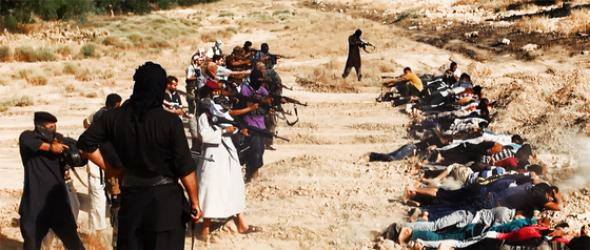


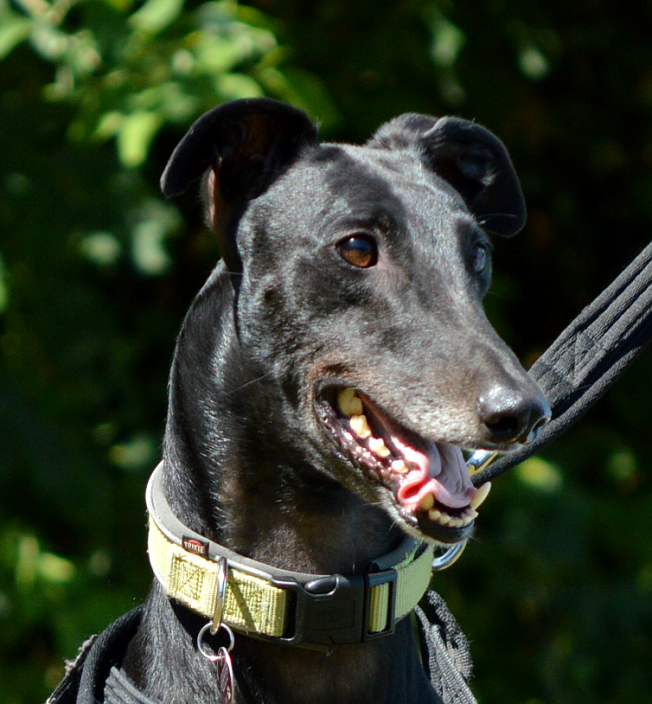


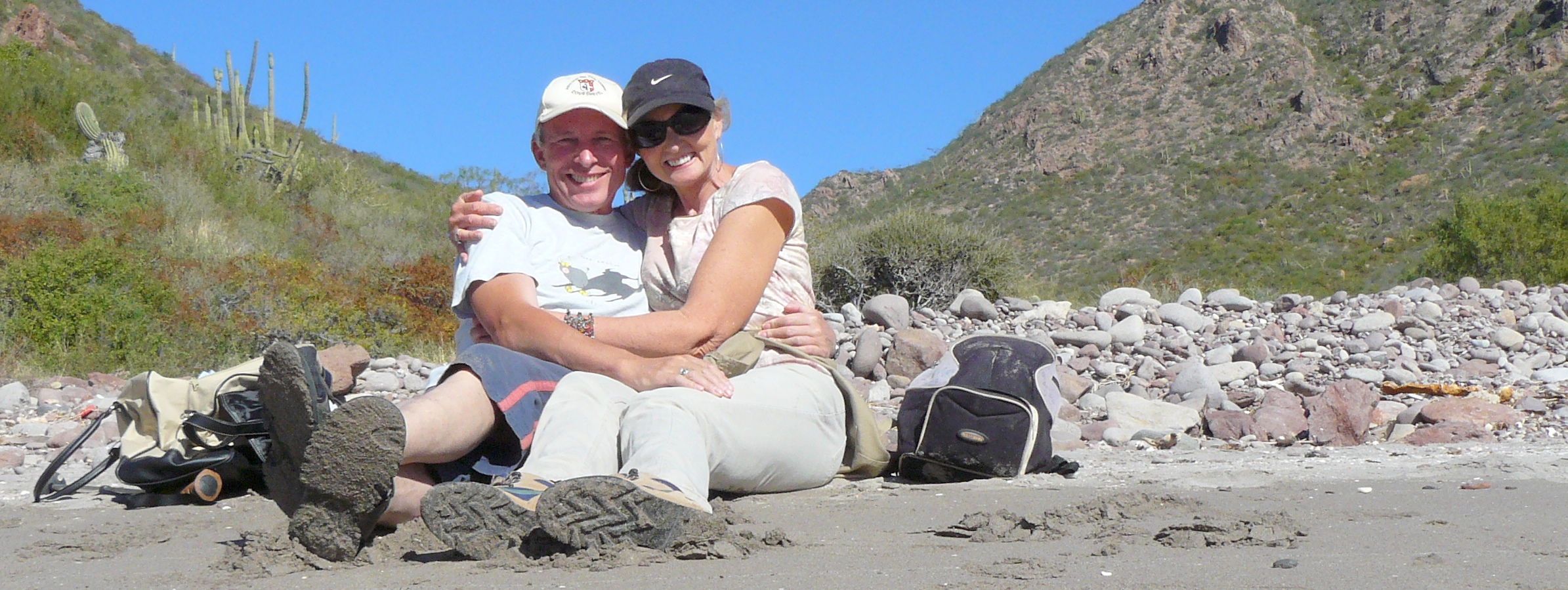

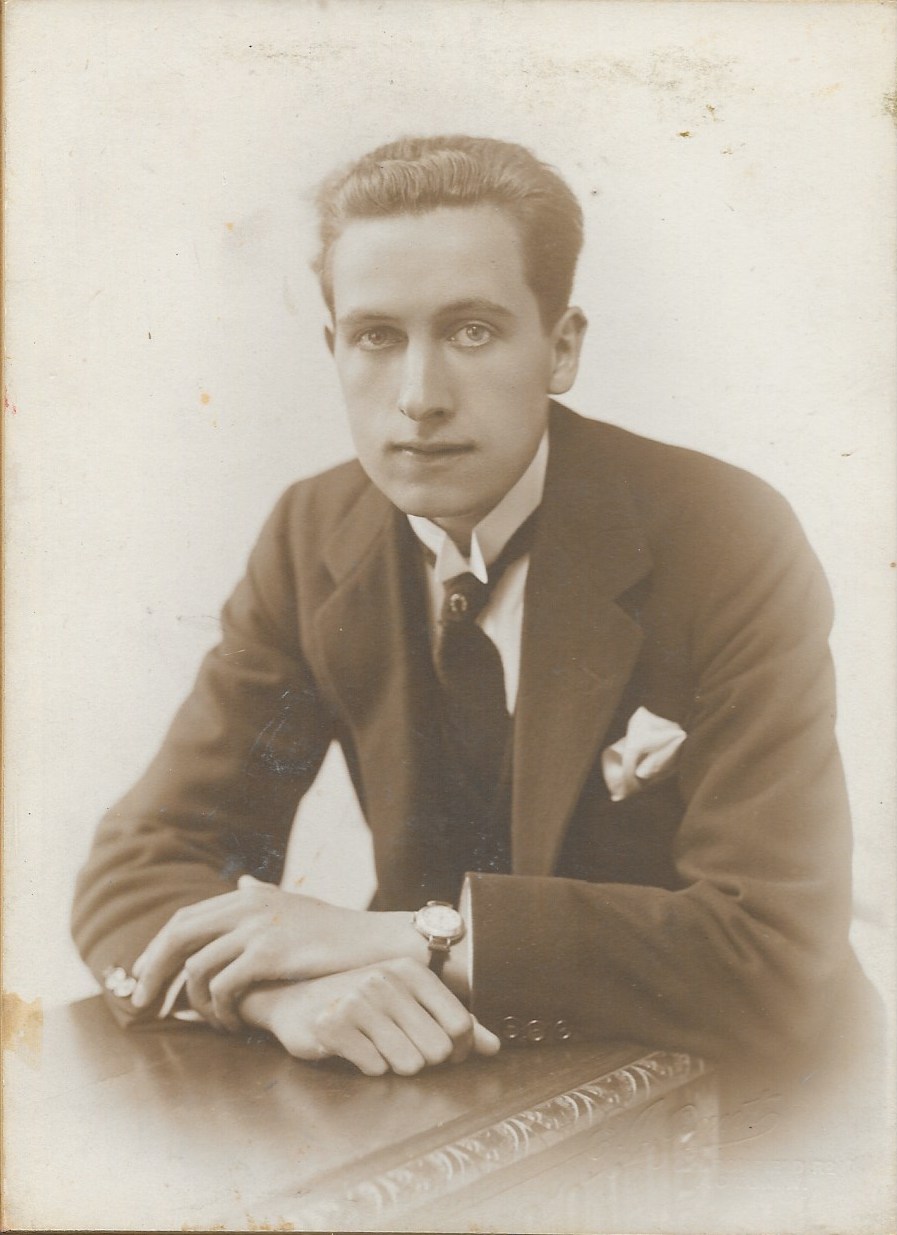
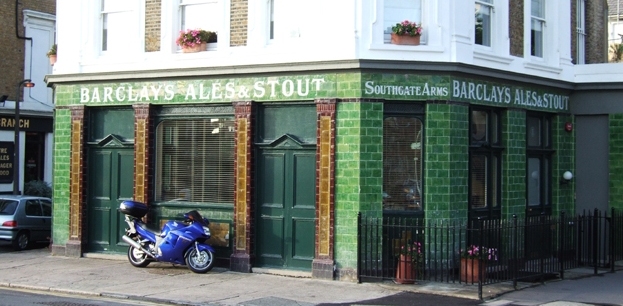


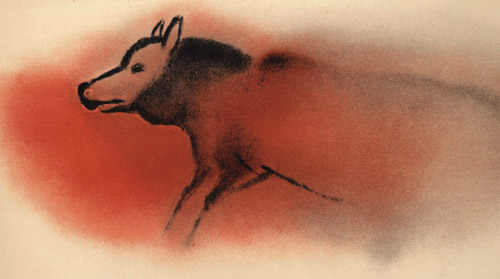
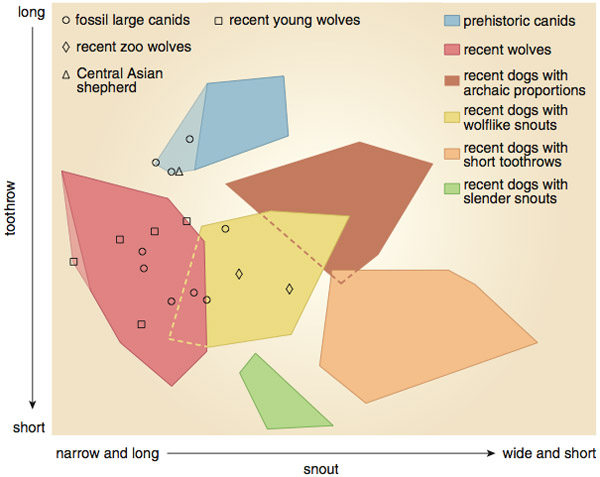
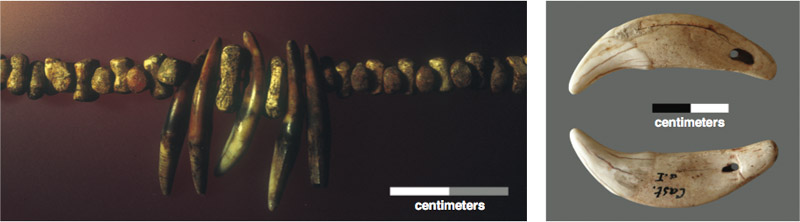
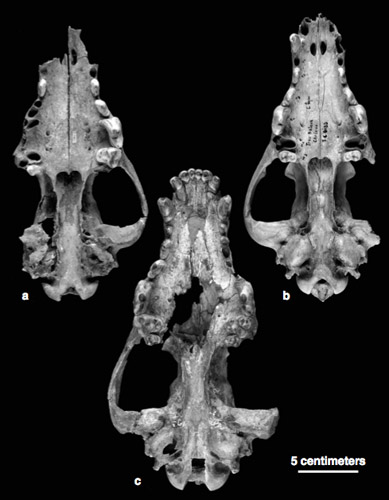


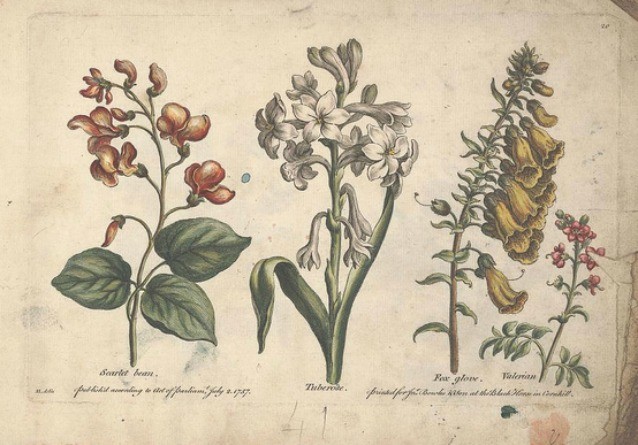
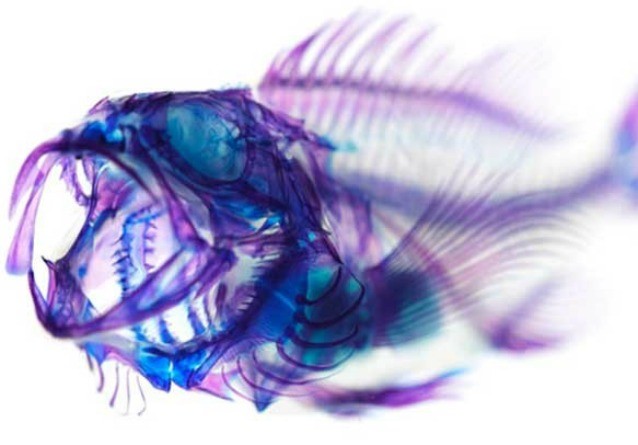


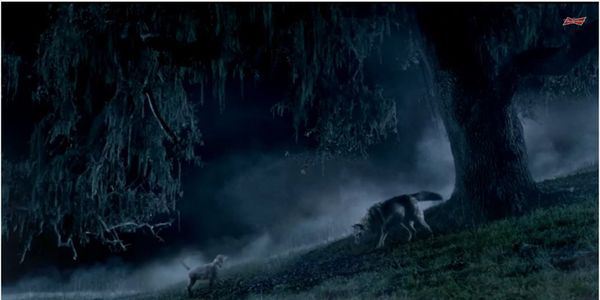
 Learning from Dogs