Category: History

A sailing memory, part one.

This is for Pendantry!

There was a remark left on my post on Tuesday by Pendantry. This is what he said, “Still waiting to hear the story of that dangerous trip you took (once?) that you dropped a teaser about years ago….”

Well not only am I including the excerpt from the book Letter to a Grandson, as yet unpublished, but I am extending it to two posts, simply because I think it’s too long for one.

So this is part one.
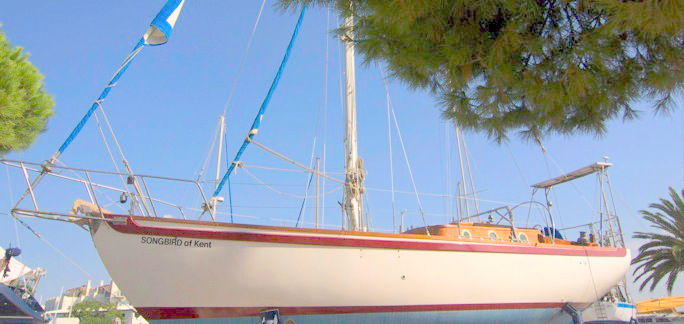
Tradewind 33 – Songbird of Kent. My home for five years.


ooOOoo

Songbird Of Kent

I decided to sell Dataview and worry about the taxation later. Now it is easy to write that all these years later knowing how it turned out; I never paid the tax!
For that same year, 1986, I went to Cyprus on holiday. Or rather I should say I went to the Greek half of Cyprus, to Larnaca, for a well-deserved holiday.

In wandering around the marina one day I saw a boat for sale. It was a Tradewind 33, a heavy-displacement cutter, called Songbird of Kent. The owners, Michael and Betty Hughes, were selling after many years of living on board and they returning to their native Wales. It had been extensively cruised in the Mediterranean with the base being Larnaca Marina.


It was a lovely boat and I could afford it. Plus, it offered an answer to my prayers. If I bought Songbird of Kent and left the UK before April 15th 1987 and stayed away for four tax years there would be no tax to pay. Nothing; Nada!
So that’s exactly what I did!


I bought Songbird, flew back to Devon and made preparations for leaving the United Kingdom for good. It was a busy period. One that had me saying cheerio to my son and daughter, but insisting that, so long as they came out to see me, it would not be four or five years before I saw them again. Plus loads of packing up, disposing of my house and eventually boarding that aircraft with a one-way ticket: London Stansted to Larnaca, Cyprus.


I settled in to living on board Songbird of Kent. I bought myself a small motorbike and in time, believe it or not, discovered there was a gliding club on the Island, at Kingsfield just to the East of Larnaca. The airfield was built for the Army Air Corps, possibly around 1960, but I can’t remember whether or not it was still in military hands. I don’t think it was!

But, I am able to look up my flying log and see that I flew a T21 from Kingsfield on the 28th October, 1990. It became a regular habit; quite quickly, as on the 17th November, 1990, I completed my instructor flight test and was signed off to instruct.
I also took an Advanced Open Water Diver course run by instructor Ian Murray. Ian was a PADI diving instructor. PADI stood for Professional Association of Diving Instructors.

My life was pretty good.


Each summer I would sail solo to Turkey, usually West along the South coast, the Greek side of Cyprus, then turn North and make it to Alanya or Antalya. There I would wait for guests to come from England including, most importantly, for Maija and Alex to visit.
Then we would gently cruise from harbour to harbour westwards, sometimes entering Greece much further West.

One day in Larnaca Marina a boat came quietly in and moored in the vacant berth next to me. I hopped off Songbird and went to help the sailor on board. It looked as though he was sailing solo.
After he had been securely moored, I asked him where he had come from. He was English; his name was Les Powells. He unassumingly said he was on his way home after a solo circumnavigation. Indeed, I later learned that it was his third solo circumnavigation!

The mind absolutely boggles! I mean I have just an idea, from reading books written by Francis Chichester and others, what a single solo circumnavigation would be like. But three!!
Over the coming days, we chatted about a whole range of stuff. When the subject of glider flying came up, Les said that was something he had always wanted to do.

I immediately offered to teach him to fly gliders. For a few weeks thereafter, we drove across to Kingsfield, when the Club was operating, and I taught Les up to the point where he went solo.
In the time we spent together, Les inspired me to undertake more longer sailing trips than just going across at the start of the season from Cyprus to Turkey and, of course, returning at the end of the season. Maybe, even try a transatlantic.

The idea of crossing the Atlantic kept nudging away at me. Especially since Dave Lisson, a Canadian friend from Larnaca Marina, was very much in favour of coming with me. Dave and I chatted about it and we agreed; we would give it a go! It was 1992 and a little late in the year to be starting off but we reckoned on it being alright. We left Larnaca Marina on the 10th September, 1992.


The idea was to head for Malta bypassing Crete. The weather soon became less than idyllic and by late on 13th September I made an entry in the sailing log: Conditions deteriorating. Then a further entry in the log at 11:00 on the 14th: Giant seas 3-4 metres.

Eventually on the 20th September we entered Valletta Harbour. We set off again on the 24th September. Our next port of call was Sidi Bou Said marina in Tunisia, which we entered on the 26th September.

The plan was to sail directly from Sidi Bou Said to Gibraltar but, once again, the weather got in the way. Thus on the 3rd October we entered Algiers harbour to take on fuel and to have a rest from the inclement conditions. We left Algiers on the 7th October heading for Gibraltar.


I must say that sailing in a smallish yacht had an almost unreal quality to it. The routine of sailing soon enveloped us. We slept frequently but lightly. At night, every twenty minutes or so, the one on watch would come on deck to take a look round. There was a simplicity in sailing, using a self-steering gear to helm the boat, and I remember one night coming on deck, there wasn’t a moon, and all around me, literally 360 degrees of vision, the stars came right down to the horizon. I was transfixed. We were far enough from land not to have any light pollution. It was magical. Indeed, it was a memory that has never left me.


However, getting to Gibraltar was not without its challenge for we suffered a knockdown and this scared us both to the core.

ooOOoo

Part Two tomorrow.
Our modern connected world!

A delightful conversation with Amit Roy.

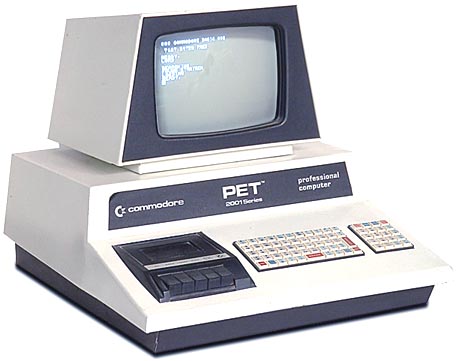
Way back in 1978 I started a company called Dataview. It was based in Colchester, Essex and I sold Commodore Computers; the ‘PET”, standing for Personal Electronic Transactor.

A photograph of a very early PET.

Now I was a word-processing salesman for IBM previously and didn’t know a thing about computers. I operated out of a small shop at first in Church Street and people came into the shop and played around with my demonstration models. Unbelievably I sold some!

Later I got involved with a software program known as Wordcraft. The first comprehensive word processing program for the PET. Indeed, I had the exclusive world distribution rights to Wordcraft. One thing lead to another and soon I was operating from much larger premises down at Portreeves House at East Bay, still in Colchester.

I appointed a Head of Marketing, Amit Roy, and the company grew and grew. I focused on appointing distributors across the world, and that included Dan Gomez in southern California, and he became a close friend being my best man when Jeannie and I were married in 2010.

Anyway, back to the story of Dataview. Eventually I sold out and escaped the country (and taxes) by moving to a yacht in the Greek side of Cyprus before April 15th. I went to Larnaca Marina. That was in 1986.

On Sunday, through a link from a mutual friend, I called Amit, the first time we had spoken since 1986. We had the most delightful of telephone conversations.

Amit was born in Burma, he is now 79, and lost his wife some 13 years ago. The counsellor who saw Amit after the death of his very dear wife said that he had to be strong and to take up something he could become passionate about. Amit joined the Colchester Photographic Society and took up studying again, in photography, and became a very good photographer.

With Amit’s permission I share some of his photographs with you.

The Red Arrows Flying After Dark

oooo

Firstsite At Dusk

oooo

Mischievous Boys of Bengal – India

oooo

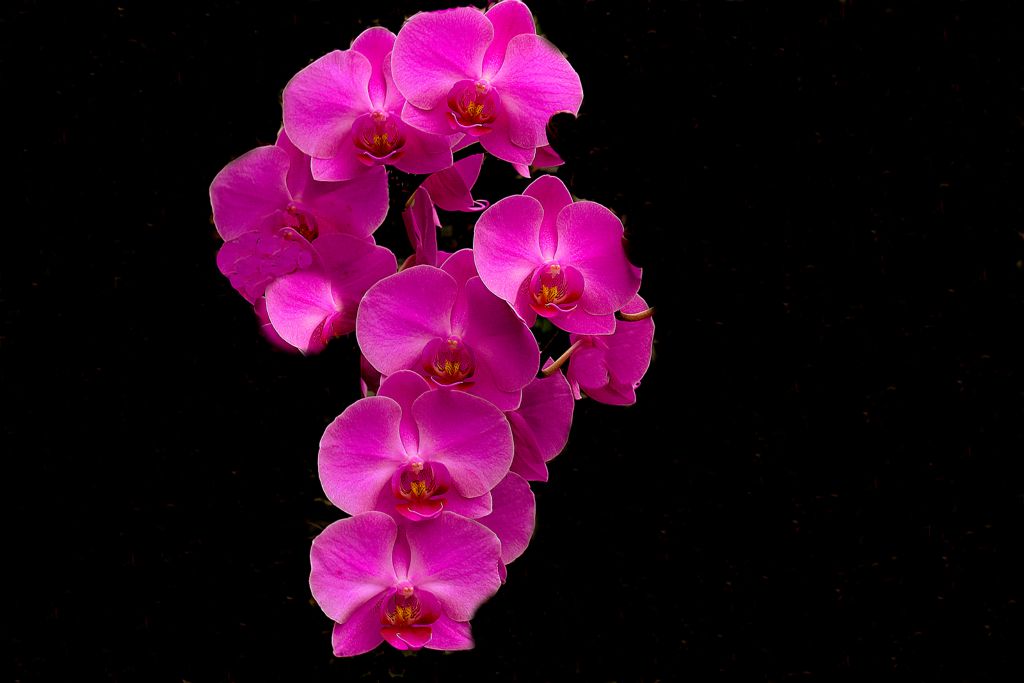
Orchid Isabelia Pulchella

oooo

Felixstowe Docks at Dusk

oooo

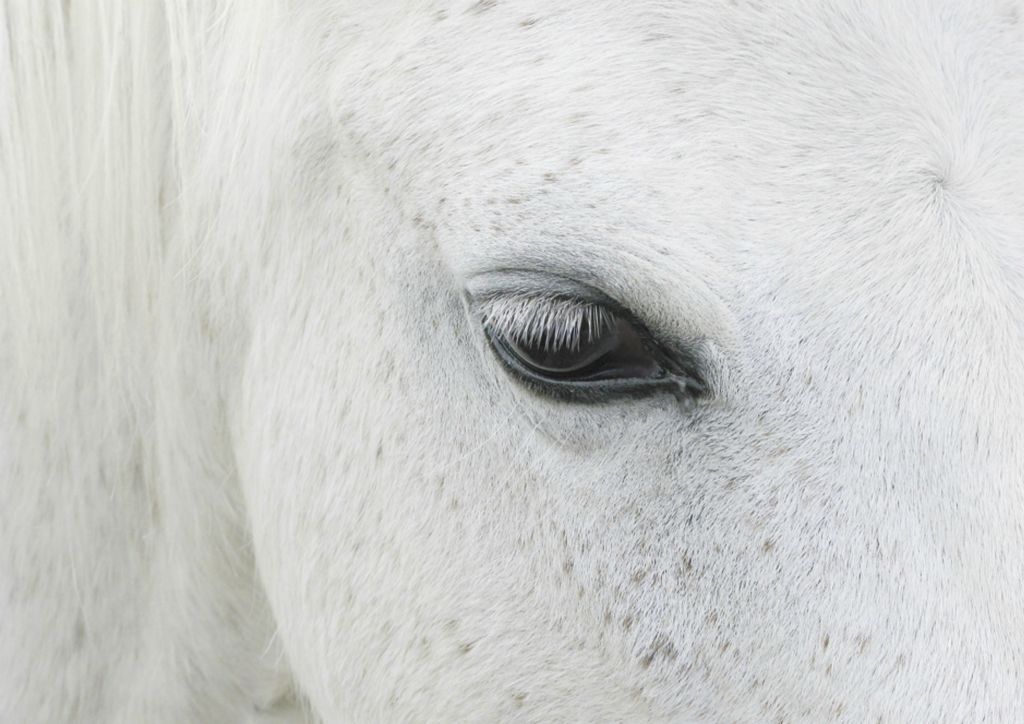
Horse Study

These are just a few but they are superb; absolutely marvellous.

That is the most welcome of connections – thanks to Roger Davis for suggesting it!

Golden Brown

A musical classic!

We were listening to the radio early on Tuesday morning and the BBC News played a tribute to the recent death of Dave Greenfield. Here’s a little bit of that BBC News piece:

The Stranglers keyboard player Dave Greenfield has died at the age of 71 after testing positive for Covid-19.

Greenfield died on Sunday having contracted the virus after a prolonged stay in hospital for heart problems.

He penned the band’s biggest hit, Golden Brown, a song about heroin, which went to number two on the UK singles chart in 1982.

The Stranglers bass player Jean-Jacques “JJ” Burnel paid tribute to Greenfield as a “musical genius”.

He said: “On the evening of Sunday May 3rd, my great friend and longstanding colleague of 45 years, the musical genius that was Dave Greenfield, passed away as one of the victims of the Great Pandemic of 2020.

“All of us in the worldwide Stranglers’ family grieve and send our sincerest condolences to [Greenfield’s wife] Pam.”

Drummer Jet Black added: “We have just lost a dear friend and music genius, and so has the whole world.

“Dave was a complete natural in music. Together, we toured the globe endlessly and it was clear he was adored by millions. A huge talent, a great loss, he is dearly missed.”

There’s more to read but I wanted to republish one of the photographs taken:

(Left to right) Dave Greenfield, Jean-Jacques Burnel, Jet Black and Hugh Cornwell of The Stranglers in 1980

Then to close my tribute to Dave here’s a beautiful rendition of that most famous song – Golden Brown.

A classic, a real classic.

The loss of Dave Greenfield. A loss to us all!

Out of the mouths of young people!

A young man aged eight asks a very deep question.

Now the answer, that I am about to republish, is written to Tristan, aged 8. But frankly I have no doubt that the answer will be keenly read by persons of all ages. Certainly, this 75-year-old found the answer of great interest.

But to the question:

How can a Big Bang have been the start of the universe, since intense explosions destroy everything? – Tristan S., age 8, Newark, Delaware

And the answer:

ooOOoo

How could an explosive Big Bang be the birth of our universe?

April 30, 2020
By Michael Lam, Assistant Professor of Physics and Astronomy, Rochester Institute of Technology

Pretend you’re a perfectly flat chess piece in a game of chess on a perfectly flat and humongous chessboard. One day you look around and ask: How did I get here? How did the chessboard get here? How did it all start? You pull out your telescope and begin to explore your universe, the chessboard….

What do you find? Your universe, the chessboard, is getting bigger. And over more time, even bigger! The board is expanding in all directions that you can see. There’s nothing that seems to be causing this expansion as far as you can tell – it just seems to be the nature of the chessboard.

But wait a minute. If it’s getting bigger, and has been getting bigger and bigger, then that means in the past, it must have been smaller and smaller and smaller. At some time, long, long ago, at the very beginning, it must have been so small that it was infinitely small.

Let’s work forward from what happened then. At the beginning of your universe, the chessboard was infinitely tiny and then expanded, growing bigger and bigger until the day that you decided to make some observations about the nature of your chess universe. All the stuff in the universe – the little particles that make up you and everything else – started very close together and then spread farther apart as time went on.

Our universe works exactly the same way. When astronomers like me make observations of distant galaxies, we see that they are all moving apart. It seems our universe started very small and has been expanding ever since. In fact, scientists now know that not only is the universe expanding, but the speed at which it’s expanding is increasing. This mysterious effect is caused by something physicists call dark energy, though we know very little else about it.

A visualization of tiny energy fluctuations in the early universe. ESA, Planck Collaboration, CC BY

Astronomers also observe something called the Cosmic Microwave Background Radiation. It’s a very low level of energy that exists all throughout space. We know from those measurements that our universe is 13.8 billion years old – way, way older than people, and about three times older than the Earth.

If astronomers look back all the way to the event that started our universe, we call that the Big Bang.

Many people hear the name “Big Bang” and think about a giant explosion of stuff, like a bomb going off. But the Big Bang wasn’t an explosion that destroyed things. It was the beginning of our universe, the start of both space and time. Rather than an explosion, it was a very rapid expansion, the event that started the universe growing bigger and bigger.

This expansion is different than an explosion, which can be caused by things like chemical reactions or large impacts. Explosions result in energy going from one place to another, and usually a lot of it. Instead, during the Big Bang, energy moved along with space as it expanded, moving around wildly but becoming more spread out over time since space was growing over time.

Back in the chessboard universe, the “Big Bang” would be like the beginning of everything. It’s the start of the board getting bigger.

It’s important to realize that “before” the Big Bang, there was no space and there was no time. Coming back to the chessboard analogy, you can count the amount of time on the game clock after the start but there is no game time before the start – the clock wasn’t running. And, before the game had started, the chessboard universe hadn’t existed and there was no chessboard space either. You have to be careful when you say “before” in this context because time didn’t even exist until the Big Bang.

You also have wrap your mind around the idea that the universe isn’t expanding “into” anything, since as far as we know the Big Bang was the start of both space and time. Confusing, I know!

Astronomers aren’t sure what caused the Big Bang. We just look at observations and see that’s how the universe did start. We know it was extremely small and got bigger, and we know that kicked off 13.8 billion years ago.

What started our own game of chess? That’s one of the deepest questions anyone can ask.

ooOOoo

Before the Big Bang then there was “no space and there was no time.” Michael Lam says that is confusing. I think that’s a gigantic understatement.

There there’s Dark Energy!

I wonder if we humans will ever come to the point where it is all understood!

More on the magnificent Hubble!

More on the magnificent Hubble!

The BBC have published an excellent article.

There was such a good response to the article on the Hubble that I published on April 27th that it was an easy decision to republish the article that was presented on the BBC website on the 24th, and this time the photographs can be downloaded.

ooOOoo

Hubble telescope delivers stunning 30th birthday picture

By Jonathan Amos, Science correspondent, 24 April 2020

It’s 30 years ago to the day that the Hubble telescope was launched – and to celebrate its birthday, the veteran observatory has produced another astonishing image of the cosmos.

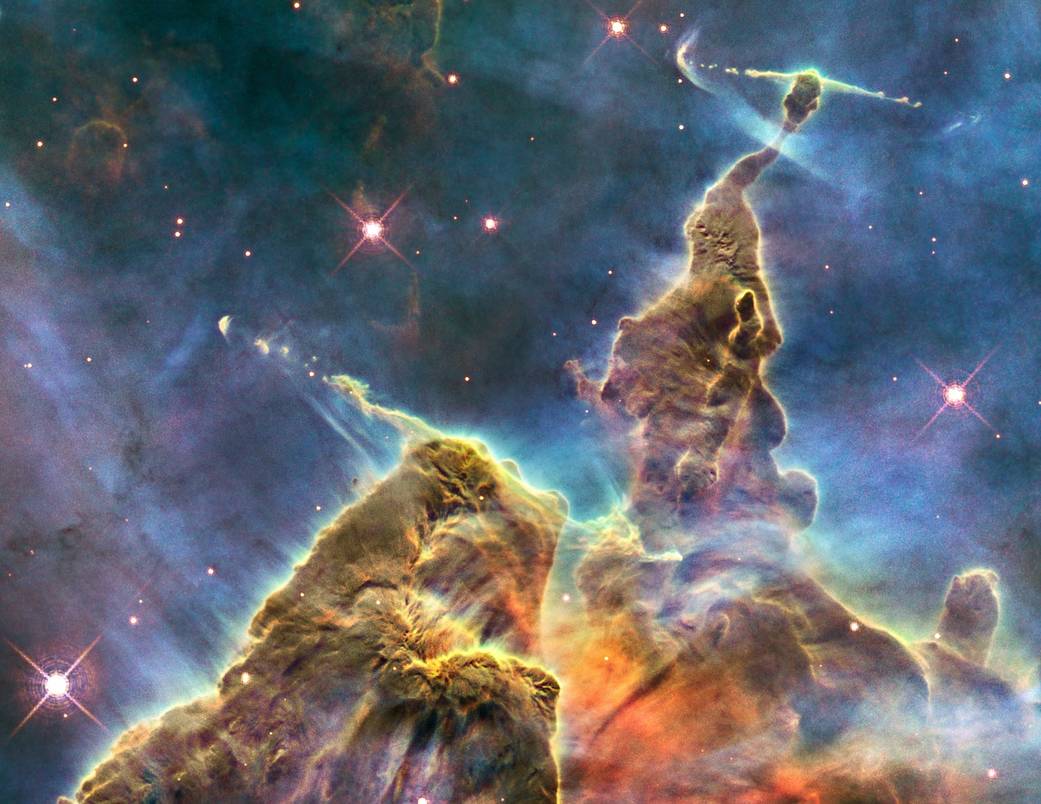
This one is of a star-forming region close to our Milky Way Galaxy, about 163,000 light-years from Earth.

The larger object is the nebula NGC 2014; its companion is called NGC 2020.

But astronomers have nicknamed the scene the “Cosmic Reef” because it resembles an undersea world.

[There is an audio by Antonella Nota that is a little under 10 minutes long. I cannot embed it into this post for some unclear reason. Go here if you want to listen to it! It’s well worth listening to.]

Antonella Nota: “It’s called the people’s telescope because it brought the Universe to the people”

Famously blighted by blurred vision at the outset of its mission in 1990, Hubble was eventually repaired and upgraded.

The remarkable pictures it has taken of planets, stars, and galaxies have transformed our view of the cosmos.

Indeed, there are those who think Hubble is the most important scientific tool ever built.

It’s still far from retirement.

The US space agency (Nasa), which runs the observatory in partnership with the European Space Agency (Esa), says operations will be funded for as long as they remain productive.

Last year, its data resulted in almost 1,000 scientific papers being published – so it continues to stand at the forefront of discovery.

For its 25th birthday, Hubble imaged a giant cluster of stars called Westerlund 2

Engineers obviously keep a watching brief on the health of Hubble’s various systems. Pleasingly, all four instruments onboard – the two imagers and two spectrographs – work at full tilt.

In the past, the telescope’s Achilles heel has been the six gyroscopes that help turn and point the facility, maintaining a rock-steady gaze at targets on the sky.

These devices have periodically failed down the years, and during their final servicing mission in 2009 space shuttle astronauts were tasked with replacing all six.

Three have subsequently shut down again, but Nasa project scientist Dr Jennifer Wiseman says this is not yet an issue for serious concern.

“Nominally, we need three gyroscopes, but we can operate on just one due to the ingenuity of the engineers,” she asserted.

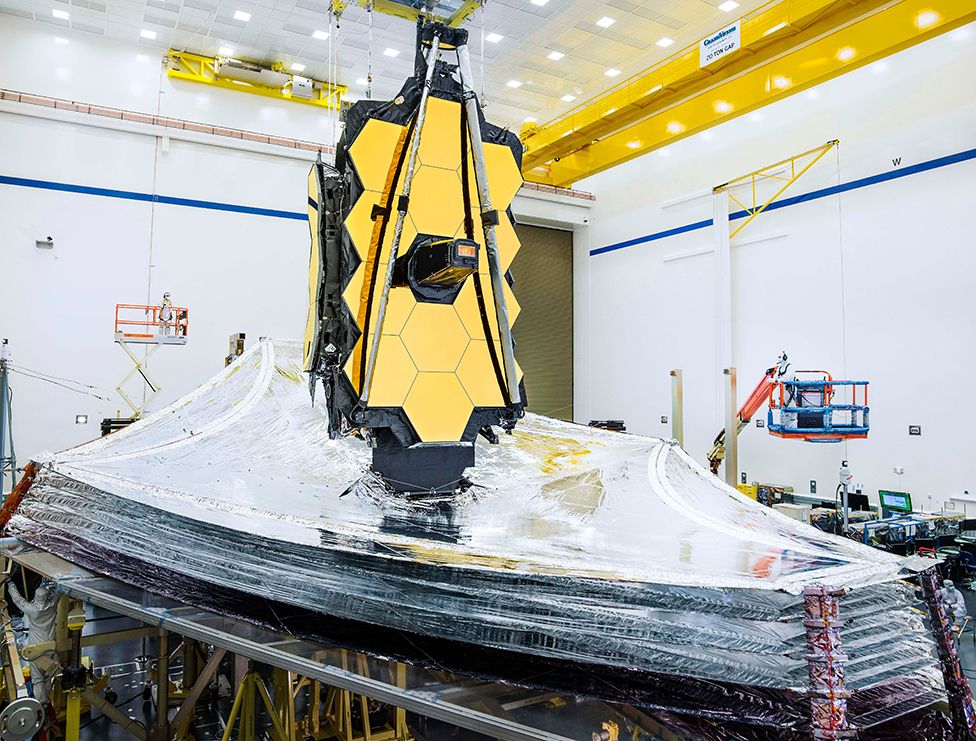
There’s a quiet confidence that Hubble can keep working well into the 2020s. Its supposed “successor” – the James Webb Space Telescope (JWST) – is due for launch next year, but the presence in orbit of this more modern observatory will in truth merely just extend capability; it won’t make Hubble redundant.

That’s because the new facility has been designed to see the cosmos at longer wavelengths of light than Hubble. The duo will be complementary and will on occasion actually pursue targets together to get a fuller perspective.

This is an exciting prospect for astronomers everywhere – but especially for those in Europe where Hubble has been such a rewarding endeavour, says Esa project scientist Dr Antonella Nota.

“From the memorandum of understanding there was a guarantee that European astronomers would get 15% of observing time for the duration of the mission. If I look back at how much time European astronomers got – on average it’s 22%. And it is a peer-reviewed process so we never needed to put a finger on the scales. European astronomers are creative; they’re smart; they’re doing leading-edge science,” she told BBC News.

What has Hubble contributed to science?

It’s a bit of a cliche, but Hubble has truly been a “discovery machine”.

Before the telescope launched in 1990, astronomers didn’t know whether the Universe was 10 billion years old or 20 billion years old.

Hubble’s survey of pulsating stars narrowed the uncertainty, and we now know the age extremely well, at 13.8 billion.

The observatory played a central role in revealing the accelerating expansion of the cosmos – a Nobel Prize-winning breakthrough – and it provided the definitive evidence for the existence of super-massive black holes at the centre of galaxies.

The Deep Field images require Hubble to stare at the same patch of sky for days on end

It’s amazing to think that when Hubble launched, scientists had yet to detect the first exoplanet, the name given to a planet orbiting a star other than our Sun. Today, Hubble is pioneering the study of these far-off worlds, examining their atmospheres to try to gauge their nature.

And although the sparkling eight-metre-class ground-based telescopes can now match – and even exceed – Hubble’s skill in certain fields of study, the space telescope remains peerless in going super-deep.

Its so-called Deep Field observations in which it stared at a small patch of sky for days on end to identify the existence of very distant, extremely faint galaxies is one of the towering achievements in astronomy.

These studies have shown us what the Universe was like just a few hundred million years after the Big Bang. Only JWST, with its finely-tuned infrared detectors, will go deeper still.

A Hubble classic: The Veil Nebula is the expanding debris of an exploded star

Kathryn Sullivan was one of the astronauts onboard Space Shuttle Discovery when it released Hubble into its 612km-high orbit on 25 April, 1990 – a day she recounts in a recent book, Handprints On Hubble.

“Hubble’s scientific impact has just been immense. But what I had not really appreciated until I started writing my book was the extent to which Hubble – because of its gorgeous images and their mind-bending implications – has really permeated popular culture,” she told BBC News.

“I see Hubble on the side of U-Haul (rental) trailers, on tattoos, on lunchboxes, on shirts, in advertisements, almost ubiquitously.

“And I think part of that is down to Hubble coming into service just as the internet was becoming the thing we now know it to be.

“That’s put the pictures right in front of people.”

JWST will study the Universe at longer wavelengths of light

ooOOoo

This is the most amazing invention and regular missions to service the telescope including regular updates to the technology have kept it current.

It has produced the most distant and beautiful photographs. It has also refined our knowledge of when the universe came into existence – 13.8 billion years ago.

Staggering!

Thirty Years of the Hubble Space Telescope

My how the years go by!
Back in 2010 I wrote about the Hubble, wishing it Happy Birthday!

Now here we are in 2020 and, again, I want to feature this most amazing space telescope ever.

The thirtieth anniversary of the launch of the Hubble Space Telescope was on the 24th April, 2020, just three days ago.

The challenge is that the photographs that go with the article are not permitted to be shared with you. So I have grabbed some others that, apparently, are alright.

ooOOoo

How the Hubble Space Telescope opened our eyes to the first galaxies of the universe

April 24, 2020
By Professor Rodger Thompson, Professor of Astronomy, University of Arizona

The Hubble Space Telescope launched on the 24th of April, 30 years ago. It’s an impressive milestone especially as its expected lifespan was just 10 years.

One of the primary reasons for the Hubble telescope’s longevity is that it can be serviced and improved with new observational instruments through Space Shuttle visits.

When Hubble, or HST, first launched, its instruments could observe ultraviolet light with wavelengths shorter than the eye can see, as well as optical light with wavelengths visible to humans. A maintenance mission in 1997 added an instrument to observe near infrared light, which are longer wavelengths than people can see. Hubble’s new infrared eyes provided two new major capabilities: the ability to see farther into space than before and see deeper into the dusty regions of star formation.

I am an astrophysicist at the University of Arizona who has used near infrared observations to better understand how the universe works, from star formation to cosmology. Some 35 years ago, I was given the chance to build a near infrared camera and spectrometer for Hubble. It was the chance of a lifetime. The camera my team designed and developed has changed the way humans see and understand the universe. The instrument was built at Ball Aerospace in Boulder, Colorado, under our direction.

Seeing further and earlier

Edwin Hubble, HST’s namesake, discovered in the early 1900s that the universe is expanding and that the light from distant galaxies was shifted to longer, redder wavelengths, a phenomenon called the redshift. The greater the distance, the larger the shift. This is because the further away an object is, the longer it takes for the light to reach us here on Earth and the more the universe has expanded in that time.

The Hubble ultraviolet and optical instruments had taken images of the most distant galaxies ever seen, known as the Northern Hubble Deep Field, or NHDF, which were released in 1996. These images, however, had reached their distance limit due to the redshift, which had shifted all of the light of the most distant galaxies out of the visible and into the infrared.

One of the new instruments added to Hubble in the second maintenance mission has the awkward name, the Near Infrared Camera and Multi-Object Spectrometer, NICMOS, pronounced “Nick Moss.” The near infrared cameras on NICMOS observed regions of the NHDF and discovered even more distant galaxies with all of their light in the near infrared.

Astronomers have the privilege of watching things happen in the past which they call the “lookback time.” Our best measurement of the age of the universe is 13.7 billion years. The distance that light travels in one year is called a light year. The most distant galaxies observed by NICMOS were at a distance of almost 13 billion light years. This meant that the light that NICMOS detected had been traveling for 13 billion years and showed what the galaxies looked like 13 billion years ago, a time when the universe was only about 5% of its current age. These were some of the first galaxies ever created and were forming new stars at rates that were more than a thousand times the rate at which most galaxies form stars in the current universe.

Hidden by dust

Although astronomers have studied star formation for decades, many questions remain. Part of the problem is that most stars are formed in clouds of molecules and dust. The dust absorbs the ultraviolet and most of the optical light emitted by forming stars, making it difficult for Hubble’s ultraviolet and optical instruments to study the process.

The longer, or redder, the wavelength of the light, the less is absorbed. That is why sunsets, where the light must pass through long lengths of dusty air, appear red.

The near infrared, however, has an even easier time passing through dust than the red optical light. NICMOS can look into star formation regions with the superior image quality of Hubble to determine the details of where the star formation occurs. A good example is the iconic Hubble image of the Eagle Nebula, also known as the pillars of creation.

The optical image shows majestic pillars which appear to show star formation over a large volume of space. The NICMOS image, however, shows a different picture. In the NICMOS image, most of the pillars are transparent with no star formation. Stars are only being formed at the tip of the pillars. The optical pillars are just empty dust reflecting the light of a group of nearby stars.

The dawning of the age of infrared

When NICMOS was added into the HST in 1997 NASA had no plans for a future infrared space mission. That rapidly changed as the results from NICMOS became apparent. Based on the data from NICMOS, scientists learned that fully formed galaxies existed in the universe much earlier than expected. The NICMOS images also confirmed that the expansion of the universe is accelerating rather than slowing down as previously thought. The NHDF infrared images were followed by the Hubble Ultra Deep Field images in 2005, which further showed the power of near infrared imaging of distant young galaxies. So NASA decided to invest in the James Webb Space Telescope, or JWST, a telescope much larger than HST and completely dedicated to infrared observations.

On Hubble, a near infrared imager was added to the third version of the Wide Field camera which was installed in May of 2009. This camera used an improved version of the NICMOS detector arrays that had more sensitivity and a wider field of view. The James Webb Space Telescope has much larger versions of the NICMOS detector arrays that have more wavelength coverage than the previous versions.

The James Webb Space Telescope, scheduled to be launched in March 2021, followed by the Wide Field Infrared Survey Telescope, form the bulk of future space missions for NASA. These programs were all spawned by the near infrared observations by HST. They were enabled by the original investment for a near infrared camera and spectrometer to give Hubble its infrared eyes. With the James Webb Space Telescope, astronomers expect to see the very first galaxies that formed in the universe.

The Eagle Nebula in visible light. NASA, ESA and the Hubble Heritage Team (STScI/AURA)

oooo

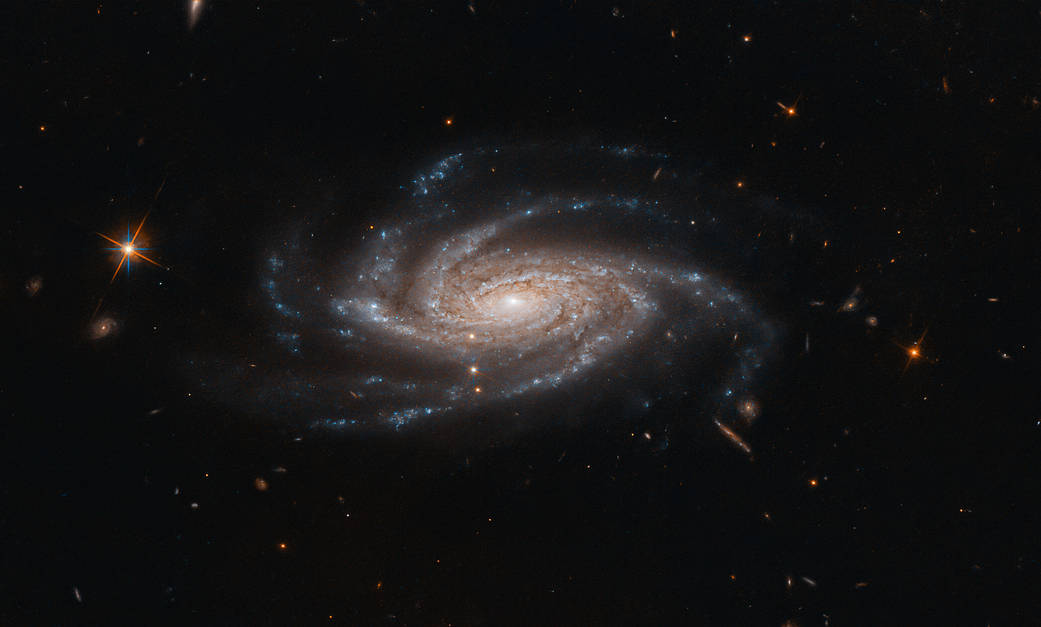
The spiral galaxy NGC 2008 sits centre stage, its ghostly spiral arms spreading out towards us, in this image captured by the NASA/ESA Hubble Space Telescope.  This galaxy is located about 425 million light-years from Earth in the constellation of Pictor (The Painter’s Easel). Discovered in 1834 by astronomer John Herschel, NGC 2008 is categorised as a type Sc galaxy in the Hubble sequence, a system used to describe and classify the various morphologies of galaxies. The “S” indicates that NGC 2008 is a spiral, while the “c” means it has a relatively small central bulge and more open spiral arms. Spiral galaxies with larger central bulges tend to have more tightly wrapped arms, and are classified as Sa galaxies, while those in between are classified as type Sb. Spiral galaxies are ubiquitous across the cosmos, comprising over 70% of all observed galaxies — including our own, the Milky Way. However, their ubiquity does not detract from their beauty. These grand, spiralling collections of billions of stars are among the most wondrous sights that have been captured by telescopes such as Hubble, and are firmly embedded in astronomical iconography.

oooo

The NASA/ESA Hubble Space Telescope has revisited one of its most iconic and popular images: the Eagle Nebula’s Pillars of Creation. This image shows the pillars as seen in infrared light, allowing it to pierce through obscuring dust and gas and unveil a more unfamiliar — but just as amazing — view of the pillars. In this ethereal view the entire frame is peppered with bright stars and baby stars are revealed being formed within the pillars themselves. The ghostly outlines of the pillars seem much more delicate, and are silhouetted against an eerie blue haze. Hubble also captured the pillars in visible light.

Rodger I. Thompson was the Principal Investigator for the Near Infrared Camera and Multi-Object Spectrometer, NICMOS. He was responsible for the execution of a contract to Arizona Board of Regents from NASA to deliver NICMOS as a Hubble Space Telescope Instrument and carry out a scientific investigation with it. Prof. Thompson received summer salary from this contract at his University pay rate during the execution of the contract which ended in 2004. Prof. Thompson is not currently receiving any external funding.

ooOOoo

Now for two YouTube videos.

The first is a celebration of the 30th anniversary.

And the second is slightly longer but conveys images taken from the telescope. I have no doubt that you will love them as we did!

Both these videos are beyond words! That we are alive today and can share these videos on this blog is stupendous!

See you tomorrow!

Earth Day!

I simply forgot it was Earth Day yesterday!

I wanted to let the post on Tuesday run for a couple of days because it really made the point about dogs, in particular, being animals who love to love!

But I then forgot, until I woke up on the 22nd, that yesterday was Earth Day.

So what to publish?

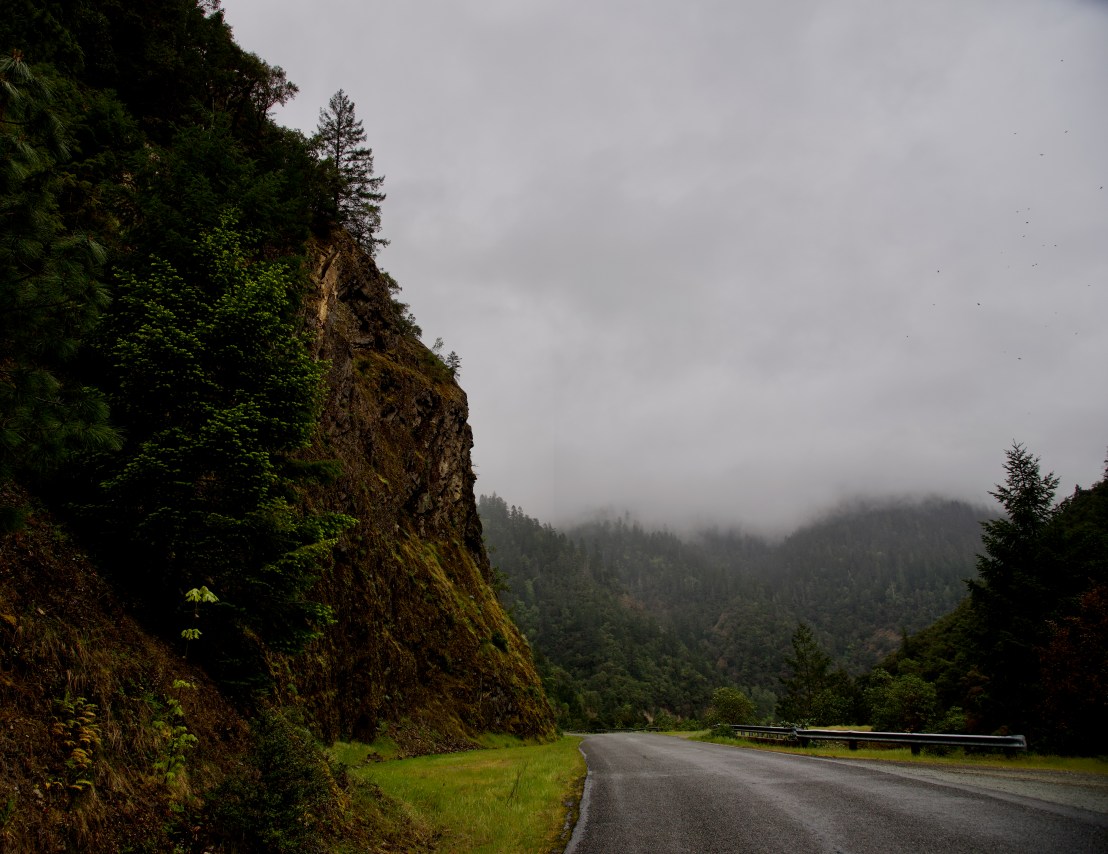
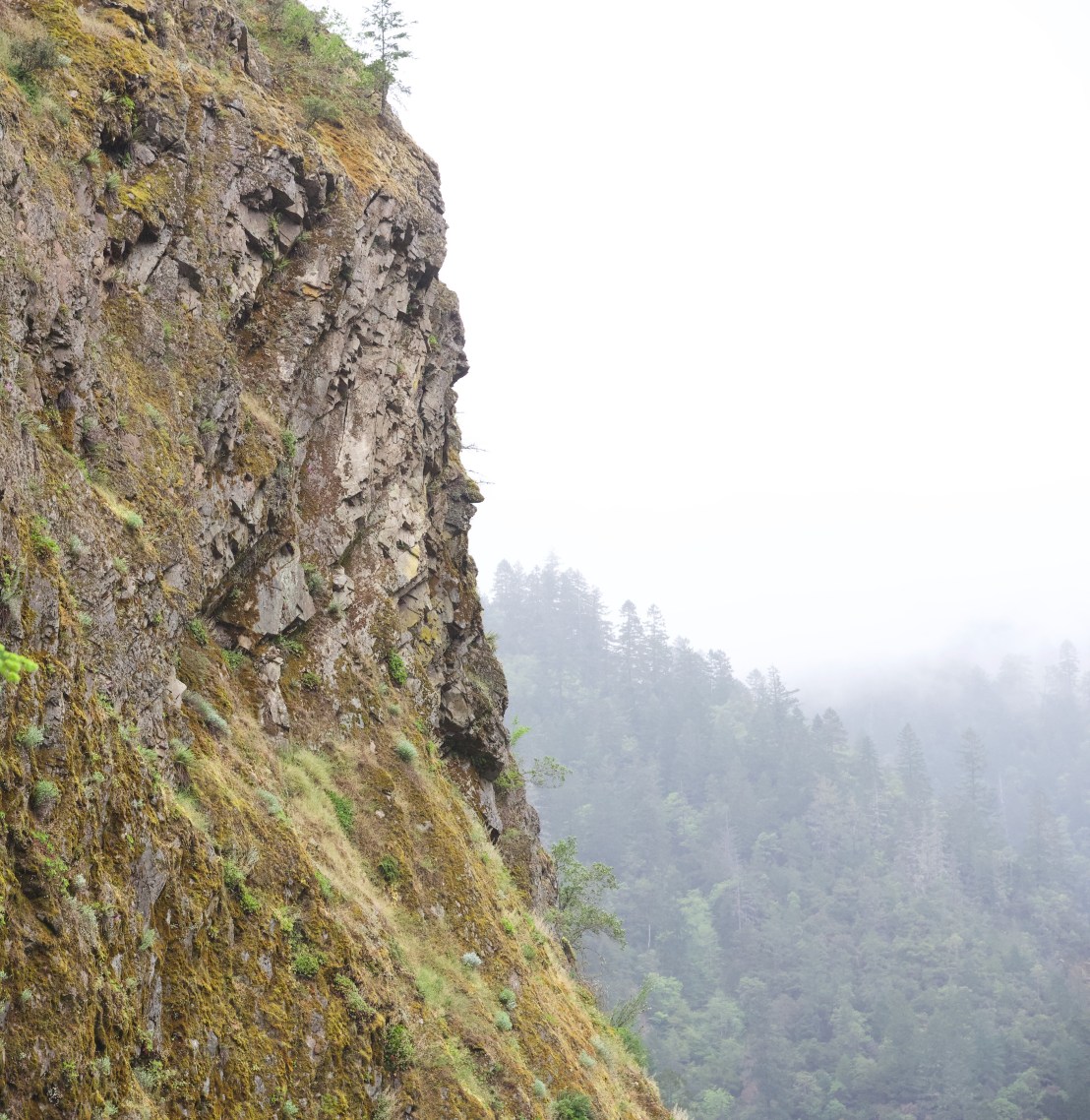
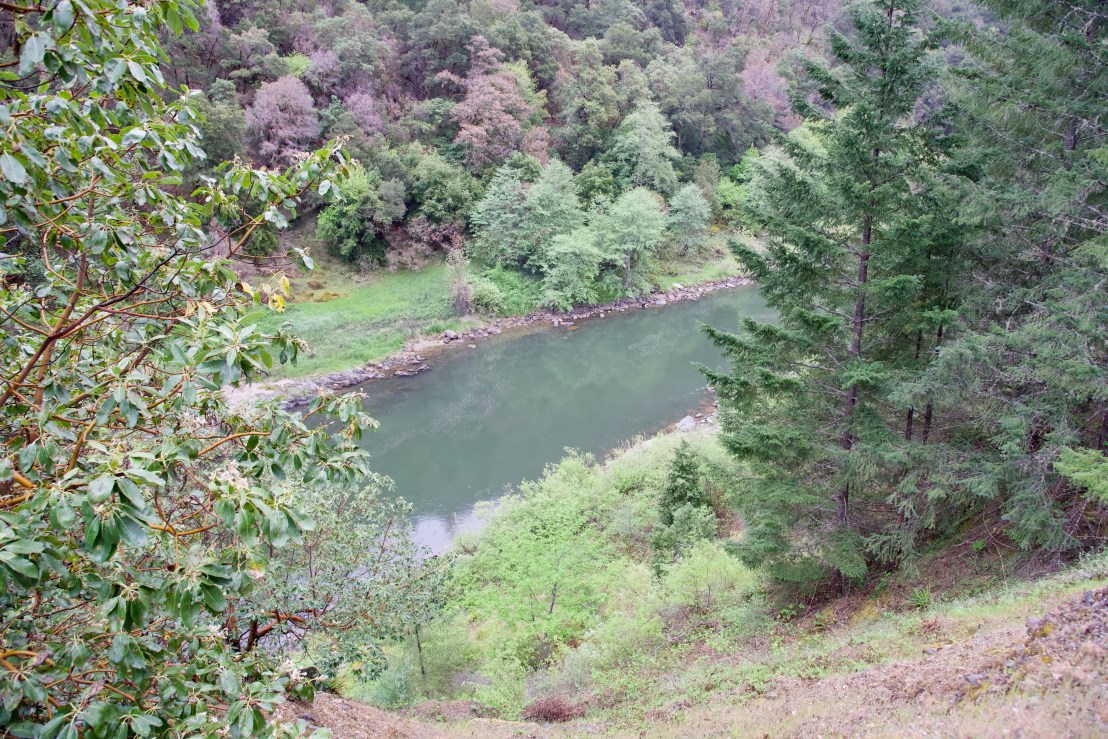
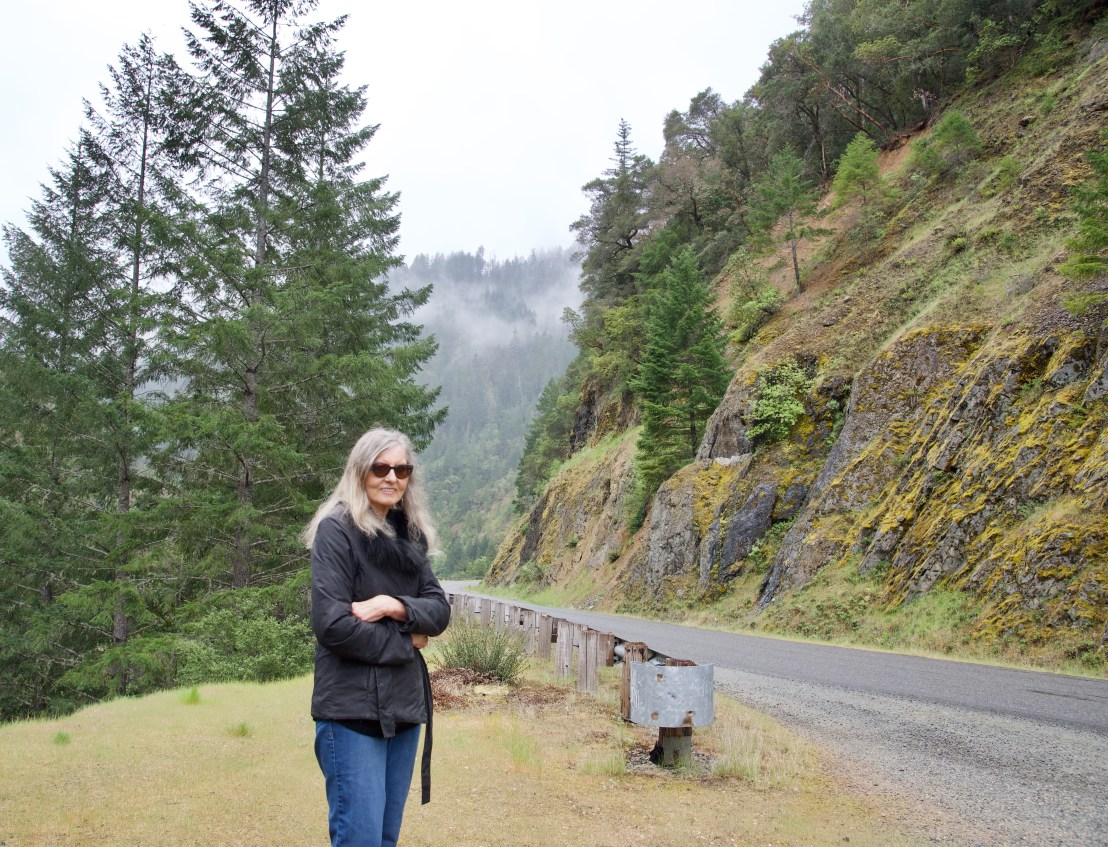
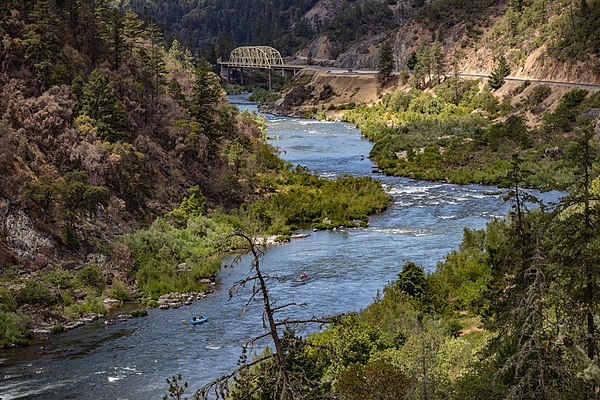
Yesterday in Merlin was a damp day with a steady rain coming down in the morning. About 10am I volunteered the idea that we should drive the shortish distance to Galice; just 10 miles from where we live. Galice is a very small settlement on the Western bank of the Rogue River. Then we drove on for a few more miles. It was incredible scenery. The misty, damp forest and the river running below in the gorge.

I had my camera with me and the following are some of the photographs that were taken.

Just for a change! All within 15 miles of home!

oooo

oooo

oooo

oooo

oooo

oooo

For those interested in learning more, I am publishing the WikiPedia account of the Rogue River.

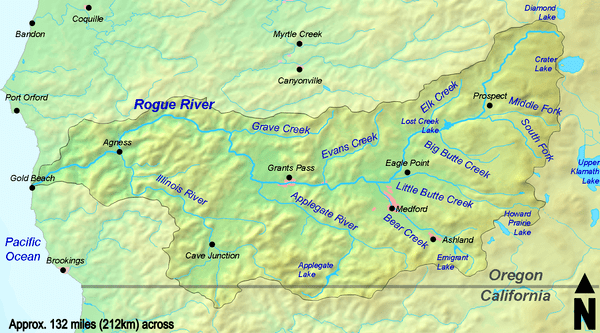
The Rogue River (Tolowa: yan-shuu-chit’ taa-ghii~-li~’,[7] Takelma: tak-elam[8]) in southwestern Oregon in the United States flows about 215 miles (346 km) in a generally westward direction from the Cascade Range to the Pacific Ocean. Known for its salmon runs, whitewater rafting, and rugged scenery, it was one of the original eight rivers named in the Wild and Scenic Rivers Act of 1968. Beginning near Crater Lake, which occupies the caldera left by the explosive volcanic eruption of Mount Mazama, the river flows through the geologically young High Cascades and the older Western Cascades, another volcanic province. Further west, the river passes through multiple exotic terranes of the more ancient Klamath Mountains. In the Kalmiopsis Wilderness section of the Rogue basin are some of the world’s best examples of rocks that form the Earth’s mantle. Near the mouth of the river, the only dinosaur fragments ever discovered in Oregon were found in the Otter Point Formation, along the coast of Curry County.

People have lived along the Rogue River and its tributaries for at least 8,500 years. European explorers made first contact with Native Americans (Indians) toward the end of the 18th century and began beaver trapping and other activities in the region. Clashes, sometimes deadly, occurred between the natives and the trappers and later between the natives and European-American miners and settlers. These struggles culminated with the Rogue River Wars of 1855–56 and removal of most of the natives to reservations outside the basin. After the war, settlers expanded into remote areas of the watershed and established small farms along the river between Grave Creek and the mouth of the Illinois River. They were relatively isolated from the outside world until 1895, when the Post Office Department added mail-boat service along the lower Rogue. As of 2010, the Rogue has one of the two remaining rural mail-boat routes in the United States.

Dam building and removal along the Rogue has generated controversy for more than a century; an early fish-blocking dam (Ament) was dynamited by vigilantes, mostly disgruntled salmon fishermen. By 2009, all but one of the main-stem dams downstream of a huge flood-control structure 157 miles (253 km) from the river mouth had been removed. Aside from dams, threats to salmon include high water temperatures. Although sometimes too warm for salmonids, the main stem Rogue is relatively clean, ranking between 85 and 97 (on a scale of 0 to 100) on the Oregon Water Quality Index (OWQI).

Although the Rogue Valley near Medford is partly urban, the average population density of the Rogue watershed is only about 32 people per square mile (12 per km2). Several historic bridges cross the river near the more populated areas. Many public parks, hiking trails, and campgrounds are near the river, which flows largely through forests, including national forests. Biodiversity in many parts of the basin is high; the Klamath-Siskiyou temperate coniferous forests, which extend into the southwestern Rogue basin, are among the four most diverse of this kind in the world.

Rogue River from Hellgate Canyon
Map of the Rogue River watershed
Location of the mouth of the Rogue River in Oregon

Just to reflect on the fact that people have lived along the Rogue River and its tributaries for 8,500 years!

More of Molly

Further emails between Jane and me resulted in the following.

After I published the post about Molly last Thursday, there were further emails between Jane and me.

When I went to bed after I sent you Molly’s story I thought of some other points.
Separation anxiety: presumably the result of, over a period of time, seeing her friends disappear and the family leave her owner. He would feed her, let her out for a run round the garden put her away again. And then leave till some unspecified time.
If – rarely- I’m out for more than a few hours she doesn’t want to know Alan. She waits on the chair by the door looking bereft. Then I come home and …. whoo hoo it’s like the 4th July and she suddenly comes to life; runs and jumps around like a wind-up toy. The obvious joy and relief at seeing me is humbling.
Or if I go out of the room she might follow.
But even letting her out in the garden has been a trauma for her. She rushes out but if I don’t immediately follow she comes back to check where I am – but if she sees me putting my garden shoes on – hey Mum’s coming! and off she scoots. She does go out and stay on her own but likes to know we’re there. That fear of being left is obviously too entrenched to ever leave her.
BUT the most amazing thing is that when my friend boarded her she said she doesn’t bark – they thought they might have heard her bark once. And when we went to look at her, the owner told me ‘she doesn’t bark’.
But she barks now! I talk to her so she talks back! She is a brilliant guard dog. If there’s anyone at the front door she barks and can’t wait to get there. As people often don’t see our bell we wouldn’t have known they were there. And if the phone rings (think the ringtone must hurt her ears) she barks till I answer it.

And despite her traumas she is the nicest little girl I’ve ever known. Not a nasty bone in her body.
Jane x

Jane also sent a further photograph.

Then in a further email that came through shorty afterwords in reply to mine:

That’s wonderful. I may publish an addendum, so to speak, sometime next week and incorporate some of your remarks. (Paul)

Jane asked:

That would be terrific and perhaps I could add the question: Do others have experience of dogs sucking their blanket?

I assume this an anxiety or comfort habit but then again – is it to do with indigestion – considering what she scavenges? It happens when she’s had a feed and is almost like a child sucking their blanket but also reminds me of horses wind-sucking and/or crib-biting.
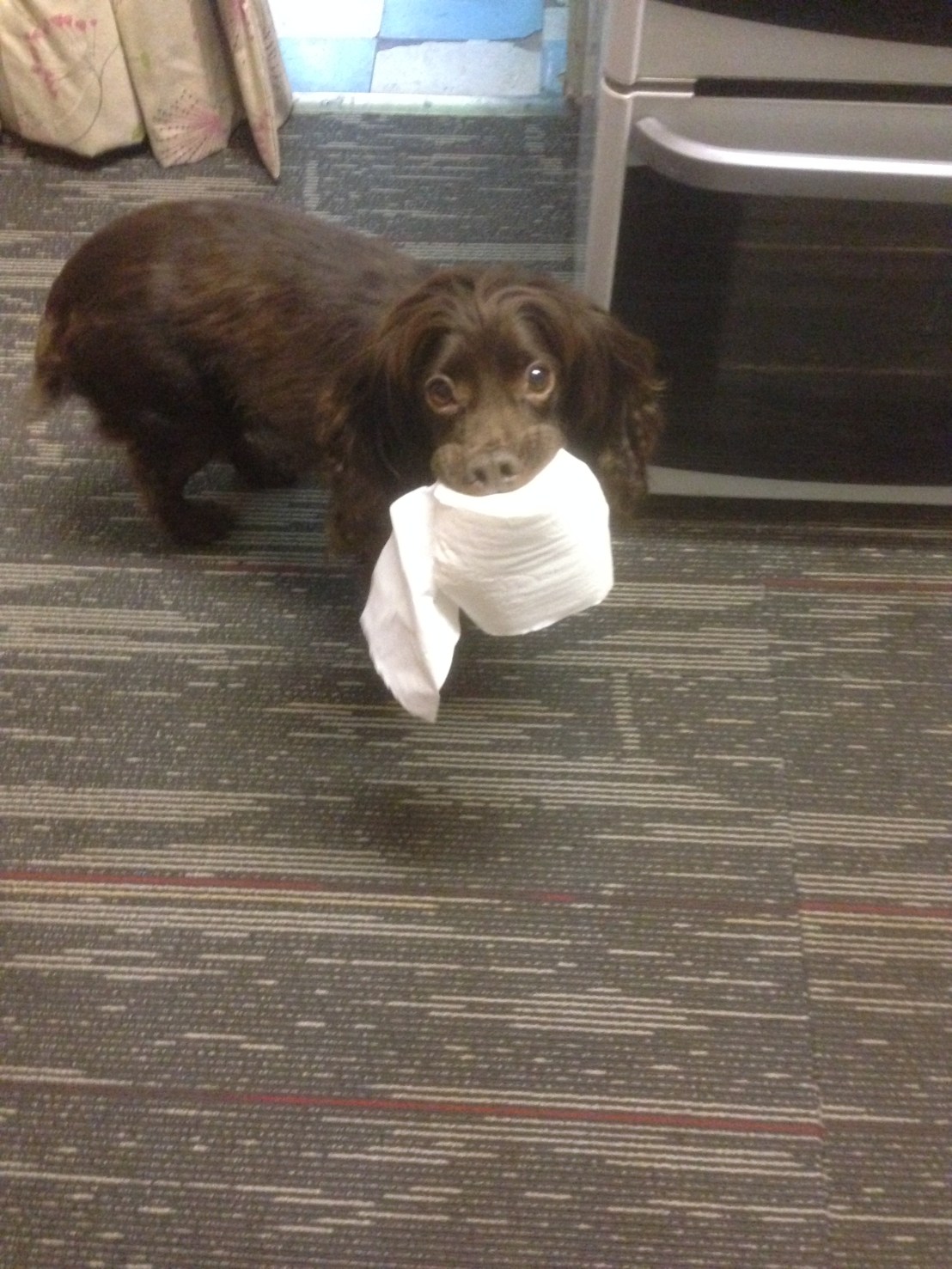
Obviously she couldn’t do this in her kennel ( she slept on newspaper covered board) but seems to derive comfort from it but does have a penchant for eating paper (my requisition for a chest X-ray to name but one!) and hence the photo of her with toilet roll! Also she had puppies but we don’t know old she was.
Actually the sucking reminds me of cats sucking and kneading.
She will be 11 next month so unlikely to stop now. We got her on 31 December 2016.

Best Christmas present ever.

Can someone answer Jane’s question about dogs sucking their blankets?

Time; beyond imagination!

I don’t know what is was that engaged me; to the point that I have written this blog post.

We rise around 4:30 am, thanks to the dogs, and after they have been out we retire to the bedroom and lay on the top of the bed and have a couple of cups of tea. Come 5am, week days, we listen to BBC Radio 4 and the World at One. Then immediately after the World at One, at the moment, is a fascinating series on A History Of The World in 100 objects.

A few days ago, after the end of the programme, I drifted off into some form of introspective gaze about the past. I mean the past big time!

The Universe

When and how did it all start? That seems to be the Big Bang. The Big Bang was an incredibly long time ago, some 14 billion years ago (rounding it up!).

Here’s an extract from Wikipedia:

The current measurement of the age of the universe is around 13.8 billion years (as of 2015[1]) – 13.799±0.021 billion years within the Lambda-CDM concordance model.[2] The uncertainty has been narrowed down to 20 million years, based on a number of studies which all gave extremely similar figures for the age.

That’s 13.8 times 10 to the power of 9!

Our solar system

Again, pretty old by human standards; 4.6 billions years ago.

Again, an extract from Wikipedia:

The Solar System formed 4.6 billion years ago from the gravitational collapse of a giant interstellar molecular cloud. The vast majority of the system’s mass is in the Sun, with the majority of the remaining mass contained in Jupiter. The four smaller inner planets, Mercury, Venus, Earth and Mars, are terrestrial planets, being primarily composed of rock and metal. The four outer planets are giant planets, being substantially more massive than the terrestrials. The two largest, Jupiter and Saturn, are gas giants, being composed mainly of hydrogen and helium; the two outermost planets, Uranus and Neptune, are ice giants, being composed mostly of substances with relatively high melting points compared with hydrogen and helium, called volatiles, such as water, ammonia and methane. All eight planets have almost circular orbits that lie within a nearly flat disc called the ecliptic.

So our solar system came along 9 billion years after the formation of the Universe.

Planet Earth

Our planet formed not long after our solar system. That’s pretty obvious if you ask me.

Thus Planet Earth formed 4.5 billion years ago. Again, thanks to Wikipedia.

Life on Planet Earth

Southampton University have published an extremely interesting chart of the timeline of the human condition. In it is revealed that the earliest atmospheric oxygen was 3.5 billion years ago, a necessary prerequisite to air-breathing life. But it took an extremely long time before monkeys appeared; some 36 million years ago. That’s 36 times 10 to the power of 6, or 383 times shorter than the start of the universe.

The earliest hominins (Australopithecus spp) among the hominids in Africa, bipedal, larger brain came along some 4.2 million years ago.

Among them were humans using stone tools, some 2.5 million years ago. Then 2 million years ago came the earliest direct ancestor of modern humans, Homo erectus (South Africa), co-habiting with Australopithecus and Paranthropus.

Then 40,000 years ago Neanderthals make flutes from bone, then 14,000 years ago the domestication of dogs in China, 7,000 years ago the world population passed 5 million souls, and 3,500 years ago the earliest alphabet (North Semitic, Palestine and Syria).

3,000 years ago the world population passed 50 million.

Come forward to just 195 years ago and the first public railway for steam locomotives (George Stephenson, UK, 1825) came into existence. In 1945, Alan Turing created the world’s first programmable calculator which lead directly to the first computer.

Then just 34 years ago the total population passed 5 billion souls (1986).

This and much more in the timeline which really is a fascinating read. Put together by C. Patrick Doncaster,  7 April 2020, one of the then 7,641,557,720 (rising by 148 per minute, 77 million per year).

But …

The discovery of quarks in 1968 caused us humans to think again about matter.

Wikipedia:

A quark (/kwɔːrk, kwɑːrk/) is a type of elementary particle and a fundamental constituent of matter. Quarks combine to form composite particles called hadrons, the most stable of which are protons and neutrons, the components of atomic nuclei.[1] Due to a phenomenon known as color confinement, quarks are never directly observed or found in isolation; they can be found only within hadrons, which include baryons (such as protons and neutrons) and mesons.[2][3] For this reason, much of what is known about quarks has been drawn from observations of hadrons.

Then there’s antimatter, now that’s really weird.

Again, an extract from Wikipedia:

There is strong evidence that the observable universe is composed almost entirely of ordinary matter, as opposed to an equal mixture of matter and antimatter.[4] This asymmetry of matter and antimatter in the visible universe is one of the great unsolved problems in physics.[5] The process by which this inequality between matter and antimatter particles developed is called baryogenesis.

So, to put it in layman’s terms, the fact that I am sitting here at a computer trying to make sense of it all and failing is just down to luck. The observable universe and my perception of it comes down to matter as opposed to antimatter!

I’ve got a headache!

N.B. It’s a little after 12:30 am (PDT) on the Saturday and I am going to leave this post up as the latest for tomorrow as well. There have been so many wonderful comments.

Molly!

A tale from a friend of Jean.

Many years ago, when Jean was still in England, she and Jane became good friends. They still stay in touch today thanks to the modern world.

Recently, Jane sent an email that contained a lovely story of her dog, Molly. Or rather I should say Molly, that belongs to her and her husband, Al.

Here is Jane’s story.

ooOOoo

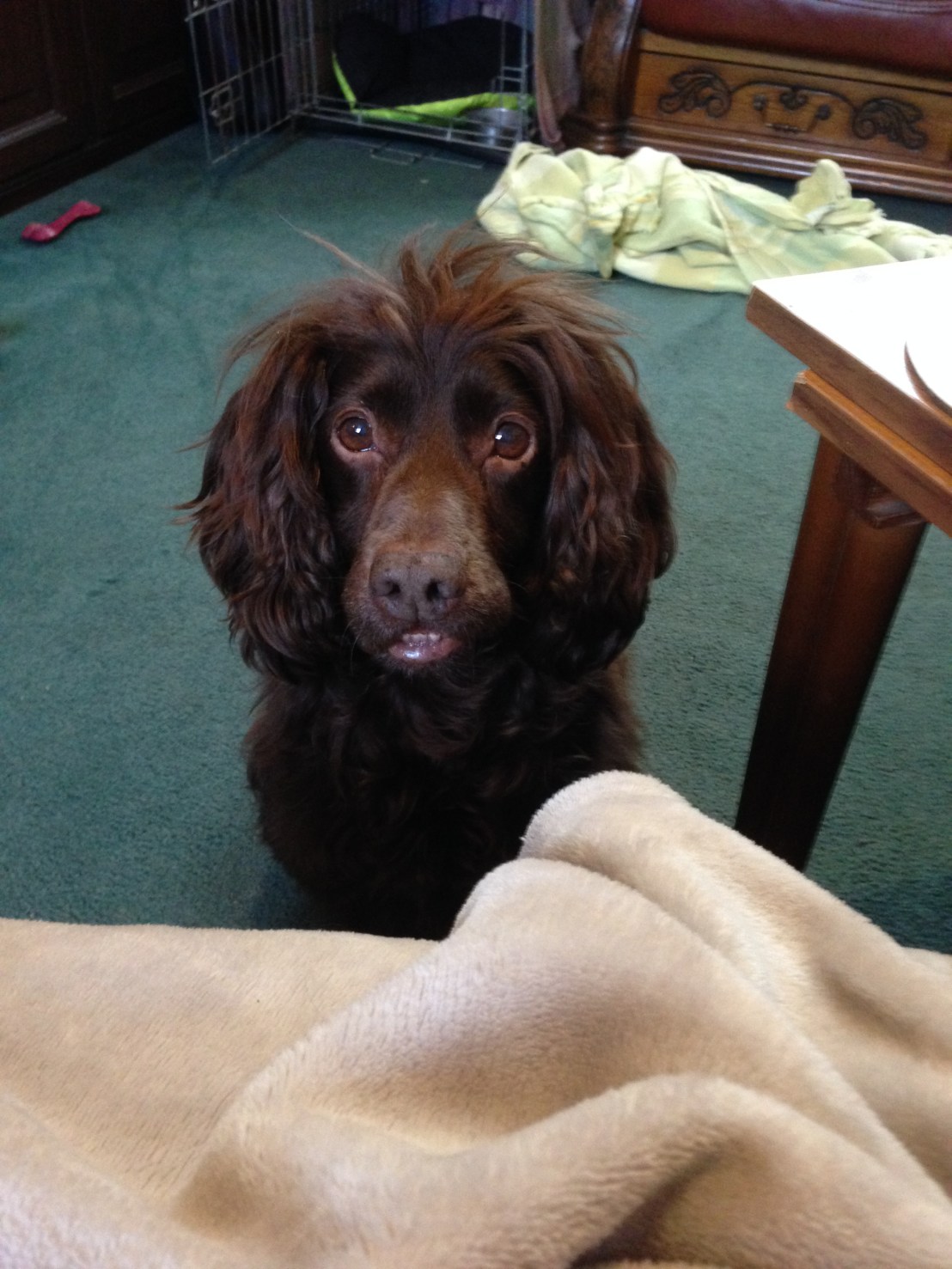
Our beloved Molly. Re-homed, not badly treated but was a working dog. Molly’s owner had a bad accident and his life fell apart.

Got rid of his other dogs and eventually, when boarding her with my friend, asked if she knew a good home for her. We’d just lost our dog and though he’ll never be replaced it’s not a home without a dog. So a friend and I went to see her – fat, scruffy, lived in an outdoor kennel. So, she came home with us.

She’d never set foot in a house so not house trained but SO clever. She quickly learned to toilet outside and now ASKS to go out. Nudges my elbow and if I stand up but don’t act immediately she paws my leg. How clever is that. Quickly learned how to negotiate stairs and not catch birds.

She knows exactly what she’s due – treats, dinner – and you can set your watch by her.

She is the most loving little girl and loves being cuddled. The thought of her being alone in the kennel, no company, frightened in storms, cold, not knowing when she’d see anyone breaks my heart.

The only problem, probably because of erratic feeding, or maybe survival instinct and not leaving scents for predators, is she eats her own poo and out walking I keep constant check or she’ll eat others too.

She had to be spayed and they found cancer last year and that meant a further operation.


She is a scavenger and I watch her constantly to see what she’s got in her mouth – in return for giving it up she expects a reward, she quickly caught on how to get treats!

Well enough, you know all about dogs and their ways – each one unique.
Keep well xxx

ooOOoo

 Dogs are so precious.

Thanks Jane!