Category: Health

And more care required

Yet another dog food alert.

Reminds me of that wonderful quip about London buses. The one about waiting for ages for a bus and then two come more-or-less together!

For it was just twelve days ago that I republished a dog food alert concerning bone treats; or as the FDA described it:

The FDA reports it has received about 68 reports of pet illnesses related to “bone treats”.

Bone treats differ from regular uncooked butcher-type bones because they’re processed and packaged for sale as “dog treats”.

Then just early last Saturday there was an email that warned:

Darwin’s Natural Pet Products of Tukwila, Washington, has notified its customers that it is recalling 2 lots of its Natural Selections raw dog food products because they have the potential to be contaminated with Salmonella bacteria.

To learn which products are affected, please visit the following link:

Darwin’s Dog Food Recall of December 2017

Please be sure to share the news of this alert with other pet owners.

Mike Sagman, Editor
The Dog Food Advisor

Here are the full details of that alert.

ooOOoo

Darwin’s Dog Food Recall of December 2017

December 8, 2017 — Darwin’s Natural Pet Products of Tukwila, Washington, has notified distributors that it is recalling select lots of its Darwin’s Natural Selections dog food due to possible contamination with Salmonella bacteria.
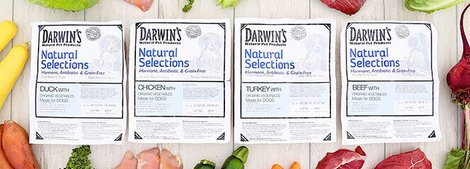
What’s Recalled?

The product was shipped to distributors between September and early October 2017.

The affected product includes the following:

  • Natural Selections Turkey Meals for Dogs
    Net wt 2 lbs
    Lot #39937
    Manufacture date 08/24/17
  • Natural Selections Duck Meals for Dogs
    Net wt 2 lbs
    Lot #40487
    Manufacture date 09/29/17

Why Is It Recalled?

Through testing, the company determined that the products listed above, have the potential to be contaminated with Salmonella.

About Salmonella

Salmonella is a bacterial organism that can cause serious and sometimes life-threatening infections in people, particularly young children, frail or elderly people, and those with weakened immune systems.

There is risk to humans from handling contaminated products, especially if they have not thoroughly washed their hands after having contact with the product or any surfaces exposed to these products.

Some healthy individuals who are infected may experience fever, diarrhea, nausea, vomiting and abdominal pain.

In rare circumstances, infections can result in the organism getting into the bloodstream and producing more severe or chronic illness.

According to the FDA, it is uncommon for healthy dogs to become sick from Salmonella.

However, dogs with weakened immune systems (such as puppies or older dogs) have a higher risk of becoming sick.

Pets with infections may be lethargic and have diarrhea or bloody diarrhea, fever, and vomiting.

Some pets will have only decreased appetite, fever and abdominal pain.

Further information about Salmonella can be found on the Food and Drug Administration website.

Message from the Company

In an email message to distributors, Darwin’s president, Gary Tashjian writes…

We have not received any reports from customers regarding these meals, and are taking these steps out of an abundance of caution.

However, if your pet has consumed the recalled product and has any of the above symptoms, please contact your veterinarian if they persist.

We are recommending that you inspect your inventory of Darwin’s meals to determine if you have any left from the lot listed above.

If any of the above product is still in your inventory, please take the following steps:

Write down the lot number, date/time of manufacture and quantity of any product from the above lot remaining in your inventory.

Dispose of the product by placing it in a plastic bag, then placing the bag in the trash in a secure manner.

Contact us at productsafety@darwinspet.com to confirm that you have taken the above steps and to arrange for replacement of any unused product.

Please note the following:

Your name and address (or customer number)

The date and time of manufacture and quantity of food from this lot that you have remaining in your inventory

Confirmation that you have disposed of it.

We anticipate that some of our customers will have questions or concerns regarding this matter.

We welcome the opportunity to talk with you about it.

Toward that end, we have set up a special toll-free number for you to call: 866-832-8319 (Monday through Friday from 6 AM to 6 PM and Saturday 7 AM to 3 PM Pacific Time).

Please note that we may not be able to talk with each of you at once, so we do ask that you be patient, particularly if your issue is not of an urgent nature.

We regret any concern and/or inconvenience that this causes you.

We are taking steps to reduce the opportunity for this to occur again.

What to Do

U.S. citizens can report complaints about FDA-regulated pet food products by calling the consumer complaint coordinator in your area.

Or go to http://www.fda.gov/petfoodcomplaints.

Canadians can report any health or safety incidents related to the use of this product by filling out the Consumer Product Incident Report Form.

Get Dog Food Recall Alerts by Email

Get free dog food recall alerts sent to you by email. Subscribe to The Dog Food Advisor’s emergency recall notification system.FDA

ooOOoo

As always, please share this with other dog lovers.

Life and Dogs

Or more specifically living a long and healthy life assisted by our dogs!

Recently the Care 2 site published a wonderful item about the real benefits of having a dog in our life when we are the ‘wrong’ side of (fill in your own number!).

So here it is for all you good people. I know without a doubt that there will be many nodding heads out there as the article is being read.

ooOOoo

Owning a Dog May Help You Live Longer

According to a 2016 Gallup poll, 44 percent of Americans own a dog. That is a pretty significant number. In fact, dogs are easily the most popular pet among US pet owners—sorry cat lovers. But what is it that makes dogs so great? Well, they’re fun loving, energetic, make excellent companions and… may actually help you live longer.

A recent Swedish study suggested that owning a dog may be linked to a reduced risk of cardiovascular disease and premature death. According to the study, owning a dog was associated with a 20 percent reduced risk of overall death and a 23 percent reduced risk of dying from cardiovascular disease. The study tracked 3.4 million people over the course of 12 years, including both dog owners and non-dog owners. Interestingly, the effects of dog ownership were most pronounced when subjects lived alone and were the sole caretakers for the dog, as they experienced a 33 percent reduced risk of death.

So what is it that makes dogs so beneficial to our health and our lives? Here are a few theories:

EXERCISE

Dogs need exercise as much as we do, but, oftentimes people prioritize their pup’s needs above their own. Many people would more readily take their dog on a walk than walk alone down the block to get some fresh air and take care of themselves. But lucky for us, exercising a dog means exercising yourself, too! It is well established that regular exercise reduces your likelihood of developing cardiovascular disease. A dog may provide irrefutable motivation to get you off the couch and on a walk, which could be saving your life.

OUTDOOR TIME

Along the same lines, dogs encourage us to get outside more. Being outside reduces stress, can increase vitamin D levels and promotes happiness. It can be easy for us to get lazy and stay snuggled up inside when the weather is less than ideal, but dogs need regular outside access. Our pups encourage us to get outside on a regular basis, which can have a small but significantly healthful impact on overall mood and stress levels.

BENEFICIAL BACTERIA

Having a dog is essentially like consuming a powerful probiotic every single day. Dogs go out in nature, roll in mud and grass, chew on sticks, sniff all sorts of bacteria-ridden substances and then track little microscopic bits of this array of bacteria back into our homes. But that may actually be a good thing. According to the New York Times, “Epidemiological studies show that children who grow up in households with dogs have a lower risk for developing autoimmune illnesses like asthma and allergies — and it may be a result of the diversity of microbes that these animals bring inside our homes.” The wider the spectrum of bacteria we subject ourselves to, the more balanced our own microbiomes will become. Since the microbiome can affect all areas of our health, including the likelihood of developing cardiovascular disease, the long term health benefits of diverse bacterial populations should not be underestimated. Dogs, and other pets, do an incredible job of strengthening our microbiomes, which has a profound impact on our health.

EMOTIONAL SUPPORT

There is something to said for the emotional stability a dog provides. Chronic stress has been linked to increased risk of cardiovascular disease and premature death, which makes it even more significant that dogs are great at reducing our stress and anxiety levels. They are like our little furry therapists—they are always there for us, through good times and bad, and they always love us indiscriminately. The companionship of a dog and a human is one of the purest, most mutually beneficial relationships one can have. It’s pretty powerful.

Of course, just giving your parents a dog doesn’t mean they will necessarily live longer—especially if they aren’t ‘dog people.’ But for those who are, next time you come home to a wagging tail and a wild tongue, be grateful to your pup pal for all the amazing things they bring to your life.

ooOOoo

Again and again one realises just how incredible it is to have a dog, or several!, in one’s life!

Beautiful animals!

Be careful!

Take notice regarding buying bones for your beloved dog!

The Dog Food Advisor service released this news yesterday:

The United States Food and Drug Administration has issued an important  warning regarding store-bought bone treats for dogs.

The associated treats have already caused numerous illnesses and even death in at least 15 dogs.

To learn which products are affected, please visit the following link:

FDA Warning: Store-Bought Bone Treats Could Kill Your Dog

Please be sure to share the news of this important recall event with other pet owners.

Mike Sagman, Editor
The Dog Food Advisor

If you go to that link you will read the following.

ooOOoo

FDA Warning: Store-Bought ‘Bone Treats’ Could Kill Your Dog

November 28, 2017 — The U.S. Food and Drug Administration has issued a warning regarding the purchase and use of store-bought “bone treats”. The FDA claims the danger goes beyond the risk of regular bones.

What’s a ‘Bone Treat’?

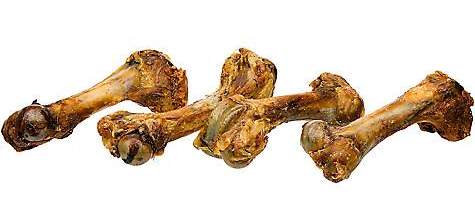
The FDA reports it has received about 68 reports of pet illnesses related to “bone treats”.

Bone treats differ from regular uncooked butcher-type bones because they’re processed and packaged for sale as “dog treats”.

Which Products?

A variety of commercially-available bone treats for dogs were listed in the reports including items described as:

  • “Ham Bones”
  • “Pork Femur Bones”
  • “Rib Bones”
  • “Smokey Knuckle Bones”

No specific brands are mentioned in the FDA bulletin.

The processed products may be dried through a smoking process or by baking. They may also contain other ingredients such as:

  • Preservatives
  • Seasonings
  • Smoke flavorings

According to Dr. Carmela Stamper, a veterinarian in the Center for Veterinary Medicine at the FDA…

“Giving your dog a bone treat might lead to an unexpected trip to your veterinarian, a possible emergency surgery, or even death for your pet.”

So, if you’re planning to give your dog a stocking full of bone treats this holiday season, you may want to reconsider.

Illnesses Reported

Illnesses reported to FDA by owners and veterinarians in dogs that have eaten bone treats have included:

  • Gastrointestinal obstruction (blockage in the digestive tract)
  • Choking
  • Cuts and wounds in the mouth or on the tonsils
  • Vomiting
  • Diarrhea
  • Bleeding from the rectum
  • Death

According to FDA, approximately 15 dogs have reportedly died after eating a bone treat.

How Widespread Is the Problem?

To date, reports submitted by pet owners and veterinarians have included about 90 dogs. Some reports included more than one dog.

In addition, FDA has received 7 reports of product problemssuch as…

  • Moldy-appearing bones
  • Treats splintering when chewed by the pet

How to Keep Your Dog Safe

FDA has included the following tips to help keep your dog safe:

  1. Chicken bones and other bones from the kitchen table can cause injury when chewed by pets, too. So be careful to keep platters out of reach when you’re cooking or the family is eating.
  2. Be careful what you put in the trash can. Dogs are notorious for helping themselves to the turkey carcass or steak bones disposed of there.
  3. Talk with your veterinarian about other toys or treats that are most appropriate for your dog. There are many available products made with different materials for dogs to chew on.

What to Do?

Dr. Stamper adds the following advice…

“We recommend supervising your dog with any chew toy or treat, especially one she hasn’t had before. And if she ‘just isn’t acting right,’ call your veterinarian right away!”

U.S. citizens can report complaints about FDA-regulated pet food products by calling the consumer complaint coordinator in your area.

Or go to http://www.fda.gov/petfoodcomplaints.

Canadians can report any health or safety incidents related to the use of this product by filling out the Consumer Product Incident Report Form.

Get Dog Food Recall Alerts by Email

Get free dog food recall alerts sent to you by email. Subscribe to The Dog Food Advisor’s emergency recall notification system.

ooOOoo

Please share this with other dog owners and carers who might not have seen the original announcement.

We must do everything we can to keep our dogs from harm!

Happy Birthday, my darling Jeannie.

Philosophising about this ageing lark!

A few days ago Jean and I listened to an episode from the BBC Radio 4 series The Art of Living. Or as the home page of the programme’s website explains, The Art of Living is a …

Documentary series revealing how engagement with art has transformed people’s lives.

Anyway, the episode that we listened to was a delightful 30-minute discussion between Marie-Louise Muir and the Belfast-born poet Frank Ormsby. The reason we selected this episode to listen to in particular is revealed by republishing how the BBC introduced the programme. (For Jean was diagnosed with Parkinson’s Disease in December, 2015.)

Frank Ormsby’s Parkinson’s

The Art of Living

When the poet Frank Ormsby was diagnosed with Parkinson’s Disease, his response was unexpected. He embarked on a newly fertile creative period, documenting his experiences and finding a voice in his poetry that he was beginning to lose in his daily communications.
His first act was to search Google – for jokes. “Which would you rather have, Parkinson’s or Alzheimer’s. Obviously Parkinson’s! I’d rather spill half my pint than forget where I left it.”

As he discusses with Marie-Louise Muir, the illness has changed him. It’s mellowed him. After a career as a school teacher, his daily life is now quieter and more solitary. There’s a poetry, almost, in his pauses and silences.
Frank belongs to the generation of Northern Irish writers that has followed in the footsteps of Seamus Heaney and Michael Longley. His medication, he believes, has aided his creativity. But it has also induced hallucinations. He finds himself sitting on his own in his study but surrounded by people, by the ghosts of his mother-in-law and unidentified visitors. And he’s also haunted by a fear that the earth will open up and swallow him.
But if you ask how he’s doing, he writes, “I’ll tell you the one about ‘parking zones disease’.
I’ll assure you that the pills seem to be working”.

Photo credit: Malachi O’Doherty, With readings by Frank himself and Ciaran McMenamin from The Darkness of Snow. Produced by Alan Hall. A Falling Tree production for BBC Radio 4.

That wonderful joke offered by Frank, this one: “Which would you rather have, Parkinson’s or Alzheimer’s. Obviously Parkinson’s! I’d rather spill half my pint than forget where I left it.” comes a little after the 5-minute point in the interview. I strongly encourage you to listen to the full interview. Here’s the link to the radio programme.   

Jean and I were sitting up in bed a couple of mornings ago reflecting on how recent it has been since we ‘got it’ in terms of what becoming old really means. For me and Jean, for different reasons, it is only in the last twelve months that ageing, the process of becoming older, the decline in one’s faculties, and more and more, has been truly understood. Yes, before then of course one understood that we were getting old. But it was an intellectual understanding not the living it on a daily basis understanding we now experience.

Back to Frank Ormsby. Or rather to a feature in the Belfast Telegraph published in 2015.

Frank Ormsby: Life at Inst was very different from my upbringing

Leading Belfast poet and former Inst. Head of English Frank Ormsby on his tough Fermanagh upbringing, losing his father when he was 12 and how humour has helped him cope with a Parkinson’s diagnosis.

Write stuff: Frank Ormsby at his home in north Belfast

March 23, 2015

As Frank Ormsby sits in the study of his beautifully-appointed 1930s home in north Belfast there is no hint of his much more austere upbringing. As befits the workspace of a poet and long-time English teacher at one of Belfast’s leading schools, the bookcases that line the walls are crammed with a wide range of literature.
It could not be a more different environment from the rural home where he grew up just after the Second World War.

When Frank was born in 1947, his father Patrick was already in his 60s. “I remember him as an old, grey-haired man”.

It was Patrick’s second marriage. His first had produced 10-12 children. “I was never totally sure of the exact number”, Frank recalls.

“I never met them as they had dispersed to Scotland and other places by the time my father, by then a widower, had married my mother. As far as I know the last one of them died last year.”

Frank’s home was about a mile and half outside Irvinestown. His mother Anne had worked on a relative’s farm – “she could build hay or cut turf as well as any man” – and his father as a farm labourer who occasionally sought work in the factories in Scotland.

“The conditions in which we lived were lacking in luxury. We had no running water. We had to carry it in buckets from a well half a mile away. There was no electricity and it was a long time before we even had a radio, or wireless as it was called then,” Frank says.

You may read the rest of that article here.

Here’s one of Frank’s poems that was published by The New Yorker in March, 2013.

BOG COTTON

By Frank Ormsby

They have the look
of being born old.
Thinning elders among the heather,
trembling in every wind.
My father turns eighty
the spring before my thirteenth birthday.
When I feed him porridge he takes his cap off. His hair,
as it has been all my life, is white, pure white.

Maybe that’s how it is. Having the look of being born old!

But there’s one thing that I treasure beyond gold itself. Having the fortune to be living out my final days, however many there are, in the company of my beautiful Jeannie and all the loving dogs around me.

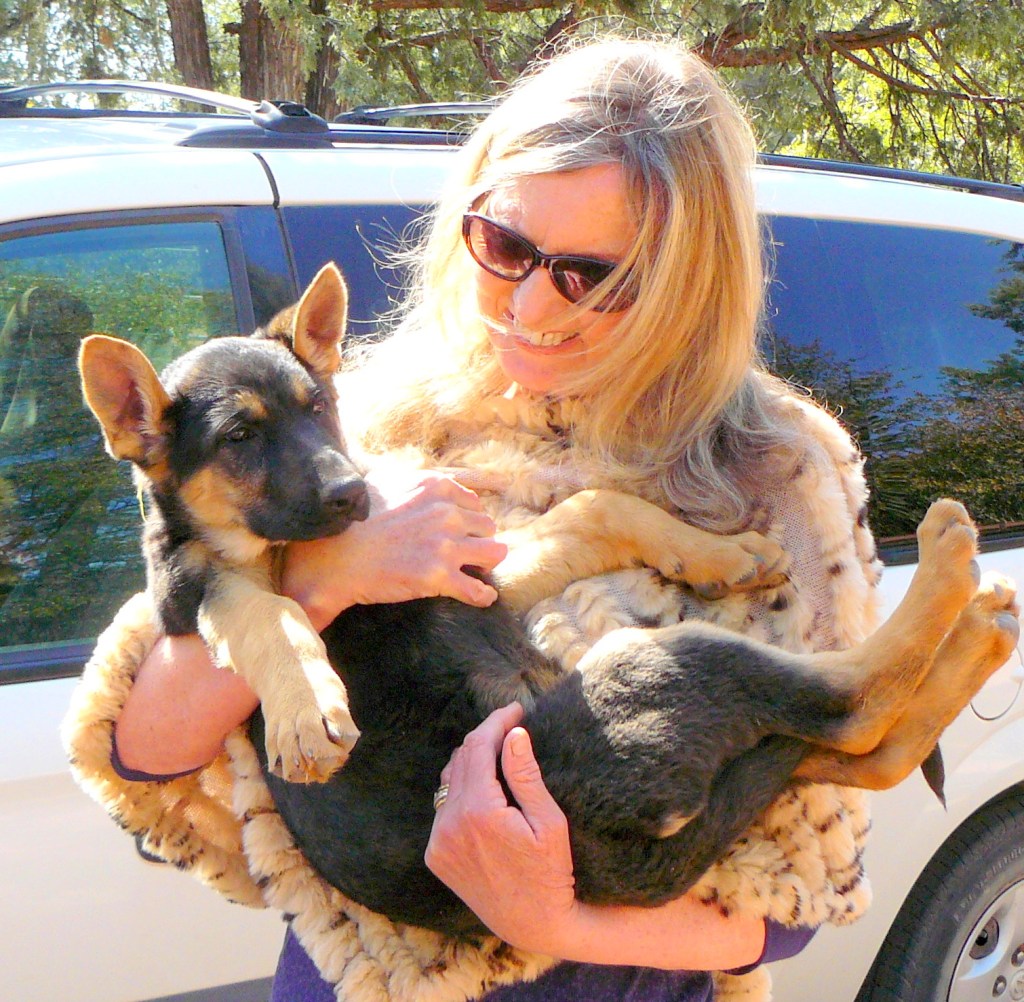
Puppy Cleo coming home – April 6th, 2012


Happy Birthday, sweetheart!

Our life-savers – literally

I am speaking of the dogs that saved a Canadian woman from certain death.

This story has been widely reported.

I first saw it as a prominent news item on the BBC News website:

ooOOoo

Three dogs help injured woman survive Canadian wilderness

24 November 2017

The search for Annette Poitras and her dogs lasted three days. COURTESY COQUITLAM RCMP

A Canadian dog walker could not have survived over two days in the wilderness without the help of her border collie, a boxer and a puggle.

Annette Poitras, 56, was walking the three dogs on Monday in the British Columbia backcountry when she fell, injured herself and lost her phone.

She was rescued on Wednesday afternoon after a long hunt by Coquitlam search and rescue.

Her husband says the three dogs helped Poitras stay alive during the ordeal.

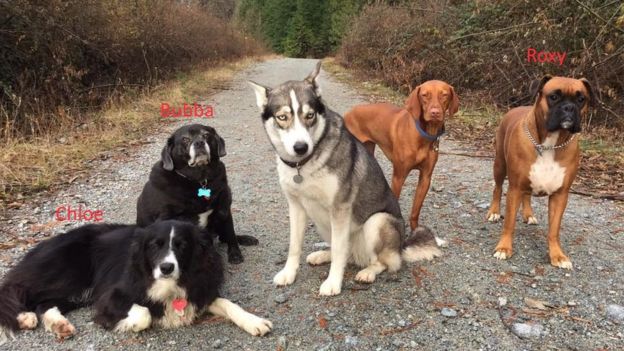
Marcel Poitras told Global News that his wife and the dogs – a collie called Chloe, a boxer named Roxy, and Bubba, a pug-beagle mix – took care of each other over two days and two nights, with no supplies and periods of “torrential” rain.

ooOOoo

Newsweek also carried the story on November 25th.

(Continuing on from where I left the BBC report.)

ooOOoo

Her husband, Marcel Poitras told Global News that her three dogs—a collie called Chloe, a boxer named Roxy, and Bubba, a pug-beagle mix—helped her stay alive during the ordeal, during which Poitras had no supplies and endured torrential rain.

He said that she saw one of the dogs dig a hole underground to stay warm, and did the same.

“One of them was cuddling [her] and one of them was on guard and the other one was looking for food,” he said.

She also helped the dogs, covering the short haired boxer with her coat after she noticed it shivering during heavy rainfall on their second night.

He said the dogs did not leave her side.

Poitras was rescued after a two day search by the RCMP, which used helicopters and 100 volunteers to scour the countryside near Eagle Mountain for traces of her.

Some rescuers finally heard faint cries for help and loud barking and tracked down Poitras and the dogs to an area described by the Mounties as “well outside the normal trail system”, according to The Surrey Now Leader.

The rescue team said she was “alive and in good condition” in an area off trail, in dense bush and swamp.

CBC reported Friday that two of the dogs visited her hospital bedside Friday.

Poitras is expected to be released from hospital later in the week. Marcel said that after his wife is released from hospital they are hoping things will get back to normal.

ooOOoo

Back to the BBC item or more specifically two more photographs included by the BBC in their report of the incident.

Chloe, Bubba and Roxy stayed with Annette Poitras for the two days. Courtesy COQUITLAM SAR HANDOUT

oooo

Chloe, Roxy and Bubba being rescued from the bush. COURTESY NORTH SHORE RESCUE

In the words of Mr. Poitras, the husband of the rescued woman, “He says they are looking forward to “quiet, peace, walking dogs, visiting family” now the ordeal is over.”

Dear wonderful Chloe, Roxy and Bubba – life-savers all three of them!

Lucky Mr. & Mrs. Poitras.

What would we do without our dear dogs!

Don’t try this at home!

All it takes is a moment’s inattention.

The reason I am posting this is simply because it might help someone else out there.

I go bike riding three times a week; weather permitting. Usually with a group from close by: Jim; Richie; Pam; Dordie; Ken.

Two days ago there was a break in the wet weather and Jim rang round seeing who was up for a ride. It turned out that four of us could go riding: Jim, Richie, Dordie and myself.

We decided to ride down Hugo Road, turn left onto the Merlin-Galice Road, follow that right to the end of Galice Road, very close to Junction 61 on Highway I-5, then turn left along Monument Drive, left again down past Grants Pass airport then back on to the Galice Road this time heading west back through Merlin to meet up with the foot of Hugo Road and then home.

All had gone very well for all four of us and it was a great ride and already we had some 14 miles under our belts.

Coming back into Merlin there is a railway track that crosses Galice Road. It has quite a wide shoulder to stop us cyclists having to mix it with the road traffic. But the tracks across that shoulder are not the smoothest of rides for a cyclist.

I did my best to cross the tracks square on but didn’t manage it. My front tyre slipped on the wet, metal rail and in that instant I lost my balance. Tried to recover but just a few yards later went down falling heavily on my left side and knocking myself out.

Luckily I was not riding on my own (Lesson Number One) and Jim and the others were quick to check me out. Jim said later that many drivers stopped including an off-duty medic who quickly summoned the ambulance.

But I was still out!

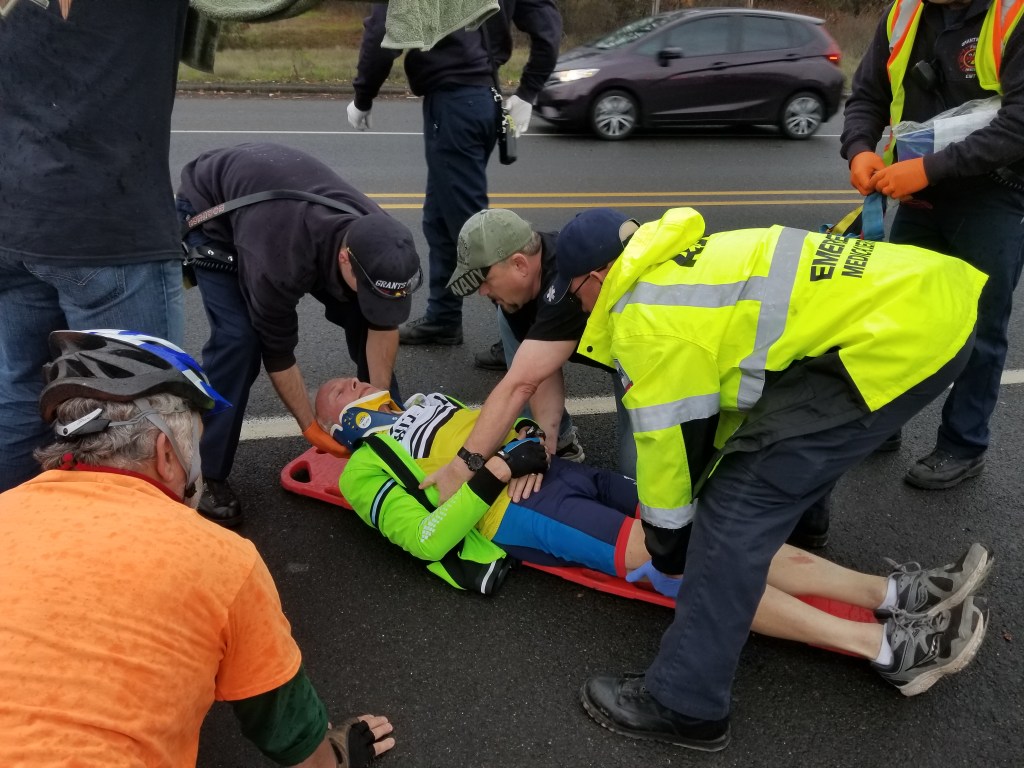
Dordie had the presence of mind to capture what was going on and it is her photographs that are in today’s post.

I continued being unconscious and later Jim said that I was out for eight minutes.

I was placed in a gurney with a neck brace because the medics were concerned that I might have damaged my neck.

Then carried across to the ambulance.

 I only properly regained consciousness when the ambulance was speeding its way to Three Rivers Hospital in nearby Grants Pass.
The attendant caring for me in the ambulance remarked how lucky I was to have been wearing a safety helmet, for had I not been: “We wouldn’t be taking you to the accident ward!”

Plus, I realised that the other stroke of fortune is that I was riding with a group of friends. Had I been riding alone, something I have been doing, I might not have been helped in such a prompt and timely way.

So that’s my lesson for today! If you ride a bicycle don’t go out alone and never, ever ride without a safety helmet!

Oh, nearly forgot! Lesson Number Two: Don’t ride across wet railway tracks – Get off and walk!

UPDATE 14:20 Friday, 24th

In view of the many helpful ideas and suggestions I thought it would be good to present the follow information.

When I was discharged from the Emergency Department at our local Three Rivers Medical Center, I was given 4 pages of guidance and information. Page 3 of those notes included:

WHEN SHOULD I SEEK IMMEDIATE MEDICAL CARE?

You should get help right away if:

  • You have confusion or drowsiness.
  • You feel sick to your stomach (nauseous) or have continued, forceful vomiting.
  • You have dizziness or unsteadiness that is getting worse.
  • You have severe, continued headaches not relieved by medicine. Only take over-the-counter or prescription medicines for pain, fever, or discomfort as directed by your health care provider.
  • You do not have normal function of the arms or legs or are unable to walk.
  • You notice changes in the black spots in the center of the colored part of your enemy (pupil).
  • You have a clear or bloody fluid coming from your nose or ears.
  • You have a loss of vision.

Thought it might be useful including those.

Plus when I saw the pharmacist at our local RiteAid, he took a look at the wounds on my left knee and recommended a transparent dressing; namely a product called Tegaderm. It is a product made by 3M and more details may be read about it here.

Thanks everyone for you caring responses!

A plea for this planet!

I feel compelled to ‘bang the drum’!

The recent news that many scientists have signed an open letter warning about how soon it will be too late to “save Earth” has been widely broadcast; not that this stops me from republishing the version of the news story that I read on the EarthSky blog site.

Here it is.

oooooh

Scientists warn: Soon it will be too late to save Earth

By Eleanor Imster in EARTH | HUMAN WORLD | November 16, 2017
More than 15,000 scientists in 184 countries have signed a letter urging the world to address major environmental concerns. “Soon it will be too late to shift course away from our failing trajectory, and time is running out.”

A letter to all of us, signed by more than 15,000 scientists (and counting) in 184 countries, warns that human well-being will be severely jeopardized by continuing trends in environmental harm, including our changing climate, deforestation, loss of access to fresh water, species extinctions and human population growth.

Entitled World Scientists’ Warning to Humanity: A Second Notice, it was published in the international journal Bioscience on November 13, 2017.

In 1992, more than 1,700 scientists signed a World Scientists’ Warning to Humanity published by the Union of Concerned Scientists. But global trends have worsened since 1992, the authors wrote in the new letter. In the last 25 years, trends in nine environmental issues suggest that humanity is continuing to risk its future.

Read the letter here.

The scientists wrote:

Soon it will be too late to shift course away from our failing trajectory, and time is running out. We must recognize, in our day-to-day lives and in our governing institutions, that Earth with all its life is our only home.

The letter also says …

By failing to adequately limit population growth, reassess the role of an economy rooted in growth, reduce greenhouse gases, incentivize renewable energy, protect habitat, restore ecosystems, curb pollution, halt defaunation, and constrain invasive alien species, humanity is not taking the urgent steps needed to safeguard our imperiled biosphere.

The article was written by an international team led by William Ripple of Oregon State University led the international team of scientists who created the letter. Ripple said in a statement:

Some people might be tempted to dismiss this evidence and think we are just being alarmist. Scientists are in the business of analyzing data and looking at the long-term consequences. Those who signed this second warning aren’t just raising a false alarm. They are acknowledging the obvious signs that we are heading down an unsustainable path. We are hoping that our paper will ignite a wide-spread public debate about the global environment and climate.

Progress in some areas — such as a reduction in ozone-depleting chemicals and an increase in energy generated from renewable sources — shows that positive changes can be made, the authors wrote. There has been a rapid decline in fertility rates in some regions, which can be attributed to investments in education for women, they added. The rate of deforestation in some regions has also slowed.

The warning came with steps that can be taken to reverse negative trends, but the authors suggested that it may take a groundswell of public pressure to convince political leaders to take the right corrective actions. Such activities could include establishing more terrestrial and marine reserves, strengthening enforcement of anti-poaching laws and restraints on wildlife trade, expanding family planning and educational programs for women, promoting a dietary shift toward plant-based foods and massively adopting renewable energy and other “green” technologies.

Scientists who did not sign the warning prior to publication can endorse the published warning here.

Bottom line: A letter entitled World Scientists’ Warning to Humanity: A Second Notice, urging the world to address major environmental concerns. was signed by more than 15,000 scientists in 184 countries.

Read more from Oregon State University

ooOOoo

As is the way with this modern inter-connected world it was but a moment to track down said William Ripple, find his email address and ask him what he recommended as the top things that you and I should be doing now.

Not just for you and me but for all the animals as well on this very beautiful planet.

Bill’s reply is part of tomorrow’ post. See you then!

Eating for health

This time nothing to do with our dogs!

In a reply to Colette following my post of last week Caring for animals, I wrote:

Jean is on a diet that is predominantly fruit and vegetables as part of slowing down the progression of her Parkinson’s disease. The diet is essentially a no-dairy, no-grain, no-meat diet to eliminate the risk of any gut inflammation. She is advised by a professional nutritionist here in Grants Pass, OR. I follow along with Jean motivated to slow down my own cognitive decline.

Colette then responded to my reply with quite extensive details of her own diet. Her reply opening:

I have some food sensitivities that started my dietary changes a number of years ago. I found I was allergic to eggs after struggling with severe joint pain that doctors couldn’t explain. Then I began to find that a few other things were problematic including gluten, also prompting dietary change. The animal protein side came into sharper focus during a moment of epiphany at an elephant sanctuary and I started a vegetarian diet. However, I soon switched to a completely (almost except for some contamination in the odd thing now and again) vegan diet.

I am healthier, my cholesterol dropped from a total of 212 mg/dlto 135mg/dl and I have more stamina, fewer infections, colds and illness. (Nothing terrible to put me to bed since I became Vegan).

I do try to get a balance of a variety of fresh fruit and veg, protein and fats in my diet.

… that was then followed by her describing what a typical day looked like in terms of what she eat.

I offered to describe what Jean and I eat.

Fundamentally, Jean was advised to have a diet that reduced the chance of her having any gut inflammation but, if she did, a diet that would bring that inflammation to a close. All to do with Leaky Gut Syndrome and how the brain can be negatively affected.

So …

Breakfast

  • Two tablespoons of milled flax,
  • One tablespoon of hemp hearts,
  • A sprinkling of chia seed,
  • Prunes, banana, dried apricots, walnuts, berries when available,
  • Coconut milk or almond milk

Lunch

  • Mainly salad greens, raw vegetables, tomatoes, avocado, some canned herring,
  • Mixed fruits, as in oranges, apples,
  • ‘Naked Green’ smoothie

Dinner

  • Mixed vegetables,
  • Baked chicken breast,
  • Green salad with tomatoes and avocado,
  • Almonds or other nuts

Drinks during the day

  • Herb teas, ‘V8’ juice, green tea, ‘Naked Green’ smoothies, almond milk.

We are also taking a course of Juice-Plus tablets; a recommendation from our local nutritionist.

Anyway, that’s enough from me for today.

If there’s good interest in me sharing some of the many links to this whole area of diet, the gut and how it can affect the brain, then do sing out! (But I have no professional knowledge; will just report our findings!)

oooo

Wow! What an incredibly useful link thanks to Colette. I am referring to the NutritionFacts website.

Then how easy it was on that site to find a video specifically about diet and PD.

Jean and I are removing chicken and fish from our diet immediately; in other words going vegan.

THANK YOU!

Unconditional love

Another powerful guest post from Linley.

Last October 11th, I published a guest post that had been sent in by Linley Achtenhagen. The published post was called Life with Luna and was incredibly well-received.

So here’s another guest post from Linley that I have no doubt will be equally well-received.

ooOOoo

Unconditional Love

by Linley Achtenhagen, October 29th, 2017.

Up until January 12, 2017, I had never lost a loved one.  I grew up with three grandparents, one grandpa passing away shortly after I was born, so I was pretty lucky to grow up with three out of four grandparents.  Sure, I had been to funerals for distant relatives I had met once or twice or my friend’s grandparents, and I grieved for them because they were hurting and I hate seeing people hurt.  I, however, had no idea what that pain felt like until one of my best friends passed away in a tragic accident while she was on a family vacation in Mexico.

Abbey Connor, my sweetest, sassiest, most beautiful friend and fellow UW-Whitewater student, taken away far too soon.  Getting the news that she was gone rocked me to the core.  I had just celebrated New Year’s Eve with her a few short weeks ago, and now I was never going to see her again.  How is that possible?  Why would this happen to her?  I had absolutely no idea how to handle this.  Going from losing no one to losing one of my best friends so suddenly was something I was not prepared to deal with but is anyone?  I cried and cried and cried and listened to people tell me it was going to be okay, but those words didn’t mean anything.  Of course, I appreciated the support of my friends and family, but nothing made the pain in my chest go away when I thought of Abbey.  I hurt so much for her family, if I felt this horrible, I couldn’t imagine how her family felt.  The only thing that I found comfort in was the one thing that couldn’t tell me they were sorry and that it was going to be okay, Luna.

There is no doubt in my mind that Luna knew I was hurting.  I am convinced that dogs have a 6th sense and are much more aware of our emotions than we give them credit.  Luna would just lay with me while I cried and her presence alone eased that pain.  My crazy and energetic dog would just sit and let me pet her for as long as I needed to.

Not even a month later, February 11th, our family dog, Will, passed away after a long battle with cancer.   For fellow dog lovers, you know how hard it is to let your furry companions go.  We had Will since he was a puppy, so he grew up with my siblings and me.  He was my four-legged brother and letting him go ripped my healing heart wide open again.  This time, my whole family was hurting, including Will’s sister, Grace.  Will and Grace had never spent a day apart; they slept in their dog crate together, chased chipmunks together, protected my family together, and she just couldn’t understand where he went.  We couldn’t explain to her that he wasn’t coming back and that made the pain that much worse.  The one thing that brought a smile to everyone’s face in the days, weeks, and months to come was Luna.  She would grab her squeaker toy and run up to everyone shaking and squeaking it just begging for someone to play tug with her. She would light up the room and bring a smile, even if only for a second, to our faces. She was helping us cope, and she didn’t realize it.

Two months later, April 13th, my grandma passed away.  I couldn’t believe that I had to deal with another death.  I was still grieving Abbey and Will’s passing, and now I had another death to try and cope with.  My grandma lived in Florida for half of the year, so while we weren’t the closest, she was my grandma, my dad’s mother, and of course, I loved her.  I hurt for my dad as he had to say goodbye to his mom.  I hurt for all of my cousins, aunts, and uncles.  I hurt for my mom and my siblings and I.  We had never lost a grandparent, and now we had to deal with this while still grieving Will’s passing, I still grieving Abbey’s.  It was such an overwhelming and stressful time, and once again the one thing that got me through each day was Luna.  No matter how hard of a day it was, each night when I crawled into bed, Luna would lay right next to me, her head on my chest and just be there.  I cannot put into words what that feeling is like.

John Grogan, author of Marley and Me, (if you haven’t seen the movie or read the book, add it to your list) wrote one of my favorite quotes.  He said, “A dog doesn’t care if you’re rich or poor, educated or illiterate, clever or dull.  Give him your heart, and he will give you his.”  This quote is undeniably accurate and I saw this proof in the months to come after I lost all of these loved ones.  Luna didn’t care if I didn’t have time to take her for a long walk, or I didn’t want to get out of bed, or I didn’t have the energy to play fetch with her that day, she was there for me and comforted me every moment.  She knew I loved her, and that was enough.  The most comforting part of all of this is that Luna didn’t even know she was doing it.  If more people loved each other like dogs love their humans, this world would be a much better place.

ooOOoo

Linley’s closing sentence is perfect and requires nothing more from me to close today’s post than for me to repeat her words: “If more people loved each other like dogs love their humans, this world would be a much better place.

Settling in to a new home

Anyone who emails me this is impossible to resist!

Hi,
I work on behalf of petsbyplane.com, and I recently noticed your blog while I was looking around for a few resources on pets and taking pets by plane!

I know sometimes it’s hard to create new content all the time and sometimes you probably find yourself needing blog content at learningfromdogs.com

I’m looking for high-quality sites like yours that I can contribute quality articles to in order to continue to build my profile, win a Pulitzer Prize and eventually take over the Universe.

Well another person trying to take over the Universe seems to fit the pattern of these present times so what the hell!

ooOOoo

Seven Techniques to Create a Safe New Home for Your Dog

by John Stuart.

Whether you are moving houses and you have to transport your dog or you are bringing a new dog into your house, you have to be prepared. Dogs can easily be stressed out by changes. They can become anxious, which will impact their behavior and even their eating habits. By doing your research beforehand and knowing how to handle various situations, you can be fully prepared on moving day and you can ensure your dog will enjoy his new home from the very first day.

1. Think about Transportation
If you’re bringing a dog home from a shelter, you will need to pick him up with a car and a dog crate. It’s strongly recommended to put your dog in a crate while you are driving since you don’t know yet how it will react to so many new things and environments. This way, you will be able to focus on driving and getting to your destination safely.

If, on the other hand, you are moving houses with your pet, you have to decide if you want to use a professional pet moving company or do it all by yourself. Moving to a different state or country will imply travelling by car or plane. Depending on the situation, you have to get informed about vaccines, plane tickets and necessary documents.

2. Keep Your Dog away from the Commotion on Moving Day
To keep your dog stress-free, consider taking him to a friend’s house while you pack up your last things or move out furniture. By keeping him away from the commotion, you are shielding him from unnecessary stress. Make sure not to pack all of your dog’s favorite toys. Keep a few around at all times as these will comfort and soothe your dog during anxious hours.

3. Make Sure the New Home Is Ready to Receive Your Dog
Moving with your pet is stressful. You have to take care of dozens of things at the same time. An important thing you shouldn’t forget to do is to check the new house is prepared for your dog. If you are renting, make sure the landlord accepts pets. You will probably have to make a deposit and even pay monthly rent for your dog. If the house has a backyard, ensure there are no gaps in the fence or other hazardous plants or objects. Inspect the rooms as well and eliminate dangerous things such as exposed wires, shabby furniture, old cans of paint or cleaning products.

4. Keep a Schedule
Dogs thrive on routine, so keep that in mind even when moving houses. You might not be able to go back to your schedule on the first day, but try to get back on track as soon as possible. Feed your dog at the same hours and take him for walks as you used to before.

5. Take it Easy
New surroundings can be overwhelming for your dog. There are new places, smells, sounds and people to get used to. He might be anxious at first, and even refuse to eat, but he will easily adjust to the new settings in his own time. The best thing you can do through this entire experience is to be very patient and talk encouragingly to him. If you want to start training him, start on day one. Be generous with the treats and occasionally repay good behavior with a new toy.

When you’re introducing your dog to the neighbors and showing him around new places, always keep him on a leash. He might be too excited to contain his happiness and you never know how he will react.

6. Find a Veterinarian Before Moving
You should ask your veterinarian for recommendations before moving. Get in touch with your new vet prior to the move and make sure they are fully equipped to take care of your pet. It’s essential to find a trustworthy vet before moving so you can have the peace of mind that your dog will be in good hands no matter what happens.

7. Give Your Dog a Lot of Attention and Love
Even if moving occupies your whole time, you should always make time to play with your dog and show him that he is loved. This will help him cope better with the situation and will help calm him down. If you would like to train your dog but don’t know how, reach out to a professional trainer. Give your dog the attention he needs and he will have a smoother transition and adjust to the new environment in no time.

ooOOoo

So what part of the Universe do you intend to start taking over first, John?