Dan sent me a link back last November and I have only got around to looking at it! It concerns the American Kennel Club and the sub-heading above is the greeting one gets when one goes to the home page of the AKC.
In the spirit of the holiday season, let’s stop for a moment to acknowledge the joy that the sport of conformation gives us every week of the year, and the people who contribute to that joy. Let’s be thankful for:
Judgeswho are students of their dog breeds, know their standards, smile, and don’t look up the lead to make their decisions.
Ring stewards who can multi-task, and those who are organized, kind, patient, and not easily flustered.
Show photographers who are quick but not careless, possess good people skills, are timely with their delivery, and tell you to fix a topline or rear leg before it’s too late.
Professional handlers who are honest with clients, level with them as to how far a dog can or should go and what it will cost, and who present their dogs competitively without throwing the breed standard out the window.
Best in Show, Best Bred By Exhibitor in Show, Hound Group First, BBE Hound Group First, Best of Breed, Best Bred By in Breed: GCHP CH Pinnacle Tennessee Whiskey (Whiskey) (Whippet); 2018 AKC National Championship presented by Royal Canin in Orlando, FL.
Veterinarians who appreciate and respect good breeders, don’t trash purebreds because “designer dogs” might be the revenue-generating flavor of the month, and never make puppy buyers choose whose advice to follow when it comes to breeders versus vets.
Mentors with a gift for teaching, who are secure enough to know when to let go, can appreciate a few different styles within a breed, and have no agenda beyond helping newcomers learn the breed that they love.
Stud dog owners who are fair, recognize their male isn’t right for every bitch, and care about where the puppies will be sold.
Co-owners who back dogs offering quality and type, and not just showmanship, since these are the animals that could influence the look of a breed for years to come.
Club members who welcome newcomers, find them jobs to do, and treat them with respect, knowing they are the future of our sport.
Breeders who are experienced without being jaded, generous with their knowledge, and willing to pay it forward to others in the world of dogs.
Allan Reznik has been an Afghan Hound fancier since the early 1970s and also owns and exhibits Tibetan Spaniels. He is an award-winning journalist and broadcaster, who has served as editor-in-chief of several national dog publications. He appears regularly on radio and TV discussing all aspects of responsible animal ownership. Reznik is an AKC-approved judge of Afghan Hounds, Cavalier King Charles Spaniels, and Tibetan Spaniels; on permit to judge a number of other Hound breeds.
ooOOoo
This is a brilliant report albeit a little old but still very good read.
It reminds me to take more notice of what the AKC publish; this is after all a blog primarily about dogs!
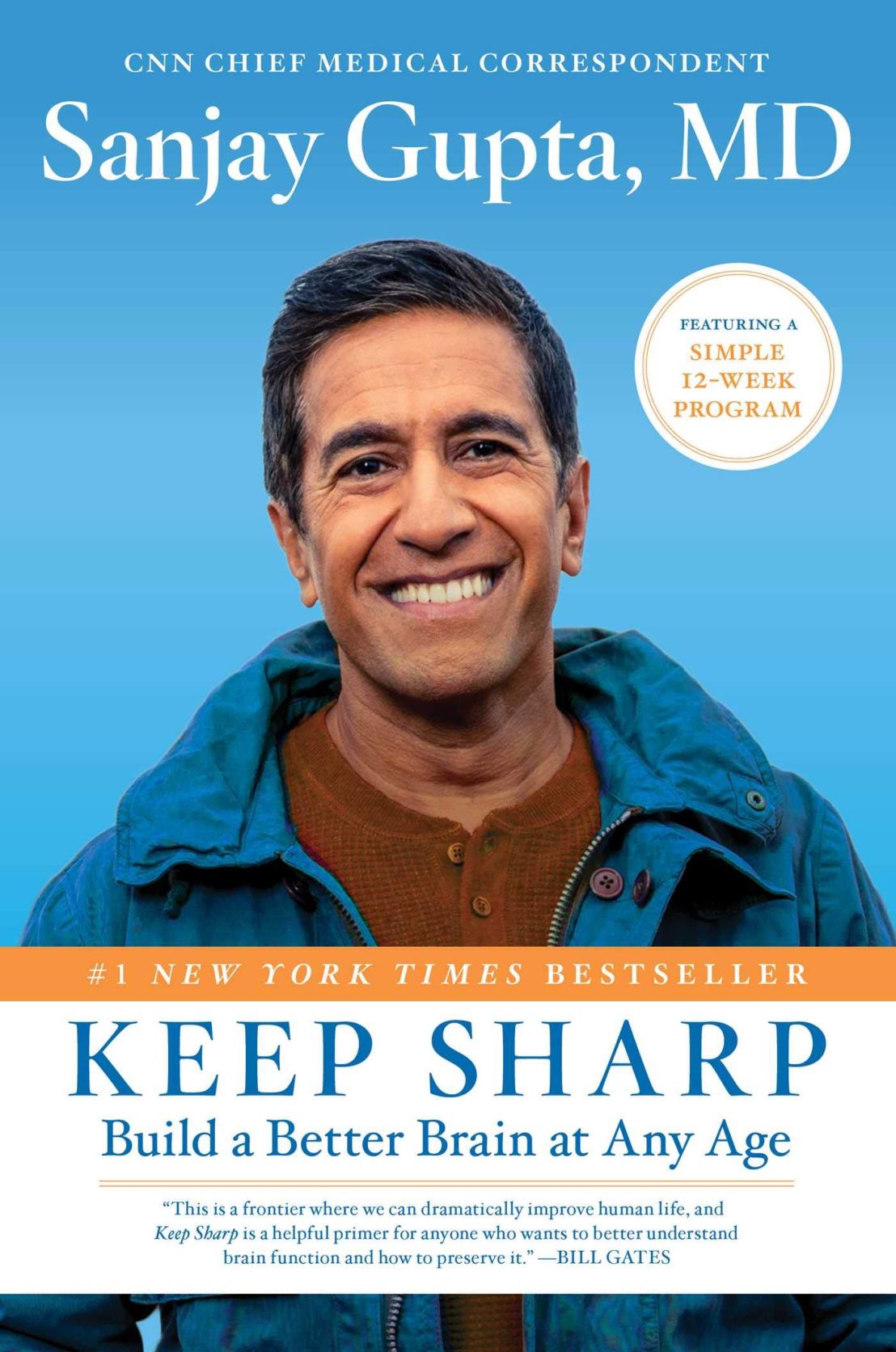
There is so much to speak about in this book, and anyone the ‘wrong’ side of 50 should consider purchasing the book. Really! I include the link to the book on Amazon. (And nothing in it for me I have to say.)
I want to concentrate on two items of note.
The first is that given the right diet, primarily a Mediterranean plant-based diet, and plenty of exercise, it is possible for the brain to rejuvenate new brain cells. Yes, that’s correct! New brain cells!
The second item of note is over on page 194. Let me quote:
Dr. Waldinger’s findings are attractive because they debunk commonly held myths about health and happiness. The findings are based on a comprehensive review of the participants’ lives and biology.
and two sentences later:
The lesson learned is that health and happiness are not about wealth, fame, or working harder. They are about good relationships.
Dr. Robert Waldinger is a psychiatrist at Massachusetts General Hospital and a professor of psychiatry at Harvard Medical School. His TED talk, “What Makes a Good Life?” has been viewed more than 36 million times. The link to the TED Talk is here.
What keeps us happy and healthy as we go through life? If you think it’s fame and money, you’re not alone – but, according to psychiatrist Robert Waldinger, you’re mistaken. As the director of a 75-year-old study on adult development, Waldinger has unprecedented access to data on true happiness and satisfaction. In this talk, he shares three important lessons learned from the study as well as some practical, old-as-the-hills wisdom on how to build a fulfilling, long life.
On page 198 among the list of tips about staying engaged is to consider adopting a pet! Yes siree!
Now I am 76 and have had 14 years of pure happiness. Because in 2007 I met Jean, and all her dogs. We fell in love!
We came up to Payson, Arizona in 2010 and were married. In 2012 we came up to our rural acres in Southern Oregon.
Jeannie, Sweeny and Cleo. Taken in April, 2012.
It is 2021 and there is no doubt that we are both ageing but we are still very much in love.
We are very happy and that is because as luck would have it we are also each other’s best friend!
I was speaking two days ago to my friend Dan of many, many years, and also my best man when Jeannie and I were married in 2010, and we were talking of our dogs. In the conversation Dan said this:
You know that Lexi and I are always together for practically twenty-four hours a day!
Dan went on to say that Lexi followed him everywhere and that, literally, they were together for ninety-nine percent of their time.
I asked Dan to send me a photograph of the two of them. Here it is!
Beautiful beyond words.
(And call by tomorrow for some special words about close friends.)
Again, republished with permission by Nimbushopper.
oooo
oooo
oooo
oooo
oooo
oooo
I believe that there are well over 300 photographs of dogs, all taken with extreme skill and clarity by Nimbushopper. And all of them available to the dogs’ owners to download as well as yours truly as a devotee of dogs. Actually the word ‘devotee’ is too neutral. Dogs are the most terrific of animals and the longest human-animal relationship by far; right back to the days when we humans were hunter-gatherers: 20,000 years ago!
The FDA has announced that Midwestern Pet Food is expanding its recent recall to include more brands and over 1000 lots of its dog and cat foods because they contain potentially deadly levels of aflatoxin.
FDA is aware of at least 70 deaths and 80 illnesses in dogs who ate the affected products.
So informed me at the start of an email received in the early hours of this morning (yesterday).
Deadly Dog and Cat Food Recall Expands: More Brands, Over 1000 Lots
Important:Illustrations not complete. Additional images will be added if or when they become available.
January 11, 2021 — The FDA is alerting consumers that Midwestern Pet Foods, Inc. is expanding its recent recall to include over 1000 lots of Sportmix and 2 other brands of dog and cat food because they contain potentially fatal levels of aflatoxin.
As of this date, FDA is aware of more than 70 deaths and 80 illnesses in pets that have eaten the affected products.
This is an ongoing investigation. This count is approximate and may not reflect the total number of pets affected.
Sportmix Energy Plus, 50 lb. bag
Exp 03/02/22/05/L2
Exp 03/02/22/05/L3
Exp 03/03/22/05/L2
Sportmix Energy Plus, 44 lb. bag
Exp 03/02/22/05/L3
Sportmix Premium High Energy, 50 lb. bag
Exp 03/03/22/05/L3
Sportmix Premium High Energy, 44 lb. bag
Exp 03/03/22/05/L3
Sportmix Original Cat, 31 lb. bag
Exp 03/03/22/05/L3
Sportmix Original Cat, 15 lb. bag
Exp 03/03/22/05/L2
Exp 03/03/22/05/L3
On January 11, 2021, the company expanded its recall to include all pet food products containing corn that were made in the firm’s Oklahoma plant and that expire on or before July 9, 2022.
More than 1000 lot codes are affected, so they are not listed individually.
Lots of the following pet food products have been recalled if the date/lot code includes an expiration date on or before “07/09/22” and includes “05” in the date/lot code, which identifies products made in the Oklahoma plant:
Pro Pac Adult Mini Chunk, 40 lb. bag
Pro Pac Performance Puppy, 40 lb. bag
Splash Fat Cat 32%, 50 lb. bag
Nunn Better Maintenance, 50 lb. bag
Sportmix Original Cat, 15 lb. bag
Sportmix Original Cat, 31 lb. bag
Sportmix Maintenance, 44 lb. bag
Sportmix Maintenance, 50 lb. bag
Sportmix High Protein, 50 lb. bag
Sportmix Energy Plus, 44 lb. bag
Sportmix Energy Plus, 50 lb. bag
Sportmix Stamina, 44 lb. bag
Sportmix Stamina, 50 lb. bag
Sportmix Bite Size, 40 lb. bag
Sportmix Bite Size, 44 lb. bag
Sportmix High Energy, 44 lb. bag
Sportmix High Energy, 50 lb. bag
Sportmix Premium Puppy, 16.5 lb. bag
Sportmix Premium Puppy, 33 lb. bag
Lot code information may be found on the back of bag and will appear in a three-line code, with the top line in format “EXP 03/03/22/05/L#/B###/HH:MM”
About Aflatoxin
Aflatoxin is a toxin produced by the mold Aspergillus flavus and at high levels it can cause illness and death in pets.
The toxin can be present even if there is no visible mold.
Pets are highly susceptible to aflatoxin poisoning because, unlike people, who eat a varied diet, pets generally eat the same food continuously over extended periods of time.
If a pet’s food contains aflatoxin, the toxin could accumulate in the pet’s system as they continue to eat the same food.
Pets with aflatoxin poisoning may experience symptoms such as sluggishness, loss of appetite, vomiting, jaundice (yellowish tint to the eyes, gums or skin due to liver damage), and/or diarrhea.
In some cases, this toxicity can cause long-term liver issues and/or death.
Some pets suffer liver damage without showing any symptoms.
Pet owners whose pets have been eating the recalled products should contact their veterinarians, especially if they are showing signs of illness.
There is no evidence to suggest that pet owners who handle products containing aflatoxin are at risk of aflatoxin poisoning.
However, pet owners should always wash their hands after handling pet food.
What to Do?
Affected products may still be on store shelves, online, or in pet owners’ homes.
Pet owners should stop feeding their pets the recalled products listed above and consult their veterinarian, especially if the pet is showing signs of illness.
The pet owner should remove the food and make sure no other animals have access to the recalled product.
Contact Midwestern Pet Foods Consumer Affairs at 800-474-4163, ext. 455 from 7 am to 4 pm CT, Monday through Friday, or by email at info@midwesternpetfoods.com for additional information.
Further information regarding this recall can be found in the related FDA Bulletin.
U.S. citizens can report complaints about FDA-regulated pet food products by calling the consumer complaint coordinator in your area.
For as long as I live I will never stop marvelling at dogs.
Dogs are many things. In a sense they have as many likes and dislikes as us humans. But the one thing that is unique to these beautiful animals is their unconditionality. That, especially, shows through in the way that they care and love the humans and dogs around them.
This story on The Dodo emphasised that special way they care for their fellow dogs. Read it and you will see what I mean.
ooOOoo
Camera Catches Dog Bringing His Bed To His Sick Brother So He’s Comfy
“As he’s dragging it he’s looking at Roman almost to say, ‘This is for you’”
From the moment they became brothers, Spanky has always adored and looked up to his big brother Roman. He follows Roman everywhere he goes, and is always happiest whenever they’re together.
“Roman is definitely Spanky’s security blanket,” Jackie Rogers, Roman and Spanky’s aunt, told The Dodo. “Spanky will do nothing without Roman and always makes sure he is close to him and if he’s not he gets up and goes near him.”
JACKIE ROGERS
About two weeks ago, Roman’s ear started looking a little puffy and infected, so his mom took him to the vet and discovered he has a hematoma on his ear. They scheduled a surgery to take care of it, but unfortunately, while he waited for the surgery, his ear kept getting worse and poor Roman got more and more uncomfortable.
JACKIE ROGERS
At first, Spanky didn’t notice anything was different, but as Roman’s ear got worse, everyone noticed that Spanky was much more gentle and concerned about his best friend.
“We had to take him back to the vet to confirm he could wait five more days for surgery and I brought Spanky along for the ride, but due to COVID we couldn’t go inside with Roman and for 20 minutes Spanky sat in the car crying/whining/barking until Roman got back,” Rogers said.
JACKIE ROGERS
With the surgery set, all the family could do for Roman was to let him rest. During the day while everyone is at work, the family has a Ring camera set up so they can check in on the dogs, which is especially important now so they can make sure Roman is OK. Rogers was checking the camera recently when she noticed Spanky watching his brother lying on the floor, looking very concerned — and then he did the cutest thing.
“I see Spanky pacing for a minute while looking at Roman and then the bed and then I see him dragging the bed to Roman and as he’s dragging it he’s looking at Roman almost to say, ‘This is for you,’ and then the next clip is them snuggling,” Rogers said. “I had to re-watch it multiple times, I was in disbelief that he did that!”
Spanky was worried about his brother and wanted him to be as comfortable as possible, so he brought his bed to him so he wouldn’t have to move — because that’s how much he loves his big brother.
JACKIE ROGERS
Spanky brought the bed over to Roman around 10 a.m., and when Rogers got home that evening, they were still snuggled up there together. Spanky knows his brother isn’t feeling well, and he’s determined to stay by his side until he’s feeling better — and will do anything he can to make sure he’s safe and comfortable in the meantime.
ooOOoo
There’s no real way that words can explain that. It’s beautiful, loving and caring and just goes to show how the loving bond works in practice.
I wasn’t going to post anything today but then in response to Val Boyco’s comment: “Good stuff Paul. Thank you! Please do more research and share here 💛 My gut will thank you!” I did do some more research and quickly came upon another article that was published recently and is worth of a read!
ooOOoo
How to prepare and protect your gut health over Christmas and the silly season
Disclosure statement
Claus T. Christophersen receives funding from NHMRC and WA Department of Health. He is a co-author of The Gut Feeling Cookbook linked in this article – all proceeds from sales of this cookbook go directly back into supporting our research, no personal financial interest.It’s that time of year again, with Christmas parties, end-of-year get-togethers and holiday catch-ups on the horizon for many of us — all COVID-safe, of course. All that party food and takeaway, however, can have consequences for your gut health.
Gut health matters. Your gut is a crucial part your immune system. In fact, 70% of your entire immune system sits around your gut, and an important part of that is what’s known as the gut-associated lymphoid tissue (GALT), which houses a host of immune cells in your gut.
Good gut health means looking after your gut microbiome — the bacteria, fungi, viruses and tiny organisms that live inside you and help break down your food — but also the cells and function of your gastrointestinal system.
We know gut health can affect mood, thanks to what’s known as the gut-brain axis. But there’s also a gut-lung axis and a gut-liver axis, meaning what happens in your gut can affect your respiratory system or liver, too.
Here’s what you can do to bolster your gut microbiome in the coming weeks and months.
How do silly season indulgences affect our gut health?
You can change your gut microbiome within a couple of days by changing your diet. And over a longer period of time, such as the Christmas-New Year season, your diet pattern can change significantly, often without you really noticing.
That means we may be changing the organisms that make up our microbiome during this time. Whatever you put in will favour certain bacteria in your microbiome over others.
We know fatty, sugary foods promote bacteria that are not as beneficial for gut health. And if you indulge over days or weeks, you are pushing your microbiome towards an imbalance.
For many of us, Christmas is a time of indulgence. Shutterstock
Is there anything I can do to prepare my gut health for the coming onslaught?
Yes! If your gut is healthy to begin with, it will take more to knock it out of whack. Prepare yourself now by making choices that feed the beneficial organisms in your gut microbiome and enhance gut health.
That means:
eating prebiotic foods such as jerusalem artichokes, garlic, onions and a variety of grains and inulin-enhanced yoghurts (inulin is a prebiotic carbohydrate shown to have broad benefits to gut health)
eating resistant starches, which are starches that pass undigested through the small intestine and feed the bacteria in the large intestine. That includes grainy wholemeal bread, legumes such as beans and lentils, firm bananas, starchy vegetables like potatoes and some pasta and rice. The trick to increasing resistant starches in potato, pasta and rice is to cook them but eat them cold. So consider serving a cold potato or pasta salad over Christmas
choosing fresh, unprocessed fruits and vegetables
steering clear of added sugar where possible. Excessive amounts of added sugar (or fruit sugar from high consumption of fruit) flows quickly to the large intestine, where it gets gobbled up by bacteria. That can cause higher gas production, diarrhoea and potentially upset the balance of the microbiome
remembering that if you increase the amount of fibre in your diet (or via a supplement), you’ll need to drink more water — or you can get constipated.
For inspiration on how to increase resistant starch in your diet for improved gut health, you might consider checking out a cookbook I coauthored (all proceeds fund research and I have no personal interest).
Good gut health is hard won and easily lost. Shutterstock
What can I do to limit the damage?
If Christmas and New Year means a higher intake of red meat or processed meat for you, remember some studies have shown that diets higher in red meat can introduce DNA damage in the colon, which makes you more susceptible to colorectal cancer.
The good news is other research suggests if you include a certain amount of resistant starch in a higher red meat diet, you can reduce or even eliminate that damage. So consider a helping of cold potato salad along with a steak or sausage from the barbie.
Don’t forget to exercise over your Christmas break. Even going for a brisk walk can get things moving and keep your bowel movements regular, which helps improve your gut health.
Have a look at the Australian Guide to Healthy Eating and remember what foods are in the “sometimes” category. Try to keep track of whether you really are only having these foods “sometimes” or if you have slipped into a habit of having them much more frequently.
The best and easiest way to check your gut health is to use the Bristol stool chart. If you’re hitting around a 4, you should be good.
If you’re hitting around a 4, you should be good. Shutterstock
Remember, there are no quick fixes. Your gut health is like a garden or an ecosystem. If you want the good plants to grow, you need to tend to them — otherwise, the weeds can take over.
I know you’re probably sick of hearing the basics — eat fruits and vegetables, exercise and don’t make the treats too frequent — but the fact is good gut health is hard won and easily lost. It’s worth putting in the effort.
A preventative mindset helps. If you do the right thing most of the time and indulge just now and then, your gut health will be OK in the end.
ooOOoo
That book that Claus refers to, the one on the gut Gut feeling: Mindful menus for the microbiomeis here. It looks a very good book.
Well Val (and many others), did you find this interesting? It was a rhetorical question because I know that you did.
I will continue to republish these posts and, especially, the one on exercise. Because as I have often said: Diet and exercise are key!
Now this has nothing to do with dogs. Well not directly but the longer we humans live the longer we can have dogs as pets.
I was having an email ‘conversation’ with Jon over in England and he pointed me to Professor Tim Spector. Prof. Spector writes on his website that he:
Tim Spector is a Professor of Genetic Epidemiology and Director of the TwinsUK Registry at Kings College, London and has recently been elected to the prestigious Fellowship of the Academy of Medical Sciences. He trained originally in rheumatology and epidemiology.
In 1992 he moved into genetic epidemiology and founded the UK Twins Registry, of 13,000 twins, which is the richest collection of genotypic and phenotypic information worldwide. He is past President of the International Society of Twin Studies, directs the European Twin Registry Consortium (Discotwin) and collaborates with over 120 centres worldwide.
He has demonstrated the genetic basis of a wide range of common complex traits, many previously thought to be mainly due to ageing and environment. Through genetic association studies (GWAS), his group have found over 500 novel gene loci in over 50 disease areas. He has published over 800 research articles and is ranked as being in the top 1% of the world’s most cited scientists by Thomson-Reuters.
He held a prestigious European Research Council senior investigator award in epigenetics and is a NIHR Senior Investigator. His current work focuses on omics and the microbiome and directs the crowdfunded British Gut microbiome project.
Together with an international team of leading scientists including researchers from King’s College London, Massachusetts General Hospital, Tufts University, Stanford University and nutritional science company ZOE he is conducting the largest scientific nutrition research project, showing that individual responses to the same foods are unique, even between identical twins.
You can find more on https://joinzoe.com/ He is a prolific writer with several popular science books and a regular blog, focusing on genetics, epigenetics and most recently microbiome and diet (The Diet Myth). He is in demand as a public speaker and features regularly in the media.
That is quite a CV!
Then I came across an essay on The Conversation website about being healthier in one’s old age.
Read it!
ooOOoo
Keen to be healthier in old age? Tend your inner garden
Professor of Genetic Epidemiology, King’s College London
January 29, 2016
Grub’s up. Lunch by Shutterstock
The world’s oldest man, Yasutaro Koide recently died at the age of 112. Commentators as usual, focused on his reported “secret to longevity”: not smoking, drinking or overdoing it. No surprises there. But speculation on the basis of one individual is not necessarily the most helpful way of addressing this human quest for the Philosopher’s Stone.
The “very old” do spark our interest – but is our search for a secret to longevity actually misguided? Wouldn’t you rather live healthier than live longer in poor health? Surely, what we really want to know is how do we live well in old age.
Clearly as scientists we try to illuminate these questions using populations of people not just odd individuals. Many previous attempts have approached this question by looking for differences between young and old people, but this approach is often biased by the many social and cultural developments that happen between generations, including diet changes. Time itself should not be the focus – at least, in part, because time is one thing we are unlikely to be able to stop.
Yasutaro Koide made 112. Kyodo/Reuters
The real question behind our interest in people who survive into old age is how some manage to stay robust and fit while others become debilitated and dependent. To this end, recent scientific interest has turned to investigating the predictors of frailty within populations of roughly the same age. Frailty is a measure of how physically and mentally healthy an individual is. Studies show frailer older adults have an increased levels of low grade inflammation – so-called “inflammaging”.
New research published in Genome Medicine by Matt Jackson, from our group at King’s College London, investigated this question in an unlikely place – poo. Recent evidence indicates that our immune and inflammatory systems are trained and educated in our gut, through key interactionswith gut bacteria. So we asked if changes in our gut bacteria could be part of the process of inflammation driving frailty.
Our recent work found that the frailer an individual, the lower the diversity of gut bacteria they have. We looked at stool samples from more than 700 healthy British twins and found that a group of bacteria belonging to the species with a tricky and slightly unpleasant name, Faecalibacterium prausnitzii, were found in higher amounts in the healthier twins. This is a particularly interesting microbe as it has been linked with good health in many other diseases such as inflammatory bowel disease and is believed to reduce inflammation of the gut. Could this bug help protect against frailty?
Putting in the research. Paper by Shutterstock
There were other microbes seen in increased amounts within the frailer twins. One was Eubacterium dolichum, which has been seen to increase in unhealthy Western diets. We found the same picture when comparing frailer, more elderly, individuals from the ELDERMET study, by the University of Cork. This suggests that dietary changes might be an easy way to encourage healthy ageing.
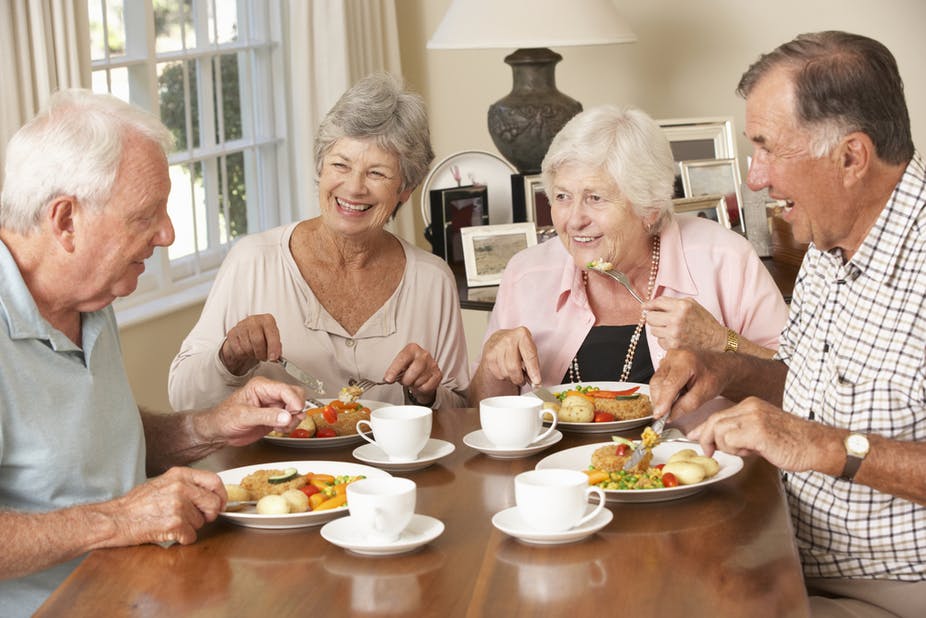
Our study does not yet clarify whether the changes to the gut bacteria are a cause of poor ageing itself or are just a consequence of frailty – longitudinal studies that follow people over several years will be needed to sort this out. But these results are exciting for researchers in the ageing field and suggest that if you want to age well you should perhaps do fewer crosswords and spend more time looking after your microbial garden, for example by eating plenty of plant fibre, for example in a Mediterranean-type diet.
ooOOoo
Well this essay was published nearly 5 years ago and one wonders if more information has come to light.
Certainly Jeannie and me are heavily into a plant-based diet with a small selection of fish from time to time.
I will do more research and see if there are any updates that may be published.
In the meantime stay as healthy and as happy as you can be!



























 Learning from Dogs