On the 21st January I received the following email:
Hi, I’m Evan;
I’m a pet lover and blogger at https://petsroof.com. I’ve been following the excellent work you guys are doing at Learning From Dogs. I’m writing to inquire whether you accept guest posts or link insertions on your site? If so, how much is the price?
Looking forward to your reply.
Regards,Evan
Of course I was interested and after telling Evan that I didn’t charge for guest posts he then sent me the following:
ooOOoo
Evan Yap
Make Dog Treats Yourself: 3 Easy and Quick Recipes
Oh, is the dog biscuit jar empty again? Then it’s time to replenish them. But who says that you always have to buy more dog treats? You can also easily make them yourself! We’ll show you how it’s done and present you with 3 super easy dog treats recipes.
Baking dog biscuits yourself: the advantages of DIY treats
Making dog treats yourself has one major advantage above all: you always know what’s in the dog biscuits. Unfortunately, many industrially produced dog treats contain dyes and preservatives. Flavor enhancers, sugar, and artificial flavors are also not uncommon. With your homemade dog treats, you know 100% what is inside – and you can take into account the individual needs, demands, preferences, and, if applicable, allergies of your four-legged friend.
Since your DIY dog treats are mostly based on a few natural ingredients, they are particularly healthy, natural, and easy to digest. In addition, making dog treats yourself is often much cheaper than buying ready-made dog treats, because the ingredients do not cost much.
What ingredients are allowed in dog biscuits?
When it comes to baking your own dog treats, there are almost no limits to your imagination. As in all other areas of dog nutrition, you should avoid prohibited, unhealthy and poisonous foods for dogs in your DIY biscuits. These include chocolate, alcohol, cocoa, grapes and sugar. Otherwise, you can use just about any food that your dog likes and benefits his health. The diverse selection of foods gives you unlimited recipe options. It is important that you can puree the food into a dough and bake it.
The most popular ingredients that keep appearing in many recipes are:
fish, e.g. tuna
beef
poultry
ground beef
oatmeal
cream cheese
carrots
bananas
eggs
spinach
whole wheat flour
What’s the best way to store homemade dog biscuits?
A big advantage of homemade dog treats is that they do not contain any preservatives. However, this also means that they do not last as long as industrially manufactured products. As a rule, the dog treats are plastered off relatively quickly – that’s how it should be!
Nevertheless, you can turn a few adjusting screws to ensure the longest possible durability.
In general, the drier the homemade dog biscuits are, the longer they last. Moist dog treats can unfortunately mold quickly – you should definitely avoid that! To dry out your homemade dog treats as well as possible, you can do the following:
After baking, let the biscuits dry out in the oven (with the oven door open and 50–100° C).
Do not pack the DIY dog biscuits in a can immediately after cooling, but leave them in the air for half a day to a full day before you store them.
Pack the dog treats in classic tin cookie jars or in fabric bags so that no moisture can develop inside. Airtight plastic is unsuitable.
Choose ingredients that have a long shelf life. Whole grains and oats, for example, last longer than meat and fish.
As a rule of thumb, homemade dog treats can be kept for around 3 to 4 weeks on average. The shelf life is extended by several weeks in the refrigerator as long as no moisture penetrates. They can be stored frozen for several months.
DIY dog treats: 3 simple and tasty recipes
The good thing about our delicious DIY dog biscuits is that you don’t need a lot of ingredients or fancy kitchen utensils for them. The easiest way to implement the recipes is with a food processor or a strong one. Alternatively, you can use a hand blender or even a simple whisk to prepare the dough for your DIY dog treats. In addition, cookie cutters and a rolling pin will make your work easier. If you don’t have them at hand, the cookies can also be shaped easily by hand.
Which recipe is “right” for you? Below we present our 3 favorite recipes for homemade dog biscuits. If one or the other recipe doesn’t quite suit you and your dog, we want to motivate you to try it out. There are many recipe ideas on the internet, but only you know your dog’s preferences and needs.
Therefore: Just get started, try out our recipes, and vary them from time to time. Look what supplies you still have at home and then simply test your baking skills!
Recipe # 1: Tuna treats
Preparation time (including baking time): approx. 35 min
Ingredients:
1 egg
1 can of tuna (in its own juice)
130g oat flakes (alternatively: whole grain or potato flour)
Parsley or rosemary
How to make it:
Mix all ingredients together with a mixer or whisk. Add enough oat flakes or flour to make a firm but malleable dough. Now shape the biscuits as large as you want and bake them at 150°C for about 30 minutes. The baking time can vary depending on the size and thickness of the biscuits. Let your DIY tuna biscuits dry in the switched-off oven.
Store tuna dog biscuits in the refrigerator depending on the quantity.
Large portions of the fish biscuits that you will not use up within a short time should be stored in a dry, protected place in the refrigerator. This extends the shelf life of the protein-rich snacks. Depending on your needs, you can also freeze the biscuits and store them for several months.
Recipe No. 2: Cheese crunchy pearls
Preparation time (including baking time): approx. 35 min
Ingredients:
100g of grated cheese
100g of cottage cheese
1 egg
50g crumbled crispbread (or crunchy oat flakes)
1 tbsp sunflower oil
some water if the batter is too firm
How to make it:
Mix all the ingredients together (ideally with a hand blender) and shape the dough into small balls. Place the cheese balls on a baking sheet lined with baking paper and press them into small thalers with a tablespoon. Bake the DIY dog biscuits at 180°C top and bottom heat for about 25 minutes and then let them air dry for one night.
Recipe No. 3: Liver sausage cookies
Preparation time (including baking time): approx. 40 min
Ingredients:
125g liver sausage
250g of oatmeal
1 egg
150g of cottage cheese
5 tbsp sunflower oil
flour for rolling
How to make it:
Mix all the ingredients together to create a creamy mass. Let the dough rest in the refrigerator for about 1 hour and then roll it out on a floured work surface (about 1 cm thick). If the dough is too wet to roll out, add more oatmeal. You can read more in the article “Can dogs eat oatmeal cookies?”
Pierce or cut out your DIY dog biscuits as you wish and bake them for about 30 minutes at 150°C (180°C top and bottom heat). Allow the liver sausage biscuits to air dry overnight before stowing them in a cookie jar.
Homemade dog treats for in between or as a healthy gift idea
Baking dog treats yourself is fun, healthy, does not cost a lot, and is easier than you think! Over time, you will learn which ingredients work best for you and your four-legged friend, and you can make them happy with tasty DIY biscuits.
Since you alone determine the size, ingredients and taste of your homemade dog biscuits, you can bake delicious chews as well as small training bites that your dog can tolerate well. The DIY dog biscuits are also suitable as a great gift idea for other dog owners – ideal for Christmas, for a birthday or just for in between. Great fun for all dog lovers!
ooOOoo
I think these are great.
What would be lovely is to hear from someone who has made the treats (and I haven’t yet shown the menus to Jeannie). Even better for that person to write up a guest post for this place.
Midwestern Pet Foods Recalls Multiple Dog and Cat Food Brands
March 27, 2021 — Midwestern Pet Foods of Evansville, Indiana is recalling multiple brands of dog and cat food because they have the potential to be contaminated with disease-causing Salmonella bacteria.
What’s Recalled?
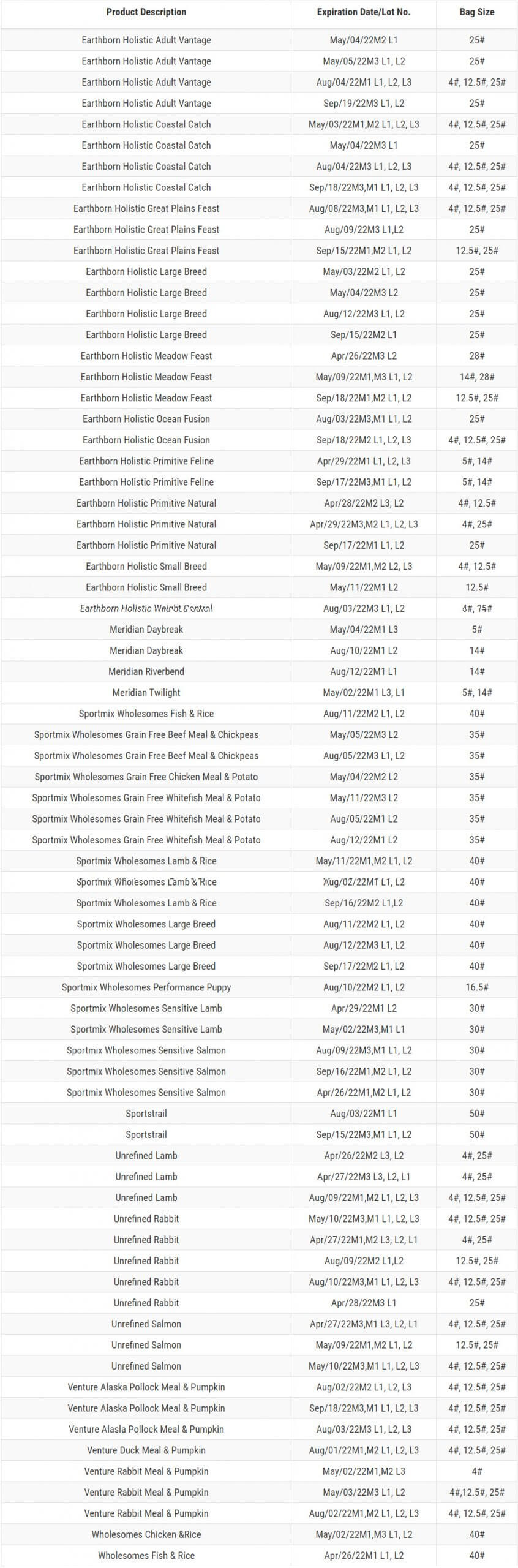
Recalled products include specific lots of CanineX, Earthborn Holistic, Venture, Unrefined, Sportmix Wholesomes, Pro Pac, Pro Pac Ultimates, Sportstrail, Sportmix and Meridian produced at its production facility in Monmouth, Illinois.
Recalled Dog and Cat Food with Lot Numbers
About Salmonella
Salmonella can affect animals eating the products and there is risk to humans from handling contaminated pet products, especially if they have not thoroughly washed their hands after having contact with the products or any surfaces exposed to these products.
Healthy people infected with Salmonella should monitor themselves for some or all of the following symptoms: nausea, vomiting, diarrhea or bloody diarrhea, abdominal cramping and fever.
Rarely, Salmonella can result in more serious ailments, including arterial infections, endocarditis, arthritis, muscle pain, eye irritation, and urinary tract symptoms.
Consumers exhibiting these signs after having contact with this product should contact their healthcare providers.
Pets with Salmonella infections may be lethargic and have diarrhea or bloody diarrhea, fever, and vomiting.
Some pets will have only decreased appetite, fever and abdominal pain.
Infected but otherwise healthy pets can be carriers and infect other animals or humans.
If your pet has consumed the recalled product and has these symptoms, please contact your veterinarian.
No human or pet illnesses have been reported to date.
Where Were the Products Sold?
Products were distributed to retail store nationwide and to online retailers.
Lot code information may be found on the back of the bags with the following format: “EXP AUG/02/22/M1/L#”
This recall covers only certain products manufactured at Midwestern Pet Foods Monmouth, Illinois facility.
The unique Monmouth Facility identifier is located in the date code as an “M”.
What Caused the Recall?
The recall was as the result of a routine sampling program by the company which revealed that the finished products may contain the bacteria.
What to Do?
Retailers and distributors should immediately pull recalled lots from their inventory and shelves.
Do not sell or donate the recalled products.
Retailers are encouraged to contact consumers that have purchased the recalled products if the means to do so exists.
Do not feed the recalled products to pets or any other animals.
Destroy the food in a way that children, pets and wildlife cannot access them.
Wash and sanitize pet food bowls, cups and storage containers.
Always ensure you wash and sanitize your hands after handling recalled food or any utensils that come in contact with recalled food.
For more information, contact Midwestern Pet Foods Consumer Affairs at info@midwesternpetfoods.com. Or call 800-474-4163, ext 455, from 8 AM to 5 PM CT, Monday through Friday.
This voluntary recall is being conducted in cooperation with the US Food and Drug Administration. All other Midwestern Pet Foods products are unaffected by this recall.
U.S. citizens can report complaints about FDA-regulated pet food products by calling the consumer complaint coordinator in your area.
I wasn’t going to publish a post for today because I had to go to the dentist yesterday for an 11 am appointment. In the afternoon the aesthetic was still making my jaw a little ‘sleepy’. But then I saw this article about a particular dog loving blueberries and figured is was too good to overlook. The article was published in The Dodo.
You will undoubtedly agree with me!
ooOOoo
Dog Has Cared For Every Blueberry Her Mom Has Ever Given Her
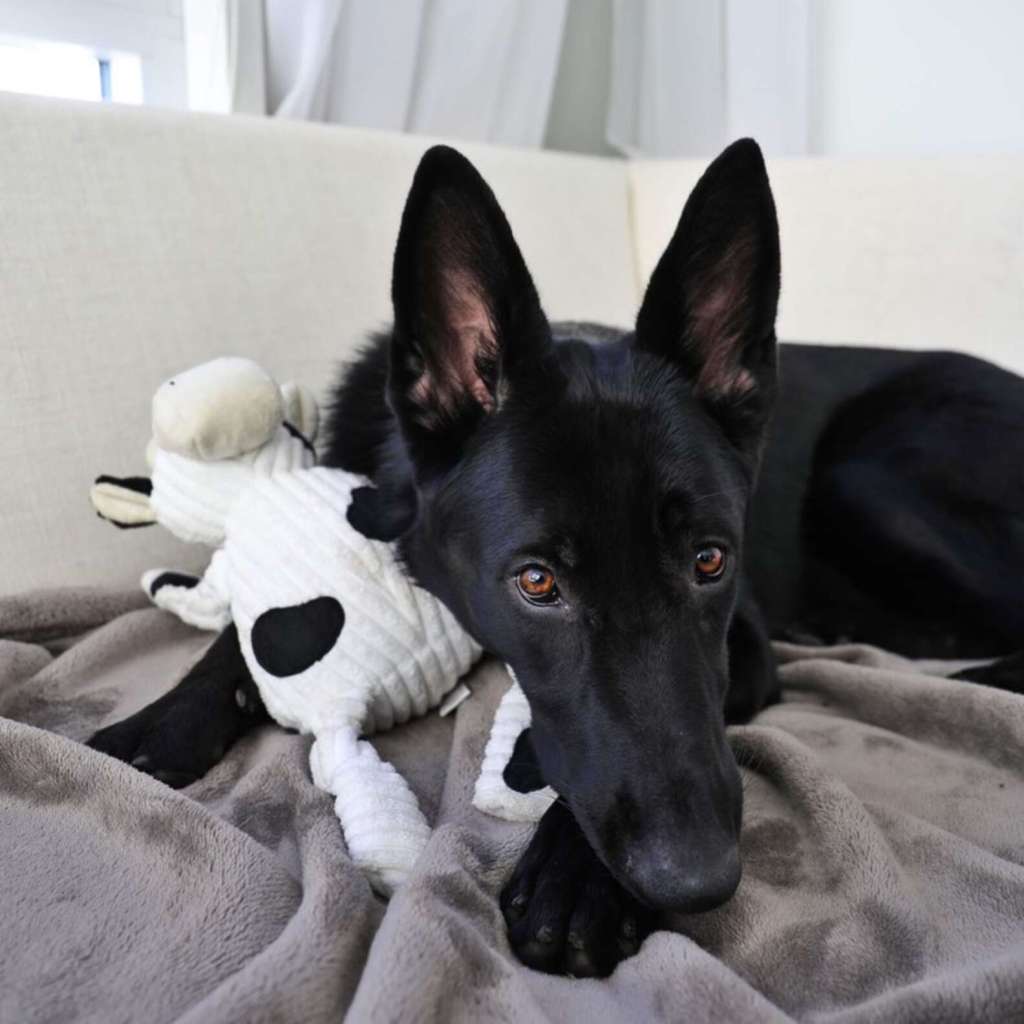
Ava is an incredibly sweet and caring dog, and one of her favorite things in life has always been toys.
“Any time anything happens, her answer is to bring over a toy,” Talia Henze, Ava’s mom, told The Dodo. “And I mean any time. If anyone laughs, if she sees anyone sad, she gets up and brings over a toy.”
TALIA HENZE
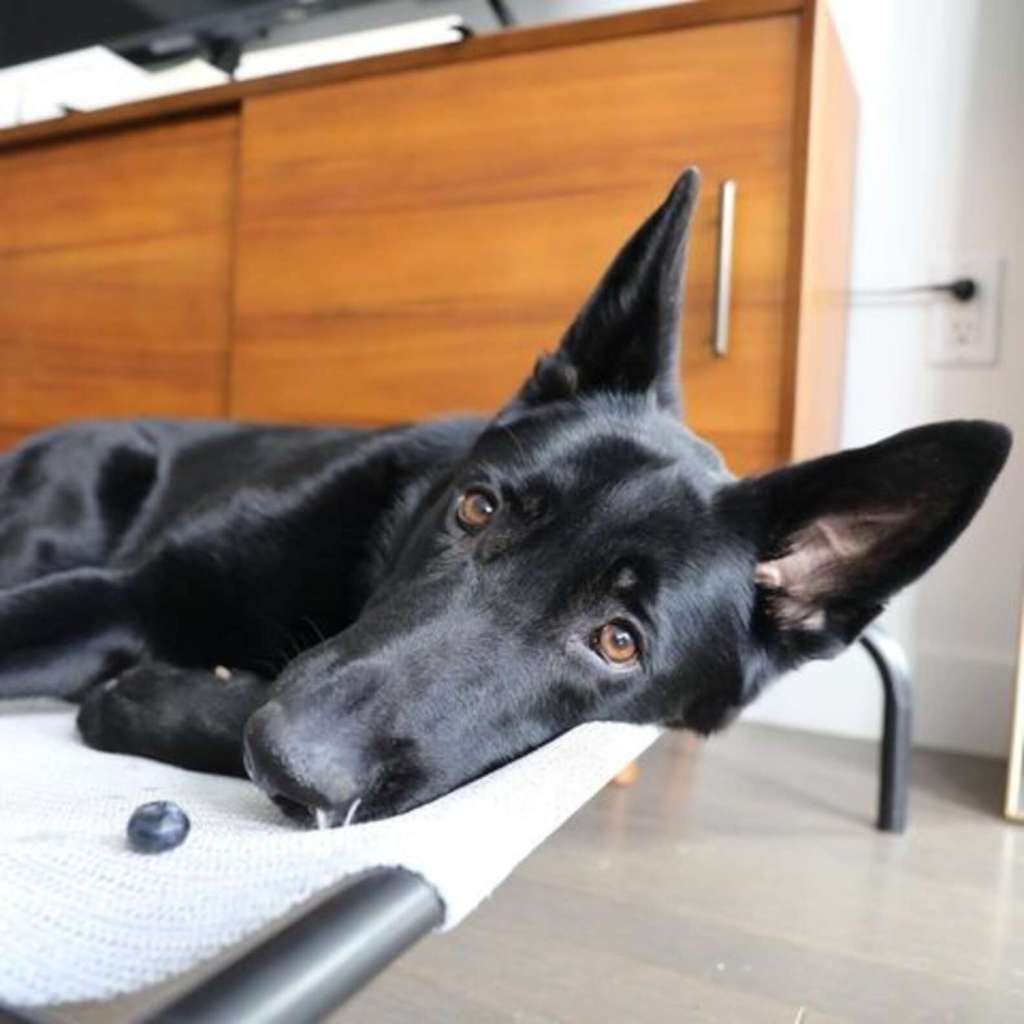
One day, Ava was watching her mom snack on some blueberries. She looked so curious that Henze decided to give her one. She thought Ava would enjoy having a little treat, but instead, for some reason, she decided to treat the blueberry exactly like one of her toys.
“She’s been trained to only eat her treats and long-lasting chew stuff on her elevated bed or in her crate, so she naturally just brings new toys, treats, etc. to those places,” Henze said. “So it didn’t surprise me that she brought the berry to it. But she just never ate it.”
Instead, Ava gently carried the blueberry around, caring for it tenderly. She showed absolutely no interest in having it as a snack. Her mom thought maybe she just didn’t understand what it was and tried to show her, but it was no use. The blueberry had become Ava’s friend, and that was that.
“She kind of just carried it around to her different places for a while and snuggled it,” Henze said. “When she eventually got bored and left it in her crate, I tried showing her [how] to eat it by breaking it open … She wanted nothing to do with it when it was broken.”
TALIA HENZE
Now, every time Henze gives Ava a blueberry, the same exact thing happens. They’ve become one of her favorite toys, and it’s the cutest quirky habit ever.
“So I know she doesn’t really like eating them, but every time I eat blueberries she seems to want one,” Henze said. “So I just give her one every time … She tried to eat one once when I really encouraged it, but she just spat it out.”
TALIA HENZE
To Ava, blueberries are friends, not food. They’re her little buddies, and that’s never going to change.
No one has any idea why Ava loves playing with blueberries so much, or why she’s so opposed to actually eating them. Her mom doesn’t question it anymore, though. It’s just a part of who Ava is, and that’s perfectly OK with her.
ooOOoo
Dogs are as much a mystery at times as they are pure companions. This is an example of a dog, Ava, who has set her mind on something and that is it! All of us dog carers know this about the animal. I guess there’s a logic to the way that a dog thinks even though that logic is beyond reach to us humans.
But that is one of the many characteristics that makes the dog so precious and so adorable.
The Dog and Cat Food update was announced two days ago.
In the covering email they said:
Dear Fellow Dog Lover,
You’re getting this email because you signed up on our website and asked to be notified. If you no longer wish to receive these emails, please click the “unsubscribe” link at the bottom of this message.
Bravo Packing of Carney’s Point, NJ, is expanding its recall to now include multiple dog and cat food products due to possible contamination with Salmonella and Listeria bacteria.
Please be sure to share this news with other dog and cat owners.
Mike Sagman, Editor
The Dog Food Advisor
Saving Good Dogs From Bad Dog Food
Now onto the Bravo Packing recall.
ooOOoo
Bravo Packing Expands Dog and Cat Food Recall
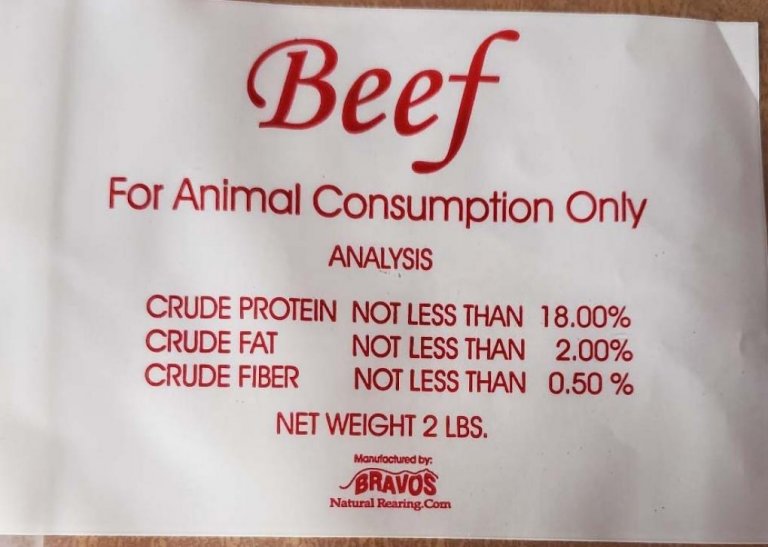
March 16, 2021 — Bravo Packing, Inc., of Carneys Point, New Jersey, is expandingits previously announced voluntary recall of two pet food products to now include all pet food and bones in all package sizes… because they may be contaminated with disease-causing bacteria.
During an FDA inspection, samples collected tested positive for Salmonella and Listeria monocytogenes and resulted in a recall due to the potential health risks to humans and pets.
Bravo Packing, Inc. is expanding the recall due to potential cross contamination of the following dog and cat food products.
Label Images of Recalled Products
The following label images are included in the FDA bulletin. No other photographs were provided by the company.
About Salmonella
Salmonella can cause illness in pets eating the products, as well as people who handle contaminated pet food products, especially if they have not thoroughly washed their hands after having contact with the products, infected pets, or any surfaces exposed to these products.
People infected with Salmonella should monitor themselves for some or all of the following symptoms: nausea, vomiting, diarrhea or bloody diarrhea, abdominal cramping, and fever.
Rarely, Salmonella can result in more serious ailments, including arterial infections, endocarditis (an infection of the heart muscle), arthritis, muscle pain, eye irritation, and urinary tract symptoms.
People who have these symptoms after having contact with the products identified in this recall or with a pet that has eaten these products should contact their healthcare providers.
A pet with a Salmonella infection may be lethargic and have diarrhea or bloody diarrhea, fever, and vomiting.
Some pets will have decreased appetite, fever, and abdominal pain.
If your pet has consumed the recalled products and has these symptoms, please contact your veterinarian.
Pets exposed to contaminated food can be infected without showing symptoms.
Infected pets, including those without symptoms, can also shed Salmonella through their feces and saliva, spreading pathogens into the home environment and to humans and other animals nearby.
Listeria monocytogenes is an organism which can cause serious and sometimes fatal infections in young children, frail or elderly people, and others with weakened immune systems.
Although healthy individuals may suffer only short-term symptoms such as high fever, severe headache, stiffness, nausea, abdominal pain, and diarrhea, Listeria monocytogenes infection can cause miscarriages and stillbirths among pregnant women.
No human or animal illnesses related to the identified products have been reported to date.
Where Were the Products Sold?
Bravo Packing Inc. generally works with distributors that fill orders to retail storesand to consumers directly nationwide.
What to Do?
Consumers with any of the affected products should handle them with caution, discard products in a secure container, and wash hands and surfaces properly.
Consumers with questions should contact Bravo Packing, Inc. at 856-299-1044 (Monday through Friday, 9:00 am to 2:00 pm, ET).
U.S. citizens can report complaints about FDA-regulated pet food products by calling the consumer complaint coordinator in your area.
A man in California who took up wildlife photography a decade ago had never seen anything quite like what he saw this fall — and he was lucky he had his camera with him.
Every morning, Russell Greaves, of Huntington Beach, California, goes out to the Bolsa Chica Ecological Reserve behind his house to immerse himself in that slice of the natural world. He often sees coyotes, enough that he’s begun to recognize individuals in the area.
“A lot of people here just love the coyotes,” Greaves told The Dodo over the phone, during his morning walk on Tuesday.
Russell Greaves
One morning in October, he saw a familiar wild coyote. It was a mom who had given birth to a litter of pups six months before.
“She had had four pups,” Greaves said. “The pups would come out and play around, while dad went out to hunt. But they’re out on their own now.”
Russell Greaves
It was nice to see the mom again — but there was something different about her. And as she got closer, Greaves couldn’t help but laugh.
Russell Greaves
Somehow, the mother coyote had found a pizza — and she decided to go ahead and take it with her.
“It was nearly half a pizza,” Greaves said. It’s not certain where the coyote managed to find this enormous meal. Greaves said that there are some homeless people who camp out in the woods and perhaps she swiped it from them.
Since her pups had already gone out on their own, she probably wasn’t planning on sharing, Greaves speculated. “I thought, ‘This has got to be for herself.’”
Russell Greaves
More important than this meme-worthy sight is the balance the residents of the area have struck with the natural world — something sorely lacking in other communities across the country, where coyotes are often brutally hunted in killing contests.
Admittedly, not everyone loves the coyotes quite as much as Greaves does, but many people are fascinated by the wild family living nearby, and people take precautions to ensure a peaceful coexistence. “We tell people to not feed the coyotes. They’re not here to eat human food,” Greaves said. “We tell people who are walking their little dogs to be careful because the coyotes are around.”
Russell Greaves
“The coyotes come back to the same habitat because they like it here,” Greaves added.
And the coyotes are lucky to have people like Greaves, who love having them there.
Another international story of love and caring for our dogs.
This time about homeless or stray dogs and in Peru. Again it was written by Stephen Messenger and was shared on The Dodo website. Again it is about the fundamental goodness that is in a great many humans spanning continents.
ooOOoo
Nice Restaurant Owner Prepares A Free Meal For Every Stray Dog Who Visits
“They pay us with their happiness and wagging tails” ❤️
By Stephen Messenger
Published on the 26th February, 2021
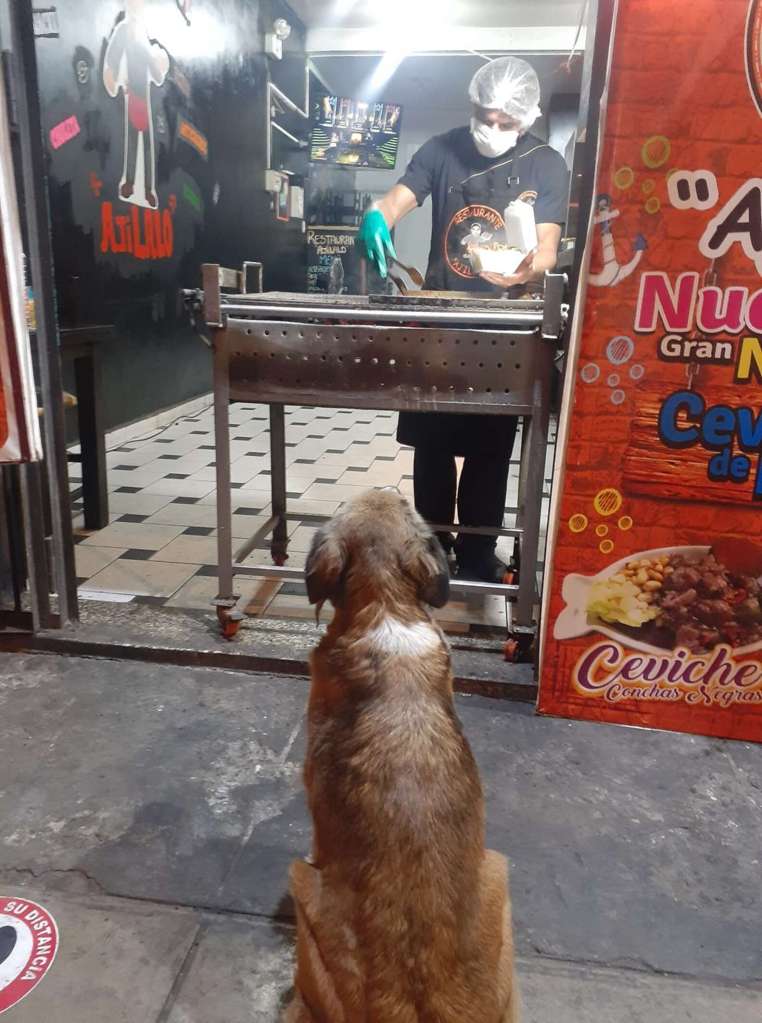
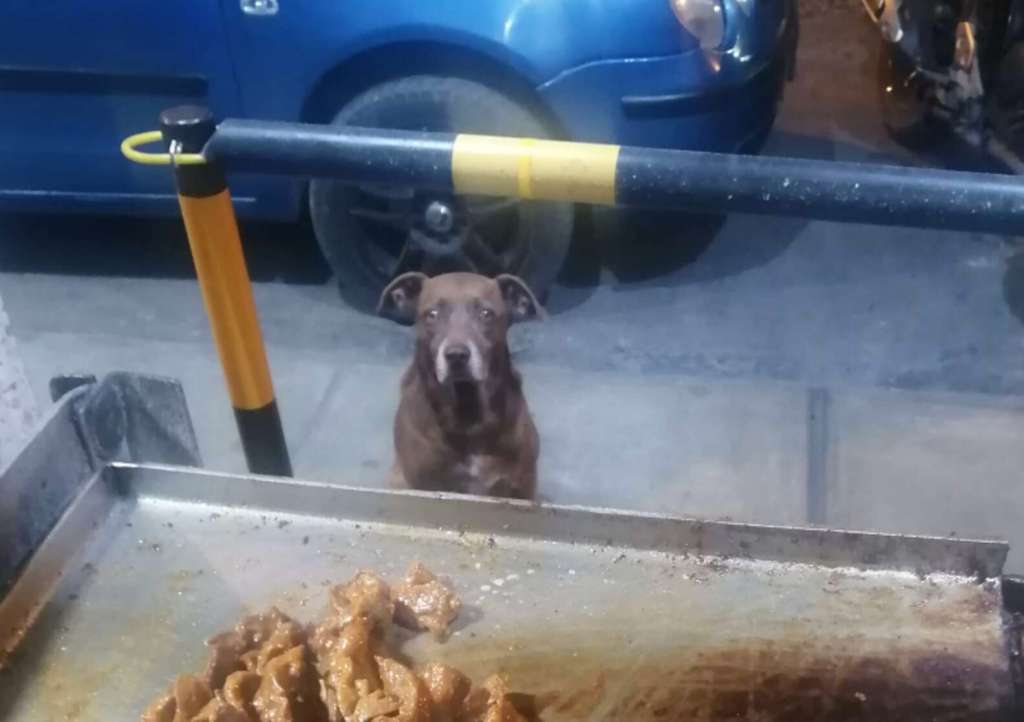
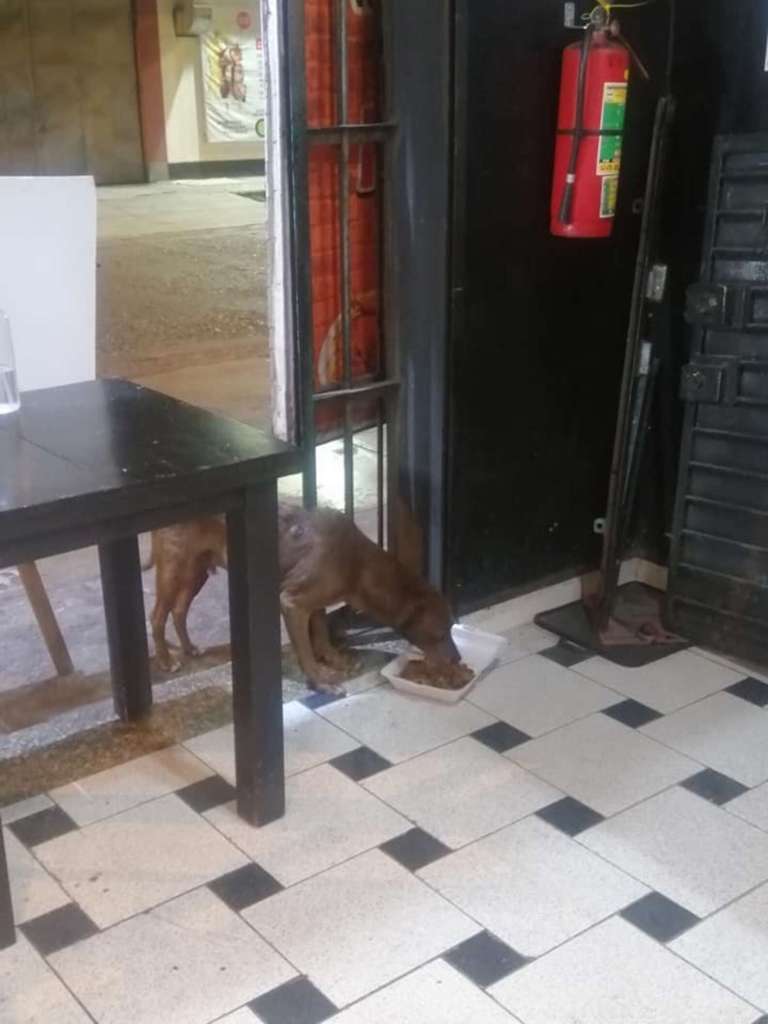
One evening five years ago, an unexpected customer dropped by Gerardo Ortiz’s restaurant, Ajilalo, in Peru. It was a stray dog, a look of hunger in her eyes.
Ortiz could have easily turned the dog away. But he didn’t.
Restaurante – Ajilalo
That evening, Ortiz offered the dog a free meal, made just for her.
And thus began an adorable tradition that continues to this day.
Restaurante – Ajilalo
Each evening, from then on, the hungry dog came and received a free meal from Ortiz’s restaurant.
But it didn’t take long for word of Ortiz’s kindness and generosity to spread among the community of local stray pups.
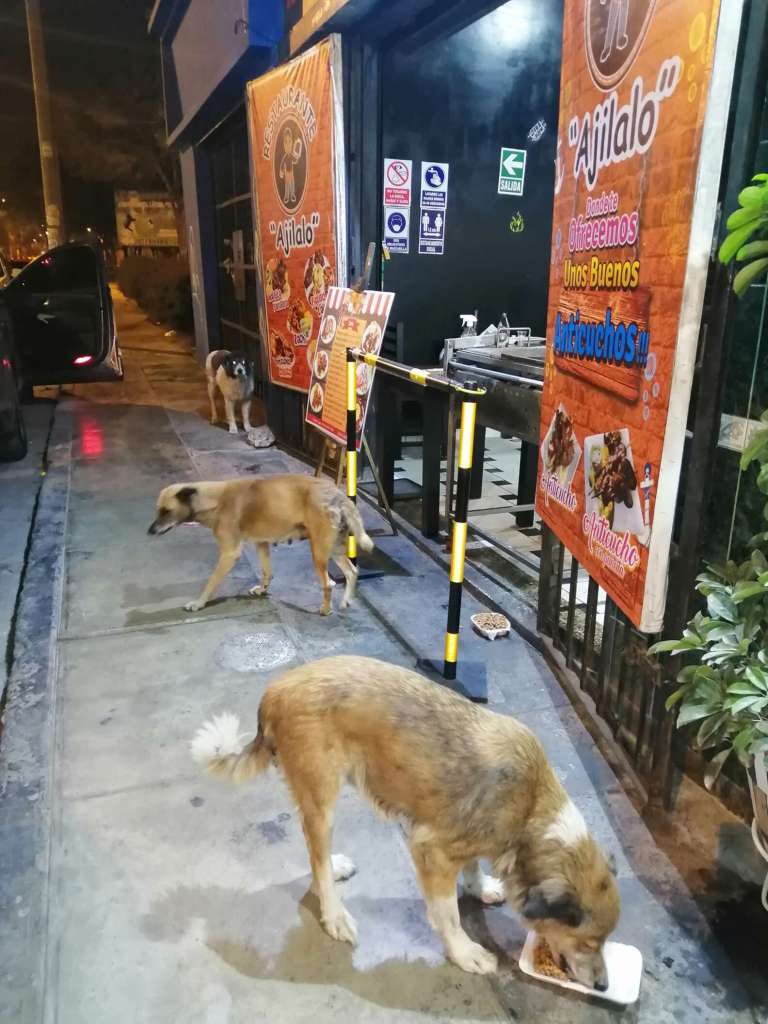
More dogs began to arrive with that first visitor— and Ortiz welcomed them all with a meal.
Restaurante – Ajilalo
Nowadays, numerous stray dogs arrive to the doors of Ortiz’s restaurant each night. Many are regular “customers,” while others are first-timers — all hoping to fill their bellies thanks to Ortiz’s kindness.
Restaurante – Ajilalo
Often, as Ortiz is working, he’ll look up and see a new dog’s face at the front — waiting politely to see if the rumor that free food can found there is true.
It always is.
Restaurante – Ajilalo
“For me, they are the best customers,” Ortiz told The Dodo.
And his human customers hardly take that as a slight. Inspired by Ortiz, they often bring food for the visiting dogs as well.
Restaurante – Ajilalo
“Thankfully, our clients have reacted well to the dogs,” Ortiz said. “They are affectionate toward them.”
Restaurante – Ajilalo
Ultimately, Ortiz’s sweet routine of feeding all the stray dogs who visit does more than keep them from being hungry. It lets them know that their lives matter — a truth that Ortiz is happy to prove to them each and every day.
Restaurante – Ajilalo
“They do not pay us with money, but they pay us with their happiness and wagging tails,” Ortiz said. “They are very grateful, and we enjoy giving more than receiving. Since I was a child, I have loved animals. My mother always taught us to help others, both people and animals. She’s my inspiration.”
ooOOoo
This is such a wonderful share. Snr Ortiz confirms what we know absolutely. That people who care for animals care for so much more. As Gerardo says: “It lets them know that their lives matter.”
I am minded to remember when I first met Jean in December, 2007. Jean was living in San Carlos, Northern Mexico, and had been for many years. Her husband, Ben, had died in 2005.
Jean was rescuing street dogs off the streets of San Carlos and surrounding areas, caring for them, neutering or spaying them, and then finding homes for them mainly in Arizona, USA. Many, many dogs owed their lives to Jean’s love for those dogs. In 2010, after I had gone out to San Carlos with my Pharaoh to live with Jean and her dogs in 2008, we came North to Arizona to find a U.S. home and be married. We came through the Mexican-US border with 16 dogs, all of them with their paperwork in order. I will always recall the American border agent, after I had approached him with all the paperwork, leaning out of his booth and calling to the agent in the next booth: “Hey Jake, there’s a guy here with sixteen dogs!”
Jean and I were married in Payson, AZ on the 20th November, 2010.
Mr and Mrs Handover
Very sweet memories and the start of a loving era in our lives.















 Learning from Dogs