This past January, a man was walking through Onancock, Virginia, when he noticed a suspicious object outside Historic Onancock School, a local community center.
The man approached the object — a large black bin labeled “Family Dollar” — and carefully lifted the lid to see what was inside. There, wriggling against each other in the tight space, were eight 10-week-old puppies.
The puppies were weak, defenseless and clearly needed help. The man drilled air holes in the lid of the box and eventually contacted Eastern Shore Regional Animal Control Facility for help.
Tragically, one puppy passed away before rescuers could assist. The others quickly relaxed into the capable hands of animal control staff.
According to Eastern Shore Regional Animal Control Facility shelter manager Jeri Winn, it’s common to find puppies dumped along the Eastern Shore, but significantly less common in Onancock, a bustling seaside town.
Though she’d seen plenty of cases like this, Winn still felt a familiar sadness as she admitted the puppies into care. Despite everything, she was grateful that the pups were finally in a safe place.
“All we can be thankful for [is that] whoever left them realized they were in a good location to be seen,” Winn told The Dodo.
Team members transferred the puppies to Critters 4 U Rescue, an animal shelter and foster organization. Rescuers determined the puppies were Australian shepherd mixes, and they named them after the seven dwarfs — Doc, Grumpy, Happy, Sleepy, Bashful, Sneezy and Dopey.
One pup has already been adopted, and the others are still safe at Critters 4 U Rescue, waiting to meet their forever families.
Eastern Shore Regional Animal Control Facility is grateful for Critters 4 U Rescue, along with all the other rescues who offered to help these needy pups find the homes they deserve.
“We are so grateful for every rescue that reached out,” Eastern Shore Regional Animal Control Facility wrote in a Facebook post. “In moments like this, our small shelter is reminded just how much we rely on the compassion and partnership of rescue organizations who step up without hesitation.”
A pet‑friendly homeless shelter pilot reduced the rate of homelessness among the people it helped in California.
This was an article published on the 16th March by The Conversation. It shows how the homeless shelters benefit from being pet-friendly. It’s sort of obvious but then again not common-sense.
ooOOOO
A pet‑friendly homeless shelter pilot reduced the rate of homelessness among the people it helped in California
A homeless woman in Los Angeles holds her dog after a free veterinary visit in 2024. Mario Tama/Getty Images
California’s Department of Housing and Community Development established this pilot program in 2019. Its goals were straightforward: to make homeless shelters more accommodating to people with pets – mostly dogs – so that people living on the streets don’t have to choose between staying in shelters or abandoning their pets.
The program disbursed US$15.75 million between 2020 and 2024 to 37 organizations across the state. The funding allowed shelters to build kennels or other pet-friendly spaces, provide pet food and supplies, and offer basic veterinary care. It also covered the costs of staffing and maintaining insurance required to operate pet-friendly shelters.
We found that the program helped 4,407 people experiencing homelessness keep their pets while getting support. Many were able to enter shelters, and their animals received needed veterinary care. A total of 886 people ultimately moved into permanent housing with their pets – a higher success rate than the statewide average for homeless people in California.
Theoretically, this funding should have reduced the number of pet owners living on the streets. Yet since 2019, the year the program began, the number of homeless people in Los Angeles with dogs and other pets has increased.
Since 2017, I’ve led the USC research team that produces the annual homeless count estimates for Los Angeles. The U.S. Department of Housing and Urban Development requires this exercise for any city seeking federal funding for homelessness services.
Before the pandemic, we generally found that roughly 1 in 8 people did. We also found that nearly half of homeless pet owners had been turned away from a homeless shelter because it couldn’t accommodate their animal.
Despite programs like California’s Pet Assistance and Support program, my research team has found that the share of people living on the streets of Los Angeles who say they have a pet increased to roughly 1 in 5 by 2025.
Share of homeless people in LA with pets is rising
The percentage of homeless people in Los Angeles with pets rose from 12% in 2017 to 20% in 2024 and 2025, according to an annual census.
Bar chart showing that the percentage of homeless people in Los Angeles with pets has grown since 2017.
5101520%201720182019202020212022202320242025
Need for more pet-friendly programs
We still don’t know why the share of homeless people with pets has gotten so much larger.
The Weingart Tower, where some of Los Angeles’ formerly homeless people reside and receive social services, has a small dog park. Grace Hie Yoon/Anadolu via Getty Images
The number of homeless people in Los Angeles has fallen by more than 4% since 2023 to just over 72,000 people in 2025. But based on my research findings, I would expect the number of people living on the city’s streets – with and without pets – to rise over time unless more affordable housing becomes available.
And growth in the homeless population may be hard to avoid without more efforts like California’s Pet Assistance and Support Program – on a larger scale than the pilot we studied.
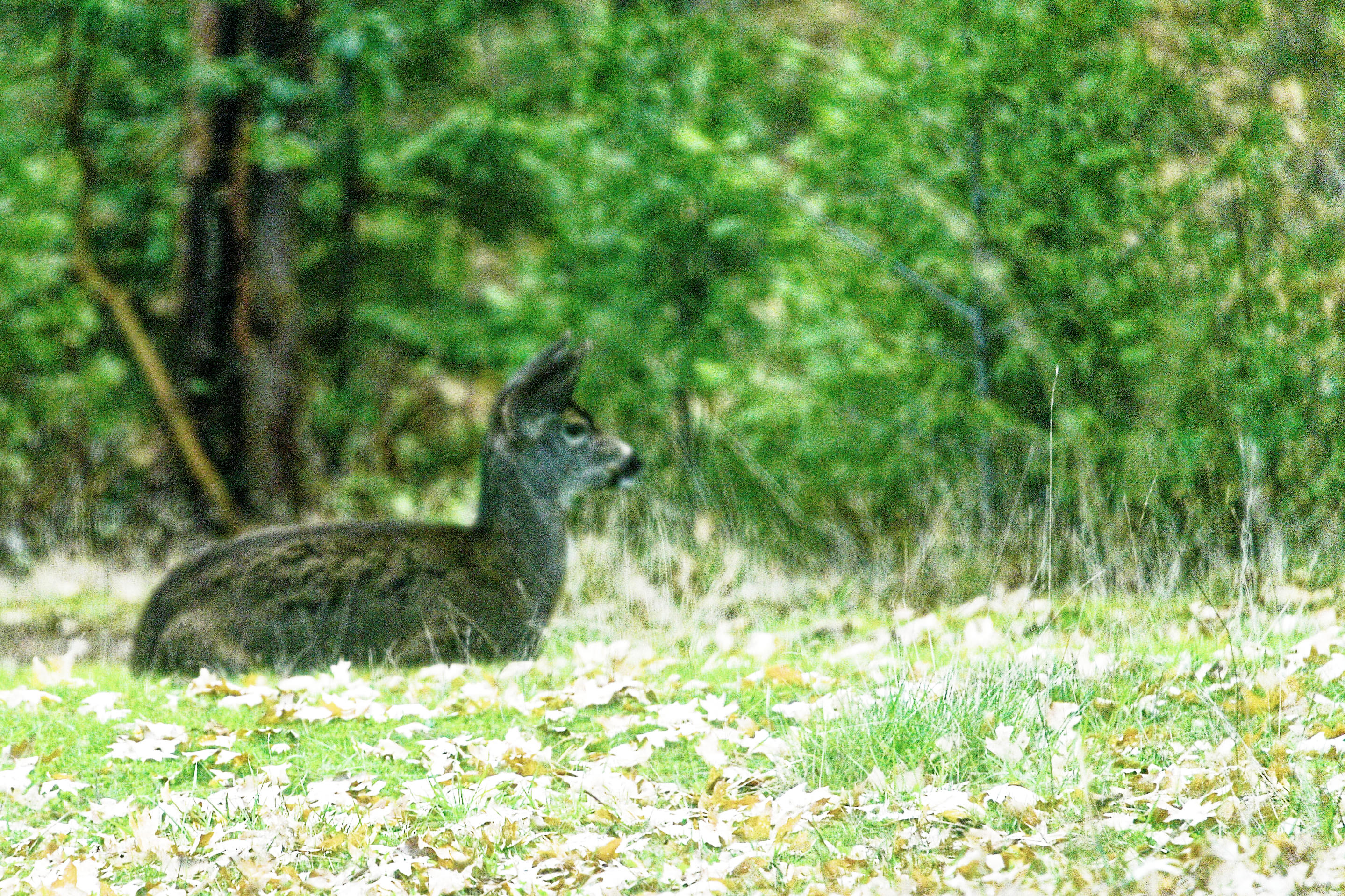
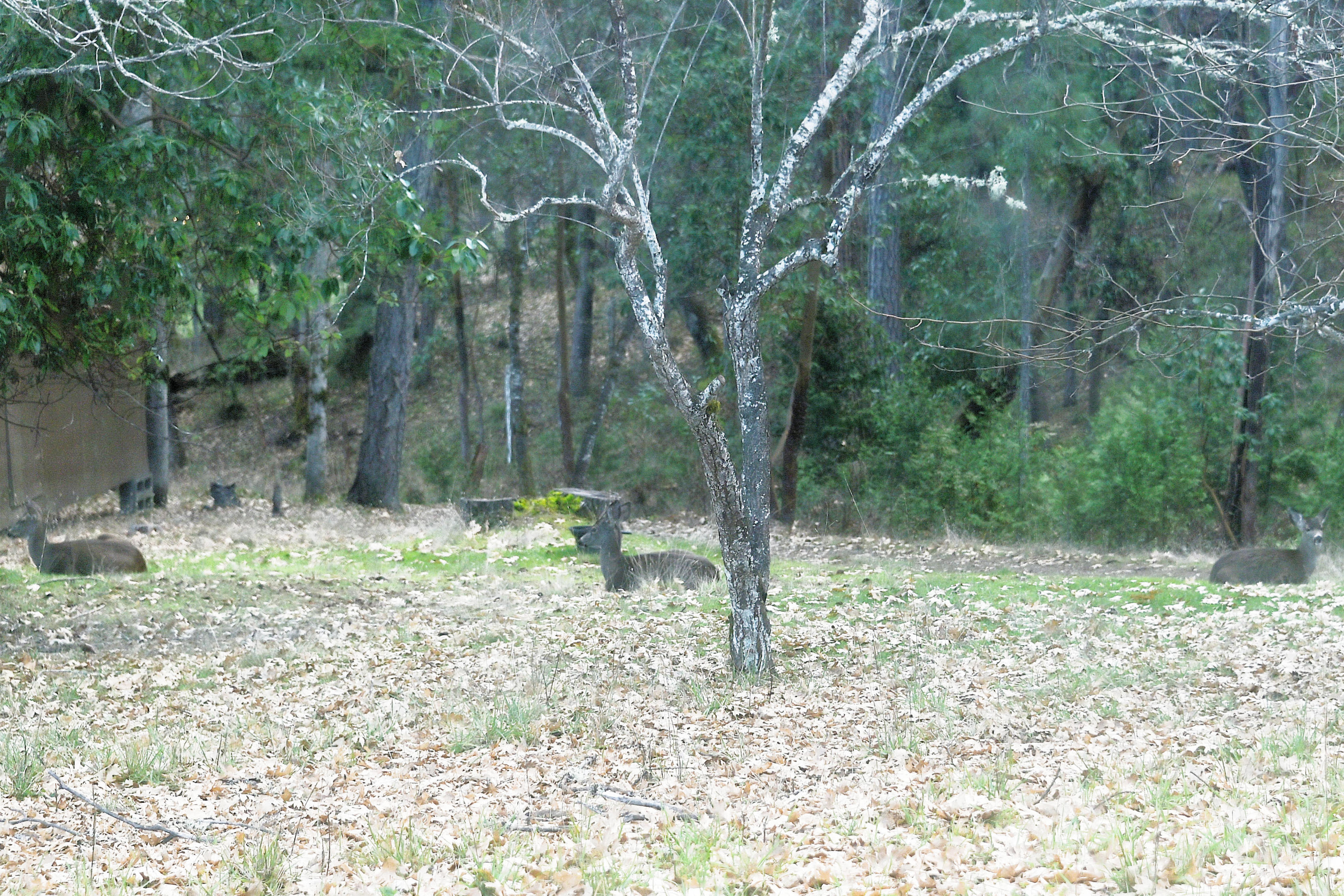
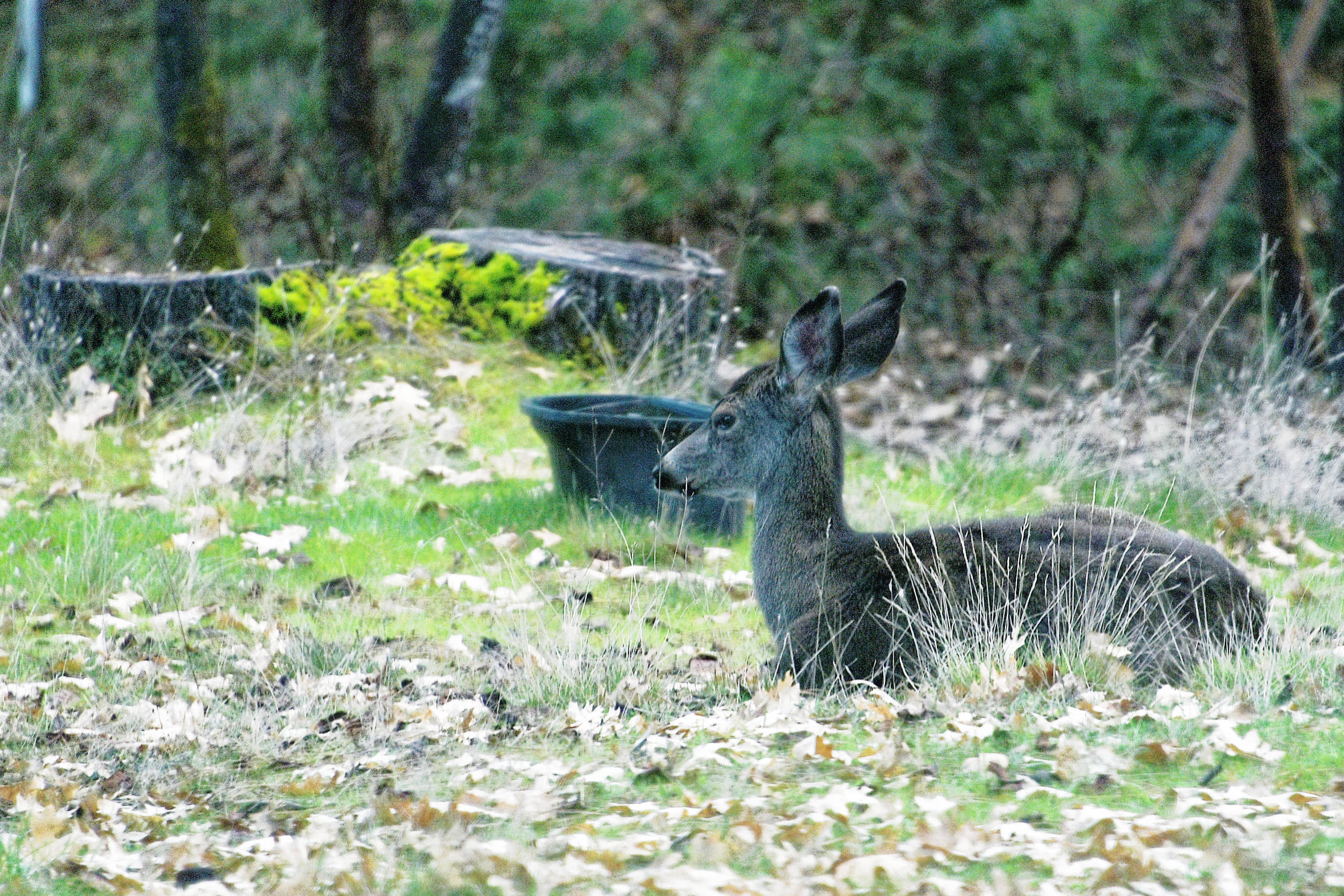
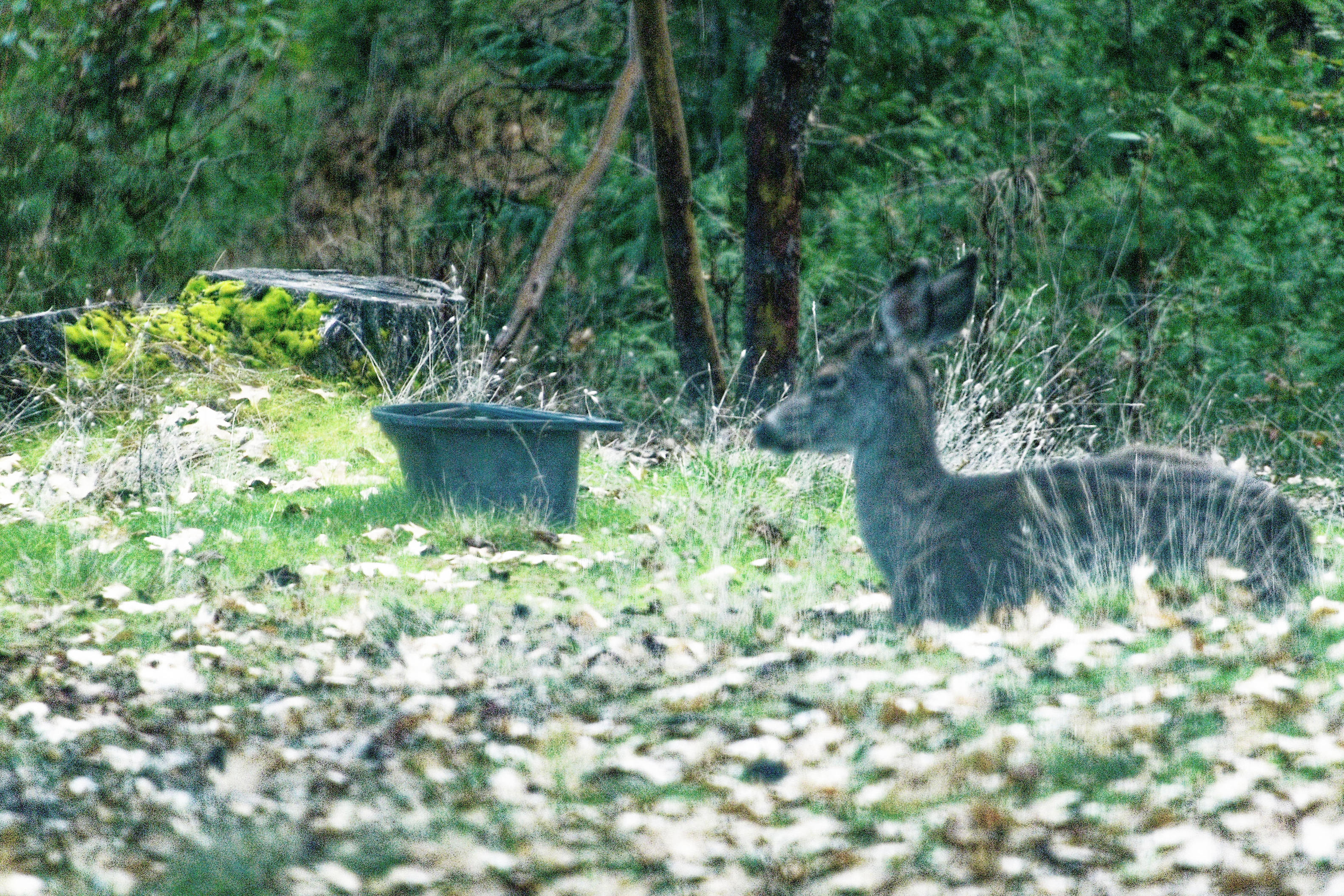
These are the deer in our garden. I feed them every morning and they have become good friends. However, taking the photos was tricky as I had to use a zoom lens and I did not have a tripod with me.
For many years I lived in South Devon, England. I never thought twice about hedgerows because they were so common.
Then today I read an article in The Economist about Brexit and the one thing that was favourable was this “Brexit delivers a win for British wildlife.“
Here’s a small extract from the magazine:
No other country matches the rich heritage of hedgerows that weave across the damp (ideal for hedges) British Isles. Since the Bronze Age, Britons have reared sheep and cattle and have used hedges to mark the boundaries of fields and keep livestock in place. Some of these ancient bushes still stand. In West Penwith, one such prehistoric hedge, a gurgoe, might be over 4,000 years old. Most, though, were planted in the 18th century, when landowners enclosed the commons, an event that turned the country into a chequerboard of small, irregular fields. America, by contrast, passed a law prohibiting private landowners from enclosing public land in 1885, protecting its open ranges.
Here in Oregon hedges are not so common. But I did some research as to the cause and came upon this article by Oregon State University.
I trust it may be shared with you.
ooOOoo
A Guide to Hedgerows: Plantings That Enhance Biodiversity, Sustainability and Functionality
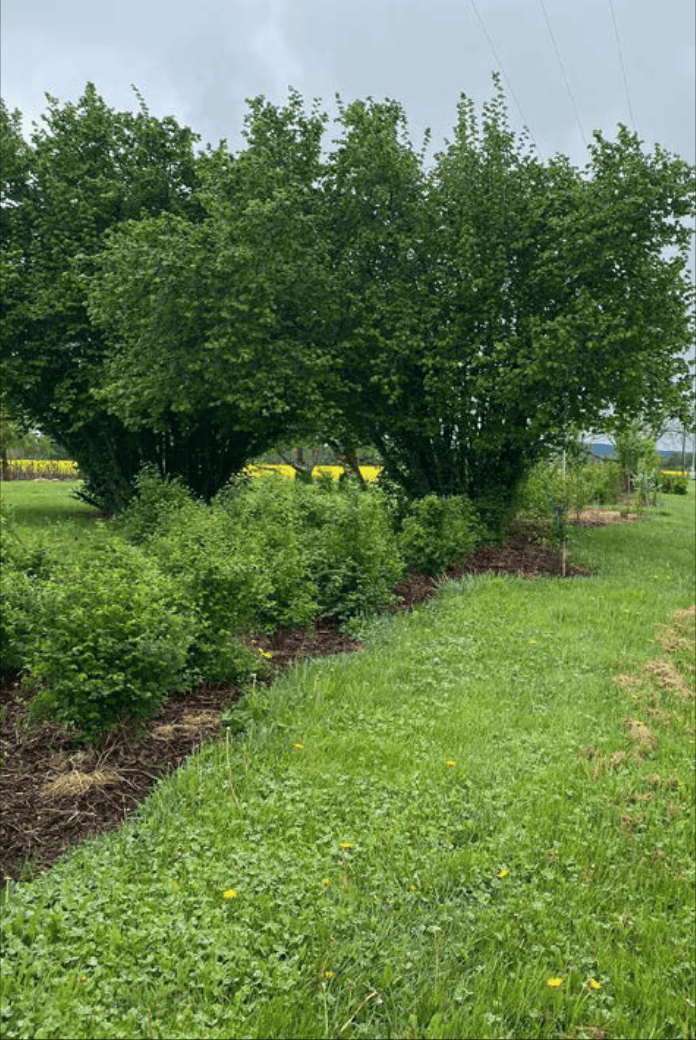
We see them at the edges of farm fields or along roads: long rows of trees, shrubs, flowers and grasses known as hedgerows. They are living fences with the ability to grow food, shelter wildlife, save water, manage weeds and look beautiful all year round.
Hedgerows are sometimes called shelter belts, windbreaks or conservation buffers. These layers of plant life enhance the beauty, productivity and biodiversity of a landscape.
Hedgerows originated in medieval Europe and are enjoying a modern resurgence. People in England planted hawthorn cuttings and allowed them to grow about 6 feet. They were bent and trained to fill gaps in the trees, yielding a living fence. They called these fences “hagas” or hedges, form the word “hawthorn.” As the birds settled in the hawthorns and dropped seeds. more plants sprung up. Today, many farms in England are surrounded by ancient hedgerows that shelter beneficial organisms and conserve soil and water.
Hedgerow plantings were uncommon in the early United States. In the 1930s, the U.S. Department of Agriculture’s Shelterbelt Program briefly supported planting trees for windbreaks to prevent soil erosion in the Midwest. Today, as interest surges in sustainable farming methods, more people are turning to this age-old practice.
Hedgerows can serve several ecological functions. Among their many benefits, hedgerows:
Enhance ecological biodiversity.
Offer food for livestock, humans and wildlife.
Provide habitat for beneficial insects and pollinators.
Facilitate water conservation.
Provide windbreaks.
Help manage invasive weeds.
Provide erosion control and improve soil health.
Support the health of aquatic habitats.
Enhance carbon sequestration.
Create borders and privacy screens.
Reduce noise, dust, chemical drift and other types of pollution.
Diversify farm income.
Generate year-round beauty.
Let’s look at these benefits in detail.
Benefits of hedgerows
Enhance ecological biodiversity
Biodiversity describes the variety of life forms within a specific ecosystem and the relationship of these organisms to one another and the broader environment. Hedgerows can be designed to attract a wide variety of mammals, birds, reptiles, amphibians, insects and plants, many of which offer beneficial relationships to each other. They also create more edges, or “ecotones,” between different habitats, which increases species diversity. Trees and shrubs provide shelter for larger mammals, and nesting sites and perches for raptors, which are important predators of rodents. Dense or thorny shrub thickets can offer songbirds a refuge to escape predators as well as a place to nest. The diverse composition and structure of a hedgerow creates a functional habitat where species experience vital interconnections with one another and the environment.
Offer food for livestock, humans and wildlife
Hedgerows provide undisturbed refuge for species of all kinds, creating wildlife corridors, travel lanes or habitat islands. Hedgerows help protect wildlife from predators and provide sheltered access to riparian zones or other water sources. These corridors are especially important in fragmented landscapes, such as fields where only a single crop is grown. Hedgerows provide shade to reduce heat stress and help to block wind currents. These measures support a healthier wildlife population. Berry-producing plants encourage insectivores, such as birds, that also prey upon common crop pests. The hedgerow habitat creates cover for wildlife so they can feed, nest and care for their young.
Provide habitat for beneficial insects and pollinators
Planting a variety of flowering trees, shrubs, forbs and perennial plants provides insect habitat, and nectar and pollen sources throughout the year for beneficial insects and pollinators. Plants in the family Umbelliferae attract parasitic wasps; predator flies such as hover flies, lacewings and ladybeetles; and true bugs, like ambush or minute pirate bugs. Flowering plants in this family include coriander, dill, fennel, parsnip, parsley and carrots. These plants are useful in the kitchen and are also very attractive to pollinators. Over 75% of successful production of food requires pollination. Increasing plant habitat for pollinator species improves fruit set, size and quality, as well as general biodiversity. Pollinator habitat also attracts beneficial insects, which prey on many crop pests. Increasing the numbers of beneficial insects can help farmers manage crop pests and cut down on insecticide use.
Facilitate water conservation
Hedgerows retain water and reduce evaporation by reducing wind speed and providing cover over the ground surface. Plants also catch and store water in their root systems, leaves and branches, slowing the rate of excess rainwater entering waterways and reducing the risk of flooding. Decaying matter from the roots, stems and branches of hedgerow plants increase the organic matter in the soil over time. This increases the soil’s ability to absorb and retain water. Planting hedgerows on hillsides helps conserve water and soil by reducing erosion. If planting near adjacent cropland, periodic root pruning can reduce competition for nutrients and water.
Provide windbreaks
Properly designed hedgerows can reduce wind speed by as much as 75% and improve crop performance. This is especially effective when plantings reach a density of 40%–50% and are planted perpendicular to the prevailing wind. Wind-resistant trees usually have flexible, wide-spreading, strong branches and low centers of gravity. Wind-tolerant shrubs often have small, thick or waxy leaves or very narrow leaves or needles, to help control moisture loss. Wind can disturb pollination and damage fruit and flowers when plant parts thrash against each other. During times when soil is exposed, a windbreak can protect topsoil from erosion. Crops under wind stress also put energy into growing stronger roots and stems, resulting in smaller yields and delayed maturity. Strong winds also cause lodging of grain and grass crops, bending the stems and making harvest more difficult. Winds dry out crops on the field edges, increasing pests such as two-spotted spider mites.
Help manage invasive weeds
Hedgerows planted along roads or between crop fields may prevent weed seeds from blowing into the field. The weed seed pods collect on hedgerow plants, where a farmer could remove and burn them. Hedges can prevent millions of weed seeds from entering the crop field. As hedgerows mature, these plantings displace invasive weeds. If well maintained, this weed management lasts the lifetime of the hedgerow.
Provide erosion control and improve soil health
Rain, irrigation, clean cultivation and vacant field borders can all increase erosion potential in an agricultural system.
Hedgerow plantings can significantly reduce the amount of soil erosion on a landscape. They can also provide a barrier to filter out pollutants, such as pesticides, and slow down sediments and organic material that can flow from farm fields into waterways. This is accomplished by increasing the surface water infiltration rate and improving soil structure around the root zone. This, in turn, decreases fertilizer runoff from farm fields. The biomass that plants shed acts as a soil conditioner and can enhance plant growth. In urban or suburban environments, hedges similarly reduce pollutants from neighboring sites.
Support aquatic habitat
Hedgerows can provide shade to riparian areas. Shade reduces water temperatures, prevents water evaporation and improves watershed quality. Though many factors influence watershed temperatures, studies have proven that lowland streams bordered by trees and tall shrubs exhibit cooler temperatures. The hedgerow’s latitude, stream aspect, leaf density and the height of its vegetation from the water surface all affect water temperature.
Enhance carbon sequestration
During photosynthesis, trees, shrubs and grasses absorb carbon dioxide from the atmosphere, allowing the carbon to become part of the plant’s tissue. As plants die or shed tissue — either through natural processes or pruning — the carbon that was stored in the plant breaks down and enters the soil. Plants store relatively large amounts of carbon in their biomass, helping to offset some of the effects of climate change. A tree can absorb as much as 48 pounds of carbon dioxide per year and can sequester, or store, 1 ton of carbon dioxide by the time it reaches 40 years old.
Create borders and privacy screens along roads and between properties
Hedgerows are attractive borders and can block undesirable views. Evergreens offer year-round screening. When selecting plants, consider the height at maturity for optimum screening. Evergreens can be pruned to control height and density. Plant a diverse mix of species to help protect against damage from a single pest or disease.
Reduce noise, dust, chemical drift and other types of pollution
As hedgerows mature and become dense, they can create barriers to reduce noise, dust, chemical drift and other pollutants. Open canopy trees are effective barriers to dust and pesticides; air and particles slowly filter through them instead of depositing clouds of pollutants on the other side of the hedge.
Plant hedges as close as possible to any areas where pollutants are a concern. This can help alleviate neighborhood conflicts where agriculture intersects with urban areas.
Hedgerows can act to contain contaminants from urban or suburban environments and keep them from entering agricultural areas.
Diversify farm income
Trees, shrubs and herbaceous plants in a hedgerow can also serve as sources of income. Potential products include nuts, fruits, berries, leaves, flowers, seeds, bark and medicinal herbs. You can grow plants to be propagated as seeds, rootstock, cuttings and transplants. Other potential crops are nursery stock and floral materials, including ferns, broadleaf evergreens, flowers and willows grown for craft material and furniture. You can grow fruits, berries and nuts for food. Hedgerows can shelter bees and encourage a higher pollination rate. Consider planting trees for secondary wood products such as lumber, veneer, firewood, chips for bedding and mulch. Game birds such as quail, pheasant and sage grouse are attracted to hedgerows. Managed hunting can provide a potential source of food and off-season revenue for landowners.
Generate year-round beauty
Hedgerows in the landscape add continuous beauty. You can design a hedge for year-round interest, considering the color and texture of leaves and bark, bloom color and timing, and the general growth habit or form of plants.
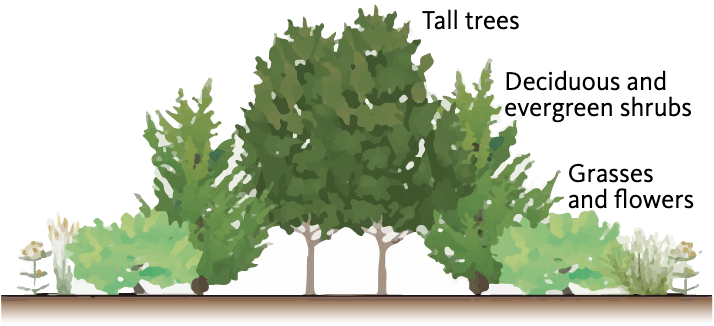
Hedgerow design Graphic: Kerry Wixted with graphics from Tracey Saxby, IAN Image Library, courtesy of the Integration and Application Network, University of Maryland Center for Environmental Science
Whether in rural or urban settings, the principles of planning a hedgerow are the same: Evaluate the site, determine what you would like to accomplish with the plantings, match the right plant with the right place, and properly prepare the site.
Design
There are many essential components to consider when designing a multifunctional hedgerow. The first step is to observe the site where the hedge is to be planted and take into consideration the ecological and environmental conditions listed below. These elements influence the design, plant selection, location and the size of the area to be planted. Although a single line of trees will provide some benefits, four or more rows of plants are optimal for windbreaks, water and soil conservation, wildlife habitat and general biodiversity. When it works for the situation, place plants tallest at maturity in the center row, with shorter ones inter-planted between and along the edges. A diverse selection of plant sizes and characteristics is most beneficial. When possible, orient rows perpendicular to prevailing winds.
Hedgerows following land contours create meandering lines on the landscape, producing a natural appearance and larger buffer for wildlife habitat. If the goal is to attract pollinator species, reserve approximately one half-acre for every 40 acres planted in crops.
Plant selection
Plant a wide variety of multi-tiered plants for maximum habitat. Avoid varieties that are susceptible to common pests and diseases and choose plants that are non-invasive. Some perennial species such as blackberry can provide excellent wildlife habitat and food crops but are highly invasive and require frequent maintenance. See the plant lists on page 7 for plantings suited to the Pacific Northwest.
When selecting plants, consider the conditions plants need to survive in specific habitats:
Range: place of origin (indigenous, native/non-native).
Hardiness zones: frost dates.
Light requirements: sun or shade.
Size of plants at maturity, growth.
Soil type (pH, fertility, erosion concerns).
Drainage.
Water movement and moisture needs.
Planting time.
Bloom time: seasonal interest.
Day length.
Productivity.
Tolerance to heat, cold, salt, drought, pollution, wind and wild or domestic animals.
Evergreen or deciduous.
Plant structure: form or shape, texture, leaf and bark type.
Edible or poisonous: what parts.
Insect and disease resistance.
Plant size, costs and availability.
Maintenance needed.
Allellopathy: a chemical inhibitor of one plant to another which can impact germination or plant growth.
Ultimately, place plants together that have similar soil, water, sun and drainage needs.
General planting recommendations:
Plant trees and shrubs about 6 to 8 feet apart in rows 8 to 10 feet apart.
Plant one or two rows of tall trees flanked by a row or two of shrubs. A 20-foot wide hedgerow can have two rows of shrubs flanking a row of trees.
Hedgerows work best for wildlife when they are wider than 20 feet.
Depending on the site’s prevailing winds, a winter windbreak could have at least two rows of evergreen trees and a row of deciduous trees or shrubs. A summer windbreak could have at least one row of tall deciduous trees and a row of deciduous shrubs.
Make sure the planting holes are deep and wide enough to accept and cover the roots of each plant. Be sure to water in each new planting.
In a small area, place a 3-inch layer of straw mulch or cardboard around each tree and shrub after planting to discourage weeds and encourage plant survival.
Soil preparation
Soil preparation is one of the keys to plant survival. On a smaller site, an easy way to establish planting areas in existing grass or pasture is to apply a thin layer of compost or manure, followed by several layers of cardboard, and mulch such as straw or leaves. Worms are attracted to the manure and will work over the winter to decompose grasses and fertilize the soil. However, this method may not be practical on a large scale. In this instance, prepare the area for planting by tilling the ground in spring and planting an early cover crop such as crimson clover, followed by buckwheat. In late summer, till or disc in the cover crop and replant an overwintering cover crop such as crimson clover, field peas or vetch. Cover crops improve soil fertility, reduce weeds, stabilize the soil and attract beneficial insects. Till again the following spring and install the first set of plantings for the hedgerow.
Another option for sites with high weed pressure is solarization. Closely mow the ground and put down UV-stabilized anti-condensation greenhouse plastic in midsummer for several weeks to kill the weeds. After solarization, remove the plastic and follow with a fall planting.
Planting time
In more temperate environments, fall planting allows roots to become established before foliage emerges and gives plants the benefit of winter rains. In extreme cold climates, early spring may be the ideal time for planting. At the time of planting, apply amendments such as compost or manure as a top dressing.
Irrigation
To increase the success rate of your hedgerow planting, provide supplemental water for the first two or three years. Irrigate once a week during the heat of the summer during the first year. For the second year, water every two weeks. In the third year, irrigate once a month. Irrigation needs depend on the location and the plants selected. Be sure to water deeply to encourage deep root growth. Most hedgerow plantings may not survive if they do not get supplemental water in the first few years. Water can be supplied by swales, furrows, flood, drip irrigation or hand watering. If the hedgerow is next to cropland, overhead irrigation from the crop can be extended to water the hedge.
Keeping out weedy plants and destructive wildlife
One of the biggest challenges in establishing a hedgerow is keeping unwanted plants from taking over the new plantings. There are a variety of techniques to inhibit these weedy plants. The simplest method is to leave alleys between plant rows for mowing, cultivation or mulching until plants are well established. Ideally, an area 6 to 8 feet wide around the hedgerow should be mowed, flailed or tilled for weed management, fire protection and rodent control. It is also important to mulch heavily with a minimum of 3 inches of leaves, straw, sawdust or cardboard around each plant. As plants mature, they will eventually shade out most annual weeds. This is the ideal time to infill with low-growing, shade-tolerant plants.
If needed, protect plants from beaver and nutria with hardware cloth, and use partially buried plastic-coated cardboard or tubing around tree trunks to protect from voles and mice. If applying pesticides, follow the label in order to protect riparian zones along rivers, creeks and ponds from contamination.
Managing a hedgerow in the first few years is similar to managing a crop. Good weed management during establishment results in less labor to control weeds in seasons to come.
Cost of establishment
Planting hedgerows does not have to be expensive. Seedling plants are available at low cost, and you can propagate new plants from existing plantings. The larger the plant, the sooner it will reach maturity, which is especially important in creating a fast-growing privacy screen. This can be achieved by purchasing dormant bareroot plants and 1-gallon potted plants or larger. Remember, these larger plants will most likely require summer irrigation. Government programs are available to assist landowners with hedgerow development. Many counties have tax exemption programs for riparian lands, along with wildlife habitat conservation and management programs. See “Incentive programs to help with hedgerow establishment” and Estimated Costs To Establish Pollinator Hedgerows, in “Resources,” pages 9–10.
Conclusion
A hedgerow is a long-term commitment. With proper planning and care, it will take approximately four to eight years to establish a hedgerow and 30 or more years for it to reach maturity. To encourage success, draft a plan with planting installments for each year, depending on your goals and budget.
Hedgerows in rural agricultural or urban settings provide many benefits that increase over time, including the opportunity for supplemental income. With benefits for wildlife, humans and the planet, hedgerows are a practice that has stood the test of time.
Hedgerow plants
Hedgerows can contain native and non-native plants, although plants should not be invasive. The following trees, shrubs, groundcovers and perennial plants are appropriate for hedgerows in the Pacific Northwest. Remember to consider proper site selection and plant requirements. Plants that tolerate wet soil are indicated by an asterisk (*).
Sun-tolerant plants under 25 feet
Arbutus unedo Strawberry tree
Aronia Chokeberry Schubert
Baccharis pilularis consanguinea Coyote brush
Ceanothus velutinus Tobacco brush
Cornus stolonifera Red twig dogwood
Diospyros kaki Japanese persimmon
Diospyros virginiana American persimmon
Elaeagnus multiflora Goumi
Elaeagnus umbellata Autumn olive
Ficus carica Fig
Fuchsia magellanica Hardy fuschia
Lonicera caerulea Blue honeyberry
Lonicera involucrata Twinberry
Malus fusca West Coast crabapple
Malus sp. Apple
Morus Mulberry
Myrica pensylvanica Bayberry
Oemleria cerasiformis Osoberry
Philadelphus lewisii Mock orange
Prunus avium Cherry
Prunus domestica Plum
Pyrus pyrifolia Asian pear
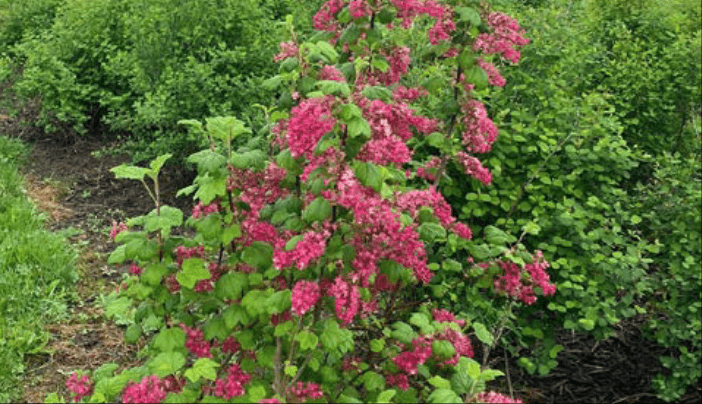
Ribes sanguineum Red-flowering currant
Ribes divaricatum Black gooseberry*
Ribes nigrum Black currant*
Rosa nutkana Nootka rose
Salix fluviatilis Columbia River willow*
Salix hookeriana Hooker’s willow*
Sambucus cerulea Blue elderberry*
Spiraea douglasii Western spiraea*
Vaccinium corymbosum Blueberry*
Vaccinium ovatum Evergreen huckleberry
Viburnum opulus Highbush cranberry
Sun-tolerant plants 25+ feet tall
Abies grandis Grand fir
Acer macrophyllum Bigleaf maple
Alnus rubra Red alder*
Arbutus menziesii Madrone
Asimina Pawpaw
Calocedrus decurrens Incense-cedar
Castanea Chestnut
Chrysolepis chrysophylla Golden chinkapin
Diospyros virginiana Persimmon
Fraxinus latifolia Oregon ash*
Juglans regia English walnut
Picea species Spruce
Pinus ponderosa Ponderosa pine
Populus trichocarpa Black cottonwood
Prunus subcordata Klamath plum*
Pseudotsuga menziesii Douglas-fir
Quercus garryana Oregon white oak
Robinia pseudoacacia Black locust
Thuja plicata Western redcedar
Groundcovers
Fragaria chiloensis Strawberry
Gaultheria shallon Salal
Mahonia nervosa Oregon grape
Polystichum munitum Sword fern
Vaccinium vitis idaea Lingonberry
Vines
Lonicera Honeysuckle
Akebia Five-fingered akebia*
Plants for pond edges
Typha latifolia Cattail*
Ledum glandulosum Labrador tea
Plants that tolerate shade
Chrysolepis chrysophylla Golden chinkapin
Cornus nuttallii Western flowering dogwood*
Corylus cornuta Hazel*
Physocarpus capitatus Ninebark
Polystichum munitum Sword fern
Sambucus racemosa Red elderberry*
Prunus virginiana Chokecherry
Plants for partial shade to shade
Acer circinatum Vine maple *
Amelanchier alnifolia Serviceberry
Berberis aquifolium Oregon grape
Gaultheria shallon Salal
Cornus stolonifera Red-osier dogwood
Holodiscus discolor Oceanspray
Lonicera involucrata Twinberry
Oemleria cerasiformis Indian plum
Philadelphus lewisii Mock orange
Rhamnus purshiana Cascara sagrada
Taxus brevifolia Western yew*
Vaccinium ovatum Evergreen huckleberry
Edge plantings
Achillea millefolium Yarrow
Arctostaphylos uva-ursi Kinnikinnick
Berberis nervosa Cascade Oregon grape
Calendula officinalis Calendula
Cichorium intybus Chicory
Foeniculum vulgare Fennel
Fragaria chiloensis Wild strawberry
Gaultheria shallon Salal
Lavandula angustifolia English lavender
Medicago sativa Alfalfa
Nuts
Carya illinoinensis Northern pecans
Carya ovata Shagbark hickory
Castanea Chestnuts
Ginkgo biloba Gingko
Juglans ailantifolia Heartnut
Juglans regia English Walnut
Xanthoceras sorbifolium Yellowhorn
Plants for arid environments
Plantings around vineyards
Some flowering plants attract specific kinds of beneficials, for example, carnivorous flies (Oregon sunshine), predatory bugs (stinging nettle) and Anagrus wasps (sagebrush). Research shows trends of reduced pest abundance and increased beneficial insect diversity and abundance in vineyards with a diversity of native flowering plants compared to vineyards lacking native plants.
Incentive programs to help with hedgerow establishment
Conservation Reserve Enhancement Program
In exchange for removing environmentally sensitive land from production and establishing permanent resource-conserving plant species, farmers and ranchers are paid an annual rental rate along with other federal and state incentives. This program is administered through the USDA Farm Service Agency and local Soil and Water Conservation districts.
Environmental Quality Incentives Program
This program provides financial and technical assistance to agricultural producers in order to address natural resource concerns and deliver environmental benefits such as improved water and air quality, conserved ground and surface water, reduced soil erosion and sedimentation or improved or created wildlife habitat. The program is administered through the USDA Natural Resources Conservation Service via local field offices.
Guard, J.B. Wetland Plants of Oregon and Washington. 2010. Lone Pine Publishing.
Imhoff, D. and R. Carra. Farming With The Wild: Enhancing Biodiversity on Farms and Ranches. 2011. Sierra Club Books.
Kruckenberg, A. Gardening With Natives of the Pacific Northwest. 1982. University of Washington Press.
Lee-Mäder, E., J. Hopwood, M. Vaughan, S. Hoffman Black and L. Morandin. Farming with Native Beneficial Insects: Ecological Pest Control Solutions. 2014. Storey Publishing.
Link, R. Landscaping for Wildlife in the Pacific Northwest. 1999. University of Washington Press,
Mader, E., M. Shepherd, M. Vaughan, S. Black, G. LeBuhn, Attracting Native Pollinators. 2011. The Xerces Society for Invertebrate Conservation.
Martin, A., H.S. Zim, A.L. Nelson. American Wildlife and Plants: A Guide To Wildlife Food Habits. 1951. Dover Publications.
Pendergrass, K., M. Vaughan and J. Williams. Plants for Pollinators in Oregon.2007. USDA Natural Resources Conservation Service and The Xerces Society for Invertebrate Conservation,
We have never thought of this before but the question is a valid one.
The article, which was presented by The Conversation, raised the question. As you will see the article starts with the sentence “Americans love dogs.” To my mind, it is many more people than Americans who love dogs. Let’s read the article.
It all seems part of what Mark Cushing, a lawyer and lobbyist for veterinary issues, calls “the pet revolution”: the more and more privileged place that pets occupy in American society. In his 2020 book “Pet Nation,” he argues that the internet has caused people to become more lonely, and this has made them focus more intensely on their pets – filling in for human relationships.
I would argue that something different is happening, however, particularly since the COVID-19 lockdown: Loving dogs has become an expression not of loneliness but of how unhappy many Americans are with society and other people.
And I am no different. I live with three dogs, and my love for them has driven me to research the culture of dog ownership in an effort to understand myself and other humans better. By nature, dogs are masters of social life who can communicate beyond the boundaries of their species. But I believe many Americans are expecting their pets to address problems that they cannot fix.
Rescuing shelter animals grew in popularity, and on social media people celebrated being at home with their pets. Dog content on Instagram and Pinterest now commonly includes hashtags like #DogsAreBetterThanPeople and #IPreferDogsToPeople.
One 2025 study found that dog owners tend to rate their pets more highly than their human loved ones in several areas, such as companionship and support. They also experienced fewer negative interactions with their dogs than with the closest people in their lives, including children, romantic partners and relatives.
Today, millennials make up the largest percentage of pet owners. Some cultural commentators argue dogs are especially important for this generation because other traditional markers of stability and adulthood – a mortgage, a child – feel out of reach or simply undesirable. According to the Harris Poll, a marketing research firm, 43% of Americans would prefer a pet to a child.
Amid those pressures, many people turn to the comfort of a pet – but the expectations for what dogs can bring to our lives are becoming increasingly unreasonable.
For some people, dogs are a way to feel loved, to relieve pressures to have kids, to fight the drudgery of their job, to reduce the stress of the rat race and to connect with the outdoors. Some expect pet ownership to improve their physical and mental health.
But expecting that dogs will fill the social and emotional gaps in our lives is actually an obstacle to dogs’ flourishing, and human flourishing as well.
In philosophical terms, we could call this an extractive relationship: Humans are using dogs for their emotional labor, extracting things from them that they cannot get elsewhere or simply no longer wish to. Just like natural resource extraction, extractive relationships eventually become unsustainable.
The late cultural theorist Lauren Berlant argued that the present stage of capitalism creates a dynamic called “slow death,” a cycle in which “life building and the attrition of life are indistinguishable.” Keeping up is so exhausting that, in order to maintain that life, we need to do things that result in our slow degradation: Work becomes drudgery under unsustainable workloads, and the experience of dating suffers under the unhealthy pressure to have a partner.
Similarly, today’s dog culture is leading to unhealthy and unsustainable dynamics. Veterinarians are concerned that the rise of the “fur baby” lifestyle, in which people treat pets like human children, can harm animals, as owners seek unnecessary veterinary care, tests and medications. Pets staying at home alone while owners work suffer from boredom, which can cause chronic psychological distress and health problems. And as the number of pets goes up, many people wind up giving up their animal, overcrowding shelters.
So what should be done? Some philosophers and activists advocate for pet abolition, arguing that treating any animals as property is ethically indefensible.
Perhaps we can reconfigure aspects of home, family and society to be better for dogs and humans alike – more accessible health care and higher-quality food, for example. A world more focused on human thriving would be more focused on pets’ thriving, too. But that would make for a very different America than this one.
I do not recognise the unhealthy culture as mentioned four paragraphs above. But Jeannie and me do understand and believe the alternative: “Some scientists argue that dogs made us human, not the other way around.”
I’ve said it many times before but perhaps some of our newer readers haven’t heard the fact that when I met Jean in 2007 she was looking after twenty-three dogs, and numerous cats, and it was pure magic. In 2008 I went to Mexico, where Jean lived, with Pharaoh. Then in 2010 we came north to Arizona to be married. We had sixteen dogs and seven cats with us.
It might come as a surprise to learn that the brain responds to training in much the same way as our muscles, even though most of us never think about it that way. Clear thinking, focus, creativity and good judgment are built through challenge, when the brain is asked to stretch beyond routine rather than run on autopilot. That slight mental discomfort is often the sign that the brain is actually being trained, a lot like that good workout burn in your muscles.
Think about walking the same loop through a local park every day. At first, your senses are alert. You notice the hills, the trees, the changing light. But after a few loops, your brain checks out. You start planning dinner, replaying emails or running through your to-do list. The walk still feels good, but your brain is no longer being challenged.
Routine feels comfortable, but comfort and familiarity alone do not build new brain connections.
For decades, scientists believed that the brain’s ability to grow and reorganize, called neuroplasticity, was largely limited to childhood. Once the brain matured, its wiring was thought to be largely fixed.
But that idea has been overturned. Decades of research show that adult brains can form new connections and reorganize existing networks, under the right conditions, throughout life.
The takeaway is simple: Repetition keeps the brain running, but novelty pushes the brain to adapt, forcing it to pay attention, learn and problem-solve in new ways. Neuroplasticity thrives when the brain is nudged just beyond its comfort zone.
Tasks that stretch your brain just beyond its comfort zone, such as knitting and crocheting, can improve cognitive abilities over your lifespan – and doing them in a group setting brings an additional bonus for overall health. Dougal Waters/DigitalVision via Getty Images
The reality of neural fatigue
Just like muscles, the brain has limits. It does not get stronger from endless strain. Real growth comes from the right balance of challenge and recovery.
When the brain is pushed for too long without a break – whether that means long work hours, staying locked onto the same task or making nonstop decisions under pressure – performance starts to slip. Focus fades. Mistakes increase. To keep you going, the brain shifts how different regions work together, asking some areas to carry more of the load. But that extra effort can still make the whole network run less smoothly.
Neural fatigue is more than feeling tired. Brain imaging studies show that during prolonged mental work, the networks responsible for attention and decision-making begin to slow down, while regions that promote rest and reward-seeking take over. This shift helps explain why mental exhaustion often comes with stronger cravings for quick rewards, like sugary snacks, comfort foods or mindless scrolling. The result is familiar: slower thinking, more mistakes, irritability and mental fog.
This is where the muscle analogy becomes especially useful. You wouldn’t do squats for six hours straight, because your leg muscles would eventually give out. As they work, they build up byproducts that make each contraction a little less effective until you finally have to stop. Your brain behaves in a similar way.
Likewise, in the brain, when the same cognitive circuits are overused, chemical signals build up, communication slows and learning stalls.
Overdoing any task, whether it be weight training or sitting at the computer for too long, can overtax the muscles as well as the brain. Halfpoint Images/Moment via Getty Images
Sleep is the brain’s night shift. While you rest, the brain takes out the trash through a special cleanup system called the glymphatic system that clears away waste and harmful proteins. Sleep also restores glycogen, a critical fuel source for brain cells.
During REM sleep, the stage of sleep linked to dreaming, the brain replays patterns from the day to consolidate memories. This process is critical not only for cognitive skills like learning an instrument but also for physical skills like mastering a move in sports.
The most important lesson from this science is simple. Your brain is not passively wearing down with age. It is constantly remodeling itself in response to how you use it. Every new challenge and skill you try, every real break, every good night of sleep sends a signal that growth is still expected.
You do not need expensive brain training programs or radical lifestyle changes. Small, consistent habits matter more. Try something unfamiliar. Vary your routines. Take breaks before exhaustion sets in. Move your body. Treat sleep as nonnegotiable.
So the next time you lace up your shoes for a familiar walk, consider taking a different path. The scenery may change only slightly, but your brain will notice. That small detour is often all it takes to turn routine into training.
The brain stays adaptable throughout life. Cognitive resilience is not fixed at birth or locked in early adulthood. It is something you can shape.
If you want a sharper, more creative, more resilient brain, you do not need to wait for a breakthrough drug or a perfect moment. You can start now, with choices that tell your brain that growth is still the plan.
That last section of the article is most powerful. I’m speaking of the section that is headed Train, recover, repeat.
The human brain notices when even small changes to our normal routine occur. Also that exercise strengthens the brain plus our brains stay adaptable throughout our lives. Amazing!
I am in touch with a fellow blogger. Her name is Bela Johnson and her blog is Belas Bright Ideas.
Recently, Bela sent me the following document about the body and I am reproducing it here for you.
ooOOoo
5-7 a.m. — Large Intestine — Drinking water triggers bowel evacuation making room for the new day’s nutritional intake. Removes toxins from the night’s cleansing.
7-9 a.m. — Stomach — Stomach energies are the highest so eat the most important meal of the day here to optimize digestion/assimilation.
9-11 a.m. — Pancreas — The stomach passes its contents on. Enzymes from the pancreas continue the digestive process. Carbohydrate energy made available.
11 a.m.-1 p.m. — Heart — Food materials enter the blood stream. The heart pumps nutrients throughout the system and takes its lipid requirements.
1-3 p.m. — Small Intestine — Foods requiring longer digestion times (proteins) complete their digestion/assimilation.
3-5 p.m. — Bladder — Metabolic wastes from morning’s nutrition intake clear, making room for the kidney’s filtration to come.
5-7 p.m. — Kidney — Filters blood (decides what to keep, what to throw away), maintains proper chemical balance of blood based on nutritional intake of day. Blood to deliver useable nutrients to all tissues.
7-9 p.m. — Circulation — Nutrients are carried to groups of cells (capillaries) and to each individual cell (lymphatics.)
9-11 p.m. — Triple Heater — The endocrine system adjusts the homeostasis of the body based on electrolyte and enzyme replenishment.
11 p.m.- 1 a.m. — Gall Bladder — Initial cleansing of all tissues, processes cholesterol, enhances brain function.
1-3 a.m. — Liver — Cleansing of blood. Processing of wastes.
Put in proper order (DU) – construction of blueprint.
ooOOoo
The above list came on the back of an email that Bela sent to me, and again I publish that email.
Paul I agree with all of this IN THEORY. But digestion systems are really individual. What one person can eat, another one just cannot digest. I have spent my entire life discovering what it is I ‘could’ digest! When I got into TCM Traditional Chinese medicine (because both my daughters are practitioners), it was the only system that agreed with what I’m saying to you now. We are all unique, and sometimes we present with things that are contradictory in any other system. Damp but also dry. Cold but also hot.
At any rate, the Chinese have a theory that the organs cleanse themselves while we sleep. There’s a chart (and you can look this up online), that shows what organ is cleansing at what time. So it is recommended that we eat nothing after 7 PM at the very latest. Because then the cleansing begins, and so demanding that our system digest something during the cleansing time is just really paddling upstream. So both Chris and I find that we sleep way more soundly when we don’t eat anything preferably after six, but after seven at the latest. And yes, both of us do a magnesium supplement at night. Anyhow, good to make people aware that we are what we eat in so many ways!
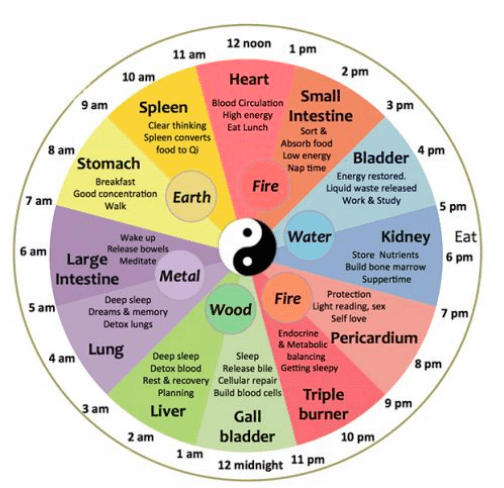
Finally, here is that chart and the accompanying text that largely follows what Bela published above.
Chinese Medicine’s 24 hour body clock is divided into 12 two-hour intervals of the Qi (vital force) moving through the organ system. Chinese Medicine practitioners use The Organ Body Clock to help them determine the organ responsible for diseases. For example, if you find yourself waking up between the hours of 3-5am each morning, you may have underlying grief or sadness that is bothering you or you may have a condition in the lung area. If feelings of anger or resentment arise, you may feel them strongest during the time of the Liver which is 1-3am or perhaps if you experience back pain at the end of your working day, you could have pent up emotions of fear, or perhaps even Kidney issues.
The Body-Energy Clock is built upon the concept of the cyclical ebb and flow of energy throughout the body. During a 24-hour period (see diagram that follows) Qi moves in two-hour intervals through the organ systems. During sleep, Qi draws inward to restore the body. This phase is completed between 1 and 3 a.m., when the liver cleanses the blood and performs a myriad of functions that set the stage for Qi moving outward again.
In the 12-hour period following the peak functioning of the liver—from 3 a.m. onward—energy cycles to the organs associated with daily activity, digestion and elimination: the lungs, large intestine, stomach/pancreas, heart, small intestine. By mid-afternoon, energy again moves inward to support internal organs associated with restoring and maintaining the system. The purpose is to move fluids and heat, as well as to filter and cleanse—by the pericardium, triple burner (coordinates water functions and temperature), bladder/kidneys and the liver.
5 am to 7 am is the time of the Large Intestine making it a perfect time to have a bowel movement and remove toxins from the day before. It is also the ideal time to wash your body and comb your hair. It is believed that combing your hair helps to clear out energy from the mind. At this time, emotions of defensiveness or feelings of being stuck could be evoked.
7-9am is the time of the Stomach so it is important to eat the biggest meal of the day here to optimize digestion and absorption. Warm meals that are high in nutrition are best in the morning. Emotions that are likely to be stirred at this time include disgust or despair.
9-11am is the time of the Pancreas and Spleen, where enzymes are released to help digest food and release energy for the day ahead. This is the ideal time to exercise and work. Do your most taxing tasks of the day at this time. Emotions such as low self-esteem may be felt at this time.
11am- 1pm is the time of the Heart which will work to pump nutrients around the body to help provide you with energy and nutrition. This is also a good time to eat lunch and it is recommend to have a light, cooked meal. Having a one hour nap or a cup of tea is also recommended during this time. Feelings of extreme joy or sadness can also be experienced at this time.
1-3pm is the time of the Small Intestine and is when food eaten earlier will complete its digestion and assimilation. This is also a good time to go about daily tasks or exercise. Sometimes, vulnerable thoughts or feelings of abandonment my subconsciously arise at this time.
3-5pm is the time of the Bladder when metabolic wastes move into the kidney’s filtration system. This is the perfect time to study or complete brain-challenging work. Another cup of tea is advised as is drinking a lot of water to help aid detoxification processes. Feeling irritated or timid may also occur at this time.
5-7pm is the time of the Kidneys when the blood is filtered and the kidneys work to maintain proper chemical balance. This is the perfect time to have dinner and to activate your circulation either by walking, having a massage or stretching. Subconscious thoughts of fear or terror can also be active at this time.
7-9pm is the time of Circulation when nutrients are carried to the capillaries and to each cell. This is the perfect time to read. Avoid doing mental activities at this time. A difficulty in expressing emotions may also be felt however, this is the perfect time to have sex or conceive.
9-11pm is the time of Triple Heater or endocrine system where the body’s homeostasis is adjusted and enzymes are replenished. It is recommended to sleep at this time so the body can conserve energy for the following day. Feelings of paranoia or confusion may also be felt.
11pm-1am is the time of the Gall Bladder and in order to wake feeling energized the body should be at rest. In Chinese medicine, this period of time is when yin energy fades ad yang energy begins to grow. Yang energy helps you to keep active during the day and is stored when you are asleep. Subconscious feelings of resentment may appear during this time.
1-3am is the time of the Liver and a time when the body should be alseep. During this time, toxins are released from the body and fresh new blood is made. If you find yourself waking during this time, you could have too much yang energy or problems with your liver or detoxification pathways. This is also the time of anger, frustration and rage.
3-5am the time of the Lungs and again, this is the time where the body should be asleep. If woken at this time, nerve soothing exercises are recommended such as breathing exercises. The body should be kept warm at this time too to help the lungs replenish the body with oxygen. The lungs are also associated with feelings of grief and sadness.
Understanding that every organ has a repair/maintenance schedule to keep on a daily basis offers you the opportunity to learn how to treat yourself for improved health and well-being. It also allows you to identify exactly which organ system or emotion needs strengthening/resolving. Always use your symptoms and body cues as a guide, and if you make a connection above, such as that you get sleepy between 5-7pm, don’t hesitate to research what you can do to strengthen that meridian (which would be the Kidneys). A great solution to deficient kidneys is having a sweet potato for breakfast!
Make sure to look at the emotional aspect too. If you’re sleepy during kidney time, do you have any fears holding you back from reaching your true potential? Are you afraid of rejection? Failure? Addressing this emotion will strengthen the organ and improve your physical health forever.
With the transferable knowledge of TCM you can use the clock for any time of day.
Five photographs of their new dog from my good friend, Dan!
(Andthe first four don’t show Raven clearly so go to the last photo.)
oooo
oooo
Dan’s wife, Hannah, holding Raven.
oooo
oooo
Here he is and what a beauty Raven is. Raven is a Black-coated Retriever. I will conclude this Picture Parade by republishing a short extract from that WikiPedia file.
“The Flat-coated Retriever is a gun dogbreed originating from England. It was developed as a retriever both on land and in the water.
The Flat-Coated Retriever breed standard calls for males to be 23–25 in (58–64 cm) tall at the withers, with a recommended weight of 60–80 lb (27–36 kg), and for females to be 22–24 in (56–61 cm), with a recommended weight of 55–75 lb (25–34 kg).
The Flat-Coated Retriever has strong muscular jaws and a relatively long muzzle. Its head is unique to the breed and is described as being “of one piece” with a minimal stop and a backskull of about the same length as the muzzle. It has almond-shaped, dark brown eyes with an intelligent, friendly expression. The ears are pendant, relatively small, and lie close to the head. The occiput (the bone at the back of the skull) is not to be accentuated (as it is in setters, for example) with the head flowing smoothly into a well-arched neck. The topline is strong and straight with a well-feathered tail of moderate length held straight off the back. This breed should be well angulated front and rear, allowing for open, effortless movement.“
I subscribe to a number of services and one of them is Super Age. Part of their story is shown here:
“Super Age is a new media brand at the intersection of longevity science, culture, and the power of mindset to redefine what’s possible in this one extraordinary life, because thriving is about living well, living longer, and living boldly with intention.”
Jean and I certainly agree with that, as do many, many senior folk. I trust Super Age will not mind if I reproduce in full a recent article that they published.
ooOOoo
You already know not to scroll before bed or down a latte at 4 p.m., but did you know your dinner plate might be sabotaging your sleep?
Emerging research shows that what we eat directly influences how well we sleep, from how fast we fall asleep to how long we stay in deep, restorative sleep. Certain nutrients act as natural sleep aids, while others disrupt your body’s circadian rhythms or blood sugar balance. The good news? A few strategic shifts can help your body rest better, night after night.
5 Sleep-Friendly Nutrients to Add to Your Diet
What you eat in the hours leading up to bedtime can either support your body’s natural sleep cycles or short-circuit them. Specific nutrients work behind the scenes to regulate hormones, calm the nervous system, and stabilize your blood sugar while you rest. Here are five research-backed nutritional strategies to help you fall asleep faster, sleep more deeply, and wake up feeling restored.
1. Magnesium for Muscle Relaxation and Deeper Sleep
Magnesium helps quiet the nervous system, supports slow-wave (deep) sleep, and significantly increases sleep time while decreasing early morning awakening.
THE FOODS:
Add leafy greens (spinach, Swiss chard, collard greens), almonds, cashews, avocado, chickpeas, lentils and pumpkin, flax, and chia seeds like pumpkin to your daily meals.
2. Tryptophan to Increase Sleep Time
Tryptophan is an amino acid that helps the brain produce serotonin, which is then converted into melatonin, the hormone that signals it’s time to sleep. Research shows that tryptophan increases total sleep time, reduces waking time, and number of awakenings.
THE FOODS:
Kidney beans, chickpeas, red lentils, chicken, turkey, rice, eggs, oats, pumpkin seeds, and even tofu are natural sources.
3. Omega-3 Fatty Acids Essential fats to Support Circadian Health
4. Fiber-Rich Carbohydrates Stabilize Blood Sugar Overnight
These support overnight glucose stability, which leads to deeper sleep by promoting slow-wave sleep and reducing REM-related arousals.
THE FOODS:
Lentils, steel-cut or rolled oats, barley, sweet potatoes, quinoa, berries,
5. Melatonin to Improve Sleep Onset and Quality
Melatonin is a hormone naturally produced by the body to signal that it’s time to sleep. Levels rise in the evening and fall in the morning, helping to regulate your circadian rhythm. Your body’s internal clock that regulates sleep and wake cycles. Eating foods that contain small amounts of melatonin may help support this cycle and improve sleep onset and quality, especially when consumed in the evening.
THE FOODS:
Tart cherries, kiwi, walnuts, pistachios, (Eggs, salmon, yogurt and oats, provide tryptophan, B6, magnesium, and zinc. A mineral important for immune function and wound healing which your brain needs to make melatonin).
Bonus: Your Gut, Your Sleep: Why Microbiome Health Matters.
Your gut and brain are in constant communication via the gut-brain axis and the two-way communication between your digestive system and brain plays a key role in sleep regulation. A healthy gut microbiome supports the production of sleep-promoting neurotransmitters like serotonin and GABA,modulates inflammation and influences circadian rhythm through microbial metabolites such as short-chain fatty acids.
A 2025 review in the Journal of Food Science highlights how prebiotics, probiotics and fermented foods can enhance sleep by improving microbiome composition and supporting these neurochemical pathways. Though more large-scale human trials are needed, the emerging science is promising. Here’s how you should load your plates with during the day to support your microbiome:
Fiber-rich foods like leafy greens, berries, garlic, oats, and whole grains to nourish beneficial gut bacteria.
Fermented foods like yogurt, kefir, kimchi, and sauerkraut to introduce sleep-supportive probiotics.
By feeding your body the nutrients it needs to regulate melatonin, balance blood sugar, and calm the nervous system, you create the perfect internal environment for consistent, rejuvenating rest. Think of it as a nightly investment in longevity, cognition, and metabolic health—served with a side of quinoa.
Check out our Super Age Sleep Guide for more tips on improving the quality of your sleep.
ooOOoo
I wonder how many people are affected by a poor diet, and, more importantly, want to amend what they eat especially for their dinner.
Super Age in general publish sensible articles and this is down to an impressive group of scientific advisors. More details here!