Category: Health

More on Bill McKibben’s book, eaarth.

Some very telling points.

I first mentioned this book on the 13th May when I was about a third of the way in.  Because I thought there might be material useful to the course that has been running here in Payson, I did skip around the book looking for ‘attention-grabbing’ points.  It wasn’t difficult to find numerous extracts.

Try this on page 214 from the Chapter Afterword.

As it turns out, however, the BP spill was not the most dangerous thing that happened in the months after this book was first published.  In fact, in the spring and summer of 2101, the list of startling events in the natural world included:

  • Nineteen nations setting new all-time high temperature records, which in itself is a record.  Some of those records were for entire regions – [then some of the details]
  • Scientists reported that the earth had just come through the warmest six months, the warmest year, and the warmest decade for which we have records; it appears 2010 will be the warmest calendar year on record.
  • The most protracted and extreme heat wave in a thousand years of Russian history (it had never before topped 100 degrees in Moscow) led to a siege of peat fires that shrouded the capital in ghostly, deadly smoke.  [Then goes on to mention the effect of this heat on global grain prices.]
  • Since warm air holds more water vapour that cold air, scientists were not surprised to see steady increases in flooding.  Still, the spring and summer of 2010 were off the charts.  We saw “thousand-year storms” across the globe [goes into details]
  • Meanwhile, in the far north, the Petermann Glacier on Greenland calved an iceberg four times the size of Manhattan.
  • And the most ominous news of all might have come from the pages of the eminent scientific journal Nature, which published an enormous study of the productivity of the earth’s seas. [More details follow – not good news!]
That last point can be read in more detail from Nature‘s website.  It’s here.
The book closes thus (referring to how the BP oil spill was, ultimately, an accident),
But the greatest danger we face, climate change, is no accident.  It’s what happens when everything goes the way it’s supposed to go.  It’s not a function of bad technology, it’s a function of a bad business model: of the fact that Exxon Mobil and BP and Peabody Coal are allowed to use the atmosphere, free of charge, as an open sewer for the inevitable waste from their products.  They’ll fight to the end to defend that business model, for it produces greater profits that any industry has ever known.  We won’t match them dollar for dollar: To fight back, we need a different currency, our bodies and our spirit and our creativity.  That’s what a movement looks like; let’s hope we can rally one in time to make a difference.
Powerful stuff from a powerful book.
Fired up?  Then go and join:  350.org

Until Tuesday, a book review

But a review with a difference.

The background.  My fellow author, Jon Lavin, received an email on the 6th May, as follows,

Dear Jon,

Hello, I am writing from Headline publishers to ask whether you might like to review the book Until Tuesday by Luis Carlos Montalvan on your blog Learning From Dogs. I understand that the title of your blog is a metaphor, but in this case it is particularly apt, as the book details a very special relationship between a man and his dog. The book is written by a retired U.S. Army captain, Captain Luis Carlos Montalvan, and it describes the way in which the Captain’s participation in the army and in Iraq in particular, left him suffering from an extreme case of Post Traumatic Stress Disorder, so much so that even performing small daily tasks were almost impossible for him. That is, until service dog Tuesday was brought into his life. Tuesday truly taught the Captain how to function again, and furthermore, how to enjoy life again. I believe that the blog’s posts such as ‘Dogs and integrity’ and, indeed, the blog’s opening statement, indicate that this book might be of interest to you.

Well Jon, at that time, still wasn’t clear of the last hurdles of his MA, so I offered to do the review and contacted Headline and, as a consequence, Montalvan’s book arrived here in Payson yesterday.  Frankly, although flattered by the nice words written about Learning from Dogs and the invite to review the book, I didn’t have a clue as how to approach the job in hand.  To be honest, I still don’t!

So I am not going to study how other book reviews are put together, I’m just going to give you my feelings and reactions as they happen.

It was a busy day so I did no more than open the envelope, read the front and back covers of the book, plus the single page ‘flyer’ from Headline Publishing included in the envelope.

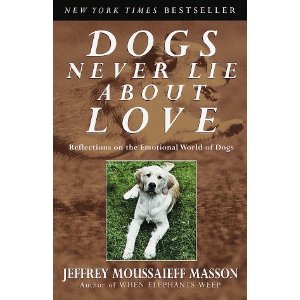
This is the front cover of the book (slightly different layout to the American version, by the way) which for any dog lover (we have 12 dogs here in Payson) is obviously eye-catching.

Then idly, I opened the book completely at random, it was page 243, and read from the start of the first paragraph on that page.  Here’s what I read,

A few days later, Tuesday quietly crossed our apartment as I read a book and, after a nudge against my arm, put his head on my lap.  As always, I immediately checked my mental state, trying to assess what was wrong.  I knew a change in my biorhythms had brought Tuesday over, because he was always monitoring me, but I couldn’t figure out what it was.  Breathing? Okay. Pulse? Normal. Was I glazed or distracted? Was I lost in Iraq?  Was a dark period descending?  I didn’t think so, but I knew something must be wrong, and I was starting to worry … until I looked into Tuesday’s eyes.  They were staring at me softly from under those big eyebrows, and there was nothing in them but love.

When I put my hand on his head, he stepped on to the couch and raised his face to my own.  We stared at each other for a few seconds and then, slowly, Tuesday licked me.  Yes, on the lips … and the chin … and the nose … slobbering all over my face with that big slow-moving tongue.  That’s the moment when Tuesday, after all his caution, stopped being just my service dog, and my emotional support, and my conversation piece.  That’s when he became my friend.

I closed the book.  There were wet corners to my eyes, my voice was unsteady as I said to Jeannie, “Well I better get on with some stuff.” and left the room.

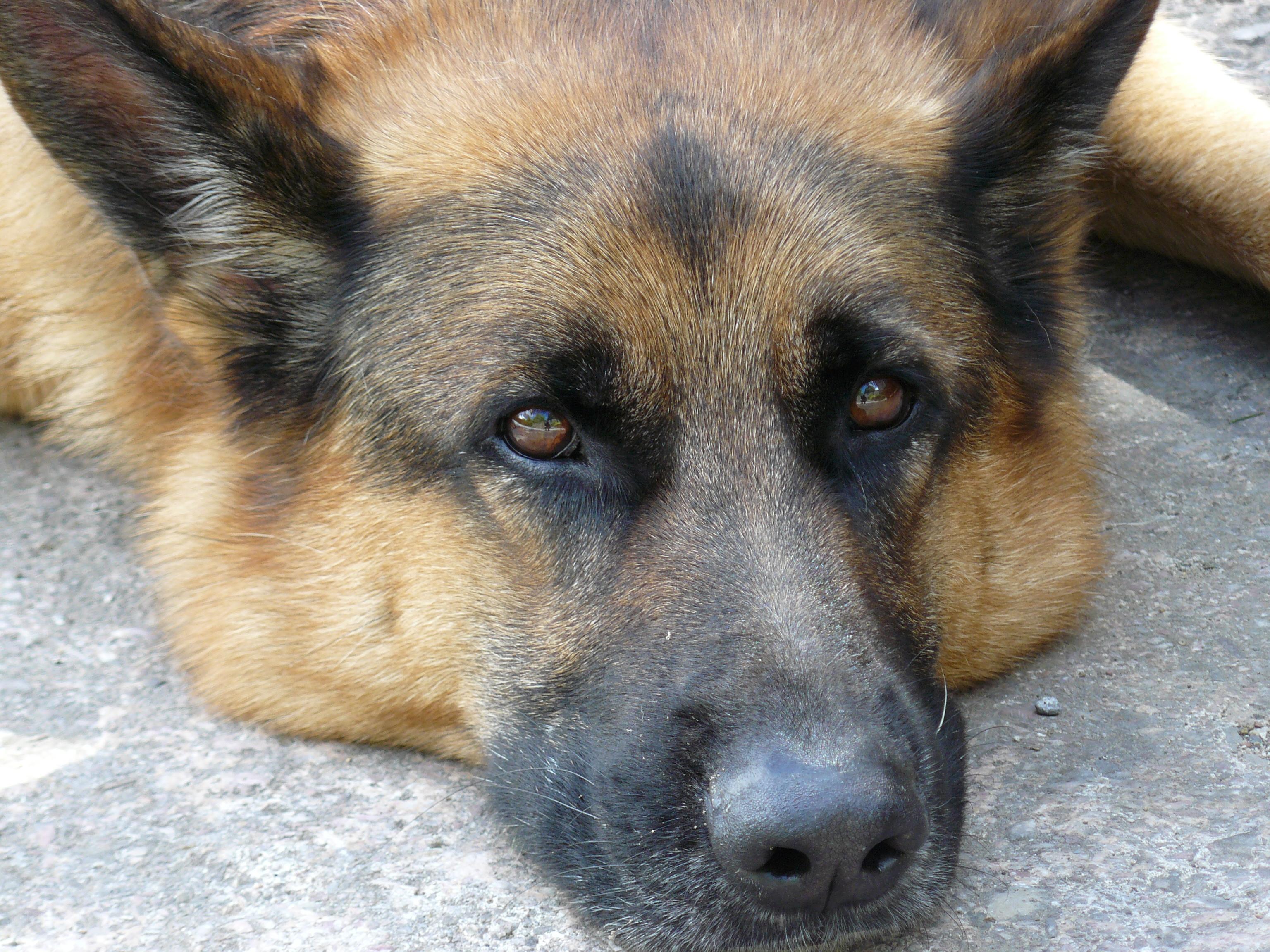
I was transported back to the start of 2007 when I had my own share of crap to deal with and having my friend Pharaoh, my German Shepherd (that’s him on the home page of Learning from Dogs) with me was my salvation, and the key to him and me finding this beautiful woman, my wife Jean, a dog lover extraordinaire, and a life that I couldn’t even have dreamt about.  Funny old world!

So, yes, I will enjoy reading Until Tuesday over the coming days and, dear reader, will report back from time to time.  The British publishers, Headline, have a synopsis on their website.  It reads thus,

UNTIL TUESDAY is the story of how Tuesday, a service dog, helps to heal a shattered soldier.

Luis Carlos Montalván is a 17-year veteran and retired captain of the US Army. Even after suffering stab wounds, a traumatic brain injury and three broken vertebrae, Captain Luis chose to remain at his post on the Iraq-Syria border. In his mind, he had come this far, now wasn’t the time to abandon his comrades.

However, when Luis returned home, the pressures and injuries proved too much to bear. Physical disabilities,agoraphobia and crippling PTSD drove him to the brink of suicide. And that’s when he met Tuesday.

UNTIL TUESDAY entwines Luis’ story of courage and bravery with that of his trusted dog, Tuesday, and shows how a brave soldier who fought tirelessly for his country, found a way back from the devastation of being injured in action, with the help of his canine friend.

eaarth, the book.

The latest edition of Bill McKibben’s book.

I’m about a third of the way through McKibben’s book eaarth.  To say that it is disturbing is an understatement.  I’ll tell you why.

eaarth

Most people when they think about it have, at the very least, feelings of guilt or denial in terms of what humans are doing to the planet’s environment that humans require for survival.  Many of us know in our hearts that it is probably not good news but maybe really thinking about it can be put off for a little longer!

It’s almost as though we know that those aches and pains are a sign of something potentially dangerous to our health but, hey ho, I’ll put off seeing the doctor for a little bit longer.

Then the day comes when one goes to the doctor and he confirms your worst fears; what you really knew deep in your heart.

Thus it is with the planet.  Most of us know that we have been treating the planet as an inexhaustible resource for the sole benefit of mankind and to hell with the future.  The you read a book such as eaarth from Bill McKibben and realise the extreme folly of denial, self-delusion, and the rest.  Here’s the preface of the book,

PREFACE

I’m writing these words on a gorgeous spring afternoon, perched on the bank of a brook high along the spine of the Green Mountains, a mile or so from my home in the Vermont mountain town of Ripton. The creek burbles along, the picture of a placid mountain stream, but a few feet away there’s a scene of real violence a deep gash through the woods where a flood last summer ripped away many cubic feet of tree and rock and soil and drove it downstream through the center of the village. Before the afternoon was out, the only paved road into town had been demolished by the rushing water, a string of bridges lay in ruins, and the governor was trying to reach the area by helicopter.

Twenty years ago, in 1989, I wrote the first book for a general audience about global warming, which in those days we called the “greenhouse effect.” That book, The End of Nature, was mainly a philosophical argument. It was too early to see the practical effects of climate change but not too early to feel them; in the most widely excerpted passage of the book, I described walking down a different river, near my then-home sixty miles away, in New York’s Adirondack Mountains. Merely knowing that we’d begun to alter the climate meant that the water fl owing in that creek had a different, lesser meaning. “Instead of a world where rain had an independent and mysterious existence, the rain had become a subset of human activity,” I wrote. “The rain bore a brand; it was a steer, not a deer.”

Now, that sadness has turned into a sharper-edged fear. Walking along this river today, you don’t need to imagine a damned thing the evidence of destruction is all too obvious. Much more quickly than we would have guessed in the late 1980s, global warming has dramatically altered, among many other things, hydrological cycles. One of the key facts of the twenty- first century turns out to be that warm air holds more water vapor than cold: in arid areas this means increased evaporation and hence drought. And once that water is in the atmosphere, it will come down, which in moist areas like Vermont means increased deluge and flood. Total rainfall across our continent is up 7 percent,1 and that huge change is accelerating. Worse, more and more of it comes in downpours.2 Not gentle rain but damaging gully washers: across the planet, flood damage is increasing by 5 percent a year.3 Data show dramatic increases 20 percent or more in the most extreme weather events across the eastern United States, the kind of storms that drop many inches of rain in a single day.4Vermont saw three flood emergencies in the 1960s, two in the 1970s, three in the 1980s and ten in the 1990s and ten so far in the first decade of the new century.

In our Vermont town, in the summer of 2008, we had what may have been the two largest rainstorms in our history about six weeks apart. The second and worse storm, on the morning of August 6, dropped at least six inches of rain in three hours up on the steep slopes of the mountains. Those forests are mostly intact, with only light logging to disturb them but that was far too much water for the woods to absorb. One of my neighbors, Amy Sheldon, is a river researcher, and she was walking through the mountains with me one recent day, imagining the floods on that August morning. “You would have seen streams changing violently like that,” she said, snapping her fingers. “A matter of minutes.” A year later the signs persisted: streambeds gouged down to bedrock, culverts obliterated, groves of trees laid to jackstraws.

Our town of barely more than five hundred people has been coping with the damage ever since. We passed a $400,000 bond to pay for our share of the damage to town roads and culverts. (The total cost was in the millions, most of it paid by the state and federal governments.) Now we’re paying more to line the creek with a seven-hundred-foot-long wall of huge boulders riprap, it’s called where it passes through the center of town, a scheme that may save a few houses for a few years, but which will speed up the water and cause even more erosion downstream. There’s a complicated equation for how wide a stream will be, given its grade and geology; Sheldon showed it to me as we reclined on rocks by the riverbank. It mathematically defines streams as we have known them, sets an upper limit to their size. You could use it to plan for the future, so you could know where to build and where to let well enough alone. But none of that planning works if it suddenly rains harder and faster than it has ever rained before, and that’s exactly what’s now happening. It’s raining harder and evaporating faster; seas are rising and ice is melting, melting far more quickly than we once expected. The first point of this book is simple: global warming is no longer a philosophical threat, no longer a future threat, no longer a threat at all. It’s our reality. We’ve changed the planet, changed it in large and fundamental ways. And these changes are far, far more evident in the toughest parts of the globe, where climate change is already wrecking thousands of lives daily. In July 2009, Oxfam released an epic report, “Suffering the Science,” which concluded that even if we now adapted “the smartest possible curbs” on carbon emissions, “the prospects are very bleak for hundreds of millions of people, most of them among the world’s poorest.”5

And so this book will be, by necessity, less philosophical than its predecessor. We need now to understand the world we’ve created, and consider urgently how to live in it. We can’t simply keep stacking boulders against the change that’s coming on every front; we’ll need to figure out what parts of our lives and our ideologies we must abandon so that we can protect the core of our societies and civilizations. There’s nothing airy or speculative about this conversation; it’s got to be uncomfortable, staccato, direct.

Which doesn’t mean that the change we must make or the world on the other side will be without its comforts or beauties. Reality always comes with beauty, sometimes more than fantasy, and the end of this book will suggest where those beauties lie. But hope has to be real. It can’t be a hope that the scientists will turn out to be wrong, or that President Barack Obama can somehow fix everything. Obama can help but precisely to the degree he’s willing to embrace reality, to understand that we live on the world we live on, not the one we might wish for. Maturity is not the opposite of hope; it’s what makes hope possible.

The need for that kind of maturity became painfully clear in the last days of 2009, as I was doing the final revisions for this book. Many people had invested great hope that the Copenhagen conference would mark a turning point in the climate change debate. If it did, it was a turning point for the worse, with the richest and most powerful countries making it abundantly clear that they weren’t going to take strong steps to address the crisis before us. They looked the poorest and most vulnerable nations straight in the eye, and then they looked away and concluded a face- saving accord with no targets or timetables. To see hope dashed is never pleasant. In the early morning hours after President Obama jetted back to Washington, a group of young protesters gathered at the metro station outside the conference hall in Copenhagen.It’s our future you decide, they chanted.

My only real fear is that the reality described in this book, and increasingly evident in the world around us, will be for some an excuse to give up. We need just the opposite increased engagement. Some of that engagement will be local: building the kind of communities and economies that can withstand what’s coming. And some of it must be global: we must step up the fight to keep climate change from getting even more powerfully out of control, and to try to protect those people most at risk, who are almost always those who have done the least to cause the problem. I’ve spent much of the last two de cades in that fight, most recently helping lead 350.org, a huge grassroots global effort to force dramatic action. It’s true that we’ve lost that fight, insofar as our goal was to preserve the world we were born into. That’s not the world we live on any longer, and there’s no use pretending otherwise.

But damage is always relative. So far we’ve increased global temperatures about a degree, and it’s caused the massive change chronicled in chapter 1. That’s not going to go away. But if we don’t stop pouring more carbon into the atmosphere, the temperature will simply keep rising, right past the point where any kind of adaptation will prove impossible. I have dedicated this book to my closest colleagues in this battle, my crew at 350.org, with the pledge that we’ll keep battling. We have no other choice.

Chernobly, Fukushima and change.

From out of darkness has to come the dawn

One side effect of the earthquake and tsunami that hit Northern Japan on the 11th March causing an explosion at the Fukushima nuclear power station is that the anniversary of the Chernobyl disaster is much more a news item than I suspect it might have been.

The nuclear accident at Chernobyl in Russia occurred on the 26th April, 1986, twenty-five years ago today.  One major difference between the two disasters was, of course, how they were reported.

Here’s a small extract from a fuller article in The Financial Times published on the 19th April written by Tony Barber who was in Russia those 25 years ago.

Twenty-five years after the explosion at the Ukrainian facility, I vividly recall every detail of those terrible days of April 1986. I was a 26-year-old foreign correspondent working in Moscow for Reuters news agency. On Friday, April 25, I flew to Kiev to spend a couple of days with Rhona, an ebullient Scottish friend who was teaching at the city’s university under a British Council programme. I was the only western journalist in Kiev that weekend.

While we caroused the night away, extraordinary events were unfolding 130km to the north. Technicians were conducting experiments that involved the disabling of automatic shutdown mechanisms at the plant’s fourth reactor. After a tremendous power surge, the reactor blew up at 1.23am on Saturday, April 26.

Except for high-ranking Communist party officials, the KGB and a number of scientists, doctors and fire-fighters, no one in the Soviet Union, let alone the wider world, knew anything about this. Soviet habits of secrecy and deception kept millions of people in the dark even as radiation spread across Ukraine, Belarus, Russia and beyond.

Certainly the disaster in Japan was widely broadcast across the world without any delays or restraints.  But the thrust of this Post today is to point out what, in the end, will have to be understood by the majority of the world’s peoples and their representatives in power.  That is that our dependence, our love affair, with cheap carbon-based energy has to come to an end, and soon.

On the 26th March, The Economist published a briefing on nuclear power entitled, When the steam clears.  As with so many of this newspaper’s essays, it was very well written [I am a subscriber to The Economist; have been for years.]  Here’s a taste of the article,

When last year a volcano closed the skies over Europe and a blown-out oil-rig turned the Gulf of Mexico black, there was no widespread enthusiasm for giving up oil or air travel. But nuclear power is much less fundamental to the workings of the world than petrol or aeroplanes. Nuclear reactors generate only 14% of the world’s electricity, and with a median age of about 27 years (see chart) and a typical design life of 40 a lot are nearing retirement. Although the world is eager to fly and thirsts for oil, it has had little appetite for new nuclear power for the past quarter of a century.

And towards the end of the article, this,

Distressing though it is, the crisis at Fukushima Dai-ichi is not in itself a reason for the world to change energy policy. The public-health effects seem likely, in the long run, to be small. Coal, with its emissions of sulphur, mercury and soot, will continue to kill far more people per kilowatt hour than nuclear does. But as an opportunity to reflect it may be welcome.  [my italics]

Power of hope

We need a continued growing awareness of the craziness of using coal and oil as primary sources of energy, and from that awareness a growing political pressure for change.  Change that recognises that mankind’s present energy strategies of continuing to pump carbon-based gases into the atmosphere are insane; pure and simple.

We need more of these examples:

Science Daily

University of Minnesota researchers are a key step closer to making renewable petroleum fuels using bacteria, sunlight and carbon dioxide.

Scientific American magazine

As the world continues to grapple with energy-related pollution and poverty, can innovation help?

The clock is ticking, as I wrote here a few days ago.

FIND THE MAN IN THE COFFEE BEANS

This  is bizarre – after you find the guy – it’s so  obvious. Once you find him – it’s embarrassing,  and you think, “Why didn’t I see him  immediately?

So where's the face?

Doctors  have concluded that if you find the man in the  coffee beans in 3 seconds, the right half of  your brain is better developed than most people.

If you find the man between 3 seconds and 1  minute, the right half of the brain is developed normally.

If you find the man between 1 minute  and 3 minutes, then the right half of your brain  is functioning slowly and you need to eat more  protein.

If you have not found the man after 3  minutes, the advice is to look for more of this  type of exercise to make that part of the brain  stronger!

And yes, the man is really  there!

Better than pills

I’m talking about dogs, of course!


Perfect!


Don’t know where today has gone but my plans to write a long, thoughtful piece have evaporated much like the snow that fell over the week-end.

So I am taking the liberty of reproducing a piece on About.com showing the health benefits that come from being close to dogs and cats.

When thinking of ways to reduce stress in life, usually techniques like meditationyoga and journaling come to mind. These are great techniques, to be sure. But getting a new best friend can also have many stress relieving and health benefits. While human friendsprovide great social support and come with some fabulous benefits, this article focuses on the benefits of furry friends: cats and dogs! Research shows that, unless you’re someone who really dislikes animals or is absolutely too busy to care for one properly, pets can provide excellent social support, stress relief and other health benefits—perhaps more than people! Here are more health benefits of pets:

Pets Can Improve Your Mood:
For those who love animals, it’s virtually impossible to stay in a bad mood when a pair of loving puppy eyes meets yours, or when a super-soft cat rubs up against your hand. Research supports the mood-enhancing benefits of pets. A recent study found that men with AIDS were less likely to suffer from depression if they owned a pet. (According to a press release, men with AIDS who did not own a pet were about three times more likely to report symptoms of depression than men who did not have AIDS. But men with AIDS who had pets were only about 50 percent more likely to report symptoms of depression, as compared to men in the study who did not have AIDS.)

Pets Control Blood Pressure Better Than Drugs:
Yes, it’s true. While ACE inhibiting drugs can generally reduce blood pressure, they aren’t as effective on controlling spikes in blood pressure due to stress and tension. However, in a recent study, groups of hypertensive New York stockbrokers who got dogs or cats were found to have lower blood pressure and heart rates than those who didn’t get pets. When they heard of the results, most of those in the non-pet group went out and got pets!

Pets Encourage You To Get Out And Exercise:
Whether we walk our dogs because they need it, or are more likely to enjoy a walk when we have companionship, dog owners do spend more time walking than non-pet owners, at least if we live in an urban setting. Because exercise is good for stress management and overall health, owning a dog can be credited with increasing these benefits.

Pets Can Help With Social Support:
When we’re out walking, having a dog with us can make us more approachable and give people a reason to stop and talk, thereby increasing the number of people we meet, giving us an opportunity to increase our network of friends and acquaintances, which also has great stress management benefits.

Pets Stave Off Loneliness and Provide Unconditional Love:
Pets can be there for you in ways that people can’t. They can offer love and companionship, and can also enjoy comfortable silences, keep secrets and are excellent snugglers. And they could be the best antidote to loneliness. In fact, research shows that nursing home residents reported less loneliness when visited by dogs than when they spent time with other people! All these benefits can reduce the amount of stress people experience in response to feelings of social isolation and lack of social support from people.

Pets Can Reduce Stress—Sometimes More Than People:
While we all know the power of talking about your problems with a good friend who’s also agood listener, recent research shows that spending time with a pet may be even better!Recent research shows that, when conducting a task that’s stressful, people actually experienced less stress when their pets were with them than when a supportive friend or even their spouse was present! (This may be partially due to the fact that pets don’t judge us; they just love us.)

It’s important to realize that owning a pet isn’t for everyone. Pets do come with additional work and responsibility, which can bring its own stress. However, for most people, the benefits of having a pet outweigh the drawbacks. Having a furry best friend can reduce stress in your life and bring you support when times get tough.

Sources:

Evenson RJ, Simon RW. Clarifying the Relationship Between Parenthood and DepressionJournal of Health and Social Behavior. December 2005.

Siegel JM, Angulo FJ, Detels R, Wesch J, Mullen A. AIDS diagnosis and depression in the Multicenter AIDS Cohort Study: the ameliorating impact of pet ownership. AIDS Care. April 1999.


Want more? Then go to this article on The Huffington Post published last December

Total, utter madness, Pt 3.

The third chapter of Lester Brown‘s book, World on the Edge.

This pivotal book is being explore for you, dear reader, chapter by chapter.  Chapter One set the background, Chapter Two looked at Falling Water Tables and Shrinking Harvests, this next Chapter looks at the land itself.

Chapter Three, Eroding Soils and Expanding Deserts.

  • On March 20th, 2010 a huge and suffocating dust storm first affected 250 million people in Eastern China before moving on to
    No sustenance here!

    South Korea.  It was described by the Korean Meteorological Administration (KMA) as the worst dust storm on record.

  • The thin layer of topsoil that covers the earth’s land surface is typically measured in inches and is the foundation of our civilization.
  • Journalist Stephen Leahy writes in Earth Island Journal that soil erosion is “the silent global crisis.” A gradual, unobserved process that has potentially catastrophic consequences if ignored for too long.
  • Today, roughly a third of the world’s cropland is losing topsoil at an excessive rate.
  • Studies on soil erosion in the U.S. shows that for every inch of topsoil lost, wheat and corn crop yields declined by 6 percent.
  • A U.S. Embassy report entitled, “Desert Mergers and Acquisitions” describes satellite images showing two deserts in north-central China expanding and merging to form a single, larger desert overlapping Inner Mongolia and Gansu Provinces.
  • India, with scarcely 2 percent of the world’s land area, is struggling to support 17 percent of the world’s people and 18 percent of its cattle.
  • According to scientists at the Indian Space Research Organisation, 24 percent of India’s land area is slowly turning into desert.
  • As countries lose their topsoil, they eventually lose the capacity to feed themselves.
  • Countries facing this problem include Lesotho, Haiti, Mongolia, and North Korea.

As this chapter concludes, “the health of the people cannot be separated from the health of the land itself.”


Human Activities


OK, another grim chapter covered in this series simply to underscore the grave seriousness that our beautiful planet faces if it is to continue to sustain all our peoples.  Lester Brown says that now, not tomorrow or the next day, now is the time to change direction, to stop the wholesale destruction of the very environment that we all, yes ALL OF US, depend on for our existence.  It has to be done radically and passionately.

But the book ultimately carries an extremely positive second half.  That there is a Plan B that is viable, achievable and cost-effective, and that many countries are committed to making a life-saving difference.  So while these posts carry some pretty grim messages, and will for a while, please remain hopeful and positive that you, and I, and all those around us, can make a difference once we know what to do.

Total, utter madness, Pt 2.

More on the way we are most likely treating Planet Earth.

At the start of the week the first of a shortish series of articles was published, reflecting my support of the book, World on the Edge.  Here’s what I wrote then:

I have mentioned before the Earth Policy Institute and Lester Brown’s latest book, World on the Edge.  Details of the book are here.

At the time of writing this Post (10am US Mountain Time on the 4th Feb.) I have read through to the end of Chapter 5 of the book and will have it completed soon.  It’s opening my eyes hugely!

I have decided over the next week or so to summarise each chapter, hoping that this encourages many readers of Learning from Dogs to reflect, go to the EPI website, buy the book or think about making a difference in any way that you can.

So today, I move on to the next chapter.

Chapter two, Falling Water Tables and Shrinking Harvests.

  • The term ‘fossil aquifer’ demonstrated that not all aquifers are the same.  Let me quote, “There are two sources of irrigation water: underground water and surface water.  Most underground water comes from aquifers that are regularly replenished with rainfall; these can be pumped indefinitely as long as water extraction does not exceed recharge.  But a distinct minority of aquifers are fossil aquifers – containing water put down eons ago.  Since these do not recharge, irrigation ends whenever they are pumped dry.
  • The big fossil aquifers are the Ogallala underlying the US Great Plains, the major aquifer in Saudi Arabia , and the deep aquifer under the North China Plain.
  • Saudi Arabia started drilling for water from their underground fossil aquifer when after the Arab oil-export in the 1970s, the Saudis realised that they were dependent on imported grain and set out to create self-sufficiency in grain by way of irrigation.
  • In January 2008 the Saudis announced that this huge aquifer was largely depleted!
  • From 2007 to 2010 the Saudi wheat harvest dropped from nearly 3 million tons to around 1 million tons.
  • The likelihood is that the last Saudi harvest will be around 2012.

One can’t imagine how the management of a fine and proud country such as Saudi Arabia could be so foolish!  But slightly closer to home …..

  • In most of the leading U.S. irrigation states, the amount of irrigated area has peaked and begun to decline.
  • California, historically the irrigation leader, has seen irrigated areas fall from nearly 9 million acres in 1997 to an estimated 7.5 million acres in 2010, that’s a 16% drop!  Why?
  • Aquifer depletion and diversion of water to fast-growing cities!
  • Then there’s Texas.  Their irrigated area peaked in 1978 at 7 million acres, now down to 5 million acres, a loss of 29%, as the Ogallala fossil aquifer under the Texas panhandle becomes depleted.
  • Colorado has seen its irrigated are shrink by 15%
  • Arizona’s irrigated area is shrinking.
  • Florida’s irrigated area is shrinking.

Then there’s India.  Then there’s Mexico.  And on and on.  I could quote so much more from this single chapter but – you get the message!

Here’s how the chapter ends.

Today more than half the world’s peoples live in countries with food bubbles.  The question for each of these countries is not whether the bubble will burst, but when – and how the government will cope with it. [Read that last sentence again, folks. Ed]

Will governments be able to import grain to offset production losses?  For some countries, the bursting of the bubble may well be catastrophic.  For the world as a whole, the near-simultaneous bursting of several national food bubbles, as aquifers are depleted could create unmanageable food shortages.

This situation poses an imminent threat to food security and political stability.  We have a choice to make.  We can continue with over-pumping as usual and suffer the consequences.  Or we can launch a worldwide effort to stabilise aquifers by raising water productivity – patterning the campaign on the highly successful effort to raise grainland productivity that was launched a half-century ago.

H’mmm.  Tough reading.

Amazon Drought in 2005.

The above photograph was taken from this website; here’s an extract from the accompanying article.

Food inflation is here and it’s here to stay.  We can see it getting worse every time we buy groceries. Basic food commodities like wheat, corn, soybeans, and rice have been skyrocketing since July, 2010 to record highs.  These sustained price increases are only expected to continue as food production shortfalls really begin to take their toll this year and beyond.

This summer Russia banned exports of wheat to ensure their nation’s supply, which sparked complaints of protectionism.  The U.S. agriculture community is already talking about rationing corn over ethanol mandates versus supply concerns. We’ve seen nothing yet in terms of food protectionism.

But as I wrote in the previous article, “Be worried, be concerned but don’t panic – you and I, all of us, have the collective power to sort this all out.”  Lester Brown’s book sets out some strong advice on the way forward.

To be continued, as they say.

Nothing ‘knows’ like a dog’s nose

Lovely what comes across one’s PC screen.

It started when someone we know in Payson, Peter N, posted an item on Facebook about dogs being able to smell out cancer.  The Facebook item referred to an article in Natural News.  That item here went as follows:

(NaturalNews) The mainstream media is suddenly reporting on the idea that dogs can sniff out cancer in human beings. This concept is no surprise to NaturalNews readers, of course, as we’ve talked about this before, but until now the idea that cancer patients could be detected by smelling them was considered pure quackery by conventional doctors.

Of course, conventional doctors are once again wrong:Cancer patients do have a particular smelldue to the metabolic off-gassing of cancer cell tumors. But here’s the real story the mainstream media isn’t telling you: It’s not just dogs that can smell cancer — manyhealth practitionerscan also smell cancer patients.

I’ve personally spoken to numerous natural health practitioners who say they can smell cancer in patients. It’s not really a difficult thing to do, it turns out. With a bit of training, I believe most doctors could even be trained to do it, much like this dog in Japan which correctly identified cancer from stool samples 37 out of 38 times.

It doesn’t mean doctors have to sniff patients’ poo, either: You can also smell cancer on someone’s breath, so just talking to a patient can give a doctor an opportunity to do that. (Historically, by the way, physicians use to taste patients’ urine, from which they could diagnose a number of diseases, especially diabetes.)

This particular research on dogs’ ability to sniff out cancer was conducted by researchers at the Kyushu University in Japan. Dr Hideto Sonoda, who conducted the research, told the BBC, “The specific cancer scent indeed exists, but the chemical compounds are not clear. Only the dog knows the true answer.”

An important point in all this is thatthe cancer-sniffing dogs were able to detect early-stage bowel cancer— something that is extremely difficult for modern medical technology to detect. And it only takes a dog a few seconds — at virtually zero cost — to make the assessment.

Now, of course, medical scientists are busy trying to build an electronic device to replace the dog, because conventional medicine can’t stand the fact that something built by nature (the dog’s nose) might be better than some million-dollar electronic gizmo they come up with that can be billed out at $500 a test. So rather than just using dogs who can already detect cancer right now, they’re going to wait around a few years and try to create some high-tech equipment that will probably be a poor replacement for the dog.

That’s how modern medicine works: It steals good ideas from nature and replicates them, but the results are almost always a poor imitation of what Mother Nature has provided for free. Here’s how the end results would likely stack up:

CANCER-SNIFFING DOG
Accuracy: 98%
Cost: One dog biscuit and a pat on the head

CANCER-SNIFFING HIGH-TECH MACHINE
Accuracy: 60%
Cost: $500 billed to Medicare [the US medical system for those unfamiliar with the term. Ed.]

Gee, which one do you think conventional medicine will end up using?

In fact, a quick web search finds much information on the topic including these YouTube videos.

Now how to get our dogs to tell us ……… we’re OK; assuming we are!

Then from HousePet online magazine comes this:

The British Medical Journal published a ground-breaking research reporting how dogs have been trained to detect bladder cancer by its smell in urine, bringing together dogs’ exceptional sense of smell, with the theory that cancer produces chemicals with distinctive odours. (on September 24th, 2004 )

Six dogs, none of which had any prior experience in scent discrimination, were trained over seven months to distinguish between urine samples from bladder cancer patients and those from healthy people and individuals with non-cancerous diseases. For the final tests, each dog was offered a set of seven urine samples, and their task was to determine which of them was from a patient with bladder cancer. All of the samples used in the tests were completely new and unfamiliar to the dogs.

The dogs, comprising three spaniels, one papillon, one Labrador and one mongrel, correctly selected the bladder cancer urine on 22 out of 54 occasions – an average success rate of 41% compared to the 14% which would have been expected if the dogs had randomly selected a sample each time. This was statistically significant.

The research was undertaken by a unique partnership of medical scientists, including a statistician, and dog trainers. An orthopaedic surgeon from Buckinghamshire, Mr John Church, brought together colleagues from the Department of Dermatology, Buckinghamshire Hospitals NHS Trust (funded by the Erasmus Wilson Dermatological Research Fund) to develop and supervise the scientific protocol for the research, and Hearing Dogs for Deaf People (based near Princes Risborough) for the purpose of training the dogs for the trial.

“We were flattered to be asked to assist in this study on the basis of our reputation in the field of training dogs,” Claire Guest, Operations Director at Hearing Dogs said, “although we have been very careful not to let this project affect our normal work which involves training dogs for deaf people. The four of us who trained these cancer detection dogs did so using our own pet dogs, in our own homes, in our own spare time.”

Back row: And Cook, Claire Guest, Martin Church. Front row: Carolyn Willis, John Church, Susannah Church

I rather loved the quote from John Church, “I am a passionate believer that animals have a huge amount to teach us, and I have heard many stories of people who have been alerted to the presence of cancer in their bodies by their pet dogs. I was delighted to find that the two charities were open-minded enough to participate in this study, so that we could really examine this phenomenon scientifically.”

As I keep going on about – we really can learn from dogs!

Thanks Peter.

Flowers for your Valentine

This opened my eyes; thought I would share it with you.

I know that many of the several hundred readers of Learning from Dogs are not in the USA.  But many are.  Hence me deciding, after mulling it over, to publish in full the contents of an email that came in a short while ago from the organisation Change.

Here’s that email.

Dear Paul,

Valentine’s Day, which accounts for 40% of fresh flower sales annually, is fast approaching.

Not always a sweet smell.


If you’re planning to order a bouquet from 1-800-Flowers — the world’s largest florist — you should know where most of those flowers really come from.

At flower farms in Ecuador and Colombia — the countries that export the most to the U.S. — two-thirds of the workers are women. These women are routinely subjected to harassment and even rape from their male supervisors. They suffer eye infections and miscarriages from consistent contact with dangerous pesticides.

In the weeks leading up to Valentine’s Day and Mother’s Day, they’re routinely forced to work 80-hour weeks with no overtime pay. Attempts to form a union are met with opposition by police and armed forces.

Many retailers — such as Whole Foods and Stop & Shop — have taken the important first step of offering Fair Trade flowers to consumers who want no part of these abuses. Fair Trade certified farms must adhere to strict standards for workers’ rights, which prevents the abuses described above.

1-800-Flowers is the largest florist in the world. Yet they offer no Fair Trade flowers at all.

Tell 1-800-Flowers to join other major retailers in offering Fair Trade flowers.

1-800-Flowers uses a certifying agency called Florverde, which ensures that its flower farms measure up to certain environmental standards — this is a good thing. But Florverde has almost no labor standards: A farm can be certified even if it uses forced labor.Indeed, Florverde is owned by the Association of Colombian Flower Exporters, so it has a financial incentive to keep wages low and suppress workers’ rights.

This is the week before Valentine’s Day — more people will purchase flowers during the next seven days than any other week this year. This is our best opportunity to demand a promise from 1-800-Flowers to join its competitors in offering Fair Trade flowers. So after you sign the petition, please share this email widely and post on Facebook — do everything you can to pressure 1-800-Flowers to show a little respect for the women who toil in unbearable circumstances. The women without whom they’d have no flowers to sell.

Click the link below to tell 1-800-Flowers to make a promise this Valentine’s Day to sell Fair Trade flowers:

http://www.change.org/petitions/ask-1-800-flowers-to-offer-fair-trade-flowers-that-arent-picked-by-exploited-workers?alert_id=IiStMzHsCg_LCLOlfFAhl&me=aa

Since this campaign began, the company has emailed to tell us that it will post more information on its website about the farms that supply their flowers. But this is a far cry from selling fair trade products — and we have much more to do to make sure workers are protected. This is the week to do it.

Thanks for taking action,

Patrick and the Change.org team

If you feel so minded to sign the petition, which can be done by people outside the USA, then that may be done here.

Thanks.