Category: Health

The meaning of words

With grateful thanks to MaryAnne for forwarding these.

LOVE

Love

RESPECT

Respect

FAITHFULNESS

Faithfulness

COMPASSION

Compassion

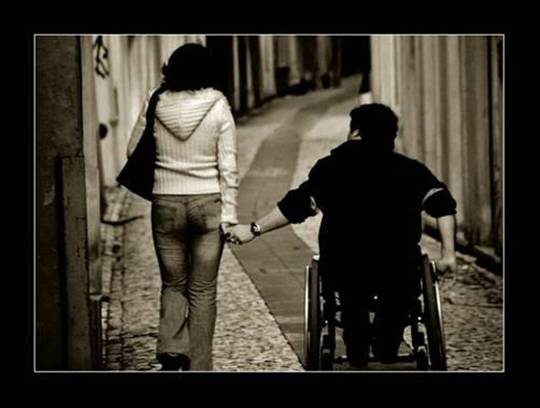
COMPANIONSHIP

Companionship

The XL pipeline. What comes next?

Full copy of an email just in from Bill McKibben.

Dear Friends—

I’m writing this from the lawn in front of the White House.

In front of me there’s a sprawling rally underway, with speakers ranging from indigenous elders to the great Canadian writer Naomi Klein. In back of me, another 243 courageous people are being hauled away to jail — it’s the last day of Phase 1 of the tar sands campaign, and 1,252 North Americans have been arrested, the biggest civil disobedience action this century on this continent.

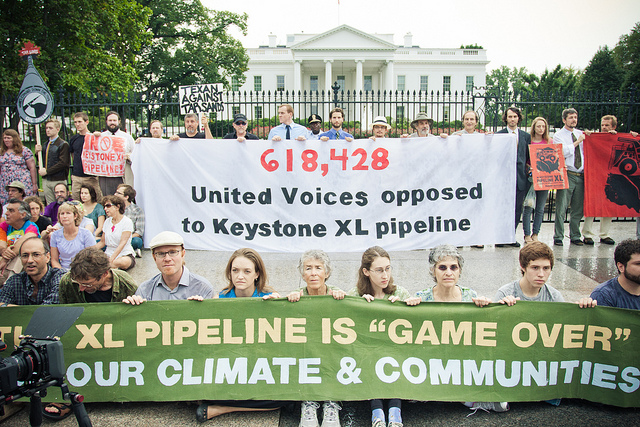
But we’ve been just as cheered by the help that has poured in from around the world — today, activists in front of the White House held a banner with a huge number on it: 618,428. That’s how many people around the world who signed on to the “Stop the Tar Sands” mega-petition to President Obama, including many of you in the 350.org network. Check out this beautiful photo of passion and courage on display:

(Photo Credit: Josh Lopez. If you can’t see the photo above, click here to see it and more inspirational photos from DC.)

But this movement does more than sign petitions: many of you stood strong in front of the White House risking arrest, and protesters on every continent have picketed outside embassies and consulates. That makes sense, for global warming is the one problem that affects everyone everywhere.

And the next moment to prove that is Sept. 24 for Moving Planet — the massive day of climate action that will unite people all over the world. We’ve heard news of amazing actions from every corner of the earth -— from a massive bike rally in the Philippines to an incredible eco-festival in Philadelphia. I truly can’t wait to see the pictures pour in.

But here’s why it’s important: we’re not just a movement that opposes things, we’re also a movement that dreams of what’s coming. And we don’t just dream, we also transform those dreams into reality. On September 24, on bike and on foot and on boards, we’re going to point the way towards that future. By days’ end, we’ll have shown why the bicycle is more glamorous than the car, and why the people have the potential to be more powerful than the polluters.

On some days fighting global warming means swallowing hard, mustering your courage, and making a sacrifice — other days it means getting all your friends up in the saddles of their bikes to have some fun and help move the planet forward.

September 24 is the second kind of day; it’s going to be powerful, it’s going to be beautiful, and I can’t wait to see how it turns out.  Please find or join a local event to get involved. 

Onwards,

Bill McKibben for the whole 350.org team


350.org is building a global grassroots movement to solve the climate crisis. Our online campaigns, grassroots organizing, and mass public actions are led from the bottom up by thousands of volunteer organizers in over 188 countries. You can join 350.org on Facebook by becoming a fan of our page atfacebook.com/350org and follow us on twitter by visiting twitter.com/350. To join our list (maybe a friend forwarded you this e-mail) visitwww.350.org/signup. To support our work, donate securely online at 350.org/donate.

What is 350? 
350 is the number that leading scientists say is the safe upper limit for carbon dioxide in our atmosphere. Scientists measure carbon dioxide in “parts per million” (ppm), so 350ppm is the number humanity needs to get below as soon as possible to avoid runaway climate change. To get there, we need a different kind of PPM–a “people powered movement” that is made of people like you in every corner of the planet.

Feel free to circulate this as far and wide as you wish.  Thanks, Learning from Dogs

Tell President Obama: Stop the Keystone XL Pipeline

This is so important.

Regular readers will know that I wrote about the XL Pipeline on the 29th August setting out the arguments of those who know much more of the detail as to why the tar sands of Canada are just the worst possible way to continue the madness of using oil.  If you didn’t read that then it’s here, and please do so.

The rest of this Post is taken from the Credo Action website.  Please do participate. Sign the petition NOW.

Do something, please!

Tell President Obama: Stop the Keystone XL Pipeline

“Essentially game over” for the climate.

That’s what climate scientist James Hansen calls the proposed Keystone XL pipeline — which would carry oil out of Canada’s vast tar sands oil fields to Texas, where it will be refined, then burned across the globe, dealing a catastrophic blow to our chance of returning earth to a stable climate.

This project requires a presidential permit to start building — and it is President Obama’s decision alone to grant or deny that permit. He will make the decision as soon as September.

Tell President Obama: Stop the Keystone XL pipeline.

The Alberta tar sands are a carbon bomb. The 3rd largest oil field in the world, the difficult extraction and transportation of the tar sands oil ultimately produces up to three times the carbon emissions of traditional oil. (And extreme environmental devastation along the way.)1

The Keystone XL pipeline is the fuse to this bomb – a highway to swift consumption of this dirty, dangerous crude. As if that wasn’t enough, it poses a massive spill risk in the six states along the pipeline route, including over the Ogallala Aquifer which provides up to 30% of our nation’s agricultural water.

We. Must. Stop. This.

Tell President Obama: Stop the Keystone XL pipeline.

Twenty leading climate scientists have just sent a letter to President Obama urging him to deny the permit.

And from August 20th to September 3rd, there will be a massive, historic, daily sit-in outside the White House where more than 1500 people, including CREDO staff, have already signed up to risk arrest in peaceful protest. (For more about the sit in, see below.)

The administration’s previous decisions on climate do not inspire confidence that they will deny the permit. Recently the administration has opened new areas to offshore drilling and coal mining, and late last year, Secretary of State Hillary Clinton even said she was “inclined” to approve Keystone XL.

But President Obama still has the final word. He does not have to negotiate with Congress or industry. As his State Department reviews the permit, the decision — which could have a devastating impact on the livability of our nation, and our world — is entirely in his hands.

We’ve lost too many climate fights already. We need a massive, historic show of pressure to make sure we don’t lose this one. Please sign the petition and read below for other ways to get involved.

Tell President Obama: Stop the Keystone XL pipeline.

1. “Keystone XL Pipeline,” Friends of the Earth

————————————————————-

Because this fight is so important, leading climate activists including Bill McKibben, Naomi Klein and climate scientist James Hansen are organizing a historic, daily series of peaceful protests between August 20th and Sept. 3rd. The CEO’s and Directors of nearly 30 leading Environmental Organizations, including CREDO’s Michael Kieschnick and Laura Scher, are urging people to participate.

More than 1500 people from across the country, including CREDO staff, have already signed up to join the sit-in outside the White House and risk arrest.

Please read the invitation letter below for more information. If you would like to sign up to join the protest, and possibly be arrested, click here.

Dear Friends,

This will be a slightly longer letter than common for the internet age–it’s serious stuff.

The short version is we want you to consider doing something hard: coming to Washington in the hottest and stickiest weeks of the summer and engaging in civil disobedience that will quite possibly get you arrested.

The full version goes like this:

As you know, the planet is steadily warming: 2010 was the warmest year on record, and we’ve seen the resulting chaos in almost every corner of the earth.

And as you also know, our democracy is increasingly controlled by special interests interested only in their short-term profit.

These two trends collide this summer in Washington, where the State Department and the White House have to decide whether to grant a certificate of ‘national interest’ to some of the biggest fossil fuel players on earth. These corporations want to build the so-called ‘Keystone XL Pipeline’ from Canada’s tar sands to Texas refineries.

To call this project a horror is serious understatement. The tar sands have wrecked huge parts of Alberta, disrupting ways of life in indigenous communities–First Nations communities in Canada, and tribes along the pipeline route in the U.S. have demanded the destruction cease. The pipeline crosses crucial areas like the Oglalla Aquifer where a spill would be disastrous–and though the pipeline companies insist they are using ‘state of the art’ technologies that should leak only once every 7 years, the precursor pipeline and its pumping stations have leaked a dozen times in the past year. These local impacts alone would be cause enough to block such a plan. But the Keystone Pipeline would also be a fifteen hundred mile fuse to the biggest carbon bomb on the continent, a way to make it easier and faster to trigger the final overheating of our planet, the one place to which we are all indigenous.

As the climatologist Jim Hansen (one of the signatories to this letter) explained, if we have any chance of getting back to a stable climate “the principal requirement is that coal emissions must be phased out by 2030 and unconventional fossil fuels, such as tar sands, must be left in the ground.” In other words, he added, “if the tar sands are thrown into the mix it is essentially game over.” The Keystone pipeline is an essential part of the game. “Unless we get increased market access, like with Keystone XL, we’re going to be stuck,” said Ralph Glass, an economist and vice-president at AJM Petroleum Consultants in Calgary, told a Canadian newspaper last week.

Given all that, you’d suspect that there’s no way the Obama administration would ever permit this pipeline. But in the last few months the administration has signed pieces of paper opening much of Alaska to oil drilling, and permitting coal-mining on federal land in Wyoming that will produce as much CO2 as 300 powerplants operating at full bore.

And Secretary of State Clinton has already said she’s ‘inclined’ to recommend the pipeline go forward. Partly it’s because of the political commotion over high gas prices, though more tar sands oil would do nothing to change that picture. But it’s also because of intense pressure from industry. The US Chamber of Commerce–a bigger funder of political campaigns than the RNC and DNC combined–has demanded that the administration “move quickly to approve the Keystone XL pipeline,” which is not so surprising–they’ve also told the U.S. EPA that if the planet warms that will be okay because humans can ‘adapt their physiology’ to cope. The Koch Brothers, needless to say, are also backing the plan, and may reap huge profits from it.

So we’re pretty sure that without serious pressure the Keystone Pipeline will get its permit from Washington. A wonderful coalition of environmental groups has built a strong campaign across the continent–from Cree and Dene indigenous leaders to Nebraska farmers, they’ve spoken out strongly against the destruction of their land. We need to join them, and to say even if our own homes won’t be crossed by this pipeline, our joint home–the earth–will be wrecked by the carbon that pours down it.

And we need to say something else, too: it’s time to stop letting corporate power make the most important decisions our planet faces. We don’t have the money to compete with those corporations, but we do have our bodies, and beginning in mid August many of us will use them. We will, each day, march on the White House, risking arrest with our trespass. We will do it in dignified fashion, demonstrating that in this case we are the conservatives, and that our foes–who would change the composition of the atmosphere are dangerous radicals. Come dressed as if for a business meeting–this is, in fact, serious business.

And another sartorial tip–if you wore an Obama button during the 2008 campaign, why not wear it again? We very much still want to believe in the promise of that young Senator who told us that with his election the ‘rise of the oceans would begin to slow and the planet start to heal.’ We don’t understand what combination of bureaucratic obstinacy and insider dealing has derailed those efforts, but we remember his request that his supporters continue on after the election to pressure his government for change. We’ll do what we can.

And one more thing: we don’t just want college kids to be the participants in this fight. They’ve led the way so far on climate change–10,000 came to DC for the Powershift gathering earlier this spring. They’ve marched this month in West Virginia to protest mountaintop removal; a young man named Tim DeChristopher faces sentencing this summer in Utah for his creative protest.

Now it’s time for people who’ve spent their lives pouring carbon into the atmosphere to step up too, just as many of us did in earlier battles for civil rights or for peace. Most of us signing this letter are veterans of this work, and we think it’s past time for elders to behave like elders. One thing we don’t want is a smash up: if you can’t control your passions, this action is not for you.

This won’t be a one-shot day of action. We plan for it to continue for several weeks, till the administration understands we won’t go away. Not all of us can actually get arrested–half the signatories to this letter live in Canada, and might well find our entry into the U.S. barred. But we will be making plans for sympathy demonstrations outside Canadian consulates in the U.S., and U.S. consulates in Canada–the decision-makers need to know they’re being watched.

Twenty years of patiently explaining the climate crisis to our leaders hasn’t worked. Maybe moral witness will help. You have to start somewhere, and we choose here and now.

If you think you might want to be a part of this action, we need you to sign up here.

As plans solidify in the next few weeks we’ll be in touch with you to arrange nonviolence training; our colleagues at a variety of environmental and democracy campaigns will be coordinating the actual arrangements.

We know we’re asking a lot. You should think long and hard on it, and pray if you’re the praying type. But to us, it’s as much privilege as burden to get to join this fight in the most serious possible way. We hope you’ll join us.

Maude Barlow — Chair, Council of Canadians
Wendell Berry — Author and Farmer
Tom Goldtooth — Director, Indigenous Environmental Network
Danny Glover — Actor
James Hansen — Climate Scientist
Wes Jackson — Agronomist, President of the Land Insitute
Naomi Klein — Author and Journalist
Bill McKibben — Writer and Environmentalist
George Poitras — Mikisew Cree Indigenous First Nation
Gus Speth — Environmental Lawyer and Activist
David Suzuki — Scientist, Environmentalist and Broadcaster
Joseph B. Uehlein — Labor organizer and environmentalist

The beauty of service dogs

A recent item on the BBC website provides a welcome reminder of the power of the relationship between dogs and mankind.

Practically no-one is unaware of the role that dogs provide, for example, as guides for humans with sight impairment.  But there’s much more to the ‘service’ dog than that.

A service dog might be described as,

“any guide dog, signal dog, or other animal individually trained to do work or perform tasks for the benefit of an individual with a disability, including, but not limited to, guiding individuals with impaired vision, alerting individuals with impaired hearing to intruders or sounds, providing minimal protection or rescue work, pulling a wheelchair, or fetching dropped items.”

That definition is taken from the United States Code of Federal Regulations for the Americans with Disabilities Act of 1990!

Carrie and Lilly

But then cast your eye over this, as I mentioned, from the BBC on the 26th May, 2011.

Dogs can help reduce stress in parents of children with lifelong developmental disability autism, a study suggests.

The University of Lincoln compared 20 families with dogs with 20 without.

Daniel Mills told a Royal Society of Medicine conference early results suggested any breed could improve communication and relationships.

The veterinary behavioural medicine professor hopes to use video footage to show how dogs can improve child eating, sleeping and tantrum behaviour.

At a three-day Parents’ Autism Workshops and Support course, the families listed more than a thousand ways their dog had helped – from developing language and establishing a routine to using the pet to request action in a non-confrontational way.

Full story is here in which is included Professor Mills saying: “While there is no shortage of opinion on how dogs can help, there has been little money given to scientifically look into this.”

Autism is a challenging condition and anything that can establish a scientific underpinning for the role that dogs can have is to be welcomed whole-heartedly.

Finally, there are quite a few videos online that provide more information about the special, almost magical relationship between dogs and autistic people.  Here’s one that is the first part of a series of five.

British Otters

A wonderful ‘good news’ story.

Just a few days ago, the British news media carried a wonderful story about the resurgence of the otter in every county of England.  For many years, the otter was losing the battle for survival owing to hunting and trapping and the far South-West of England became it’s last refuge.

Then a combination of sensible legislation and public commitment to saving the otter became the turning point.

Watch this clip from ITN News from the 18th August.

Here’s a typical media report from The Independent newspaper of Thursday, 18th August,

Otters return to every county in England

Once the rivers were cleaned up, fish returned to once-polluted waters and otters began to spread back eastwards from their strongholds in Devon and Wales

By Michael McCarthy, Environment Editor

It has taken 30 years, but the otter’s comeback is now complete. After becoming extinct across most of England in the Fifties and Sixties, one of Britain’s best-loved animals has now returned to every English county, the Environment Agency announced yesterday.

The slow but steady recolonisation of its former haunts has been rounded off with the reappearance of otters in Kent, the last county to have been without them, the agency said.

The otter’s return represents a happy ending to one of the worst episodes in modern British wildlife history: the sudden disappearance of one of our most widespread and charismatic mammals.

The process began around 1956 and was almost certainly caused by the introduction of powerful organochlorine pesticides such as aldrin and dieldrin. Residues of these chemicals were washed into the rivers where otters lived, poisoning them.

As wild otters are hard to spot – their presence is usually detected by their spraints, or droppings – it was several years before the scale of their disappearance began to dawn on people, but by then they had been wiped out over vast areas of lowland England.

Despite the banning of organochlorine pesticides in the mid-Sixties, otters continued to decline, and their population reached a low point by the end of the 1970s, when they had effectively vanished from everywhere except the West Country and parts of Northern England (although good numbers remained in Wales and Scotland).

The first national otter survey, carried out between 1977 and 1979, detected the presence of otters in just over 5 per cent of the 2,940 sites surveyed; all the sites were known to have held the animals previously.

But then a comeback gradually began. Helped by a substantial clean-up of England’s rivers, which brought back fish to many once-polluted watercourses, and by legal protection, otters began to spread back eastwards into England from their strongholds in Devon and in areas of the Welsh borders, such as the Wye Valley.

By the time of the fourth otter survey, carried out between 2000 and 2002, more than 36 per cent of the sites examined showed otter traces; and when the fifth survey was carried out, between 2009 and 2010, the figure had risen to nearly 60 per cent, with otters back in every English county except Kent. Now wildlife experts at the Environment Agency have confirmed that there are at least two otters in Kent, which have built their holts on the River Medway and the River Eden.

“The recovery of otters from near-extinction shows how far we’ve come in controlling pollution and improving water quality,” said Alastair Driver, the Environment Agency’s National Conservation Manager. “Rivers in England are the healthiest for over 20 years, and otters, salmon and other wildlife are returning to many rivers for the first time since the industrial revolution.

“The fact that otters are now returning to Kent is the final piece in the jigsaw for otter recovery in England and is a symbol of great success for everybody involved in otter conservation.”

Otters are at the top of the food chain, and are therefore an important indicator of river health. The clean-up means that they are now inhabiting once-polluted rivers running through cities – something which would have been unthinkable before the population crash – and they have been detected in places such as Stoke-on-Trent, Reading, Exeter and Leeds, as well as in more likely urban centres, such as Winchester.

But although they are now widespread once more, otters’ nocturnal habits and riverine habitat make them difficult to glimpse, let alone observe, in England. The best place to see otters in Britain is Western Scotland, where the animals have become semi-marine and live along the coast. They can regularly be seen foraging along the shoreline in the daytime, especially on some of the larger islands, such as Mull and Skye.

 A lovely story with a powerful message – mankind can change things for the better, and frequently has done.
Representing the power of positive change!

Being Present!

Being in the present is the key message that we can learn from dogs. Why is this so important?

‘Drink your tea slowly and reverently, as if it is the axis
on which the world earth revolves – slowly, evenly, without
rushing toward the future. Live the actual moment.
Only this moment is life.’ ~Thich Nhat Hanh

[my blue emboldening]

Unlike Jon, I muse as an ‘amateur’ when I sense that the human psyche is attracted to fear.  I use that word ‘attracted’ simply because some stimuli that touch our consciousness seem to have more force than others. Ergo, the response to the simple question of asking someone how they are, is likely to me more engaging if they come up with some form of crisis reply than by saying, “Everything’s fine, thanks!”  Look at how the news media use the power of fear to capture our attention.

There is a strong biological explanation for this.  From the Science daily website,

The amygdala (Latin, corpus amygdaloideum) is an almond-shape set of neurons located deep in the brain’s medial temporal lobe. Shown to play a key role in the processing of emotions, the amygdala forms part of the limbic system.

In humans and other animals, this subcortical brain structure is linked to both fear responses and pleasure. Its size is positively correlated with aggressive behaviour across species.  In humans, it is the most sexually-dimorphic brain structure, and shrinks by more than 30% in males upon castration.

Conditions such as anxiety, autism, depression, post-traumatic stress disorder, and phobias are suspected of being linked to abnormal functioning of the amygdala, owing to damage, developmental problems, or neurotransmitter imbalance.

For more information about the topic Amygdala, read the full article at Wikipedia.org

I am going to get to the point of this article but stay with me a little longer.  Let’s look some more at the ‘fight or flight’ aspect of our brains.  From the website, How Stuff Works,

It’s dark out, and you’re home alone. The house is quiet other than the sound of the show you’re watching on TV. You see it and hear it at the same time: The front door is suddenly thrown against the door frame.  Your breathing speeds up. Your heart races. Your muscles tighten.

An instant later, you know it’s the wind. No one is trying to get into your home.

For a split second, you were so afraid that you reacted as if your life were in danger, your body initiating the fight-or-flight response that is critical to any animal’s survival. But really, there was no danger at all. What happened to cause such an intense reaction? What exactly is fear? In this article, we’ll examine the psychological and physical properties of fear, find out what causes a fear response and look at some ways you can defeat it.

What is Fear?
Fear is a chain reaction in the brain that starts with a stressful stimulus and ends with the release of chemicals that cause a racing heart, fast breathing and energized muscles, among other things, also known as the fight-or-flight response. The stimulus could be a spider, a knife at your throat, an auditorium full of people waiting for you to speak or the sudden thud of your front door against the door frame.

The brain is a profoundly complex organ. More than 100 billion nerve cells comprise an intricate network of communications that is the starting point of everything we sense, think and do. Some of these communications lead to conscious thought and action, while others produce autonomic responses. The fear response is almost entirely autonomic: We don’t consciously trigger it or even know what’s going on until it has run its course.

Because cells in the brain are constantly transferring information and triggering responses, there are dozens of areas of the brain at least peripherally involved in fear. But research has discovered that certain parts of the brain play central roles in the process:

  • Thalamus – decides where to send incoming sensory data (from eyes, ears, mouth, skin)
  • Sensory cortex – interprets sensory data
  • Hippocampus – stores and retrieves conscious memories; processes sets of stimuli to establish context
  • Amygdala – decodes emotions; determines possible threat; stores fear memories
  • Hypothalamus – activates “fight or flight” response

Now I originally called this article Present Perfect but WordPress quickly indicated that the title had already been used. Once again, the old memory cells are failing me!  In fact the post of the name Present Perfect was published on the 8th June, just a couple of months ago.  Glad that I was reminded because from that article in June,

Did you see Mr. Holland’s Opus? About Glenn Holland’s lifetime of teaching music to a high school band. In one scene he is giving a private lesson to Gertrude. She is playing clarinet, making noises that can only be described as other-worldly. He is clearly frustrated. As is she. Finally Mr. Holland says, “Let me ask you a question. When you look in the mirror what do you like best about yourself?”

“My hair,” says Gertrude.

“Why?”

“Well, my father always says that it reminds him of the sunset.”

After a pause, Mr. Holland says, “Okay.  Close your eyes this time. And play the sunset.”

And from her clarinet? Music. Sweet music.

Sometime today, I invite you to set aside the manual, or the list, or the prescription.

Take a Sabbath moment. . . close your eyes and play the sunset.

Mary Oliver describes such a moment this way, “. . .a seizure of happiness. Time seemed to vanish. Urgency vanished.”

Because, in such a moment, we are in, quite literally, a State of Grace.  In other words, what we experience here is not as a means to anything else.

If I am to focused on evaluating, I cannot bask in the moment.

If I am measuring and weighing, I cannot marvel at little miracles.

If I am anticipating a payoff, I cannot give thanks for simple pleasures.

If I am feeling guilty about not hearing or living the music, I cannot luxuriate in the wonders of the day.

Beautiful thoughts all woven around the power of focusing on the moment (if you want to catch up on the full article it is here).

Jon’s article last Monday was all about the way forward in a positive, well-being sense.  In that article Jon showed the Maslow Hierarchy of Needs pyramid.  It’s reproduced again below; spend a few moments absorbing the nature and sense of each level in that hierarchy.

Now ponder on that fear – ‘fight or flight’ – response.  Most likely it’s going to be initiated in the ‘Safety’ level but flick straight down one level to the ‘Physiological’ layer.  All very primitive stuff and utterly out of our control!  Remember from the extract above, “The fear response is almost entirely autonomic.

Even modest amounts of these fear responses is very wearying, very unsettling.  Remember Jon touched on that when he wrote,

The point I’m trying to make is that the same panic I notice in many of the companies I work in, and in me, is based on fear of the unknown and on a lack of trust in all its forms.  I’ve deliberately underlined that last phrase because it is so incredibly important. The truth is that we get more of what we focus on. So we can choose to focus on the constant news of more difficulties, hardship and redundancies, or we can focus on what is working.

So because our fear response is entirely autonomic and because there is so much out there, all around us, pulling those autonomic strings we have to actively, quite deliberately, do what dogs (and many other animals) do quite naturally.  We deliberately have to focus on spending time being in the present!

There was a recent piece from Leo Babauta about being in the present.  While he doesn’t touch on the underlying biology of why we humans are so ‘attracted’ to fear, he does offer some excellent advice about being in the present.

No matter how out-of-control your day is, no matter how stressful your job or life becomes, the act of being present can become an oasis. It can change your life, and it’s incredibly simple.

Look at Lorraine’s website (a recent visitor to Learning from Dogs).  In particular this piece, from which I quote,

3. The Serenity Prayer – all about accepting the things I cannot change and changing the things I can.

4. People are always more important than things. Things can mostly be replaced but people cannot.

5. Do it now – if there is something to be done, then what is stopping me from doing it straight away?

6. If I appreciate and look after what I have now, there will be a positive flow back to me in the future. If I am neglectful and ungrateful with what I have now, I cannot expect to be rewarded with more in the future.

7. Be quiet and keep breathing – no one will know how crazy I feel inside :-)

8. Don’t hold on to people or things too tightly. Be open to letting go and letting be.

9. It is really important to let others know that I love them. They need to know now and often. Love isn’t just a beautiful feeling – show it by how I act and speak with those I love.

10. I can’t make anyone love me and I can’t fix anyone by loving them. I may have a script for how life should be but I have no control over other people, places or things. Go with the flow and accept what is.

(The blue emboldening is mine – highlighting the power of now.)

Grandson Morten - peace in the present

Live the actual moment. Only this moment is life.”

The way forward?

A big vote of thanks to Paul for plugging away for so long without any contribution from me.  Unlike Paul who is retired, well retired in the sense of a paying job, I have a family, a dog (Jess) and the usual set of household overheads to cover, so the week is very much a working week for me.  Ergo, I shall never be able to contribute to Learning from Dogs in the same manner as Paul but a regular contribution is assured. To get things rolling again, I want to re-publish an article that I wrote on my business blog the other day.

Removing the fear of the unknown

Seeing the light

I’ve been working with most of my clients recently through painful transformations brought about by the economic downturn.

An interesting metaphor really because since the first wave of uncertainty triggered panic, first noticed in the UK banking system, I have been picking up on that uncertainty that feels like it’s stalking the globe and has been for some time. Recent stock market crashes have simply exacerbated this and that, coupled with the riots taking place in major cities in the UK, make for pretty disturbing reading.

Interestingly, I, too, have been aware of an underlying fear that was difficult either to name or source.

It has been rather like a deep river in that whilst the surface feels slow-moving, currents are moving things powerfully below.

So this ‘fear’ has caused a few household changes.

1) We now are the proud owners of 12 chickens. Our youngest son and I have dug up the back lawn and planted vegetables and built a poly tunnel.

2) We have also installed a wood burning cooker. Right back down to the base of Maslow’s triangle really!

Maslow's triangle of needs

These feelings have brought about such change everywhere and I wonder seriously whether we will ever return to what was; indeed would we want to?

I might not have mentioned it in previous blogs but as well as an engineering background, in latter years, I have focused on how success in business is linked directly to aspects of relationships and how we are in our relationships with others, so things like integrity, self-awareness and the ability to see the point of view of others, and modify our approach appropriately.

To inform this, some 7 years ago, I embarked on an MA in Core Process Psychotherapy, primarily to work on myself so that I could be the best I could be in my relationships, in and out of work.

The point I’m trying to make is that the same panic I notice in many of the companies I work in, and in me, is based on fear of the unknown and on a lack of trust in all its forms.  I’ve deliberately underlined that last phrase because it is so incredibly important.

The truth is that we get more of what we focus on.

So we can choose to focus on the constant news of more difficulties, hardship and redundancies, or we can focus on what is working.

In the workplace this positive focus has been pulling people together across functions and sites and pooling resources and ideas.

When we realise we’re not doing this alone it’s amazing how much lighter a load can feel and how much more inspired we all feel.

I also notice how humour begins to flow and what a powerful antidote for doom and gloom that is.

Transformation is never easy but the rewards far exceed the effort put in ten fold.

So what is it going to be? Are we all going to bow down to the god of Doom & Gloom, fear and anxiety, heaping more and more gifts around it, or are we going to start noticing and focusing on the other neglected god – that of relationship, joy, trust, abundance and lightness?

Whatever the future holds for us all a belief in our inherent ability to adapt and change and focus on the greater good rather than fear, anxiety, greed and selfishness is the only sustainable way forward.

By Jon Lavin

From ants to cities

More on the work of E. O. Wilson

Yesterday, I introduced a 50-minute film concerning the famous biologist E O Wilson, Lord of the Ants which, as well as being a wonderful tribute to Prof. Wilson, also allowed us humans to have a better understanding of our deeper human issues.

Coincidentally, around the same time of watching that film, I saw an article on the Grist website that referred to some research published in Nature magazine.  This what I read, first from Grist, reprinted with the kind permission of Libby S., Senior Marketing Manager of Grist.

Scientists have been doing studies for years that show you are more likely to suffer from mental illness if you live in a city. What they haven’t figured out is why.

Now, researchers in Germany have conducted experiments that they believe might begin to get at the neuroscience behind the crazy-making nature of urban areas.

Publishing in the journal Nature, a group led by Andreas Meyer-Lindenberg of the University of Heidelberg’s Central Institute of Mental Health in Mannheim, Germany, looked at how social stress affected the minds of subjects, some city-dwellers and some not.

If we then turn to that article in Nature (to get access you will need to arrange prior free sign-up) we get to read this,

City living marks the brain

Neuroscientists study social risk factor for mental illness.

Alison Abbott

Epidemiologists showed decades ago that people raised in cities are more prone to mental disorders than those raised in the countryside. But neuroscientists have avoided studying the connection, preferring to leave the disorderly realm of the social environment to social scientists. A paper in this issue of Naturerepresents a pioneering foray across that divide.

Using functional brain imaging, a group led by Andreas Meyer-Lindenberg of the University of Heidelberg’s Central Institute of Mental Health in Mannheim, Germany, showed that specific brain structures in people from the city and the countryside respond differently to social stress (see pages 452 and 498). Stress is a major factor in precipitating psychotic disorders such as schizophrenia.

The work is a first step towards defining how urban life can affect brain biology in a way that has a potentially major impact on society — schizophrenia affects one in 100 people. It may also open the way for greater cooperation between neuroscientists and social scientists. “There has been a long history of mutual antipathy, particularly in psychiatry,” says sociologist Craig Morgan at the Institute of Psychiatry in London. “But this is the sort of study that can prove to both sides that they can gain from each others’ insights.”

I feel uncomfortable about reproducing more of this fascinating study without some formal permission to do so, therefore, if you want to read the full article then do sign up for access at the Nature website.

Back to the article from Grist written by Sarah Goodyear, Grist’s cities editor,

I called Dr. Meyer-Lindenberg to ask him more about the implications of his experiment, and what he thought might be the cause of heightened sensitivity to social stress among urban dwellers.

“On the neural level, we find two things,” he told me. “A, the neural effects are completely dissociated, so current urban living only affects the amygdala, urban upbringing only affects the cingulate. And B, these areas are associated with these illnesses. The amygdala is sort of a danger center, and it’s critically important for fear. And it is clear that the amygdala is a major player in depression. The cingulate is a prefrontal area regulating negative emotion, and it’s known to be one of the earliest areas affected by schizophrenia.”

So what accounts for the hyperactivity of the amygdala-cingulate circuit in urban dwellers? “That exact circuit that we found hyperactive has also shown to be activated when someone comes too close to you and crowds your personal space,” Meyer-Lindenberg told me.

But he cautioned against inferring that mere density of population is at fault. “It’s still speculation,” he said. “There could be myriad components of the urban experience that might or might not be bad for you from the point of your risk for mental illness. No one really knows. People are annoyed by noise or by traffic, or it could also be lead, or air pollution, but there’s no evidence base to say this is an important factor, this is not an important factor. Therefore there’s no basis for urban planning that’s grounded in human biology, at least with regard to mental illness.”

Later in the Grist article, Dr. Meyer-Lindenberg told Sarah Goodyear,

“Social status is closely linked to socioeconomic variables. What we found in our imaging studies is that if your social status becomes labile, and especially if you are in danger of losing it, a very similar brain circuit becomes active. There is a convergence of socially relevant risk factors on that circuit.”

Different types of urban environments might also affect people in different ways. “It’s very different if you live in Manhattan and you sort of live in a series of overlapping villages, if you will, or if you live in a city like Sao Paolo, in which no such microstructure is immediately available to you, or if you live in a large spread-out area,” said Meyer-Lindberg.

The social connections that are fostered in more walkable neighborhoods could help city dwellers from losing it. “A previous study found that that the size of your social support network is actually correlated to the size of the exact brain circuit we found in this study,” Meyer-Lindenberg said. “So that’s a protective factor. The more friends you have, the bigger those brain structures are.”

Already, more than half the human population lives in cities. That proportion will only increase. New cities are springing up all over the developing world, some built to order, some completely unplanned. The form they take could be crucial.

More knowledge about what exactly drives people could lead to concrete solutions that would make for better mental health — the same way the discovery of how disease was spread by waterborne germs finally ended the scourge of cholera in London.

“I think it would be important to make cities better, given that we can’t escape cities, given the dynamics of urbanization,” said Meyer-Lindenberg. “That’s a reality that we’re not going to get rid of.”

Fascinating article made doubly interesting by E O Wilson’s lifetime study of ants!

Social intelligence of dogs

Underlining what 30,000 years of domestication produces!

This video, just under 6 minutes long, may well be ‘old news’ to many dog owners but still very much worth a viewing.

Scamp

And while I think about, if you didn’t see the video about Scamp and his ability to identify, and then comfort, humans very close to death, when it first appeared on Learning from Dogs, then do drop back to here and watch it.  It’s from the Extraordinary Animals series from Channel Five on British television and just 22 minutes long.

The Great Disruption by Paul Gilding

A book review

Unlike my recent review of Capt. Luis Montalvan’s book Until Tuesday which came about as a result of an invitation from the UK publishers, Headline Publishing, this review of Mr. Gilding’s book is totally off my own bat.  I should also declare that I have recently been in email contact with Paul Gilding with some pleasant outcomes.  To the review.

The way ahead.

Regular readers of Learning from Dogs will know that I have been making recent references to this book, which I have now finished reading.  On the 25th I quoted from the book in a post that I called The blame game.  I used a quote from Chapter 5, Addicted to Growth, namely “Growth goes to the core of the society we have built because it is the result of who we are and what we have decided to value.

Then the next day again when writing about Tim Bennett’s movie, What a Way To Go, when I reflected on Paul Gilding’s opinion that, ” the quicker that mankind recognises the massive levels of denial presently in place, the quicker that mankind will commit to the scale of change that is required“.

Now if mankind’s efforts to change to a sustainable way of life were proportional to the number of books, films and essays written about the subject then, frankly, the task would be complete.  There’s an awful lot out there!  Here’s a list of the books that I have read in the last few years:

The Human Side of Enterprise – Douglas McGregor

Motivation and Personality – Abraham Maslow

The Power of Pause – Terry Hershey

Earth in the Balance – Al Gore

The Spectrum of Consciousness – Ken Wilber

Politics Lost – Joe Klein

Why America Doesn’t Work – Chuck Colson & Jack Eckerd

The Art of Happiness – HH Dalai Lama & Howard C Cutler

Eaarth – Bill McKibben

Stabilizing an Unstable Economy – Hyman P. Minsky

The Next 100 Years – George Friedman

World of the Edge – Lester Brown

and finally

The Great Disruption – Paul Gilding

And, of course, this doesn’t even scratch the number of online journals, essays and articles that have been read in conjunction with writing hundreds of posts on this Blog.

So what’s the point?

On p.260, Chapter 20 Guess Who’s in Charge?, Paul Gilding writes,

We need to fully acknowledge the challenging times and inevitable suffering ahead but stay focused and determined to move forward and past this.  Easy to say, harder to do.

So yes, it is challenging to know how to respond to all this and what to do personally.  It is easy to see what the world should do, but what should you do?

but what should you do? Talk about a thump on the back of the head!

This is about me!

Of all the books that have influenced how I see the world and my opinions, the one book that has rammed home to me that this is about me, about my attitudes and behaviours, is The Great Disruption.  For a long time I haven’t needed convincing that man is screwing up the planet.  For ages, I’ve been sure that our greed and materialism were fundamentally incompatible with the planet. I have been so good at ‘talking the talk’ ….. but ….

But the way that Mr. Gilding has so comprehensively approached every aspect of how my past behaviours have been incompatible with the future needs of my little grandson, Morten, (and all the grandchildren in the world) is powerfully inspiring.  I now totally and utterly believe that only I am in charge of making a difference.

Why The Great Disruption touched me in this way when so many other books and articles haven’t done so isn’t clear.  Perhaps it was in the opening paragraphs?

The earth is full.

[skip one paragraph]

This means things are going to change.  Not because we will choose change out of philosophical or political preference, but because if we don’t transform our society and economy, we risk social and economic collapse and the descent into chaos.  The science on this is now clear and accepted by any rational observer.  While an initial look at the public debate may suggest controversy, any serious examination of the peer-reviewed conclusions of leading science bodies shows the core direction we are heading in is now clear.  Things do not look good.

These challenges and the facts  behind them are well-known by experts and leaders around the world, and have been for decades.  But despite this understanding, that we would at some point pass the limits to growth, it has been continually filed away to the back of our mind and the back of our drawers, with the label “Interesting – For Consideration Later” prominently attached.  Well, later has arrived.

I nodded silently in agreement when reading that.

Was it the opening paragraph to Chapter 4, Beyond the Limits – The Great Disruption?

The plans we have been making for our economies, our companies, and our lives have all been based on a key assumption that is clearly wrong.  This assumption is that our current economic model will carry on unless we choose to change it – in other words, no action means more of the same.

This resonated strongly with me because I happen to believe, without any specialist economic skills to my name – just a gut sense, that the economic situation now afflicting so many economies across the world is not cyclical but the start of a breakdown of the policies and behaviours of the last 20 years or more.  In other words, the Great Disruption was in my face already!  As is written on p. 87 in Chapter 6, Global Foreshock – The Year That Growth Stopped,

My view, firmly held at the time and since, is that 2008 was the year that growth stopped.  It was the year, as Thomas Friedman said, “when Mother Nature and Father Greed hit the wall at once”.

The Power of a New Future

But, in the end, the real power that I found in this book was the strength of Gilding’s argument that we will change, that seeing the future as hopeless is wrong, that man has the ability to commit to huge change when there is no alternative.  Ergo, p121 Chapter 9 When the Dam of Denial Breaks,

To argue we are naturally greedy and competitive and can’t change is like arguing that we engage naturally in murder and infanticide as our forebears the chimps do and therefore as we did.  We have certain tendencies in our genes, but unlike other creatures we have the proven capacity to make conscious decisions to overcome them and also the proven ability to build a society with laws and values to enshrine and, critically, to enforce such changes when these tendencies come to the surface.

So don’t underestimate how profoundly we can change.  We are still capable of evolution, including conscious evolution.  This coming crisis is perhaps the greatest opportunity in millennia for a step change in human society.

This quote is towards the end of the last chapter that spells out, as so many other books have done, that our global society Has a Very Big Problem.  Thus from page 123 onwards, slightly less than half-way through the book, Paul Gilding devotes huge detail to describing how we will change.  Frequently, the comparison used is World War II,

British poster from 1940

When Great Britain went to war in World War II, do you think they had clarity on all the details of transitioning into a war economy before they made the decision to act?  Of course they considered it, as we must, but it wasn’t a determining issue because there was no choice.  Do you think President Roosevelt calculated the United States could win the war by increasing military spending to 37 percent of U.S. GDP and producing a nuclear bomb before he decided to enter the war?  Of course not: he just knew they had to succeed and so they would.  He had confidence in human ingenuity delivering under pressure, when it’s given defined parameters and political support, and so must we.

From p. 164, Chapter 12 Creative Destruction on Steroids.

That’s what ended up being the real inspiration for me.  That it’s not about the complex problems looming large; as so many that Jean and I chat to here in Payson, AZ, readily admit to being worried.  It’s not news! The majority of the world’s citizens know the trends are not good.

No, what really socked me between the eyes was reading all the many and varied ways that we are changing (note present tense), that the Great Disruption is, in fact, mankind moving to a new era.  One where we will have less inequality, less poverty, be happier, have extended life-spans and a future that goes on for thousand of years.

The Future is Here.

The phrase ‘life-changing’ is often used but this book is truly life-changing.  The book will motivate you in ways that you can’t imagine.  It will inspire you but, above all, it will show you the way ahead.  Read it.

Well done, Mr. Gilding.  Well done, indeed!

Mr. Paul Gilding