Category: Health

The scent of danger.

A reflection on our reptilian brains.

Now of all the things I am not, I am neither a biologist nor a scientist of any description.  However, general knowledge told me years ago that the human brain is composed of three areas, as the following diagram shows.
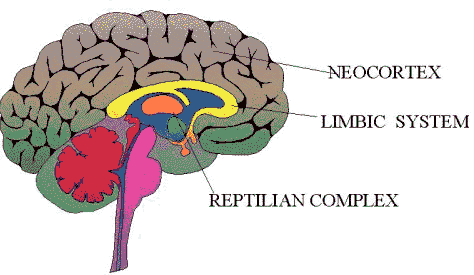
The constituents of the human brain.

A quick web search brings up THE EVOLUTIONARY LAYERS OF THE HUMAN BRAIN, from which I quote:

The first time you observe the anatomy of the human brain, its many folds and overlapping structures can seem very confusing, and you may wonder what they all mean. But just like the anatomy of any other organ or organism, the anatomy of the brain becomes much clearer and more meaningful when you examine it in light of the evolutionary processes that created it.

The most efficient model for understanding the brain in terms of its evolutionary history is the famous triune brain theory developed by Paul MacLean. According to this theory, the following three distinct brains emerged successively in the course of evolution and now co-inhabit the human skull:

The reptilian brain, the oldest of the three, controls the body’s vital functions such as heart rate, breathing, body temperature and balance. Our reptilian brain includes the main structures found in a reptile’s brain: the brainstem and the cerebellum. The reptilian brain is reliable but tends to be somewhat rigid and compulsive.

The limbic brain emerged in the first mammals. It can record memories of behaviours that produced agreeable and disagreeable experiences, so it is responsible for what are called emotions in human beings. The main structures of the limbic brain are the hippocampus, the amygdala, and the hypothalamus. The limbic brain is the seat of the value judgments that we make, often unconsciously, that exert such a strong influence on our behaviour.

The neocortex first assumed importance in primates and culminated in the human brain with its two large cerebral hemispheres that play such a dominant role. These hemispheres have been responsible for the development of human language, abstract thought, imagination, and consciousness. The neocortex is flexible and has almost infinite learning abilities. The neocortex is also what has enabled human cultures to develop.

These three parts of the brain do not operate independently of one another. They have established numerous interconnections through which they influence one another. The neural pathways from the limbic system to the cortex, for example, are especially well developed.

I’m well into reading the book Waking The Tiger: Healing Trauma authored by Peter A. Levine.  As early as Chapter One, Peter Levine explains [my emphasis]:

The involuntary and instinctual portions of the human brain and nervous system are virtually identical to those of mammals and even reptiles. Our brain, often called the ‘triune brain,’ consists of three integral systems. The three parts are commonly known as the ‘reptilian brain’ (instinctual), the ‘mammalian or limbic brain (emotional), and the ‘human brain or neo-cortex’ (rational). Since the parts of the brain that are activated by a perceived life threatening situation are the parts we share with animals, much can be learned by studying how certain animals, like the impala, avoid traumatization. To take this one step further, I believe that the key to healing traumatic symptoms in humans lies in our being able to mirror the fluid adaptation of wild animals as they ‘shake out’ and pass through the immobility response and become fully mobile and functional.

Unlike wild animals, when threatened, we humans have never found it easy to resolve the dilemma of whether to fight or flee. This dilemma stems, at least in part, from the fact that our species has played the role of both predator and prey. Prehistoric peoples, though many were hunters, spent long hours each day huddled together in cold caves with the certain knowledge that they could be snatched up at any moment and torn to shreds.

Anyway, to get back to what triggered today’s post.

If you read yesterday’s post you will recall me chatting with Jon Lavin and Jon reminding me that humans are drawn to positive messages.  But in stark contrast, the news media industry excels in promoting ‘doom and gloom’.  Why is this?  Why are we so fascinated by danger?

Well here’s my theory.

That is our evolution would not have succeeded if early man didn’t become pretty smart at identifying animal behaviours and plants and fruits that had the capacity to harm or even kill.  For example, what parent hasn’t made it a priority to teach their children the difference between harmful fungi and edible mushrooms.  Indeed to the extent that most of us would think long and hard before eating any fungi found in the wild unless we were 150% certain it was edible.  Look at the following picture.  Your instinct tells you if it’s safe to eat or not – it’s not!
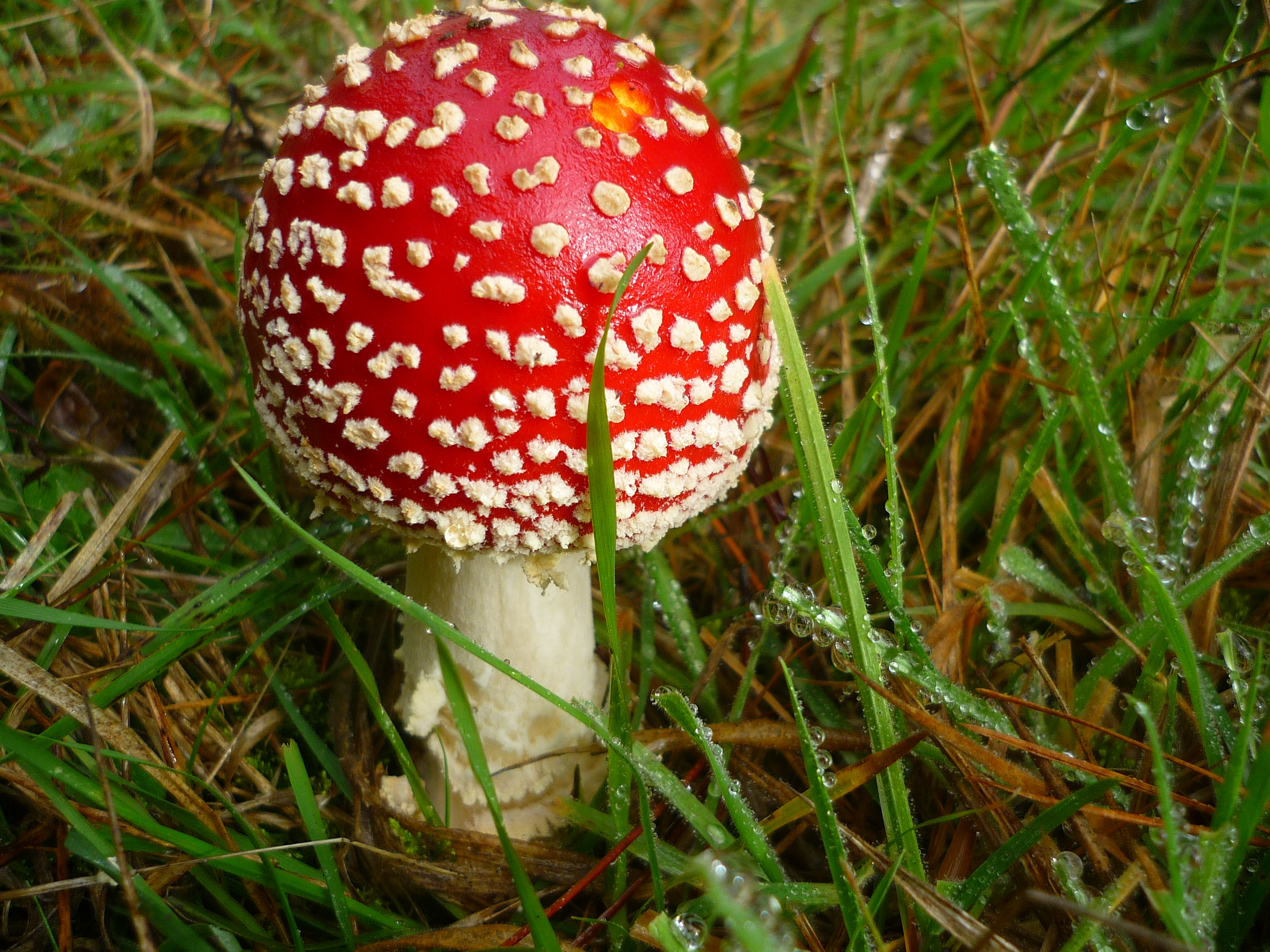
Amanita muscaria photo © Michael Wood

So early man became over-sensitised to dangers to his health for his own good and continued existence. While modern man functions in ways almost unrecognisable from early man, that good old reptilian brain still is doing it’s best to protect us (flight, fight or freeze).  Think how we all respond to a sudden alarming sound, such as a gun shot or a scream, to know that the old reptilian brain is still alive and well.

Thus while all of us hate negativity we all seem to have this fascination with doom and gloom – just in case it helps us and our loved ones survive.

Back to Jon Lavin.  He makes it very clear that anything more than a small amount of ‘doom and gloom’ speaking to our consciousness increases the odds of depression and introversion.

Thus the message is that we humans should allow our Neocortex to tell our Reptilian ‘neighbour’ to go easy on the bad news, go and open a beer and watch the world go by! Whoops! Watch the world go by with a smile!

Oh, and Happy Valentine’s Day to you all.
The spirit in all life.

There are things that are beyond rational explanation.

Warning – this post is rather more ‘touchy-feely’ than you are used to seeing on Learning from Dogs.  So if it wanders about in ways that you struggle to follow then just stifle your yawn and come back tomorrow!

It goes back to an earlier plan that I had in terms for a couple of posts.  Both focussing on the myriad of examples of the appalling decline in our world.  I had been collecting a number of essays to support the proposition that if we don’t learn from dogs the qualities of integrity and unconditional love then our world was doomed.  I had collected the essay from Ellen Cantaro over on TomDispatch about the incredible stupidity of fracking. Or the one from Tom’s own pen in an essay about climate change being the new ‘Anti-News’.  I had saved the recent essay from George Monbiot discussing the madness of the so-called dredging practices in the UK’s Somerset Levels.  I had fumed at another George Monbiot essay Bring It On that included this incredible statement:

It is hard to think of a more serious allegation. For six months an undercover officer working for the Metropolitan Police was instrumental in planning a major demonstration, which ended up causing injuries and serious damage to property. Yet the police appear to have failed to pass this intelligence to the City of London force, leaving the target of the protest unprotected.

I had many more examples but you get the message!

So what stopped me?

I was chatting to Jon Lavin on Monday about a variety of things.  Jon asked how the book was coming along.  I replied by saying that a recent NaNoWriMo webinar had persuaded me that the book wasn’t a novel and should be re-written as a non-fiction story.  Going on to add that I might include some of the appalling examples of what was going wrong in our society to strengthen the argument that we truly have much to learn from dogs.

Jon, who had read the first, very rough draft of the book that appeared on this blog, cautioned me against doing that.  He went on to say that in the world of solutions focussed therapy, the area that Jon practices in professionally, the way forward was always to focus “on what’s working“.  Jon continued by saying that while one would initially allow the problems to be voiced, this negativity would always be a tiny piece of the overall process, say less than 5% of the session.  That even if a client’s whole world seemed to be failing, there would always be something that was alright, always a 1% that was working, and that would be the place to start.  A quick web search endorsed that as the website of Good Therapy revealed, from where I read:

Solution focused brief therapy (SFBT) targets the desired outcome of therapy as a solution rather than focusing on the symptoms or issues that brought someone to therapy. This technique only gives attention to the present and the future desires of the client, rather than focusing on the past experiences. The therapist encourages the client to imagine their future as they want it to be and then the therapist and client collaborate on a series of steps to achieve that goal. This form of therapy involves reviewing and dissecting the client’s vision, and determining what skills, resources, and abilities the client will develop and use to attain his desired outcome. Solution focused therapy was developed by Steve De Shazer, Insoo Kim Berg, and their team at the Brief Family Therapy Family Center in Milwaukee, USA.

Thus coming back to the book rewrite, Jon said that people wanted to read ‘good news’ not negativity.  It was a key reminder for me and an incredibly inspiring call that in these challenging times, whether on this blog or in a potential book, I need to write about all the powerfully, positive lessons that dogs, and all warm-blooded creatures, offer mankind.  The lessons of integrity, love, trust, balance, loyalty, faithfulness, affection, forgiveness and more.

OK, moving on.

On the evening of February 7th Jean and I settled down to watch a YouTube video.  It had been featured in a post from LadyBlueRose that had been published on the 6th.  The post was called His Name is Spirit and it was the story of a woman, Anna Breytenbach, who has dedicated her life to what she calls interspecies communication.

We had reached the six-minute point in the film, already captivated by it, when the telephone rang.  I paused the film and answered the phone.  It was neighbour Dordie from next door ringing to say that when she had seen us earlier in the day she had forgotten to mention that there was this incredible film that we really had to watch …… yes, you guessed it!  The film that Jean and I were watching at that moment.

Here is that film.

Now here is Anna’s website Animal Spirit where one learns:

ENHANCING THE RELATIONSHIP BETWEEN HUMANS, OTHER ANIMALS AND THE NATURAL WORLD

Welcome to an exploration of interspecies communication – a journey of discovering ways to restore a deep relationship with all of life.

Human and animal communication creates a valuable bridge between human and non-human animals. By connecting with our intuition, we can engage in meaningful dialogue and remember how to hear the subtle messages from those whose space we share in our lives and our natural environment. Coming from a place of respect and reverence for all life, we can learn to understand our wilder relatives, honour their truths and live in greater harmony.

and where one also can watch the short introductory film that is on her home page; as below.

A web search then came across a fascinating interview with Anna.

So where does this all end up?

Simply, that in a world dominated by media of all types that favour ‘doom and gloom’ it can be incredibly difficult to hang on to the message offered by Jon and by Anna, and by many others no doubt, the message that our individual health, and by implication the health of this planet, is afforded through staying positive.

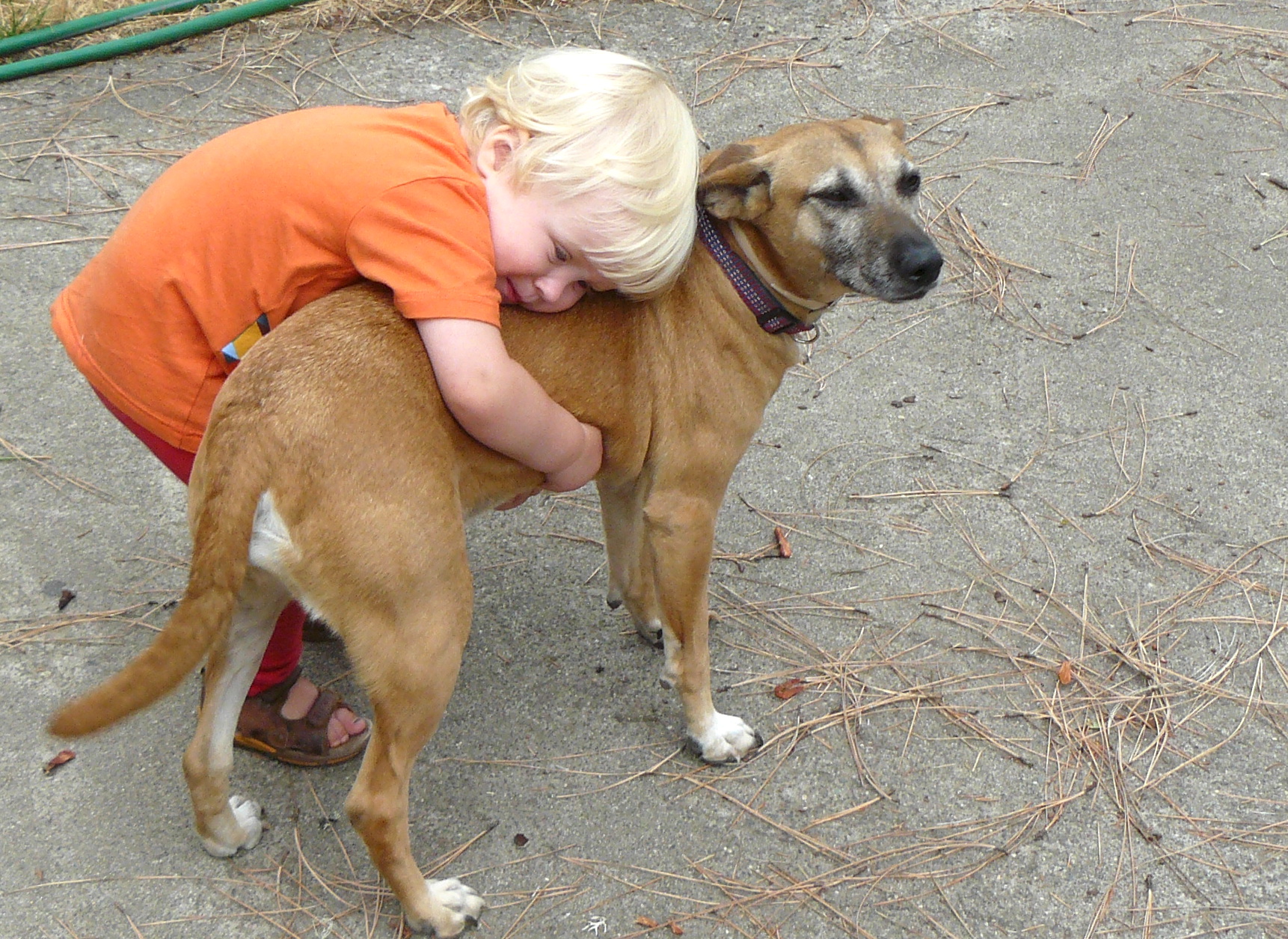
Or put more basically, if you are feeling low go and hug a dog!  So I can do no better than to close with the same picture that closed Tuesday’s post Meet the dogs – Dhalia.

Love and Trust - Grandson Morten hugging Dhalia.
Love and Trust – Grandson Morten hugging Dhalia

Love over fear.

Do we chose love over fear?

On the 24th January this year, I published a post called 20:20 self-awareness.  To save you clicking the link and returning to that post, the essence was speaking clearly; not only to others but to ourselves.  I quoted George Bernard Shaw, “The single biggest problem in communication is the illusion that it has taken place.

Then went on to write:

Yet, what we hear and what we say are both modified, frequently unconsciously, by past events, experiences and trauma.  That being the case, then it is key, critically so, that we achieve the best possible self-awareness.  Because it is only through an understanding of our past that we come to learn of our sensitivities and our associated ‘tender spots’ and their potential for ‘pulling our strings’.

Closing the post by including a twenty-minute, documentary film about fear.  (Here it is again for those that missed it.)

One of the comments to that post was from Sue who writes the blog Dreamwalker’s Sanctuary. (It’s a beautiful blog, by the way.)

This was the comment left by Sue.

Fear is inherent in us all for that Flight or Fight mode.. But the F word has now been used and abused as it has been used as a useful tool .. Self awareness comes when we wake up to what our world is generating and we have a choice. We can allow ourselves to get embroiled within the Fear.. Or we can see it for what it is and who and what is creating that fear and why?…. Once that awareness kicks in we can see there is nothing to Fear but Fear itself… Living in the Now of a moment prevents us also from fearing the future, and fearing what has passed..

Easier said than done, I guarantee you .. But once you can get your head around it all… We breathe deeper and evenly and let all fear go… ( I am still working on this, I am not perfect by any means ) for as your video states its been ingrained within us for so long we know no other way, and we are a creature of habit!..

Thought provoking post, Paul thank you

Sue then pointed me to one of her essays, that I have the great pleasure of republishing today.

ooOOoo

Do You Chose Love Over Fear?

One Love Heart.
One Love Heart.

Remember those Prophesies of “2012”? I posted many of my thoughts upon this timeline which I thought was to mark the end of one era and the beginning of the Next – Maybe those ancients teachers didn’t know whether we would rise or fall as they marked the end of their calendar.

Maybe that fate awaits us still depending upon our choices we make in the Now dependant upon our Next actions!  But as we read through those  teachings of ancient prophecy  you will see also they speak  of transformation. Transformation requires Change, and we are being urged now to Think! Think outside our boxes as our comfort zones are now being tweaked as we become ever more sensitive to the Energy Shifts within our World.

Whether we realise it or not we are incarnated with a ‘Soul Mission’ even though we caught amnesia after we were born.  But more and more of us are thankfully waking up as we begin to remember who we are. It may have taken many life times and lessons to align with our present purpose as we pass through various stages on our journey, often not understanding the reasons for painful events and experiences.  It isn’t until later that we look back and see the gifts and healing which were given to us and that through them we learn to grow, letting go of the past as we step into the Now.

Giving Birth is not without pain, and our new earth is only now going through her own birthing pains.  We see it in the spasms of conflict, the wars, hunger, poverty, displacement of refugees and the destruction through pollution of Mother nature.  Pains which are now being experienced which we humans have carried with us over many life times. Pains that emerge as a build-up of our Fear and Prejudices.

The choices are simple: we either choose Fear or Love.

Even while writing this a sense of peace has swept over me as I smile to myself. I recently read an article which said “…we incarnate with these wounds and at a soul-level choose to encounter those whose actions catalyse us to resolve and heal our soul wounding“. That made me smile even wider as I have long held the belief that our enemies are our greatest teachers helping serve our soul’s growth as we learn the various lessons such as patience, kindness, love, forgiveness, and compassion.

We are each of us now experiencing shifts in our emotions and lives, as we feel the ‘Shift’ in energy within our Mother Earth who is calling us to wake up and remember who we are; as our vibrations alter.

When I first started my blog back in 2007 I stumbled almost by accident to the opening post. But it was no accident! In fact my very first post was an experiment called Smile. I wanted to make a difference even if it was only through the words of a poem.

As we ‘Lighten Up’, letting go of what we no longer need, we lift our vibration higher; as we leave behind the wounds of the past. We are Energy Beings – and it’s time now to realise we each are a part of the Whole, that Oneness that permeates all things with the same Energy.

We are now ‘Shifting’ from duality to Unity Consciousness. This was brought home again to me on how many of us are thinking similar thoughts even here on WordPress. We see similar themes as we link into the Mass Consciousness, as we join together our thoughts, as we link subconsciously to the Cosmic web of thoughts.

We need to be aware of the Power of our thoughts and how we can assist in raising our planet’s vibration and our own collective Consciousness.

Much has been spoken upon The Ascension. First we need to ascend through our own layers as we climb ever higher, leaving behind the things that no longer serve us.

We do that by not getting swept up in conflict, by being more loving and tolerant, by being compassionate rather than being judgmental holding hate and anger.

We need to put the Care back in the world. If we embrace and choose Love over fear and stop looking who to blame but start to set examples of living in harmony and unity, then the true magnificence of who we really are can begin to manifest that ‘Golden Age’ that was once prophesied to bring about Peace.

It is up to each one of us to pledge to change our own lives, because only that way will those prophesies come to fruition.

The Choice is Ours

Choose Well..

Love and Gratitude

Sue Dreamwalker..

ooOOoo

Unconditional Love.
Unconditional Love.

The most important thing we must learn from dogs.

Please help a pig’s feet! Seriously!

A genuine cry for help for a pig that needs its toenails cut!

Regulars will be tempted to conclude that this old Brit has really lost the plot!  After all, in this fifth year of writing Learning from Dogs, representing a total approaching 2,000 posts, there has been not one mention of the pig; the animal that is!  Until now!

Let me explain.

One of the consequences of the NaNoWriMo experience is that I have become aware of a number of other writers, all of them far more competent than yours truly, I’m bound to say.  I was also encouraged to join the writers social media website, WattPad.  (for those interested, my WattPad user name is LearningFromDogs – yes, I know, it wasn’t very original!)

One of those authors is Melinda Roth and I have been reading her Blog: Anyone Seen My Horse. A recent blog post concerned one of Melinda’s pigs that, as a result of being unable to use its rear legs, can’t naturally wear down its ‘toe nails’.

While the post contains a strong humorous thread, nonetheless the issue is far from funny for the pig.

So, please, if you know what to do for this poor pig, or you know someone who does know, please make the connection, or leave a comment to this post. So with Melinda’s kind permission here is the republication of her recent post.

ooOOoo

My Pig’s Toenails

POSTED ON JANUARY 26, 2014

The publicists says I should be plugging the book, but I have a more immediate concern: the fact that I received no good advice from my last post about how to cut my pig’s toenails.

One person did suggest that I use my pigs for “sustenance.”  Which crossed my mind. But I can’t eat anything that I’ve had to clean up after. Which means I am now a vegetarian and still have a partially paralyzed pig who needs her toenails cut.

Besides, this is what they looked like when they first arrived:

Rothpig1

And who could eat that?

Unlike the other animals on the farm (back story >), the pigs were a gift . My kids gave them to me for my birthday, and how do you tell your children – who think they’ve just given you the best present ever – that you have too many (bleep)ing animals already? They bought them from  a breeder who called them “teacup” pigs and promised they’d never weigh more than 30 pounds.

Right. And I’m Lady Godiva riding gloriously naked across the horizon on my well-behaved steed.

Are there any attorneys out there who can, in the name of civil justice, do anything about this…

Rothpig2

(See that fake smile on my son-in-law’s face? He was part of the best-birthday-present-ever conspiracy, and whenever he comes to the farm, he pets the pigs and smiles and tries to pretend like they’re still cute in an effort to cover up his culpability. He thinks I’m stupid).

At first, when the pigs were still under 30 pounds, I let them live in the house. I dressed them in pink sweaters and painted their toenails. I gave them cute names, which I’ve long forgotten, because once they started expanding (75 pounds in six months) and ramming the kitchen table whenever they got hungry and pooping things that looked like meatloaves out of their butts, I started calling them “those things” which is the only name they go by now. More specifically: Thing 1 and Thing 2.

As soon as the weather warmed up, I decided they should be free-roaming things and relocated them outside. I put them in a small barn with the chickens where they had their own separate apartment with a dog house big enough for both of them and all of their blankets and toys. They roamed the property at will and thrived: 125 pound by age one; 150 pounds by age two; 200 pounds currently and still counting.

They got so fat that after a while, you couldn’t see their legs anymore. Then they got fatter and their eyes disappeared under rolls of eyebrow blubber. They got so fat that when one of them meandered out to the road, she blocked traffic (two pick-ups and the mail delivery car) for 20 minutes until I finally coaxed her back into the yard with crescent roll dough.

The last straw was when one of them got stuck in the dog house door. She panicked and squeal/screamed so loudly, the neighbors half a mile down the road called 911, because they thought someone was being murdered (they later told me they didn’t know what the horrible sound was but seemed like something to call 911 about). By the time the sheriff arrived, the pig had dragged herself out of the barn and into the yard, still screaming, dog house still attached to her body.

The sheriff’s first reaction was to reach for his gun (and I must admit, I didn’t do much to stop him). But then his SWAT training must have kicked in: He whipped off his jacket; ran down the dog house; and, then leaped onto its roof, which weighed it down just enough for the screaming pig to pull her body the rest of the way out.

After that, the pigs went on a diet. Nothing but water and lettuce for a week. That, however, didn’t go over well, and they decided to run away from home, which meant the sheriff’s next visit happened after another neighbor called 911 to report “big, black things” attacking her garbage cans.

By the time the pigs were two-and-a-half years old, they were no longer pigs: They were humongous, hairy, black cows with no legs or eyes. Because they couldn’t see so well, they ran into things a lot, and when one of them ran into a small hole in the ground, she threw out her back, which paralyzed her hind legs.

The veterinarian’s suggested that she be “put down.”

Had the sheriff shot her or the mail delivery truck run her over, I wouldn’t have lost too much sleep. But to actually cause the death of something… well, I figure almost anything is better than being dead. Even if you have to drag yourself around by your front legs like a beached walrus it’s probably better than not being. So I let her live.

And now… her toenails have grown to be about seven inches long, because she can’t move around enough to wear them down. I tried to cut them back when they started a life of their own, but she weighs 250 pounds now and does not want anyone messing with her toes.

Thus, this post. Is there ANYONE out there who knows about this stuff?

First plausible response gets a free pig.

ooOOoo

So please help Melinda’s pig!

20:20 self-awareness.

How something so fundamental as humans talking with each other can so often be mysterious.

When I composed this sub-heading, I wasn’t sure of what word to use to end the sentence.  Some of the words that sped through my mind were: complex, distorted, difficult, obtuse and …. well, you get the message.

The single biggest problem in communication is the illusion that it has taken place.” George Bernard Shaw is reputed to have once said!

Today’s essay on the challenges of speaking clearly to another, perhaps better described as communicating in a clear and unambiguous fashion, came out of a recent conversation with Jon Lavin, a good friend from my Devon days.  (Jon offers services for business owners and entrepreneurs under his business banner of The People Workshop.)

Jon was explaining that the number one hurdle for businesses that are managing change, and for so many businesses managing change is practically a constant, is having clear communications within the team.

Seems clear enough to me! 😉

Yet, what we hear and what we say are both modified, frequently unconsciously, by past events, experiences and trauma.  That being the case, then it is key, critically so, that we achieve the best possible self-awareness.  Because it is only through an understanding of our past that we come to learn of our sensitivities and our associated ‘tender spots’ and their potential for ‘pulling our strings’.  Here’s a personal story.

In 1956, when I was 12, I experienced a trauma that was interpreted by my consciousness as emotional rejection.  By the age of 14 that sensitivity to rejection had descended into my subconscious.  For fifty years, that sensitivity remained hidden yet continued to influence my life in many unseen ways, not all of them negatively by a long measure. In 2007 a period of counselling revealed that hidden emotional rejection; brought it to the surface.  It changed beyond imagination how I felt, how I behaved, how I was.  Nonetheless, that sensitivity to rejection is still there, albeit now visible.  Thus when I hear or experience something that tickles that sensitivity I still react.  But because I can now see and feel myself reacting, I can sidestep the emotional strings.

The following is a short, twenty-minute, documentary film about fear.  Do watch it.  The message that we are so profoundly a product of our past is beautifully presented.

How we feed our dogs?

An opportunity to learn about dog food.

I have a policy of not allowing Learning from Dogs to promote commercial interests.  I need those who visit this place to trust the integrity of what they find here.

Then back on the 19th December last, in came the following email.

Dear LearningfromDogs (I think Paul!),

Greetings from Florence, Tuscany!

We are sending you a piece that we hope will be considered for publication on your blog: we begin by talking about making pet food at home (and then go on to list some of the risks – essentially the message here is don’t do it!), we then talk about buying products off the shelf, and explain about food labeling and what different types of labeling will mean in terms of the meat content. I’ve also included some pictures that we purchased from DepositPhotos to help support with its publication. You can verify the usage terms on Deposit photos, but I can tell you that for your website they will be considered appropriate use.

Our shop first opened it doors in 1962 and we’ve just started an English website where we (wait for it!) are making dog beds, and collars to order. We’ve got the most amazing fabrics from a town in Tuscany that has been producing fabrics from the 13th Century. The quality is (as I hope you will take a look) of the highest standard.

Please take a read through the article and if you would like to publish it we would be thrilled.

Best regards from Tuscany,

Glyn

The email offered me a potential conflict.  Glyn was clearly promoting his company and yet the information struck me as valuable to pet owners.  On balance, it seemed worthwhile to publish the article.

ooOOoo

We only want what's best for our dogs.
We only want what’s best for our dogs.

There have been substantial changes in the market of pet foods over the last decade, and so this article sets out to demystify pet food labelling in layman’s terms. We also consider whether or not preparing the food your pet eats in your own home is really a viable option, if you want to have a healthy pet.

Preparing food at home

If you have decided to undertake the mission of preparing your pet’s food at home, it’s important that you take some time to look up what exactly is needed in your pet’s diet. You have to ensure that your pet gets all the nutrients it needs, and that you don’t provide it with too much of one food group or another as this could cause it serious health problems (Hypervitaminosis A, Hypervitaminosis D).

A short thought for the cat!

Cats require a varied diet, consisting mainly of meat. One of the most important amino acids for cats is Taurine which is only found in meat – a lack of this in a cat’s diet could cause cardiac dysfunction, blindness, etc. Other essential nutrients for our feline friend include: arginine (also important for dogs too), arachidonic acid, niacin, vitamin A, vitamin D, vitamin E. You should not forget to provide the right amount of calcium, phosphorus, and magnesium. Reading this you probably get the sense that taking on the task of being your pet’s personal cook is not as simple as it sounds. Our pets have very specific dietary needs, just like us, and you wouldn’t want to risk endangering them with the wrong food. The plate of scraps after a large meal is clearly not enough.

Purchasing food off the shelf

As the vast majority of consumers opt for buying their food from either the supermarket or their local pet store, it’s important to highlight that the range of dietary foods being produced today means that, if you don’t read the label carefully, you can really do harm to your pet feeding them food that is not matched to their actual dietary needs. We’ve seen dogs that look emaciated and thin simply because they have not been given the correct advice when feeding their dog (we then saw the same dog a few weeks later looking great!).

For example, ‘ash’ is often included in the ingredient list of pet foods. This refers to the inorganic component of the food, and it shouldn’t make up more than 6.5%-7% of dry foods and 1%-2% of wet foods. The lower the concentration of ash, the higher the quality of the food.

Labelling in pet food and what it means

Specifically regarding meat in packaged pet foods, there are a few things to keep an eye open for while studying the labels. The amount of meat included in pet food changes from brand to brand, but as a general rule the following serves as a guide:

– products that have the word ‘flavour’ or ‘aroma’ in their name contain under 4% of meat;

– when the product name declares ‘with meat’ it should contain over 4% of meat;

– when the name contains ‘rich in meat’ or ‘extra meat’ the percentage of meat is between 14% and 25%. Anything above 14% and 25% and the product takes on the name of the meat it’s made up of.

In dry foods, sometimes meat flour or fish flour are included. These sometimes contain offal and discarded meat so a better option is dehydrated meat.

Author Bi line

We hope that this article has provided you the reader with greater detail on some of the nuances involved in planning your pet’s diets. At ZEIPET in Florence, Tuscany, we have been serving customers in our little pet shop since 1962. We are most known for our luxury dog beds which are made to order and from some of the finest fabrics in Italy. So, after you pet has eaten and it’s time to stretch out, they are guaranteed to do so on a bed of doggie paradise.

Now what!
Now what!

ooOOoo

Hope this has been helpful.  If you have any questions, leave them as comments and I’ll ask Glyn to reply.

An echo in the hills!

Patterns in the ether.

On Monday and Tuesday of the week I posted Legitimate Anger and Legitimate Hope.  (And please see the footnote to today’s post)

Patrice Ayme left the following comment to the Legitimate Hope post:

It’s hard to live with elephants, especially in poor, crowded conditions. I remember bathing in Africa as a child with a bull elephant 200 meters away, on the other side of a stream, and being extremely worried, with all in attendance.

Europe used to have elephants, and North America, two species. Time to reintroduce them, and live according to our discourse.

Rewilding Euramerica can be done, and should be done, for the deepest philosophical and emotional reasons, and will create new, very productive jobs.
PA

Then on Friday came an email from reader and blogger Martin Lack:

Hi Paul,
I saw this on The Conversation website – ‘Restore large carnivores to save struggling ecosystems’ (by Oregon State University’s Prof. William Ripple ) –  and thought of you.

Cheers,

Martin Lack

Author of Denial of Science: Analysing climate change scepticism in the UK; and of the Lack of Environment blog.   Follow me on Twitter @LackMartin

It was but a moment to go across to The Conversation website (rather liked what I saw, by the way) and find the article that Martin linked to. It is republished here within the terms of The Conversation site.

ooOOoo

Restore large carnivores to save struggling ecosystems

By William Ripple, Oregon State University
We are losing our large carnivores. In ecosystems around the world, the decline of large predators such as lions, bears, dingoes, wolves, and otters is changing landscapes, from the tropics to the Arctic. Habitat loss, persecution by humans and loss of prey have combined to inflict great losses on these populations.

In fact more than 75% of the 31 largest carnivore species are declining, and 17 species now occupy less than half their former ranges. Southeast Asia, southern and East Africa, and the Amazon are among areas in which multiple large carnivore species are declining. And with only a few exceptions, large carnivores have already been exterminated from much of the developed world, including areas of Western Europe, and the eastern United States.

Top dogs keep ecosystems in order

Many of these large carnivore species are endangered and some are at risk of extinction, either in specific regions or entirely. Ironically, they are vanishing just as we are learning about their important ecological effects, which is what led us to write a new paper in the journal Science to document their role.

From a review of published reports, we singled out seven species that have been studied for their important ecological role and widespread effects, known as trophic cascades. These are the African lion, leopard, Eurasian lynx, cougar, gray wolf, sea otter and dingo.

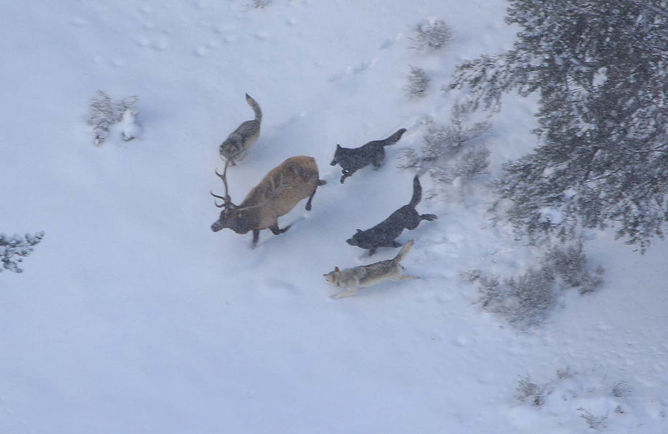
Based on field research, my Oregon State University co-author Robert Beschta and I documented the impact of cougars and wolves on the regeneration of forest tree stands and riverside vegetation in Yellowstone and other national parks in western North America. Fewer predators, we found, lead to an increase in browsing animals such as deer and elk. More browsing disrupts vegetation, reduces birds and some mammals and changes other parts of the ecosystem. From the actions of the top predator, widespread impacts cascade down the food chain.

Similar effects were found in studies of Eurasian lynx, dingoes, lions and sea otters. For example in Europe, absence of lynx has been closely tied to the abundance of roe deer, red fox and hare. In Australia, the construction of a 3,400-mile dingo-proof fence has enabled scientists to study ecosystems with and without dingoes which are closely related to gray wolves. They found that dingoes control populations of herbivores and exotic red foxes. The suppression of these species by dingoes reduces predation pressure, benefiting plants and smaller native prey.

In some parts of Africa, the decrease of lions and leopards has coincided with a dramatic increase in olive baboons, which threaten crops and livestock. In the waters off southeast Alaska, a decline in sea otters through killer whale predation has led to a rise in sea urchins and loss of kelp beds.

Predators are integral, not expendable

We are now obtaining a deeper appreciation of the impact of large carnivores on ecosystems, a view that can be traced back to the work of landmark ecologist Aldo Leopold. The perception that predators are harmful and deplete fish and wildlife is outdated. Many scientists and wildlife managers now recognise the growing evidence of carnivores’ complex role in ecosystems, and their social and economic benefits. Leopold recognised these relationships, but his observations were ignored for decades after his death in 1948.

op carnivores, at work keeping things in check. Doug Smith
Top carnivores, at work keeping things in check. Doug Smith

Human tolerance of these species is the major issue. Most would agree these animals have an intrinsic right to exist, but additionally they provide economic and ecological services that people value. Among the services documented in other studies are carbon sequestration, restoration of riverside ecosystems, biodiversity and disease control. For example, wolves may limit large herbivore populations, thus decreasing browsing on young trees that sequester carbon when they escape browsing and grow taller. Where large carnivore populations have been restored – such as wolves in Yellowstone or Eurasian lynx in Finland – ecosystems appear to be bouncing back.

I am impressed with how resilient the Yellowstone ecosystem is, and while ecosystem restoration isn’t happening quickly everywhere in this park, it has started. In some cases where vegetation loss has led to soil erosion, for example, full restoration may not be possible in the near term. What is certain is that ecosystems and the elements of them are highly interconnected. The work at Yellowstone and other places shows how species affect each another through different pathways. It’s humbling as a scientist to witness this interconnectedness of nature.

My co-authors and I have called for an international initiative to conserve large carnivores in co-existence with people. This effort could be modelled after a couple of other successful efforts including the Large Carnivore Initiative for Europe, a non-profit scientific group affiliated with the International Union for the Conservation of Nature, and the Global Tiger Initiative which involves all 13 of the tiger-range countries. With more tolerance by humans, we might be able to avoid extinctions. The world would be a scary place without these predators.

William Ripple does not work for, consult to, own shares in or receive funding from any company or organisation that would benefit from this article, and has no relevant affiliations.

The Conversation

This article was originally published at The Conversation.
Read the original article.

ooOOoo

Footnote – Please help the elephants

Tuesday’s Legitimate Hope included this:

Also what needs to be highlighted are the organisations that are actively working on behalf of the elephants.

The Independent Newspaper have their own elephant campaign.

Elephant Crisis

In 2011, more African elephants were killed than any other year in history. The figures for 2012 and 2013 are not yet known, but are likely to be even higher. At current rates, in twelve years, there will be none left.

It is a familiar cause, but it has never been more urgent. Poaching has turned industrial. Armed militia fly in helicopters over jungle clearings, machine gunning down entire herds. Their tusks are then sold to fund war and terrorism throughout the continent and the wider world. Ivory is still illegal, but as China booms, it is more popular than ever.

This campaign will raise money to support rangers on the ground to protect Kenya’s elephants from armed poachers, together with Space for Giants’ longer term work to create new wildlife sanctuaries where elephants will be safe, forever. More can be found about the charity at Space for Giants

The article above includes two videos.  A shorter one that can be viewed on the paper’s campaign website. Then there is a longer, five-minute, video also on YouTube and included below.

Offering a donation to help is only a click away.

Jean and I wanted to make a donation but found that without a UK bank account/UK Visa card it wasn’t possible.  We contacted Space for Giants and received the following email from Amy.

TUSK

Hi Paul

Sorry for the difficulties and thank you for your perseverance!
You can donate in USD through our CrowdRise page at www.crowdrise.com/spaceforgiants1. These funds are sent to TUSK USA who will then allocate them to us.
Alternatively, you can make out a cheque to ‘TUSK USA’  and send to TUSK USA, 40 East 94th Street, Apt 3A, New York, NY 10128 – please attach a covering note confirming that you would like your donation to be used to support the work of Space for Giants.
Many thanks,
Amy.
So if there’s anyone else out there not in the UK who would like to donate, here’s another option.
Please, for all our sakes, help these beautiful creatures.

Legitimate hope.

It’s too easy to be overwhelmed with negativity.

Many will have read yesterday’s post about the slaughter of elephants by ivory poachers and felt, as I did, a feeling of despair in the pit of one’s soul.  We seem to be living in such challenging times with so much madness about us.  It’s incredibly easy to feel as if this is some sort of ‘end of times’ period.

Today’s post tells us that there is always hope.

Let’s remind ourselves that elephants are very intelligent animals.  As I wrote last November in a post with the title of Smart Animals:

There was a fascinating article on the BBC news website a few weeks ago that went on to explain:

10 October 2013

Elephants ‘understand human gesture’

By Victoria GillScience reporter, BBC News
African elephants have demonstrated what appears to be an instinctive understanding of human gestures, according to UK scientists. In a series of tests, researcher Ann Smet, of the University of St Andrews, offered the animals a choice between two identical buckets, then pointed at the one containing a hidden treat.

From the first trial, the elephants chose the correct bucket.

The results are published in the journal Current Biology.

(The two video clips on the BBC website are really worth watching.)

A story published in the Daily Mail just a few days ago underlines the intelligence of elephants.

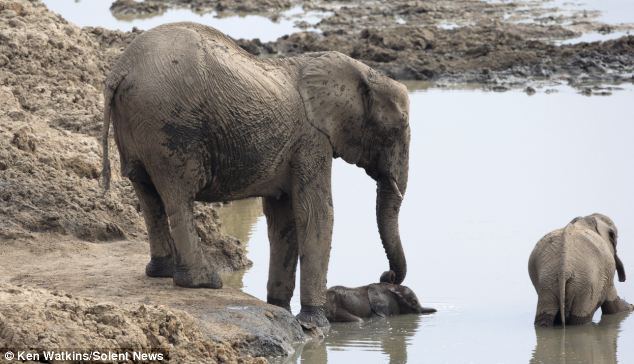
This adorable baby elephant had to be rescued by its mother’s huge trunk after it got stuck in the mud while taking a bath.

The youngster was enjoying a quiet dip in the water but became stranded when it struggled to pull itself out of the lake.

He had to be lifted to safety by its mother and her trusty trunk, which acted as a crane as she carried the three-month-old calf out of the water.

Stuck in the mud: The baby elephant slipped while taking a dip and was unable to haul himself out of the lake.

oooo

A mother's touch: Fortunately the calf's mother was able to scoop him up in her trunk and haul him to safety.
A mother’s touch: Fortunately the calf’s mother was able to scoop him up in her trunk and haul him to safety.

The rest of the story may be read here.

Also what needs to be highlighted are the organisations that are actively working on behalf of the elephants.

The Independent Newspaper have their own elephant campaign.

Elephant Crisis

In 2011, more African elephants were killed than any other year in history. The figures for 2012 and 2013 are not yet known, but are likely to be even higher. At current rates, in twelve years, there will be none left.

It is a familiar cause, but it has never been more urgent. Poaching has turned industrial. Armed militia fly in helicopters over jungle clearings, machine gunning down entire herds. Their tusks are then sold to fund war and terrorism throughout the continent and the wider world. Ivory is still illegal, but as China booms, it is more popular than ever.

This campaign will raise money to support rangers on the ground to protect Kenya’s elephants from armed poachers, together with Space for Giants’ longer term work to create new wildlife sanctuaries where elephants will be safe, forever. More can be found about the charity at Space for Giants

The article above includes two videos.  A shorter one that can be viewed on the paper’s campaign website. Then there is a longer, five-minute, video also on YouTube and included below.

Offering a donation to help is only a click away.

Then there is the David Sheldrick Wildlife Trust helping animals in Africa. And, finally, the campaign over at Bloody Ivory where one can sign a petition and donate towards stopping elephant poaching.

Thus, like so many aspects of life, never give up trying to help those less fortunate.

Without hope there is nothing.

We must rewild!

It sounds counter-intuitive but it may be the only way forward.

Regular visitors to Learning from Dogs will know that from time to time I refer to the essays of George Monbiot. I was recently browsing Mr. Monbiot’s website and learnt that in July 2013 he gave a TED Talk on Rewilding.  It was called: For more wonder, rewild the world.

Here is that talk.  Do watch it first.

http://www.youtube.com/watch?v=8rZzHkpyPkc

Published on Sep 9, 2013

Wolves were once native to the US’ Yellowstone National Park — until hunting wiped them out. But when, in 1995, the wolves began to come back (thanks to an aggressive management program), something interesting happened: the rest of the park began to find a new, more healthful balance. In a bold thought experiment, George Monbiot imagines a wilder world in which humans work to restore the complex, lost natural food chains that once surrounded us.

The talk reminded me that a couple of months ago Patrice Ayme published an essay called REWILDING US.  With Patrice’s permission that essay is republished here in full.

ooOOoo

REWILDING US.

REALITY IS WILD & FEROCIOUS. IGNORING IT IS INHUMAN.

And Presents A Civilizational Risk.

Princeton is freaking out. Flesh devouring aliens are lurking out in the woods, threatening academia’s fragile thoughts. Krugman:

‘From the Princeton Town Topics, which used to be all about (a) parking (b) deer:

A growing population of coyotes in the wooded area bordering the Institute for Advanced Study has motivated the Princeton Animal Control Advisory Committee to recommend that sharpshooters be hired to help handle the problem. “There is a big pack over at the Institute Woods,” officer Johnson said this week. “I’m having a lot of complaints that they follow people around.”‘

You Can’t Always Eat Who You Want

The “Mountain Lion”, is a relative of the Cheetah (erroneously put in the cat family, felis, until last year or so). It has 40 names, in English alone, and is found from the American Arctic to Patagonia, from the sea shore to the high mountains. The weight above is that of the female. Males are heavier (typically up to 100 kilograms). The heaviest puma shot in Arizona was 300 pounds (136 kilos).

The lion/cougar/puma is capable of jumping up twenty feet from a standstill (yes, 6 meters; horizontally, 14 meters). It is capable of killing a grizzly (pumas and ‘golden bears’ were famous for their naturally occurring furious fights to death in California). The feline’s crafty method consisted of jumping on top of the bear, and blinding him with furious pawing. Top speed: 50 mph, 80 km/h. (By the way, there used to be pure cheetahs in North America, recently exterminated by man. I propose to re-install the Asian cheetah in the USA, in a sort of cheetah diplomacy with Iran.)

The philosophical question here is: what is this world all about? Is it about living on our knees, or ruling among animals and wilderness?

Why would Princeton panic about small canids? Because they don’t obey the established order?

Coyotes are totally clever, and not at all dangerous (being so clever). They have very varied voices, when in packs. Going out and shooting them is really primitive, and misses the main point of having nature around. That is: to teach humility, and teach the richness of our planet, visit hearts with emotional diversity, and minds with complexity.

Bears and Mountain Lions are a completely different matter. They are both extremely clever too, but can be very dangerous.

Running and hiking in the Sierra, I got charged by scary bears several times. I view this dangerosity as a plus, but it never loses my mind, and I got scared nearly out my wits more than once.

Once, in a national Park on the coast, I literally ran into two large lions in 30 minutes! Then I got charged by a large elk before he realized I was not a lion. Other high notes were finding a bear cub on the trail in the near vertical mountain side, on the way down, as dusk was coming.

Another high point was the large bear by the trail, who was lying like a bear rug, at 9pm, in an apparent ruse to let me approach until he could jump at his prey, as he did, before realizing that I was not a deer, something that obviously infuriated him. He was torn between making the human into dinner, and the instinct that this would turn badly for him.

In Alaska I was charged by a moose with her progeny… although I did not go as fast as an experienced mountain biker who happened to be there too, the anti-grizzly cannister in my hand emboldened me to succeed in a circuitous move  to proceed towards my distant destination, something facilitated by the calf’s crash into some obstacle, drawing his mother’s concern. Mountain running often requires to proceed, no matter the obstacles in the way, when one is too far to turn around.

Bears know rocks, they have been hurt by them, and so they fear airborn rocks (throw the rock on something noisy, to impress; I had to hit, with a very large rock, a charging bear directly, once; it fled; it was killed by rangers later after he caused a flesh wound to somebody else; some will find all this very violent; well, it is, that’s part of the whole point).

Mountain Lions are better charged and/or, roared or barked at. They fear insane behavior.

In general making lots of noise helps, with bears and lions. I don’t have clever tricks to suggest for bathing safely in the murky icy Pacific. Although I assume that the presence of sea lions bobbing on the surface placidly is indicative of the absence of an obvious white shark prowling… In any case the Pacific is so cold, you will probably die of cardiac arrest before you are devoured.

In Africa, there are about 500,000 elephants. 25,000 to 30,000 are killed, a year, to send the ivory to east Asia (China, Vietnam). So African elephants may disappear. This is beyond tragic, it’s irreplaceable. Elephants understand people’s gestures, without any learning (they apparently learn to use trunk gestures among themselves). One is talking about extremely intelligent animals here. (In contrast, chimpanzees have great difficulties understanding human gestures.)

Intelligence and culture are dominant among apex mammals. That’s what makes them so superior. Washington State had the smart idea to shoot full grown adult male mountain lions. Thus mountain lion society and culture collapsed, uneducated teenagers took over, and incidents with humans exploded (something about the quiet macho society!).

A Japanese specialist of chimpanzee intelligence who happens to have a bear in his lab, found that the bear did not underperform chimpanzees on mental tasks (that’s actually a problem with bears; being so clever, they can be unpredictable, one can never know what they have up their sleeve, like the one who mimicked a bear rug, above, or one who drove a car in Tahoe). A number of social mentally advanced animals (sea mammals, parrots) use advanced languages.

So what are my recommendations? The Princeton Institute for Advanced Studies ought to realize that, if it wants to become really brainy, it ought to give our fellow species a chance. They are part of what make our minds, in full.

Elephants and rhinoceroses used to be all over Europe and North America. They ought to be re-introduced right away, using Indian and African species (rare camels too; later, thanks to genetic engineering, part of those could be replaced by re-engineered ancient species, such as the Mammoth). Lions and leopard-like species ought to be reintroduced too.

It can work: in the San Francisco Bay Area, there is an impressive population of mountain lions.  I had many close calls (in the most recent incident, a few weeks ago, a lion peed an enormous and dreadfully smelling amount on a trail I was making a loop on, obviously to show me he owned the territory, a total wilderness reserve a few miles from Silicon Valley… especially at dusk).

However, the lions are extremely good at avoiding people (although one got killed by police in downtown Berkeley in the wee hours of the morning). They will all be collared in the next ten years, to find out what is going on. With modern technology (collars!) and sophisticated human-animal culture, there is no reason why extremely dangerous, but clever species could not live in reasonable intelligence with humans.

So rewilding is possible. It’s also necessary. Why? So we humans can recover our hearts, and our minds.

Whether we like it or not, we are made for this wild planet. By forgetting how wild it is, by shooting it into submission, we lose track of the fact human life, and civilization itself, are much more fragile than they look.

And thus, by turning our back to the wilds, we lose track of what reality really is. Worse: we never discover all what our minds can be, and how thrilling the universe is. We are actually bad students who refuse to attend the most important school, that taught by reality itself.

Rewilding is necessary, not just to instill a mood conducive to saving the planet, but also to remake us in all we are supposed to be.

Expect Evil, And Don’t Submit.

These are the times when, once again, the plutocratic phenomenon is trying to take over. That’s when the few use the methods of Pluto to terrorize and subjugate the many (to constitute what is variously named an elite, oligarchy, or “nomenklatura“, or aristocracy, that is, a plutocracy).

And how is that possible? Because the many have been made into a blind, stupid, meek herd (I refer to Nietzsche for the condemnation of the herd mentality).

How do we prevent that? Nietzsche advocated the mentality of the “blonde beast“. That meant the lion (and not what the Nazis claimed it was; few were as anti-Nazi as Nietzsche). Why lion? Because lions are domineering. I learned in Africa that one could go a long way with wild lions, as long as one gave them respect, and time to get out of the way. However, disrespecting a lion means death.

Lions don’t accept to live on their knees. When abominable forces from the giant Persian theocratic plutocracy put the tiny Athenian democracy in desperate military situations, Athenians fought like lions. And democracy won.

Yet, 150 years later, when fascist, plutocratic, but apparently not as abominable, Macedonian forces put Athens in a difficult situation, Athenians surrendered. They did not fight like lions. Democracy would not come back to Athens for 23 centuries (and only thanks to the European Union).

We will not defeat plutocracy if we do not rewild ourselves. First: Let there be lions.

***

Patrice Ayme

ooOOoo

Yet something else we need to learn from dogs.

Photograph taken 25th April, 2012.

The above photograph was taken of young Cleo, just fifteen months old, showing that her innate skills of being in the wild were alive and well, despite thousands of years of dogs being domesticated animals.  Ergo, humans could manage just as well.

Food and health

How less can be so much more.

I came at today’s post from a number of directions.

A few days ago I was catching up with a good friend back in the UK, Peter M.  We hadn’t spoken in a couple of months.  One of the items from my end was mentioning that I had converted to a vegetarian diet, verging on trying to be a vegan.  Jeannie has been a vegetarian for almost her entire life. Having made the change to a vegetarian diet, to my surprise I had gained 12 lbs (5.4 kgs) in the last month.  Peter then mentioned that he, too, had put on 8 kgs before deciding to try and cut back.  Peter and I are of the same age and motivated to stay as fit and healthy as we can.  Anyway, Peter’s route for losing some weight was to commit to the fasting arrangement promoted and recommended by Dr. Michael Mosley – more of this later.

The conversation also reminded me of an essay by George Monbiot back at the end of November: Wrong About Being Wrong. Mr. Monbiot wrote of his mind changes about being vegetarian.  With his permission, here is that essay.

oooOOOooo

Wrong About Being Wrong

November 27, 2013

The argument seems, once more, decisively to favour veganism.

By George Monbiot, published on the Guardian’s website 27th November 2013

He did it quietly, and the decision is the better for that: Al Gore, according to reports in the US press, has gone vegan.

Certain things could be said about other aspects of his lifestyle: his enormous houses and occasional use of private jets, for example. While we can’t demand that everyone who espouses green causes should live like a Jain monk, I think we can ask that they don’t live like Al Gore. He’s a brilliant campaigner, but I find the disjunction between the restraint he advocates and the size of his ecological footprint disorienting.

So saying, if he is managing to sustain his vegan diet, in this respect he puts most of us to shame. I tried it for 18 months and almost faded away. I lost two stone, went as white as a washbasin and could scarcely concentrate. I think I managed the diet badly; some people appear to thrive on it. Once, after I had been unnecessarily rude about vegans and their state of health (prompted no doubt by my own failure), I was invited to test my views in an unconventional debate with a vegan cage fighter. It was a kind invitation, but unfortunately I had a subsequent engagement.

In 2010, after reading a fascinating book by Simon Fairlie, a fair part of which was devoted to attacking my views, I wrote a column in which I maintained that I’d been wrong to claim that veganism is the only ethical response to what is arguably the world’s most urgent social justice issue. Diverting grain that could have fed human beings to livestock, I’d argued, is grotesque when 800 million go hungry.

Fairlie does not dispute this, and provides many examples of the madness of the current livestock production system. But he points out that plenty of meat can be produced from feed which humans cannot eat, by sustaining pigs on waste and grazing cattle and sheep where crops can’t grow. I was swayed by his argument. But now I find myself becoming unswayed. In the spirit of unceasing self-flagellation I think I might have been wrong about being wrong.

Part of the problem is that while livestock could be fed on waste and rangelands, ever less of the meat we eat in the rich nations is produced this way. Over the past week, a row has erupted between chefs and pig farmers over the issue of swill. The chefs point out – as Simon Fairlie does – that it is ridiculous to feed pigs on soya grown at vast environmental cost in the Amazon instead of allowing them to dispose of our mountain of waste food. Feeding pigs on swill has been forbidden since the foot and mouth outbreak of 2001.

The farmers respond that the risks of spreading disease are too great and that pigs fed on waste grow more slowly than pigs fed on soya. I side with the chefs: I believe that a society capable of identifying the Higgs boson should be able to sterilise waste food. But I suspect that they’re not going to win: the industry and its regulators are firmly against them.

I should have seen it coming, but I watched in horror as the meat industry used my article to justify the consumption of all meat, however it was produced, rather than just the meat raised on food that humans can’t eat. A potential for good is used to justify harm.

While researching my book Feral, I also came to see extensive livestock rearing as a lot less benign than I – or Simon Fairlie – had assumed. The damage done to biodiversity, to water catchments and carbon stores by sheep and cattle grazing in places unsuitable for arable farming (which means, by and large, the hills) is out of all proportion to the amount of meat produced. Wasteful and destructive as feeding grain to livestock is, ranching appears to be even worse.

The belief that there is no conflict between this farming and arable production also seems to be unfounded: by preventing the growth of trees and other deep vegetation in the hills and by compacting the soil, grazing animals cause a cycle of flash floods and drought, sporadically drowning good land downstream and reducing the supply of irrigation water.

So can I follow Al Gore, and do it better than I did before? Well I intend at least to keep cutting my consumption of animal products, and to see how far I can go. It’s not easy, especially for a person as greedy and impetuous as I am, but there has to be a way.

http://www.monbiot.com

oooOOOooo

Back to the conversation with Peter M. about fasting.  He spoke enthusiastically about Dr. Mosley who one quickly discovers,

Dr. Michael Mosley.
Dr. Michael Mosley.

Michael J. Mosley (born 22 March 1957) is a British journalist, medical doctor, producer and TV presenter. He is probably best known as a television presenter of programmes on biology and medicine, particularly his series on the workings of the human body, Inside the Human Body and his regular appearances as the friendly medic on The One Show.

He was interviewed by Steve Wright of BBC Radio 2 back in January, 2012 and that interview is on YouTube:

That BBC Horizon programme is no longer available to watch but a 4-minute extract may be seen here:

Inevitably, Dr. Mosley has a website Fast Diet that is packed full of valuable information.

So just as soon as we have the water back to the house and I can have a long, hot shower I intend to adopt the 5:2 diet.