With the memory of Hurricane Katrina refreshed in our minds as we acknowledge the recent passing of the tenth anniversary of that ghastly disaster, a link to an item from May, 2013 that was published on Mother Nature Network seems perfect for this place.
ooOOoo
Why we turn to dogs when disaster strikes
From aiding search-and-rescue missions to lending a shoulder to cry on, man’s best friend can often be found at the site of tragedy.
By: Laura Moss, May 21, 2013.
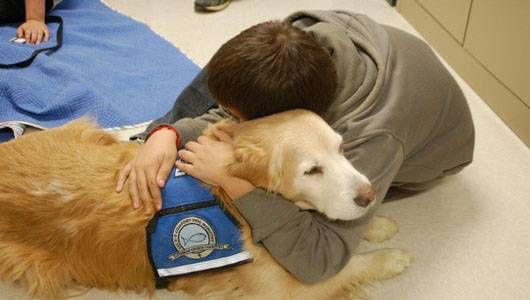
Photo: K-9 Parish Comfort Dogs/Facebook
Disaster relief is flooding into Moore, Okla., but along with volunteers and supplies, there are dogs.
Some, including the 11 canine disaster search teams trained by the Search Dog Foundation or SDF, are scouring tornado debris for survivors. Others are en route to comfort the devastated city’s residents. Lutheran Church Charities, whose therapy dogs have worked with victims of the Boston bombings and the Newtown, Conn., shootings, is sending six dogs from its Chicago headquarters.
When disaster strikes, man’s best friend is often there, working on the frontlines of rescue efforts, as well as behind the scenes, helping people cope with trauma and loss.
Super sniffers
Experts estimate that one search-and-rescue (SAR) dog can accomplish the work of 20 to 30 human searchers. Because of these unparalleled abilities, the number of trained SAR dogs has been rising across the United States.
Dogs make efficient searchers due to their superior vision, hearing and sense of smell. A dog’s nose is about 100 times more sensitive than a human nose, and SAR dogs are trained to locate human scents amid countless other smells. They track our scents by the 30,000 to 40,000 dead skin cells we drop every minute.
“Dogs aren’t miracle workers, but their noses are so precious,” said SDF founder Wilma Melville. “They can find those people who survived a horrific ordeal.”
Air-scent dogs are trained to work in specific types of terrain. Some search in wilderness settings while others search urban environments, which often can involve scouring collapsed buildings.
Because they must navigate unstable terrain, urban SAR dogs are some of the most highly trained canines. The only national standards for such dogs are the Federal Emergency Management Agency’s certification standards for urban disaster work. Currently, fewer than 100 dog-handler teams in the U.S. have this certification.
In addition to air-scent dogs, there are dogs taught to seek out both skin cells and the smell of human decomposition. During major disasters, such as the 1995 Oklahoma City bombing and the 2001 collapse of the World Trade Center, both air-scent dogs and cadaver dogs were used to search for people.
This caused problems for SAR dogs because they became discouraged when they found only dead bodies. At both Oklahoma City and Ground Zero, handlers hid in rubble so that dogs could occasionally find a living person. The dogs’ desire to elicit a response from a found person may be a result of their training, which involves seeking feedback and rewards, but experts say it could also speak to a deeper connection with humans.
Man’s best friend
When disasters occur, dogs do much more than just aid search-and-rescue missions. They’re often there to provide a source of comfort for us in ways that only an animal can.
In an interview with American Thinker, Debra Tosch, executive director of SDF, explained how her SAR dog Abby was able to console a firefighter at Ground Zero. “When someone was found, work would stop, and I watched as the tears rolled down the firefighters’ faces. I remember one firefighter who hugged Abby and buried his face in her neck after just finding out a fellow firefighter was found,” she said.
Research show that petting dogs can lower anxiety, regulate breathing and decrease blood pressure, and a Japanese study found that simply looking at a dog can increase oxytocin levels. Oxytocin is a chemical released by the pituitary gland that’s associated with human bonding and affection.
But while the firefighter may have found comfort in Abby’s presence, was the dog able to empathize? Research says it’s very likely.
A 2012 study at Portugal’s University of Porto found that dogs yawn even when they hear only the sound of a person yawning, providing strong evidence that dogs are able to empathize with us.
And a study at the University of London Goldsmiths College found that dogs comforted people — both their owners and strangers — when the person pretended to cry.
“I think there is good reason to suspect dogs would be more sensitive to human emotion than other species,” Custance told Discovery News. “We have domesticated dogs over a long period of time. We have selectively bred them to act as our companions. Thus, dogs that responded sensitively to our emotional cues may have been the individuals that we would be more likely to keep as pets and breed from.”
ooOOoo
Time and time again, the facts support what the vast majority of those who care for and love dogs truly know: the bond between dog and human is the most special that there has ever been between an animal and mankind.
A few days ago I received a friendly email from Alex in Sydney, Australia.
My name is Alex and I work for Spoilt Rotten Dogs, a boutique dog care centre in Sydney.
In an effort to improve community awareness and knowledge about dog care, we are looking at contributing to high profile blogs like Learning From Dogs by sharing tips and information provided by professional carers, vets, and groomers. I’ve learned from your site that you are looking for guest contributors.
I’ve recently written a post that I think fits pretty well with your site especially that you are based in Australia. It’s about the best places in Sydney to walk your dog. I’m sure your readers will find it really helpful.
I politely replied to Alex pointing out that Learning from Dogs was based in Southern Oregon and not Australia and thus a guest essay on walking one’s dog in Sydney was unlikely to have huge reader appeal! 😉
Unperturbed, Alex then replied with a guest essay that seemed much more pertinent to dog lovers right across the world. It now follows but not before I declare that there is no connection between this blog and Alex’s dog care centre. The following image is taken from the home page of the website for Spoilt Rotten Dogs.
ooOOoo
5 Tips to Dog Proof Your Backyard
Regardless of the fact that you really love your dogs, you cannot keep your eyes on them and supervise their activities all the time. However, this doesn’t set you free from the responsibilities that you have towards your pets either.
In order to ensure that they are living in a safe, secure, and hygienic environment, it is necessary to observe some basic safety precautions. These safety measures will not only ensure that your pets are far away from all types of risks and dangers but will also put an end to the complaints that you have been receiving for their ill behaviour when they start barking when someone passes by or stands near the backyard fence.
For your assistance, here we present you 5 useful tips to dog proof your backyard.
Fencing the Yard
Creating a boundary around your backyard is the first and foremost step to ensuring your pets’ safety. It keeps your dog inside your property and safe from other animals roaming around the neighbourhood. It is suggested that you choose the material of the fence, depending on the temperament of your dog. If your dog gets excited or furious when it sees someone around the yard, use opaque fences. You can opt for reed fencing that is neat, cheap, and also helps in maintaining privacy. On the other hand, if your dog has a calm nature, you can use regular wooden fences to surround your yard.
Sheltering for All Weathers
It has been observed that dogs are very sensitive to climatic changes. Whether it’s the scorching heat of the summers or chilly winds of the winter, your dogs need an appropriate home to maintain their body temperature. Instead of considering the entire open yard as their home, you should place a small yet spacious doghouse for them to live in.
Internal Dangers
It’s not just external dangers or outsiders that can cause harm to your dog, as there are several things inside your backyard that can put your pet into trouble. Wondering about those? Sharp and pointed tools, pest traps and pest treating chemicals, as well as pools, toxic plants, and so on; can all cause harm to your beloved dogs. Therefore, keep all such items and areas, out of your dogs’ reach.
Additional Airlocks
Airlocks are not very common around homes but you must have seen them in dog parks. These are additional fences that are set in front of the gates to ensure that even if the main gates are not closed properly, dogs cannot leave the premises and are thus, kept inside.
Maximum Supervision
Last but certainly the most essential tip is to supervise your dog as much as possible. You cannot expect them to maintain discipline and follow your set of rules. Instead, you can spend more time with them and train them to keep themselves safe from such troubles.
So, check on your pets timely to ensure they are away from all types of dangers and take the measures necessary to safeguard their well being.
Yesterday, I offered the first of two previous posts about Lilly. Here is the second, originally published in February, 2014.
ooOOoo
Lilly, the second of our nine dogs.
Last week was the start of a series of posts giving you, dear reader, background on each of our nine dogs. Thus last week, Jean wrote about Paloma. Here is Jean’s account of how Lilly came into her life.
ooOOoo
Lilly
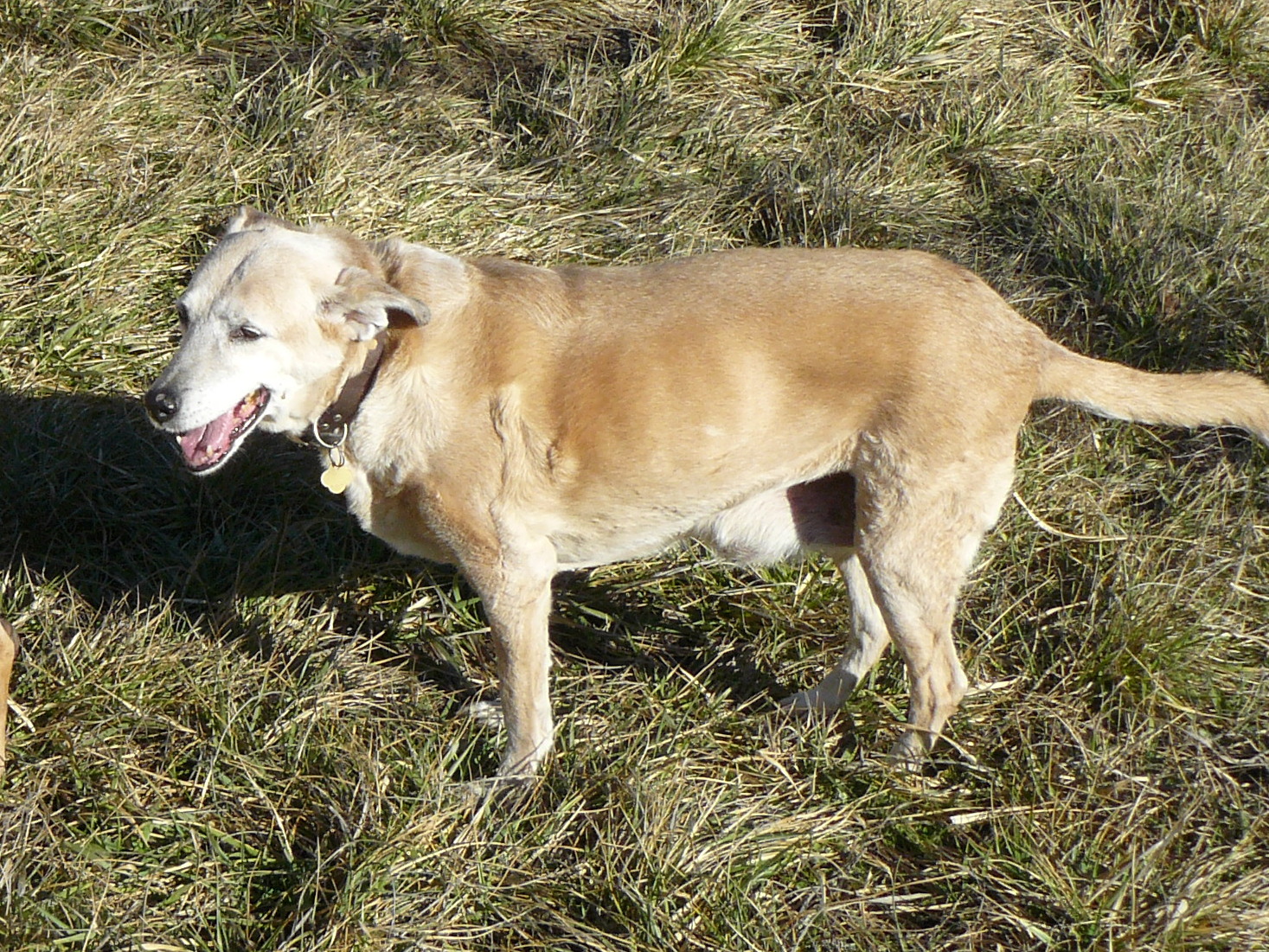
Lilly – Taken 26th January, 2014
Lilly came into my life fourteen years ago. I had taken my car into the mechanics workshop in San Carlos, Mexico for an oil change and was beckoned over to an old junk car in their lot. It had no glass in the windows and in the hatch-back area lay a smallish dog with five young, suckling puppies. She had apparently walked in off the street and chosen the old airy car as a suitable ‘house’ in which to have her babies. The workers had supplied her with an old greasy towel for a mattress.
My girlfriend, Suze, and I immediately set about making her comfortable with a small quilt and plenty of water and good dog food. She had been dining on tacos and tamales scraps up until then.
Suze and I visited frequently and took plenty of food and at the same time went about looking for homes for the pups. However, one day we arrived and found all the beautiful babies gone. The mechanics had given them away. We were shattered and could only hope that they had gone to loving homes.
‘Rabbit’, as she was then called, continued hanging around the workshop and the men seemed to like her. Rabbit had this trick of leaping on her hind legs, twirling and landing on her four legs; hence her name Rabbit, I guess.
Suze and I would see her once a week on average and had also arranged for Rabbit to be spayed. All seemed well until Easter came (I think we are talking of the year 2000). As is common in Mexico, during Easter week in San Carlos everything shuts down. It’s carnival time. The streets are busy with tourists and there is much traffic. I was worried about Rabbit as the mechanic’s shop was locked up tight and Rabbit was outside in the lot by the street. I planned to take her home for the rest of the holiday but fate intervened. On my way to collect her, I was aghast to see her motionless by the side of the road, obviously having been hit by a car. I gently picked her up and took her home. On inspection, it was clear that she had two broken legs on her right-hand side. Her injuries were so bad that I knew the local vet did not have the skills or instruments to heal her. My late husband, Ben, and I ended up driving her two hours South to Obregon where there was an orthopaedic vet. He put pins in both legs and she stoically set about mending herself. Rabbit became Lilly. Irrespective of name, she was an assertive but sweet young dog and settled in nicely with my burgeoning pack; I had twelve rescue dogs in those days. Her legs healed nicely and she resumed her twirling.
Lilly became a particular favourite of Ben, my late husband. When in 2005 Ben lay dying at home, Lilly slept non-stop by his side on the bed, only leaving to eat or go outside. I knew for sure that Ben had died in the night when one morning I awoke to feel Lilly beside me on my bed. Lilly sensed that now I needed her more.
Lilly is still with us. Now a dowager old lady of at least fifteen years of age, she still enjoys going out with her buddies whom she tends to boss somewhat. (Paul thinks that Lilly is an ‘alpha’ dog, in other words has pack leadership in her genes.) But one thing that Lilly doesn’t now do; she doesn’t twirl anymore, but then neither do I.
It will be a very sad day when Paul and I have to say goodbye to this treasure of a dog. [As indeed, it was] In the meantime we endeavour to make each day that she has left as rich as possible.
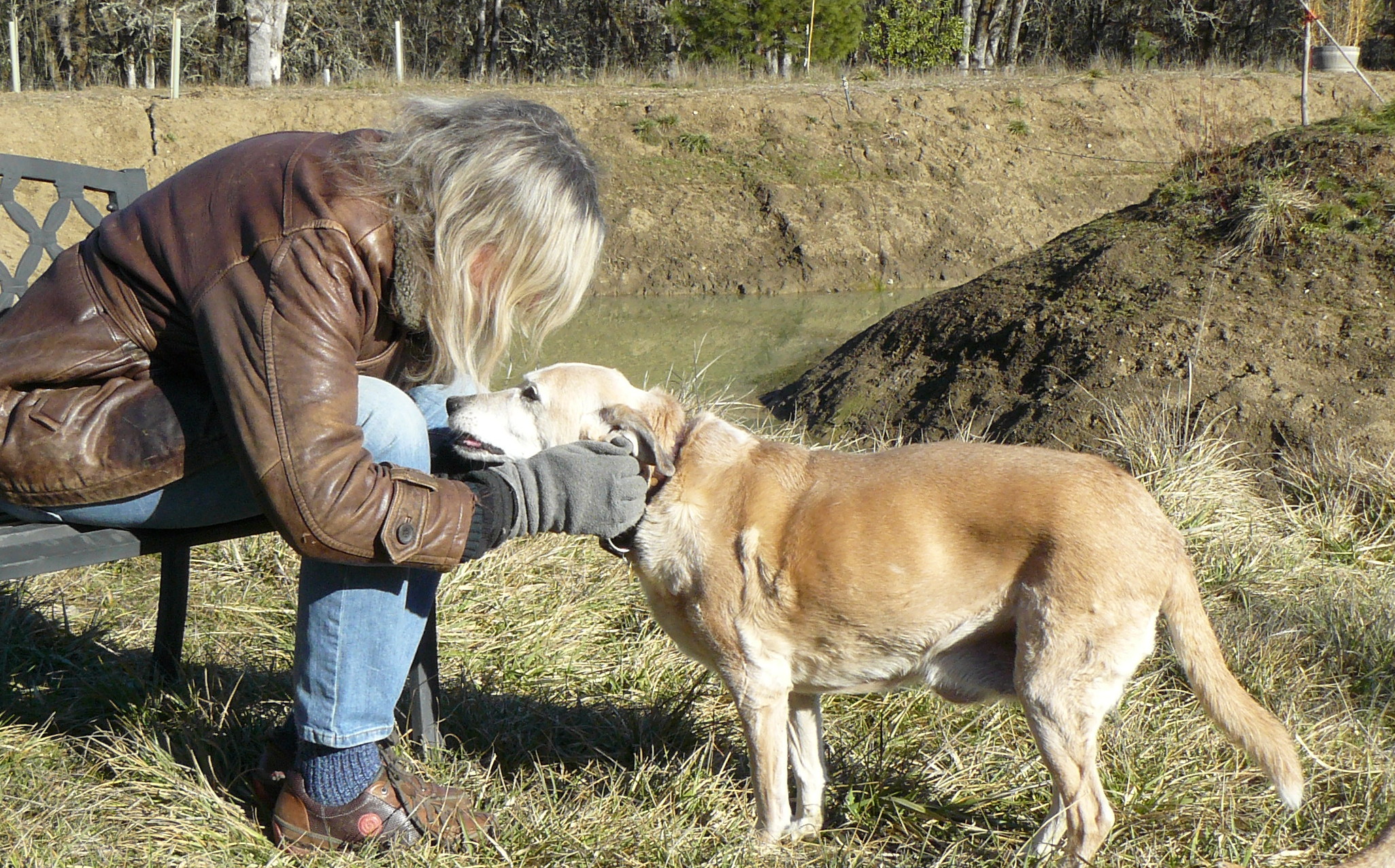
Another very recent photograph of Lilly.
ooOOoo
I think it would wonderful to also include a section from an email that Suzann Reeve, a good friend of this blog, sent to Jeannie yesterday.
The story of Lily and her origins:
(I of course burst into tears when reading your email, Paul.) I knew it was coming. I wish I could have seen her one more time.
Poor baby, I hope she did not suffer much.
In 1998, Don and I went to a junk yard, which at the time was next to the telephone company in San Carlos. As we were talking to the men, out of a shell of an old car behind us popped a small mama dog, heavy with milk. I of course went right over there after hearing puppies cry to see many little baby puppies were mewling for mommy’s milk! The dog was so sweet and jumped around like a rabbit. I brought food and water for her and found her a nice blanket for her and the pups.
I told Jeannie about them and we went back the next day to check it out. We told the men we would care for them, but one day when we came to feed, the puppies were gone! I begged Don to let me take her, but as I lived in an RV, he would not let me, and I also had 3 dogs at the time, Poncho, and his sister and Destina….., plus the men wanted her, which almost led to her death.
After Don and I left town for the summer sometime later, if i remember correctly, Jean and Ben were driving down the main road in town when they saw LLevre (rabbit in Spanish) injured on the road. I believe they took her down to Obregon for an operation right away, and after a successful operation, she was theirs! They saved her life!
She has lived a very full and happy life. I am so sad that she is gone.
Fewer than five minutes ago, at 11:52 PDT today, Sunday 23rd August 2015, Jim Goodbrod euthanised our Lilly.
Lilly, aged seventeen, started to decline about a year ago. In the last few weeks she had become progressively weaker, she was hardly eating and had lost much body mass, her kidneys were close to total failure and it was clear to Jean and me that she was close to what could in all likelihood be a painful end. So much better for Lilly that her end should be peaceful and pain-free, as it most clearly was.
Lilly was found by Jean sixteen years ago with her five young, suckling puppies in a car mechanics workshop in San Carlos, Mexico and has been loved and cared for by Jean right up to the end. Most Mexican street dogs barely live for a couple of years.
All of our dogs are special yet the odds of any other of our dogs living seventeen human years is very low.
I intend to republish tomorrow and Tuesday two posts of Lilly in homage of this wonderful, gentle and loving dog.
Let me leave you with this photograph of Jean and Lilly from earlier last year.
Another fabulous lesson we can learn from our dogs.
Stillness. It is a very simple, single word yet, somehow, it sounds as though it belongs to a different age. As though stillness is a very long way from the modern society that millions and millions of us subscribe to.
The dog is the master of being still. Being still, either from just laying quietly watching the world go by, or being still from being fast asleep. The ease at which they can find a space on a settee, a carpeted corner of a room, the covers of a made-up bed, and stretch out and be still, simply beggars belief. Dogs offer us humans the most wonderful quality of stillness that we should all practice. Dogs reveal their wonderful relationship with stillness.
Now watch this entrancing talk from Pico Iyer.
Published on Nov 26, 2014
The place that travel writer Pico Iyer would most like to go? Nowhere. In a counterintuitive and lyrical meditation, Iyer takes a look at the incredible insight that comes with taking time for stillness. In our world of constant movement and distraction, he teases out strategies we all can use to take back a few minutes out of every day, or a few days out of every season. It’s the talk for anyone who feels overwhelmed by the demands for our world.
Why you should listen.
Acclaimed travel writer Pico Iyer began his career documenting a neglected aspect of travel — the sometimes surreal disconnect between local tradition and imported global pop culture. Since then, he has written ten books, exploring also the cultural consequences of isolation, whether writing about the exiled spiritual leaders of Tibet or the embargoed society of Cuba.
Iyer’s latest focus is on yet another overlooked aspect of travel: how can it help us regain our sense of stillness and focus in a world where our devices and digital networks increasing distract us? As he says: “Almost everybody I know has this sense of overdosing on information and getting dizzy living at post-human speeds. Nearly everybody I know does something to try to remove herself to clear her head and to have enough time and space to think. … All of us instinctively feel that something inside us is crying out for more spaciousness and stillness to offset the exhilarations of this movement and the fun and diversion of the modern world.”
What others say
“[Iyer] writes the kind of lyrical, flowing prose that could make Des Moines sound beguiling.” — Los Angeles Times
We rarely get to know what a rescue dog has been through.
Of the ten dogs that we have here at home, two are pedigree dogs purchased from breeders, that’s Pharaoh and Cleo, two are rescue dogs that came from known sources, Oliver from neighbours who couldn’t cope with him and Pedy from the local Merlin dog pound, and the rest are all ex-rescue dogs that Jean took from the streets of San Carlos, Mexico.
The last rescue dog to be taken in by Jean before we both left Mexico was Hazel who was abandoned outside Jean’s house in San Carlos a few weeks before we left for Arizona. The picture below is of Hazel taken in March 2014.
Hazel is the most loving and adorable of dogs and the love that I feel coming from her towards me is real, tangible and precious. Yet this is a mother dog who very shortly before she was deposited in front of Jean’s house in Mexico had had all her puppies removed from her as Hazel was still in milk. (The poor in San Carlos frequently sell young puppies for a few Pesos.) It’s beyond the comprehension of us humans, especially women, to imagine what it must be like for a mother to so catastrophically lose her young babies.
That’s why a recent article over on Mother Nature Network really reached out to me. We never know what homeless dogs have to contend with before they find loving homes.
ooOOoo
Why our Great Dane is so scared to be alone
Most of us will never know what our rescue dogs have been through. We found out.
By: Ali Berman, August 12, 2015
Author Ali Berman discovered she had a new shadow when she met Cooper. (Photo: Ali Berman)
In February 2015, David and Glenda Berman — that’s my mom and dad — drove from New York to Connecticut to meet Cooper, a 13-month-old Great Dane. When they were introduced, 100-pound Cooper rushed over to give them an enthusiastic greeting, burying his head in their legs, leaning on them, and asking to be petted. My mom and dad fell in love, and Cooper took the two-hour drive back to their house, the place that would become his forever home.
During those first few weeks, my parents got to know Cooper. They went for walks in the snow, played together, and snuggled. (He’s a major snuggler.) But, in addition to those normal doggy behaviors, they noticed something else. Cooper was reluctant to leave their sides. If they left the room, he went with them. He took trip after trip to the kitchen, to the bathroom, to the laundry room. When they moved, he moved.
I didn’t believe the extent of it until I got the chance to meet him myself. I traveled back to New York to visit my family in May. For me and Coop, it was love at first sight. We played, we ran, we cuddled, and by the end of the first day, I found myself with a 115-pound shadow. As soon as I showed any sign of movement, his head perked up and he was ready to follow me. In the morning when he opened his eyes, he went directly to my room to wake me up. When I napped in the afternoon, he came with me, opting to sleep right next to the bed. And when I went out to dine with a friend, my parents distracted him so he wouldn’t see that I was leaving.
Now, when a small dog follows you everywhere, it’s not a big deal. But when a Great Dane follows you around, it’s not stealthy. Seeing how much he craved to be near people, I welcomed him wherever I went — even the bathroom. Still, I wondered: Why was he so reluctant to be alone? Did he not believe we’d come back?
If there’s a hug going on, Cooper wants to be a part of it. (Photo: Ali Berman)
Thinking we knew the full story behind his upbringing, we all wrote it off as him being a little insecure. In just over a year he had experienced four different homes. After he left the breeder (his first home), Cooper went to live with a young woman who loved him very much. Unfortunately, they learned that while Cooper enjoys meeting other dogs on his walks, he has trouble living with other dogs. He got into fights with another pooch in the house and with great difficulty, the young woman sent Cooper to live with her uncle. As he also had animals at home, the problem repeated itself.
Cooper needed to live with a one-dog family. The uncle — who could easily have sold purebred Cooper for a handsome sum — instead decided to put him up for adoption to find the best family possible. My parents had been looking for a Great Dane to adopt, so they sent their references, along with pictures with their previous Great Dane who had died two years before, and a heartfelt message. They were chosen to be Cooper’s new and final family.
Because Cooper was loved and well treated in all of his homes, my parents thought the insecurity came from the many moves.
But that wasn’t the full story. Not even close.
In an email from the woman who originally took Cooper in, my mother learned the truth. Cooper had been born with the rest of his litter in the home of an Iowa breeder. One night, when the breeders were out bowling, their home caught on fire. Everything went up in flames. Cooper’s mother and siblings all tragically perished. Baby Cooper was found alone in the debris in the yard. In just one night, he had lost his entire family, suffering more trauma in an instant than most experience in a lifetime.
After the fire, the breeders had to rebuild their lives, so they put Cooper up for adoption. That’s when he started to move from house to house, finally finding his perfect match with my parents. Now, he starts out every day with a multi-mile walk, a nap in the office while my dad works, and then Cooper spends an hour or two playing with his friends in the dog park in the afternoon. If he’s not snoozing or walking, he’s out in the garden with my mom soaking up the sun.
Some serious trauma as a puppy made Cooper never want to be alone. (Photo: Ali Berman)
Just part of the story
When we rescue an animal, most of the time we never get to know their complete history. Why do some cry when their humans leave the house? Or some bark and growl at men who wear hats? Like people, animals remember the various difficulties and tragedies they have suffered. Those scars go through life with them, just like our own scars follow us. The only difference is they can’t tell us their fears, and we can’t explain to them that they are safe. The best we can do is show them they are loved and hope with enough repetition, they’ll get the message.
In an ideal world, every dog would only have good memories. Their first Frisbee catch or trip to the beach, their favorite person who knows how to pet the ears just right, and the safety of a single home where they will live their life right through to ripe old age. That’s not the case for every dog. Some need a little extra help from us as they learn to trust, move on from the past and accept that their new reality is the one they can count on.
With time, Cooper might just learn to keep snoozing while his mom or dad goes to get a cup of tea. Until then, we’ll all keep showing him that he’s loved, and that this home and this family are forever.
ooOOoo
When one thinks of how dogs, Cooper, Hazel and tens of thousands of others, so beautifully offer their unlimited love to us humans it is just a great shame that we humans haven’t emulated our beloved dogs across mankind in such a widespread manner.
Picture taken by our guest Don Reeve of Hazel (and me) Wednesday afternoon.
Gorgeous Hazel. Who would have thought from that smiling face of hers that she had ever suffered the catastrophic loss of her puppies that she had.
“Thousands have lived without love, not one without water.”
That sub-heading is a quotation from W. H. Auden and while directed at man it applies to all animal life including our beloved dogs.
The drought that California is experiencing is world-wide news but, possibly, the fact that this drought extends to much of the Pacific West Coast on the United States is not as widely known.
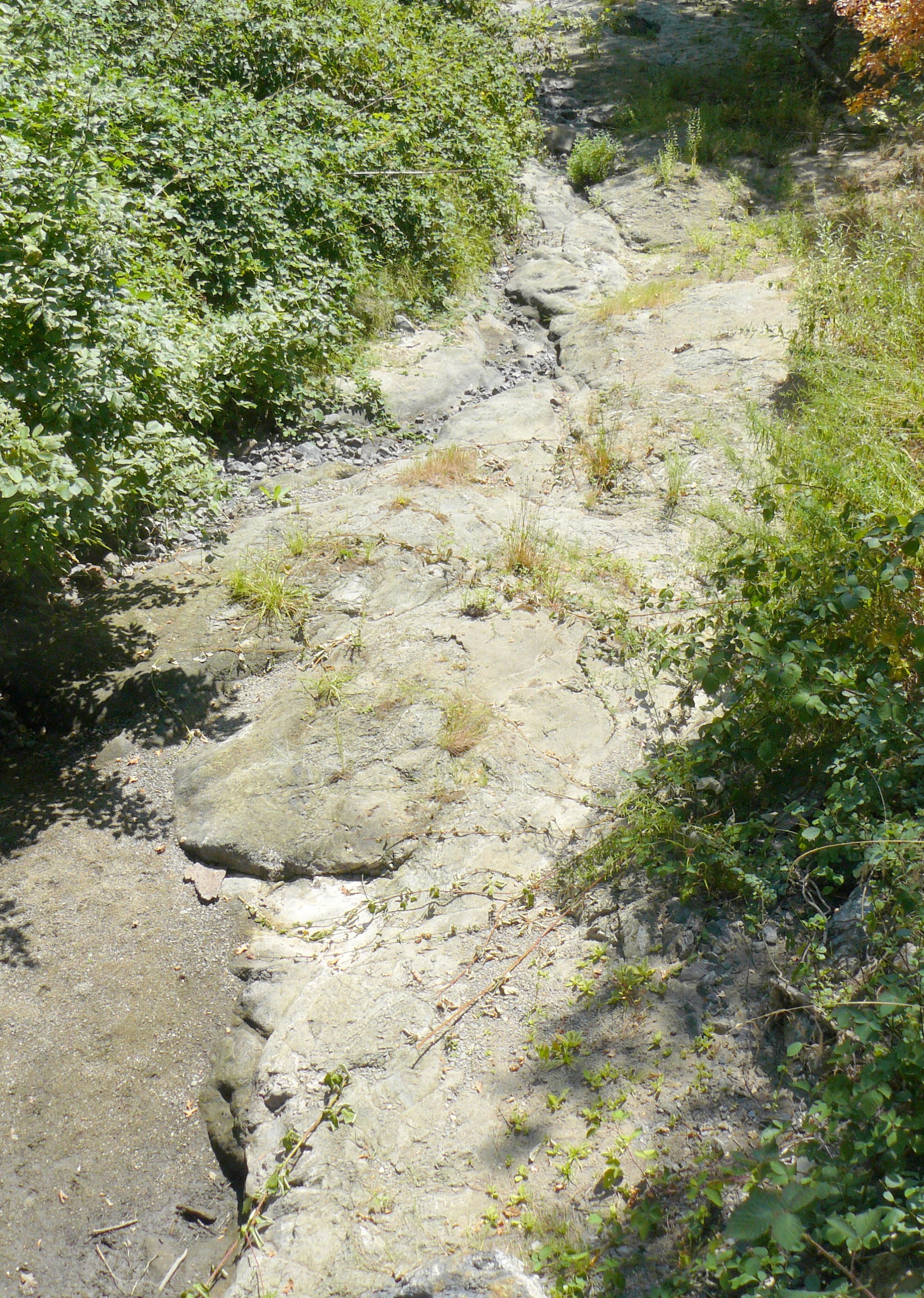
Here in Merlin, Southern Oregon, our own ‘all-year’ creek, Bummer Creek, that flows through our property has been dry for about two weeks. Our grass fields are parched brown and many of the trees are signalling a shortage of water. And let’s not even think about the underground aquifer that supplies our drinking water.
All of which makes a sombre introduction to a recent essay over on TomDispatch, republished here with the very kind permission of Tom Engelhardt. (But see my note at the end of the essay.)
ooOOoo
Tomgram: William deBuys, Entering the Mega-Drought Era in America
Posted by William deBuys at 4:17pm, August 16, 2015.
The other day here in New England it was chilly, rainy, and stormy and I complained. Where was the sun? The warmth? The summer? I happened to be with someone I know from California and he shook his head and said, “It’s fine with me. I like it rainy. I haven’t seen much rain in a while.” It was a little reminder of how insular we can be. California, after all, is in the fourth year of a fearsome drought that has turned much of the North American West, from Alaska and Canada to the Mexican border, into a tinderbox. Reservoirs are low, rivers quite literally drying up, and the West is burning. In rural northern California, where the fires seem to be least under control, the Rocky Fire has already burned 109 square miles and destroyed 43 homes, while the Jerusalem Fire, which recently broke out nearby, quickly ate up almost 19 square miles while doubling in size and sent local residents fleeing, some for the second time in recent weeks.
Fires have doubled in these drought years in California. The fire season, once mainly an autumnal affair, now seems to be just about any day of the year. (This isn’t, by the way, just a California phenomenon. The latest study indicates that fire season is extending globally, with a growth spurt of 18.7% in the last few decades.) In fact, fire stats for the U.S. generally and the West in particular are worsening in the twenty-first century, and this year looks to be quite a blazing affair, with six million acres already burned across the region and part of the summer still to go. And here’s the thing: though “I’m not a scientist,” it’s pretty hard at this point not to notice — though most Republican candidates for president seem unfazed — that this planet is heating up, that today’s droughts, bad as they are, will be put in the shade by the predicted mega-droughts of tomorrow, and that the problem of water in the American West is only going to deepen — or do I mean grow shallower? TomDispatch regular William deBuys, an expert on water in that region and author of A Great Aridness: Climate Change and the Future of the American Southwest, has already written dramatically of a future “exodus from Phoenix.” For clues to what we will all experience sooner or later, he now turns to California, that bellwether state in which, as he writes, the future always seems to play itself out first. Tom
California First
As Both Climate Victim and Responder, the National Style-Setter Leads the Way
By William deBuys
Long ago, I lived in a cheap flat in San Francisco and worked as the lone straight man in a gay construction company. Strangely enough, the drought now strangling California brings back memories of those days. It was the 1970s. Our company specialized in restoring the Victorian “gingerbread” to the facades of the city’s townhouses, and I got pretty good at installing cornices, gable brackets, and window hoods, working high above the street.
What I remember most, though, is the way my co-workers delighted in scandalizing me on Monday mornings with accounts of their weekend exploits.
We were all so innocent back then. We had no idea of the suffering that lay ahead or of the grievous epidemic already latent in the bodies of legions of gay men like my friends, an epidemic that would afflict so many outside the gay community but was especially terrible within it.
It’s unlikely that many of those guys are alive today. HIV was already in the population, although AIDS had yet to be detected or named, and no one had heard of “safe sex,” let alone practiced it. When the epidemic broke out, it was nowhere worse than in trendsetting San Francisco.
By then I had returned to New Mexico, having traded my hammer for a typewriter. When I announced my intention to leave California, the guys all said the same thing. “Don’t go back there,” they protested. “You’ll just have to go through all of this again!”
All of this required no translation. It meant the particular newness of life in that state, which was always sure to spread eastward, as Californian styles, attitudes, problems, tastes, and fads had been spreading to the rest of the country almost since the days of the Gold Rush.
Hippies, flower power, bikers, and cults. The movies we see and the music we listen to. The slang we pick up (I mean like, what a bummer, dude). Wine bars and fern bars, hot tubs and tanning booths, liposuction and boob jobs. The theft of rivers (Forget it, Jake. It’s Chinatown) and the theft of baseball teams (Brooklyn still mourns). Gay rights, car culture, and the Reagan Revolution. Scientology, mega-churches, Buddhist chic, and exercise videos. If they didn’t actually start in California, they got big and came to national attention there. Without the innovations of Silicon Valley, would you recognize your mobile phone or computer? Would you recognize yourself?
It’s the same with climate change. California in the Great Drought is once again Exhibit A, a living diorama of how the future is going to look for a lot of us.
And the present moment — right now in 2015 — reminds me of San Francisco as the AIDS epidemic broke out. Back then we had no idea how bad things were going to get, and that is likely to be true now, as well. As usual, California is giving us a preview of our world to come.
The Arrival of the Bone-Dry New Normal
On the U.S. Drought Monitor’s current map, a large purple bruise spreads across the core of California, covering almost half the state. Purple indicates “exceptional drought,” the direst category, the one that tops both “severe” and “extreme.” If you combine all three, 95% of the state is covered. In other words, California is hurting.
Admittedly, conditions are better than at this time last year when 100% of the state was at least “severe.” Recent summer rains have somewhat dulled the edge of the drought, now in its fourth year. Full recovery, however, would require about a foot of rain statewide between now and January, a veritable deluge for places like Fresno, which in good times only get that much rain in a full year.
To be clear, the current drought may not have been caused by climate change. After all, California has a long history of periodic fierce droughts that arise from entirely natural causes, some of them lasting a decade or more. Even so, at a minimum climate change remains a potent factor in the present disaster. The fundamental difference between California’s current desiccation and its historical antecedents is that present conditions are hotter thanks to climate change, and hotter means drier since evaporation increases with temperature. Moreover, the relationship between the two is non-linear: as temperature creeps up, evaporation gallops. Bottom line: the droughts of the future will be much more brutal — and destructive — than those of the past.
California is already on average about 1.7° Fahrenheit hotter than a century ago, and its rate of warming is expected to triple in the century ahead. The evaporative response to this increase will powerfully amplify future droughts in unprecedented ways, no matter their causes.
Throughout the state, draconian cutbacks in water use remain in force. Some agricultural districts are receiving 0% of the federally controlled irrigation water they received in past years, while state water deliveries are running at about 15% of normal.
Meanwhile, a staggering 5,200 wildfires have burned in the state’s forests and chaparral country this year, although timely rains everywhere but in the northern parts of California and the rapid responses of a beefed-up army of firefighters limited the burning to less acreage than last year — at least until recently. The blow-up of the Rocky Fire, north of San Francisco, in the early days of August — it burned through 20,000 acres in just a few hours — may change that mildly promising statistic. And the fire season still has months to go.
So how is this a trendsetter, a harbinger for lands to the east? California’s drought is deep and long — we don’t yet know how long — and the very long-term forecast for an immense portion of western North America, stretching from California to Texas and north to South Dakota, is for a future of the same, only worse. Here is the unvarnished version of that future (on which an impressive number of climate models appear to agree) as expressed in a paper that appeared in Science Advances last February: “The mean state of drought in the late 21st century over the Central Plains and Southwest will likely exceed even the most severe mega-drought periods of the Medieval era in both high and moderate emissions scenarios, representing an unprecedented fundamental shift with respect to the last millennium.”
Let’s unpack that a little bit: principal author Benjamin Cook of NASA and his colleagues from Columbia and Cornell universities are saying that climate change will bring to the continent a “new normal” more brutally dry than even the multiple-decades-long droughts that caused the Native American societies of Chaco Canyon and Mesa Verde to collapse. This, they add, is now expected to happen even if greenhouse gas emissions are significantly lowered in the decades to come. The impact of such droughts, they conclude, will exceed the bounds of anything known in the history of the continent or in its scientifically reconstructed pre-history.
In other words, the California drought of recent years offers only a foretaste of what is to come. Incidentally, Cook, et al. are by no means outliers in the literature of climate prediction. Other important studies with similar forecasts support a steadily broadening consensus on the subject.
And North American droughts will have to compete for attention with countless other climate change impacts, especially the hundreds of millions of refugees worldwide who will be put into motion by rising sea levels and other forces that will render their present homes unlivable.
A User’s Guide to Climate Change
If California points the way to dry times ahead, it also gives us an early glimpse of how a responsible society will try to live with and adjust to a warmer future. The state has imposed stringent new limits on water use and is actively enforcing them, and in general, individual consumers have responded positively to the new requirements, in some cases even exceeding mandated conservation goals.
In a similar spirit, the state has augmented its wildland fire-fighting capacity to good effect, even as the fire danger has approached levels never before seen.
Perhaps most impressively the state has adopted its own pioneering cap-and-trade program aimed at rolling back total greenhouse gas emissions to 1990 levels. Under cap-and-trade, carbon polluters have to obtain permits to continue their emissions, and only a finite number of such permits are made available. A coal-burning power plant or a refinery has to buy its permit from the state or from another company that already has one. This way, a ceiling is established for total greenhouse gases emitted by the most energy-intensive sectors of the economy.
Although the jury may still be out on how well the program meets its goals, there is no debating its positive impact on the state treasury. In the fiscal year just begun, the auction of permits under California’s cap-and-trade program will net approximately $2.2 billion, a windfall that will be spent on mass transit, affordable housing, and a range of climate-adaptation programs. And by the way, the warnings of nay-sayers and climate deniers that cap-and-trade would prove a drag on the economy have proved groundless.
In a manner similar to the U.N.’s prestigious Intergovernmental Panel on Climate Change, California now publishes an assessment every three years of both its vulnerability to climate change and the steps it plans to take to mitigate or adapt to its effects. The report is a model of its kind and draws on copious California-specific scientific research, some of which is funded by the state.
You might think California’s neighbors would follow suit, and eventually, as with most things Californian, they undoubtedly will. If President Obama’s just-announced “Clean Power Plan” withstands the expected court challenges, it will prove a powerful spur in that direction as it mandates state-by-state reductions in power plant carbon emissions that will, in the end, drive them 32% below 2005 levels. Many states will undoubtedly have to adopt cap-and-trade systems in order to comply. As they set about devising their own programs, where do you think they will look for a workable example? You guessed it: California.
An “Island” Again, or Nearly So
In the seventeenth century, Spanish cartographers thought California was an island separated from the rest of North America by the legendary Straits of Anian. In some ways, nothing has changed. In late July, while California Governor Jerry Brown was at the Vatican joining Pope Francis in calling for urgent global action to combat climate change, his opposite numbers across the putative straits continued to assume the posture of startled ostriches.
Doug Ducey, the Republican governor of Arizona, admits that the climate may indeed be changing but doubts that humans play a causal role in it. Susana Martinez of New Mexico, also a Republican, continues to insist that climate science is inconclusive, while former governor of Texas and current presidential candidate Rick Perry adamantly remains “not a scientist,” although he knew enough to inform us in his 2012 campaign screed Fed Up that climate change science is “a contrived phony mess.”
In general, when it comes to climate change, the leadership of statehouses across the country remains as troglodytic as the House of Representatives. Only in Hawaii, Oregon and Washington on the West Coast, Minnesota in the Midwest, and a handful of Northeastern states will governors even acknowledge the importance of acting to curb climate change as well as adapt to it.
This year, the deniers may get a boost from an unlikely source. Warm surface waters seem to be brewing something special in the Pacific Ocean. Says one researcher, “The El Niño event currently ongoing in the eastern and central Pacific is strengthening. The only question is whether it will be just a significant event, or a huge one.”
El Niño draws the winter Pacific storm track southward, bringing precipitation to southern California, Arizona, and points eastward. If the southern tier of states has a wet winter, the Republican rain-dancers will feel confirmed in their official doubt and denialism, much as a broken clock is right at least twice a day.
Occasional El Niños, however, will not avert the long-term new normal for California and much of the West. As that state is showing, adaptation will soften some of the blows, and possibly, if we act soon enough and strongly enough, we may manage to cap the overall changes at some still livable level. The jury will be out on that for quite some time.
Meanwhile, as in pre-AIDS San Francisco, we are all still in a state of at least semi-innocence. Maybe we can imagine in an intellectual way what it might be like to lose the forests across half of the continent, but can any of us conjure the feeling of how that would be?
After many missteps and halting starts, the medical and public health establishments finally came to the assistance of the victims of AIDS. As difficult as that was, it was easy compared to the remedies climate change will demand. And for much of the damage there will be no remedy. Get ready.
William deBuys, a TomDispatch regular, is the author of eight books, the most recent of which is The Last Unicorn: A Search for One of Earth’s Rarest Creatures. He has written extensively on water, drought, and climate in the West, including A Great Aridness: Climate Change and the Future of the American Southwest.
Follow TomDispatch on Twitter and join us on Facebook. Check out the newest Dispatch Book, Nick Turse’s Tomorrow’s Battlefield: U.S. Proxy Wars and Secret Ops in Africa, and Tom Engelhardt’s latest book, Shadow Government: Surveillance, Secret Wars, and a Global Security State in a Single-Superpower World.
Copyright 2015 William deBuys
ooOOoo
Again, there are far too many links for me to bring across to this republication but I do recommend that if you have an extra special interest in William deBuys essay that you check through all the links in the original version to be read here.
One of the most important lessons we can learn from our dogs: coping with death.
In writing about the lesson of death that we can learn from our dogs I am, of course, speaking of our own death, of the inevitability of our death. That largely unspoken truth that Sharon Salzberg described in her book Faith: “What does it mean to be born in a human body, vulnerable and helpless, then to grow old, get sick and die, whether we like it or not?” [page 34.]
Anyone who has loved a dog has most likely been intimately involved in the end of that dog’s life. It is, to my mind, the ultimate lesson that dogs offer us: how to be at peace when we die and how to leave that peace blowing like a gentle breeze through the hearts of all the people who loved us.
Our beloved dogs have much shorter life spans than us, thus almost everyone who has loved a dog will have had to say goodbye to that gorgeous friend at some point in their lives. Very sadly, perhaps, saying goodbye to more than one loved dog.
All of which is my introduction to a recent essay published on The Conversation blogsite. The essay is written by Bernard Rollin, Professor of Philosophy, Animal Sciences and Biomedical Sciences at Colorado State University. The essay is called: When is it ethical to euthanise your pet?
ooOOoo
When is it ethical to euthanize your pet?
August 12, 2015 6.18am EDT
In the 1960s, I knew people who, before going on vacation, would take their dogs to a shelter to be euthanized. They reasoned that it was cheaper to have a dog euthanized – and buy a new one upon returning – than pay a kennel fee.
Two decades later, I was working at Colorado State’s veterinary hospital when a group of distraught bikers on Harley-Davidsons pulled up carrying a sick chihuahua. The dog was intractably ill, and required euthanasia to prevent further suffering. Afterwards, the hospital’s counselors felt compelled to find the bikers a motel room: their level of grief was so profound that the staff didn’t think it was safe for them to be riding their motorcycles.
These two stories illustrate the drastic change in how animals have been perceived. For thousands of years, humans have kept animals as pets. But only during the past 40 years have they come to be viewed as family.
While it’s certainly a positive development that animals are being treated humanely, one of the downsides to better treatment mirrors some of the problems the (human) health care system faces with end-of-life care.
As with humans, in many cases the lives of pets are needlessly prolonged, which can cause undue suffering for the animals and an increased financial burden for families.
The growth of veterinary medicine and ethics
In 1979, I began teaching veterinary medical ethics at Colorado State University’s veterinary school, the first such course ever taught anywhere in the world.
A year later, the veterinary school hired an oncologist to head up a new program on animal oncology. Soon, our clinic was applying human therapeutic modalities to animal cancer. The visionary head of the veterinary program also hired a number of counselors to help pet owners manage their grief – another first in veterinary circles.
I’d been under the impression that people would be reluctant to spend much money on animal treatments, so I was genuinely shocked when the following April, the Wall Street Journal reported individuals spending upwards of six figures on cancer treatments for their pets.
As a strong advocate for strengthening concern for animal welfare in society, I was delighted with this unprecedented turn of events. I soon learned that concern for treating the diseases of pets besides cancer had also spiked precipitously, evidenced by a significant increase in veterinary specialty practices.
One of the family
So what’s behind the shift in how pets are perceived and treated?
For one, surveys conducted over the last two decades indicate an increasing number of pet owners who profess to view their animals as “members of the family.” In some surveys, the number is as high as 95% of respondents, but in nearly all surveys the number is higher than 80%.
In addition, the breakdown of nuclear families and the uptick of divorce rates have contributed to singles forming tighter bonds with companion animals.
Such attitudes and trends are likely to engender profound changes in societal views of euthanasia. Whereas before, many owners didn’t think twice about putting down a pet, now many are hesitant to euthanize, often going to great lengths to keep sick animals alive.
Vets caught in the middle
However, veterinarians continue to experience extensive stress as they experience two opposite – but equally trying – dilemmas: ending an animal’s life too soon, or waiting too long.
In a paper that I published entitled Euthanasia and Moral Stress, I described the significant stress experienced by veterinarians, veterinary technicians and humane society workers. Many chose their profession out of a desire to improve the lot of animals; instead, they invariably ended up euthanizing large numbers of them, often for unethical reasons.
These ranged from “I got the dog to jog with me, and now it’s too old to run,” to “If I die, I want you to euthanize the animal because I know it can’t bear to live without me.”
In other cases, the animal is experiencing considerable suffering, but the owner is unwilling to let the animal go. With owners increasingly viewing pets as family members, this has become increasingly common, and many owners fear the guilt associated with killing an animal too soon.
Ironically this, too, can cause veterinarians undue trauma: they know the animal is suffering, but there’s nothing they can do about it unless the owner gives them permission.
The consequences are manifest. One recent study showed that one in six veterinarians has considered suicide. Another found an elevated risk of suicide in the field of veterinary medicine. Being asked to kill healthy animals for owner convenience doubtless is a major contribution.
How to manage the decision to euthanize
Here is my suggestion to anyone who is thinking about getting a pet: when you first acquire it, create a list of everything you can find that makes the animal happy (eating a treat, chasing a ball, etc). Put the list away until the animal is undergoing treatment for a terminal disease, such as cancer. At that point, return to the list: is the animal able to chase a ball? Does the animal get excited about receiving a treat?
If the animal has lost the ability to have positive experiences, it’s often easier to let go.
This strategy can be augmented by pointing out the differences between human and animal consciousness. As philosopher Martin Heidegger has pointed out, for humans much of life’s meaning is derived from balancing past experiences with future aspirations, such as wishing to see one’s children graduate or hoping to see Ireland again.
Animals, on the other hand, lack the linguistic tools to allow them to anticipate the future or create an internal narrative of the past. Instead, they live overwhelmingly in the present. So if a pet owner is reluctant to euthanize, I’ll often point out that the animal no longer experiences pleasant “nows.”
In the end, managing euthanasia represents a major complication of the augmented status of pets in society. Ideally, companion animal owners should maintain a good relationship with their general veterinary practitioner, who has often known the animal all of its life, and can serve as a partner in dialogue during the trying times when euthanasia emerges as a possible alternative to suffering.
ooOOoo
So much to learn from these beautiful creatures and so many ways to return the unlimited love we receive from them.
Yes Paul, I too recognise the value in understanding the neural substrates involved, regardless of what may in any case be reliably inferred and readily apparent in behavioural evidence. The social intelligence of the dog seems remarkably advanced of course, and so naturally provides a rich source for such research. Having said that, I am struck by the amount of academic funding that goes into confirming what is already self-evident, and wonder if the apportioning of funds is done quite as effectively as it could be. Much is determined by commercial interests of course.
“Much is determined by commercial interests …”
I have been a resident of the United States since April 2011. There has been much to take in and embrace at so many levels. However, one of the things that has seemed very foreign to my eyes was the extent of the obesity seen almost everywhere that one is out and about. At first it seemed more of an American issue, but over the last few years watching news items from the UK and seeing other general items on the internet from ‘the old country’ I came to realise that countries both ‘sides of the pond’ are grappling with what could be fairly described as an epidemic.
Yesterday, George Monbiot published an essay called Slim Chance. As with so many of Mr. Monbiot’s essays this one highlights issues that I am sure are not widely appreciated. It is republished here with Mr. Monbiot’s kind permission.
ooOOoo
Slim Chance
11th August 2015
New evidence suggests that obesity might be incurable. So why does the government propose to punish sufferers?
By George Monbiot, published in the Guardian 12th August 2015
Is overeating more addictive than crack cocaine? It’s hard to compare addiction rates, or to produce a clear definition that holds true across all substances and behaviours. But consider this crude contrast. Between 10 and 20% of people who use crack cocaine become addicted to it. Across a 9-year study of 176,000 obese people, 98.3% of the men and 97.8% of the women failed to return to a healthy weight. Once extreme overeating begins, it appears to be almost impossible to stop.
A paper published in the journal Neuroscience and Biobehavioral Reviews proposed that “food addiction” is a less accurate description of this condition than “eating addiction”. There is little evidence that people who are driven to overeat become dependent on a single ingredient; instead they tend to seek out a range of highly palatable, energy-dense foods, of the kind with which we are now surrounded.
The activation of reward systems in the brain and the loss of impulse control are similar to those involved in dependency on drugs. But eating addiction appears to be more powerful. As the same paper notes, in laboratory experiments “a majority of rats will prefer a sweet reward over a cocaine reward.”
Once you become obese, an article published in the Lancet this year explains, biological changes lock you in. Fat cells proliferate. The brain becomes habituated to dopamine signalling (the reward pathway), driving you to compensate by increasing your consumption. If you try to lose weight, the body perceives that it is being starved, and powerful adaptations (such as an increase in metabolic efficiency) try to bounce you back to your previous state. People who manage, against great odds, to return to a normal weight must consume 300 fewer calories per day than those who have never been obese, if they are not to put the weight back on. “Once obesity is established, … bodyweight seems to become biologically stamped in”. The more weight you lose, the stronger the biological pressure to get back to your former, excessive size.
The researchers find that “these biological adaptations often persist indefinitely”: in other words, if you have once been obese, staying slim means sticking to a strict diet for life. The best you can hope for is not a dietary cure, but “obesity in remission”. The only effective, long-term treatment for obesity currently available, the same paper says, is bariatric surgery. This can cause a number of grim complications.
I know this statement will be unwelcome. I too hate the idea that people cannot change their circumstances. But the terrible truth is that, except through surgery, for the great majority of sufferers, obesity is an incurable disease. In one respect it resembles cancer: the changes in lifestyle that might have prevented it are unlikely to be of use in curing it.
Fat-shaming is worse than useless. Another paper found that the more weight-conscious people are, the more likely they are to overeat: the stress it induces is a trigger for comfort eating. As Sarah Boseley points out in her book The Shape We’re In, “the diet industry … is one of the biggest frauds of our time”. For the obese, temporary reductions in weight will almost inevitably be reversed.
People who are merely overweight, rather than obese (in other words who have a BMI of between 25 and 30) appear not to suffer from the same biochemical adaptations: their size is not “stamped in”. For them, changes of diet and exercise are likely to be effective. But urging obese people to buck up produces nothing but misery.
The crucial task is to reach children before they succumb to this addiction. As well as help and advice for parents, this surely requires a major change in what scientists call “the obesogenic environment” (high energy foods and drinks and the advertising and packaging that reinforces their attraction). Unless children are steered away from overeating from the beginning, they are likely to be trapped for life.
You might have expected this knowledge to lead to acceptance, empathy and an end to stigmatisation. Fat chance. A fortnight ago, just after the figures I mentioned at the top of this article were published, David Cameron announced a review that could lead to obese people being deprived of social security payments if they fail to accept “treatment” for their condition.
This review, conducted by Dame Carol Black, has already pre-empted its conclusions: eight times it describes obesity as “treatable”. Really? How? It will consider the case “for linking benefit entitlements to take up of appropriate treatment”. Are Cameron and Black proposing that benefit claimants will be forced to undergo surgery? Or will they be pressed into a useless and punitive dietary regime? These proposals look to me like a transfer of blame for the disease away from food manufacturers and advertisers and onto those afflicted.
Why do we have an obesity epidemic? Has the composition of the human species changed? Have we suffered a general collapse in willpower? No. The evidence points to high-fat, high-sugar foods that overwhelm the impulse control of children and young adults, packaged and promoted to create the impression that they are fun, cool and life-enhancing. Many are placed in the shops where children are bound to encounter them: around the tills, at grasping height.
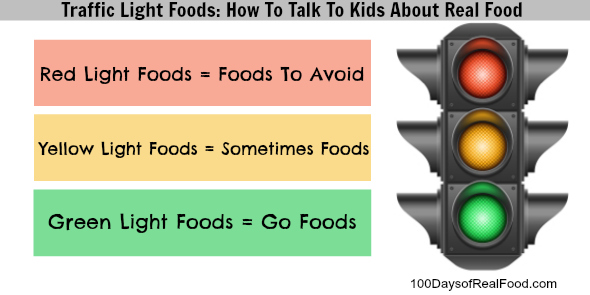
The disease will keep ravaging the population (and slowly overwhelm the health service) until these circumstances change. But the government’s sole contribution has been to tear down mandatory controls, replacing them with a voluntary – and therefore useless – “responsibility deal” with manufacturers and retailers. It allows them to choose whether or not to use the traffic light system, which is the most effective way of informing people about the likely impact of what they eat. And many corporations, unsurprisingly, choose not to. As far as nutritional content is concerned, food manufacturing is effectively unregulated.
Industry and government will resist the obvious solutions until they can be resisted no longer. Eventually, the change will have to happen: similar restrictions on advertising, sponsorship, display and accessibility to those imposed on the tobacco pedlars. One day, though not before many thousands have needlessly died, it will become illegal to advertise any food or drink that merits a red traffic light warning. They will be sold only in plain packaging, with health warnings, on high shelves.
Does this seem draconian to you? If so, remember that obesity afflicts a quarter of the adult population, and is rising rapidly. It causes a range of hideous conditions, just one of which – diabetes – accounts for one sixth of NHS admissions and 10% of its budget. If smoking demands fierce intervention, why not overeating?
This is the choice we face. To recognise that the only humane and effective means of addressing the obesity epidemic is to prevent more people from being hooked, by restricting the pushers. Or to continue a programme of fat-shaming, bullying and compulsory treatment, whose only likely outcome is unhappiness. Now ask yourself again: which of these two options is draconian?
Let me close with an image. The image that George Monbiot believes will be seen very widely and representing the same common-sense in eating that we have been used to with regard to No Smoking signs.
A few weeks ago, I read a book entitled The Republican Brain written by Chris Mooney and to quote WikiPedia:
The Republican Brain: The Science of Why They Deny Science — and Reality is a book by the journalist Chris Mooney that is about the psychological basis for many Republicans’ rejection of mainstream scientific theories, as well as theories of economics and history.
On page 83, Chris Mooney writes (my emphasis):
Here also arises a chief liberal weakness, in Lakoff’s view (*), and one that is probably amplified by academic training. Call it the Condorcet handicap, or the Enlightenment syndrome. Either way, it will sound very familiar: Constantly trying to use factual and reasoned arguments to make the world better and being amazed to find even though these arguments are sound, well-researched, and supported, they are disregarded, or even actively attacked by conservatives.
When glimpsed from a bird’s eye view, all the morality research that we’re surveying is broadly consistent. It once again reinforces the idea that there are deep differences between liberals and conservatives – differences that are operating, in many cases, beneath the level of conscious awareness, and that ultimately must be rooted in the brain.
(*) George Lakoff, Berkeley Cognitive Linguist and author of the book Moral Politics.
What Chris Mooney is proposing is that the difference between liberals and conservatives could be genetically rooted, at least in part.
That underlines in my mind how each of us, before even considering our gender differences, is truly a complex mix of ‘nature and nurture’ with countless numbers of permutations resulting.
That there are deep differences, apart from the obvious ones, between man and woman goes without saying. In earlier times, these differences were essential in us humans achieving so much and leading to, in the words of Yuval Noah Harari from yesterday’s post., ” … few would disagree that humans dominate planet Earth; we’ve spread to every continent, and our actions determine the fate of other animals (and possibly Earth itself).”
Speaking of earlier times, let me turn to dogs, for it is pertinent to my post, and I would like to quote an extract from what Doctor of Veterinarian Medicine, Jim Goodbrod, writes in the foreword of my forthcoming book:
But what exactly is this human-dog bond and why do we feel such an affinity for this species above all others? My feeling is that it may be associated with our deep but subconscious longing for that age of simple innocence and innate human goodness that we supposedly possessed before we became truly “human”: that child-like innocence or what Rousseau referred to as the “noble savage”, before being corrupted by civilization, before we were booted out of the Garden of Eden. We humans, for better or worse, somewhere along that evolutionary road acquired consciousness or so-called human nature and with it we lost that innocence. What we gained were those marvelous qualities that make us uniquely human: a sense of self-awareness, an innate moral and ethical code, the ability to contemplate our own existence and mortality, and our place in the universe. We gained the ability to think abstract thoughts and the intellectual power to unravel many of the mysteries of the universe. Because of that acquired consciousness and humans’ creative and imaginative mind we have produced the likes of Shakespeare, Mozart, and Einstein. We have peered deep into outer space, deciphered the genetic code, eradicated deadly diseases, probed the bizarre inner world of the atom, and accomplished thousands of other intellectual feats that hitherto would not have been possible without the evolution of our incredible brain and the consciousness with which it is equipped.
No other living species on this planet before or since has developed this massive intellectual power. But this consciousness was attained at what cost? Despite all the amazing accomplishments of the human race, we are the only species that repeatedly commits genocide and wages war against ourselves over political ideology, geographic boundaries, or religious superstition. We are capable of justifying the suffering and death of fellow human beings over rights to a shiny gold metal or a black oily liquid that powers our cars. We are the only species that has the capability to destroy our own planet, our only home in this vast universe, by either nuclear warfare, or more insidiously by environmental contamination on a global scale. Was it worth it? No matter what your or my opinion may be, Pandora’s Box has been opened and we cannot put the lid back on.
What can we do now to reverse this trend and help improve the quality of life for humanity and ensure the well-being of our planet? I think, if we recognize the problem and look very critically at ourselves as a unique species with awesome powers to do both good and bad, and put our collective minds to the task, it may be possible to retrieve some of the qualities of that innocence lost, without losing all that we have gained.
Dogs represent to me that innocence lost. Their emotions are pure. They live in the present. They do not suffer existential angst over who or what they are. They do not covet material wealth. They offer us unconditional love and devotion. Although they certainly have not reached the great heights of intellectual achievement of us humans (I know for a fact that this is true after having lived with a Labrador retriever for several years), at the same time they have not sunk to the depths of depravity to which we are susceptible. It could be argued that I am being overly anthropomorphic, or that dogs are simply mentally incapable of these thoughts. But nevertheless, metaphorically or otherwise, I believe that dogs demonstrate a simple and uncorrupted approach to life from which we all could benefit. I think the crux of Paul’s thesis is that, within the confines and limitations of our human consciousness, we can (and should) metaphorically view the integrity of the dog as a template for human behavior.
“Dogs demonstrate a simple and uncorrupted approach to life …”
I closed yesterday’s post with these words, “It is my contention that humankind’s evolution, our ability to “cooperate flexibly in large numbers”, is rooted in the gender differences between man and woman.”
The premise behind that proposition is that until, say one hundred years ago, give or take, that co-operation between large numbers of humans was critically important in so many areas: health; science; medicine; physics; exploration; outer space and more. (And whether one likes it or not: wars.) My proposition is that it is predominantly men who have been the ‘shakers and movers’ in these areas. Of course not exclusively, far from it, just saying that so many advances in society are more likely to have been led by men.
But (and you sensed a ‘but’ coming up, perhaps) these present times call for a different type of man. A man who is less the rational thinker, wanting to set the pace, and more a man capable of expressing his fears, exploring his feelings, defining his fear of failure, and more. I don’t know about you but when I read Raúl Ilargi Meijer words from yesterday, “And if and when we resort to only rational terms to define ourselves, as well as our world and the societies we create in that world, we can only fail.”, it was the male of our species that was in my mind. As in, “And if and when we [males] resort to only rational terms to define ourselves …”.
Staying with Raúl Meijer’s words from yesterday (my emphasis), “And those should never be defined by economists or lawyers or politicians, but by the people themselves. A social contract needs to be set up by everyone involved, and with everyone’s consent.”
Dogs demonstrate a simple and uncorrupted approach to life but that doesn’t extend to them making social contracts. Women do understand social contracts, they are predominantly caring, social humans. Less so for men. But for that social contract to be successfully set up by everyone it must, of course, include men. And that requires men, speaking generally you realise, to find safe ways to get in touch with their feelings, to tap into their emotional intelligence, using positive psychology to listen to their feelings and know the truth of what they and their loved ones need to guarantee a better future. What they need in terms of emotional and behavioural change. And, if I may say, sensing when they might need the support of subject experts to embed and sustain those behavioural changes.
It was the fickle finger of fate that led me to the arms, metaphorically speaking, of a core process psychotherapist back in Devon in the first half of 2007. That counselling relationship that revealed a deeply hidden aspect of my consciousness: a fear of rejection that I had had since December, 1956. That finger of fate that took me to Mexico for Christmas 2007 and me meeting Jean and all her dogs. That finger of fate that pointed me to the happiest years of my life and a love between Jeannie and me that I could hitherto never ever have imagined.
However, as much as I love and trust Jean, wholeheartedly, it comes back to dogs.
For when I curl up and wrap myself around a dog and sense that pure unconditional love coming back to me, I have access to my inner feelings, my inner joys and fears, in a way unmatched by anything else.
Where learning from dogs is a gateway to learning from me.
 collapsed buildings.
 oxytocin levels. Oxytocin is a chemical released by the pituitary gland that’s associated with human bonding and affection.


 Learning from Dogs