A genuine leader is not a searcher for consensus but a molder of consensus.
My concluding essay on the subject of wisdom starts off with this quotation by Martin Luther King, Jr. That he was best known for using nonviolent civil disobedience to achieve political aims in the 1950’s and 60’s may not be inappropriate today.
I started with looking at our brain in recognition of the strange ways in which we humans make sense of the world, then yesterday looked at how we confuse what we do with what is best for us, surely the essence of wisdom. Today, I want to conclude with a reflection on the gap between the new wisdom of millions of citizens and the failure of so many leaders to recognise this wisdom. When I use the word wisdom in this context, it’s probably more in the sense of awareness. The growing awareness by millions of us that something isn’t right and that our democratic representatives and leaders are way behind.
I will support my argument by referring to a number of media items that have surfaced in recent days.
Australia’s “dome of heat” has become so intense that the temperatures are rising off the charts – literally.
The air mass over the inland is still heating up – it hasn’t peaked
The Bureau of Meteorology’s interactive weather forecasting chart has added new colours – deep purple and pink – to extend its previous temperature range that had been capped at 50 degrees.
The range now extends to 54 degrees – well above the all-time record temperature of 50.7 degrees reached on January 2, 1960 at Oodnadatta Airport in South Australia – and, perhaps worryingly, the forecast outlook is starting to deploy the new colours.
“The scale has just been increased today and I would anticipate it is because the forecast coming from the bureau’s model is showing temperatures in excess of 50 degrees,” David Jones, head of the bureau’s climate monitoring and prediction unit, said.
Just reflect on that! 54 degrees Centigrade is 129 degrees Fahrenheit!
On January 4th, just 5 days ago, Bill Moyers held an interview with climate change communication expert Anthony Leiserowitz who explained why climate change gets the silent treatment, and what we should do about it. Here’s a trailer to that programme.
I very strongly recommend you put an hour to one side and watch the full programme available here.
Next comes a recent item on Christine’s fantastic blog 350 or bust. I forgot to ask Christine for permission to reproduce her article but am confident that republishing it on Learning from Dogs carries her full support.
New Report Connects Dots Between Political Inaction & Growing Cost Of Climate Change
“The cost of living is going up and the chance of living is going down. “ –Flip Wilson
A new publication issued by the International Institute for Applied Systems Analysis (IIASA) in the journal “Nature” has reported that the chances of keeping temperatures below a 2 degree rise is now largely in the hands of policy makers.
The challenge of a changing climate can now only be fought with the backing of political agenda – and as most people will agree, this seems bleak.
Of all the uncertainties with regard the effects of climate change, including geophysical and social uncertainties; political uncertainty ranked as the number 1 factor in determining the fate of our species and our planet.
What went wrong? Maybe we have been advertising climate change in an ineffective manner, considering how politically charged the world is?
The burdens of climate change are often communicated in relation to extreme weather events, melting ice caps, lives lost, loss of biodiversity, endangered species etc., but it would appear that to some this doesn’t seem to ring a bell; probably as the bell doesn’t chime as “cha ching cha ching”.
So what happens if we try to communicate climate change in relation to cost?
In 2012, in the United States alone, there were 11 natural disasters that cost over $1 billion – and this does not yet include the almost country wide drought or hurricane sandy, and let’s not forget the multiple other disasters which did not make the 1 billion benchmark. It is predicted that events, like the ones that swept the entire globe in 2012, will increase in frequency and in destructive force if we do not keep temperatures below the 2 degree rise on pre-industrial temperatures.
If we do not change our ways by 2020, the research group have found that the probability of keeping the temperature within the assigned two degree window drops below 50% (best case) or 20% (worst case) – no matter how much money is spent in the effort.
It is predicted that money will not matter; it’s almost bittersweet.
2012 was an eye opening year in terms of our natural environment. From here on out, let’s try change our ways; not our climate. The clock is ticking.
“… the chances of keeping temperatures below a 2 degree rise is now largely in the hands of policy makers.” Further comment by me is pointless – the message is already crystal clear.
The implications of the changes that are being imposed on all of us were picked up in a recent article in the British newspaper The Telegraph: Rising food prices will reap a bitter harvest. Here’s a flavour (sorry!) of the article.
British shoppers should brace themselves for “massive” food price rises in 2013, says the aptly named Mark Price, managing director of Waitrose. Is he correct, or is this just another retailer trying to soften up public opinion before imposing price hikes?
Liam Halligan goes on to write (my emphasis):
It strikes me that Price most certainly is right and his statement deserves more comment and consideration. For it is almost inevitable that many crucial foodstuffs will become considerably more expensive during 2013, not least due to recent weather patterns. More fundamentally, the food price rises we’ll see over the coming year will also reflect longer-term non-cyclical trends, not least the burgeoning world population.
During 2013, in fact, rising food prices are likely not only to have a serious impact on the global economy, but could well spark violence and political upheaval, not least in the Middle East.
The importance of the trend Price has highlighted, then, goes way beyond the tills of upmarket British supermarkets. It’s certainly the case, though, that UK food production looks weak, as heavy rainfall in 2012 meant many crops were ruined and farmers couldn’t plant as much as they wanted for 2013. Despite a very dry first quarter, 2012 was this country’s second-wettest year since records began in 1910.
I don’t want to quote any more from the article but read it and realise how the world in 2013 may be unrecognisable beyond our wildest imaginations.
OK, going to round this off.
Firstly, by asking you to read a recent item in Democracy Journal. This is how the article starts.
Everyone’s Fight: The New Plan to Defeat Big Money
The 2012 campaign is by now mercifully out of our systems, but it remains worth reflecting on some of the dubious firsts that occurred during this election. This was the first presidential campaign to cost more than $2 billion. It was also the first time neither candidate accepted any public financing or the limits that come with it. Finally, it was the first presidential election after Citizens United, the Supreme Court decision that allowed around $600 million in super PAC donations this cycle, and many millions more to nonprofit “social welfare” groups that aren’t required to disclose their donors.
But even these bleak facts don’t do justice to the problem of Big Money. Campaign spending isn’t even our most dire money-in-politics problem. That would be the thousands of lobbyists and many millions of their dollars that are devoted to the warping of our public policy. These powerful lobbies control most outcomes on Capitol Hill, and the problem is far worse than it was 20 years ago.
Annie Leonard spent 20 years working for environmental organizations, studying where our stuff comes from and where it goes. She followed waste from industrialized countries to apartheid-era South Africa, where it was dumped in black townships, to Haiti, where it was disguised as fertilizer and dumped on a beach, to Pakistan, Indonesia and the Philippines where we sent everything from e-waste to used car batteries for recycling in a process too dirty for our own backyard.
Then, in 2007, she made a short animated film about our consumer culture and the damage it does to the environment. The Story of Stuff went viral (chances are you’ve seen it — more than 15 million people have) and spawned a whole series of videos that explain complicated environmental and political concepts in an irresistibly simple and engaging way. We reached Annie via email to talk about the latest installment, The Story of Change. This one’s a bit of a departure — instead of looking at the problem, it proposes a solution.
It included this video:
Can shopping save the world? The Story of Change urges viewers to put down their credit cards and start exercising their citizen muscles to build a more sustainable, just and fulfilling world.
I shall close with another quotation from Martin Luther King, Jr.
“The ultimate measure of a man is not where he stands in moments of comfort and convenience, but where he stands at times of challenge and controversy.”
Like countless others, when we look back 12 months and recall what we thought 2012 had in store, we now realise that we didn’t have a clue! As the silly expression goes, “I can predict anything except those things that involve the future!”
So repeating the process is stupid; I have no doubt that 2013 will be brim full of surprises. At all levels: personal, local, national and global. But ….. (You knew there was a ‘but’ coming, didn’t you!)
But a conversation that I had with Peter McCarthy on the 27th December resonated with me to such a degree that I felt the urge to pen some thoughts. I worked with Peter some years ago at Clevedon Hall, we shared an interest in flying a TB20 and both of us studied for our CAA Instrument Rating. We became good friends.
Clevedon Hall, Somerset, England
So come with me today for a stroll around the grounds of change, possibly an epochal period of change.
Let’s start with what may be the biggest catalyst of change heading our way – our broken political system.
Christine of 350orbust fame published this yesterday.
The view that many western societies are a very long way from being fair is growing. If you want to dig a little deeper into the appalling statistics of the USA, for example, dip into a recent essay written by Charles Hugh Smith that appeared on Chris Martenson’s Peak Prosperity blog.
It’s a long essay packed full of powerful facts and statistics. Try this one:
6. The assets that generate unearned income are highly concentrated, and as a result so is the unearned income. The top 1% owns twice as much stock-market wealth as the bottom 90%. This income-producing wealth enables the top 1% to act as a financial aristocracy, buying influence and favors from equivalently concentrated political Elites.
Let me go to Charles’ conclusion:
What few dare admit, much less state publicly, is that the Constitutional limits on the financial Aristocracy and the Tyranny of the Majority have failed. This guarantees a future Constitutional crisis as each political class – the financial Aristocracy, the top 24% who pay most of the taxes, the dwindling middle class and the bottom 50% who depend on Federal transfers – will battle for control as the Status Quo collapses under the weight of its unsustainable promises.
H’mmm!
Back to the conversation with Peter. He felt that there was a massive failure of the democratic process in the UK, and by implication in the USA.
Peter continued by saying that many elected politicians, especially at the level of local politics, weren’t smart people. Smart, innovative, entrepreneurial people chose not to go into politics. Those that were elected had too much power and too many vested interests for the good of the societies that they were meant to represent. In the USA the involvement of private money in politics is nothing short of corruption of the highest order; my personal opinion, no less and no more.
In moderation, Churchill’s saying comes to mind. “It has been said that democracy is the worst form of government except all the others that have been tried.”
Let’s move on.
No-one can deny that in so many areas of our lives, the degree of change seems unprecedented. Whether we are speaking of the huge social changes at work, enormous technological changes, such as the way that we communicate with each other, medical practises, and on and on. Then add in the consequences of the change in the Earth’s climate, whether or not one sees this as the outcome of man’s activities and …. well, you get the idea!
Here’s a lovely perspective from Alex Jones who writes the blog, The Liberated Way. Just a few days ago, Alex wrote this:
As hard and gloomy as some of my blog posts on the future of humanity have been, I thought it time to offer good news as to where we are heading. I shall call this the global realignment. Few will disagree that the current activities and ideas of humanity in relation to the environment are unsustainable and point to our self-destruction. History also shows that whenever a crisis occurs traumatic events and the ideas of new thinkers causes a paradigm shift in attitudes and thinking.
Contrary to the fantasy of many people, there will be no celestial champion on a white horse riding forward to save humanity from itself. The change will come from a series of traumatic events and individual thinkers which will plant the seeds of change, which will ripple forward as a tsunami of changes of ideas and attitudes on a global scale.
So much change. So much uncertainty. Such a feeling of being lost in unfamiliar lands.
Or have we been here before?
Have you heard of the Kondratieff Wave?
The Kondratieff Wave (Kondratiev Wave or K-wave) theory is proposing the existence of the extra-long, 50+ years long cycles of growth in the modern market (capitalist) economy. The theory was proposed in 1920s by Russian economist Nikolai Kondratiev.
Wikipedia has a good summary available here. A Google search will find much more material, such as this chart:
The Wikipedia entry has a simpler diagram, see below, that shows the four stages of each cycle.
So how to draw this to a close?
In a sense, in a very real sense, there isn’t a close. The future has always been uncertain and as history shows change is the only constant.
Peter concluded that a better society was ahead and hoped that he would live sufficiently long to witness it. That gets my vote!
Happy New Year to you.
Thank you for taking an interest in Learning from Dogs.
2013 may be the year that ends any uncertainty about what we are doing to our planet.
Introduction
Regular readers of Learning from Dogs will be familiar with the occasional posts that are presented here, courtesy of Tom Engelhardt of Tom Dispatch. I am so grateful to Tom’s blanket permission to republish essays from a Tom Dispatch author. So it is that today sees the republishing of a recent essay on Tom Dispatch by Rebecca Solnit. It articulates beautifully what 2013 might represent. So without further ado, here’s Rebecca’s essay prefaced by Tom’s introduction.
oooOOOooo
Tomgram: Rebecca Solnit, 2013 as Year Zero for Us — and Our Planet
[Note for TomDispatch Readers:It’s that time again. Another year-ending moment for this website, which began as a no-name listserv in October 2001 and went online as TomDispatch in December 2002, thanks to Ham Fish of the Nation Institute. It’s been plugging away ever since as a “regular antidote to the mainstream media,” doing its best to connect the unconnected dots in our world. (Click here to check out a little piece I wrote for the Moyers & Company website this week about what I call “isolation journalism” in the mainstream media where connections are seldom made.)
With today’s post, we’re closing down for 2012, but expect us back on January 3rd renewed and ready for a new year full of surprises.In the meantime, profuse thanks are due to the stalwart crew who keep TD going: Managing Editor Nick Turse, who will continue to follow the U.S. military as it garrisons the planet in 2013 and will have a remarkable new book on the Vietnam War published as well; Associate Editor Andy Kroll, who will again be on the economic beat for us; Dimitri Siavelis and Joe Duax, who keep the site miraculously shipshape and ready to roll; Christopher Holmes, proofer-extraordinaire who holds error eternally at bay (or at least to a surprising minimum) in our dispatches; and Erika Eichelberger, our maestro of social media, who has brought TD Facebook page and Twitter feed alive this year. (Check us out there if you haven’t yet!) Special thanks are due as well to Andy Breslau, Taya Kitman, and the rest of the staff of the Nation Institute, who continue to stick with us through thick and thin, and finally to Lannan Foundation, which may be last in this list but is certainly first in what it’s done for TomDispatch. Surrounded by such a crowd, life couldn’t be better.
Finally, of course, my deepest thanks to TomDispatch readers all over this country and around the world, whose readership and support make all the difference. Your emails to this site offer tips, catch errors, offer criticism, and reveal unknown worlds to me. They are always read (even when, hard as I try, I’m too busy to answer). What more could I ask? Have a good holiday. See you all in 2013! Tom]
In weather terms, 2012 in New York City began for me with crocuses. On an early February day in a week in which the temperature hit 60 degrees, I spotted their green shoots pushing up through the bare ground of a local park on a morning walk — just as if it were spring. The year was ending last weekend as I wandered with a friend past a communal garden in the same park and noticed that, in a December week in which the temperatures were in the mid-50s, the last few roses were still in bloom.
In between, in that park on a dark night in late October I watched a white-capped Hudson River roiling like some enraged beast, preparing for a storm surge that would flood lower Manhattan, plunging it into darkness and so turning it into “little North Korea,” briefly making true islanders out of New Yorkers and flooding out whole communities. That, of course, was Hurricane Sandy, the Frankenstorm surprise of New York’s year (though anything but a worst case scenario). And then, there was the American 2012 in which heat eternally set records and we experienced something close to an “endless summer.”
In such a new world of upheaval, tradition matters. And there is one inviolable tradition at TomDispatch: Rebecca Solnit has the last word — as she has for years, peering into the future, sizing up the past, weighing alternatives to what is, and last year considering a season of being Occupied. Now, for the first time in a long while, weather and climate change are a growing American preoccupation. Of course, climate change is an area long occupied by the giant energy companies whose compassion extends no further than their bottom lines (which, like the heat, continue to set historical records). Solnit in her year-ending, TomDispatch-closing piece suggests that it’s time for us to occupy the topic ourselves, and do our best to ensure that this planet, 2013 and beyond, remains a habitable place for us, our children, and our grandchildren. There could be no more powerful New Year’s wish. Tom
The Sky’s the Limit The Demanding Gifts of 2012
By Rebecca Solnit
As this wild year comes to an end, we return to the season of gifts. Here’s the gift you’re not going to get soon: any conventional version of Paradise. You know, the place where nothing much happens and nothing is demanded of you. The gifts you’ve already been given in 2012 include a struggle over the fate of the Earth. This is probably not exactly what you asked for, and I wish it were otherwise — but to do good work, to be necessary, to have something to give: these are the true gifts. And at least there’s still a struggle ahead of us, not just doom and despair.
Think of 2013 as the Year Zero in the battle over climate change, one in which we are going to have to win big, or lose bigger. This is a terrible thing to say, but not as terrible as the reality that you can see in footage of glaciers vanishing, images of the entire surface of the Greenland Ice Shield melting this summer, maps of Europe’s future in which just being in southern Europe when the heat hits will be catastrophic, let alone in more equatorial realms.
For millions of years, this world has been a great gift to nearly everything living on it, a planet whose atmosphere, temperature, air, water, seasons, and weather were precisely calibrated to allow us — the big us, including forests and oceans, species large and small — to flourish. (Or rather, it was we who were calibrated to its generous, even bounteous, terms.) And that gift is now being destroyed for the benefit of a few members of a single species.
The Earth we evolved to inhabit is turning into something more turbulent and unreliable at a pace too fast for most living things to adapt to. This means we are losing crucial aspects of our most irreplaceable, sublime gift, and some of us are suffering the loss now — from sea snails whose shells are dissolving in acidified oceans to Hurricane Sandy survivors facing black mold and bad bureaucracy to horses starving nationwide because a devastating drought has pushed the cost of hay so high to Bolivian farmers failing because the glaciers that watered their valleys have largely melted.
This is not just an issue for environmentalists who love rare species and remote places: if you care about children, health, poverty, farmers, food, hunger, or the economy, you really have no choice but to care about climate change.
The reasons for acting may be somber, but the fight is a gift and an honor. What it will give you in return is meaning, purpose, hope, your best self, some really good company, and the satisfaction of being part of victories also to come. But what victory means needs to be imagined on a whole new scale as the news worsens.
Unwrapping the Victories
“Unhappy is the land that needs a hero,” Galileo famously says in Bertold Brecht’s play about that renegade scientist, but at least, the hero has the possibility of doing something about that unhappiness, as, for instance, the Sierra Club has. It’s led the fight against big coal, helping prevent 168 coal-powered plants from opening and retiring 125 dirty coal plants. The aim of its Beyond Coal campaign is to retire all 522 such plants in the United States, which would be a colossal triumph.
Its’ victories also capture what a lot of our greenest gifts look like: nothing. The regions that weren’t fracked, the coal plants that didn’t open, the mountaintops that weren’t blasted by mining corporations, the children who didn’t get asthma or mercury poisoning from coal emissions, the carbon that stayed in the Earth and never made it into the atmosphere. The Keystone XL tar sands pipeline bringing the dirtiest of dirty energy from Canada to the Gulf Coast might have already opened without the activists who ringed the White House and committed themselves across the continent.
In eastern Texas, for instance, extraordinary acts of civil disobedience have been going on continuously since August, including three blockaders who this month crawled inside a length of the three-foot-in-diameter pipeline and refused to leave. People have been using their bodies, getting in the way of heavy equipment, and going to jail in an effort to prevent the pipeline from being built. A lot of them are the same kind of robust young people who kept the Occupy encampments going earlier in 2012, but great-grandmothers, old men, and middle-aged people like me have been crucial players, too.
Meanwhile in British Columbia, where pipeline profiteers were looking into alternate routes to transport their climate-destroying products abroad, members of the Wet’suwet’en nation evicted surveyors and politely declared war on them. In Ohio and New York, the fight against fracking is going strong. Across the Atlantic, France has banned fracking, while Germany has made astounding progress toward using carbon-neutral energy sources. If solar works there, we have no excuse. And as Ellen Cantarow wrote at TomDispatch of the anti-fracking movement in New York State, “Caroline, a small hamlet in Tompkins County (population 3,282), is the second town in the state to get 100% of its electricity through wind power and one of the most recent to pass a fracking ban.”
Everywhere people are at work to build a better world in which we — and some of the beauty of this world — will be guaranteed to survive. Everywhere they are at war with the forces threatening us and the planet. I usually avoid war metaphors, but this time it’s barely a metaphor. Our side isn’t violent, but it is engaged in a battle, and people are putting their bodies on the line and their lives behind the cause. The other side is intent on maximizing its profit at the cost of nearly everything.
My father, a high-school student during the Second World War, followed the campaigns closely with pins on a wall map to represent troops and battles. You could map North America that way now and see, when you added up the struggles against drilling in the Arctic, fracking, mountaintop removal, and the various other depredations of big coal and big oil, that remarkable things are already being done. In this war, resistance has been going on for a long time, so overlooked by the mainstream media it might as well be as underground as the French Resistance back then.
A lot of it is on a small scale, but if you connect the pieces you get a big picture of the possible, the hopeful, and the powerful. Think of each of those small acts of defending the Earth as a gift to you. And think of your own power, a gift always latent within you that demands you give back.
If you’re reading this, you’re already in the conversation. No matter who you are, or where, there is something for you to do: educate yourself and others, write letters, organize or join local groups, participate in blockades and demonstrations, work on divestment from oil corporations (if you’re connected to a university), and make this issue central to the conversations and politics of our time.
I’ve started working directly on various projects with 350.org, whose global impact and reinvention of activist tactics I’ve long admired. Its creator Bill McKibben has evolved from a merely great writer to a pivotal climate organizer and a gift to all of us.
The world you live in is not a given; much of what is best in it has been built through the struggles of passionate activists over the last centuries. They won us many freedoms and protected many beauties. Count those gifts among your growing heap.
Drawing the Line
Here’s another gift you’ve already received: the lines in the battle to come are being ever more clearly drawn. Clarity is a huge asset. It helps when you know where you stand, who stands with you — and who against you.
We have returned to class war in conflicts around the world — including the Chicago Teacher’s Strike of 2012 and the Walmart protests in this country (which led to 1,197 actions nationwide in support of that company’s underpaid workers on Black Friday), as well as the great student uprisings in Quebec and Mexico City.
There has, of course, been a war against working people and the poor for decades, only we didn’t call it “class war” when just the rich were fighting hard. We called it corporate globalization, the race to the bottom, tax cuts and social-service cuts, privatization, neoliberalism, and a hundred other things. Now that the poor are fighting back, we can call it by its old name. Perhaps what the conservatives have forgotten is that if you return us to the grim divides and dire poverty of the nineteenth century, you might also be returning us to the revolutionary spirit of that century.
This time, though, it’s not only about work and money. The twenty-first century class war is engulfing the natural world on which everything rests. We can see how clearly the great environmental battle of our time is about money, about who benefits from climate destruction (the very few) and who loses (everyone else for all time to come and nearly every living thing). This year, Hurricane Sandy and a crop-destroying, Mississippi-River-withering drought that had more than 60% of the nation in its grip made it clear that climate change is here and it’s now and it hurts.
In 2012, many have come to see that climate change is an economic issue, and that economics is a moral and ecological issue. Why so little has been done about the state of the climate in the past three decades has everything to do with who profits. Not long ago, too many Americans were on the fence, swayed by the oil companypropaganda war about whether climate change even exists.
However, this month, according to the Associated Press, “Four out of every five Americans said climate change will be a serious problem for the United States if nothing is done about it.” That widespread belief suggests that potentially broad support now exists and may be growing for a movement that makes climate change — the broiling of the Earth — central, urgent, and everybody’s business.
Ten years ago too, many people thought the issue could be addressed, if at all, through renunciatory personal virtue in private life: buying Priuses, compact fluorescents, and the like. Now most people who care at all know that the necessary changes won’t happen through consumer choice alone. What’s required are pitched battles against the most powerful (and profitable) entities on Earth, the oil and energy companies and the politicians who serve them instead of us.
That clarity matters and those conflicts are already underway but need to grow. That’s our world right now, clear as a cold winter day, sharp as broken glass.
Putting Aside Paradise
When I remember the world I grew up in, I see the parts of it that were Paradise — and I also see all the little hells. I was a kid in California when it had the best public education system in the world and universities were nearly free and the economy was not so hard on people and the rich paid a lot of taxes. The weather was predictable and we weren’t thinking about it changing any time before the next ice age.
That was, however, the same California where domestic violence was not something the law took an interest in, where gays and lesbians were openly discriminated against, where almost all elected officials were white men, where people hadn’t even learned to ask questions about exclusion and racism.
Which is to say, paradises are always partial and, when you look backward, it’s worth trying to see the whole picture. The rights gained over the past 35 years were fought for, hard, while so much of what was neglected — including public education, tuition, wages, banking regulation, corporate power, and working hours — slid into hell.
When you fight, you sometimes win; when you don’t, you always lose.
Here’s another gift we have right now: the young. There are quite a lot of heroes among them, including the Dreamers or Dream Act activists standing up for immigrants; the occupiers who challenged Wall Street in its home and elsewhere around the country, became the unofficial first responders who aided the victims of Hurricane Sandy, and have camped out on the doorstep of Goldman Sachs’s CEO these last few months; the young who blockaded that tar-sands pipeline, supplied the tremendous vitality of 350.org globally, and have just begun to organize to pressure universities to divest from fossil fuel companies on 192 campuses across the country.
In 2012, they rose up from Egypt and Russia to Canada and Chile. They are fighting for themselves and their future, but for us, too. They have remarkably few delusions about how little our world is prepared to offer most of them. They know that the only gifts they’ll get are the ones they can wrestle free from the powers that be.
Paradise is overrated. We dream of the cessation of misery, but who really wants a world without difficulty? We learn through mistakes and suffering. These are the minerals that harden our bones and the milestones on the roads we travel. And we are made to travel, not to sit still.
Take pleasure in the route. There is terrible suffering of many kinds in many places, but solidarity consists of doing something about it, not being miserable. In this heroic age, survival is also going to require seeing what fragments of paradise are still around us, what still blooms, what’s still unimaginably beautiful about rivers, oceans, and evening skies, what exhilaration there is in witnessing the stubbornness of small children and their discovery of a world we think we know. All these are gifts as well.
Ice Breaking Up
As you gear up for 2013, don’t forget that 2012 has been an extraordinary year. Who ever thought we’d see Aung San Suu Kyi elected to office in her native Burma and free to travel after so many years of house arrest? Who expected that the United Nations would suddenly vote to give Palestine observer state status? Who foresaw that the silly misinterpretations of Mayan prophesy would be overtaken by the Mayan Zapatistas, who rose once again last Friday? (Meanwhile, Canada’s Native people started a dynamic movement around indigenous rights and the environment that has led to everything from flash-mob dances in an Edmonton Mall to demonstrations in Ottawa.)
Who thought that Occupy Wall Street, roundly dismissed by the mainstream on its one-year anniversary, would spawn two superhero projects, Occupy Sandy and Strike Debt? (Who among the police officers clubbing and tear-gassing the young Occupiers in 2011 thought that a year later these would be the people with the power and the generosity to come to their aid when a climate-fed storm wrecked their homes?) Keep it in mind: the future is not predictable. Sometimes, the world changes suddenly and in profound ways. Sometimes we make it do so.
Steven Spielberg’s new film Lincoln is a reminder about what it means to fight for what matters most. Permanently freeing five million slaves and abolishing slavery forever meant renouncing a cheap power source in use for more than 200 years. Doing so was initially inconceivable and then a matter of indifference except to the slaves themselves and small groups of abolitionists. Next, it was daringly radical, then partisan, with the whole nation taking sides, the fuel for a terrible war. Finally, it was the law of the land. Today, we need to give up on, or at least radically reduce our reliance on, another set of power sources: oil, coal, and natural gas.
This is, among other things, a war of the imagination: the carbon profiteers and their politicians are hoping you don’t connect the dots, or imagine the various futures we could make or they could destroy, or grasp the remarkably beautiful and complex ways the natural world has worked to our benefit and is now being sabotaged, or discover your conscience and voice, or ever picture how different it could all be, how different it will need to be.
They are already at war against the wellbeing of our Earth. Their greed has no limits, their imagination nothing but limits. Fight back. You have the power. It’s one of your gifts.
Rebecca Solnit has seen salmon migrate and polar bears nap, and she’s seen blockaders defend foreclosed homes and shut down oil refineries: all of it was beautiful. She is the author of A Paradise Built in Hell, among many other works. She has been writing TomDispatch’s year-end essays since 2004 and she hopes to see you in the streets in 2013 and at the White House on February 17th.
Interesting insights into the American Founding Father.
Big thanks to Bob Derham who sent me this yesterday. I’m sure many Americans know this as they know their own mother. But for this recent resident of the USA I found it fascinating.
Thomas Jefferson
Thomas Jefferson was an American Founding Father, the principal author of the Declaration of Independence and the third President of the United States.
Born: April 13, 1743, Albemarle County
Died: July 4, 1826, Charlottesville
Presidential term: March 4, 1801 – March 4, 1809
Party: Democratic-Republican Party
Education: College of William and Mary (1760–1762), University of Toronto Mississauga
Thomas Jefferson was a remarkable man who started learning very early in life and never stopped.
At 5, began studying under his cousin’s tutor.
At 9, studied Latin, Greek and French.
At 14, studied classical literature and additional languages.
At 16, entered the College of William and Mary.
At 19, studied Law for 5 years starting under George Wythe.
At 23, started his own law practice.
At 25, was elected to the Virginia House of Burgesses.
At 31, wrote the widely circulated Summary View of the Rights of British America and retired from his law practice.
At 32, was a Delegate to the Second Continental Congress.
At 33, wrote the Declaration of Independence .
At 33, took three years to revise Virginia ‘s legal code and wrote a Public Education bill and a statute for Religious Freedom.
At 36, was elected the second Governor of Virginia, succeeding Patrick Henry.
At 40, served in Congress for two years.
At 41, was the American minister to France , and negotiated commercial treaties with European nations along with Ben Franklin and John Adams.
At 46, served as the first Secretary of State under George Washington.
At 53, served as Vice President and was elected president of the American Philosophical Society.
At 55, drafted the Kentucky Resolutions, and became the active head of Republican Party.
At 57, was elected the third president of the United States.
At 60, obtained the Louisiana Purchase , doubling the nation’s size.
At 61, was elected to a second term as President.
At 65, retired to Monticello .
At 80, helped President Monroe shape the Monroe Doctrine.
At 81, almost single-handedly created the University of Virginia , and served as its first president.
At 83, died on the 50th anniversary of the Signing of the Declaration of Independence.
Thomas Jefferson knew because he himself studied the previous failed attempts at government. He understood actual history, the nature of God, his laws and the nature of man. That happens to be way more than what most understand today. Jefferson really knew his stuff.
John F. Kennedy held a dinner in the white House for a group of the brightest minds in the nation at that time. He made this statement:
“This is perhaps the assembly of the most intelligence ever to gather at one time in the White House with the exception of when Thomas Jefferson dined alone.”
Quotations by Thomas Jefferson
“When we get piled upon one another in large cities, as in Europe, we shall become as corrupt as Europe.”
“The democracy will cease to exist when you take away from those who are willing to work and give to those who would not.”
“It is incumbent on every generation to pay its own debts as it goes. A principle which if acted on would save one-half the wars of the world.”
“I predict future happiness for Americans if they can prevent the government from wasting the labors of the people under the pretense of taking care of them.”
“My reading of history convinces me that most bad government results from too much government.”
“No free man shall ever be debarred the use of arms.”
“The strongest reason for the people to retain the right to keep and bear arms is, as a last resort, to protect themselves against tyranny in government.”
“The tree of liberty must be refreshed from time to time with the blood of patriots and tyrants.”
“To compel a man to subsidize with his taxes the propagation of ideas which he disbelieves and abhors is sinful and tyrannical.”
And finally Thomas Jefferson said in 1802: “I believe that banking institutions are more dangerous to our liberties than standing armies. If the American people ever allow private banks to control the issue of their currency, first by inflation, then by deflation, the banks and corporations that will grow up around the banks will deprive the people of all property – until their children wake-up homeless on the continent their fathers conquered.”
I am incredibly grateful to be living in the USA as a legal resident. The circumstances that lead to Jeannie and me living here in Merlin, Southern Oregon are the stuff of dreams. Which is why writings on Learning from Dogs that could be seen as critical of a US administration leave me rather uncomfortable.
However, a recent news item on the BBC website struck me as so utterly incongruous that I couldn’t resist today’s post. As is said, “I can resist anything except temptation!” Here’s that item.
US Congress bans word ‘lunatic’ in federal legislation
6 December 2012
“Lunatic” is derived from the Latin word for moon, and the belief that it could affect mental health
The sharply divided US Congress has been able to agree on one thing at least – that the word “lunatic” should be banned.
The House of Representatives voted 398-1 on Wednesday to strike the term from all federal legislation, after the Senate did the same in May.
The measure is designed to remove language that has become outdated or demeaning from the US code.
The bill will now go to President Barack Obama for his signature.
Senator Kent Conrad, one of the sponsors of the measure, said: “Federal law should reflect the 21st Century understanding of mental illness and disease, and that the continued use of this pejorative term has no place in the US code.”
The only “no” vote came from Texas congressman Louie Gohmert, who said it was madness for lawmakers to waste time on such a measure when more high-profile issues loomed, such as the federal debt.
“Not only should we not eliminate the word ‘lunatic’ from federal law when the most pressing issue of the day is saving our country from bankruptcy,” said Rep Gohmert in a statement.
“We should use the word to describe the people who want to continue with business as usual in Washington.”
Now don’t get me wrong. In and of itself that measure is fabulous removing, as it does, any official labeling of those with mental health problems.
However, surely the following demonstrates that madness is still alive and well.
LAW PROHIBITS UNFAIR EU TAXATION OF U.S. AVIATION
November 27, 2012
Washington, DC – The President today signed into law a measure to stop the United States’ participation in a costly European Union (EU) scheme to impose an emissions tax on American and other nations’ aircraft operators and air carriers. Transportation and Infrastructure Committee Chairman John L. Mica (R-FL) and Aviation Subcommittee Chairman Tom Petri (R-WI) were among the primary sponsors of the bipartisan companion bill in the House of Representatives.
In 2011, Mica first led a Congressional delegation to the European Union to convey opposition to the EU’s plan. Mica also led a subsequent delegation to Montreal to meet with International Civil Aviation Organization (ICAO) leaders, representatives of the EU, and other officials regarding U.S. opposition to the ETS. The original “European Union Emissions Trading Scheme Prohibition Act of 2011,” authored by Mica, Petri, and other House leaders, overwhelmingly passed the House on October 24, 2011.
John Mica was quoted as saying “The law signed today is a clear signal that the United States will not accept the EU’s go-it-alone attempt to impose emissions taxes on other nations for activities far outside the EU’s own borders. This European emissions trading scheme is an unlawful infringement upon U.S. sovereignty, and the sovereignty of numerous other nations.”
Now I don’t know the rights and wrongs of this but one thing is clear to me. If trying to reduce carbon emissions represents ‘unlawful infringement upon U.S. sovereignty‘ then don’t even ponder on the infringement that not trying to reduce emissions would risk!
Which neatly leads to the Yale forum on Climate Change & The Media that recently reported,
Forget About That 2-Degree Future
SAN FRANCISCO, CA, Dec. 5, 2012 — Renowned British climate scientist Sir Robert Watson pulled few punches today during a talk about the warmer world humans will face in coming decades.
Watson, who was IPCC chair from 1997 to 2002, all but dismissed the possibility of keeping the rise in average global temperatures to 2 degrees Celsius above pre-industrial levels — a temperature rise that corresponds to an atmospheric concentration of CO2 of 450 parts per million. It now stands at about 390 ppm.
“Fundamentally, we are not on a path toward a 2 degree world,” Watson told a packed hall at Moscone Center for a talk entitled: “A World Where the Atmospheric Concentration of Carbon Dioxide Exceeds 450 ppm.”
If the international community wanted a world in which the rise in average global temperatures this century peaked at 2 degrees C above pre-Industrial levels, CO2 emissions in the developed world should have peaked in 2010, Watson said. Globally, they would need to peak by 2014.
Instead, CO2 emissions in 2010 were up 5.9 percent relative to 2009 — and that was in the midst of an economic downturn for most industrialized countries. Total carbon emissions as well as carbon intensity (often described as the amount of CO2 emitted per unit of a nation’s GDP) have gone up.
“It’s totally clear we’re changing the composition of the atmosphere …” [but] “politicians have not listened to the scientific message,” Watson said. [my emphasis]
Average global temperatures could rise 2 to 7 degrees C by the end of the century, driving a litany of environmental changes, Watson said. Already, the climate of the 2020s and 2030s is locked in, or as Watson put it, “pre-ordained.” “Therefore, we must adapt,” he said.
I’m conscious that there have been a number of republications recently. Partly that’s because there has been a run of great articles that have gone down well with you, but also because the ‘task list’ arising from the move into our home in Merlin, Oregon continues to dominate our lives. Even before Mother Nature demonstrated that our bridge needed repairing!
So onto another republication of a TomDispatch special. But what a special. Here’s Tom’s introduction:
Let’s face it: climate change is getting scarier by the week. In this all-American year, record wildfires, record temperatures in the continental U.S., an endless summer, a fierce drought that stillwon’t go away, and Frankenstorm Sandy all descended on us. Globally, billion-dollar weather events are increasingly dime-a-dozen affairs, with a record 14 of them in 2012 so far. So is a linked phenomenon, the continuing rise in the volume of greenhouse gases, especially carbon dioxide, especially from burning fossil fuels, that get pumped into the atmosphere. The latest figures from 2011 indicate that those gases once again made an appearance in record amounts with no indication that abatement is anywhere on the horizon.
With new studies and more data, it seems, come ever more frightening projections of just how much the temperature of this planet is going to rise by 2100. After all, as Michael Klare, TomDispatch regular and author of the invaluable The Race for What’s Left, points out, the International Energy Agency’s latest study suggests a possible temperature rise by century’s end of 3.6 degrees Celsius. That should startle the imagination, involving as it would the transformation of this planet into something unrecognizably different from the one we all grew up on. And keep in mind that it’s by no means the top estimate for temperature disaster. A new World Bank report indicates that a rise of 4 degrees Celsius is possible by century’s end, a prospect that bank president Jim Yong Kim termed a “doomsday scenario.”
In the meantime, the most comprehensive study to date of how humans have affected the amount of carbon dioxide in the atmosphere predicts that the planet’s temperature could rise by an unimaginable 6 degrees Celsius by 2100. These days, it increasingly looks like we’ve entered the lottery from hell when it comes to Earth’s ultimate temperature — especially now that a recent report from the United Nations Environment Program suggests carbon in the atmosphere has increased by 20% since 2000 and that “there are few signs of global emissions falling.”
With this in mind, consider the latest “good news” reported (and widely hailed) in the world of fossil fuels, courtesy of Michael Klare. Tom
oooOOOooo
World Energy Report 2012 The Good, the Bad, and the Really, Truly Ugly
By Michael T. Klare
Rarely does the release of a data-driven report on energy trends trigger front-page headlines around the world. That, however, is exactly what happened on November 12th when the prestigious Paris-based International Energy Agency(IEA) released this year’s edition of its World Energy Outlook. In the process, just about everyone missed its real news, which should have set off alarm bells across the planet.
Claiming that advances in drilling technology were producing an upsurge in North American energy output, World Energy Outlook predicted that the United States would overtake Saudi Arabia and Russia to become the planet’s leading oil producer by 2020. “North America is at the forefront of a sweeping transformation in oil and gas production that will affect all regions of the world,”declared IEA Executive Director Maria van der Hoeven in a widely quoted statement.
In the U.S.,the prediction of imminent supremacy in the oil-output sweepstakes was generally greeted with unabashed jubilation. “This is a remarkable change,”said John Larson of IHS, a corporate research firm. “It’s truly transformative. It’s fundamentally changing the energy outlook for this country.” Not only will this result in a diminished reliance on imported oil, he indicated, but also generate vast numbers of new jobs. “This is about jobs. You know, it’s about blue-collar jobs. These are good jobs.”
The editors of the Wall Street Journal were no less ecstatic. In an editorial with the eye-catching headline “Saudi America,” they lauded U.S. energy companies for bringing about a technological revolution, largely based on the utilization of hydraulic fracturing (“fracking”) to extract oil and gas from shale rock. That, they claimed, was what made a new mega-energy boom possible. “This is a real energy revolution,” the Journal noted, “even if it’s far from the renewable energy dreamland of so many government subsidies and mandates.”
Other commentaries were similarly focused on the U.S. outpacing Saudi Arabia and Russia, even if some questioned whether the benefits would be as great as advertised or obtainable at an acceptable cost to the environment.
While agreeing that the expected spurt in U.S. production is mostly “good news,”Michael A. Levi of the Council on Foreign Relations warned that gas prices will not drop significantly because oil is a global commodity and those prices are largely set by international market forces. “[T]he U.S. may be slightly more protected, but it doesn’t give you the energy independence some people claim,” he told the New York Times.
Some observers focused on whether increased output and job creation could possibly outweigh the harm that the exploitation of extreme energy resources like fracked oil or Canadian tar sands was sure to do to the environment. Daniel J. Weiss of the Center for American Progress, for example, warned of a growing threat to America’s water supply from poorly regulated fracking operations. “In addition, oil companies want to open up areas off the northern coast of Alaska in the Arctic Ocean, where they are not prepared to address a major oil blowout or spill like we had in the Gulf of Mexico.”
Such a focus certainly offered a timely reminder of how important oil remains to the American economy (and political culture), but it stole attention away from other aspects of the World Energy Report that were, in some cases, downright scary. Its portrait of our global energy future should have dampened enthusiasm everywhere, focusing as it did on an uncertain future energy supply, excessive reliance on fossil fuels, inadequate investment in renewables, and an increasingly hot, erratic, and dangerous climate. Here are some of the most worrisome takeaways from the report.
Shrinking World Oil Supply
Given the hullabaloo about rising energy production in the U.S., you would think that the IEA report was loaded with good news about the world’s future oil supply. No such luck. In fact, on a close reading anyone who has the slightest familiarity with world oil dynamics should shudder, as its overall emphasis is on decline and uncertainty.
Take U.S. oil production surpassing Saudi Arabia’s and Russia’s. Sounds great, doesn’t it? Here’s the catch: previous editions of the IEA report and theInternational Energy Outlook, its equivalent from the U.S. Department of Energy (DoE), rested their claims about a growing future global oil supply on the assumption that those two countries would far surpass U.S. output. Yet the U.S. will pull ahead of them in the 2020s only because, the IEA now asserts, their output is going to fall, not rise as previously assumed.
This is one hidden surprise in the report that’s gone unnoticed. According to the DoE’s 2011 projections, Saudi production was expected to rise to 13.9 million barrels per day in 2025, and Russian output to 12.2 million barrels, jointly providing much of the world’s added petroleum supply; the United States, in this calculation, would reach the 11.7 million barrel mark.
The IEA’s latest revision of those figures suggests that U.S. production will indeed rise, as expected, to about 11 million barrels per day in 2025, but that Saudi output will unexpectedly fall to about 10.6 million barrels and Russian to 9.7 million barrels. The U.S., that is, will essentially become number one by default. At best, then, the global oil supply is not going to grow appreciably — despite the IEA’s projection of a significant upswing in international demand.
But wait, suggests the IEA, there’s still one wild card hope out there: Iraq. Yes, Iraq. In the belief that the Iraqis will somehow overcome their sectarian differences, attain a high level of internal stability, establish a legal framework for oil production, and secure the necessary investment and technical support, the IEApredicts that its output will jump from 3.4 million barrels per day this year to 8 million barrels in 2035, adding an extra 4.6 million barrels to the global supply. In fact, claims the IEA, this gain would represent half the total increase in world oil production over the next 25 years. Certainly, stranger things have happened, but for the obvious reasons, it remains an implausible scenario.
Add all this together — declining output from Russia and Saudi Arabia, continuing strife in Iraq, uncertain results elsewhere — and you get insufficient oil in the 2020s and 2030s to meet anticipated world demand. From a global warming perspective that may be good news, but economically, without a massive increase in investment in alternate energy sources, the outlook is grim. You don’t know what bad times are until you don’t have enough energy to run the machinery of civilization. Assuggested by the IEA, “Much is riding on Iraq’s success… Without this supply growth from Iraq, oil markets would be set for difficult times.”
Continuing Reliance on Fossil Fuels
For all the talk of the need to increase reliance on renewable sources of energy, fossil fuels — coal, oil, and natural gas — will continue to provide most of the additional energy supplies needed to satisfy soaring world demand. “Taking all new developments and policies into account,” the IEA reported, “the world is still failing to put the global energy system onto a more sustainable path.” In fact, recent developments seem to favor greater fossil-fuel reliance.
In the United States, for instance, the increased extraction of oil and gas from shale formations has largely silenced calls for government investment in renewable technology. In its editorial on the IEA report, for example, the Wall Street Journal ridiculed such investment. It had, the Journal’s writers suggested, now become unnecessary due to the Saudi Arabian-style oil and gas boom to come. “Historians will one day marvel that so much political and financial capital was invested in a [failed] green-energy revolution at the very moment a fossil fuel revolution was aborning,” they declared.
One aspect of this energy “revolution” deserves special attention. The growing availability of cheap natural gas, thanks to hydro-fracking, has already reduced the use of coal as a fuel for electrical power plants in the United States. This would seem to be an obvious environmental plus, since gas produces less climate-altering carbon dioxide than does coal. Unfortunately, coal output and its use haven’t diminished: American producers have simply increased their coal exports to Asia and Europe. In fact, U.S. coal exports are expected to reach as high as 133 million tons in 2012, overtaking an export record set in 1981.
Despite its deleterious effects on the environment, coal remains popular in countries seeking to increase their electricity output and promote economic development. Shockingly, according to the IEA, it supplied nearly half of the increase in global energy consumption over the last decade, growing faster than renewables. And the agency predicts that coal will continue its rise in the decades ahead. The world’s top coal consumer, China, will burn ever more of it until 2020, when demand is finally expected to level off. India’s usage will rise without cessation, with that country overtaking the U.S. as the number two consumer around 2025.
In many regions, notes the IEA report, the continued dominance of fossil fuels is sustained by government policies. In the developing world, countries commonly subsidize energy consumption, selling transportation, cooking, and heating fuels at below-market rates. In this way, they hope to buffer their populations from rising commodity costs, and so protect their regimes from popular unrest. Cutting back on such subsidies can prove dangerous, as in Jordan where a recent government decision to raise fuel prices led to widespread riots and calls for the monarchy’s abolition. In 2011, such subsidies amounted to $523 billion globally, says the IEA, up almost 30% from 2010 and six times greater than subsidies for renewable energy.
No Hope for Averting Catastrophic Climate Change
Of all the findings in the 2012 edition of the World Energy Outlook, the one that merits the greatest international attention is the one that received the least. Even if governments take vigorous steps to curb greenhouse gas emissions, the report concluded, the continuing increase in fossil fuel consumption will result in “a long-term average global temperature increase of 3.6 degrees C.”
This should stop everyone in their tracks. Most scientists believe that an increase of 2 degrees Celsius is about all the planet can accommodate without unimaginably catastrophic consequences: sea-level increases that will wipe out many coastal cities, persistent droughts that will destroy farmland on which hundreds of millions of people depend for their survival, the collapse of vital ecosystems, and far more. An increase of 3.6 degrees C essentially suggests the end of human civilization as we know it.
To put this in context, human activity has already warmed the planet by about 0.8 degrees C — enough to produce severe droughts around the world, trigger or intensify intense storms like Hurricane Sandy, and drastically reduce the Arctic ice cap. “Given those impacts,” writes noted environmental author and activist Bill McKibben, “many scientists have come to think that two degrees is far too lenient a target.” Among those cited by McKibben is Kerry Emanuel of MIT, a leading authority on hurricanes. “Any number much above one degree involves a gamble,” Emanuel writes, “and the odds become less and less favorable as the temperature goes up.” Thomas Lovejoy, once the World Bank’s chief biodiversity adviser, puts it this way: “If we’re seeing what we’re seeing today at 0.8 degrees Celsius, two degrees is simply too much.”
At this point, it’s hard even to imagine what a planet that’s 3.6 degrees C hotter would be like, though some climate-change scholars and prophets — like former Vice President Al Gore in An Inconvenient Truth — have tried. In all likelihood, the Greenland and Antarctica ice sheets would melt entirely, raising sea levels by several dozen feet and completely inundating coastal cities like New York and Shanghai. Large parts of Africa, Central Asia, the Middle East, and the American Southwest would be rendered uninhabitable thanks to lack of water and desertification, while wildfires of a sort that we can’t imagine today would consume the parched forests of the temperate latitudes.
In a report that leads with the “good news” of impending U.S. oil supremacy, to calmly suggest that the world is headed for that 3.6 degree C mark is like placing a thermonuclear bomb in a gaudily-wrapped Christmas present. In fact, the “good news” is really the bad news: the energy industry’s ability to boost production of oil, coal, and natural gas in North America is feeding a global surge in demand for these commodities, ensuring ever higher levels of carbon emissions. As long as these trends persist — and the IEA report provides no evidence that they will be reversed in the coming years — we are all in a race to see who gets to the Apocalypse first.
Michael Klare is a professor of peace and world security studies at Hampshire College, a TomDispatch regular, and the author, most recently, ofThe Race for What’s Left (Metropolitan Books). A documentary movie based on his book Blood and Oil can be previewed and ordered at http://www.bloodandoilmovie.com. You can follow Klare on Facebook by clicking here.
oooOOOooo
Why do I have this inner feeling that 2013 will be bringing some surprises!
That pesky ‘law’ regarding the power of unintended consequences.
As many of you are aware, last week was an unusual format for Learning from Dogs in that the whole of the week was dedicated to republishing Dr. Samuel Alexander’s essay The Sufficiency Economy – Envisioning a Prosperous Way Down. If you missed that, the first chapter was a week ago today under the title of Where less is so much more.
Moving on. Many living in Northern California and South-West Oregon will have had a timely reminder that nature is tapping mankind on the shoulder in new and challenging ways. I’m referring to the massive storm that was featured in a recent Climate Crocks article that delivered over a foot of rainfall in recent days. Here in Southern Oregon we received over 10 inches! Hence the growing awareness that we have to do something!
So with those musings in mind, read the following essay written by Gail Tverberg of the website Our Finite World. Gail describes herself, thus:
I am an actuary interested in finite world issues – oil depletion, natural gas depletion, water shortages, and climate change. The financial system is also likely to be affected.
I’m very grateful to Gail for so promptly giving me written permission to republish her work. It is very relevant to all of us.
World leaders seem to have their minds made up regarding what will fix world CO2 emissions problems. Their list includes taxes on gasoline consumption, more general carbon taxes, cap and trade programs, increased efficiency in automobiles, greater focus on renewables, and more natural gas usage.
Unfortunately, we live in a world economy with constrained oil supply. Because of this, the chosen approaches have a tendency to backfire if some countries adopt them, and others do not. But even if everyone adopts them, it is not at all clear that they will provide the promised benefits.
Figure 1. Actual world carbon dioxide emissions from fossil fuels, as shown in BP’s 2012 Statistical Review of World Energy. Fitted line is expected trend in emissions, based on actual trend in emissions from 1987-1997, equal to about 1.0% per year.
The Kyoto Protocol was adopted in 1997. If emissions had risen at the average rate that they did during the 1987 to 1997 period (about 1% per year), emissions in 2011 would be 18% lower than they actually were. While there were many other things going on at the same time, the much higher rise in emissions in recent years is not an encouraging sign.
The standard fixes don’t work for several reasons:
1. In an oil-supply constrained world, if a few countries reduce their oil consumption, the big impact is to leave more oil for the countries that don’t. Oil price may drop a tiny amount, but on a world-wide basis, pretty much the same amount of oil will be extracted, and nearly all of it will be consumed.
2. Unless there is a high tax on imported products made with fossil fuels, the big impact of a carbon tax is to send manufacturing to countries without a carbon tax, such as China and India. These countries are likely to use a far higher proportion of coal in their manufacturing than OECD countries would, and this change will tend to increase world CO2 emissions. Such a change will also tend to raise the standard of living of citizens in the countries adding manufacturing, further raising emissions. This change will also tend to reduce the number of jobs available in OECD countries.
3. The only time when increasing natural gas usage will actually reduce carbon dioxide emissions is if it replaces coal consumption. Otherwise it adds to carbon emissions, but at a lower rate than other fossil fuels, relative to the energy provided.
4. Substitutes for oil, including renewable fuels, are ways of increasing consumption of coal and natural gas over what they would be in the absence of renewable fuels, because they act as add-ons to world oil supply, rather than as true substitutes for oil. Even in cases where they are theoretically more efficient, they still tend to raise carbon emissions in absolute terms, by raising the production of coal and natural gas needed to produce them.
5. Even using more biomass as fuel does not appear to be a solution. Recent work by noted scientists suggests that ramping up the use of biomass runs the risk of pushing the world past a climate change tipping point.
It is really unfortunate that the standard fixes work the way they do, because many of the proposed fixes do have good points. For example, if oil supply is limited, available oil can be shared far more equitably if people drive small fuel-efficient vehicles. The balance sheet of an oil importing nation looks better if citizens of that nation conserve oil. But we are kidding ourselves if we think these fixes will actually do much to solve the world’s CO2 emissions problem.
If we really want to reduce world CO2 emissions, we need to look at reducing world population, reducing world trade, and making more “essential” goods and services locally. It is doubtful that many countries will volunteer to use these approaches, however. It seems likely that Nature will ultimately provide its own solution, perhaps working through high oil prices and weaknesses in the world financial system.
Elastic Versus Inelastic Supply
It seems to me that many bad decisions have been made because many economists have missed the point that crude oil supply tends to be very inelastic, while other fuels are fairly elastic. Let me explain.
Elastic supply is the usual situation for most goods. Plenty of the product is available, if the price is high enough. If there is a shortage, prices rise, and in not too long a time, the market is well-supplied again. If supply is elastic, if you or I use less of it, ultimately less of the product is produced.
Coal and natural gas usually are considered to be elastic in their supply. To some extent, they are still “extract it as you need it” products. Supply of natural gas liquids (often grouped with crude oil, but acting more like a gas, so it is less suitable as a transportation fuel) is also fairly elastic.
Crude oil is the one product that is in quite short supply, on a world-wide basis. Its supply doesn’t seem to increase by more than a tiny percentage, no matter how high the price rises. This is a situation of inelastic supply.
Figure 2. World crude oil production (including condensate) based primarily on US Energy Information Administration data, with trend lines fitted by the author.
Even though oil prices have been very high since 2005 (shown in Figure 3, below), the amount of crude oil has increased by only 0.1% per year (Figure 2, above).
Figure 3. Historical average annual oil prices, (“Brent” or equivalent) in 2011$, from BP’s 2012 Statistical Review of World Energy.
In the case of oil, both supply and demand are quite inelastic. No matter how high the price, demand for oil doesn’t drop back by much. No matter how high the price of oil, world supply doesn’t rise very much, either.1
In a situation of inelastic supply, the usual actions a person might take appear to work when viewed on a local basis, but backfire on a world basis, if not everyone participates. When one country tries to conserve crude oil (whether through a carbon tax, gasoline tax, or higher automobile mileage requirement), it may reduce its own consumption, but there are still plenty of other buyers in the market for the oil that was saved. So the oil gets used by someone else, perhaps at a slightly lower price. World oil production remains virtually unchanged. Thus, a reduction in oil usage by an OECD country can translate to more oil consumption by China or India, and ultimately more development of all types by those countries.
Adding Substitutes Adds to Carbon Emissions
If we don’t have enough crude oil, one approach is to create substitutes. Because crude oil supply is inelastic, though, these substitutes aren’t really substitutes, though. They are “add ons” to world oil supply, and this is one source of our problem with increasing world emissions.
What do we use to make the substitutes? Basically, natural gas and coal, and to a limited extent oil (because we can’t avoid using oil). The catch is, that to make the substitutes, we need to burn natural gas and coal more quickly than we would, if we didn’t make the oil substitutes. Since the supply of coal and natural gas is elastic, it is possible to pull them out of the ground more quickly. Thus, making the substitutes tends to increase carbon dioxide emissions over what they would have been, if we had never come up with the idea of substitutes.
The increased use of coal and natural gas is pretty clear, if a person thinks about coal-to-liquids or gas-to-liquids. Here, we need to first build the plants used in production, and then with each barrel of substitute made, we need to use more natural gas or coal. So it is very clear that we are extracting a lot of additional coal and natural gas, to make a relatively smaller amount of oil substitute. There is often a substantial need for water to make the process work as well, adding another stress on the system.
But the same issue comes up with biofuels, and with other renewables. These too, are add-ons to the world oil supply, not substitutes. While theoretically they might produce energy with less CO2 per unit than fossil fuel systems, in absolute terms they lead to natural gas and coal being pulled out of the ground more quickly to be used in making fertilizer, electricity, concrete, and other inputs to renewables.2
Carbon Taxes and Competitiveness
Each country competes with others in the world market place. Adding a carbon tax makes products made by the local company less competitive in the world marketplace. It also signals to potential coal users that the countries adopting the carbon taxes are willing to a leave a greater proportion of world coal exports to those who are not adopting the tax, thus helping to keep the cost of imported coal down.
Asian countries already have a competitive edge over OECD countries in terms of lower wages and lower fuel costs (because of their heavy coal mix), when it comes to manufacturing. Adding a carbon tax tends to add to the Asian competitive edge. This tends to shift production offshore, and with it, jobs.
Figure 4. China’s energy consumption by source, based on BP’s Statistical Review of World Energy data.
China joined the World Trade Organization in 2001. Figure 4 shows clearly that its fuel consumption ramped up rapidly thereafter. It seems likely that the number of Chinese manufacturing jobs and spending on Chinese infrastructure increased at the same time.
Economists seem to have missed the serious worldwide deterioration in CO2 emissions in recent years by looking primarily at individual country indications, including CO2 emissions per unit of GDP. Unfortunately, this narrow view misses the big picture–that total CO2 emissions are rising, and that CO2 emissions relative to world GDP have stopped falling. (See my posts Is it really possible to decouple GDP growth from energy growth and Thoughts on why energy use and CO2 emissions are rising as fast as GDP. See also Figure 1 at the top of the post.)
Figure 5. Employment is the total number employed at non-farm labor as reported by the US Census Bureau. Energy consumption is the total amount of energy of all types consumed (oil, coal, natural gas, nuclear, wind, etc.), in British Thermal Units (Btu), as reported by the US Energy Information Administration.
There are several reasons why a connection between energy consumption and the number of jobs is to be expected:
(1) The job itself in almost every situation requires energy, even if it is only electricity to operate computers, and fuel to heat and light buildings.
(2) Equally importantly, the salaries that employees earn allow them to buy goods that require the use of energy, such as a car or house. (“Energy demand” is what people canafford; jobs allow “demand” to rise.)
(3) The lowest salaried people can be expected to spend the highest proportion of their salaries on energy-related services (such as food and gasoline for commuting). The wealthy spend their money on high priced goods and services, such as financial planning services and designer clothing that require much less energy per dollar of expenditure.
The thing I find concerning is the close timing between the ramp-up of Asian coal use and thus jobs using coal, and the drop-off of US employment as a percentage of US population, as illustrated in Figure 6 below. Arguably, the ramp up in world trade is just as important, but some aspects of programs that are intended to save CO2 emissions also seem to encourage world trade.
Figure 6. US Number Employed / Population, where US Number Employed is Total Non_Farm Workers from Current Employment Statistics of the Bureau of Labor Statistics and Population is US Resident Population from the US Census. 2012 is partial year estimate.
Of course, the US did not sign the Kyoto Protocol or enact a carbon tax, and it is its jobs that I show falling as a percentage of population. It is more that the CO2 solutions act as yet another way to encourage more international trade, and with it more “growth”, and more CO2.
Using More Biomass is Not a Fix Either
Burning more wood for fuel and creating “second generation” biofuels from biomass seems like a fix, until a person realizes that we are reaching limits there, as well.
In June 2012, twenty noted scientist published a paper in the journal Nature called Approaching a State Shift in the Earth’s Biosphere. This report indicates that humans have already converted as much as 43% of Earth’s land to urban or agricultural uses. In total, 20% to 40% of Earth’s primary productivity has been taken over by humans. The authors are concerned that we may now be reaching a tipping point leading to a state shift, because of loss of ecosystem services as use of biological products increases. With this state change would come a change in climate. Simulations indicate that this tipping point may occur when as little as 50% of land use is disturbed. This tipping point may be even lower, if world-wide synergies take place.
On Our Current Path – Lacking Good Solutions
While this list of problems relating to current proposed solutions is not complete, it gives a hint of the problems with reducing CO2 emissions using approaches suggested to date. There are many issues I have not covered.
While the problems noted in these articles are probably solvable, the cost of these solutions has not been built into energy balance analyses. Energy balances (or EROEI estimates) as currently reported do not vary with the proportion of intermittent renewables added to the grid. If energy balance analyses were adjusted to reflect the high cost of adding an increasing proportion of wind or solar PV to the grid, they would likely show a rapidly declining energy balance, above a certain threshold. This would indicate that while adding a little intermittent renewables (as we have done to date) can be a partial solution, adding a lot is likely to have serious cost and energy balance issues.
Another issue that is difficult to deal with is the fact that we are not dealing with a temporary problem with CO2 emissions. The idea is not to slow down the burning of fossil fuels, and burn more later; what we really need to do is to leave unburned fossil fuels in the ground for all time. This is a problem, because there is no way that we can impose our will on people living 10 or 50 years from now. The Maximum Power Principle of H. T. Odum would seem to indicate that any species will make use of whatever energy sources are available to it, to the extent that it can. Even if we temporarily defeat this tendency with respect to humans’ use of fossil fuels, I don’t see any way that we can defeat this tendency for the long term.
Considering all of these issues, it does not appear that most of the “standard” solutions will really work.3 What other options do we have?
Nature’s Solution
The Earth has been handling the problem of shifting conditions for over 4 billion years. The earth is a finite system. Nature provides that finite systems, such as the Earth, will cycle to new states of equilibrium over time, as conditions change. While we would like to defeat Earth’s tendency in this regard, it is not at all clear that we can. Part of this cycling to a new state is likely to be a change in climate.
A state change is a cause for concern to humans, but not necessarily to the Earth itself. The Earth has moved from state to state many times in its existence, and will continue to do so in the future. The changes will bring the Earth back into a new equilibrium. For example, if CO2 levels are high, species that can make use of higher CO2 levels (such as plants) are likely to become dominant, rather than humans.
Exactly how this state change might occur is subject to different views. One view is that changing CO2 levels will be a primary driver. The Nature article referenced previously suggested that increased disturbance of natural ecosystems (as with greater use of biomass) might force a state change. My personal view is that a financial collapse related to high oil price may be part of Nature’s approach to moving to a new state. It could bring about a reduction in world trade, a scale back in CO2 emissions, and a general contraction of human systems.4
However the change takes place, it could be abrupt. It will not be to many people’s liking, since most will not be prepared for it.
Steps That Might Work to Slow CO2 Emissions
It would be convenient if we could slow CO2 emissions by working to produce energy with less CO2. This option does not seem to be working well though, so I would argue that we need to work in a different direction: toward reducing humans’ need for external energy. In order to do this, I would suggest two major steps:
(1) Reduce the world’s population, through one-child policies and universal access to family planning services. This step is necessary because rising population adds to demand. If we are to reduce demand, lower population needs to play a role.
(2) Change our emphasis to producing essential goods locally, rather than outsourcing them to parts of the world that are likely use coal to produce them. I would suggest starting with food, water, and clothing, and the supply chains necessary to produce these items.
Changing our emphasis to producing essential goods locally will have a multiple benefits. It will (a) add local jobs, and (b) lead to less worldwide growth in coal usage, (c) save on transport fuel, and (d) add protection against the adverse impact of declining world oil supply, if this should happen in the not too distant future. It should also help reduce CO2 emissions. The costs of goods will likely be higher using this approach, leading to less “stuff” per person, but this, too, is part of reaching reduced CO2 emissions.
It is hard to see that the steps outlined above would be acceptable to world leaders or to the majority of world population. Thus, I am afraid we will end up falling back on Nature’s plan, discussed above.
Notes:
[1] Michael Kumhof and Dirk Muir recently prepared a model of oil supply and demand (IMF working paper: Oil and the World Economy: Some Possible Futures). In it, they assume a long run price-elasticity of oil supply of 0.03, and remark that a paper by Benes and others indicates a range of 0.005 to 0.02 for this variable. The long term price elasticity of oil demand is assumed to be .08 in the Kumhof and Muir analysis.
[2] I would argue that standard EROEI measurements are defined too narrowly to give a true measure of the amount of energy used in making a particular substitute. For example, EROEI measures do not consider the energy costs associated with labor (even though workers spend their salaries on clothing, and commuting costs, and many other good and services that use fossil fuels), or with financing costs, or of indirect impacts like wear and tear on the roads by transporting corn for biofuel.
Other types of analysis have ways of dealing with this known shortfall. For example, when the number of jobs that a new employer can be expected to add to a community is evaluated, the usual approach seems to be to take the number of jobs that can be directly counted and multiply by three, to estimate the full impact. I would argue that with substitutes, some similar adjustment is needed. This adjustment which would act to increase the energy use associated with renewables, and reduce the EROEI. For example, the adjustment might divide directly calculated EROEI by three.
A calculation of the true net benefit of renewables also needs to recognize that nearly the full energy cost is paid up front, and only over time is recovered in energy production. When renewable production is growing rapidly, society tends to be in a long-term deficit position. Typically, it is only as growth slows that society reaches as net-positive energy position.
[3] I obviously have not covered all potential solutions. Nuclear power is sometimes mentioned, as is space solar power. There are new solutions being proposed regularly. Even if these solutions would work, ramping them up would take time and require use of fossil fuels, so it is wise to consider other options as well.
[4] The way that limited oil supply could interfere with world trade is as follows: High oil prices cause consumers to cut back on discretionary goods. This leads to layoffs in discretionary sectors of the economy, such as vacation travel. It also leads to secondary effects, such as debt defaults and lower housing prices. The financial effects “concentrate up” to governments of oil importing nations, because they receive less tax revenue from laid-off workers at the same time that they pay out more in unemployment benefits, stimulus, and bank bailouts. (We are already at this point.)
Eventually, countries will find that deficit spending is spiraling out of control. If countries raise taxes and cut benefits, this is likely to lead to more lay offs and debt defaults. One possible outcome is that citizens will become increasingly unhappy, and replace governments with new governments that repudiate old debt. The new governments may have difficulty establishing financial relationships with other governments, given that most are major debt defaulters. Such issues could reduce world trade substantially. With the drop of world trade would come much more limited ability to maintain our current systems, such as electricity and long distance transport.
oooOOOooo
Reminds me of that old saying, “The best laid plans of mice and men …” Or as Robbie Burns wrote in 1785,
But Mousie, thou art no thy lane,
In proving foresight may be vain:
The best-laid schemes o’ mice an’ men
Gang aft agley,
An’ lea’e us nought but grief an’ pain,
For promis’d joy!
Will history show in a few years that Hurricane Sandy was a turning point?
Not available to watch in the USA, there’s been a programme on BBC TV under the heading of Sandy: Analysis of a Hurricane. I am told by those who have watched it that it is chilling in a very frightening way. It shows the power, both literally and metaphorically, of the effects of much warmer seas off the US eastern seaboard.
Yesterday was the concluding part of Ellen Cantarow’s essay. If you missed it and want to read it, Part One is here and Part Two here. In that second part, I included a video showing graphically, in a very creative way, the effect of New York City addeding 54 million metric tons of carbon dioxide (equivalent) to the atmosphere in 2010. I saw that video in a recent post by Christine of 350orbust fame.
Christine has very kindly given me written permission to republish that post. I have left out the video as that was included on Learning from Dogs yesterday, as just mentioned.
Our Carbon Pollution: Is It Different From Raw Sewage?
In a very short time – years or at most decades – humans will look back at our spewing of carbon pollution into the atmosphere with the same disgust and disbelief that we now look back on people in the middle ages in Europe who dumped their raw sewage into the streets. Here’s a recent video that makes tangible the carbon emissions that New York City spews out every day.
The good news is that Hurricane Sandy may have started a new discussion in the U.S. on climate change in general, and pricing carbon pollution in particular (sadly, in Canada we are lagging far behind. Our current federal government is intent on dragging us back into the 20th Century):
Speaking to Bloomberg News, oil and gas giant Exxon reiterated its support for a carbon tax yesterday. A spokeswoman for the company said that the tool could “play a significant role in addressing the challenge of rising emissions.” Click here to read full article.
The right wing American Enterprise Institute recently held a day-long conference on pricing carbon: Yesterday, the American Enterprise Institute hosted a conference to talk about anything and everything related to the economics of carbon taxes. Normally, a full-day conference with more than a dozen speakers on a tax issue in DC will be lucky to get more than a few dozen attendees, even with a free lunch. Carbon taxes, though, are different. The enthusiasm for this issue is such that there were over 200 attendees, many of whom stood for half the day.
What makes carbon taxes different? Simply put, people across the political spectrum now know that putting a price on carbon is an indispensable tool for dealing with our climate and budget problems, and that a carbon tax is the most politically viable path forward. This dynamic has created an exciting amount of momentum that now needs to be turned into policy. Read more on ThinkProgress.
This week, in an open letter, a coalition of the world’s largest investors (responsible for managing $22.5 trillion in assets) called on governments on Tuesday to ramp up action on climate change and boost clean-energy investment or risk trillions of dollars in investments and disruption to economies. They said rapidly growing greenhouse gas emissions and more extreme weather were increasing investment risks globally.
The World Bank – now headed by a scientist, for the first time ever – released a report this week calling for urgent action on climate change. “Turn Down the Heat: Why a 4°C Warmer World Must be Avoided,” warns we’re on track for a 4°C warmer world marked by extreme heat-waves, declining global food stocks, loss of ecosystems and biodiversity, and life-threatening sea level rise.
On the good news front – the Tesla Model S won the 2013 Car of The Year award, the first electric car to win in the 60 year history of the award! Read more. Also under the heading of “good news”, Harvard Students have voted to support their university’s divestment from the fossil fuel industry (read more).
It feels like we’re on the edge of a paradigm shift. What do you think?
For all our sakes, I do hope Christine is correct in her judgment.
The concluding part of Ellen Cantarow’s essay recently published on Tom Dispatch.
As I explained yesterday, when I introduced Part One of Ellen’s essay, the reason I split it into two was wanting to add additional material. Today the additional material will be added at the end. So to Ellen’s essay.
oooOOOooo
Frack Fight 2012
New York isn’t just another state. Its largest city isthe world’s financial capital. Six of its former governors have gone on to the presidency and Governor Andrew Cuomo seems to have his sights set on a run for the White House, possibly in 2016. It also has a history of movements, from abolition and women’s suffrage in the nineteenth century to Occupy in the twenty-first. Its environmental campaigns have included the watershed Storm King Mountain case, in which activists defeated Con Edison’s plan to carve a giant facility into the face of that Hudson River landmark. The decision established the right of anyone to litigate on behalf of the environment.
Today, that activist legacy is evident in a grassroots insurgency in upstate New York, a struggle by ordinary Americans to protect what remains of their democracy and the Earth’s fragile environment from giant corporations intent on wrecking both. On one side stands New York’s anti-fracking community; on the other, the natural gas industry, the state’s Department of Environmental Conservation, and New York’s industry-allied Joint Landowners Coalition.
As for Governor Cuomo, he has managed to anger both sides. He seemed to bowto industry this past June by hinting that he would end a 2010 moratorium on fracking introduced by his predecessor David Paterson and open the state to the process; then, in October, he appeared to retreat after furious protests staged in Washington D.C., as well as Albany, Binghamton, and other upstate towns.
“I have never seen [an environmental movement] spread with such wildfire as this,” says Robert Boyle, a legendary environmental activist and journalist who was central in the Storm King case and founded Riverkeeper, the prototype for all later river-guardian organizations. “It took me 13 or 14 years to get the first Riverkeeper going. Fracking isn’t like that. It’s like lighting a train of powder.”
Developed in 2008 and vastly more expansive in its infrastructure than the purely vertical form of fracking invented by Halliburton Corporation in the 1940s, high-volume horizontal hydraulic fracturing is a land-devouring, water-squandering technology with a greenhouse gas footprint greater than that of coal. The process begins by propelling one to nine million gallons of sand-and-chemical-laced water at hyperbaric bomb-like pressures a mile or more beneath Earth’s surface. Most of that fluid stays underground. Of the remainder, next to nothing is ever again available for irrigation or drinking. A recent report by the independent, nonpartisan U.S. Government Accountability Office concluded that fracking poses serious risks to health and the environment.
New York State’s grassroots resistance to fracking began about four years ago around kitchen tables and in living rooms as neighbors started talking about this frightening technology. Shallow drilling for easily obtainable gas had been done for decades in the state, but this gargantuan industrial effort represented something else again.
Anthony Ingraffea of Cornell University’s Department of Engineering, co-author of a study that established the global warming footprint of the industry, calls this new form of fracking an unparalleled danger to the environment and human health. “There’s much more land clearing, much more devastation of forests and fields. . . thousands of miles of pipelines. . . many compressor stations [that] require burning enormous quantities of diesel. . . [emitting] hydrocarbons into the atmosphere.” He adds that it’s a case of “the health of many versus the wealth of a few.”
Against that wealth stands a movement of the 99% — farmers, physicists, journalists, teachers, librarians, innkeepers, brewery owners, and engineers. “In Middlefield we’re nothing special,” says Kelly Branigan, a realtor who last year founded a group called Middlefield Neighbors. “We’re just regular people who got together and learned, and reached in our pockets to go to work on this. It’s inspiring, it’s awesome, and it’s America — its own little revolution.”
Last year, Middlefield became one of New York’s first towns to use the humblest of tools, zoning ordinances, to beat back fracking. Previously, that had seemed like an impossible task for ordinary people. In 1981, the state had exempted gas corporations from New York’s constitutionally guaranteed home rule under which town ordinances trump state law. In 2011, however, Ithaca-based lawyers Helen and David Slottje overturned that gas-cozy law by establishing that, while the state regulates industry, towns can use their zoning powers to keep it out. Since then, a cascade of bans and moratoria — more than 140 in all — have protected towns all over New York from high-volume frack drilling.
This Is What Democracy Looks Like
Caroline, a small hamlet in Tompkins County (population 3,282), is the second town in the state to get 100% of its electricity through wind power and one of the most recent to pass a fracking ban. Its residents typify the grassroots resistance of upstate New York.
“I’m very skeptical that multinational corporations have the best interests of communities at heart,” Don Barber, Caroline’s Supervisor, told me recently. “The federal government sold [Americans] out when they exempted fracking from the Clean Water and Air Acts,” he added. “Federal and state governments are not advocating for the civil society. There’s only one level left. That’s the local government, and it puts a tremendous load on our shoulders.”
Caroline’s Deputy Supervisor, Dominic Frongillo, sees local resistance in global terms. “We’re unexpectedly finding ourselves in the ground zero for climate change,” he says. “It used to be somewhere else, mountaintop removal in West Virginia, deep-sea drilling in the Gulf of Mexico, tar sands in Alberta, Canada. But now…it’s right here under our feet in upstate New York. The line is drawn here. We can’t keep escaping the fossil fuel industry. You can’t move other places, you just have to dig in where you are.”
Two years of pre-ban work in Caroline included an election that replaced pro-drilling members of the town board with fracking opponents, public education forums, and a six-month petition drive. “We knocked on every single door two or three times,” recalls Bill Podulka, a retired physicist who co-founded the town’s resistance organization, ROUSE (Residents Opposed to Unsafe Shale Gas Extraction). “Many people were opposed to gas-drilling but were afraid to speak out, not realizing that the folks concerned were a silent majority.” In the end, 71% of those approached signed the petition, which requested a ban.
On September 11th, a final debate between drilling opponents and proponents took place, after which Barber called for the vote. A ban was overwhelmingly endorsed. “For the first time,” he told the crowd gathered in Caroline’s white clapboard town hall, “I will be voting to change the balance of rights between individuals and civil society. This is because of the impacts of fracking on health and the environment. And the majority of our citizens have voted to pass the ban.” The board then ruled 4 to 1 in favor.
Stealth Invasion
About a year and a half ago, as Caroline and other towns were moving to protect their land from the industry, XTO, a subsidiary of Exxon-Mobil Corporation, began preparing for a possible fracking future in the state. It eyed tree-shaded, Oquaga Creek, a trout-laden Delaware tributary in upper New York State’s Sanford County, leased the land, and applied to the Delaware River Basin Commission (DRBC) for a water-withdrawal permit. XTO required, it said, a quarter of a million gallons of water from the creek every day for its hydraulic fracturing operations.
Delaware Riverkeeper, an environmental organization, found out about the XTO application and spread the word. Within days, the DRBC received 7,900 letters of outrage. On June 1, 2011, hundreds of citizens, organized by grassroots anti-frackers, packed a hearing in Deposit, a village in Sanford Township that lies at the confluence of the creek and the western branch of the Delaware River. Only two people spoke at the meeting in favor of XTO. One was the Supervisor (mayor) of Sanford, Dewey Decker. He applauded the XTO application and denounced protestors as “outsiders.” He is among a group of landowners who have leased land to XTO for hundreds of millions of dollars. (Decker refused to be interviewed for this article.) The rest of the crowd spoke up for the creek, its fish, and its wildlife. The Delaware River Basin Commission indefinitely tabled the XTO application.
While a grassroots victory, the episode also served as a warning about how determined the industry is to move forward with fracking plans despite the state-enforced moratorium still in place. As a result, Caroline and other towns are continuing to develop local anti-fracking measures, since they know that the 2010 ban on the process will end whenever Governor Cuomo okays rules currently being written by the Department of Environmental Conservation (DEC).
When it comes to those rules and fracking more generally, the DEC has a conflict of interest. While it is supposed to protect the environment, it is also tasked with regulating the very industries that exploit it through the agency’s Mineral Resources Division. Last year, the DEC received over 80,000 written comments on the latest draft of its guidelines for the industry, the 1,500-page “SGEIS” (which stands for “Supplemental Generic Environmental Impact Statement”). Drilling opponents outnumbered proponents 10 to 1. The deluge was a record in the agency’s history.
Activists weren’t the only ones with a keen interest in the SGEIS, however. Documents obtained through New York’s Freedom of Information Law indicate that, in mid-August 2011, six weeks before the DEC made its statement public, the agency shared detailed summaries of it with gas corporation representatives, giving the industry a chance to influence the final document before it went public.
Two days before the SGEIS was opened to public scrutiny, an attorney for the Oklahoma-based Chesapeake Energy Corporation and other companies asked regulators to “reduce or eliminate” a requirement for the sophisticated testing of fracking fluids. Such fluids are laden with toxins, including carcinogens, which storms could wash away from drilling sites — an especially grim prospect given the catastrophic flooding experienced in the state over the last three years.
At the same time, two upstate New York journalists revealed that Bradley Field, the head of the DEC’s Mineral Resources Division, had signed a petition that denied the existence of climate change. Formerly of Getty Oil and Marathon Oil, Field also serves as the state’s representative to the Interstate Oil and Gas Compact Commission and the Ground Water Protection Council, both industry fronts which maintain that fracking is benign. As this was coming to light, state officialsanonymously leaked word of a plan to open five counties on New York’s border with Pennsylvania to fracking as long as communities there supported the technology.
This is What Autocracy Looks Like
In May 2012, Dewey Decker and his board passed a resolution pledging thatthe town of Sanford would take no action against fracking, while awaiting the decision of the DEC. There was no prior notice. Citizens were left to read about it in their local papers. “You wake up the next morning and say, ‘What happened?’” commented Doug Vitarious, a retired Sanford elementary school teacher.
In June, a headline in the Deposit Courier, a Sanford paper, read “Local Officials in Eligible Communities Approve Pro-Drilling Resolutions.” Accompanying the piece was a map of towns that had passed such resolutions. The subscript under the map read: “Joint Landowners Coalition of N.Y.” The JLCNY is the state’s grassroots gas industry ally, whose stated mission is to “foster… the common interest… as it pertains to natural gas development.” Decker represents the organization in Sanford.
During the summer, Vitarious and other citizens asked their town board where the resolution had originated, but were met with silence. They requested that the board rescind the resolution and conduct a referendum. Decker refused.
By the end of August, 43 towns in the region had passed resolutions modeled on one appearing at the JLCNY website. It stipulates that at the local level “no moratorium on hydraulic fracturing will be put in place before the state of New York has made it’s [sic] decision.” Under New York’s Freedom of Information Law, Catskill Citizens for Safe Energy and the Natural Resources Defense Council obtained records from Sanford and two other towns about howthey achieved their objectives. The records, says Bruce Ferguson of Catskill Citizens for Safe Energy, “detail contacts between gas industry operatives and officials.”
Two months before superstorm Sandy swamped parts of the state, Sue Rapp, a psychotherapist fromthetown of Vestal, told me that flooding worries her as much as anything else about fracking. Upper New York State suffered flooding in 2010 and 2011. And then came Sandy. Floods turn millions of gallons of fracking waste-water for which there is no safe storage into streams of poisons that wash into waterways.
Unlike Sanford’s board, Vestal’s has not formally blocked debate. It has heard arguments for a moratorium by Rapp and an organization she co-founded, Vestal Residents for Safe Energy (VERSE), as well as pleas for a moratorium by physicians and academics. Its reaction, however, has simply been to sit on its hands, waiting for the DEC and Cuomo to make a final decision. This amounts to adopting the JLCNY position in all but formal vote. “What is happening?” asked Rapp rhetorically at a demonstration in Binghamton this past September. “They are trying to shut us down. But we do vote and we will vote. We do not constitute [what pro-drillers call] the tyranny of the majority, but simply the majority. That is called democracy.”
Demonstrations against Cuomo’s frack plan, which drew thousands to Washington D.C., Albany, and elsewhere in New York, included pledges to commit sustained acts of civil disobedience should the governor carry out plans to open the Pennsylvania border area of the state to fracking. At the end of September, theNew York Times announced that Cuomo had retreated from his June stance. The report credited the state’s grassroots movement for his change of mind. Legendary for his toughness and political smarts, the governor will confront a political challenge in the coming months. Either he will please gas-industry supporters or his Democratic base. Whichever way he goes, it could affect his chances for the White House.
The stakes, however, are far larger than Cuomo’s presidential aspirations. Opening any part of the state to fracking will certainly damage the local environment. More importantly, a grassroots win in New York State could open the door to a nationwide anti-fracking surge. A loss might, in the long run, result in a cascade of environmental degradation beyond the planet’s ability to cope. As unlikely as it sounds, the fate of the Earth may rest with the residents of Middlefield, Caroline, Vestal, and scores of tiny villages and small towns you’ve never heard of.
“All eyes are on New York,” says Chris Burger, a former Broome County legislator and one of a small group who persuaded New York’s last governor, David Paterson, to pass the state’s moratorium on fracking. “This is the biggest environmental issue New York has ever faced [and not just] New York, the nation, and the world. If it’s going to be stopped, it will be stopped here.”
Ellen Cantarow first wrote from Israel and the West Bank in 1979. A TomDispatch regular, her writing has been published in The Village Voice, Grand Street, Mother Jones, Alternet, Counterpunch, and ZNet, and anthologized by the South End Press. She is also lead author and general editor of an oral-history trilogy, Moving the Mountain: Women Working for Social Change, published in 1981 by The Feminist Press/McGraw-Hill, widely anthologized, and still in print.
A report by the UN says global attempts to curb emissions of CO2 are falling well short of what is needed to stem dangerous climate change.
The UN’s Environment Programme says greenhouse gases are 14% above where they need to be in 2020 for temperature rises this century to remain below 2C.
The authors say this target is still technically achievable.
But the opportunity is likely to be lost without swift action by governments, they argue.
Negotiators will meet in Doha, Qatar for the UN Climate Change Conference (COP18) next week to resume talks aimed at securing a global deal on climate by 2015.
The Emissions Gap Report 2012 has been compiled by 55 scientists from 20 countries. It says that without action greenhouse gases in the atmosphere will be the equivalent 58 gigatonnes of carbon dioxide per year by 2020.
That’s around 14 gigatonnes above the level that scientists have saidis needed to keep temperature rises this century below the targeted level of 2C.
Even if the most ambitious pledges from countries to cut emissions are honoured, the gap is likely to be eight gigatonnes, an increase of two gigatonnes on last year’s estimates.
“Eight is a big number,” says Dr Joseph Alcamo, chief scientist of the United Nations Environment Programme (UNEP), “that’s about the total greenhouse gas emissions of the entire industrial sector in the whole world right now.”
The United Nations Environment Programme (Unep) says the increase in the levels of emissions in this year’s report is due to projected economic growth in some developing countries and the removal of some emissions cuts that were counted twice.
“The report provides a sobering assessment of the gulf between ambition and reality,” says Achim Steiner, the executive director of Unep.
The WMO and Noaa operate monitoring stations around the world
Greenhouse gases in the atmosphere hit a new record high in 2011, the World Meteorological Organization has said.
In its annual Greenhouse Gas Bulletin released on Tuesday, the organisation said that carbon dioxide levels reached 391 parts per million in 2011.
The report estimates that carbon dioxide accounts for 85% of the “radiative forcing” that leads to global temperature rises.
Other potent greenhouse gases such as methane also reached record highs.
The carbon dioxide levels appear to have been rising at a level of two parts per million each year for the last 10 years – with the latest measure being 40% higher than those at the start of the industrial revolution.
The WMO estimates that 375 billion tonnes of carbon have been released into the atmosphere since 1750, and that about half of that amount is still present in the atmosphere.
“These billions of tonnes of additional carbon dioxide in our atmosphere will remain there for centuries, causing our planet to warm further and impacting on all aspects of life on Earth,” said WMO Secretary-General Michel Jarraud.
“Future emissions will only compound the situation.”
US weather agency the National Oceanographic and Atmospheric Administration (NOAA) contributed to the bulletin with their Annual Greenhouse Gas Index, which indicated that between 1990 and 2011, carbon dioxide’s role in the radiative forcing that leads to warming had increased by 30%.
Levels of methane, a more potent greenhouse gas, hit a new record at 1,813 parts per billion – more than two-and-a-half times the pre-industrial level.
Concentrations of nitrous oxide, estimated to be nearly 300 times more potent than carbon dioxide, rose slightly to a record 324 parts per billion.
Mr Jarraud pointed out that until now, “carbon sinks” such as the oceans had reclaimed half of all atmospheric carbon dioxide, but that pattern would not necessarily continue.
“We have already seen that the oceans are becoming more acidic as a result of the carbon dioxide uptake, with potential repercussions for the underwater food chain and coral reefs,” he said.
“There are many additional interactions between greenhouse gases, Earth’s biosphere and oceans, and we need to boost our monitoring capability and scientific knowledge in order to better understand these.”
In 2010 New York City added 54 million metric tons of carbon dioxide (equivalent) to the atmosphere, but that number means little to most people because few of us have a sense of scale for atmospheric pollution.
Carbon Visuals and Environmental Defense Fund wanted to make those emissions feel a bit more real – the total emissions and the rate of emission. Designed to engage the ‘person on the street’, this version is exploratory and still work in progress. Mayor Bloomberg’s office has not been involved in the creation or dissemination of this video.
NYC carbon footprint:
54,349,650 tons a year = 148,903 tons a day = 6,204 tons an hour = 1.72 tons a second
At standard pressure and 59 °F a metric ton of carbon dioxide gas would fill a sphere 33 feet across (density of CO₂ = 1.87 kg/m³: http://bit.ly/CO2_datasheet). If this is how New York’s emissions actually emerged we would see one of these spheres emerge every 0.58 seconds.
Emissions in 2010 were 12% less than 2005 emissions. The City of New York is on track to reduce emissions by 30% by 2017 – an ambitious target.
So long overdue to saying ‘no’ to more drilling for oil and gas!
Just five days ago, I republished an essay from Tom Engelhardt of TomDispatch fame called The more it changes, the more it’s the same thing. Despite Tom’s permission for me to republish any of the essays that appear on TomDispatch, I do try to be very selective and not republish too often.
However, what was published by Tom on the 18th, just three days ago, is so powerful that it requires the widest readership possible. That’s why Tomgram: Ellen Cantarow, “Little Revolution,” Big Fracking Consequences is being republished on Learning from Dogs today and tomorrow. The reason I have split the essay into two parts is because I want to add some other material. Tom’s publication is in one part so if you can’t wait for my sequel tomorrow, then click here.
Here’s something that I want to draw your attention to:
If you’re 27 or younger, you’ve never experienced a colder-than-average month
By Philip BumpThis image sums up 2012, temperature-wise.
Nowhere on the surface of the planet have we seen any record cold temperatures over the course of the year so far. Every land surface in the world saw warmer-than-average temperatures except Alaska and the eastern tip of Russia. The continental United States has been blanketed with record warmth — and the seas just off the East Coast have been much warmer than average, for which Sandy sends her thanks.
I saw this on the Grist website yesterday. Here are the next couple of paragraphs from that Grist article:
The average temperature across land and ocean surfaces during October was 14.63°C (58.23°F). This is 0.63°C (1.13°F) above the 20th century average and ties with 2008 as the fifth warmest October on record. The record warmest October occurred in 2003 and the record coldest October occurred in 1912. This is the 332nd consecutive month with an above-average temperature.
If you were born in or after April 1985, (i.e. now 27 years old or younger), you have never lived through a month that was colder than average. That’s beyond astonishing.
You might want to go to the NOAA State of the Climate report just issued to read more. Indeed, go to read this: (my emboldening)
The average temperature across land and ocean surfaces during October was 14.63°C (58.23°F). This is 0.63°C (1.13°F) above the 20th century average and ties with 2008 as the fifth warmest October on record. The record warmest October occurred in 2003 and the record coldest October occurred in 1912. This is the 332nd consecutive month with an above-average temperature. The last below-average month was February 1985. The last October with a below-average temperature was 1976. The Northern Hemisphere ranked as the seventh warmest October on record, while the Southern Hemisphere ranked as second warmest, behind 1997.
So with all that in mind, here’s the first half of Ellen Cantarow‘s essay including the ‘must-read’ introduction from Nick Turse.
oooOOOooo
Tomgram: Ellen Cantarow, “Little Revolution,” Big Fracking Consequences
[Note for TomDispatch Readers:Back in May 2005, this site posted “Against Discouragement,” a graduation speech by the late, great Howard Zinn. Though it hardly needs be said, it was, of course, inspiring. I also interviewed him for TomDispatch and hewrote for the site. A last book of his has just been published, Howard Zinn Speaks: Collected Speeches (1963-2009). How could I not recommend it? After all, he still speaks to us all.
Also a reminder for TD readers: we don’t encourage you to become Amazon customers, but if you already are, and you go to that site via a TomDispatch book link like the one in the previous paragraph (or any book cover image link on the site), we get a modest cut of anything you buy, book or otherwise. It’s a way to support this site at absolutely no cost to you! Tom]
To say the Central Intelligence Agency has had an uneven record over its 65 years would be kind. It found early “success” in plotting to overthrow the legitimate governments of Iran and Guatemala (even if it did fail to foresee the Soviet Union going nuclear in 1949). Then, it had a troubled adolescence. The Bay of Pigs. Vietnam. Laos. Spying on Americans. As the Agency matured, it managed to miss all signs of the oncoming Iranian revolution — the natural endpoint of its glorious 1953 coup that brought the Shah to power — and the Soviet invasion of Afghanistan. (It did, however, manage to arm America’s future enemies there, sowing the seeds of 9/11.) Then there was the Reagan era Iran-Contra affair, the failure to notice the fall of the Berlin Wall until it was on CNN, the WMD “intelligence” of the Iraqi leaker codenamed “Curveball,” the Iraq debacle that followed, and…
Well, you get the picture. Recently, however, things seemed to be looking up. The most popular general in a generation or two, a soldier-scholar-superman who could do no wrong, became its director. Just before that, the Agency helped take out America’s public enemy number one in a daring night raid about which Hollywood is soon to release a celebratory movie.
But just as things were looking up, the rock star general was caught with his pants down, resigning in disgrace after an extramarital affair became public. That titillating development overshadowed another more serious one: a cry for help about a looming threat from the Agency and its brethren in the American intelligence community (IC). In late October, the National Research Council was toissue a report commissioned by the CIA and the IC. Superstorm Sandy intervened and so it was only recently released, aptly titled “Climate and Social Stress: Implications for Security Analysis.” And what a dire picture it painted: security analysts should, it explained “expect climate surprises in the coming decade… and for them to become progressively more serious and more frequent thereafter, most likely at an accelerating rate… It is prudent to expect that over the course of a decade some climate events… will produce consequences that exceed the capacity of the affected societies or global systems to manage and that have global security implications serious enough to compel international response.”
Think failed states, water wars, forced mass migrations, famine, drought, and epidemics that will spill across borders, overwhelm national and international mitigation efforts, and leave the United States scrambling to provide disaster response, humanitarian relief, or being drawn into new conflicts. That’s bad news for everyone, including the intelligence community. Even worse, the 206-page report calls for more study, more analysis, and more action — and yet none of that is likely to happen without the assent of Congress.
Keep in mind that Republican members of Congress opposed even the creation of a CIA climate change center and tried starve it of funding while, as Kate Sheppard of Mother Jonesnoted last year, “Republican lawmakers — including the chairman and ranking member of the House and Senate intelligence committees, respectively — have also expressed skepticism about the CIA’s climate work.”
In other words, add Republicans to the list of those who, like Cuban and Laotian communists of yore, have worked to thwart the Agency. And cross the CIA off any list of potential environmental saviors. In fact, when it comes to the health of this planet, saviors seem distinctly in short supply. As TomDispatch regular Ellen Cantarow reports from the frontlines of a full-scale climate conflict, the only hope for the environment may come from unlikely groups of people in the unlikeliest of places fighting a shadow war more important than any ever waged by the CIA. Nick Turse
Frack Fight A Secret War of Activists — With the World in the Balance
By Ellen Cantarow
There’s a war going on that you know nothing about between a coalition of great powers and a small insurgent movement. It’s a secret war being waged in the shadows while you go about your everyday life.
In the end, this conflict may matter more than those in Iraq and Afghanistan ever did. And yet it’s taking place far from newspaper front pages and with hardly a notice on the nightly news. Nor is it being fought in Yemen or Pakistan or Somalia, but in small hamlets in upstate New York. There, a loose network of activists is waging a guerrilla campaign not with improvised explosive devices or rocket-propelled grenades, but with zoning ordinances and petitions.
The weaponry may be humdrum, but the stakes couldn’t be higher. Ultimately, the fate of the planet may hang in the balance.
All summer long, the climate-change nightmares came on fast and furious. Once-fertile swathes of American heartland baked into an aridity reminiscent of sub-Saharan Africa. Hundreds of thousands of fish dead in overheated streams. Six million acres in the West consumed by wildfires. In September, a report commissioned by 20 governments predictedthat as many as 100 million people across the world could die by 2030 if fossil-fuel consumption isn’t reduced. And all of this was before superstorm Sandy wreaked havoc on the New York metropolitan area and the Jersey shore.
Washington’s leadership, when it comes to climate change, is already mired in failure. President Obama permitted oil giant BP to resume drilling in the Gulf of Mexico, while Shell was allowed to begin drilling tests in the Chukchi Sea off Alaska. At the moment, the best hope for placing restraints on climate change lies with grassroots movements.
In January, I chronicled upstate New York’s homegrown resistance to high-volume horizontal hydraulic fracturing, an extreme-energy technology that extracts methane (“natural gas”) from the Earth’s deepest regions. Since then, local opposition has continued to face off against the energy industry and state government in a way that may set the tone for the rest of the country in the decades ahead. In small hamlets and tiny towns you’ve never heard of, grassroots activists are making a stand in what could be the beginning of a final showdown for Earth’s future.
oooOOOooo
The second part of Ellen’s essay will be published tomorrow.
Ellen Cantarow first wrote from Israel and the West Bank in 1979. A TomDispatch regular, her writing has been published in The Village Voice, Grand Street, Mother Jones, Alternet, Counterpunch, and ZNet, and anthologized by the South End Press. She is also lead author and general editor of an oral-history trilogy, Moving the Mountain: Women Working for Social Change, published in 1981 by The Feminist Press/McGraw-Hill, widely anthologized, and still in print.


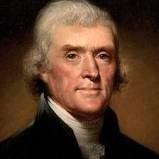

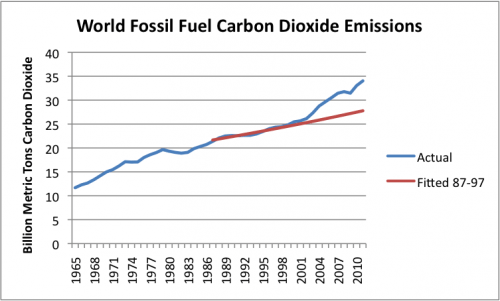
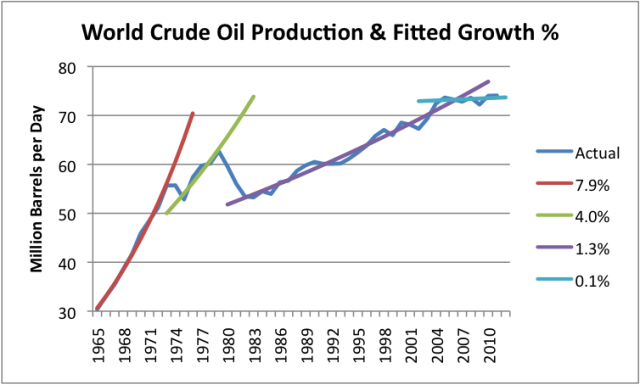

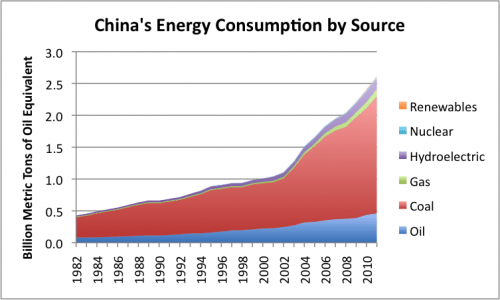

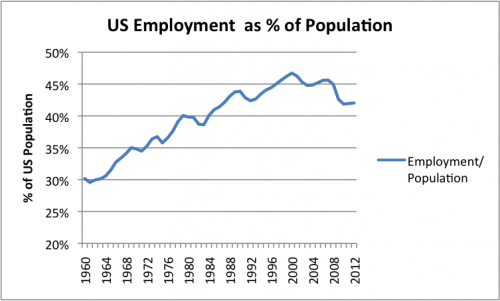


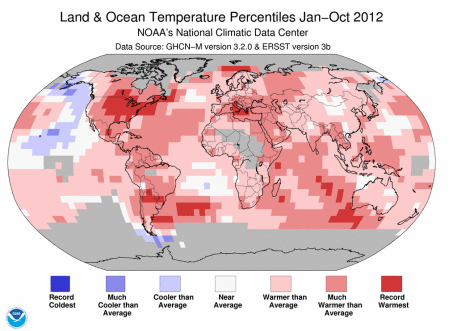
 Learning from Dogs