Category: Finance

Shining a light on these times.

There’s many a slip ‘twixt the cup and the lip.

That sub-heading is a very old proverb supporting the idea  “that even when the outcome of an event seems certain, things can still go wrong.”

That proverb came to me when I was reading a TomDispatch essay that was published last Tuesday. I couldn’t make up my mind about whether or not to continue with yesterday’s mood of “Living in interesting times” but in the end decided to so do. Because Peter Van Buren’s essay, published as a Tomgram, needs to be widely read so that as many as possible appreciate the need to reach out to those that should be supported.

I am very grateful to Tom Engelhardt for his continuing permission for me to republish his TomDispatch essays.

ooOOoo

Tomgram: Peter Van Buren, Minimum Wage, Minimum Chance

We live in interesting times!

The impending ‘banquet of consequences’.

The Welcome page of this blog includes this:

Dogs ‘teaching’ man to be so successful a hunter enabled evolution, some 20,000 years later, to farming,  thence the long journey to modern man.  But in the last, say 100 years, that farming spirit has become corrupted to the point where we see the planet’s plant and mineral resources as infinite.  Mankind is close to the edge of extinction, literally and spiritually.

I continue that theme in Part Two of my book (Chapter 7: This Twenty-First Century)

Bad news sells! Bad news also causes stress and worry. In my previous explanation, I explained that the last thing you want is a catalogue of all the things that have that power to cause you stress and worry. However, I do see three fundamental aspects of this new century that have their roots in that loss of principles that I referred to in the previous chapter. They are

1. the global financial system,
2. the potential for social disorder, and
3. the process of government.

Because they are at the heart of how the coming years will pan out.

The first aspect, our global financial system, was selected because it underpins all our lives in so many ways. When I was living in southwest England I was a client of Kauders Portfolio Services[1]. The founder of the company, David Kauders, published[2] a book, The Greatest Crash, in 2011. It was an obvious read for me at that time and I still have the book on my shelves here in Oregon.
David explained that whether we like it or not, our lives are inextricably caught up in the twin dependencies of the global financial system: credit and debt. As he wrote in his opening chapter:

Households can barely afford their existing debts, let alone take on more. Since households now prefer not to borrow, indeed some even choose to pay back debt, it follows that those who have already borrowed, as a group, can no longer contribute to economic expansion.
People can be divided into borrowers and savers. With existing borrowers unable to afford or unwilling to take on extra debt, can new borrowers be found instead? Those who do not need to borrow are unlikely to volunteer. Except for the young wishing to buy houses, facing the reality that house prices are beyond their pockets, where are the new borrowers?
Businesses are also under pressure. There has been an inadequate recovery from recession, business prospects are poor as households cut back their spending. Lack of bank lending is a symptom rather than a cause, for if existing businesses were to be given more credit, they would probably be unlikely to find profitable growth opportunities in a world of austerity.

Later on in the book David describes this as “the financial system limit”. In other words, the period of growth and expansion, especially of financial and economic expansion, has come to an end in a structural sense. This was his perspective from 2011.

Recently, I chose to reread The Greatest Crash. What struck me forcibly, reading the book again some four years later on, was how visible this “system limit” appeared in the world today. Everywhere there are signs that the era of growth has come to an end. Many countries are now indebted to a point that reinforces the proposition of there being a financial system limit. The United States is greatly in debt[3] but the only thing mitigating that situation, for the time being anyway, is that the American dollar is the quasi dominant global currency.
The changing nature of the global population is also reinforcing the fact that this is the end of a long period of growth. Even without embracing the question of how much longer we can increase the number of people living on a finite planet, the demographics spell out a greater-than-even chance of a decline in consumption and economic activity. Simply because in all regions of the planet, except for India where there is still a growing youth element in the country, people are ageing. To state the obvious, ageing persons do not consume as much as middle-aged and younger persons.
Thus, the world’s economy that is just around the corner is certainly going to be very different to what it has been in the past. It is not being widely discussed. Worse than that, there is a widespread assumption adopted by many governments that a return to the “normal” economic growth of previous times is a given. Many do not share that assumption.

The second aspect that isn’t being spoken about is the potential for massive, widespread social disorder. All summed up in just three words: greed, inequality, and poverty. Just three words that metaphorically appear to me like a round, wooden lid hiding a very deep, dark well. That lifting this particular lid, the metaphorical one, exposes an almost endless drop into the depths of where our society appears to have fallen.
Even the slightest raising of awareness of where this modern global world is heading is scary. I have in mind the author Thomas Piketty who warned[4] that, “the inequality gap is toxic, dangerous.” Then there was the news in 2015[5] that, “Billionaires control the vast majority of the world’s wealth, 67 billionaires already own half the world’s assets; by 2100 we’ll have 11 trillionaires, while American worker income has stagnated for a generation.”

The third and final aspect that isn’t being widely discussed is the process of government. Not from the viewpoint of “left” or “right”, Labour or Conservative, Democratic or Republican (insert the labels appropriate to your own country), that is being discussed ad nauseum, but from the viewpoint of good government. It might be a terrible generalisation but it is still a fair criticism to say that many peoples of many countries have lost faith in their governments.
There appears to be a chronic absence of open debate about the need for good government, what that good government would look like, and how do societies bring it about.

If we were a dog pack, then our leader, our female mentor dog, would have moved us all to a new, pristine territory!


[1] My relationship was terminated when I became a resident of the United Staes in 2011.
[2] 2011, Sparkling Books.
[3] http://www.usgovernmentdebt.us offers on the 14th November, 2014 that the Federal Debt of the United States was about $18,006,100,032,000.
[4] In his book Capital in the Twenty-First Century (Belknap Press, 2014).
[5] http://www.marketwatch.com/story/capitalism-is-killing-americas-morals-our-future-2015-05-22.

Yes, these are indeed very interesting times!

So, dear reader, you can understand why a recent article over on Naked Capitalism spoke to me. It was penned by Satyajit Das, a former banker and the author of a number of books. Both Satyajit and Yves, of Naked Capitalism, were delighted to offer me permission to republish the full post.

ooOOoo

Satyajit Das: Age of Stagnation or Something Worse?

Yves here. If you’ve read Das regularly, one of the characteristics of his writing is wry detachment. The shift to a sense of foreboding is a big departure.

By Satyajit Das, a former banker and author whose latest book, The Age of Stagnation, is now available. The following is an edited excerpt from Age of Stagnation (published with the permission of Prometheus Books)

If you look for truth, you may find comfort in the end; if you look for comfort you will not get either comfort or truth, only . . . wishful thinking to begin, and in the end, despair. C.S. Lewis

The world is entering a period of stagnation, the new mediocre. The end of growth and fragile, volatile economic conditions are now the sometimes silent background to all social and political debates. For individuals, this is about the destruction of human hopes and dreams.

One Offs

For most of human history, as Thomas Hobbes recognised, life has been ‘solitary, poor, nasty, brutish, and short’. The fortunate coincidence of factors that drove the unprecedented improvement in living standards following the Industrial Revolution, and especially in the period after World War II, may have been unique, an historical aberration. Now, different influences threaten to halt further increases, and even reverse the gains.

Since the early 1980s, economic activity and growth have been increasingly driven by financialisation – the replacement of industrial activity with financial trading and increased levels of borrowing to finance consumption and investment. By 2007, US$5 of new debt was necessary to create an additional US$1 of American economic activity, a fivefold increase from the 1950s. Debt levels had risen beyond the repayment capacity of borrowers, triggering the 2008 crisis and the Great Recession that followed. But the world shows little sign of shaking off its addiction to borrowing. Ever-increasing amounts of debt now act as a brake on growth.

Growth in international trade and capital flows is slowing. Emerging markets that have benefited from and, in recent times, supported growth are slowing.

Rising inequality and economic exclusion also impacts negatively upon activity.

Financial problems are compounded by lower population growth and ageing populations; slower increases in productivity and innovation; looming shortages of critical resources, such as water, food and energy; and manmade climate change and extreme weather conditions.

The world requires an additional 64 billion cubic metres of water a year, equivalent to the annual water flow through Germany’s Rhine River. Agronomists estimate that production will need to increase by 60–100 percent by 2050 to feed the population of the world. While the world’s supply of energy will not be exhausted any time soon, the human race is on track to exhaust the energy content of hundreds of millions years’ worth of sunlight stored in the form of coal, oil and natural gas in a few hundred years. 10 tons of pre-historic buried plant and organic matter converted by pressure and heat over millennia was needed to create a single gallon (4.5 litres) of gasoline.

Europe is currently struggling to deal with a few million refugees fleeing conflicts in the Middle East. How will the world deal with hundreds of millions of people at risk of displacement as a resulting of rising sea levels?

Extend and Pretend

The official response to the 2008 crisis was a policy of ‘extend and pretend’, whereby authorities chose to ignore the underlying problem, cover it up, or devise deferral strategies to ‘kick the can down the road’. The assumption was that government spending, lower interest rates, and the supply of liquidity or cash to money markets would create growth. It would also increase inflation to help reduce the level of debt, by decreasing its value.

It was the grifter’s long con, a confidence trick with a potentially large payoff but difficult to pull off. Houses prices and stock markets have risen, but growth, employment, income and investment have barely recovered to pre-crisis levels in most advanced economies. Inflation for the most part remains stubbornly low.

In countries that have ‘recovered’, financial markets are, in many cases, at or above pre-crisis prices. But conditions in the real economy have not returned to normal. Must-have latest electronic gadgets cannot obscure the fact that living standards for most people are stagnant. Job insecurity has risen. Wages are static, where they are not falling. Accepted perquisites of life in developed countries, such as education, houses, health services, aged care, savings and retirement, are increasingly unattainable.

In more severely affected countries, conditions are worse. Despite talk of a return to growth, the Greek economy has shrunk by a quarter. Spending by Greeks has fallen by 40 percent, reflecting reduced wages and pensions. Reported unemployment is 26 percent of the labour force. Youth unemployment is over 50 percent. One commentator observed that the government could save money on education, as it was unnecessary to prepare people for jobs that did not exist.

Future generations may have fewer opportunities and lower living standards than their parents. A 2013 Pew Research Centre survey conducted in thirty-nine countries asked whether people believed that their children would enjoy better living standards: 33 percent of Americans believed so, as did 28 percent of Germans, 17 percent of British and 14 percent of Italians. Just 9 percent of French people thought their children would be better off than previous generations.

The Deadly Cure

Authorities have been increasingly forced to resort to untested policies including QE forever and negative interest rates. It was an attempt to buy time, to let economies achieve a self-sustaining recovery, as they had done before. Unfortunately the policies have not succeeded. The expensively purchased time has been wasted. The necessary changes have not been made.

There are toxic side effects. Global debt has increased, not decreased, in response to low rates and government spending. Banks, considered dangerously large after the events of 2008, have increased in size and market power since then. In the US the six largest banks now control nearly 70 percent of all the assets in the US financial system, having increased their share by around 40 percent.

Individual countries have sought to export their troubles, abandoning international cooperation for beggar-thy-neighbour strategies. Destructive retaliation, in the form of tit-for-tat interest rate cuts, currency wars, and restrictions on trade, limits the ability of any nation to gain a decisive advantage.

The policies have also set the stage for a new financial crisis. Easy money has artificially boosted prices of financial assets beyond their real value. A significant amount of this capital has flowed into and destabilised emerging markets. Addicted to government and central bank support, the world economy may not be able to survive without low rates and excessive liquidity.

Authorities increasingly find themselves trapped, with little room for manoeuvre and unable to discontinue support for the economy. Central bankers know, even if they are unwilling to publicly acknowledge it, that their tools are inadequate or exhausted, now possessing the potency of shamanic rain dances. More than two decades of trying similar measures in Japan highlight their ineffectiveness in avoiding stagnation.

Heart of the Matter

Conscious that the social compact requires growth and prosperity, politicians, irrespective of ideology, are unwilling to openly discuss the real issues. They claim crisis fatigue, arguing that the problems are too far into the future to require immediate action. Fearing electoral oblivion, they have succumbed to populist demands for faux certainty and placebo policies. But in so doing they are merely piling up the problems.

Policymakers interrogate their models and torture data, failing to grasp that ‘many of the things you can count don’t count [while] many of the things you can’t count really count’. The possibility of a historical shift does not inform current thinking.

It is not in the interest of bankers and financial advisers to tell their clients about the real outlook. Bad news is bad for business. The media and commentariat, for the most part, accentuate the positive. Facts, they argue, are too depressing. The priority is to maintain the appearance of normality, to engender confidence.

Ordinary people refuse to acknowledge that maybe you cannot have it all. But there is increasingly a visceral unease about the present and a fear of the future. Everyone senses that the ultimate cost of the inevitable adjustments will be large. It is not simply the threat of economic hardship; it is fear of a loss of dignity and pride. It is a pervasive sense of powerlessness.

For the moment, the world hopes for the best of times but is afraid of the worst. People everywhere resemble Dory, the Royal Blue Tang fish in the animated film Finding Nemo. Suffering from short-term memory loss, she just tells herself to keep on swimming. Her direction is entirely random and without purpose.

Reckoning Postponed

The world has postponed, indefinitely, dealing decisively with the challenges, choosing instead to risk stagnation or collapse. But reality cannot be deferred forever. Kicking the can down the road only shifts the responsibility for dealing with it onto others, especially future generations.

A slow, controlled correction of the financial, economic, resource and environmental excesses now would be serious but manageable. If changes are not made, then the forced correction will be dramatic and violent, with unknown consequences.

During the last half-century each successive economic crisis has increased in severity, requiring progressively larger measures to ameliorate its effects. Over time, the policies have distorted the economy. The effectiveness of instruments has diminished. With public finances weakened and interest rates at historic lows, there is now little room for manoeuvre. Geo-political risks have risen. Trust and faith in institutions and policy makers has weakened.

Economic problems are feeding social and political discontent, opening the way for extremism. In the Great Depression the fear and disaffection of ordinary people who had lost their jobs and savings gave rise to fascism. Writing of the period, historian A.J.P. Taylor noted: ‘[the] middle class, everywhere the pillar of stability and respectability . . . was now utterly destroyed . . . they became resentful . . . violent and irresponsible . . . ready to follow the first demagogic saviour . . .’

The new crisis that is now approaching or may already be with us will be like a virulent infection attacking a body whose immune system is already compromised.

As Robert Louis Stevenson knew, sooner or later we all have to sit down to a banquet of consequences.

ooOOoo

henrifredericamiel148210Very interesting times indeed!

The power of caring!

Sandra and Francisco send their blessings.

For the last two days there has been a post running explaining the desparate need for donations to be sent to MaxMello, the Brazilian charity run by Sandra Guilarducci and her husband, Francisco, in Ibiuna, Brazil.

Earlier yesterday, John Zande in Brazil sent me an email:

Morning Paul. Sandra wrote to G this morning. Portuguese and English translation below.

ah querida Dionete…ando tão cansada, tão cansada… na segunda de carnaval lá estava eu num laboratório em Cotia com a minha cachorra Nicole, fazendo eletrocardiograma e hemograma. Não paramos nunca aqui. Tem tantos cães soltos no sítio em Piedade por falta de canis e isso gera um estresse que vc nem imagina, além de brigas. Dentro da minha casa, aqui em Ibiúna, vivem 62 cães, que não podem ficar lá fora porque senão os outros matam, aqui em IBiúna o espaço é super pequeno. Enfim…, sempre correndo com eles, sempre tem um ou outro com problemas de saúde, ainda tenho vários pra castrar e…não tem fim. Mas a sua ajuda tem sido importantíssima pra gente. Que Deus te abençõe sempre e sempre. Ficamos emocionados demais com essas publicações no exterior (graças a vc, claro !) e esperamos cheios de esperanças mesmo, que isso gere frutos em pról de toda essa galerinha que abrigamos. Que vc e seus amigos envolvidos nessa nossa luta sejam cobertos de prosperidade, saúde e bênçãos. Quando puder, vamos marcar de vir aqui, será um prazer imenso poder te abraçar e agradecer pessoalmente. Forte abraço, cheio de gratidão.


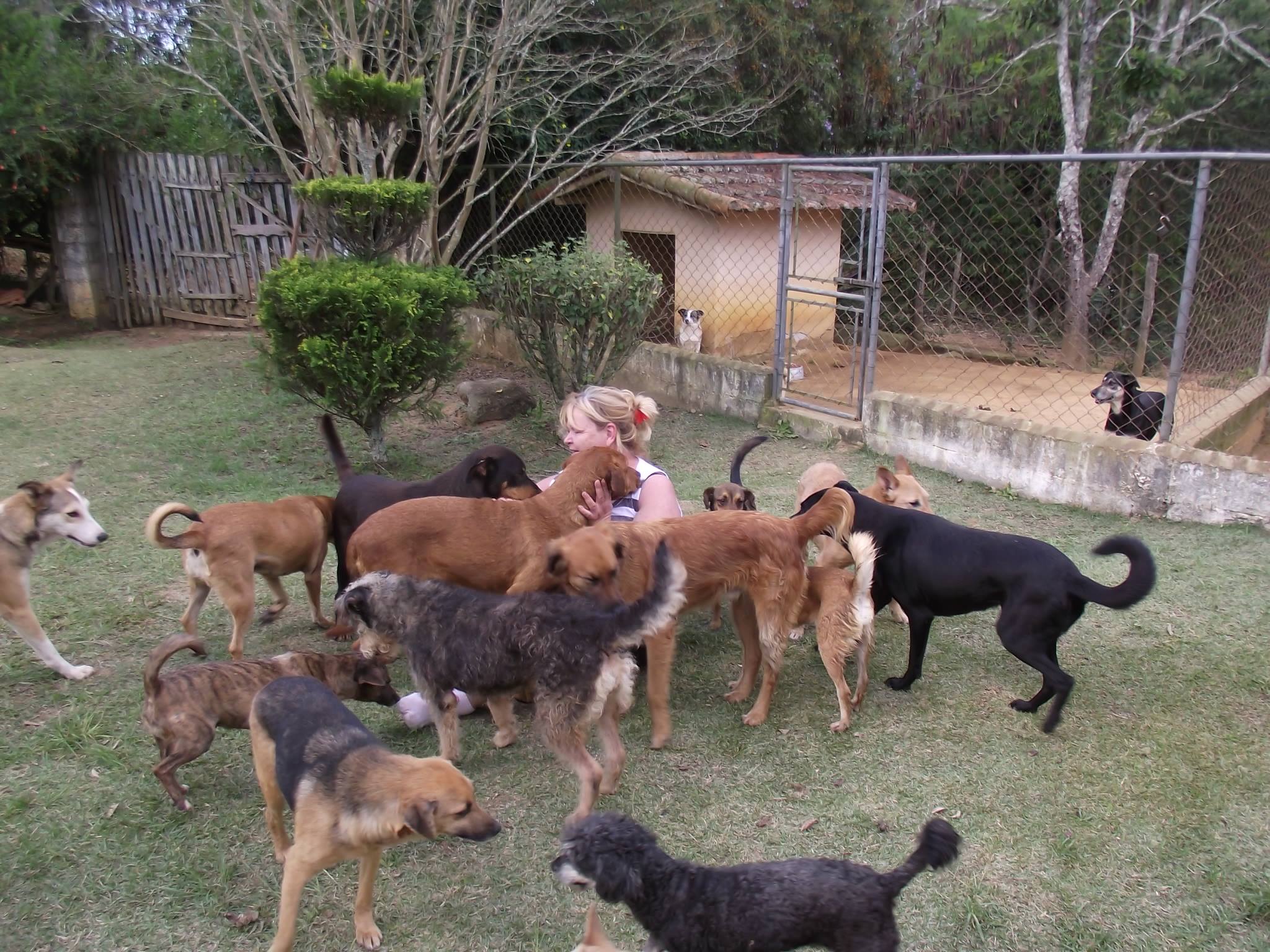
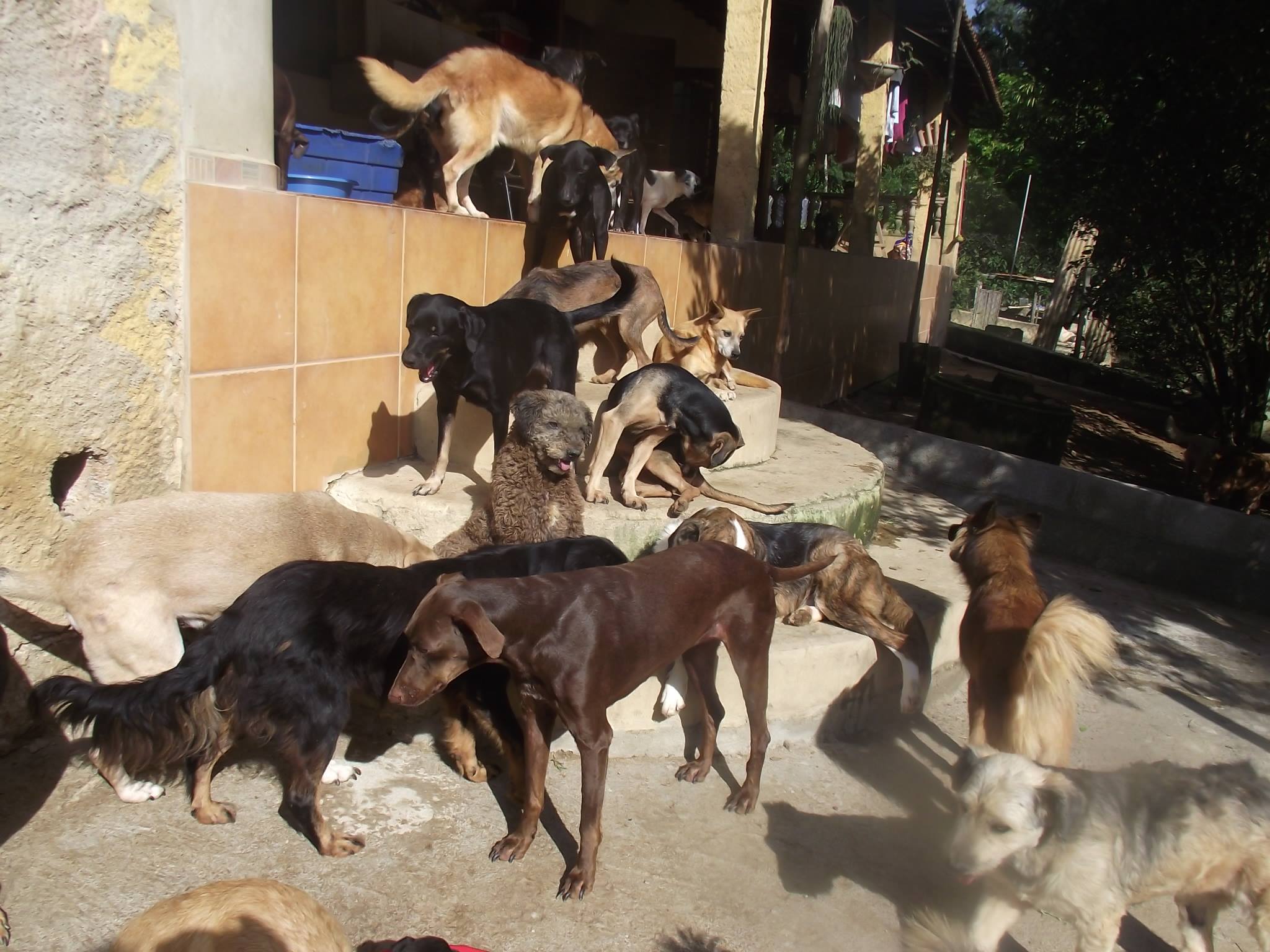
Ah dear Dionete …I am soooo tired… on Monday I had to take my dog ​​Nicole to a clinic in Cotia for an ECG and blood test. We never stop around here. There are too many dogs in the property in Piedade – we don’t have kennels for all of them – and the amount of stress it generates is almost too much to bear. And the fights! Here in Ibiúna I have to keep 62 dogs inside my house; they can’t go outside otherwise they will be killed by the others. And they don’t have much room. Anyway… always running up and down for them, there’s always one or another who gets sick or needs treatment, many to still be neutered… it’s an endless task. But your help has been very important for us. May God bless you always and forever. We are thrilled to see these publications abroad (thanks to you, of course!) and do hope it generates the help these little creatures desperately need. May you and your friends involved in our struggle be covered with prosperity, health and blessings. Let’s try to set up a visit. It will be an immense pleasure to hug you and thank you personally. Big hugs full of gratitude

So all of you who have cared for Sandra and Francisco know that it counts.

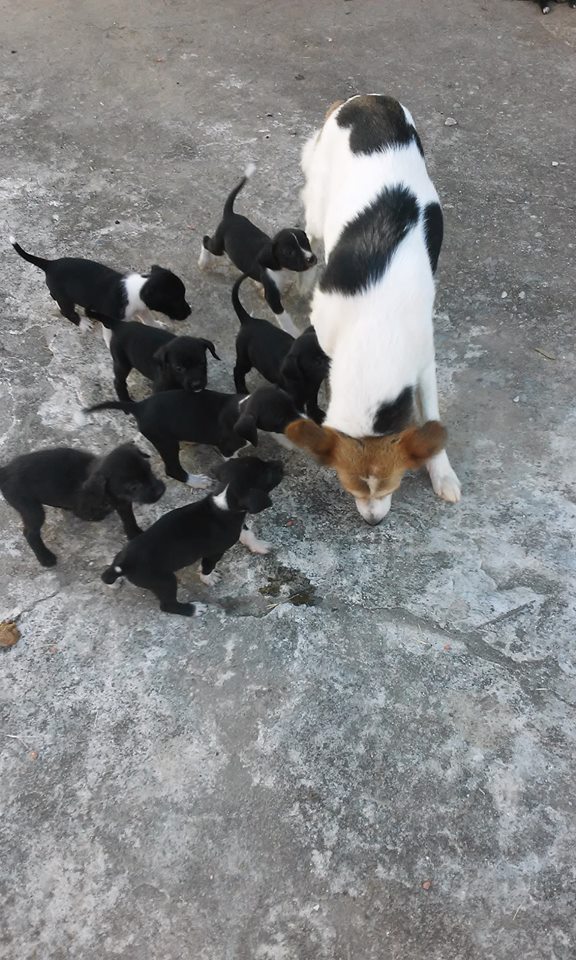
Do drop across to their Facebook page here, from where the following photographs have been taken.

12661938_745930475542510_5091027821470656796_noooo

12651257_744030742399150_8059991037127794727_noooo

12657804_743519195783638_4907819882854948071_ooooo

12698495_743517825783775_8117881471369857165_ooooo

12657309_743517135783844_4620837696465933042_ooooo

12647160_743514762450748_8548235142741434775_noooo

So, once again, if you can see your way to help, by sharing this information or by making even the tiniest donation, then please do. The MaxMello PayPal account is: associacaomaxmello@gmail.com

Big hugs to every one of you out there!

Update: This is a translation of a recent comment left by Sandra on MaxMello’s Facebook page.

Friends, thanks to the generosity of you guys have raised almost 9 thousand Real. Our survival challenge continues, but we know that we are not alone in this fight. Our total debt is 36,450 Real and we need help to stamp her out. Any amount makes a big difference. As we have received many requests for the bank details, follow the possibilities:
Bradesco
Agência:1937-2
Current account: 16505-0
Social Security Number: 766.545.758-49
Sandra Maria Guilarducci
Caixa econômica federal
Agency: 0800
Arr. Operational: 003
Current account: 692-4
A Social Security Number: 16.729.925/0001-08
To those who are outside of Brazil, the transfer can be made via Paypal to the email associacaomaxmello@gmail.com
Very, very thank you all for the affection and solidarity.

MaxMello – We Can All Help

This is a very simple message – please help MaxMello.

(Please note: To ensure the widest readership of this post I am running it for two days. I.e. the next post will be on Thursday, 11th.)

Yesterday I republished a post from John Zande. It explained how Sandra Guilarducci and her husband, Francisco, in Ibiuna, Brazil were caring for over 350 dogs and 32 cats. If you haven’t read that post then go no further in today’s post until you have read about the desparate need for funds.

Here’s a section from yesterday’s post (but please do read it in full):

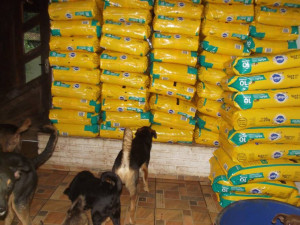
food-e1454493203915Today, MaxMello burns through 5 tonnes of food every month, and a small army of vets help with reduced fees. But it all adds up. It has added up, and over this past weekend, Sandra was forced to admit that she and Francisco (weighed down with over 30,000 reis debt, about $10,000 US, to vets and pet food suppliers) had reached the point beyond which they simply could no longer afford to keep the shelter open. Sandra put out an urgent call to other NGO’s, saying she will keep the sick, the crippled, and the old (the one’s that stand little to no chance of adoption) but new shelter-homes would have to be found for the hundreds of other rescues under their care. With every NGO we know of here in Sao Paulo being already full, this is, in all honesty, an impossible situation. These are good people, and they (and their keep) are in genuine need of a hand.

Please, help keep MaxMello open and donate to the MaxMello PayPal account: associacaomaxmello@gmail.com.

But just as important as making whatever donation you can is letting Sandra and Francisco know you care.

Yesterday, Jean and I sent a letter to John for John’s wife to translate from English into Portugese as Sandra and Francisco do not speak English. We wanted them to read our letter in this post.

So this is the letter in Portugese:

Sandra e Francisco,

Aqui no sul do Oregon, hoje temos 9 cachorros e 4 gatos; há três anos, quando viemos para cá, eram 14 cães e 7 gatos. Eu simplesmente não consigo imaginar o que deve ser cuidar de 350 cachorros e 32 gatos, ainda mais divididos entre duas propriedades diferentes, separadas por 200 km!

Entretanto, Jean sabe bem o tamanho do amor e da dedicação que movem sua paixão por esses animais maravilhosos – porque ela vivia em San Carlos, no México (na Península Baja) e dedicava a vida a recolher os cachorros de rua de lá, tratando de sua saúde, dando-lhes amor e conseguindo adotantes para eles nos EUA. Ao longo de vários anos, Jean acredita ter resgatado mais de 200 cães. A alimentação e tratamento de todos esses animais foram custeados por ela e o marido, Ben, que morreu em 2005.

Foi meio por acaso que a conheci, em San Carlos, no Natal de 2007, e me via com os olhos cheios de lágrimas ao ver a afeição que os cachorros dela demonstravam ao me ver, toda vez que ia visitá-la em sua casa. E essa afeição deve ter causado um efeito profundo em mim, pois, quando voltei para a Inglaterra, em janeiro de 2008, Jean e eu percebemos que queríamos ficar juntos para o resto da vida. Mais tarde, nesse mesmo ano, ao lado do meu pastor alemão, Pharaoh, voltei para San Carlos. Não demorou muito, com 14 cachorros e 7 gatos, fomos para o Arizona, onde nos casamos, e por fim, no segundo semestre de 2012, viemos para o Oregon, onde estamos até hoje.

Pouco antes de sairmos de San Carlos, em 2010, uma cachorra foi deixada na porta de nossa casa. Era uma mestiça de rottweiler e devia ter acabado de dar cria porque ainda estava cheia de leite. Nós a batizamos de Hazel e quase de cara ela mostrou sua natureza amorosa para Jean, para mim e os outros animais. Hazel é uma inspiração para a humanidade graças ao perdão e ao amor incondicional que oferece ao mundo.

Por isso, aceite essas poucas palavras minhas e de Jean, endereçadas aos dois, como uma pequena amostra de amor e gratidão que sentimos por vocês e que certamente também serão sentidos pelos leitores e seguidores do Learning from Dogs

And here is the letter in English:

Sandra and Francisco,

Here in Southern Oregon we have 9 dogs and 4 cats, down from the 14 dogs and 7 cats when we moved here some 3 years ago. I cannot simply imagine what it must entail to care for 350 dogs and 32 cats let alone care for them in two locations seperated by 200 kms!


However Jean can imagine the level of love and commitment that fuels your passion for looking after these wonderful animals. For Jean, when she lived in San Carlos, Mexico (on the Baja Peninsula) devoted her life to rescuing Mexican street dogs, loving them back to health and then finding homes for them in the USA. Over the many years Jean believes she found homes for well over 200 dogs. The feeding and caring of these animals was funded personally by Jean and her late husband, Ben, who died in 2005.


Quite by chance, I met Jean in San Carlos the Christmas of 2007 and was moved to tears on numerous occasions by the loving affection shown by her dogs to this visitor to Jean’s home. That affection must have rubbed off on me for by the time I returned to England in January, 2008 Jean and I wanted to be together for the rest of our lives. Later in 2008, together with my German Shepherd, Pharaoh, I travelled out to San Carlos. Subsequently, with 14 dogs and 7 cats, we moved to Arizona to be married and then, in the Autumn of 2012, came up here to our home in Oregon.


Shortly before we left San Carlos in 2010 to go to Arizona, a female dog was dumped outside the house. She was a Rottweiler crossbreed and must have just given birth to puppies for she was still in milk. We named her Hazel and she very quickly showed her most beautiful and loving nature to Jean and me and to the other animals. Hazel is an inspiration to humankind of what flows from offering forgiveness and unconditional love to the world.


So please take these few words from Jean and me, sent to you both, as a small measure of the love and gratitude that we feel for you, and I know will be felt by many of the readers and followers of Learning from Dogs.

I also want to republish a comment from yesterday’s post, left by Mr. Merveilleux, because it speaks such perfect common-sense:

As Zande’s explained, the current exchange rate means donations go a very long way. Keep in mind the minimum wage in Brazil is only around £130 p/month. By skipping one little luxury this month, like going out for a meal today, and sending what one would have spent on that to the shelter, we can all make make a substantial difference to the lives of these animals.
My suggestion is for people not to just reach for the change they’ve got in the car ashtray, but consider a little, insignificant sacrifice that will do one no harm, but will have a disproportionately positive effect.
Skip one bottle of champagne, or a bottle of wine, or don’t buy flowers this week… skip any little thing that one doesn’t really *need*, and put that money to good use.

Let me move on a tad.

As is obvious to any visitors to this place in the last 6 weeks, I have just published my first book. It learningfromdogs_3dbook_500xis called Learning from Dogs, the same name as this blog. I am also donating 50% of the net proceeds from all sales of my book to our local Rogue Valley Humane Society.

However, for the whole of the month of February I shall be donating the other 50% of net proceeds to MaxMello.

So, please, buy the book and help two fabulous charities. The book is available as a paperback, priced $15.95, or either of two eBook formats, MOBI and EPUB, priced at $5:39. Full details here: Buy the Book.

Of course, you may also buy the book from Amazon or you can order it from most booksellers.

If you prefer to purchase it direct from me but do not wish to pay online, then mail me (as in Paul Handover) a cheque for $18.67 ($15.95 + P&P of $2.72) and I will send it to any part of the USA. (For overseas paperback purchasers who do not wish to pay online then email me your address details and I will respond within 48 hours.) My email address is learningfromdogs (at) gmail (dot) com

All of this is part of never forgetting how important it is to care for our dogs – they are man’s oldest companion and have devoted themselves to caring for us for possibly 40,000 years. Is it asking too much to help these dogs in Brazil in return!

P1150895
Hazel showing her love and caring for our cat, George. Both animals are ex rescues from Mexico. Picture taken last Sunday evening.


Oil, corruption and public money.

Nothing at all to do with dogs, or with integrity if it comes to that!

Regular followers of this place know that I am a tremendous fan of George Monbiot, the Englishman who so regularly exposes stuff that needs to be aired and discussed. As his About page explains:

Here are some of the things I love: my family and friends, salt marshes, arguments, chalk streams, Russian literature, kayaking among dolphins, diversity of all kinds, rockpools, heritage apples, woods, fishing, swimming in the sea, gazpacho, ponds and ditches, growing vegetables, insects, pruning, forgotten corners, fossils, goldfinches, etymology, Bill Hicks, ruins, Shakespeare, landscape history, palaeoecology, Gavin and Stacey and Father Ted.

Here are some of the things I try to fight: undemocratic power, corruption, deception of the public, environmental destruction, injustice, inequality and the misallocation of resources, waste, denial, the libertarianism which grants freedom to the powerful at the expense of the powerless, undisclosed interests, complacency.

Here is what I fear: other people’s cowardice.

I still see my life as a slightly unhinged adventure whose perpetuation is something of a mystery. I have no idea where it will take me, and no ambitions other than to keep doing what I do. So far it’s been gripping.

Way back in the early days of Learning from Dogs, the blog that is, not the book, George was very gracious in giving me blanket permission to republish his posts, and many of them have appeared in this place.

So now read George Monbiot’s latest Rigging the Market. It is yet another example of what is going wrong in these times.

ooOOoo

Rigging the Market

This interconnected world.

There is no question that we are living in interesting times!

Back in the old country there was a popular saying: “There are liars, damn liars, and politicians.” I am insufficiently aware of politics in both my new home country, the US of A, and my new home state, Oregon, to know if that saying is equally pertinent to life in America as it was in Great Britain – I suspect that it is.

So what’s getting ‘my knickers in a twist’ today? Namely the state of the world economy.

There seems to be so much spin and counter-spin that getting to the truth of what is going on, economically speaking, is not straightforward.

Which is why a recent article posted by over on The Automatic Earth jumped out at me. To my eyes, it really did cover the truth of what’s going on. And to double-check my analysis I shared it with Dan Gomez, no stranger to global finances, and he found it useful. Indeed, this was Dan’s reply: “That’s pretty much it. This should be the top of the world news every week until governments become accountable. All the other big issues of the day pale compare to the backlash from this sclerotic thinking. Good luck to all of us.”

Raúl has very kindly given me his permission to republish this. It’s not an easy read but that doesn’t detract from the value of the essay.

ooOOoo

 Why This Slump Has Legs

 January 18, 2016  Posted by Raúl Ilargi Meijer
Berenice Abbott Columbus Circle, Manhattan 1936

We’ve only really been in two weeks of trading in the new year, things are looking pretty bad to say the least, so predictably the press are asking -and often answering- questions about when the slump will be over. Rebound, recovery, the usual terminology. When will we get back to growth?

For me personally, but that’s just me, that last question sounds a bit more stupid every single time I hear and read it. Just a bit, but there’s been a lot of those bits, more than I care to remember. Luckily, the answer is easy. The slump will not be over for a very long time, there will be no rebound or recovery, and please stop talking about a return to growth unless you can explain what you want to grow into.

I’m sorry, I know that’s not what you want to hear, but life’s a bitch and so’s the economy. You’ve lived on pink fumes for a long time, most of you for their whole lives, but reality dictates that real ‘growth’ stopped decades ago, and you never figured that out because, and I quote here (see below), you and the world you’re part of became “addicted to borrowing money, spending it, and passing this off as ‘growth’”.

That you believed this was actual growth, however, is on you. You fell for a scam and you’re going to have to pay the price. If there’s one single thing people are good at, it’s lying. It’s as old as human history, and it happens every day, so you’re no exception to any rule. You’re perhaps just not particularly clever.

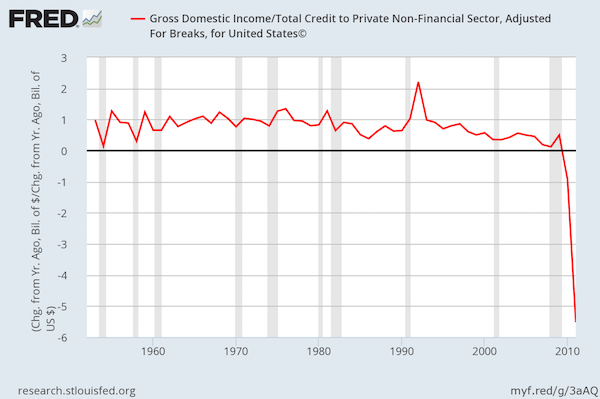
How do we know a ‘recovery’ is so far off it’s really no use to even talk about it? As I said, it’s easy. Let me lead this in with a graph I saw just today, which deals with a topic the Automatic Earth has covered a lot: marginal debt, or more precisely, the productivity/growth gained from each additional dollar of debt.

Please note, this particular graph deals with private non-financial debt only, we’ll get to other kinds of added debt, but that restriction is actually quite illuminating.

MarginalDebtNow of course, you have to wonder about the parameters the St. Louis Fed uses for its data and graphs, and whether ‘growth’ was all that solid in the run up to 2008. There’s plenty of very valid arguments that would say growth in the 1960’s was a whole lot more solid than that in the naughties, after the Glass-Steagall repeal, and after the dot.com blubber.

However, that’s not what I want to take away from this, I use this to show what has happened since 2008, more than before, when it comes to “passing debt off as ‘growth’”.

But it’s another thing that has happened since 2008, or rather not happened, that points out to us why this slump will have legs. That is, in 2008 a behemoth bubble started bursting, and it was by no means just US housing market. That bubble should have been allowed to fully deflate, because that is the only way to allow an economy to do a viable restart.

Instead, all that has been done since 2008, QE, ZIRP, the works, has been aimed at keeping a facade ‘alive’, and aimed at protecting the interests of the bankers and other rich parties. That facade, expressed most of all in rising stock markets, has allowed for societies to be gutted while people were busy watching the S&P rise to 2,100 and the Kardashians bare 2,100 body parts.

It was all paid for, apart from western QE, with $28 trillion and change of newfangled Chinese debt. The problem with this is that if you find yourself in a bubble and you don’t go through the inevitable deleveraging process that follows said bubble in a proper fashion, you’re not only going to kill economies, you’ll destroy entire societies.

And that is not just morally repugnant, it also works as much against the rich as it does against the poor. It’s just that that is a step too far for most people to understand. That even the rich need a functioning society, and that inequality as we see it today is a real threat to everyone.

Recognizing this simple fact, and the consequences that follow from it, is nothing new. It’s why in days of old, there were debt jubilees. It’s also why we still quote the following from Marriner Eccles, chairman of the Federal Reserve under FDR and Truman from 1934-1948, in his testimony to the Senate Committee on the Investigation of Economic Problems in 1933, which prompted FDR to make him chairman in the first place.

It is utterly impossible, as this country has demonstrated again and again, for the rich to save as much as they have been trying to save, and save anything that is worth saving. They can save idle factories and useless railroad coaches; they can save empty office buildings and closed banks; they can save paper evidences of foreign loans; but as a class they cannot save anything that is worth saving, above and beyond the amount that is made profitable by the increase of consumer buying.

It is for the interests of the well to do – to protect them from the results of their own folly – that we should take from them a sufficient amount of their surplus to enable consumers to consume and business to operate at a profit. This is not “soaking the rich”; it is saving the rich. Incidentally, it is the only way to assure them the serenity and security which they do not have at the present moment.

Everything would all be so much simpler if only more people understood this, that you need a – fleeting, ever-changing equilibrium- to prosper.

Instead, we’re falling into that same trap again. Or, more precisely, we already have. We have been fighting debt with more debt and built the facade put up by the Fed, the BoJ and the ECB, central banks that all face the same problems and all take the same approach: save the rich at the cost of the poor. Something Eccles said way back when could not possibly work.

Anyway, so here are the graphs that prove to us why the slump has legs. There’s been no deleveraging, the no. 1 requirement after a bubble bursts. There’s only been more leveraging, more debt has been issued, and while households have perhaps deleveraged a little bit, though that is likely strongly influenced by losses on homes etc. plus the fact that people were simply maxed out.

First, global debt and the opposite of deleveraging:

LeverageGlobalAnd global debt from a longer, 65 year, more historical perspective:

LeverageGlobal2-500It’s a global debt graph, but it’s perhaps striking to note that big ‘growth’ spurts happened in the days when Reagan, Clinton and Obama were the respective US presidents. Not so much in the Bush era.

Next, China. What we’re looking at is what allowed the post 2008 global economic facade to have -fake- credibility, an insane rise in debt, largely spent on non-productive overinvestment, overcapacity highways to nowhere and many millions of empty apartments, in what could have been a cool story had not Beijing gone all-out on performance enhancing financial narcotics.

LeverageChina500Today, the China Ponzi is on its last legs, and so is the global one, because China was the last ‘not-yet-conquered’ market large enough to provide the facade with -fleeting- credibility. Unless Elon Musk gets us to Mars very soon, there are no more such markets.

So US debt will have to come down too, belatedly, with China, and it will have to do that now. because there are no continents to conquer and hide the debt behind. We’re all going to regret engaging in the debt game, and not letting the bubble deflate in an orderly fashion when we still could, but all those thoughts are too late now.

LeverageUS500What the facade has wrought is not just the idea that deleveraging was not needed (though it always is, after every single bubble), but that net US household worth rose by 55% in the 6-7 years since the bottom of the crisis, an artificial bottom fabricated with…more debt, with QE, and ZIRP.

USTaxesHoneyPot2Meanwhile, in today’s world, as stock markets go down at a rapid clip, China, having lost control of a market system it never had the control over that Politburos are ever willing to acknowledge they don’t have, plays a game of Ponzi whack-a-mole, with erratic ‘policies’ such as circuit breakers and CIA-style renditions of fund managers and the like.

And all the west can do is watch them fumble the ball, and another one, and another. And this whole thing is nowhere near the end.

China bad loans have now become a theme, but the theme doesn’t mean a thing without including the shadow banking system, which in China has been given the opportunity to grow like a tumor, on which Beijing’s grip is limited, and which has huge claims on local party officials forced by the Politburo to show overblown growth numbers. If you want to address bad loans, that’s where they are.

Chinese credit/debt graphs paint only a part of the picture if and when they don’t include shadow banks, but keeping their role hidden is one of Xi’s main goals, lest the people find out how bad things really are and start revolting. But they will anyway. That makes China a very unpredictable entity. And unpredictable means volatile, and that means even more money flowing out of, and being lost in, markets.

The ‘least worst’ place to be for what money will be left is US dollars, US treasuries and perhaps metals. But there’ll be a whole lot less left than just about anyone thinks. That’s the price of deleveraging.

The price of not deleveraging, on the other hand, is what we see in the markets today. And there is no cure. It must be done. The price for keeping up the facade rises sharply with each passing day, and the effort will in the end be futile. All bubbles have limited lifespans.

I’ll close this with a few recent words from Tim Morgan, who puts it so well I don’t feel the need to try and do it better.

The Ponzi Economy, Part 1

In order to set the Ponzi economy into some context, let’s put some figures on it. In the United States, total “real economy” debt (which excludes inter-bank borrowing) increased by $19.4 trillion – in real, inflation-adjusted terms – between 2000 and 2014, whilst real GDP expanded by only $3.7 trillion. Britain, meanwhile, added £1.9 trillion of new debt for less than £400bn on “growth” over the same period. I spent part of the holiday period unearthing quite how much debt countries added for each dollar of “growth” over a period starting at the end of 2000 and ending in mid-2015.

Unsurprisingly, the league is topped by Portugal ($5.65 for each $1 of growth), Ireland ($5.42) and Greece ($5.39). Britain’s ratio ($3.46) is somewhat flattering, in that the UK has used asset sales as well as borrowing to sustain its consumption. The average for the Eurozone ($3.54) covers ratios as diverse as Germany (just $1.87) and France ($4.22).

China’s $2.56 looks unexceptional until you note that the more recent (post-2007) number is much worse. Economies which seem to have been growing without too much borrowing (such as Brazil and Russia) are now experiencing dramatic worsening in their ratios, generally in the wake of tumbling commodity prices.

In the proverbial nutshell, then, the world has become addicted to borrowing money, spending it, and passing this off as “growth”. This is a copybook example of a pyramid scheme, which in turn means that the world’s most influential economic mentor is neither Keynes nor Hayek, but Charles Ponzi.

[..] How, in the absence of growth, can inflated capital values be sustained? The answer, of course, is that they can’t. Like all Ponzi schemes, this ends with a bang, not a whimper. This is why I find forecasts of a ‘big fall’ or ‘sharp correction’ in markets hard to swallow. Ponzi schemes don’t end gradually, any more than someone can fall off a cliff gradually, or be “slightly pregnant”.

The Ponzi economy simply continues for as long as irrationality prevails, and then implodes. Capital markets, though, are the symptom, not the cause. The fundamental problem is an inability to escape from an addictive practice of manufacturing supposed “growth” on the basis of borrowed money.

There may be shallow lulls in the asset markets, nothing ever only falls down in a straight line in the real world, but that debt I’ve described here will and must come down and be deleveraged.

The process will in all likelihood lead to warfare, and to refugee movements the likes of which the world has never seen just because of the sheer numbers of people added in the past 50 years.

When your children reach your age, they will not live in a world that you ever thought was possible. But they will still have to live in it, and deal with it. They will no longer have the facade you’ve been staring at for so long now, to lull them into a complacent sleep. And the Kardashians will no longer be looking so attractive either.

ooOOoo

If you found your mind wandering somewhat as you tried to stay focussed on the essay, just go back and read the closing two paragraphs.

The process will in all likelihood lead to warfare, and to refugee movements the likes of which the world has never seen just because of the sheer numbers of people added in the past 50 years.

When your children reach your age, they will not live in a world that you ever thought was possible. But they will still have to live in it, and deal with it. They will no longer have the facade you’ve been staring at for so long now, to lull them into a complacent sleep. And the Kardashians will no longer be looking so attractive either.

As I said at the start: we are living in interesting times!

Trying to make sense of these times?

A departure from recent themes.

Tom Engelhardt
Tom Engelhardt

Some time ago, I republished, with Tom’s permission, essays that were being published on the TomDispatch blogsite. While those essays had nothing at all to do with dogs, they had much to do with integrity; the underlying theme of Learning from Dogs. Then Tom Engelhardt very generously gave me blanket permission to republish further TomDispatch essays whenever I felt so inclined. Thus back in 2011, I republished The Great American Carbon Bomb because it seemed so important to readers of this place. Subsequently, from time to time, other essays have been republished again because they seemed worthy of a broader distribution.

Which brings me to today’s post; another republication of a TomDispatch essay. Why? Because what is presently going on in the world, about the price of oil, about the chaos in the Middle-East, about the prospects of global deflation and the frightening consequences that could flow from that, are of concern to 99.9% of the ordinary folk living on this planet, including the vast majority of owners of dogs.

Thus without any further ado, here is the latest ‘Tomgram’: Michael Klare, The Look of a Badly Oiled Planet.

ooOOoo

Tomgram: Michael Klare, The Look of a Badly Oiled Planet

Maggie the teaching dog.

Two views of teaching in the United Kingdom.

The title to today’s post may be a tad misleading, for it doesn’t offer a guide to both aspects of the post.

But first to what prompted the title.

Earlier yesterday, Neil Kelly, friend from my days when I was living in South Devon, sent me a link to a recent BBC News item. Here’s the story:

Maggie the dog made honorary primary school teacher

28 December 2015 Last updated at 04:31 GMT

A dog has become so successful in helping children to read, that she’ has become an honorary member of staff at a school in the West Midlands.

The idea of getting pupils to read to dogs in order to improve their literacy was first tried out in the UK five years ago, but Maggie, a 10-year-old Shih Tzu, has become so successful that she now has her own staff badge at Earls High school in Halesowen.

Phil Mackie went along to meet Maggie, and Grace, another Shih Tzu, who’ is training to take over when Maggie retires.

Teaching Assistant Toni Gregory spoke on behalf of the two literary pups.

Unfortunately, the short video of Toni Gregory speaking hasn’t yet made it to YouTube so I can’t include that in the post. But do go across to here and watch the short interview with Toni. Here’s a picture of Maggie.

_87347683_87347682Moving on!

It’s difficult not to see the connection between Maggie offering teaching services in a UK school and this recent essay from Richard Murphy of the Tax Research UK blog. It is republished in full with Richard’s very kind permission.

ooOOoo

The parents of primary school kids need to get very angry for their children

Posted on

Ninety three per cent of all children in the UK are taught in state schools. The parents of the other seven per cent may wish to pretend otherwise but the truth is that the prosperity, well being and future of the UK is dependent upon the ability of state schools to deliver the education our young people need. But, as the Guardian has reported, that is in jeopardy:

Britain’s leading expert on school recruitment has warned that a shortage of trainee teachers is reaching crisis levels in some of the most important subjects in the curriculum.

In evidence submitted to the parliamentary education select committee, TeachVac, an independent vacancy-matching and monitoring service for education professionals, said that it had identified a “woeful” lack of new teachers in several key secondary school subjects.

This is not a minor issue. As they note:

[TeachVac] has identified an 85% shortfall in the number of trainee teachers needed to fill vacancies in both business studies and social sciences. The number of new teachers for design and technology is also more than a third below what it needs to be and there is a 10% shortfall in the number of IT teachers required.

These are core subjects at the heart of the skill base the UK needs. And we may not be able to teach them.

There are three reasons for that. First, when the government portrays any job in the state sector as parasitical – and large parts of the media join in – any recruitment programme is going to be hard.

Second, student debt is crippling for those on what is thought to be middle pay, which is what many teachers can, at best, hope to earn.

And third, pay is just not good enough.

All of those are the direct result of policy. The first is ideological. The second is born of the desire to economically enslave people though debt which underpins neoliberalism. The third is the austerity mantra.

Put them together and this country will be crippled by denying an education to those who need and deserve it.

We need a new narrative.

The need to supply high quality education has to be at the core of that narrative.

I hope parents of those ten and younger realise what is going to happen to their children. It is not good, and they need to get angry, now.

ooOOoo

It strikes me that we need new narratives on so many issues ‘both sides of the pond’. Maybe, just maybe, 2016 kicks some of these new narratives into play.

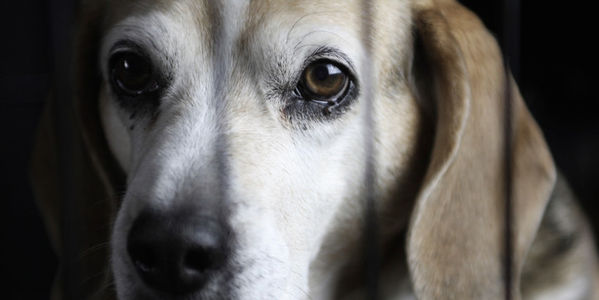
Beagle puppies would like a loving New Year!

Please, please sign this petition to stop Beagle puppies being bred for slaughter!

Not going to add anything more than to republish in full a recent CARE2 Petition.

ooOOoo

471427-1438026925-wideStop the Beagle puppy animal testing breeding facility!

  • BY: Jen Johnson
  • TARGET: Greg Clark, Secretary of State for Communities and Local government

Unless we take action to stop it, a new puppy farm will open in the UK with the purpose of breeding beagles for animal testing experiments.

Click here to sign the petition demanding the government revoke its approval for this horrific facility.

According to the National Anti-Vivisection Society, dogs taking part in scientific experiments are made to inhale toxic substances through masks, force feed through tubes, and are strapped in harnesses while being injected with drugs.

The facility is owned by a US firm and would be Britain’s second facility for breeding beagles specifically to be cut open and experimented on while still alive.

The other facility breeds 3,000 beagles for animal testing each year.

Dozens of celebrities have spoken out against this farm. Join Ricky Gervais, Queen guitarist Dr Brian May and Downton Abbey’s Peter Egan: sign this petition to demand the government stop the construction of a new cruelty-laden dog breeding facility.

PLEASE SIGN NOW

ooOOoo

As at 09:30 PST yesterday, the target of 310,000 supporters of the petition was just short by 761 persons. Fingers and toes crossed that by the time this post is published the target will have been met. I know there are many caring readers of this blog who wouldn’t hesitate for a moment to sign the petition.

Thank you!

Let them grow up as happy beagles!

Forgive the introspection, Part One

This is not some intellectual exercise; far from it!

As often happens, a number of seemingly disconnected articles and reports seem to have provided a common theme. A theme that has previously been aired on Learning from Dogs yet a theme that always needs to be in the front of our faces: integrity.

Here are some of those articles.

Firstly, I presented recently in this place an essay from George Monbiot that proposed (my italics):

The revelation that humanity’s dominant characteristic is, er, humanity will come as no surprise to those who have followed recent developments in behavioural and social sciences. People, these findings suggest, are basically and inherently nice.

Patrice Ayme, however, pointed out in a reply:

Saying that “people are good, while tolerating bad things” is an ineffective morality. The crux, indeed, is the moral nature of institutions, controlled by a few, not whether humans are kind or not.

That struck me as central to the theme: it is the terrible lack of integrity that we see in those who hold positions of power that totally overrides the premise that people are fundamentally good.

The next article read was an essay by Professor Michael Perelman published on Naked Capitalism. Perelman is a professor of economics at California State University. He also writes at Unsettling Economics.  Here is a little from that essay:

The architecture of inequality must be carefully constructed. As the founding fathers of the United States clearly understood, democracy must be kept in check. For this purpose, they invented the Electoral College to prevent the president from being elected by popular vote.

To ensure an effective electoral system, an obsequious media must be skilled in drowning the public with a flood of misinformation to maintain a constant level of fear to make them more likely to side with the CS (corporate system).

If there is ever one example of how that lack of integrity manifests itself in our world it is through inequality. Professor Perelman’s essay is clearly written “tongue-in-cheek” but that doesn’t lessen the impact of his essay. Try his closing paragraphs: (CES = a subset of CS; WEM = The Wondrous Efficiency of Markets)

Regulators are not the only ones to see the benefits of working with the CES. Politicians who resign or are defeated are almost inevitably destined to enjoy the benefits of their dedication to the WEM with the returns from taking a rewarding position with a major corporation, lobbying, or even a lucrative contract to write a book that virtually no one would want to read.

When done correctly, this system works magnificently, although it periodically it seems to fall apart until the detested government apparatus rescues it. In the meantime, huge amounts of wealth and income fall into the hands of the top 1%, the people of greatest importance, while the rest of the public can enjoy watching the spectacular performance of the CES, a reward worthy of their place in society especially because envy of the wealthy brethren will obviously make them work harder to succeed, adding to WEM.

All power to WEM!

Does this have anything to do with dogs?

Yes!

Let me steal a little from Chapter 16: Community from my forthcoming book:

When dogs lived in the wild, their natural pack size was about fifty animals and there were just three dogs that had pack status: the mentor, minder and nanny dogs, as described in Chapter 5. [Pharaoh: the Teaching Dog] As was explained in that chapter, all three dogs of status are born into their respective roles and their duties in their pack are instinctive. There was no such thing as competition for that role as all the other dogs in that natural pack grouping would be equal participants with no ambitions to be anything else.

Anyone who has had the privilege of living with a group of dogs will know beyond doubt that they develop a wonderful community strength. Let’s reflect on the lessons being offered for us in this regard by our dogs.

To reinforce the fact that this is not a new phenomena, at the time I was drafting my book last November, a new report was issued by the Center of Economic Policy Research (CEPR) on the latest (American) Survey of Consumer Finances. It painted a picture very familiar to many: the rich becoming richer while those with less wealth are falling further and further behind.

David Rosnick of the CEPR, and one of the report co-authors, made this important observation:

The decline in the position of typical households is even worse than the Consumer Finances survey indicates. In 1989, many workers had pensions. Far fewer do now. The value of pensions isn’t included in these surveys due to the difficulty of determining what they are worth on a current basis. But they clearly are significant assets that relatively few working age people have now.

Sharmini Peries, of The Real News Network, in an interview with David Rosnick, asked:

PERIES: David, just quickly explain to us what is the Consumer Finance Survey. I know it’s an important survey for economists, but why is it important to ordinary people? Why is it important to us?

ROSNICK: So, every three years, the Federal Reserve interviews a number of households to get an idea of what their finances are like, do they have a lot of wealth, how much are their house’s worth, how much they owe on their mortgages, how much they have in the bank account, how much stocks do wealthy people own. This gives us an idea of their situations, whether they’re going to be prepared for retirement. And we can see things like the effect of the housing and stock bubbles on people’s wealth, whether they’ve been preparing for eventual downfalls, how they’ve reacted to various economic circumstances, how they’re looking to the long term. So it’s a very useful survey in terms of finding out how households are prepared and what the distribution of wealth is like.

PERIES: So your report is an analysis of the report. And what are your key findings?

ROSNICK: So, largely over the last 24 years there’s been a considerable increase in wealth on average, but it’s been very maldistributed. Households in the bottom half of the distribution have actually seen their wealth fall, but the people at the very top have actually done very well. And so that means that a lot of people who are nearing retirement at this point in time are actually not well prepared at all for retirement and are going to be very dependent on Social Security in order to make it through their retirement years.

PERIES: So, David, address the gap. You said there’s a great gap between those that are very wealthy and those that are not. Has this gap widened over this period?

ROSNICK: It absolutely has. As, say, the top 5 percent in wealth, the average wealth for people in the top 5 percent is about 66 percent higher in 2013, the last survey that was completed, compared to 1989. By comparison, for the bottom 20 percent, their wealth has actually fallen 420 percent. They basically had very little to start with, and now they have less than little.

PERIES: So the poorer is getting poorer and the richer is getting extremely richer.

ROSNICK: Very much so.

To my way of thinking, if in the period 1989 through to 2013 “the average wealth for (American) people in the top 5 percent is about 66 percent higher” and “for the bottom 20 percent, their wealth has actually fallen 420 percent” it’s very difficult not to see the hands of greed at work and a consequential devastating increase in inequality.

In other words, the previous few paragraphs seemed to present, and present clearly, the widening gap between the ‘haves’ and the ‘have-nots’, comparatively speaking, and that it was now time for society to understand the trends, to reflect on where this is taking us, if left unchallenged, and to push back as hard as we can both politically and socially.

I wrote that shortly before another item appeared in my email ‘in-box’ in the middle of November (2014), a further report about inequality that, frankly, emotionally speaking, just smacked me in the face. It seemed a critical addition to the picture I was endeavouring to present.

Namely, on the 13th October, 2014, the US edition of The Guardian newspaper published a story entitled: US wealth inequality – top 0.1% worth as much as the bottom 90%. The sub-heading enlarged the headline: Not since the Great Depression has wealth inequality in the US been so acute, new in-depth study finds.

The study referred to was a paper released by the National Bureau of Economic Research, Cambridge, MA, based on research conducted by Emmanuel Saez and Gabriel Zucman. The paper’s bland title belied the reality of the research findings: Wealth Inequality in the United States since 1913.

As the Guardian reported:

Wealth inequality in the US is at near record levels according to a new study by academics. Over the past three decades, the share of household wealth owned by the top 0.1% has increased from 7% to 22%. For the bottom 90% of families, a combination of rising debt, the collapse of the value of their assets during the financial crisis, and stagnant real wages have led to the erosion of wealth. The share of wealth owned by the top 0.1% is almost the same as the bottom 90%.

The picture actually improved in the aftermath of the 1930s Great Depression, with wealth inequality falling through to the late 1970s. It then started to rise again, with the share of total household wealth owned by the top 0.1% rising to 22% in 2012 from 7% in the late 1970s. The top 0.1% includes 160,000 families with total net assets of more than $20m (£13m) in 2012.

In contrast, the share of total US wealth owned by the bottom 90% of families fell from a peak of 36% in the mid-1980s, to 23% in 2012 – just one percentage point above the top 0.1%.

The report was not exclusively about the USA. As the closing paragraphs in The Guardian’s article illustrated:

Among the nine G20 countries with sufficient data, the richest 1% of people (by income) have increased their income share significantly since 1980, according to Oxfam. In Australia, for example, the top 1% earned 4.8% of the country’s income in 1980. That had risen to more than 9% by 2010.

Oxfam says that in the time that Australia has held the G20 presidency (between 2013 and 2014) the total wealth in the G20 increased by $17tn but the richest 1% of people in the G20 captured $6.2tn of this wealth – 36% of the total increase.

I find it incredibly difficult to have any rational response to those figures. I am just aware that there is a flurry of mixed emotions inside me and, perhaps, that’s how I should leave it. Nonetheless, there’s one thing that I can’t keep to myself and that this isn’t the first time that such inequality has arisen; the period leading up the the Great Depression of the 1930s comes immediately to mind.

What on earth is coming down the road this time!

If only we truly could learn from our dogs!