(And, please, make a note of my final remark at the end of today’s post.)
Those who are regular visitors to this place will know that John Zande, who lives in Brazil, is a good friend, and, for that matter, I try to be a good friend of his place. (If you didn’t read my recent review of John’s latest book On The Problem of Good then it is here.)
So when a couple of days ago I received the following email from John you can imagine my positive response to his request.
Paul, hi, I have a favour to ask.
My wife’s sister, Dee (who lives in Australia) has started a gofundme campaign to help cover a rash of vet surgery bills we’ve had recently. These past few months (most of summer, really) has been appalling with the number of dumped animals in our area.
Together with a few other people in our loose group we rescued about ten and got them adopted out to good homes. Plus, we have three in temporary shelters as we nurse them back to health. We took one into our house, Nina, thus making eleven here now, who had her tail amputated last Tuesday. We were fortunate in that our vet worked for free (a 3hr operation) and only charged us for the anesthetist.
We’re lucky to have these wonderful people around, but we’re a tad snowed under right now with the accumulated surgeries and medicines, which is why Dee started this little campaign.
Now there was no question that Jean and I wanted to help. Not only by making a modest donation ourselves but by promoting Dee’s campaign. I emailed a reply to John saying just that.
John then responded with more details, including some photographs:
Dee is married to a very good friend of mine from Uni. She started this campaign to help Dionete, my wife, and I (and if possible a few other Vista Verde folk who’re in our rescue network) here in Brazil. Dee was here just before Christmas and saw the problem first hand. She actually helped us rescue a wonderful little fellow, Terrorista, who now lives a few streets away with a wonderful family.
I didn’t know, but Dionete was chatting to her a week or two ago and it came up just how many vet/surgery/medicine expenses we’d accumulated over the summer. Without either of us knowing, she, Dee, then started this gofundme campaign to lend a hand and help clear the vet bills. We’re not an NGO (we actually help four here in Sao Jose dos Campos, two in Sao Paulo, and Sandra’s Maxmello in another city south of Sao Paulo). Because we’re not an NGO we’ve never thought about doing a campaign ourselves, so was surprised when Dee started this one. It’s quite modest, $1,000 Australian dollars (the goal) converted to Brazilian Reis will make a sizable dent in our backlog of vet surgery bills. Our bills are tiny compared to a guy we know who does have an NGO and owes his network of vets 90,000. He’s a wonderful fellow and I’m actually working with him to try and get a mobile neutering unit started here in Sao Jose dos Campos. But that’s another story. So, to be clear, the campaign is for us here in Vista Verde, which is sadly a dumping ground for animals. Surrounding districts seem to think we’re all wealthy here and therefore they can dump their animals. It’s infuriating, and the animals never stop coming.
I am sure that Jean and I aren’t the only ones that want to help.
And John could offer no better reason for seeking some financial support from the wider world. Here’s some of his later email:
My apologies if there was some confusion. I’m actually heading out right now to feed a new fellow I found a few days ago and is sleeping outside a house in another district. When I get back I’ll send some more photos, OK.
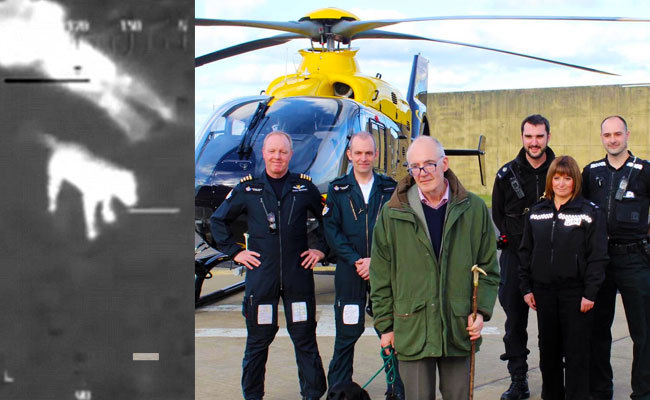
Let me close with some more photos of dogs that have been helped by John, Dionete and the rest of the great band of the Vista Verde Fund.
oooo
oooo
oooo
Finally!
Please offer whatever you can to help. Even the smallest amount makes a real difference.
As you all know, my world is dominated by love. My love for my Jeannie and all the wonderful creatures that inhabit this home and these few acres here in Southern Oregon. Time and time again I share with you stories and articles that I come across that underpin that loving umbrella. Time and time again I am deeply moved by your interest in my scribbles. As I said, my world is dominated by love, and your friendship across this blogging world added to Jean’s love for and attachment to me, has created a little paradise for me.
But! (And you may have sensed there was a ‘But’ coming up.)
But that doesn’t mean that I am immune to being deeply affected by other, more worldly issues, that are as far away from love as one could imagine; more accurately, as far away from love for this wonderful planet as one could imagine.
So for today and the next two days I am going to share with you the pain and angst that I do feel, and feel all too easily, at what we, as in the collective global ‘we’, are up to. Madness doesn’t even seem to touch it!
Today, I am going to republish a recent TomDispatch essay, with Tom’s very kind permission. Tomorrow, I am going to contrast what fellow Brit James Lovelock has been predicting for years with where we really are heading in terms of the future of Planet Earth. Then on Friday, I will finish up with an essay by Professor Ronald Pies regarding the “twisted relationships to truth”.
Donald Trump, now preparing to lead the country into the latest version of our endless wars, recently offered this look back at American military prowess: “We have to start winning wars again. I have to say, when I was young, in high school and college, everybody used to say we never lost a war. We never lost a war, remember?… And now we never win a war. We never win. And don’t fight to win.”
It was a curious bit of “history.” Logically, his memories should have been of victory-less wars, given the ones of his growing up years: Korea and Vietnam (which he evidently avoided thanks to a trumped-up medical condition and whose massive oppositional movement he seems to have ignored).
Born in July 1944, [Ed: I’m a November 1944 baby.] I’m two years older than President Trump and so understand just where he’s coming from: the movies. In those years of his youth and mine, sitting in the darkness catching Hollywood’s vivid version of reality, we both watched Americans win wars ad infinitum. In fact, this is hardly the first time I’ve thought about the on-screen wars of my childhood, actual war, and an American president. Here’s what I wrote back in January 2006, while considering the experiences of George W. Bush and Dick Cheney:
“In the 1940s and 1950s, when the generation of men now ruling over us were growing up, boys could disappear into a form of war play — barely noticed by adults and hardly recorded anywhere — that was already perhaps a couple of hundred years old. In this kind of play, there was no need to enact the complicated present by recreating a junior version of an anxiety-ridden Cold War garrison state… For children in those years, there was still a sacramental, triumphalist version of American history, a spectacle of slaughter in which they invariably fell before our guns. This spectacle could be experienced in any movie theater, and then played out in backyards and on floors with toy six guns (or sticks) or little toy bluecoats, Indians, and cowboys, or green, inch-high plastic sets of World War II soldiers. As play, for those who grew up in that time, it was sunshine itself, pure pleasure. The Western (as well as its modern successor, the war film) was on screen everywhere then.
“When those children grew up (barely), some of them went off to Vietnam, dreaming of John Wayne-like feats as they entered what they came to call ‘Indian country,’ while others sallied off to demonstrate against the war dressed either in the cast-off World War II garb of their fathers or in the movie-inspired get-ups of the former enemy of another age — headbands and moccasins, painted faces, love beads… as well as peace (now drug) pipes. Sometimes, they even formed themselves into ‘tribes.’
“As it turns out, though, there was a third category of young men in those years: those who essentially steered clear of the Vietnam experience, who, as our vice president put it inelegantly but accurately, had ‘other priorities in the sixties.’ Critics have sometimes spoken of such Bush administration figures as ‘chickenhawks’ for their lack of war experience. But this is actually inaccurate. They were warriors of a sort — screen warriors. They had an abundance of combat experience because, unlike their peers, they never left the confines of those movie theaters, where American war was always glorious, our military men always out on some frontier, and the Indians, or their modern equivalents, always falling by their scores before our might as the cavalry bugle sounded or the Marine Hymn welled up. By avoiding becoming either the warriors or the anti-warriors of the Vietnam era, they managed to remain quite deeply embedded in centuries of triumphalist frontier mythology. They were, in a sense, the Peter Pans of American war play.
“…From that same childhood undoubtedly came President Bush’s repeated urge to dress up in an assortment of ‘commander-in-chief’ military outfits, much in the style of a G.I. Joe ‘action figure.’ (Think: doll). It’s visibly clear that our president has long found delight — actual pleasure — in his war-making role, as he did in his Top Gun, ‘mission accomplished’ landing on that aircraft carrier back in 2003…”
Only the other day, Donald Trump made his own landing on an aircraft carrier and strode its deck togged out in a USS Gerald R. Ford green bomber jacket and baseball cap, showing similar pleasure in the experience. It should have had an eerie resonance for us all as we pondered just where our next movie commander-in-chief might lead us. Who could have imagined that, so many decades after the onscreen childhood that The Donald and I shared, we’d all still be at the movies and, as TomDispatch regular and American Nuremberg author Rebecca Gordon points out today, in an American world of forever war as well? Tom American Carnage Fighting the Forever War
By Rebecca Gordon
In his inaugural address, President Trump described a dark and dismal United States, a country overrun by criminal gangs and drugs, a nation stained with the blood seeping from bullet-ridden corpses left at scenes of “American carnage.” It was more than a little jarring.
Certainly, drug gangs and universally accessible semi-automatic weapons do not contribute to a better life for most people in this country. When I hear the words “American carnage,” however, the first thing I think of is not an endless string of murders taking place in those mysterious “inner cities” that exist only in the fevered mind of Donald Trump. The phrase instead evokes the non-imaginary deaths of hundreds of thousands of people in real cities and rural areas outside the United States. It evokes the conversion of millions of ordinary people into homeless refugees. It reminds me of the places where American wars seem never to end, where new conflicts seem to take up just as the old ones are in danger of petering out. These sites of carnage are the cities and towns, mountains and deserts of Iraq, Afghanistan, Yemen, Libya, and other places that we don’t even find out about unless we go looking. They are the places where the United States fights its endless wars.
During the 2016 election campaign, Donald Trump often sounded like a pre-World War II-style America First isolationist, someone who thought the United States should avoid foreign military entanglements. Today, he seems more like a man with a uniform fetish. He’s referred to his latest efforts to round up undocumented immigrants in this country as “a military operation.” He’s similarly stocked his cabinet with one general still on active duty, various retired generals, and other military veterans. His pick for secretary of the interior, Montana Congressman Ryan Zinke, served 23 years as a Navy SEAL.
Clearly, these days Trump enjoys the company of military men. He’s more ambivalent about what the military actually does. On the campaign trail, he railed against the folly that was — and is — the (second) Iraq War, maintaining with questionable accuracy that he was “totally against” it from the beginning. It’s not clear, however, just where Trump thinks the folly lies — in invading Iraq in the first place or in failing to “keep” Iraq’s oil afterward. It was a criticism he reprised when he introduced Mike Pompeo as his choice to run the CIA. “Mike,” he explained, “if we kept the oil, you probably wouldn’t have ISIS because that’s where they made their money in the first place.” Not to worry, however, since as he also suggested to Pompeo, “Maybe we’ll have another chance.” Maybe the wrong people had just fought the wrong Iraq war, and Donald Trump’s version will be bigger, better, and even more full of win!
Perhaps Trump’s objection is simply to wars we don’t win. As February ended, he invited the National Governors Association to share his nostalgia for the good old days when “everybody used to say ‘we haven’t lost a war’ — we never lost a war — you remember.” Now, according to the president, “We never win a war. We never win. And we don’t fight to win. We don’t fight to win. So we either got to win, or don’t fight it at all.”
The question is, which would Trump prefer: Winning or not fighting at all? There’s probably more than a hint of an answer in his oft-repeated campaign promise that we’re “going to win so much” we’ll “get tired of winning.” If his fetish for winning — whether it’s trade wars or shooting wars — makes you feel a little too exposed to his sexual imagination, you’re probably right. In one of his riffs on the subject, he told his audience that they would soon be pleading they had “a headache” to get him to stop winning so much — as if they were 1950s housewives trying to avoid their bedroom duty. But daddy Trump knows best:
“And I’m going to say, ‘No, we have to make America great again.’ You’re gonna say, ‘Please.’ I said, ‘Nope, nope. We’re gonna keep winning.’”
There’s more than a hint of where we’re headed in Trump’s recent announcement that he’ll be asking Congress for a nearly 10% increase in military spending, an additional annual $54 billion for the Pentagon as part of what he calls his “public safety and national security budget.” You don’t spend that kind of money on toys unless you intend to play with them.
Trump explained his reasoning, in his trademark idiolect, his unique mangling of syntax and diction:
“This is a landmark event, a message to the world, in these dangerous times of American strength, security, and resolve. We must ensure that our courageous servicemen and women have the tools they need to deter war and when called upon to fight in our name only do one thing, win. We have to win.”
So it does look like the new president intends to keep on making war into the eternal future. But it’s worth remembering that our forever wars didn’t begin with Donald J. Trump, not by a long shot.
The Forever Wars
Joe Haldeman’s 1974 novel, The Forever War, which won the three major science fiction prizes, a Hugo, a Nebula, and a Locus, was about a soldier involved in a war between human beings and the Taurans, an alien race. Because of the stretching of time when traveling at near light-speed (as Einstein predicted), while soldiers like Haldeman’s hero passed a few years at a time at a front many light-years from home, the Earth they’d left behind experienced the conflict as lasting centuries. Published just after the end of the Vietnam War — fought for what seemed to many Americans like centuries in a land light-years away — The Forever War was clearly a reflection of Haldeman’s own experience in Vietnam and his return to an unrecognizable United States, all transposed to space.
In 1965, Haldeman had been drafted into that brutal conflict, probably one of those that Donald Trump thinks we didn’t “fight to win.” It certainly seemed like a forever war while it lasted, especially if you included the French colonial war that preceded it. But it did finally end, decisively, with an American loss (although, in a sense, it’s still being fought out by the thousands of Vietnam veterans who live on the streets of our country).
After the attacks of 9/11 and George W. Bush’s declaration of a Global War on Terror, some people found the title of Haldeman’s novel a useful shorthand for what seemed to be an era of permanent war. It gave us a way of describing then-Secretary of Defense Donald Rumsfeld’s vision of a new kind of war against an enemy located, as he told NBC’s Meet the Press on September 30, 2001, “not just in Afghanistan. It is in 50 or 60 countries and it simply has to be liquidated. It has to end. It has to go out of business.”
More than 15 years later, after a decade and a half of forever war in the Greater Middle East and parts of Africa, al-Qaeda and the Taliban are still in business, along with a set of new enemies, including Boko Haram in Nigeria, Chad, Niger, and Cameroon; al-Shabaab in Somalia; and ISIS, which, if we are to believe the president and his cronies, is pretty much everywhere, including Mexico. In a war against a tactic (terrorism) or an emotion (terror), it’s hardly surprising that our enemies have just kept proliferating, and with them, the wars. It’s as if Washington were constantly bringing jets, drones, artillery, and firepower of every sort to bear on a new set of Taurans in another galaxy.
Decades before Haldeman’s Forever War, George Orwell gave us an unforgettable portrait of a society controlled by stoking permanent hatred for a rotating cast of enemies. In 1984, the countries of the world have coalesced into three super-nations — Oceania, Eurasia, and Eastasia. Winston Smith, the novel’s protagonist, recalls that, since his childhood, “war had been literally continuous, though strictly speaking it had not always been the same war.” Smith joins thousands of other citizens of Oceania in their celebration of Hate Week and observes the slick substitution of one enemy for another on the sixth day of that week:
“…when the great orgasm was quivering to its climax and the general hatred of Eurasia had boiled up into such delirium that if the crowd could have got their hands on the two thousand Eurasian war-criminals who were to be publicly hanged on the last day of the proceedings, they would unquestionably have torn them to pieces — at just this moment it had been announced that Oceania was not after all at war with Eurasia. Oceania was at war with Eastasia. Eurasia was an ally.”
Except that there is no actual announcement. Rather, the Party spokesman makes the substitution in mid-oration:
“The speech had been proceeding for perhaps twenty minutes when a messenger hurried onto the platform and a scrap of paper was slipped into the speaker’s hand. He unrolled and read it without pausing in his speech. Nothing altered in his voice or manner, or in the content of what he was saying, but suddenly the names were different. Without words said, a wave of understanding rippled through the crowd. Oceania was at war with Eastasia!
And it had always been thus. “Oceania was at war with Eastasia. Oceania had always been at war with Eastasia.”
1984 is, of course, a novel. In our perfectly real country, human memories work better than they do in Orwell’s Oceania. Or do they? The United States is at war with Iraq. The United States has always been at war with Iraq. Except, of course, when the United States sided with Iraq in its vicious, generation-destroying conflict with Iran in the 1980s. Who today remembers Ronald Reagan’s “tilt toward Iraq” and against Iran? They’re so confusing, those two four-letter countries that start with “I.” Who can keep them straight, even now that we’ve tilted back toward what’s left of Iraq — Trump has even removed it from his latest version of his Muslim ban list — and threateningly against Iran?
Many Americans do seem to adapt to a revolving enemies list as easily as the citizens of Oceania. Every few years, I ask my college students where the terrorists who flew the planes on 9/11 came from. At the height of the (second and still unfinished) Iraq War, when many of them had brothers, sisters, lovers, even fathers fighting there, my students were certain the attackers had all been Iraqis. A few years later, when the “real men” were trying to gin up a new opportunity to “go to Tehran,” my students were just as sure the terrorists had been from Iran. I haven’t asked in a couple of years now. I wonder whether today I’d hear that they were from Syria, or maybe that new country, the Islamic State?
I don’t blame my students for not knowing that the 9/11 attackers included 15 Saudis, two men from the United Arab Emirates (UAE), one Egyptian, and one Lebanese. It’s not a fact that’s much trumpeted anymore. You certainly wouldn’t guess it from where our military aid and American-made weaponry goes. After Afghanistan ($3.67 billion) and Israel ($3.1 billion), Egypt is the next largest recipient of that aid at $1.31 billion in 2015.
Of course, military aid to other countries is a windfall for U.S. arms manufacturers. Like food money and other forms of foreign aid from Washington, the countries receiving it are often obligated to spend it on American products. In other words, much military “aid” is actually a back-door subsidy to companies like Boeing and Lockheed Martin. Being wealthy oil states, the Saudis and the UAE, of course, don’t need subsidies. They buy their U.S. arms with their own money — $3.3 billion and $1.3 billion worth of purchases respectively in 2015. And they’re putting that weaponry to use, with U.S. connivance and — yes, it should make your head spin in an Orwellian fashion — occasional support from al-Qaeda in the Arabian Peninsula, by taking sides in a civil war in Yemen. U.S.-made fighter planes and cluster bombs have put more than seven million Yemenis in imminent danger of starvation.
War Without End, When Did You Begin?
When did our forever war begin? When did we start to think of the president as commander-in-chief first, and executor of the laws passed by Congress only a distant second?
Was it after 9/11? Was it during that first Iraq war that spanned a few months of 1990 and 1991? Or was it even earlier, during the glorious invasion of the tiny Caribbean island of Grenada in 1983, codenamed Operation Urgent Fury? That was the first time the military intentionally — and successfully — kept the press sequestered from the action for the first 48 hours of that short-lived war. They did the same thing in 1989, with the under-reported invasion of Panama, when somewhere between 500 and 3,500 Panamanians died so that the United States could kidnap and try an erstwhile ally and CIA asset, the unsavory dictator of that country, Manuel Noriega.
Or was it even earlier? The Cold War was certainly a kind of forever war, one that began before World War II ended, as the United States used its atomic attacks on Hiroshima and Nagasaki to, as we now say, “send a message” to the Soviet Union. And it didn’t end until that empire imploded in 1991.
Maybe it began when Congress first abdicated its constitutional right and authority to declare war and allowed the executive branch to usurp that power. The Korean War (1950-1953) was never declared. Nor were the Vietnam War, the Grenada invasion, the Panama invasion, the Afghan War, the first and second Iraq wars, the Libyan war, or any of the wars we’re presently involved in. Instead of outright declarations, we’ve had weasely, after-the-fact congressional approvals, or Authorizations for the Use of Military Force, that fall short of actual declarations of war.
The framers of the Constitution understood how important it was to place the awesome responsibility for declaring war in the hands of the legislative branch — of, that is, a deliberative body elected by the people — leaving the decision on war neither to the president nor the military. Indeed, one of the charges listed against King George III in the Declaration of Independence was: “He has affected to render the Military independent of and superior to the Civil power.”
Thomas Jefferson, John Adams, and the others who met in the stifling heat of that 1776 Philadelphia summer, close enough to battle to hear the boom of British cannons, decided they could no longer abide a king who allowed the military to dominate a duly constituted civil government. For all their many faults, they were brave men who, even with war upon them, recognized the danger of a government controlled by those whose sole business is war.
Since 9/11, this country has experienced at least 15 years of permanent war in distant lands. Washington is now a war capital. The president is, first and foremost, the commander-in-chief. The power of the expanding military (as well as paramilitary intelligence services and drone assassination forces, not to mention for-profit military contractors of all sorts) is emphatically in presidential hands. Those hands, much discussed in the 2016 election campaign, are now Donald Trump’s and, as he indicated in his recent address to Congress, he seems hell-bent on restoring the military to the superiority it enjoyed under King George. That is a danger of the first order.
For those looking for answers to the crisis in liberal democracy, this may well be it.
In yesterday’s post Tensions abound in many societies I offered a viewpoint that the ‘left’ arguing with the ‘right’ in politics was utterly inappropriate. Simply for we, as in the people who live on this planet, have to start working together if we wish to have a future for mankind on Planet Earth.
Yesterday’s post also referred to Inductive and Deductive Reasoning with me proposing that the future had to be built on a universally acknowledged relationship between ’cause’ and ‘effect’. A relationship that was built on a clear axiom, or theorem; as we see all around us in both the physical and natural worlds.
This idea does take a little time to filter through and I would be the first to say that I had to spend quite a while reflecting on the idea to fully understand the difference, the power, of deductive reasoning. Plus how something that was a behaviourial ‘law’ could be seen as much as an axiom as is, for example, the calculation of the speed of light, or the relationship of gravity to mass.
His thesis is that there is a direct relationship between “… about how well dispersed economic decision-making power is and how much control and financial security people have over their lives.“
That relationship is the core message of his essay.
In other words, as I see it, there is an axiom, a theorem, that governs the relationship between the leadership process of a country and the degree to which that country’s society could be classed as a democratic society.
If 2016 brought Brexit, Donald Trump and a backlash against cosmopolitan visions of globalisation and society, the great fear for 2017 is further shocks from right-wing populists like Geert Wilders in Holland and Marine Le Pen in France. A new mood of intolerance, xenophobia and protectionist economics seems to be in the air.
In a world of zero-hour contracts, Uber, Deliveroo and the gig economy, access to decent work and a sustainable family income remains the main fault line between the winners and losers from globalisation. Drill into the voter data behind Brexit and Trump and they have much to do with economically marginalised voters in old industrial areas, from South Wales to Nord-Pas-de-Calais, from Tyneside to Ohio and Michigan.
These voters’ economic concerns about industrial closures, immigrants and businesses decamping to low-wage countries seemed ignored by a liberal elite espousing free trade, flexible labour and deregulation. They turned instead to populist “outsiders” with simplistic yet ultimately flawed political and economic narratives.
Much has been said about the crisis of liberal political democracy, but these trends look inextricably linked with what is sometimes referred to as economic democracy. This is about how well dispersed economic decision-making power is and how much control and financial security people have over their lives. I’ve been involved in a project to look at how this compares between different countries. The results say much about the point we have reached, and where we might be heading in future.
The index
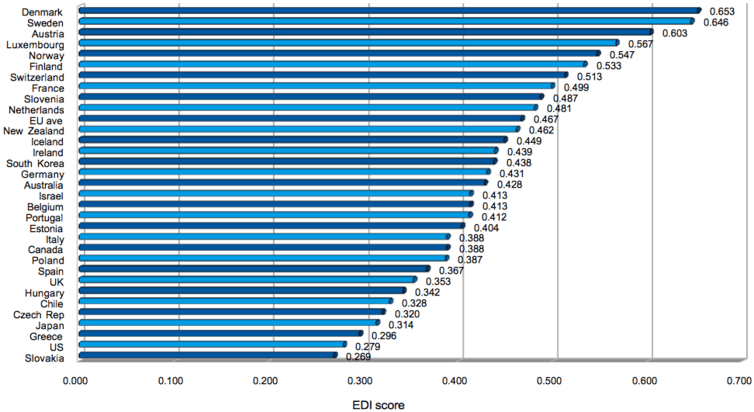
Our economic democracy index looked at 32 countries in the OECD (omitting Turkey and Mexico, which had too much missing data). While economic democracy tends to focus on levels of trade union influence and the extent of cooperative ownership in a country, we wanted to take in other relevant factors.
We added three additional indicators: “workplace and employment rights”; “distribution of economic decision-making powers”, including everything from the strength of the financial sector to the extent to which tax powers are centralised; and “transparency and democratic engagement in macroeconomic decision-making”, which takes in corruption, accountability, central bank transparency and different social partners’ involvement in shaping policy.
What is striking is the basic difference between a more “social” model of northern European capitalism and the more market-driven Anglo-American model. Hence the Scandinavian countries score among the best, with their higher levels of social protection, employment rights and democratic participation in economic decision-making. The reverse is true of the more deregulated, concentrated and less democratic economies of the English-speaking world. The US ranks particularly low, with only Slovakia below it. The UK too is only 25th out of 32.
Economic Democracy Index, figures from 2013. Andrew Cumbers
Interestingly, France ranks relatively highly. This reflects its strong levels of job protection and employee involvement in corporate decision-making – the fact that the far right has been strong in France for a number of years indicates its popularity stems from race at least as much as economics.
Yet leading mainstream presidential candidates François Fillon and Emmanuel Macron are committed to reducing France’s protections. These are often blamed – without much real evidence – for the country’s sluggish job creation record. There is a clear danger both here and in the Netherlands that a continuing commitment to such neoliberal labour market policies might push working class voters further towards Le Pen and Wilders.
One other notable disparity in the index is between the scores of Austria and Germany, despite their relatively similar economic governance. Germany’s lower ranking reflects the growth of labour market insecurity and lower levels of job protection, particularly for part-time workers as part of the Hartz IV labour market reforms in the 1990s that followed reunification.
The index also highlights the comparatively poor levels of economic democracy in the “transition” economies of eastern Europe. The one very interesting exception is Slovenia, which merits further study. It might reflect both its relatively stable transition from communism and the civil war in the former Yugoslavia, and the continuing presence of active civil society elements in the trade union and cooperative movements. Southern European economies also tend to rank below northern European countries, as does Japan.
Poverty and inequality
The index provides strong evidence that xenophobic politics may be linked to changing levels of economic participation and empowerment – notwithstanding the French data. We found that the greater the poverty and inequality in a country, the lower the rates of economic democracy.
These findings suggest, for example, that the Anglo-American-led attack on trade unions and flexible labour policies may actually drive up poverty and inequality by cutting welfare benefits and driving up individual employment insecurity. While the OECD itself advocated these policies until recently, countries with high levels of economic democracy such as Norway, Denmark and Iceland have much lower levels of poverty than countries such as the US and UK.
Far right activists in Budapest, Hungary, February 2016. EPA
Far-right populism is on the march everywhere, including the Nordic countries. But Brexit, Trump and the more serious shift to the far right in Eastern Europe have been accompanied by diminishing economic security and rights at work, disenfranchised trade unions and cooperatives, and economic decision-making concentrated among financial, political and corporate elites.
We will monitor these scores in future to see what happens over time. It will be interesting to see how the correlations between economic democracy, poverty and voting patterns develop in the coming years. For those looking for answers to the crisis in liberal democracy, this may well be it.
ooOOoo
I shall be writing to Professor Cumbers asking if my analysis of that relationship is supported by his research.
For if it is then we do have a very clear axiom that few would disagree with. That is the political consensus this world needs now.
This is no sinecure – the future of mankind is at risk.
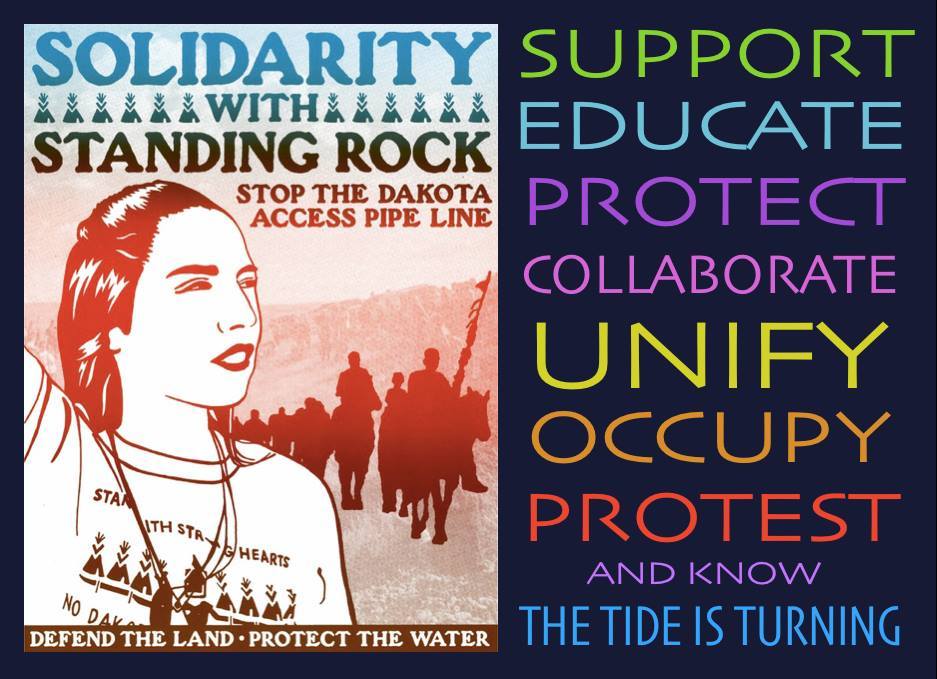
Very often I find a topic for Saturday that is easy on the mind. But I make no apologies for republishing, with Jennifer’s permission, a post that she published over on Transition Times yesterday. When you read it you will see clearly that promoting this today is right. For many readers may well be able to join thousands of others in showing their support for the Standing Rock Sioux tribe.
Thousands of Native Americans, members of a whole host of tribes, have gathered at Standing Rock, North Dakota, to protest the North Dakota Access Pipeline (#NoDAPL), which was sited by the Army Corps of Engineers to run dangerously close to the Missouri River and the Standing Rock Reservation.
If there is anyone to look back at this turbulent period in human history on Earth—now coming to be known as the Anthropocene—they will surely wonder at the suicidal tendency of human civilization in the 20th and early 21st centuries.
Why, they will ask, would such an intelligent species willingly—even enthusiastically—engage in the poisoning of its waterways and underground water resources; the destruction of its forests; the chemical contamination of its soils and oceans; the overheating of its precious atmosphere by relentless burning of fossil fuels? Why would humans put so much of their intelligence and technological prowess into developing ever more lethal weapons of mass destruction, used to bludgeon each other? Why would they preside blithely over the extinction of millions of other species, the vicious ripping of the great ecological web of life on Earth?
Why indeed?
I know it’s hard for any of us to escape the clutter of our everyday lives, with the constant pressures and worries that beset us on the personal level. But this is precisely what is being asked of us now.
The courageous defenders out at Standing Rock dropped their ordinary lives to be part of the historic encampment protesting the stranglehold of the oil companies on our waterways and our lands. They are fighting in the courts, through the media, and most importantly with their physical presence, standing up to the bulldozers, the attack dogs and the pepper spray.
Image source: Democracy Now!
This is what McKibben’s World War Three looks like—it’s already begun. It will be fought locally, as communities and individuals wake up to the implications of the destruction and decide that hell no, they won’t take it any more.
In my own corner of the world, we are under assault from General Electric, wanting to create toxic waste dumps right in the middle of our small rural towns. We have a gas pipeline being constructed, despite vehement protests, through a pristine old-growth state forest. We have oil tanker trains running constantly right through our communities. Despite a thriving organic and biodynamic farm renaissance, we still have far too many pesticides, herbicides and fungicides being used locally, and too many trees being cut down.
I have been thinking and writing for some time now about how important it is to align the personal, political and planetary in our own lives and in the way we relate to the world around us. On all three of these levels, 21st century American life is way out of balance.
It is time to focus, each one of us, on using our brief lifetimes to create balance and harmony on Earth. Sometimes the way to harmony leads through protest and discord, as is happening now in Standing Rock. Sometimes it can be as simple as choosing to support local, low-impact agriculture rather than industrial agriculture. Leaning on our political representatives to move faster on policy that will shift our society to renewable energy is key.
There are so many ways to get involved in this War for the Planet, many of them quite peaceful. The important thing is to get off the sidelines. Get involved. Feel the potential of this moment—it’s literally a make or break period for the future of humanity on Earth, and many other living beings too.
The brave defenders at Standing Rock are reminding us that we are all “natives” of this Earth, and we all have a stake in protecting her. Which side are you on?
ooOOoo
Yes, we are all natives of this world and that includes our dear animals and our wonderful animal companions.
Make a promise to yourself to make a difference; even one small difference. With that in mind, if you want to find an event close to you then the Sierra Club have a page where you can look up which event you would like to attend.
In the run-up to the EU referendum by the UK this Brit was tempted several times to offer an opinion on what I thought was the best decision. But I resisted. (I was qualified to vote as an overseas voter and had voted for Remain.)
My resistance was because it seemed inappropriate to pass any form of opinion before the die had been cast, so to speak. I hadn’t been living in the country for over eight years and, inevitably, was out of touch with feelings.
The Conversation blogsite yesterday had a series of articles on the aftermath of the Brexit decision but the one that seemed most useful to share with you all was an article by Gavin Barrett, a Professor of European Constitutional and Economic Law at University College in Dublin. For many readers, including me, both within and without the UK this seemed a valuable primer.
ooOOoo
Britain votes to leave the EU, Cameron quits – here’s what happens next
June 23, 2016 11.41pm EDT
Leave ahead. Anthony Devlin / PA Wire
Author
Gavin Barrett Associate Professor, Jean Monnet Professor of European Constitutional and Economic Law, University College Dublin
Britain has voted to leave the European Union. This is having an immediate effect on markets. It is also having immediate political ramifications. David Cameron has announced he will not continue in his role as British prime minister.
Legally speaking, though, the process of actually leaving will take some time. Britain will now enter a kind of phoney Brexit period. It is still a member of the EU. The referendum vote is not as such legally binding. It is advisory only – but if it is out it creates a political imperative for the UK government to arrange its exit of the EU.
The law governing Brexit is found in Article 50 of the EU Treaty. This is a provision adopted by EU member states in 2009 to govern Brexit-like scenarios. It puts a two-year time limit on withdrawal negotiations. When the two years is up (or on the date any agreement reached before this enters into force) the UK is officially out of the EU.
Article 50 requires the UK to trigger the exit process by notifying its intention to withdraw. Not one, but rather a cascade of agreements, will follow this Brexit notification:
The Article 50 exit agreement
A separate treaty governing the UK’s future relationship with the EU – which could take many years to negotiate (and which, if it goes beyond trade, will require ratification by every single EU member state)
Trade agreements between the UK and up to 134 other WTO members
A tidying-up treaty between all the remaining EU states that removes all references to the UK from the EU treaties.
The initial main focus, however, will clearly be the Article 50 Brexit agreement.
How will it work?
The UK would be the first state to leave the EU but it is most likely that the European Commission, the executive arm of the EU, will do the negotiating on behalf of the remaining 27 member states. They will no doubt cast a watchful eye on proceedings, before voting on the deal.
That vote will be by a weighted majority, with bigger states like Germany, France and Italy having a more powerful voice than smaller members (although in practice, strong efforts are made to ensure every member state can live with a deal before a matter is approved). Above and beyond this, should the Article 50 Brexit agreement venture beyond trade matters, it will then need to be ratified by every EU member state.
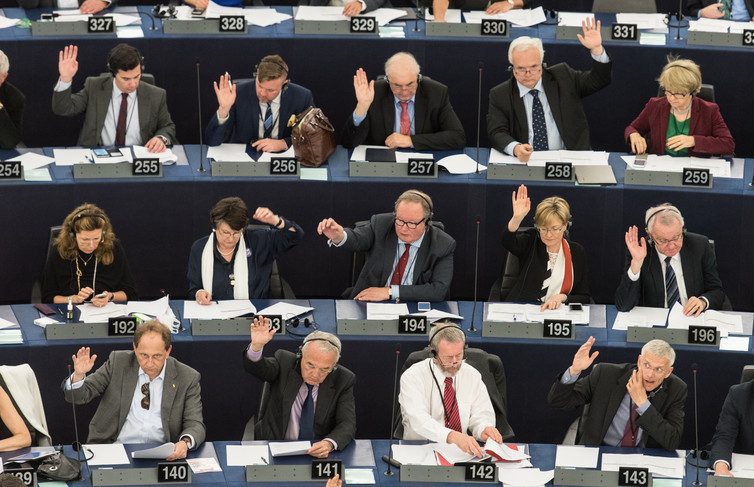
The European Parliament has a veto option, making it an important player too. Article 50 negotiations will thus have a lot of players with powerful voices – and many not necessarily be inclined to give the UK a very favourable deal lest “exiters” in their own countries get any ideas.
Powerful voices at play. EPA/Patrick Seeger
Could the UK delay giving Article 50 notification?
Legally, yes, the UK could delay giving Article 50 notification or avoid it altogether. But other EU states will probably refuse to negotiate until they get the notification.
Brexit campaigners have suggested adopting a swath of domestic laws so that the UK can short-circuit Article 50. But such measures would violate EU law and probably won’t see the light of day. Enacting them would pointlessly violate EU and international law, alienate the UK’s future negotiating partners and jeopardise the UK’s future relationship with the EU.
Can the UK withdraw notification?
This might be attempted if, for instance, the UK doesn’t like the way negotiations are going. It is unclear if it is legally permissible. The EU Treaty certainly doesn’t prohibit it in so many words. Political misgivings would abound – but might possibly be met by having a second referendum to reject any Article 50 deal ultimately reached.
Ireland, after all, had referendum second thoughts on the Lisbon and Nice Treaties, Denmark had them on the Maastricht Treaty and France and Holland agreed to a Lisbon Treaty deal very similar to the 1994 Constitutional Treaty earlier rejected by both states in referendum.
What will the UK get from negotiations?
That depends on how (and who) conducts the negotiations for the UK, and what the other states are prepared to offer it. Even assuming they prove pleasantly amenable, the UK will be left with awkward choices.
Does it want continued access to the single market with its 500m consumers? If so, it is may have
On the outside. EPA/Laurent Dubrule
to make Norway-like concessions – including continued EU migration and cash payments for the privilege. Does it want to block out EU migrants? Then it may well have to say goodbye to single European market access.
No matter what the UK chooses, it will unavoidably find itself outside the corridors of power in the EU for the first time in over forty years.
Is there any way back in?
Article 50 does envisage the possibility of UK re-entry to the EU one day – but subject to a unanimous vote of member states. This pretty much guarantees it will only ever happen by the UK accepting the euro currency, participation in the Schengen area of free movement and no rebate.
Welcome to the brave new world of Brexitland.
ooOOoo
All I can say is that when I wrote up my post on comfort dogs I had no idea that matters Europe would be creating an enormous need for them. Better put in the words of Per and Val:
One dissatisfied member has soundly rejected club Europe’s management. It needs to radically improve before other leave. The managers must sure be in need of comfort dogs today.
Among the many impressive qualities of the dog is one that we humans must envy so much at times.
I’m not speaking of a dog’s ability to seek out food or, at the other end of things, the dog’s way of keeping it’s backside clean! 😉 No, I’m referring to the way a dog lives in the present. Presumably unworried as to what the future might mean.
We humans, however, as hard as we try to be rooted in the ‘here and now’ also depend on assessing the future and determining the best way to respond to that uncertainty. I’m sure that assessing and managing risk is one of the ways that have made us such a successful species.
In terms of voicing these uncertain times I really was drawn to a comment from ‘John D’ over on Richard Murphy’s Tax Research UK blogsite. I’m going to republish that comment in full before moving on to the central theme of today’s post: Into the Future.
John D says: June 10 2016 at 4:58 pm
Paul, I share your apprehension. I believe ‘the world’ has entered a cycle of almost unprecedented uncertainty. So many issues. So few solutions being articulated in the mainstream. However, shift happens and Richard is right to say that there is always opportunity for change. Gramsci, an underrated theorist, summed it up in his ‘Prison Notebooks'(1929-35) writing: “The crisis consists precisely in the fact that the old is dying and the new cannot be born; in this interregnum a great variety of morbid symptoms appear.”
The stranglehold Neo-liberalism has exercised on orthodox economics for the past 40 years is difficult to understand but, given that its major protoganists have held all the aces, it’s not really surprising. Under Reagan there was a major ‘re-education’ programme in the Universities where any heterodox economic teaching was eliminated from the ‘Economics 101’ curriculum. Acording to Richard Wolff an entire generation of students graduated from the major universities without ever having studied Marx in any context.
The good news is nothing lasts forever. The seeds of change have already been sown and will eventually blossom, possibly in unexpected locations. Sadly, as Ivan says, there has been irretrievable damage to lives and livelihoods in the US, UK and many EU countries. Michael Hudson recently spelled out its negative effects – http://www.counterpunch.org/2016/06/07/the-wages-of-neoliberalism-poverty-exile-and-early-death.
Like many, I don’t think radical change will come about until enough people are hurting enough. Maybe a real property crash will be a wake-up call. However, in or out of the EU isn’t going to trigger a change in the economic agenda any time soon. Personally I believe that a vote for Brexit (ominously a possibilty) will set-back any fundamental reforms, especially in the UK. But I don’t want to open up that can of worms again here!
The perennial question is ‘what to do?’. And the answer is always the same: ‘do something, anything, to nurture the seeds into saplings’. Every little helps! It’s going to be a rough ride, not without some collateral damage in terms of still more unnecessary deaths. Usually I’m not as optimistic as Richard but because it’s Friday afternoon and the sun is shining I feel the beginning of the end is within our grasp. I so hope so. Back to Gramsci – the immediate worry is what will fill the intervening vacuum. Happy weekend!
The seeds of change have already been sown and will eventually blossom, possibly in unexpected locations.
The perfect introduction to an email that Dan Gomez sent me on Thursday.
ooOOoo
Below is a summary by Udo Gollub of the findings at a recent futurist conference in Germany. This’s – they predict – is how the world will operate in 10 to 20 years time.
For those of us who are about to amble into the sunset on our Zimmer frames, this is simply interesting. We inhabited a world where people used cosy concepts like pension, nest egg, job security, promotion in the work place and other reassuring socio economic terms.
For those who are in mid career or are only entering the world of (non) work now, this makes for scary/exciting reading – depending on how ready you are to change in mid air — if it is at all possible.
And for the generation still in their nappies … well, it is a matter of how parents prepare them for an unimaginable world when they enter the world of ‘work’ in 20 years time.
GERT CLAASSEN Hermanus Into the future
By Udo Gollub at Messe Berlin, Germany
I just went to the Singularity University summit. Here are the key points I gathered.
Rise and Fall. In 1998, Kodak had 170,000 employees and sold 85% of all photo paper worldwide. Within just a few years, their business model disappeared and they were bankrupt. What happened to Kodak will happen in a lot of industries in the next 10 years – and most people don’t see it coming. Did you think in 1998 that 3 years later you would never take pictures on paper film again?
Yet digital cameras were invented in 1975. The first ones only had 10,000 pixels, but followed Moore’s law. So as with all exponential technologies, it was a disappointment for a long time, before it became superior and mainstream in only a few short years. This will now happen with Artificial Intelligence, health, self-driving and electric cars, education, 3D printing, agriculture and jobs. Welcome to the 4th Industrial Revolution. Welcome to the Exponential Age. Software and operating platforms will disrupt most traditional industries in the next 5-10 years.
Uber is just a software tool. They don’t own any cars, but they are now the biggest taxi company in the world. Airbnb is the biggest hotel company in the world, although they don’t own any properties.
Artificial Intelligence: Computers become exponentially better in understanding the world. This year, a computer beat the best Go player in the world, 10 years earlier than expected. In the US, young lawyers already don’t get jobs. Because of IBM Watson, you can get legal advice, (so far for more or less basic stuff), within seconds. With 90% accuracy, compared with 70% accuracy when done by humans. So if you are studying law, stop immediately. There will be 90% fewer generalist lawyers in the future; only specialists will be needed. ‘Watson’ already helps nurses diagnose cancer, four times more accurately than doctors. Facebook now has pattern recognition software that can recognize faces better than humans. By 2030, computers will have become ‘more intelligent’ than humans.
Cars: In 2018 the first self driving cars will be offered to the public. Around 2020, the complete industry will start to be disrupted. You don’t want to own a car anymore. You will call a car on your phone; it will show up at your location and drive you to your destination. You will not need to park it, you only pay for the driven distance and you can be productive whilst driving. Our kids will never get a driver’s licence and will never own a car. It will change the cities, because we will need 90-95% fewer cars for our future needs. We can transform former parking spaces into parks. At present,1.2 million people die each year in car accidents worldwide. We now have one accident every 100,000 kms. With autonomous driving, that will drop to one accident in 10 million km. That will save a million lives each year.
Electric cars will become mainstream around and after 2020. Cities will be cleaner and much less noisy because all cars will run on electricity, which will become much cheaper.
Most traditional car companies may become bankrupt by tacking the evolutionary approach and just building better cars; while tech companies (Tesla, Apple, Google) will take the revolutionary approach and build a computer on wheels. I spoke to a lot of engineers from Volkswagen and Audi. They are terrified of Tesla.
Insurance companies will have massive trouble, because without accidents, the insurance will become 100 times cheaper. Their car insurance business model will disappear.
Real estate values based on proximities to work-places, schools, etc. will change, because if you can work effectively from anywhere or be productive while you commute, people will move out of cities to live in a more rural surroundings.
Solar energy production has been on an exponential curve for 30 years, but only now is having a big impact. Last year, more solar energy was installed worldwide than fossil. The price for solar will drop so much that almost all coal mining companies will be out of business by 2025.
Water for all: With cheap electricity comes cheap and abundant water. Desalination now only needs 2kWh per cubic meter. We don’t have scarce water in most places; we only have scarce drinking water. Imagine what will be possible if everyone can have as much clean water as they want, for virtually no cost.
Health: The Tricorder X price will be announced this year – a medical device (called the “Tricorder” from Star Trek) that works with your phone, which takes your retina scan, your blood sample and your breath. It then analyses 54 biomarkers that will identify nearly any diseases. It will be cheap, so in a few years, everyone on this planet will have access to world class, low cost, medicine. 3D printing: The price of the cheapest 3D printer came down from 18,000$ to 400$ within 10 years. In the same time, it became 100 times faster. All major shoe companies started printing 3D shoes. Spare airplane parts are already 3D-printed in remote airports. The space station now has a printer that eliminates the need for the large amount of spare parts they used to need in the past.
At the end of this year, new smart phones will have 3D scanning possibilities. You can then 3D scan your feet and print your perfect shoe at home. In China, they have already 3D-printed a complete 6-storey office building. By 2027, 10% of everything that’s being produced will be 3D-printed.
Business opportunities: If you think of a niche you want to enter, ask yourself: “in the future, do you think we will have that?” And if the answer is yes, then work on how you can make that happen sooner. If it doesn’t work via your phone, forget the idea. And any idea that was designed for success in the 20th century is probably doomed to fail in the 21st century.
Work: 70-80% of jobs will disappear in the next 20 years. There will be a lot of new jobs, but it is not clear that there will be enough new jobs in such a short time.
Agriculture: There will be a 100$ agricultural robot in the future. Farmers in 3rd world countries can then become managers of their fields instead of working in them all day. Aeroponics will need much less water. The first veal produced in a petri dish is now available. It will be cheaper than cow-produced veal in 2018. Right now, 30% of all agricultural surfaces are used for rearing cattle. Imagine if we don’t need that space anymore. There are several start-ups which will bring insect protein to the market shortly. It contains more protein than meat. It will be labelled as “alternative protein source” (because most people still reject the idea of eating insects).
Apps: There is already an app called “moodies” which can tell the mood you are in. By 2020 there will be apps that can tell by your facial expressions if you are lying. Imagine a political debate where we know whether the participants are telling the truth and when not!
Currencies: Many currencies will be abandoned. Bitcoin will become mainstream this year and might even become the future default reserve currency.
Longevity: Right now, the average life span increases by 3 months per year. Four years ago, the life span was 79 years, now it is 80 years. The increase itself is increasing and by 2036, there will be more than a one-year increase per year. So we all might live for a long, long time, probably way beyond 100.
Education: The cheapest smartphones already sell at 10$ in Africa and Asia. By 2020, 70% of all humans will own a smartphone. That means everyone will have much the same access to world class education. Every child can use Khan Academy for everything he needs to learn at schools in First World countries. Further afield, the software has been launched in Indonesia and will be released in Arabic, Swahili and Chinese this summer. The English app will be offered free, so that children in Africa can become fluent in English within half-a-year.
The extreme importance of engaging in the fight for better societies.
I must warn you that today’s post is nothing about dogs. Unless, as with me, you see dogs as well as being the most gorgeous of creatures as being critically important metaphors for what societies need now! Or as I present elsewhere in this place:
Because of this closeness between dogs and man, we (as in man!) have the ability to observe the way they live. Now I’m sure that scientists would cringe with the idea that the way that a dog lives his life sets an example for us humans, well cringe in the scientific sense. But man seems to be at one of those defining stages in mankind’s evolution where the forces bearing down on the species homo sapiens have the potential to cause very great harm. If the example of dogs can provide a beacon of hope, an incentive to change at a deep cultural level, then the quicker we ‘get the message’, the better it will be.
value and cherish the ‘present’ in a way that humans can only dream of achieving
are, by eons of time, a more successful species than man.
So what’s this all leading up to!
Regular followers of this place (and you are always appreciated – never forget that) will know that previously I have mentioned Professor Richard Murphy. I have been following and reading his blog Tax Research UK for some time.
Many of the good Professor’s posts are specific to what is going on in the UK and, inevitably, Europe and the EU referendum.
But on the wider horizon these seem to be such terrible times. Here’s a comment I left to another of Richard’s posts that opened with the sentence, I am so bored by the EU referendum campaign.
My comment being:
It’s coming up to 5:30 am here in Southern Oregon and, as per usual, I have dipped into the latest postings from Tax Research. Part of me, a large part of me, is sickened by what seems to be going on in this world with the EU referendum and the US Presidential election being the two most glaringly terrible examples. But this old Brit (London-born in 1944) has this sense that the way that Richard and so many of his supporters can now ‘shout’ out the truth will, in the end, deliver a better future. Indeed, my own blog post today is called The Power of Open Opinions.
So keep on banging your truthful drum, Richard!
However, last Tuesday Richard published a post that seemed to speak to me, and presumably countless others, about the dilemma as to whether to be active in speaking up about what is right or wrong, or to just huddle up with one of your dogs on a nice (oversized) dog bed!
In my estimation that post from Richard should be widely circulated and it is republished in full now with Richard’s kind permission.
ooOOoo
To engage or not; that is the question
Posted on7:57 am May 31 2016
It would seem I have touched a raw nerve for some regular commentators by suggesting that I welcome the IMF article, recently published, that appeared to recognise the failure of neoliberalism to tackle inequality and the inappropriateness of much of the austerity agenda.
It now seems that this article has attracted a vicious backlash from the FT, which clearly sees it as touching on neoliberal heresy. In that case to suggest, as some do, that this article is inconsequential is, in my opinion, wrong. If nothing else, it has revealed the true opinion of the FT, and the sharp divide between its editorial stance and the opinion of its lead economic columnist, Martin Wolf.
It is also safe to assume that if this has been the response outside the organisation then the debate within it has been at least as heated, and all this on an article which says it can find merit in some parts of the neoliberal agenda.
Why come back to the issue then? I think there are three good reasons for doing so.
First, how to respond to such an article from such an organisation opens up one of the more difficult questions in campaigning, which is whether to engage or not with those organisations that you criticise? It is not possible to be a tax justice campaigner and to not have been critical of the IMF and its approach over the last few decades. I have been of the IMF, the World Bank and, of course, of the Washington Consensus that they have promoted. But, a long time ago I decided that the only viable way in which I could help deliver tax justice was by engaging with those people and organisations whose opinions I wished to change.
Over the years I’ve been criticised for this, and been told that the policy would undermine my chances of success. So, variously, I was told that it was a mistake to serve on George Osborne’s General Anti-Abuse Rule committee. Likewise, engaging with the OECD BEPS process was described as a mistake by some because the terms of engagement were clearly biased against developing countries. Others have also suggested that it was a mistake not to object to Jeremy Corbyn using some of my policy ideas. I suspect some would also criticise the fact that I went to the World Bank last week and there were definitely those who suggested that I should not accept an appointment at City University, precisely because it has got links to the City of London. As for the Fair Tax Mark; some say that is a sell out.
In all cases I disagree. It is my job to create ideas that might effect change. My purpose for doing so is, I hope clear: my aim is to create a more genuinely prosperous, more equal, more democratic, more accountable, more sustainable, more tolerant and so more enjoyable world in which we might live. More is an important word in that sentence: it could be prefaced with ‘much’ in many cases but I do not think we will ever create utopia. I want better because I doubt that the best I believe possible is actually achievable within the necessary compromises that human society requires, not just now but ever.
That, then, brings me to my second point. I am not seeking a revolution, but an evolution. I respect those who wish to be perpetual outsiders because they believe that the only way forward is to sweep away all that is in their path to create an entirely new society, but their’s is not a path I would ever choose. There is good reason for that: I believe that the cost of such change is too high, and the uncertainty of the outcome too great for any such risk to be taken. The chance that what we have will be replaced by tyranny is also too significant to justify this approach, in my opinion.
But, perhaps, most of all, and thirdly, I believe that the power of an idea at the right time is sufficiently strong to ensure that such a revolutionary approach is wholly unnecessary. I stress, I am not claiming that my ideas are in this category; I am suggesting that ideas can be. Neoliberalism arose because it was an idea in the right place at the right time, even if I fundamentally disagree with the prescription that it offered. The post-war consensus was similarly created in this way.
I regret that as yet we have not reached a point where a similar replacement idea has been sufficiently developed to capture, unambiguously, the common political narrative. Discussion of sustainability is become mainstream, but not in reality commonplace. Disquiet with austerity is deep-rooted, but has not yet displaced the obsession with balanced budgets. Debate on inequality in its many egregious forms is taking place, but is not yet reversing trends. Some political developments now arising are deeply antagonistic to democracy. But, and I stress the point, the fact that all these things are happening is, in itself, indication that something really important is going on and that we may, in my opinion, be reaching a point where real change is possible.
I stress, in the context the IMF article is, in my opinion important even though it is not as radical as that which many people would wish to read. But that is how change takes place: very few of us are really capable of embracing giant leaps. Most of us have to, inevitably, partake in incremental steps on the way to a bigger goal.
I accept, and embrace that fact, which I perceive to be a reality. That is not to say there is no place for the campaigner who demands, with reason, more radical change. Whilst I see many of the attractions of being a ‘no compromiser’ that is not the path I have chosen to follow, even with tax havens (as my Plan B for Jersey made clear). If the choice is between a pitchfork and a pen, then I choose the pen, believing that at the end of the day this is the way to create real change. But as a result I also choose to engage, without apology.
ooOOoo
We must never forget that the pen is mightier than the sword! And we must never stop engaging!
These seem like times where very little makes sense.
Blogger Patrice Ayme posted an item on Wednesday under the title of Doomed Dems. It was, inevitably, a commentary on the recent news regarding Donald Trump. Here’s how Patrice’s post opens:
So Donald Trump will be the Republican committee ( 😉 ) for the presidency. And Trump will, probably, be elected US president. Why? Because people want change, and they did not get it. Instead they got more of the drift down, after the reign of the teleprompter reading president. Average family income is DOWN $4,000 since (“Bill”) Clinton’s last year as president. According to a FOX News poll, 64% of Americans blame Wall Street. Meanwhile in a vast report in the New York Times, Obama celebrates, in May 2016, the alliance he said he made with Wall Street in 2008.
Later on in that same post, Patrice goes on to write about the horrific fire in Alberta, Canada, and the damage to trees in Yosemite National Park in California. At first sight those two events would appear disconnected. But not according to Patrice:
Meanwhile a friend of mine went to Yosemite ten days ago. She told me she could not believe the devastation of the forest. Most of it is fiery red. It is devastated by the Pine Bark Beetle. To kill the Beetle, one needs twenty days well below freezing. However, this hard freeze is now a memory. So the Beetle invades, and kills forest. Treating tree by tree is hopelessly expensive, and futile. Yes, the forests will burn soon, adding to CO2 in the atmosphere. And it is all the way like that to Alaska.
Massive walls of flames prompted authorities to order the evacuation of all the city’s more than 80,000 residents last night. The blaze has been caused by un-naturally high temperatures. Such giant fires are our immediate future. Nobody said the Greenhouse crisis was going to be nice. More evacuations coming.
Anything to do with dogs? Well, yes!
For this coming Saturday I am giving a talk about my book, Learning from Dogs, to our local Rogue Valley Humanist and Freethinkers (both Jean and I are members) and it struck me that what Patrice wrote about and what we see all around us are part of the same big picture. That we need to be reminded of a few fundamentals. As I will be saying in my talk:
Dogs are creatures of integrity! Wow! Now you might see where this is leading to!
But more than that, much more than that, they offer us humans a model for a range of behavioural qualities that we ignore at our peril:
I then list the qualities that we see in our dogs, and continue:
Hold those values close to you for just a few moments. Imagine what would flow out across the world if those were the characteristics, the behavioural values, of us humans!
Finally, towards the end of that talk on Saturday I will be saying:
Nature will always have the last word regarding her natural world, to which we humans are so intricately linked. Standing alongside and respecting nature as the future comes to us will be so much wiser than pushing back against nature, and ultimately failing, trying to “convert” nature to some form of materialistic human resource. Because that route will only return those of us who survive to a life of hunting and gathering. Which, so many thousands of years previously, is where early dogs started humankind on the long journey leading to now.
Dogs have been the making of humans and a viable future for humankind on this beautiful planet depends on us never forgetting this oldest relationship of all, the one between dog and human.
Because if we, as a global society, don’t understand that when it comes to power all the plutocrats and all of their money come to naught in contrast to the power of nature then these present lands are going to become very strange indeed!
And nature is rapidly encroaching on these lands that we are now traversing.
The analogy with planting trees is very apt. For any clown can plant the tree but parenting that young tree into a mature forty-foot high beauty takes professional management.
That post had been inspired by a recent essay over at Patrice Ayme’s Thoughts regarding the observation by Andy Grove, the founder of Intel, that promoting start-ups without the commensurate focus on growing those start-ups into viable commercial concerns was strategically and politically incorrect. Back to that essay for a further extract:
However, American-based manufacturing is not on the agenda of Silicon Valley or the political agenda of the United States. Venture capitalists actually told me it was obsolete (before stepping in their private jets). That omission, according to Mr. Grove, is a result of another “unquestioned truism”: “that the free market is the best of all economic systems — the freer the better.” To Mr. Grove, or Mr. Trump, or yours truly, that belief is flawed.
Andy Grove: “Scaling used to work well in Silicon Valley. Entrepreneurs came up with an invention. Investors gave them money to build their business. If the founders and their investors were lucky, the company grew and had an initial public offering, which brought in money that financed further growth.”
The triumph of free-market principles over planned economies in the 20th century, Mr. Grove said, did not make those principles infallible or immutable. There was room for improvement, he argued, for what he called “job-centric” economics and politics. In a job-centric system, job creation would be the nation’s No. 1 objective, with the government setting priorities and arraying the forces necessary to achieve the goal, and with businesses operating not only in their immediate profit interest but also in the interests of “employees, and employees yet to be hired.”
As even the New York Times now admits, the situation has degenerated since 2010. Although the employment rate halved, in a slave state, everybody is employed. But neither the economy, nor the society, let alone progress and civilization are doing better.
“Insecure, low-paying, part-time and dead-end jobs are prevalent. On the campaign trail, large groups of Americans are motivated and manipulated on the basis of real and perceived social and economic inequities.
Conditions have worsened in other ways. In 2010, one of the arguments against Mr. Grove’s critique was that exporting jobs did not matter as long as much of the corporate profits stayed in the United States. But just as American companies have bolstered their profits by exporting jobs,many now do so byshifting profits overseas throughtax-avoidance maneuvers.
The result is a high-profit, low-prosperity nation. “All of us in business,” Mr. Grove wrote, “have a responsibility to maintain the industrial base on which we depend and the society whose adaptability — and stability — we may have taken for granted.” Silicon Valley and much of corporate America have yet to live up to that principle.”
If we return to that analogy of the tree, think how long and how much attention must be put into the conditions that will promote not only sustained growth of that young tree but growth to the point where it can propogate its own saplings.
As it is for young companies. The skills that company managers require to nurture that company to the point of self-sustaining maturity are many and varied. But they are underpinned by the need to be truthful and trustworthy, to be devoted to the employees of the company and to instill in all who work, and finance, that company to “love the customer”. Not just those customers that are the big spenders but also, and especially so, the many, many smaller clients that can make or break a company’s reputation.
So with that in mind let’s take a peek at USA LLC and UK Ltd.
Here are the closing paragraphs from Patrice’s essay:
Our corruption is not just an economic and social problem, a political problem, and a civilizational problem, as it was under Aristotle. It is a problem for the entire planet.
“We empowered a demagogue“, laments Mr. Kristof. His true calling, and that of the Main Stream Media, was to empower plutocrats, and their obsequious servants. How sad they are.
I like being outside the fray of party politics. I wasn’t born with a sufficient capacity for compromise to believe that any political party has all the answers to all questions. And yet, equally, I can admire those who can make the sacrifice to take part in this process. It is, for better or worse, at the heart of democratic politics.
That demands that it be done well. This requirement is predicated on three things. The first is a willingness to pretend you have the answer to all things. The second is a leadership that knows this is not true and which as a result respects its opponents. The third is an acute appreciation of the fact that compromise in pursuit of a higher goal, whilst saving face, is the ultimate political aim: nothing really happens without the accommodation of others.
He then closes his post:
Passion, dogma and steadfastness, come what may, are not what makes party politics.
Conviction based on wisdom, understanding and compassion does.
But these qualities remain in far too short supply, even if they’re not quite out of stock, yet.
And that’s the party political problem.
Many people both ‘sides of the pond’ would nod heads in agreement with that.
My final peek is into an essay that was recently published by the quarterly journal The Baffler. The essay was from David Graeber under the heading of Despair Fatigue. Opening:
Is it possible to become bored with hopelessness?
There is reason to believe something like that is beginning to happen in Great Britain. Call it despair fatigue.
For nearly half a century, British culture, particularly on the left, has made an art out of despair. This is the land where “No Future for You” became the motto of a generation, and then another generation, and then another. From the crumbling of its empire, to the crumbling of its industrial cities, to the current crumbling of its welfare state, the country seemed to be exploring every possible permutation of despair: despair as rage, despair as resignation, despair as humor, despair as pride or secret pleasure. It’s almost as if it’s finally run out.
and closing, thus:
Twenty-first century problems are likely to be entirely different: How, in a world of potentially skyrocketing productivity and decreasing demand for labor, will it be possible to maintain equitable distribution without at the same time destroying the earth? Might the United Kingdom become a pioneer for such a new economic dispensation? The new Labour leadership is making the initial moves: calling for new economic models (“socialism with an iPad”) and seeking potential allies in high-tech industry. If we really are moving toward a future of decentralized, small, high-tech, robotized production, it’s quite possible that the United Kingdom’s peculiar traditions of small-scale enterprise and amateur science—which never made it particularly amenable to the giant bureaucratized conglomerates that did so well in the United States and Germany, in either their capitalist or socialist manifestations—might prove unusually apt. It’s all a colossal gamble. But then, that’s what historical change is like.
In other words, it’s this!
One of the age-old maxims from professional company managers is:
It’s always a case of putting people before profits!
Putting people before profits should be in the front of the minds of all our leaders and masters; both sides of the ‘pond’.
Or in tree language investing in this:
An American Red Maple sapling.
to achieve this:
A mature American Red Maple tree.
Come on good people, we really do need healthy, mature trees in our 21st C. societies.
But at the top [of science] there is paralysis: leading scientific organizations do little except chase money and reinforce the ruling nexus of politics and finance — even since the financial crisis of 2008, which discredited the free-market philosophy that underpins that nexus. I argued years ago (see Nature479, 447; 2011) that scientific leaders had failed to respond in any meaningful way to that collapse, and I’m still waiting.
The political structure of the West is in deep trouble, and should it fall apart, there will be plenty of blame to go around. Most will go to political and financial elites, or to rowdy mobs. But some will belong to people in the middle who have taken public funds, defended elites and then stood back and watched as democracy got ridden over a cliff.
I think that fair comment and recommend the rest.
If one now goes across to that post from Colin here’s what one would read in the opening paragraphs:
The elephant in the room we can’t ignore
If Donald Trump were to trigger a crisis in Western democracy, scientists would need to look at their part in its downfall, says Colin Macilwain.
16 March 2016
The annual meeting of the American Association for the Advancement of Science (AAAS) in Washington DC last month was one of the best I’ve witnessed in more than 20 years of regular attendance. The policy sessions were packed and genuinely stimulating. I met tons of smart, influential people I hadn’t seen for ages, and we all enjoyed a good chinwag about how better to engage with the public — the meeting’s theme for 2016.
The only trouble was what was going on outside the hotel — in the United States and the world at large.
Colin then makes the point that is neatly articulated in the extract that was published by Professor Murphy and is republished above.
I don’t have any answers other than wanting to share this with you, dear reader. For decent, ordinary folk must be aware of the multiple threats to our Western democracy that are taking place.
Just as I want to share with you an example of what a good honest person and his adorable Labrador get up to. An example from my old country (and Richard Murphy’s home country).
When one false step left Martin Kay literally drowning in ice-cold mud in the English countryside, he quickly found out who his two best friends are. Turns out one of them is a dog.
Holly Blue is a typical Labrador who has never met a tree trunk or a blade of grass that doesn’t smell good. So when Martin took out her leash one recent afternoon, his dog was over-the-moon with expectation of the crisp afternoon air and a landscape of wintery fields. Neither of them had any inkling that this simple walk would soon turn catastrophic.
This day, the two set out along a different route through England’s historic Thornham Parva village. Though it was a very cold day, the skies were clear and there was no reason for concern, or so it seemed.
“I hadn’t walked that route for about two years,” Martin said. “When I came across the mud, I tested the ground at the side and it felt firm, but as I walked into the middle the ground began to sink. I called for help but nobody heard me.”
Minutes turned into hours and Martin simply couldn’t extricate himself from the mud. Holly Blue circled anxiously, but there was nothing the dog could do except to stand guard beside her friend. She never left his side.
“I eventually drifted off,” Martin said. “I wasn’t optimistic about being found, but I wasn’t panicking – it was too cold for that!”
Fortunately, Martin’s good friend was scheduled to pick him up that day and when Martin didn’t return home, his friend grew concerned enough to call the police. Martin was reported missing to the police at 7:30 in the evening. Other friends and neighbors had already begun searching for Martin themselves, but they were all focused on his usual route, not realizing that he’d gone in a different direction.
Police used a thermal imaging camera during helicopter sweeps from above. After some time they came across a heat signature that appeared to be the warm body of dog curled up at the edge of the bog. According to police, indeed Holly Blue was found first, and sighting her led them to Martin. Watch a portion of the rescue below.
Police Constables Luke Allard and Clare Wayman were the first on the ground.
“The field was in the middle of nowhere and we were relying on the light from the helicopter and torch light,” Allard said. “When I got to Mr Kay I took hold of his hand and he wouldn’t let go – I told him he would have to let go or I wouldn’t be able to help him.”
Unfortunately Allard and Wayman began getting stuck themselves while trying to extricate Martin, so they covered him with their own jackets to keep him warm while waiting for reinforcements.
Martin was in and out of consciousness as he was taken to West Suffolk Hospital. When he awoke, he was told how Holly Blue had helped save his life.
“It was the first and the last time she had been called into action,” Martin said in an interview with Global News. “She’s a very loyal dog.”
ooOOoo
Now compare the behaviourial values of Martin Kay, Holly Blue and everyone else who ensured this had a happy ending with those being demonstrated in the first part of this post!
It’s no sinecure to say, once again, how urgent it is for humankind to learn from our fabulous dogs!
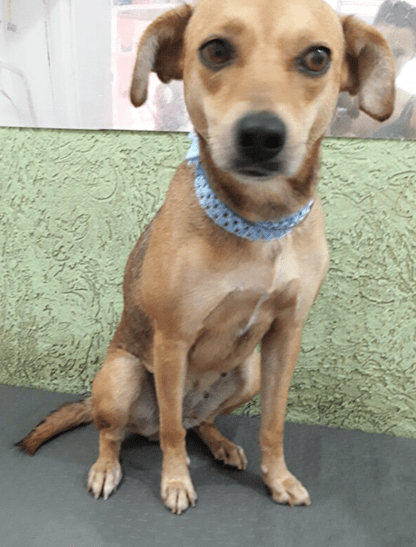
 Let me close with some more photos of dogs that have been helped by John, Dionete and the rest of the great band of the Vista Verde Fund.