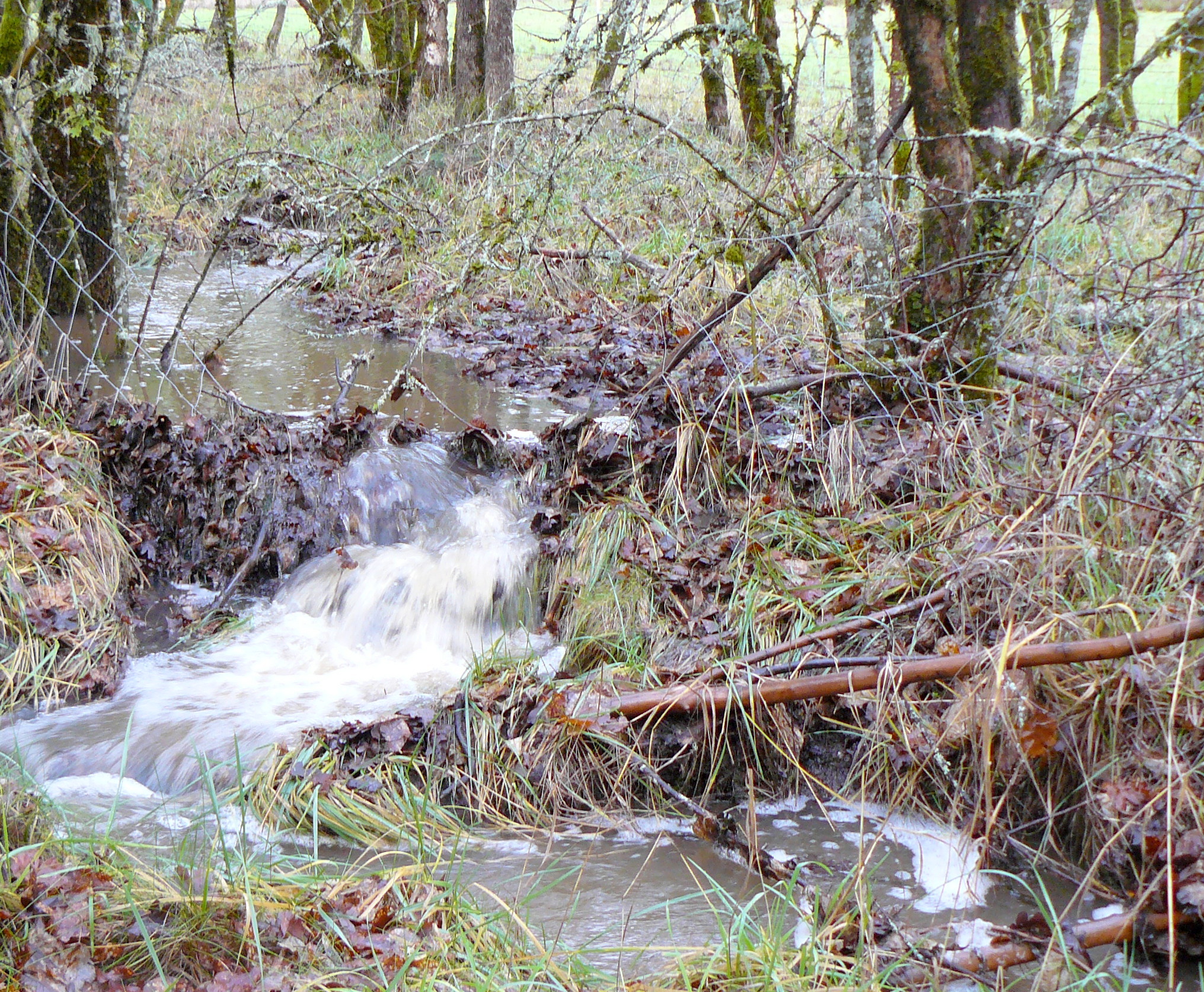
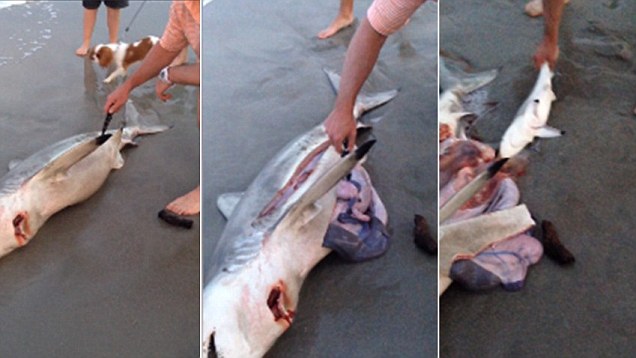
More wonderful pictures courtesy of Su.
Last week’s set of pictures from Su are here.
oooo
oooo
oooo
oooo
oooo
oooo
oooo
oooo
Final set of eight photographs from Su next Sunday.
All of you have a safe and happy week out there!
Dogs are animals of integrity. We have much to learn from them.
Category: Environment
More wonderful pictures courtesy of Su.
Last week’s set of pictures from Su are here.
oooo
oooo
oooo
oooo
oooo
oooo
oooo
oooo
Final set of eight photographs from Su next Sunday.
All of you have a safe and happy week out there!
Another in the endless series of the strange affairs of man!
Regulars will know that frequently I republish essays from the stables of TomDispatch. Many of you will ask why, I don’t doubt. What have these essays got to do with learning from our closest animal companion; the dog?
Well, the answer is that it is about integrity. Dogs offer mankind a wonderful example of what flows from having a deep sense of integrity. And when it comes to examples of mankind’s ambivalence, to put it mildly, towards integrity, there is no better example than war!
Thus with no further ado, here is a recent essay from TomDispatch that illustrates the long-term relationship of the United States of America with war! Republished with both Tom Engelhardt’s and Peter Van Buren’s kind permission. (NB: In the original essay there are many links to other sources of information. The links were too many for me to ‘copy’ across so please go to the essay on TomDispatch if you wish to see and follow the links. Recommended follows, by the way.)
ooOOoo
Posted by Peter Van Buren at 8:01am, September 23, 2014.
Follow TomDispatch on Twitter @TomDispatch.
On April 4, 1967, Martin Luther King delivered a speech at Riverside Church in New York City titled “Beyond Vietnam: A Time to Break Silence.” In it, he went after the war of that moment and the money that the U.S. was pouring into it as symptoms of a societal disaster. President Lyndon Johnson’s poverty program was being “broken and eviscerated,” King said from the pulpit of that church, “as if it were some idle political plaything on a society gone mad on war… We were taking the black young men who had been crippled by our society and sending them eight thousand miles away to guarantee liberties in Southeast Asia which they had not found in southwest Georgia and East Harlem. I could not be silent in the face of such cruel manipulation of the poor.” Twice more in that ringing speech he spoke of “the madness of Vietnam” and called for it to cease.
Don’t think of that as just a preacher’s metaphor. There was a genuine madness on the loose — and not just in the “free-fire zones” of Vietnam but in policy circles here in the United States, in the frustration of top military and civilian officials who felt gripped by an eerie helplessness as they widened a terrible war on the ground and in the air. They were, it seemed, incapable of imagining any other path than escalation in the face of disaster and possible defeat. Even in the years of Ronald Reagan’s presidency, when there was a brief attempt to paint that lost war in a more heroic hue (“a noble cause,” the president called it), that sense of madness, or at least of resulting mental illness, lingered. It remained embedded in a phrase then regularly applied to Americans who were less than willing to once again head aggressively into the world. They were suffering from, it was said, “Vietnam syndrome.”
Today, almost 25 years into what someday might simply be called America’s Iraq War (whose third iteration we’ve recently entered), you can feel that a similar “madness” has Washington by the throat. Just as King noted of the Vietnam era, since 9/11 American domestic programs and agencies have been starved while money poured into the coffers of the Pentagon and an increasingly bloated national security state. The results have been obvious. In the face of the spreading Ebola virus in West Africa, for instance, the president can no longer turn to civilian agencies or organizations for help, but has to call on the U.S. military in an “Ebola surge” — even our language has been militarized — although its forces are not known for their skills, successes, or spendthrift ways when it comes to civilian “humanitarian” or nation-building operations.
We’ve already entered the period when strategy, such as it is, falls away, and our leaders feel strangely helpless before the drip, drip, drip of failure and the unbearable urge for further escalation. At this point, in fact, the hysteria in Washington over the Islamic State seems a pitch or two higher than anything experienced in the Vietnam years. A fiercely sectarian force in the Middle East has captured the moment and riveted attention, even though its limits in a region full of potential enemies seem obvious and its “existential threat” to the U.S. consists of the possibility that some stray American jihadi might indeed try to harm a few of us. Call it emotional escalation in a Washington that seems remarkably unhinged.
It took Osama bin Laden $400,000 to $500,000, 19 hijackers, and much planning to produce the fallen towers of 9/11 and the ensuing hysteria in this country that launched the disastrous, never-ending Global War on Terror. It took the leaders of the Islamic State maybe a few hundred bucks and two grim videos, featuring three men on a featureless plain in Syria, to create utter, blind hysteria here. Think of this as confirmation of Karl Marx’s famous comment that the first time is tragedy, but the second is farce.
One clear sign of the farcical nature of our moment is the inability to use almost any common word or phrase in an uncontested way if you put “Iraq” or “Islamic State” or “Syria” in the same sentence. Remember when the worst Washington could come up with in contested words was the meaning of “is” in Bill Clinton’s infamous statement about his relationship with a White House intern? Linguistically speaking, those were the glory days, the utopian days of official Washington.
Just consider three commonplace terms of the moment: “war,” “boots on the ground,” and “combat.” A single question links them all: Are we or aren’t we? And to that, in each case, Washington has no acceptable answer. On war, the secretary of state said no, we weren’t; the White House and Pentagon press offices announced that yes, we were; and the president fudged. He called it “targeted action” and spoke of America’s “unique capability to mobilize against an organization like ISIL,” but God save us, what it wasn’t and wouldn’t be was a “ground war.”
Only with Congress did a certain clarity prevail. Nothing it did really mattered. Whatever Congress decided or refused to decide when it came to going to war would be fine and dandy, because the White House was going to do “it” anyway. “It,” of course, was the Clintonesque “is” of present-day Middle Eastern policy. Who knew what it was, but here was what it wasn’t and would never be: “boots on the ground.” Admittedly, the president has already dispatched 1,600 booted troops to Iraq’s ground (with more to come), but they evidently didn’t qualify as boots on the ground because, whatever they were doing, they would not be going into “combat” (which is evidently the only place where military boots officially hit the ground). The president has been utterly clear on this. There would be no American “combat mission” in Iraq. Unfortunately, “combat” turns out to be another of those dicey terms, since those non-boots had barely landed in Iraq when Chairman of the Joint Chiefs Martin Dempsey started to raise the possibility that some of them, armed, might one day be forward deployed with Iraqi troops as advisers and spotters for U.S. air power in future battles for Iraq’s northern cities. This, the White House now seems intent on defining as not being a “combat mission.”
And we’re only weeks into an ongoing operation that could last years. Imagine the pretzeling of the language by then. Perhaps it might be easiest if everyone — Congress, the White House, the Pentagon, and Washington’s pundits — simply agreed that the United States is at “war-ish” in Iraq, with boots on the ground-ish in potentially combat-ish situations. Former State Department whistleblower and TomDispatch regular Peter Van Buren spent his own time in Iraq and wrote We Meant Well: How I Helped Lose the Battle for the Hearts and Minds of the Iraqi People about it. Now, he considers the mind-boggling strangeness of Washington doing it all over again, this time as the grimmest of farces. Tom
Apocalypse Now, Iraq Edition
Fighting in Iraq Until Hell Freezes Over
By Peter Van BurenI wanted to offer a wry chuckle before we headed into the heavy stuff about Iraq, so I tried to start this article with a suitably ironic formulation. You know, a déjà-vu-all-over-again kinda thing. I even thought about telling you how, in 2011, I contacted a noted author to blurb my book, We Meant Well: How I Helped Lose the Battle for the Hearts and Minds of the Iraqi People, and he presciently declined, saying sardonically, “So you’re gonna be the one to write the last book on failure in Iraq?”
I couldn’t do any of that. As someone who cares deeply about this country, I find it beyond belief that Washington has again plunged into the swamp of the Sunni-Shia mess in Iraq. A young soldier now deployed as one of the 1,600 non-boots-on-the-ground there might have been eight years old when the 2003 invasion took place. He probably had to ask his dad about it. After all, less than three years ago, when dad finally came home with his head “held high,” President Obama assured Americans that “we’re leaving behind a sovereign, stable and self-reliant Iraq.” So what happened in the blink of an eye?
The Sons of Iraq
Sometimes, when I turn on the TV these days, the sense of seeing once again places in Iraq I’d been overwhelms me. After 22 years as a diplomat with the Department of State, I spent 12 long months in Iraq in 2009-2010 as part of the American occupation. My role was to lead two teams in “reconstructing” the nation. In practice, that meant paying for schools that would never be completed, setting up pastry shops on streets without water or electricity, and conducting endless propaganda events on Washington-generated themes of the week (“small business,” “women’s empowerment,” “democracy building.”)
We even organized awkward soccer matches, where American taxpayer money was used to coerce reluctant Sunni teams into facing off against hesitant Shia ones in hopes that, somehow, the chaos created by the American invasion could be ameliorated on the playing field. In an afternoon, we definitively failed to reconcile the millennium-old Sunni-Shia divide we had sparked into ethnic-cleansing-style life in 2003-2004, even if the score was carefully stage managed into a tie by the 82nd Airborne soldiers with whom I worked.
In 2006, the U.S. brokered the ascension to power of Prime Minister Nouri al-Maliki, a Shia politician handpicked to unite Iraq. A bright, shining lie of a plan soon followed. Applying vast amounts of money, Washington’s emissaries created the Sahwa, or Sons of Iraq, a loose grouping of Sunnis anointed as “moderates” who agreed to temporarily stop killing in return for a promised place at the table in the New(er) Iraq. The “political space” for this was to be created by a massive escalation of the American military effort, which gained a particularly marketable name: the surge.
I was charged with meeting the Sahwa leaders in my area. My job back then was to try to persuade them to stay on board just a little longer, even as they came to realize that they’d been had. Maliki’s Shia government in Baghdad, which was already ignoring American entreaties to be inclusive, was hell-bent on ensuring that there would be no Sunni “sons” in its Iraq.
False alliances and double-crosses were not unfamiliar to the Sunni warlords I engaged with. Often, our talk — over endless tiny glasses of sweet, sweet tea stirred with white-hot metal spoons — shifted from the Shia and the Americans to their great-grandfathers’ struggle against the British. Revenge unfolds over generations, they assured me, and memories are long in the Middle East, they warned.
When I left in 2010, the year before the American military finally departed, the truth on the ground should have been clear enough to anyone with the vision to take it in. Iraq had already been tacitly divided into feuding state-lets controlled by Sunnis, Shias, and Kurds. The Baghdad government had turned into a typical, gleeful third-world kleptocracy fueled by American money, but with a particularly nasty twist: they were also a group of autocrats dedicated to persecuting, marginalizing, degrading, and perhaps one day destroying the country’s Sunni minority.
U.S. influence was fading fast, leaving the State Department, a small military contingent, various spooks, and contractors hidden behind the walls of the billion-dollar embassy (the largest in the world!) that had been built in a moment of imperial hubris. The foreign power with the most influence over events was by then Iran, the country the Bush administration had once been determined to take down alongside Saddam Hussein as part of the Axis of Evil.
The Grandsons of Iraq
The staggering costs of all this — $25 billion to train the Iraqi Army, $60 billion for the reconstruction-that-wasn’t, $2 trillion for the overall war, almost 4,500 Americans dead and more than 32,000 wounded, and an Iraqi death toll of more than 190,000 (though some estimates go as high as a million) — can now be measured against the results. The nine-year attempt to create an American client state in Iraq failed, tragically and completely. The proof of that is on today’s front pages.
According to the crudest possible calculation, we spent blood and got no oil. Instead, America’s war of terror resulted in the dissolution of a Middle Eastern post-Cold War stasis that, curiously enough, had been held together by Iraq’s previous autocratic ruler Saddam Hussein. We released a hornet’s nest of Islamic fervor, sectarianism, fundamentalism, and pan-nationalism. Islamic terror groups grew stronger and more diffuse by the year. That horrible lightning over the Middle East that’s left American foreign policy in such an ugly glare will last into our grandchildren’s days. There should have been so many futures. Now, there will be so few as the dead accumulate in the ruins of our hubris. That is all that we won.
Under a new president, elected in 2008 in part on his promise to end American military involvement in Iraq, Washington’s strategy morphed into the more media-palatable mantra of “no boots on the ground.” Instead, backed by aggressive intel and the “surgical” application of drone strikes and other kinds of air power, U.S. covert ops were to link up with the “moderate” elements in Islamic governments or among the rebels opposing them — depending on whether Washington was opting to support a thug government or thug fighters.
The results? Chaos in Libya, highlighted by the flow of advanced weaponry from the arsenals of the dead autocrat Muammar Gaddafi across the Middle East and significant parts of Africa, chaos in Yemen, chaos in Syria, chaos in Somalia, chaos in Kenya, chaos in South Sudan, and, of course, chaos in Iraq.
And then came the Islamic State (IS) and the new “caliphate,” the child born of a neglectful occupation and an autocratic Shia government out to put the Sunnis in their place once and for all. And suddenly we were heading back into Iraq. What, in August 2014, was initially promoted as a limited humanitarian effort to save the Yazidis, a small religious sect that no one in Washington or anywhere else in this country had previously heard of, quickly morphed into those 1,600 American troops back on the ground in Iraq and American planes in the skies from Kurdistan in the north to south of Baghdad. The Yazidis were either abandoned, or saved, or just not needed anymore. Who knows and who, by then, cared? They had, after all, served their purpose handsomely as the casus belli of this war. Their agony at least had a horrific reality, unlike the supposed attack in the Gulf of Tonkin that propelled a widening war in Vietnam in 1964 or the nonexistent Iraqi WMDs that were the excuse for the invasion of 2003.
The newest Iraq war features Special Operations “trainers,” air strikes against IS fighters using American weapons abandoned by the Iraqi Army (now evidently to be resupplied by Washington), U.S. aircraft taking to the skies from inside Iraq as well as a carrier in the Persian Gulf and possibly elsewhere, and an air war across the border into Syria.
It Takes a Lot of Turning Points To Go In a Circle
The truth on the ground these days is tragically familiar: an Iraq even more divided into feuding state-lets; a Baghdad government kleptocracy about to be reinvigorated by free-flowing American money; and a new Shia prime minister being issued the same 2003-2011 to-do list by Washington: mollify the Sunnis, unify Iraq, and make it snappy. The State Department still stays hidden behind the walls of that billion-dollar embassy. More money will be spent to train the collapsed Iraqi military. Iran remains the foreign power with the most influence over events.
One odd difference should be noted, however: in the last Iraq war, the Iranians sponsored and directed attacks by Shia militias against American occupation forces (and me); now, its special operatives and combat advisors fight side-by-side with those same Shia militias under the cover of American air power. You want real boots on the ground? Iranian forces are already there. It’s certainly an example of how politics makes strange bedfellows, but also of what happens when you assemble your “strategy” on the run.
Obama hardly can be blamed for all of this, but he’s done his part to make it worse — and worse it will surely get as his administration once again assumes ownership of the Sunni-Shia fight. The “new” unity plan that will fail follows the pattern of the one that did fail in 2007: use American military force to create a political space for “reconciliation” between once-burned, twice-shy Sunnis and a compromise Shia government that American money tries to nudge into an agreement against Iran’s wishes. Perhaps whatever new Sunni organization is pasted together, however briefly, by American representatives should be called the Grandsons of Iraq.
Just to add to the general eeriness factor, the key people in charge of putting Washington’s plans into effect are distinctly familiar faces. Brett McGurk, who served in key Iraq policy positions throughout the Bush and Obama administrations, is again the point man as Deputy Assistant Secretary of State for Iraq and Iran. McGurk was once called the “Maliki whisperer” for his closeness to the former prime minister. The current American ambassador, Robert Stephen Beecroft, was deputy chief of mission, the number two at the Baghdad embassy, back in 2011. Diplomatically, another faux coalition of the (remarkably un)willing is being assembled. And the pundits demanding war in a feverish hysteria in Washington are all familiar names, mostly leftovers from the glory days of the 2003 invasion.
Lloyd Austin, the general overseeing America’s new military effort, oversaw the 2011 retreat. General John Allen, brought out of military retirement to coordinate the new war in the region — he had recently been a civilian advisor to Secretary of State John Kerry — was deputy commander in Iraq’s Anbar province during the surge. Also on the U.S. side, the mercenary security contractors are back, even as President Obama cites, without a hint of irony, the ancient 2002 congressional authorization to invade Iraq he opposed as candidate Obama as one of his legal justifications for this year’s war. The Iranians, too, have the same military commander on the ground in Iraq, Qassem Suleimani, the head of the Iranian Revolutionary Guards Corps’s Quds Force. Small world. Suleimani also helps direct Hezbollah operations inside Syria.
Even the aircraft carrier in the Persian Gulf launching air strikes, the USS George H.W. Bush, is fittingly named after the president who first got us deep into Iraq almost a quarter century ago. Just consider that for a moment: we have been in Iraq so long that we now have an aircraft carrier named after the president who launched the adventure.
On a 36-month schedule for “destroying” ISIS, the president is already ceding his war to the next president, as was done to him by George W. Bush. That next president may well be Hillary Clinton, who was secretary of state as Iraq War 2.0 sputtered to its conclusion. Notably, it was her husband whose administration kept the original Iraq War of 1990-1991 alive via no-fly zones and sanctions. Call that a pedigree of sorts when it comes to fighting in Iraq until hell freezes over.
If there is a summary lesson here, perhaps it’s that there is evidently no hole that can’t be dug deeper. How could it be more obvious, after more than two decades of empty declarations of victory in Iraq, that genuine “success,” however defined, is impossible? The only way to win is not to play. Otherwise, you’re just a sucker at the geopolitical equivalent of a carnival ringtoss game with a fist full of quarters to trade for a cheap stuffed animal.
Apocalypse Then — And Now
America’s wars in the Middle East exist in a hallucinatory space where reality is of little import, so if you think you heard all this before, between 2003 and 2010, you did. But for those of us of a certain age, the echoes go back much further. I recently joined a discussion on Dutch television where former Republican Congressman Pete Hoekstra made a telling slip of the tongue. As we spoke about ISIS, Hoekstra insisted that the U.S. needed to deny them “sanctuary in Cambodia.” He quickly corrected himself to say “Syria,” but the point was made.
We’ve been here before, as the failures of American policy and strategy in Vietnam metastasized into war in Cambodia and Laos to deny sanctuary to North Vietnamese forces. As with ISIS, we were told that they were barbarians who sought to impose an evil philosophy across an entire region. They, too, famously needed to be fought “over there” to prevent them from attacking us here. We didn’t say “the Homeland” back then, but you get the picture.
As the similarities with Vietnam are telling, so is the difference. When the reality of America’s failure in Vietnam finally became so clear that there was no one left to lie to, America’s war there ended and the troops came home. They never went back. America is now fighting the Iraq War for the third time, somehow madly expecting different results, while guaranteeing only failure. To paraphrase a young John Kerry, himself back from Vietnam, who’ll be the last to die for that endless mistake? It seems as if it will be many years before we know.
Peter Van Buren blew the whistle on State Department waste and mismanagement during the Iraqi reconstruction in his first book, We Meant Well: How I Helped Lose the Battle for the Hearts and Minds of the Iraqi People. A Tom Dispatch regular, he writes about current events at his blog, We Meant Well. His latest book is Ghosts of Tom Joad: A Story of the #99Percent.
Follow TomDispatch on Twitter and join us on Facebook. Check out the newest Dispatch Book, Rebecca Solnit’s Men Explain Things to Me.
Copyright 2014 Peter Van Buren
ooOOoo
This is not an easy essay to read; far from it! Let alone make wise reflections! I spent a number of minutes wondering how to close the post but, in the end, couldn’t think of anything useful to add. There was something overpoweringly sad about Peter’s essay. That something encapsulated in a sentence Peter wrote in the first half: “Revenge unfolds over generations, they assured me, and memories are long in the Middle East, they warned.“
The strange affairs of man!
Who would have believed it!
Way back in July 2012, I posted the following item.
oooo
Dear Readers of Learning from Dogs.
Today, Jeannie and I are off on a trip to Oregon.

We expect to be away for about the next 10 or 11 days.
While there are a number of new posts that will come out during this period, rather than have quiet days with nothing being posted, some days I will be republishing posts from the last three years; hopefully most of them new to your eyes.
Inevitably, responding promptly to comments will be tough.
Which is why I am so grateful to Martin Lack of Lack of Environment who graciously agreed to keep an eye on things while we are away.

oooo
That was twenty-six months ago.
Yesterday morning, Jean and I took Reggie and Chris down to our creek area to feed some wild deer that have been congregating in recent days.
After Jean had sprinkled some cracked corn on the ground, one of the seven deer around us started feeding and when it looked up at me, I took the following picture.
Can’t ever imagine living anywhere else now.
Funny how life runs!
Two very different perspectives.
I’m writing this post a short while after midnight (UTC) on the morning of Tuesday, 23rd September. In other words, 00:00 UTC 23/9/2014. (I hasten to add that the local time in Oregon is late afternoon Monday!)
In approximately three hours time it will be the moment of the September Equinox, or 02:29 UTC on the 23rd to be precise. The planet Earth has been in orbit around the sun for a very long time! It’s almost beyond comprehension how long the Solar System has been the way it is.
All of which constitutes my introduction to a recent beautiful post over at Sue Dreamwalker. Kindly republished with her gracious permission.
ooOOoo
William Blake, said:
“that everything that now exists was once imagined,”
Wayne Dyer said:
“So, if you want something to exist, you must first be able to imagine it.”
Each of us have a chance of planting new seeds.. Yet we so often never have the courage to pick them out of our minds to plant them with intention into our reality… Those
who do have the courage may see how from their tentative thoughts ideas grew beyond their wildest dreams… I bet Alexander Graham Bell never in his wildest dreams would have thought how his invention would now be in everyone’s pocket!.
But we need to have the courage to take those first steps and plant them..
Like all seeds they take time to germinate, so too with our ideas we often wonder why our wishes are not fulfilled.. All too often we sabotage them before they even begin to grow roots. How?, because we doubt our own capabilities and we say we are far from worthy of success. Telling ourselves we are never lucky.. and its bound to fail.. So we poison the very idea, so the seed withers even before it gets a chance to grow..
Our subconscious mind is an incredible tool, it possess the power to manifest from our thoughts to bring them into our physical reality. You only have to take a look around the room you are now in, and see that every thing in it was once someone’s thought, even the paint upon the walls… An idea born, brought into reality from that first seed of an idea..
I have just finished a book the second time in reading it, I think this time its message really hit home. As I see how I have sabotaged many such seeds in the past. The Book is called Wishes Fulfilled By Wayne Dyer, listen to his talk HERE upon the subject of Wishes Fulfilled.
‘Thoughts become things when you Feel them’ says Wayne Dyer, In the past I have often experienced frustration, Anger, worry, stress. These I have amplified with my ‘Feelings’ as the frustration of helplessness, or horror at how brutal we can be to one another have overshadowed my thoughts..
We need to reprogrammed ourselves to think differently about ourselves and the World..
Seeds are sown, every day within our minds.. What sort of seeds are you sowing within your own mind? Which type of thoughts are you cultivating?
My last simple post World Peace! Just Imagine got reblogged 6 times!. I got more traffic today than for a long while.. People Do want Peace, and yet how many of us are being manipulated into getting caught up in Conflict? We are part of it every time we read a Newspaper, every time we watch the Media News, Every time we join in Gossip, every time we Judge another. Every time we argue, even with ourselves, We are creating yet more Conflict , more Negative Energy in the World.
Our very thoughts Create…
Let us Create the Future we each wish to Live in..
Have a Brilliant Thought Provoking and Harmonious Week!
Blessings
~Sue~
ooOOoo
So wherever you are in the world, take a moment to look up into the sky and marvel at it all. As one of Sue’s followers remarked, “ ….. Equinox is an excellent time to focus on the seed ideas for the future.“
Finally, the link that Sue included in the sentence, “The Book is called Wishes Fulfilled By Wayne Dyer, listen to his talk HERE upon the subject of Wishes Fulfilled.” took you to a YouTube video. It is below because I know many will want to listen to Wayne Dyer’s important words.
Because you clearly are not listening to Nature!
Sunday: 10:30 PDT. Won’t rabbit on too long as we are due out with our guests in the next thirty minutes. Just dipped into the online BBC News headlines and, frankly, was more than disappointed to see that the Climate March in New York, and many other cities all around the world, was the third headline after Afghanistan and Yemen.
Oh well!
What I read earlier in the morning was the most fabulous essay over on the Transition Times blogsite written by Jennifer Browdy. It is republished in full with her kind permission.
This should be read in full!
ooOOoo
The People’s Climate March in New York City is just one manifestation of a huge sea-change sweeping through our culture. Or perhaps “seeping” would be a better verb—this shift in awareness is not happening with the tsunami force of a revolution, but more with the steady, determined drip-drip-drip of water undermining rock.
Humans are paradoxical. On the one hand, we love everything that’s new and innovative, we all want to be out ahead of the curve when it comes to technological breakthroughs and new ideas. On the other hand, we hold tight to the received wisdom of our forebears, living by enshrined writings thousands of years old (the Bible, the Koran, the Mahabharata, Confucius, etc.) or hundreds of years old (the Declaration of Independence, the Constitution, the Bill of Rights).
We have established elaborate educational, political and legal systems designed to hold us to a particular form of society, permitting free, innovative thinking only along narrow channels carefully defined by the interests of business and commerce.
The arts and humanities, traditionally the realm of creative, imaginative exploration, have been steadily starved in this brave new world, which can only imagine creativity in the service of profit.
What happens to a society that can only envision creative energy in an instrumental, utilitarian light?
We become a society of robots. We lose our connection to the soul of the world, the anima mundi that sustains us humans along with all other living beings on the planet.
The People’s Climate March, which is happening not only in New York City but worldwide, with 2,808 marches and events in 166 countries, bears welcome witness to the fact that the sparks of creative, independent thinking have not totally gone out.
There are many, many people worldwide who are aware, and aghast, at the failure of our political and business leaders to act in the best interests of the people and all the beautiful, innocent creatures who are slipping away into the night of extinction day by day due to the relentless human assault on our shared planet.
We are here, we are aware, and we are engaged. We are not going to stand by silently and let corporate greed and shortsightedness overwhelm us.
It is true that business and government have a stranglehold on official channels of communication, education and social change.
They control the curricula taught in our schools, what appears on our major media channels, and what projects and areas of creative exploration are funded. They keep us in line with the debt bondage of school loans, mortgages, car payments and the fear of not having enough money in the bank for a comfortable old age. We’re so busy running on the treadmills they’ve set up we have no time or energy to think about changing the system.
Or do we?
We saw it happen in the Arab Spring, where people used cell phones and texts to organize themselves to resist oppression.
We saw those people get beaten back, the promise of their revolution squashed by the entrenched power of men with guns and tear gas.
The rise of the Islamic State, like the rise of Al Quaeda and the Taliban, is all about conservative forces resisting change.
I am just as afraid of men with guns and tear gas as the next woman. I am happier making revolution on my laptop than in the streets. But at some point we have to come out from behind our screens, get off the treadmills of debt bondage, look around us at the beauty of the world, and say: this is what I want to live for, and this is what I’m willing to die for.
So far, the one social area that has not been overtaken by corporate/governmental control is the World Wide Web. It’s still a Wild West space, a place where you can find everything and everyone, from dangerous sadists to beneficent spiritual leaders. There’s room for every kind of idea out there to percolate through our collective consciousness. And make no mistake: the energy we’re seeing in the People’s Climate March is fueled in large part by the distribution power of the Web, the ability to get the word out and get people fired up to come together to take a stand.
Environmental activist and writer Terry Tempest Williams, in her book The Open Space of Democracy, says that the time has come to “move beyond what is comfortable” (81) in pursuit of what she calls a “spiritual democracy.”
“We have made the mistake of confusing democracy with capitalism and have mistaken political engagement with a political machinery we all understand to be corrupt,” she says.
“It is time to resist the simplistic, utilitarian view that what is good for business is good for humanity in all its complex web of relationships. A spiritual democracy is inspired by our own sense of what we can accomplish together, honoring an integrated society where the social, intellectual, physical and economic well-being of all is considered, not just the wealth and health of the corporate few” (87).
Williams calls for a radical recognition of the interdependence of all life on Earth. “The time has come to demand an end to the wholesale dismissal of the sacredness of life in all its variety and forms,” she says. “At what point do we finally lay our bodies down to say this blatant disregard for biology and wild lives is no longer acceptable?” (86)
If we humans could step into our destiny as the stewards of our planet, the loving gardeners and caretakers of all other living beings, we would harness our incredible intelligence and creativity to re-stabilize our climate and do what needs to be done to ensure the well-being of all.
Williams calls this “the next evolutionary leap” for humanity: “to recognize the restoration of democracy as the restoration of liberty and justice for all species, not just our own” (89).
If we are able to take this leap, we will not only avert climate-related disaster on a Biblical scale, we will also overcome many of the social problems that we currently struggle with. “To be in the service of something beyond ourselves—to be in the presence of something other than ourselves, together—this is where we can begin to craft a meaningful life where personal isolation and despair disappear through the shared engagement of a vibrant citizenry,” says Williams (89).
Williams’ small gem of a book grew out of a speech she gave at her alma mater, the University of Utah, in the spring of 2003, as America was rushing into its ill-conceived War on Terror in Iraq. She describes her heart pounding as she got up to make a speech advocating a different form of democracy than that embraced and espoused by all the conservative friends and family sitting in the audience before her.
Challenging one’s own friends and family, betraying one’s own tribe, is the hardest aspect of being a social revolutionary. You have to question the very people you love most, who have given you so much and made your whole life possible.
But if we become aware that the social systems that gave birth to us are the very social systems that are undermining the possibility of a livable future on this planet, can we continue to just go with the flow, to avoid asking the difficult questions?
Or will we become change agents who work slowly and steadily, drip by drip, to awaken those around us, those we love most, to the necessity of undertaking “the next evolutionary leap” in the human saga on the planet?
ooOOoo
From that BBC News website:
On Tuesday, the UN will host a climate summit at its headquarters in New York with 125 heads of state and government – the first such gathering since the unsuccessful climate conference in Copenhagen in 2009.
So world leaders, are you going to reflect the wishes of millions of your peoples across the world and step up to the mark? We will see.
Never say never!
Next Monday, the 21st September, is going to be the most important day this year. No! The most important day ever!
Because next Monday is the date of the People’s Climate March in New York. It is predicted to be the largest climate march in history. Well over 100,000 are expected to attend. I shall write more about this event during the coming week.
But also the 21st September will be International Day of Peace. That coincidence strikes me as highly significant. For a world at peace would cause the most massive reduction in our use of carbon-based fuels.
Thus without any embarrassment, I intend to republish in full [Ed: but see my comment] a recent item on the Permaculture News website: Seven Reasons Why World Peace is Possible.
Do I mention dogs? Read through to the end to find out! (Probably not difficult to guess the answer!)
ooOOoo
Introduction
The 21st of September will be International Day of Peace. It may seem a little premature to declare that world peace is due to break out by the end this month. I do not deny that the amount of killing and death and war and torture and death and coercion and abuse and death all over everywhere can be overwhelming. Nor do I deny that considering this, it is a natural assumption to believe people are sinners, destined for extinction. However, I do argue that compassion is as much a part of human nature as cruelty.
There is evidence that humankind did not always live violent lives. In fact, I assume most people reading this article are not habitually violent, and do not desire to watch someone suffer. All animals have the capacity to enrich the lives of others. We have the capacity to be both selfish and kind. What matters is which quality we chose to focus on; bringing that quality into focus within ourselves, the world, and our children.
Here I have collected an array of research demonstrating that there is a positive potential within each social group and person. I argue that humans can learn to build societies which are not founded on the expectation of organised violence. Here are seven reasons why world peace is possible. You won’t believe your own strength of belief: There is at least some hope.

Experimental prototypes
The balance of this powerful and fascinating article may be read here.
ooOOoo
How many links did you follow? Most of them are wonderful links to organisations that many readers, including me, may not have come across before.
So to close.
I was about half-way through arranging today’s post when I realised that dogs have evolved without the need to have their own police forces or armies. It’s not as silly as it first sounds. Of course, dogs fight and some fights can be brutal and, occasionally, fatal to one or more of the participants. But they have a keen sense of their locality, of their tribal space; so to speak. Even as domestic animals, they are fiercely protective of what is their own place. Before dogs were domesticated, like the wolves from whence dogs evolved, the pack size was around fifty animals with just three animals having any form of status; something that has been mentioned many times before in this place.
The point is that dogs are creatures that have evolved to live in a local community and to live peacefully; by and large. My sense is that ancient man also evolved to be most complete within a community environment.
This is the end of the era of huge federal and national social constructions.
We must return to locally run and managed communities, which is the pathway to peace across this planet.
Sorry, couldn’t resist this.
The following photograph was taken around 9pm (PDT) on the evening of the 8th September; i.e. Monday evening.
The image has been tweaked to display the picture more clearly but, nonetheless, shows the most beautiful Harvest Moon. The camera was pointing to the East; I was standing on the deck at the back of our house.
Anything to do with dogs?
You bet! There’s this ….
oooo
and this:
Uploaded on Nov 9, 2010
During Bob and Jan Shaw’s Annual fall training session outside of Newberry, MI in the beautiful Upper Peninsula, I had the opportunity to record over 100 huskies howling at a full moon.
“We all shine on…like the moon and the stars and the sun…we all shine on…come on and on and on…” John Lennon.
As topic changes go, this takes some beating!
I am referring, of course, to the contrast to yesterday’s post title: Wisdom, nature and philosophy.
The drought that this part of Oregon has been experiencing has had one obvious effect: the availability of good hay is rapidly diminishing. With four horses to feed and our own pasture just about eaten out, we need a few more tons before the rains arrive around the end of the year: fingers crossed! We have been frantically trying to find some.
What, you may ask, has this to do with Learning from Dogs? Only that by the time I sat down yesterday to write today’s post, I was squeezed in terms of writing a longer post, and had less than an hour to spare before driving up to Glendale to look at some second-cutting hay for sale.
Then a recent email from a long-term friend in Australia saved the day. It was from Amanda Smith and is reproduced just as she sent it to me; that in turn had been sent to Amanda from a friend of hers. It’s a delightful tale.
ooOOoo
This occurred on a walk along Flinders Beach on North Stradbroke Island in Queensland a couple of days ago.
The Koalas seem fairly tame over here. We passed two sitting in she-oak trees each about two metres off the ground. They were not spooked at all by the attention we gave them.
Then, about half way along the beach, we saw this young fellow actually running up and down the beach and playing around the kids like a puppy.
oooo
oooo
oooo
After the koala allowed itself to be stroked and petted by us humans, it decided to go for a swim!
oooo
oooo
Then the little chap went about twenty metres into the sea, swam around for a good half-hour fascinating onlookers, before coming back to the beach.
oooo
oooo
The little chap then took a while to recover from his swim.
We have never heard of or seen this behaviour before: a koala who likes to “play” with humans, and swim in the ocean.
Unbelievable stuff, something we will always remember.
(Credit Allan Duncan)
ooOOoo
Makes finding hay for horses seem mundane! 🙂
The hidden gifts of nature.
I have been a follower of Alex Jones’ blog The Liberated Way for many months; possibly much longer. Frequently, I republish one of Alex’s posts here.
Nearly six months ago, I read a lovely essay of his and made a mental note to republish that in the next few days. Then the world overtook me and now April 30th, when Alex published this piece, has become September 8th!
Yet it hasn’t lost a heartbeat of meaning.
Read on and you will agree.
ooOOoo
The western education system ignores nature.

The holidays are over in the UK, the students return to school, some to their exams. I reflect upon the sad treatment of creativity, wisdom, nature and natural philosophy in education, and in Western society as a whole, treated as worthless and unworthy of consideration.
On most days I walk past the former home of William Gilbert, some consider the father of electricity and magnetism. Born to a wealthy merchant family in my town of Colchester, Gilbert invested his personal wealth in an extensive study of magnetism with view to assisting the explorers of the Elizabethan age when Britain was building an empire in a period of great prosperity and confidence. Gilbert invented the term electricity. Gilbert wrote De Magnete, considered possibly the first work using the scientific method. In addition to being a scientist, a doctor to Elizabeth I, Gilbert was also a natural philosopher who used the empirical method of observation, demonstration and experience of nature to form his theories.
Each day I watch and interact with nature, like Gilbert I am a natural philosopher, and this forms the basis of my business ideas, my scientific understanding and my personal philosophies. Rather than a worthless study nature opens the door to the philosophy of the understanding of self, the world, and the relationship of self to the world. Wisdom is born of action and experience, the interactions with nature gives birth to wisdom. Nature encourages people to do new things in new ways, so rerouting electric signals in the brain causing new connections to form of creativity. The philosophy emerges from nature by causing the mind to question, observe and experiment, the basis of science and success in any discipline.
ooOOoo
Colchester, in the English county of Essex, goes way back to Roman times when the town was called Camulodunon (which was latinised as Camulodunum). That name is believed to date back to the Celtic fortress of “Camulodunon”, meaning Stronghold of Camulos. It served as the first capital of Roman Britain making a claim to be the oldest town in Britain.
It is where Alex Jones lives, the author of The Liberated Way, and where during the 1980’s I ran a business under the name of Dataview Ltd. In fact, the business was located in a very old, listed building known as The Portreeve’s House. It was at the bottom of town near Hythe Quay on the River Colne and the name “Portreeve” is old English for harbour master, i.e. it was originally the harbour master’s house.

All seems a long way from Southern Oregon!