The appalling attitudes of those who kill wild animals for fun!
You will recall that in yesterday’s post, I referred to the fact that Jean and I are supporters of Oregon Wild. If you drop in on the OW blog, one of the items you will read is A New Year for Oregon’s Wolves. Here’s how it starts:
Jan 12, 2015 | Rob Klavins
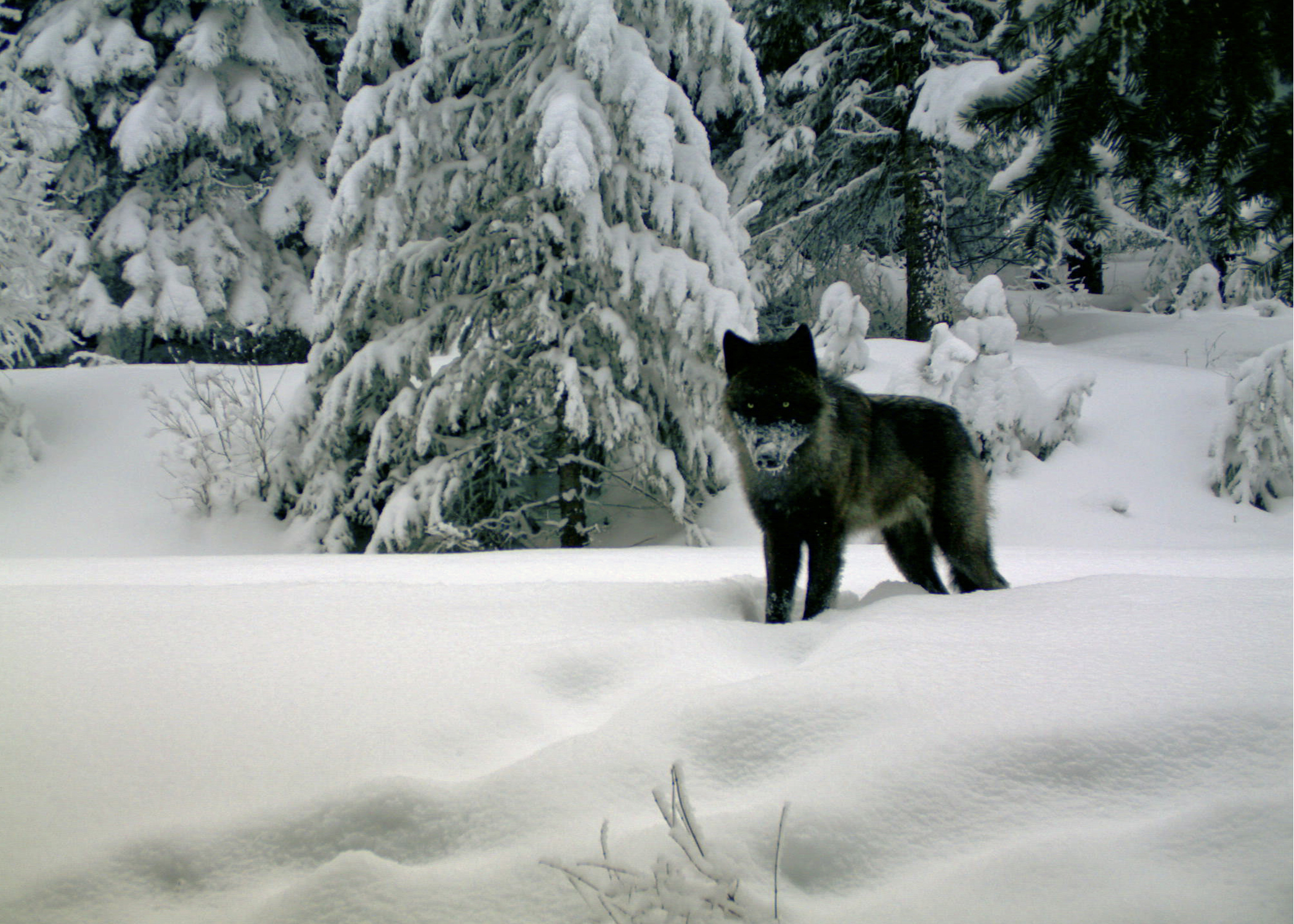
Photo of a young wolf from the Walla Walla Pack taken on Feb 5, 2014. Photo courtesy of ODFW.
A new year provides opportunities for reflection – and prognostication. For wolves in Oregon, 2014 was a good year. Journey finally found his mate and Oregon continued a management paradigm where killing remained an option of last resort. The result was a small but expanding wolf population and a continued decrease in conflict.
However, it’s not an understatement to say that 2015 is poised to be among the most consequential years for Oregon’s wolf recovery since the passage of the Endangered Species Act in 1973.
After a hard-fought legal settlement, Oregon’s fragile wolf recovery is back on track under the most progressive plan in the country. Though the plan is working for all but the most extreme voices, the Oregon Department of Fish & Wildlife (ODFW) is re-igniting old conflicts by caving to political pressure and giving serious consideration to weakening basic protections for wolves.
Moving on but staying in theme; so to speak.
For a few months now, I have been subscribing to a blog called Exposing the Big Game. Here’s a little from their About page.
This blog site is a haven for wildlife and animal advocates, a wildlife refuge of sorts, that’s posted “No Hunting,” as any true sanctuary should be. Just as a refuge is patrolled to keep hunters and poachers from harassing the wildlife, this blog site is monitored to keep hunters from disturbing other people’s quiet enjoyment of the natural world.
It is not a message board or a chat room for those wanting to argue the supposed merits of animal exploitation or to defend the act of hunting or trapping in any way, shape or form. There are plenty of other sites available for that sort of thing.
Hunters and trappers: For your sake, I urge you not to bother wasting your time posting your opinions in the comments section. This blog is moderated, and pro-hunting statements will not be tolerated or approved. Consider this fair warning—if you’re a hunter, sorry but your comments are going straight to the trash can. This is not a public forum for animal exploiters to discuss the pros and cons of hunting.
We’ve heard all the rationalizations for killing wildlife so many times before; there’s no point in wasting everyone’s time with more of that old, tired hunter PR drivel. Any attempt to justify the murder of our fellow animals will hereby be jettisoned into cyberspace…
Well two days ago, Lydia Millet wrote an opinion piece for the New York Times that was republished on Exposing the Big Game. It was about the American Gray Wolf. I asked permission to republish it in full here.
ooOOoo
Opinion: High Noon for the Gray Wolf
By LYDIA MILLET JAN. 18, 2015
In December 2011, a wild gray wolf set foot in California, the first sighting in almost a century. He’d wandered in from Oregon, looking for a mate. In October 2014, for the first time in almost three-quarters of a century, a gray wolf was seen loping along the forested North Rim of the Grand Canyon, in Arizona. She had walked hundreds of miles, probably from Wyoming or Idaho.
The return of these animals to the homes of their ancestors — however fleeting — was a result of their 40-year protection under the Endangered Species Act.
OR-7, or “Journey,” as schoolchildren named the first wolf, had been born to the Imnaha pack, the first one in Oregon for many decades. When he wandered south, his brother, OR-9, wandered east. Shortly after he crossed into Idaho (where wolves are not protected), he was shot dead. OR-7 lived on, after his repeated incursions into California (where wolves are protected), to sire a litter of pups just north of the state line. He became the subject of a documentary — in California, even a wolf can be a star.
The story of the Grand Canyon wolf, though, may be over: Three days after Christmas, it appears, she was shot and killed in Utah by a man media outlets have called a “coyote hunter.” (A DNA test is pending.)
For almost two centuries, American gray wolves, vilified in fact as well as fiction, were the victims of vicious government extermination programs. By the time the Endangered Species Act was passed, in 1973, only a few hundred of these once-great predators were left in the lower 48 states. After numerous generations of people dedicated to killing wolves on the North American continent, one generation devoted itself to letting wolves live. The animals’ number has now risen to almost 5,500, thanks to their legal protection, but they still occupy less than 5 percent of their ancient home range.
Since 1995, the act has guided efforts to raise wolves in captivity, release them, and follow them in the wild. Twenty years ago this month, the first gray wolves were reintroduced to Yellowstone National Park.
But this fragile progress has been undermined. Since 2011, the federal government has moved to remove federal protection for gray wolves in the Northern Rocky Mountains (Idaho, Montana and Wyoming) and in the western Great Lakes (Minnesota, Wisconsin and Michigan), the two population centers. Management of the species was turned over to these states, which responded with a zeal that looks like blood lust.
Relying on the greatly exaggerated excuse that wolves threaten cattle and sheep, the states opened their doors to the killing of wolves. (In some states, bait can be used to lure the animals to their deaths; in Montana, private landowners can each kill 100 wolves each year; in Wisconsin, up to six hunting dogs on a single wolf is considered fair play.) Legions of wolf killers rose to the challenge, and the toll has been devastating: In just three and a half years, at least 3,500 wolves have been mowed down.
There’s been an outcry from conservationists, ecologists and people who simply like wolves, but this has not stopped the killers. Some say wolves are a threat to their livestock investments (despite the existence of generous rancher-compensation programs in all wolf states save Alaska); others invoke fear of wolves; still others appear to revel in killing. Online, you can find pictures of wolf carcasses held up proudly as trophies and men boasting of running over wolves with their cars. Judges have started to step in. In September, a federal court decided that wolf management in Wyoming — which had allowed people to kill as many wolves as they wanted, throughout 84 percent of the state — should be returned to the federal government. In December, also in response to a lawsuit, another federal court reinstated protections for wolves in the western Great Lakes. These decisions should make clear that the states alone simply can’t be entrusted with the future of our wolves.
In Washington, the threats persist. The Fish and Wildlife Service is considering a proposal that would strip federal protection from almost all gray wolves in the lower 48 states, not just the ones in the Rockies and the Midwest. Meanwhile, right-wing Republicans in the new Congress are champing at the bit to remove the wolves from protection under the act — politics trumping science.
President Obama should direct the Fish and Wildlife Service to retain protection for wolves; if it doesn’t, they could be wiped off the face of the American landscape forever. A unified wolf-recovery plan for the nation is required. Not only do wolves play an important role in keeping wilderness wild, but they were here long before we were, and deserve to remain. Not for nothing was the environmentalist Aldo Leopold transformed by the sight of a “fierce green fire” in a dying wolf’s eyes.
I’ve seen wild gray wolves only once, as they trotted across a dirt road in front of my own family car in a New Mexican forest. There were three of them on the road, no doubt a wolf family, and three of us in the car: my husband, my daughter and me. In the back seat, my little girl was engrossed in a picture book and didn’t look up fast enough. I want her to have another chance; I want her to keep living in a world where something beautiful and wild lurks at the edge of sight.
Lydia Millet is the author, most recently, of the novel “Mermaids in Paradise.”
ooOOoo
Going back to that blog post over on Exposing the Big Game, I was inspired by many of the comments. Here are two examples:
I so agree with your comments, Roger. Here we are, staring at the Faces of Extinction, while, so-called “wildlife groups” grovel, hat in hand, to these agencies, and to the ranchers and hunters, offering yet another “collaboration” or “compromise” so we “can all work together.” I am sickened as to how many of these groups make no apology about having hunters/ranchers on their boards and on their staff. An all out War against these special interests, and their agencies does not seem to be on group’s agenda. So much has already been lost. As you stated, so little is left: the massive slaughter of native wild animals & wild habitats since the 1800’s is criminal, yet there seems to be little passion about it.
Thanks for the article. Strange isn’t it – the killing spree for sport against the wolves for their predatory behavior, yet these same people aren’t calling their behavior or the behavior of hunting dogs predatory?
Finally, here’s the trailer to that film about the wolf OR7
Please do all you can to ensure that federal protection for gray wolves in all US states is maintained.
How we treat wild animals defines how we treat the planet – the only one we have!
But first some thoughts for the newer followers of this blog.
Being the author of this blog I have no idea how people find this place, and more importantly, what they make of it! It wouldn’t surprise me in the slightest if it is as a result of a web search associated with dogs. Let’s face it, the blog is called Learning from Dogs!
It also wouldn’t surprise me if many don’t drop in to the About this blog page and read:
The underlying theme of Learning from Dogs is about truth, integrity, honesty and trust in every way. We use the life of dogs as a metaphor. The first Post was published on the 15th July 2009.
All of which is my way of explaining why, more often than not, the daily post has nothing to do with our beautiful canines. But I do hope if a post is not about dogs then it is about “truth, integrity, honesty and trust in every way.”
So with that off my chest, let me use the rest of this post to republish in full the final broadcast from Bill Moyers, the link to which was kindly sent to me by friend John Hurlburt. Thanks John.
The Bill Moyers programme is less than 30-minutes long. It is extraordinarily fine viewing, especially for the younger viewer. Do share it widely.
ooOOoo
Full Show: The Children’s Climate Crusade
January 1, 2015
The very agencies created to protect our environment have been hijacked by the polluting industries they were meant to regulate. It may just turn out that the judicial system, our children and their children will save us from ourselves.
The new legal framework for this crusade against global warming is called atmospheric trust litigation. It takes the fate of the Earth into the courts, arguing that the planet’s atmosphere – its air, water, land, plants and animals — are the responsibility of government, held in its trust to insure the survival of all generations to come. It’s the strategy being used by Bill’s recent guest, Kelsey Juliana, a co-plaintiff in a major lawsuit spearheaded by Our Children’s Trust, that could force the state of Oregon to take a more aggressive stance against the carbon emissions.
It’s the brainchild of Mary Christina Wood, a legal scholar who wrote the book, Nature’s Trust, tracing this public trust doctrine all the way back to ancient Rome.
Wood tells Bill: “If this nation relies on a stable climate system, and the very habitability of this nation and all of the liberties of young people and their survival interests are at stake, the courts need to force the agencies and the legislatures to simply do their job.”
Producer: Robert Booth. Editor: Rob Kuhns.
ooOOoo
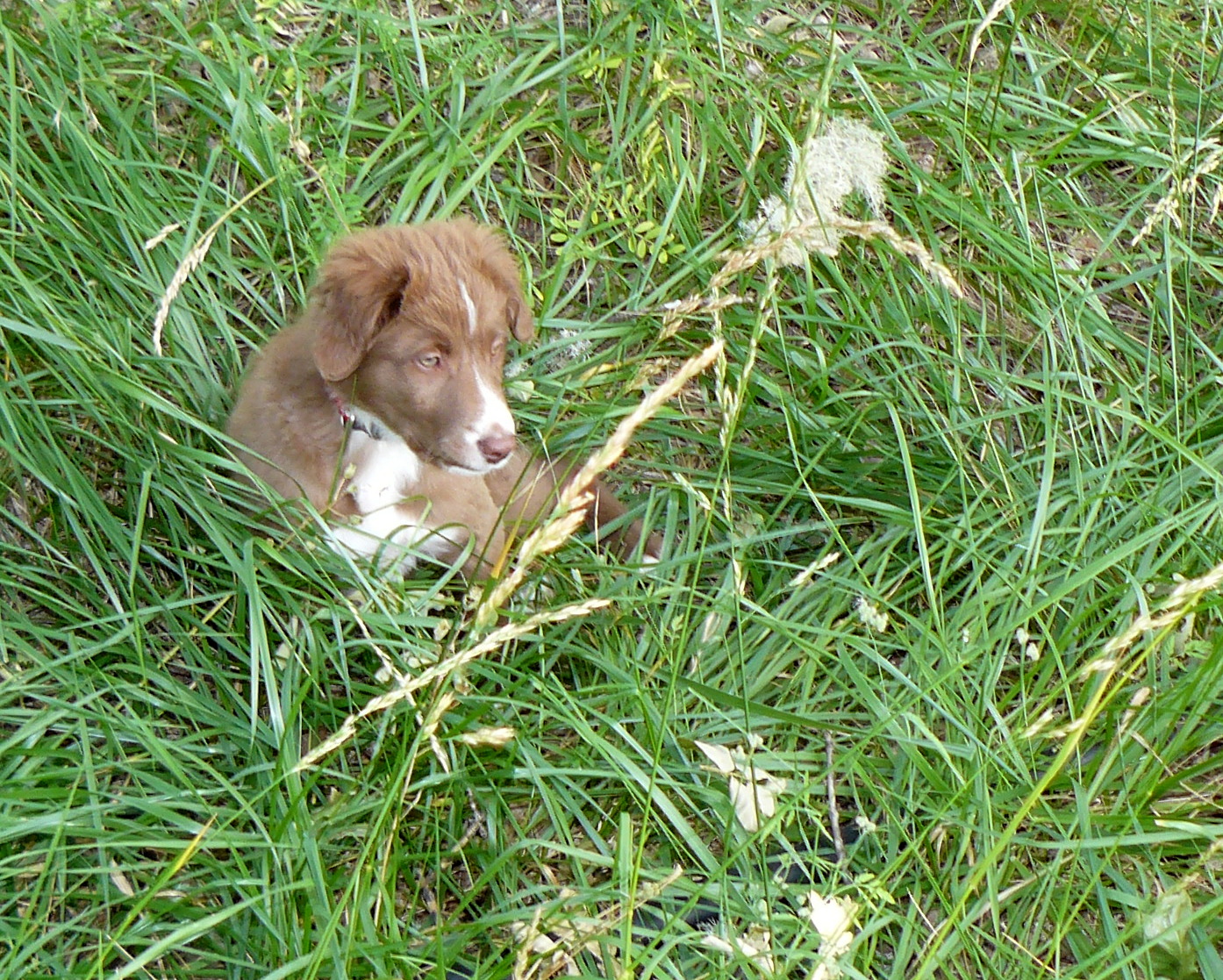
So having explained why dogs often aren’t featured in posts, there’s only one way to close today. That’s with a picture of young Ollie, our latest member of the family, taken last June.
Turn aside if you are looking for a bright, optimistic start to the week.
Two separate experiences have come together to offer, well anyway for me, a sense of now not recognising the world I grew up in. The first was Episode One of a programme on BBC Television, broadcast last Thursday, and the second was an essay from Ann Jones on the TomDispatch site, published yesterday.
First, that BBC programme. Despite not being able to view it directly here in Oregon, both the programme details and a first-hand account from a British viewer confirm the essence of this two-part series. Here’s what is on the BBC iPlayer website:
The Super Rich and Us
First shown: 8 Jan 2015
Britain has more billionaires per head than any other country on earth, yet we’re also the most unequal nation in Europe. We were told the super-rich would make us richer too, so why hasn’t that happened, and what does the arrival of their astronomical wealth really mean for the rest of us? In programme one of this two-part series, Jacques Peretti looks at how the super-rich first exploited an obscure legal loophole to make Britain one of the most attractive tax havens on earth. He argues this was no accident. Wooing the super-rich was a deliberate strategy by government to reconfigure the British economy, under the belief their wealth would trickle down to the rest of us. But it didn’t. The OECD now say the British economy would have been 20 per cent bigger had we not pursued the super-rich. So who sold us the fallacy and why?
Jacques meets the super-rich themselves – from those buying premiership football clubs to the billionaires who are breaking ranks to criticise the decisions that made them richer and society more unequal.
Jacques challenges the architects of these policies, as well as tracking down the foreign multimillionaires who are buying up Britain and turning us from a nation of property owners to a nation of renters. He uncovers new research that shows growing inequality has been driven by this key factor of unaffordable property, and the far-reaching effect this will have on every aspect of our lives. Inequality is reshaping Britain into two simple classes: the 99 per cent and the one per cent. This is the story of how it happened and what it means for all of us.
While, for obvious reasons, the programme can’t be included in this post, one can get a flavour of the degree of inequality in Britain from this BBC News item from last May.
The second experience was reading the latest post published over on the TomDispatch site; an essay from Ann Jones (see bio at end). Some while ago, Tom Engelhardt, he of TomDispatch, was sufficiently generous to give a blanket permission for his essays to be republished on Learning from Dogs. Here is that essay from Ann. (NB: In the original there are numerous hyperlinks to other materials, too many for me to transfer across: Apologies.)
ooOOoo
Tomgram: Ann Jones, Answering for America
Posted by Ann Jones at 8:00am, January 11, 2015.
One of the grimmer small events of recent American life occurred just as 2014 was ending. A mother had her two-year old toddler perched in a shopping cart at an Idaho Wal-Mart. He reached into her purse, specially made for carrying a concealed firearm (and a Christmas gift from her husband), found his mother’s pistol in it, pulled it out, and shot and killed her. And she wasn’t the only victim of a child who came upon a loaded weapon. Between 2007 and 2011, at least 62 children 14 or younger died in similarly nightmarish accidents with loaded weapons.
Nor was this specific incident an anomaly. In fact, if you are an American, you are statistically in less danger of dying from a terrorist attack in this country than from a toddler shooting you. And by the way, you’re 2,059 times more likely to die by your own hand with a weapon of your choosing than in a terrorist attack anywhere on Earth. You’re also more than nine times as likely to be killed by a police officer as by a terrorist.
And remind me, how many American taxpayer dollars have gone into “security” from terrorism and how many into security from weaponry? You know the answer to that. In fact, guns of just about every variety seem to circulate ever more freely in this country as the populace up-armors itself in yet more ways. Think of it as a kind of arms race. Emboldened by the National Rifle Association (NRA), Americans are ever more weaponized. There were an estimated 300-310 million guns in the U.S. in 2009 (a figure that has undoubtedly risen), and up to four million Americans now own assault rifles — one popular weapon of choice, by the way, for mass killers. In the meantime, the percentage of Americans who favor a ban on handguns (25%) has fallen to an all-time low.
As for “carrying,” it’s now legal in every state in America and allowed in ever more situations as well. In the last year, for instance, Idaho, where that mother died, became the seventh state to green-light the carrying of concealed guns on college campuses. To put all this in perspective, less than two decades ago, fewer than a million concealed weapons were being legally carried in the U.S.; now, more than one million people are permitted to carry such weapons in Florida alone. In twenty-first-century America, the “right to bear arms” has been extended in every direction, while there has also been a “sharp rise” in mass killings.
Meanwhile — since what’s an arms race without a second party? — the police, mainlining into the Pentagon, have been up-armoring at a staggering pace. It’s no longer an oddity for American police officers to be armed with assault rifles and grenade launchers as if in a foreign war zone or to arrive on the scene with a mine-resistant ambush-protected vehicle previously used in our distant wars. And by the way, while much anger has been displayed, by the police in particular, over the recent murders of two patrolmen in Brooklyn by a disturbed man carrying a Taurus semiautomatic handgun, that anger seems not to extend to his ability to arm himself or to the pawnshop filled with weaponry that originally sold the gun (but not to him).
One mistake you shouldn’t make, however, is to imagine that Americans consider the right to bear arms universal. Just consider, for example, the CIA’s “signature drone strikes” in Pakistan and elsewhere. Over the last two presidencies, the Agency has gained the “right” to drone-kill young men of military age bearing arms — in societies where arms-bearing, as here, is the norm — about whom nothing specific is known except that they seem to be in the wrong place at the right time. The NRA, curiously enough, has chosen not to defend them.
If, to a visitor from Mars or even (as TomDispatch regular Ann Jones points out) Europe, all this might seem like the definition of madness, it’s also increasingly the definition of a way of life in this country. What was once the “tool” of law enforcement types, the military, and hunters is now the equivalent of an iPhone, a talisman of connection and social order. It’s something that just about anyone can put in a pocket, a purse, or simply strap on in the full light of day in a land where all of us, even toddlers, seem to be heading for the O.K. Corral. Jones, author of They Were Soldiers: How the Wounded Return From America’s Wars — The Untold Story, has seen her share of carnage and experienced her share of stress. Today, however, she considers another kind of stress, the pressure to explain to others a country whose citizens don’t even notice how inexplicable they are becoming. Tom
Americans who live abroad — more than six million of us worldwide (not counting those who work for the U.S. government) — often face hard questions about our country from people we live among. Europeans, Asians, and Africans ask us to explain everything that baffles them about the increasingly odd and troubling conduct of the United States. Polite people, normally reluctant to risk offending a guest, complain that America’s trigger-happiness, cutthroat free-marketeering, and “exceptionality” have gone on for too long to be considered just an adolescent phase. Which means that we Americans abroad are regularly asked to account for the behavior of our rebranded “homeland,” now conspicuously in decline and increasingly out of step with the rest of the world.
In my long nomadic life, I’ve had the good fortune to live, work, or travel in all but a handful of countries on this planet. I’ve been to both poles and a great many places in between, and nosy as I am, I’ve talked with people all along the way. I still remember a time when to be an American was to be envied. The country where I grew up after World War II seemed to be respected and admired around the world for way too many reasons to go into here.
That’s changed, of course. Even after the invasion of Iraq in 2003, I still met people — in the Middle East, no less — willing to withhold judgment on the U.S. Many thought that the Supreme Court’s installation of George W. Bush as president was a blunder American voters would correct in the election of 2004. His return to office truly spelled the end of America as the world had known it. Bush had started a war, opposed by the entire world, because he wanted to and he could. A majority of Americans supported him. And that was when all the uncomfortable questions really began.
In the early fall of 2014, I traveled from my home in Oslo, Norway, through much of Eastern and Central Europe. Everywhere I went in those two months, moments after locals realized I was an American the questions started and, polite as they usually were, most of them had a single underlying theme: Have Americans gone over the edge? Are you crazy? Please explain.
Then recently, I traveled back to the “homeland.” It struck me there that most Americans have no idea just how strange we now seem to much of the world. In my experience, foreign observers are far better informed about us than the average American is about them. This is partly because the “news” in the American media is so parochial and so limited in its views both of how we act and how other countries think — even countries with which we were recently, are currently, or threaten soon to be at war. America’s belligerence alone, not to mention its financial acrobatics, compels the rest of the world to keep close track of us. Who knows, after all, what conflict the Americans may drag you into next, as target or reluctant ally?
So wherever we expatriates settle on the planet, we find someone who wants to talk about the latest American events, large and small: another country bombed in the name of our “national security,” another peaceful protest march attacked by our increasingly militarized police, another diatribe against “big government” by yet another wannabe candidate who hopes to head that very government in Washington. Such news leaves foreign audiences puzzled and full of trepidation.
Question Time
Take the questions stumping Europeans in the Obama years (which 1.6 million Americans residing in Europe regularly find thrown our way). At the absolute top of the list: “Why would anyone oppose national health care?” European and other industrialized countries have had some form of national health care since the 1930s or 1940s, Germany since 1880. Some versions, as in France and Great Britain, have devolved into two-tier public and private systems. Yet even the privileged who pay for a faster track would not begrudge their fellow citizens government-funded comprehensive health care. That so many Americans do strikes Europeans as baffling, if not frankly brutal.
In the Scandinavian countries, long considered to be the most socially advanced in the world, a national (physical and mental) health program, funded by the state, is a big part — but only a part — of a more general social welfare system. In Norway, where I live, all citizens also have an equal right to education (state subsidized preschool from age one, and free schools from age six through specialty training or university education and beyond), unemployment benefits, job-placement and paid retraining services, paid parental leave, old age pensions, and more. These benefits are not merely an emergency “safety net”; that is, charitable payments grudgingly bestowed upon the needy. They are universal: equally available to all citizens as human rights encouraging social harmony — or as our own U.S. constitution would put it, “domestic tranquility.” It’s no wonder that, for many years, international evaluators have ranked Norway as the best place to grow old, to be a woman, and to raise a child. The title of “best” or “happiest” place to live on Earth comes down to a neighborly contest among Norway and the other Nordic social democracies, Sweden, Denmark, Finland, and Iceland.
In Norway, all benefits are paid for mainly by high taxation. Compared to the mind-numbing enigma of the U.S. tax code, Norway’s is remarkably straightforward, taxing income from labor and pensions progressively, so that those with higher incomes pay more. The tax department does the calculations, sends an annual bill, and taxpayers, though free to dispute the sum, willingly pay up, knowing what they and their children get in return. And because government policies effectively redistribute wealth and tend to narrow the country’s slim income gap, most Norwegians sail pretty comfortably in the same boat. (Think about that!)
Life and Liberty
This system didn’t just happen. It was planned. Sweden led the way in the 1930s, and all five Nordic countries pitched in during the postwar period to develop their own variations of what came to be called the Nordic Model: a balance of regulated capitalism, universal social welfare, political democracy, and the highest levels of gender and economic equality on the planet. It’s their system. They invented it. They like it. Despite the efforts of an occasional conservative government to muck it up, they maintain it. Why?
In all the Nordic countries, there is broad general agreement across the political spectrum that only when people’s basic needs are met — when they can cease to worry about their jobs, their incomes, their housing, their transportation, their health care, their kids’ education, and their aging parents — only then can they be free to do as they like. While the U.S. settles for the fantasy that, from birth, every kid has an equal shot at the American dream, Nordic social welfare systems lay the foundations for a more authentic equality and individualism.
These ideas are not novel. They are implied in the preamble to our own Constitution. You know, the part about “we the People” forming “a more perfect Union” to “promote the general Welfare, and secure the Blessings of Liberty to ourselves and our Posterity.” Even as he prepared the nation for war, President Franklin D. Roosevelt memorably specified components of what that general welfare should be in his State of the Union address in 1941. Among the “simple basic things that must never be lost sight of,” he listed “equality of opportunity for youth and others, jobs for those who can work, security for those who need it, the ending of special privileges for the few, the preservation of civil liberties for all,” and oh yes, higher taxes to pay for those things and for the cost of defensive armaments.
Knowing that Americans used to support such ideas, a Norwegian today is appalled to learn that a CEO of a major American corporation makes between 300 and 400 times as much as its average employee. Or that governors Sam Brownback of Kansas and Chris Christie of New Jersey, having run up their state’s debts by cutting taxes for the rich, now plan to cover the loss with money snatched from the pension funds of workers in the public sector. To a Norwegian, the job of government is to distribute the country’s good fortune reasonably equally, not send it zooming upward, as in America today, to a sticky-fingered one percent.
In their planning, Norwegians tend to do things slowly, always thinking of the long term, envisioning what a better life might be for their children, their posterity. That’s why a Norwegian, or any northern European, is aghast to learn that two-thirds of American college students finish their education in the red, some owing $100,000 or more. Or that in the U.S., still the world’s richest country, one in three children lives in poverty, along with one in five young people between the ages of 18 and 34. Or that America’s recent multi-trillion-dollar wars were fought on a credit card to be paid off by our kids. Which brings us back to that word: brutal.
Implications of brutality, or of a kind of uncivilized inhumanity, seem to lurk in so many other questions foreign observers ask about America like: How could you set up that concentration camp in Cuba, and why can’t you shut it down? Or: How can you pretend to be a Christian country and still carry out the death penalty? The follow-up to which often is: How could you pick as president a man proud of executing his fellow citizens at the fastest rate recorded in Texas history? (Europeans will not soon forget George W. Bush.)
Other things I’ve had to answer for include:
* Why can’t you Americans stop interfering with women’s health care?
* Why can’t you understand science?
* How can you still be so blind to the reality of climate change?
* How can you speak of the rule of law when your presidents break international laws to make war whenever they want?
* How can you hand over the power to blow up the planet to one lone, ordinary man?
* How can you throw away the Geneva Conventions and your principles to advocate torture?
* Why do you Americans like guns so much? Why do you kill each other at such a rate?
To many, the most baffling and important question of all is: Why do you send your military all over the world to stir up more and more trouble for all of us?
That last question is particularly pressing because countries historically friendly to the United States, from Australia to Finland, are struggling to keep up with an influx of refugees from America’s wars and interventions. Throughout Western Europe and Scandinavia, right-wing parties that have scarcely or never played a role in government are now rising rapidly on a wave of opposition to long-established immigration policies. Only last month, such a party almost toppled the sitting social democratic government of Sweden, a generous country that has absorbed more than its fair share of asylum seekers fleeing the shock waves of “the finest fighting force that the world has ever known.”
The Way We Are
Europeans understand, as it seems Americans do not, the intimate connection between a country’s domestic and foreign policies. They often trace America’s reckless conduct abroad to its refusal to put its own house in order. They’ve watched the United States unravel its flimsy safety net, fail to replace its decaying infrastructure, disempower most of its organized labor, diminish its schools, bring its national legislature to a standstill, and create the greatest degree of economic and social inequality in almost a century. They understand why Americans, who have ever less personal security and next to no social welfare system, are becoming more anxious and fearful. They understand as well why so many Americans have lost trust in a government that has done so little new for them over the past three decades or more, except for Obama’s endlessly embattled health care effort, which seems to most Europeans a pathetically modest proposal.
What baffles so many of them, though, is how ordinary Americans in startling numbers have been persuaded to dislike “big government” and yet support its new representatives, bought and paid for by the rich. How to explain that? In Norway’s capital, where a statue of a contemplative President Roosevelt overlooks the harbor, many America-watchers think he may have been the last U.S. president who understood and could explain to the citizenry what government might do for all of them. Struggling Americans, having forgotten all that, take aim at unknown enemies far away — or on the far side of their own towns.
It’s hard to know why we are the way we are, and — believe me — even harder to explain it to others. Crazy may be too strong a word, too broad and vague to pin down the problem. Some people who question me say that the U.S. is “paranoid,” “backward,” “behind the times,” “vain,” “greedy,” “self-absorbed,” or simply “dumb.” Others, more charitably, imply that Americans are merely “ill-informed,” “misguided,” “misled,” or “asleep,” and could still recover sanity. But wherever I travel, the questions follow, suggesting that the United States, if not exactly crazy, is decidedly a danger to itself and others. It’s past time to wake up, America, and look around. There’s another world out here, an old and friendly one across the ocean, and it’s full of good ideas, tried and true.
Ann Jones, a TomDispatch regular, is the author of Kabul in Winter: Life Without Peace in Afghanistan, among other books, and most recently They Were Soldiers: How the Wounded Return From America’s Wars — The Untold Story, a Dispatch Books project.
Follow TomDispatch on Twitter and join us on Facebook. Check out the newest Dispatch Book, Rebecca Solnit’s Men Explain Things to Me, and Tom Engelhardt’s latest book, Shadow Government: Surveillance, Secret Wars, and a Global Security State in a Single-Superpower World.
ANN JONES is a journalist, photographer, and the author of ten books of nonfiction. She has written extensively about violence against women. Since 2001, she has worked intermittently as a humanitarian volunteer in conflict and post-conflict countries in the Middle East, sub-Saharan Africa, and central and south Asia. From Afghanistan and the Middle East, she has reported on the impact of war upon civilians; and she has embedded with American forces in Afghanistan to report on war’s impact on soldiers. Her articles on these and other matters appear most often in The Nation and online at www.TomDispatch.com. Her work has received generous support from the Radcliffe Institute for Advanced Study at Harvard University, where she held the Mildred Londa Weisman Fellowship in 2010-11, the John Simon Guggenheim Memorial Foundation (2011-12), and the Fulbright Foundation (2012). She lives in Oslo, Norway, with two conversational cats.
oooo
My apologies if you, too, have been disheartened by today’s post. However, these fundamental issues about how nations serve their peoples really do need to be very widely broadcast.
The reason I am choosing to write about Ellesmere Island is because of a recent BBC film: Snow Wolf Family and Me.
This video offers a great insight into the film:
Published on Dec 29, 2014
A new BBC film, Snow Wolf Family and Me, explores the lives and habits of arctic wolves, revealing the family secrets of one of our most feared predators. Ellesmere Island is one of the most remote and beautiful places on Earth. This is the only place in the world where wolves are naive to man and have no fear. It allowed wildlife cameraman Gordon Buchanan and scientists an unparalleled opportunity to form bonds with a wild wolf family, revealing the remarkable story of their relationships and behaviour.
Here series producer Ted Oakes talks about some of the highlights and challenges of being accepted by a wild wolf pack.
Snow Wolf Family and Me will be broadcast on 29th and 30th December 2014 at 21:00 on BBC Two.
Music by Jean-Marc Petsas. Photofilm produced by Dualtagh Herr.
Family members back in England who did watch both episodes of the film said it was breath-taking, especially the scenes in the second episode where the wolves were filmed coming right up close to Gordon.
Gordon Buchanan and White wolf.
What captivated me, seeing how quickly the wolves acclimatised to Gordon and his two colleagues, was imagining that this must have been what it was like when, thousands of years ago, wild wolves bonded with early man providing the start of the glorious and beautiful relationship between canines and humans. A wonderful relationship experienced by millions of us around the world today.
The next short video illustrates that the ancient lineage, from wolf to dog, still resonates between both species.
Ellesmere Island Expedition 2008 – Howling Good Time
Bronwen is a UKCP-accredited psychotherapist with nine years experience and a practice in Cambridge, Suffolk and Hungary. She is trained in the Karuna Institute in Devon in core process psychotherapy, which was the first mindfulness-based therapy in the UK. She adds to this her unique understanding of western and eastern spiritual traditions, combined with findings in new science – to find ways of helping individuals align with their true destiny. She runs retreats and workshops and group work at different times of the year.
I was vaguely aware of the name. Perhaps unsurprisingly as I was familiar with the work of the Karuna Institute at their beautiful location at Widecombe-in-the-Moor, Dartmoor, Devon, some eighteen miles from where I used to live in Harberton, Devon.
Widecombe-in-the-Moor
Anyway, back to the theme of today’s post. Back to Jon Lavin’s email with the link. This is how that essay from Dr. Rees opened:
by Bronwen Rees on January 1, 2015
In the face of the on-going and now undeniable social, economic, environmental and political crises, there are plenty of seeds of ‘emergence’ that point to a new way forward. These are flowering in the area of sustainability, spirituality, and the reworking of ancient systems of wisdom. They point to a new way of being and relating where, it is implied, one can manifest at will one’s desires.
Whilst there is a distinct truth in much of this, and many examples where this can obviously work (vis the outpouring of new technological companies providing ever more zany products), they are very early developments fostering to individual satisfaction rather than being consciously channeled into the benefits of the collective. The scale of change in terms of consciousness has largely not yet been realized. One of the main reasons for this is the as yet imbalance in the relationship between the collective and the individual, and the lack of a conscious ethical foundation.
I sort of understood the central message but the words were getting in the way. Take this later paragraph, for instance:
Humanity is at a bifurcation point – a point of irreversible change – where conscious choice determines the future that is created. Neo-Darwinian theorists would argue that this is merely a point of survival, and given the current scientific data about the material conditions – peak oil, energy, economic chaos, severe mental health issues, the conditions would suggest that we are as a species heading for disaster. Balanced between over-population and yet greater and greater individualization with more and more apparent choice – how can the two perspectives be reconciled on this seemingly increasingly small planet?
Indeed, my email reply to Jon, having struggled through the full essay said: “Good day to you, Jon, Yes, what a fascinating essay albeit written in a manner that makes it a very tough read! Nevertheless, I have no doubt that the good Dr. is spot on in her analysis.”
The very next item opened in my email inbox was notification of a new post from Sue Dreamwalker: My Dream ∼ Translated I just had to share. Let me, in turn, share Sue’s post with you; with her kind permission, I should add.
ooOOoo
My Dream ∼ Translated I just had to share
“Don’t only practice your art, but force your way into its secrets, for it and knowledge can raise men to the divine.” ― Ludwig van Beethoven
On Jan 3rd I had a Dream.. Please click on the music video below so you can get a sense of some of my experience.. .. Sunday I tried to capture some of the images I had in the dream… So I painted.. But I saw Oh so so much more………
In the beginning of the dream.. She was Me.. As I began to sing.. but then I became the observer.. This has to be the best Dream experience ever… .. So I had to share.. I heard the Music… Music like I have never heard upon this earth… the video music is about as close as I can get to that feeling of being exalted to a higher place.. I am still so excited I cannot tell you the Love I felt within this experience.. If this is the beginning of 2015.. Whoooooh… Let it roll……..
My Dream..
“She stood in a gown that was a rich golden brown. Its fabric shimmered catching the light that reflected from the crystals of natural quartz that sprang up around her. The gown was long and flowing not only did it reach the floor, but it spiralled out around her in a never ending dance as it became one with the sphere of the Earth.
Sue’s painting.
She took a deep breath; here she stood in the centre of the globe called Gaia.
Her hair was so long the wind picked it up to billow out behind her in long tresses. Birds flew in and amongst her strands of hair, Insects and butterflies danced within making it their home.
With breath still poised, she raised her arms like a conductor of an orchestra. She expanded her lungs and she began to Sing…. Her Soprano voice was pure. The moment her voice vibration raised higher the spiral of her gown buried deeper into the Earth. The Grass became part of her gown. Trees sprang forth from the folds of it swaying to her melody of love; Flowers opened their blooms, each petal giving separate notes in a wonderful exotic dance of harmonic ripples.. Love notes rippled like the keys of the piano. The buds on the trees open their leaves their notes sounded deeper like a million cello’s. Birds sang their flute like songs and the butterflies wings danced lighter than bell chimes.
Water trickled into streams, clear and sparking like the strings of the violin.. They swelled in a crescendo in waves that beat the rocks crashing in like kettle drums smashing like symbols into glistening spray..
The Whales joined in her song a mournful lament, while deep in the jungle the elephants gave a low rumble to acknowledge they had heard.. The roar of the Big Cats were heard above the cries of the orangutan’s
As the Thunderous machines of man cut swaths leaving deep scars that screeched like vultures circling over head, to give way to silence………. as they circled over the corpses of everything left dying in its wake..
She paused……………. ready to continue…….. Her arms raised high above her head, she Sang.. her voice becoming a crescendo with the Earth, her breath became the Spiral.. Her Hair became the Wind.. The notes she sang sprang forth from her mouth forming hearts and stars.. Every living creature now joined in her song…
She knew her Song of love was being joined by so many more.. She was ONE with ALL.. She was part of our Earth Mother..”
~~~~
I hope you enjoyed reading about this Dream and I hope you enjoyed listening to the wonderful music of the PianoGuys
See you all very soon…
~Sue~
ooOOoo
In a very strange way, I read the same messages from Dr. Rees and from Sue but presented in such opposite ways: one way so complex and one way to clear. So strongly reinforced by their respective closing words. Here’s Dr. Rees:
Whilst there is real potential for the expansion of consciousness, this does not by any means suggest that this will arise without individual effort and struggle. All the enlightened masters of the past needed to move through this gateway – the difference between then and now is that the conditions are far riper for more individuals to undergo this – and indeed can be seen as a biological necessity for the survival of the human species. Thus as individuals, we cannot avoid this, but what we can do, and indeed as a biological and spiritual imperative, we can support one another and help organize ourselves in dedication of this purpose, in a mutual recognition of each individual uniqueness yet shared destiny.
Here are Sue’s closing words: “She knew her Song of love was being joined by so many more.. She was ONE with ALL.. She was part of our Earth Mother..”
However, there is one uniting theme I read from both of them: Hope!
A reflection of the future year; this last day of 2014
I struggled for some time, wondering what to write for this day: December 31st, 2014. Part of me wanted to be light and cheerful. Yet, nothing came to mind in terms of what to write that wouldn’t be pointless or inane. Then dear Colin who writes the blog Wibble – just another glitch in the matrix posted yesterday: Are we ready for 2015? Here’s that post:
Are we ready for 2015?
I’m not sorry for sounding somewhat melodramatic, here: what we face is nothing less than the archetypical existential threat. You may well
Graph (hand-drawn in 2008) showing that carbon emissions must peak by 2015 to keep global warming to the internationally agreed upper limit of 2°C (the point beyond which we risk runaway climate change).
dismiss me as ‘alarmist’: but if you were in a crowded theatre and you were to hear me shout “FIRE!” — what would you do then?
When, in late 2009, I first saw The Age of Stupid, I was struck by one scene in which ‘a man in a shed’ stated, quite categorically, that humanity’s carbon emissions had to peak by around 2015 in order for us to avoid the risks of passing beyond 2°C above the average pre-industrial global temperature. Almost everyone agrees that two degrees centigrade of warming is the threshold beyond which we will face serious risk of uncontrollable planet-wide climate change effects of potentially catastrophic proportions. And I do mean ‘civilisation-ending’.
This is not histrionics; it’s based upon very solid science. The ‘man in the shed’ is Mark Lynas, author of ‘Six Degrees: Our Future on a Hotter Planet,’ which won the Royal Society’s science book of the year award in 2008. In the short video clip below he speaks from that same year, and his message is blunt: he says we have “seven years” to stabilise global carbon emissions to avoid the risk of climate change accelerating beyond our ability to control it.
The problem is that 2008 + 7 = 2015. Those seven years are up: we’ve squandered them.
Now, I don’t know if you’ve been paying attention — perhaps you’re more focused upon the fortunes of your favourite football team, or the latest antics on ‘Strictly’ or Eastenders; maybe your mind is firmly on your house or job move, or where your children are going to school next year, or any one of the myriad of (relative) trivia such as the ‘immigrant problem’, or the ‘war on terror’ — so in case you’re not familiar with the current situation:
Global carbon emissions are not slowing towards a peak in this coming year. On the contrary, emissions are soaring beyond anything humans have ever previously managed. I’m talking BIG numbers. Yay, us: we’re beating all records.
So… What are your new year resolutions?
On reading the blog post I found myself leaving a comment that seemed to encapsulate my inner fears, explaining why I was struggling to find a light and cheerful tone for today’s post. Here is that comment that I left for Colin:
I hesitate to offer a view. Not because I don’t agree with your article, agree totally, but because I’m afraid that I can’t offer any original thoughts. There is a growing awareness of the need to change, even some quasi-political ambitions that the world ‘needs to talk about climate change’, but no sign that we are anywhere close to a global response of emergency proportions.
Despite being a person with a naturally positive view of life, for reasons I can’t articulate, I have a profound sense of gloom about the New Year. Maybe a result of recently becoming aware of my own mortality. Maybe, an unspoken fear of some huge global catastrophe, natural or otherwise, just around the corner. I hope that I am wrong. Then if I am wrong, it is suggesting that 2015 will be more of the same and, as you so acutely point out, more of the same is the last thing this natural world of ours requires.
So make of that what you will! (And apologies for rambling on a tad!)
Happy New Year to you and all your loved ones.
Then something struck me. It’s no good just giving up and having a moan. Each and every one of us has to find a motivation for changing. Or, if the scale of global change required is just too overwhelming a prospect, then embrace these times as just one of the planet’s natural thresholds; global changes that have been going on for billions of years.
As we come to the end of 2014, it’s natural to reflect on the year that has gone by, as well as to look forward to the new year ahead. This is a time for “kind sight”.
Below are two journalling exercises to explore, now that the rush of the Holidays is over. I like to think of this as a Middle Ground pause. A time for being present, reflecting and allowing your inner wisdom to inspire you for whatever comes next.
Take a few moments to let yourself get settled and comfortable. Start by reflecting with “kind sight” on the past year. “Kind sight” means being kind to yourself, instead of being critical or judging. With “kind sight” we are able to see mistakes as lessons, and life’s challenges as times of resiliency and personal growth.
Ask yourself the following questions and write down your answers:
What happened during 2014…
What was a highlight?
What was a lowlight?
What was a surprise?
What do I feel proud of?
What do I feel grateful for?
What did I learn (or am still learning) from either the highlights or lowlights?
Some people do a month by month reflection, while others evaluate important areas in their lives. (For example – career, family, health, hobbies, learning, contribution, spirituality, travel, environment, self-care, personal growth).
Once you’ve reflected on 2014, write a Future Gratitude Letter:
This is a letter to yourself written a year in advance, describing all the things that you are grateful for during the year. Start with the date December 31st, 2015 and address it to yourself.
Include who you’ve become and what you now have or are moving towards. Be careful not to include anything that feels like a “have to” goal or something that you “should” achieve.
This is a letter of “kind sight” for the year ahead. The key is in the energy. If your energy feels uplifted when you think about the things you’re grateful for in a year’s time, then you are tapping into your own passion and inner wisdom.
This can be a revealing and inspiring process, letting the creative juices and intention begin it’s journey.
ooOOoo
Val’s recommendation is fabulous. Maybe, just maybe, I’ll have a go myself. And if I do write the letter, it will be published in this place.
So!
However you feel about yourself and about the future, whether you are gloomy and downcast, or upbeat and hopeful, never forget that you are a valid human being, a unique individual, and capable of amazing things.
So go and hug a dog and wish yourself the very best for 2015!
A Happy New Year to all – and thank you for your wonderful support of this blog these past years!
(Apologies if these are not widely appreciated but with all our families living thousands of miles away, this seemed like a convenient way of sharing a few pictures from our Christmas day.)
There was no point in getting all dressed up before we had completed our ‘house’ duties, that included mucking out the stables.
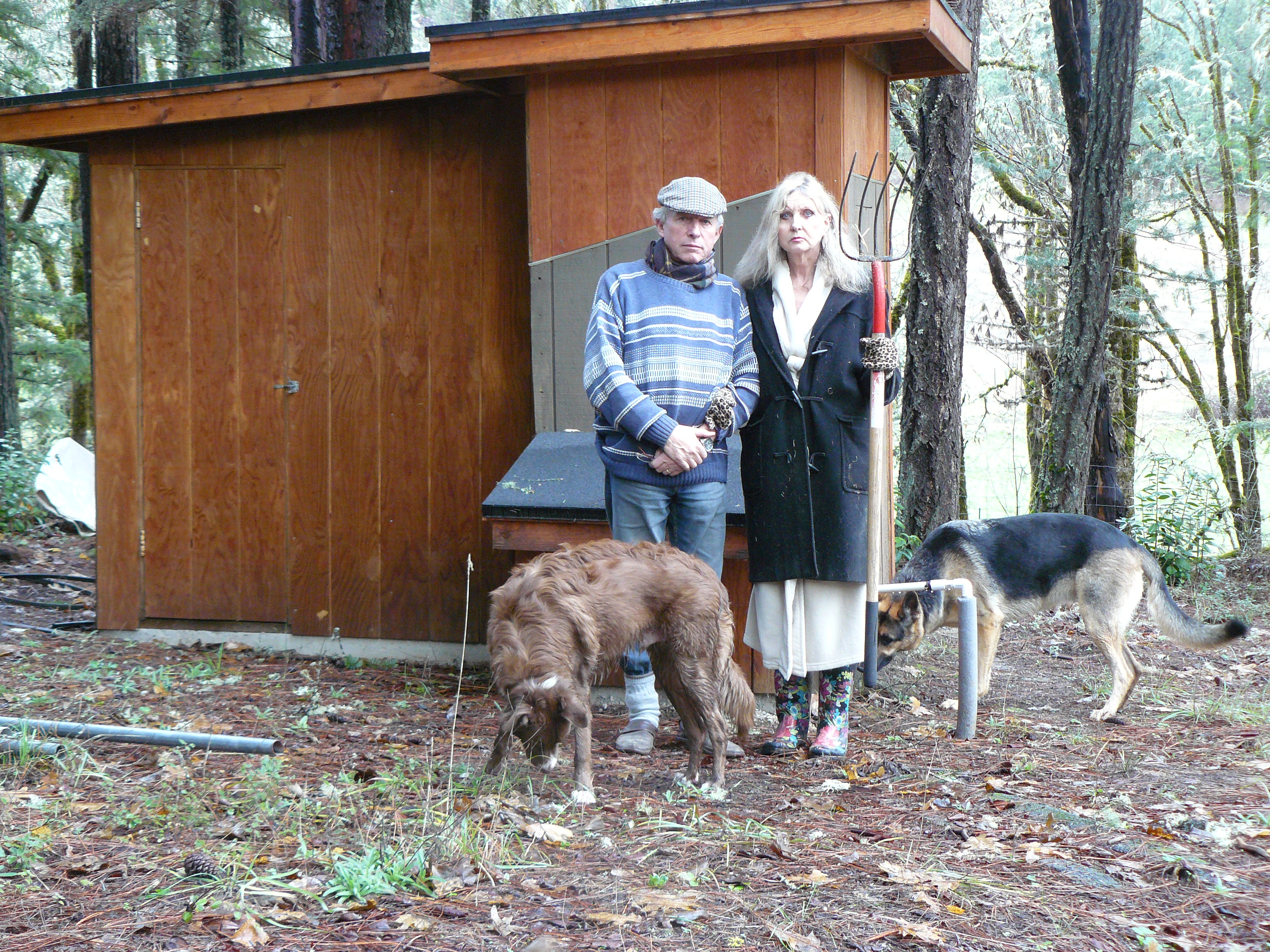
Our ‘country’ look seemed to warrant a photograph! Taken in front of the well-house.
The morning forecast had rain and declining temperatures with the snow-line expected to be around 2,500 feet. This picture was taken on Highway I5 as it heads South for the Siskiyou Mountain pass; where we pulled over being about 3,000 feet.
Together with our neighbours, Dordie and Bill, we had all decided to have a Christmas Lunch at Callahan’s Mountain Lodge on Old Highway 99 just off I5 Exit 6.
Callahan’s Mountain Lodge
oooo
Looking out from the deck of Callahan’s Lodge showing clearly that we were above the snow-line.
From L-R: Jean, yours truly, Dordie & Bill.
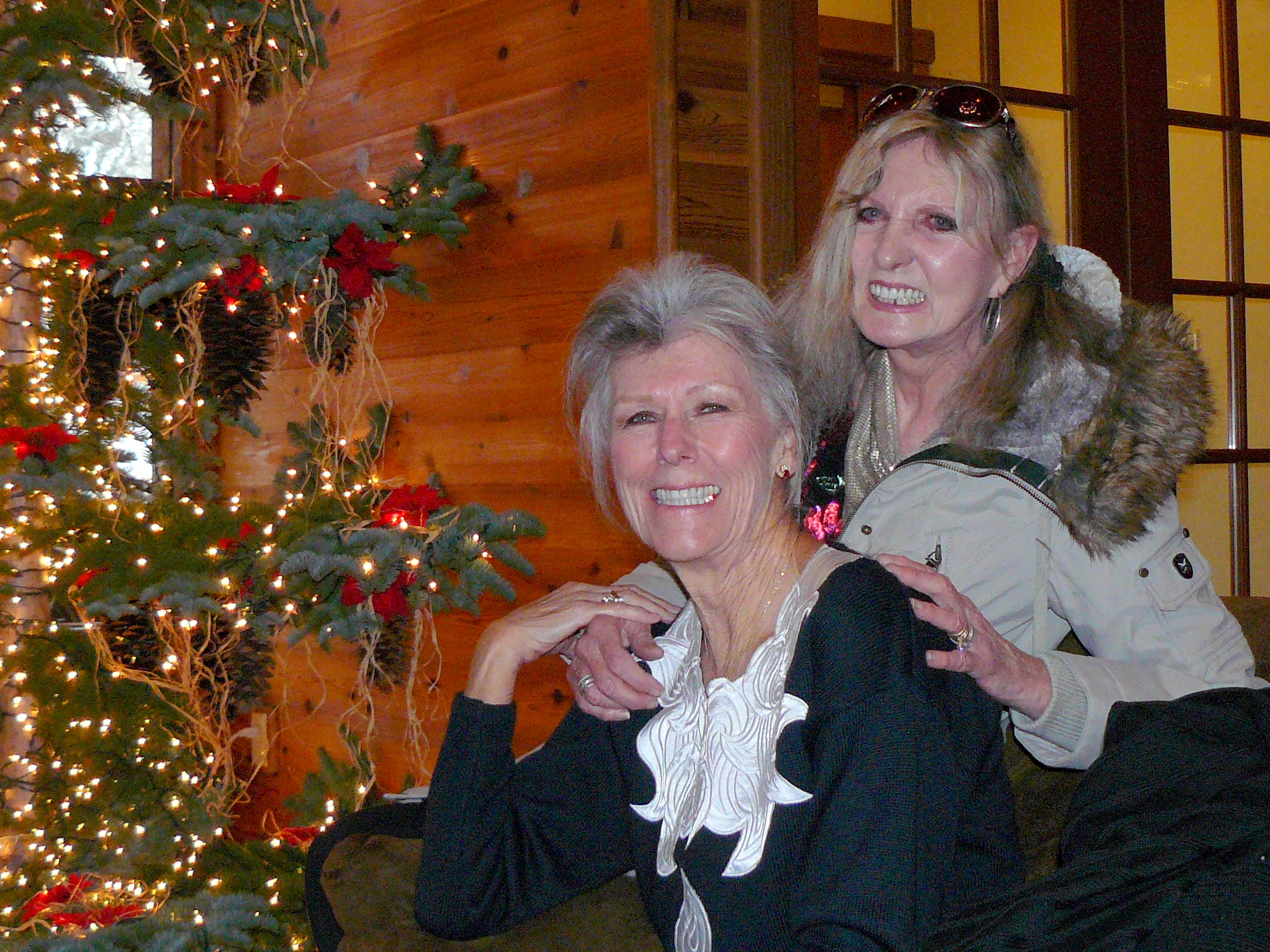
Two lovely ladies!
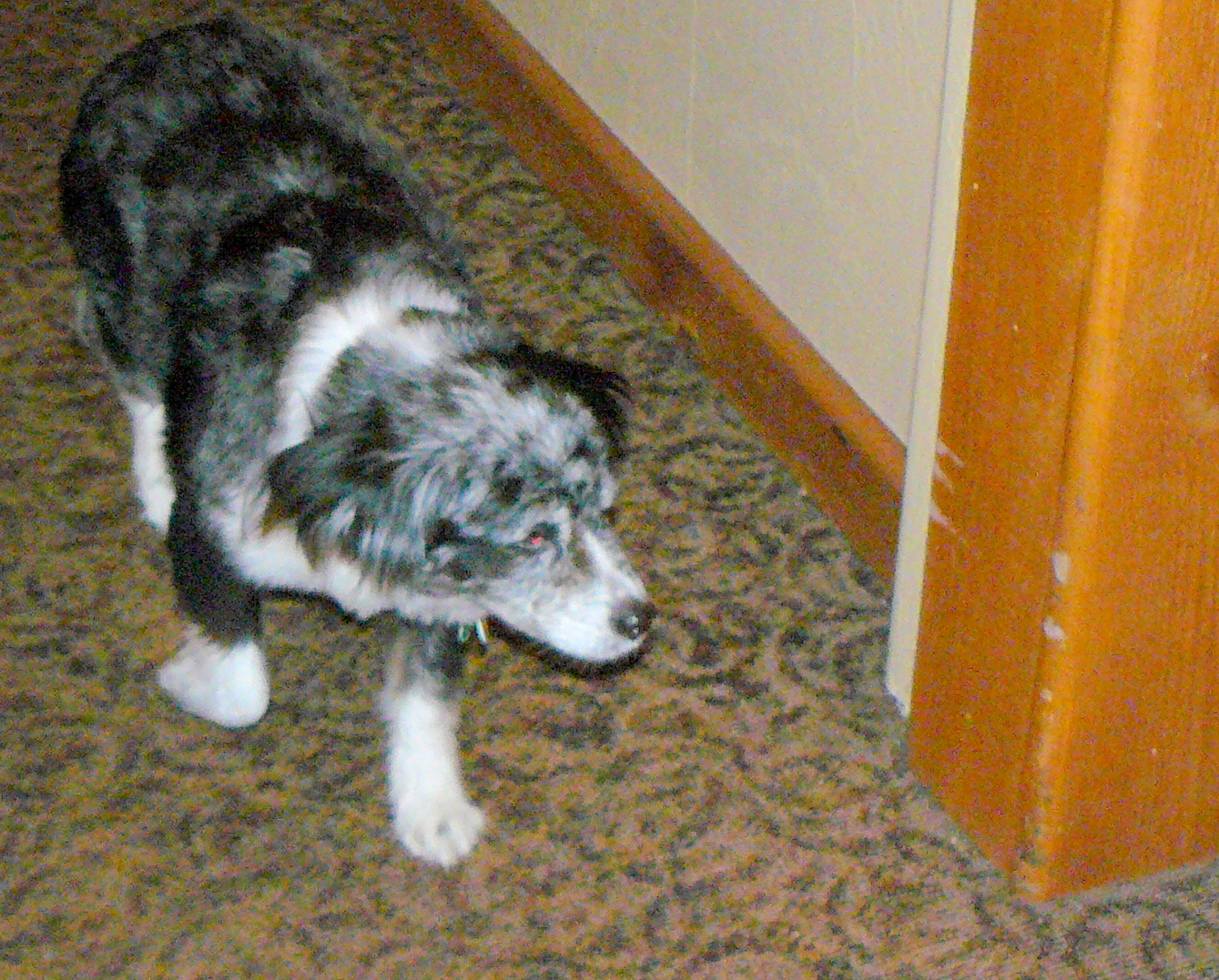
The Lodge’s dog, Blue, that happily wandered all about the place including among the diners!
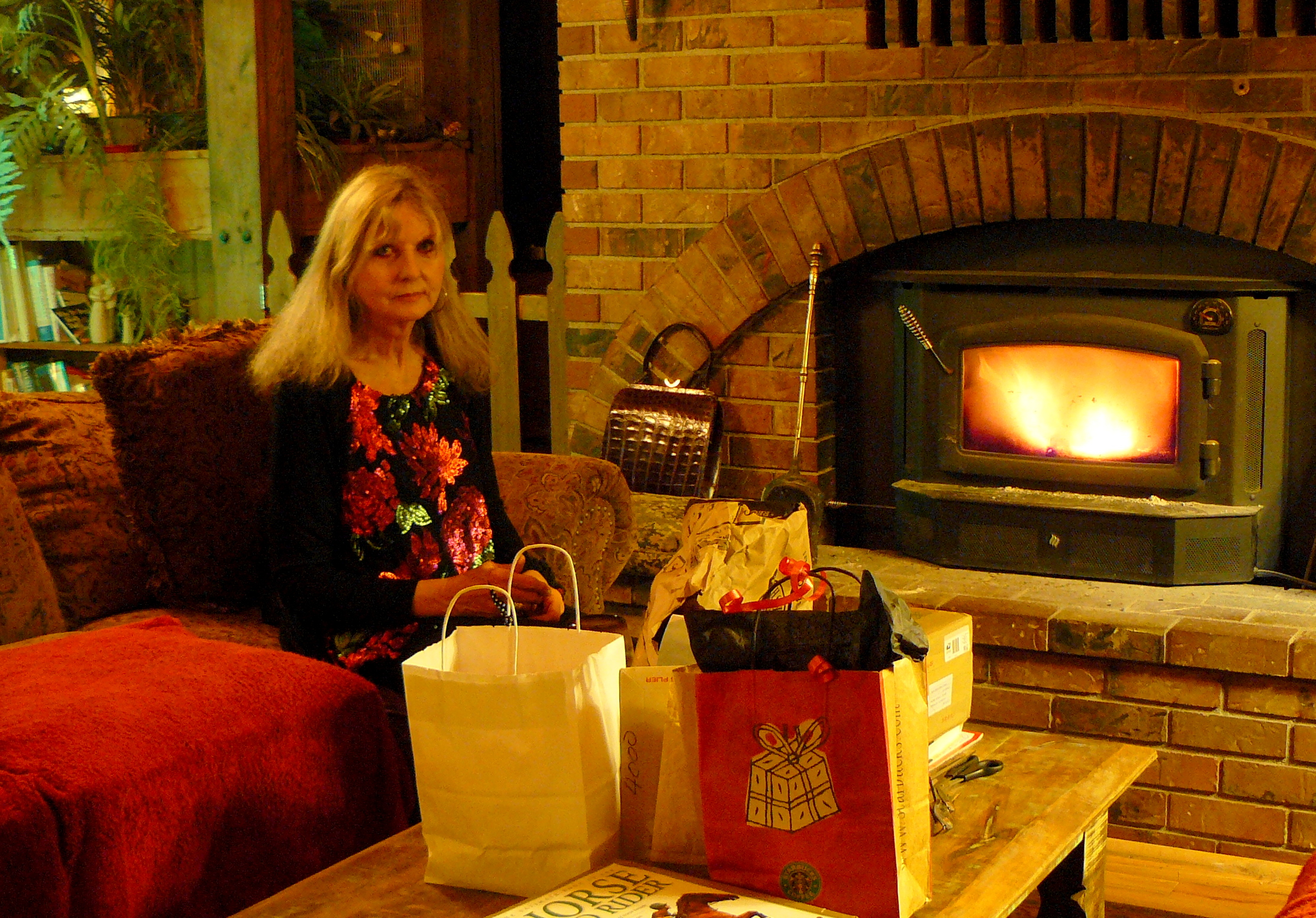
Later on in the afternoon, when Jean and I had returned home, it was time to open a few Christmas presents.
I trust that every one of you dear readers had as happy and pleasant a day as did Jean and me. Because, for us, it was wall-to-wall smiles from the moment we awoke …..



 In the early fall of 2014, I traveled from my home in Oslo, Norway, through much of Eastern and Central Europe. Everywhere I went in those two months, moments after locals realized I was an American the questions started and, polite as they usually were, most of them had a single underlying theme: Have Americans gone over the edge? Are you crazy? Please explain.