Category: Environment

Never give up!

Sharing and caring in abundance!

Please forgive the shortness of the introduction. It’s just that Jean and I were out all day and I didn’t sit down to present today’s post for all you good people until 4pm.

Frankly, this is such a wonderful account of caring for dogs that any intro from me would be superfluous!

ooOOoo

From Rags to Kisses: Abused Dogs Find Happy Homes in Colorado

By: Laura Burge July 1, 2017

About Laura Follow Laura at @literarylaura

In December 2014, Animal House Rescue and Grooming in Fort Collins, Colorado, found a very special delivery on its doorstep. Three dogs arrived from the Pine Ridge Reservation in South Dakota, an Oglala Lakota Native American reservation.

One of the poorest communities in the country, the reservation has an overabundance of unwanted pets facing the risk of disease, starvation, exposure to the elements and, unfortunately, violence.

After a five-hour drive, DeeDee, Prince and Maizy made the first step to finding new and happy lives.

DeeDee was originally discovered living in the trash dump on the Pine Ridge Reservation, where she made her home upon an old discarded sofa atop a pile of tires. A local rescuer, aware of her plight, spent a week slowly gaining DeeDee’s trust with food.

Once the understandably nervous dog allowed the rescuer to get close enough to her, she found herself on a leash and then in a car. Little did DeeDee know she was on her long way home.

DeeDee spent some time in foster care in South Dakota, recovering from mange and learning to trust again before she was transferred to Animal House to give her a better chance of finding her future family. It didn’t take long for them to find each other, with DeeDee’s charming and playful nature quickly winning over their hearts.
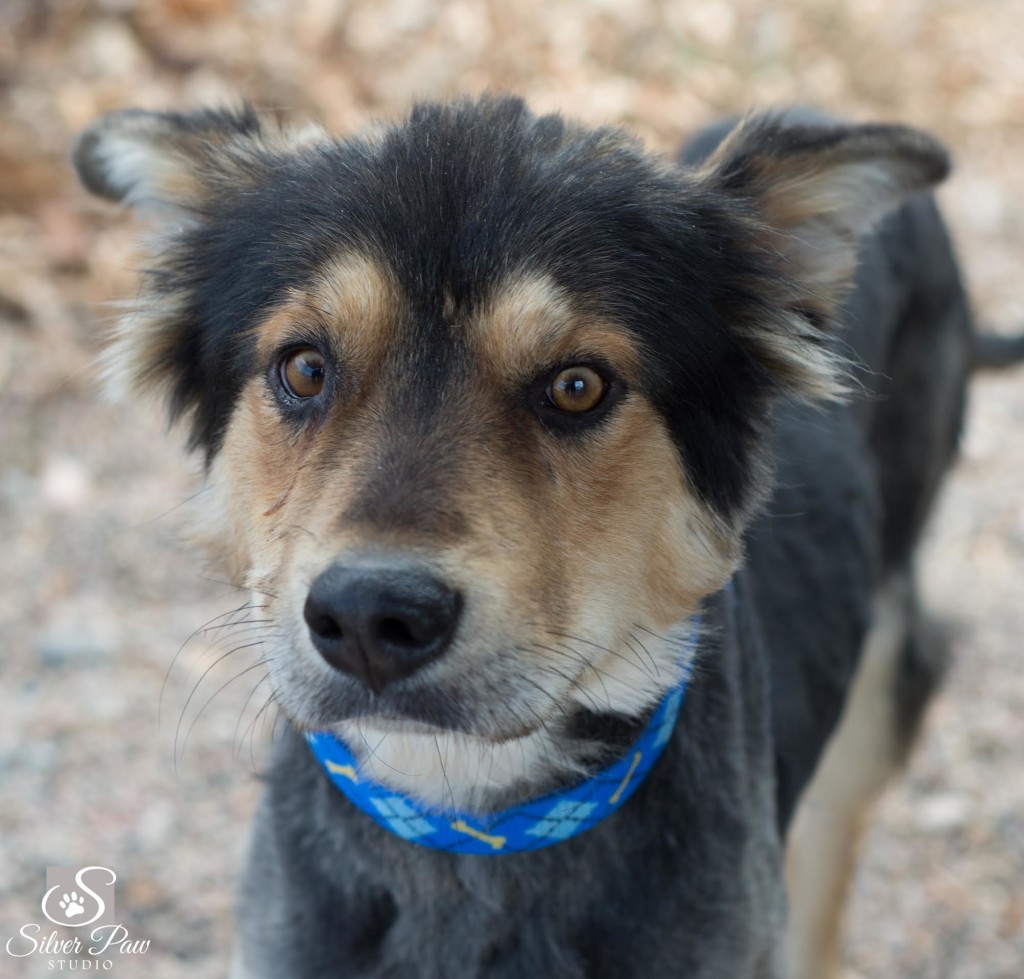
Prince, a 2-year-old shepherd mix, had been found covered in matted fur and burrs. He showed up at Animal House having been shaved, but full of affection.

When Prince arrived, they noticed that there was a problem with his back leg and quickly got him in for x-rays. The cause became quickly apparent, and horrible: Prince had been shot on the reservation. The bullet had travelled through his rear hip and shattered his femoral head.

Not knowing how long he had been suffering through the pain of his injury, the staff at Animal House was anxious for Prince to find relief as quickly as possible. He was sent to CSU Veterinary Teaching Hospital for a femoral head osteotomy, a surgery that alleviated his pain and allowed him to keep his rear leg.

Thankfully, his lovable nature showed through. Prince was able to recover in comfort and bask in newfound love, as he went to his new home shortly after surgery.
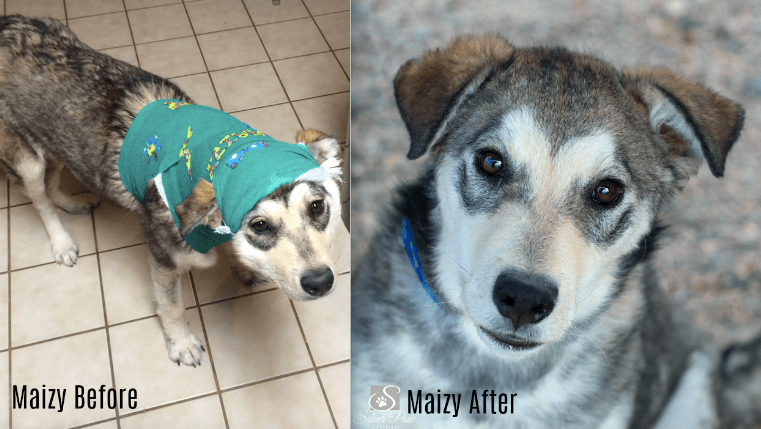
Maizy was a beautiful 8-month-old Husky mix puppy with eyes that melted hearts. Whatever happened to Maizy on the reservation, something that will remain a mystery, she came to Animal House in a lot of pain.

Maizy had several neurological symptoms and pain in her neck. After x-rays, the shelter soon found that the puppy had a fractured cervical vertebra, which was causing compression on her spinal cord. This could have been catastrophic for Maizy, but she’s a fighter.

Maizy’s foster family dedicated their time to bringing her to CSU Veterinary Teaching Hospital for regular bandaging and casting to keep her spine in place. Her beautiful face and wonderful personality through all of this ended up winning the heart of an Animal House volunteer. Having made a full recovery and a lifelong connection, Maizy now lives happily in her loving forever home.

Adoption Highlight: Special Needs Dogs
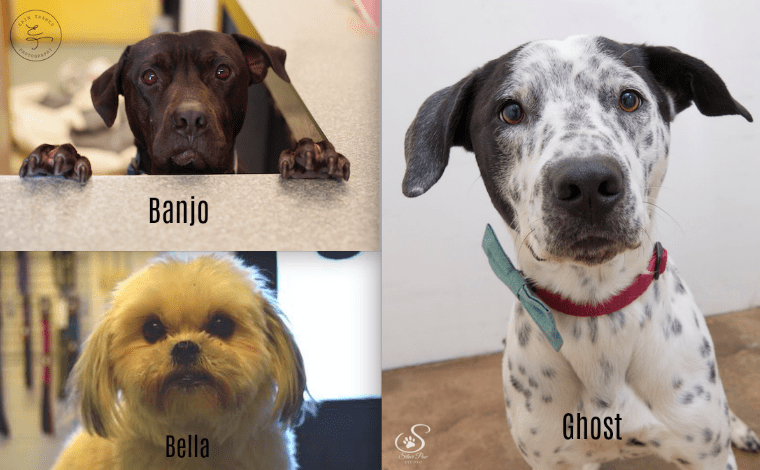
These adorable special needs dogs are still waiting to find their way to new homes.

Banjo is a 6-year-old pit bull terrier mix who had a rough start to life, facing his many challenges with a great attitude. He arrived at Animal House with skin issues related to allergies, worn down teeth and scarring on his body, as well as kidney disease. Banjo gives the best hugs and thinks he is a lap dog, so he would make an excellent snuggle buddy.

Bella is a 2-year-old shih tzu mix who arrived at Animal House after her former sanctuary had to close its doors. Bella has a love for life and gets along well with other dogs and cats. She does struggle in some areas, though, specifically with constipation and some house-training. Bella is looking for a patient and kind forever home willing to help her live comfortably with her condition.

Ghost is a 2-year-old Australian Cattle Dog mix who is sensitive, intelligent, and inquisitive. He is nervous about new people and environments and needs a home that can build his confidence so that he can be happy and comfortable in a variety of situations. Ghost just wants some good old-fashioned love and patience!

You can find out more about these adoptable dogs here.

Photo credits: Animal House Rescue and Grooming, Colorado

ooOOoo

Whatever the state of the world, as long as there are organisations and people who will love and care for animals in need then I will be at peace.
What a nose!

Two items that recently caught my eye.

The power of a dog’s nose is incredible and it is something that has been written about in this place on more than one occasion.

But two recent news items reminded me once again of the way we humans can be helped by our wonderful canine partners.

The first was a report that appeared on the Care2 website about how dogs are being used to search for victims in the burnt out ruins following that terrible Grenfell Tower fire. That report opened, thus:

By: Laura Goldman June 24, 2017
About Laura Follow Laura at @lauragoldman

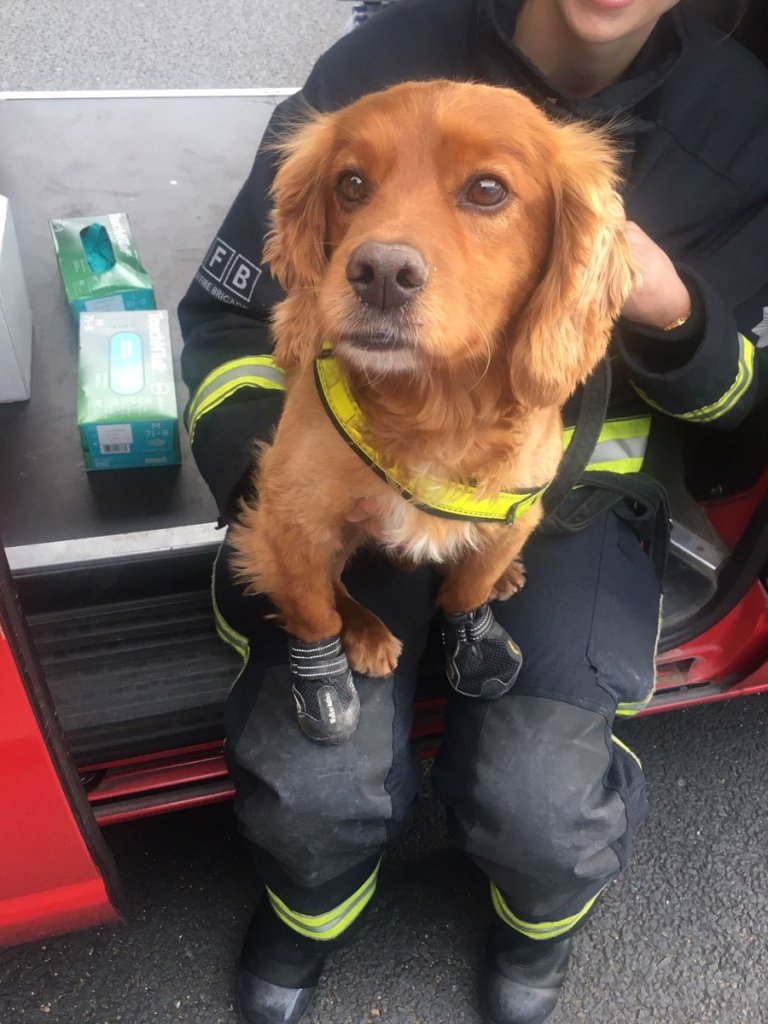
Wearing heat-proof booties to protect their feet, specially trained dogs have been dispatched in London’s Grenfell Tower to help locate victims and determine the cause of last week’s devastating fire that killed at least 79 people.

Because they’re smaller and weigh less than humans, urban search-and-rescue dogs with the London Fire Brigade (LFB) are able to access the more challenging areas of the charred 24-story building, especially the upper floors that sustained the most damage.

It then went on to include a photograph from the London Fire Brigade.

We’ve used specialist search dogs at #GrenfellTower. They’re lighter than humans and can cover a large area quickly.
The next item, apart from also being about the dog’s nose, couldn’t have been more different. It appeared on the Mother Nature Network site and is republished in full.

ooOOoo

Border collies join the search for Amelia Earhart

4 dogs skilled in finding long-buried bones are headed to the uninhabited island of Nikumaroro.

Michael d’Estries    June 21, 2017.

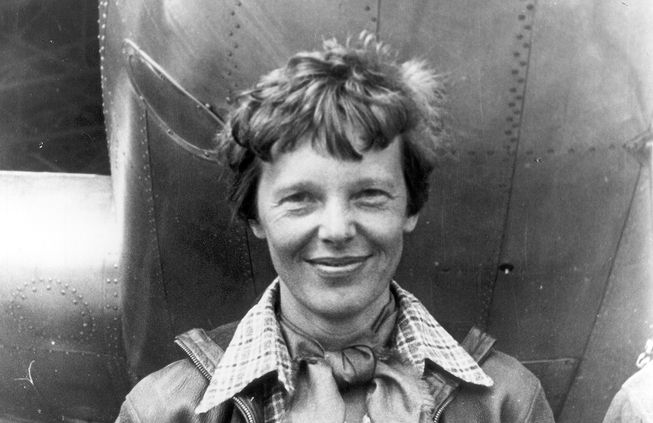
Amelia Earhart standing under nose of her Lockheed Model 10-E Electra. (Photo: Wikimedia Commons)

The high-tech search to find the remains of pilot Amelia Earhart and close the book on one of the aviation world’s greatest mysteries is going to the dogs.

According to National Geographic, four border collies — Berkeley, Piper, Marcy and Kayle — will embark on a voyage later this month to the uninhabited island of Nikumaroro (previously called Gardner Island) in the western Pacific Ocean. The remote triangular coral atoll, less than five miles long and two miles wide, is widely speculated as the location where Earhart and her co-pilot, Fred Noonan, performed an emergency landing during their ill-fated 1937 world flight.

While concrete evidence of the pair surviving as castaways on Nikumaroro has never been found, there have been some intriguing clues. These include a piece of scrap metal that likely came from Earhart’s Lockheed Electra 10E, a sextant box, and fragmented remains of U.S. beauty and skin care products that may date back to the 1930s.

The most intriguing find, however, happened in 1940 with the discovery of 13 bones under a tree on the island’s southeast corner. The remains were shipped to Fiji and subsequently misplaced, but measurements recorded before their loss and examined later by forensic anthropologists indicate that they may have belonged to “a tall white female of northern European ancestry.” With these findings were recently thrown into doubt, the only true way to know if the remains belong to Earhart or Noonan is to find the remaining bones.

The right nose for the job

The four dogs headed to Nikumaroro, officially known as Human Remains Detection Dogs, are part of the latest expedition organized by TIGHAR (The International Group for Historic Aircraft Recovery). Trained at the Institute for Canine Forensics (ICF), these specialized dogs are capable of sniffing out bones centuries old and buried as much as 9 feet deep.

“No other technology is more sophisticated than the dogs,” Fred Hiebert, archaeologist in residence at the National Geographic Society, which is sponsoring the canines, said in a statement. “They have a higher rate of success identifying things than ground-penetrating radar.”

According to the ICF, detection dogs are never trained to smell out live humans, focusing instead on old cases, small scent sources and residual scent. They also excel at locating remains without disturbing the burial site.

You can view one of the ICF dogs in action, seeking out the remains of ancient Native American burial sites, in the video below.

“This kind of searching requires the dog to be slow and methodical and keep its nose just above the surface of the ground, any fast moves and the dog can miss the grave,” the group explains. “It takes many years of slow and patient training to develop the skills needed to do this work.”

Once remains are detected, the dogs generally do little more than lie down on top of the potential burial site. Should Berkeley, Piper, Marcy and Kayle detect anything, TIGHAR’s archeologists will perform a careful excavation to uncover the source.

In addition to using canines, the team from TIGHAR will also take time over the eight-day expedition to survey sites on Nikumaroro using metal detectors and even an advanced underwater drone. Their greatest hope, however, lies with the highly advanced noses of the very good boys and girls sniffing out an 80-year-old mystery.

“If the dogs don’t find anything, we’ll have to think about what that means,” Hiebert added. “But if the dogs are successful, it will be the discovery of a lifetime.”

ooOOoo

What a sense of smell!

Thank goodness.

Calming for dogs.

Slowly we are all moving on.

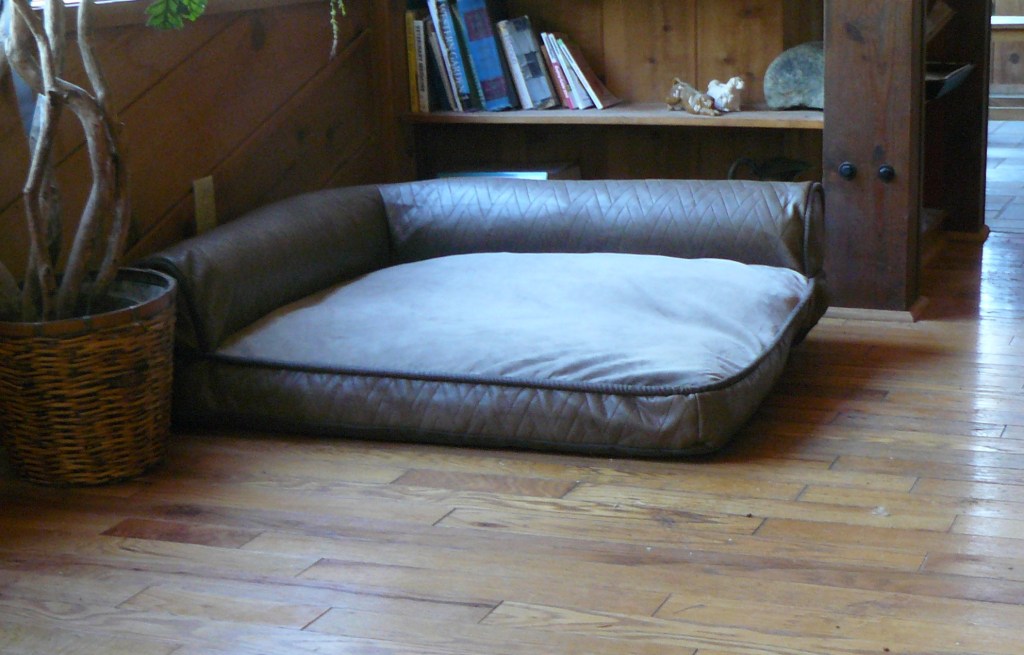
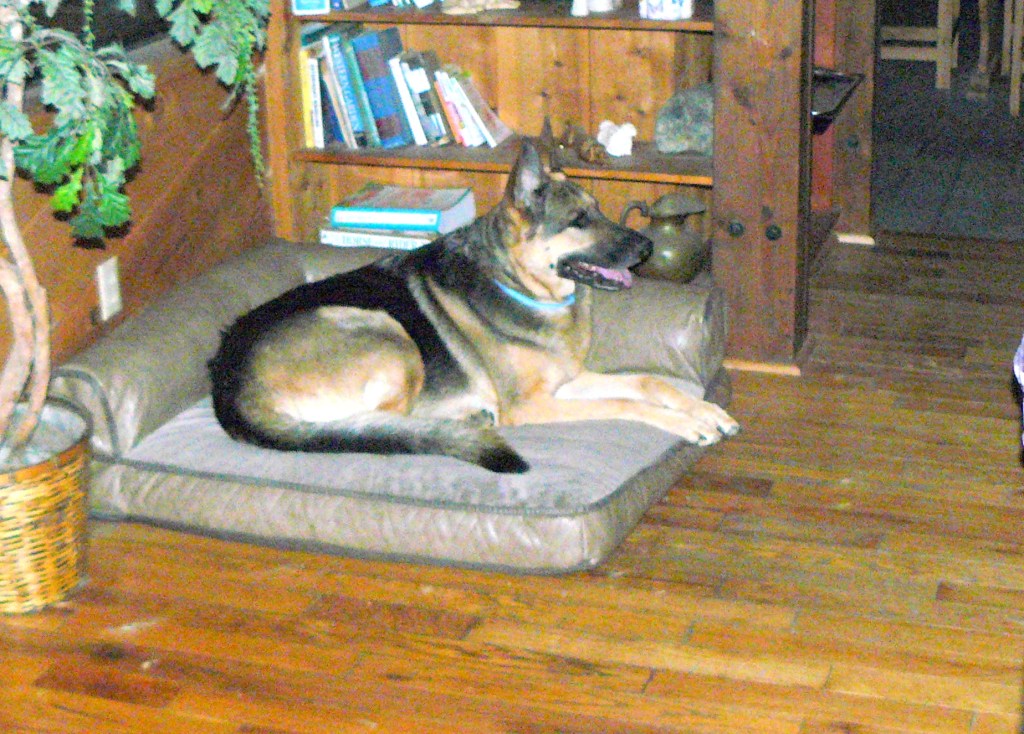
You will all recall the shock of me seeing Pharaoh’s empty bed that first morning after he had died. This picture:

Not only was it difficult to look at but not one of our other dogs went near it. This was despite the fact that Jean had washed and cleaned the whole bed.

One could almost imagine the dogs understanding that it would not have respected their memory of Pharaoh to immediately takeover his rather nice bed.

But life has to move on!

Yesterday evening, just as Jean and I were getting everyone ready for bedtime, Cleo signaled that she was moving on.

She had settled herself down on the bed.

That was so good to see and was another step in the right direction in settling me down as well!

So on the theme of being calm, especially in these hot summer months, do read this recent article that was published on the Care2 site.

ooOOoo

7 Ways to Calm a Dog During Thunderstorms

By: Becky Striepe June 21, 2017

About Becky Follow Becky at @glueandglitter

My dogs are both terrified of thunderstorms. These are some of the tricks that vets and trainers have recommended to help our poor babes when stormy weather rolls in.

Our lab mix, Jenna, trembles in the corner when it thunders, while our 60-pound dog, Bandit, tries to leap into my lap. These are some of the ways to calm a dog during thunderstorms that we’ve tried.

Every dog is different, so what works for one may not work for another. Jenna is terrified of the Thundershirt, for example, but many people I know swear by it. Chances are, not all of these calming techniques will help your dog during a thunderstorm. You’re basically throwing spaghetti at the wall to see what sticks.

Ways to Calm a Dog During Thunderstorms

Lavender and massage oil on a old wooden background

1. Lavender Oil

You don’t want your dog to ingest lavender oil, so put a few drops on her collar when a storm is freaking her out. The soothing scent can help calm some dogs’ nerves, and the smell is a distraction from what’s going on in the sky.

2. Massage

Just like humans, dogs find massage soothing. The video above shows a calming massage that you can use on your dog during a thunderstorm. You can also try an ear massage, which Jenna responds to really well. Basically, you gently run your hand up the dog’s ear, from where the ear meets the head to the tip of the ear. When you reach the tip, gently massage for a second, then repeat. Like in the video, it seems to work best if I also talk to her in a soothing voice while massaging.

3. A Hand on the Back

Sometimes, your dog just needs to know that you are there and in control of the situation. This trick works well on our dog, Bandit, who is definitely boss dog in our house. During a storm, a hand on his back helps him feel like he can step back from being the pack leader, which helps him feel secure and safe. Talking in a soothing voice helps here, too.

4. Training Exercises

You may feel like it’s mean to start bossing your scared dog around, but practicing her sit/stay/shake is a great way to distract your dog from the storm and remind her that you’ve got this under control. This one works well on both of my dogs.

5. Thundershirt

These wrap shirts help soothe a lot of dogs during thunderstorms, and they’re available at any pet store. Many friends with dogs have recommended the Thundershirt to me. It made Jenna more anxious, but she is clearly in the minority in this situation.

6. White Noise

If your dog can’t hear the storm, your dog won’t be so scared. Dogs can feel the shift in pressure from a storm, even when they can’t hear it, so this technique seems to work best in conjunction with other calming techniques, like massage or lavender oil. Bring your dog to her favorite room, turn down the lights, and turn up the white noise. If you don’t have a white noise machine, you can find free white noise tracks on YouTube, like the one above.

7. Rescue Remedy for Pets

Rescue Remedy is a blend of plant extracts. They make homeopathic drops and gummies for humans, and they have drops for pets, as well. The site recommends putting the drops into water, but I’ve also had good luck putting them onto a treat or into a glob of peanut butter, if my dogs aren’t too scared from the storm to take a treat.

As I mentioned above, different natural remedies will work for different dogs, so don’t be discouraged if the first thing you try doesn’t work out. Sometimes, especially for high anxiety dogs, you’ll have the best results combining a few of these ways to calm a dog during a thunderstorm.

ooOOoo

I don’t know about tips for calming dogs, some of these sound great for yours truly!

Picture Parade Two Hundred.

The last in the series from Janet Goodbrod.

oooo

oooo

oooo

oooo

oooo

oooo

oooo

oooo

oooo

oooo

Have to see what we can find for all you good people for next Sunday.

Enjoy mid-Summer’s day on Wednesday!

Now this is having a head for heights!

Not your usual Father’s Day outing!

Think you have a head for heights??

Well try this …. (first seen on the NatGeo website.)

ooOOoo

First Interview With the Climber Who Scaled El Capitan Without a Rope

Honnold approaching the top of El Capitan on Saturday, June 3rd. The historic event was documented for an upcoming National Geographic feature film and magazine story. Photograph by Jimmy Chin

Writer and climber Mark Synnott took Alex Honnold on his first international climbing expedition to Low’s Gully in Borneo back in 2009, and subsequent trips to Chad, Oman, and Newfoundland. Over the years they’ve kept up a running dialogue about the finer points of climbing and debated the dangers of free soloing—climbing alone, without ropes or other safety gear.

It seems fitting that in the first moments after Honnold had become the first person to free solo Yosemite’s El Capitan, the greatest pure feat of rock climbing in history, that he’d sit down with his old friend at the Manure Pile, a popular climbing spot at the foot of El Capitan. He ate an apple, listened to the birds, and described the experience of a lifetime. Their conversation has been edited for length and clarity.

ooOOoo

The rest of this story including the interview with Alex may be read here.

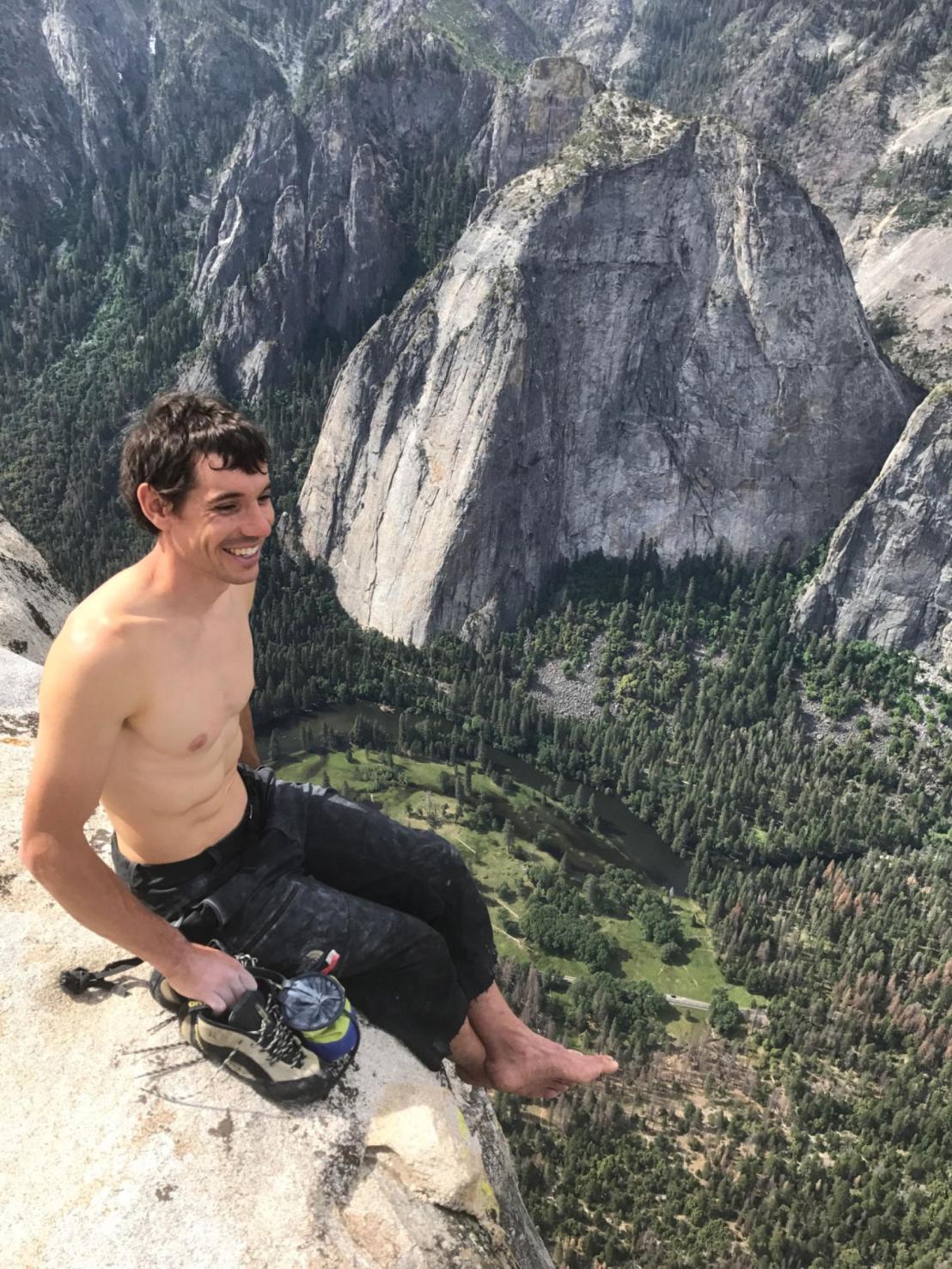
I’ll close with another photograph from that NatGeo piece.

Rock climber Alex Honnold sits atop Yosemite’s iconic El Capitan after nearly four hours of climbing alone, without ropes or any other equipment or safety gear.

El Capitan is only 500 miles drive from our home. Maybe next year’s Father’s Day outing? ( I jest, of course!)

Subsequently, I have come across a longer documentary that some may enjoy (??) watching.

Watch where you walk, good people!


Desmond’s Law – more please!

Connecticut shows how it should be done.

Following on from yesterday’s post that highlighted how Switzerland is legally protecting the rights of animals.

Apologies for the brief introduction but our internet service was up and down yesterday and I didn’t know how long I had to get today’s post completed.

A republication of an item seen recently on the Care 2 site.

ooOOoo

Connecticut Gives Abused Animals Their Own Lawyers

By: Susan Bird June 12, 2017

About Susan Follow Susan at @ItsSusanBird

Abused animals in Connecticut now have a voice in court, thanks to a new law passed by the state in late 2016.

Connecticut lawmakers passed “Desmond’s Law” in response to the horrific death of a sweet shelter dog called Desmond in 2012. The man who adopted him, Alex Wullaert, reportedly rarely fed Desmond and often beat him.

Ultimately, Wullaert killed the dog by hanging him, after Desmond made the mistake of urinating on Wullaert’s leg. Then he dumped the body in a garbage bag and left it on the street.

When prosecuted for the crime, Wullaert admitted what he’d done. The prosecutor recommended that he spend time behind bars for this shocking offense. Despite this recommendation, the court gave him nothing more than Accelerated Rehabilitation. That meant upon successful completion of probation, Wullaert’s record would be wiped clean.

That result outraged the animal-loving citizens of Connecticut. And they enacted “Desmond’s Law” to ensure that court decisions offer a better measure of justice following animal-related crimes.

Seven attorneys, a law professor and her law students are part of the program statewide. The law authorizes qualified pro-bono lawyers and volunteer law students to:

[P]rovide investigative insight not readily available to the court, resulting in a more fair and efficient process and more meaningful outcomes in animal abuse cases. It is intended to shine a bright light on the full extent of crimes committed under the animal cruelty statute.

In a nutshell, these animal advocates help the prosecution or defense team with tasks it often has no time for, especially in animal cases. The volunteers investigate, research issues and conduct interviews with veterinarians and other witnesses. As official parties to the case, they also write briefs, make arguments in court and submit recommendations to the judge.

A judge has to approve the participation of the animal advocates, who must be requested by either the prosecution or defense.

“The hope [of the law] was that providing courts with an extra resource to help handle these cases, at no cost, [is] that the cases could be more thoroughly handled,” University of Connecticut law professor Jessica Rubin told the Hartford Courant.

Prosecutors in Connecticut already commend the animal advocates for helping them do a better job in these cases. Often, they barely have time to do much of this legwork for cases involving human victims. We all know that when time is precious, the human cases will take precedence over those involving animals. Now, with professionals in place solely for the animal cases, that won’t be a problem anymore.

“We hope with this law in place, we will start to see much better procedural outcomes [in animal abuse cases],” Annie Hornish,  director for the Humane Society of the United States in Connecticut, told the AP. “We are very excited that judges seem to be taking advantage of it.”

This is an incredible step forward for animal victims. In particular, it helps overburdened courts provide the same level of investigation and consideration to animal victims that they give to human victims.

Connecticut has given animals a legitimate, recognized voice in the state court system. Why can’t every other state do the same thing? From Maine to California, every state has animal-loving lawyers and law students who would be grateful and eager to volunteer their time as animal advocates.

Lawmakers from other states are reaching out to Rubin to request information on how they might be able to pass a similar law. There’s interest out there, and animal activists can help fan this flame.

It’s time for every jurisdiction to pass its own version of Desmond’s Law.

Photo credit: Thinkstock

ooOOoo

Once again everyone: It’s time for every jurisdiction to pass its own version of Desmond’s Law.

Pet happiness in Switzerland.

Protecting the rights of animals.

In the vast majority of countries our pet animals have few, in any, legal rights.

Thus it was a wonderful reminder of another example of how the Swiss government sets the lead in so many ways to read on the Care 2 site how that country looks after their animals. Laura Burge offers the details in this republication of an essay on Care 2.

ooOOoo

10 Reasons Switzerland Is a Great Place to Be a Pet


By: Laura Burge June 10, 2017

About Laura Follow Laura at @literarylaura

Switzerland is a fairly small country, but it stills boasts an estimated seven million pets living there, not including the farm animals that dot the countryside. Although far from perfect, it has a long history of improving the working and living conditions for animals within the country, including landmark legislation in 1992 when it became the first country to include animal rights in their constitution. Specifically, it included a provision that allowed for the protection of animal dignity.

Then, in 2008, Switzerland introduced a bevy of new animal rights regulations that went even further. With that in mind, here are some of the more interesting laws that Switzerland has put in place to improve the lives of animals in their midst.

1. Guinea pigs must live with or have regular playdates with other members of their species. They can get lonely if they don’t have a companion. Since guinea pigs often don’t live the exact same amount of time, matchmaking services have sprouted up in the country to make sure they are not alone.

By Antoine Beauvillain via StockSnap.io

2. The Swiss have your cat’s social life in mind, too — if a cat doesn’t have a feline companion at home, he or she must be able to go outside to socialize with others, or at the very least, be able to see other cats from home.

3. Surprisingly, goldfish must also have friends to swim around with. The Swiss believe it is cruel to have them live alone in a small fish bowl, as they are actually social animals.

4. Rabbits’ enclosures must have a dark area that they can retreat to, if they feel the need. Rabbits are very particular about their space, and having a dark area of their enclosure helps ensure that bunnies are happy and less stressed.

5. Fish must live in aquariums that experience natural day and night cycles, and have at least one opaque side.

By Marvin Meyer via StockSnap.io

6. Before bringing a dog into a new home, a person must provide a certificate of competence demonstrating that they know how to deal with and treat dogs. If they can prove that they’ve already had a dog, though, they’re off the hook.

7. Dogs have to be exercised daily, according to what they need, and, as much as possible, off leash. Everyone knows that different dogs have different levels of energy, so whether someone has a lazy Great Dane who just wants to walk around the block, or a bouncing terrier who needs to run, the law accounts for it.

8. Dogs that are tied up must be able to run around freely for at least five hours a day, and the rest of the time, must be able to move around in at least 20 square meters of space. While this may not seem ideal, since dogs are still allowed to be tied up, it means that there’s a national law on the side of the pet if the owner is using a choke chain or the dog is not getting time to run around freely.

By Isaac Benhesed

9. Parrots, also considered social creatures, are required to have a companion to spend their days with. The legislation can be eye-opening in how many creatures need others of their own kind to have a relaxed and happy life as a companion to people.

10. Clipping the ears or tails of dogs is not allowed. It is considered undue pain and damage, and dogs get to live out their days with their natural floppy ears and wagging tails.

While Switzerland, like most other countries, are far from achieving perfect animal welfare laws and enforcement, they have made some good progress that other countries would do well to keep an eye on.

Photo credit: Laura Burge, author

ooOOoo

Did you spot that four out of those ten laws that were described in the article were for the well-being of dogs!

Fantastic!

And even better than that is a State in the USA that also comes to the rescue, legally, of abused animals. Tune in tomorrow for the full story.
Picture Parade One Hundred and Ninety-Nine

Back to Janet’s wonderful photographs.

oooo

oooo

oooo

oooo

oooo

oooo

oooo

oooo

oooo

oooo

The last set from this series in a week’s time.

Doesn’t time fly!

Up, up and away!

Apologies in advance for this being possibly of limited interest to others.

A couple of years after I left IBM UK and formed my own company, Dataview Ltd., based in Colchester, Essex, I formed both a personal and business relationship with a Roger Davis.

That relationship exposed me to gliding, or sail-planing in American speak, for Roger was a volunteer instructor at Rattlesden Gliding Club in Suffolk that flew from an ex-wartime aerodrome of the same name.

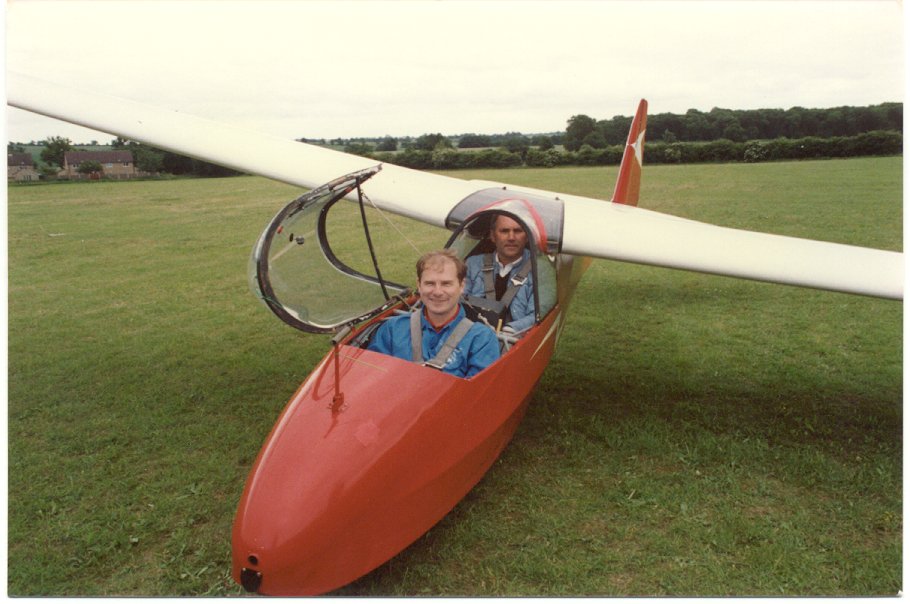
Thus on the 7th June, 1981, I was taken up for two air-experience circuits in a two-seater glider known as a ‘K7’. I was immediately hooked! Those experience flights leading to a 4-minute flight (flight number 46) on the 6th September, 1981 that has the remark in my pilot’s log book: Solo!

Now fast forward to October, 1984 and my log book shows me attending a gliding instructor’s course at Lasham, resulting in me being issued with a British Gliding Association (BGA) Assistant Instructor Rating on the 14th October. (105/84).


A K-7 two-seat glider.

A few days ago, Roger sent me a link to the following video.

It’s a compilation of photos, cartoons from the pen of dear Bob White, and videos. A little over eleven minutes long I do hope some of you find it of interest.

Published on May 29, 2017
Slide show produced from photos and images produced by Mark Taylor for Rattlesden Gliding Club’s 25 anniversary in 2001. Shows a collection of members involved from those early days, including some cartoons produced by Bob White whenever there was a notable event, or incident as well!

Let me close with this photograph!

Roger Davis with Sheila, his lovely wife, gliding over Lake Taupo in New Zealand.

(All those years ago, Roger and Sheila had a beautiful Old English Sheepdog. His name was Morgan and he was a wonderful, loving dog.)

So is there anyone reading this who has experienced gliding?

Picture Parade One Hundred and Ninety-Seven

Continuing with Janet’s wonderful pictures.

(The last set from Janet were published a fortnight ago.)

oooo

oooo

oooo

oooo

oooo

oooo

oooo

Going to round off today’s picture parade with a photograph of our growing Canadian geese goslings. The photograph was taken at 7:30pm two evenings ago. I would imagine that we aren’t that far off them all taking to the wing!